Introduction
The neuropsychological profile of depression in older people is typically described as being ‘fronto-subcortical’ including key fronto-striatal and limbic circuitry. While somewhat heterogeneous, impairments are typically found in the domains of executive functioning, processing speed and learning and memory (Naismith et al. Reference Naismith, Hickie, Turner, Little, Ward, Wilhelm, Mitchell, Parker and Winter2003; Köhler et al. Reference Köhler, Thomas, Barnett and O'Brien2010; Jayaweera et al. Reference Jayaweera, Hickie, Duffy, Hermens, Mowszowski, Diamond, Terpening, Paradise, Lewis, Lagopoulos and Naismith2015a ; see review by Naismith et al. Reference Naismith, Norrie, Mowszowski and Hickie2012). Impairments in verbal learning and memory are particularly concerning, as these are associated with disability (Naismith et al. Reference Naismith, Longley, Scott and Hickie2007), tend to persist despite symptom resolution (Köhler et al. Reference Köhler, Thomas, Barnett and O'Brien2010) and are associated with dementia longitudinally (Potter et al. Reference Potter, Wagner, Burke, Plassman, Welsh-Bohmer and Steffens2013).
In addition to providing support for fronto-subcortical dysfunction in major depression (see review by Naismith et al. Reference Naismith, Norrie, Mowszowski and Hickie2012), studies employing neuroimaging have shown that memory dysfunction is linked with hippocampal atrophy and loss of neuronal integrity in patients with both severe major depression (Hickie et al. Reference Hickie, Naismith, Ward, Turner, Scott, Mitchell, Wilhelm and Parker2005) as well as those with largely remitted symptoms (Jayaweera et al. Reference Jayaweera, Hickie, Duffy, Hermens, Mowszowski, Diamond, Terpening, Paradise, Lewis, Lagopoulos and Naismith2015a , Reference Jayaweera, Lagopoulos, Duffy, Lewis, Hermens, Norrie, Hickie and Naismith b ). While these findings are most interesting, memory research has tended to focus almost exclusively on the hippocampus, and there has been a relative paucity of research examining how other subcortical structures may contribute to memory dysfunction. Specifically, the caudate nucleus is a subcortical region of immense interest, and is strongly implicated in the pathophysiology of depression. For example, the caudate is reportedly smaller in older people with depression (Hannestad et al. Reference Hannestad, Taylor, McQuoid, Payne, Krishnan, Steffens and MacFall2006), and has been linked to alterations in cerebral blood flow (Hickie et al. Reference Hickie, Scott, Wilhelm and Brodaty1997), genetic alterations in serotonin transporter genes (Hickie et al. Reference Hickie, Naismith, Ward, Scott, Mitchell, Schofield, Scimone, Wilhelm and Parker2007), psychomotor speed (Naismith et al. Reference Naismith, Hickie, Ward, Turner, Scott, Little, Mitchell, Wilhelm and Parker2002), implicit learning (Naismith et al. Reference Naismith, Lagopoulos, Ward, Davey, Little and Hickie2010), severity of depressive symptoms (Butters et al. Reference Butters, Aizenstein, Hayashi, Meltzer, Seaman, Reynolds, Toga, Thompson, Becker, Meltzer, Iii, Toga and Thompson2009) and treatment resistance (Shah et al. Reference Shah, Glabus, Goodwin and Ebmeier2002). While this area is comparatively in its infancy, imaging studies in healthy adults and those with anxiety disorders provide preliminary evidence suggesting that both the hippocampus and the caudate nucleus likely contribute to episodic memory (Ben-Yakov & Dudai, Reference Ben-Yakov and Dudai2011; Moon et al. Reference Moon, Yang and Jeong2015).
Upon examining the caudate nucleus in relation to cognitive and functional roles, it is important to demarcate both anterior and posterior subregions. Both rodent (Balleine & O'Doherty, Reference Balleine and O'Doherty2010) and human (Mattfeld & Stark, Reference Mattfeld and Stark2015) studies show that the anterior caudate (dorsomedial striatum) is important for learning. In an event-based functional magnetic resonance imaging (fMRI) study, Mattfeld & Stark (Reference Mattfeld and Stark2015) demonstrated that in healthy adults, both the hippocampus and the anterior caudate are activated when learning new information, and that both of these structures uniquely contribute to learning. A convergence of evidence implicates the anterior caudate in cognitive functioning (learning, episodic memory and executive functioning) across a range of neuropsychiatric conditions including depression, schizophrenia, attention-deficit hyperactivity disorder and anxiety disorder (Moon et al. Reference Moon, Yang and Jeong2015; see review by Griffiths et al. Reference Griffiths, Morris and Balleine2014). However, it has previously been postulated that the caudate may be more pertinent to memories that are contextualized or cued, whereas the hippocampus may be more relevant to learning and memory that is less structured/unaided by cues, such that these two structures function in parallel, as a part of a wider learning and memory neural network (Poldrack et al. Reference Poldrack, Clark, Paré-Blagoev, Shohamy, Creso Moyano, Myers and Gluck2001).
Despite the body of work demonstrating that the caudate nucleus is relevant to depression pathophysiology, and that the anterior caudate is relevant to memory, this subregion has been relatively under-examined. Butters and colleagues reported that depressed older adults indeed have specific anterior caudate atrophy (Butters et al. Reference Butters, Aizenstein, Hayashi, Meltzer, Seaman, Reynolds, Toga, Thompson, Becker, Meltzer, Iii, Toga and Thompson2009). However, this study did not specify a boundary that separated subregions of the caudate into anterior and posterior regions, and they could not quantify the exact magnitude of anterior caudate volume loss. Utilizing resting-state fMRI in older depressed adults and controls, Kenny et al. (Reference Kenny, O'Brien, Cousins, Richardson, Thomas, Firbank and Blamire2010) later showed that patients with depression have altered connectivity between the head of the caudate and frontal regions. However, neither of these studies examined the anterior caudate with respect to memory performance.
The current study set out to address this issue by examining the anterior caudate in older people with depression, particularly in relation to verbal memory and hippocampal volume. In this study, where our primary focus is memory, we chose to examine older adults with largely remitted symptoms. This approach acknowledges that older people with lifetime depression often have residual cognitive impairment when symptoms have remitted, and also minimizes the need to control for the effects of mood ‘state’ on cognition. Further, given that the anterior caudate in particular has been linked to both learning and executive functioning, and that prior research indicates that the caudate may be particularly relevant to cued/structured learning and memory (Poldrack et al. Reference Poldrack, Clark, Paré-Blagoev, Shohamy, Creso Moyano, Myers and Gluck2001), we were interested in examining whether any relationship between this region and learning exists for: (i) unstructured learning/memory (which requires executive or ‘frontal’ processes to organize material for optimal encoding), and for (ii) structured learning/memory, whereby material is inherently organized in a meaningful way, and hence less likely to be dependent upon executive processes. Further, if such relationships exist, in a post-hoc exploratory analysis, we wanted to explore the unique role of the caudate compared to other key structures (i.e. hippocampal volume) and clinical features also associated with impaired learning and memory in depression.
We hypothesized that: (i) the anterior caudate would be smaller in depressed subjects compared to control subjects, (ii) reduced anterior caudate would in turn be associated with poorer performance on tests of learning and memory and clinical characteristics (such as depression severity and age), and (iii) any relationship between the caudate and memory would be independent of the contribution of the hippocampus and other significant clinical features.
Method
Sample
Eighty-four health-seeking (i.e. seeking assessment and/or treatment for mood or memory concerns) participants (29 male, 55 female) meeting criteria for lifetime major depressive disorder were recruited from the Healthy Brain Ageing (HBA) Clinic at the Brain and Mind Centre, Sydney, Australia. These participants were referred to the HBA Clinic from GPs as well as specialists (predominantly psychiatrists and neurologists) following subjective mood or cognitive complaints. The HBA clinic is an early diagnosis and intervention clinic specializing in mood and cognition in adults aged >50 years. It includes clinical neuropsychologists, psychiatrists, geriatricians, neurologists, nurses and sleep specialists. Of these, 84 participants, 77 have been described previously (Jayaweera et al. Reference Jayaweera, Hickie, Duffy, Hermens, Mowszowski, Diamond, Terpening, Paradise, Lewis, Lagopoulos and Naismith2015a , Reference Jayaweera, Lagopoulos, Duffy, Lewis, Hermens, Norrie, Hickie and Naismith b ). Twenty-seven never-depressed and cognitively intact participants (11 male, 16 female) served as a healthy control group. These participants were recruited from the community via local advertisement (e.g. HBA clinic website, flyers posted in local medical clinics) and resided within the same geographical location (i.e. Sydney metropolitan area). Of these, 21 have been described previously (Jayaweera et al. Reference Jayaweera, Hickie, Duffy, Hermens, Mowszowski, Diamond, Terpening, Paradise, Lewis, Lagopoulos and Naismith2015a , Reference Jayaweera, Lagopoulos, Duffy, Lewis, Hermens, Norrie, Hickie and Naismith b ). Inclusion criteria: participants were required to speak English fluently and be aged >50 years. As described previously (Jayaweera et al. Reference Jayaweera, Hickie, Duffy, Hermens, Mowszowski, Diamond, Terpening, Paradise, Lewis, Lagopoulos and Naismith2015 a), patients were also required to: have a 17-item Hamilton Depression Rating Scale (HAMD) score of <20 (i.e. without severe depression severity) (Hamilton, Reference Hamilton1960); to have had a major depressive episode in the last 5 years; and to be stabilized on medication. Exclusion criteria: participants were excluded if they had a significant neurological disorder; head injury with loss of consciousness for ⩾30 min; medical condition known to affect cognition; psychiatric illness other than affective disorder (including those with psychotic features); Mini-Mental State Examination score <24 (MMSE; Folstein et al. Reference Folstein, Folstein and McHugh1975), and/or diagnosis of dementia.
In addition, healthy controls were excluded if they reported a lifetime history of depression, or if they demonstrated impairment more than 1.5 standard deviations greater than expected for age and education level in any neuropsychological domain upon examination. This research was approved by the Human Research Ethics Committee of the University of Sydney. Written informed consent was obtained from all participants.
Measures
Psychiatric
A geriatric psychiatrist performed a structured clinical assessment. The affective component of the Structured Clinical Interview for DSM-IV-TR (First et al. Reference First, Spitzer, Miriam and Williams1996) was performed to confirm lifetime and current depression diagnoses, and information pertaining to age of onset and medication use was obtained. For descriptive purposes, depression severity was clinician-rated using the HAMD (Hamilton, Reference Hamilton1960). The Social and Occupational Functioning Scale (SOFAS; APA, 1994) was rated as a measure of participants’ current level of everyday functioning (range 0–100; higher scores indicate more superior functioning). The psychiatrist also rated medical burden using the Cumulative Illness Rating Scale (geriatric version) (CIRS; Miller et al. Reference Miller, Paradis, Houck, Mazumdar, Stack, Rifai, Mulsant and Reynolds1992) where scores ranged from 0 to 52 and higher scores indicate increased medical burden. Vascular risk factors were noted as being present (1) or absent (0), including hypertension, smoking history, hypercholesterolaemia, heart disease, and diabetes (Hickie et al. Reference Hickie, Scott, Naismith, Ward, Turner, Parker, Mitchell and Wilhelm2001). These factors were summed to give a vascular risk factor score (range 0–5).
Twenty-two participants met DSM-IV criteria for current major depression at the time of testing. The average age of depression onset was 42.36 (s.d. = 18.84) years. Fifty participants had early-onset depression (i.e. age of onset <50 years) and 34 had late-onset depression (i.e. age of onset ⩾50 years). This cut-off age was chosen to be aligned with our previous research in the area (Hickie et al. Reference Hickie, Scott, Naismith, Ward, Turner, Parker, Mitchell and Wilhelm2001). Data concerning number of depressive episodes were available for 80 participants, and of these, 30 participants had first-episode depression. No participants had depression with psychotic features. Fifty-nine participants were taking antidepressant medications, including 28 participants taking serotonin and noradrenaline reuptake inhibitors, 22 participants taking selective serotonin reuptake inhibitors, two participants taking tricyclics, two participants taking monoamine oxidase inhibitors, one participant taking a noradrenaline reuptake inhibitor, one participant taking noradrenergic and specific serotonergic antidepressants, and four participants taking other antidepressants. Fourteen participants were taking adjunctive mood stabilizers and 18 were taking a low-dose adjunctive atypical antipsychotic. Nine participants were taking benzodiazepines regularly, four were taking benzodiazepines as required and one participant used sedative hypnotics on an as-needed basis.
Neuropsychological
As described elsewhere (Duffy et al. Reference Duffy, Lagopoulos, Hickie, Diamond, Graeber, Lewis and Naismith2014) a clinical neuropsychologist administered a comprehensive standardized battery of tests that were chosen for their sensitivity to neuropsychological deficits in affective and neurodegenerative disorders. Various domains of cognition were assessed including processing speed, verbal and non-verbal learning, memory, language, visuospatial and executive functioning (Naismith et al. Reference Naismith, Rogers, Lewis, Terpening, Ip, Diamond, Norrie and Hickie2011). For descriptive purposes, predicted intellectual ability (predicted IQ) was estimated using the Wechsler Test of Adult Reading (WTAR; Wechsler, Reference Wechsler2001) and global cognition was measured using the MMSE.
For this study, we examined only the learning and memory subtests of this broader battery:
-
(i) For unstructured verbal learning/memory, the Rey Auditory Verbal Learning Test (RAVLT; Lezak, Reference Lezak1982) was used, consistent with our previous work in this area (Hickie et al. Reference Hickie, Naismith, Ward, Turner, Scott, Mitchell, Wilhelm and Parker2005). This test requires participants to learn over five trials a 15-item word-list (outcome measure reflecting encoding is the summed score over five trials; RAVLT1-5). Following an interference trial and subsequent recall, participants are asked to recall the word-list after a 20-min delay. Memory storage is expressed as percentage retention of the material (trial 7/5 × 100%; RAVLT%) following the delay.
-
(ii) To measure structured verbal learning/memory, the Logical Memory subtest of the Wechsler Memory Scale – III was used to assess the ability to learn and remember short stories. The amount of information recalled after the learning phase (Logical Memory-I) was used as a measure of structured verbal learning. Information recalled after a 25- to 30-min delay (Logical Memory-II), was expressed as a percentage of that initially learnt according to standardized criteria [i.e. Logical Memory-II/Logical Memory-I (after one presentation only)] × 100%; LOGMEM%) (Wechsler, Reference Wechsler1997).
MRI acquisition
The MRI protocol was completed within 2 weeks of the neuropsychological assessment at the Brain and Mind Centre using a 3-T General Electric (GE) Discovery MR750 scanner (GE Medical Systems, USA) using an 8-channel phased array head coil. The following images were acquired in order: (a) three-dimensional sagittal whole-brain scout for orientation and positioning of subsequent scans; (b) T1-weighted magnetization prepared rapid gradient-echo (MPRAGE) sequence producing 196 sagittal slices (TR = 7.2 ms; TE = 2.8 ms; flip angle = 10°; matrix 256 × 256; 0.9 mm isotropic voxels) for anatomic analysis. The images resulting from this protocol were used for manual tracing of subregions within the caudate nucleus.
Volume segmentation analysis
As described previously (Elcombe et al. Reference Elcombe, Lagopoulos, Mowszowski, Diamond, Paradise, Hickie, Lewis and Naimith2013), subcortical volumes for the left and right hippocampi were extracted using a semi-automated segmentation routine based on the principles of the Active Shape and Appearance Models within a Bayesian framework as implemented by ‘FIRST’ in FMRIB Software Library (FSL). We used the image-editing tool 3D Slicer (http://www.slicer.org) to trace subregions of the caudate nucleus (Fedorov et al. Reference Fedorov, Beichel, Kalpathy-Cramer, Finet, Fillion-Robin, Pujol, Bauer, Jennings, Fennessy, Sonka, Buatti, Aylward, Miller, Pieper and Kikinis2012). Volumes for each subregion of interest were computed by summing all of the voxels (across slices) included in the subregion of interest. We used the protocol for manual subregional segmentation proposed by Levitt et al. (Reference Levitt, McCarley, Dickey, Voglmaier, Niznikiewicz, Seidman, Hirayasu, Ciszewski, Kikinis, Jolesz and Shenton2002). As per this protocol, the caudate nucleus was measured bilaterally in all slices in which it appeared, with the inclusion of the head, body and tail of the caudate up to the point at which the tail curved ventrally to border the lateral aspect of the atrium of the lateral ventricles. A vertical line was drawn from the most ventral point of the internal capsule, inferiorly to the external capsule to separate the caudate from the merged putamen and from the nucleus accumbens (Levitt et al. Reference Levitt, McCarley, Dickey, Voglmaier, Niznikiewicz, Seidman, Hirayasu, Ciszewski, Kikinis, Jolesz and Shenton2002). While we were interested in the anterior caudate, we also report here data for posterior regions, for descriptive purposes. Segmentation was conducted using the interventricular foramen of Monroe (bilaterally) as the landmark separating the anterior caudate from the posterior caudate, with the formen defined as the most posterior slice that contained any part of the anterior column of the fornix. The posterior boundary for manual segmentation was defined as the coronal slice prior to the atrium. This resulted in four segmented volumes to be obtained per subject: left anterior caudate, right anterior caudate, left posterior caudate and right posterior caudate. To maintain consistency, one rater, who had postgraduate training in neuroanatomy as well as supervision from an experienced neuroanatomist, traced all slices. Intra-rater reliability for the four subregions was conducted on MRI scans from five depressed subjects and five controls that were randomly chosen from the total pool of subjects, and were all acceptable (r > 0.90), indicating high intra-rater consistency.
For all scans, white matter, grey matter, and cerebrospinal fluid volume was estimated using sienax (Smith et al. Reference Smith, De Stefano, Jenkinson and Matthews2001, Reference Smith, Zhang, Jenkinson, Chen, Matthews, Federico and De Stefano2002), which is also part of the FSL library. Intracranial volume (ICV) was calculated by adding white matter, grey matter and cerebral spinal fluid volume for each subject. In order to normalize the segmented subcortical volumes across all subjects, individual differences in brain size were corrected for by dividing the raw segmented volumes by the mean of all subjects’ ICV, multiplied by the uncorrected segmented volumes (Raz et al. Reference Raz, Lindenberger, Rodrigue, Kennedy, Head, Williamson, Dahle, Gerstorf and Acker2005). This resulted in four segmented caudate volumes, as well as left and right hippocampal volumes (which were added together), corrected for variation in head size.
Statistical analysis
Data were analysed using Predictive Analytics Software (PASW) v. 22 (IBM Corp., USA). Statistical analyses for caudate subregions and the hippocampus were performed on relative brain volumes, corrected for variation in head size. Independent samples t tests were used for comparisons between subjects with a lifetime diagnosis of depression (depressed subjects) and control subjects. Levene's test for equality of variance was conducted and t tests with equal variance not assumed were used when there was a significant difference in variance without violation of normality. Pearson's coefficients were used for all correlations unless otherwise stated. Step-wise multiple regression, with hippocampal volume and age entered in the first block, and right anterior caudate (RAC) entered separately in a second block was conducted to examine the relationship between RAC volume and learning/memory, while accounting for the effect of hippocampal volume and age. All of the above analyses were two-tailed with an α-level of 0.05. One-tailed Fisher's r-to-z transformations were used to compare whether differences in correlations between groups were significant.
Data transformation
Due to extreme values having an undue effect on the mean for scores on LOGMEM%, results of one depressed patient was curtailed from 11% to the next highest score of 29%.
Ethical standards
The authors assert that all procedures contributing to this work comply with the ethical standards of the University of Sydney Human Ethical Research Committee (Sydney, Australia) and with the Helsinki Declaration of 1975, as revised in 2008.
Results
Comparison of depression and control groups
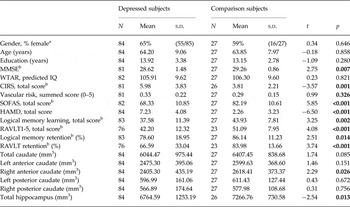
Table 1 shows descriptive data for the sample. There were no significant differences between depressed and control subjects with regard to age, sex, years of education and predicted IQ. Depressed subjects scored poorer on the MMSE compared to control subjects. As expected, the depressed subjects reported greater medical burden (CIRS), reduced social and occupational functioning (SOFAS), and more severe depressive symptoms compared to control subjects. On average, for depressed subjects, depressive symptom severity was in the euthymic range (mean HAMD score = 7.23, range 0–16).
Demographic and clinical characteristics of the depressed and comparison subjects

MMSE, Mini Mental State Examination; WTAR, Wechsler Test of Adult Reading; CIRS, Cumulative Illness Rating Scale; SOFAS, Social and Occupational Functioning Scale, HAMD, 17-item Hamilton Depression Rating Scale; RAVLT1-5, Rey Auditory Verbal Learning Test, measure of total learning over trials 1–5; RAVLT retention, Rey Auditory Verbal Learning Test, measure of percentage retention (trial 7/trial 5) × 100%).
Bold values represent significant differences p < 0.05.
a χ2 statistic.
b Equal variance not assumed.
In terms of cognition, depressed subjects showed significantly poorer unstructured learning and memory (RAVLT1-5 and RAVLT%) as well as structured learning and memory (Logical Memory-I and LOGMEM%) (Table 1).
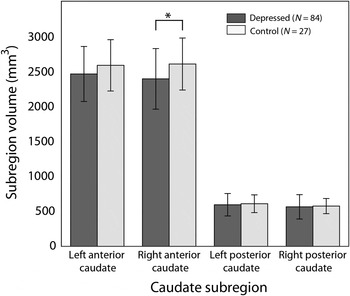
As indicated by Fig. 1, upon examining subregions of the caudate nucleus, the RAC was significantly smaller in depressed compared to control subjects. However, there were no significant differences between depressed and control subjects for the other subregions, nor for the total caudate volume. Given the exploratory nature of this study, we did not adjust the α-level for multiple comparisons when comparing caudate volumes between groups. The hippocampus was also significantly smaller in depressed compared to control subjects (Table 1).
Volumes for the subregions of the caudate nucleus for subjects with a lifetime depression diagnosis (depressed subjects) and control subjects (* denotes significance of p < 0.05).

Given findings relating to the sensitivity of the caudate nucleus to antipsychotic medication (Chakos et al. Reference Chakos, Lieberman, Bilder, Borenstein, Lerner, Bogerts, Wu, Kinon and Manzar1994; Glenthoj et al. Reference Glenthoj, Glenthoj, Mackeprang, Pagsberg, Hemmingsen, Jernigan and Baaré2007), we compared the subsample of depressed patients who were taking adjunctive antipsychotic treatment (n = 18) to the rest of the depressed sample (n = 66), and the groups did not differ in terms of learning/memory, nor with regards to RAC and hippocampal volume (data not shown).
Correlations between RAC volumes, learning and memory and clinical characteristics
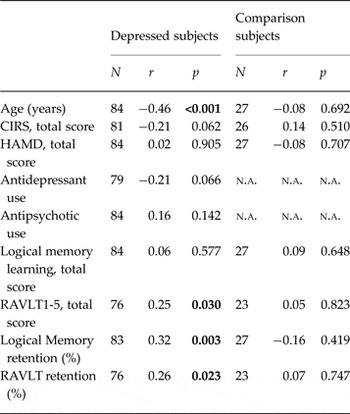
Table 2 displays the correlation coefficients between the RAC with respect to structured and unstructured verbal learning and memory and clinical variables. There were significant differences in the relationship between RAC volumes and learning/memory functioning for patients and controls: in patients, for both unstructured and structured tasks, reduced RAC volume was associated with poorer memory performance. By contrast, these associations were non-significant for the control group. For structured memory only, these correlation coefficients were statistically different between control and patient groups (Fisher's r-to-z transformations = 2.15, p = 0.016).
Correlations between right anterior caudate nucleus volume and clinical and memory characteristics for depressed subjects and comparison subjects

CIRS, Cumulative Illness Rating Scale; HAMD, 17-item Hamilton Depression Rating Scale; RAVLT1-5, Rey Auditory Verbal Learning Test, measure of total learning over trials 1–5; RAVLT retention, Rey Auditory Verbal Learning Test, measure of percentage retention (trial 7/trial 5) × 100%); n.a., not applicable.
Bold values represent significant differences p < 0.05.
With regard to clinical correlates of RAC volumes, smaller volumes were associated with being older in the depressed, but not the control sample (Fisher's r-to-z = −1.79, p = 0.037). For the depressed subjects, the reductions in RAC were associated with later onset of depression (r = −0.24, p = 0.030). There were no other significant relationships between caudate volumes and clinical variables including medical burden, depression severity, antidepressant use and antipsychotic use (Table 2).
Depressed sample only
Given prior work clearly establishing a major role for the hippocampus in mediating memory in ageing and depression (Jack et al. Reference Jack, Petersen, Xu, O'Brien, Smith, Ivnik, Tangalos and Kokmen1998; Fossati et al. Reference Fossati, Coyette, Ergis and Allilaire2002; Hickie et al. Reference Hickie, Naismith, Ward, Turner, Scott, Mitchell, Wilhelm and Parker2005; Jayaweera et al. Reference Jayaweera, Hickie, Duffy, Hermens, Mowszowski, Diamond, Terpening, Paradise, Lewis, Lagopoulos and Naismith2015a , Reference Jayaweera, Lagopoulos, Duffy, Lewis, Hermens, Norrie, Hickie and Naismith b ), we were interested in determining whether the RAC remained a significant predictor of memory after controlling for age and hippocampal volume. We thus conducted multiple linear regression modelling, with blocked, stepwise entry of age and hippocampal volume followed by RAC volume in block 2.
For unstructured verbal learning (RAVLT1-5) and retention (RAVLT%), only age remained a significant predictor in the full model (final models: F 1,73 = 15.59, p < 0.001, R 2 = 18%; F 1,73 = 5.26, p = 0.025, R 2 = 7%, respectively) and both hippocampal volume and RAC were removed.
For structured verbal memory (LOGMEM%), the model retained hippocampal volume and RAC as predictors and age was removed from the model (full model: F 2,80 = 6.35, p = 0.003, R 2 = 14%). In this model, RAC uniquely and significantly accounted for 5% of variance in structured verbal memory (β = 0.25, t = 2.16, p = 0.033) while hippocampal volume uniquely accounted for 3% but was not significant (β = 0.19, t = 1.71, p = 0.091). A further 6% was shared predictor variance.
Discussion
This study represents the first to manually demarcate anterior and posterior subregions of the caudate nucleus in order to determine their association with learning and memory in older people with a life diagnosis of depression. As expected, we found that the RAC was smaller in those with depression compared to controls. This finding is aligned with that of Butters et al. (Reference Butters, Aizenstein, Hayashi, Meltzer, Seaman, Reynolds, Toga, Thompson, Becker, Meltzer, Iii, Toga and Thompson2009) and Kenny et al. (Reference Kenny, O'Brien, Cousins, Richardson, Thomas, Firbank and Blamire2010), and reinforces the critical function of the caudate nucleus in the pathophysiology of depression. Importantly, this association was evident despite the fact that our sample largely had subsyndromal levels of depressive symptoms.
Most interestingly, in people with depression, smaller volumes of the RAC were associated with poorer verbal learning and memory on both unstructured and structured memory tests. Indeed, on tests of memory storage the difference in this relationship between the depressed and control groups was statistically significant. That is, in patients the relationship between these variables was pronounced.
Interestingly, using multivariate analysis, we found that both the hippocampus and the RAC play a unique role in memory storage for structured verbal information. Specifically, RAC volume is an independent predictor of memory storage for structured verbal information, regardless of age and hippocampal volume. These unique associations were not, however, apparent for unstructured episodic memory material. This suggests that the relative contribution of key neural structures (RAC and hippocampus) differs depending on the nature of the material to be remembered.
Taken together, these findings suggest that a diverse neural network, including the hippocampus and the RAC are involved in learning and memory, and that the anterior caudate, with its close connections to the frontal cortex, is preferentially implicated in the learning and memory decrements seen in depressed subjects, with a particularly important role in structured verbal memory. While it is unclear why volume loss was only significant for the right and not the left anterior caudate, the importance of the anterior caudate in memory performance is consistent with the finding that poor verbal memory was associated with reduced anterior caudate activity in subjects with generalized anxiety disorder (Moon et al. Reference Moon, Yang and Jeong2015), as well as the finding that it uniquely contributed to new learning in healthy adults (Mattfeld & Stark, Reference Mattfeld and Stark2015). The particular importance of the anterior caudate in depression is also consistent with the findings of Butters et al. (Reference Butters, Aizenstein, Hayashi, Meltzer, Seaman, Reynolds, Toga, Thompson, Becker, Meltzer, Iii, Toga and Thompson2009) who showed that critical volume loss was concentrated in the anterior part of the caudate in a sample of older adults with depression (Butters et al. Reference Butters, Aizenstein, Hayashi, Meltzer, Seaman, Reynolds, Toga, Thompson, Becker, Meltzer, Iii, Toga and Thompson2009), and may relate to altered connectivity between the anterior caudate and other regions such as the frontal lobes, as was the case with depressed subjects in the study by Kenny et al. (Reference Kenny, O'Brien, Cousins, Richardson, Thomas, Firbank and Blamire2010). Moreover, our finding that both the hippocampus and the RAC play a unique role in memory storage is consistent with the notion that these regions are part of a wider neural network involved in learning and memory. This extends findings from prior research showing that frontal regions, the hippocampus, and the caudate have been altered in depression (see review by Naismith et al. Reference Naismith, Norrie, Mowszowski and Hickie2012), and have also in turn been related to memory deficits (Naismith et al. Reference Naismith, Hickie, Ward, Scott and Little2006; Lamar et al. Reference Lamar, Charlton, Zhang and Kumar2012; Jayaweera et al. Reference Jayaweera, Hickie, Duffy, Hermens, Mowszowski, Diamond, Terpening, Paradise, Lewis, Lagopoulos and Naismith2015 a).
Further, functional neuroimaging evidence showing that the caudate nucleus and the hippocampus interact during recognition memory in healthy controls, and that there is increased hippocampal activity to compensate for caudate dysfunction in subjects with caudate pathology during the same recognition memory task (Voermans et al. Reference Voermans, Petersson, Daudey, Weber, Van Spaendonck, Kremer and Fernández2004), support this notion of hippocampal and striatal memory networks where these structures interact together in a non-competitive manner. This occurs in such a manner that impairment in one appears to be compensated by increased activity of the other (Voermans et al. Reference Voermans, Petersson, Daudey, Weber, Van Spaendonck, Kremer and Fernández2004). Indeed, research indicates that there are direct projections from the hippocampus to the caudate, and that both of these structures are modulated by efferents from the amygdala, which is not only implicated in mood regulation but has also been linked to memory problems in depressed subjects (Von Gunten et al. Reference Von Gunten, Fox, Cipolotti and Ron2000; see review by Poldrack & Packard, Reference Poldrack and Packard2003). This suggests that impairments in overlapping neural networks involved in mood regulation and cognition contribute to the pathophysiology of depression in older adults.
With regard to possible mechanistic drivers for the observed relationships in this study, anterior caudate atrophy was not associated with vascular risk factors or medical burden, although notably there was a trend association. However, it was beyond the scope of this study to examine the contribution of small-vessel ischaemia or general cerebrovascular change to caudate atrophy. We also did not measure levels of pro-inflammatory cytokines (see review by Butters et al. Reference Butters, Young, Lopez, Aizenstein, Mulsant, Reynolds, DeKosky and Becker2008) or other peripheral markers that have been shown to be pertinent to later onset depression and cognition (Diniz et al. Reference Diniz, Sibille, Ding, Tseng, Aizenstein, Lotrich, Becker, Lopez, Lotze, Klunk, Reynolds and Butters2015). Indeed, it may be the case that vascular and inflammatory processes disrupt monoamine neurotransmitter pathways within the anterior caudate and within its functional circuits, including connections with the hippocampus, amygdala and prefrontal cortex. These may in turn reduce serotonin and increase levels of tryptophan catabolites which are neurotoxic (Taylor et al. Reference Taylor, Aizenstein and Alexopoulos2013). This notion is supported by findings that the anterior portion of the caudate, with its close links to the amygdala, is particularly rich in serotonergic fibres (Butters et al. Reference Butters, Aizenstein, Hayashi, Meltzer, Seaman, Reynolds, Toga, Thompson, Becker, Meltzer, Iii, Toga and Thompson2009). Hence, given that previous research has documented that alterations in the serotonin transporter gene are relevant to the caudate atrophy seen in older people with depression (Hickie et al. Reference Hickie, Naismith, Ward, Scott, Mitchell, Schofield, Scimone, Wilhelm and Parker2007), it is conceivable that deficiencies in serotonin and serotonin pathways may at least partly account for the relationships with depression and anterior caudate atrophy in our study. Further implicating the wider neural network are findings that structures such as the hippocampus and the prefrontal cortex are also innervated by serotonergic fibres, and that serotonin receptor binding in the hippocampus is related to memory (Yasuno et al. Reference Yasuno, Suhara, Nakayama, Ichimiya, Okubo, Takano, Ando, Inoue, Maeda and Suzuki2003). Moreover, given that research indicates the serotonin neurotransmitter system interacts with other neurotransmitter systems (such as the glutamatergic system and the cholinergic system), it is likely that disruptions to these interacting neurotransmitter systems, within the wider network of neural structures involved in learning/memory, contribute to the learning/memory impairments found in depression.
Limitations
In interpreting these findings, it is worth noting the limitations of this study. First, the control sample we have used is relatively small and we are thus limited in the comparisons that can be drawn with the depressed patient group. Our depressed patients encompass a heterogeneous sample, including both those currently remitted from depression and those with mild symptomology, and both those with early onset and late onset depression. It also encompasses a restricted range of severity (i.e. HAMD < 20), and therefore the generalizability of our findings to those with more severe depression may be limited. Further, it is important to note that our study is cross-sectional and as such, the time-course of caudate changes with respect to cognition and depression characteristics cannot be determined. Finally, in this exploratory sample, we did not adjust the α-level for multiple comparisons when comparing caudate volumes between groups. Thus, it is possible that Type 1 error rate is inflated. Notwithstanding this limitation, we note that we did employ two-tailed, as opposed to one-tailed tests, even though on the basis of prior work, we were clearly expecting our results to indicate smaller caudate volumes in the depressed sample. Additionally, the correlations between caudate volumes and memory are robust and withstand α correction.
Implications
This study highlights that the anterior caudate, with its proximity to the frontal cortex and the amygdala, and dense monoamine neurotransmitter pathways, is a subregion of the caudate that is particularly implicated in depression pathophysiology in older people. In addition, this structure appears to play a discrete role in the learning/memory decrements observed in this group. Further, while previous research has largely focused on the hippocampus with respect to memory changes in depression, our work suggests that a wider network of neural regions, including the anterior portion of the caudate and the hippocampus, is likely to be contributing to these decrements, with contribution of specific structures varying depending on the nature of the material to be learned/recalled. In this regard, studies employing resting-state fMRI may help to determine whether broader network dysfunction underpins memory alterations (Sexton et al. Reference Sexton, McDermott, Kalu, Herrmann, Bradley, Allan, Le Masurier, Mackay and Ebmeier2012). Moreover, while we established that anterior caudate atrophy is linked to later ages of depression onset, further work demarcating the clinical correlates of this structural brain change, including determining whether significant relationships are indeed confined to the RAC, may help to inform more tailored pharmacological intervention approaches, where particular symptom complexes predominate.
Supplementary material
For supplementary material accompanying this paper visit http://dx.doi.org/10.1017/S0033291716000787.
Acknowledgements
The authors acknowledge the volunteers for their kind participation in the research. Ms. Hirosha (Keshani) Jayaweera is supported by an Australian Postgraduate Award PhD scholarship. Professor Ian Hickie is supported by National Health and Medical Research Council of Australia (NHMRC) Senior Principal Research Fellowship No. 1046899. Dr Shantel Duffy is supported by an NHMRC Centre of Research Excellence Neurosleep Postdoctoral Research Fellowship. Dr Loren Mowszowski is supported by an Alzheimer's Australia Dementia Research Foundation Postdoctoral Research Fellowship. A/Professor Lagopoulos is supported by Dreikurs bequest supporting Alzheimer's research. Professor Naismith is supported by an NHMRC Career Development Fellowship No. 1008117.
Declaration of Interest
Professor Hickie has led projects for health professionals and the community supported by governmental, community agency, and drug industry partners (Wyeth, Eli Lily, Servier, Pfizer, AstraZeneca) for the identification and management of depression and anxiety. He has served on advisory boards convened by the drug industry in relation to specific antidepressants, including nefazodone, duloxetine and desvenlafaxine, and has participated in a multicentre trial of agomelatine. He has participated in Servier-sponsored educational programmes related to circadian-based therapies.