


A central force in the evolution of political science, like other of the social sciences, has been the incorporation of the methods of the natural sciences. During the 1920s and 1930s, a group of scholars advocating the development of a “science” of politics assembled at the University of Chicago under the tutelage of Charles E. Merriam, who chaired the Department of Political Science from 1923 to 1940. The “Chicago School of Political Science,” although not the only voice for a science of politics, was still for its day the most cohesive, productive, and influential contributor to the development of political science on a natural scientific model.
The faculty of the Chicago School produced seminal studies of voting behavior, urban politics, African American politics, political psychology, comparative politics, the causes of war, political parties, public administration, and methodology (e.g., Gaus, White, and Dimock, 1936; Gosnell 1927, 1930, 1934, 1935, 1937; Lasswell 1927, 1930, 1935, 1936; Merriam 1923, 1925, 1929; Merriam and Gosnell 1924; White 1929; Wright 1935). These studies were among the first to use advanced empirical methods in political science, including survey experiments (e.g., White); content analysis (e.g., Lasswell 1927); field experiments (e.g., Gosnell 1927); and correlation, regression, and factor analysis (e.g., Gosnell 1937). At the same time, the Chicago School's notion of “science” embraced qualitative methods and historical analysis, which often were presented side-by-side with quantitative analysis (e.g., Gosnell 1935).
After World War II, the apostles of the Chicago School—those who pursued doctoral studies at Chicago in the 1920s and 1930s—moved to faculty positions at leading universities around the United States: V.O. Key Jr. to Johns Hopkins, Yale, and Harvard, Harold D. Lasswell to Yale, David B. Truman to Columbia, Gabriel A. Almond to Princeton and Stanford, Avery Leiserson to Vanderbilt, and Herbert A. Simon to the Carnegie Institute of Technology. (C. Herman Pritchett remained at Chicago as department chair.) These graduates of the Chicago School were the vanguard of the behavioral revolution that fundamentally reshaped political science. Together they created the science of politics that became the mainstream of the discipline during the 1950s and 1960s—and remains with us still.
The substantive and methodological contributions of the Chicago School have been widely appreciated and discussed (e.g., Almond 2004; Hansen 1997; Karl 1974; Monroe 2004; Neblo 2004; Oren 2003; Ross 1991; Simon 1985; Somit and Tanenhaus 1967; Tsou 1951; White 1942). Less attention has been devoted to the genesis of the school itself. How did Merriam go about building a “school”? What occurred to make possible the success of a new conception of political science as a scientific discipline? In this article, we examine the scientific vision, faculty, curriculum, and supporting institutions of the Chicago School. The creation of the Chicago School, we find, required the construction of a faculty committed to its vision of the science of politics, the muster of resources to support efforts in research and education, and the formation of curriculum to educate students in its precepts and methods. Its success as an intellectual endeavor, we argue, depended not only on the articulation of the intellectual goals but also, crucially, on the confluence of disciplinary receptiveness, institutional opportunity, and entrepreneurial talent in support of a science of politics.
A VISION OF SOCIAL SCIENCE
In its first decades, the fledgling discipline of political science looked toward history and toward law, though the balance differed by department. At Johns Hopkins University, Henry Baxter Adams established a political science curriculum firmly rooted in history (Somit and Tanenhaus 1967, 25). Adams's motto, inscribed on the wall of the “Historical Seminary” where he taught, expressed his view succinctly. “History is past Politics,” it read, “and Politics present History” (Bishop 1987, 505). At Columbia University, in contrast, the political science department sought to combine comparative historical analysis with administration and law. Its faculty covered a range of specialties, from John W. Burgess in comparative law to Frank J. Goodnow in administrative law to William A. Dunning in history and political philosophy, but law reigned supreme (Karl 1974, 24–25). “Law is, with us,” the Columbia department proclaimed, “the chief avenue into politics” (Columbia University 1897–1898, 12).
In a 1921 article in this Review, Charles Merriam outlined an alternative vision for political science, a model that would become the Chicago School. Merriam's proposal for a “new science of politics” was ordered by three precepts (Merriam 1921; see also his 1925 APSA presidential address, Merriam 1926). First, he argued, political science should draw on the practices of natural science—especially biology—in the development of theory. Like the natural sciences, Merriam (1921, 175, 179; 1926, 8) contended, the social sciences ought to be closely integrated. Political scientists, he urged, should pay particular attention to developments in psychology. Merriam offered a vision of political science as an integral part of a social science.
The second precept of Merriam's vision was that political science should look to natural science for inspiration on method. For Merriam (1921, 175), the key ingredient in the scientific method was the ability to conduct systematic observation, which demanded the construction of laboratories and the creation of research teams. The use of statistics was certainly a vital part of his project. “Statistics,” he argued,
… increase the length and breadth of the observer's range, giving him myriad eyes and making it possible to explore areas hitherto only vaguely described and charted. In a way, statistics may be said to socialize observation. It places a great piece of apparatus at the disposal of the inquirer—apparatus as important and useful to him, if properly employed, as the telescope, the microscope and the spectroscope in other fields of human investigation. (Merriam 1921, 179)
The third part of Merriam's vision was that political science should look to natural science as an exemplar of science for practical use. Political science ought to produce knowledge that is constructive to the human endeavor of government, just as natural science serves to bring nature (partially) under human control. For Merriam, a useful science of politics was not an applied science—much as Merriam and his associates were active themselves in government—but rather a basic science oriented toward deeper understanding of the issues that confront modern government. It was Merriam's (1926, 12) intention that “social science and natural science come together in a common effort and unite their forces in the greatest tasks that humanity has yet faced—the intelligent understanding and control of human behavior.”
Even in 1921, Charles Merriam was hardly the only advocate for a scientific approach to the study of politics. The idea of a social science that was unified, systematic, and practical was circulating widely. It owed much to the philosophical pragmatism of John Dewey, an important influence in the social sciences at Chicago, where he served for ten years as a professor in philosophy and education, and nationwide (see, e.g., Dewey 1927; Neblo 2004). As a student at Columbia, Merriam absorbed the teachings of John W. Burgess, who himself espoused a scientific vision for political science. Beyond Columbia, Harvard's A. Lawrence Lowell used his 1909 APSA presidential address to exhort political scientists to borrow from the natural sciences and seek “scientific knowledge of the physiology of politics” (Lowell 1910, 3).
But it was Merriam, as chair, with a department at his disposal, who organized the vision of a new science of politics into practice. He encapsulated this effort concisely in the first of the 15 annual reports that he would write for the Department:
[W]hat we are really attempting is to blaze a new trail in the field of the technical study of political relations. We are endeavoring to integrate the study of government more closely with the other social studies and with the natural sciences, and we are struggling to develop a more precise technique. This is not the task of a day, and we do not expect to finish it offhand, but we are confident that we are making significant progress. We now have more than forty graduate students in residence…. We are developing significant research activities, and we believe that we are making real contributions to the more intelligent ordering of political life. (Annual Report 1926, 4)
BUILDING THE FACULTY
A first critical task in creating the Chicago School was to build a faculty that would implement Merriam's vision of the science of politics. When Merriam arrived at Chicago in 1900, having received his Ph.D. from Columbia in that same year, the department had only four tenure-track faculty. By 1920, little had changed. Harry Pratt Judson remained Head of the department, and Merriam was still just the third most senior of the four faculty members (University of Chicago 1900–1920). The department still practiced political science in the public law tradition, as did much of the discipline. Merriam himself had spent the first 20 years of his career more engaged in politics than in political science. His wide-ranging political activities included election as a Chicago alderman in 1909 and nomination as a Republican for mayor in 1911. Merriam's career in electoral politics ended with his inability to resecure the GOP mayoral nominations in 1915 and 1919 and his failure to regain his aldermanic seat in 1917, leading him to redirect his ambitions toward the political science profession (Karl 1974, 71–83).
Merriam quickly recognized that the most direct way to instill his vision of political science within the Chicago department was to create his own colleagues. As the department grew in the 1920s, Merriam recruited his own most talented students to the faculty, including Leonard White (Ph.D., 1921), Harold Gosnell (1922), Harold Lasswell (1926), Carroll Wooddy (1926), and Fredrick Schuman (1927). By 1932, five of the eight tenure-track faculty had received their Ph.D.s under Merriam's direction at Chicago.1
Leonard White was already an established scholar when he came to Chicago in 1920 with a master's degree (Dartmouth, 1915) and five years of experience at Clark University and Dartmouth College. Merriam supervised White's Ph.D. dissertation during his first year on the faculty.
Lasswell, Gosnell, and White, in particular, embodied Merriam's vision of a science of politics. Lasswell's writings on the psychology of politics, Gosnell's use of statistical analysis and field experiments, and White's engagement with the problem of public administration each typified Merriam's view of a political science integral to social science, his vision of a political science founded on systematic observation, and his call for a social science for practical use.
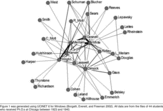
Merriam and his acolytes were at the core of the Chicago School's pedagogical program as well. Drawing on the files of students who received their doctorates from the department during Merriam's chairmanship, we analyzed the network of faculty serving on dissertation committees. Two faculty members are connected in this network if they served together on a student's dissertation committee. The network depicted in Figure 1 places faculty members nearer to one another when they are more closely connected in the network, with a thicker line denoting more co-service. The graph illustrates the close ties of Merriam, White, and Gosnell at the center of the network, with Lasswell occupying a less central position. Even as the Chicago faculty grew to include such scholars as Quincy Wright (Ph.D., Illinois, 1915), Jerome Kerwin (Columbia, 1926), Clarence Ridley (Syracuse, 1927), and Marshall Dimock (Johns Hopkins, 1928), Merriam's students still formed the nucleus of training in the Chicago School.

Dissertation Advising Network, 1923–1940.
CRAFTING THE CURRICULUM
The Chicago School was more than just a “school” in the metaphorical sense that its members adhered to a common vision of political science as “science.” It was also a school in the concrete sense that the faculty worked together to implement their vision through the curriculum. To this end, the department's curriculum was transformed over the decade of the 1920s from a focus on public law and historical institutionalism—the basis of the discipline at the time—to a focus on the scientific study of political behavior.2
Data on fields, courses, and instructors were reported by the University of Chicago (1893–1953).
Students were required to pass exams in all four fields, which were one more way to ensure that students appreciated the science of politics. For example, after a battery of questions about classical philosophy, the 1925 political theory field exam asked students “What relations, if any, are there between the development of political science and biology?” and “What are the chief difficulties in the development of a science of politics, and how are these being overcome?” (Department of Political Science 1925, Box 117, Folder 7).
The members of the Chicago School collaborated to develop the classes required by the new fields, commonly co-teaching courses in their experimental phases. For example, in 1929–1930, Merriam, White, and Gosnell co-taught a new seminar titled “Introduction to Political Research.” Faculty research interests often were the subject of graduate courses, including such regularly offered seminars as “The Electorate” (Gosnell), “Comparative Political Parties” (Gosnell), “Non-rational Types of Political Action” (Lasswell), “Public Opinion and Propaganda” (Lasswell), “Research in Politics and Citizenship” (Merriam), and “Systemic Politics” (Merriam). The Chicago faculty designed the curriculum to integrate teaching and research consistent with the objectives of the school.
The uniqueness of Chicago's curriculum is apparent when viewed in comparison with other leading departments of the era. We compared the course catalogs of the University of Chicago (1893–1953), Harvard University (1900–1940), Columbia University (1897–1940), and Johns Hopkins University (1900–1911, 1912–1940).4
These four universities were the largest producers of political science doctorates between 1926 and 1935 (Somit and Tanenhaus 1967, 102).
Harvard, Columbia, and Johns Hopkins all turned their attention to studies of the legislative process much earlier than Chicago. Johns Hopkins started offering “The Organization, Procedure, and Work of Congress” in 1921. Columbia began teaching “Legislative Methods and Problems” in 1923. Harvard offered “The Legislative Process” in 1936. Chicago, however, did not offer “The Legislative Process” until after World War II. Where Chicago led the way in applying scientific method to electoral behavior, public opinion, and public administration, it was slow to apply these methods to the study of legislative behavior.
A distinctive feature of Chicago's curriculum was Merriam's course on the “Scope and Method of Political Science,” which anchored the curriculum around the Chicago School's view of social science. Merriam taught the course continuously from 1920 until his retirement in 1940, during which time almost three-fourths (71.9%) of those completing their Ph.D.s in the department enrolled in it (Department of Political Science 1920–1940). Every graduating student who did not take Scope and Method with Merriam took one of his other courses. Thus, Merriam quite literally taught the Chicago School.6
Merriam's students recalled his influence not so much for his research ideas—“he had already passed the scholarly ‘point of no return,”’ said one—but as an “evangelist of political and social science,” a “patriarch” who “touched the lives of many, if not most, of the scholars who became prominent in the social sciences” (Almond 1991, 340–42).
Interdisciplinarity was another prominent feature of the Chicago curriculum. The department directed students “to be familiar with the necessary background studies in the related social sciences of economics, sociology, anthropology, history, and psychology” (University of Chicago 1934–1935, 318). It facilitated enrollments by “calling attention” to courses offered in other departments. For example, in 1936, the department called attention to 28 outside courses, such as “Sociology 326: Collective Behavior” and “Psychology 355: Psychology of Motives.”

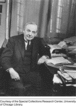
Charles E. Merriam.
Interdisciplinarity was not only the rhetoric but also the culture of a department that reflected Merriam's vision of a political science integral to social science. Departmental records show that students took about one quarter (25.8%) of their coursework outside of political science, excluding courses taken in preparation for language exams (Department of Political Science 1920–1940). The courses were distributed among the fields of law (32.8%), history (23.9%), economics (19.4%), sociology (9.9%), and other fields (14.0%). Almost all graduates (96.6%) completed at least one substantive course outside of political science; nearly half (42.4%) took courses in at least three other fields. Interdisciplinary coursework brought political science students into touch with leaders in other fields. For example, a number of students took classes in factor analysis from L.L. Thurstone, the psychologist who pioneered statistical analysis of attitudes (e.g., Thurstone 1928). Herbert Simon exemplified the culture by completing graduate courses in political science, economics, mathematics, and philosophy, thus setting the stage for a career that would produce seminal contributions to the fields of public administration, economics, psychology, and artificial intelligence.
SUPPORTING RESEARCH
Merriam recognized that a science built on systematic observation required the resources to support systematic observation. “Science is a great cooperative enterprise in which many intelligences must labor together,” he wrote in 1921. “There must always be wide scope for the spontaneous and unregimented activity of the individual, but the success of the expedition is conditioned upon some general plan of organization” (Merriam 1921, 185). Merriam's plan of organization involved the creation of several institutions that would become the sponsors for social science research generally and for the research of Chicago School political scientists specifically.
Merriam promoted cooperation in service to the scientific conception within the discipline in three meetings of the National Conference on the Science of Politics, in Madison, Chicago, and New York in 1923, 1924, and 1925. Organized in collaboration with A.B. Hall of Wisconsin, A.N. Holcombe of Harvard, Luther Gulick of the National Institute of Public Administration, and Frederick P. Gruenberg of the Bureau of Municipal Research of Philadelphia, the conferences drew about one hundred scholars each year to discuss scientific approaches in specific research areas in small roundtables (Hall 1926). Subsequently incorporated into the APSA Annual Meeting, the conferences functioned as a resource for like-minded scholars throughout political science.
Merriam spearheaded the muster of material support for research as well. The most renowned and lasting of his efforts was the organization in 1923 of the Social Science Research Council (SSRC). Supported by the Laura Spelman Rockefeller Memorial, the SSRC counted seven disciplinary associations as sponsors, the APSA the first. Chicago faculty and students were prominent among the early recipients of the SSRC's munificence, which extended to include Gosnell, Wooddy, Lasswell, Dimock, Rodney Mott, Albert Lepawsky, Gabriel Almond, and others. Within 10 years the SSRC had disbursed over $10 million in support of social science training and research, including such landmarks as The Modern Corporation and Private Property (Berle and Means 1932). Merriam served as the SSRC's first chairman, and “the … agenda outlined by Merriam—emphasizing the application of scientific principles, the development of scientific techniques, the aggregated study of individual behavior, the coordination of research efforts and outreach to the most rigorous social science communities—became part of the Council's operating system” (Worcester 2001, 18). Later, in 1937, Merriam helped to organize the Public Administration Clearing House (PACH), a joint venture of 14 associations of public administrators directed by Louis Brownlow and sited on the Chicago campus.7
Associations of public administrators began gathering on the Chicago campus at the behest of the political science department in 1929, when the International City Managers' Association and the Bureau of Public Personnel Administration established headquarters in Chicago. In later years, they were joined by groups like the American Legislators' Association and the International Association of Fire Chiefs. The directors of the associations regularly held appointments as lecturers in the department, allowing them to teach courses like “Techniques of Municipal Administration” and “Public Personnel Administration.”
In Chicago, Merriam organized two institutions to support research by Chicago's own faculty and students. The first was the Local Community Research Committee (LCRC), a joint effort of the departments of Political Science, Sociology and Anthropology, and Political Economy to make the city of Chicago a laboratory for social science research (Bulmer 1980). Funded in 1923 by a grant from the Laura Spelman Rockefeller Memorial, the LCRC took as the “initial task of this organization a comprehensive and objective study of the social life of our own city” including “non-voting in Chicago; distribution, causes, and constructive proposals” (Board of Trustees 1923, 9–11). The LCRC provided funds not only for Merriam and Gosnell's (1924) seminal examination of non-voting but also for numerous other studies, such as Wooddy's (1926) study of the Chicago primary and White's (1929) survey of attitudes on public employment.
Merriam was also centrally involved in the construction of the Social Science Research Building (SSRB) at the University of Chicago in 1929. He was among the guiding spirits in the conception of the building—pointedly named, like SSRC, with “science” in the singular—which facilitated the creation of a unified division of the social sciences in the University. Merriam influenced its design, insisting that the fourth floor house “a statistical laboratory, three machine rooms and a room for holding census data” (Bulmer 1980, 97; see also Karl 1974, 154). To facilitate interdisciplinary cooperation, faculty members were assigned offices by research area rather than by department, a plan that paired Gosnell with the sociologist W.F. Ogburn, Lasswell with the psychometrician L.L. Thurstone, and White with economists Henry Schultz, H.A. Millis, and S.E. Leland and the sociologist Herbert Blumer (Bulmer 1980, 97). Although “such [interdisciplinary] relations had already been established through the Social Science Research Council,” Merriam wrote in 1930, “… the interrelation of departments under the new plan will undoubtedly be more advantageous, and it is believed will be productive of important results in social and political research” (Annual Report, 1930, 9).
The SSRC, PACH, LCRC, and SSRB jointly supplied an infrastructure for research and education for the Chicago School, and for the movement for a new science of politics. These institutions provided field staff for Gosnell to canvass Chicago neighborhoods, assistants for Lasswell to analyze newspaper texts, and space for White to meet with government officials. They made critical grants of research fellowships to Chicago faculty and students and enabled the adherents of the Chicago School to lead by the example of their teaching and research.
WHY CHICAGO?
By the mid 1920s, Chicago was considered the center of a new movement behind a scientific approach to the study of politics. Although Merriam's ideas encountered resistance in many quarters of the discipline—Charles Beard's (1927) APSA presidential address in 1926 contained a thinly-veiled attack on Merriam, his immediate predecessor (see also Almond 1991, 347)—they were welcomed warmly in others. As already noted, Merriam found many collaborators in the National Conference on the Science of Politics and in the development of the Social Science Research Council, and his students were much in demand for faculty positions throughout the country. The interest in a political science on the model of the natural sciences was part of the intellectual zeitgeist of progressive-era political science, and it paralleled the “scientific turn” in sociology, psychology, and economics (Ross 1991, 257–300).
If Merriam and his colleagues at Chicago did not have a monopoly on ideas about a science of politics, however, why did they become so closely associated with the University of Chicago in the 1920s and 1930s? Why did Chicago lead these developments?
We think that the answer is as much—if not more—institutional and entrepreneurial as intellectual. Merriam came to the chairmanship of the Department of Political Science just as his opportunities for action in the University of Chicago broadened. Merriam's chairman, Harry Pratt Judson, held Merriam in disfavor, regarding his political activities as a waste of his intellectual talents (Almond 1991, 341). Accordingly, when Judson became Chicago's president in 1906 he retained his chairmanship in Political Science. Shortly after Merriam left elected politics, however, Judson stepped down and Merriam finally assumed leadership in the department. Judson's successors as president, Ernest DeWitt Burton (1923–1925) and Max Mason (1925–1928), allowed Merriam the freedom to mold the department to his taste. Among other things, they permitted Merriam to disregard norms against in-breeding, enabling him to hire his own students to the faculty (Karl 1974). Given the enormous influence that White, Gosnell, and Lasswell had in defining the name brand of the Chicago School, these exceptions made a key difference.
In building the Chicago School, Merriam also worked in a favorable environment in the University of Chicago. Opened in 1892, the University of Chicago was founded as a research university, not as a college, and lacked the accretions of tradition and entrenched interest that stifled institutional innovation. The Political Science faculty and students benefited from a culture of common intellectual purpose within the University. Quincy Wright's (1935) study of the causes of war, for example, drew multiyear contributions from faculty in Political Science, History, Anthropology, and Economics. The leaders of the “Chicago School” in Sociology—Albion Small, Robert Park, Ernest Burgess, W.I. Thomas, and W.F. Ogburn—shared Merriam's interest in the city of Chicago as an empirical research laboratory within which to test new research methodologies and refine statistical techniques, and they aided him in the creation of the Local Community Research Committee (Abbott 1999; Bulmer 1980). Merriam's closest colleagues in the development of the Social Science Research Council were two University of Chicago associates, both with Chicago Ph.D.s, psychologist Beardsley Ruml, the head of the Laura Spelman Rockefeller Memorial, and economist Wesley Clair Mitchell, a key figure in the National Bureau of Economic Research (Worcester 2001, 18).
A major factor in Chicago's leadership in the movement for a scientific conception of the discipline, though, was Merriam himself. He had spent the first two decades of his career immersed in practical, progressive politics. His career in government animated his belief in the value of a science of politics to the practice of government. It also introduced him into the circles of political and economic elites sympathetic to the progressive program of scientific management. Merriam frequently tapped his contacts in politics, business, and foundations to solicit support for his projects.
Merriam also capitalized on his academic contacts to enrich the intellectual environment and create opportunities for collaboration for the department and the discipline. He brought a steady stream of visitors to Chicago, including Wisconsin's eminent public administration scholar, John M. Gaus, a regular summer guest and occasional visiting professor who over more than a dozen years taught courses, advised dissertations (cf. Figure 1, lower right), and collaborated on research with Chicago faculty (e.g., Gaus, White, and Dimock 1936; Annual Report 1927–1940). Merriam facilitated professional opportunities for colleagues and students as well. With Merriam's help, Lasswell spent 1926–1927 at Harvard working with the experimental psychologist Elton Mayo, preparing him for his pioneering work on psychology and politics (Annual Report 1926–1927; see also Rosten 1991, 280–81).
The University of Chicago, then, had the right alignment of program, place, and person. Merriam's work between the academy and government gave him the perspective to frame a mission for political science that both scholars and reformers found valuable. His myriad political and academic contacts, and the very force of his politician's personality—his colleagues addressed him as “Chief”—enabled him to marshal the requisite human and financial resources to the enterprise of political science. Finally, for a time, but at a crucial time, the University of Chicago gave Merriam the leeway he needed to build a faculty, to enact a curriculum, and to establish an infrastructure for social science research.
THE CHICAGO SCHOOL AND POLITICAL SCIENCE
The conditions that enabled the Chicago School at Chicago did not outlast Merriam himself. Merriam's fortunes within the University of Chicago declined with the appointment of a new president, Robert Maynard Hutchins, himself an intellectual visionary of Merriam's quality, in 1929. Hutchins's commitments to a humanistic model for liberal education—and, his critics said, the influence of his amanuensis, the Thomist philosopher Mortimer Adler—posed him against Merriam and other advocates for the scientific model in the Chicago faculty's pitched battles over “Facts vs. Ideas” (Ashmore 1989, 77–175). By the early 1940s two of the key figures in the Chicago School, Lasswell and Gosnell, stymied in their hopes for promotion to full professor, had moved to careers elsewhere (Hansen 1997; Rosten 1991, 284). With Merriam's retirement in 1940, the priorities of the Chicago department shifted (Almond 2004). After World War II, the diverse perspectives of Leo Strauss, Hans Morgenthau, and David Easton defined Chicago political science, not the unified mission of the Chicago School. As is often the case, charismatic leadership and institutional opportunities had run their course.
The last years of the Chicago School at Chicago, however, were unquestionably its finest. Fired by Merriam's vision, led by his faculty, shaped by his curriculum, and supported by his infrastructure, the Chicago department in the 1930s attracted a disproportionate share of the graduate students who then became the leaders of the discipline in the postwar period, the very vanguard of the behavioral revolution: Key, Almond, Truman, Pritchett, Leiserson, Simon. Once an anomaly, the Chicago political science curriculum, with its emphasis on scientific explanation and systematic observation, spread throughout the discipline. The Chicago model of collaborative social science carried forward through the Social Science Research Council and influenced the development of large-scale research efforts like the Columbia and Michigan election studies of the 1940s and 1950s (Bulmer 1980; Lazarsfeld, Berelson, and Gaudet 1944; Campbell, Converse, Miller, and Stokes 1960).8
Chicago had a connection to Columbia with Bernard Berelson, who studied with Chicago School leaders in political science and sociology and earned his Ph.D. in 1941 in Library Science. The Michigan voting studies emerged from the work of the SSRC's Committee on Political Behavior, chaired successively by V. O. Key Jr. and David B. Truman. SSRC provided financial sponsorship as well (Ranney 1974).
The building of the Chicago School reveals that the evolution of political science is about more than the advent of ideas. It is also about how ideas are taken up by scholars on a faculty, taught to students in a curriculum, and supported in their development by an infrastructure for inquiry. The efforts of Charles Merriam gave a vision of a new science of politics a material life at the University of Chicago.
For assistance with various aspects of the research, we owe special thanks to Kathy Anderson, Jonathan Bruner, Christina Greer, Andrew Hammond, Ira Katznelson, Daniel Meyer, Clayton Nall, Vijay Phulwani, Adam Sheingate, James Stimpert, Jocelyn Wilk, the editors, and three anonymous reviewers. Financial support was provided by the Division of the Social Sciences at the University of Chicago, the Center for the Study of American Politics at Yale University, and the Department of Political Science at the University of Florida.



Comments
No Comments have been published for this article.