

1. Introduction
Previous contributions increasingly acknowledge that climate change causes severe threats to facilities worldwide across industries, including foreign assets or cross-border financial transactions (Agarwala et al., Reference Agarwala, Burke, Klusak, Mohaddes, Volz and Zenghelis2021; Ni et al., Reference Ni, Chen, Li and Yang2022). Weather pattern anomalies could trigger more volatile earnings, cash flows and irreversible financial losses, leading to the so-called weather-related financial risks (Huang et al., Reference Huang, Kerstein and Wang2018; Karydas and Xepapadeas, Reference Karydas and Xepapadeas2022). In turn, multinational companies and investors can respond to higher weather-induced risks by engaging in illicit transnational fund transfers to lower the effects of weather-induced losses of their cash flows or assets. As such, one might observe an outflow of capital as a response to weather shocks.
It is also well established that weather anomalies can exacerbate local and national instability by contributing to conflicts, which in turn foster transnational financial crimes and lead to increased illicit capital movements (Barnett, Reference Barnett2003; Efobi and Asongu, Reference Efobi and Asongu2016; Mavrakou et al., Reference Mavrakou, Chace-Donahue, Oluanaigh and Conroy2022). These complex linkages highlight the urgent need for governments and academics to understand the relationship between weather shocks and capital flight. However, much academic research centres around the economic and social costs of climate change but mostly ignores how weather anomalies might affect cross-border capital flows. We address this gap in the literature by studying the effect of weather shocks on capital flight with a particular focus on the potential mediation channel of state capacity.
Capital flight is the transfer of assets abroad to reduce loss of principal, loss of return or loss of control over one's financial wealth, in response to factors inherent to the country of origin. While capital flight and non-illicit/licit capital flight involve the movement of funds across borders, they differ in terms of their motivation. Capital flight is often motivated by the intention to evade tax, criminal investigation, risk and economic turbulence, confiscation, currency risk or pursuit of higher returns elsewhere. It is often, perhaps usually, illicit (Tax Justice Network, 2020). Given the illegal nature of capital flight, we use illicit capital flight and capital flight interchangeably in the text. On the other hand, non-illicit capital refers to the legal and legitimate movement of funds across international borders for various reasons, including asset diversification strategy, international trade and foreign currency transactions. Overall, this study focuses on the effects of weather shocks on capital flight to uncover how weather anomalies can spur financial crimes.
In this paper, we leverage the deviation from the historical norms (typically 30 years) of population-weighted temperature and precipitation anomalies to identify the effects of weather shocks on capital flight across 28 African countries from 1970 to 2014. The underlying intuition is that abnormal temperature and precipitation patterns may worsen the vulnerabilities of African states, ultimately giving rise to transnational financial crimes. Theoretically, this may occur by affecting state fiscal capacity through two mechanisms.
The first mechanism suggests that weather anomalies, by exacerbating social and political tensions, are likely to strain state capacity in low-income countries, creating an environment where financial and economic crimes gestate and thrive (Jasparro and Taylor, Reference Jasparro and Taylor2008; Ranson, Reference Ranson2014; Rahman, Reference Rahman2018). This can lead to heightened financial and institutional vulnerabilities, creating new opportunities for multinational corporations (MNCs) and predatory states to engage in illicit financial activities.
The second mechanism concerns the vulnerability of African economies to a complex web of incidents stemming from weather anomalies. Given the existing capability shortfalls in many African countries, the adverse effect of weather shocks on economic outcomes is likely to impede governments from improving their ability to effectively monitor and tax nearly all financial transactions (Lis and Nickel, Reference Lis and Nickel2009; Catalano et al., Reference Catalano, Forni and Pezzolla2020; Kunawotor et al., Reference Kunawotor, Bokpin, Asuming and Amoateng2022). This situation can create opportunities for MNCs to expropriate resources and manipulate official trade documents. Similarly, some corrupt government officials may falsely claim to be using funds for climate-related projects or inflate the costs associated with these projects to divert funds from Africa into offshore accounts. Despite the relevance of these mechanisms, studies have yet to address the complex linkages between weather shocks, capital flight and state capacity.
Exploiting the variation in within-country exposure to weather shocks, we find sound evidence that capital flight is more strongly linked to temperature shocks than precipitation shocks. This supports the idea that temperature shocks drive transnational financial crimes. Our findings remain robust across various historical norms, alternative model specifications, and when accounting for global factors influencing capital flight. The causal mediation analysis reveals that state capacity plays a moderate mediation role in the nexus of temperature shocks and capital flight, highlighting the need for further research to fully understand the mechanisms by which weather shocks influence capital flight.
This study contributes to the literature in the following two aspects. First, it contributes to the broad literature on the impact of temperature shocks on macroeconomic outcomes such as aggregate economic output, sectoral production and employment within a reduced-form regression framework (Dell et al., Reference Dell, Jones and Olken2009; Acevedo et al., Reference Acevedo, Mrkaic, Novta, Pugacheva and Topalova2020; Akyapi et al., Reference Akyapi, Bellon and Massetti2022; Mohaddes et al., Reference Mohaddes, Ng, Pesaran, Raissi and Yang2022; Gray et al., Reference Gray, Taraz and Halliday2023; Zappalà, Reference Zappalà2023). We expand this literature by questioning whether weather anomalies trigger transnational financial crimes. By looking at the potential mediation channel of state capacity, this study bridges the gap between weather-related financial risks (climate financial economists) and the discourse of weak state capacity (political scientists).Footnote 1
Second, the investigation of the effect of temperature shocks on trade misinvoicing advances a burgeoning literature on tax evasion and weather shocks. Trade misinvoicing can be used to manipulate trade transactions to evade taxes and facilitate illegal activities. A large part of the existing literature focuses on firms’ investment exposure to weather shocks and climate risk without explicitly investigating tax evasion (see, e.g., Addoum et al., Reference Addoum, Ng and Ortiz-Bobea2023). Only a few recent studies attempt to characterize the effects of weather shocks on tax evasion (Adrian et al., Reference Adrian, Garg, Pham, Phang and Truong2022; Ni et al., Reference Ni, Chen, Li and Yang2022; Tang et al., Reference Tang, Yang and Duan2023). For example, Ni et al. (Reference Ni, Chen, Li and Yang2022) report that higher climate risks trigger tax avoidance as firms tend to protect their revenues against the adverse effects of climate change for an international sample of 30,916 firms across 71 countries. Using firm-level data in the US, Adrian et al. (Reference Adrian, Garg, Pham, Phang and Truong2022) demonstrate that firms are likely to engage in less corporate tax avoidance in response to natural disaster events. In a more recent contribution, Tang et al. (Reference Tang, Yang and Duan2023) show that high temperatures lead to opportunistic behaviours of firms and tax avoidance activities of Chinese firms. While previous contributions yield mixed evidence, it is crucial to consider another dimension of tax evasion, namely trade misinvoicing, which is an essential insight of this study.
2. Empirical setting and data
2.1. Model specification and estimation strategy
Previous studies rely on year-to-year fluctuations in temperature and precipitation to identify their causal effects on macroeconomic outcomes (Dell et al., Reference Dell, Jones and Olken2012; Burke et al., Reference Burke, Hsiang and Miguel2015). The use of country-level temperature has been identified as a major econometric drawback of these studies. For instance, Kahn et al. (Reference Kahn, Mohaddes, Ng, Pesaran, Raissi and Yang2021) exploit year-to-year fluctuations in temperature to estimate the impact of temperature on growth, as previously done by Burke et al. (Reference Burke, Hsiang and Miguel2015). They demonstrate that the estimated impact of temperature exhibits an upward trend even when controlling for country-specific linear and quadratic trends. However, this trend decreases substantially when controlling for the lag of the dependent variable in the autoregressive distributed lag (ARDL) specification (see appendix 2 in Kahn et al. (Reference Kahn, Mohaddes, Ng, Pesaran, Raissi and Yang2021) for a detailed analysis of how using temperature levels can lead to spurious correlation).Footnote 2 To handle this upward trend in the estimated effect of temperature on growth, they leverage long-term changes in temperature and precipitation to proxy weather shocks in the ARDL specification. They demonstrate that removing long-term moving averages from each weather variable and taking their first differences to measure weather shocks provides an exogenous source of variation in weather effects. In the same vein, Tol (Reference Tol, Markandya and Rübbelke2021) argues that researchers should focus on the deviation of temperature from its long-term average to estimate unbiased weather effects.
Building on this discussion, this study adopts the ARDL approach with long-term changes in temperature and precipitation to mitigate concerns related to potential trends in the estimated effects of weather anomalies. Using deviations of temperature and precipitation (weather) from their long-term moving average implicitly incorporates a model of adaptation into the estimation of weather shocks and provides a reliable setting to capture the long-term effect of weather shocks. Our identification strategy relies on country fixed effects and exploits the variation in within-country exposure to weather shocks. However, we control for year fixed effects and unobserved time-varying common factors such as world production index in a sensitivity analysis. Reassuringly, our baseline estimates remain statistically unchanged (see table 3).Footnote 3
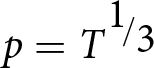
Guided by recent contributions on the macroeconomic effects of weather shocks (Mohaddes et al., Reference Mohaddes, Ng, Pesaran, Raissi and Yang2022), we rely on dynamic regression methods to identify the dynamic impact of weather shocks on capital flight across countries. We estimate the following ARDL model with  $p$lagsFootnote 4:
 \begin{equation}{{\Delta }}{F_{it}} = {\alpha _i} + \mathop \sum \limits_{\ell = 1}^p {\varphi _\ell }{{\Delta }}{F_{i,t - \ell }} + \mathop \sum \limits_{\ell = 0}^p \beta _\ell ^{\prime}{{\Delta }}{{\text{Z}}_{i,t - \ell }}\left( d \right) + {\varepsilon _{it}}\end{equation}
where  ${F_{it}}$ is capital flight from country
 $i$ in year
 $t$,
 ${\alpha _i}$ the country-specific fixed effect,
 ${Z_{it}} = \left[ {{{\tilde T}_{it}}\left( d \right),{{\tilde P}_{it}}\left( d \right)} \right]'$,
 ${\tilde T_{it}}\left( d \right) = \frac{2}{{d + 1}}\left| {{T_{it}} - \mathcal{T}_{i,t - 1}^*\left( d \right)} \right|$ and
 ${\tilde P_{it}}\left( d \right) = \frac{2}{{d + 1}}\left| {{P_{it}} - \mathcal{P}_{i,t - 1}^*\left( d \right)} \right|$ represent measures of temperature and precipitation relative to their historical norms,
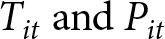 ${T_{it}}{\text{ and }}{P_{it}}$ are the population-weighted cell-level average temperature and precipitation of country
 $i$ in year
 $t$, respectively.
 $T_{i,t - 1}^*\left( d \right),\;{\text{and}}\;\mathcal{P}_{i,t - 1}^*\left( d \right)$ are the historical norms of weather variables over the preceding
 $d$ years.Footnote 5
 ${Z_{it}}$ represents the absolute value of the deviations of weather variables from their historical norms. The deviations represent the difference between the current year's weather conditions and the preceding
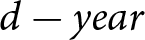 $d - year$ historical average. The average long-run effects,
 $\delta $, are calculated from the ordinary least squares estimates of the short-run coefficients in equation (1);
 $\delta = {\phi ^{ - 1}}\mathop \sum \nolimits_{\ell = 0}^p {\beta _\ell },{\text{where }}\phi = 1 - \mathop \sum \nolimits_{\ell = 1}^p {\varphi _\ell }$ represents the error correction term.
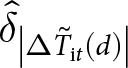 ${\hat \delta _{\left| {\Delta {{\tilde T}_{{\text{i}}t}}\left( d \right)} \right|}}$ and
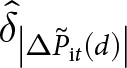 ${\hat \delta _{\left| {\Delta {{\tilde P}_{{\text{i}}t}}\left( d \right)} \right|}}$ are the long-run estimates of the absolute deviations of temperature and precipitation changes, respectively. We use the standard delta method to compute robust standard error of the long-run coefficients.
Given current global temperature projections, the likelihood that temperatures persistently deviate above their historical norm is notably high. So, one needs to define a measure of temperature shocks to capture such dynamics. By construction, our measure of temperatures captures a permanent deviation (below or above) from the historical norms. The long-run estimates obtained from equation (1) are robust to omitted variable bias and potential feedback effect under an optimal selection of the lag length (Pesaran and Smith, Reference Pesaran and Smith1995).Footnote 6 The feedback effect of capital flight on weather anomalies can occur if extensive capital outflows increase pressure on natural resource exploitation (such as over-exploitation of timber and forest resources) to make up their financial resource gaps, which may deregulate temperature and precipitation patterns. In this case, one might observe a reverse causality from capital flight to precipitation variability. These features of the panel ARDL approach make it more appropriate to identify the long-run effects of weather shocks on capital flight.
As we discussed above, using deviations from the long-term moving average to construct weather anomalies is appealing because it accounts for potential adaptation to historical weather norms and provides exogenous variations in weather anomalies. These features are crucial for identifying reliable estimates of the impact of weather shocks on capital flight. However, our measures of weather anomalies derived from long-term moving averages may fail to capture climatological events such as El Niño-Southern Oscillation, usually occurring in shorter cyclical intervals.
A fundamental difference between panel data estimation methods is how they account for parameter heterogeneity and dynamic effects. In this aspect, static fixed/random effects panel estimators may not be suitable as they suffer from endogeneity problems when introducing the lagged dependent variable in the regression. While a system-generalized method of moments can adequately monitor the endogeneity problem and parameter heterogeneity, it restricts all coefficients to be homogeneous across countries. Given the differential exposure of countries to weather anomalies, one believes that neglecting such heterogeneity in coefficients can lead to biased estimates and spurious inference. The dynamic pooled mean group estimator based on the ARDL model can be used to obtain the pooled long-run estimates along with heterogenous short-run coefficients (Pesaran and Smith, Reference Pesaran and Smith1995). This approach is robust in omitting variable bias and simultaneous determination of capital flight. The main requirements for the validity of the pooled mean group-ARDL approach are that there exists a long-run relationship among the variables of interest and, second, the dynamic specification of the model is sufficiently augmented so that the regressors become weakly exogenous (Cavalcanti et al., Reference Cavalcanti, Mohaddes and Raissi2015).
In a sensitivity analysis, we use local projections (LPs) based on Jordà (Reference Jordà2005) to estimate how temperature and precipitation impact capital flight. The interest of LPs is to allow for dynamic responses without imposing the estimation of the whole autoregressive model. To do so, we run the following LP:
 \begin{equation}{F_{i,t + h}} - {F_{i,t - 1}} = {{{\alpha }}_{\text{i}}} + \beta _1^h\Delta {\tilde T_{i,t}} + \beta _2^h\Delta {\tilde P_{i,t}} + {\theta ^h}\Delta {F_{it - 1}} + {\varepsilon _{i,t}}\end{equation}
where  ${\text{i}}$ stands for country,
 $t$ indexes year and
 $h$ represents the estimation horizon (from horizon 0, capturing the contemporaneous effect, up to horizon 6, which shows the effect 6 years after the shock). The dependent variable is the cumulative growth of the outcome of interest between
 $t - 1$ and
 $t + {\text{ }}h$, which is measured as the difference in the natural logarithms of capital flight.
 $\Delta {\tilde T_{i,t}}$ and
 $\Delta {\tilde P_{i,t}}$ represent changes in the measure of temperature and precipitation, respectively, relative to their historical norms.
 ${\alpha _i}$ captures country fixed effects.
 ${\varepsilon _{i,t}}$ represents the disturbance term.
2.2. Data
We construct a dataset for the following 28 African countries over the period 1970–2014: Algeria, Angola, Burundi, Burkina Faso, Botswana, Cameroon, Congo, Egypt, Ethiopia, Gabon, Ghana, Ivory Coast, Kenya, Morocco, Madagascar, Mozambique, Mauritania, Malawi, Nigeria, Rwanda, Sudan, Sierra Leonne, Tunisia, Tanzania, Uganda, South Africa, Zambia, Zimbabwe. The dependent variable capital flight (in constant 2010 US$ million) data are taken from the Political Economy Research Institute (PERI) database (https://www.peri.umass.edu/capital-flight-from-africa). The focus on Africa for the analysis is justified by the prevalence of capital flight in Africa and the lack of previous contributions on the impact of weather shocks on capital flight. Africa has been historically known for facing challenges related to capital outflows (Ndikumana and Boyce, Reference Ndikumana and Boyce2021); it is essential for governments and financial institutions to be aware of the potential risks of weather shocks on capital flight and take steps to mitigate them, which is an essential insight of this study. However, due to the availability of capital flight data primarily for African countries, we are constrained from broadening our analysis to encompass other regions or continents.
The estimates of capital flight are generated using a modified version of the residual method, which is based on a difference between the inflows of foreign exchange and the recorded uses of foreign exchange (Ndikumana and Boyce, Reference Ndikumana and Boyce2003). Capital flight is measured as
 \begin{equation}{F_{it}} = {{\Delta }}{D_{it}} + F{I_{it}} + {P_{it}} - \left( {{A_{it}} + {R_{it}}} \right) + M{V_{it}}\end{equation}
where  ${{\Delta }}D$ is the variation in the stock of external debt,
 $F$I captures the amount of net foreign investment inflows,
 $A$ is the current account deficit,
 $R$ is the stock of foreign reserves and
 $MV$ captures trade misinvoicing. As indicated above, the superscripts
 $i$ and
 $t$ represent country and year.
We consider weather data on temperature (in degrees Celsius, °C) and precipitation (in millimetres) for each country over time from the Climatic Research Unit (CRU).Footnote 7 We use the CRU weather data for the following reasons. First, the CRU data are primarily based on surface station observations, which can provide more accurate local measurements compared to the model-based reanalysis data of European Centre for Medium-Range Weather Forecasts Reanalysis 5 (ERA5). Second, the CRU dataset covers all land areas (excluding Antarctica) at a 0.5° resolution and is used to assess the skill of the ERA5 (Assamnew and Mengistu Tsidu, Reference Assamnew and Mengistu Tsidu2023). Its reliability has been validated across various parts of Africa in the climate literature (Ongoma and Chen, Reference Ongoma and Chen2017; Koné et al., Reference Koné, Diedhiou, Touré, Sylla, Giorgi, Anquetin, Bamba, Diawara and Kobea2018; Kam Sian KT et al., Reference Kam Sian KT, Sagero and Ongoma2024). Despite these advantages, one of the major drawbacks of the CRU database is that the dataset is not strictly homogeneous because of several factors, including extrapolation methods, data adjustments and calibration issues. As a result, it is essential to use trends with caution in the regression analysis. This motivates us to account for country fixed effects and includes global variables instead of country-specific trends to control for common global factors that may simultaneously influence all countries.
We construct population-weighted weather data for each country using the terrestrial temperature and precipitation observations compiled by the 0.5° gridded monthly time series and the gridded population from CIESIN (2016). Temperature and precipitation shocks were calculated at the grid cell level using the gridded population-weighted weather data. In doing so, the resulting spatially aggregated weather shock data at the country level preserve meaningful exogenous variations in local weather shocks, which are critical to identifying the effect of weather shocks at the country level in line with Hsiang (Reference Hsiang2016). The fine spatial resolution provides a more nuanced understanding of adaptation behaviours, which is crucial in analysing the effects of weather shocks. For instance, considering a representative country like Algeria, which contains over 750 grid cells at a 0.5° spatial resolution, averaging all variations across these cells aligns with the notion that a representative ‘agent’ Algeria is well informed about local variations and adjusts its behaviour according to the historical norms. This parallelism reinforces the relevance of leveraging weather shocks at the grid cell rather than at the country level.
Following the literature on the determinants of capital flight (Efobi and Asongu, Reference Efobi and Asongu2016; Ndikumana and Sarr, Reference Ndikumana and Sarr2019), we control for a broad set of covariates, including the real GDP per capita, trade, total natural resource rents and domestic credit to the private sector, from the World Development Indicators database of the World Bank. To capture institutional conditions, we use data on Polity2 from the Polity IV Project database (https://www.systemicpeace.org/polityproject.html). To account for global factors, we control for world production collected from Baumeister and Hamilton (Reference Baumeister and Hamilton2019).
Table A1 (in the online appendix) presents summary statistics of temperature, precipitation and capital flight over the same period, while table A2 shows the summary statistics for weather shocks. We observe that Burkina Faso and Nigeria have the highest temperatures, about 29°C, while Morocco has the lowest, 18°C. At the same time, Nigeria and South Africa are leading in capital flight. Regarding precipitation, Sierra Leone has the highest level, with 2.346 m, while Egypt has the lowest precipitation.
In order to examine the role of state capacity in the relationship between weather shocks and capital flight, we use the most up-to-date measure of state capacity elaborated by O'Reilly and Murphy (Reference O'Reilly and Murphy2022). They created three versions of an index of state capacity, which ran from 1789 to 2018 for 174 countries. Specifically, they use the information on fiscal capacity, the amount of public expenditures devoted to the provision of public goods, the modernity of the state's source of revenue and the provision of education to construct three versions of state capacity, including a comprehensive measure of state capacity, fiscal capacity and the narrow version of state capacity eliminating fiscal capacity. For completeness, we consider all three versions of state capacity.
3. Empirical results
3.1. Baseline estimation results and sensitivity tests
Figures A1–A3 (in the online appendix) provide a graphical illustration of the short-run responses of capital flight for each  ${\beta _\ell }$ across different adaptation horizons (d = 10 years, d = 20 years, d = 30 years). Although
 $\delta = {\phi ^{ - 1}}\mathop \sum \nolimits_{\ell = 0}^p {\beta _\ell }$ captures the cumulative effects of all lags of temperature and precipitation shocks on capital flight, we argue that the long-run cumulative effect reduces to
 ${\beta _0}$ (BT_0) since the remaining
 ${\beta _\ell }$ (lagged estimates) are not statistically significant.Footnote 8 As such, the long-run estimates reflect contemporaneous responses adjusted by the error correction mechanism (
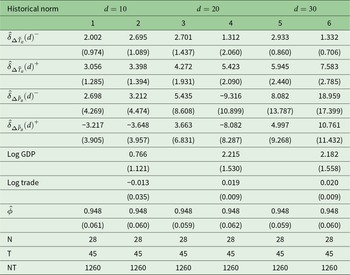
 $\hat \phi $). This adjustment implies that capital flight in response to weather shocks is gradually corrected towards the long-run equilibrium impact. In a setting where weather shocks derived from long-run deviations can reflect persistent changes in weather conditions, adjusting for the error correction factor is particularly appealing, as it monitors the possibility that lasting weather shocks may drive the economy away from its equilibrium and yield unreliable estimates. Given these distinct advantages, we only interpret the long-run estimates reported in table 1. As displayed in table 1, the speed of adjustment to long-run equilibrium is quick and stable around 0.948 for different values of
 $d$.
Effects of weather shocks on capital flight using absolute deviations of temperature and precipitation

Notes: This table displays the estimation results of equation (1) over various horizons ( $d$ = 10, 20, 30) with country fixed effects.
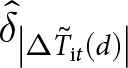 ${\hat \delta _{\left| {\Delta {{\tilde T}_{{\text{i}}t}}\left( d \right)} \right|}}$ and
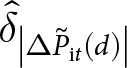 ${\hat \delta _{\left| {\Delta {{\tilde P}_{{\text{i}}t}}\left( d \right)} \right|}}$ are the long-run estimates of temperatures and precipitation relative to their historical norms based on the absolute value of the deviations of temperature and precipitation changes, respectively.
 $\hat \phi $ represents the speed of adjustment to the long-run equilibrium. Robust standard errors are in parentheses.
Table 1 displays the estimates of the long-run impact of weather shocks (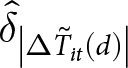 ${\hat \delta _{\left| {\Delta {{\tilde T}_{it}}\left( d \right)} \right|}}$ and
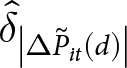 ${\hat \delta _{\left| {\Delta {{\tilde P}_{it}}\left( d \right)} \right|}}$) on capital flight.Footnote 9 Weather shocks were constructed using the absolute value of the deviation/variability of weather variables (precipitation and temperature) from the moving averages of their historical norms (
 $d$ = 10 years,
 $d$ = 20 years and
 $d$ = 30 years). The specification with
 $d$ = 30 represents the preferred model, as weather shocks are usually computed over 30 years.Footnote 10 From columns 5 and 6, the long-run estimates of precipitation changes are not statistically significant. All the estimates of precipitation anomalies are not statistically significant regardless of the adaptation horizons (d = 10 years, d = 20 years, d = 30 years). The estimates for temperature anomalies are statistically significant at the conventional level of 5 per cent. The preferred specification (column 5) reveals that holding all else constant (including temperature in other countries), a within-country temperature increases of
 $0.01^\circ $C raises capital flight by 0.048 (calculated as 0.758
 $ \times \frac{2}{{d + 1}}$) percentage points per year.Footnote 11
Figures 1 and 2 show the responses of capital flight to weather shocks using LP methods as specified in equation (2). Overall, only temperature positively affects capital flight. There is a moderate and significant increase in capital flight – around 10 per cent – only in the first year after a temperature shock. This increase is abruptly corrected downwards, becoming statistically insignificant between the second and fourth years. It then gradually peaks and exceeds 20 per cent in the fifth year before becoming insignificant again. This result remains robust regardless of the specification considered (with or without covariates; see manager A4 and A5 in the online appendix). While the LP and ARDL models are based on three lags, the LP model estimates the responses of capital flight dynamically in each year after weather shocks which cannot be directly compared to the ARDL results derived from the error correction adjusted contemporaneous effects ( ${\beta _0}$) of temperature shocks. The LP results complement the ARDL findings by providing a more detailed view of the persistence and timing of the positive effect of a temperature shock on capital flight evidenced in the ARDL model.
Capital flight response to a temperature shock.

Capital flight response to a precipitation shock.

We control for global factors such as world industrial production and country-level covariates to ensure that our results are not spurious or driven by any global temporal factors that lead to capital outflows from African countries. Reassuringly, manager A4 and A5 (in the online appendix) show that the estimated effects are robust to global factors.
Next, we adopt the partial sum decomposition approach proposed by Kahn et al. (Reference Kahn, Mohaddes, Ng, Pesaran, Raissi and Yang2021) to construct positive and negative shocks in weather shocks. Effectively, positive and negative weather shocks were generated as follows:  ${w^ + } = wI\left( {w \geqslant 0} \right)$ and
 ${w^ - } = wI\left( {w \lt 0} \right)$, where w represents population-weighted average temperature and precipitation.
Table 2 shows the estimates of weather shocks on capital flight. Again, the specification with 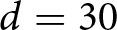 $d = 30$ is the preferred model (column 5). Consistent with the baseline results displayed above, positive and negative precipitation shocks do not affect capital flight, but temperature anomalies trigger capital flight as (
 ${\hat \delta _{\Delta {{\tilde T}_{it}}}}{\left( m \right)^ - }and\,{\hat \delta _{\Delta {{\tilde T}_{it}}}}{\left( m \right)^ + }$) are statistically significant. The difference in the estimates of
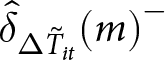 ${\hat \delta _{\Delta {{\tilde T}_{it}}}}{\left( m \right)^ - }$ and
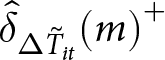 ${\hat \delta _{\Delta {{\tilde T}_{it}}}}{\left( m \right)^ + }$ suggests some degree of non-linearity in the long-run relationship between capital flight and temperature anomalies. These results align with previous studies on the non-linear effects of temperature (Burke et al., Reference Burke, Hsiang and Miguel2015; Le and Nguyen, Reference Le and Nguyen2021).
Non-linearity in the effects of weather shocks on capital flight

Notes: This table displays the estimation results of equation (1) over various horizons ( $d$ = 10, 20, 30) with country fixed effects. The displayed parameters are long-run estimates, and all estimates include country fixed effects.
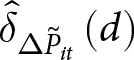 ${\hat \delta _{\Delta
{{\tilde P}_{it}}}}\left( d \right)$ and
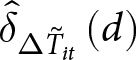 ${\hat \delta _{\Delta
{{\tilde T}_{it}}}}\left( d \right)$ are the long-run estimates of precipitation and temperatures relative to their historical norms. The positive/negative sign captures positive or negative temperature and precipitation variations shocks. Robust standard errors are in parentheses.
The sensitivity analysis is based on additional control variables, including domestic credit to the private sector, polity2, oil rents, world production index and year fixed effects. Since trade misinvoicing has been reported as the critical trigger of capital flight from Africa (Kwaramba et al., Reference Kwaramba, Mahonye and Mandishara2016), it is essential to check the sensitivity of the results using trade misinvoicing as a proxy for capital flight. Table 3 depicts the results for temperature deviations of the preferred model ( $d = 30{\text{ years}}$). The results show that the estimated temperature shocks are relatively stable across all specifications and consistent in magnitudes with those obtained from the baseline specification. This gives some assurance about the robustness of the baseline estimates. Interestingly, temperature shocks display a substantial effect on trade misinvoicing; it is observed that a 0.0
 $^\circ $C increase in within-country temperature holding all else constant (including temperature in other countries) fuels trade misinvoicing by 0.068 percentage points per year, which is mainly above the effect of temperature shocks on capital flight (0.048 percentage points per year). This implies that MNCs might aggressively respond to temperature shocks by misinvoicing their exports/imports, as emphasized in previous studies (Adrian et al., Reference Adrian, Garg, Pham, Phang and Truong2022; Tang et al., Reference Tang, Yang and Duan2023).
Sensitivity analysis based on trade misinvoicing and additional covariates

Notes: This table displays the long-run estimates of equation (1) over the horizon ( $d$ = 30) with country fixed effects. Robust standard errors are in parentheses.
3.2. Heterogeneity analysis
Given differences among fundamental factors driving capital flight, it is essential to account for heterogeneity originating from regional factors (sub-Saharan Africa vs. non-sub-Saharan Africa), the level of financial development (high vs. low access to credit), the institutional framework (weak vs. strong democratic institutions) and reliance on natural resources (oil-exporting vs. non-oil exporting countries). The split-sample procedure is used to classify countries based on their position concerning the median level of credit to the private sector and polity2. For instance, countries with a level of credit to the private sector below (above) the median level are grouped into a low (high) level of financial development. A similar approach is used for polity2. For the case of oil-exporting countries, we consider countries based on their net oil export positions and classify countries as oil exporters if they are net oil exporters during the sample period.Footnote 12 While we provide point estimates of the effect of temperature shocks for sub-samples, we have not formally conducted any heterogeneity tests. As such, our results should not be interpreted as evidence of differences between sub-samples but rather as a comparison of point estimates across subsamples.
Table 4 shows the long-run effects of temperature shocks on capital flight across different sub-samples. It is observed that the magnitude of the long-run effects of temperature changes is higher in sub-Saharan Africa than in non-sub-Saharan Africa, suggesting some regional heterogeneity in the effects of temperature on capital flight. Table 4 reports that the positive effects of temperature shocks on capital flight are statistically significant in countries with a lower level of financial development (i.e., countries with a relatively lower level of credit to the private sector). This indicates that capital flight fuelled by temperature shocks is more pronounced in financially constrained countries. Another interesting finding is that the effect of temperature shocks on capital flight is only statistically significant in countries with weak institutions. This is consistent with the argument that a weak institutional framework generates room for illicit financial activities. It is also reported that oil-exporting countries suffer the most from capital outflows following temperature anomalies. This can partly be explained by the fact that MNCs exploiting and extracting oil in these countries are likely to use unrecorded capital transfers in response to temperature shocks, consistent with previous findings reported in table 3.
Sensitivity analysis across sub-samples

Notes: This table displays the long-run estimates of equation (1) over the horizon ( $d$ = 30) with country fixed effects. The results are based on a split-sample procedure to account for heterogeneity across countries stemming from regional factors (sub-Saharan African (SSA) and non-sub-Saharan Africa (Non-SSA)), the level of financial development (high and low level of credit to the private sector), institutional quality (weak and strong democratic institutions) and dependence on natural resources (oil-exporting and non-oil-exporting countries). Robust standard errors are in parentheses.
3.3. Potential role of state capacity
We explore the role of state capacity in mediating the impact of temperature shocks on capital flight by performing a formal mediation analysis to test for the average causal mediation effect (ACME). The ACME is the difference between the total and direct effects in a two-step procedure. Column 4 of table 5 reports the total effect of temperature shocks on capital flight without covariates from our preferred baseline specification (column 5, table 1). We estimate the direct effect of temperature shocks on capital flight while controlling for different measures of state capacity (table 5, columns 1–3). We use the point estimates of the direct effect and total effect to derive the ACME. In order to provide evidence on the level of significance of the ACME, we estimate the upper and lower bound using the delta method and the bootstrap approach.
Weather shocks and capital flight accounting for state capacity

Notes: This table depicts the long-run estimates of temperature changes on capital flight by controlling for different measures of state capacity, including the overall state capacity index (SC1), fiscal capacity (FC) and the narrow measure of state capacity index (SC2). Robust standard errors are in parentheses.
Table 6 reveals a significant ACME of fiscal capacity, suggesting that it plays a substantial role in mediating the effects of temperature shocks on capital flight. As the validity of the mediation analysis strongly relies on the magnitude of state capacity with and without covariates, we observe that the point estimate of temperature shocks in table 5 (when state capacity is included as control) is not very large and relatively close to those in the specification without control (see column 5 of table 1). As such, the mediation analysis indicates that even if state capacity might be a channel, it is at most a modest channel, with other factors likely playing a significant role. The lack of solid evidence supporting the mediation role of state capacity indicates that one should be cautious about its significance as a mediator.
Causal mediation analysis

Note: ACME stands for the average causal mediation effect, LB and UB represent the lower bound and the upper bound, respectively, of the 95% confidence interval.
Table A3 in the online appendix shows strong evidence that temperature anomalies negatively influence state capacity. As expected, weather anomalies act as an overarching destabilizing element that reduces the state's capacity to administer its territory effectively by raising tax revenues and supporting markets in providing public goods and services. This finding is consistent with some previous contributions pointing out the similarity between temperature shocks and war, as both may endanger the rule of governments in low-income countries (Lin, Reference Lin2015; Tol, Reference Tol, Markandya and Rübbelke2021).
4. Further discussion and potential limitations
While numerous studies have investigated the macroeconomic effects of weather shocks, little attention has been given to their impact on financial crimes. This study bridges the gap in the literature by providing the first evidence of the relationship between weather shocks and capital flight in 28 African countries from 1970 to 2014. We focus on relatively long-term changes in temperature and precipitation to estimate the effect of plausibly exogenous variation in within-country exposure to weather shocks on capital flight.
Previous research on the capital flight phenomenon focuses on issues related to the magnitude of capital flight and its impact on various socio-economic outcomes (Asongu, Reference Asongu2014; Asongu and Odhiambo, Reference Asongu and Odhiambo2019; Ndikumana and Boyce, Reference Ndikumana and Boyce2021; Kassouri, Reference Kassouri2024), as well as its potential determinants at both national and micro levels (Lensink et al., Reference Lensink, Hermes and Murinde1998, Reference Lensink, Hermes and Murinde2000; Collier et al., Reference Collier, Hoeffler and Pattillo2001; Ndiaye and Siri, Reference Ndiaye and Siri2016; Ramiandrisoa and Rakotomanana, Reference Ramiandrisoa and Rakotomanana2016; Wu et al., Reference Wu, Wang, Fang, Tsai and Xia2022). Based on empirical results across various model specifications, temperature changes consistently explain variations in capital flight. The analysis provides sound evidence suggesting that capital flight is more strongly linked to temperature shocks rather than precipitation shocks, thereby echoing the hypothesis of temperature shocks as a pushing factor to financial crime activities across African countries. This result is robust to adjusting different historical norms, using alternative model specifications and including a range of possible local and global determinants of capital flight. Previous studies have documented how stress and hazards induced by weather anomalies can shape transnational criminal and illicit activities, including terrorism, trafficking, violence, crime, land grabbing, state security, conflicts and other such activities (Jasparro and Taylor, Reference Jasparro and Taylor2008; Germond and Mazaris, Reference Germond and Mazaris2019; Tangney et al., Reference Tangney, Nettle, Clarke, Newman and Star2021; Blume et al., Reference Blume, Sauls and Cacj2022). By focusing on capital flight, one of the significant transnational financial crimes facing African countries, the current study contributes to estimating the financial costs associated with weather anomalies in the developing world.
Notably, the analysis reveals that temperature shocks are more strongly linked to trade misinvoicing, suggesting that temperature-induced capital flight is mainly the result of trade misinvoicing, where MNCs (primarily operating in the natural resource sectors) adopt a strategic transfer pricing (including misreporting imports/exports) for profit shifting as a result of mitigating the adverse effects of weather-induced risks on their revenues. We could conjecture from this that weather shocks would exacerbate capital outflows via the channel of trade misinvoicing. This finding aligns with previous contributions emphasizing the linkages between weather shocks and tax avoidance (Dessaint and Matray, Reference Dessaint and Matray2017; Geng et al., Reference Geng, Liu, Li and Chen2021; Ni et al., Reference Ni, Chen, Li and Yang2022; Tang et al., Reference Tang, Yang and Duan2023). While these studies mainly focus on firm-level analysis, the present study introduces the first cross-country evidence of how climate anomalies can influence trade misinvoicing practices.
The heterogeneity analysis indicates the context-dependent feature of the linkages between weather shocks and capital flight, which is full of implications for governments. By revealing the negative effect of weather shocks on state capacity, one might argue that weather shocks can further reinforce the weakness of African states. While early scholars established a link between climate change and poor economic performance (Dell et al., Reference Dell, Jones and Olken2009; Calzadilla et al., Reference Calzadilla, Rehdanz, Betts, Falloon, Wiltshire and Tol2013; Tol, Reference Tol, Markandya and Rübbelke2021), the intensification of state weaknesses evidenced in this study can likely be put forward as a potential mechanism through which climate change prevents or slows economic development. The mediation analysis highlights a moderate effect of state capacity, indicating the need for further research to disentangle the precise mechanisms through which weather shocks impact capital flight. The absence of a robust mechanism explaining the relationship between weather shocks and capital flight is an important limitation of the current study. Another potential limitation is the complexity of measuring capital flight, which could lead to underestimating the effect of weather shocks. Indeed, temperature shocks can influence the unobserved component of capital flight by disrupting data collection, altering standard models used to estimate capital flight and challenging traditional assumptions for modelling financial crimes. As capturing all these effects with our standard measures of capital flight is challenging, one should be cautious about the underestimation of the effects of temperature shocks evidenced in this study.
Supplementary material
The supplementary material for this article can be found at https://doi.org/10.1017/S1355770X25100065
Acknowledgements
We thank the Co-Editor, S. Ferreira, and anonymous referees, for helpful comments and suggestions. We acknowledge Institutional Research Support from the Prague University of Economics and Business in project No. IP100040.
Competing interests
No potential conflict of interest was reported by the author.