INTRODUCTION
The amphipod Gammarus insensibilis is a priority species, protected under the UK Biodiversity Action Plan. In the UK it is near the northern limit of its range and is restricted to brackish pools and coastal saline lagoons where it can be locally abundant (Sheader & Sheader, Reference Sheader and Sheader1985; Gilliland & Sanderson, Reference Gilliland and Sanderson2000). The ENLag.Veg biotope is utilized by G. insensibilis through its close association with the filamentous alga Chaetomorpha linum (Bamber et al., Reference Bamber, Gilliland and Shardlow2001), upon which it feeds readily. Gammarus insensibilis is not found sympatrically with the morphologically similar but taxonomically distinct (Costa et al., Reference Costa, Cunha, Neuparth, Theodorakis, Costa and Shugart2004) G. locusta (common in fully marine environments). The only recorded fully marine habitats of G. insensibilis are in the Mediterranean, where G. locusta is absent (Sheader & Sheader, Reference Sheader and Sheader1987).
Gammarid amphipods demonstrate plasticity of reproductive strategy in which reproductive investment can vary interspecifically but may also vary intraspecifically and can be related to the environmental conditions of their habitat (Steele & Steele, Reference Steele and Steele1975; Nelson, Reference Nelson1980; Saintemarie, Reference Saintemarie1991; Johnson et al., Reference Johnson, Stevens, Watling, Southward, Tyler, Young and Fuiman2001). In the Mediterranean G. insensibilis demonstrates continuous recruitment and a variable (female dominant) sex ratio throughout the year with reproductive output greatest in the winter months (Karakiri & Nicolaidou, Reference Karakiri and Nicolaidou1987). In UK saline lagoons there is an inverse relationship between egg size and temperature (Sheader, Reference Sheader1996), and reproductive investment (clutch volume) is greatest in the summer months (Gates, Reference Gates2006).
Saline lagoons are listed as priority habitats under the European Union Habitats Directive (The Council of the European Communities, 1992) and are frequently designated as, or lie within, Sites of Special Scientific Interest (SSSI), National Nature Reserves, Ramsar sites and Special Protection Areas (SPAs) (Bamber et al., Reference Bamber, Gilliland and Shardlow2001). In the UK lagoons are of particular conservation importance because they are uncommon habitats (important physiographic features in their own right), and they frequently support plant and animal species and communities absent or rare in other saline habitats (Beer & Joyce, Reference Beer and Joyce2013), including ‘specialist lagoon species’ (Barnes, Reference Barnes1980, Reference Barnes1991; Bamber et al., Reference Bamber, Batten, Sheader and Bridgewater1992). Specialist lagoon species are those that are ‘distinctly more characteristic of lagoons and lagoon-like habitats than of other habitats’ (Bamber et al., Reference Bamber, Gilliland and Shardlow2001). Owing to the rarity of their habitat, specialist lagoon species are uncommon nationally. There are 13 specialist lagoon species of priority concern under the UK biodiversity action plan including G. insensibilis. Furthermore, coastal lagoons provide important habitats and feeding grounds for species of charadriiform seabirds such as Larus melanocephalus (Mediterranean gull), Sterna albifrons (little tern) and S. sandvicensis (sandwich tern) (Bamber et al., Reference Bamber, Gilliland and Shardlow2001) and Recurvirostra avocetta (avocet) (Hill et al., Reference Hill, Rushton, Clark, Green and Prysjones1993).
Parasites can have direct (e.g. mortality) and indirect (e.g. behavioural modification) effects on populations and communities (Thomas et al., Reference Thomas, Renaud, de Meeus and Poulin1998a; Mouritsen & Poulin, Reference Mouritsen and Poulin2002). Differential susceptibility to parasite infection or variation in the symptoms of infection may be as important a factor in determining success and distribution of a species as other factors such as resource availability, physicochemical parameters, and intra/interspecific interactions (Fredensborg et al., Reference Fredensborg, Mouritsen and Poulin2004). In lagoon systems parasites appear to play a key role (Thomas & Renaud, Reference Thomas and Renaud2001) and should be considered in the conservation of coastal and wetland habitats (Thomas et al., Reference Thomas, Crivelli, Cezilly, Renaud and deMeeus1997). Gammarus insensibilis can be an intermediate host for a number of trematode parasites including Maritrema subdolum, Microphallus hoffmanni, Microphallus papillorobustus and Levinseniella propinqua (Kostadinova & Mavrodieva, Reference Kostadinova and Mavrodieva2005a) in various localities in continental Europe including Pomorie lagoon in the Black Sea (Kostadinova & Mavrodieva, Reference Kostadinova and Mavrodieva2005b) and the Thau lagoon in France (Thomas et al., Reference Thomas, Villa, Montoliu, Santalla, Cezilly and Renaud1998b).
It has been suggested that the ecology of G. insensibilis cannot be fully understood without considering the implications of infection with M. papillorobustus (Ponton et al., Reference Ponton, Biron, Joly, Helluy, Duneau and Thomas2005). Gammarus insensibilis is the second intermediate host in a life cycle that begins within a hydrobiid snail. The amphipod is infected by the cercarial stage of the trematode. The cercariae enter through the abdomen of the amphipod and encyst in the head, as cerebral metacercariae. Microphallus papillorobustus manipulates the behaviour of G. insensibilis, inducing positive phototaxis, negative geotaxis and aberrant evasive behaviour when disturbed, thereby increasing vulnerability to predation by the charadriiform avian definitive host (Helluy, Reference Helluy1984; Thomas et al., Reference Thomas, Verneau, Santalla, Cezilly and Renaud1996b; Brown et al., Reference Brown, De Lorgeril, Joly and Thomas2003; Arnal et al., Reference Arnal, Droit, Elguero, Ducasse, Sánchez, Lefevre, Misse, Bédèrina, Vittecoq, Daoust and Thomas2015). Behavioural modification only occurs when animals are infected by cerebral metacercariae, not when metacercariae are only located in the abdomen. Behavioural modification is associated with variations in neurological architecture related to levels of the neurotransmitter serotonin (5-hydroxytryptamine) but the mechanism is not fully understood (Tain et al., Reference Tain, Perrot-Minnot and Cézilly2007). Modified behaviour can be induced by injection with serotonin (Helluy & Holmes, Reference Helluy and Holmes1990; Maynard et al., Reference Maynard, DeMartini and Wright1996; Helluy & Thomas, Reference Helluy and Thomas2003). It is not clear whether serotonin is secreted by the metacercaria itself or whether it is a result of a host response to the infection (Thomas et al., Reference Thomas, Adamo and Moore2005). Documented effects on G. insensibilis include assortative pairing; when infected individuals pair with similarly infected animals and vice versa owing to population sub-units based on behaviour (Thomas et al., Reference Thomas, Renaud, Derothe, Lambert, Meeüs and Cézilly1995, Reference Thomas, Renaud and Cezilly1996a).
Given the conservation importance of G. insensibilis and the desire to maintain lagoon habitats some consideration of the relationship between G. insensibilis and its trematode parasite is necessary in UK lagoons. This study demonstrates the presence of the microphallid trematode parasites in G. insensibilis populations in UK saline lagoons of conservation importance. Population structure, physiological rates and estimates of reproductive output are used to consider the effects of the parasite on the amphipod host.
MATERIALS AND METHODS
Study sites
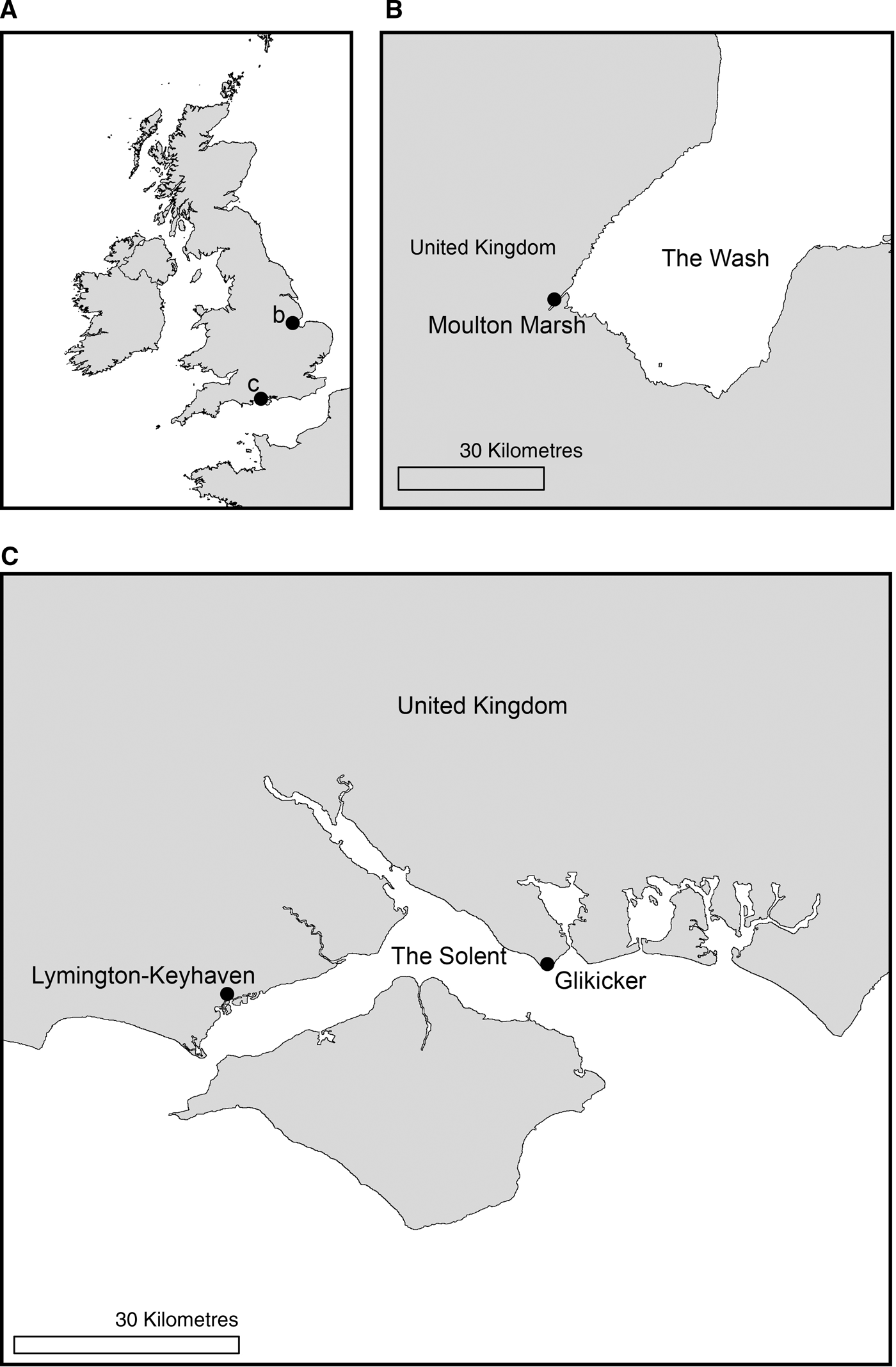
The Gilkicker lagoon system lies on the shores of The Solent near Gosport on the south coast of England (50.776°N 1.138°E, Figure 1C). Its 36,750 m2 area consists of two connected lagoons and is separated from the sea by a shingle bank and sea wall. The larger (seaward lagoon) is 210 m long and 145 m wide and connected to the sea by a channel of 85 m in length and 10 m wide ending in a metal pipe (0.8 m diameter) that penetrates the barrier. The landward lagoon is 130 m long and 80 m wide and is connected to the seaward lagoon by two pairs of metal pipes of 0.5 m diameter (Al-Suwailem, Reference Al-Suwailem1991). The lagoons do not exceed 0.75 m in depth with a low tide mean of 0.46 m. The substratum comprises predominantly mud in the middle and sand on the western and eastern sides with a 1 m belt of shingle around the shores. In much of the lagoon the surface sediments lie above a layer of shingle or silt (Al-Suwailem, Reference Al-Suwailem1991).
(A) Location of the study sites in the UK, (B) Location of Moulton Marsh on the east coast and (C) location of the Gilkicker and Lymington–Keyhaven lagoon systems on the south coast.

The Keyhaven–Lymington lagoon system is located ~40 km west of Gilkicker (50.742°N 1.536°E, Figure 1C). There are a series of lagoons stretching from Normandy Farm lagoon towards Keyhaven at the mouth of the Lymington river estuary. The lagoons are artificial and were created from relict salterns when the sea wall was repaired in the 1980s, in order to maintain the populations of lagoon specialists present in the salterns (Bamber et al., Reference Bamber, Gilliland and Shardlow2001). The lagoons to the west of the system are prone to low salinity resulting from excess freshwater input after high precipitation so specialist lagoon biota is low. The lagoons used in this study were Eight Acre Pond and the salterns. These are located to the east of the system where salinity is usually around 25–35.
The Moulton Marsh lagoon system in Lincolnshire is on the east coast of the UK (52.882°N 0.010°E, Figure 1B). There are four lagoons and a series of ‘scrapes’ (small lagoon-like habitats). Specialist lagoon species have previously been recorded in lagoons 1 and 2 of the system. The alga Chaetomorpha linum was abundant in all the lagoon systems.
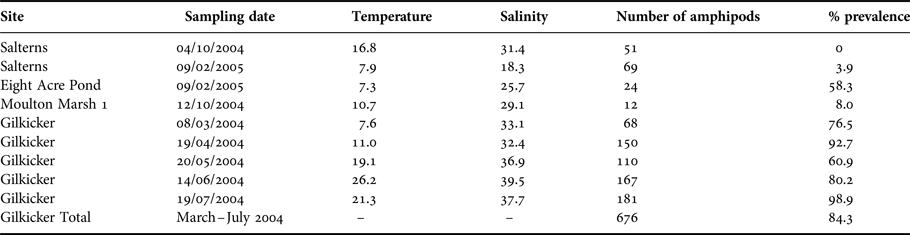
Sample collection
Gammarus insensibilis specimens were collected under the licence of Section 16 (3) (a) of the Wildlife & Countryside Act 1981 (amended by the Environmental Protection Act 1990), licences were held by Dr R.N. Bamber (numbers: 2003–2004 no. 20031279; 2004–2005 no. 20041787). At Gilkicker samples were collected monthly (March to July 2004, Table 1) with a hand net from within the mats of Chaetomorpha linum near the southern shore of the lagoon, where they were abundant. This varied depending on the location of the mats of C. linum, which was affected by the particular wind and wave conditions. The collection method was non-quantitative because of the three-dimensional nature of the habitat, and assumed that all sizes and life history stages were correctly represented in the samples. Samples were collected from the Lymington–Keyhaven system and the Moulton Marsh lagoons using the same method but on fewer occasions (Table 1). Sampling these locations was carried out later in order to find examples of uninfected amphipods. A subset of animals for physiological study were returned to the National Oceanography Centre research aquarium alive and transferred to aquarium water in outdoor holding tanks at ambient temperature. Lagoon water salinity was measured in the field with a t/s probe and on return to the aquarium diluted to match the water collected in the field. Animals for parasite prevalence and population dynamics study were preserved in 10% buffered formaldehyde solution and transferred to 70% ethanol. In addition a small archive sample of G. insensibilis taken from Gilkicker in 1982 was examined.
The prevalence of cerebral metacercariae of microphallid trematodes in G. insensibilis from saline lagoons on the UK coast.

Population structure and parasite prevalence
Specimens were examined under a dissecting microscope. The body length, dry weight, sex and number of cerebral metacercariae were recorded. The animals were categorized as juvenile (no visible sexual differentiation), immature female (female with non-setose oöstegites), mature female (setose oöstegites) and mature male (genital papillae and large gnathopods). Mature females were further categorized as ovigerous (carrying embyos in the oöstegites) and empty. The number of embryos carried by ovigerous females and their stage of development were recorded. Embryo classification was based on six developmental stages (I, II, III, IV, V, J) in which the early cleavage stages are represented by stage I and newly hatched juveniles are represented by stage J (Sheader & Chia, Reference Sheader and Chia1970). In order to increase sample sizes the developmental stages were grouped into early (I–III) and late (IV–V) stage (Ford et al., Reference Ford, Fernandes, Rider, Read, Robinson and Davies2003). Investment in individual embryos as estimated from the mean embryo volume (mm3) of eight embryos following the methods of Sheader (Reference Sheader1996). Brood mass (μg) was determined by removal from the marsupium and weighed in tin foil capsules and dried for 24 h at 50°C. Clutch volume (total reproductive investment) was estimated as brood size (number of embyros) × mean embryo volume.
DATA ANALYSIS
Metacercarial presence in the population and the population structure (juvenile, female, male) were not tested statistically. The mean size of juveniles, females and males in the population at Gilkicker were tested independently for significance using one-way ANOVA. Reproductive investment data were initially considered on a monthly basis and then pooled to increase sample size. Linear regression was carried out to test the relationship between number of metacercariae and brood size. Following these analyses the monthly data were pooled to increase sample size and one-way ANOVA was used to test for significance of effect on brood size.
Physiological rate experiments
Amphipods used in physiological rate experiments were collected in the field and maintained in aquaria at constant temperature and salinity for a minimum of 1 week before experiments were conducted.
Respiration rate experiments were carried out to compare infected and uninfected animals. In the first experiment specimens were selected based on their activity. Nine individuals of approximately similar size were taken from within or under their C. linum food source (assumed uninfected) and nine animals of similar size demonstrating aberrant escape behaviour were taken from the surface of the aquarium (strongly positively phototactic and negatively geotactic when disturbed, these were assumed infected). In the second experiment animals were selected randomly and dissected after the experiment to determine parasite infection.
In both cases temperature was maintained (± 0.5°C) in controlled temperature rooms in the aquarium, salinity measured with a t/s probe and experiments were run under a 12 h light, 12 h dark regime. Assays were run for 24 h and results were standardized to body mass. Before the assays began the animals were acclimatized to the filtered aquarium water and starved for 24 h. Air-tight control chambers containing filtered seawater and experimental chambers containing an individual amphipod were incubated for 24 h at the temperature and salinity recorded in the lagoon when the animals were collected. After 24 h water samples were extracted from the chambers for analysis of oxygen concentrations. Respiration rate was determined as the difference between oxygen concentrations before and after the amphipods had been incubated in the chambers, using Winkler titrations. Additional control chambers with no amphipods were also used.
Feeding rate was determined in a 24 h experiment carried out at 5°C and salinity of 30 in which individual amphipods were provided with C. linum as a food source. The amount consumed was determined as the difference in wet weight of the alga over the course of the experiment. The uninfected animals (N = 17) were from Salterns and the infected animals (N = 6) from Gilkicker.
DATA ANALYSIS
Respiration rate experiments were statistically tested using one-way ANOVA. Where data were not normally distributed the non-parametric Kruskal–Wallis ANOVA on ranks test was applied. For the second experiment the individual animals were examined and cerebral metacercariae counted. The effect of parasite infection intensity (parasite load) was tested by linear regression for males and females separately and as both sexes combined. Amphipod respiration rate at 5 and 15°C was compared using pooled infection data.
RESULTS
Metacercaria infection in the population
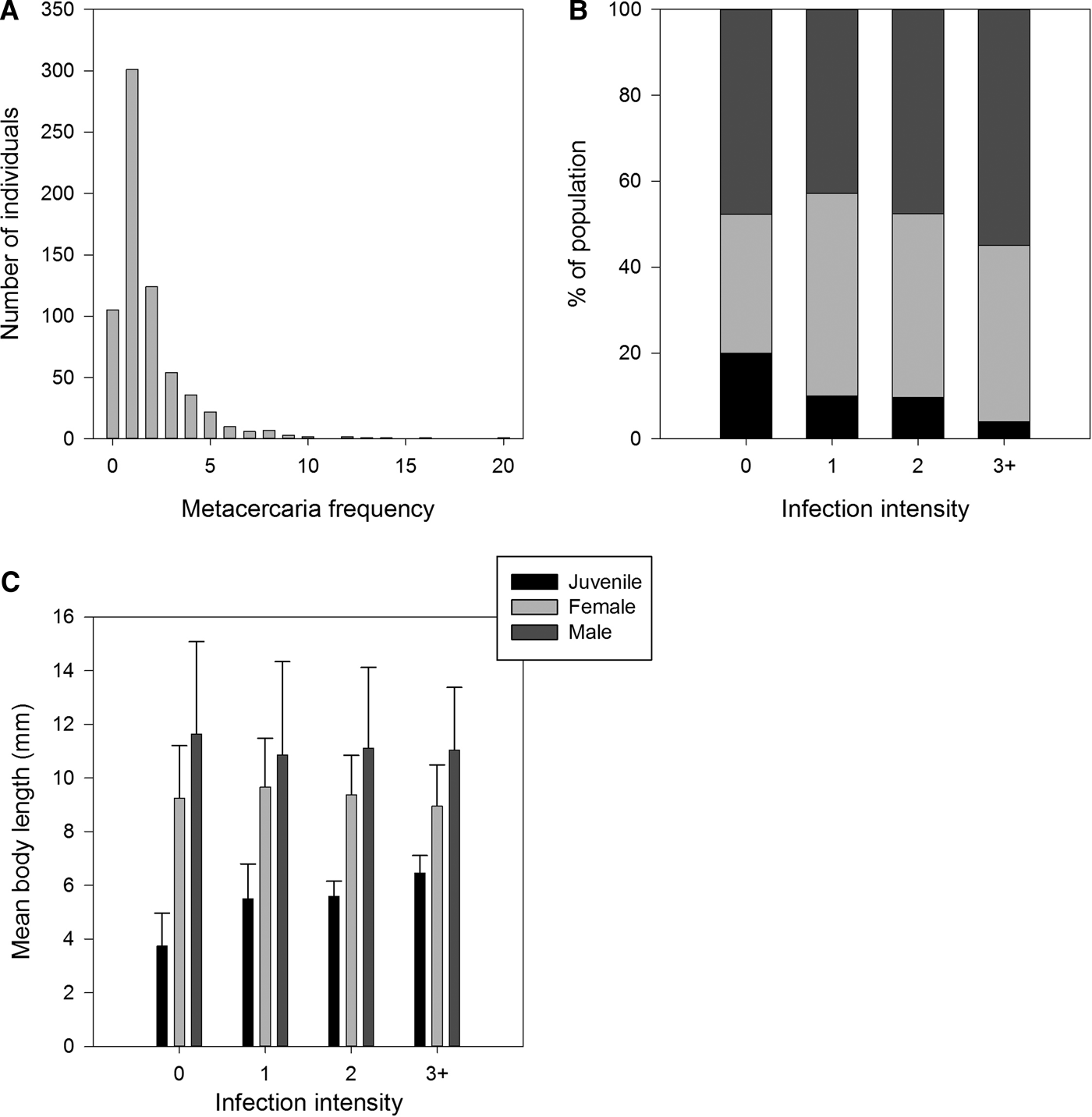
In pooled data from samples collected over 4 months (April to July 2004) at Gilkicker ~85% of the animals were infected by cerebral metacercariae of trematode parasites (Table 1). The greatest proportion of amphipods (45%) was infected by 1 metacercaria with infection intensity decreasing thereafter. The maximum infection intensity was 20 metacercariae in a single amphipod (Figure 2A). In such cases of high parasite load the shape of the head was distorted. Mean parasite load of infected animals was 2.20 metacercariae per animal (females = 2.16, males = 2.27, juveniles = 2.06). Cerebral metacercariae of trematode parasites were also confirmed from animals from a small archive sample of Gammarus insensibilis from Gilkicker lagoon collected in 1982.
Trematode metacercaria infection in the Gammarus insensibilis population from Gilkicker between March and July 2004. (A) Metacercaria infection intensity in the G. insensibilis population, (B) proportion of the population at increasing infection intensity, (C) The size of amphipods (±1 SD) from three life history categories with increasing infection intensities (key refers to B and C).

In samples from the Keyhaven–Lymington lagoon system parasite prevalence was lower. Infection rate in amphipods from Eight Acre Pond was 58.3% but animals from The Salterns were rarely infected (0 and 3.9%). At Moulton Marsh 8% of G. insensibilis were infected with cerebral metacercariae, although it must be noted that low numbers were examined (12 specimens). In uninfected animals there was a male bias to the sex ratio. This is related to the size at which it was possible to differentiate the sexes, 20% of the population was juvenile animals (Figure 2B). In the infected population there was a decreasing proportion of juveniles with increasing parasite load. Parasite load had no significant effect on mature amphipod size (Figure 2C) but infected juvenile animals were significantly larger than uninfected juveniles (0, 1 and 2+ cerebral infections) (ANOVA; F 2, 69 = 21.512, P < 0.001) (Figure 2C).
Physiological rate experiments
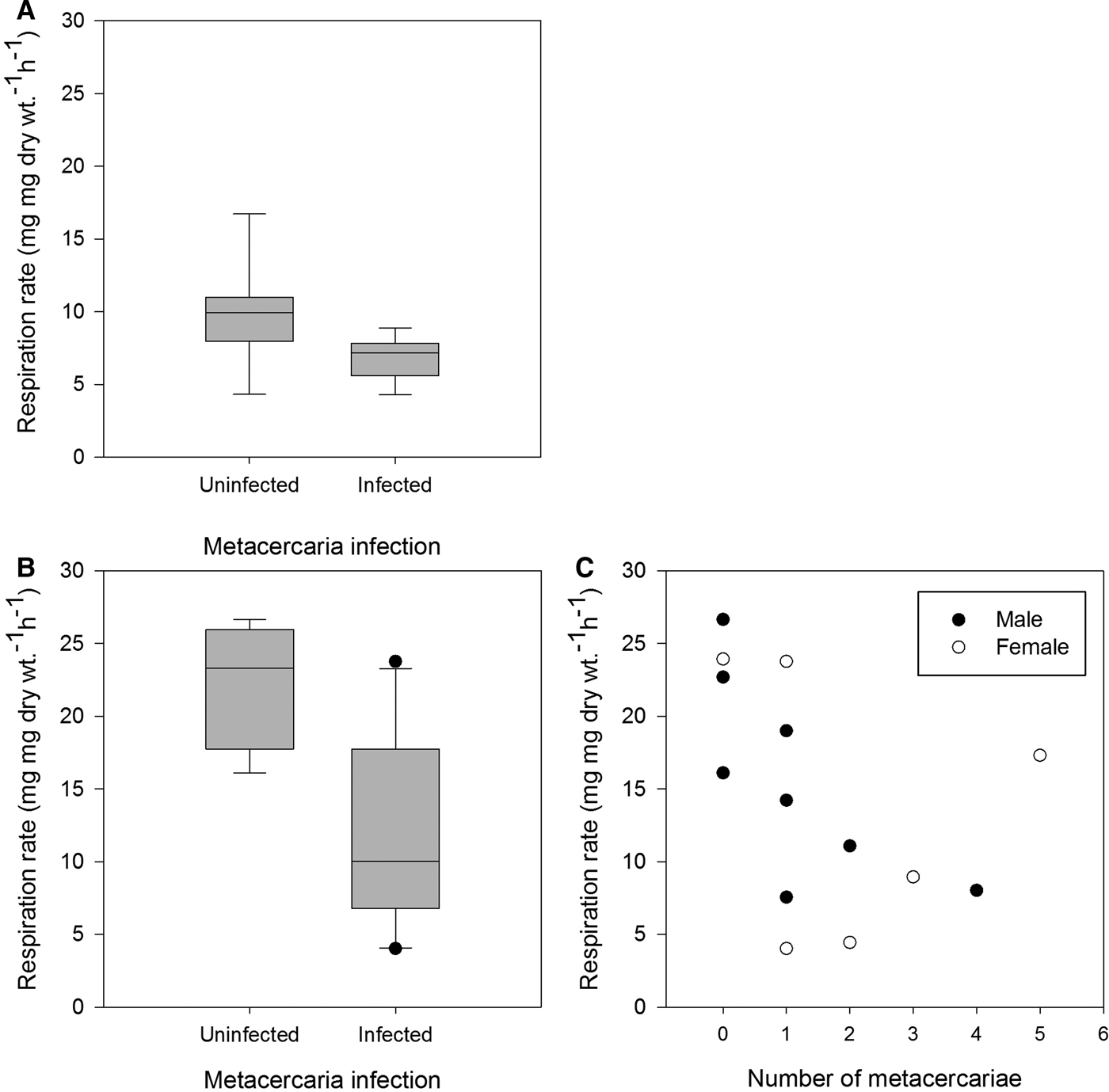
Mean respiration rate of all animals (infected and uninfected) was significantly lower at 5°C than at 15°C (Mann–Whitney U = 62.0, N = 14, 18, P < 0.05). In the first respiration rate experiment (5°C), infected amphipods (selected based on behaviour – positive phototaxis, negative geotaxis) demonstrated significantly lower respiration rate than uninfected individuals (ANOVA; F 1−17 = 6.533, P < 0.05) (Figure 3A). In animals selected from different lagoons (Salterns and Gilkicker) mean respiration rate of animals from Gilkicker (infected) was significantly lower than those collected at the Salterns (uninfected) (Figure 3B, ANOVA: F 1,13 = 8.463, P < 0.05). Linear regression showed no significant effect of parasite load (males, females and sexes combined) (Figure 3C). In feeding experiments there was no significant difference between mean feeding rate of uninfected individuals (11.9 mg g dry wt−1 h−1) and infected animals (14.6 mg g dry wt−1 h−1).
The effect of metacercarial infection on respiration rate of Gammarus insensibilis. (A) Experiment 1, Respiration rate (± 1 SD) of uninfected and infected G. insensibilis selected based on behaviour (N = 9). (B) Respiration Experiment 2, Respiration rate of infected (N = 4) and uninfected (N = 10) G. insensibilis randomly selected and dissected after the experiment to determine metacercaria presence. (C) Scatter plot of data from (B) separated by sex.

Reproductive investment
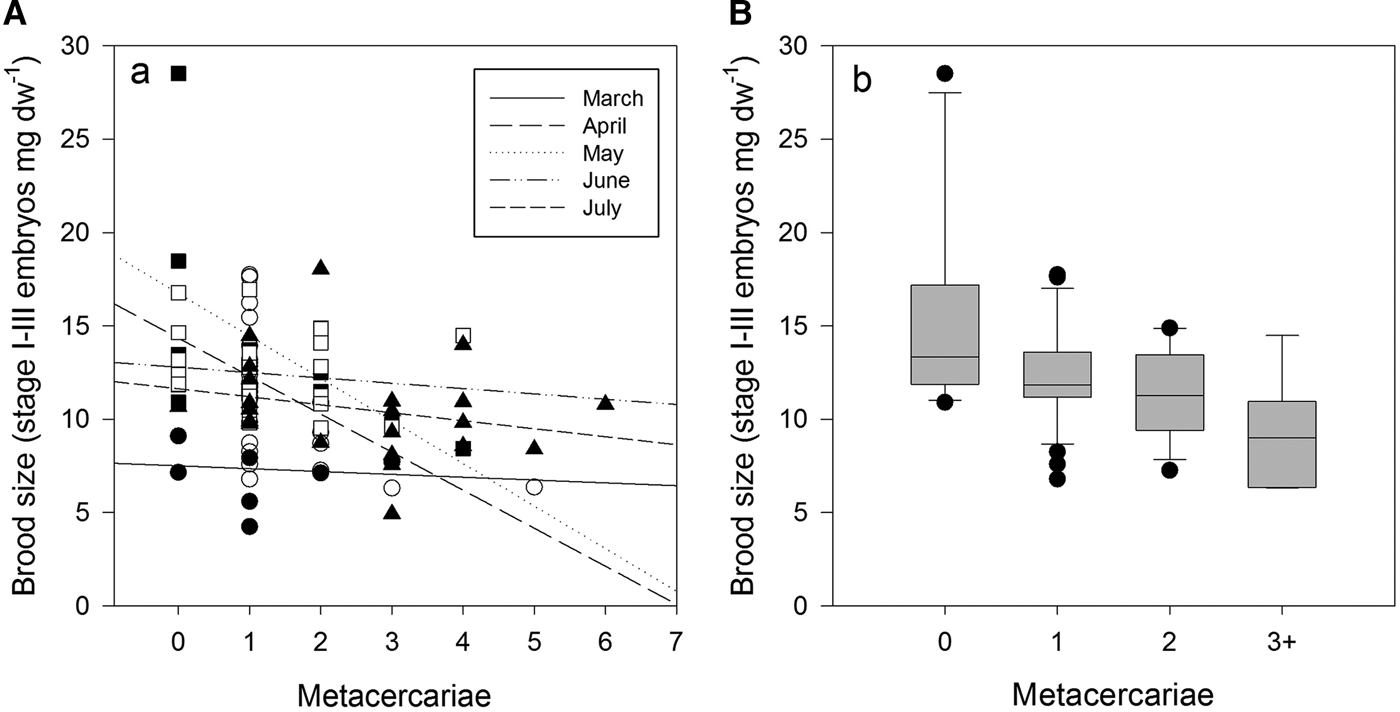
Mean weight-specific early stage brood size of G. insensibilis differed significantly with infection by trematode metacercariae when all ovigerous females from April to July were pooled (Kruskal–Wallis ANOVA on ranks H = 19.808, 2 df; P < 0.001, Figure 4B). Pairwise multiple comparisons (Dunn's method) showed females infected with 3 or more metacercariae to have significantly lower brood size than both uninfected animals, and those infected with 1 or 2 metacercariae. Brood size reduced by 36.6% between uninfected and heavily infected (3+) individuals. There was no significant difference in investment in individual embryos as estimated from embryo volume (mm3) and embryo mass (μg). Changes in reproductive investment (clutch volume) were therefore related to the number of embryos.
The effect of intensity of cerebral metacercaria infection on the early stage brood size (embryos mg dry wt−1) of G. insensibilis. (A) Monthly data (B) all monthly data pooled.

Mean late-stage brood size was higher in uninfected individuals but there was no significant difference in embryo number in either stage IV or V broods (note, low numbers of uninfected females). Uninfected females showed a rate of loss of embryos of 27.8% while females infected with three or more metacercariae lost 28.9% of their embryos during development from early stage (I–III) to late stage (V). Females with intermediate parasite load demonstrated higher rates of embryo loss during development of 44.5%.
DISCUSSION
The presence of the metacercariae of microphallid trematodes in the cephalic region of G. insensibilis became apparent during the examination of animals for a separate study (Gates, Reference Gates2006). The presence of the metacercariae is consistent with the other studies of the species (Helluy, Reference Helluy1983). The size and shape of the metacercariae were consistent with the 270 × 350 µm ovoid cysts of M. papillorobustus (Rebecq, Reference Rebecq1964) but the parasite species has not been identified in this study. Occasionally there were smaller metacercariae present in the abdomen which may represent a different species of trematode or may be immature metacercariae from new infections. The observations reported here are the first from the UK despite other studies of UK populations of G. insensibilis (Sheader, Reference Sheader1996; Pearson et al., Reference Pearson, Rogers and Sheader2002) but when researchers do not have a ‘search image’ for parasites they can be easily missed (Schwartz & Cameron, Reference Schwartz and Cameron1993). These results have implications for the understanding of the ecology of a priority species under the biodiversity action plan, and more widely the ecology of saline lagoon systems. For example, at an estuarine site in close proximity to Gilkicker high levels of infection by trematode metacercariae had a detrimental effect on the overall population size of Echinogammarus marinus (Guler et al., Reference Guler, Short, Etxabe, Sherhod, Kille and Ford2015).While our study did not find major detrimental effects on the population there were effects at the individual level.
Mean infected male parasite load at Gilkicker (2.26) was higher than Thau lagoon (1.83) but female parasite load (2.16) was lower than Thau (2.26–3.19) (Ponton et al., Reference Ponton, Biron, Joly, Helluy, Duneau and Thomas2005). In this study metacercaria infection ranged from 0–20 per host but amphipods with more than 5 metacercariae were rare. Presumably, increased infections caused an increase in the rate of predation by the definitive host so these animals were removed from the population (Lafferty, Reference Lafferty1996). Furthermore, increased mortality of the amphipod Paracalliope novizealandiae was reported from wounding and loss of haemolymph following infection with ‘intermediate’ and ‘high’ levels of Maritrema novaezelandensis (Microphallidae) infection (Fredensborg et al., Reference Fredensborg, Mouritsen and Poulin2004). Gammarus insensibilis hosting many metacercariae had distorted head shape supporting the idea of maximum volume of infection proposed for metacercariae of microphallids infecting Cyathura carinata (Jensen et al., Reference Jensen, Ferreira and Pardal2004). At low infection intensities a greater proportion of the host animals were juveniles, likely owing to a shorter time period for infection to occur.
The prevalence of cerebral metacercariae in Gammarus insensibilis was higher at Gilkicker and Eight Acre Pond. These lagoons are separated by approximately 40 km but The Salterns, where prevalence was lower, is only about 50 m from Eight Acre Pond. Gilkicker and Eight Acre Pond are both wide, shallow lagoons with a muddy sediment and gravel in the margins. In contrast, the Salterns and the Moulton Marsh lagoons are narrower, deeper bodies of water. The differential infection rates between the two lagoon types could be explained by the same phenomenon that splits the host population into two discrete subunits based on infection (Thomas et al., Reference Thomas, Renaud, Derothe, Lambert, Meeüs and Cézilly1995, Reference Thomas, Renaud and Cezilly1996a; Ponton et al., Reference Ponton, Biron, Joly, Helluy, Duneau and Thomas2005). Within Gilkicker and Eight Acre Pond, the water is shallow (<0.75 m), so such discrete populations are less feasible. The shallower lagoons may also be more suitable for feeding by wading birds, thus increasing the potential for successful completion of the trematode life cycle, and increasing the selective advantage for parasite prevalence at these sites.
At Gilkicker the highest parasite prevalence (98.3%) was recorded in July 2004. The previous month had the highest recorded water temperature (26°C). The release activity of microphallid cercariae from the initial molluscan host is known to increase in warmer water. Amphipods increase their gill ventilation to increase oxygen uptake at higher temperature. In this study this was demonstrated by higher respiration rate at 15°C, as expected for peracarid crustaceans (Dorgelo, Reference Dorgelo1977; Garnacho et al., Reference Garnacho, Peck and Tyler2001). Increased gill ventilation could increase contact with trematode cercariae (Mouritsen & Jensen, Reference Mouritsen and Jensen1997). Fredensborg et al. (Reference Fredensborg, Mouritsen and Poulin2004) showed that high temperature induced severe Corophium sp. mortality as a result of increased risk of injury associated with cercarial penetration in conjunction with temperature stress. Such a situation can be envisaged for lagoonal habitats where the warmest summer months (extremes of temperature and salinity, along with temperature-related reduced oxygen levels) in conjunction with high injury rates from cercarial penetration may present a severe physiological challenge.
Respiration rate was significantly lower in G. insensibilis infected by metacercariae in both experiments. This does not support the hypothesis that higher respiration rate may be expected in infected animals as a symptom of increased stress. There are conflicting patterns in parasite effects on metabolic rates but similar results have been reported for G. pulex infected by the behaviour modifying acanthacephalan Pomphorhynchus laevis (Rumpus & Kennedy, Reference Rumpus and Kennedy1974). A plausible explanation for reduced respiration rates in animals infected by behaviour modifying parasites is reduced activity in the host. Aberrant escape behaviour occurs in response to disturbance (Ottaviani & Franceschi, Reference Ottaviani and Franceschi1996). Arnal et al. (Reference Arnal, Droit, Elguero, Ducasse, Sánchez, Lefevre, Misse, Bédèrina, Vittecoq, Daoust and Thomas2015) reported greatest activity by infected G. insensibilis in the presence of fish slime and bird faeces, both associated with potential definitive hosts. In the current study disturbance was minimal in the laboratory assay so activity may be reduced in the infected animals.
In this study there was a reduction in the early-stage brood size with increased parasite load. In any single month there was no difference in the size of individual embryos associated with infection with cerebral metacercariae. In amphipods reproductive plasticity is achieved through the balance of reproductive investment in fewer, larger individual embryos (e.g. in winter) or more, smaller individuals (summer) (Kolding & Fenchel, Reference Kolding and Fenchel1981; Sheader, Reference Sheader1996). The same microphallid-gammarid system in the Thau lagoon has demonstrated assortative pairing (Thomas et al., Reference Thomas, Renaud and Cezilly1996a) influencing the fitness of infected males by pairing with smaller, infected females (Ponton et al., Reference Ponton, Biron, Joly, Helluy, Duneau and Thomas2005) but there was no evidence of effects of infection on the size of reproductive females in this study. Early and late stage brood size was similarly reduced by parasite infection where rates of brood mortality were ~29% in infected and uninfected animals. The similar rates of brood mortality suggest that the smaller broods of infected animals was not related to the re-ingestion of the developing embryos at a later stage of development to compensate for energetic imbalances because of parasite infections. Therefore the effects of trematode infection on reproduction were probably initiated prior to the release of eggs into the marsupium, perhaps because of reduced energy to allocate to reproduction. Increased activity by hosts generated by manipulative parasites (Arnal et al., Reference Arnal, Droit, Elguero, Ducasse, Sánchez, Lefevre, Misse, Bédèrina, Vittecoq, Daoust and Thomas2015), melanization and encapsulation responses induced following infection (Kostadinova & Mavrodieva, Reference Kostadinova and Mavrodieva2005b) and wounding and haemolymph loss through penetration of the abdomen by cercariae (Fredensborg et al., Reference Fredensborg, Mouritsen and Poulin2004) are probably energetically costly, reducing resources available for reproduction.
In any consideration of the conservation of lagoon habitats and specialist lagoon species the interaction with parasites must be understood. Microphallid trematodes are frequently associated with lagoons or habitats where temperatures can reach high levels, such as the intertidal zone on the seashore. The success of organisms such as G. insensibilis in lagoon habitats may be the result of an ability to maintain healthy reproductive rates and population sizes despite stressful environmental conditions, continual parasite infection and occasional parasite-induced reductions in population size.
ACKNOWLEDGEMENTS
We are grateful to the late Dr Roger N. Bamber for supporting this project as a supervisor and through additional CASE funding.
FINANCIAL SUPPORT
AR Gates was supported by the NERC studentship NER/S/A/2002/10401.