Introduction
A rapid increase in the poultry industry has led to great volumes of litter material. Litter and manure (bedding materials, droppings, feathers and feed waste etc.) is a valuable source of plant nutrients or potential animal feed or biofuel for human and animals (Williams et al., Reference WILLIAMS, BAKER and SIMS1999). However, one of the major environmental concerns with poultry litter is the production of ammonia (NH3) from microbial degradation of organic nitrogen (N) compounds in the litter. Urea and uric acid in poultry litter comprise 70% of the N content which can be readily degraded to NH3 (Nahm, Reference NAHM2003). In the poultry house, NH3 emissions adversely affects the health and welfare of birds (Nagaraja et al., Reference NAGARAJA, EMERY, JORDAN, SIVANANDAN, NEWMAN and POMEROY1983; Dawkins et al., Reference DAWKINS, DONNELLY and JONES2004; Ritz et al., Reference RITZ, FAIRCHILD and LACY2004), resulting in lower feed efficiencies and increased management costs to remove NH3 from the poultry houses (Moore et al., Reference MOORE, DANIEL, EDWARDS and MILLER1995). Long time exposure to NH3 has been shown to have a negative impact on the health of poultry house operators (Ritz et al., Reference RITZ, FAIRCHILD and LACY2004; Kirychuk et al., Reference KIRYCHUK, DOSMAN, REYNOLDS, WILLSON, SENTHILSELVAN, FEDDES, CLASSEN and GUENTER2006; Rylander and Carvalheiro, Reference RYLANDER and CARVALHEIRO2006). On the other hand, it was reported that 50% of dietary N and 57% of phosphorus (P) were excreted in the broiler manure, and about 65% N and 70% P were excreted in the commercial laying hens manure under normal production conditions (Patterson and Lorenz, Reference PATTERSON and LORENZ1996; Patterson et al., Reference PATTERSON, LORENZ, WEAVER and SCHWARTZ1998). Both N and P are important elements affecting surface and ground water quality. Therefore, scientists are looking for ways to eliminate, reduce, or control potential pollutants from poultry due to increasing public concern about the environment (Summers, Reference SUMMERS1993).
Sustainable management of poultry manure is the environmental challenge. In 2008, broiler production in the U.S. was 8,882 million birds (USDA, 2008), and was estimated to generate 44.4 million tons of poultry manure in that year (McDonald et al., Reference MCDONALD, RIBAUDO, LIVINGSTON, BECKMAN and WANG2009). Moore (Reference MOORE1998) reported that potential environmental problems associated with poultry manure include leaching of nutrients, surface runoff of pollutants, and NH3 volatilisation. Ammonia volatilisation of poultry manure increases acid deposition in the air (Williams, Reference WILLIAMS1995; Wheeler et al., Reference WHEELER, CASEY, GATES, XIN, ZAJACZKOWSKI, TOPPER, LIANG and PESCATORE2006) and with land deposition causing eutrophication of surface waters (Edwards and Daniel, Reference EDWARDS and DANIEL1992; Paerl and Fogel, Reference PAERL and FOGEL1994) and acidification of soils (Williams et al., Reference WILLIAMS, BAKER and SIMS1999). Sims and Wolf (Reference SIMS and WOLF1994) reported that more than 50% of poultry manure N might be volatilised via NH3. Similarly, Patterson and Lorenz (Reference PATTERSON and LORENZ1996) reported that approximately 40% of feed N of poultry was lost to the atmosphere. On the other hand, nitrate (NO3-) can leach into ground water which has been linked to methemoglobinemia, toxicities in livestock, and eutrophication in water (Sandstedt, Reference SANDSTEDT1990; Amdur et al., Reference AMDUR, DOULL and KLASSEN1991). Methemoglobinemia is characterised by bluish skin coloration, and normally occurs in infants. Certain bacteria in the infant's intestine convert NO3- to nitrite (NO2-), and then NO2- oxidises Fe2+ to Fe3+, changing haemoglobin to methemoglobin which is then not able to transport oxygen in the blood (Moore, Reference MOORE1998). Therefore, reducing N excretion and NH3 volatilisation is an emerging issue to maintain human and animal health for a clean environment.
There are numerous methods to minimise N excretion of poultry. These include; feeding low protein diets supplemented with keto or hydroxy-analogues of amino acids to meet the requirements in birds (NRC, 1994), maintaining the dietary ideal protein ratio, inclusion of microbial enzymes (Bacharach, Reference BACHARACH1957; Bongaerts and Vogels, Reference BONGAERTS and VOGELS1976), mineral supplementation of poultry diets (Kim and Patterson, Reference KIM and PATTERSON2003), and manure treatment (Elwinger and Svenson, Reference ELWINGER and SVENSON1996; Tassistro et al., Reference TASSISTRO, RITZ and KISSEL2007). The method with the most potential to reduce NH3 volatilisation is the transformation of NH3 by nitrifying bacteria through nitrification. The importance of nitrification has been recognised for more than a century and it has been practiced for waste treatment by engineers and scientists (Anthonisen et al., Reference ANTHONISEN, LOEHR, PRAKASAM and SRINATH1976). However, the efficiency of biological N control mostly depends on the ability of nitrifying organisms to oxidise NH3 to NO3-. Therefore, the aim of this review is to evaluate the effect of nitrifying bacteria in soil for reducing NH3 volatilisation and enhancing N retention in poultry manure.
Soil-nitrifying bacteria
Nitrifying bacteria grow by consuming inorganic N compounds and are widely spread in the soil (Mancinelli, Reference MANCINELLI1996). Several nitrifying bacteria are available in the environment depending on the genera, such as Nitrosomonas, Nitrosococcus, Nitrobacter and Nitrococcus spp.. Among these bacteria Nitrosomonas and Nitrobacter bacteria are commonly found in the soil especially in those cultivated with legumes. These soil-nitrifying bacteria can transform NH3 to NO2- and subsequently NO2- to NO3-. A few specific groups of bacteria are capable of contributing to the generation of soil NO3-. However, it has been reported that not all soil NO3- producers are the nitrifying bacteria (Milton, Reference MILTON2001). Some nitrifying bacteria oxidise ammonium (NH4+) to NO2-are called NH4+ oxidisers. After that NO2- is converted to NO3- by another group of nitrifying bacteria called NO2- oxidisers. The most commonly known genus of NH4+ oxidising bacteria and NO2- oxidising bacteria are Nitrosomonas and Nitrobacter, respectively (Figure 1).
Schematic diagram of the production of nitrate by soil nitrifying bacteria (Milton, Reference MILTON2001).

Ammonia nitrification in poultry manure
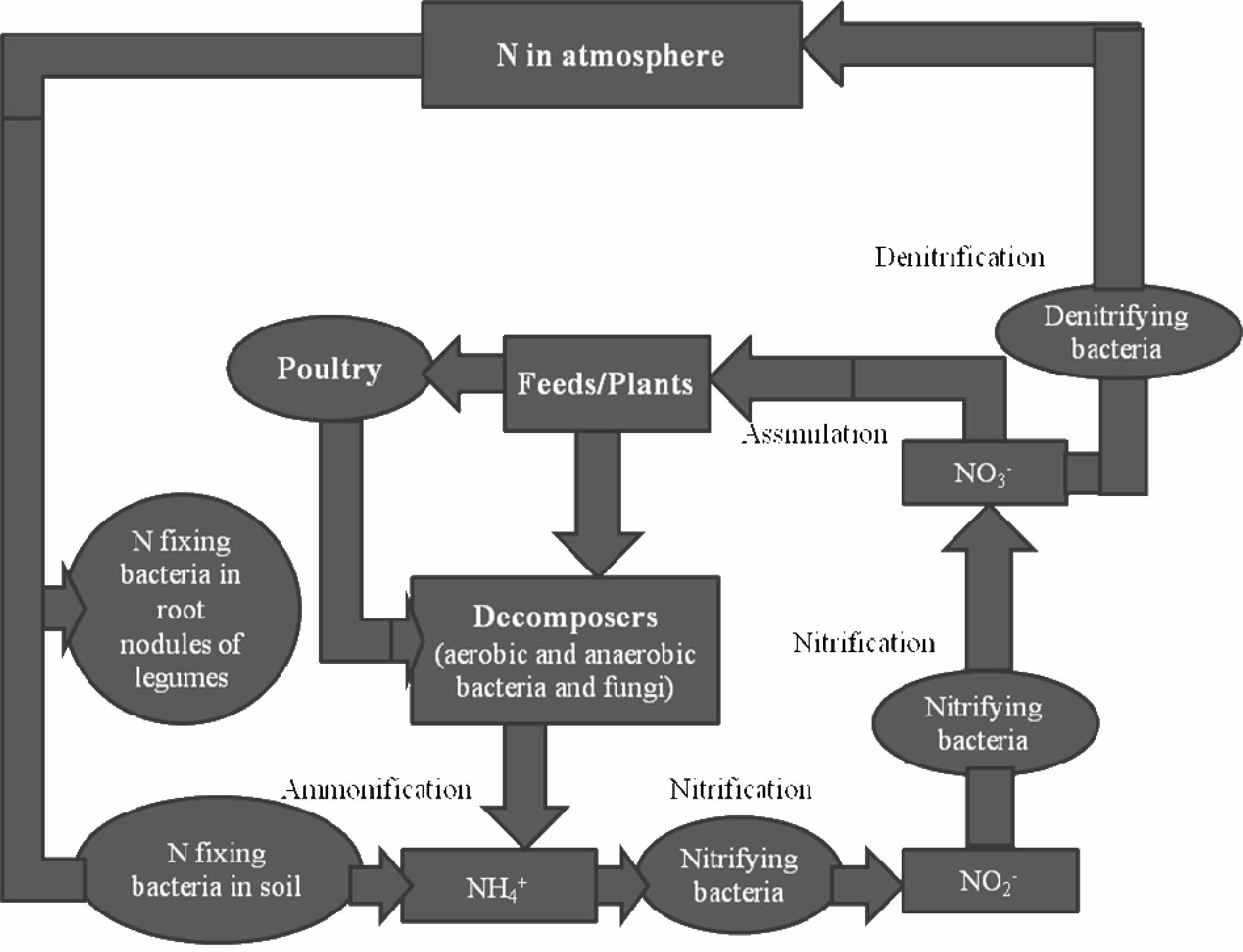
Efficient management of poultry manure is required to make economic use of the manure and to maintain a clean environment for human and animals. The oxidation of poultry manure NH3 into NO2- by nitrification can help in manure management. Nitrification is the biological process whereby oxidation of NH3 with O2 into NO2- is followed by the oxidation of NO2- into NO3-(Lehninger et al., Reference LEHNINGER, NELSON and COX1993a). In this process NO3- production in soil is an important part of the N cycle in the natural environment (Figure 2).
The nitrification of NH3 in poultry manure by the application of soil-nitrifying bacteria could help to reduce NH3 volatilisation. Before manure is applied to the land, the most predominant form of N in manure is NH4+, which is converted to NH3 as pH increases (Moore, Reference MOORE1998). Generally in poultry house's NH3 gas is readily volatilised. However, the fate of the manure NH4+ is different after application in soil where huge portions of NH3 is oxidised to NO2- and eventually NO3- by soil-nitrifying bacteria (Lehninger et al., Reference LEHNINGER, NELSON and COX1993b). The two enzymes involved in oxidising NH3 to NO2- include; NH3 monooxygenase (AMO), which oxidises NH3 to hydroxylamine and hydroxylamine oxidoreductase (HAO), which further oxidises hydroxylamine to NO2- (Myrold, Reference MYROLD1998). The detail chemical reactions in the nitrification process are as follows;
The energy generation of nitrifying bacteria is inefficient in this process. Among four electrons produced during the oxidation of NH3 to NO2-, only two electrons can be used for energy generation because two electrons are used to convert NH3 to NH2OH. Thus, the growth rate of nitrifying bacteria is very slow (Madigan et al., Reference MADIGAN, MARTINKO and PARKER2000). After NH3 oxidation, NO2- is oxidised to NO3- by NO2- oxidoreductase enzyme, which is bound in the membrane of NO2-oxidising bacteria (Myrold, Reference MYROLD1998).
Therefore, nitrification is an important step in the N cycle for efficient oxidation of NH3, and nitrifying bacteria play a vital role in this process. If soil-nitrifying bacteria are applied to the manure in poultry houses, NH3 volatilisation could be reduced by converting NH3 to NO2- and subsequently to NO3-. Although some nitrifying bacteria are present in poultry manure, fortification would accelerate the transformation of NH3 to NO3- resulting in less NH3 volatilisation (Nodar et al., Reference NODAR, ACEA and CARBALLAS1990b). Nitrification of NH3 in poultry houses would have several benefits; a) less NH3 volatilisation, b) reduced poultry house management cost, c) improved bird health and welfare, and d) increased performance of the birds. However, it is unknown if the bacteria normally found in the soil can convert NH3 to NO3- in poultry manure. Thus, more research is needed in this regards including identification of appropriate nitrifying bacteria for efficient microbial nitrification in poultry manure.
A schematic diagram of nitrification with other processes in the nitrogen (N) cycle. (Milton, Reference MILTON2001; URL 1).
Strategies for reducing NH3 volatilisation in poultry manure
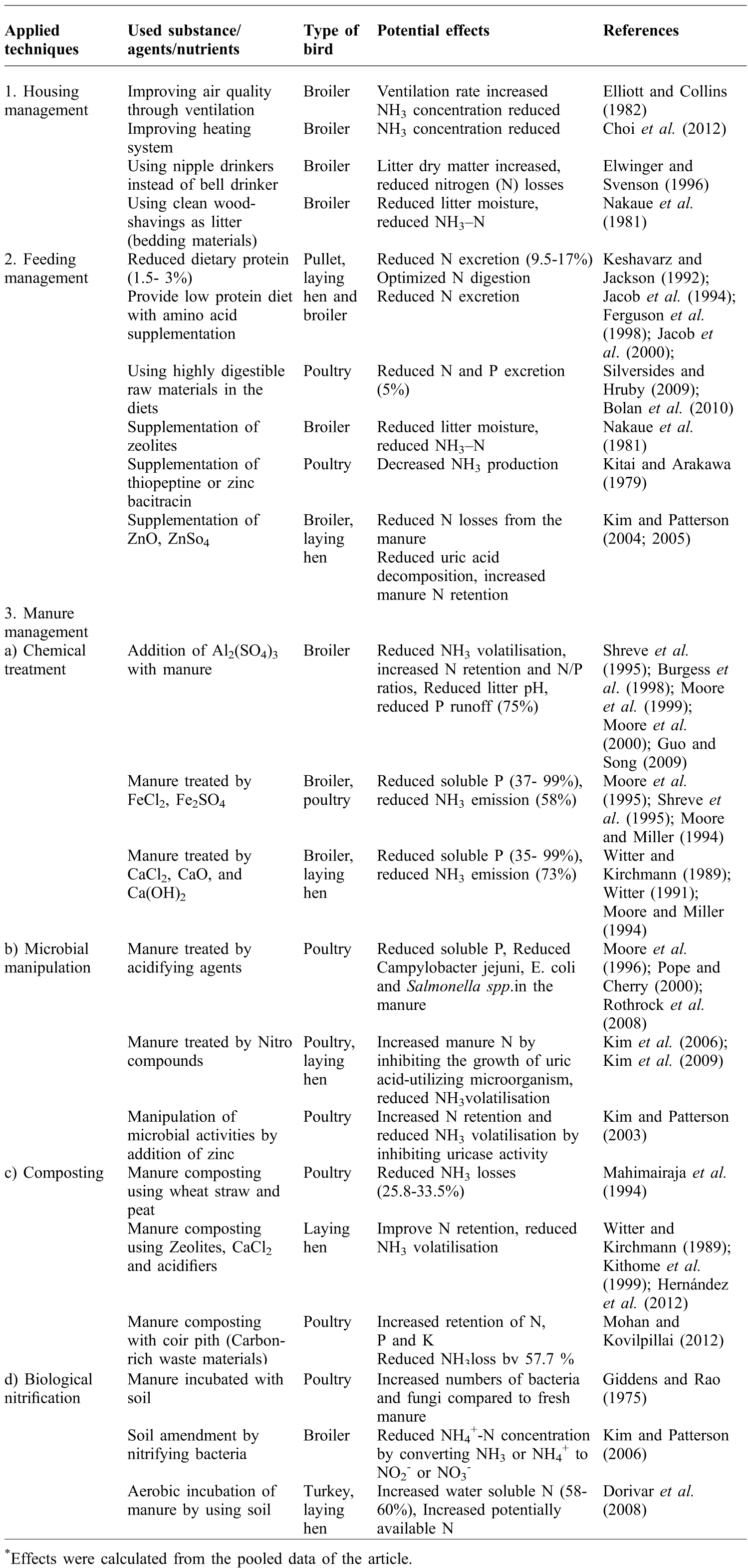
Ammonia production from animal sources is predominant due to their housing system and inefficient conversion of feed N to animal products (Bicudo et al., Reference BICUDO, SCHMIDT, GAY, GATES, JACOBSON and HOFF2002). Due to genetic improvements, current commercial poultry are fed high protein feeds in order to maintain their nutritional requirements for optimum performance. The metabolic end products of these dietary proteins in poultry are uric acid and urea where further microbial action releases NH3 into the barns and in the air during manure decomposition (Mahimairaja et al., Reference MAHIMAIRAJA, BOLAN, HEDLEY and MACGREGOR1994). In addition, it has been reported that at least 50% of poultry manure N can be volatilised in the form of NH3, which may reduce the value of the poultry manure as fertiliser (Sims and Wolf, Reference SIMS and WOLF1994). Therefore, a number of innovative strategic techniques have been developed to control NH3 volatilisation from poultry operations. Many of the management systems failed to completely mitigate this volatilisation; however, a few techniques may provide efficient options to poultry producers for maintaining a clean environment by N retention and NH3 control. A summary of the effectiveness of various strategies for reducing NH3 volatilisation from poultry manure is presented in Table 1.
A summary of the effectiveness of various strategies for reducing ammonia (NH3) volatilisation from poultry manure*.
*Effects were calculated from the pooled data of the article.
Microbial activities and degradation of uric acid in poultry manure
Ammonia is a by-product of the microbiological decomposition of organic N compounds in manure and can be generated from the N portion of animal manure by microbial activity (Carlile, Reference CARLILE1984). Generally, microbial activity in poultry manure increases NH3 volatilisation. During the NH3 production process, the predominant N form in poultry manure is uric acid which is converted into allantoin by the microbial enzyme uricase (Bongaerts and Vogels, Reference BONGAERTS and VOGELS1976). The allantoin is broken down into glyoxylate and urea. With the addition of water, urea is broken down into CO2 and NH3 by the enzyme urease (Carlile, Reference CARLILE1984), which increases the N loss in poultry manure (Bacharach, Reference BACHARACH1957; Kim and Patterson, Reference KIM and PATTERSON2003). The production of NH3 continues with the microbial degradation of manure under both aerobic and anaerobic conditions. Therefore, inhibition of the growth of microorganisms in the manure that produces several key enzymes is important to reduce NH3 volatilisation.
It has been hypothesised that manipulation of the degradation process of uric acid would reduce NH3 volatilisation and increases the N retention in poultry manure. A series of experiments were conducted in our laboratory to reduce NH3 volatilisation and N losses from poultry manure (Kim and Patterson, Reference KIM and PATTERSON2003; Reference KIM and PATTERSON2004; Reference KIM and PATTERSON2005; Kim et al., Reference KIM, ANDERSON, RATLIFF, NISBET and RICKE2006; Reference KIM, WEEKS, ANDERSON, NISBET, DUNKLEY and RICKE2009). Kim et al. (Reference KIM, ANDERSON, RATLIFF, NISBET and RICKE2006) evaluated the potential ability of nitrocompounds to reduce NH3 volatilisation by inhibiting uric acid-utilising microorganisms selected from poultry manure and found that they were more successful compared to non-nitrocompounds. In this study, they used four kinds of nitrocompound such as nitroethane, nitroethanol, nitropropanol, nitropropionic acid and found that the latter two were better than the former. A recent study, Kim et al. (Reference KIM, WEEKS, ANDERSON, NISBET, DUNKLEY and RICKE2009) has shown that laying hen manure treated with nitrocompounds increased manure N retention by inhibiting the growth of uric acid utilizing microbes. The author also suggested that nitropropanol and nitropropionic acid could be used as poultry manure treatments to reduce NH3 volatilisation (Kim et al., Reference KIM, ANDERSON, RATLIFF, NISBET and RICKE2006; Reference KIM, WEEKS, ANDERSON, NISBET, DUNKLEY and RICKE2009). Similarly, a previous study (Kim and Patterson, Reference KIM and PATTERSON2003) indicated that different levels of zinc treatments inhibited the growth of uric acid utilising microorganisms in laying hen manure, resulting in reduced NH3 volatilisation and increased manure N retention. Another study in broilers (Kim and Patterson, Reference KIM and PATTERSON2004) showed that dietary zinc supplementation significantly reduced the loss of total manure N by inhibiting the activity of microbial uricase. In laying hens, the same group (Kim and Patterson, Reference KIM and PATTERSON2005) reported that supplementing zinc into hen diets significantly reduced the decomposition of uric acid, resulted in greater manure total-N retention; however, high levels of zinc depressed feed intake, growth and production performance of the birds. The author concluded that supplemental zinc either in the manure or in the diet not only inhibited the activity of microbial uricase by reducing the decomposition of uric acid but also reduced the activities of other microbial enzymes involved in aerobic degradation of uric acid to NH3 in poultry manure. It has been documented that five enzymes such as uricase, allantoinase, allantoateamidohydrolase, ureidoglycolase, and urease are essential for aerobic degradation of uric acid (Bacharach, Reference BACHARACH1957; Bongaerts et al., Reference BONGAERTS, UITZETTER, BROUNS and VOGELS1978), and that the zinc treatments herein might influence these enzymes to increase the retention of intermediate components of uric acid. In addition, Varel (Reference VAREL1997) reported that the use of urease inhibitors in the livestock manure increased accumulation of urea by reducing NH3 volatilisation. Therefore, microbial enzyme inhibitors can play a significant role to reduce the production and volatilisation of NH3 by inhibiting the growth of microorganisms and the action of enzymes that convert uric acid to NH3 in poultry manure.
The volatilisation of NH3 can be affected by different factors, such as moisture, temperature, pH, and N content of the manure (Groot Koerkamp, Reference GROOT KOERKAMP1994). Generally, the pH of poultry droppings and litter (bedding) are 7.5 and 8.5, respectively. The microorganisms can perform their activities within this range of pH and accelerate the NH3 production in manure. It has been reported that NH3 production decreased when manure pH is lower than 7.0, and NH3 production is increased when manure pH is higher than 8.0 (Reece et al., Reference REECE, BATES and LOTT1979; Carr et al., Reference CARR, WHEATON and DOUGLASS1990). Therefore, the use of acidifying agents has been shown to reduce NH3 volatilisation by lowering the pH of poultry manure, and thereby reducing microbial content and their activity (Moore et al., Reference MOORE, DANIEL, EDWARDS and MILLER1996; Pope and Cherry, Reference POPE and CHERRY2000). In addition, different moisture absorbents may act as ion-exchangers and can control microbial activity in the poultry manure. Nakaue et al. (Reference NAKAUE, KOELLIKER and PIERSON1981) reported that clinoptilolite zeolite used in the poultry litter reduced both moisture content and NH3 by 15% by controlling microbial activity. The use of absorbents and acidifying agents to be effective to reduce NH3 volatilisation depends on several management factors of the poultry industry and cost of return (Malone, Reference MALONE1998; Reference MALONE2002). Moreover, many acidifying agents are corrosive and hazardous for birds as well as for human operators (Ndegwa et al., Reference NDEGWA, HRISTOV, AROGO and SHEFFIELD2008).
Schefferle (Reference SCHEFFERLE1965) found that 25% of the bacterial population in poultry litter was capable of uric acid decomposition with the majority converting uric acid to urea. The next step of conversion of urea to NH3 is accomplished by strains of Corynebacterium, Micrococcus, Alcaligenes, Achromobacter, and Cytophaga, which have no effect on the hydrolysis of uric acid. Schefferle (Reference SCHEFFERLE1965) also reported that aerobic populations of uricolytic bacteria were more efficient for this conversion rather than the anaerobic populations. Burnett and Dondero (Reference BURNETT and DONDERO1969) observed that the population of the aerobic uricolytic bacteria was higher than anaerobic bacteria in poultry manure where uric acid breakdown was mostly aerobic and a small fraction was anaerobic. The most favourable environment for uric acid hydrolysis by microbes includes; temperature at >20°C, pH at 5.5-9.0, litter moisture at 40-60%, and water activity at <0.625, meaning the amount of water available for microbes to initiate decomposition (Groot Koerkamp, Reference GROOT KOERKAMP1994). However, these conditions are also favourable for the growth and proliferation of pathogenic microorganisms, such as Salmonella spp. and E. coli in poultry manure (Eriksson de Rezende et al., Reference ERIKSSON DE REZENDE, MALLINSON, TABLANTE, MORALES, PARK, CARR and JOSEPH2001). Therefore, these factors should be considered to implement a strategy for the management of poultry manure and the reduction of NH3 losses.
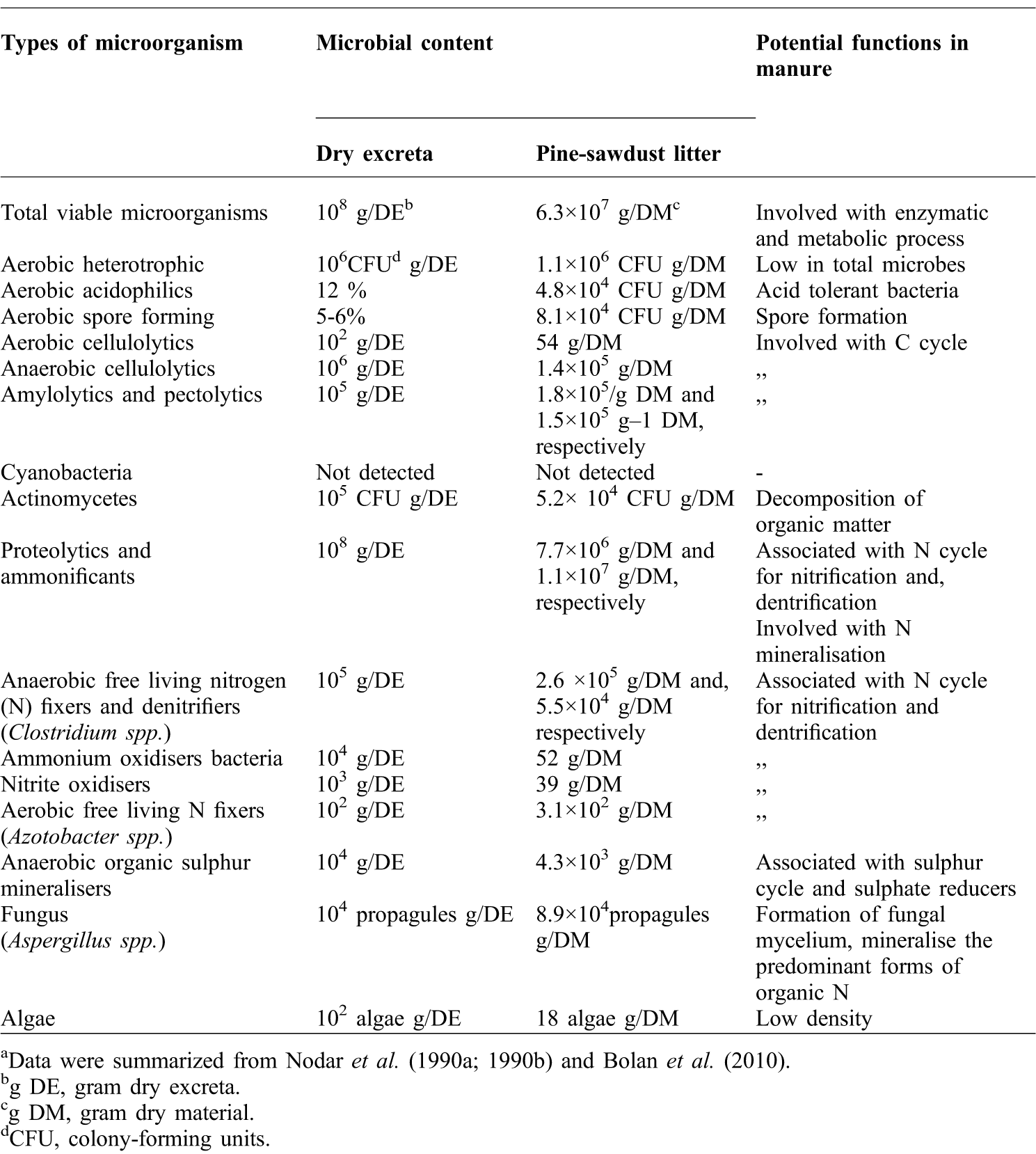
Several studies have provided microbial estimates of the NH4+ and NO2- oxidiser populations in poultry manure (Nodar et al., Reference NODAR, ACEA and CARBALLAS1990a; Reference NODAR, ACEA and CARBALLAS1990b). Nodar et al. (Reference NODAR, ACEA and CARBALLAS1990a) indicated that most of the bacteria in poultry manure were facultative, proteolytic, ammonificant, and cellulolytic anaerobes, and the population of denitrifiers was relatively high, whereas NH4+ and NO2- oxidisers were low. In a subsequent study, Nodar et al. (Reference NODAR, ACEA and CARBALLAS1990b) determined the microbial population in pine-sawdust poultry litter and found that most of the microorganisms were aerobic, proteolytic and ammonificant, and the population of denitrifiers was relatively higher compared to NH4+ and NO2- oxidisers. Therefore, the types and quality of the litter are important factors influencing the bacterial population in the poultry manure. Although poultry manure has some NH4+ and NO2- oxidisers, fortification of manure with nitrifying bacteria would accelerate the transformation of NH3 to NO2- or NO3-, thereby reducing NH3 volatilisation (Nodar et al., Reference NODAR, ACEA and CARBALLAS1990b). A microbial composition of poultry manure and their potential functions are presented in Table 2.
Microbial composition of poultry manure and their potential functionsa.
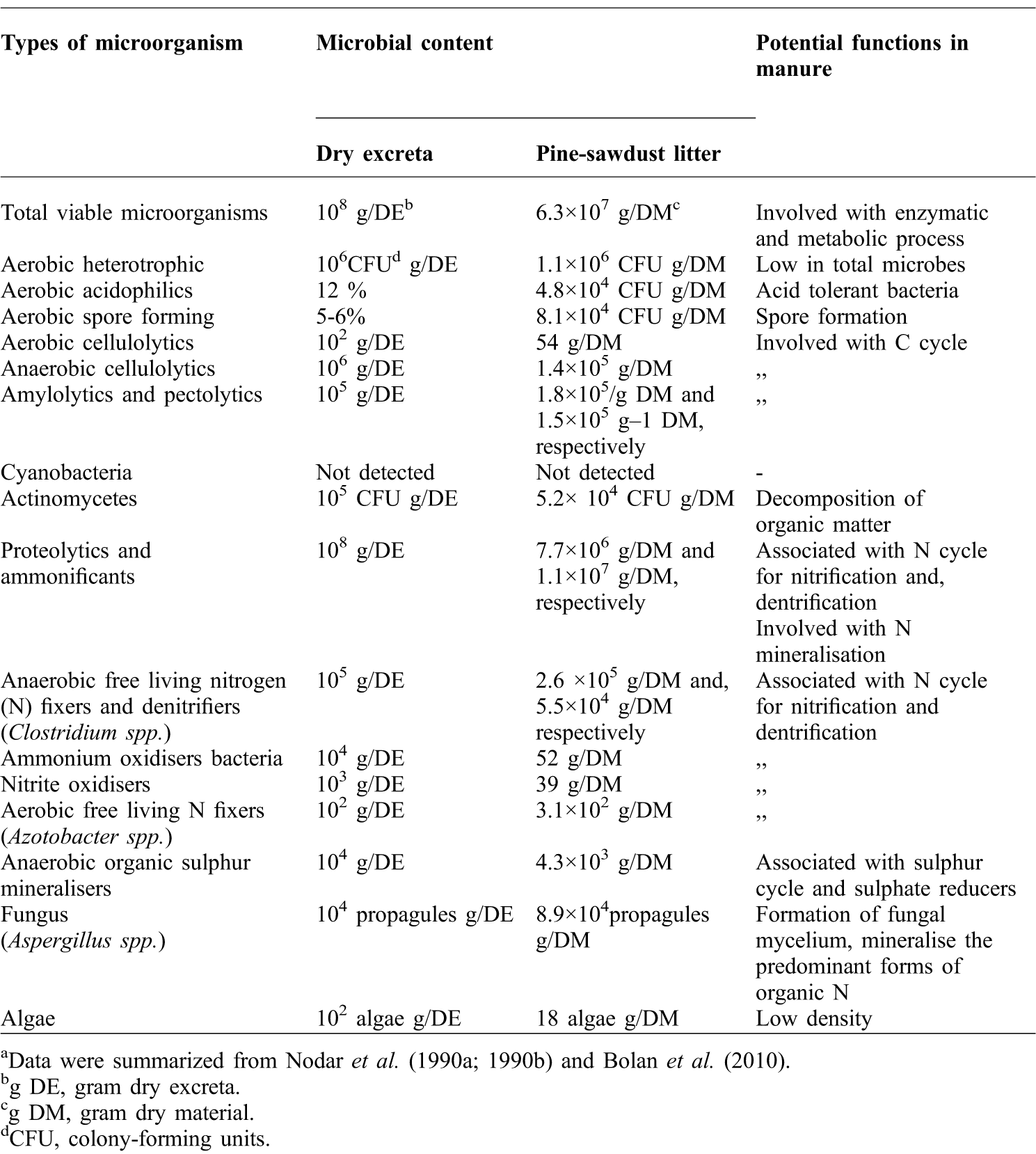
aData were summarized from Nodar et al. (Reference NODAR, ACEA and CARBALLAS1990a; Reference NODAR, ACEA and CARBALLAS1990b) and Bolan et al. (Reference BOLAN, SZOGI, CHUASAVATHI, SESHADRI, ROTHROCK and PANNEERSELVAM2010).
bg DE, gram dry excreta.
cg DM, gram dry material.
dCFU, colony-forming units.
Efficient NH3 oxidation depends upon the type of bacteria, bacterial population, NH3 concentration, NH4+ oxidisers and their sensitivity to NH3. However, the application of NH4+-insensitive NH3 oxidisers would help to oxidise NH3 in the face of high levels, because these levels can inhibit NH3 oxidation and suppress growth of nitrifying bacteria (Siddiqi et al., Reference SIDDIQI, SPEECE, ENGLBRECHT and SCHMIDT1967; Anthonisen et al., Reference ANTHONISEN, LOEHR, PRAKASAM and SRINATH1976; Keenan et al., Reference KEENAN, STEINRE and FUNGAROLI1979). Several studies have found NH3 oxidisers with different sensitivities to NH3 (Castens and Rozich, Reference CASTENS and ROZICH1986; Koops et al., Reference KOOPS, BOTTCHER, MOLLER, POMMERENING-ROSER and STEHR1991; Suwa et al., Reference SUWA, IMANURA, SUZUKI, TASHIRO and URUSHIGAWA1994). Suwa et al. (Reference SUWA, IMANURA, SUZUKI, TASHIRO and URUSHIGAWA1994) isolated ten strains of NH3 oxidisers from thirty four activated sludge samples and enumerated them in high and low (NH4)2SO4 media. The authors indicated that NH3 oxidisers sensitive to NH4+ grew into a low NH4+ medium but not in a high NH4+ medium, whereas some strains of bacteria insensitive to NH4+grew well in a high NH4+medium. They found that all NH3 oxidisers from sludge samples were Nitrosomonas spp. The authors concluded that higher populations of this NH4+-insensitive NH3 oxidisers can increase oxidation rates in the NH3 oxidation process. Therefore, the selection and the use of NH4+-insensitive nitrifying bacteria would be an important key to achieve efficient NH3 oxidation in poultry manure (Suwa et al., Reference SUWA, IMANURA, SUZUKI, TASHIRO and URUSHIGAWA1994).
Biological nitrification
The importance of nitrification has been recognised for decades to use for the benefit of humans. Recently the nitrification process has received more attention in the biological treatment of livestock waste for removal of non-volatile NH3 due to its potential benefits to a clean environment. It has been reported that two forms of N (NH4+ and NO3-) are linked with the nitrification process and both are used by the microbes in soil to convert NH4+ into NO3- (Milton, Reference MILTON2001). Cooper (Reference COOPER1975) evaluated nitrification in soil incubated with high moisture pig manure. In their study, an acid soil (pH 5.8) and a neutral soil (pH 7.1) were incubated for five weeks at 30°C using various dilutions of pig manure and (NH4)2SO4. The results indicated that the acid soil-pig manure mixture had greater nitrification of NH4+–N compared to the acid soil-(NH4)2SO4 mixture; however, oxidation of NH4+–N and accumulation of NO3-–N were faster in the neutral soil-(NH4)2SO4. Pan and Drapcho (Reference PAN and DRAPCHO2001) applied the nitrification process for the treatment of swine manure and reported that NH3 in the effluent was reduced by 85% of which 51% was retained as NO3-. A similar system was evaluated by Ten-Have et al. (Reference TEN-HAVE, WILLERS and DERIKX1994) for the treatment of swine manure and found to convert 99% of NH3 to NO3-. By contrast, Luostarinen et al. (Reference LUOSTARINEN, LUSTE, VALENTÍN and RINTALA2006) used a bioreactor for the treatment of dairy farm waste and reported that complete nitrification was achieved (50-60% N), but denitrification was impeded by insufficient carbon. The range of N removal in this study was lower compared with the rate reported by Pan and Drapcho (Reference PAN and DRAPCHO2001) and Ten-Have et al. (1994). However, various factors such as pH, temperature, microbial numbers, acclimation, and inhibiting compounds influence the rate at which nitrification takes place (Prakasam and Loehr, Reference PRAKASAM and LOEHR1972; Anthonisen et al., Reference ANTHONISEN, LOEHR, PRAKASAM and SRINATH1976).
Although few studies have addressed reducing NH3 volatilisation in poultry manure by nitrification, fortification of nitrifying bacteria could reduce NH3 volatilisation. Giddens and Rao (Reference GIDDENS and RAO1975) evaluated the microbes and N changes in poultry manure incubated with soil, and reported that manure mixed with soil had higher numbers of bacteria and fungi compared to fresh manure. This result might be attributed to the greater NH3 levels inhibiting the growth of microorganisms (Giddens and Rao, Reference GIDDENS and RAO1975). The authors concluded that the NO3- production was increased and NH3 volatilisation decreased considerably when poultry manure was mixed with soil compared to fresh manure. A study was conducted in our laboratory to evaluate the effect of soil amendment on NH4+–N transformation and N retention in broiler manure (Kim and Patterson, Reference KIM and PATTERSON2006). Prior to incubation, broiler manure was mixed with autoclaved soil or non-autoclaved soil in various ratios. The results from this study indicated that soil nitrifying bacteria in the non-autoclaved soil reduced the NH4+–N concentrations of broiler manure by converting NH3 or NH4+ to NO2- or NO3-. The author reported that the total NO2- and NO3- levels increased as the manure to soil ratio increased from 1:9 to 9:1. These results indicated that when manure was incubated with soil, the nitrifying bacteria oxidised NH3 into NO3-, decreased manure NH4+–N, which is potentially volatilised to the atmosphere. The nitrification process occurs in natural systems without using any chemical agents or substances (Anthonisen et al., Reference ANTHONISEN, LOEHR, PRAKASAM and SRINATH1976; Martin and Loehr, Reference MARTIN and LOEHR1976). Therefore, to reduce NH3 volatilisation and increase N retention in the poultry manure, the nitrification process would be environmentally viable and economically feasible among all other strategies. Further research is needed to clarify these finding with particular emphasis to identify the appropriate nitrifying bacterial strains for efficient microbial nitrification of poultry manure.
Environmental issues regarding the techniques used to reduce NH3 volatilisation of poultry manure
Poultry manure has been used all over the world as a valuable by-product of poultry production and requires appropriate management technologies which are sustainable and environmentally friendly. However, the loss of N from the poultry manure through NH3 volatilisation is a major concern at the farm as well as during handling and land application. Several techniques have been practiced to minimise NH3 volatilisation; however, most techniques have some limitations i.e. residual effects that create further pollution to the environment. This is true especially when manure is treated with minerals that further enhance accumulation in the soil because most of the poultry diets are supplemented with trace elements to achieve optimum performance (Mohanna and Nys, Reference MOHANNA and NYS1999; Salim et al., Reference SALIM, JO and LEE2008; Bolan et al., Reference BOLAN, SZOGI, CHUASAVATHI, SESHADRI, ROTHROCK and PANNEERSELVAM2010). For example, Kim and Patterson (Reference KIM and PATTERSON2003; Reference KIM and PATTERSON2004; Reference KIM and PATTERSON2005) conducted three experiments to reduce NH3 volatilisation from poultry manure. In one study they treated broiler manure by using 2% ZnSO4 and in another study they supplemented broiler and layer diets with high levels of ZnO (1500 mg/kg) and ZnSO4 (3000 mg/kg), respectively. In these studies, both of the zinc products are from inorganic sources which have low bioavailability in poultry thereby increasing mineral excretion (Burrell et al., Reference BURRELL, DOZIER, DAVIS, COMPTON, FREEMAN, VENDRELL and WARD2004; Nollet et al., Reference NOLLET, VAN DER KLIS, LENSING and SPRING2007). In addition, higher levels of dietary supplements are often used to provide well balanced trace elements in feedstuffs, and this practice may increase the risk of soil pollution (Mohanna and Nys, Reference MOHANNA and NYS1999). Mohanna and Nys (Reference MOHANNA and NYS1997b) showed that 94% of the inorganic zinc ingested was excreted by broiler chicks under normal commercial dietary conditions. A calculated estimate of the balance between the mineral composition of poultry manure (ITP, 1984) and soil mineral requirements (Coic and Coppenet, Reference COIC and COPPENET1989) showed that the amount of zinc in poultry manure was 6.6 times in excess of plant requirements (Mohanna and Nys, Reference MOHANNA and NYS1997a). The amount of zinc in poultry manure has generated environmental concerns and reduced crop yields. Therefore, highly available, organic forms of trace minerals should be considered instead of greater levels of inorganic trace minerals to reduce mineral contamination (Nollet et al., Reference NOLLET, VAN DER KLIS, LENSING and SPRING2007; Salim et al., Reference SALIM, LEE, JO, LEE and LEE2012). Using a lower safety margin during the supplementation of poultry diets and manure treatment may be an effective way for reducing the risk of mineral accumulation in the soil and contribute to delaying the appearance of soil phytotoxicity in areas of intensive poultry farming (Van Ryssen, Reference VAN RYSSEN2008).
On the other hand, several chemical additives, absorbents, antibiotics and acidifiers have been used for manure treatment to control NH3 production and volatilisation (Kitai and Arakawa, Reference KITAI and ARAKAWA1979; Sims, Reference SIMS1997; Shah et al., Reference SHAH, WESTERMAN and PARSONS2006). Some of these chemicals have a detrimental effect on bird health and human operators as well as they have a residual effect to the environment. Though the use of feed antibiotic is limiting in several countries including the U.S., the use of antibiotics to reduce NH3 volatilisation from poultry manure may have a chance to increase the accumulation of antibiotic residues in the environment (Barton, Reference BARTON2000; Banerjee, Reference BANERJEE2010). Besides, the use of chemical additives which contains metal is also likely to result in elevated concentration of this element in the manure (Nahm, Reference NAHM2002). In addition, a large amount of the chemical products that is often required to be effective at holding NH3 in NH4+ form. Ndegwa et al. (Reference NDEGWA, HRISTOV, AROGO and SHEFFIELD2008) reported that the use of acids for manure treatment may result not only increase the undesirable mineral content of the manure but also is corrosive to equipment and farm structures. However, the concentration of the chemical residue found in poultry manure is related to the amount, frequency, retention and stability of the chemical, and the treatment of the litter (Nahm, Reference NAHM2005; Karci and Balcioglu, Reference KARCI and BALCIOGLU2009). Proper guidelines for effective use of chemical additives to poultry manure should be considered and monitored to reduce environmental pollution. In addition, long term studies are needed to determine the effects of different chemical compounds when poultry manure is used for fertiliser on plant absorption and soil quality (Nahm, Reference NAHM2005). Therefore, as nitrification is a natural process that has no residual effects, soil amendments that initiate nitrification would be selected by their capacity to reduce NH3 volatilisation from poultry manure and maintain a clean environment (Kim and Patterson, Reference KIM and PATTERSON2006).
Conclusions and recommendations
In spite of the concern for NH3 emissions from poultry operations having become more pronounced, the priority is to find a suitable strategy which is environmentally friendly and cost effective. Manipulation of microbial activities of poultry manure would be a good option to limit NH3 volatilisation; however, the procedure is more critical as the numbers of bacterial strains present in the manure and other factors involved with this process. Soil amendment, aimed at nitrification, may be a sustainable method for mitigating NH3 emissions and N excretion from poultry manure; however, further research is needed to determine the physical and chemical changes that occur with soil amendments to poultry manure. Additional investigations will concentrate on isolating and characterising nitrifying bacteria that promote the nitrification to reduce poultry manure N emission.
Acknowledgements
This review was supported by a University of Georgia Start-up grant, Manitoba Egg Farmers, Manitoba Agri-Food Research and Development Initiative (ARDI) and Natural Science and Engineering Council (NSERC)-Discovery and in part by Hatch Grant H8311 administered by the Texas Agricultural Experimental Station and USDA-NRI grant # 2000-02614.