CHD is the most common congenital malformation present from birth, with defects in structure or cardiocirculatory function. Reference Pinto Junior, Branco and Cavalcante1,Reference van der Linde, Konings and Slager2 Most paediatric patients with CHD are less active, Reference McCrindle, Williams and Mital3 have a decrease in functional capacity, and reduced aerobic capacity compared to controls. Reference Abassi, Gavotto and Picot4 Moreover, the majority of heart defects require surgical intervention, and impairments have been linked to the severity of CHD, the number of surgical, and complications after the procedures. Reference Ferrer-Sargues, Peiro-Molina and Salvador-Coloma5,Reference Longmuir, Tyrrell, Corey, Faulkner, Russell and McCrindle6
Muscle strength can be considered a variable that is related to physical fitness and health status, and a decrease can be associated with significant functional limitations. Reference Savage, Shaw and Miller7 In adults with CHD, peripheral muscle strength can be considered a predictor of overall strength; however, there are a few reports in paediatric patients. Reference Savage, Shaw and Miller7 Strength in children is directly related to age, sex, height, and weight, with an increase in values according to growth and maturity, Reference Feltez, Coronel, Pellanda and Lukrafka8 and can be reduced in different diseases, Reference Hornby, McClellan, Buckley, Carson, Gooding and Vernon9–Reference Rashed, Abdel-Wahab, Moussa and Hammam11 as well as in patients after lung or heart transplantation. Reference Deliva, Hassall, Manlhiot, Solomon, McCrindle and Dipchand12 In children with CHD or some type of developmental deficit, muscle strength is usually decreased, generating muscle weakness and fatigue that compromises motor and functional skills in daily living. Reference West, Banks and Schneiderman13
Isokinetic dynamometry is used in research and clinical practice to measure strength (isokinetic or isometric), power, and muscular endurance. Reference Tsiros, Grimshaw, Shield and Buckley14 Isokinetic tests have been considered safe to use in paediatric populations. Reference Tsiros, Grimshaw, Shield and Buckley14 Handgrip strength is an adequate instrument to measure generalised isometric muscle strength in adults, representing the association of arm, back, and leg strength. There are few studies in the paediatric population, mostly with children with congenital heart disease, so it is difficult to confirm that handgrip can be used as a predictor of general muscle strength. Reference Wind, Takken, Helders and Engelbert15
Patients with CHD also have impaired aerobic capacity compared to age and gender-matched healthy controls. Reference West, Banks and Schneiderman13 These impairments are multifactorial and result from internal and external influences, such as the severity of disease, number of surgical procedures, hypoactivity, haemodynamic limitations, and pulmonary and musculoskeletal disorders. Reference West, Banks and Schneiderman13 This reduction in exercise capacity has been widely associated with increased morbidity and mortality in adults. Reference Longmuir, Tyrrell, Corey, Faulkner, Russell and McCrindle6,Reference Inuzuka, Diller and Borgia16
Peripheral muscle strength may be related to exercise capacity and the presence of functional limitations in patients with CHD. Reference Greutmann, Le and Tobler17,Reference Moalla, Elloumi and Chamari18 Cardiocirculatory changes are responsible for the low supply of oxygen to muscle groups, which contributes to exercise intolerance and muscle fatigue. Reference Greutmann, Le and Tobler17,Reference Moalla, Elloumi and Chamari18 The relationship between muscle strength and exercise capacity in children and adolescents with CHD is still poorly explored in the literature. Nevertheless, some studies have already shown an association between strength and muscle endurance in training programmes. Reference Greutmann, Le and Tobler17,Reference Moalla, Elloumi and Chamari18
Respiratory muscle strength may be affected in patients with CHD presenting muscle weakness and failure may occur. Reference Greutmann, Le and Tobler17 The musculoskeletal dysfunction and the respiratory muscle weakness are common in young adults with CHD associated with exercise capacity reduction. Reference Greutmann, Le and Tobler17 The measurement occurs through the performance of a maximum inspiratory pressure and maximal expiratory pressure effort, evaluating the isometric strength of the inspiratory expiratory muscles. Reference Turquetto, Dos Santos and Agostinho19 Smith et al. Reference Smith, Muller, Neidenbach, Ewert and Hager20 claim that there is a relationship between respiratory muscle strength and peripheral muscle strength in cardiac patients, where each kg of the handgrip was associated with 0.74% higher predicted forced expiratory volume in one second (FEV1) (p < 0.001), but it is not possible to extrapolate the data for paediatrics due to the lack of studies in this specific population. Therefore, to the best of our knowledge, there have been no systematic reviews of muscle strength in paediatric populations with CHD. Thus, this systematic review and meta-analysis aimed to evaluate the peripheral and respiratory muscle strength of children and adolescents with CHD.
Methods
Protocol and registration
This study was conducted in accordance with the Cochrane Collaboration Reference Higgins, Thomas and Chandler21 and is presented as suggested by the Preferred Reporting Items for Systematic Review and Meta-Analyses: The PRISMA Statement. Reference Page, McKenzie and Bossuyt22 This review with meta-analysis was registered in the PROSPERO - International prospective register of systematic reviews, number CRD42021225172.
Eligibility criteria
We included observational studies (cohort and cross-sectional) and data from the first evaluation of randomised or non-randomised clinical trials that investigated children and adolescents under 18 years with CHD, including cardiac septum defects, aortic coarctation, transposition of the great vessels, tetralogy of Fallot, patients submitted to Fontan procedure, and a healthy control group. The outcomes were peripheral muscle strength (isokinetic dynamometer and isometric handgrip dynamometry) and respiratory muscle strength (isometric manovacuometry). Only studies in English were selected, and those with an analysis of the primary outcome were included. We excluded studies that were published before 1990, letters or reviews, thesis or articles published only as abstracts, and conference proceedings.
Strategy of search and selection of studies
We conducted an electronic search in four databases: MEDLINE accessed via PubMed, Embase, PEDro, and Cochrane, to obtain all studies published in the area between 1990 and October 2021. For each database, a specific strategy of descriptors and keywords was applied. A search strategy was performed using the following descriptors in English: Child or Adolescent combined with Heart Defects, Congenital, Heart Septal Defects, Aortic Coarctation, Transposition of Great Vessels, Tetralogy of Fallot, Fontan Procedure, in addition to Muscle Strength, Maximal Respiratory Pressures and Exercise. Terms were combined using the Boolean operators “OR” and “AND”. The complete search strategy used for PubMed database is shown in the supplementary material.
Two independent authors (CCN and MYS) screened the titles and abstracts of all articles identified by the search strategy. A standard screening checklist based on the eligibility criteria was used. Abstracts that did not provide enough information on the inclusion and exclusion criteria were selected for evaluation of the full text. In this second phase, the same reviewers independently evaluated the full-text articles and made the selection according to the eligibility criteria. A third reviewer (JLL) assessed the studies in cases of disagreement related to the trial eligibility and assisted in the decision to include or exclude studies.
Data extraction
Data extraction was carried out by the same independent reviewers, using a standardised data acquisition form containing information about the study design, participants, and outcomes. The outcomes were isokinetic/isometric muscle strength measured by isokinetic dynamometry, isometric handgrip dynamometry, and respiratory isometric muscle strength measured by manovacuometry.
Risk of bias assessment
The same two reviewers also independently assessed the risk of bias in studies using the Newcastle-Ottawa Scale (NOS) for case-control and cohort studies. Reference Wells, Shea and O'Connell23 Cross-sectional studies were evaluated with an adaptation of the same scale. Reference Patra, Bhatia and Suraweera24 The NOS evaluates the studies on several design-specific criteria: the definition of the exposed and unexposed groups, selection and representativeness of groups, comparability, and outcome variables of interest. The studies were rated individually as “good,” “fair,” or “poor” quality by the criteria established by Newcastle-Ottawa Scale. Reference McPheeters, Kripalani and Peterson25 Disagreements between reviewers were resolved by consensus.
Data analysis
The quantitative synthesis included studies evaluating patients with CHD and healthy controls. Pooled-effect estimates were obtained by comparing the isometric limb muscle strength and handgrip strength of children and adolescents with CHD and respective healthy control. Combined estimates of effects were generated through the maximum values obtained in the studies reviewed, and the results were presented as weighted mean differences with 95% confidence intervals.
Statistical heterogeneity between the studies was assessed using the Cochrane Q test and the inconsistency test (I2), in which values below 25% were considered indicative of low heterogeneity, between 25 and 50% moderate heterogeneity, and above 50% high heterogeneity. Heterogeneity among studies was investigated based on the following strategy: the meta-analysis was re-run by removing each study to check if one specific study explained the heterogeneity.
Calculations were performed using the random effects method. A p-value ≤0.05 was considered statistically significant. All analyses were performed using the Review Manager 5.1 software (Cochrane Collaboration). Studies that used other measurement units were converted to the same measure, providing comparability between studies and also performing the meta-analysis. The measurement units adopted were: kilograms (Kg) for handgrip strength and newton meters (Nm) for isokinetic muscle strength. The meta-analysis did not include respiratory muscle strength because the studies did not have a control group.
Results
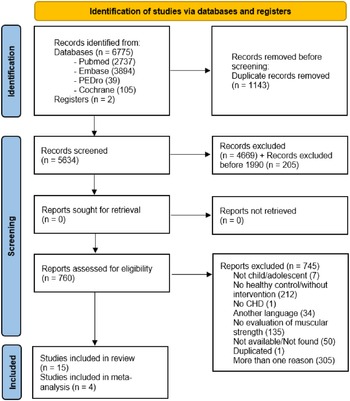
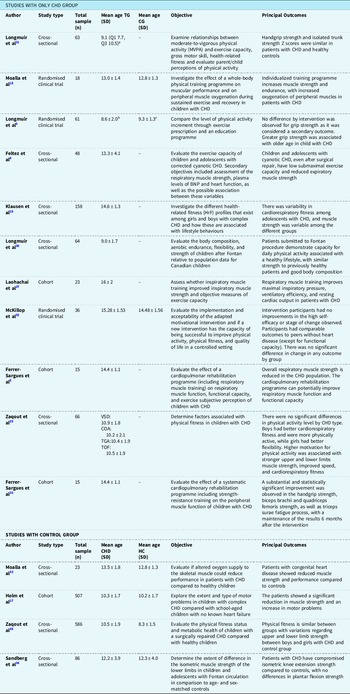
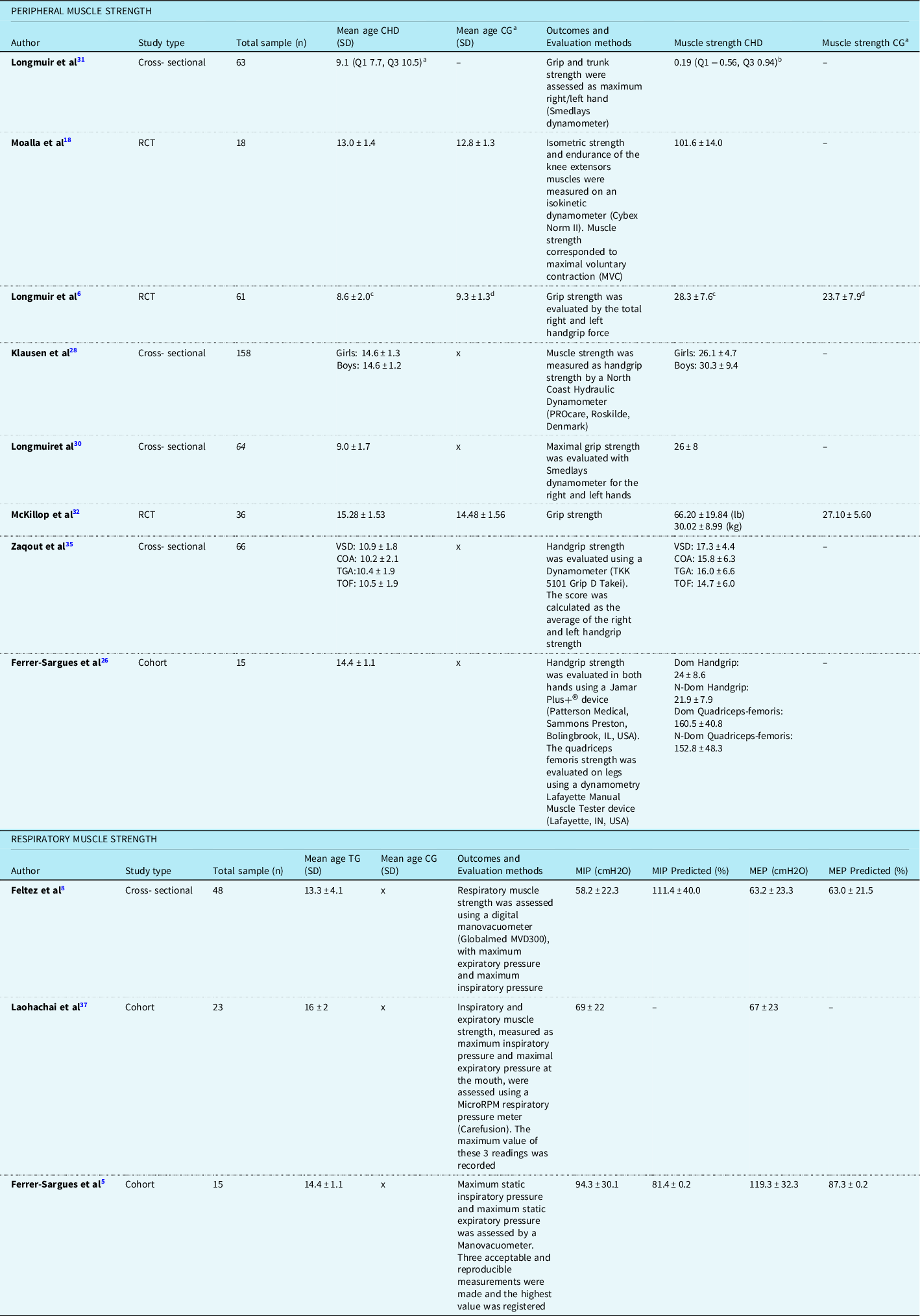
A total of 5634 articles met the eligibility criteria; 760 were included in the full-text review, and after this stage, 15 studies were included in this review. Figure 1 shows the flow diagram. Of the 15 studies met the eligibility criteria, eigth cross-sectional studies, four cohort studies, and three randomised clinical trials. Table 1 presents the selected articles and their main characteristics. Twelve articles assessed peripheral muscle strength Reference Moalla, Elloumi and Chamari18,Reference Ferrer-Sargues, Peiro-Molina and Cebria26–Reference Zaqout, Vandekerckhove, Michels, Bove, Francois and De Wolf36 and three assessed respiratory muscle strength. Reference Ferrer-Sargues, Peiro-Molina and Salvador-Coloma5,Reference Feltez, Coronel, Pellanda and Lukrafka8,Reference Laohachai, Winlaw and Selvadurai37
Prisma flow diagram of studies evaluated for systematic review.

Characteristics of the studies included in the systematic review.

HC: healthy control; TG: training group; CG: control group; VSD: ventricular septal defect; COA: coarctation of aorta; TGA: transposition of the great arteries; TOF: tetralogy of fallot; BNP: B-type natriuretic peptide
a Values in interquartile range.
b Activity group (AG).
c Education group (EG).
Characteristics of the studies included in the systematic review without healthy controls.

CHD: congenital heart disease; HC: healthy control; TG: training group; CG: control group; RCT: randomised clinical trial; VSD: ventricular septal defect; COA: coarctation of aorta; TGA: transposition of the great arteries; TOF: tetralogy of Fallot; BNP: B-type natriuretic peptide.
a Values in interquartile range.
b Values in Z score.
c Activity group (AG).
d Education group (EG); isokinetic strength was expressed in newton (n) and newton meters (Nm); handgrip strength was expressed in kilograms (Kg); Dom: dominant; N-Dom: non-dominant.
The total sample size of the included studies was 1769. Reference Ferrer-Sargues, Peiro-Molina and Salvador-Coloma5,Reference Feltez, Coronel, Pellanda and Lukrafka8,Reference Moalla, Elloumi and Chamari18,Reference Ferrer-Sargues, Peiro-Molina and Cebria26–Reference Laohachai, Winlaw and Selvadurai37 The studies comparing patients with CHD and healthy controls included 1202 participants in total, Reference Holm, Fredriksen, Fosdahl, Olstad and Vøllestad27,Reference Moalla, Dupont, Costes, Gauthier, Maingourd and Ahmaidi33,Reference Sandberg, Frisk and Hansson34,Reference Zaqout, Vandekerckhove, Michels, Bove, Francois and De Wolf36 and the studies only included patients with CHD had a total number of 567 participants. Reference Ferrer-Sargues, Peiro-Molina and Salvador-Coloma5,Reference Feltez, Coronel, Pellanda and Lukrafka8,Reference Moalla, Elloumi and Chamari18,Reference Ferrer-Sargues, Peiro-Molina and Cebria26,Reference Klausen, Wetterslev and Sondergaard28–Reference McKillop, Grace and Ghisi32,Reference Zaqout, Vandekerckhove and De Wolf35,Reference Laohachai, Winlaw and Selvadurai37 Regarding the studies with evaluation only of patients with CHD, the majority had undergone at least one surgical procedure and submitted it to cardiac training or rehabilitation. The control group was patients without any intervention. Only one article compared different CHD. Reference Ferrer-Sargues, Peiro-Molina and Salvador-Coloma5,Reference Feltez, Coronel, Pellanda and Lukrafka8,Reference Zaqout, Vandekerckhove and De Wolf35,Reference Laohachai, Winlaw and Selvadurai37 In methodological analysis, the majority were classified as “fair” by the quality analysis using the Newcastle-Ottawa Scale scale, representing a medium risk of bias. Only two studies by Ferrer-Sargues et al. reached sufficient scores to be classified as "good", representing a low risk of bias. Reference Ferrer-Sargues, Peiro-Molina and Salvador-Coloma5,Reference Ferrer-Sargues, Peiro-Molina and Cebria26
Descriptive analysis
Peripheral muscle strength
Peripheral muscle strength was assessed by 12 articles. Reference Moalla, Elloumi and Chamari18,Reference Ferrer-Sargues, Peiro-Molina and Cebria26–Reference Zaqout, Vandekerckhove, Michels, Bove, Francois and De Wolf36 Of these, seven were cross-sectional, two cohorts, and three randomised clinical trials.
Of the 12 studies, five evaluated only upper limb strength Reference Klausen, Wetterslev and Sondergaard28–Reference McKillop, Grace and Ghisi32 through handgrip dynamometry, four evaluated only lower limb strength Reference Moalla, Elloumi and Chamari18,Reference Holm, Fredriksen, Fosdahl, Olstad and Vøllestad27,Reference Moalla, Dupont, Costes, Gauthier, Maingourd and Ahmaidi33,Reference Sandberg, Frisk and Hansson34 using hydraulic or isokinetic dynamometers, and three assessed upper and lower limb strength together. Reference Ferrer-Sargues, Peiro-Molina and Cebria26,Reference Zaqout, Vandekerckhove and De Wolf35,Reference Zaqout, Vandekerckhove, Michels, Bove, Francois and De Wolf36
The reduction of muscle strength was described in four studies, three cross-sectional and one cohort. Moalla et al., Reference Moalla, Dupont, Costes, Gauthier, Maingourd and Ahmaidi33 Holm et al. Reference Holm, Fredriksen, Fosdahl, Olstad and Vøllestad27 , and Sandberg et al. Reference Sandberg, Frisk and Hansson34 evaluated the strength (isometric and isokinetic) of lower limbs and observed a reduction of this variable in patients with CHD when compared to healthy controls. Zaqout et al. Reference Zaqout, Vandekerckhove, Michels, Bove, Francois and De Wolf36 also showed a reduction in upper-limb isometric strength (handgrip) in boys and an increase in lower-limb explosive strength (long jump test) in girls with CHD compared to healthy controls.
Four articles described no change in muscle strength in heart disease patients, two cross-sectional, Reference Longmuir, Corey, Faulkner, Russell and McCrindle30,Reference Longmuir, Russell, Corey, Faulkner and McCrindle31 and two randomised clinical trials Reference Longmuir, Tyrrell, Corey, Faulkner, Russell and McCrindle6,Reference McKillop, Grace and Ghisi32 . Longmuir et al reported no difference in grip strength between children with CHD and healthy peers. Reference Longmuir, Tyrrell, Corey, Faulkner, Russell and McCrindle6,Reference Longmuir, Corey, Faulkner, Russell and McCrindle30 Regarding randomised clinical trials, the study of Longmuir et al. Reference Longmuir, Tyrrell, Corey, Faulkner, Russell and McCrindle6 evaluated peripheral muscle strength as a secondary outcome in relation to the increment in physical activity. They found that older patients obtained higher scores in grip strength, but there’s no difference between types of intervention. McKillop et al., Reference McKillop, Grace and Ghisi32 in another randomised clinical trial in adolescents with prior surgical repair of CHD, patients were submitted to a regular individualised exercise programme (control group) or exercise programme plus adapted motivational interviewing (intervention group). After 12 weeks, the authors did not find any difference in muscle strength between the groups.
The study of Klausen et al. Reference Klausen, Wetterslev and Sondergaard28 classified adolescents with CHD into three groups according to clusters based on health-related fitness: “robust” (very fit and physically strong), “moderately robust” (fitness level close to the mean), and “less robust” (nonathletic body composition and lack of muscle strength). The isometric peripheral handgrip muscle strength differed between clusters, and children “less robust” showed the lowest means of muscle strength. In addition, this study revealed that variability in health-related fitness was unrelated to diagnoses. Zaqout et al. Reference Zaqout, Vandekerckhove and De Wolf35 evaluated patients with CHD and stratified them into groups according to the type of defect. They also did not observe any differences (p = 0.651) in handgrip strength between groups of ventricular septal disease (17.3 ± 4.4 kg), aortic coarctation (15.8 ± 6.3 kg), transposition of the great vessels (16.0 ± 6.6 kg) and tetralogy of Fallot (4.7 ± 6.0 kg).
Two articles evaluated muscle strength associated with a training programme, one randomised clinical trial Reference Moalla, Elloumi and Chamari18 and one cohort study. Reference Ferrer-Sargues, Peiro-Molina and Cebria26 The study of Moalla et al. Reference Moalla, Elloumi and Chamari18 randomised patients into a control or intervention group, submitted to a 12-week training with an evaluation of lower limb muscle strength through isokinetic dynamometry. As a result, the study showed that the training promoted an increase in strength and muscle endurance in patients with CHD. The study by Ferrer-Sargues et al. Reference Ferrer-Sargues, Peiro-Molina and Cebria26 evaluated the muscular strength of the upper limbs through handgrip dynamometry in patients with heart diseases submitted to a cardiopulmonary rehabilitation programme. They showed an increase in muscular strength after rehabilitation.
Respiratory muscle strength
Respiratory muscle strength was assessed in three studies Reference Ferrer-Sargues, Peiro-Molina and Salvador-Coloma5,Reference Feltez, Coronel, Pellanda and Lukrafka8,Reference Laohachai, Winlaw and Selvadurai37 ; two studies were cohort and one cross-sectional. All articles used a manovacuometer as an instrument to obtain values of the isometric strength of the maximum inspiratory and expiratory pressure The three articles included only patients with CHD without healthy controls, and the values obtained were compared to reference values available in the paediatric population. Two studies presented a respiratory muscle training protocol Reference Ferrer-Sargues, Peiro-Molina and Salvador-Coloma5,Reference Laohachai, Winlaw and Selvadurai37 and, the third study Reference Feltez, Coronel, Pellanda and Lukrafka8 only presented values regarding the assessment of inspiratory and expiratory muscle strength without proposing a muscle training protocol.
Ferrer-Sargues et al. Reference Ferrer-Sargues, Peiro-Molina and Salvador-Coloma5 proposed a paediatric cardiopulmonary rehabilitation programme lasting 70 minutes in a total of 24 supervised sessions. The sessions were structured in five different phases, with respiratory muscle training beginning with a minimum load of 30% of the maximum inspiratory pressure. It was evidenced by an increase in maximum inspiratory pressure in absolute value and percentage predicted after cardiac rehabilitation, as well as its maintenance of values after 6 months of follow-up. On the other hand, the maximal expiratory pressure did not show statistically significant variation after rehabilitation.
The study by Feltez et al. Reference Feltez, Coronel, Pellanda and Lukrafka8 used only the respiratory muscle strength evaluation without intervention or training, finding higher maximum inspiratory pressure and lower maximal expiratory pressure than predicted values in patients with CHD after cardiac surgery. Furthermore, the study cites a relationship between reduced expiratory pressure with impaired left ventricular ejection fraction and low cardiac output, as well as the fact that the low oxygen supply during exercise in patients with CHD can affect muscle strength.
Meta-analysis
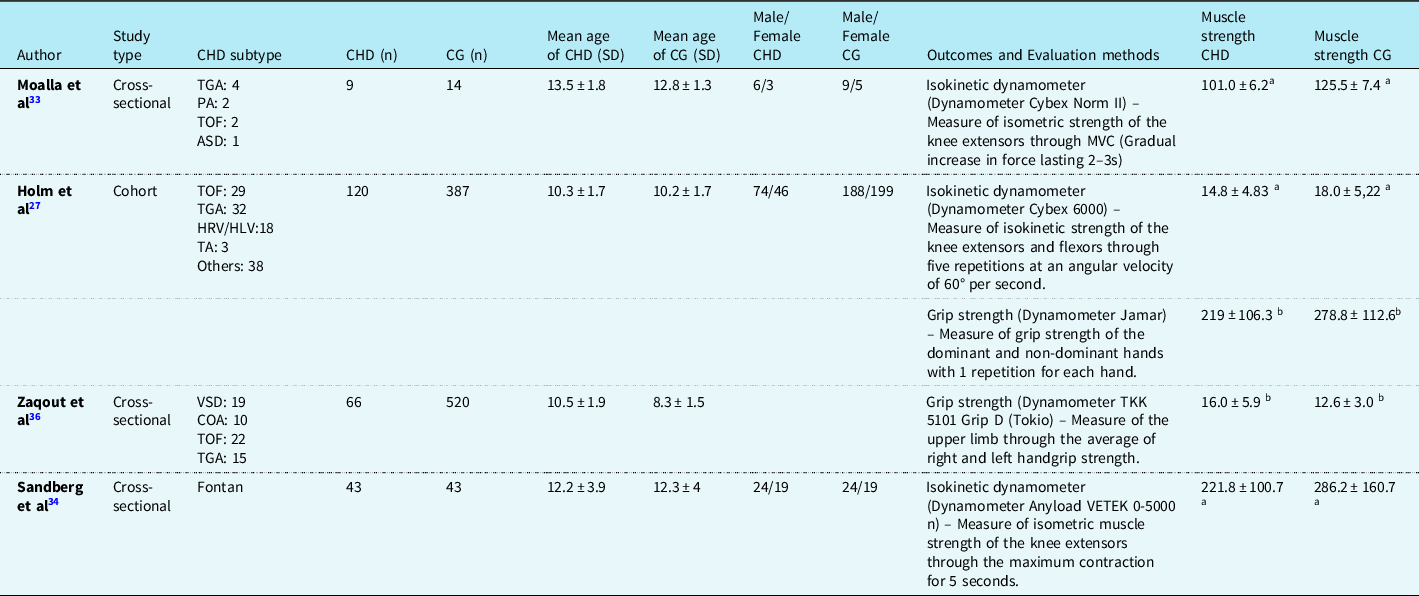
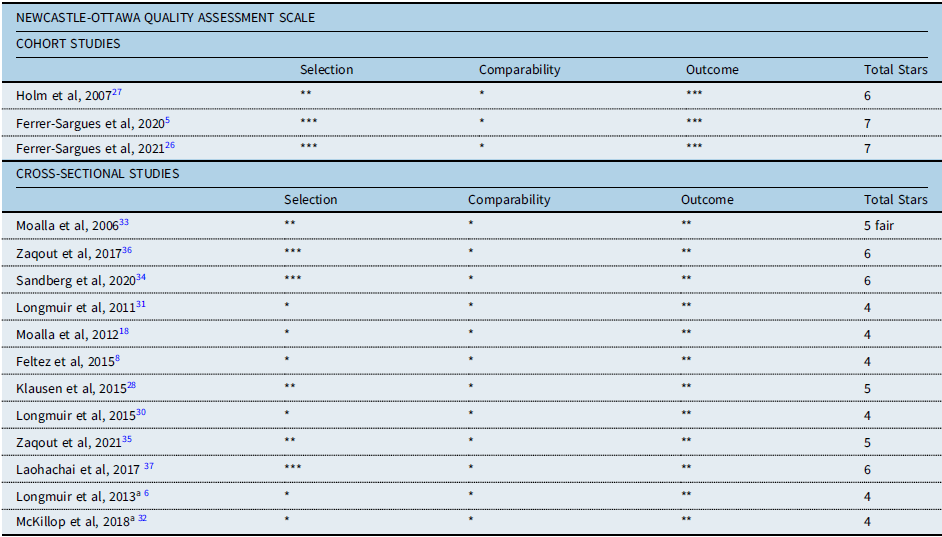
Three cross-sectional and one cohort study were included in the meta-analysis, with a total of 1202 individuals; of these, 238 had CHD, and 964 were healthy controls. The age of participants ranged from 0 to 18 years. The characteristics of the studies are presented in Table 3. The most frequent cardiac diseases in the studies were tetralogy of Fallot, transposition of the great arteries, hypoplastic right ventricle, hypoplastic left ventricle, tricuspid atresia, pulmonary atresia, atrial septal defect, ventricular septal defect, and CoA. Only one study included patients after the Fontan procedure. In methodological analysis, the majority were classified as “fair” by the quality analysis using the Newcastle-Ottawa Scale, representing a medium risk of bias Reference McPheeters, Kripalani and Peterson25 (Table 4).
Characteristics of the studies included in the meta-analysis.

CG: control group; TGA: transposition of the great arteries; PA: pulmonary atresia; TOF: tetralogy of Fallot; ASD: atrial septal defect; VSD: ventricular septal defect; COA: coarctation of aorta; HRV: hypoplastic right ventricle; HLV: hypoplastic left ventricle; TA: tricuspid atresia; MVC: maximal voluntary contraction
a Nm: newton meters
b N: newton.
Evaluation of methodologic quality of studies and risk of bias with Newcastle-Ottawa Scale.

a Randomised clinical trial studies with baseline data used for evaluation.
The lower limb muscle strength was assessed using a dynamometer in three studies (n = 616). Moalla et al. Reference Moalla, Dupont, Costes, Gauthier, Maingourd and Ahmaidi33 assessed the isometric strength of the knee extensor muscles using maximal voluntary contraction with a gradual increase in strength lasting 2–3 seconds; Holm et al. Reference Holm, Fredriksen, Fosdahl, Olstad and Vøllestad27 evaluated isokinetically knee flexors and extensors muscle strength by using five repetitions at an angular speed of 60° per second; and Sandberg et al. Reference Sandberg, Frisk and Hansson34 evaluated the peak isometric strength of two muscle groups, namely the knee extensors through the maximum extension with the maintenance of contraction for 5 seconds and the plantar flexors of the ankle with the strongest possible flexion for 5 seconds. In the last study, values of lower limb muscle strength in knee extensors and ankle plantar flexors also were shown; however, for our meta-analysis, we only used the values of knee extensor muscular strength to allow the comparison between the other studies included in this review.
The meta-analysis of muscular strength included only two studies, Reference Moalla, Dupont, Costes, Gauthier, Maingourd and Ahmaidi33,Reference Sandberg, Frisk and Hansson34 showing a reduction of −34.07 nm in patients with CHD compared with the control group (95% CI, −67.46 to −0.68; I2 47%; p for heterogeneity = 0.05) (Fig 2). Holm et al. Reference Holm, Fredriksen, Fosdahl, Olstad and Vøllestad27 used isokinetic analysis, which may have caused the observed high heterogeneity in the results. Therefore, we removed the mentioned study from the meta-analysis, yet, yielding similar results that are a lower muscle strength.”
Meta-analysis of isometric muscle strength in children and adolescents with CHD and controls.

Two studies evaluated isometric handgrip strength using manual dynamometry (n = 1093). Holm et al. Reference Holm, Fredriksen, Fosdahl, Olstad and Vøllestad27 performed an assessment on the dominant and non-dominant hands, using one repetition for each. The study by Zaqout et al. Reference Zaqout, Vandekerckhove, Michels, Bove, Francois and De Wolf36 evaluated upper limb strength using a score calculated as the average of right and left handgrip strength. The meta-analysis of the handgrip muscle strength showed no significant difference between patients with CHD and healthy peers, with the value of 0.08 nm (95% CI, −6.39 to 6.55; I2 98%; p for heterogeneity <0.00001) (Fig 3).
Meta-analysis of handgrip strength in children and adolescents with CHD and controls.

Discussion
This systematic review and meta-analysis aimed to evaluate the peripheral and respiratory muscle strength of children and adolescents with CHD. The meta-analysis showed a significant reduction in isometric muscular strength in patients with CHD compared to controls and no differences in handgrip muscle strength.
The evaluation of the peripheral muscle strength included different muscle groups, obtaining data related to the strength of lower and upper limbs. Regarding lower limb strength, most of the articles used isokinetic dynamometry as an evaluation method. The studies of Moalla et al. Reference Moalla, Dupont, Costes, Gauthier, Maingourd and Ahmaidi33 and Sandberg et al. Reference Sandberg, Frisk and Hansson34 showed reduced values of this variable in comparison with healthy controls in the meta-analysis. On the other hand, Brassard et al. Reference Brassard, Poirier and Martin39 did not find any difference in the muscular strength of children and adolescents submitted to Fontan procedure and their healthy pairs.
Upper limb strength was assessed through isometric handgrip dynamometry in most articles. Zaqout et al. Reference Zaqout, Vandekerckhove, Michels, Bove, Francois and De Wolf36 showed a reduction of this variable in boys compared to healthy controls. Other studies, such as those by Longmuir et al. Reference Longmuir, Corey, Faulkner, Russell and McCrindle30,Reference Longmuir, Russell, Corey, Faulkner and McCrindle31 showed that upper limb strength does not differ in patients with CHD when compared with values predicted for healthy children. It was possible to perform a meta-analysis of two articles that assessed upper limb muscle strength Reference Holm, Fredriksen, Fosdahl, Olstad and Vøllestad27,Reference Zaqout, Vandekerckhove, Michels, Bove, Francois and De Wolf36 however, we did not find any difference between patients with CHD and healthy controls. However, the high heterogeneity (I2 = 98%) was a problem, and therefore, this result cannot be extrapolated. We hypothesised that methodological differences could explain the results in different ways. Holm et al. Reference Holm, Fredriksen, Fosdahl, Olstad and Vøllestad27 analysed one repetition for each in dominant and non-dominant hands without explaining which value was chosen. Zaqout et al. Reference Zaqout, Vandekerckhove, Michels, Bove, Francois and De Wolf36 analysed a score between the right and left handgrip average. Another explanation could be that these patients perform more activities with their upper limbs and that this variable would not be appropriate to represent a global force in this population. Therefore, future studies need to be performed to highlight the behaviour of the handgrip muscle.
Turquetto et al. Reference Turquetto, Dos Santos and Sayegh40 evaluated patients aged 12 and 30 years with a 5-year follow-up after Fontan surgery and observed that handgrip strength was reduced in cardiac patients, along with variables related to exercise capacity. Moreover, Rego et al. Reference CdS and Pinho41 estimated handgrip muscle strength in hospitalised children with cardiac disease before surgery and revealed a reduction in 96.6% of cases. Compared with our study, this difference in results can be explained by the fact that most of the studies included in our meta-analysis were conducted on patients after surgery.
The reduction in peripheral muscle strength can be multifactorial and related to negative prognostic factors that significantly impact motor development and performance of physical activities, as well as in relation to psychosocial factors. Brandlistuen et al. Reference Brandlistuen, Stene-Larsen, Holmstrom, Landolt, Eskedal and Vollrath38 concluded that children with severe CHD significantly increased the odds of gross and fine motor and social impairment, per example.
Four articles in this review showed that muscular strength was similar to reference values in literature. Reference Longmuir, Tyrrell, Corey, Faulkner, Russell and McCrindle6,Reference Longmuir, Corey, Faulkner, Russell and McCrindle30–Reference McKillop, Grace and Ghisi32 We found some studies in the literature using these values from healthy populations for the evaluation of muscle strength. This can be seen in the survey by Fricke et al. Reference Fricke, Witzel, Schickendantz, Sreeram, Brockmeier and Schoenau42 which evaluated adolescents and young adults with CHD, showing reduced handgrip strength compared to the predicted values. The reference values and predictive equations for isokinetic strength and handgrip strength in a healthy paediatric population were described by Wiggin et al. Reference Wiggin, Wilkinson, Habetz, Chorley and Watson43 and McQuiddy et al. Reference McQuiddy, Scheerer, Lavalley, McGrath and Lin44 However, there have been few studies that make comparisons between patients with CHD and healthy controls, which is an essential method of assessment to establish a more reliable standard for different populations. In this way, more studies with this methodology are required.
The articles included in our review showed different types of CHD and patients undergoing Fontan surgery. To date, little evidence has been found evaluating muscle strength in various types of CHDs, which makes it difficult to extrapolate the data obtained in this study to the entire cardiac population. Only one article stratified the patients according to the type of heart disease without presenting significant differences regarding the levels of physical activity, muscle strength, and exercise capacity. Reference Zaqout, Vandekerckhove and De Wolf35 The study conducted by Banks et al. (45) showed similar results, indicating that the degree of complexity or the type of CHD does not influence muscle strength. The majority of the studies included in this systematic review did not stratify data by sex or age. Only one study by Klausen et al. Reference Klausen, Wetterslev and Sondergaard28 showed separate peripheral muscle strength results for boys and girls. This may suggest that patients with CHD, regardless of sex or age, already present a global deficit in relation to muscle strength, differently from what is expected for the healthy population, where boys tend to have greater muscle strength. A study by Fredriksen et al. Reference Fredriksen, Kahrs and Blaasvaer46 showed similar results, in which there was no difference regarding the levels of physical activity, age, and sex in patients with CHD and their healthy controls.
The articles that evaluated respiratory muscle strength Reference Ferrer-Sargues, Peiro-Molina and Salvador-Coloma5,Reference Feltez, Coronel, Pellanda and Lukrafka8,Reference Laohachai, Winlaw and Selvadurai37 used manovacuometry to measure isometric maximum inspiratory pressure and maximal expiratory pressure. Two studies observed a reduction in maximum inspiratory pressure and maximal expiratory pressure Reference Ferrer-Sargues, Peiro-Molina and Salvador-Coloma5 and only one in the maximal expiratory pressure. Reference Feltez, Coronel, Pellanda and Lukrafka8 The studies by Laohachai et al. Reference Laohachai, Winlaw and Selvadurai37 and Ferrer-Sargues et al. Reference Ferrer-Sargues, Peiro-Molina and Salvador-Coloma5 evaluated the respiratory muscle strength associated with rehabilitation programmes, the first one through a home-based inspiratory muscle training programme where an increase in muscle strength was associated with an increase in ventilatory efficiency and cardiac output at rest. The second one observed an increase in maximum inspiratory pressure compared to predicted values and after a 3-month cardiopulmonary rehabilitation, but no significant difference was found in maximal expiratory pressure values. These findings may be due to the choice of training protocol, in which the workload should be between 30 and 70% of baseline maximum inspiratory pressure.
The study by Feltez et al. Reference Feltez, Coronel, Pellanda and Lukrafka8 was the only one that did not propose a rehabilitation or muscle training programme. A reduction in maximal expiratory pressure was associated with lower exercise capacity but without correlation with the 6-minute walk test and ventricular ejection fraction values. Turquetto et al. Reference Turquetto, Caneo and Agostinho47 found a significant reduction only in maximum inspiratory pressure, both in males (63% of predicted values) and females (71% of predicted values). Greutmann et al. Reference Greutmann, Le and Tobler17 showed similar results, with a reduction of maximum inspiratory pressure in the CHD group, as well as a significant correlation between maximum inspiratory pressure and peak VO2; however, the population was adults with CHD. The reduction in respiratory muscle strength and the correlation with exercise capacity may indicate that patients with CHD usually remain with cardiopulmonary alterations that influence the practice of physical activity and muscular performance.
We observed that two articles that evaluated the respiratory muscle strength included in this review found a reduction of this variable, as well as an association with rehabilitation or muscle training programmes. The pilot study by Wu et al. Reference Wu, Opotowsky and Denhoff48 corroborates these findings, showing that in adult Fontan patients, there is a trend toward a higher peak of maximal oxygen consumption (VO2) and improved ventilatory efficiency after 12 weeks of inspiratory training. Therefore, periodic evaluation and implementation of rehabilitation programmes could promote the reversal of cardiorespiratory limitations. However, more studies are needed to confirm these results, especially in paediatric patients.
Additionally, the articles in this systematic review did not speculate about body mass index, stature, and body size. Until today, these associations do not entirely explain differences between children with CHD and healthy peers. Reference Barbour-Tuck, Boyes and Tomczak49 Although this could be interpreted as a limitation of our systematic review, we did not find evidence in the methodological analysis of the included original papers.
In conclusion, this systematic review showed reduced peripheral and respiratory muscular strength in children and adolescents with CHD. Our meta-analysis showed that children and adolescents with CHD had lower isometric muscle strength evaluated by an isokinetic dynamometer. We did not find any difference in handgrip muscle strength. In addition, a lower respiratory muscular strength was found in qualitative analysis, yet no meta-analysis was possible to perform. Further research with higher methodological quality and a larger sample size is still necessary to clarify peripheral and handgrip muscle strength and the possible relation with exercise capacity.
Financial support
This research received no specific grant from any funding agency, commercial, or not-for-profit sectors.
Conflicts of interest
None.