Introduction
Internationally, the high prevalence of psychotropic drug use, predominantly antipsychotics and benzodiazepines, in Long-Term Care Facilities (LTCFs) has led to concern of residents being inappropriately sedated (McMaster et al., Reference McMaster, Fielding, Lim, Moyle and Beattie2018; van der Spek et al., Reference van der Spek2016; Westbury et al., Reference Westbury, Gee, Ling, Kitsos and Peterson2019). Antipsychotics are commonly used to manage neuropsychiatric symptoms, such as aggression, agitation, or psychosis (Helvik et al., Reference Helvik, Šaltytė Benth, Wu, Engedal and Selbæk2017), and benzodiazepines are widely used to mitigate acute agitation, anxiety, and sleep disturbances (Defrancesco et al., Reference Defrancesco, Marksteiner, Fleischhacker and Blasko2015). Antipsychotics and benzodiazepines are only modestly effective for these indications (Ballard et al., Reference Ballard, Waite and Birks2006; Glass et al., Reference Glass, Lanctôt, Herrmann, Sproule and Busto2005) and pose a risk of severe adverse effects, particularly when used in older people (Cox et al., Reference Cox2016; Maust et al., Reference Maust2015). Both agents may contribute to falls and fractures (Bloch et al., Reference Bloch2011; Cox et al., Reference Cox2016). Furthermore, when used in people with dementia, antipsychotics have been linked to a 3.6-fold increased risk of cerebrovascular events (Ballard et al., Reference Ballard, Waite and Birks2006) and a 1.5–1.7-fold increased risk of death (Schneider et al., Reference Schneider, Dagerman and Insel2005). More recently, concern has been raised around a possible link between benzodiazepine use in older people and cognitive impairment and dementia (Picton et al., Reference Picton, Marino and Nealy2018). Lastly, benzodiazepine use and withdrawal are associated with delirium (Alagiakrishnan et al., Reference Lange, Hopp and Kang2004).
Generally, clinical guidelines recommend reserving antipsychotics for cases where the resident may harm themselves or others, or where non-pharmacological measures are ineffective (International Psychogeriatric Association, 2015; The Royal Australian & New Zealand College of Psychiatrists, 2016). Furthermore, guidelines recommend that they should be reviewed, and reduced if possible, every 12 weeks (International Psychogeriatric Association, 2015; The Royal Australian & New Zealand College of Psychiatrists, 2016) and benzodiazepine use should be limited to 2–4 weeks when used for the aforementioned indications (The Royal Australian College of General Practitioners, 2015).
Withdrawal or dose reduction of these medications may minimize the risk of adverse effects. However, these medications are often utilized long-term (Helvik et al., Reference Helvik, Šaltytė Benth, Wu, Engedal and Selbæk2017; Westbury et al., Reference Westbury, Beld, Jackson and Peterson2010). The risks associated with neuropsychiatric symptoms are substantial, including lower quality of life (QoL) and increased risk of physical injuries to the residents (Sato et al., Reference Sato2018; Sylliaas et al., Reference Sylliaas, Selbaek and Bergland2012; van de Ven-Vakhteeva et al., Reference van de Ven-Vakhteeva, Bor, Wetzels, Koopmans and Zuidema2013), increased distress and turnover of the LTCF staff (van Duinen-van den Ijssel et al., Reference van Duinen-van den IJssel2018; Zwijsen et al., Reference Zwijsen2014), and increased costs of care due to greater use of health services (Morris et al., Reference Morris2015; Murman et al., Reference Murman2002). It is not surprising then that a significant barrier to the reduction of antipsychotic and/or benzodiazepine use is the belief among LTCF staff and General Practitioners (GPs) that the initial symptoms, such as agitation, anxiety and sleep disturbances, and QoL, may worsen (Azermai et al., Reference Azermai, Stichele, Van Bortel and Elseviers2014; Bourgeois et al., Reference Bourgeois2013). However, there is some evidence from placebo-controlled trials suggesting that most people can be withdrawn from these agents without any increased risk of harm (Van Leeuwen et al., Reference Van Leeuwen2018). Furthermore, there is evidence that reduced sedation may confer benefits to the resident, including improved levels of social engagement (Saleh et al., Reference Saleh2017).
Many interventions have been implemented to reduce the use of antipsychotic and/or benzodiazepine medications in LTCFs (Hoyle et al., Reference Hoyle, Bindoff, Clinnick, Peterson and Westbury2018; Thompson Coon et al., Reference Thompson Coon2014). While most primarily report on changes in medication use, few studies have reported on the clinical outcomes for the residents, despite calls for increased reporting (Gurwitz et al., Reference Gurwitz, Bonner and Berwick2017; Marcum et al., Reference Marcum, Handler, Wright and Hanlon2010). In our systematic review (Hoyle et al., Reference Hoyle, Bindoff, Clinnick, Peterson and Westbury2018), we found that less than half (14 of 35 studies) of all interventions focusing on reducing antipsychotic use reported on clinical outcomes. Only one older study specifically reviewed the effects of reducing benzodiazepines on residents (Gilbert et al., Reference Gilbert, Owen, Innes and Sansom1993).
Investigation into the clinical impact of these interventions offers the opportunity to minimize barriers to antipsychotic and/or benzodiazepine dose reduction. Therefore, we aimed to explore the relationships between dose changes to antipsychotic and/or benzodiazepine medications and resident outcomes, including variations in neuropsychiatric symptoms, QoL, and social withdrawal, within a multicomponent, interdisciplinary antipsychotic and benzodiazepine dose reduction program.
Methods
This observational, longitudinal clinical outcomes study took part within the national expansion of an overarching antipsychotic and benzodiazepine dose reduction program for LTCFs, called “Reducing Use of Sedatives” (RedUSe) (Westbury et al., Reference Westbury2018).
Intervention
RedUSe was implemented in 150 Australian LTCFs between March 2014 and April 2016. The intervention comprised three main components: auditing and benchmarking of antipsychotic and benzodiazepine prescribing (baseline, 3 months, and 6 months) the provision of education to nursing staff (baseline and 3 months), pharmacists (baseline), and prescribers (GPs and nurse practitioners) (baseline) on the evidence-based use of psychotropic agents and a multidisciplinary review of psychotropic prescribing (baseline and 3 months) for individual residents. Detailed information on the intervention and prescribing outcomes is reported elsewhere (Westbury et al., Reference Westbury2018).
Participants
Data were collected from a convenience sample of 28 Australian LTCFs involved in RedUSe from New South Wales, Queensland, South Australia, Tasmania and Victoria, between January 2015 and March 2016. Permanent residents were eligible to participate in the study if they were prescribed an antipsychotic and/or benzodiazepine for regular use at baseline. We excluded residents with a severe psychiatric illness where long-term antipsychotic therapy under the guidance of a psychiatrist is generally required (e.g., bipolar disorder, schizophrenia). Residents with a history of delirium were not excluded from this study. Despite being common practice to use antipsychotics for persistent delirium, it is unclear whether this was a current diagnosis. We also excluded residents at the end-stage of a terminal illness and those in temporary respite care.
As part of RedUSe, each LTCF nominated a “champion nurse” to facilitate implementation. This nurse was responsible for the recruitment of eligible residents. Those able to provide informed consent were approached by the champion nurse. An invitation for consent was sent by the LTCF to the legal proxy for residents without the capacity to provide their own informed consent. Participation required investigator receipt of completed consent forms.
Data collection
Data were collected from consenting residents at baseline of RedUSe and again at 4 months to ensure that all three components of the intervention, including the psychotropic review, had been conducted. We aligned our baseline data collection point with the baseline nursing staff educational program. Data on each participant’s medications and comorbid medical conditions were collected from their medical records and medication chart documentation at both time points. To standardize psychotropic doses, antipsychotic doses were converted to chlorpromazine daily dose equivalents and benzodiazepine doses were converted to diazepam daily dose equivalents (WHO Collaboration Centre for Drug Statistics Methodology, 2013; Woods, Reference Woods2003). Besides demographic data, the following outcome data were obtained by asking nursing staff to assess residents using psychometric tests, including the following.
Neuropsychiatric Inventory-Nursing Home version
The Neuropsychiatric Inventory-Nursing Home version (NPI-NH) assesses the frequency and severity of 12 behavioral and psychological symptoms (Wood et al., Reference Wood2000). The frequency (measured on a four-point scale) and severity (measured on a three-point scale) are multiplied to form a composite score ranging from 0 to 12 for each domain. The summation of scores for each symptom provides a total score ranging from 0 to 144, with higher scores indicating increased frequency and/or severity of the behavioral and/or psychological symptom. Five factors of the NPI-NH, composed from the aggregation of NPI-NH domain scores, were also assessed: agitation (domains: agitation, irritability/lability), mood (depression/dysphoria, apathy/indifference, anxiety), psychosis (delusions, hallucinations), sleep/motor activity (aberrant motor behavior, night-time behavior), and elevated behavior (euphoria/elation, disinhibition) (Lange et al., Reference Lange, Hopp and Kang2004). A change of ±11 points in the NPI-NH total score was considered clinically meaningful (Zuidema et al., Reference Zuidema2011).
Cohen-Mansfield Agitation Inventory
The Cohen-Mansfield Agitation Inventory (CMAI) is a 29-item tool that assesses the frequency of agitation (Cohen-Mansfield, Reference Cohen-Mansfield1991). The frequency (measured on a seven-point scale) of each item is summed to provide a total score ranging from 29 to 203, with higher scores indicating increased frequency of agitated symptoms. Item scores were collated to compute three factors including physically aggressive behavior (CMAI factor 1), physically non-aggressive behavior (CMAI factor 2), and verbally agitated behavior (CMAI factor 3) (Zuidema et al., Reference Zuidema, de Jonghe, Verhey and Koopmans2007). A change of ±8 points in the CMAI total score and ±3, ±6, and ±4 points in the CMAI factor 1, 2, and 3 scores, respectively, was considered clinically meaningful (Zuidema et al., Reference Zuidema2011).
Assessment of Quality of Life-4D
The Assessment of Quality of Life-4D (AQoL-4D) is a 12-item tool that assesses QoL across four dimensions, including independent living, social relationships, physical senses, and psychological well-being (Hawthorne et al., Reference Hawthorne, Richardson, Day, Osborne and McNeil2000). Additionally, a utility score was calculated based on all items. The overall utility and dimension scores ranged between −0.04 and 1, with higher scores indicating a better QoL. A change in the AQoL-4D utility score by ≥0.06 points was considered clinically meaningful (Hawthorne et al., Reference Glass, Lanctôt, Herrmann, Sproule and Busto2005).
Multidimensional Observation Scale for Elderly Subjects-withdrawal subscale
The Multidimensional Observation Scale for Elderly Subjects (MOSES)-withdrawal subscale is an eight-item questionnaire developed for proxy assessment of the resident’s social withdrawal (Helmes et al., Reference Helmes, Csapo and Short1987). The total score is calculated by summing all items. The total score ranges between 8 and 32, where higher scores indicate greater social withdrawal. A clinically meaningful change in the MOSES-withdrawal subscale has not been established in the literature. Therefore, a clinically meaningful change in the MOSES-withdrawal subscale was estimated based on the 0.5 of a standard deviation (SD) rule, using baseline scores. Using this rule, a change in the MOSES-withdrawal subscale of ≥3.1 points was considered clinically meaningful.
The NPI-NH, CMAI, and MOSES-withdrawal subscales have demonstrated validity and reliability in the LTCF setting for proxy-assessment by nursing staff (Helmes et al., Reference Helmes, Csapo and Short1987; Lange et al., Reference Lange, Hopp and Kang2004; Zuidema et al., Reference Zuidema2011). While the AQoL-4D has been validated in community-dwelling older people and in hospitalized older people awaiting residential aged care (Giles et al., Reference Giles, Hawthorne and Crotty2009; Osborne et al., Reference Osborne, Hawthorne, Lew and Gray2003), the AQoL-4D has not been validated in residents of LTCFs. The AQoL guideline suggests that the main caregiver can act as a proxy insituations where an individual cannot meaningfully complete the AQoL-4D themselves (Hawthorne et al., Reference Hawthorne, Richardson and Day2009).
Statistical analyses
Two sets of analyses were performed based on whether the resident was regularly using an antipsychotic or benzodiazepine at baseline. Residents taking both classes of agents regularly at baseline were included in both sets of analyses. Additionally, considering the longitudinal nature of this data, only residents who were followed up were included in the analyses.
Demographic factors were described by means and standard deviations (SDs). Categorical variables were described as frequencies and percentages. The aim was to investigate associations between the longitudinal change in the resident-related outcomes and the percentage change in the antipsychotic and benzodiazepine doses. According to this approach, outcome scores at 4 months were subtracted from baseline values. Percentage change in the antipsychotic and benzodiazepine doses was calculated based on changes in the chlorpromazine and diazepam daily dose equivalents between baseline and 4 months.
Considering that resident characteristics may have differential effects on prescribing and these attributes may contribute to the outcomes seen with antipsychotic and/or benzodiazepine dose reduction, we identified baseline characteristics related to changes in antipsychotic and benzodiazepine doses, using linear mixed-effects models. To account for non-independence of residuals, a random intercept was fitted for the resident identification number and a random intercept and slope for the LTCF identification number. Backwards stepwise selection with α = 0.10 provided evidence for retaining variables or not. There was evidence that a model including the fixed variables “CMAI factor 2 (physically non-aggressive behavior)” and “CMAI factor 3 (verbally agitated behavior)” varied with changes in the antipsychotic dose. A model including the fixed variables “documented diagnosis of dementia” and “CMAI factor 2 (physically non-aggressive behavior)” varied with changes in the benzodiazepine dose.
It is noted that during the time frame of this study (2014–2016), the term “major neurocognitive disorder” had not been adopted in Australian LTCFs. Instead, residents were categorized as having a “recorded diagnosis of dementia” or “no recorded diagnosis of dementia”. We acknowledge that the term “dementia” is now subsumed under the Diagnostic Statistical Manual of Mental Disorders (DSM)-5 entity “major neurocognitive disorder” (Diagnostic and Statistical Manual of Mental Disorders, 2013). However, the term “major neurocognitive disorder” is somewhat broader than the term “dementia”. Considering clinicians did not apply the DSM-5 criteria for major neurocognitive disorders when diagnosing residents in our study and the DSM-5 authorizes the term “dementia” in settings where health practitioners are accustomed to this term, we have used the term “dementia” throughout this paper.
The effect of percentage change in the antipsychotic and benzodiazepine dose on changes in outcomes was estimated using multiple linear regression models to control for potentially confounding variables, where appropriate, based on fixed variables from the mixed linear-effects models described above. Estimates (β) indicated the change in the outcome per 10% dose change in the antipsychotic or benzodiazepine between baseline and 4 months. Alpha levels were set at p ≤ 0.05, two-sided to allow for the possibility that outcomes could improve or worsen following exposure to dose reduction.
Model assumptions were checked with standard graphical methods, including examination of the residuals. All statistical analyses were undertaken in R statistical computing environment, version 3.4.3 for Windows (R Foundation for Statistical Computing, Vienna) (R Core Team, 2017). Linear mixed-effects models were fitted with the R package lme4 (Bates et al., Reference Bates, Mächler, Bolker and Walker2015), and multiple linear regression models were fitted with the lm function in R.
Lastly, a variety of other medications may have positive and negative effects on neuropsychiatric symptoms. Furthermore, increasing use of substitute agents (e.g., anticonvulsants, sedating antidepressants) has been reported consequent to increased attention on antipsychotic and benzodiazepine use (Westbury et al., Reference Westbury, Gee, Ling, Kitsos and Peterson2019). Therefore, Wilcoxon Signed-Rank tests were used to investigate changes in the number of cholinesterase inhibitors, memantine, anticonvulsants, adrenergic agents (e.g., alpha-2 agonists, beta-blockers), non-benzodiazepine anxiolytics, z-drugs, antidepressants, opioids, non-benzodiazepine sedatives, antihistamines, and anticholinergics used between baseline and 4 months.
Ethical considerations and study registration
This study was approved by the Tasmanian Health and Medical Human Research Ethics Committee (approval number: H0013999) and was registered as an observational study with the Australian and New Zealand Clinical Trials Registry (ACTRN12617001262392).
Results
Demographics
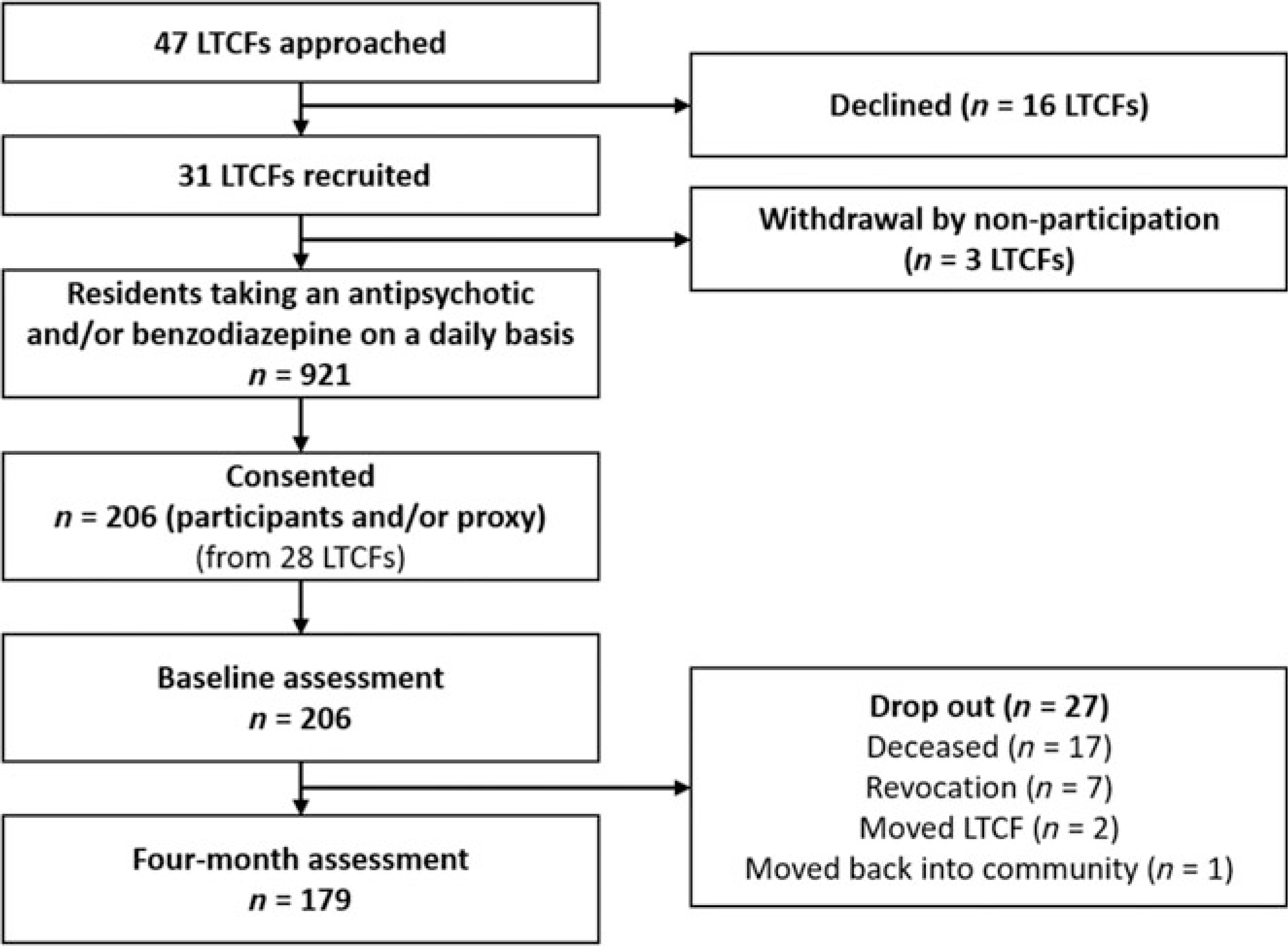
Two hundred and six residents consented out of 921 residents taking daily doses of antipsychotics and/or benzodiazepines at baseline (response rate of 22%). Fifty-six residents self-consented and 150 residents consented through a legal proxy. Follow-up data were available for 179 residents. The flow of participants through the study is presented in Figure 1. Of the total sample (n = 179), 83 (46%) were taking an antipsychotic and 118 (66%) were taking a benzodiazepine, with 22 (12%) taking agents from both classes, concurrently. The average age of the 179 residents was 85.5 years (SD = 7.84) and the majority (72%) of residents were female. Over half (58%) of the residents had a documented diagnosis of dementia and were taking an average of 10.4 (SD = 3.69) medications regularly at baseline.
Diagram showing flow of participants through the study. LTCF, Long-Term Care Facility.

Medication change
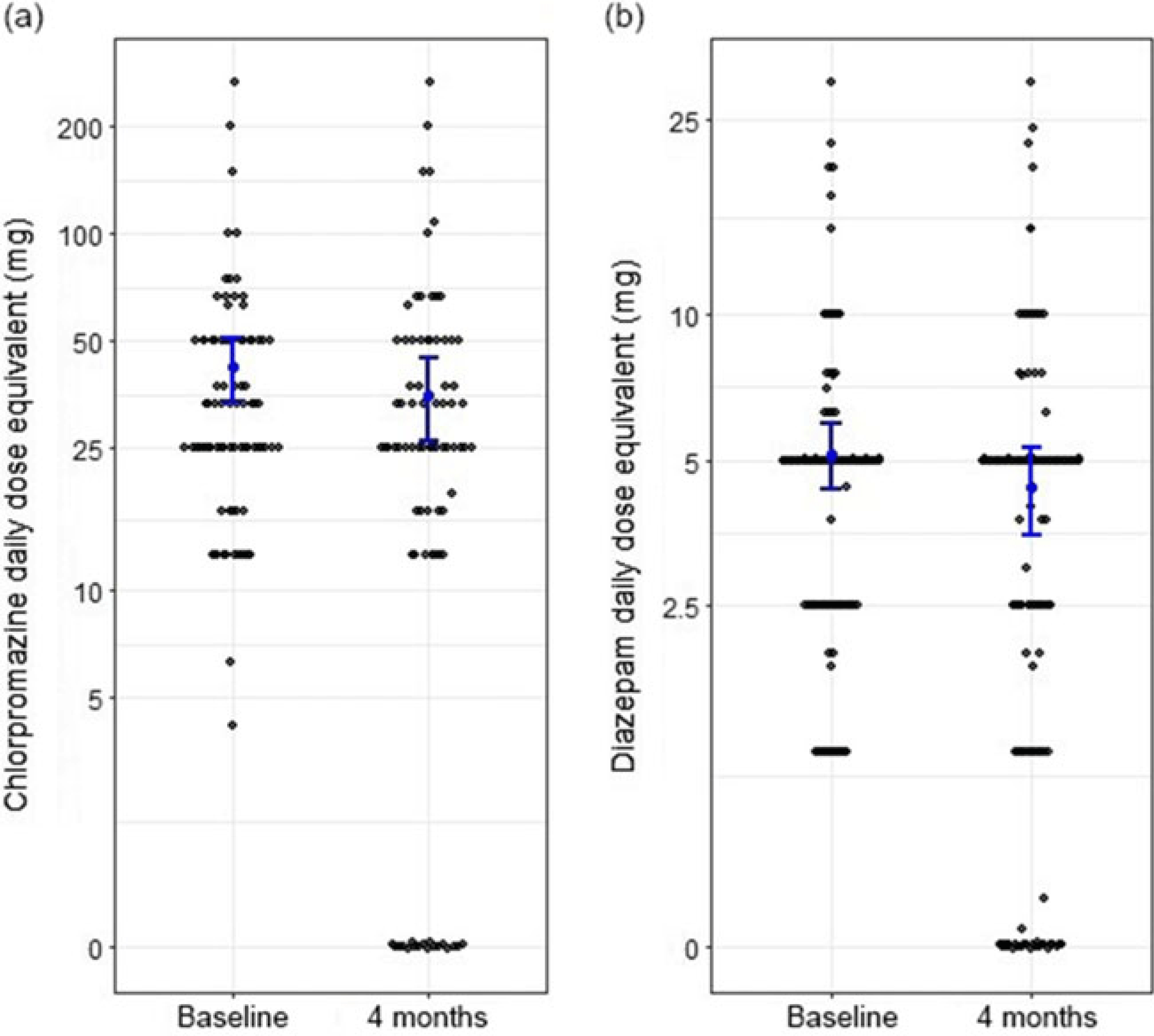
The mean chlorpromazine equivalent dose decreased from 42.1 mg/resident/day (95%CI = 33.7 to 50.6) at baseline to 35.3 mg/resident/day (95%CI = 25.8 to 44.7) by 4 months among residents initially taking antipsychotics (n = 83). This represented a 16.2% reduction in the mean dose (t(82) = 2.905, p = 0.005) (Figure 2).
Beeswarm plots of the (A) chlorpromazine and (B) diazepam daily dose equivalents (mg) at baseline and 4 months. Blue dot represents mean and error bars indicate the 95% confidence intervals.

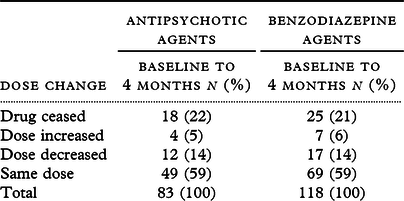
The mean diazepam equivalent dose decreased from 5.1 mg/resident/day (95%CI = 4.3 to 5.9) at baseline to 4.3 mg/resident/day (95%CI = 3.4 to 5.2) by 4 months among residents initially taking benzodiazepines (n = 118). This represented a 15.7% reduction in the mean dose (t(117) = 3.20, p = 0.002) (Figure 2). Table 1 shows the antipsychotic and benzodiazepine dosage variation between baseline and 4 months.
Variation in the use of antipsychotics and benzodiazepines within a sample of residents involved in the Reducing Use of Sedatives (RedUSe) program

There was no appreciable change in the use of other medication classes that may have beneficial or negative effects on neuropsychiatric symptoms.
Resident-related outcomes
Neuropsychiatric symptoms
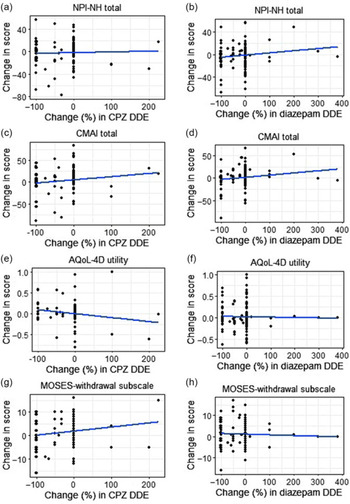
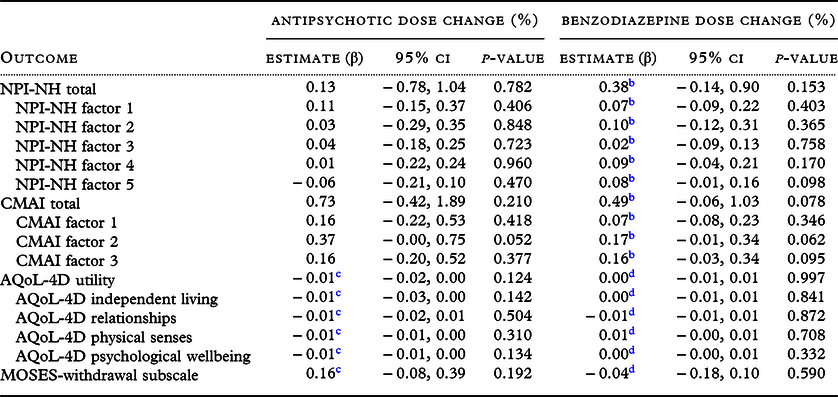
Among residents initially taking antipsychotics, dose reduction was associated with a small decrease in the total NPI-NH (β = 0.13, i.e., total NPI-NH score was, on average, 0.13 points lower for each 10% reduction in the chlorpromazine daily dose equivalent, p = 0.782, 95%CI = −0.78 to 1.04) and CMAI scores (β = 0.73, i.e., total CMAI score was, on average, 0.73 points lower for each 10% reduction in the chlorpromazine daily dose equivalent, p = 0.210, 95%CI = −0.42 to 1.89) (Figure 3). These differences were not statistically significant. Antipsychotic reduction was also related to improvements in the CMAI factor scores, especially CMAI factor 2 (physically non-aggressive behavior, e.g., aimless wandering, general restlessness) where each 10% reduction in dose was associated with a 0.37-point decrease in the CMAI factor 2 score (p = 0.052, 95%CI = −0.00 to 0.75). The NPI-NH factor scores (i.e., agitation, mood, psychosis, sleep/motor activity), except elevated behavior (composed of euphoria/elation and disinhibition behavioral domains), decreased with antipsychotic dose reduction. Antipsychotic dose reduction was related to an increase in elevated behavior. Again, these changes were not statistically significant. Estimates for the NPI-NH and CMAI factor scores are presented in Table 2.
Scatterplots showing the relationship between percent change in the chlorpromazine (CPZ) and diazepam daily dose equivalent (DDE) and change in the (A and B) NPI-NH total, (C and D) CMAI total, (E and F) AQoL-4D utility, and (G and H) MOSES-withdrawal subscale scores between baseline and 4 months. Blue line represents the predicted change in the psychometric outcomes based on the change in the chlorpromazine and diazepam daily dose equivalent. NPI-NH, Neuropsychiatric Inventory-Nursing Home version; CMAI, Cohen-Mansfield Agitation Inventory; AQoL-4D, Assessment of Quality of Life-4D; MOSES, Multidimensional Observation Scale for Elderly Subjects.

Estimated change in clinical outcomes per 10% change in the chlorpromazine (antipsychotic) and diazepam (benzodiazepine) daily equivalent dose between baseline and 4 months a

Abbreviations: NPI-NH, Neuropsychiatric Inventory-Nursing Home version; CMAI, Cohen-Mansfield Agitation Inventory; AQoL-4D, Assessment of Quality of Life-4D; MOSES, Multidimensional Observation Scale for Elderly Subjects; CI, confidence interval.
a n = 83 for antipsychotic users, n = 118 for benzodiazepine users (117 for quality of life results).
b Adjusted for having a documented diagnosis of dementia.
c Adjusted for baseline CMAI factor 2 and 3 scores.
d Adjusted for baseline CMAI factor 2 score and having a documented diagnosis of dementia.
After controlling for a diagnosis of dementia, benzodiazepine dose reduction among residents initially taking a benzodiazepine was associated with a small decrease in the total NPI-NH (β = 0.38, i.e., total NPI-NH score was, on average, 0.38 points lower for each 10% reduction in the diazepam daily dose equivalent, p = 0.153, 95%CI = −0.14 to 0.90) and CMAI scores (β = 0.49, i.e., total CMAI score was, on average, 0.49 points lower for each 10% reduction in the diazepam daily dose equivalent, p = 0.078, 95%CI = −0.06 to 1.03) (Figure 3). Importantly, benzodiazepine dose reduction was associated with slight improvements in all NPI-NH factor scores, including those related to sleep disturbances and mood. Additionally, all CMAI factor scores decreased with benzodiazepine dose reduction. Each 10% reduction in dose was related to a 0.17-point decrease in the CMAI factor 2 score (physically non-aggressive behavior) (p = 0.062, 95%CI = −0.01 to 0.34) and a 0.16-point decrease in the CMAI factor 3 score (verbally agitated behavior, e.g., constant unwarranted requests for attention) (p = 0.095, 95%CI = −0.03 to 0.34). As with antipsychotics, none of these improvements were statistically significant. Estimates for the NPI-NH and CMAI factor scores are presented in Table 2.
Quality of life
Antipsychotic dose reduction was associated with small non-significant improvements in the AQoL-4D utility and dimension scores, while controlling for the baseline CMAI factor 2 (physically non-aggressive behavior) and factor 3 scores (verbally agitated behavior). The estimate from the regression model indicated, on average, a 0.01-point improvement in the overall utility score for each 10% reduction in antipsychotic dose (p = 0.124, 95%CI = −0.02 to 0.00) (Figure 3). A similar estimate was calculated for the other AQoL-4D dimensions. Estimates are presented in Table 2.
Overall, no association between change in the benzodiazepine dose and the AQoL-4D utility score was detected (β = 0.000, p = 0.997, 95%CI = −0.01 to 0.01) (Figure 3), after controlling for the baseline CMAI factor 2 score (physically non-aggressive behavior) and having a documented diagnosis of dementia. Similarly, changes in the independent living and psychological well-being dimensions were not associated with changes in the benzodiazepine dose. On the other hand, a benzodiazepine dose increase was associated, albeit non-significantly, with improvement in the physical senses dimension and deterioration in the relationships dimension. Estimates are presented in Table 2.
Social withdrawal
A 10% reduction in the antipsychotic dose was associated with, on average, a 0.16-point reduction (improvement) in the MOSES-withdrawal subscale (p = 0.192, 95%CI = −0.08 to 0.40) (Figure 3), while controlling for the baseline CMAI factor 2 and 3 scores. Conversely, a 10% reduction in the benzodiazepine dose was related to, on average, a 0.04-point increase (deterioration) in the MOSES-withdrawal subscale (p = 0.590, 95%CI = −0.18 to 0.10) (Figure 3), while controlling for the baseline CMAI factor 2 score and having a documented diagnosis of dementia.
Discussion
This study aimed to explore the relationships between dose changes to antipsychotic and/or benzodiazepine medications and variations in neuropsychiatric symptoms, QoL, and social withdrawal among residents within a sample of LTCFs involved in the RedUSe program. The key overall finding is that there was no evidence that antipsychotic and benzodiazepine dose reductions were associated with deteriorations in neuropsychiatric symptoms, QoL, or social withdrawal. In fact, antipsychotic dose reduction was associated with trends toward improved behaviors, especially physically non-aggressive behavior (e.g., aimless wandering, general restlessness), QoL, and social engagement, while benzodiazepine dose reduction was associated with improved behaviors, particularly physically non-aggressive behavior and verbally agitated behavior (e.g., constant unwarranted requests for attention).
Our findings align and expand on those reported in previous intervention studies that have utilized similar strategies (Hoyle et al., Reference Hoyle, Bindoff, Clinnick, Peterson and Westbury2018). In particular, the positive effects of antipsychotic dose reduction on neuropsychiatric symptoms are consistent with a smaller antipsychotic deprescribing intervention performed in Australia over the same time frame, called the “Halting Antipsychotic use in Long Term care” (HALT) project (Brodaty et al., Reference Brodaty2018). This multicomponent intervention recruited residents taking antipsychotics from a sample of 23 LTCFs (n = 133) who consented to withdraw therapy. HALT consisted of an education/training component for health care staff and individualized antipsychotic deprescribing protocols. The intervention resulted in dose reduction for 87.3% of the residents at 6 months post-intervention (Brodaty et al., Reference Brodaty2018). In comparison, RedUSe was a facility-based intervention where multiple quality improvement strategies were implemented for staff, pharmacists, GPs, and nurse practitioners to ensure appropriate psychotropic use, along with a structured interdisciplinary psychotropic review process. Residents were not individually recruited to participate. Over 38% of all residents prescribed antipsychotics at baseline in RedUSe (n = 835) had their dose reduced or ceased at 6 months (Westbury et al., Reference Westbury2018).
The estimated effect of antipsychotic cessation on the NPI-NH total score in our study (1.3-point improvement compared to no dose change) is similar to that reported by Brodaty et al. (1.0-point improvement) (Brodaty et al., Reference Brodaty2018). However, the estimated impact of antipsychotic cessation on the CMAI total score was greater in our study (7.3-point improvement) than reported in HALT (1.7-point improvement) (Brodaty et al., Reference Brodaty2018). The statistical analysis methodology may account for differences in the CMAI. While HALT compared the same resident before and after, our study compared residents who had complete antipsychotic cessation against those who had no change in their dose. Nonetheless, the positive findings from both interventions add to the weight of evidence that reducing antipsychotics does not necessarily worsen neuropsychiatric symptoms. Instead, the evidence from HALT and our study indicate that reduction may modestly improve some behavioral symptoms. One possible explanation could be that continued use of antipsychotics may be worsening neuropsychiatric symptoms or, alternatively, that the use of non-pharmacological strategies and/or resident-centered care has increased in the absence of pharmacological treatment. Further research is needed to validate these findings.
In our study, improvement in the CMAI score was driven by reduced frequency of physically non-aggressive behavior (e.g., aimless wandering, restlessness) with antipsychotic and benzodiazepine dose reduction. Benzodiazepine dose reduction was also associated with reduced verbally agitated behavior (e.g., constant unwarranted requests for attention). It is possible that confusion and disorientation associated with ongoing use of both antipsychotics and benzodiazepines may have exacerbated symptoms such as constant unwarranted requests for attention and/or aimless wandering (Lindsey, Reference Lindsey2009; Schneider et al., Reference Schneider, Dagerman and Insel2006). Additionally, long-term antipsychotic use is associated with extrapyramidal side effects, such as akathisia, which consists of motor restlessness, feelings of inner tension, discomfort, and aimless wandering. These are symptoms that resemble physically non-aggressive behavior. Further prospective, controlled studies are necessary to investigate these effects.
Maximization of QoL is a major goal within the LTCF setting (Saleh et al., Reference Saleh2017). The perceived potential for antipsychotic discontinuation to negatively affect QoL is a major barrier to altering these medications among nurses and GPs (Azermai et al., Reference Azermai, Stichele, Van Bortel and Elseviers2014). Despite this concern, only three interventions to reduce antipsychotic use have investigated the impact on QoL (Hoyle et al., Reference Hoyle, Bindoff, Clinnick, Peterson and Westbury2018). Furthermore, to our knowledge, no similar interventions have explored the effects of benzodiazepine dose reduction on QoL (Hoyle et al., Reference Hoyle, Bindoff, Clinnick, Peterson and Westbury2018).
Our findings that QoL was, on average, unaffected or slightly enhanced with antipsychotic dose reduction aligns with findings from previous studies to reduce antipsychotic use (Hoyle et al., Reference Hoyle, Bindoff, Clinnick, Peterson and Westbury2018). Additionally, our finding that QoL was unaffected by benzodiazepine dose reduction is consistent with a pilot study on the feasibility of benzodiazepine discontinuation in Belgian LTCFs (Bourgeois et al., Reference Bourgeois, Elseviers, Van Bortel, Petrovic and Vander Stichele2014). These results suggest that doses for both antipsychotics and benzodiazepines can be safely reduced without negative effects on resident QoL.
High levels of social engagement are associated with several benefits to residents of LTCFs, such as reduced depression and mortality, and improved function, cognition, and QoL (Freeman et al., Reference Freeman, Spirgiene, Martin-Khan and Hirdes2017; Kiely et al., Reference Kiely, Simon, Jones and Morris2000). However, only one study has reported on the effects that antipsychotic deprescription has on social engagement (Brodaty et al., Reference Brodaty2018). Furthermore, we believe that this is the first study to report specifically on the social impact of benzodiazepine dose reduction.
Although the results were not statistically significant, antipsychotic reduction was associated with improved social engagement in our study but increased social withdrawal within HALT (Brodaty et al., Reference Brodaty2018). Our study reported a 1.6-point reduction in the MOSES-withdrawal subscale with antipsychotic cessation compared to those with no change in their dose. Conversely, HALT reported a 0.27-point increase in the MOSES-withdrawal subscale with antipsychotic cessation (Brodaty et al., Reference Brodaty2018). The aforementioned differences in the analysis procedure may account for the differences in the results. Nevertheless, both these differences are small and not statistically significant, suggesting that antipsychotic cessation is unlikely to result in increased social withdrawal.
Limitations
The outcomes reported in this study should be interpreted with consideration of several limitations. First, RedUSe was funded as an implementation project, with aspects of experimental research methodology, such as use of control groups, not permitted. The preclusion of a control group made it difficult to determine whether changes in the outcome were a result of dose changes or other time-dependent effects (e.g., changes in neuropsychiatric symptoms with time). Future prospective studies should utilize a controlled design to overcome this limitation.
Second, while we identified interesting trends throughout this study, our results are derived from a small sample which impacts our ability to detect statistically significant associations. It is important that future studies are sufficiently powered to investigate these trends further.
Third, the recording of dementia (one of the confounding variables controlled for in the multiple linear regression model for benzodiazepine users) was limited to a documented diagnosis from the LTCF records. However, dementia is often under-reported in this setting (Selbaek et al., Reference Selbaek, Kirkevold and Engedal2007). It would have been more accurate to test for dementia using standardized psychometric testing and diagnostic criteria. However, this was not feasible within the scope and funding rules of our project.
Fourth, due to an ethical requirement for arms-length recruitment, nurses at each LTCF were instructed to identify and gain consent from all eligible residents or their legal proxy. However, there may be an element of selective recruitment of residents who were stable. Based on prescribing data available to us, we have estimated a recruitment rate of at least 22% of all potentially eligible residents. The actual rate of recruitment is likely to be higher than this as the prescribing data available to us did not exclude residents who did not meet the inclusion criteria. Low uptake has been reported in many other studies based in the LTCF environment (Lacey et al., Reference Lacey2017), particularly when proxy consent is required (Whelan et al., Reference Whelan, Walwyn, Gaughran and Macdonald2013). To improve recruitment rates and reduce possible recruitment bias, future research should consider using an opt-out approach to consent, where possible (Lacey et al., Reference Lacey2017).
Fifth, as a national implementation project, it was not viable to collect data outside of the baseline and 4-month data collection periods. Consequently, we could not accurately determine the duration of antipsychotic and/or benzodiazepine use prior to the intervention or whether residents had multiple dose changes between baseline and 4 months. Future interventions should ideally review antipsychotic and/or benzodiazepine use in the months prior to the intervention to investigate differences in outcomes based on the duration of use. Furthermore, information on antipsychotic and/or benzodiazepine dose changes should be collected regularly (preferably daily) to provide a clearer picture of the impact that the intervention had on medication use.
Sixth, residents in the study may have experienced co-occurring delirium. Therefore, it is possible that some of the trends toward improvement in symptoms at 4 months with antipsychotic dose reduction may be attributed, in part, to the resolution of delirium. A total of eight residents had a history of delirium, but it was unclear whether this was a current diagnosis.
Last, LTCF staff and assessors were not blind to previous and current medication use. However, considering we did not find any differences in resident outcomes, it is unlikely that reporting bias has affected our results.
Conclusion
The results of this study support the growing body of evidence that antipsychotic and benzodiazepine dose reduction in most residents of LTCFs is unlikely to result in clinical deterioration. Trends toward improved agitation with antipsychotic and benzodiazepine dose reduction and enhanced QoL and social engagement with antipsychotic dose reduction detected in the current study require further evaluation in larger, controlled, prospective studies.
Conflicts of interest
None.
Trial registration
Australian New Zealand Clinical Trials, ACTRN12617001262392.
Source of funding
The RedUSe project was funded from 2013 to 2017 by the Australian Government under the Dementia and Aged Care Service Fund. A small amount of funding from the project grant was used to support this sub-study. A doctoral scholarship (for D. Hoyle) was provided by the following sources: the Australian Government (through an Australian Postgraduate Award), a stipend provided by the RedUSe project grant, and the University of Tasmania. The funding organizations did not play a role in the study conception, design, analysis, or interpretation of the data or in the drafting, review, or approval of the manuscript.
Description of authors’ roles
D. Hoyle co-designed the study, collected the data, performed the data analysis, and prepared the manuscript. A. Bindoff and G Peterson helped with aspects of the statistical analysis used in this research. J. Breen, I. Bindoff, L. Clinnick, and G. Peterson supervised the study design, data analysis, and manuscript preparation. Additionally, J. Breen, I. Bindoff, L. Clinnick, and G. Peterson are supervisors for D. Hoyle’s PhD.
Acknowledgements
The authors would like to acknowledge the invaluable input of the LTCF staff and residents that participated in this project. The authors would also like to acknowledge the RedUSe Project Pharmacists, in particular, Sue Edwards, and Hilary Edwards, who liaised with the LTCFs and the author throughout the project. Additionally, we appreciate the support Donnamay Brown provided with data collection and preliminary analyses. Lastly, we would like to acknowledge Dr Jim Stankovich for his contributions as an expert consultant in the early phase of the statistical analyses for this project.