





1. Motivation and background
Design theory broadly refers to the structured organization of concepts that support the description, explanation and comparison of activities that produce design outcomes (Cross Reference Cross1982; Cash Reference Cash2018). Design research, however, often produces local insight that does not necessarily accumulate (Cash Reference Cash2018). Regardless of the context, design research calls us to iterate often, explore the solution space fully and prototype as early as possible (Ulrich & Eppinger Reference Ulrich and Eppinger2016; Camburn et al. Reference Camburn, Viswanathan, Linsey, Anderson, Jensen, Crawford, Otto and Wood2017; Hansen & Özkil Reference Hansen and Özkil2020). In design research, there is a need to lay the foundation for cohesive, coherent, comparative discussion that authentically represents local insights while synthesizing findings across the various applications of design. When considering prototypes, constructs such as fidelity, functionality, iteration and communication are studied extensively in various contexts ranging from case studies (Isa & Liem Reference Isa and Liem2021) to controlled human-subjects’ studies (Youmans Reference Youmans2011), but these constructs are rarely considered simultaneously. The disparity that remains between various local findings necessitates a structured examination of prototyping frameworks and strategies that clarifies how these constructs are connected and how they jointly inform design outcomes.
Prototyping has changed substantially over the past decade with the widespread adoption of makerspaces (Jensen & Steinert Reference Jensen and Steinert2020) and the increasing accessibility of digital fabrication tools, including the emergence of consumer-grade 3D printers in personal settings Benabdallah et al. (Reference Benabdallah, Bourgault, Peek and Jacobs2021). These advancements have fundamentally changed what is meant by the term “prototype.” Consider the rise in popularity of consumer-oriented “maker” kits such as LEGO Mindstorms, Arduino starter kits or littleBits, which all provide modular components and simplified tools to novices interested in prototyping. It is now common to hear someone describe themselves as a maker, tinkerer, crafter, builder, entrepreneur or designer, but it is not entirely clear what distinguishes them from each other. Invariably, all of them prototype. This notion is particularly relevant today with ongoing rapid developments in artificial intelligence, which is being used for all aspects of the design process from idea generation (Garbuio & Lin Reference Garbuio and Lin2021) to functional decomposition (Haddad & Seibel Reference Haddad and Seibel2025). These developments further empower individuals to prototype regardless of prior experience or technical background.
How one defines the term “prototype” has a direct impact on the design process. A traditional view of prototypes as solely physical artifacts is limited in the context of modern engineering design practice with computer-aided design, simulations and virtual reality (VR). Virtual prototyping allows for rapid iteration (Ottosson Reference Ottosson2002), cost-effective testing (Song et al. Reference Song, Yuan, Chao and Han2022) and the ability to simulate conditions that might be difficult or impossible to recreate physically (Cai et al. Reference Cai, Chui, Ye, Anderson, Liew and Sakuma2004). Different approaches to prototyping provide alternative perspectives on a design concept whether through testing, internal reflection or external stakeholder communication. Prototypes are often created to test or validate design concepts, but they also serve as a communication tool for those on a design team or those external to the design team with vested interest in the outcome of the development cycle. Despite the importance and prevalence of prototyping in the design process, there are significant gaps in published literature where further exploration may consolidate existing knowledge, clarify processes or create frameworks for when and how to use certain prototyping approaches in particular engineering design contexts.
For example, there is a surprising lack of consensus in current literature for a definition of the term “prototype” (Table 1). Examining these definitions reveals not merely terminological variation, but deeper divergences rooted in traditions, theoretical commitments and the contexts in which prototyping knowledge has historically been produced.
Various definitions of the word “prototype”

Table 1. Long description
The provided definitions included textbooks, seminal journal articles, and dictionary definitions. The dictionaries included here are Merriam-Webster, Cambridge, and Oxford Languages. In addition, the definition found on Wikipedia was included for completeness. This table’s purpose was to expose how variant definitions of the term prototype can be across literature.
Note: Definitions denoted with * were not explicitly stated but were synthesized from text directly appearing in the work to capture the spirit of the authors’ perspective on the matter.
The most prominent divergence concerns whether prototypes are exclusively physical artifacts. Otto & Wood (Reference Otto and Wood2001), Ullman (Reference Ullman2008) and Dieter & Schmidt (Reference Dieter and Schmidt2013) all define prototypes primarily as “physical models,” “physical instantiations” or “tangible replicas.” These definitions emerge from an engineering and product realization tradition in which prototyping has historically been associated with fabrication, manufacturing, and testing. In this tradition, the physical prototype serves as the primary site of design validation, and the definition reflects an implicit commitment: the prototype must be material because its value derives from interaction with the physical world. These definitions omit consideration for the relatively newer development of computer-aided tools that support design activities and instead rely on assumptions rooted in material realization as the primary means of evaluating design performance.
By contrast, Dixon & Poli (Reference Dixon and Poli1995) explicitly state that a prototype can be a computer simulation, and Ulrich & Eppinger (Reference Ulrich and Eppinger2016) offer a notably more abstract formulation: “an approximation of the product along one or more dimensions of interest.” This definition lacks a medium entirely. These broader definitions reflect different intellectual lineages. Dixon and Poli write from within a concurrent engineering and design-for-manufacturing tradition that emerged alongside the rapid increase of computer-aided engineering tools in the 1980s and 1990s, where computational models were already considered to be functioning prototypes. Ulrich and Eppinger’s definition, situated within a product development and management tradition, treats the prototype primarily as a decision-support instrument; what matters is not its materiality but its capacity to reduce uncertainty along relevant design dimensions. This framing aligns with information-theoretic perspectives on design (Thomke Reference Thomke2003) in which a prototype’s value lies in the information it generates rather than its physical form.
A second pattern across definitions is the recurrent use of temporal language such as “early,” “initial,” “preliminary” and “first.” This is echoed by the included dictionary definitions of prototyping with all three (Merriam-Webster Dictionary, Cambridge Dictionary, Oxford Languages) using the word “first.” This convergence reflects a shared temporal assumption: the prototype is conceived as a precursor to a final design artifact. While this framing aligns with linear or stage-gate models of product development, it sits uncomfortably with design traditions that utilize prototypes for open-ended exploration without a predetermined production target, such as research-through-design (Stappers Reference Stappers2007) or concept development in the early fuzzy front end (Lewrick et al. Reference Lewrick, Link, Leifer and Langensand2018). Under these definitions, a second prototype created during an iterative design process occupies an ambiguous state.
Third, despite these divergences, there is a broad consensus that prototypes serve an evaluative function. This is evidenced by language such as “tested,” “validate,” “evaluate” and “resolve,” suggesting agreement on the role of a prototype as an artifact that generates knowledge about a design concept. Arguably, both physical prototypes and digital models can fulfill this evaluative role, which may explain why the field appears to be converging, though unevenly, toward more inclusive definitions that, in certain instances, even consider a computer simulation to be a design prototype.
In light of these disciplinary and theoretical tensions, we adopt a synthesized definition for this work that bridges these contexts: a prototype is an intentionally created artifact used to validate, communicate and/or explore design concepts. This definition deliberately omits medium (physical or virtual), temporal positioning (first, second, etc.) and fidelity (low vs. high), to accommodate the full range of prototyping practices observed in engineering design. Underlying the varying definitions of “prototype,” there remains a significant disparity in the application of prototyping strategies and frameworks. This disparity is the key gap that this paper seeks to explore and address. By highlighting these variations, we aim to underscore the need for a more unified approach to prototyping in engineering design, ultimately contributing to more effective and efficient product development. Thus, the central research question guiding this work is: How does the broader engineering design community approach the prototyping process through defined or formalized strategies and frameworks?
Several researchers have explored various prototyping strategies and attempted to build frameworks. For instance, Menold, Jablokow & Simpson (Reference Menold, Jablokow and Simpson2017) developed the “Prototype for X (PFX)” strategy, which enables engineering designers to concentrate on essential elements of design through a three-phase process: Frame, Build and Test. This three-phase process steps through desirability, feasibility and viability, forming the Design for X paradigm. In a literature review on prototyping that incorporated business perspectives, Christie et al. (Reference Christie, Jensen, Buckley, Menefee, Ziegler, Wood and Crawford2012) suggest nine factors to consider when developing a prototyping strategy and provide 13 consideration questions to help a design team determine which of the nine factors might most strongly influence development. Camburn et al. (Reference Camburn, Viswanathan, Linsey, Anderson, Jensen, Crawford, Otto and Wood2017) propose a different prototyping strategy to translate “between independent design context variables and dependent prototyping strategy variables.” Their process involves four steps: 1. determining the number of necessary iterations, 2. evaluating the need for scaling of functional isolation, 3. identifying concepts to pursue in parallel and 4. documenting the strategy and execution. This approach captures some widely accepted prototyping dimensionalities (e.g., functionality, scaling, iterative vs. parallel), but does not necessarily consider cost, time or medium (e.g., physical or virtual).
While these prototyping frameworks each address certain aspects of the prototyping process through contextualized lenses, it is not clear what consensus (if any) exists in published literature more broadly on the topic. Given the evident disagreement as to what constitutes a “prototype” (Table 1) and the assorted perspectives on what strategies or frameworks should be used while prototyping, there is a need to survey published literature. Without clear and widely accepted prototyping strategies and frameworks, engineering designers may struggle to identify effective prototyping approaches, potentially leading to increased costs, extended development times and suboptimal product/system performance. The absence of standardized approaches also hinders effective communication and collaboration among professionals across different disciplines and industries.
To address this gap, this work presents the results of a systematized literature review. This literature review contributes significantly to both the theoretical and practical aspects of prototyping strategy in engineering design. The goal of this review was to reveal consensus, identify areas of contradiction or confusion and present opportunities where gaps still exist. The review and analysis provide three key contributions.
-
1. The review underscores the conflict in definitions of prototypes between seminal texts’ traditional view of prototypes as purely physical artifacts and the current literature that increasingly recognizes virtual prototypes.
-
2. This article provides guidance for future work, including a lack of experimental studies and comprehensive, comparative research on prototyping approaches. To assist with future work, we present a preliminary framework with four aspects designers can consider when selecting a prototyping approach: purpose, dimension, representation and approach.
-
3. We highlight areas of literature disagreement, focusing on hybrid prototyping. The three definitions of hybrid prototyping underscore the need for a clear understanding of hybrid prototyping’s potential benefits and challenges, emphasizing the evolving nature of prototyping strategies in modern engineering practices. Supporting analysis includes Jaccard Distance, Cosine Distance and Pointwise Mutual Information calculations.
Insights gleaned from this literature review establish a foundation for future research aimed at developing a comprehensive guide that will aid designers and engineers in making informed prototyping decisions aligned with their specific design goals in various contexts. In addition, this article is intended to serve as a resource to those interested in a diverse collection of perspectives on the prototyping process within an engineering design context.
The article proceeds as follows. First, the Methodology section provides the details of the systematized literature review to enhance reproducibility. Next, the Results section begins with a discussion of the numerical data from the review, followed by analysis. The Conclusion summarizes the key findings and presents four propositions that future research can examine.
2. Methodology
The research method chosen for the investigation of the research questions was a systematized literature review. Systematized literature reviews are designed to adhere to strict guidelines, be reproducible and critically summarize the current state of practice (Grant & Booth Reference Grant and Booth2009; Borrego, Foster & Froyd Reference Borrego, Foster and Froyd2014). The overall approach taken in this article is to define the research question (presented previously), identify sources for search, identify search databases and search strings, define inclusion criteria and perform analysis (Borrego et al. Reference Borrego, Foster and Froyd2014).
2.1. Identification of sources for search
The sources used for this systematized literature review were selected by seven identified faculty experts whose research areas involve engineering design theory. Each of these faculty members completed a short survey to identify reputable journals that regularly publish articles relevant to the central research question. These seven experts consisted of tenure and tenure-equivalent faculty of various ranks. These faculty experts serve at both research-focused and undergraduate-focused institutions. They are routinely involved in conferences and professional societies focused on engineering design. Only responses to Question 1 were used for analysis.
Question 1: Please list related journals in the area of design research. Separate each journal by a comma. If possible, please provide the full name and the abbreviation (e.g., “Journal of Mechanical Design” instead of “JMD”).
Question 2: Please list related conferences in the area of design research. Separate each conference by a comma. If possible, please provide the full name and the abbreviation (e.g., “American Society for Engineering Education” instead of “ASEE”).
Question 3: Please list related textbooks in the area of design theory. Separate each textbook by a comma. If possible, please provide the author’s names (e.g., “Product Design by Otto & Wood”).
From the survey, 11 journals were identified: Journal of Mechanical Design, Design Science, Design Studies, Research in Engineering Design, Journal of Engineering Design, Journal of Engineering Education, International Journal of Engineering Education, Artificial Intelligence for Engineering Design Analysis & Manufacturing, Journal of Computer and Information Science in Engineering, International Journal of Design Creativity and Innovation, and CoDesign (Table 2).
Databases, journals and search terms used in the systematized literature review

Table 2. Long description
The table lists three primary databases used to search for literature. These include ProQuest, Eagle Search, and IJEE (International Journal of Engineering Education), which wasn’t included in the other two databases. The journals examined were Design Science, Journal of Engineering Design, Journal of Engineering Education, Research in Engineering Design, Design Studies, Artificial Intelligence for Engineering Design Analysis and Manufacturing, Journal of Computer and Information Science in Engineering, International Journal of Design Creativity and Innovation, Journal of Mechanical Design, CoDesign, and International Journal of Engineering Education.
2.2. Identification of search databases and search terms
The 11 journals were accessed through three online databases: ProQuest, the Embry-Riddle Aeronautical University Library (Eagle Search) and IJEE. The search was performed using a search string that utilized keywords that directly relate to the context of prototype design. Logical operators (AND, OR) were used to construct effective search strings. The structure of the search strings was designed to ensure the results had three elements:
-
1. A word beginning with Prototyp (e.g., prototype, prototyping).
-
2. A known framework (e.g., iterative) OR synonyms for the word “framework” (e.g., approach)
-
3. Be from a target journal.
2.3. Define inclusion criteria
To be included in the search, a source needed to satisfy the following criteria.
-
1. Is the article peer-reviewed? This facilitated the reliability and validity of the research.
-
2. Is the article published in English? This was due to the limited availability of translation services.
-
3. Did the article have an analysis of prototyping? The paper must specifically address various prototyping aspects such as iterative, parallel, cost, etc., in the context of product development.
The inclusion screening did not exclude articles based on their publication dates. Researchers also noted research that conducted a comparative analysis of different prototyping methods.
2.4. Analysis and data extraction
Once the relevant papers from the search were identified, a structured data extraction form was developed to record consistent data across all included articles. This method was designed to capture essential information that aligns with the research objectives. The data extraction form was structured to capture several crucial aspects of each study. The full results of data extraction are available from the authors upon request.
-
1. Aim/Objective: The primary purpose or objective of each study was recorded to verify the focus and scope of the research were within the field of prototyping.
-
2. Study Design: Information regarding the methodology used (e.g., qualitative, quantitative, mixed methods, case study, experimental). This helped in categorizing the studies and assessing the variety of research designs employed in prototyping research.
-
3. Prototyping Approach: The specific prototyping strategies employed in the studies were identified. This included categorizing the approaches as Iterative, Parallel, One-Shot, Rapid Prototyping or other innovative methods mentioned.
-
4. Key Findings: Important results and conclusions drawn from each study were noted, focusing on insights related to the effectiveness and applicability of different prototyping strategies.
-
5. Additional Information: This included any supplementary data that could contribute to our understanding of prototyping, such as keywords, user involvement, feedback mechanisms and technological integration.
3. Results
This section presents the results of a systematized literature review exploring the research question: How does the broader engineering design community approach the prototyping process through defined or formalized strategies and frameworks? This section proceeds as follows: procedural results from the literature review, description of collected articles and a keyword frequency analysis.
3.1. Procedural results from systematized literature review
The literature search process is reported through a Preferred Reporting Items for Systematic Reviews and Meta-Analysis (PRISMA) flowchart (Figure 1) (Moher et al. Reference Moher, Liberati, Tetzlaff, Altman, Altman, Antes, Atkins, Barbour, Barrowman, Berlin, Clark, Clarke, Cook, D’Amico, Deeks, Devereaux, Dickersin, Egger, Ernst, Gøtzsche, Grimshaw, Guyatt, Higgins, Ioannidis, Kleijnen, Lang, Liberati, Magrini, McNamee, Moja, Moher, Mulrow, Napoli, Oxman, Ba’ Pham, Rennie, Sampson, Schulz, Shekelle, Tetzlaff, Tovey and Tugwell2009). The initial search resulted in 421 articles (i.e., 98 on ProQuest, 302 on EagleSearch and 21 on IJEE; journal breakdown shown in Table 3). After removing 20 duplicates across these sources, 401 unique articles were screened per the defined inclusion criteria. This screening excluded 307 articles based on their titles and abstracts. The 94 remaining full articles were assessed for eligibility, and a further 42 were excluded due to unmet selection criteria of relevance to the analysis of prototyping methods, which resulted in a final 52 to consider for deeper exploration. This final number of articles was sufficient to draw conclusions that would meaningfully address the central research question of this work.
PRISMA flow diagram illustrating the systematized literature search and selection process.

Figure 1. Long description
Each stage of the PRISMA process is shown with accompanying sample sizes. They are as follows: Records Identified (n = 421), Duplicates Removed (n = 20), Articles Screened (n = 401), Articles Excluded Based on Titles and Abstracts (n = 307), Articles Assessed for Eligibility (n = 94), Articles Excluded Due to Unmet Criteria (n = 42), Articles Included in Final Review (n = 52).
Distribution of articles by journal and database, including number of articles and range of publication dates

Table 3. Long description
This table also include publication date range for each journal with the earliest search being in 1997 from the Journal of Engineering Design. The two journals that yielded the most relevant sources of literature were the Journal of Engineering Design and the Journal of Mechanical Design.
To ensure the repeatability of these results, a second researcher considered the titles and abstracts of 80 articles out of the 421 identified from the database searches (around 20%). They screened these 80 articles in a manner identical to the first researcher. This process resulted in 93.75% agreement. Instances of disagreement (five in total) were collaboratively examined and discussed by all three authors until consensus was met. The high percent agreement between the two researchers gives confidence that the screening process reliably distilled the initial 421 identified records down to 52 articles of relevance to prototyping frameworks and strategies.
3.2. Description of collected articles
As shown in Figure 1, this process resulted in 52 studies after screening, eligibility and the application of the inclusion criteria. These studies spanned 1997–2024, reflecting the evolving nature of prototyping strategies and frameworks over two decades. The final review considers journal articles from 11 journals with varying frequency, as shown in Table 3. While these journals cover a wide range of themes, including iterative design approaches, rapid prototyping technologies and evaluation frameworks, there is clearly an interest in prototyping frameworks and strategies spread throughout them. The Journal of Engineering Design and the Journal of Mechanical Design yielded the most relevant sources.
The research methodologies (e.g., study design) employed in these 52 identified articles are as follows:
-
• Case Studies or Ethnographic Research (15 articles): These studies provided in-depth explorations of prototyping within specific contexts, yielding qualitative insights.
-
• Experimental Studies (19 articles): These studies involved controlled experimentation to investigate the effects of prototyping methods and tools on various design outcomes.
-
• Other Empirical Research (10 articles): Encompassing a broad range of approaches including longitudinal and comparative studies, this category added quantitative breadth to the understanding of prototyping impacts and processes.
-
• Conceptual/Theoretical Studies (6 articles): A smaller yet significant grouping, these articles delved into the conceptual underpinnings of prototyping, offering new frameworks and theoretical perspectives.
-
• Literature Reviews (2 articles): These articles provided overarching syntheses of existing research, facilitating an understanding of certain aspects of current literature on prototyping.
3.3. Keyword frequency analysis
In the systematized review process, keywords played a crucial role in synthesizing and understanding the research on prototyping. These keywords were identified through our literature review’s structured data extraction phase, as outlined in the “Literature Data Extraction” section. During the review of each article, relevant keywords were documented under the “Additional Information” category of our data extraction form. We identified the following repeating keywords: iterative, parallel, rapid, fidelity, functionality, virtual prototype, physical prototype, hybrid, virtual reality, augmented reality and mixed reality. These keywords are listed and defined with reference in Table 4. Note that some of the definitions had to be synthesized by the authors when no explicit definition was found.
Keywords and definitions relevant to prototyping

Table 4. Long description
The keywords included are Iterative, Parallel, Rapid, Fidelity, Functionality, Virtual Prototype, Physical Prototype, Virtual Reality, Augmented Reality, and Mixed Reality.
Note: The keyword “hybrid” was omitted from this list of definitions due to several conflicting definitions (see Section 4.4).
a This definition was formulated by context from its respective citation as a formal definition was not given.
Adobe Acrobat’s “Find” function was employed to search for the occurrence of each keyword. The results of this keyword frequency analysis are displayed in Figure 2. The resulting keyword frequency for each included article and the methodology used in the research are provided in the Supplementary Material. This figure shows the mean occurrences of the identified keywords, with error bars representing the standard error of the mean. These error bars illustrate the variability in the use of the identified keywords across the literature, highlighting which terms are more central in the discussions of prototyping strategies.
Mean occurrences of prototyping-related keywords across 52 articles with error bars representing +/ −1 standard error.

Figure 2. Long description
The keywords included on this figure were Iterative, Parallel, Rapid, Fidelity, Functionality, Virtual Prototyping, Physical Prototyping, Hybrid, Virtual Reality, Augmented Reality, and Mixed Reality. Each bar on this bar chart includes plus or minus one standard error. Notably, the most common words were Fidelity, Virtual Reality, and Augmented Reality.
4. Discussion
4.1. Four important aspects of prototyping to guide discussion
To contextualize our discussion on prototyping, we summarize four important recurring aspects of prototyping reported in the literature: Purpose, Dimension, Representation and Approach (Figure 3). Together, these aspects form an initial conceptual framework for organizing and comparing prototyping research.
Four important aspects of prototypes: Purpose (Validation, Communication, Exploration), Dimension (Cost, Time, Fidelity, Functionality), Representation (Physical, Virtual, Mixed) and Approach (Iterative, Parallel, One-Shot, Hybrid).

The Purpose aspect encompasses the primary functions of a prototype (validation, communication and exploration), consistent with our expanded definition of a prototype as “an intentionally created artifact, used to validate, communicate, or explore design concepts.” For example, Mejía-Gutiérrez and Carvajal-Arango discuss how the development of software tools has enriched design verification and validation activities (Mejía-Gutiérrez & Carvajal-Arango Reference Mejía-Gutiérrez and Carvajal-Arango2017). Others suggest that there is a complex relationship between prototypes and designer communication strategies (where designers may change their perception of what a prototype communicates throughout the prototyping process) (Krishnakumar et al. Reference Krishnakumar, Berdanier, McComb and Menold2021) or that prototypes are the vehicles that designers use to communicate with users (Arastehfar, Liu & Lu Reference Arastehfar, Liu and Lu2016). Lastly, many focus on prototypes as vehicles for design space exploration (Goudswaard et al. Reference Goudswaard, Real, Snider, Muñoz Camargo, Salgado Zamora and Hicks2023). For example, there is often an increase in prototyping activity when confronted with unexpected challenges during the design process (Hansen & Özkil Reference Hansen and Özkil2020). In practice, prototypes can serve as validation, communication and exploration tools simultaneously.
The Dimension aspect addresses the key variables that designers can alter in their prototypes, such as Cost, Time, Fidelity and Functionality. These variables are critical in determining the scope and scale of the prototyping effort and influence the design process significantly. Tiong et al. argue that designers should prototype as early as possible despite the cost to reveal design flaws that otherwise would not surface until much later in the design process (Tiong et al. Reference Tiong, Seow, Camburn, Teo, Silva, Wood, Jensen and Yang2019). The costs of prototyping early can be mitigated by producing low-fidelity prototypes. It is worth noting that Fidelity, despite its prevalence in the literature (Figure 2), is not a unitary concept. A prototype may closely resemble the intended product’s visual appearance while lacking working mechanisms (Arastehfar et al. Reference Arastehfar, Liu and Lu2016), or it may replicate functional performance accurately in a form that bears little resemblance to the final design (Jensen & Steinert Reference Jensen and Steinert2020). In other words, Fidelity can vary independently across sub-dimensions such as visual appearance, functional behavior, geometric accuracy or user interaction, and these sub-dimensions serve different evaluative purposes.
The Representation aspect is the form in which a prototype is manifested, whether Physical, Virtual or Mixed. Some literature exclusively explores prototypes as physical artifacts and explores how they impact design fixation (Youmans Reference Youmans2011; Viswanathan et al. Reference Viswanathan, Atilola, Esposito and Linsey2014). Other work champions the use of digital tools to create low-cost prototypes in virtual environments as either three-dimensional models or model-based simulations (Cai et al. Reference Cai, Chui, Ye, Anderson, Liew and Sakuma2004; Mejía-Gutiérrez & Carvajal-Arango Reference Mejía-Gutiérrez and Carvajal-Arango2017). Literature focused on prototypes as virtual artifacts often involves VR or augmented reality technologies. That being said, Palacios-Ibáñez et al. present findings that suggest using passive and active haptic feedback (whether a computer-controlled technology or a physical complementary item) in combination with a virtual prototype can alter user design evaluations (Palacios-Ibáñez et al. Reference Palacios-Ibáñez, Alonso-García, Contero and Camba2023). Using a combination of virtual and physical prototypes (mixed reality) may reveal hidden information about a design alternative or present interaction options to a user that best suit how they uniquely intend to engage with a design.
The Approach aspect contains the different methodologies used in prototyping, including iterative, parallel and hybrid approaches. Many support that prototyping should be an iterative process, whether to observe incremental design change through rapid prototyping techniques (Diegel, Xu & Potgieter Reference Diegel, Xu and Potgieter2006; Sass & Oxman Reference Sass and Oxman2006) or as an inherent property of prototyping as an activity (Menold et al. Reference Menold, Jablokow and Simpson2017). Surprisingly, fewer have directly studied parallel prototyping despite being shown to have advantages over a purely iterative approach (Murphy et al. Reference Murphy, Floresca, Fu and Linsey2022) and evident in industry as a means to explore the solution space when confronted with uncertainty (Hansen & Özkil Reference Hansen and Özkil2020). Hybrid approaches to the creation of prototypes were also evident. Blindheim et al. (Reference Blindheim, Elverum, Welo and Steinert2020) propose a combination of rapid prototyping and physical modeling to explore the solution space early when cost, time or numerical theory are prohibitive. On the other hand, prototypes were considered in environments with stakeholders that are both remote and in-person (Moses et al. Reference Moses, Wojciechowski, Daly and Sienko2023). The concept of a hybrid prototype was also used to describe a prototype that was created with a variety of materials (Mathias et al. Reference Mathias, Snider, Hicks and Ranscombe2019). There does not appear to be consensus on what is meant by hybrid prototyping in the literature, which is discussed at length in Section 4.4.
Taken together, Purpose, Dimension, Representation and Approach provide an initial conceptual framework for organizing and comparing prototyping research. These four aspects do not represent sequential stages or mutually exclusive categories. A prototyping activity can be characterized by why it is created (Purpose), which constraints/performance characteristics are significant (Dimension), what form is used (Representation) and how the prototype is developed (Approach). The four aspects may also influence one another. For example, a prototype intended for validation may require a particular level of fidelity or functionality, which may affect whether a physical, virtual or mixed representation is most appropriate and whether an iterative, parallel or hybrid approach is practical. Of note, the interactions between aspects are not clear from the literature and require future work. Organizing prototyping characteristics into these aspects provides a common language for comparing research that examines different technologies, contexts or outcomes. This framework may also reveal when certain aspects are not considered, such as when a study examines fidelity without considering the purpose of the prototype or the approach used to develop it. These four aspects are not presented as an exhaustive or definitive taxonomy, but rather as a foundation for more consistent comparison and future investigation of prototyping within engineering design.
4.2. Insights from keyword frequency analysis
Keyword frequency analysis resulted in a mapping of keyword occurrences to source. After conversion to an occurrence matrix, co-occurrence between keywords could be identified by multiplying the occurrence matrix by its transpose (Table 5). Trends within the literature were analyzed using three approaches: Hierarchical Clustering using Jaccard Distance, Hierarchical Clustering using Cosine Similarity and Pointwise Mutual Information Graphs. Calculated values for all three analyses are in Supplemental Data.
Co-occurrence of key prototyping terms in the literature

Table 5. Long description
On this table, the keywords are listed across the top and vertically along the left side. Co-occurrence is then indicated with a whole number. The largest co-occurrence observe (30) was between Physical Prototyping and rapid. Notably, the diagonal cells on this table indicate the total number of articles within the dataset of 52 that included a given keyword.
Each cell captures the number of times two terms appeared together (i.e., number of articles where co-occurrence occurred, not number of keyword observations). The diagonal indicates the number of articles within the dataset of 52 that contain each keyword.
Jaccard distance provides insight into how dissimilar datasets are (the higher the Jaccard distance the more dissimilar the two datasets are). It is 1 minus the set intersection divided by the set union. These results are displayed graphically in Figure 4. Physical prototypes are most often used to examine Functionality, while the approaches of Iterative, Parallel and Rapid prototyping are often mentioned together. Rapid is associated with Iterative and Parallel approaches but is less tightly integrated than the Iterative-Parallel pairing. Unsurprisingly, Virtual Prototyping and VR coincide, as do AR and MR. Interestingly, there is significant distance between VR and the cluster of AR/MR. Hybrid is the most dissimilar to the other terms studied and does not merge with another term until the top level of the dendrogram, further highlighting a non-standard definition of hybrid seen in the literature (Section 4.4).
Hierarchical clustering dendrogram for prototyping keywords based on Jaccard distance. Color coding of labels falls under the categories in Figure 3 (Green = Dimension, Orange = Representation, Blue = Approach).

Figure 4. Long description
This figure shows how dissimilar each of the keywords are based on their overlapping recurrence in the 52 identified pieces of literature reviewed. Functionality and Hybrid showed the largest distance from each other, and Hybrid was often mentioned in isolation of the rest of the reviewed terms.
While Jaccard Distance examines set overlap, Cosine Similarity reveals the similarity of the vectors formed by the observation data, allowing consideration of overlap frequency (not merely overlap occurrence). Figure 5 reveals similar usage of Functionality and Physical prototypes with weaker overlaps with Fidelity. Iterative, Parallel and Rapid prototyping appear in similar usage in the literature. Unlike with Jaccard distance, an XR (Extended Reality; including VR, AR and MR) cluster appears, consisting of subclusters of Virtual Prototype and VR with AR and MR. With regard to usage patterns, Hybrid appears as a transition between Approaches and non-physical Representations.
Hierarchical clustering dendrogram for prototyping keywords based on cosine distance. Color coding of labels falls under the categories in Figure 3 (Green = Dimension, Orange = Representation, Blue = Approach).

Figure 5. Long description
This figure considers overlap frequency and not just overlap occurrence. The figure shows a close relationship between VR, AR, and MR. In addition, it is shown that Iterative and Parallel are also closely associated.
Pointwise Mutual Information (PMI) uses joint and marginal probabilities to measure the associated strength between two factors. Unlike Cosine Similarity, which reflects global pattern similarity and Jaccard distance, which captures proportional overlap, PMI highlights statistically non-random associations, revealing stronger internal cohesion within XR methods and clearer negative relationships between factors. First, the strongest sub-cluster is VR, AR, MR (a different grouping than found in Figures 4 and 5). There is a negative association between Physical Prototyping and MR, indicating an opportunity for the inclusion of physical aspects in MR research. Negative PMI indicates co-occurrence less than expected by chance. Hybrid, Iterative and Rapid provide a separate grouping, linked to the remainder of the concepts through parallel prototyping. Of interest, Parallel Prototyping is most strongly connected to functionality with negative association with MR and AR. Hybrid has a strong negative connection to VR and AR, contrasting the implications of Figure 5, which had AR and MR as the closest Jaccard distance from Hybrid. This discrepancy is discussed further in Section 4.4 (Figure 6).
Positive and Negative Pointwise Mutual Information Networks. Edge thickness is proportional to PMI strength (Log2 Scale). The Positive PMI Network only includes co-occurrences that occurred more than twice in the dataset to reduce noise. The Negative PMI Network includes all PMI values < −.5. Color coding of labels follows Figure 3 (Green = Dimension, Orange = Representation, Blue = Approach).

Figure 6. Long description
These figures show a strong internal cohesion for VR, AR, and MR and negative association between Physical Prototyping and MR. Hybrid, Rapid, and Iterative prototyping form a unique cluster, which supports that these terms are often discussed alongside each other in the literature.
Taken together, these analyses suggest that prototyping knowledge is not arranged around a single integrated conception of the prototype as an artifact. Instead, the observed associations indicate several partially distinct research traditions that emphasize different aspects of prototyping as design phenomena. One grouping centers on physical realization, in which prototypes are studied primarily as physical artifacts whose fidelity and functionality can be manipulated and evaluated (often in overlap with cost and time). A second grouping centers on design-process strategy, evident in the close associations among iterative, parallel and rapid prototyping. In this case, the prototype is considered less as a representational medium and instead more as an instrument for structured exploration of the design problem and associated solution space through refinement. A third grouping centers on virtual representation, encompassing virtual prototypes and the related VR, AR and MR literature. Here, research is organized primarily around the technological medium through which a design is represented and experienced.
These are not mutually exclusive descriptions of prototyping. For example, a physical prototype may be developed iteratively, a virtual prototype may be used in parallel exploration of a design problem, and either of these examples can vary in their fidelity and functionality. This overlap is also evident in the co-occurrence analysis, where both physical and virtual prototyping appear alongside multiple prototyping approaches, despite the separation of these concepts in the clustering. Their separation in the literature therefore appears to reflect the organization of prototyping research broadly rather than being inherent divisions within prototyping practice. This distinction is theoretically important. Rather than representing different forms of the same design phenomenon, these research traditions appear to center on different characteristics of the same phenomenon. Consequently, findings developed within one tradition may remain disconnected from theoretically relevant findings in another.
This pattern is consistent with broader concerns regarding knowledge accumulation in design research. Blessing and Chakrabarti identify a lack of common terminology and shared research frameworks as barriers to relating findings across design contexts (Blessing and Chakrabarti Reference Blessing and Chakrabarti2009). In addition, Cash (Reference Cash2020) identifies theory development and integration as continuing challenges for design research. For example, similar fragmentation has been observed in knowledge management research, where contributions from multiple disciplinary traditions have produced a substantial body of knowledge without a common conceptual structure for integrating findings (Gray & Meister Reference Gray and Meister2003). In prototyping research, this fragmentation may be a consequence of a field in which new prototyping technologies and practices have developed faster than the theoretical structures used to connect them. The present findings suggest that prototyping research exhibits a similar condition: knowledge has developed within distinct areas of prototyping research, but connections between these areas remain comparatively weak. More broadly, these findings suggest that prototyping is a multidimensional design phenomenon whose characteristics have often been studied separately rather than as parts of an integrated whole.
4.3. Agreement within the literature
The literature highlights scenarios where extra consideration by the designer is necessary, such as dealing with high-cost, high-fidelity prototypes or when stakeholder engagement is a key factor in choosing prototypes. When considering high-fidelity prototypes where cost and time are significant factors, VR enhanced with haptic feedback (Volkov & Vance Reference Volkov and Vance2001; Palacios-Ibáñez et al. Reference Palacios-Ibáñez, Alonso-García, Contero and Camba2023) emerges as a compelling alternative to physical prototypes. The automotive industry serves as an example in this case. VR can simulate high-fidelity experiences at a fraction of the cost and development time (Rodda, Ranscombe & Kuys Reference Rodda, Ranscombe and Kuys2022; Song et al. Reference Song, Yuan, Chao and Han2022). This approach is particularly useful in situations where creating a physical model is not feasible due to time or cost constraints.
Another recurring theme across the literature is the emphasis on the iterative nature of prototyping, which was underscored as a crucial factor in refining design concepts. Studies commonly reported that iterative approaches, often using MR and Physical Prototyping, significantly enhanced the design process by allowing for tangible feedback and rapid iteration (Mathias et al. Reference Mathias, Snider, Hicks and Ranscombe2019; Kent et al. Reference Kent, Snider, Gopsill and Hicks2021). Furthermore, user engagement in the prototyping phase was consistently highlighted, suggesting that user-centered design remains paramount in engineering practices (Rodriguez-Calero et al. Reference Rodriguez-Calero, Coulentianos, Daly, Burridge and Sienko2020; Moses et al. Reference Moses, Wojciechowski, Daly and Sienko2023).
Another consistent theme in the identified literature is the importance of technological integration. Several studies emphasize the integration of advanced technologies into the prototyping process. For instance, leveraging machine learning techniques has been shown to enhance the efficiency of analyzing designer performance during physical prototyping (Dering, Tucker & Kumara Reference Dering, Tucker and Kumara2018). The use of digital prototypes is also crucial for effectively communicating physical characteristics, with methodologies developed to evaluate their impact on design communication (Arastehfar et al. Reference Arastehfar, Liu and Lu2016). The transformative potential of VR technologies is highlighted in their ability to improve product development through enhanced simulation, training and communication (Ottosson Reference Ottosson2002; Kent et al. Reference Kent, Snider, Gopsill and Hicks2021).
4.4. Inconsistencies in the definition of hybrid prototyping
One significant disagreement found was the concept of the term “hybrid” prototyping in the identified literature. As mentioned, it was observed that hybrid prototyping can refer to a combination of prototyping approaches (both Iterative and Parallel), using multiple mediums (e.g., LEGO bricks and additive manufactured parts), or the leveraging of AR and MR technologies. Workplace context was also mentioned as “hybrid.” Rather than a vernacular anomaly, this fourth usage illustrated the same underlying pattern: absence of a shared classification structure. Here, “hybrid” describes the context in which prototyping occurs rather than a characteristic of the prototype or prototyping process itself.
Given this disagreement, literature beyond the output of the systematized process was examined to explore how hybrid prototyping might be better defined a priori. For example, Dahan & Mendelson (Reference Dahan and Mendelson2001) define Hybrid prototyping as a combination of Iterative and Parallel methods, optimizing the advantages of both approaches. Dahan and Mendelson outline four primary modes of prototyping: One-Shot, Sequential (Iterative), Parallel and Hybrid, as depicted in Figure 7. One-Shot prototyping is described as developing a single prototype to test and validate a design concept, typically used when resources are limited or when the design is relatively straightforward. It is notable that the idea of a one-shot prototype did not show up in any of the reviewed literature, which may indicate its rarity in design contexts. A One-Shot prototype may be developed in highly specialized and resource-intensive contexts, such as large-scale systems like ships or aircraft carriers, where the cost and complexity of fabrication limit opportunities for iteration. The absence of One-Shot prototyping in the reviewed literature suggests that Iteration is implicitly assumed to be fundamental to prototyping, rather than a strategic choice. Sequential prototyping, synonymous with Iterative prototyping, entails a cyclical process of designing, testing, receiving feedback and refining the prototype. Parallel prototyping involves creating multiple prototypes simultaneously, enabling designers to explore different concepts and solutions concurrently.
The four primary modes of prototyping outlined by Dahan & Mendelson (Reference Dahan and Mendelson2001): Parallel, Iterative (Sequential), Hybrid, and One-Shot.

Figure 7. Long description
For each of the four prototyping strategies, individual prototypes are represented by a box and are labeled as Prototype 1, Prototype 2, etc. Prototypes that are laterally adjacent to each other are assumed to have been produced at the same time. For example, Parallel prototyping has Prototype 1 and Prototype 2 being produced simultaneously before creating another Final Prototype.
Other sources beyond the systematized literature could help shed some light on the disagreement about what constitutes a hybrid prototype. In Rethink! Prototyping, a chapter titled Hybrid Prototyping describes that hybrid prototypes are “Physical prototypes and digital models in Virtual Reality” (Exner et al. Reference Exner, Kind, Beckmann-Dobrev and Sternitzke2016). Wolf et al. present Smart Hybrid Prototyping as a multimodal testing method that leverages mixed reality technologies (Wolf, Kind & Stark Reference Wolf, Kind and Stark2020). As an industry example, Dyson is well known to have produced vacuum cleaner prototypes with a combination of cardboard and plastic parts (The James Dyson Foundation 2026). That being said, Hur et al. present a “hybrid-RP” system that combines material deposition and material removal in a simultaneous manufacturing process (Hur et al. Reference Hur, Lee, Zhu-Hu and Kim2002), with others offering similar characterizations (Xiong, Zhang & Wang Reference Xiong, Zhang and Wang2009; Amanullah et al. Reference Amanullah, Murshiduzzaman, Saleh and Khan2017). The idea that a hybrid prototype is manufactured with novel combinations of simultaneous manufacturing processes was not evident in the systematized literature review likely because it describes the production of an artifact rather than considering a prototype to be a design theory artifact. Overall, examining sources beyond the systematized literature did not meaningfully clarify the definition of hybrid prototyping.
The three identified definitions of “hybrid” prototyping have been visually categorized in Figure 8 and are described below. Given close alignment with the commonly observed constructs of iterative and parallel prototyping, Dahan and Mendelson’s definition of hybrid prototyping has been included in this discussion. The combination of Iterative and Parallel prototyping strategies is better understood as an aspect of design theory, whereas combining manufacturing processes is more closely related to advances in manufacturing technology.
Hybrid Definition 1: Combining different types of prototyping materials.
The left Venn diagram shows the intersection of physical and virtual prototyping methods, while the right Venn diagram shows the intersection of iterative and parallel prototyping. Three forms of hybrid prototyping are represented.

The definition by Mathias et al. (Reference Mathias, Snider, Hicks and Ranscombe2019) focuses on coupling different physical prototyping methods, such as combining 3D printing and LEGO. This hybrid approach exploits the advantages of various materials and construction techniques, where 3D printing is used for precision and complex geometries, and LEGO is used for modularity and rapid reconfiguration. This type of hybrid prototyping is particularly advantageous in educational settings and early-stage design processes where flexibility, ease of modification and hands-on interaction are critical. This definition demonstrates the potential of hybrid methods to create versatile and adaptive prototyping solutions.
Hybrid Definition 2: A synthesis of physical and virtual techniques.
Kang et al. (Reference Kang, Crilly, Ning and Kristensson2023) describe hybrid prototyping as a blend of physical and virtual techniques, exemplified by Augmented Reality (AR) prototyping. AR allows designers to overlay digital information onto physical prototypes, enhancing visualization and interaction without the need for extensive physical modifications. This hybrid approach not only saves time and resources but also provides a more dynamic and flexible design environment. It aligns well with the current trends in digital transformation and the increasing integration of smart technologies in product development. Hybrid 2 is equivalent to Mixed in the four aspects presented (Figure 3).
Hybrid Definition 3: A combination of iterative and parallel prototyping.
Dahan & Mendelson (Reference Dahan and Mendelson2001) argue that hybrid prototyping is when multiple prototypes are created sequentially, therefore blending a purely iterative approach with a parallel approach. It is important to again mention that this source was not a direct output of the PRISMA literature identification process but rather was a piece of literature that the authors were aware of prior to conducting this work. The authors were surprised that this definition of hybrid prototyping did not appear explicitly in the included literature, so it has been included for the sake of completeness. Where iterative prototyping involves refining a single design through successive cycles of testing and feedback, parallel prototyping explores multiple design options simultaneously. By combining these methods, hybrid prototyping leverages the strengths of both, where iterative refinement ensures thorough testing and optimization, while parallel development fosters innovation and a broad exploration of the solution space. This definition of Hybrid 3 is the one reflected in Figure 8 and is labeled as Hybrid in Figure 3.
Taken together, these three definitions reveal that “hybrid prototyping” is not a single concept with competing interpretations, but rather a term that has been independently applied to describe phenomena operating in fundamentally different contexts (Table 6). Hybrid 1 (Mathias et al. Reference Mathias, Snider, Hicks and Ranscombe2019) concerns the combination of materials and fabrication techniques within a single physical medium; the hybridization is at the level of construction method. Hybrid 2 (Kang et al. Reference Kang, Crilly, Ning and Kristensson2023) concerns the integration of representational media, blending the physical and virtual domains; the hybridization is at the level of the prototype’s ontological form. Hybrid 3 (Dahan & Mendelson Reference Dahan and Mendelson2001) concerns the sequencing of process strategies, merging iterative refinement with parallel exploration; the hybridization is at the level of design methodology, independent of medium entirely. These three uses of “hybrid” thus correspond to distinct aspects of prototyping: Hybrid 1 operates within the Representation aspect, Hybrid 2 crosses Representation boundaries and Hybrid 3 belongs to the Approach aspect.
Usages of the term “hybrid” in the prototyping literature, the context along which each is classified, and its alignment within the proposed framework

Table 6. Long description
Hybrid 1 refers to a material context where construction methods used mixed mediums. Hybrid 2 refers to a representational context where physical and virtual tools are used simultaneously to represent a design concept. Hybrid 3 refers to the process of prototype creation where a mixed strategy of parallel and iterative approaches are used to arrive at design conclusions.
The terminological fragmentation of the term “hybrid” is itself a significant finding. “Hybrid” is a relational term. It denotes a combination of ideas from different partitions of a conceptual space, and it therefore carries no meaning independent of those partitions. The fact that the term “hybrid” has been recruited to describe phenomena at three different levels of abstraction (material, medium and process) indicates that the field has not yet converged on which factors of prototyping practice it should be classified as. A researcher searching for work on “hybrid prototyping” will retrieve studies addressing fundamentally different phenomena, with no shared conceptual apparatus for distinguishing among them. Terms such as “physical” or “iterative” are anchored to observable features of prototyping practice, and they remain reasonably stable even in the absence of a broader shared classification scheme. New descriptors introduced into prototyping literature that are overly context-specific (such as “multi-modal” or “mixed-method”) should exhibit the same definitional instability until authors adopt the convention of declaring the axis along which the combination occurs.
These inconsistencies motivate several lines of future inquiry. First, there is a need for empirical work that directly compares the three forms of hybridization identified here. For example, investigating whether combining fabrication techniques within a single medium (Hybrid 1) yields different design outcomes than integrating physical and virtual representations (Hybrid 2) or blending iterative and parallel strategies (Hybrid 3). Such comparisons would clarify whether “hybrid prototyping” is a meaningful umbrella category or whether the three phenomena are sufficiently distinct to warrant separate terminology. Second, the absence of Dahan & Mendelson (Reference Dahan and Mendelson2001) process-level definition from the articles identified through our systematic search is noteworthy: it suggests that engineering design literature has not widely engaged with strategy-level hybridization despite its potential relevance to design planning and resource allocation. More broadly, the hybrid prototyping case illustrates the need for a shared classificatory framework that explicitly distinguishes between the medium, materials and process. This is important to prevent further terminological conflation as new prototyping technologies (e.g., digital twins or AI-generated prototypes) continue to blur established boundaries.
4.5. Evaluation methods & study types
Beyond differences in the definition of hybrid prototyping, there is also variation in the evaluation and assessment methods used to measure the effectiveness and impact of prototyping strategies. For example, Arastehfar et al. (Reference Arastehfar, Liu and Lu2016) emphasize quantitative metrics like the Degree of Correctness (DC) and Time-to-Estimate (TE), using controlled experiments to measure how accurately and quickly users can estimate physical characteristics of prototypes. In contrast, Palacios-Ibáñez et al. (Reference Palacios-Ibáñez, Alonso-García, Contero and Camba2023) compare user perceptions and confidence levels between Virtual and Physical prototypes, employing both subjective measures (user satisfaction) and objective measures (task completion time) to evaluate different prototyping media. Murphy et al. (Reference Murphy, Floresca, Fu and Linsey2022) employ a comparative methodology to evaluate the efficacy of iterative and parallel prototyping strategies. That study uses qualitative feedback from participants alongside quantitative measures of design quality and resource utilization to draw conclusions. Furthermore, Rodriguez-Calero et al. (Reference Rodriguez-Calero, Coulentianos, Daly, Burridge and Sienko2020) tailor its evaluation methods to the specific context of medical device design. Their study highlights the use of prototypes to engage stakeholders early in the design process, using both direct feedback and indirect measures of engagement and satisfaction. Based on these comparisons, there is clearly a wide variety of methods used to evaluate the effectiveness of various approaches to prototyping, where many of these methods may contradict one another. The diversity of methods makes direct comparison difficult because studies frequently evaluate different outcomes, use different measures and operate in different design contexts.
The collected articles were classified into five study types (Case study or Ethnographic Research (n = 15), Conceptual/Theoretical (n = 6), Experimental (n = 19), Other Empirical (n = 10) and Literature Reviews (n = 2). The majority of the studies conducted involve empirical studies or case studies, with only 11.5% of the data focused on theoretical examinations. This may indicate that prototyping as a field is concentrated in practitioners, with an opportunity for the creation of underlying theoretical and causal frameworks. This finding is consistent with concerns that the field of design theory had low theoretical development between 2004 and 2018 (Cash Reference Cash2020). When examining field development, Theory Construction Methodology (from Psychology) proposes that theories are motivated by and seek to explain the results of previously gathered empirical data (Borsboom et al. Reference Borsboom, van der Maas, Dalege, Kievit and Haig2021). Thus, the high proportion of empirical research indicates that prototyping research may be ready to transition into more theoretical studies. Accordingly, the substantial empirical base identified in this review suggests that prototyping research is well positioned for greater conceptual synthesis, theory construction and theory testing.
To examine whether this imbalance in study types is also associated with differences in the prototyping topics being studied, we analyzed the conditional probability of each keyword given study type (P(Keyword|Study Type)). This approach is appropriate due to the small total sample size (n = 52). Literature Reviews were omitted, as only two examples were collected, further reducing sample size (n = 50 for Figure 9). Case Studies or Ethnographic Research papers include a variety of keywords; however, 93.75% of these studies included physical prototyping, with only 50% VR, 19% AR and no MR. Indeed, MR studies only appear in the article types of Experimental Study and Other Empirical Research. Of note, there are no Conceptual/Theoretical studies that include AR and MR, a potential opportunity for additional investigations. All Conceptual/Theoretical Studies in the dataset included the keyword Rapid. Conceptual/Theoretical Studies had the lowest coverage of the keywords (35% average conditional probability vs approximately 50%), indicating more work to be done examining the theoretical underpinnings of prototyping.
Conditional probabilities for keywords given study type. Color coding of labels is consistent with Figure 3 (Green = Dimension, Orange = Representation, Blue = Approach).

Figure 9. Long description
Each of the keyword terms were grouped by whether they show up in 1. Case Studies or Ethnographic Research, 2. Conceptual/Theoretical Studies, 3. Experimental Studies, or 4. Other Empirical Research. Of note, there are no Conceptual/Theoretical studies that include AR and MR.
4.6. Limitations
This literature review is subject to a few limitations. Firstly, only research articles published in the 11 identified journals were reviewed. While this scoping decision was made to ensure consistency and rigor, there surely exists a large body of interesting work in conference proceedings that is not addressed. Conference proceedings represent a substantial portion of design research, where the work is often preliminary, emerging or incremental. Emerging ideas in prototyping may be underrepresented, particularly in areas involving newer technologies (e.g., VR, AR and MR) where work is still rapidly evolving. Secondly, the work was scoped to focus on literature in the context of engineering design. This may exclude meaningful perspectives from those in industrial design, human-computer interactions or architecture. These domains often emphasize user experience, aesthetics and interaction, which may lead to different interpretations of prototyping and related constructs. For example, fidelity in engineering design is often associated with functional accuracy, whereas in industrial design or human-computer interaction it may instead emphasize visual realism or user experience. Thirdly, the identification and classification of constructs such as fidelity, functionality and iteration into the Purpose, Dimension, Representation and Approach aspects required interpretive judgment, as these constructs are not consistently defined across the literature. As such, the proposed framework should be understood as a foundation for organizing and comparing prototyping constructs, rather than a definitive or exhaustive classification. Lastly, raw frequency counts obtained via text search do not distinguish between substantive engagement with a concept and incidental or passing mention; an article that uses the word “iterative” once in a background sentence is weighted equally in the co-occurrence matrix to one that has substantial analysis of iterative prototyping. These analyses should therefore be interpreted as indicative of broad patterns in the literature rather than as definitive measures of conceptual relationships. Equally, with only n = 52 samples, the results of the Jaccard, Cosine and PMI analysis should be interpreted with care.
5. Conclusions
Design research produces rich but localized insights into iteration, exploration and prototyping, but often lacks a cohesive structure for integrating these concepts across those local insights. In practice, these insights are developed within specific contexts, shaping how prototyping and its associated strategies and frameworks are defined and applied. Through a systematized literature review, analysis of keyword frequency and detailed interpretative analysis, this work addresses our central research question: How does the broader engineering design community approach the prototyping process through defined or formalized strategies and frameworks? Key findings and contributions are discussed in the following subsections.
5.1. Synthesized definition of a “prototype”
As discussed in the Motivation & Background section, the term “prototype” is defined inconsistently across the literature. Uncertainty exists about whether a prototype is exclusively a physical artifact or can be a computer simulation. Despite this uncertainty, there is some consensus that prototypes have a temporal element (preliminary and early instantiations of a design concept) and are used for testing, validation and verification. Establishing a clear and inclusive working definition was therefore necessary to ensure that the systematized literature review accurately reflects the breadth of prototyping practices reported in the literature. From this, a synthesized and encompassing definition for the term prototype was established: a prototype is an intentionally created artifact used to validate, communicate and/or explore design concepts.
The findings of the systematized literature review directly support this synthesized definition. Across the reviewed studies, prototypes were consistently described as artifacts used for learning about the solution space and interacting with users, customers and stakeholders. This trend was observed regardless of whether they were instantiated as physical artifacts, virtual models or combinations of both. The reviewed literature also thematically described prototypes as necessary for testing (more often in physical contexts) and validation (more often in virtual contexts). In either case, prototyping is shown to be an iterative activity. Variability in how constructs like Fidelity and Functionality are defined in different contexts necessitates a definition of prototyping that does not exclude any particular perspective. The synthesized definition is intended to authentically capture these broad perspectives.
5.2. Classification of core prototyping aspects
This work synthesizes four core aspects of prototyping: Purpose, Dimension, Representation and Approach. These core aspects were derived from recurring patterns observed across the literature. While individual studies often focus on specific elements of prototyping, these aspects rarely appear together in any unified structure. By organizing prototyping in this way, this work provides a consistent framework for interpreting and comparing how prototyping is defined and applied across contexts. Purpose captures the primary roles prototypes serve in design, including validation, communication and exploration. Dimension describes the variables that can be adjusted within a prototype, such as cost, time, fidelity and functionality. Representation distinguishes how prototypes are instantiated through a medium, whether that medium is Physical, Virtual or Mixed. Finally, Approach characterizes the strategies used to develop prototypes and includes Iterative, Parallel and Hybrid (what is described as Hybrid 3 in Section 4.4). The presented preliminary framework provides a means for practitioners to classify prototypes, structuring future experiments and compare prototyping across otherwise disconnected contexts. Prototyping activities can be characterized simultaneously across all four aspects. Thus, this preliminary framework provides a starting point for future investigations into how Purpose, Dimension, Representation and Approach may interact.
Importantly, the reviewed literature suggests that these aspects are often considered in isolation. For example, Fidelity is frequently discussed without regard to Approach (Iterative, Parallel, Hybrid) and is often communicated as a binary: High vs. Low Fidelity, High vs. Low Cost, Fully Functional vs. Partially Functional. As a result, studies may overlook how decisions along one aspect influence outcomes along others. In practice, these should instead be considered as sliding continuous scales rather than binaries. The four aspects and their subdivision are not independent; they interact to shape how prototyping is conducted, how prototypes are perceived by users and when certain kinds of prototypes should be produced. This classification is not intended as a definitive taxonomy, but rather as a starting point for more cohesive and integrated investigation of prototyping within engineering design. With this in mind, it can serve as a starting point for experimental studies, case studies, ethnography and theoretical development that examines multiple (if not all) of these prototyping aspects simultaneously.
5.3. Terminological ambiguity in hybrid prototyping
A significant finding of this work is the presence of terminological disagreement within the prototyping literature, most notably surrounding the term “hybrid prototyping.” As discussed in Section 4.4, the term “hybrid” is used to describe fundamentally different phenomena, including the combination of different prototyping materials (e.g., LEGO and clay), the integration of physical and virtual representations (e.g., mixed reality) and the blending of iterative and parallel strategies. These usages are not variations of a single concept but rather reflect distinct underlying dimensions of prototyping that have been conflated under a common term. The statistical analysis in Section 4.2 reinforces this finding: co-occurrence patterns associate “hybrid” most closely with VR, AR and MR (reflecting a representation-level interpretation), while cosine similarity instead clusters it with iterative, parallel and rapid prototyping (reflecting a strategy-level interpretation). The pointwise mutual information analysis further complicates the picture, revealing a strong negative association between “hybrid” and VR (PMI = −1.29), directly contradicting the co-occurrence trend. Together, these conflicting statistical signals confirm that the term is not used consistently across the literature but instead reflects multiple, competing interpretations depending on context.
These findings indicate that “hybrid prototyping” is a term applied to fundamentally different phenomena across distinct aspects of prototyping, and that this misalignment reflects a broader absence of shared classificatory structure within the literature. The framework proposed in this work addresses this gap by distinguishing between Purpose, Dimension, Representation and Approach, enabling more precise interpretation and comparison of prototyping activities. Resolving terminological disagreement in the field requires not only clearer definitions but more structured understanding of how prototyping itself is organized.
5.4. Empirical gaps across prototyping modalities and study types
Term association analysis reveals gaps in how different prototyping aspects appear within the literature. In both Jaccard and Cosine analyses, XR-related terms (VR, AR, MR) appear distant from terms associated with prototyping Approach (Iterative, Parallel, Rapid) and Dimension (Functionality, Fidelity). In contrast, physical prototyping is more consistently associated with both Approach and Dimension aspects. XR-related modalities are also underrepresented in the dataset, likely reflecting their relatively recent emergence. Additionally, the negative PMI between MR and physical prototypes suggests that studies involving XR technologies may emphasize digital components rather than their interaction with physical artifacts. Finally, the term “rapid” appears in 100% of conceptual or theoretical studies, potentially reflecting the influence of additive manufacturing and its strong association with an iterative design process. While Physical prototyping is more frequently examined alongside factors such as Fidelity and Functionality, XR-based prototyping remains largely disconnected from these considerations.
The prevalence of case study and ethnographic research for Physical prototyping, along with fewer conceptual or theoretical studies, could be influenced by the cost and time required to fabricate Physical prototypes, making controlled experimental work resource-intensive and rarer. As a result, researchers often rely on observational studies in real-world contexts. In contrast, the high proportion of conceptual and theoretical work associated with rapid prototyping may reflect the widespread accessibility of additive manufacturing technologies, particularly within makerspaces and academic environments. Addressing these gaps will require empirical studies that explicitly consider multiple aspects simultaneously, particularly in emerging prototyping contexts, in support of a more cohesive understanding of prototyping within engineering design.
5.5. Propositions & future research directions
This systemized literature review has surfaced several gaps and tensions that collectively define a research agenda for prototyping. We consolidate this agenda into four propositions; each derived from the evidence assembled in the preceding section and each paired with the research directions it motivates. The propositions are stated as explicit claims that future work can test, refine, refute and develop into mature theoretical foundations for prototyping theory.
5.5.1. Proposition 1
Prototyping research lacks a shared classificatory structure. The definitional conflicts documented in this review are symptoms of that absence rather than of genuine theoretical disagreement. The terminological fragmentation identified in this review, most acutely in the case of “Hybrid Prototyping” but also evident in varying definitions of “prototype” itself has been independently applied to phenomena at the level of materials, media and process strategy, with each usage internally coherent in its own context (Section 4.4), and researchers searching for literature on hybrid prototyping will retrieve work addressing fundamentally different concepts. Future work should investigate whether a shared classificatory framework, such as the preliminary framework presented in this work, can serve as a common reference point for disambiguating overlapping terminology. Empirical validation of such a framework (e.g., by testing whether its use improves design outcomes) would strengthen its contribution beyond a purely organizational role.
5.5.2. Proposition 2
Representation (Physical-Virtual-Mixed) and Approach (Iterative-Parallel-Hybrid) are independent aspects of prototyping and should be specified separately. For example, a mixed physical-virtual prototype may be developed using an iterative, parallel or hybrid approach, just as an iterative approach may involve physical, virtual or mixed representations. The conflation of these aspects is the most common source of ambiguity in the reviewed literature: it produces the conflict between Hybrid 2 and Hybrid 3 (Section 4.4), and it is visible in the multiple groupings for “hybrid” reported in Section 4.2, where co-occurrence links the term to representational technologies while cosine similarity clusters it with process strategies. A prototyping activity occupies a position on both aspects simultaneously (Representation and Approach), and reporting only one leaves the activity underspecified. Future work should examine where similar conceptual overlap occurs across other commonly used prototyping terminology and determine whether these terms describe genuinely distinct prototyping phenomena or different characteristics of the same activity. Such work could identify additional areas where inconsistent classification has obscured connections across the prototyping literature.
5.5.3. Proposition 3
Comparative studies across prototyping strategies remain rare and should become a research priority. Our review found that while individual studies discuss the merits of specific Approaches (Iterative, Parallel) and Representations (Physical, Virtual), the literature largely lacks controlled or comparative work that evaluates these approaches against one another under shared conditions. For instance, when should a design team opt for a physical or virtual prototype? Under what circumstances does parallel prototyping outperform iterative refinement, and at what cost? The literature offers insufficient guidance on these questions, leaving practitioners to rely on intuition or convention. A long-term goal is to connect the four aspects identified in this review, Purpose, Dimension, Representation and Approach, to actionable guidance, enabling designers to select prototyping strategies aligned with their specific design context. Experimental work that manipulates one aspect while controlling another (e.g., comparing Iterative vs. Parallel approaches while controlling for prototype fidelity) would be particularly valuable.
5.5.4. Proposition 4
Prototyping research has accumulated the empirical base required for theory construction, and greater theoretical integration is now required to support cumulative knowledge development. As reported in Section 4.5, the review literature is dominated by empirical, experimental and case-based studies, while conceptual and theoretical work remains scarce. Under the sequence proposed by Theory Construction Methodology (Borsboom et al. Reference Borsboom, van der Maas, Dalege, Kievit and Haig2021), in which theories arise to explain previously gathered empirical results, this profile characterizes a field prepared for theoretical work rather than a field needing additional groundwork. Future work should focus on integrating existing empirical findings into theoretical structures that explain relationships across prototyping contexts, rather than continuing to develop isolated findings within individual prototyping approaches. Such work can identify where existing empirical results converge, conflict or remain disconnected and use these patterns to construct and evaluate broader theories of prototyping.
These four propositions also provide opportunities for investigation beyond design theory. This review is scoped to engineering design and design theory journals, which necessarily excludes perspectives from adjacent fields such as industrial design, human-computer interaction and architecture, where prototyping practices and the constructs surrounding them may be interpreted differently. Extending this analysis to these other disciplines would help determine whether the findings of this systematized literature review, and the propositions derived from them, can be generalized more broadly. This could be achieved by extending the systematized review to journals in these adjacent fields and comparing how prototyping constructs are defined and applied across disciplines. It may also clarify whether the definitional divergences identified in this work, such as whether a prototype must be physical or can take any form, align with disciplinary boundaries in a consistent way.
Supplementary material
The supplementary material for this article can be found at http://doi.org/10.1017/dsj.2026.10081.
Competing interests
The authors have no conflicts of interest to declare that are relevant to the content of this article.


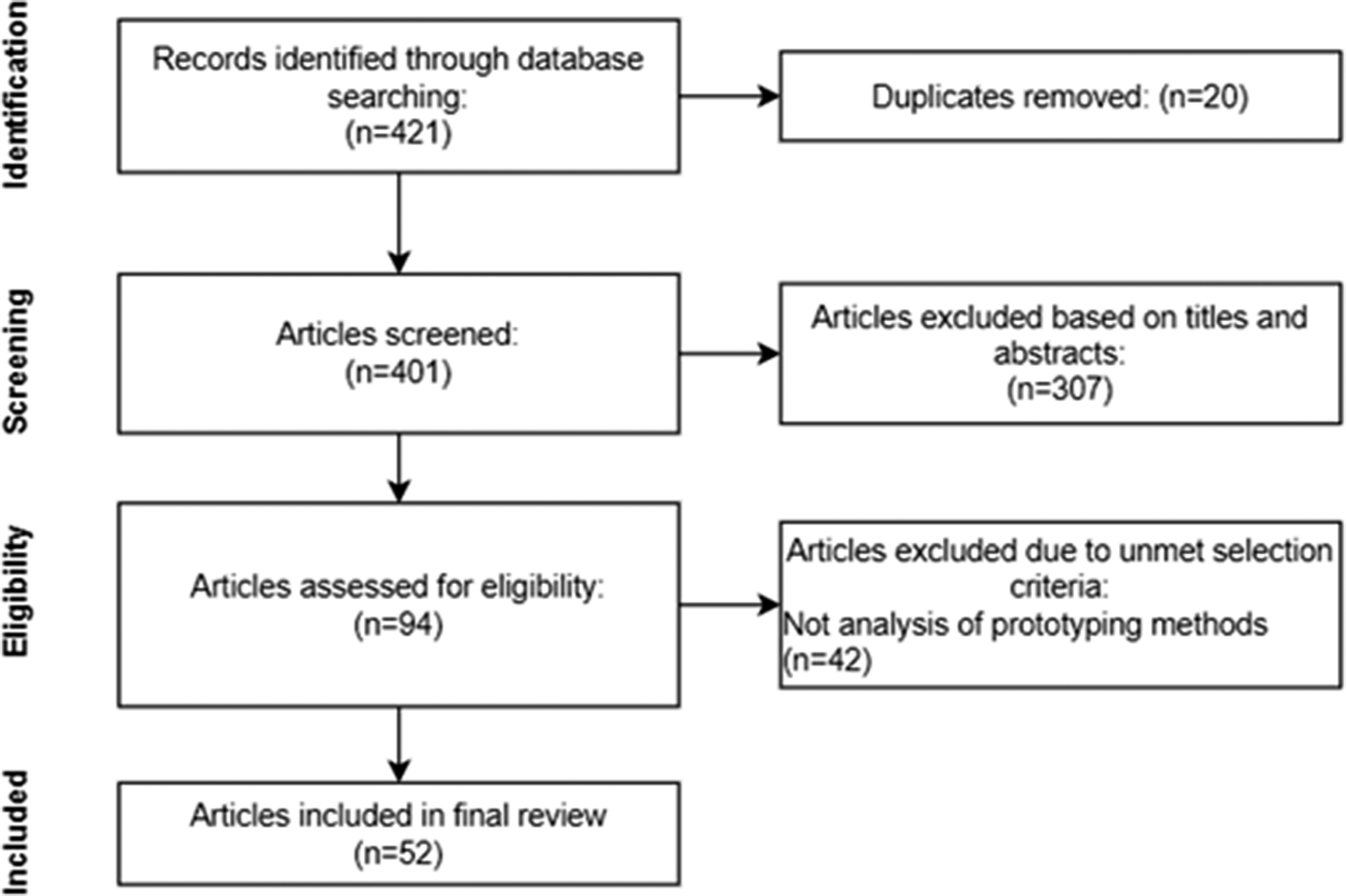
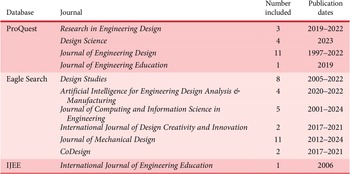


 Open access

