Improved surgical interventions and medical treatments for children born with CHD have resulted in much increased survival rates.Reference Hoffman and Kaplan 1 As a result, the relatively new manifestation of CHD as a life-long condition has occurred. However, there has also been increased recognition that quality of life, psychosocial adjustment, and neuropsychological functioning may be compromised within this growing clinical population.Reference McCusker and Casey 2
In infants and young children, it has become clear that there are neurodevelopmental difficulties – most reliably demonstrated within the domain of perceptual–motor functioning.Reference Snookes, Gunn and Eldridge 3 As longitudinal studies have started to emerge, however, it would appear that although some degree of recovery in these particular abilities may be manifested, deficits in other domains such as memory, attention, and executive functioning have started to be reported in older children. Such can compromise school attainments and be associated with risk for other conditions such as autistic spectrum disorder.Reference Hövels-Gürich and McCusker 4 – Reference Bellinger, Rivkin and DeMaso 7 The Boston longitudinal study is the largest and most extensive of this set of these studies and charts such an evolution in these neuropsychological features right from infancy through to the teenage years.Reference Bellinger, Wypij and Rivkin 6 , Reference Bellinger, Rivkin and DeMaso 7 Risk factors noted have included pre-operative hypoxaemia, bypass surgery, and length of time on cardiopulmonary bypass, number of interventions, and family and environmental factors.Reference McCusker, Armstrong, Mullen, Doherty and Casey 5 , Reference McCusker, Doherty and Molloy 8 More recently, however, an “encephalopathy of congenital heart disease” has been proposed,Reference Volpe 9 based on findings that groups with significant CHD are at risk for neurodevelopmental deficits regardless of cyanosis or surgery,Reference McCusker, Armstrong, Mullen, Doherty and Casey 5 and on more sophisticated neuroimaging of infants with CHD before surgery.Reference Volpe 9 This suggests that there may be underlying, co-morbid, vulnerabilities related to in utero brain development in this population. The risk for adverse outcomes is now well established as evidenced by the American Heart Association’s guidelines for routine developmental surveillance and screening for children classified as at-risk through the pre-school and school-age years.Reference Marino, Lipkin and Newburger 10
Although neurodevelopmental delays have often been reported in children with CHD, the longer-term prognosis for those surviving into adolescence and adulthood is less clear. The emergent literature on teenagers and adults would suggest that neuropsychological deficits do persist, and may even grow, especially within the domain of executive functioning.Reference Hövels-Gürich and McCusker 4 , Reference Cassidy, White, DeMaso, Newburger and Bellinger 11 , Reference Tyagi, Austin, Stygall, Deanfield, Cullen and Newman 12 “Late effects” would not be unexpected given what we know about sequelae to early injury to the developing brain.Reference Anderson, Spencer-Smith and Wood 13 However, it is currently unclear how far recovery in cognitive functioning through plasticity takes place and how far new problems emerge in other domains of functioning. To date, there have been no systematic reviews or meta-analyses that have addressed this question for adolescents, teenagers, and adults. Karsdorp et al’sReference Karsdorp, Everaerd, Kindt and Mulder 14 meta-analysis focussed on younger age ranges but did indeed note the emergence of some difficulties with age, whereas other deficits remained comparable across age bands.Reference Karsdorp, Everaerd, Kindt and Mulder 14 In addition, studies included tended to report only general, verbal, and performance intelligence quotients, not documenting outcomes on more specific cognitive processes. Although the systematic review of Tyagi et alReference Tyagi, Austin, Stygall, Deanfield, Cullen and Newman 12 looked at adults, and highlighted the need for evaluating specific cognitive domains of functioning, reports of executive functioning deficits, for example, were based on only one study and there was no meta-analysis. Longitudinal studies, with cohorts who have now reached adolescence and adulthood, have grown and our goal was to synthesise the evidence on the impact of severe CHD on cognitive domains in the long term, from adolescents through to adulthood, using meta-analysis.
Materials and methods
Search strategy
A protocol designed a priori determined the procedures for the literature search. Keywords with Boolean phrases were entered into the Web of Science, MEDLINE, CINAHL Plus, and PsychInfo search engines in March 2016, for the time period 1970 to the present. The terms used were “(neuropsych* OR neuro_dev* OR neurocogniti* OR cogniti* OR executive fun* OR intelligence) AND (congenital heart disease OR congenital heart defect)”. In addition, the reference lists of articles deemed eligible for this review were hand searched.
The criteria used to select studies were as follows: (i) patients were humans reported as having significant forms of CHD requiring invasive interventions (i.e. “closed” or catheterised repairs, and “open” interventions involving cardiopulmonary bypass and palliated conditions), (ii) patients did not have a known chromosomal abnormality, (iii) patients underwent formal cognitive assessment, which was reported using standardised test scores that were related to specific cognitive domains as outlined below – for example, executive functioning, memory, etc., (iv) patients had a mean or median ⩾ 11 years of age, (v) the articles were published in the English language, and (vi) the articles were subjected to peer review. When data were reported in formats that did not facilitate the calculation of effect sizes, those data were not included in the final analyses. Emails were sent to three corresponding authors named in articles, in an attempt to establish unpublished data. However, data in appropriate formats were not forthcoming.
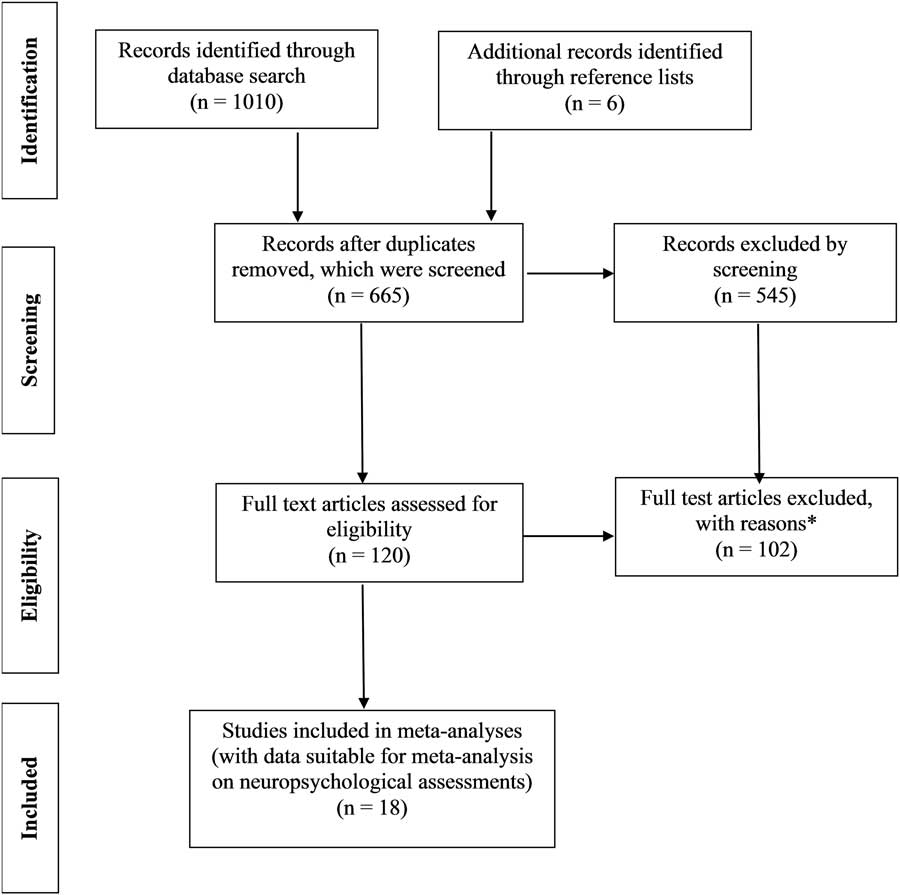
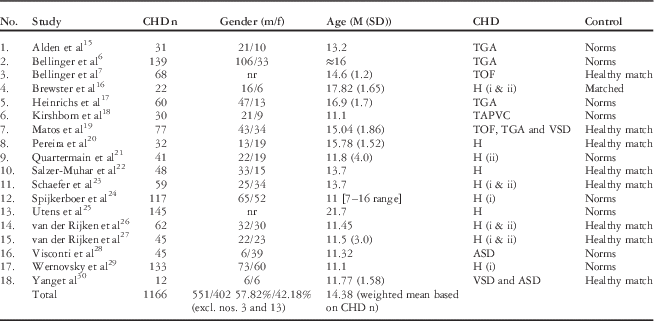
As recommended for best practice in conducting systematic reviews, first two authors (R.M. and C.T.) independently reviewed all of the titles and abstracts of the search results, screening duplicates, and records that could be identified as appropriate to exclude. A selection of full-text articles (n=120) were then assessed for eligibility, once again on the basis of the inclusion criteria. Discrepancies during this final stage were resolved through discussion, but a κ value (0.97) that assessed the level of agreement was high. There were 26 articles deemed eligible; however, as a number of those articles reported on the same samples, only 18 articles were eventually included in the meta-analyses. A summary of the search process together with the final 18 studies that went forward to meta-analyses are outlined in Figure 1 and Table 1.
Summary of the search process. * Reason for exclusion of full test articles - Not possible to obtain appropriate neuropsychological data (n=68); mean age of participants <11 years (n=31); included participants without significant forms of CHD (n=2); included participants diagnosed with co-morbid syndromes (n=1).

Studies included in the meta-analyses.

i=single-ventricle lesions; ii=double-ventricle lesions; ASD=arterial septal defect; H=heterogeneous; Matched=Demographically matched; nr=not reported or not reported for the subgroup without a genetic neurodevelopmental syndrome; TAPVC=total anomalous pulmonary venous connection; TGA=transposition of the great arteries; TOF=tetralogy of Fallot; VSD=ventricular septal defect.
Cognitive domains of functioning assessed
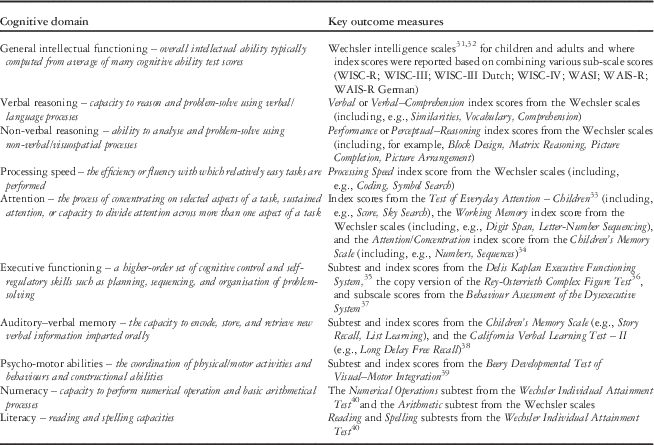
The studies reviewed used many neuropsychological tests and used different construct labels to consider test results in relation to specific cognitive domains. Consequently, one of the authors, who is a neuropsychologist (C.M.C.), classified each outcome measure used in the selected studies according to a primary domain of cognitive functioning to which each test related. The domains of functioning to be reported on in this paper, with examples of key tests incorporated, are outlined in Table 2.
Key outcome measures categorised within each neurodevelopmental cognitive domain.

Data analysis
Effect sizes were calculated using means, SD, sample sizes, and exact p values between CHD samples and study controls or normative data. The Hedges’ g statistic was the effect size used. Positive g represented a CHD sample with better neuropsychological functioning in that domain compared with their control group, whereas negative g represented poorer neuropsychological functioning. Cohen’s criteria were used to interpret effect sizes as small, medium, or large.Reference Cohen 41
On occasion, more than one test score relating to the same cognitive domain as outlined above was reported. Effect sizes for these tests were pooled first within the individual studies to produce an individual Hedges’ g statistic for that study. That individual Hedges’ g statistic was subsequently pooled with the other studies’ effect sizes in the final meta-analysis.
Using random-effects models, all calculations were completed on Comprehensive Meta-Analysis, Version 3. 42 To obtain the most precise estimate of the population effect, the program assigned a weighted mean to each study, based on the inverse of each study’s variance. As the aim of meta-analysis is a synthesis of the data overall, not just the pooled effect sizes, a consideration in this analysis was the consistency of the pooled effect sizes, using Cochran’s Q, I2, and T statistics. Cochran’s Q was used to determine the presence of heterogeneity in effect sizes, with significant Qs suggesting that moderating factors – for example, sample heterogeneity across studies – may be at play. I2 represents a percentage of the variation in the effect size estimate due to heterogeneity and not error. T may be considered a standard deviation in meta-analysis used to describe the distribution of true effects. These statistics are useful for gauging the dispersion of effects, but when using random-effects models they may be unreliable when the number of studies is small. Three studies with eligible data in each cognitive domain was identified as the minimum number threshold to proceed with meta-analysis, but caution in interpretation was still necessary.
To determine how robust the findings were, a sensitivity analysis was planned alongside an assessment for publication bias. “Leave-one-out” analyses in Comprehensive Meta-Analysis were conducted on each meta-analysis, by running the meta-analyses repeatedly, but without individual studies on each occasion to gauge the impact of that individual study on the pooled effect sizes. Such a procedure offers insight into how findings would shift if the inclusion criteria were different. To assess the risk of publication bias, a set of procedures based upon recommendations from BorensteinReference Borenstein 43 entailed gauging the presence of a risk of bias in each meta-analysis, followed by the magnitude of that risk to determine whether the results would be likely to change. Comprehensive Meta-Analysis produced a range of statistics to facilitate this as outlined further below.
Across the 18 unique samples for which data could be obtained, all 10 domains of functioning, as outlined above, were reported with sufficient detail and in sufficient numbers to justify meta-analysis, that is, more than two effect sizes could be pooled. The STROBE Statement checklistReference Von Elm, Altman, Egger, Pocock, Gotzsche and Vandenbroucke 44 was used to judge the quality of the body of evidence. The checklist suggests 22 individual items in six broad categories, which should be included in reports of cross-sectional studies that the reviewer assessed.
Results
Overall pooled effects
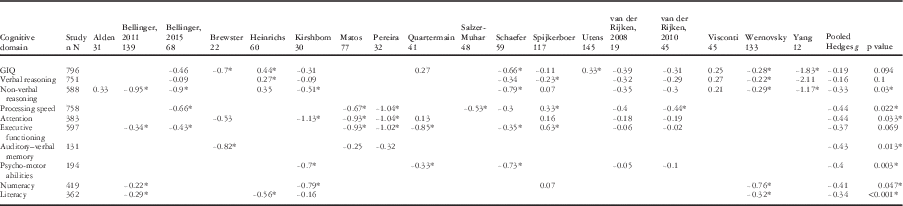
Table 3 summarises the effect sizes derived from all 18 studies for the cognitive domains, each assessed together with the overall pooled Hedges’ g. The results highlight almost completely negative effect sizes (indicative of poorer performance in the CHD samples compared with controls/norms) and across all domains. All of the pooled effect sizes calculated were negative, with Hedges’ g reaching statistical significance in seven domains – non-verbal reasoning, processing speed, attention, auditory–verbal memory, psychomotor abilities, numeracy, and literacy. One study appeared to skew the executive functioning results (i.e. Spijkerboer et alReference Spijkerboer, Utens, Bogers, Verhulst and Helbing 24 ), and with this outlier study removed executive functioning also emerged as significant (see below). Overall significant pooled effect sizes were small–medium in size using Cohen’s criteria.Reference Cohen 41
Cognitive domain effect sizes in CHD compared with normal distributions or matched controls.

GIQ=general intellectual ability
* CHD group reported as significantly lower in the study in comparison with controls
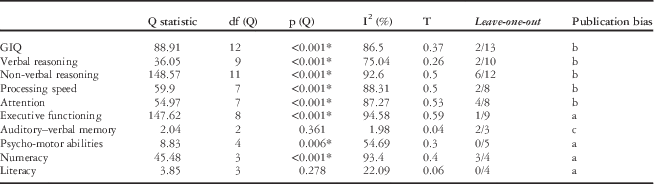
Table 4 summarises the statistics related to the quality assurance of the studies included in the meta-analysis. Overall, these statistics suggested three conclusions. First, Cochran’s Q and associated statistics suggested that there was considerable heterogeneity in the study findings. The relatively small number of studies included prohibited subgroup meta-analyses, but it is important to note that variability was occurring and reasons for this are considered below. In addition, leave-one-out analyses suggested greatest variability within the domains of non-verbal reasoning, attention, auditory–verbal memory, and numeracy. Finally, however, analyses suggested a relatively low risk that publication bias was affecting effect sizes across studies.
Heterogeneity, sensitivity analyses, and publication bias.

Leave-one-out analyses = the number of individual studies removed/total studies included that would change the statistical significance of g (fewer is more robust);
Publication bias: (a) the impact of bias appears trivial (based on funnel plot, corrected rank correlation, and a regression intercept test), or (b) the impact is not trivial but the major finding is still valid (based on Rosenthal’s Fail-safe N and Duval and Tweedie’s Trim and Fill method), or (c) the basic conclusion might be called into question (based on Rosenthal’s Fail-safe N and Duval and Tweedie’s Trim and Fill method)
Pooled effect sizes within cognitive domains
Consideration of findings within specific domains outlined in Tables 3 and 4 suggested a number of conclusions, with forest plots included to illustrate some specific points for selected domains.
General intellectual ability
Here, the pooled effect size suggested that CHD samples were not significantly different from controls. Although heterogeneity in effect sizes was significant, the relatively few individual results that may have changed the overall result in leave-one-out analyses compared with the number of studies included (i.e. 2/13), and the indication of a publication bias that would not significantly alter the major finding, suggested that the overall result was fairly robust.
Verbal reasoning
Again the pooled effect size suggested that CHD samples were not significantly different from controls. Assessment for publication bias indicated that the overall result was valid and leave-one-out analyses at 2/10 that it was fairly robust. In addition, the effect size was indicated to vary only relatively modestly (T=0.26), meaning that there was a consistency not present in the general intellectual ability meta-analysis, even with a large I2 (75.04%).
Non-verbal reasoning
Overall, the pooled effect size for non-verbal reasoning suggested that participants with CHD scored significantly lower compared with controls on tests in this domain (see Table 3). However, significant study variability existed (e.g. T=0.5), and leave-one-out analyses indicated that half of the individual reports would change the resultant pooled effect size, and thus caution in interpretation is warranted.
Processing speed
Similar to non-verbal reasoning, the pooled effect size for processing speed suggested that participants with CHD scored significantly lower compared with controls in this domain. However, as with non-verbal reasoning, T and I2 (0.5; 88.3%) statistics suggested variability and heterogeneity across studies, which suggested that subgroup or moderating factors may have been exerting influence. Leave-one-out and publication bias analyses, however, suggested a robustness to the data included despite across-study heterogeneity.
Attention
The pooled effect size for attention was also significant with a nearly medium effect size (see Table 3). Again, however, leave-one-out analyses (see Table 4) indicated significant instability in the result; the T (0.53) statistic suggested significant heterogeneity across studies and I2 (87.3%) implicated sub-groups or moderating factors.
Executive functioning
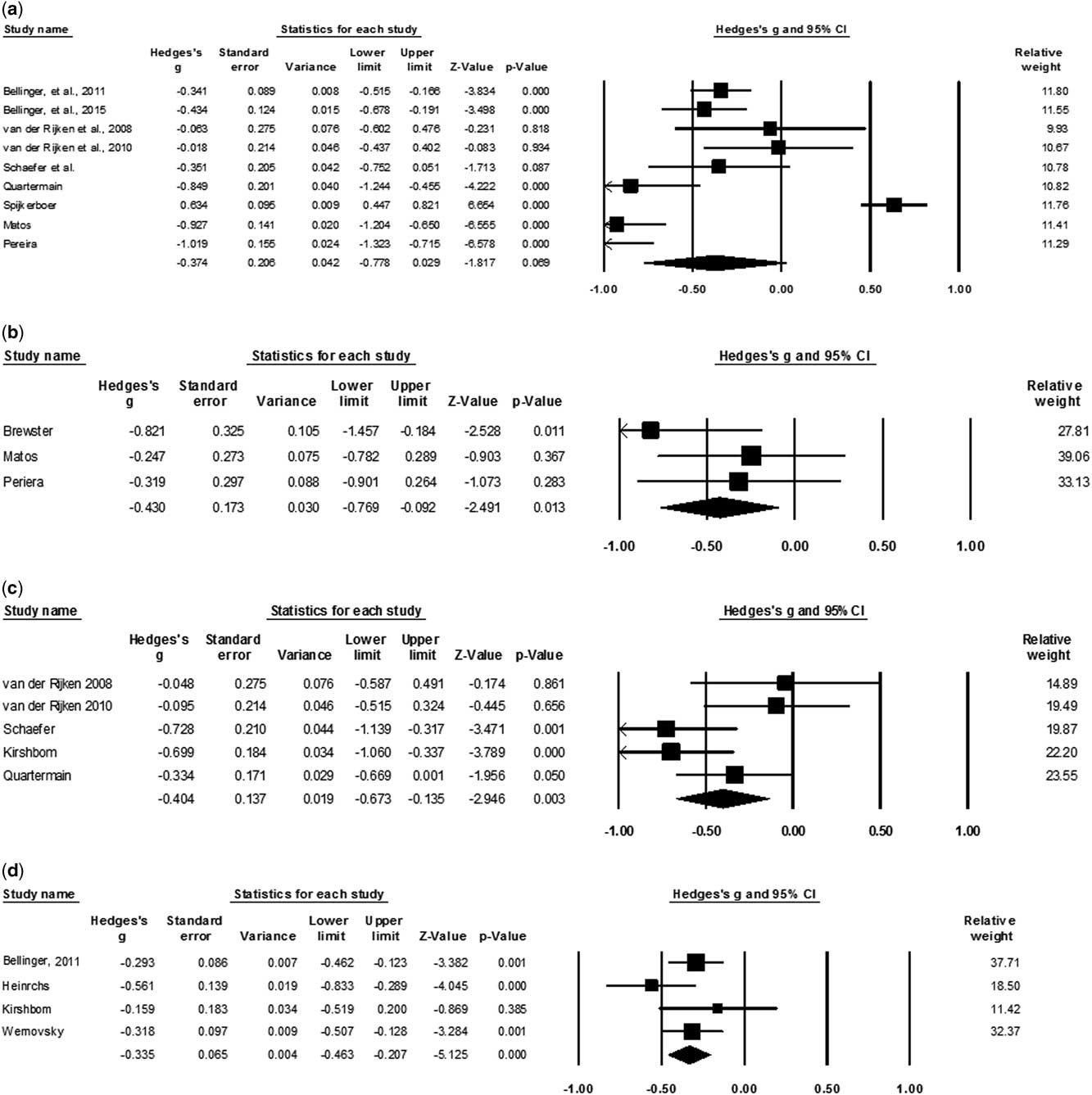
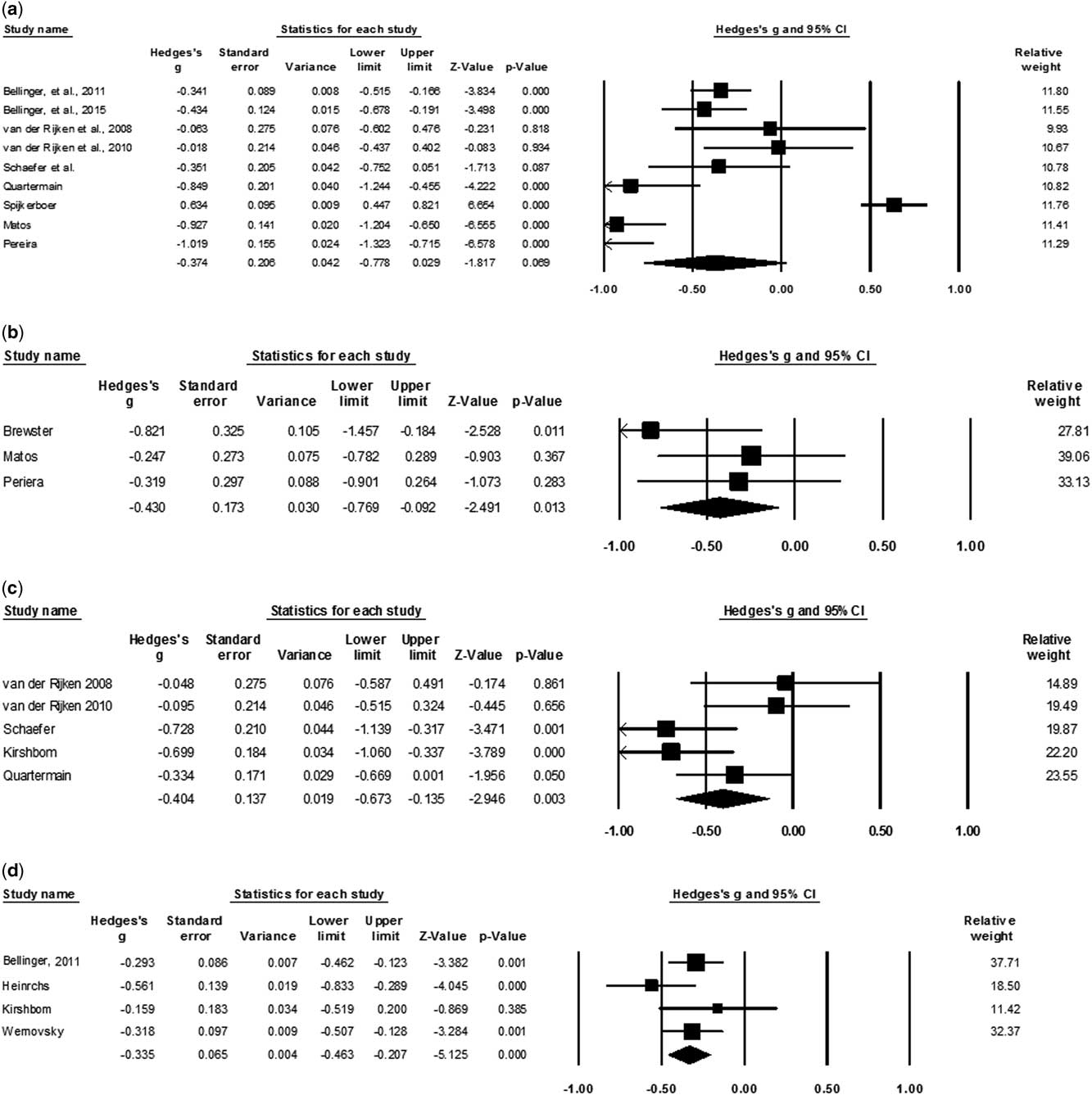
Although the pooled effect size within this domain just failed to reach statistical significance (Hedges’ g=−0.37, p=0.069), the greatest variability identified across studies in Table 4 concerned executive functioning, which was large (T=0.59) relative to the pooled effect size (g=0.37). Visual inspection of the related forest plot (Fig 2a) suggested a single incongruous study (i.e. Spijkerboer et alReference Spijkerboer, Utens, Bogers, Verhulst and Helbing 24 ), which, as opposed to indicating that CHD may have deleterious effects, indicated that those with CHD had superior executive functioning. This outlier study appeared to significantly skew the overall meta-analysis. Consistent with this interpretation, leave-one-out analysis confirmed that the same study was the only one that would significantly alter the result with the publication bias analysis, suggesting particular robustness in studies within this domain. Without Spijkerboer et alReference Spijkerboer, Utens, Bogers, Verhulst and Helbing 24 in the meta-analysis, the executive functioning meta-analysis would have been significant and at a medium effect size level (Hedges g=−0.523, p<0.001).
Forests plots for (a) executive functioning, (b) auditory-verbal memory, (c) psycho-motor abilities, (d) literacy.
Auditory–verbal memory
The pooled effect size for auditory–verbal memory was significant (Table 3) and indicated that people with CHD scored significantly lower on tests in this domain than controls/norms. In addition to the significant pooled effect size, Fig 2b highlights the striking consistency in study effect sizes within this domain (see also Table 4 and non-significant variability statistics). However, the small number of studies included prompts caution in interpretation, which was reflected by leave-one-out analysis findings and the relatively higher risk for possible publication bias.
Psycho-motor abilities
The psycho-motor pooled effect size reached statistical significance, indicating poorer performance in CHD samples compared with controls (see Table 3). The robustness of the overall result was indicated by no studies in a leave-one-out analysis altering the pooled effect size to any significant degree, and publication bias was not indicated. In addition, the individual effect sizes within the psychomotor abilities meta-analysis varied (I2=54.69%; T=0.3), but not substantially compared with other domain profiles. This relatively greater consistency is highlighted in Fig 2c.
Numeracy
Although the pooled effect size here was statistically significant, leave-one-out analyses indicated that removal of any one of three of the four constituent effect sizes would change the result significantly – an exceedingly high proportion (3/4). Equally, those effects sizes appeared heterogeneous, with 93.4% of the variability not attributed to error, but perhaps sub-grouping or moderating variables. Although publication bias did not appear to be a risk, once again interpretation of the meta-analyses with small numbers of constituent reports should be treated with caution.
Literacy
Finally, as summarised in Table 3, the pooled effect size for literacy was significant. Moreover, those published were reported with notable consistency (see Fig 2d), with leave-one-out analyses and publication bias suggesting a robustness to the pooled effect size across studies. In addition, the non-significant Q statistic reflected a consistency across the studies included.
Quality of the evidence
Using STROBE guidelines,Reference Von Elm, Altman, Egger, Pocock, Gotzsche and Vandenbroucke 44 the quality of the 18 studies included in these meta-analyses was overall deemed relatively high. In four out of the six broad categories of STROBE recommendations, all but two of the studies included in this review met all individual items on the checklist. Variability in the reporting of items from the STROBE Methods category was found. No study included in this review reported methods to control for bias (e.g. with blinding), and the reporting of other factors was inconsistent (i.e. periods of recruitment, methods of selection of participants, explanations for how the study size was arrived at, or how missing data were addressed). However, these factors did not appear to substantially limit the potential for replication studies either. In the remaining category – results – a single item on the STROBE checklist was frequently not adhered to, which was the reporting of descriptive data.
Discussion
The results of the meta-analyses reported in the paper suggested that, even when those with co-morbid developmental syndromes are excluded, cognitive deficits that have been reliably demonstrated in infancy and childhood persist into adolescence and adulthood for those with significant CHD diagnoses. The fact that such a conclusion has been reached through meta-analyses of multiple studies attests to its essential reliability and significance. The findings noted above suggest a number of further specific conclusions.
First, it was striking that effect sizes across all 10 cognitive domains studies were negative, indicating pervasively poorer cognitive functioning in CHD samples compared with controls or reference group norms.
Second, however, the pooled effect size differences were not significant in terms of general intellectual ability and verbal reasoning and, for those that were statistically significant, effect sizes were small–medium only. Although reassuring, even small–medium effect sizes may very well have functional significance and may underlie the reports of poorer educational and occupational attainments some have found within this clinical population.Reference Daliento, Mapelli and Russo 45 , Reference Opic, Roos-Hesselink and Cuypers 46
Third, a strength of this meta-analysis has been the attention given to quality assurance statistics such as Cochran’s Q, leave-one-out analyses, and publication bias analyses using the Comprehensive Meta-Analysis, Version 3. 42 Overall, these supplementary analyses suggested that pooled effect size results were mainly robust (with a few exceptions noted below) but that there is generally significant variability across studies in terms of strengths of effect sizes (see Tables 3 and 4). Primary reasons for such heterogeneity are likely to involve the use of different specific tests, and versions of tests, that purport to measure the same cognitive domain. Thus, for example, although story recall and list learning subtests from the Children’s Memory Scale Reference Cohen 34 both primarily relate to auditory–verbal memory, the latter may also place demands on executive functioning skills required to make memorable verbal information without the same context as provided in story recall tasks. Similarly, the range of tests used in the TEA-CH Reference Manly, Robertson, Anderson and Nimmo-Smith 33 measure quite specific attentional systems, for example, sustained, selective, divided, etc., which nonetheless got classified as “attention” outcomes for the purposes of this meta-analysis. In addition, the meta-analysis included studies from 1970 to 2016. During this time there were updated versions of key scales (such as the Wechsler intelligence scales for adults and children published). Although broadly comparable, there were also distinct differences in, for example, the component subtests used to calculate index scores. Thus, Mazes and Picture Arrangement (with key executive functioning elements) would have been relevant to the non-verbal reasoning indices of earlier but not more recent WISC index scores. This will have contributed to the heterogeneity observed. Second, it is entirely possible that effect sizes were moderated by sample variations in specific diagnoses studied. Thus, some studies had heterogeneous diagnoses within the inclusion range, whereas others used specific diagnostic groupings only (see Table 1). In addition, severity of disease, co-morbidity, the presence of perhaps undiagnosed neurological events, and features are all factors that are likely to have contributed to the heterogeneity in study effect sizes observed.
Fourth, taking these quality assurance statistics into account, it is possible to reach some tentative conclusions about the nature and robustness of specific neuropsychological deficits implicated. Although statistically significant pooled effect sizes were discerned for 7/10 cognitive domains, deficits in psychomotor abilities and literacy were arguably the most reliable in terms of relatively lower variability across studies and robustness as evidenced by leave-one-out and publication bias analyses (see also Figs 2c and 2d). The psychomotor deficits mirror findings with younger children and suggest that problems within this domain generally persist through adolescence and towards adulthood. Literacy, given strong associations with educational attainments, may be a proxy indicator of reduced educational attainments owing to neuropsychological process difficulties but probably owing to other reasons associated with growing up with CHD too.
Problems in the domain of auditory–verbal memory, processing speed, attention, numeracy, and non-verbal reasoning were also evidenced by significant pooled effect sizes. However, caution should be exercised here as, although there was relatively little variation across the auditory–verbal memory effect sizes, there were only a small number of studies evident, increasing the risk of publication bias as noted in Table 3. Processing speed and attentional problems effect size findings were generally robust, but with more significant variation than evident in other domains and deficits in non-verbal reasoning appeared perhaps the most tentative of all analyses, given both heterogeneity within studies included and less robust leave-one-out analyses.
The greatest variability in all of the pooled effect sizes reported was for executive functioning, although this appeared to be due to one skewed finding only (i.e. Spijkerboer et alReference Spijkerboer, Utens, Bogers, Verhulst and Helbing 24 ; see Table 3). The interpretation of this as an outlier to the other eight studies that investigated executive functioning is confirmed by the fact that publication bias was low here and leave-one-out analyses suggested that leaving out only this one study would have changed the pooled Hedges’ g. When the meta-analysis was repeated with this one study removed, the Hedges’ g did indeed become statistically significant as noted above (Hedges’ g=−0.523, p<0.001) and indeed the Hedges’ g became the largest across all of the 10 meta-analysis domains. Thus, it is concluded that problems with executive functioning have also been suggested by this meta-analysis. This is consistent with persuasive arguments in recent literature that executive functioning deficits do emerge across childhood and may actually underlie some of the deficits seen in other areas such as sequencing within psychomotor abilities and in social cognition.Reference Hövels-Gürich and McCusker 4
Limitations
The quality of findings from meta-analysis is only as good as the breadth and quality of the studies included. Although leave-one-out and publication bias analyses were satisfactory for the most part, clearly small study numbers, in some domains especially, widened confidence intervals and increased the variability statistics evident in Table 4. This is a problem that should lessen as more studies investigate what is clearly becoming an important focus for research.
In addition, heterogeneity within the range of effect sizes discerned implies moderator factors at play. Increased studies, which allow subgroup analyses of various diagnostic groups, will be helpful here as will perhaps be greater specificity in gold standard tests used to assess specific domains of cognitive functioning. The choice of assessment tools is an important consideration. Psychomotor deficits, for example, may have an impact on other tests, such as those related to speed of processing or executive functioning, and may thus be confounding conclusions.Reference van der Rijken, Hulstijn, Hulstijn-Dirkmaat, Daniëls and Maassen 47
More immediately, improvements in reporting that have been previously recommended by STROBE Reference Von Elm, Altman, Egger, Pocock, Gotzsche and Vandenbroucke 44 , Reference Moher, Liberati, Tetzlaff and Altman 48 would also be beneficial. For example, there were other reports identified in the literature search but with inadequate reporting to facilitate inclusion in meta-analyses. The implementation of blinding assessors would also reduce the risk of potential bias.
Finally, in relation to the procedures for this systematic review in particular, the heterogeneity observed in the meta-analyses may have been amplified by the inclusion criteria, which specified a mean or median age of ⩾11. A proportion of reports will thus have included participants under that age, and thus our pooled effect sizes may underestimate “late effects” upon neurodevelopment, particularly with respect to executive functioning and its relatively late development.
Conclusions
This has been the first meta-analysis to examine neuropsychological outcomes beyond childhood in samples with CHD. Although caveats and cautions remain as discussed above, findings suggest that when those with co-morbid developmental syndromes are excluded, deficits have been demonstrated across studies and across neuropsychological domains of functioning. Analyses suggested that problems with literacy, psychomotor abilities, and executive functioning were perhaps most strongly indicated. However, pooled effect sizes were also significant in domains related to non-verbal reasoning, processing speed, attention, numeracy, and auditory–verbal memory.
It should be noted that these were small, or approaching moderate effect sizes for the most part, with overall intellectual ability and verbal reasoning not varying significantly from controls or norms. However, although not severe, such deficits may be distinct enough to have an impact on educational and occupational attainments, interpersonal relationships, and social functioning. Such an impact has been noted in the children’s literature,Reference McCusker and Casey 2 , Reference Bellinger, Wypij and Rivkin 6 , Reference Marino, Lipkin and Newburger 10 and is likely to remain important in thinking about long-term outcomes for adults with CHD. This is relevant to clinical practices, information giving, vocational counselling, and possibly the sorts of screening protocols that have been proposed by the American Heart Association as important in child CHD services.Reference Marino, Lipkin and Newburger 10 With generally average IQ, but deficits across specific domains, these children and young people may not meet diagnostic criteria for educational or other assistance and often “fly under the radar”, delaying identification of difficulties, as well as the corresponding interventions necessary. Results suggest the “encephalopathy of congenital heart disease”Reference Volpe 9 may indeed have reach beyond childhood and, in addition to charting aetiological mechanisms more precisely, impact, consequences, and realistic intervention possibilities will require elucidation.
Acknowledgements
None.
Financial Support
This research was supported through support from the Department of Health and Social Services for Northern Ireland for the first author’s (R.M.) Doctorate in Clinical Psychology.
Conflicts of Interest
None.
Ethical Standards
The authors assert that all procedures contributing to this study comply with the ethical standards of relevant national guidelines on human experimentation and with the Helsinki Declaration of 1975, as revised in 2008, and has been approved by the institutional ethics committee of the Queens University of Belfast.