Child abuse and neglect are all-too-common phenomena, with an estimated 12.5% to 40% of American children experiencing these types of adverse caregiving by late adolescence (Finkelhor, Turner, Shattuck, & Hamby, Reference Finkelhor, Turner, Shattuck and Hamby2013; Hussey, Chang, & Kotch, Reference Hussey, Chang and Kotch2006; Wildeman et al., Reference Wildeman, Emanuel, Levanthal, Putnam-Hornstein, Waldfogel and Lee2014). Abuse and neglect are associated with poorer social functioning across the life span, including problematic peer relationships and disrupted romantic relationship functioning (Cicchetti & Toth, Reference Cicchetti, Toth, Lamb and Coll2015; Labella et al., Reference Labella, Johnson, Martin, Ruiz, Shankman, Narayan and Simpson2018; Raby et al., Reference Raby, Roisman, Labella, Martin, Fraley and Simpson2018; Widom, Czaja, & Dutton, Reference Widom, Czaja and Dutton2014). Theory and research suggest that the interpersonal consequences of childhood abuse and neglect may extend into the domain of parenting, a key social developmental task of middle adulthood (e.g., Egeland, Jacobvitz, & Sroufe, Reference Egeland, Jacobvitz and Sroufe1988). However, little is known about the potential mechanisms accounting for intergenerational associations between childhood abuse and neglect and subsequent parenting.
Parenting Outcomes Associated With Childhood Abuse and Neglect
A substantial body of research has linked childhood experiences of abuse and neglect to parenting outcomes that can represent a source of adversity for children, including lower self-reported parenting quality (Locke & Newcomb, Reference Locke and Newcomb2004), more harsh parenting (Dubowitz et al., Reference Dubowitz, Black, Kerr, Hussey, Morrel, Everson and Starr2001), and higher likelihood of perpetrating abuse and neglect (see Ertem, Leventhal, & Dobbs, Reference Ertem, Leventhal and Dobbs2000; Thornberry, Knight, & Lovegrove, Reference Thornberry, Knight and Lovegrove2012, for reviews). The bulk of research on parenting outcomes of abuse and neglect focuses on the latter association, often referred to as “intergenerational continuity” or “intergenerational transmission” of maltreatment. Estimated rates of intergenerational continuity vary from 1% (Widom, Reference Widom1989) to 38% (Egeland et al., Reference Egeland, Jacobvitz and Sroufe1988). This wide range of estimates likely reflects methodological differences among the relevant studies, including measurement strategies, operational definitions, and length of follow-up period (i.e., following the second-generation child through infancy vs. adolescence).
Reviewers of this literature have noted substantial methodological weaknesses, including use of single-reporter designs and reliance on retrospective recall of childhood maltreatment experiences (Ertem et al., Reference Ertem, Leventhal and Dobbs2000; Thornberry et al., Reference Thornberry, Knight and Lovegrove2012). This represents a significant limitation, as retrospective recall is known to be affected by mood, memory, motivational factors, personality characteristics, and meaning ascribed to remembered events (Hardt & Rutter, Reference Hardt and Rutter2004; Henry, Moffitt, Caspi, Langley, & Silva, Reference Henry, Moffitt, Caspi, Langley and Silva1994; Reuben et al., Reference Reuben, Moffitt, Caspi, Belsky, Harrington, Schroeder and Danese2016; Roisman, Padrón, Sroufe, & Egeland, Reference Roisman, Padrón, Sroufe and Egeland2002; Yarrow, Campbell, & Burton, Reference Yarrow, Campbell and Burton1970). One-third to one-half of individuals with prospectively documented histories of abuse or neglect do not retrospectively report these experiences in adulthood (Shaffer, Huston, & Egeland, Reference Shaffer, Huston and Egeland2008; Widom & Morris, Reference Widom and Morris1997; Widom & Shepard, Reference Widom and Shepard1996). Furthermore, use of retrospective report may overestimate intergenerational continuity, as participants who show more maladjustment in adulthood may be more likely to recall experiencing adversity in childhood (Cicchetti & Valentino, Reference Cicchetti, Valentino, Cicchetti and Cohen2006; Widom, Raphael, & DuMont, 2004). This is particularly problematic if adult participants were recruited because they are at high risk for maladaptation or are known to be perpetrating abuse (Pears & Capaldi, Reference Pears and Capaldi2001).
A small number of studies have prospectively assessed abuse and neglect in both first and second generations, together yielding mixed support for intergenerational continuity (Thornberry et al., Reference Thornberry, Henry, Smith, Ireland, Greenman and Lee2013; Widom, Reference Widom1989; Widom, Czaja, & DuMont, Reference Widom, Czaja and DuMont2015). Although these studies are greatly strengthened by objective measurement and prospective design, they are limited in terms of outcome assessments. In particular, Widom (Reference Widom1989) measured second-generation perpetration through child abuse arrests, a very low base rate event that reflects only the most extreme forms of childhood abuse or neglect. Thornberry et al. (Reference Thornberry, Henry, Smith, Ireland, Greenman and Lee2013) relied on substantiated Child Protective Services (CPS) reports, excluding cases that do not come to the attention of authorities (for a discussion of these methodological issues, see Bartlett, Kotake, Fauth, & Easterbrooks, Reference Bartlett, Kotake, Fauth and Easterbrooks2017; Newcomb & Locke, Reference Newcomb and Locke2001). Widom et al. (Reference Widom, Czaja and DuMont2015) used a rigorous multimethod strategy to assess second-generation perpetration (CPS records, self-report, and offspring report) and provided evidence of moderate intergenerational continuity. Comparison across multiple methods suggested surveillance bias affecting intergenerational continuity in CPS reports, such that abuse and neglect are more likely to be detected in some families, including those whose parents were themselves maltreated, than others (Widom et al., Reference Widom, Czaja and DuMont2015). Such discrepancies highlight the value of examining non-perpetration-related measures of parenting quality, including supportive parenting. None of these prospective longitudinal studies examined links between childhood abuse and neglect and broader variation in parenting quality provided to the next generation.
Two additional studies on intergenerational continuity investigated measures of harsh parenting, rather than abuse and neglect per se (Conger, Schofield, & Neppl, Reference Conger, Schofield and Neppl2012; Herrenkohl, Klika, Brown, Herrenkohl, & Leeb, Reference Herrenkohl, Klika, Brown, Herrenkohl and Leeb2013). These studies complement prospective research on parenting outcomes of abuse and neglect, demonstrating moderate continuity in observed harsh parenting (Conger et al., Reference Conger, Schofield and Neppl2012) and self-reported use of harsh physical discipline (Herrenkohl et al., Reference Herrenkohl, Klika, Brown, Herrenkohl and Leeb2013). Neither study assessed sexual abuse or neglect, examined other aspects of caregiving, or followed target youth from birth, instead recruiting families when children were in preschool (Herrenkohl et al., Reference Herrenkohl, Klika, Brown, Herrenkohl and Leeb2013) or middle school (Conger et al., Reference Conger, Schofield and Neppl2012).
Overall, the handful of existing prospective, longitudinal studies suggest there is modest intergenerational continuity in adverse caregiving experiences, in terms of abuse and neglect (Thornberry et al., Reference Thornberry, Henry, Smith, Ireland, Greenman and Lee2013; Widom et al., Reference Widom, Czaja and DuMont2015) as well as harsh parenting more broadly (Conger et al., Reference Conger, Schofield and Neppl2012; Herrenkohl et al., Reference Herrenkohl, Klika, Brown, Herrenkohl and Leeb2013). However, the extant literature is limited in the breadth of second-generation parenting outcomes assessed and in the underrepresentation of early childhood caregiving experiences when children are recruited later in life. The current study seeks to build on existing literature by examining whether a range of parenting outcomes are associated with prospective assessments of first-generation childhood abuse and neglect, with measurement beginning at birth for both generations.
Potential Developmental Mechanisms
More information is also needed regarding theoretically plausible mechanisms that may account for the intergenerational continuity of adverse caregiving in general, and abuse and neglect in particular. The current study takes an organizational perspective, which views development as a progression through a series of socially valued tasks that are salient at different points in development (Labella & Cicchetti, Reference Labella, Cicchetti and Wenzel2017; Sroufe & Rutter, Reference Sroufe and Rutter1984). Within this perspective, the experience of abuse and neglect is conceptualized as a violation of the average expectable environment, such that children exposed to these forms of adverse caregiving do not receive species-typical levels of nurturance, stimulation, and protection from danger (Cicchetti & Valentino, Reference Cicchetti, Valentino, Cicchetti and Cohen2006). The failure of the caregiving environment to meet the child's basic needs in turn undermines their successful negotiation of the salient developmental tasks of childhood and adolescence, such as forming secure attachment relationships, learning to regulate affect, and developing a sense of the self during infancy and early childhood; improving social skills within the peer group and acquiring a sense of personal effectiveness during middle childhood; and forming frierndships and establishing a personal identity during adolescence (Cicchetti & Toth, Reference Cicchetti, Toth, Lamb and Coll2015; Sroufe & Rutter, Reference Sroufe and Rutter1984; Sroufe & Waters, Reference Sroufe and Waters1977).
A key premise of the organizational perspective is that there is continuity in the quality of adaptation across developmental periods, as individuals’ responses to early tasks provide a foundation for how to negotiate subsequent tasks (Sroufe & Rutter, Reference Sroufe and Rutter1984). Thus, as experiences of abuse and neglect increase risk for problematic adaptation to the tasks of childhood and adolescence, they are also expected to interfere with effective romantic relationship functioning, a salient developmental task of adulthood (Roisman, Masten, Coatsworth, & Tellegen, Reference Roisman, Masten, Coatsworth and Tellegen2004). Likewise, failure to form a romantic relationship characterized by safety, commitment, and mutual concern has downstream implications for other relationshps. For example, adults who do not learn how to resolve conflict effectively and provide support in close romantic relationships may be ill-equipped to do so in parent–child relationships. As the most proximate developmental task in the social domain, romantic relationship functioning thus emerges as a plausible mechanism by which childhood abuse and neglect may be carried forward throughout adulthood, shaping the parenting of the next generation.
Existing research supports romantic relationship functioning as a possible mediator of intergenerational associations in harsh parenting. For example, Schofield, Conger, and Conger (Reference Schofield, Conger and Conger2017) reported that the prospective, longitudinal association between first- and second-generation harsh parenting was mediated by observed positive communication between romantic partners. In a different prospective longitudinal study, participant-reported romantic partner support did not significantly mediate intergenerational associations in self-reported harsh parenting (Herrenkohl et al., Reference Herrenkohl, Klika, Brown, Herrenkohl and Leeb2013). However, case-level examination of the data revealed that nearly all of the 33 participants exhibiting intergenerational continuity in harsh parenting were involved in physically or emotionally abusive romantic relationships (Herrenkohl et al., Reference Herrenkohl, Klika, Brown, Herrenkohl and Leeb2013), suggesting a possible mediational role for relationship violence as well as competence. This observation echoes findings from retrospective studies that documented potential mediation of intergenerational continuity of adverse caregiving through romantic partner violence (Dixon, Browne, & Hamilton-Giachritsis, Reference Dixon, Browne and Hamilton-Giachritsis2005; Schuetze & Das Eiden, Reference Schuetze and Das Eiden2005; Thompson, Reference Thompson2006).
The Current Study
The present study used data from the Minnesota Longitudinal Study of Risk and Adaptation (MLSRA), a long-term, longitudinal investigation following the development of low-income mothers and their first-born children. We build on multiple strands of prior research from the MLSRA to investigate romantic relationship functioning as a prospective mediator of associations linking childhood abuse and neglect with multiple parenting outcomes in adulthood. Seminal early analyses of the MLSRA reported that the first-generation mothers who retrospectively reported childhood experiences of abuse and neglect were more likely to abuse and/or neglect their own infants by 24 months of age, compared to demographically similar but nonabused peers (Egeland et al., Reference Egeland, Jacobvitz and Sroufe1988; Egeland, Jacobvitz, & Papatola, Reference Egeland, Jacobvitz, Papatola, Gelles and Lancaster1987). Among mothers reporting childhood abuse and neglect, being in a stable, satisfying, and supportive romantic relationship was associated with a lower likelihood of perpetrating abuse and/or neglect (Egeland et al., Reference Egeland, Jacobvitz and Sroufe1988), demonstrating the salience of romantic functioning for parenting.
The significance of romantic functioning for parenting quality was further evidenced by prospective research on the interpersonal antecedents of supportive parenting among adult MLSRA offspring: maternal sensitivity in the first generation has been found to predict interview-rated supportive parenting indirectly through teacher-rated peer competence in childhood and interview-rated effectiveness of romantic engagement in adulthood (Raby et al., Reference Raby, Lawler, Shlafer, Hesemeyer, Collins and Sroufe2015). This finding supports an organizational perspective, with positive early caregiving experiences predicting effective navigation of increasingly complex interpersonal tasks throughout development. Finally, recent studies have demonstrated associations between prospectively identified childhood abuse and neglect and subsequent social competence, including romantic competence and involvement in relational violence during adulthood (Labella et al., Reference Labella, Johnson, Martin, Ruiz, Shankman, Narayan and Simpson2018; Raby et al., Reference Raby, Roisman, Labella, Martin, Fraley and Simpson2018). Taken together, these previous reports based on the MLSRA data set support hypothesized associations linking childhood experiences of adverse caregiving, adult romantic relationship functioning, and parenting quality.
The current study builds on these prior reports from the MLSRA as well as prior research from other samples by providing a fully prospective test of intergenerational associations in adverse caregiving. Whereas Raby et al. (Reference Raby, Lawler, Shlafer, Hesemeyer, Collins and Sroufe2015) identified indirect links between sensitive caregiving and supportive parenting, the current study investigates parenting outcomes associated with childhood abuse and neglect, forms of caregiving that fall outside the spectrum of acceptable parenting behavior. Labella et al. (Reference Labella, Johnson, Martin, Ruiz, Shankman, Narayan and Simpson2018) previously demonstrated that abuse and neglect experiences predict lower romantic competence and more relational violence in adulthood. The current study extends this investigation by evaluating whether these same aspects of romantic functioning function as mediators, with second-generation parenting as the distal outcome. Although prior research suggests that romantic functioning may also serve a moderating role (Conger, Schofield, Neppl, & Merrick, Reference Conger, Schofield, Neppl and Merrick2013; Schofield, Lee, & Merrick, Reference Schofield, Lee and Merrick2013), we did not address that possibility in the current investigation due to limited statistical power for detecting interactions.
We used a rigorous multimethod assessment strategy to evaluate adulthood romantic relationship functioning as a potential mediator of parenting outcomes associated with childhood abuse and neglect. We predicted that childhood abuse and neglect experiences would be associated with lower supportive parenting (observed and interview rated) as well as with higher likelihood of self-reported CPS involvement. We also hypothesized that these associations would be mediated by lower romantic competence and more experiences of relational violence, and that findings would be robust to childhood demographic covariates.
Method
Participants
Participants were drawn from the MLSRA, a longitudinal investigation that has followed individuals from birth into middle adulthood (Sroufe, Egeland, Carlson, & Collins, Reference Sroufe, Egeland, Carlson, Collins, Grossmann, Grossmann and Waters2005). Between 1975 and 1977, 267 pregnant first-time mothers living below the poverty line and receiving prenatal services were recruited from the local health department in Minneapolis, Minnesota. At the time of their child's birth, 48% of the mothers were teenagers, 65% were single, and 42% had less than a high school education. Offspring were followed through childhood and into adulthood. Observations of second-generation parenting were conducted when third-generation children were 24 months and 42 months. Because observational assessments were timed based on children's ages, parents ranged widely in age at the time of 24-month (21–37 years, M = 27.41, SD = 4.08) and 42-month (21–38 years, M = 27.43, SD = 3.91) assessments. Parenting interviews were collected when participants were 32 years old.
The sample for the current study comprised 122 adult offspring (65 females) who participated in at least one parenting assessment between the ages of 21 and 38 years; the remaining participants were lost to attrition (n = 88) or did not provide parenting data (n = 57) due to having no biological children or nonbiological children for whom they played a parenting role. Attrition analyses indicated that the current sample was demographically similar to the original study sample. Within this subsample, the average level of maternal education during childhood and adolescence was 12.22 years, corresponding to completing high school, and maternal occupational prestige (as assessed with Duncan's Socioeconomic Index; Stevens & Featherman, Reference Stevens and Featherman1981) was 22.48, corresponding to unskilled service occupations (e.g., house cleaner, produce sorter, or garbage collector). Participants in the current sample were significantly more likely to be female than excluded participants (53.2% vs. 38.6%); χ2 = 5.74, p < .05, likely because a higher proportion of female participants serve a parenting role. The current sample of 122 participants did not differ from excluded participants with regard to abuse/neglect status (described in more detail below).
Measures
Adverse caregiving: Abuse and neglect
The MLSRA uses the rubric childhood experiences of adverse caregiving as an umbrella term to refer to a variety of atypical parent–child experiences that were prospectively measured in the MLSRA cohort and are believed to be harmful to children's development. The present study focused exclusively on information collected about MLSRA participants’ adverse caregiving experiences of physical abuse, sexual abuse, and neglect. This information was recoded to apply contemporaneous definitions of abuse and neglect, to identify the specific perpetrator and ages of the abuse and neglect experiences, and to assess the reliability of those coding decisions. Coding criteria were based on definitions developed by the Centers for Disease Control and Prevention (CDC) in order to “promote consistent terminology and data collection related to child maltreatment” (Leeb, Paulozzi, Melanson, Simon, & Arias, Reference Leeb, Paulozzi, Melanson, Simon and Arias2008, p. 4). The coding included the following: (a) neglect of a child's basic physical or cognitive needs, defined as a caregiver's failure to provide adequate hygiene, shelter, clothing, medical care, supervision, or education; (b) physical abuse, defined as a caregiver's “intentional use of physical force against a child that results, or has the potential to result in, physical injury” (Leeb at al., Reference Leeb, Paulozzi, Melanson, Simon and Arias2008, p. 14); and (c) sexual abuse, defined as sexual contact (e.g., molestation or rape) or noncontact exploitation (e.g., intentional exposure of child to pornography) by a custodial caregiver or by a perpetrator 5 or more years older than the target child. Although the CDC criteria only addresses sexual abuse perpetrated by a caregiver, the inclusion of noncaregiving perpetrators and the use of a 5-year cutoff is consistent with other research in this area (e.g., Stoltenborgh, van IJzendoorn, Euser, & Bakermans-Kranenburg, Reference Stoltenborgh, van IJzendoorn, Euser and Bakermans-Kranenburg2011).
These CDC definitions were supplemented by a set of more specific coding guidelines that distinguished clear indicators of physical abuse, sexual abuse, and physical/cognitive neglect from ambiguous indicators that were not sufficient for classification in isolation of other evidence. These additional guidelines were developed in consultation with MLSRA senior researchers, Minnesota state law, and available research literature (e.g., Barnett, Manly, & Cicchetti, Reference Barnett, Manly and Cicchetti1993) and are available from the first author upon request. However, the classifications of childhood experiences of abuse or neglect do not necessarily reflect criteria for maltreatment used by child protective services, which vary from state to state. As such, our scoring of abuse and neglect does not necessarily mean that these children or their families were involved with CPS.
Although emotional unavailability or lack of caregiver responsiveness has proven to be an important dimension of adverse caregiving (especially for young children), with pernicious developmental consequences (National Scientific Council on the Developing Child, 2012; Sroufe et al., Reference Sroufe, Egeland, Carlson, Collins, Grossmann, Grossmann and Waters2005), this dimension was not included in the current coding criteria due to insufficient information across developmental periods. Similarly, exposure to violence between caregivers and other forms of environmental violence were not included in the current set of codes. Exposure to violence between caregivers is captured by a separate variable in the MLSRA data set (e.g., Narayan, Englund, & Egeland, Reference Narayan, Englund and Egeland2013) and is conceptualized as another form of adverse caregiving, distinct from direct experiences of physical abuse, sexual abuse, or neglect of a child's physical/cognitive needs. Insufficient information was available to code adequately exposure to other forms of environmental violence.
Judgments regarding abuse and neglect experiences were made for participants whose records had been previously flagged as potentially ever abused or neglected during prior efforts at coding incidents of maltreatment within the MLSRA (n = 139, 52% of the original sample). This included all participants who were nominated as potentially maltreated at ages 24 or 64 months (Pianta, Egeland, & Erickson, 1989), as well as all families who experienced CPS involvement, separations between children and caregivers, child-directed physical violence, and/or harsh parental discipline between the ages of 54 months and 17.5 years (Shaffer et al., Reference Shaffer, Huston and Egeland2008). For previously flagged cases, all available data collected from birth to 17.5 years (up to 25 assessments) were reviewed for information regarding caregiving quality, physical discipline, supervision, home environment, physical and sexual assault, CPS involvement, and foster care history. Information was obtained from parent–child observations, caregiver interviews, reviews of available CPS and medical records, adolescent reports, and teacher interviews, and compiled into a comprehensive dossier containing any information relevant to potential abuse or neglect for a given participant.
Disclosures of childhood physical or sexual abuse during the Adult Attachment Interview (George, Kaplan, & Main, Reference George, Kaplan and Main1985), a retrospective interview regarding early caregiving experiences administered at 17.5 years of age, were not included in the present set of codes except in situations in which an experience of abuse was initially identified based on records through age 17.5 years, but there was insufficient detail to code the specific developmental period or perpetrator (e.g., an adolescent disclosed a history of sexual assault without specifying whether the perpetrator was a peer). In these cases, available Adult Attachment Interviews were consulted only for clarifying information about the previously identified incident.
Coding decisions were made based on compiled dossiers and focused on the presence or absence of physical abuse, sexual abuse, and/or neglect in each of four developmental periods (infancy: birth to 24 months; early childhood: 25 months to 5 years; middle childhood: 6–12 years; and adolescence: 13–17.5 years). For incidents of physical and sexual abuse, coders specified the perpetrator. Perpetrators included maternal caregivers (biological mothers, stepmothers, and grandmothers), paternal or father figures (biological fathers, stepfathers, adoptive fathers, and mothers’ live-in boyfriends), and nonparental figures (relatives, neighbors, babysitters, and family friends). Two coders reviewed each case and demonstrated good to excellent reliability for all parameters: κs were between .80 and .98 for presence or absence of physical abuse, sexual abuse, and/or neglect; .80 and .84 for presence or absence of each type during each development period; and .80 and .98 for incidents of physical or sexual abuse by each category of perpetrator. All discrepancies were resolved by consensus.
In order to separate participants who had not experienced abuse and/or neglect from those with missing data, the abuse and neglect variables were coded as missing if (a) the participant was not coded as having been abused or neglected based on the available information, and (b) the participant was missing two or more full assessments within any given developmental period. Within the full sample of MLSRA participants (N = 267), 102 individuals were classified as having ever experienced physical abuse, sexual abuse, and/or neglect; 81 were coded as not having experienced abuse or neglect; and the status of 84 was deemed unclear due to missing data. By developmental period, 47 individuals were classified as being abused and/or neglected in infancy (of the 211 with sufficient data to allow for confident classifications of abuse and/or neglect during this developmental period), 66 in early childhood (of the 185 with sufficient data during this developmental period), 66 in middle childhood (of the 190 with sufficient data during this developmental period), and 21 in adolescence (of the 179 with sufficient data during this developmental period).
Within the current sample of 122 participants, 63 individuals were classified as having ever experienced physical abuse, sexual abuse, and/or neglect (hereafter abused/neglected). Of the remainder, 11 were classified as missing and 48 were classified as not abused/neglected. Of those who had been abused/neglected, 65% had experienced neglect, 40% had experienced sexual abuse, and 51% had experienced physical abuse (not mutually exclusive). Within the abused/neglected group, 35% experienced any type of abuse and/or neglect during infancy, 57% during early childhood, 71% during middle childhood, and 24% during adolescence (not mutually exclusive).
We created a measure of overall abuse and neglect exposure by summing the number of experiences of physical abuse, sexual abuse, and neglect within and across developmental periods (infancy, early childhood, middle childhood, and adolescence). Because each of these types was coded on a dichotomous basis for each developmental period, the abuse and neglect exposure measure had a theoretical minimum of zero (i.e., the participant did not experience any type of abuse or neglect during infancy, early childhood, middle childhood, or adolescence) and a theoretical maximum of 12 (i.e., a participant experienced all three types during all four developmental periods). This does not refer to unique incidents of abuse and neglect within developmental periods, which would be extremely difficult to quantify given the often-chronic nature of abuse and neglect. Rather, this refers to the number of unique types experienced within a given developmental period and summed across developmental periods.
This measure was selected because it combines information on co-occurrence of types and chronicity over time into a single semicontinuous score reflecting overall exposure to abuse and neglect. Compared to a binary indicator, using a dimensional measure of abuse and neglect exposure leverages more statistical power and provides more nuanced information about naturally occurring variation in adverse caregiving experiences. This variation is conceptually important, as outcomes may differ for isolated incidents of adverse caregiving versus more chronic and pervasive exposure to abuse and neglect (Manly, Cicchetti, & Barnett, Reference Manly, Cicchetti and Barnett1994). In the current sample, childhood abuse and neglect exposure ranged from 0 to 7 experiences (M = 1.27, SD = 1.61). Of the 122 participants included in the current analyses, 18 had incomplete information regarding total number of abuse/neglect experiences and were coded as missing overall. (Note that 7 of these individuals were known to have abused/neglected at the binary level, but did not have complete data regarding total number of abuse/neglect experiences because information about at least one of the subtypes was missing for at least one of the developmental periods.)
Parenting outcomes
Multiple measures of parenting were used to assess quality of parental care provided to one's own offspring, including observations, staff-rated interviews, and self-reported involvement with CPS.
Observed supportive parenting
Participants and their children completed observational assessments of parent–child interactions when their children were 24 and 42 months old. At the 24-month assessment, participants and their children participated in a sequence of video-recorded laboratory tasks comprising free play, cleanup, and four problem-solving tool tasks of increasing complexity. Problem-solving tasks were designed to be too difficult for a 24-month-old to complete without the caregiver's support and assistance (Matas, Arend, & Sroufe, Reference Matas, Arend and Sroufe1978). At the 42-month assessment, participants and their children completed a sequence of four teaching tasks of increasing difficulty, again designed to surpass the child's ability to complete independently without caregiver guidance and support (Erickson, Sroufe, & Egeland, Reference Erickson, Sroufe and Egeland1985).
For both 24- and 42-month assessments, parenting quality was coded from video-recordings of all parent–child interactions described above. Coders rated the following constructs on 7-point scales ranging from 1 (very low) to 7 (very high): supportive presence (i.e., warmth and encouragement), quality of assistance (i.e., clarity of directions and timing of cues), hostility, structure and limit setting, nonresponsive physical intimacy (i.e., overly stimulating parent-initiated physical contact), and generational boundary dissolution (i.e., blurring, distortion, or reversal in parent–child roles). At the 42-month assessment only, parents were also rated on respect for the child's autonomy and confidence in the parental role. Coding criteria were developed by project investigators to capture empirically and theoretically salient dimensions of parenting quality (Matas et al., Reference Matas, Arend and Sroufe1978). Interrater reliability was calculated based on a sample of 35 cases at the 24-month assessments and 59 cases at the 42-month assessments. Intraclass correlations (ICCs) ranged from .68 to .86 for all scales, with the exception of nonresponsive physical intimacy at 24 months (ICC = .35), which was omitted from further analyses.
Prior data reduction efforts identified comparable supportive parenting components for each time point using principal component analyses with oblimin rotation (see Shlafer, Raby, Lawler, Hesemeyer, & Roisman, Reference Shlafer, Raby, Lawler, Hesemeyer and Roisman2015, for more detail). At the 24-month assessment, supportive parenting was defined by supportive presence, quality of assistance, and hostility (reverse-scored). At the 42-month assessment, supportive parenting was defined by supportive presence, respect for autonomy, and hostility (reverse-scored). Composite measures of supportive parenting were created at each time point by averaging the relevant indicators (Cronbach's α = 0.84 at 24 months; Cronbach's α = 0.87 at 42 months). Composites were highly stable across the two assessments (r = .58), and thus were standardized and averaged to form an overall observed supportive parenting score. When only one observed parenting assessment was completed, the measure of supportive parenting from the available assessment was used. Overall, 97 participants completed at least one observed parenting assessment, with 16 completing the 24-month assessment only, 17 completing the 42-month assessment only, and 64 completing both.
Interview-rated supportive parenting
At the 32-year assessment, participants who had become parents (of either biological children or nonbiological children for whom they served a parental role) completed a semistructured interview regarding their parenting attitudes, beliefs, and practices. Participants were asked to describe an ideal parent–child relationship and to provide examples of their own parenting behaviors that were consistent with those ideals. Participants were also interviewed about their experiences providing parental support and setting limits. Interviews were audio-recorded and rated on a series of 7-point scales: positive emotional connectedness (i.e., warmth and pleasure in parenting), parental investment/involvement (i.e., valuing the importance of parenthood and showing commitment to parenting), parental confidence, hostile parenting, parent–child boundary dissolution (i.e., role-reversal), and coherence of parenting philosophy (i.e., organization and consistency of parenting beliefs and practices). ICCs were good to excellent, ranging from .81 to .93 for all scales. As described by Shlafer et al. (Reference Shlafer, Raby, Lawler, Hesemeyer and Roisman2015), a principal component analysis of parenting interview ratings yielded a supportive parenting component comprising positive emotional connectedness, parental investment/involvement, and coherence of parenting philosophy (α = 0.88). A second component was defined by hostile parenting and parent–child boundary dissolution; this negative parenting component was excluded from analyses as its internal consistency was unacceptably low (α = 0.49). Overall, 113 participants completed the parenting interview.
Self-reported CPS involvement
At the time of the parenting interview (age 32 years), participants were asked whether there had “ever been a time when you and your child[ren] were involved with Child Protective Services.” Parents were not asked further details about the circumstances of CPS involvement, and their responses were not verified with CPS. However, parents’ responses represent a proxy for extrafamilial concern and/or intervention regarding the quality of caregiving provided to offspring. Of the 113 parents participating in the 32-year assessment, 16 reported a history of CPS involvement.
Adult romantic functioning
Competence and violence in adult romantic relationships were assessed using the same variables described in Labella et al. (Reference Labella, Johnson, Martin, Ruiz, Shankman, Narayan and Simpson2018). Both aspects of romantic functioning were assessed across many years (age 20 and 32 years) and often across multiple relationships. Thus, romantic competence and relational violence variables were not necessarily assessed with the other parent of the third-generation child.
Measures of romantic competence included interview-rated effectiveness of romantic engagement, observed relationship quality, and self-reported relationship satisfaction. Effectiveness of romantic engagement, which reflects a history of mutually caring and well-functioning romantic relationships, was rated from semistructured interviews about individuals’ romantic relationship history. Interviews were conducted at 23 and 32 years (ICCs = .93 and .94) and ratings were averaged across available assessments (α = 0.60). Observed relationship quality, a couple-level code reflecting a holistic judgment of positive relationship functioning, was coded from video-recorded interactions with romantic partners involving one conflict-based and one collaborative task (ICCs = .79–.93). Specifically, partners were asked to attempt to come to a resolution about the issue they argued about most often, and to jointly identify attributes more and less characteristic of ideal romantic couples. The observational coding system was developed by project investigators based on relationship rating procedures previously used to score family interactions (Sroufe, Reference Sroufe1991). Observational assessments were conducted at ages 20–21, 23–24, and 26–28 years, and scores were averaged across available assessments (α = 0.79). Relationship satisfaction was self-reported by participants using the Relationship Assessment Scale (Hendrick, Reference Hendrick1988) at ages 20–21, 23–24, and 26–28 years, and averaged across all available assessments (α = 0.84).
Measures of relational violence involvement included perpetration and victimization behaviors in the context of romantic relationships. This information was gathered via self-report at ages 23, 26, and 32 years using the Conflict Tactics Scale (Straus, Reference Straus1979). Participants reported on perpetration and victimization of each of eight physically violent behaviors in any romantic relationship since the previous assessment (or since age 21, for the 23-year assessment). Behaviors that were ever endorsed were summed to create count variables (possible range 0 to 8), reflecting the total number of perpetration and victimization behaviors experienced in adult romantic relationships.
Prior data reduction efforts are described in detail in Labella et al. (Reference Labella, Johnson, Martin, Ruiz, Shankman, Narayan and Simpson2018). Briefly, a principal components analysis with oblimin rotation identified two components: romantic competence (comprising effectiveness of romantic engagement, observed relationship quality, and self-reported relationship satisfaction) and relational violence (including perpetration and victimization behaviors). Romantic competence and relational violence composite scores were computed by standardizing and averaging the relevant indicators (or all available indicators, in the case of missing data). Internal consistency was adequate (α = 0.64 for romantic competence, α = 0.79 for relational violence).
Covariates
Four potential confounds routinely included in prior research on the impact of childhood caregiving experiences (e.g., Raby et al., Reference Raby, Labella, Martin, Carlson and Roisman2017) were included as covariates: participants’ biological sex, ethnicity (1 = White/non-Hispanic, 0 = other), childhood socioeconomic status (SES), and maternal education during childhood. Childhood SES was assessed with Duncan's Socioeconomic Index, a widely used indicator of occupational prestige (Stevens & Featherman, Reference Stevens and Featherman1981). SES scores were created by averaging mothers’ occupational statuses collected at seven assessments throughout childhood and adolescence (42 months, 54 months, Grades 1–3, Grade 6, and age 16 years). Maternal education during childhood was indexed by the number of years of education each mother had completed, averaged across seven assessments (3 months prenatally, 42 months, Grades 1–3, Grade 6, and age 16).
Analytic plan
All analyses were completed using Mplus version 7.4 (Muthén & Muthén, Reference Muthén and Muthén1998–2013) using full-information maximum likelihood (FIML) to account for missing data. FIML makes use of all available data to generate unbiased parameter estimations when data is missing at random (Graham, Reference Graham2009). The auxiliary function in Mplus was used to ensure that all focal variables were available for FIML across all models; this function is not compatible with logistic regression, resulting in small differences in parameter estimates when predicting CPS involvement (Muthén & Muthén, Reference Muthén and Muthén1998–2013). Maximum likelihood estimation with robust standard errors was used to account for modest nonnormality in parenting and romantic functioning. Mediation was evaluated by testing indirect effects from abuse and neglect exposure to the focal parenting outcome through the two romantic functioning variables. For models predicting CPS involvement, we tested indirect effects to the latent response variable underlying the categorical outcome (Muthén & Muthén, Reference Muthén and Muthén1998–2013). This approach is appropriate when the independent variable and/or mediators are not randomly assigned, as in the case of abuse/neglect and romantic functioning variables in this study (Muthén & Asparouhov, Reference Muthén and Asparouhov2015).
Results
Preliminary analyses
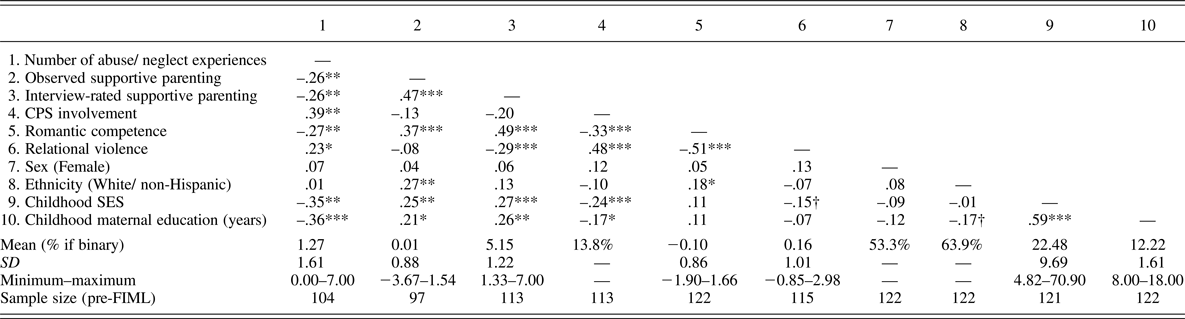
Descriptive statistics and zero-order correlations among primary study variables are presented in Table 1. Childhood abuse/neglect exposure was significantly associated with lower levels of supportive parenting (r = –.26, p < .01 for both observed and interview-rated parenting) and higher likelihood of CPS involvement (r = .39, p < .001). Consistent with prior findings (Labella et al., Reference Labella, Johnson, Martin, Ruiz, Shankman, Narayan and Simpson2018) and hypothesized mediational paths, childhood abuse/neglect exposure was also associated with poorer romantic competence (r = –.27, p < .01) and more relational violence (r = .23, p < .05). Adult romantic functioning variables in turn showed medium to large associations with parenting outcomes (|r| = .29–.49, p < .01), with the exception of observed supportive parenting and relational violence, which were trivially associated (r = –.08, p = .42). Overall, bivariate correlations demonstrated direct associations between childhood abuse/neglect exposure and second-generation parenting and supported planned mediational analyses.
Descriptive statistics and bivariate associations among abuse/neglect experiences, parenting, romantic functioning, and demographic covariates

Note: CPS, Child Protective Services. SES, socioeconomic status. FIML, full information maximum likelihood. †p < .10. *p < .05. **p < .01. ***p < .001.
Mediation was tested using a series of regression models within a path analysis framework. First, the focal parenting outcome was regressed on childhood abuse/neglect exposure. Second, one of two candidate adult romantic functioning mediators was regressed on childhood abuse/neglect exposure and introduced as a predictor of parenting. The indirect effect from childhood abuse/neglect exposure to parenting through the adult romantic functioning variable was then evaluated. In the final step, the four covariates (participant sex, ethnicity, childhood SES, and maternal education) were added as predictors of the focal parenting outcome, to evaluate the robustness of the direct and/or indirect effects of abuse/neglect exposure after controlling for childhood sociodemographic variables.
Observed supportive parenting
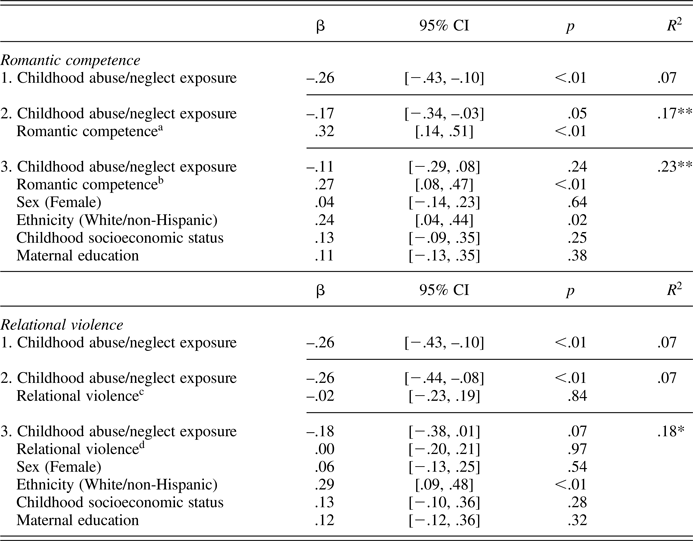
Linear regression models predicting observed supportive parenting are presented in Table 2. As noted earlier, childhood abuse/neglect exposure significantly predicted observed supportive parenting when entered alone.
Predicting observed supportive parenting from childhood abuse and neglect experiences and adult romantic functioning

Note: N = 122. CI, confidence interval.
a Indirect effect through romantic competence: β = –.09, 95% CI [−.16, –.01], p = .02.
b Indirect effect through romantic competence: β = –.08, 95% CI [−.14, .00], p = .04.
c Indirect effect through relational violence: β = –.01, 95% CI [−.05, .04], p = .84.
d Indirect effect through relational violence: β = .00, 95% CI [−.05, .05], p = .97.
*p < .05. **p < .01.
Romantic competence
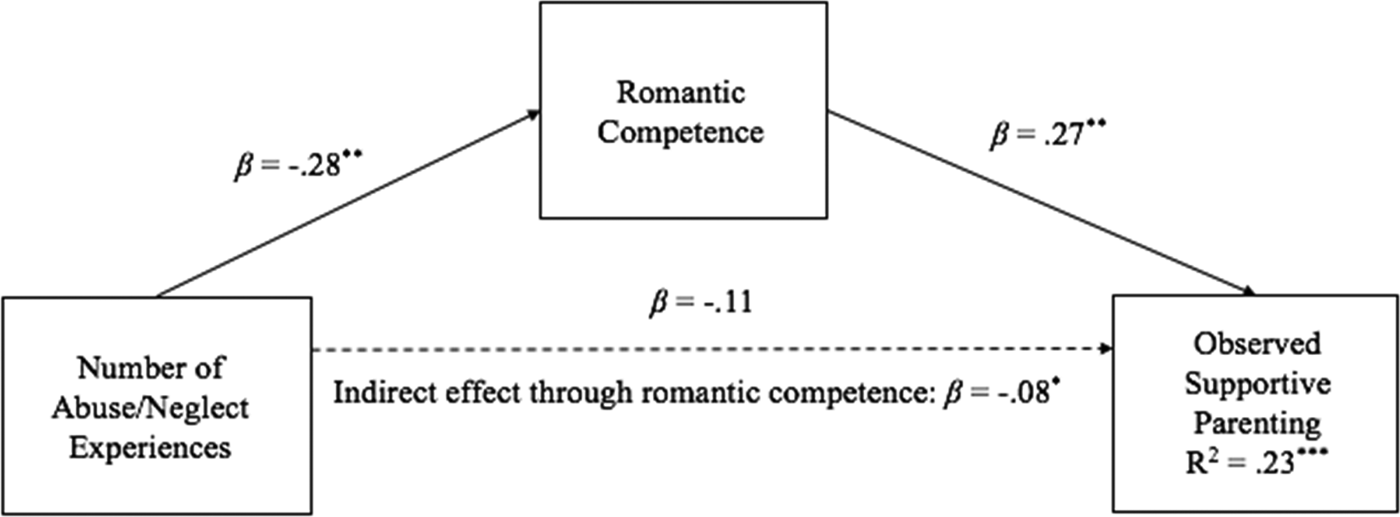
Higher romantic competence was significantly associated with lower childhood abuse/neglect exposure (β = –.27, p < .01) and higher supportive parenting (β = .32, p < .01). The direct association between abuse/neglect experiences and observed supportive parenting was diminished in magnitude but remained statistically significant (β = –.17, p < .05) when romantic competence was added to the model. The indirect effect from childhood abuse/neglect exposure to lower observed supportive parenting was modest but significant (β = –.09, p < .05). When demographic covariates were included in the model, childhood abuse/neglect exposure no longer directly predicted observed supportive parenting but continued to have an indirect effect through poorer romantic competence (β = –.08, p < .05). This final mediational model is presented in Figure 1.
Predicting observed supportive parenting from childhood abuse and neglect experiences and adult romantic competence. Demographic variables (participant sex, race/ethnicity, childhood socioeconomic status, and maternal education) were included as covariates. N = 122. *p < .05. **p < .01. ***p < .001.

Relational violence
More relational violence was predicted by higher childhood abuse/neglect exposure (β = .23, p < .05) but was not significantly associated with observed supportive parenting (β = –.02, p = .84). Childhood abuse/neglect exposure continued to predict lower observed supportive parenting when relational violence was included in the model (β = –.26, p < .01). As expected given the nonsignificant association between the proposed mediator and the outcome, the indirect association from childhood abuse/neglect exposure to observed supportive parenting through relational violence was not significant (β = –.01, p = .84). When demographic covariates were added to the model, neither childhood abuse/neglect exposure nor relational violence involvement significantly predicted observed supportive parenting.
Interview-rated supportive parenting
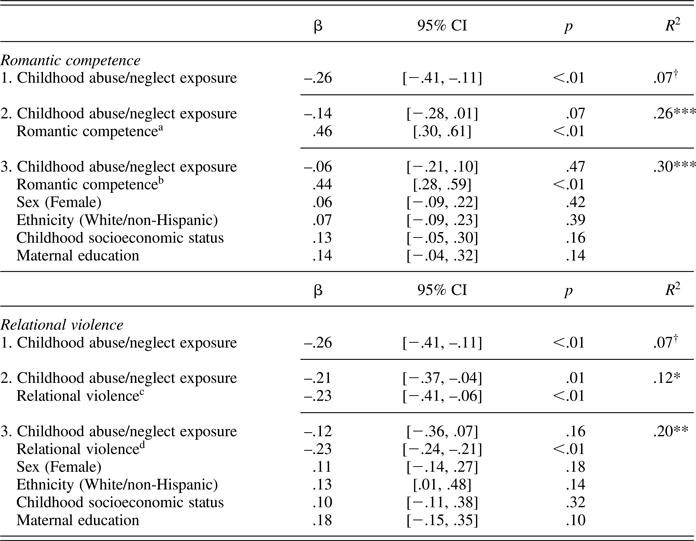
Linear regression models predicting interview-rated supportive parenting are presented in Table 3. As noted in the preliminary analyses, childhood abuse/neglect exposure significantly predicted interview-rated supportive parenting when entered alone.
Predicting interview-rated supportive parenting from childhood abuse and neglect experiences and adult romantic functioning

Note: N = 122. CI, confidence interval.
a Indirect effect through romantic competence: β = –.12, 95% CI [−.21, –.04], p < .01.
b Indirect effect through romantic competence: β = –.12, 95% CI [−.21, –.04], p < .01.
c Indirect effect through relational violence: β = –.06, 95% CI [−.08, .00], p = .06.
d Indirect effect through relational violence: β = –.06, 95% CI [−.11, .00], p = .06.
†p < .10. *p < .05. **p < .01. ***p < .001.
Romantic competence
Romantic competence was significantly associated with lower childhood abuse/neglect exposure (β = –.27, p < .01) and higher interview-rated supportive parenting (β = .46, p < .001). The direct association between childhood abuse/neglect exposure and supportive parenting no longer was statistically significant when romantic competence was added to the model. However, childhood abuse/neglect exposure had an indirect effect on lower interview-rated supportive parenting through poorer romantic competence (β = –.12, p < .01). This indirect association was robust to the inclusion of childhood demographic covariates (β = .12, p < .01).
Relational violence
Relational violence was associated with more childhood abuse/neglect exposure (β = .23, p < .05) as well as lower interview-rated supportive parenting (β = –.23, p < .01). The direct association between childhood abuse/neglect exposure and interview-rated supportive parenting attenuated somewhat in magnitude but remained significant when relational violence was included in the model (β = –.21, p < .05). The indirect association from childhood abuse/neglect exposure to interview-rated supportive parenting through relational violence was small in magnitude and marginally significant (β = –.06, p = .06). When demographic covariates were added to the model, only relational violence was associated with interview-rated supportive parenting and the indirect effect from abuse/neglect exposure remained nonsignificant (β = –.06, p = .06).
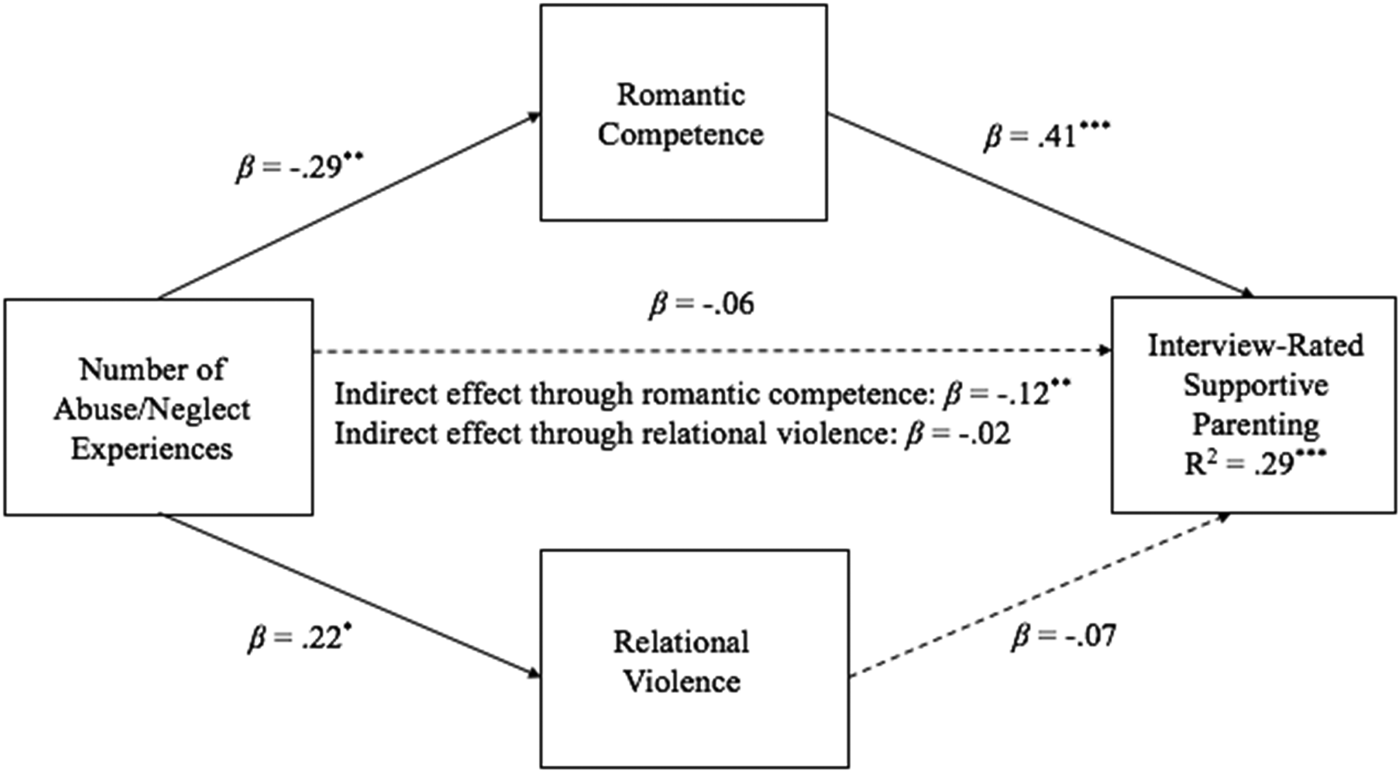
Given evidence of mediation by romantic competence as well as possible mediation by relational violence, post hoc analyses tested indirect effects through both dimensions of romantic functioning simultaneously. When childhood abuse/neglect exposure, romantic competence, and relational violence were added to the model simultaneously, only romantic competence predicted higher interview-rated supportive parenting (β = .43, p < .001). Childhood abuse/neglect exposure had an indirect effect on supportive parenting through lower romantic competence (β = –.12, p < .01), but not more relational violence (β = –.01, p = .63). The pattern of results was similar when controlling for demographic covariates (Figure 2), with a slightly attenuated indirect effect (β = –.09, p < .05) on supportive parenting through poorer romantic competence.
Predicting interview-rated supportive parenting from childhood abuse and neglect experiences and adult romantic functioning: A dual mediation model. Demographic variables (participant sex, race/ethnicity, childhood socioeconomic status, and maternal education) were included as covariates. N = 122. *p < .05. **p < .01. ***p < .001.

Self-reported CPS involvement
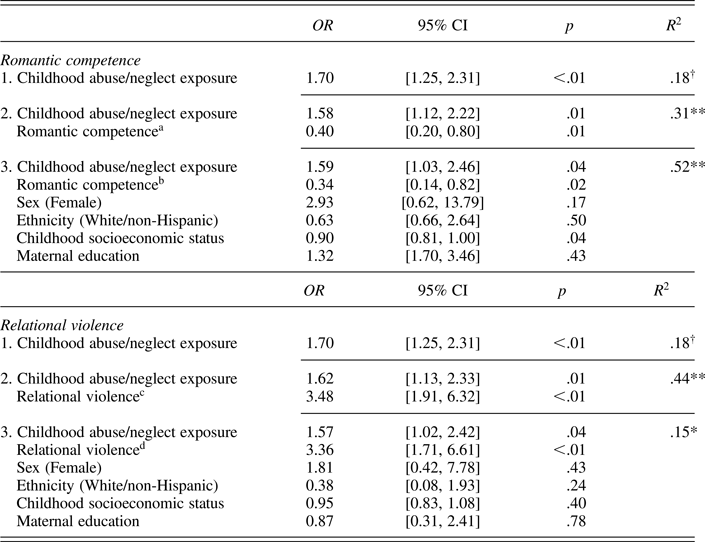
Logistic regression models predicting self-reported CPS involvement are presented in Table 4. As noted earlier, childhood abuse/neglect exposure predicted higher odds of self-reported CPS involvement when entered alone (odds ratio [OR] = 1.70, p < .01).
Predicting self-reported CPS involvement from childhood abuse and neglect experiences and adult romantic functioning

Note: N = 122. CI, confidence interval. OR, odds ratio.
a Indirect effect through romantic competence: β = .10, 95% CI [.01, .26], p = .02.
b Indirect effect through romantic competence: β = .10, 95% CI [.01, .18], p = .03.
c Indirect effect through relational violence: β = .11, 95% CI [.01, .21], p = .04.
d Indirect effect through relational violence: β = .10, 95% CI [.01, .19], p = .03.
†p < .10. *p < .05. **p < .001.
Romantic competence
Romantic competence was negatively associated with both childhood abuse/neglect exposure (β = –.27, p < .01) and probability of CPS involvement (OR = 0.40, p < .01). The direct association between childhood abuse/neglect exposure and CPS involvement persisted when romantic competence was added to the model (OR = 1.58, p < .05). Childhood abuse/neglect exposure also had a significant indirect effect on CPS involvement through lower romantic competence (β = .10, p < .05). Both direct (OR = 1.59, p < .05) and indirect (β = .10, p < .05) effects from childhood abuse/neglect exposure remained significant after controlling for demographic covariates.
Relational violence
Relational violence was modestly related to more childhood abuse/neglect exposure (β = .21, p < .05) and strongly associated with greater likelihood of self-reported CPS involvement (OR = 3.48, p < .001). Similar to findings for romantic competence, childhood abuse/neglect exposure continued to predict CPS involvement when relational violence was added to the model (OR = 1.62, p < .01). The indirect effect from childhood abuse/neglect exposure to CPS involvement through relational violence was also significant (β = .11, p < .05). Both direct (OR = 1.57, p < .05) and indirect (β = .10, p < .05) effects from childhood abuse/neglect exposure remained statistically significant when controlling for demographic covariates.
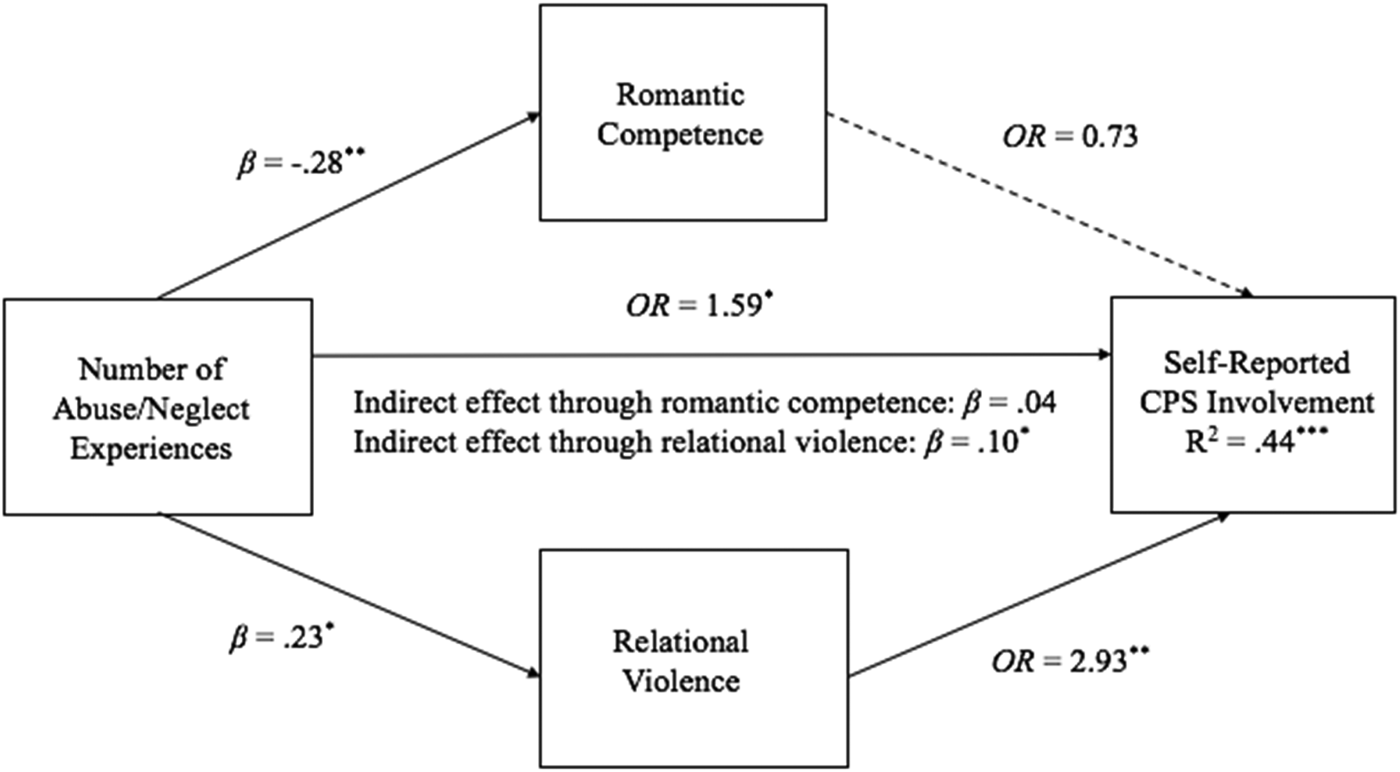
Given evidence of mediation by both romantic competence and relational violence, post hoc analyses tested indirect effects through both dimensions of romantic functioning simultaneously. When childhood abuse/neglect exposure, romantic competence, and relational violence were added to the model simultaneously, both childhood abuse/neglect exposure (OR = 1.63, p < .01) and relational violence (OR = 3.01, p < .001) significantly predicted higher likelihood of CPS involvement. Romantic competence was not significantly related to CPS involvement after accounting for relational violence. Moreover, childhood abuse/neglect exposure had a significant indirect effect on CPS involvement through relational violence (β = .10, p < .05) but not romantic competence (β = .04, p = .35). Parameter estimates were similar after controlling for demographic covariates (Figure 3), with a significant direct effect of childhood abuse/neglect exposure (OR = 1.59, p < .05) and just marginal indirect effect through relational violence (β = .09, p = .06).
Predicting self-reported CPS involvement from childhood abuse and neglect experiences and adult romantic functioning: A dual mediation model. Demographic variables (participant sex, race/ethnicity, childhood socioeconomic status, and maternal education) were included as covariates. N = 122. OR, odds ratio. *p < .05. **p < .01. ***p < .001.

Discussion
The current study provides fully prospective evidence of longitudinal associations between childhood experiences of abuse and neglect and a diverse set of adulthood parenting outcomes. In addition, this study identifies aspects of romantic relationship functioning that serve as mediators of these associations. These findings build on an extensive but methodologically limited body of literature evaluating intergenerational continuity in adverse caregiving, primarily using retrospective reports of first-generation parenting (e.g., Ertem et al., Reference Ertem, Leventhal and Dobbs2000; Thornberry et al., Reference Thornberry, Knight and Lovegrove2012), including early research from the MLSRA (Egeland et al., Reference Egeland, Jacobvitz, Papatola, Gelles and Lancaster1987, Reference Egeland, Jacobvitz and Sroufe1988). The present study extends these prior findings using rich prospective data that leverages multiple sources of information to assess parenting in both generations as well as romantic functioning in adulthood.
Prospectively documented experiences of childhood abuse and neglect consistently predicted more adverse caregiving in the second generation, as indexed by two measures of supportive parenting and parent-reported CPS involvement. The size of the negative association between abuse and neglect exposure in childhood and supportive parenting in adulthood was consistent across measures (both rs = –.26, p < .01), strengthening confidence in the validity of our results. This moderate association is comparable in size to previously published intergenerational associations in distinct but related parenting constructs, such as self-reported harsh discipline (r = .30, p < .05; Herrenkohl et al., Reference Herrenkohl, Klika, Brown, Herrenkohl and Leeb2013) and observed harsh parenting (r = .31, p < .05; Conger et al., Reference Conger, Schofield and Neppl2012). With regard to CPS involvement, effect sizes (ORs) ranged from 1.57 to 1.70. These ORs fall within the 95% confidence intervals of previously published estimates of intergenerational continuity in substantiated CPS reports (OR = 2.01, Widom et al., Reference Widom, Czaja and DuMont2015, and OR = 2.57, Thornberry et al., Reference Thornberry, Henry, Smith, Ireland, Greenman and Lee2013).
This study also provides compelling evidence of romantic relationship functioning as a plausible mediator of intergenerational continuity in adverse caregiving. Findings echo prior research from the MLSRA showing that early experiences of maternal sensitivity shape parenting behavior nearly 30 years later, mediated through experiences with peers and romantic partners in the intervening years (Raby et al., Reference Raby, Lawler, Shlafer, Hesemeyer, Collins and Sroufe2015). They also extend findings from this research group linking childhood abuse and neglect experiences to multiple dimensions of romantic relationship functioning during adulthood (Labella et al., Reference Labella, Johnson, Martin, Ruiz, Shankman, Narayan and Simpson2018). In the current analyses, poorer romantic competence consistently mediated associations between abuse and neglect exposure and lower supportive parenting (observed and interview rated). Although there was weak (marginal) evidence of mediation by relational violence when predicting interview-rated supportive parenting, this was substantially attenuated when romantic competence was included in the same model, suggesting that covariation with romantic competence was driving associations between relational violence and supportive parenting.
Abuse and neglect exposure continued to predict lower supportive parenting when accounting for romantic functioning, although the magnitude of associations diminished when controlling for romantic competence. The persistence of direct associations suggests that additional mediators, for example, attachment representations, parental psychopathology, and adulthood SES, may help account for associations between childhood exposure to abuse and neglect and lower supportive parenting.
Of note, direct effects of childhood abuse and neglect exposure on supportive parenting became nonsignificant when childhood demographics were controlled. Demographic covariates did not significantly predict interview-rated supportive parenting, perhaps in part due to high collinearity between maternal education and childhood SES (see Table 1). However, white race/ethnicity was associated with higher observer-rated supportive parenting, echoing similar findings in past parenting research (e.g., Blair et al., 2011). This may reflect cultural variations in parenting, differential responses to the laboratory environment, and/or implicit bias on the part of coders. No racial differences were evident with regard to interview-rated supportive parenting or self-reported CPS involvement (below).
Overall, results support a mediation model in which exposure to childhood abuse and neglect predicts lower supportive parenting through poorer romantic competence. These findings corroborate other evidence that early caregiving experiences lay the foundation for later parenting outcomes by predicting social competence in later extrafamilial relationships (Raby et al., Reference Raby, Lawler, Shlafer, Hesemeyer, Collins and Sroufe2015; Shaffer, Burt, Obradović, Herbers, & Masten, Reference Shaffer, Burt, Obradović, Herbers and Masten2009). Moreover, these results are consistent with an organizational perspective on social development. According to this perspective, individuals progress through a series of stage-salient interpersonal tasks, from childhood (i.e., early attachment and peer acceptance) to adolescence (close dyadic friendships and exploratory dating) to adulthood (romantic partnerships and caregiving). Children who have been abused or neglected may not have adequate opportunities to develop interpersonal skills in early relationships and therefore may struggle to navigate relationships of increasing complexity, including adult romantic partnerships.
Romantic relationships characterized by high competence may, in turn, help prepare adults for cultivating closeness and managing conflict in relationships with their children. Romantic functioning continued to predict parenting quality directly, adjusting for overall exposure to childhood abuse and neglect. High-quality romantic relationships may serve as an active source of emotional and instrumental support that promotes resilient parenting. Further research is needed regarding the relative salience of emotional support versus instrumental assistance in romantic relationships, particularly those that involve in co-parenting.
In contrast to the results predicting supportive parenting, more violence in adult romantic relationships mediated the association between childhood abuse and neglect experiences and higher likelihood of CPS involvement in adulthood. This finding was robust to controls for demographic covariates and romantic competence. Although there was a significant indirect effect through romantic competence when mediators were tested separately, this became nonsignificant when controlling for relational violence, indicating that romantic relationship violence was driving associations between romantic competence and CPS involvement. This may suggest that adults who use violent problem-solving tactics with romantic partners may use similar tactics with their children; however, this interpretation is speculative, as we do not have information about the circumstances of reported CPS involvement (e.g., allegation of abuse vs. neglect, identified perpetrator, or credibility of the report). Children may also be endangered by parents’ abusive partners and/or more likely to come to the attention of CPS if there is violence between adults in the home. Finally, adults who are willing to report involvement in violent romantic relationships may also be more willing to disclose involvement with CPS. Further research using objective measures of second-generation perpetration of abuse and neglect are needed to clarify whether these results are robust across different informants.
Overall, the current study supports an intergenerational pathway to CPS involvement through extrafamilial engagement in violent relationships. Abuse and neglect exposure also continued to predict CPS involvement directly, controlling for childhood demographics and romantic relationship functioning. This pattern of partial mediation suggests the possibility of additional mediators not examined in the current study. Based on prior theory and research, plausible additional mediators may include insecure attachment representations, social isolation, and emotion dysregulation (Cicchetti & Toth, Reference Cicchetti, Toth, Lamb and Coll2015; Berlin, Appleyard, & Dodge, Reference Berlin, Appleyard and Dodge2011; Raby, Labella, Martin, Carlson, & Roisman, Reference Raby, Labella, Martin, Carlson and Roisman2017). Each of these have been linked to childhood abuse and neglect exposure and would be expected to undermine effective parenting, potentially contributing to parental perpetration of child abuse and neglect.
The current study does not account for the potential role of genetic factors that are shared across both generations. For example, familial risk for aggressive behavior may have contributed to the intergenerational continuity in adverse caregiving that was observed in this study. Of importance, not all first-generation perpetrators were biologically related to the child (e.g., stepfathers, grandparents, and babysitters), and our analytic strategy combined different aspects of adverse caregiving (physical abuse, sexual abuse, and neglect) that may be expected to have different profiles of genetic risk. Furthermore, although twin studies have reported that adults’ retrospective reports of maltreatment are at least partially heritable (e.g., Bronovalova et al., Reference Bronovalova, Huibregste, Hicks, Keyes, McGue and Iacono2013; Fisher et al., Reference Fisher, Caspi, Moffitt, Wertz, Gray, Newbury and Arseneault2015; Schulz-Heik et al., Reference Schulz-Heik, Rhee, Silvern, Lessem, Haberstick, Hopfer and Hewitt2009), the heritability of prospective measures of childhood physical abuse has been found to be weak (Jaffee et al., Reference Jaffee, Caspi, Moffitt, Polo-Tomas, Price and Taylor2004). Investigations of internationally adopted children who experienced early social deprivation and studies of twins who were discordant with regard to physical maltreatment have demonstrated potentially causal effects of early adversity on various forms of maladaptation during childhood and adolescence (e.g., Jaffee et al., Reference Jaffee, Caspi, Moffitt, Polo-Tomas, Price and Taylor2004; Juffer et al., Reference Juffer, Palacios, Mare, Sonuga-Barke, Tieman, Bakermans-Kranenburg and Verhulst2011). Although there have been no genetically informed studies of the intergenerational continuities of parenting or maltreatment, these findings nonetheless suggest that genetic confounding is unlikely to fully account for the current results. Future genetically informed research is needed to clarify the role of the caregiving environment versus shared genes in long-term outcomes of childhood abuse and neglect in adult relationships.
Strengths and limitations
Strengths of this study include its prospective design, which affords a rare opportunity to rigorously test intergenerational continuity in adverse caregiving. The current study joins a handful of other longitudinal studies showing intergenerational associations in childhood abuse and neglect (Thornberry et al., Reference Thornberry, Henry, Smith, Ireland, Greenman and Lee2013; Widom et al., Reference Widom, Czaja and DuMont2015) and in the related construct of harsh parenting (Conger et al., Reference Conger, Schofield and Neppl2012; Herrenkohl et al., Reference Herrenkohl, Klika, Brown, Herrenkohl and Leeb2013; Schofield et al., Reference Schofield, Conger and Conger2017). It offers further advantages in its multimethod assessment of first-generation childhood abuse and neglect, which goes beyond dichotomous measurement to capture dimensional variation in adverse caregiving experiences. Objective ratings based on home visits, interviews with caregivers and teachers, and a review of available records allowed for comprehensive assessment of abuse and neglect, including instances that met criteria for abuse and neglect as defined by the CDC (Leeb et al., Reference Leeb, Paulozzi, Melanson, Simon and Arias2008) but did not come to the attention of authorities. This study also used multiple methods to evaluate romantic functioning and second-generation parenting, leveraging self-reports, interview ratings, and observational data to assess candidate mediators and outcomes. This approach reduces the impact of shared method variance and allows for a more comprehensive analysis of close relationship functioning.
In addition to its notable strengths, this study has a few limitations, including a modest sample size that precludes rigorous evaluation of the potential moderating role of romantic functioning. Among adults who experienced childhood maltreatment, high-quality romantic relationships have been shown to distinguish those who do not go on to abuse and/or neglect their own children from those who do (Jaffee et al., Reference Jaffee, Bowes, Ouellet-Morris, Fisher, Moffitt, Merrick and Arseneault2013; Thornberry et al., Reference Thornberry, Henry, Smith, Ireland, Greenman and Lee2013). Prospective longitudinal studies have yielded mixed results regarding moderation by romantic functioning; however, a meta-analysis of five such studies found significant moderation with an unweighted effect size of r = .17, consistent with a buffering pattern (Schofield et al., Reference Schofield, Lee and Merrick2013). Thus, in addition to serving a mediating role, adulthood romantic relationships may prove an important protective factor associated with “breaking the cycle” of intergenerational continuity in adverse caregiving (Egeland et al., Reference Egeland, Jacobvitz and Sroufe1988). Future prospective studies with larger samples should further evaluate this possibility. In addition, future studies should broaden the scope of the current inquiry by including other adverse childhood experiences, including emotional neglect, exposure to interparental violence, and exposure to community violence.
The current study was also limited by the timing of data collection. Second-generation parenting was only assessed in early childhood, such that caregiving quality in middle childhood and adolescence are not represented. Because second-generation CPS involvement was assessed via parental report at one time point, the current study may underestimate the rate of second-generation CPS involvement, as well as the strength of its association with overall exposure to childhood abuse and neglect. Additional concerns about temporal sequencing relate to romantic relationship data, which were collected between the ages of 20 and 32 years. Interview-rated supportive parenting and CPS involvement were assessed at the end of this interval at age 32 years; however, observations of supportive parenting were timed based on children's ages, and parents ranged in age from 21–38 years. This means that, for younger parents, some information about romantic functioning mediators may have been collected after parenting was observed. We elected to use the same mediators for observational parenting in the interest of consistency and enhanced reliability of romantic functioning estimates. The consistent findings across observational and interview-rated measures of supportive parenting enhances our confidence in this choice. However, future prospective research should assess observed parenting after romantic relationship functioning to ensure robustness of results.
Future directions and conclusions
Overall, findings represent a significant contribution to the existing literature, (a) by providing fully prospective evidence of the relevance of childhood abuse and neglect exposure to multiple parenting outcomes in adulthood, and (b) by identifying dimensions of adulthood romantic relationship functioning as potential mechanisms underlying these associations. Further research is needed to replicate domain-specific patterns of indirect effects, such that poorer romantic competence mediated associations with lower supportive parenting and more relational violence mediated associations with greater CPS involvement. Research is also needed to identify additional mediators (e.g., insecure attachment representations, emotion dysregulation, social isolation, and low adulthood SES) that may account for persisting direct effects from childhood abuse and neglect, particularly when predicting CPS involvement. Additional future directions include delineation of mechanisms linking adverse caregiving with romantic functioning, which may include variations in social competence (e.g., peer and teacher relationships) prior to adulthood (Cicchetti & Toth, Reference Cicchetti, Toth, Lamb and Coll2015). Finally, prospective research with larger sample sizes is urgently needed to effectively address questions of continuity and discontinuity in adverse caregiving. The identification of moderators would be particularly useful in identifying malleable protective factors associated with resilient outcomes.
In the meantime, clinical interventions for adults with a history of abuse and neglect may productively target romantic relationship functioning, with the goal of promoting competent interpersonal functioning for individuals with histories of childhood abuse and neglect. Ideally, interventions would begin during (or prior to) pregnancy in order to interrupt intergenerational cycles of adverse care; prenatal intervention is common strategy for primary prevention of abuse and neglect (e.g., DuMont et al., Reference DuMont, Mitchell-Herzfeld, Greene, Lee, Lowenfels, Rodriguez and Dorabawila2008; Olds, Reference Olds2006; Reynolds, Mathieson, & Topitzer, Reference Reynolds, Mathieson and Topitzes2009). Equipping adults to engage more effectively in close relationships may help to organize adaptive parenting through positive interpersonal experiences outside their family of origin. High-quality romantic relationships may promote resilient parenting among adults with histories of childhood abuse and neglect. Finally, support for developing healthy, nonviolent conflict resolution strategies may decrease the likelihood that partners will engage in violent conflict, thereby exposing children to direct or indirect harm.
In sum, intervening to support positive romantic relationship functioning represents a promising avenue for clinical intervention aimed at disrupting intergenerational continuity of abuse and neglect. These findings represent an important step toward a comprehensive understanding of parenting outcomes of childhood abuse and neglect, as well as the social developmental mechanisms that underpin intergenerational continuity in adverse care.