Introduction
The term loess, meaning loose, was first used by von Leonhard (Reference von Leonhard1823). In China, the properties of loess were understood >2000 years ago (Liu et al. Reference Liu, An and Yuan1985) when loess was referred to as ‘Huangtu’. Loess was defined by Pecsi (Reference Pecsi1990) as "a loose deposit with coarse silt predominant in grain size, unstratified, porous, permeable, stable in steep walls, easily erodible by water, 'structured light loam' of pale yellow color due to finely dispersed limonite (iron hydroxides), quartz as main mineral constituent (40–80%), subordinate feldspar content, variable amounts of clay minerals (5–20%), and carbonates (1–20%)." From a mineralogical perspective, loess, distributed mainly in the relatively dry mid-latitudes of the world which account for >10% of the global land area (Wang et al. Reference Wang, Lu, Zhang, Wu, Hou, Fu and Geng2018), is a typical granular inorganic deposit, composed predominantly of silt-sized particles in which quartz is the main mineral component, followed by silicoaluminate minerals such as clay minerals which have great influence on the properties of loess, and non-silicoaluminate minerals such as carbonates.
Loess was investigated by geologists and pedologists who focused mainly on its geological origin (Zhu Reference Zhu1991; Gong et al. Reference Gong, Zhang, Yue, Zhang and Li2015; Deng et al. Reference Deng, Hao, Guo and Zhu2019), distribution (Nie et al. Reference Nie, Stevens, Rittner, Stockli, Garzanti, Limonta, Bird, Andò, Vermeesch, Saylor, Lu, Breecker, Hu, Liu, Resentini, Vezzoli, Peng, Carter, Ji and Pan2015; Zhang et al. Reference Zhang, Li, Yan and An2018), composition, and properties (Smalley Reference Smalley1995; Gong et al. Reference Gong, Nie, Wang, Peng, Zhang and Zhang2016). Loess contains clay minerals which have a range of particle sizes, are of multiple types, and possess various dispersibilities. Loess particles agglomerate readily because cementation of clay occurs readily. The clay fraction of loess, referred to as ‘loessial clay’ or ‘clayey loess’, is, therefore, a very important component of loess because it affects the properties of the loess, including its collapsibility, swelling, and absorptivity. Historically, loessial clay has been mostly ignored for materials applications because its composition is complex. In recent decades, based on the research progress in nanomaterials and clays, the clay fraction of loess has received increasing attention because of its potential applications in the field of materials science. Recently, loess has been used in the manufacture of functional materials because it is widespread and an inexpensive natural inorganic material. The properties of loess can be improved significantly by effective modifications. The purpose of the present review was to summarize the classification, composition, and properties of loess particles; to describe the modification, preparation, and application of loess-based materials, and to explore the current research status and challenges of loess as a material in the hope of making suggestions for the further development of loess materials.
CLASSIFICATION, DISTRIBUTION, COMPOSITION, AND PHYSICOCHEMICAL PROPERTIES OF LOESS
Classification and Distribution
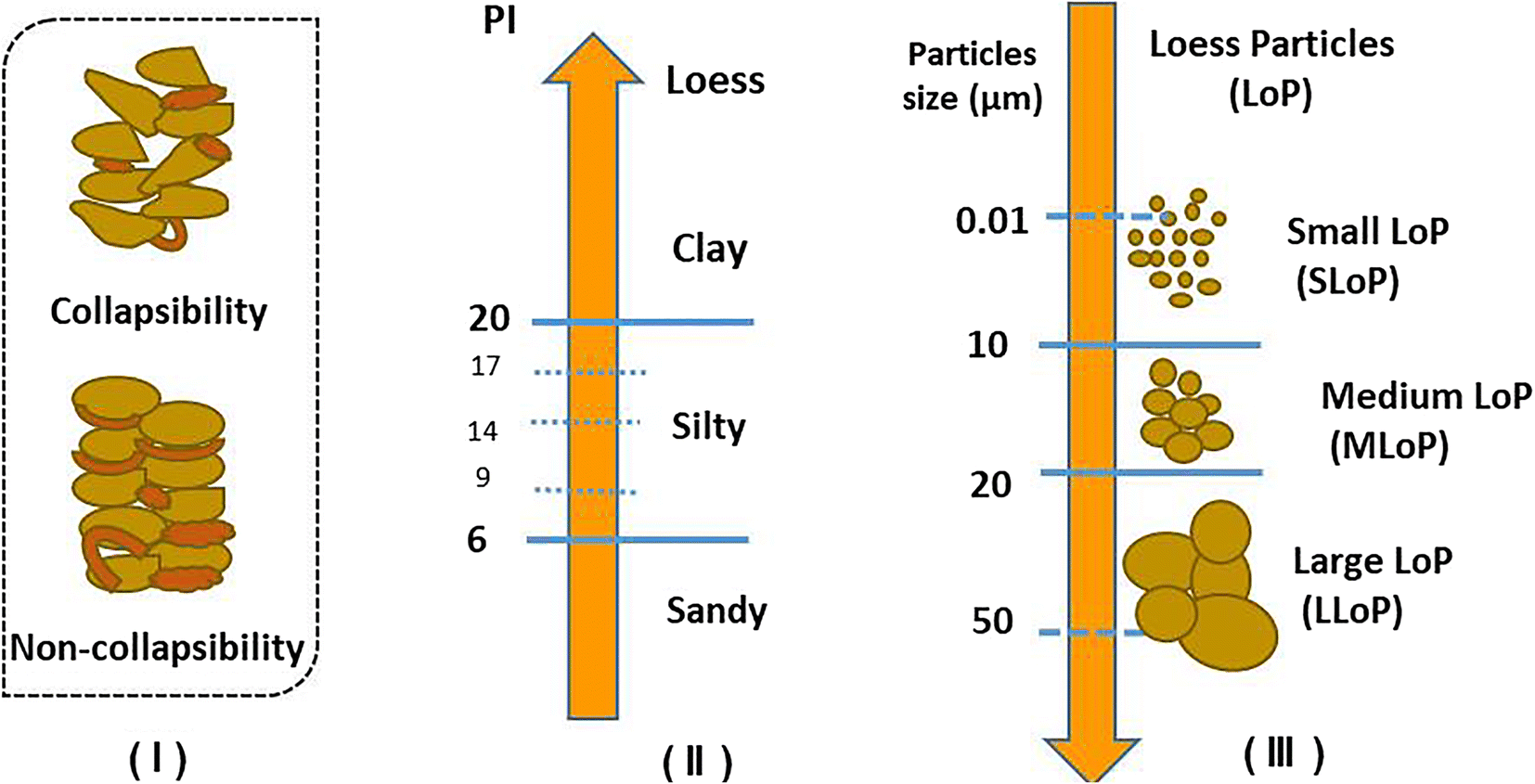
Loess can be classified from various perspectives. Using the geological and geographical classification, loess has been divided into plateau, intermontane basin, valley plain, anteriorly marginal zone, and high-mountain slope types. In genetic classification, loess can be divided into eluvial, slope, alluvial, eluvial-slope, slope-alluvial, alluvial-diluvial, eolian product, and glacial accumulation types (Zhang Reference Zhang1963). Both of these classifications are used frequently in the geological field. Loess can also be classified in terms of collapsibility (I), plasticity index (PI) (II), and particle size (III) (Fig. 1).
(I) Loess has been divided into collapsible and non-collapsible types. The difference is the amount of soil subsidence due to water erosion (Fig. 1) (Derbyshire et al. Reference Derbyshire, Meng, Wang, Zhou and Li1995; Nouaouria et al. Reference Nouaouria, Guenfoud and Lafifi2008). Collapsible loess refers to a special soil that is prone to subsidence deformation due to structural changes after water erosion (Derbyshire et al. Reference Derbyshire, Meng, Wang, Zhou and Li1995).
(II) Soil is often classified by PI because it is an important characteristic that distinguishes clayey soils from sandy soils (Guggenheim and Martin Reference Guggenheim and Martin1995). The PI can reflect the grain size, mineral composition, and plasticity of soil. The larger the PI, the smaller the loess particle size, the larger the specific surface area, and the greater the clay content (Moreno-Maroto and Alonso-Azcárate Reference Moreno-Maroto and Alonso-Azcárate2018). The clay components are dominant in loess when PI > 20, while the amounts of sand and gravel are dominant when PI < 6 (Zhu Reference Zhu1995).
(III) The size of most loess particles (LoPs) is between 0.01 and 50 μm, and only a small proportion of loess particles are outside this range. Loess particles may be divided into large loess particles (LLoPs), medium loess particles (MLoPs), and small loess particles (SLoPs) (Yan et al. Reference Yan, Wang, He, Shen, Song and Wang2020), and could be separated by a simple physical sedimentation method with particle sizes of 20–50, 10–20, and 0.01–10 μm, respectively. The SLoPs contain large amounts of clay, such as illite, kaolinite, montmorillonite, and chlorite.
Typical classifications of loess

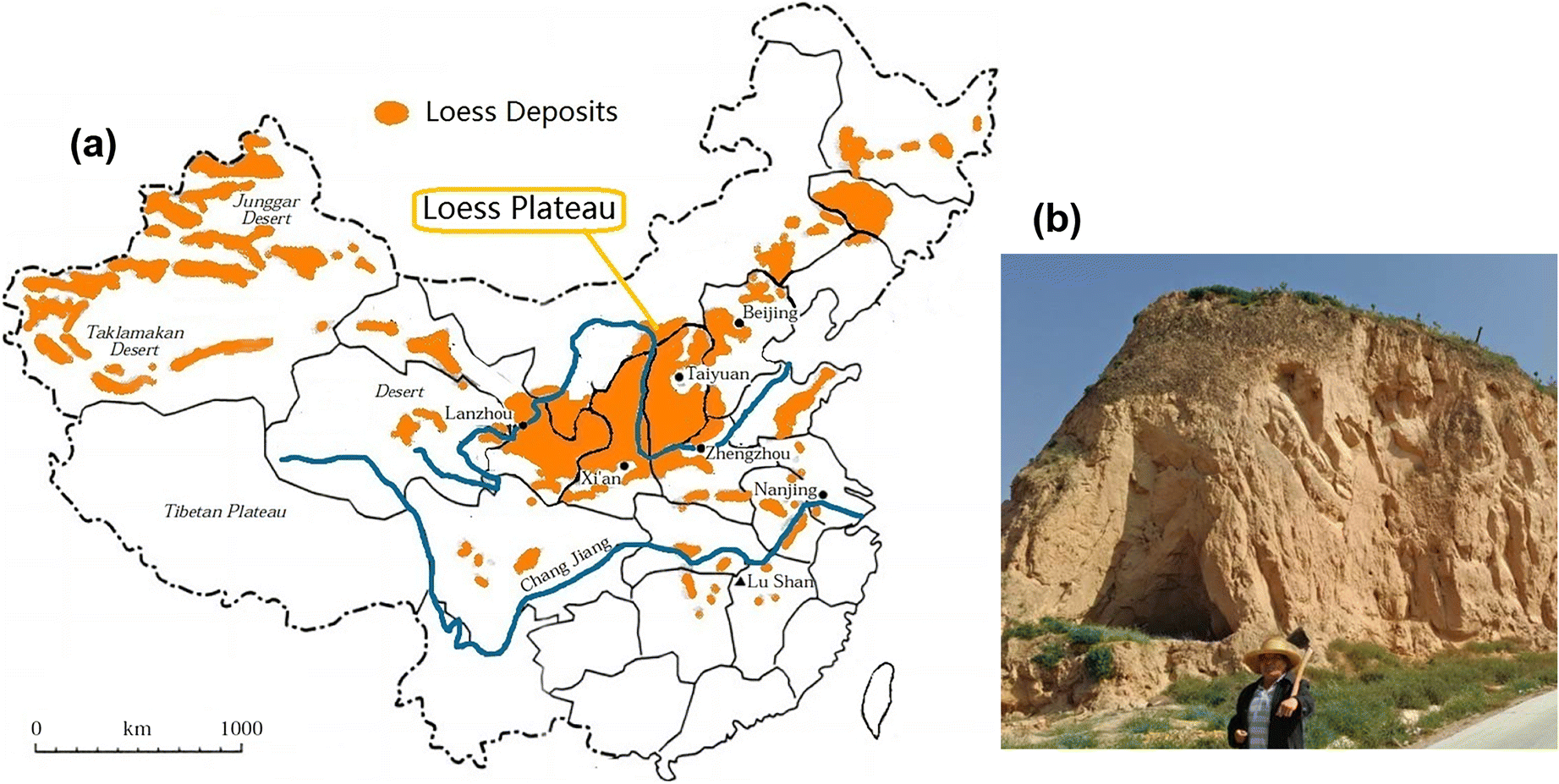
Loess is distributed widely around the world, covering an area of 1.3×10⁷ km2 and comprises ~10% of the earth's land surface, including sections of central Asia, central Europe, the northwestern and central United States, Alaska, and South America (Porter Reference Porter and Scott2007; Rousseau et al. Reference Rousseau, Derbyshire, Antoine, Hatté and Elias2007; Roberts et al. Reference Roberts, Muhs and Bettis2013). Extensive loess deposits appear to be a phenomenon of the Quaternary (Smalley Reference Smalley1966) and show a clear spatial relationship with areas of Pleistocene continental glaciation. Such deposits have been referred to as ‘glacial’ loess, ‘ice sheet’ loess, or ‘periglacial’ loess. Relatively restricted deposits of loess also occurred on the margins of some deserts in the form of “peridesert loess” (Smalley and Vita-Finzi Reference Smalley and Vita-Finzi1968). Northwest China contains the largest loess plateau in the world with a thickness of >300 m near the city of Lanzhou in Gansu Province (Derbyshire Reference Derbyshire1983). The most extensive loess deposit (with an area of 6.2×10⁵ km2) (Derbyshire et al. Reference Derbyshire, Meng and Kemp1998) occurs in the Loess Plateau in China, referred to as “Huangtu Gaoyuan” in Chinese (Fig. 2) (Sun Reference Sun2002; Zhao et al. Reference Zhao, Shao, Jia and Zhang2016).
a Loess distribution and Loess Plateau in China and b its landforms

Composition
The composition of loess is complex and made up primarily of clay minerals, such as illite, kaolinite, smectite (montmorillonite), and chlorite, and non-clay minerals such as quartz, mica, calcite, and feldspar (Yi et al. Reference Yi, Huang, Liu, Kuang, Ling and Zhu2017). Many kinds of loess clay particles exist with sizes of <4 μm (Deng et al. Reference Deng, Wang, Zhang and Bing2010). Taking a global perspective, loess displays significant natural variation in terms of thickness, grain size, color, mineralogy, geochemical composition, geotechnical characteristics, and morphology (Pye Reference Pye1995). With the development of analytical technology, many methods have been used to study loess minerals qualitatively and quantitatively. Illite was found (Nouaouria et al. Reference Nouaouria, Guenfoud and Lafifi2008) to be the primary clay mineral. Loess in the lower Mississippi Valley of the United States was found (Pye and Johnson Reference Pye and Johnson1988) to contain clay minerals illite, illite-smectite, kaolinite, and chlorite, and non-clay minerals quartz, calcite, and feldspars. Other loess formations, such as those in the Negev Desert of Israel, also contain illite, smectite, quartz, and calcite (Herut et al. Reference Herut, Zohary, Robarts and Kress1999). In the Loess Plateau of China, the loessial clay minerals are mainly illite (Tang et al. Reference Tang, Li and Chen2008a, Reference Tang, Zhen, Chen and Wang2008b; Li et al. Reference Li, Tang, Chen, Chen and Wang2009a), consistent with compositions from other regions (Nouaouria et al. Reference Nouaouria, Guenfoud and Lafifi2008). Other clay minerals present vary with the area (Iannuccelli et al. Reference Iannuccelli, Maretti, Sacchetti, Romagnoli, Bellini, Truzzi, Miselli and Leo2016).
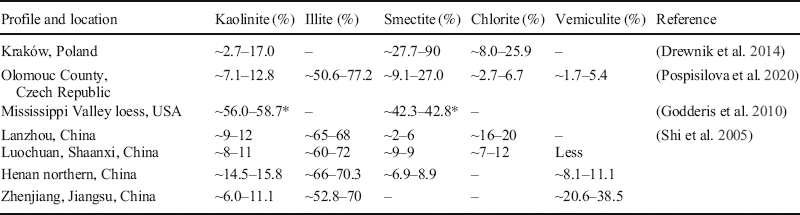
The main clay-mineral assemblages in loess in various regions of the world are summarized in Table 1. In China, the clay-mineral compositions and properties of loess have been well studied. The clay mineral assemblages had obvious zonal characteristics (Shi et al. Reference Shi, Dai, Song, Zhang and Wang2005). A comparative analysis of the composition based on XRD and the spatial distribution of clay minerals in five loess profiles (points) at various latitudes and climatic zones in China was done by Shi et al. (Reference Shi, Dai, Song, Zhang and Wang2005). From northwest to southeast China, the clay-mineral compositions change considerably with decreasing latitude. Though the compositions and morphologies are complex, the loess soil texture was suggested by Zhao et al. (Reference Zhao, Shao, Jia and Zhang2016) to be almost “homogeneous” across the Loess Plateau (LP) in China. But this “homogeneous soil texture" is not necessarily available in other locations around the world, e.g. in the Pannonia region of Croatia (Rubinic et al. Reference Rubinic, Durn, sHusnjak and Tadej2014). It was also found that sand, silt, and clay contents varied slightly with increasing soil depths in the 0–500 cm soil layer (Zhao et al. Reference Zhao, Shao, Jia and Zhang2016).
Clay minerals in loess from various regions of the world

* Volume abundance (%). Other data are semi-quantitative values based on X-ray diffraction.
Structural elements in loess are conditioned by various physical-chemical processes which take place in the source areas, when the material is transported, and during its deposition and accumulation, and are related to the geological development and the paleogeographic/environmental conditions (Johnson and Willey Reference Johnson and Willey2000; Jiang et al. Reference Jiang, Zhan, Hu, Cui and Peng2014). Because of the way it is generated, loess exhibits a complex grain-size distribution, macro-pores, and root-like channels (Chen et al. Reference Chen, Xie, Xu, Chen, Ji, Lu and Balsam2010). The basic unit in loess soils was found by Minervin and Komissarova (Reference Minervin and Komissarova1979) to be the aggregate (0.01–0.1 mm), which has the shape of a concentric ellipsoidal globule. Clay minerals, followed by carbonate and salt, play a key role in the contact between structural elements in loess. The loess structure is conditioned by the clay content, because of the surface molecular forces. Having studied the microstructure of loess in central Spain, the loess was found (Garcia Gimenez et al. Reference García Gimenez, Vigil de la Villa Mencía and Gonzalez Martín2012) to consist of fine-sized aggregates accompanied by silts with small sand contents and variable clay contents which rarely surpass 30%.
Physicochemical Properties
The composition of the clay fraction in loess is complex. Clay minerals were found (Liu Reference Liu1965) to affect the physical, chemical, and hydrologic properties of loess. These properties include strength, expansibility, permeability coefficient, plastic limit, liquid limit, and viscosity coefficient. The surface energies of clay minerals are very significant. Different clay minerals possess different surface energies and water-adsorbing abilities. Loess properties are often different, therefore.
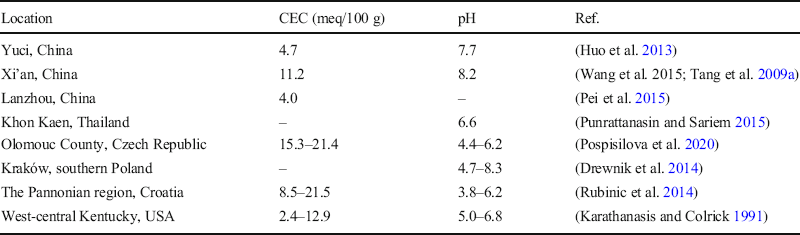
From the viewpoints of geology and edaphology (Rollins and Rogers Reference Rollins and Rogers1994; Gillijns et al. Reference Gillijns, Poesen and Deckers2005; Wang et al. Reference Wang, Xie, Qiu, Zhang and Fan2017), loess has a metastable structure, and can be collapsed by water. When loess is soaked with water under pressure, cementation between particles is lost, which is the main cause of collapsibility. The cement in sand loess was found (Zhang and Qu Reference Zhang and Qu2005) to be mainly clay minerals which attached to the surface of skeleton particles such as clastic particles or aggregates. The cation exchange capacity (CEC) of soils and clays is linked to their physical and mineral properties. The CEC of soils and clays can be determined rapidly by methylene blue exchange (Wang et al. Reference Wang, Wang and Wang1996). The CEC of loess varies greatly among samples from different locations because of the different loess contents or types (Table 2). In addition, pH has an effect on the CEC because the dissociation of hydroxyl groups on the surface of clay particles was affected by the pH value of the medium. When the pH of the medium decreases, the negative charge on the surface of clay particles also decreases, and that, in turn, decreases the CEC (Coleman and Harward Reference Coleman and Harward1953).
Typical CEC and pH values of loess

METHODS OF MODIFICATION AND FUNCTIONALIZATION
Based on their special composition and physical-chemical properties, loess particles may be used for preparing functional materials, and a number of methods and technologies have been tested for the modification and functionalization of loess particles.
Separation and Purification of Loess Particles
Because of the complex composition of natural loess, it is still not used widely as a ‘material.’ Effective separation of the mineral components of loess poses a significant challenge.
In most cases, loess particles are separated by size before modification. Generally, loess particles within a specific size range are separated by the sedimentation method (Fan et al. Reference Fan, Du, Zhang, Ding, Gao and Chang2017) or the suspension method (Yin et al. Reference Yin, Yu, Luo, Zhang, Sun, Mosa and Wang2019). LoPs can be separated into three types and clay is the main component in SLoPs (~0.01–10 μm). Not surprisingly, SLoP was found (Meunier Reference Meunier2006) to contain significant quantities of clay minerals, with sizes ranging from a few micrometers to nanometers.
During determination of soil texture or separation of different particle size fractions of soil, hydrogen peroxide (H2O2) was used to remove organic matter (OM) (Martin Reference Martin1954; Anderson, Reference Anderson1961), which was summarized by Taubner et al. (Reference Taubner, Roth and Tippkotter2009) and Zhang et al. (Reference Zhang, Huang, Liu, Wang, Fu and Zhu2017). This method has also been used to remove OM from the loess when studying the sorption behavior and mechanism of Pb(II) on Chinese loess (Li et al. 2009).
Acidification
Acidification is an effective way of improving the surface properties of clay minerals (Rampazzo and Blum Reference Rampazzo and Blum1991; Warren et al. Reference Warren, Dudas and Abboud1992) as it can remove carbonates. For loess, acid activation with HCl solution could enlarge channels in loess particles as it can facilitate the disintegration of loess aggregates and eliminate carbonate and other impurities (Eren and Afsin Reference Eren and Afsin2007; Frini-Srasra and Srasra Reference Frini-Srasra and Srasra2010). More clay minerals are exposed on the surface of loess (Yang et al. Reference Yang, Tang, Ouyang, Li and Mann2010), and the porosity and number of active centers are increased. After washing thoroughly with water, the protons are removed from the acid. Acid treatment can increase considerably the number of silanol groups on the surfaces of clay minerals, which improves their adsorptivities or catalytic properties (Lenarda et al. Reference Lenarda, Storaro, Talon, Moretti and Riello2007; Yan et al. Reference Yan, Wang, He, Shen, Song and Wang2020).
The exposed hydroxyl groups can participate in various reactions resulting in surface modification and improved properties for the loess particles (Lu et al. Reference Lu, Wang, He, Chen and Wang2017). The acid concentration should be moderate because silicate minerals can dissolve in very acidic solutions (Rampazzo and Blum Reference Rampazzo and Blum1991; Warren et al. Reference Warren, Dudas and Abboud1992; Breen et al. Reference Breen, Madejová, Komadel, Elsen, Grobet, Keung, Lehman, Schoonheydt and Toufar1995; Mu and Wang Reference Mu and Wang2016).
Calcination
During calcination, most organic matter (OM), adsorbed water, interlayer water, and structural water are lost easily, which changes the adsorption capacity of the loess. This reduces water films during adsorption of pollutants, and accelerates the diffusion of adsorbate molecules because the water film is formed by the adsorbed water, which is removed in the calcining process. The removal of water and the creation of more pores accelerate the diffusion and fluidity of adsorbed molecules (Wang et al. Reference Wang, He, Wang, Huang and Wang2014). Loess that was oven dried at 105°C for 24 h to remove bulk water was effective at removing Zn(II) from aqueous solutions (Tang et al. Reference Tang, Li and Chen2008a). After high-temperature calcination, water and most OM are lost, while the clay component and partial CaCO3 are decomposed. The specific surface area of the loess decreases and the particle sizes increase due to the agglomeration and bonding of the calcinated loess, which is caused by crosslinking reactions involving hydroxyl groups (Tang et al. Reference Tang, Li, Chen and Wang2009a; Trivedi et al. Reference Trivedi, Axe and Tyson2001; Nachtegaal and Sparks Reference Nachtegaal and Sparks2004).
Geopolymerization
Loess can be treated with soil stabilizers, such as ordinary portland cement (OPC) or lime (Arrua et al. Reference Arrua, Aiassa and Eberhardt2012; Metelkova et al. Reference Metelkova, Bohac, Prikryl and Sedlarova2012; Pei et al. Reference Pei, Zhang, Wu and Liang2015). Synthesis of conventional stabilizers consumes much energy and emits CO2, however. Geopolymers offer (Liu et al. Reference Liu, Cai, Liu and Fan2016) a promising alternative to OPC because they can be synthesized from a variety of low-cost materials or industrial wastes such as metakaolin, fly ash, rice husk ash, and furnace slag (Cristelo et al. Reference Cristelo, Glendinning, Fernandes and Pinto2012; Posi et al. Reference Posi, Teerachanwit, Tanutong, Limkamoltip, Lertnimoolchai, Sata and Chindaprasirt2013; Zhang et al. Reference Zhang, Guo, El-Korchi, Zhang and Tao2013a; Deb et al. Reference Deb, Nath and Sarker2014).
Geopolymers are amorphous aluminosilicate-based polymers formed by alkaline activation of alumina-containing and silica-containing materials, a polycondensation process in which the tetrahedral silica (SiO4) and alumina (AlO4) are linked with one another through shared oxygen atoms (Majidi Reference Majidi2009). The raw materials are mainly rock-forming minerals of geological origin. Geopolymerization is a chemical process that rapidly transforms partially or totally amorphous aluminosilicate sources into three-dimensional polymeric networks (Duxson et al. Reference Duxson, Fernández-Jiménez, Provis, Lukey, Palomo and Van Deventer2007; Zhang et al. Reference Zhang, Guo, El-Korchi, Zhang and Tao2013a). Under strong alkaline conditions, aluminosilicates dissolve rapidly to release SiO4 and AlO4 tetrahedral units, and the polycondensation process is promoted (Davidovits Reference Davidovits and Metha1994; Yip et al. Reference Yip, Lukey and Deventer2005; Liew et al. Reference Liew, Heah, Mohd and Kamarudin2016). The general formula of a geopolymer can be expressed as (Na,K) n [–(SiO2) q –AlO2–] n , where n represents the degree of polycondensation and q is the Si/Al ratio.
Loess was found by Mawulé Dassekpo et al. (Reference Mawulé Dassekpo, Zha and Zhan2017) to consist essentially of silicon and aluminum. Both amorphous and crystalline materials are present in loess. Sodium silicate (Na2SiO3) solution and sodium hydroxide (NaOH) in pellet form have been used as alkali activators to break the original Si–O–Si and Si–O–Al bonds in loess. The broken bonds can be reformed, and subsequently create three-dimensional polymeric networks.
Modification by Surfactants
Loess particles can be modified with cationic, anionic, or anion-cation surfactants. The surfactant molecules are adsorbed on the surface or inserted into gaps in loess particles via ion exchange, ion-pair adsorption, and/or hydrophobic bonding. After modification by surfactants, the hydrophilicity of the modified loess changes and adsorptivity improves.
Using cationic surfactants, such as salts of organic quaternary ammonium ions [(CH3)3NR]+, the native exchangeable cations (H+ or Ca2+) in loess particles are replaced by the organic cations. Loess can be modified according to Chen et al. (Reference Chen, Yang, Zhu, Zhou and Jiang2002) with hexadecyltrimethylammonium bromide (HDTMA+Br–), a typical cationic surfactant (Zhou et al. Reference Zhou, Yang, Jiang, Zhan, Chen and Liu2002; Wu et al. Reference Wu, Zhang, Hu and Lu2012), or with anionic surfactants such as sodium dodethylbenzene sulfonate (SDBS). Loess was treated (Meng et al. Reference Meng, Zhang and Zhang2008) with the amphoteric modifier, duodalkylbetaine (BS-12). After modification, its adsorptivity toward contaminants was greatly enhanced.
Polymer Modification
Surface modification of clay minerals is critical for the fabrication of new functional materials. The aforementioned surfactants have been used as organic agents for modifying loess. Most organics cause secondary pollution because they are easily lost during use, however. The synthesis of loess-based polymers via in situ polymerization was first reported by He et al. (Reference He, Zhang, Wang, Li and Wang2012). The polymer modification of loess particles has been the subject of more attention because polymers are easily functionalized and not subject to facile migration.
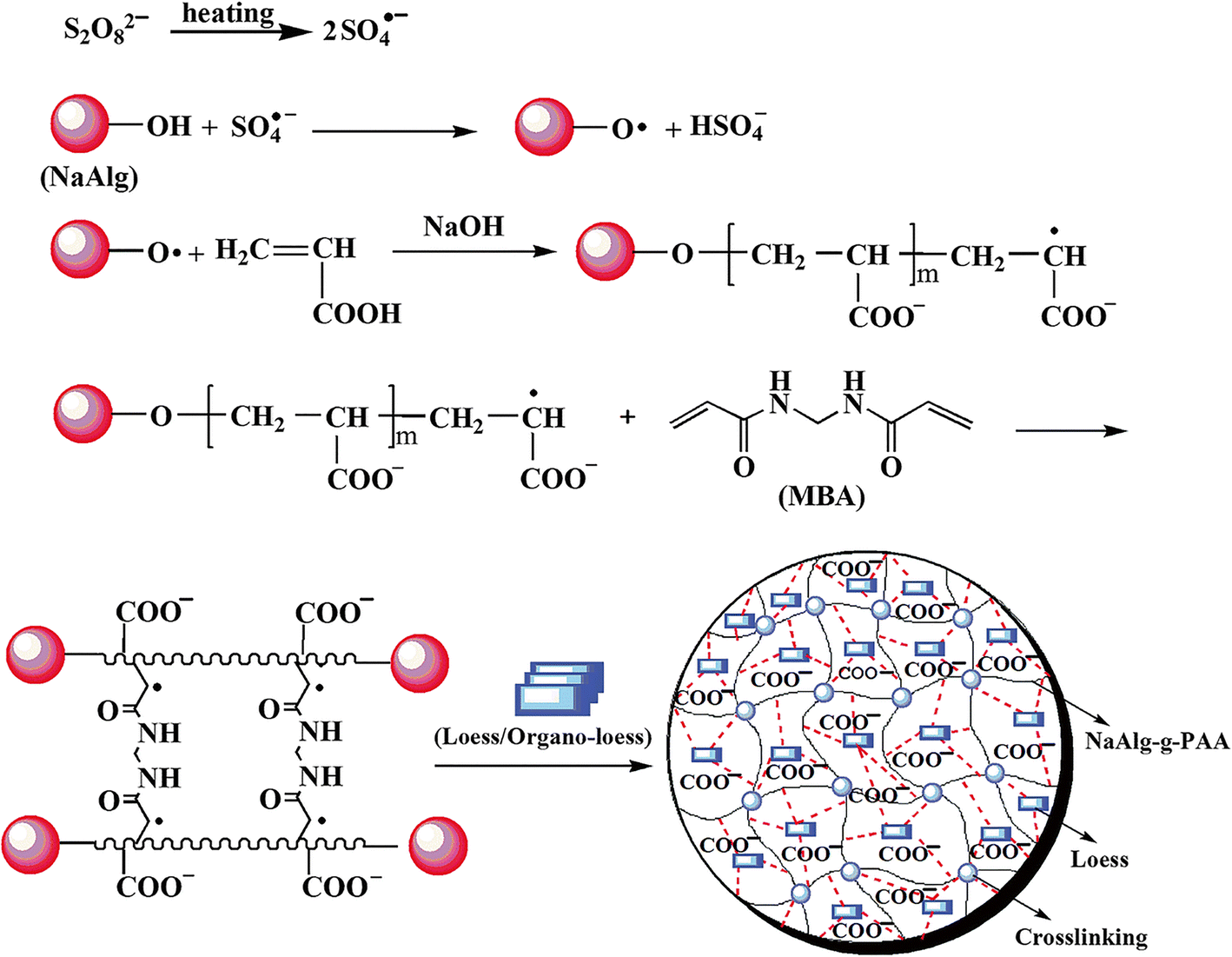
Many common functional monomers, such as acrylic acid (AA), hydroxyethyl methacrylate (HEMA), acrylamide (AM), sodium p-styrene sulfonate, and methyl methacrylate (MMA), can be used in polymerization to produce functional polymer-modified loess, according to Wang et al. (Reference Wang, He, He, Li and Wang2015a). Various biocompatible monomers, such as itaconic acid (IA) and N-vinyl-2-pyrrolidone (NVP), are also used as functional monomers, for the creation of biocompatible polymer composite adsorbents (Shen et al. Reference Shen, Wang, Wang, He, Song and Wang2018). Biopolymers, such as chitosan (CS), sodium alginate, guar gum (GG), and xanthan gum (XG), have also been used to modify loess. Xanthan gum-g-poly(AA)/loess (XG-g-PAA/ loess) was synthesized successfully in aqueous solution by Feng et al. (Reference Feng, Ma, Wu, Wang and Lei2014). Loess was modified with cetyltrimethylammonium bromide (CTAB) (Wang et al. Reference Wang, Wang, Zheng and Wang2013) to create a structure that exhibited modified surface properties and increased the hydrophobicity of silicates, thereby changing the adhesion and dispersing performances of the loess in the polymer matrix. A superabsorbent composite, NaAlg-g-PAA/organo-loess, was prepared by Ma et al. (Reference Ma, Ran, Yang, Feng and Lei2015b) in which AA was grafted onto a sodium alginate (NaAlg) backbone in the presence of organo-loess.
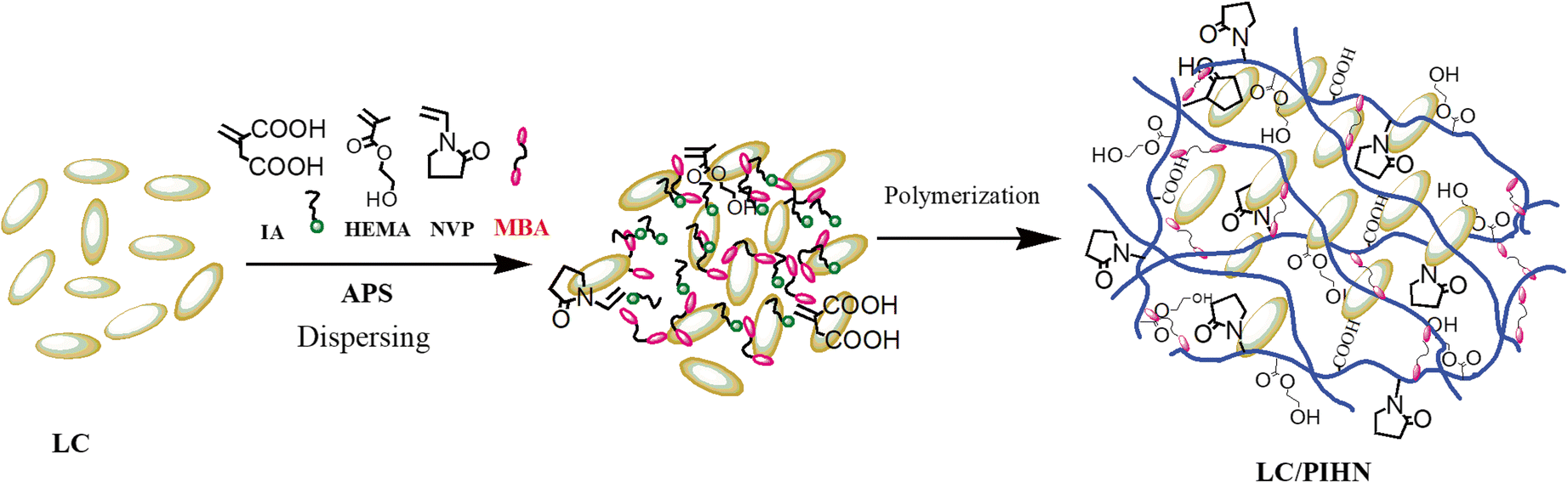
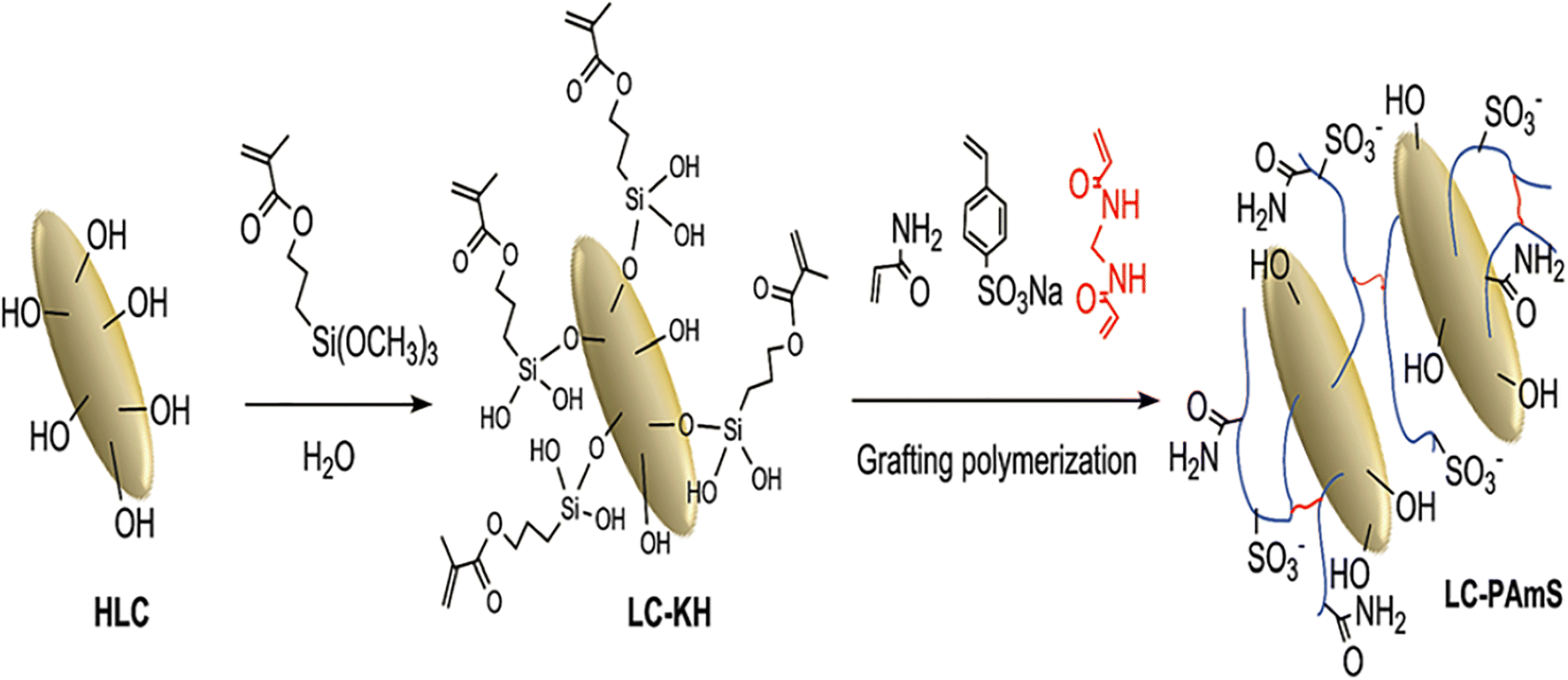
Based on experience (Lu et al. Reference Lu, Wang, He, Chen and Wang2017; Shen et al. Reference Shen, Wang, Wang, He, Song and Wang2018), typical modification reactions are as follows: first, the copolymers were reacted with loess using in situ polymerization, which formed loess copolymer composites (Fig. 3); second, a polymer was grafted onto natural polymers and reacted with loess (Fig. 4); and third, after surface modification with active monomers, the copolymer was grafted and formed a loess surface with a grafted copolymer (Fig. 5).
In situ polymerization for the preparation of loess-based functional materials

Polymers combined with loess

Graft copolymerization on a loess surface

APPLICATION OF LOESS-BASED FUNCTIONAL MATERIALS
In ancient China, loess was used as a drug ingredient because it exhibited known medicinal properties in healthcare applications (Bae and Bae Reference Bae and Bae2018; Lee Reference Lee2018). For example, “Huangdi's Classic on Medicine,” a famous medical document of ancient China, recommended loess particles for detoxification. Few reports exist on the mechanisms of detoxification, however. Since the last century, the importance of loess in agriculture has been investigated (Catt Reference Catt2001; Chen et al. Reference Chen, Wei, Fu and Lu2007a, Reference Chen, Zhao and Wangb; Fan Reference Fan2015). Study of loess and the loess clay fraction in the field of functional materials has been inadequate because of the complexity of the material.
Recently, based on the research progress in nanomaterials, clays, and functional materials, clay particles from loess have been shown to be useful in preparing functional materials (He et al. Reference He, Zhang, Wang, Li and Wang2012; Ma et al. Reference Ma, Feng, Ran, Dong and Lei2015a, Reference Ma, Ran, Yang, Feng and Leib).
Loess-based Adsorbing Materials
Because of its small particle size, large specific surface area, and the numerous hydroxyl groups (Si–OH) on its surface, the clay fraction of loess exhibits excellent adsorption performance. According to Wang et al. (Reference Wang, He, Wang, Huang and Wang2014), loess and modified loess can be used as low-cost and eco-friendly adsorbents for removing metal ions or organic compounds. These applications include uses in the food, medicine, and chemical industries, and in water-treatment processes.
Adsorption of Metal Ions
As an inexpensive raw material, loess has been used to remove heavy-metal ions such as Pb, Cu, Co, Zn, Ni, Fe, Mn, Hg, Cr, Cd, and Tl from aqueous solutions (Punrattanasin and Sariem Reference Punrattanasin and Sariem2015; Wang et al. Reference Wang, He, He, Li and Wang2015a), which could reduce greatly the cost of sewage treatment. Work by Tang et al. (Reference Tang, Li and Chen2008a) found that loess, after oven drying at 105°C for 24 h to remove bulk water, was effective at removing Zn(II) from aqueous solutions, and that kaolinite and goethite were the major clays responsible for removal of Zn(II). After high-temperature calcination, the adsorption of Zn(II) on the calcined loess implied an ion exchange of the solute with calcite and goethite (Tang et al. Reference Tang, Li and Chen2009b). The ion-exchange reaction between calcite and Zn(II) is written as:

The goethite component was active for Zn(II) adsorption (Trivedi et al. Reference Trivedi, Axe and Tyson2001; Nachtegaal and Sparks Reference Nachtegaal and Sparks2004), and Zn(II) can form a complex with Fe-OH groups as follows:

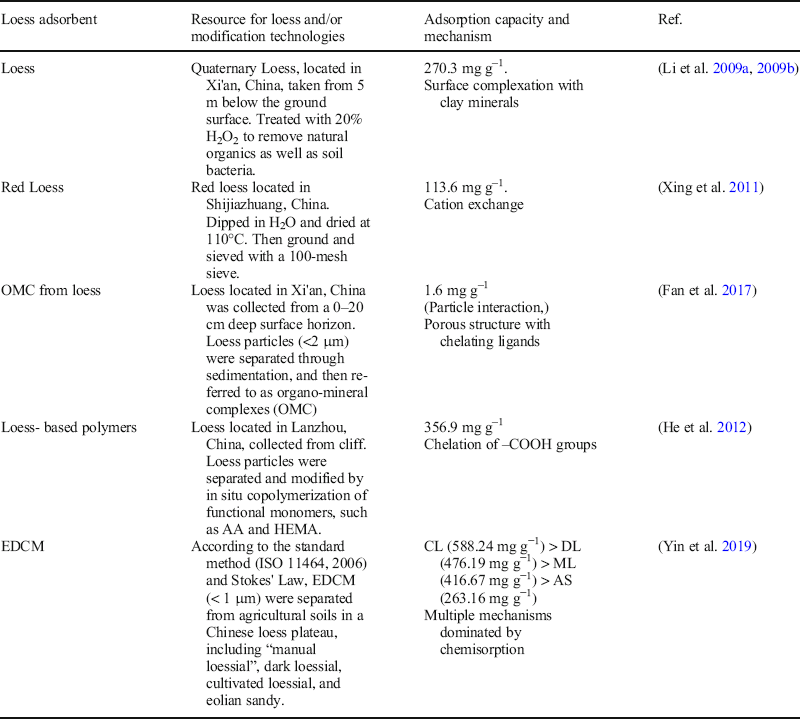
Modified loess was proven to be effective in removing Cd(II) from landfill leachate (Yang et al. Reference Yang, Zhang, Yang, Yu and Yang2012), and its adsorption capacity for Cd(II) was determined to be 7.08 mg g–1. The adsorption of Pb(II) by loess and modified loess adsorbents has also been investigated. The differences in loess samples from various locations and subject to various modification technologies are compared, and their adsorption mechanisms are summarized (Table 3). The adsorption capacities of the loess particles varied with location, depth, pretreatment, and modification technologies. Red loess is found mainly in the south of China and contains more clay minerals than in the north of China. For aggregated globule loess particles, the hydrogen peroxide to remove OM breaks the aggregation state and exposes the surfaces of the clay minerals, which promotes greater ion adsorption. The adsorptivity of loess is also improved significantly by polymer modification. Clay minerals with effective diameter <1 μm (EDCM) extracted from various loessial soils showed a high capacity for Pb(II) sorption from aqueous solutions based on their large surface area, organic-matter content, mineralogical composition, and abundance of active functional groups. This means that loess-based adsorption materials are excellent candidates for the adsorption of heavy-metal ions and may help in assessing their potential risks in vulnerable ecosystems.
Adsorption of Pb(II) from aqueous solutions using loess-based adsorption materials

The adsorptivity by loess of radioactive elements, such as Am(III), 238Pu, 237Np, 134Cs, 60Co, Ce(III), and 85Sr, has also been studied (Huo et al. Reference Huo, Qian, Hao and Zhao2013). The CaCO3 and OM in loess were the main sites for the adsorption of Am(III). Carbonate also played an important role in the adsorption of 237Np.
Loess could be used as an adsorbent for the recovery of Li+ according to Kim et al. (Reference Kim, Choi, Hong and Ryoo2017) Loess exhibited greater selectivity for Li+ than for other cations (Ca2+, Mg2+, K+, and Na+) in seawater, and it is inexpensive.
Adsorption of Organics
Surfactant-modified loess was used to remove organic compounds. For example, after modification with hexadecyltrimethylammonium bromide (HDTMA+Br–), a typical cationic surfactant, loess adsorbed effectively organic compounds such as toluene (Zhan et al. Reference Zhan, Jiang, Yuan and Chen2005), 2,4-dichlorophenol, phenanthrene, and naphthalene (Zhou et al. Reference Zhou, Yang, Jiang, Zhan, Chen and Liu2002; Wu et al. Reference Wu, Zhang, Hu and Lu2012). The effectiveness of removal of organics was greater for loess treated with ionizable organic compounds, such as p-nitroaniline, benzoic acid (BA), 2,4-dinitrophenol (DNP) (Zhou et al. Reference Zhou, Yang, Jiang, Zhan, Chen and Liu2002), or chlorobenzene (Chen and Zhu Reference Chen and Zhu2006). The adsorption of aromatic anions on HDTMA-modified loess also increased significantly (Zhou et al. Reference Zhou, Zhu, Zhan, Jiang and Chen2003). When multiple compounds existed simultaneously in the soil, competitive adsorption of the aromatic anions was observed (Zhou et al. Reference Zhou, Zhu, Zhan, Jiang and Chen2003).
Following modification with anion-cation surfactants, the adsorptivity of loess for aqueous-phase neutral organic compounds (NOCs) (e.g. toluene) was enhanced. After modification with anionic surfactants, the hydrophilicity of the loess soil increased, but the adsorptivities for hydrophobic organic contaminants decreased. With modification using amphoteric agents, loess could adsorb hydrophilic and hydrophobic organic pollutants simultaneously (Chen et al. Reference Chen, Yang, Zhu, Zhou and Jiang2002). The modification of loess could decrease significantly the antagonistic effects of organic pollutants (phenol) if the loess was treated with the amphoteric modifier duodalkylbetaine (Meng et al. Reference Meng, Zhang and Zhang2008).
Loess has the ability to remove pharmaceutical compounds and fungicides. The adsorption of tetracycline on loess surfaces decreased gradually with increasing natural cation concentration in solution (Wu et al. Reference Wu, Zhou, Guo, Duan and Chen2008). The adsorption capacity of loess could be improved by adding organic modifiers (Filipe et al. Reference Filipe, Vidal, Scherer, Schneider, Duarte, Esteves and Santos2010). Cationic surfactant-modified loess could be used to adsorb antibiotic pharmaceutical compounds, according to Thiele (Reference Thiele2000). Modified loess had a greater ability to adsorb bensulfuron-methyl than did the unmodified version. For example, loess-based nanocomposite adsorbent was used to remove malachite green (MG) dye from wastewater, and a removal percentage of 80% was achieved (Heydartaemeh et al. Reference Heydartaemeh, Aslani and Doulati2017). Loess-based copolymer composites (L/CoPolym) (Wang et al. Reference Wang, Tang and Wang2015b) and loess surface-grafted copolymers (Lu et al. Reference Lu, Wang, He, Chen and Wang2017) showed large adsorptivities for removing basic fuchsin in aqueous solution, with removal rates of 98.2 and 98.4%, respectively.
Other Environmental Pollution Treatments
Loess has been used to prevent acid-mine drainage and to control heavy-metal contamination within in situ treatment systems. This was important because acid-mine drainage is very acidic, contains sulfates and metals, and constitutes a serious environmental problem in coal-mining areas in developing countries (Ma et al. Reference Ma, Wang, Gao and Li2012). Results from Zhao et al. (Reference Zhao, Wu and Chen2012) indicated that loess raised the pH of the coal acid waste significantly and removed some of the SO4 2– minerals. Loess was also used for removing pollutants found in landfill leachate. For example, NH4 +-N, a significant pollutant, could be removed effectively by loess (Xie et al. Reference Xie, Wang, Qiu and Jiang2017), with an adsorptivity of 72.30 mg g–1 (predicted by the Langmuir model).
In natural water bodies, phosphates (HPO4 2–and H2PO4 –) are the dominant form of P in nutrient pollution. The adsorption affinity of phosphate for modified and unmodified loess specimens with metal ions (ZnII, CuII, and PbII) was explored by Li et al. (Reference Li, Tang, Chen and Wang2009b). Adsorptivities of phosphorus for the three adsorbents were >35, >19.4, and >71.8 mg g–1, respectively, while that for the original loess was >3.32 mg g–1. The removal rate for total phosphorus (TP) in municipal wastewater was 93.1% (Park and Jung Reference Park and Jung2011), using loess with a particle size of ≤45 μm. Three inexpensive substrates, including loess, cinder, and limestone, were used by Guan et al. (Reference Guan, Yao, Jiang, Tian, An, Gu and Cai2009) to construct a wetland. They found that the average TP-removal rate was 41%. In addition to pore adsorption, chemical adsorption such as hydrogen bonding due to the large amount of clay in loess of particle size ≤45 μm was observed. This was also demonstrated by the adsorption process conforming to a pseudo-second order kinetics model. Work by Drizo et al. (Reference Drizo, Frost, Grace and Smith1999) considered integrated multiple effects in TP removal, such as adsorption, precipitation, and growth of microorganisms. Loess could remove As from aqueous solutions, according to Rukh et al. (Reference Rukh, Akhtar, Mehmood, Hassan, Khan, Naqvi and Imran2017).
In summary, loess has been used widely as an adsorption and separation material for removing metal ions or organic compounds. The material is economical and environmentally friendly and is proven to be appropriate for the treatment of wastewater and landfill leachate.
Superadsorbent Composites for Water-retaining Materials
Superadsorbents, water-adsorbing and retaining materials, are used widely in fields such as drug delivery, agriculture, hygiene products, and wastewater treatment. Loess content was found by Chen and Peng (Reference Chen and Peng2018) to affect the swelling and water-retention capabilities because of the presence of many hydroxyl groups on the surfaces of loess particles. The lattice of the clay crystallite is, typically, disrupted at the edges, and a broken bond surface is exposed. Additional polar sites at the broken edges are mainly the octahedral Al–OH and tetrahedral Si–OH groups, which improve the swelling properties and reduce the cost of superadsorbents. For example, a superadsorbent composite, NaAlg-g-PAA/organo-loess, exhibited significant swelling properties (Ma et al. Reference Ma, Ran, Yang, Feng and Lei2015b). Its maximum equilibrium water adsorption rates (when incorporated with 10 wt.% organo-loess) in distilled water and 0.9 wt.% NaCl aqueous solution were 656 and 69 g g–1, respectively. The use of organo-loess clearly improves the swelling properties and reduces the cost as a result of the increased quantity of loess in the superadsorbent. In superadsorbents, the addition of loess is conducive to expansion because of the following two points: first, the loess-based superadsorbent is porous with an increased specific surface area, which is conducive to contact with water and promotes the swelling of the polymer; and second, the small particles of clay (such as illite, kaolinite, montmorillonite) in loess exhibit good hydrophilicities, which enables them to swell in water.
Superadsorbent materials can also alleviate the pressure caused by water shortage and change the process of rainfall runoff. A low-cost and environmentally friendly GG-g-PAA/loess composite was prepared by Ma et al. (Reference Ma, Feng, Ran, Dong and Lei2015a) for chemical sand-fixing. The sand-fixing results imply that it has significant potential for the control of desertification, with a comprehensive array of benefits (soil-erosion prevention, redistribution of soil water and temperature, maintenance of fertility, and synergy between superabsorbent polymers and plants), thereby ensuring socioeconomic and ecological sustainabilities in dryland systems (Cao et al. Reference Cao, Wang, Guo, Xiao and Wei2017).
Humidity-Regulating Materials
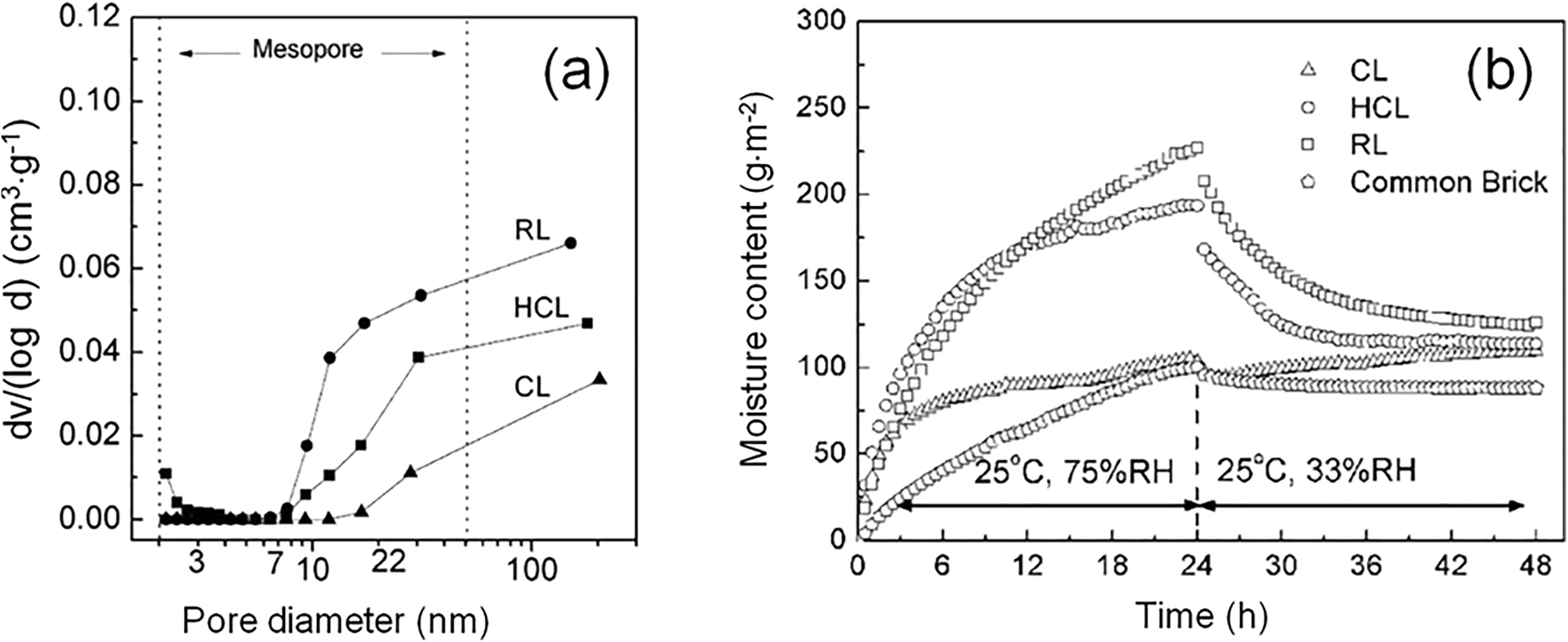
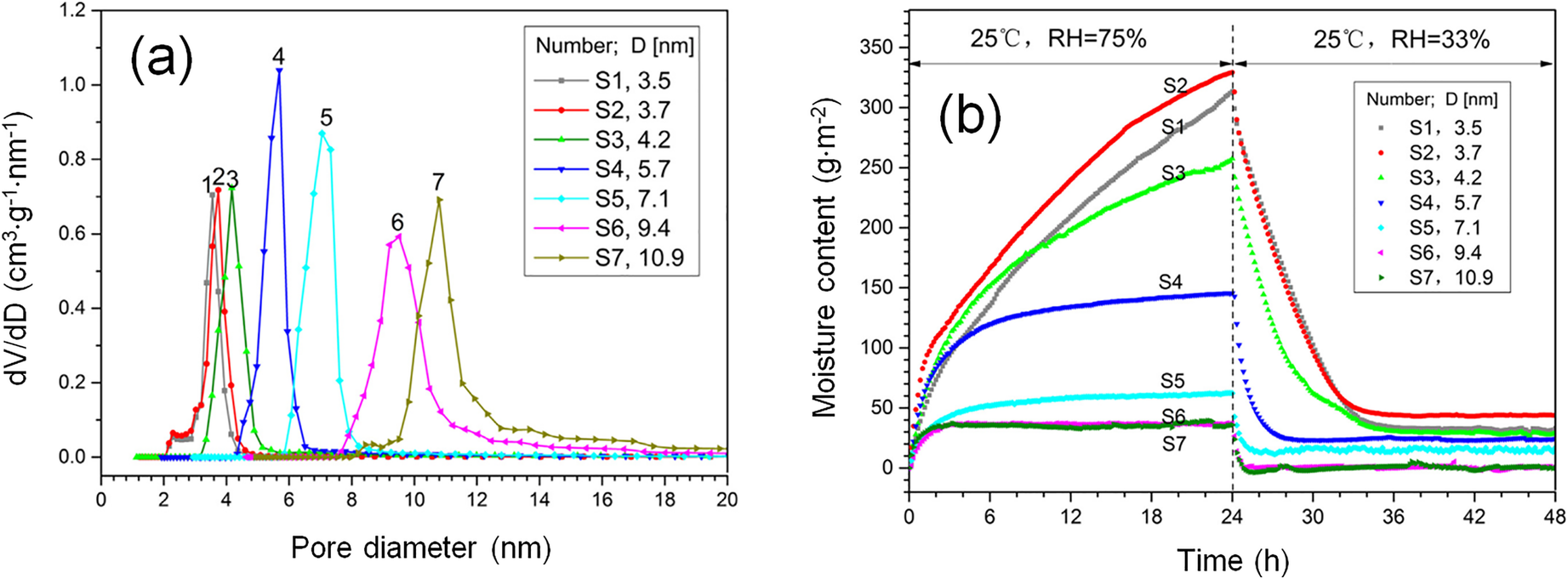
The calcination of loess results in a tough mesoporous material synthesized without additives, and tobermorite formation was found to exert a positive effect on strength and porosity (Zhang et al. Reference Zhang, Jing, Fan, Fan, Lu and Ishida2013b). In addition, mesopores exerted a positive influence on the humidity-regulating performance of the material derived from loess (Fig. 6) (Zhang et al. Reference Zhang, Jing, Fan, Fan, Lu and Ishida2013b). In order to confirm the effect of the pore dimensions on humidity regulation, Lan et al. (Reference Lan, Jing, Li, Miao and Chen2017) observed that the effective humidity-regulating performance of materials depends heavily on their pore dimensions (3.5–7.1 nm) (Fig. 7). From the reported results, the self-regulating humidity performance could be improved by decreasing the pore dimensions of the loess.
a Mesopore-size distribution curves calculated by the Barrett-Joyner-Halenda equation using N2 gas desorption isotherms for RL (squares), CL (triangles), and HCL (circles); b weight changes of RL (squares), CL (triangles), HCL (circles), and common brick (pentagons) during the measurement period at 33−75% relative humidity (RH) at 25°C for 48 h. [RL: raw loess, CL: calcined loess, HCL: hydrothermally synthesized calcined loess] (Zhang et al. Reference Zhang, Jing, Fan, Fan, Lu and Ishida2013b)

a Pore-size distributions of the materials with various average pore diameters; and b water-vapor adsorption/desorption capabilities of materials (S1–S7) measured at RH values of 33% and 75% at 25°C for 48 h (Lan et al. Reference Lan, Jing, Li, Miao and Chen2017)

Building Materials
Loess has been used as a building material and a study by Lu et al. (Reference Lu, Jing, Wang, Pan and Ishida2010) found that the effective regulation of humidity might result in energy savings. Loess cannot be used directly as a building material, however, because of its limitations in terms of strength, durability, and workability. To develop green materials for civil engineering applications, Liu et al. (Reference Liu, Cai, Liu and Fan2016) used loess for preparing geopolymers. Those authors found that it has potential applications in loess soil stabilization, such as for the subgrade, subbase, or base in pavements.
A loess paste was prepared (by means of geopolymerization of loess in alkali solutions – a new binding material) and tested by Kim et al. (Reference Kim, Choi, Kang and Yi2011). The potential use of loess to activate a geopolymerization reaction was investigated by Mawulé et al. (2017) who identified optimal ratios for a combination of fly ash with loess in the development of a new geopolymer material, and provided a green alternative to Portland cement, with considerable economic savings. In addition, the small clay content in most loess deposits was suggested by Smalley and Markovic (Reference Smalley and Markovic2019) to make loess an ideal material for brick production. Loess could also be made into loess-solidified compacted brick (Lv et al. Reference Lv, Xiang, He, Yu, Li, Pan and Wang2019) and could be used in eco-friendly composite panels for buildings (Yoo and Cho Reference Yoo and Cho2019) and to fabricate artificial marble (Chung et al. Reference Chung, Rha and Park2011). These characteristics suggest potential for loess-geopolymers in civil engineering applications.
CHALLENGES AND FUTURE PERSPECTIVES
Although loess has a long history of research, limited studies have been performed on loess particles for materials applications. Overcoming the following challenges is, therefore, imperative for the efficient use of loess materials:
• Loess particles are a kind of granular material, in which the clay fraction has multi-scale, multi-type, and multi-dispersion characteristics, unlike ordinary clay minerals. The particle sizes range from a few micrometers to nanometers. To date, relatively few systematic studies of the clay fraction of loess have been carried out, e.g. its composition and distribution are not understood clearly. Further research and development of clay resources from loess are needed.
• Loess contains a variety of mineral components. In practical applications, the identification of the mineral that plays the key role in loess particles needs to be determined.
• In loess particles, the relationship between its composition, structure, particle size and function, and the effective use of this synergy in applications need to be studied.
• Simple and effective green separation methods need to be explored.
Conclusions
Loess particles have a range of particle sizes, types, and various dispersibilities. In loess particles, the major components of the clay fraction are illite, kaolinite, montmorillonite, and chlorite. Cementation of the clay fraction is straightforward, which affects its properties, such as collapsibility, swelling, and adsorptivity. Following separation and purification, loess particles can be modified by physical or chemical methods, such as acidification, calcination, geopolymerization, or treatment with surfactants or polymers, which produce loess-based functional materials. These can be used as adsorbents, eco-friendly superabsorbents, soil and water conservation materials, humidity self-regulating materials, and building materials, and the clay fraction plays a very important role in these functional materials. In summary, loess-based functional materials, which are inexpensive and eco-friendly, deserve more attention and further development.
Acknowledgments
This study was supported by the National Natural Science Foundation of China (Grant No. 21865030) and Gansu International Sci & Techn Coop-Base for Water-retention Functional Materials.
Declarations
Conflict of Interest
The authors declare that they have no conflict of interest.
Funding
Funding sources are as stated in the Acknowledgments.