During the night of Wednesday, April 1, 2015, a massive sandstorm struck the Arabian Peninsula. The storm lasted from late on the evening of April 1 into the morning of Thursday, April 2. A low-pressure system over the area was associated with high winds (up to and exceeding 100 km/h) that lifted sand with average particulate size of roughly 10 µ from Saudi Arabian deserts. Evidence suggests that particulate matter (PM) size <10 μm in diameter (PM10) constitutes the cutoff below which there is particularly high risk of reactive airways disease exacerbation.Reference Gupta, Singh and Kumar 1 The storm also brought smaller PM that mass spectrometry identified as having come from Iraq; the counterclockwise circulation of the system meant that smaller particles that stayed airborne longer were carried as the storm’s winds circulated from Iraq to Arabia, and then to Qatar. The fact that the preponderance of PM was 10 µ or less in diameter meant that the storm represented a serious threat for respiratory complications.Reference Gupta, Singh and Kumar 1
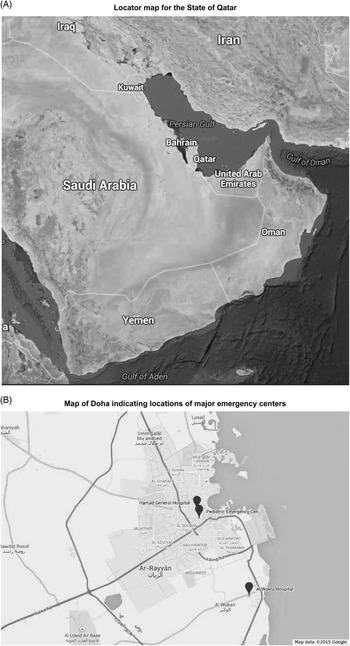
The sandstorm had a variety of far-reaching impacts throughout Qatar, Saudi Arabia, United Arab Emirates, the countries of the Gulf Cooperation Council, and the Middle East. Traffic, air transportation, fire services, education, and other facets of urban operations were affected. This report focuses on the State of Qatar (Figure 1), where there were widespread effects. For example, in the rural area of Al Dhakheera in north Qatar, roads, houses, and even a primary health care center were partially buried.
Map of Qatar and Its Capital Doha. (A) Locator Map for the State of Qatar. (B) Map of Doha Indicating Locations of Major Emergency Centers. From Hamad General Hospital to the main Pediatric Emergency Center is just over 1.5 km. From Hamad General Hospital to Al Wakra Hospital is 25 km. All map data were from GoogleMaps (Google Inc, Mountain View, CA).

Owing to the fact that nearly all of Qatar’s population is focused in the country’s major urban center of Doha (Figure 1), this discussion focuses on the sandstorm’s effects in that metropolitan area. The city’s area of approximately 50 milesReference Graveris 2 borders the Arabian Gulf and contains most of the country’s population of nearly 2.7 million persons.
When it struck Doha, the storm was massive by standard measures. The half-dozen or so sandstorms that are expected in Doha each year tend to have readings in the 10,000 to 15,000 µg/m3 range (Abdulla Mohammed Al-Mannai, Head of Forecast & Analysis Section, Civil Aviation Authority, Qatar Meteorology Department, personal communication, 2015). Compared with the World Health Organization 24-hour recommended PM10 level of 50 µg/m3, and even compared to typical sandstorm levels of around 10,000 µg/m3, the current storm readings (on multiple instruments around Doha) exceeded 1,000,000 µg/m3. This was the highest reading ever seen by the environmental and meteorological scientists in Qatar. Other massive sandstorms of similar magnitude included a PM concentration range of 0.5–10.6×10⁶ μg/m3 in the Yuma desert (Arizona, USA)Reference Graveris 2 and a PM concentration of 10.4×10⁶ μg/m3 in Afghanistan.Reference Avduevskij and Kuznecov 3 , Reference Dobrzhinsky 4
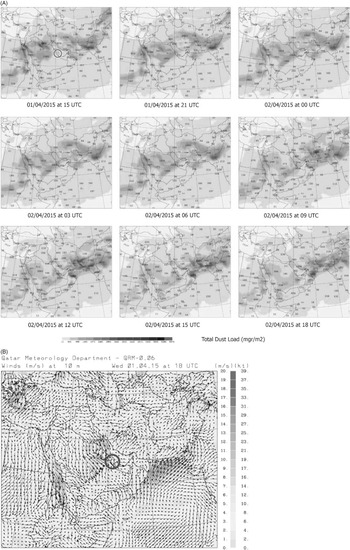
The storm reached Qatar around 2200 local time on Wednesday night, April 1. The Qatari national weather service reported the storm brought high winds (up to 70 km/h) carrying so much sand and dust that by 0038 local time Thursday, April 2, the bureau issued a warning of near-zero visibility. Weather maps (Figure 2) portrayed the size of the storm and its track over time.
Sandstorm Weather Maps. (A) Progression of Sandstorm (Qatar Circled in Blue in First Image). (B) Wind Direction and Velocities Associated With Sandstorm: Baseline Map (Qatar Circled in Blue).
Notes. Dates are in format day/month/year. UTC (Universal Coordinated Time) is 3 hours behind Qatar time. Units in (A) mgr/m2 report the “column” method (dust load in column to 5000 feet). In (B) winds are in m/s and knots (scale at right) at height of 10m above ground.

The storm severity was characterized by twin peaks of activity. The initial peak occurred early Thursday morning on April 2 within an hour or so after midnight local time. As the storm moved through Doha, a second peak of activity occurred the same day between 0600 and 0700 local time.
While winds continued to be higher than normal for 2 days, the worst of the sandstorm had largely abated (in Qatar) by 1000 (local time) on Thursday, April 2. In the hours before noon local time, the daunting job of cleanup commenced. Within the cleanup’s first few hours, 900 tons of sand had been cleared from the roads and work was just beginning.
This report aimed to review the sandstorm disaster of April 1-2, 2015, as it struck in Doha, State of Qatar. This discussion was not intended to be an overarching review of all of the storm’s medical and nonmedical ramifications. The intent was rather to focus on the event’s impact on the health system and the major hospitals in Qatar. The first section of this report describes the health system and emergency care in Qatar. The second section describes health system preparedness for disasters. Hospital surge and sequence of events is depicted. Patient case-mix and burden during the sandstorm is next described. The final discussion addresses the challenges and health system adaptations to the largest sandstorm reported from a high-income developing country in the Middle East. The study was approved by the hospital Institutional Review Board.
HEALTH SYSTEM
Qatar has mainly a government-funded health system. Virtually all urgent and emergency health care in Qatar is provided by the government-operated Hamad Medical Corporation (HMC). HMC operates 2 hospitals in the urban area. Hamad General Hospital (HGH) is a 603-bed facility that serves as Qatar’s only tertiary care center. Situated less than 1 mile from the Doha oceanfront, HGH offers highly specialized care and has been accredited by the Joint Commission International (JCI) since 2006.
The HGH Emergency Department (ED), one of the busiest in the world, has 144 beds and an annual census approaching 580,000. The large numbers are due to the fact that HGH is the only full-service ED in the city of Doha (population nearly 2.5 million). The HGH Department of Emergency Medicine (EM) includes nearly 40 consultants and 150 specialists. Consultants lead care that is provided mainly by specialists, all of whom are board-certified in EM. Physician manpower also includes 40 total residents accredited by the Accreditation Council for Graduate Medical Education-International (ACGME-I) and 20 EM-boarded physicians pursuing 3-year post-residency fellowship training.
Doha’s “community hospital” Al Wakra Hospital (AWH) is located just south of the metropolitan region. AWH also has a high annual ED patient volume (>150,000), with lower acuity. The HMC system operates a third facility 1 hour north of Doha, in Al Khor. Al Khor Hospital (AKH) ED sees about 101,000 lower-acuity patients per year.
For patients under the age of 14 years, there is a main HMC Pediatric Emergency Center (PEC) that sees most pediatric urgent cases other than trauma. The primary (Al Sadd) PEC is augmented by 4 other smaller pediatric centers in the Doha area.
PREPAREDNESS
The HMC constituent facilities have long-standing and detailed disaster plans and surge-capacity control mechanisms. Indeed, such plans are a requirement for the hospitals’ accreditation by the JCI. Without these long-term plans in place, there would be little chance of success with short-term preparations that are needed upon learning of an impending situation.Reference Kearns, Conlon and Valenta 5 , Reference Stander, Wallis and Smith 6 This planning is particularly important for HGH, given the virtual absence of “alternate-site” locations for care that are often useful in disaster medicine situations.Reference Eastman, Rinnert and Nemeth 7
The mechanism for handling disaster situations at the HGH is the Major Emergency Command Centre (MECC). The MECC is the hospital’s major incident response and communications intervention, and its setup follows the general lines that have proved useful in disaster preparation and response.Reference Kaji, Langford and Lewis 8 The MECC, led by the chief executive officer (CEO) and the hospital’s chief of staff, brings together hospital administrators, physicians, nurses, and other situationally important staff (eg, clinical pharmacy, respiratory therapy).
The MECC meetings are attended by an administrator whose sole responsibility is to generate a precise record of the proceedings. The meetings’ events are categorized by the scribe with respect to which personnel are involved, what time a particular item arises, and what type of item is before the MECC. Item types and examples are as follows: (1) information received, (2) information transmitted, (3) decision made, (4) action taken, (5) progress update, and (6) other.
The preparation prior to the sandstorm event was limited to the general hospital disaster management processes. The sandstorm’s presence in Saudi Arabia and its movement toward Doha were known in Doha. However, wind and airborne sand are not rare in the Middle East. There was precedent for previous storms occurring without causing major surge in hospital load, and the national government did take usual precautions such as disseminating word for people to stay indoors (especially if they had a history of respiratory disease).
Not least because they are actually positioned outside the hospital, the country’s emergency medical services (EMS) are uniquely positioned as an early warning system for some types of environmental disasters. It is not necessary to rely on EMS reports to know there is an earthquake, but for a more indolent situation, the ambulance crews can provide crucial lead time that an incident is at hand. In the Qatari sandstorm, the weather service did indeed report the impending storm, but it was the ambulance service’s initial call to the HGH ED operations chief that was the first real alert of a possibly impending mass casualty incident.
Indeed, the EMS group was on call for any major airplane crashes at Doha’s international airport, Hamad International Airport (HIA). HIA opened just 1 year ago, and with its advanced instrument landing technology actually served as the receiving airport for 8 flights initially bound to nearby countries. No crashes occurred, but intra-incident planning and resource allocation had to account for the possibility. The types of incidents-within-incidents may vary with differing types of disaster medicine situations. As a common thread, though, prehospital (and hospital) planners and responders must be ready to address embedded events with appropriate response, triage, care, and transport. The need to rapidly turn around EMS crews was in fact the trigger for the earliest phone calls regarding the disaster event.
The acute preparedness steps that were taken were variably successful. Most useful was the placement of an additional physician in the ambulance receiving area, which is always staffed at the HGH by one physician. Less helpful was the allowance of EMS to bypass the ambulance receiving area and go directly to a relatively high-urgency care area of the ED; this predictably resulted in a shift of overburden from the ambulance receiving area to an area that was already full of high-acuity cases (because the less-acute patients had already been shifted elsewhere after stabilization).
HOSPITAL SYSTEM SURGE AND RESPONSE DURING THE SANDSTORM
Hospital and system responses evolved over the incident’s time frame. This section discusses the storm-related events and responses as they occurred over the 12-hour span of the storm itself.
Night of Wednesday, April 1
In the initial hours of the storm on the evening of April 1 (hereafter, Wednesday), the wind and dust had not yet impacted Doha to an extent that prompted alterations at ED shift change (2200). As Wednesday evening crept toward midnight, there was noticeable increasing wind and sand in the outside air, and the ED staff made preparations to increase capacity in anticipation of the patient influx.
Early Morning Hours of Thursday, April 2: Recognition of the Disaster Situation
In the first hours of the morning of April 2 (hereafter, Thursday), an early ED patient surge was present and growing. Just after 0030 on Thursday the HMC Ambulance Service (HMCAS), which serves as Doha’s only EMS responder service, reported that high run volumes were creating a need for special ED efforts to rapidly offload patients in order to get prehospital providers back to the field.
The measures initially recommended in the ED included making masks available to staff and keeping doors closed to minimize sand and dust circulation. Based upon subjective determination, the ED worked with internal measures (eg, expediting management and disposition by EM staff) to create bed capacity. No external (non-EM) personnel were called to help with any projected surge in patient load. As is often the case, the ED’s internal efforts at creating bed capacity had only limited success over the next few hours. Unfortunately, during those next few hours the patient surge struck with full force.
At 0430, the ED was in full recognition of a disaster situation. During the 0400 hour alone, there were 2 cardiorespiratory arrests transported by EMS (with ongoing resuscitation in the ED), 3 patients requiring ED intubation (2 of which were difficult airways), over a dozen patients on noninvasive ventilation, and more than 60 respiratory cases that were being managed in the ED waiting room owing to a lack of other clinical space.
Under the circumstances of a major surge outstripping available resources, the full ED incident response was activated. All physicians in the ED were instructed to continue working at shift change and the head nurse was also asked to consider keeping overnight shift nurses in the ED at shift change.
As the disaster evolved with the approach of the 0500 hour, arrangements for more ventilators and supplies of respiratory medications (mainly albuterol) were urgently requested.
Daybreak on Thursday, April 2: Situation at Transition From Overnight to Day Shift
As the overnight shift entered its final hour, the senior EM physician leaders who were assisting in the ED met with the hospital CEO and other senior administrators. They simultaneously worked to create spaces in the hospital to which ED patients could be sent.
While some nurses were asked to stay in case they were needed, the day shift complement of 92 nurses was able to make it in to work and all overnight nurses were eventually released by 0730. Just after daybreak and with the arrival of the daytime shift, the ED situation was critical but administrative, physician, and nursing assistance were in place.
While the ED was continually busy, and physicians and nurses were providing patient care, ED leadership with hospital administration support worked to move as many patients (particularly the nonrespiratory patients) out of the ED as possible. The plan was to move the nonrespiratory patients out of the ED to make room for respiratory cases, which were proving to have high acuity and therefore to not be suitable for rapid evaluation and expedited transfer to regular hospital wards.
Thursday Morning, April 2: MECC Meeting
The ED senior leadership along with other hospital leaders tried to contain the emergency response by activating the ED incident response. However, after 3 hours of activation of the ED incident response system, the intensity of the sandstorm was unabated. With gradual recognition of the expanding scope of the disaster and the need for utilization of maximal resources, the CEO activated the previously described MECC procedure for hospital disaster response. The initial MECC meeting was set for 0730.
Upon the CEO’s initial convening of the MECC at 0730, the scale of the situation was reviewed. This report focuses on the situation at HGH, which by its central urban location and tertiary nature took the brunt of the patient load. Other hospitals in the HMC system were also impacted. Numbers at the south suburban hospital (AWH) and the hospital (AKH) on the north coast were higher than usual, but hospital administrators reported them to be manageable. The most important information regarding the remainder of the HMC system was that with their own increases in volume these facilities would not be able to offload any HGH volume (by patient diversion or transfer).
Other equipment issues were discussed at the MECC. The prehospital care service (HMCAS) reported at the 0730 MECC meeting that 90% of the ambulances were out on calls. Out of 634 emergency calls to HMCAS, 62% were transferred to HGH.
The initial MECC meeting concluded after 24 minutes. A plan was made to reconvene in 2 hours.
Thursday Morning, April 2, Through the Second MECC Meeting at 1000
The storm continued unabated over the initial few hours of the day shift. The ED worked on maximizing capacity through employment of front-door triage operations and redoubled efforts at rapid disposition of suitable cases. The ED’s operational optimization combined with inpatient dispositions (aimed at creating “back-end” ED outflow capacity) translated into the opening of 40 beds in the ED by midmorning. However, there were still 25 high-acuity ED patients awaiting admission and 50 patients waiting to be seen.
As the MECC gathered for the second meeting at 1000, new mechanisms to improve flow were identified. Just prior to the second MECC meeting, the HMCAS received a report that the winds had created high seas and capsized a boat off the coast of Al Wakra. At the MECC it was decided that any survivors of low acuity should be taken to the nearer hospital (AWH), whereas higher-acuity survivors would be directed to HGH (by ground; no helicopter aviation was possible). The HMCAS also reported that the HGH ED turnaround time for ground EMS units was sufficiently fast that there was not a major problem with ambulance availability.
Thursday, April 2, Late Morning Through the Storm’s Acute-Phase End in Midafternoon
Although it was not known with certainty at the time, the storm was largely abating by 1030 to 1100 local time. Indications that the storm had reached its peak were responsible for a decision not to activate the nation’s systemwide incident management system (which is designed for events that last longer than did the sandstorm). The MECC met again at 1400, at which time the ED reported that things were coming back under control, although there were still large numbers of respiratory cases and less-acute injury patients. The HMCAS was also de-escalating and reported that things were returning to normal.
Respiratory cases and other storm-related patient loads persisted to some degree, but the overall patient volume was manageable by midafternoon. The HGH ED senior staff stayed on hand through the evening shift, but the incident and the MECC were declared “closed” at 1430 local time.
PATIENT CASE MIX AND BURDEN
During the roughly 12-hour period commencing Wednesday/Thursday midnight through Thursday noon, the sandstorm accounted for an increase in both quantity and severity of ED patients. This section of the report addresses the numbers of patients seen before and after the storm struck, with the aim of portraying patterns that can be expected for future events. The major impact of the storm and the most precise available data focused on HGH. However, data for some of the other HMC centers are noteworthy and are provided first.
Caseload at Non-HGH HMC Hospitals
The other 2 major hospitals in the HMC system, Al Khor (AKH) and Al Wakra (AWH), reported that they experienced some high-volume hours but overall patient load was not too much higher than occasionally encountered on a busy April day. It seemed likely to those centers’ leadership that the weather-induced asthma caseload numbers were offset by the weather-related decrease in lower-acuity visits of other types. There were increased respiratory numbers, but the acuity was low; high-acuity cases were seen at HGH. AWH reported 203 respiratory cases on Thursday compared to the expected number of about 50. Overall, the census was not too elevated and neither were the numbers of intubations (1), intensive care unit (ICU) cases (3), or total admissions (18).
Caseload at the Pediatric Emergency Center Facilities
The pattern seen at the secondary hospitals (AKH and AWH) was reproduced at the PEC facilities. There was a spike in numbers during the daybreak hour on Thursday but this resolved by midafternoon. At the main PEC, for instance, patient registrations as of Thursday morning numbered 142 but volume was back to normal levels (87 registered) by 1500. Nevertheless, the PEC brought in extra staff for the evening shift to ward against the possibility of respiratory patient surge.
At the PEC, as at AKH and AWH, the overall census numbers remained relatively stable owing to a shift in patient types (toward respiratory, with fewer nonrespiratory cases). There were indeed increased numbers of PEC-administered albuterol nebulizer treatments. While detailed numbers are not available, there were about 300 PEC nebulizer treatments over the 24-hour period starting Wednesday night; this represented about 50% more than usual. During the storm period, there was no increase in admissions (about a dozen) or ICU patients (1), and there were no intubations.
Caseload at HGH
The sandstorm’s effects were largely focused on HGH, because this center sits in the middle of the metropolitan area and is tasked with receiving the preponderance of ambulance cases (including nearly all critical patients). In terms of sheer numbers, the storm’s effects were significant, but HGH experienced the same pattern seen at other facilities: incremental numbers of certain case types were offset by lower numbers of other (mostly less-acute) cases.
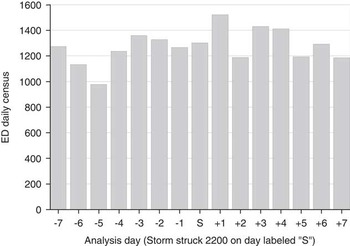
An approximation of the spike in numbers associated with the storm is clear when daily census figures for the HGH are viewed (Figure 3). Against the normal fluctuations of daily volume, the figure shows a visible spike in daily census on Thursday, the day after the sandstorm struck (keeping in mind that the storm hit at day’s end on Wednesday).
Daily Emergency Department (ED) Census at Hamad General Hospital Before and After the Sandstorm (S).

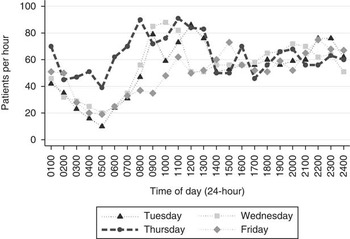
The effects of the weather event on overall ED census are shown more clearly when patient census is viewed as number of patients per hour (Figure 4). As of the time just after Wednesday/Thursday midnight, ED census was quite elevated compared to the days before and after the sandstorm (Figure 4).
Hourly Emergency Department (ED) Volume for 4 Days Surrounding the Sandstorm.

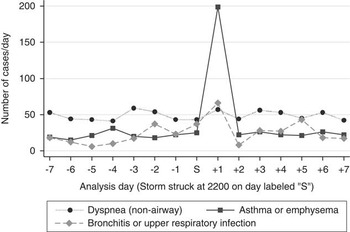
The ED caseload associated with the storm was more than just numbers: case mix and acuity were also impacted. Some lessons were clear, though. First and foremost were the storm’s effects in causing major respiratory decompensation (Figure 5). Reactive airways disease cases increased by an order of magnitude, whereas other respiratory diagnoses remained at baseline occurrence rates.
Respiratory Caseload Associated With the Sandstorm (S).

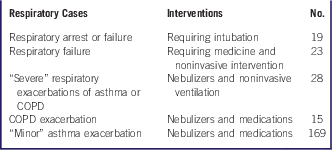
Regarding specific respiratory cases, and based upon anecdotal (real-time) reports, the storm was solely responsible for at least 2 cardiorespiratory arrests in the prehospital setting. In addition to these arrest cases, for whom resuscitation continued in the ED, the ED resuscitation and urgent-care efforts for the 12-hour period of 0000-1200 Thursday included the following cases: respiratory arrest or failure, clinician-described “severe” respiratory exacerbations of asthma or chronic obstructive pulmonary disease (nearly all asthma), and “minor” asthma flare (Table 1). In virtually all of these cases the respiratory symptomology was attributed by the treating clinicians to the sandstorm. The numbers of asthma cases returned to baseline after the day of the major sandstorm activity; HGH saw no “post-sandstorm” bump in asthma cases in the week after the weather event.
Emergency Department Management of Respiratory Patients Within 12 Hours of Sandstorm OnsetFootnote a

a Abbreviation: COPD, chronic obstructive pulmonary disease.
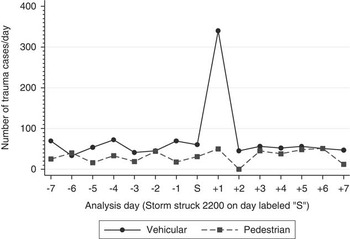
Numbers of trauma patients also increased (Figure 6). Pedestrian injuries occurred during the sandstorm at the same rate as in the week before and after the storm. Given the fact that there were many fewer pedestrians outdoors during the sandstorm, the fact that absolute numbers of injured pedestrians stayed the same likely represented an increased incident rate of pedestrian injuries (ie, more injuries per pedestrian exposure). Indeed, at least one pedestrian was killed outright (ie, never transported to HGH) while trying to cross a street in limited visibility.
Trauma Caseload Associated With the Sandstorm (S).

Expatriates constitute around 80% of Qatar’s population. The large numbers of expatriates speak and understand many different languages, making emergency disaster warning communication difficult within the community. The slow spread of emergency disaster warnings within the expatriate community could explain the higher than expected numbers of pedestrians out of doors under such conditions.
With respect to vehicular trauma, the number of motor vehicle crash cases rose fivefold during the sandstorm. Even without adjusting for numbers of automobiles at risk (ie, lower numbers of drivers on the roads), the marked increase in road traffic accident cases is noteworthy. Also notable was the absence of any delayed “peak” in vehicular trauma as could have been postulated on the basis of residual sand on roads.
Minor injuries are inherently more difficult to ascribe to a given cause, but the extreme limitations in visibility as well as high winds undoubtedly accounted for lacerations and musculoskeletal trauma. Anecdotally, there were many cases of sandstorm-related trauma that did not require hospitalization, but which were still not trivial. For example, many patients had injuries to exposed areas of skin (including the face and hands) that were due to flying debris that was unseen and unavoidable. Physicians working in the ED estimated that the number of “see and treat” injuries encountered during the 12-hour period of the sandstorm was 300 (over twice the normal volume).
PATIENT CARE AND SYSTEM ADAPTATION TO THE DISASTER: LESSONS LEARNED
Both the hospital system and patients benefited from HMC’s prior disaster planning and response processes. Discussion of a disaster event’s course, response, and outcomes facilitates improvement for future events. Specifically, post-event discussion and review can identify those system preparation and response parameters that worked well, while also identifying those parameters that could benefit from refinement.Reference Little, Cooper and Gope 9 The goal of this section is to describe the major incident-related challenges and system adaptations.
Prehospital
The EMS crews work the streets daily and know what is (and what is not) expected along the lines of patient volume and acuity. Thus, the first lesson from the Qatari sandstorm: Use EMS as an on-the-street early warning system for disasters that are slower in developing.
The second lesson learned from the prehospital group was related to their preparation for “events within events.” Specifically, within a larger disaster situation there are potential “mini-disasters” that can represent individual mass casualty incidents. In the Qatar sandstorm, this was exampled by a boat that was capsized by high winds in the Arabian Gulf. The 11 victims of the boat capsize represented a specific event requiring the attention of prehospital personnel. Eight were rescued quickly, and the other 3 were extracted within 24 hours. In this case none of the survivors was seriously injured (or hypothermic) but there was still a need for EMS to be at the ready to respond and to direct field triage and determine how to best disperse the caseload among receiving hospitals.
The embedded event in this sandstorm was a capsized boat, but it could have been a major fire, multicar traffic incident, or other type of event. The pertinent lesson from the Qatari sandstorm was: Be ready for an incident within the incident. The EMS extended shifts, added radio channels to handle additional communications traffic needs, and redeployed weather-grounded flight crews to assist with ground response.
Of the many facets of EMS response and care during the sandstorm, this hospital-focused review will address one other: wise use of personnel. EMS providers are a valuable and flexible resource. The EMS employed various measures to optimize staffing. Experienced flight crews who were grounded because of weather were redeployed to assist ground EMS and attend MECC meetings. Also, overnight-shift crews were kept on duty for the initial hours of Thursday morning. Without knowledge of precisely how things were going to develop, it was wise to keep (well-rested) EMS personnel on hand. With the important caveat that providers must be rested, hydrated, and physiologically able to perform, the lesson of the Qatari sandstorm is: Treat personnel as a valuable resource, keeping them on hand and in shape to work, until it’s clear they won’t be needed.
Letting Patients Into the ED, While Keeping Dust Out
One of the initial interventions made by nursing addressed an issue with dust entering the ED. The dust interfered with operations and also posed respiratory tract risks to both patients and staff. The automatic doors leading to the walk-in area were deactivated. This led to decreased ingress and egress and also a decreased amount of time that the doors were open when patients did enter or exit. The functionality of the ambulance-area doors was left unaltered, because some patients were critical. The combination of measures regarding the doors, as well as other measures such as keeping internal doors shut, helped to prevent the sand and dust from becoming a major problem for ED staff and patients. Once sand and dust get into the ED, it is quite difficult to completely remove, so it is best to take all practical measures to keep the ED clean. The lesson from the sandstorm was: Keep the ED protected as best as possible from sand and dust entry.
Space
Even the busiest EDs, at least those in academic centers such as HGH, tend to have ready access to physician personnel. It is space, not physician manpower, that serves as the primary capacity limitation.
The ED Chairman, hospital CEO, and senior hospital administrators worked together in creating capacity and solving focused administrative needs. The ED chairman waived certain administrative process requirements (eg, extended paperwork needs for dispensing metered-dose-inhalers). The CEO facilitated cancellation of the hospital’s day surgeries, which created both beds and nursing resources. The CEO reported that ambulatory surgery had been canceled to create 5 additional beds for use by the ED. With regard to cancellation of surgeries, judgment was exercised. While operations that could be postponed were moved to future dates, many patients’ situations (eg, cancer, severe pain, visiting surgeons present for complex cases) were judged by the chief medical officer to be sufficiently compelling that these operations were allowed to proceed. The decision was made to not simply cancel all elective surgery as this would cause substantial problems (including morbidity) to patients. Surgeries that continued included bariatrics, urological procedures (with an international visiting surgeon), urgent oncologic surgeries, and pain management procedures.
Another 7 beds were opened by having engineering pause work on an upper floor of the hospital and revert that unit back to staffed status. This unit was noted to lack certain equipment and capabilities needed for management of high-acuity respiratory patients. The plan for use of the unit (and most other additional bed capacity) was not to manage the respiratory cases, which could stay in the ED, but rather to accommodate the nonrespiratory caseload to free ED beds for respiratory patients.
Hospital intensivists reported they had capability to transfer up to 7 patients from the ICU to either in-house beds or distant HMC hospitals’ ICUs. An additional 6 beds were identified in the adjacent HMC Women’s Hospital. There were also 7 patients on bilevel positive airway pressure ventilation in the ED who were judged sufficiently stable to move upstairs (ie, were judged not to be at risk for deterioration and need for intubation).
The ED reported creation of a small “asthma unit” from a special ED treatment room normally allocated to personages such as the royal family. This room was transformed into a 5-bed unit in which breathing treatments were administered to patients who were able to sit upright during care.
With the cooperation of the Department of Medicine, a virtual “unit” of respiratory patients with milder disease was managed in an area of the ED. The team caring for these patients included a medicine consultant who was assisted by fellows and residents from the Department of Medicine.
Bed availability was also confirmed at a novel unit occupying a hotel on the HGH campus. This unit, called the “medihostel,” had been opened in preceding months for use in low-acuity cases that did not require hospitalization but for whom there was a need for ongoing daily care for problems such as difficult wounds.
Hospital situations change constantly, in terms of both occupancy and physical issues (eg, construction). Space needs are best met by persons with intimate situational awareness of hospital operations. The applicable lesson from the sandstorm incident involved space creation: Have a ready plan to rapidly involve persons with expertise and authority to create hospital bed space.
As an additional space consideration, there is need for room to accommodate patient visitors as well as patients who have been discharged. Owing to the ferocity of the outside weather, these individuals understandably stayed in the ED waiting room, which was quickly overwhelmed. The lesson here is quite simple: Create an area outside of the ED to accommodate persons who are not in need of ED care.
Liaison With Other Services
In light of a huge influx of respiratory patients, the respiratory therapy service was brought on board and tasked to arrange for more ventilators, other respiratory equipment (eg, nebulizers), and medications. The chief of anesthesia reported he was working to obtain additional ventilators from other (non-acute-care) hospitals in the HMC system. Over the next half hour about a half-dozen ventilators and monitors were identified from sources such as the system’s neighboring rehabilitation hospital.
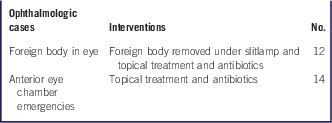
There were many patients with relatively minor ophthalmologic complaints due to the dust and sand in the air. The ED had a slit lamp set-up in an “eye room” in the department, but the workload was high and there was backup of patients (Table 2). Meanwhile, the hospital’s ophthalmology clinic upstairs was virtually empty (because outpatients with appointments were not coming in). The first idea was to move the ophthalmologists down to the ED to help see eye patients, but instead it was decided that the eye patients be moved upstairs to the (near-empty) ophthalmology clinic.
Emergency Department Ophthalmological Cases Within 12 Hours of Sandstorm Onset

The physician director of HGH’s affiliated heart hospital worked to execute nearly a dozen ED cardiac patients’ dispositions within just an hour or two. The lesson learned was consistent with lessons from other disaster situations: Use personal contacts where available to speak directly with decision-drivers.
Communications
In the sandstorm event, communications represented an invaluable mechanism for information exchange, resource allocation, and situational assessment. Communications was simultaneously an area that was quite amenable to improvement for the future.
There were communications issues between the lead consultant and the nursing staff. There were difficulties with the ED nurses’ reporting to the lead consultant that patient load was problematic, while the lead consultant was interpreting those reports against his perception of prior exaggerated responses from ED staff. The use of electronic tracking and objective data collection and triggering of disaster response will doubtless improve this level of communication. The lesson for future events was: Clear lines of communication need to be established that involve all types of personnel in the ED, and physicians, nurses, and administrators need to keep each other in the loop regarding ongoing discussions during a disaster event.
One of the issues regarding weather information was the lack of a direct line of communication between the hospital system and the national meteorology center. During the storm, the hospital CEO was getting information about the meteorological situation from standard media and internet sources. Some of the information was flawed. For example, there was a media report on Thursday morning that a second sandstorm was approaching that evening. The MECC labored under this assumption, which retrospectively was known by the national weather service to be false as early as Thursday midmorning, for much of the day. Improving the hospital-meteorology line of communication, as suggested by the hospital CEO herself, was thus a quick step toward improved sandstorm disaster communications.
In post-sandstorm debriefing conversations, the Qatar Meteorology Department’s Head of Forecast and Analysis proved quite willing to make himself available for emergency personal consultation. Establishing personal relationships was as easy as it has been fruitful. Since the storm, communication has been in place and meteorologists send the ED direct notifications of impending weather concern via e-mail (with personal mobile phone numbers also exchanged). The lesson learned was: Establish clear lines of communications with meteorology experts before a storm occurs.
Dedicated Training to Promote Interdisciplinary Teamwork and Preparedness
This disaster demonstrates the absolute need for multidisciplinary teams (both within and outside of hospitals) to work together to develop solutions for coping with extraordinary pressures on services. Major incident training exercises are regularly undertaken at both local and national levels in Qatar. These exercises are led by multiple related groups, ranging from government entities to the HMC health system. As evidenced by the sandstorm event, knowledge of the types of disasters that are particularly likely in a given setting should be included in disaster training. Such specialized training would allow planners and responders to look beyond generic training for major incidents, to develop simulations that test teams’ abilities to handle stresses on specific services. The lesson from the sandstorm was: Complement general disaster medicine training with interdisciplinary communication and teamwork exercises relevant to region-specific events.
CONCLUSION
In the largest sandstorm to strike Qatar in recent memory, the country’s main hospital met with a surge of hundreds of cases, primarily respiratory and vehicular trauma. The hospital responded along the lines of its previously assembled disaster plan. Limitations with respect to data availability (from both the main hospital and the larger hospital network) prevented detailed analyses and concrete conclusions, but the suggestions outlined herein are potentially useful. With the outlining of adaptations and specific areas for improvement identified in this review, it is hoped that others facing sandstorm emergencies will be better positioned to respond with optimum efficiency and effectiveness.
Acknowledgments
Furqan B Irfan contributed to data collection, writing, and editing of the manuscript; Sameer A Pathan contributed to writing and editing of the manuscript; Zain A. Bhutta contributed to data collection of patients; Mohamed E. Abbasy contributed to data collection; Amr Elmoheen contributed to data collection of sandstorm and weather patterns; Abdallah M. Elsaeidy contributed to writing of the preparedness part of the paper; Tooba Tariq contributed to the literature search and data collection; Charles D. Hugelmeyer contributed to writing of the challenges part of the paper; Habib Dardouri contributed to assessment of caseload and interventions; Noor Bibi Khial Bad Shah contributed to writing of nursing response and outlining of storm events; Colene Y. Daniel contributed to writing of outlining of health system and hospital disaster process; Ashwin D. Silva contributed to analysis of patient types and volumes; Kaleelullah S. Farook contributed to writing of outlining of events and system adaptation; Yogdutt Sharma contributed to writing of outlining of events and patient mix and burden; Stephen H. Thomas contributed to writing, data analysis, and overall supervision of the study. There were no conflicts of interest or funding for this project.