


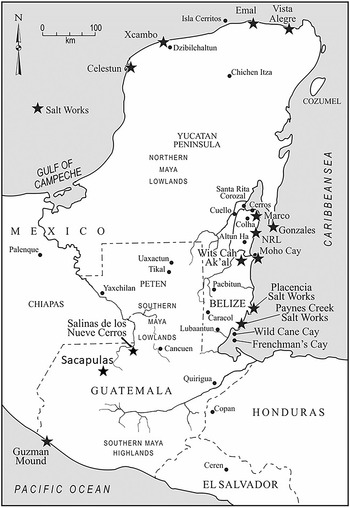
Research at the Paynes Creek Salt Works in southern Belize (Figures 1–2) has evaluated how the production of salt—a basic biological necessity—figured in the Classic Maya economy (AD 250–900). Although previous discovery of 110 salt-production sites suggested massive production, questions remained about the organization of production, important for understanding the supply for the inland Maya, where salt was scarce. More broadly, the research addressed how surplus goods were produced in ancient complex societies.
Map of the Maya area showing the location of the Paynes Creek Salt Works, other salt works, and sites mentioned in the text. Map by Mary Lee Eggart, Louisiana State University.
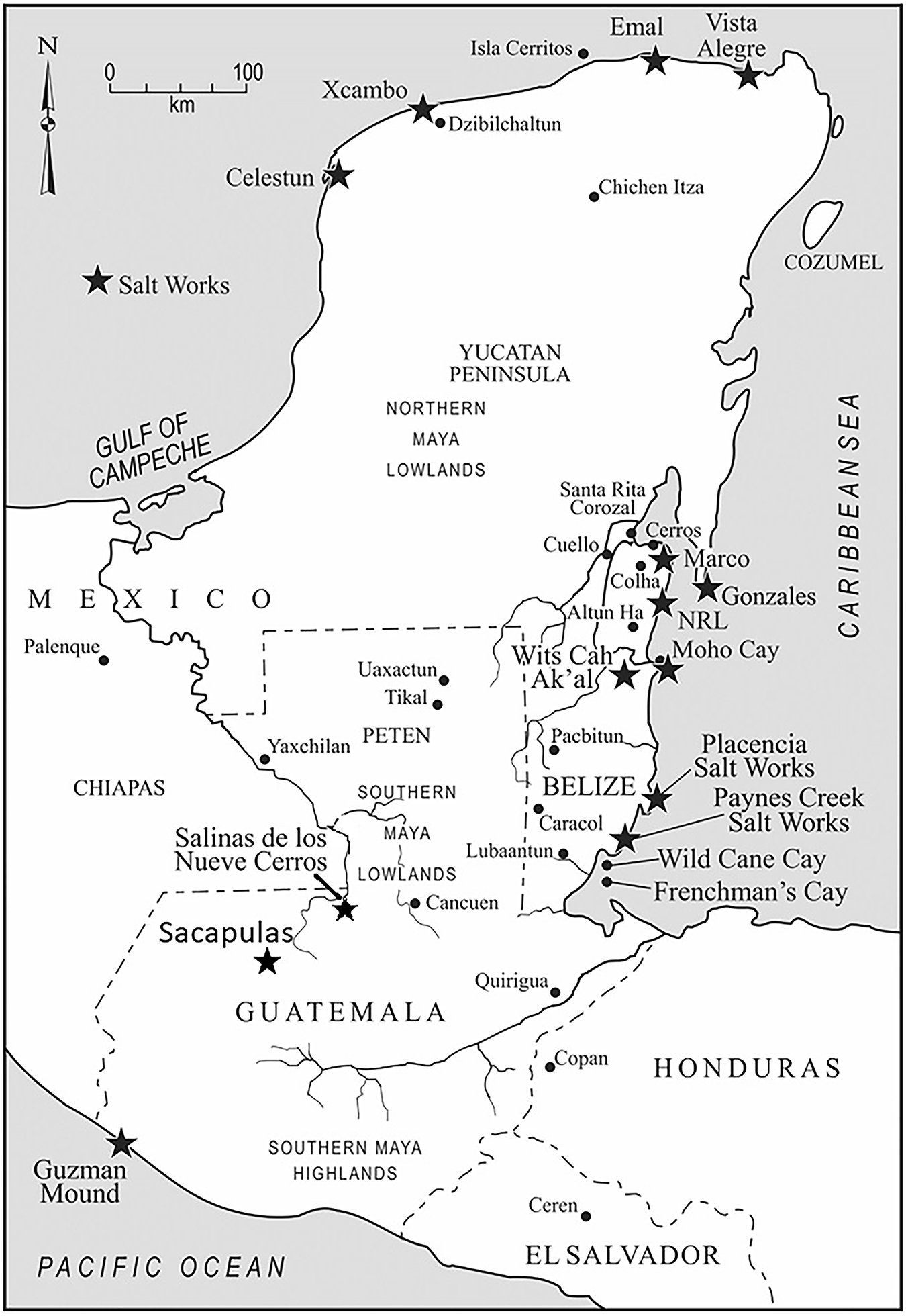
Figure 1 Long description
Line drawing map of he Maya area, including Belize, Guatemala, the Yucatan and Chiapas of Mexico, western Honduras, and El Salvador. There are stars on the map showing the locations of salt making sites along the coasts of Belize, Mexico, and Pacific coast of Guatemala. Other Maya sites are marked by dots.
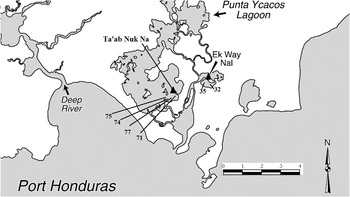
Map of Punta Ycacos Lagoon with locations of underwater sites mentioned in the text. Map by Mary Lee Eggart, Louisiana State University.
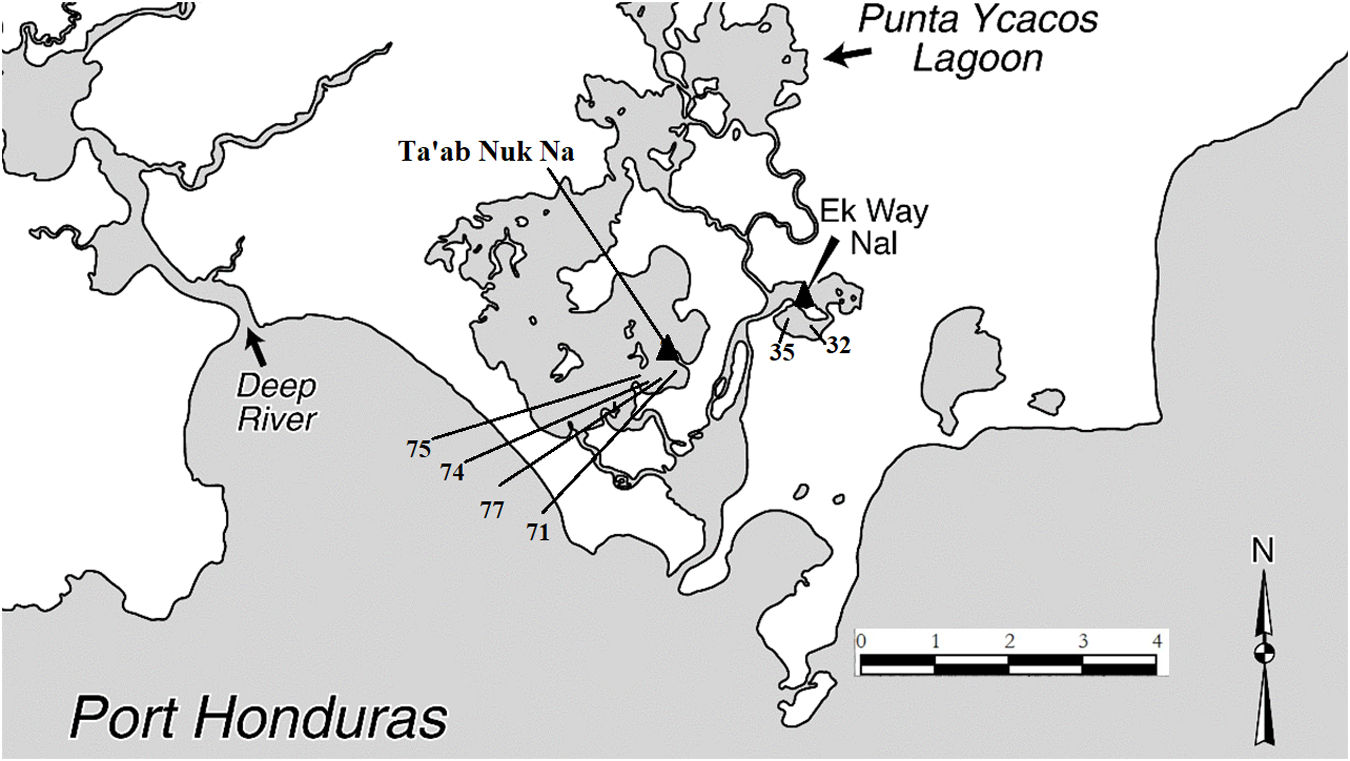
Figure 2 Long description
The map illustrates Punta Ycacos Lagoon with labeled underwater sites. Key locations include Ta’ab Nuk Na and Ek Way Nal, each marked with arrows. Ta’ab Nuk Na is positioned to the northwest, while Ek Way Nal is to the northeast. Several numbered sites are indicated near Ta’ab Nuk Na, including 71, 75, 77 and 79. The map also shows Deep River to the southwest and Port Honduras to the south. A scale bar is present at the bottom right, indicating distance and a compass rose shows north orientation. The map provides a detailed view of the lagoon's geography and site distribution.
Studies of ancient economies in complex societies, such as the Classic Maya, include factors such as household versus workshop production, independent versus attached workshops, production versus specialization, and multi-crafting. Household production focuses on extracting resources and making things for household use, whereas workshop production is manufacturing for use elsewhere (Clark Reference Clark and Isaac1986). Distinctions are often made between independent production for the subsistence economy and attached production for the elite. However, surplus household craft production contributed significantly to the flow of goods and resources to elites and commoners by marketplace trade, and exotics and highly crafted goods made their way to commoners through markets as well (Hirth Reference Hirth and Hirth2009; Masson et al. Reference Masson, Hare, Lope, Escamilla Ojeda, Paris, Kohut, Russell and Alvrado2016). Similar issues of organizational variation are discussed for Postclassic salt production in Zapotitlán Salinas, Mexico (Castellón Reference Castellon2016).
Production involves acquiring raw materials and creating goods, whereas specialization refers to how production is organized (Costin Reference Costin and Schiffer1991). Following Costin (Reference Costin and Schiffer1991), the organization of production often is evaluated by factors of intensity (part-time/full-time), context (independent/attached), concentration (dispersed to nucleated), constitution (kin-based to industrial), and scale (size). Intensity may be problematic, since large quantities of materials can be produced by part-time, surplus, household production, so that densities of production debris can be more useful (Masson et al. Reference Masson, Hare, Lope, Escamilla Ojeda, Paris, Kohut, Russell and Alvrado2016). Production and specialization also are evaluated in terms of the number of crafts practiced and the periodicity of crafting (Hirth Reference Hirth and Hirth2009). Categories include intermittent single craft production, intermittent crafting, continuous single craft production, and continuous multi-crafting. Intermittent crafting is conducted within the household along with subsistence activities and is often of short duration or periodic. A multi-crafting household engages in the production of multiple crafts at the same time. Within multi-crafting is a form called contingent crafting, which represents the manufacture of products that are used in the larger crafting process.
The Paynes Creek Salt Works
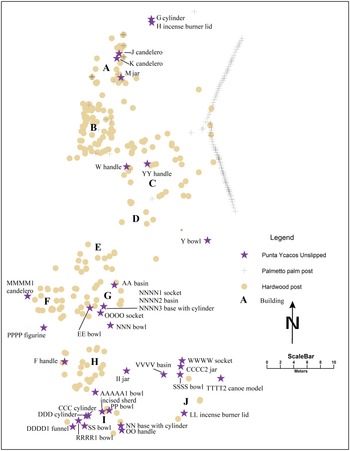
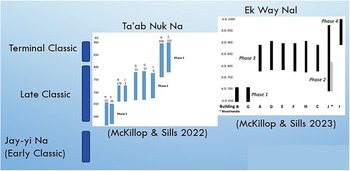
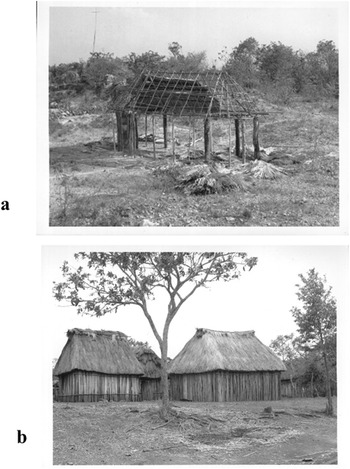
The ancient coastal Maya at the Paynes Creek Salt Works constructed pole and thatch buildings along the shores of a salt-water lagoon for producing salt, storing brine, and storing salt (Figure 3; see Wauchope [Reference Wauchope1938] for modern pole and thatch buildings). The buildings were submerged by sea-level rise (McKillop Reference McKillop2005, Reference McKillop2024). Interpretations are based on comparisons with ethnographic, ethnohistoric, and ethnoarchaeological reports of salt production worldwide (Eubanks et al. Reference Eubanks, Dumas, McKillop and Alexianu2025; McKillop Reference McKillop2019:28–38; Parsons Reference Parsons2001; Reina and Monaghan Reference Reina and Monaghan1981; Yankowski Reference Yankowski2019). The Paynes Creek salt workers enriched the salt content of sea water by pouring it through salty soil and collecting the enriched brine in pots below (McKillop et al. Reference McKillop, Sills and Cellucci2014). This and other methods of brine enrichment are common worldwide (McKillop Reference McKillop2019:30–38; Parsons Reference Parsons2001; Williams Reference Williams2023). Earthen mounds on the mangrove flats beside the lagoon consisted of piles of leached soil from the enrichment process (Watson and McKillop Reference McKillop2019). Enriched brine was stored in jars inside wooden salt kitchens, and then evaporated in pots over a slow fire, producing loose salt, similar to the ethnographic and historic examples at Sacapulas (Reina and Monaghan Reference Reina and Monaghan1981). Loose salt was hardened into salt cakes in bowls that were broken to remove the cakes for transport (McKillop Reference McKillop2021). Some salt was used for drying fish, since use-wear analysis indicates 80% of chert tools were used to process fish or meat (McKillop and Aoyama Reference McKillop and Aoyama2018). Previous research included survey and mapping of wooden buildings and diagnostic artifacts on the sea floor, with 4,042 wooden building posts mapped at 70 underwater sites (McKillop Reference McKillop2019). Excavations of buildings resulted in the identification of salt kitchens where 80%–95% of the artifacts consisted of briquetage—the salt-making pottery (McKillop and Sills Reference McKillop and Sills2016). Radiocarbon dates on wooden posts reveal salt production occurred during the Late and Terminal Classic (Figure 4; AD 650–900), which corresponds to a time of increased settlement on the coast and inland in southern Belize (Braswell et al. Reference Braswell, Prager, Bill, Schwake and Braswell2004; McKillop Reference McKillop2019; Prufer et al. Reference Prufer, Moyes, Culleton, Kindon and Kennett2011).
Map of Ta’ab Nuk Na showing wooden building posts and briquetage (Punta Ycacos Unslipped). (Color online)
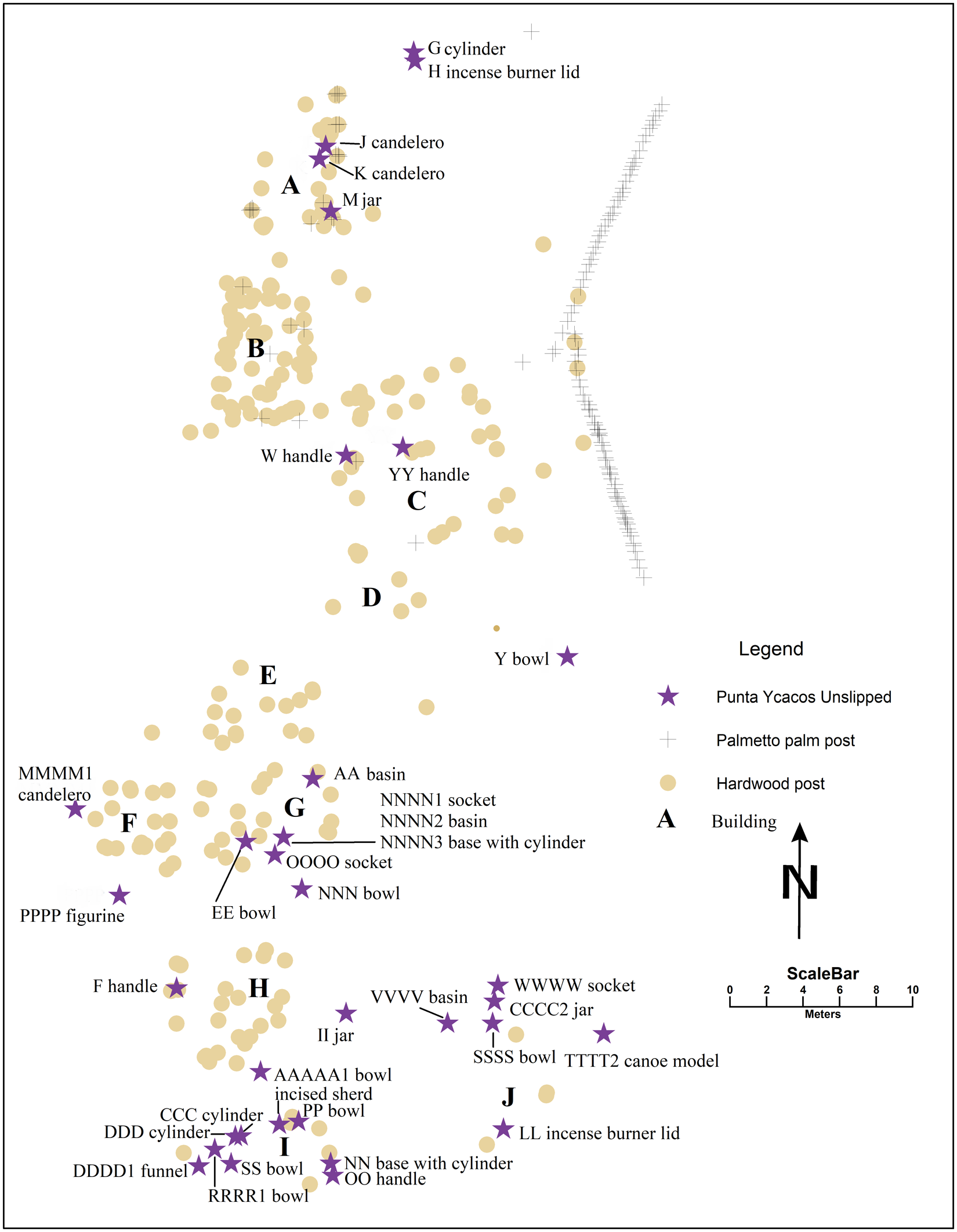
Figure 3 Long description
The map displays the distribution of various artifacts at Ta’ab Nuk Na. Artifacts are marked with symbols, including purple stars for items like cylinders and bowls and dots for other objects. The legend identifies different types of artifacts: cylinders, incense burner lids, bowls, sockets and handles. It also marks posts made from palmetto palm and hardwood and buildings labeled as 'A'. The map includes a scale bar for reference. Spatially, artifacts are clustered in several areas labeled A through J, with specific items like 'G cylinder' and 'H incense burner lid' marked. Posts are distributed along a linear path, while artifacts are scattered throughout the map, indicating varied locations of discovery.
Graphs of radiocarbon dates at Jay-yi Na, Ta’ab Nuk Na, and Ek Way Nal underwater sites.
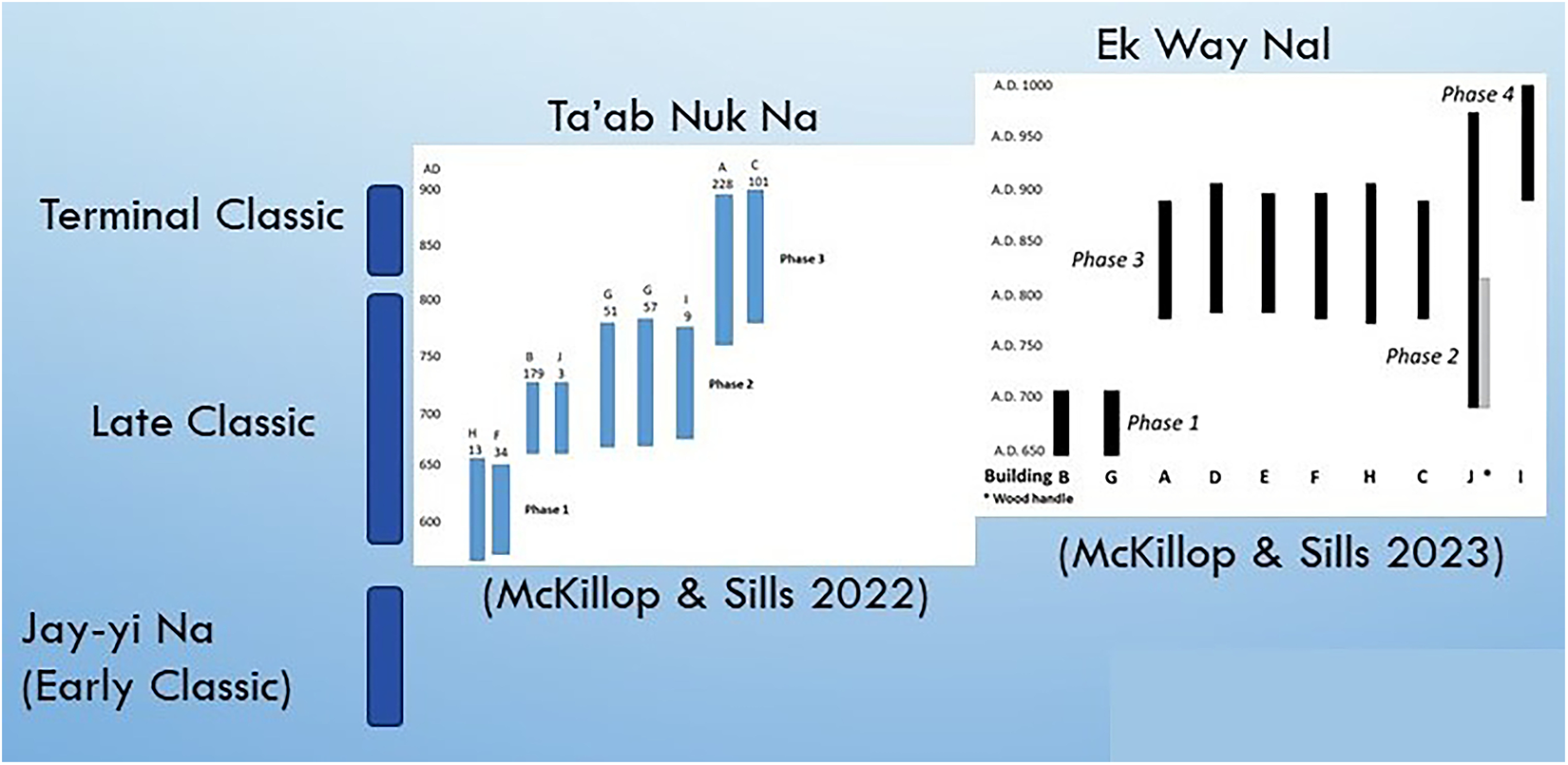
Figure 4 Long description
The image contains two bar graphs presenting building phase data for two archaeological sites across Classic period divisions. The period labels Terminal Classic, Late Classic and Jay-yi Na (Early Classic) appear along the left side of the image and apply to both graphs. Graph 1 is titled Ta'ab Nuk Na. The x-axis lists phases labeled Phase 1, Phase 2, Phase 3 and Phase 4. The y-axis ranges from approximately 40 to 100, with tick marks visible at intervals, but the variable name and units are not labeled. Phase 1 falls within the Jay-yi Na (Early Classic) range. Phase 2 spans the Late Classic range. Phase 3 and Phase 4 extend into the Terminal Classic range. The bars increase in height from Phase 1 through Phase 4, with Phase 4 being the tallest bar in the graph. Numerical values appear above the bars ranging from approximately 6 to 16. Graph 2 is titled Ek Way Nal. The x-axis lists individual letter categories: G, A, D, E, F, H, C, I and J. These letter categories are grouped under phase labels: Phase 1, Phase 2, Phase 3 and Phase 4. Phase 1 covers the Jay-yi Na (Early Classic) range, Phase 2 covers the Late Classic range and Phases 3 and 4 extend into the Terminal Classic range. The y-axis ranges from approximately A.D. 700 to A.D. 1000, with labeled tick marks at A.D. 700, A.D. 750, A.D. 800, A.D. 850, A.D. 900, A.D. 950 and A.D. 1000. The bars vary in height across the letter categories. Phase 4 contains the tallest bar in this graph. A label reading Building Positions appears near the base of the x-axis. Both graphs share the same Classic period timeline structure along their vertical extent.
Evaluating the Nature of Production at the Paynes Creek Salt Works: Field Research, 2019–2024
Questions remained about the scale, concentration, and intensity of production, as well as whether the sites were part of surplus household production. All sites at the Paynes Creek Salt Works used at one time by full-time workers would represent large-scale production. In contrast, if one or a few sites dispersed over the landscape were used at a time by seasonal or part-time workers over the course of several hundred years, the scale, intensity, and nature of craft production would have been much lower. We evaluated whether production fit with Hirth’s contingent multi-crafting and if they were residential.
Transect excavations were carried out at Ta’ab Nuk Na and Ek Way Nal—large sites with 10 buildings each, as well as several small sites near Ta’ab Nuk Na (Figure 2). Excavations examined variability within buildings and sites in the activities, including whether there were residences for salt workers or overseers. Transect excavations used a 1 × 1 m grid excavating in 10 cm levels. Sediment was screened in the water, and artifacts processed at the field lab. Research focused on discovering evidence of activities inside and outside the pole and thatch buildings, including brine enrichment, brine boiling, salting fish, making pottery, and living quarters.
Results
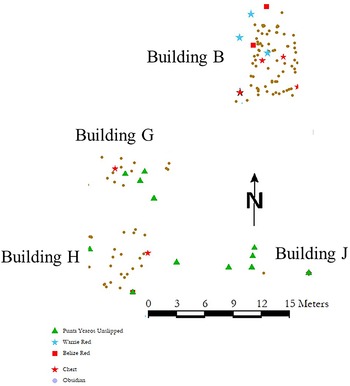
Both residences and dedicated salt kitchens were discovered and excavated at Ek Way Nal and Ta’ab Nuk Na, indicating that the salt workers lived and worked at the salt works from the Late Classic to Terminal Classic (Figure 4; McKillop and Sills Reference McKillop and Sills2022, Reference McKillop and Sills2023, Reference McKillop and Sills2025a). The salt kitchens had abundant briquetage, but few other artifacts (Figures 5–6). In contrast, the residences had a diversity of vessel types and shapes, stone tools, and other material typical of Maya residences. The presence of residences and salt kitchens at Ta’ab Nuk Na and Ek Way Nal indicated production at the sites was surplus household production of salt by workers who lived and worked at the salt works.
Photos of pole and thatch structures from the Maya area: (a) under construction, (b) completed building. Photos from the Robert C. West Photo Collection, courtesy of the Cartographic Information Center, Louisiana State University.
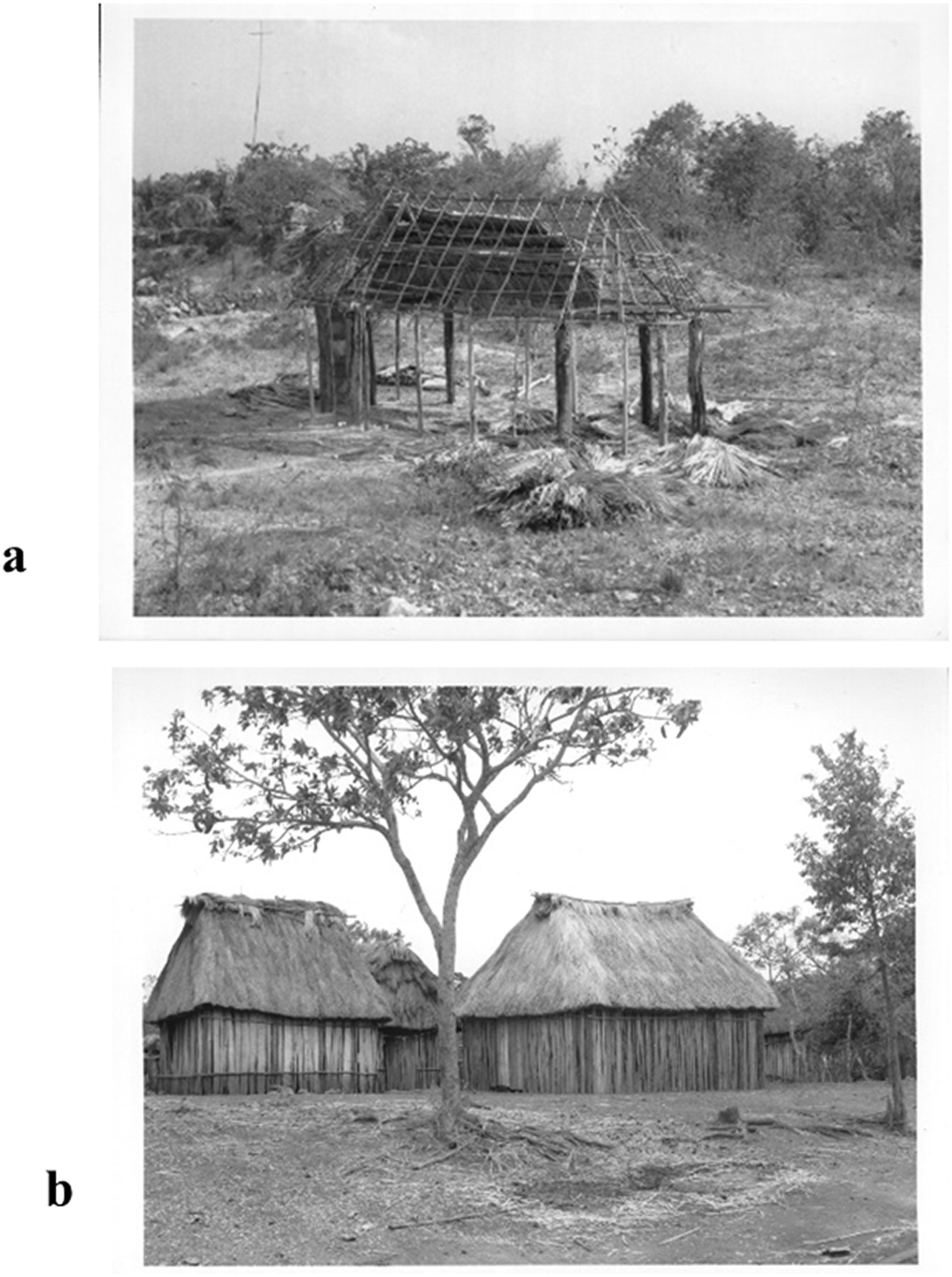
Figure 5 Long description
Image A shows a wooden frame structure under construction, with vertical posts and a roof framework. The area is surrounded by sparse vegetation. Image B displays two completed buildings with thatched roofs and wooden walls, positioned behind a tree. The ground is clear and additional trees are visible in the background.
Wooden posts and artifacts at Ta’ab Nuk Na, showing differences in artifact assemblages between the residence B and salt kitchens G, H, and J. (Color online)
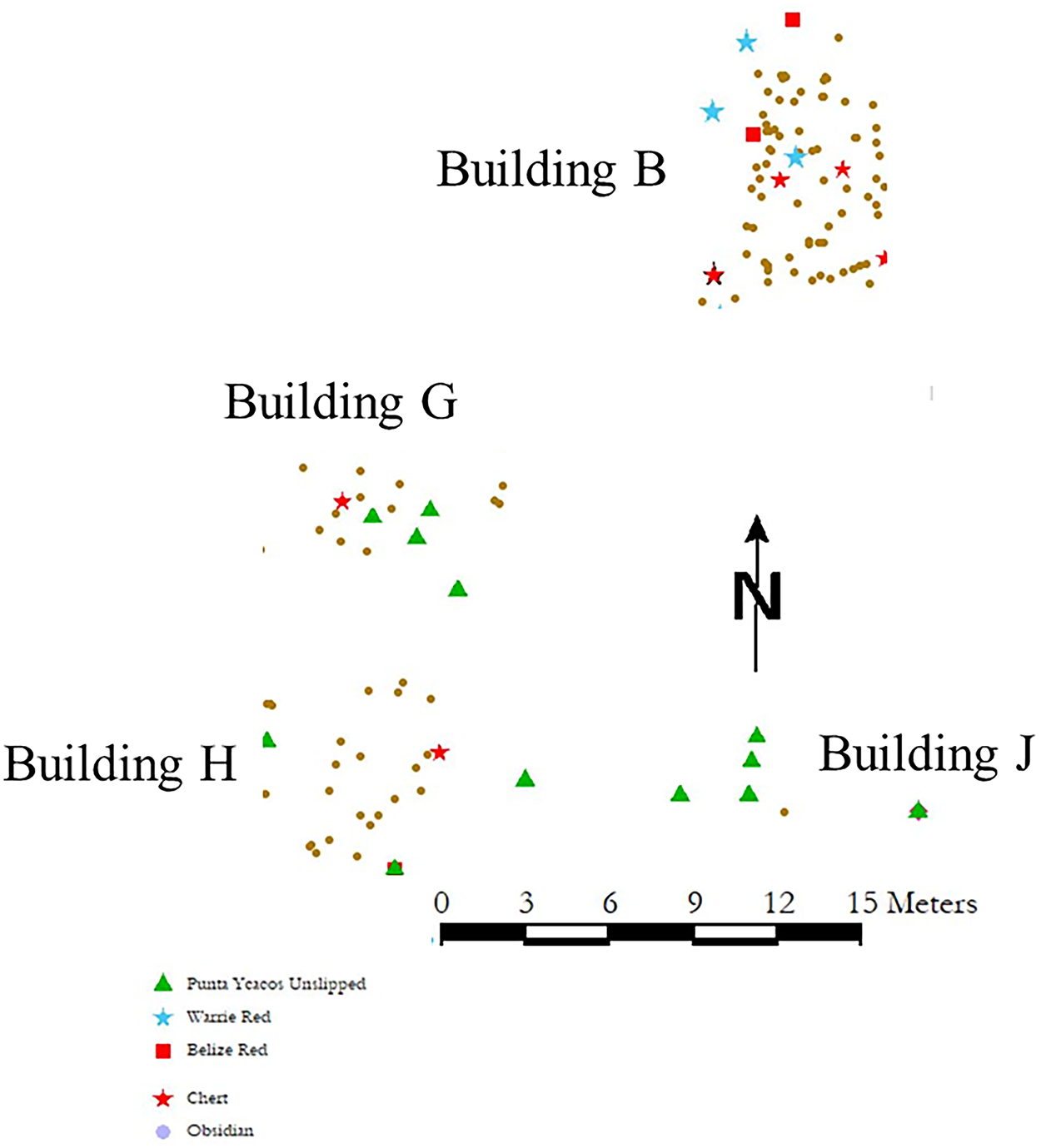
Figure 6 Long description
The map shows artifact distribution at Ta’ab Nuk Na, highlighting buildings B, G, H and J. Symbols represent different artifacts: green triangles for 'Punta Ycacos Unslipped', red triangles for 'Tuna Red', red stars for 'Briquetage', brown circles for 'Chert' and blue stars for 'Obsidian'. Building B has a dense cluster of artifacts, particularly chert and obsidian. Buildings G, H and J show scattered distributions, with a notable presence of green triangles and red stars. A scale bar indicates distances up to 15 meters and a north arrow is present for orientation.
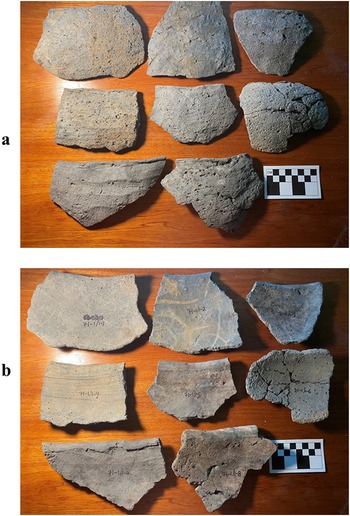
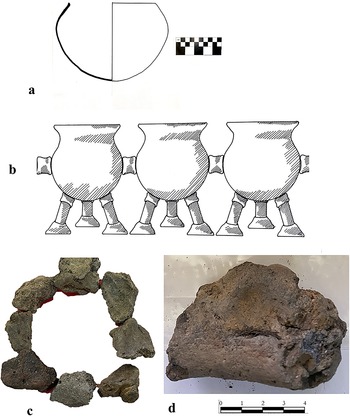
Three technologies were used in boiling brine to make salt at the Paynes Creek Salt Works over time that may indicate technological improvements in production. Excavations at the Jay-yi Nah site revealed a distinct technology of salt production during the Early Classic (AD 250–550; McKillop and Sills Reference McKillop and Sills2025b). The pottery consisted of sherds from large, incurved-bowls, with vessel openings ranging from 32 to 50 cm or larger (Figure 7). The Late Classic salt-making pottery elsewhere consisted of open bowls, jars, and basins supported by solid clay cylinder vessel supports that were standardized in production (McKillop Reference McKillop2002, Reference McKillop2021). Excavations at Site 69 and Ek Way Nal revealed pieces of clay ovens, similar to those used in ancient France that were a technological advance in brine boiling (Olivier and Kovacik Reference Olivier and Kovacik2006). Ovens trapped heat inside requiring less fuel than with the clay pots suspended by clay cylinders above a fire (Figure 8).
Photos of incurved wall bowls from Jay-yi Na underwater site, catalog # 71-1 to 71-6: (a) rough surface of exterior view; (b) smooth surface of interior view. (Color online)
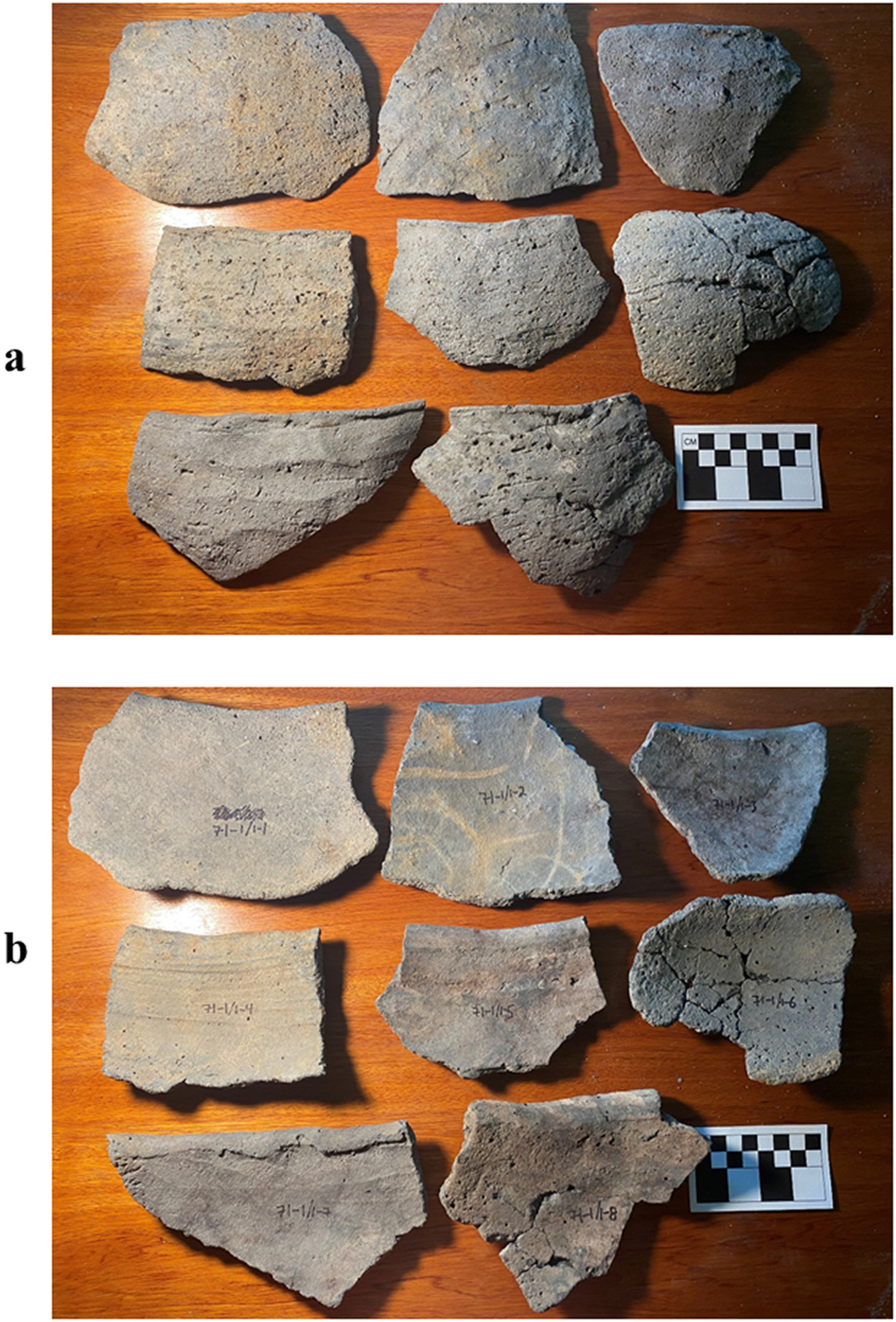
Figure 7 Long description
Image A shows pottery sherds with a rough exterior surface, arranged in two rows on a wooden surface. A scale with a checkered pattern is placed next to the sherds for reference. Image B displays pottery sherds with a smooth interior surface, also arranged in two rows on a wooden surface. Some sherds have catalog numbers written on them and a similar checkered scale is present for size reference.
Comparison of briquetage at the Paynes Creek Salt Works: (a) reconstruction of Early Classic incurved bowl; (b) schematic drawing of vessels elevated by solid clay cylinder supports; (c) clay fragments forming opening for an oven, with curved oven fragment, from Ek Way Nal, building J, catalog 60-391/1-3 to 60-391/1-12. (Color online)
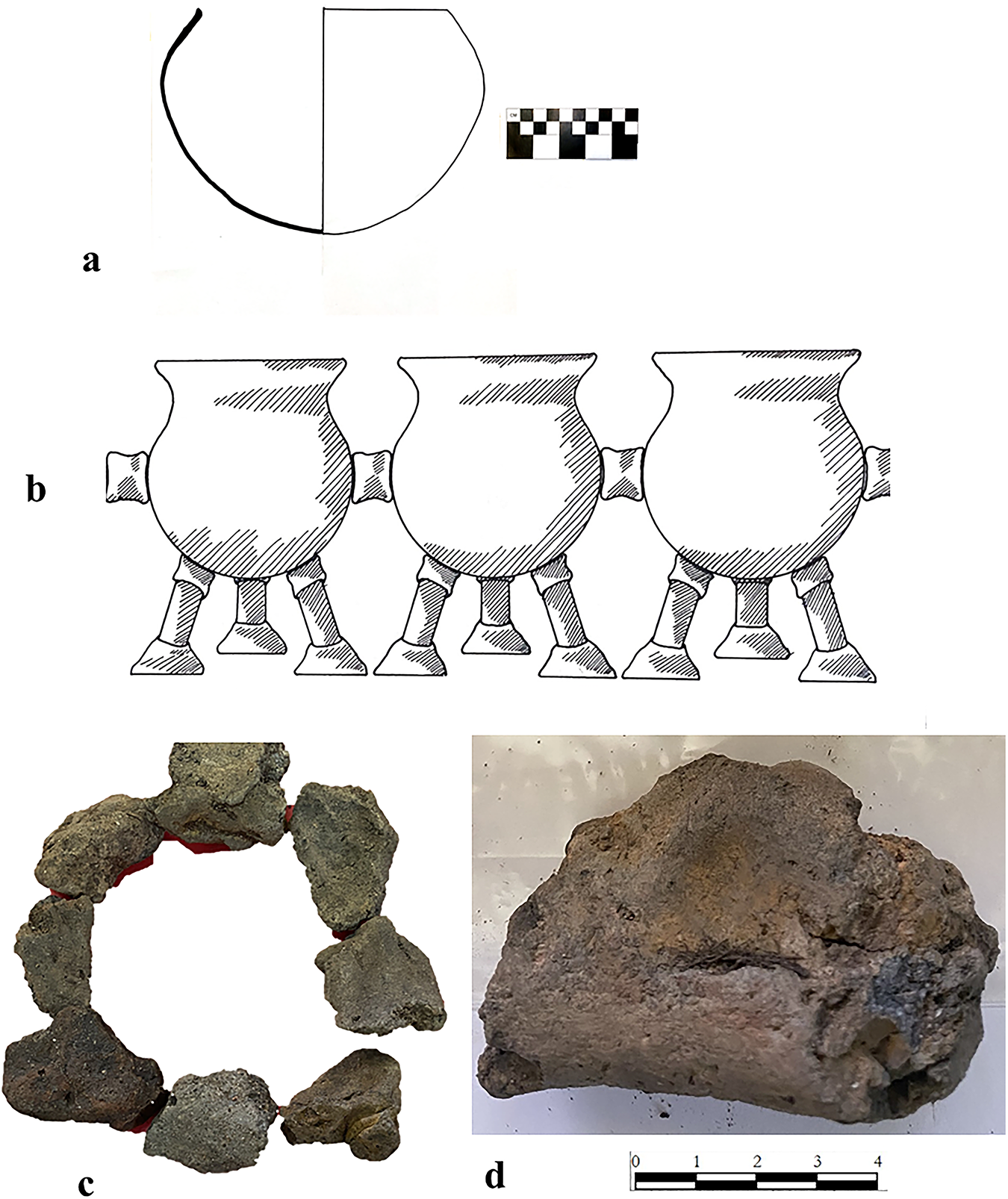
Figure 8 Long description
Image A shows a reconstruction of an Early Classic incurved bowl with a scale for reference. Image B depicts a schematic drawing of vessels elevated by solid clay cylinder supports, illustrating three vessels in a row. Image C displays clay fragments forming an opening for an oven, arranged in a circular pattern. Image D presents a single clay fragment with a scale below it for size reference.
Discussion
In evaluating the organization of production using Costin’s (Reference Costin and Schiffer1991) and Hirth’s (Reference Hirth and Hirth2009) criteria, the Paynes Creek Salt Works included surplus household production of salt, with householders living and working year round at the salt works, similar to Sacapulas. This was independent production, lacking evidence of local overseers representing inland cities, in terms of fancy dwellings or higher quality or quantity of goods. In terms of the intensity of production, the range of activities associated with salt production, from making salt pots and salt, salting fish, cutting and hauling lumber for building construction and for other woodworking, to enriching the brine, and other craftworking, including making calabash bowls, suggests considerable effort in time, organization, and skill, suggesting full-time, seasonal, or year-round use. The organization of production aligns with Hirth’s (Reference Hirth and Hirth2009) concept of contingent multi-crafting. The salt works show distinctive local traits such as integration of salt making with fish processing and woodworking, changes in production technology of the salt pots, and unit-stamped pottery distinctive to southern Belize and adjacent Guatemala. The absence of an overseer and inclusion of residences with salt kitchens suggest an independent identity from salt makers elsewhere in Mesoamerica.
In terms of the scale of production, the Paynes Creek Salt Works consist of sites spread out over 10 km2 (Figure 3). As nearby inland population increased in the Late and Terminal Classic (Braswell et al. Reference Braswell, Prager, Bill, Schwake and Braswell2004; Prufer et al. Reference Prufer, Moyes, Culleton, Kindon and Kennett2011), there was increased demand for salt. We do not yet know if most of the salt works were used at one time, indicating a massive effort at producing salt, or, instead, if a few localities were used at a time over several hundred years, indicating small-scale production. Radiocarbon dating individual buildings at more sites will help identify production intensity over time during the Classic period.
Summary
The research evaluated the organization of salt production at the Paynes Creek Salt Works, Belize. Three alternative hypotheses were used to help guide field research. If the salt works were used periodically by coastal settlers to make salt as needed, then there would not be residences. If the salt works were controlled by inland cities, perhaps by a local overseer, then we expected higher-status goods at one of the residences. If the salt works were the independent production of households who lived and worked there, we expected salt kitchens and residences, which is what was discovered in the research. The redundant production of salt and the variety of contingent activities necessary to maintain production suggest permanent settlement. Salt was marketed by canoe to inland communities during the Classic period, with a variety of household goods, corn, and other food providing ballast and sustenance for the salt workers.
Acknowledgments
The research was carried out under excavation permits IA/H/2/1/19(04), 22(05), 23(09), and 24(08) and export permits IA/H/3/1/19(02), 22(11), 23(09), and 24(08) in 2019, 2022, 2023, and 2024 to Heather McKillop from the Belize Institute of Archaeology. The field teams included Rianna Bowen, Conner Flynt, Cher Foster, Hollie Lincoln, Amanda Meaux, Kaitlin Samples, Rachel Watson, Jackie Young, and the authors.
Funding Statement
This research was supported by the National Science Foundation under Grant 1826653 to Heather McKillop and E. Cory Sills.
Data Availability Statement
Digital documents are catalogued with the Underwater Maya Project materials at LSU and UT Tyler.
Competing Interests
The authors declare none.

 Open access

