INTRODUCTION
The Late Neolithic/Chalcolithic shows regional variability in eastern and southern Iberia (Chapman Reference Chapman1990, Reference Chapman2008; Castro et al. Reference Castro, Escoriza and Oltra Puigdomenech2006; Díaz del Río and García Sanjuan Reference Díaz del Río and García Sanjuan2006). However, at an increasing number of sites through time, important changes in settlement patterns, landscape use, and social relations become evident and point out an existing overall competitiveness within society (Nocete et al. Reference Nocete, Lizcano, Peramo and Gómez2010; Bernabeu et al. Reference Bernabeu, Moreno and Barton2012). This general framework encompasses views related to the center-periphery organization theory that hints at the existence of supraregional intersettlement hierarchical systems, for example, in the Guadalquivir Valley (Nocete et al. Reference Nocete, Lizcano, Peramo and Gómez2010), or to the hypothesis of a class society with a tributary state, as reported for the Los Millares culture (Cámara Reference Cámara2000; Cámara and Molina Reference Cámara and Molina2006), both dating to the Chalcolithic (3000/2800 to 2200 cal BC). Although some researchers have suggested that this social stratification could have been linked to a kinship-based status (Díaz del Río and García Sanjuan Reference Díaz del Río and García Sanjuan2006), no direct evidence from human remains (i.e. aDNA analysis) has been carried out yet to support this idea.
In this changing context of apparent social stratification, the study of collective burials, which become a general trend during the 4th and 3rd millennium cal BC, can shed new light. This phenomenon is associated with different types of tombs: natural caves, megalithic structures, artificial hypogea, and various types of chamber tombs. Funerary contexts have produced impressive evidence in some areas, such as an extramural cemetery with more than 100 tholoi tombs varying in size and grave goods accumulation in Los Millares (Chapman Reference Chapman1990, Reference Chapman2003). In the region, grave goods include pottery, polished stone tools, large flint blades, flint arrowheads, carved bone “idols,” and ornaments. One remarkable feature occurring in the Valencia region is the exclusivity of the use of natural caves for collective burials during the Late Neolithic and Chalcolithic periods. Even though there are several examples of individual pit tombs (García Puchol et al. Reference García Puchol, Bernabeu Aubán, Carrión Marco, Molina Balaguer, Pérez Jordà and Gómez Puche2013a), for nearly 2 millennia collective burials constitute the dominant burial pattern (Soler Reference Soler2002; McClure et al. Reference McClure, García-Puchol, Roca de Togores, Culleton and Kennett2011; García Puchol et al. Reference García Puchol, Aura and McClure2012a, Reference García Puchol, Cotino Villa, Miret Estruch, Pascual Benito, McClure, Molina Balaguer, Alapont Martín, Carrión Marco, Morales, Blasco Senarbe and Culleton2012b). About 130 sites are known in the region, but information concerning the sequence and archaeological remains is often scarce and frequently not available (Soler Reference Soler2002). Isolated caves and crevices (a crack forming an opening on the bedrock) as well as groups of burial sites, concentrated within a limited shared necropolis area that can occasionally be associated with neighboring valley hamlets, have been documented (García Puchol and Gómez Pérez Reference García Puchol and Gómez Pérez2011).
As a matter of fact, collective burials are central to the hypothesis about social relationships in Copper Age societies from Iberia and are key for interpreting kinship-based societies (Chapman Reference Chapman2008). This is one of the reasons why the timespan of rituals used for this type of burial must be properly documented. Using radiocarbon dates on all the skeletal remains, which define the minimum number of individuals (MNI), is fundamental to produce a complete picture of the period during which the burial site was used and better identify its commencement.
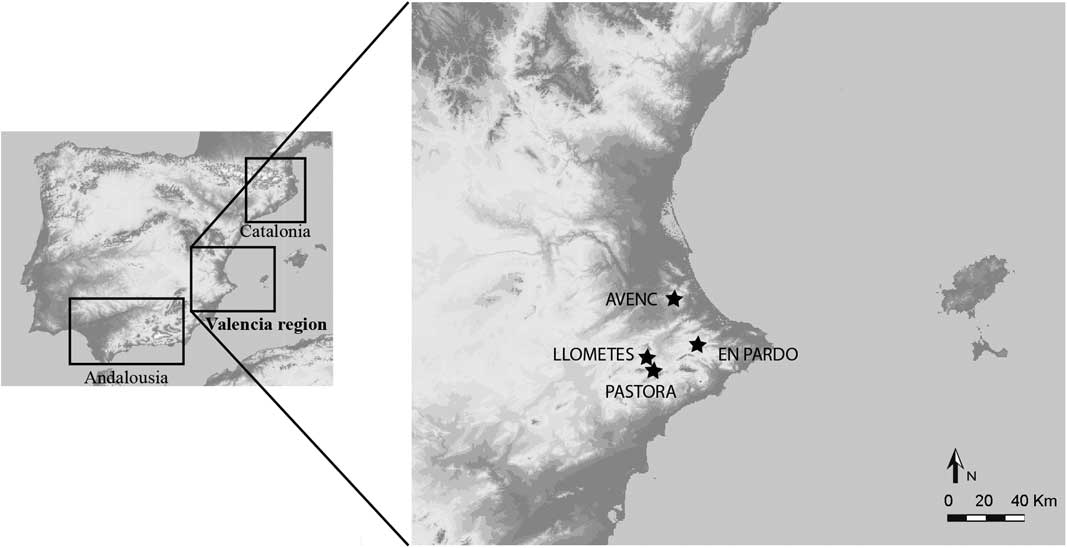
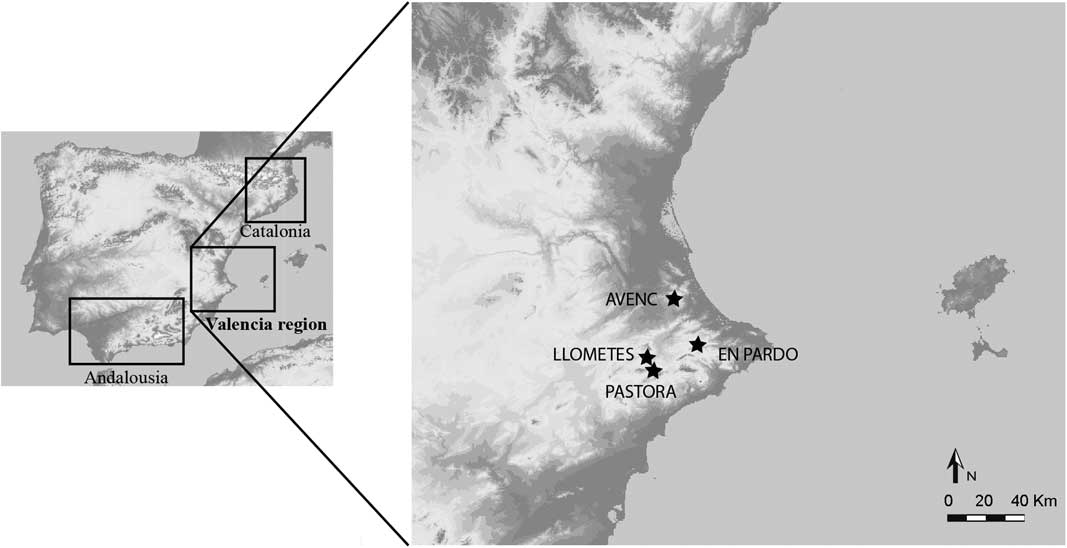
The Llometes burial site is well known in Spanish literature, since it is one of the first collective burials to be excavated at the end of the 19th century. At the time, Siret’s works on several famous Chalcolithic and Bronze Age sites from Almeria, such as Los Millares and El Argar, were published (Siret and Siret Reference Siret and Siret1887). The Llometes site includes two cavities, a cave and a crevice, situated within 15 m of each other, and located within the municipality of Alcoy, in the autonomous region of Valencia, Spain (Figure 1). Herein, Les Llometes will refer to the whole Llometes burial site; the crevice or the cave will be specified as such.
Map of Late Neolithic sites from eastern Iberia mentioned in the text
The Les Llometes site is positioned at the exit of the Barranc del Cinc ravine environment, towards the southeast of the Mariola Mountains. In 1884, naturalist Vilanova i Piera and engineer Vilaplana i Julia conducted investigations at the Llometes Cave, which were later transcribed by Vicedo and published by Pascual Pérez (Reference Pascual Pérez1963). The small cavity, measuring 6×2.5 m, had a stratigraphical sequence spanning at least two levels, reaching 1.8 m in depth from the surface. The first level contained a total of six skeletons (placed in prone position) and grave goods consisting mainly of pottery and metal weapons. The second level revealed 18 skeletons, positioned laterally and containing various remains including pottery, polished stone tools, large flint blades and flint arrowheads, as well as ornaments, although no metal artifacts were recorded. Unfortunately, the skeletal remains and grave goods recovered from Les Llometes Cave were dispersed among various private collections and later lost, while only a small part (five skulls) of the archaeological material was stored in the Archaeological Museum of Alcoi and the National Archaeological Museum of Madrid.
In the middle of the 20th century, during the construction of a power station, a crevice containing numerous human remains was discovered. The excavation was then conducted and published by Pascual Pérez (Reference Pascual Pérez1963), although this area of the site was narrow (11×0.5 m) and difficult to access. In contrast to Les Llometes Cave, the orientation of the human remains found in Les Llometes Crevice was not recorded, and the archaeologist described them as being completely dismembered. The remains of the 23 individuals buried in the crevice, and their associated grave goods, were all stored in the Archaeological Museum of Alcoi.
Les Llometes is one of the biggest collective burials existing in eastern Iberia. Defining the precise time period for this type of burial ritual will help to understand the social transformations occurring during the Neolithic that led to a communal type of burial, not seen before in the region. More importantly, the direct 14C dates on all the skeletal remains at the site can show if both cave and crevice of Llometes burial site were used simultaneously, opening a new possibility of transition towards social structure through the use of a cemetery space. Besides checking ritual continuity through time, it is also important to rigorously document the presence of potential skeletal intrusions in this burial site from more recent periods as reported in other Neolithic sites in the region (Roca de Togores Muñoz and Soler Díaz Reference Roca de Togores Muñoz and Soler Díaz2010; Soler et al. Reference Soler, Roca de Togores and Ferrer2010; Salazar-García Reference Salazar-García2012).
SAMPLE SELECTION AND METHODS
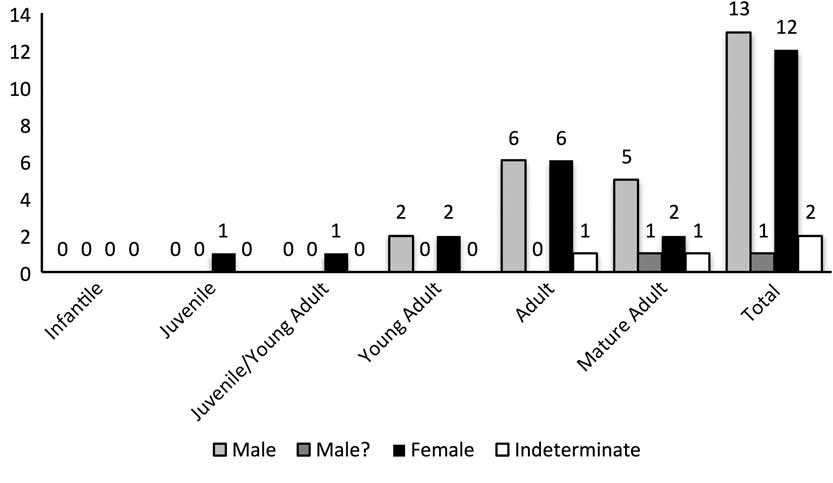
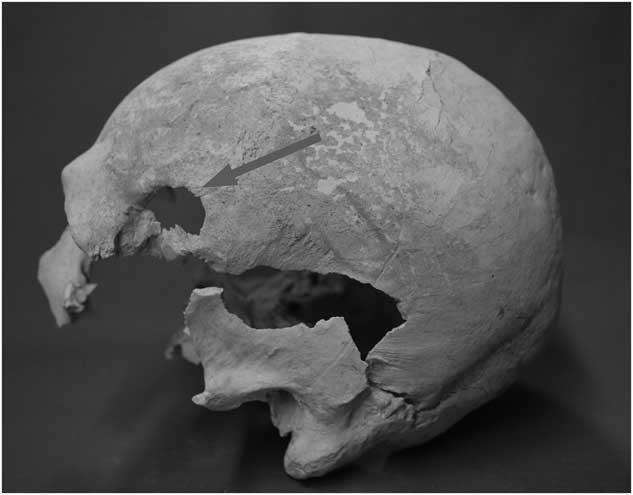
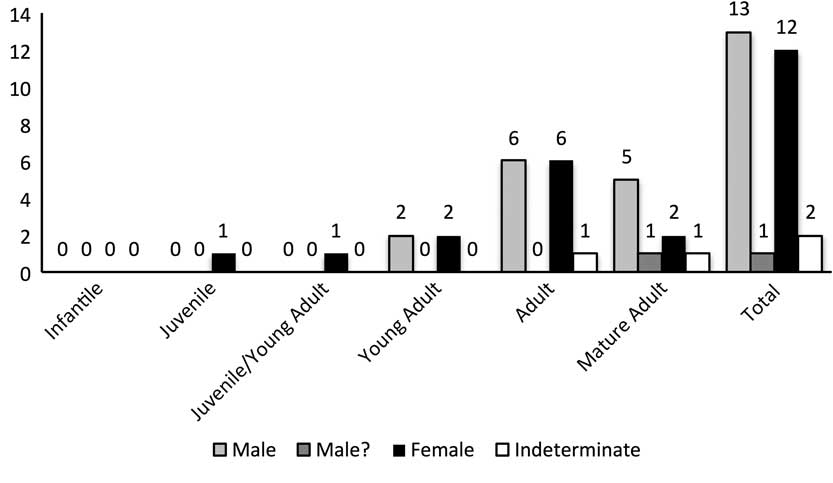
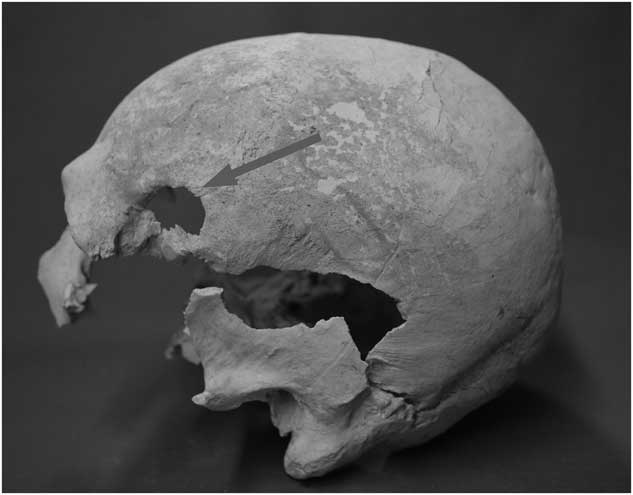
A preliminary osteological analysis was carried out in order to provide an anthropological background. It comprised the study of complete skulls and skull fragments with different degrees of preservation, since this is the anatomical part that defines the MNI at Les Llometes. The results of this study has yielded the presence of 28 adult individuals: 23 from the crevice and 5 from the cave. The sex and age distribution of the 23 skulls from the crevice and the five skulls from the cave is illustrated in Figure 2. The presence of four skulls with traumatic pathology is especially interesting because wound healing signs and remodeled borders suggest a long post-trauma survival as observed in Figure 3 (Campillo Reference Campillo1996). Study and sampling of all archaeological material included in this manuscript was carried out by permission of the director of the Archaeological Museum of Alcoi (Alcoi, Alicante, Spain), where they are currently stored (museum codes are given in Tables 1 and 2). Skull fragments from all 28 human adult individuals were sampled for 14C dating.
Sex and age distribution graph from the 28 identified individuals of Les Llometes (3 young adult females, 2 young adult males, 6 adult females, 5 adult males, 2 mature adult females, 6 mature adult males, 1 probable mature adult male, 2 indeterminate adult males).
Skull with traumatic pathology on frontal bone with clear signs of bone remodeling.
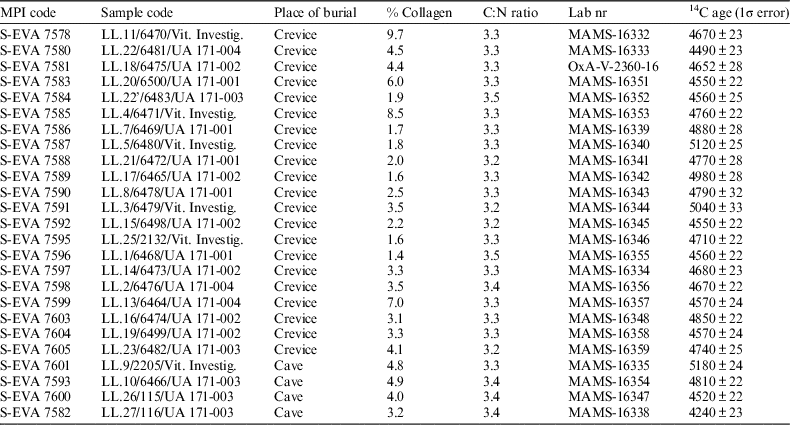
AMS 14C dating of Les Llometes, C:N ratios, amount of collagen extracted (% Collagen) refer to the >30kDa fraction.

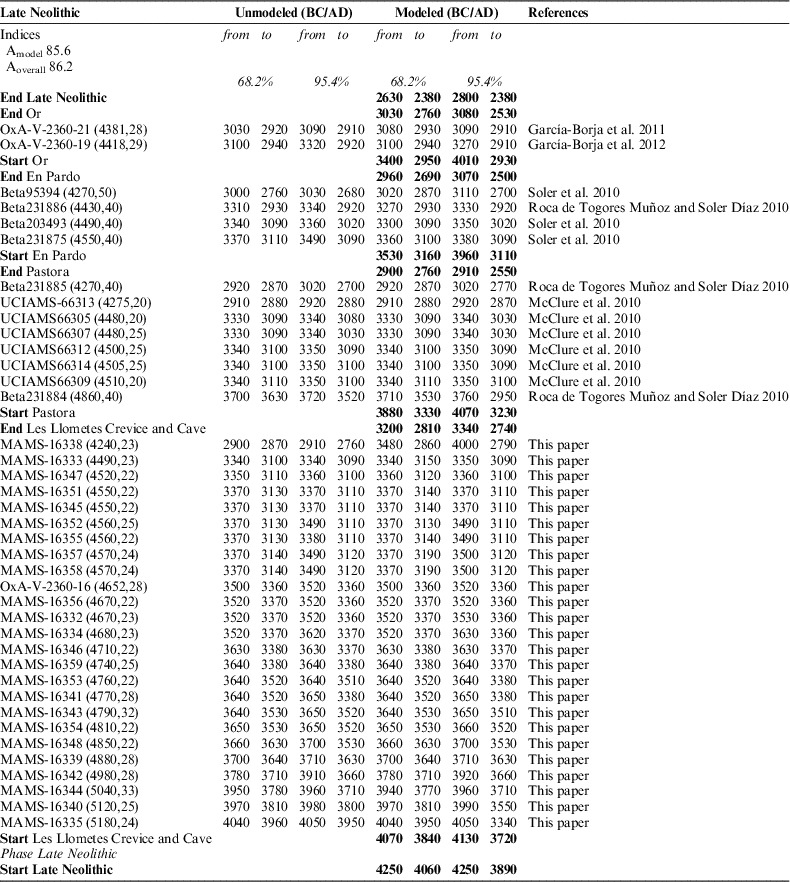
Calibrated AMS 14C dating of Les Llometes (unmodeled). Calibrated boundaries and ages of all the Late Neolithic sites from eastern Iberia mentioned in the text. All calibrations and the model were performed using OxCal v 4.2 (Bronk Ramsey and Lee Reference Bronk Ramsey and Lee2013) with the IntCal13 curve (Reimer et al. Reference Reimer, Bard, Bayliss, Beck, Blackwell, Bronk Ramsey, Grootes, Guilderson, Haflidason, Hajdas, Hatté, Heaton, Hoffmann, Hogg, Hughen, Kaiser, Kromer, Manning, Niu, Reimer, Richards, Scott, Southon, Staff, Turney and van der Plicht2013).

Prior to collagen extraction, visible contaminants were removed using aluminum oxide powder abrasion. Collagen extraction for 14C dating was carried out at the Department of Human Evolution, Max Planck Institute for Evolutionary Anthropology (MPI-EVA) in Leipzig, Germany, using the method described in Talamo and Richards (Reference Talamo and Richards2011); 500 mg of bone were decalcified in 0.5M hydrochloric acid (HCl), and kept at room temperature until no CO2 effervescence was observed. Then, 0.1M sodium hydroxide (NaOH) was added for 30 min, to remove humic substances. The NaOH step was followed by a final immersion in 0.5M HCl for 15 min. The resulting solid was gelatinized following Longin (Reference Longin1971) at pH 3 in a heater block set at 75°C for 20 hr. The gelatin was then filtered using an Eeze-Filter™ (Elkay Laboratory Products Ltd., UK) to remove small (<80 mm) particles. The gelatin was then ultrafiltered using Sartorius “Vivaspin 15” 30kDa ultrafilters (Brown et al. Reference Brown, Nelson, Vogel and Southon1988). Prior to use, the filters were cleaned to remove any carbon-containing humectants (Higham et al. Reference Higham, Jacobi and Bronk Ramsey2006). The samples were finally lyophilized for 48 hr. Only 3 samples of 28 did not produce enough collagen for 14C dating. Between 3 and 5 mg of the 25 remaining collagen samples were then sent to the Klaus-Tschira-AMS facility of the Curt-Engelhorn Centre in Mannheim, Germany, where they were graphitized and AMS dated (Kromer et al. Reference Kromer, Lindauer, Synal and Wacker2013). All dates were corrected for a residual preparation background estimated from pretreated 14C-free bone samples, kindly provided by the ORAU, and pretreated in the same way as the archaeological samples.
The collagen quality control was performed through the analysis of stable isotopes and the collagen yield. The stable isotope analysis was carried out at the MPI-EVA, Leipzig (S-EVA: lab code), using a Thermo Finnigan Flash EA coupled to a Delta V isotope ratio mass spectrometer.
RESULTS AND DISCUSSION
At Les Llometes, the C:N ratio of all the samples is fully within the acceptable range (between 2.9 and 3.6). Furthermore, all samples displayed a collagen yield substantially higher than the 1% of weight used as a standard limit (Ambrose Reference Ambrose1990; van Klinken Reference van Klinken1999) (Table 1).
All the 14C results are listed in Table 1. The Les Llometes burials in the cave range from 5180±24 to 4244±23 14C BP. For the crevice, burials range from 5120±25 to 4490±23 14C BP. This study is one of the few investigations of Late Neolithic collective burials in Iberia to comprise an extensive AMS 14C data set of almost all the individuals reported at a single site (Les Llometes Crevice, 21 out of 23 individuals; Les Llometes Cave, 4 out of 5 available individuals from an estimated total of 25). The number of direct 14C dates available for human remains, associated with Neolithic mortuary deposits, has increased in recent years, but few intensive studies comparable to Les Llometes have yet been published (Gibaja et al. Reference Gibaja, Carvalho and Chambon2012).
As we pointed out, in the Valencia region (eastern Iberia), collective burials in natural caves are common during the Late Neolithic and Chalcolithic periods. However, despite the great number of Late Neolithic burial deposits recorded in this region, only four (Pastora Cave, En Pardo Cave, Cova de l’Or, and Les Llometes) have a chronological data set of 14C carried out directly on human remains. Of these, only Pastora Cave (McClure et al. Reference McClure, Garcia Puchol and Culleton2010; García Puchol et al. Reference García Puchol, McClure, Blasco Senabre, Cotino Villa and Porcelli2013b), En Pardo Cave (Soler Díaz and Roca de Togores Muñoz Reference Soler Díaz and Roca de Togores Muñoz1999; Soler et al. Reference Soler, Roca de Togores and Ferrer2010), and now Les Llometes (this paper) offer a significant data sample.
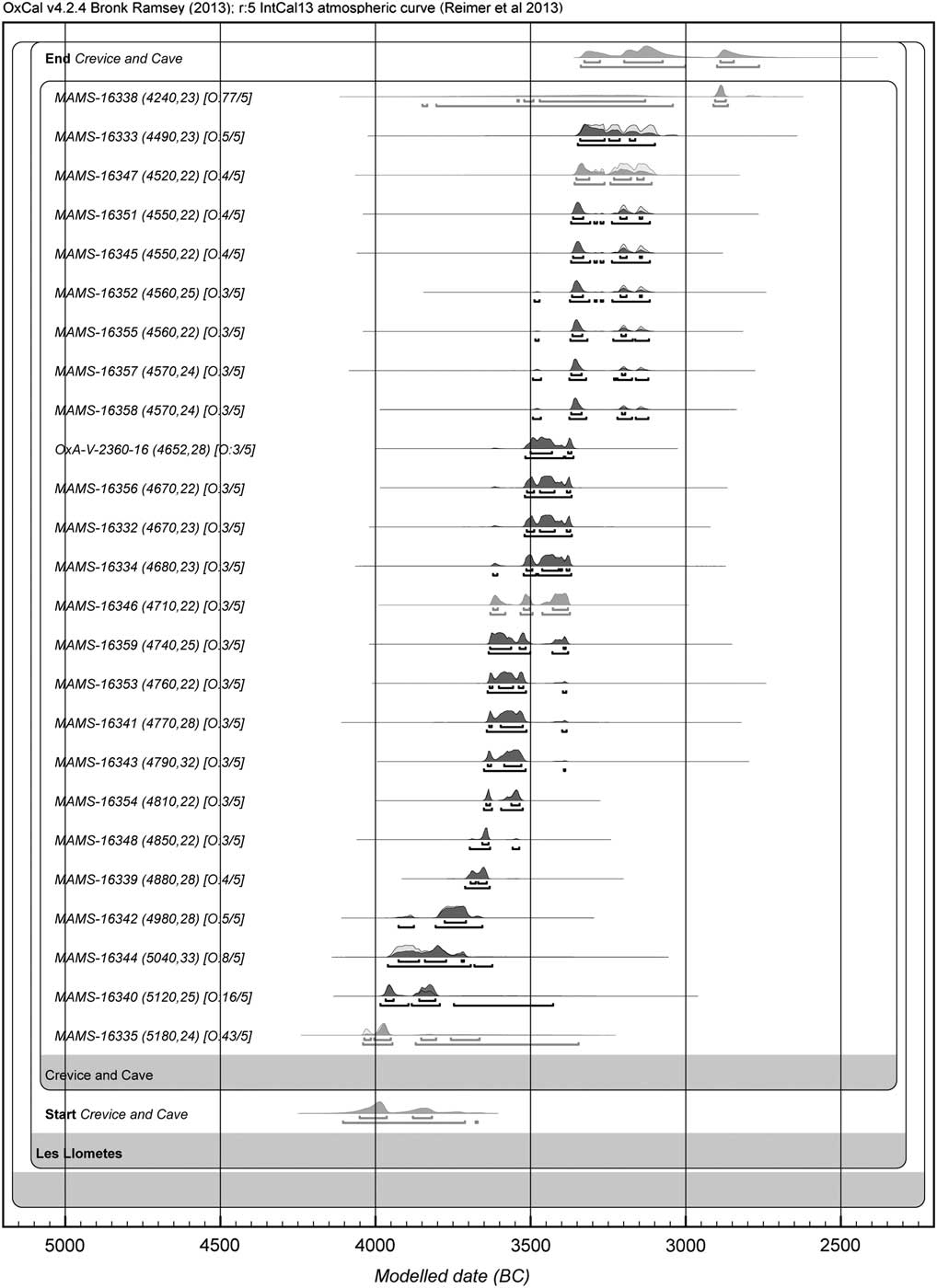
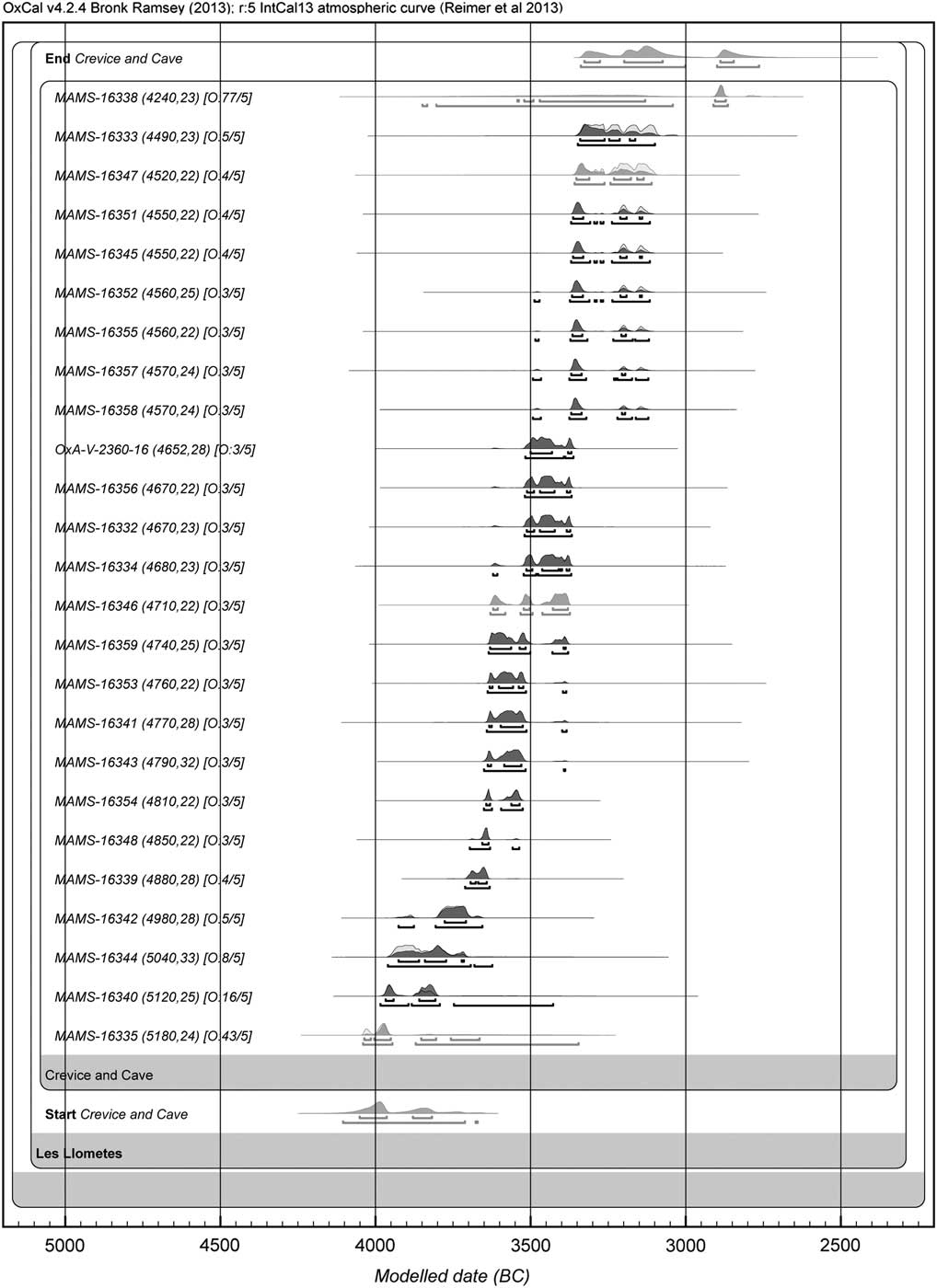
We created a Bayesian model of the Les Llometes site, together with the other aforementioned Late Neolithic sites. To achieve a better resolution, we divided the graph into two parts (Figures 4 and 5). The 14C dates were calibrated using OxCal v 4.2.3 (Bronk Ramsey and Lee Reference Bronk Ramsey and Lee2013) and the IntCal13 curve (Reimer et al. Reference Reimer, Bard, Bayliss, Beck, Blackwell, Bronk Ramsey, Grootes, Guilderson, Haflidason, Hajdas, Hatté, Heaton, Hoffmann, Hogg, Hughen, Kaiser, Kromer, Manning, Niu, Reimer, Richards, Scott, Southon, Staff, Turney and van der Plicht2013) (Table 2). Figure 4 focuses on Les Llometes site, where we include all the dates from the crevice (in black) and the cave (in red, online version of article) in a single phase. Les Llometes Crevice and Cave were used as a mortuary deposit between the beginning and the end of the 4th millennium cal BC. It is possible that Les Llometes Cave began to be used for burial a little earlier than the crevice (at the end of the 5th and beginning of the 4th millennium cal BC) and ended later during the Chalcolithic period in the region at the start of the 3rd millennium cal BC (start boundaries at 4070–3840 and ending at 3200–2810, both at 68.2% confidence level, Figure 4, Table 2). Although only a few 14C dates are available for Les Llometes Cave, these results confirm the simultaneous use of the two mortuary spaces. While 14C dates from Les Llometes show that it was used for burial for almost a millennium starting at the end of the 5th millennium, the discovery of metal and a copper punch during older excavations at Les Llometes Cave (Pascual Pérez Reference Pascual Pérez1963) suggests that it was in use until the Chalcolithic and even perhaps the Bronze Age periods (Soler Reference Soler2002).
Calibrated ages and boundaries calculated using OxCal v 4.2 and IntCal13 (Bronk Ramsey and Lee Reference Bronk Ramsey and Lee2013; Reimer et al. Reference Reimer, Bard, Bayliss, Beck, Blackwell, Bronk Ramsey, Grootes, Guilderson, Haflidason, Hajdas, Hatté, Heaton, Hoffmann, Hogg, Hughen, Kaiser, Kromer, Manning, Niu, Reimer, Richards, Scott, Southon, Staff, Turney and van der Plicht2013) from Les Llometes Crevice (in black) and Cave (in red in the online version) human remains.
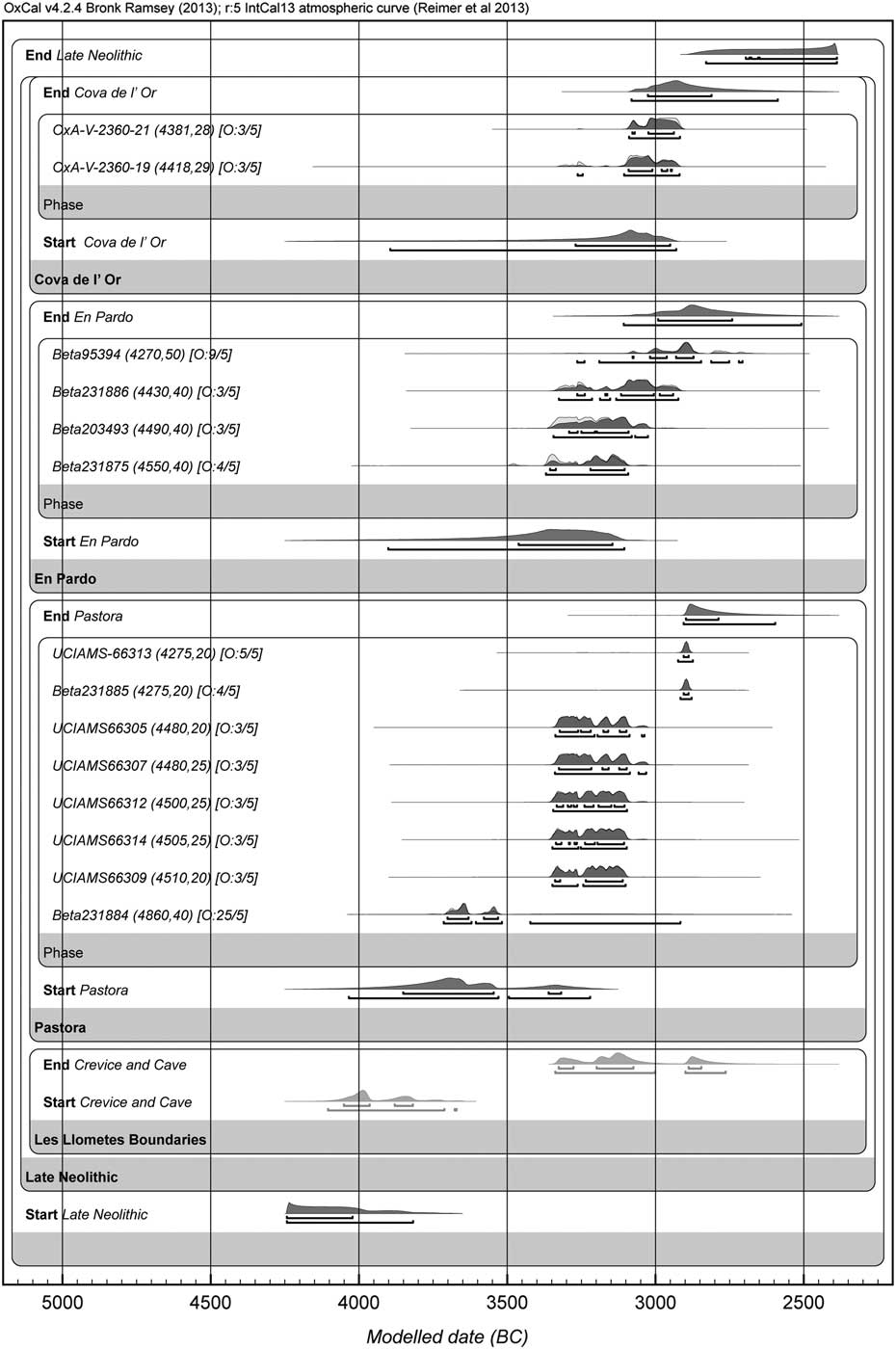
Calibrated ages and boundaries of all the Late Neolithic sites mentioned in the text calculated using OxCal 4.2 and IntCal13 (Bronk Ramsey and Lee Reference Bronk Ramsey and Lee2013; Reimer et al. Reference Reimer, Bard, Bayliss, Beck, Blackwell, Bronk Ramsey, Grootes, Guilderson, Haflidason, Hajdas, Hatté, Heaton, Hoffmann, Hogg, Hughen, Kaiser, Kromer, Manning, Niu, Reimer, Richards, Scott, Southon, Staff, Turney and van der Plicht2013). The end and start boundaries of Les Llometes produced in Figure 4 are shown in red in the online version of this article.
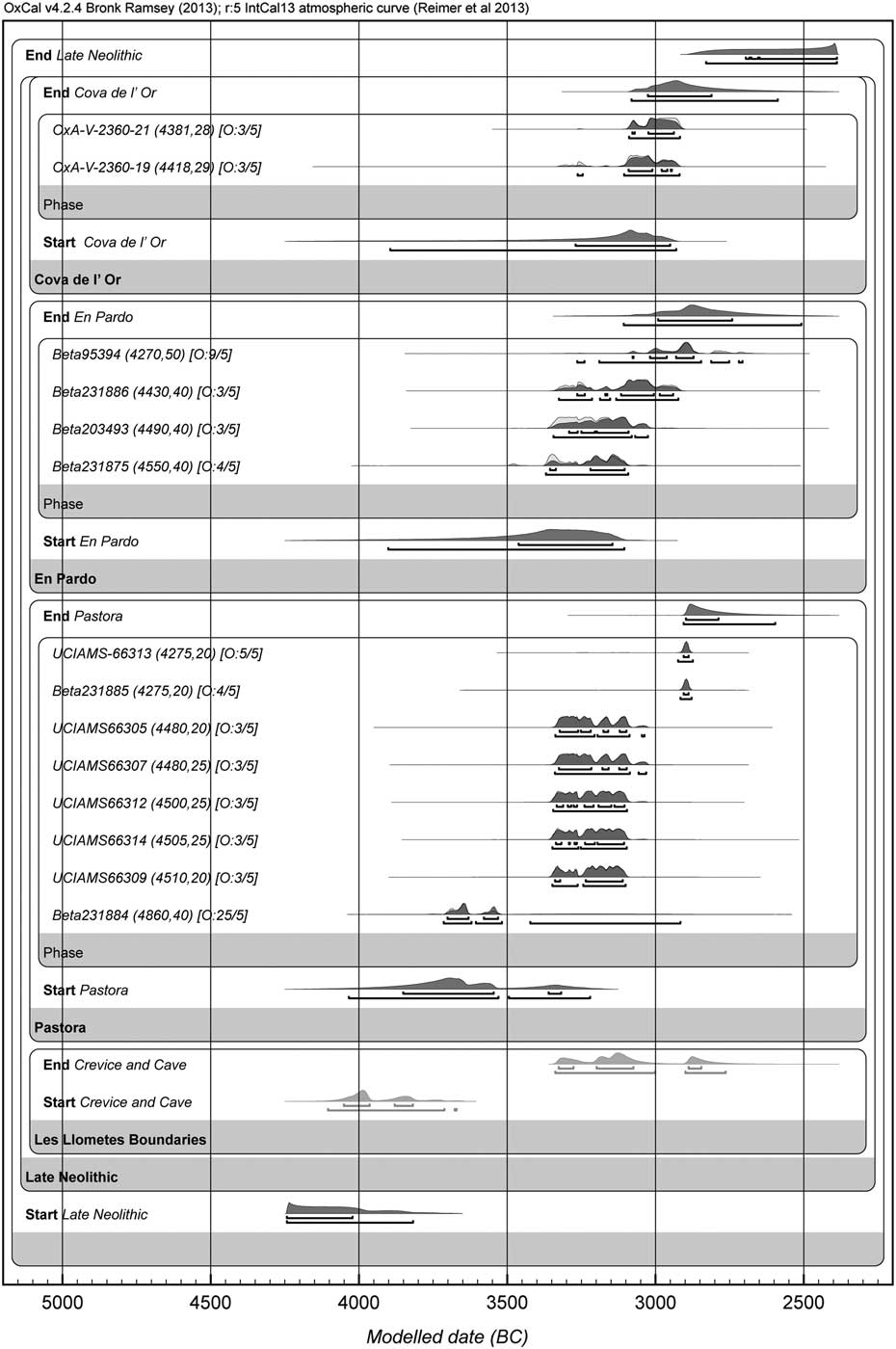
Figure 4 is just a part of a broader figure (Figure 5), where the other three mentioned Late Neolithic sites are shown together with the Les Llometes boundaries. The data set from Pastora Cave (in total 12 AMS dates from a total number of 56 individuals) shows a long-term use of this type of mortuary space, spanning nearly 2 millennia, during the Late Neolithic, Chalcolithic, Bell Beaker, and Bronze Age periods (second quarter of 5th millennium to the first quarter of the 2nd millennium; McClure et al. Reference McClure, Garcia Puchol and Culleton2010). A similar, though slightly shorter timespan, was established by six AMS dates measured from human remains excavated from En Pardo Cave (Soler et al. Reference Soler, Roca de Togores and Ferrer2010) and two AMS dates measured from human remains from Cova de l’Or (García-Borja et al. Reference García-Borja, Salazar-García, Pérez Fernández, Pardo Gordo and Casanova Vañó2011, 2012). Here we focus only on the Late Neolithic time period of tehse sites. As calculated by OxCal v 4.2 (Bronk Ramsey and Lee Reference Bronk Ramsey and Lee2013), the other three burial sites are contemporary to Les Llometes site, as shown in Figure 5. To conclude, the Late Neolithic collective burials in the region start at 4250 and end at 2380 cal BC at a 68.2% degree of confidence (Table 2).
The 14C dates obtained from both burial areas at Les Llometes (crevice and cave) show that collective burial rituals appear earlier than previously documented for eastern Iberia (McClure et al. Reference McClure, Garcia Puchol and Culleton2010), between the end of the 5th millennium and beginning of the 4th millennium cal BC. This dominant collective burial ritual clearly contrasts with both previous and later periods in the region (García Puchol et al. Reference García Puchol, Aura and McClure2012a). Formerly, Neolithic burial practices show a variety of customs, outside of inhabited sites as well as in caves and rock shelters (Bernabeu et al. Reference Bernabeu, Molina and García-Puchol2001). During the Early and Middle Neolithic, the scarce human burial record indicates a range of practices, such as individual pit burials and the isolated use of caves, which frequently have unclear archaeological contexts (García-Borja et al. Reference García-Borja, Salazar-García, Pérez Fernández, Pardo Gordo and Casanova Vañó2011, Reference García-Borja, Salazar-García, Martins, Pérez-Jordá and Sanchis-Serra2012). Later on, during the Chalcolithic and Bronze Age, there is a more homogeneous and common presence of individual pit tombs (Bernabeu Reference Bernabeu2010; García Puchol et al. Reference García Puchol, Aura and McClure2012a).
When comparing the appearance of collective burials in Les Llometes from eastern Iberia with the appearance of the same mortuary ritual in nearby Iberian regions, it stands out that this site is one of the earliest documented sites in the region. A brief review of published dates from collective tombs associated with megalithic structures from the regions of Andalucía (Díaz Zorita et al. Reference Díaz Zorita, Eleazar Costa and García Sanjuan2012) and the inner Meseta (Rojo-Guerra and Garrido Pena Reference Rojo-Guerra and Garrido Pena2012) suggest a bit later start than at Les Llometes (first quarter of the 4th millennium cal BC). At the same time as collective burials flourish in many regions of Iberia, during the first centuries of the 4th millennium cal BC, in Catalonia the Sepulcros de Fosa culture is dominant and attested by the characteristic burial feature of one or two bodies interred in pits of a varied morphology (Gibaja et al. Reference Gibaja, Carvalho and Chambon2012). More direct 14C dating projects are required to build a representative chronological map that will allow a better understanding of this variability in synchronic and diachronic burial practices between and among Iberian regions. This is especially necessary in eastern Iberia, where of the ~130 purported Late Neolithic/Chalcolithic collective burials, only less than a tenth count with an accurate chronological framework based on direct dates and modern-technique excavations (McClure et al. Reference McClure, Garcia Puchol and Culleton2010; Pérez Fernández and Soler Mayor Reference Pérez Fernández and Soler Mayor2010).
Meanwhile, dating almost all individuals from a collective burial as has been done for Les Llometes helps to start filling the knowledge gap on individual burial timing, thus serving as a starting point for the further study of potential social use of these collective burials. Based on the 14C results presented here, one can observe equivalent chronologies at specific time periods for both the crevice and the cave (Figure 4), indicating that both acted as a necropolis for the same population. This suggests that at Les Llometes, the dead were intentionally buried in either the crevice or the cave, which with future analysis might support the hypothesis suggesting the existence of different social status or lineages. So far, social inequality signs in the region have been deduced mainly from aspects such as settlement patterns, settlement size, unequal storage capacity, or control and distribution of raw materials and crafts (Bernabeu Aubán et al. Reference Bernabeu Aubán, Molina, Orozco and Díez2006). Hamlets excavated in the region show different storage capacities between sites and among different dwellings on the same site, suggesting social inequalities between families or groups (Pérez Jordà et al. Reference Pérez Jordà, Bernabeu and Gomez Puche2011; García Puchol et al. Reference García Puchol, Molina Balaguer, Cotino, Pascual Benito, Orozco, Pardo, Carrión, Pérez and Clausí2014). Perhaps the simultaneous use of the two mortuary spaces reported at Les Llometes supports these views, although between the groups of individuals buried in the two areas there are no observed differences in terms of sex, age, or spatial distribution of grave goods. It is therefore difficult to confirm social distinction from the burial context with the current available data. As an alternative to different social status, we should also consider the possibility that selected lineages were linked to distinctive collective burials (Lillios et al. Reference Lillios, Artz, Waterman, Mack, Thomas, Trindade and Luna2014). Both hypotheses, however, need to be corroborated with more data. Further multi-isotope and ancient DNA studies at Les Llometes and other collective (García-Borja et al. Reference García-Borja, Pérez Fernández, Biosca Cirujeda, Ribera i Gomes and Salazar-García2013; McClure et al. Reference McClure, Podrug, Moore, Culleton and Kennett2014; Salazar-García Reference Salazar-García2014) and individual (Salazar-García Reference Salazar-García2009, Reference Salazar-García2011) burials in the region would provide a better understanding of the nature of social relationships from a synchronic and diachronic perspective among Neolithic/Chalcolithic populations in eastern Iberia and western Europe.
To summarize, the extensive 14C data set obtained from Les Llometes individuals is a first milestone to support future studies to assess the emergence of social complexity and status differentiation in the Late Neolithic at a site that has played an important role in the prehistory of eastern Iberia for over 100 yr. It confirms the use of natural caves for collective burials over more than a millennium. Both the Les Llometes Crevice and Cave show an early start for collective burials as a routinely practiced ritual, spanning from the Late Neolithic until the beginning of the Chalcolithic, and providing evidence of a continuation of ritual practice through time. Of particular interest is that these 14C results also document the earliest use of caves for collective burials in the Late Neolithic of eastern Iberia, ranging its start from the end of the 5th to the beginning of the 4th millennium cal BC. Furthermore, they suggest the presence of some distinctive treatment of individuals during burial by showing the simultaneous use of two mortuary spaces coexisting in a same burial area. As it stands, the 14C dates from Les Llometes have surpassed expectations and broaden our knowledge about burial ritual activities in the prehistoric past.
ACKNOWLEDGMENTS
We thank Jose María Segura (Archaeological Museum of Alcoi) for granting the access to the remains studied. We are indebted to Michael P Richards and Jean-Jacques Hublin for supporting this work. Thanks are also due to Lysanne Raedisch and Sven Steinbrenner at the Department of Human Evolution of the MPI-EVA for technical assistance. This research was part of DCSG’s PhD, funded by the Max Planck Society and the Spanish Ministerio de Ciencia y Tecnología through a FPU predoctoral scholarship (ref. AP2005-1509). The development of this work was also supported by the Spanish government research project HAR2012-33111, the BBVA Foundation (I Ayudas a Investigadores, Innovadores y Creadores), the Generalitat Valenciana (VALi+d APOSTD/2014/123 and GV/2015/060), and the European Union (FP7/2007-2013 - MSCA-COFUND, nº245743 via a Braudel-IFER-FMSH in collaboration with the LAMPEA lab at the Université d’Aix-Marseille). All authors are grateful for the comments of three anonymous reviewers, who helped to improve the manuscript.