


Introduction
Restless Legs Syndrome (RLS), or Willis-Ekbom disease, is a neurological disorder characterised by an uncontrollable urge to move the limbs, usually the legs, which is felt to be caused by uncomfortable sensations such as pain. RLS can be idiopathic or secondary to an underlying condition (National Institute for Health and Care Excellence (NICE), 2025). RLS is often associated with sleep disturbance (National Institute for Health and Care Excellence, 2025) and a recent systematic review linked RLS with increased symptoms of depression and anxiety when compared with healthy controls (An et al., Reference An, Sun, Yuan, Wu and Lu2024). There is evidence that RLS symptoms can be worsened or initiated by use of some anti-depressants (Kolla et al., Reference Kolla, Mansukhani and Bostwick2018). RLS-UK (2025) and the National Health Service (2022) recommend those living with RLS and taking anti-depressants should monitor their symptoms to see if they worsen after starting medication. The National Institute for Health and Care Excellence (2025) recommends that serotonergic drugs be reviewed for patients with RLS. This creates a problem, where RLS patients are more likely to experience depression and anxiety but may have less pharmacological options available, highlighting the need for alternative interventions, such as psychological therapy. Furthermore, the National Institute for Health and Care Excellence (2025) recommends that those suffering from idiopathic RLS should be offered self-help advice to prevent and relieve attacks, such as improving sleep, reducing caffeine, alcohol, and smoking, and engaging in moderate exercise, relaxation, and distraction techniques. The National Institute for Health and Care Excellence (2025) continue that interventions should consider the impact of RLS symptoms on the patient’s quality of life, suggesting that pharmacological interventions alone may be insufficient, but there are no current psychological support recommendations.
CBT has a strong evidence base for treating both anxiety and depression (Cuijpers et al., Reference Cuijpers, Cristea, Karyotaki, Reijnders and Huibers2016) and is a recommended treatment option by NICE (National Institute for Health and Care Excellence, 2020; National Institute for Health and Care Excellence, 2022). Preliminary research has shown that CBT-informed interventions can be effective in treating certain elements of the distress caused by RLS, suggesting the CBT model could be acceptable to RLS patients. For example, Song et al. (Reference Song, Park, Motamedi and Cho2020) showed CBT for insomnia (CBTI) improved insomnia co-morbid with RLS and decreased anxiety, but did not relieve RLS symptom severity linked to leg discomfort. Furthermore, Newman (Reference Newman2014) presented a case study of a 63-year-old woman who sought treatment of chronic sleep disturbance due to severe RLS pain after pharmacological treatment was ineffective. Newman provided six sessions of rational emotive behaviour therapy (REBT), a psychological therapy that falls under the umbrella of CBT and focuses primarily on cognitive restructuring to change irrational beliefs to rational ones. These sessions included cognitive restructuring of beliefs about RLS pain, as well as the behavioural approaches of behaviour activation to include recommended self-care activities for RLS like moderate exercise and sleep hygiene. This was effective in reducing RLS symptoms and improving sleep quality, showing a CBT approach could be beneficial for RLS patients, although specific adaptations were not reported. Finally, Hornyak et al. (Reference Hornyak, Grossmann, Kohnen, Schlatterer, Richter, Voderholzer and Berger2008) used eight weekly sessions of group therapy, which integrated CBT with acceptance-based mindfulness approaches, as an intervention to develop coping strategies for living with RLS and improving quality of life. This intervention improved RLS-specific elements of quality of life and mental health, sleep quality, and reduced anxiety. There was also an improvement in RLS severity, mainly while patients were awake, which the authors suggested showed patients were using the coping skills they had learned. Despite limited research in this area, it is thought that the potential benefits of CBT interventions in RLS outweigh potential costs (Winkelman et al., Reference Winkelman, Berkowski, DelRosso, Koo, Scharf, Sharon and Walters2025).
As well as anxiety and depression, RLS has been linked to components of mild cognitive impairment (MCI) (Wang et al., Reference Wang, Zheng, Huang, Lin, Yang, Xiao and Shang2023). The definition of MCI has evolved over the years since its introduction in the 1990s and is typically characterised as mild deficits in one or more cognitive domains, such as memory, executive function, language, attention, and visuospatial skills, beyond what would be expected with typical aging (Petersen et al., Reference Petersen, Caracciolo, Brayne, Gauthier, Jelic and Fratiglioni2014). Importantly, MCI is distinct from dementia and not all those who develop MCI will develop dementia. Systematic reviews and meta-analyses (Orgeta et al., Reference Orgeta, Qazi, Spector and Orrell2015; Robinson and Moghaddam, Reference Robinson and Moghaddam2022) have shown that psychological interventions can have small effect sizes for improving psychological distress, depression, and anxiety in those with dementia, but conclusions could not be drawn for those with MCI due to lack of research. Additionally, Allen et al. (Reference Allen, Simpson and Smith2024) ran a group for people with MCI based upon Kinsella et al. (Reference Kinsella, Ames, Storey, Ong, Pike, Saling, Clare, Mullaly and Rand2015) demonstrating that people with MCI could problem-solve ways of managing everyday memory problems, make use of memory strategies and implement lifestyle changes such as drinking less alcohol. Individual case studies such as Aslam and Lee (Reference Aslam and Lee2025) have reported that behavioural activation can help decrease depression symptoms and psychological distress for people with MCI, but there are no published papers on people with RLS, MCI, and long-term physical conditions co-presenting being helped using psychological approaches such as CBT. Aslam and Lee (Reference Aslam and Lee2025) included adaptations such as providing session summaries, additional time at the end of sessions for clarification, offering information in small segments with regular comprehension checks, and post-it note reminders.
Psychological therapy services offer a specific pathway for people with long-term physical health conditions. However, Carroll et al. (Reference Carroll, Moss-Morris, Hulme and Hudson2021) conducted a qualitative study of therapist perceptions of the barriers to uptake and engagement of psychological therapy for patients with chronic physical conditions, in NHS Talking Therapies, which offers free online and clinic based psychological interventions, such as CBT, counselling, and self-help in the UK. Four key themes were identified, which highlighted difficulty for patients attending symptoms due to their physical conditions, indicating the need for flexibility, such as offering home visits and adapting session length. Additionally, therapists perceived patients as more receptive to therapy when this was offered as part of a physical health service, as this was seen to be less stigmatising; therapists were seen as more knowledgeable, increasing patient confidence; and communication with physical health teams was easier. Theme three identified that therapists’ confidence and knowledge about chronic physical conditions could benefit from multi-disciplinary input, and this could improve communication of the benefits of therapy. Finally, theme four suggested online therapy could improve access, but therapy would need to be specific for the person’s chronic physical condition to prevent disengagement. The findings of Carroll et al. (Reference Carroll, Moss-Morris, Hulme and Hudson2021) highlight the importance of adapted and specific psychological intervention for patients with chronic physical conditions integrated with physical health teams.
The current paper presents a case study of CBT with a 66-year-old woman experiencing severe idiopathic RLS, as well as MCI secondary to RLS and double incontinence, all of which were significantly impacting her mood and wellbeing. Treatment was provided via home visits by a psychology service embedded within community nursing services.
Case study
Presenting problem
Sally (pseudonym) completed an initial telephone assessment for psychological support with depression and anxiety symptoms with a different service to the treatment service. During this assessment, Sally disclosed how her physical health conditions, namely RLS and double incontinence were negatively impacting her mental health. As a result, Sally presented as tearful during the assessment and reported experiencing symptoms of both depression and anxiety, notably a lack of motivation and struggling to cope with the demands of everyday life. Sally was then referred to a community mental health service, embedded within the district nursing team who offer home-visit-based psychological support with low mood and anxiety symptoms related to one or more long-term physical health conditions. The rationale for this was that due to being housebound, Sally would benefit from face-to-face support within her home.
Shortly after referral, Sally was seen for a follow-up assessment in her home. The purpose of this was to allow the therapist to gather further information on Sally’s presenting problems and goals and to build rapport before beginning therapy sessions. The assessment illuminated how pain, sleep disturbance, and MCI associated with Sally’s RLS, together with double incontinence, had significantly negatively impacted all areas of her life, including her career, personal relationships, ability to leave her home, and mental health. Sally described feeling lonely, isolated, and low in mood as a result of her physical health, stating she felt everything had been taken away from her. Sally was particularly distressed about changes she perceived in her personality and approach to life, describing how she had been a caring, happy, and supportive person, but now found herself reacting angrily towards others and unable to leave her home to work or socialise. At the time of assessment, Sally reported having little hope for the future and disclosed experiencing daily suicidal ideations but no plan to act on these thoughts.
Detailed history and assessment of the problem
Sally grew up in a large, low-income Irish-Catholic family in council housing in 1960s England. Sally described facing challenges, such as discrimination, financial difficulties, and in her family relationships and home environment throughout her early life. This contributed to a sense of not being good enough, which Sally partly coped with by working very hard to support her family with domestic tasks from a young age and to later secure a well-paying job in her adult life. Sally valued working in what she termed a ‘high-powered job’ and made this a priority in her life as she did not have children of her own. Sally reflected on how she had used her success to support her family and husband to succeed in their own endeavours, but this led to some conflicts and a perceived lack of reciprocity in some relationships. Sally also worked hard at maintaining her physical health through regular exercise.
Sally described struggling with depression symptoms throughout her life. Together, we traced these back to her childhood and long-held critical beliefs about herself and others. For many years, Sally’s symptoms were treated largely by anti-depressant medication. In terms of therapy, Sally completed one year of counselling many years ago but found she was unable to make changes to her life through this. Sally also received six psychology sessions with a clinical psychologist following her diagnosis of MCI in 2018, which focused on developing strategies to help Sally and her husband manage the impact of this diagnosis, as well as an episode of guided self-help, which involves the patient being given access to online psychoeducation resources alongside regular contacts to address questions and concepts with a psychological professional, in 2022.
Sally was diagnosed with RLS in 2014, and this has progressively worsened in the years since. Sally was able to continue working until a few years ago, when her physical health conditions and MCI made it difficult for her to sustain her intense career. Sally experienced a sense of loss following this change as her work had provided value in her life, and this triggered symptoms of depression. Maintaining these symptoms, in the years since retiring from work, Sally has become largely housebound due to a mixture of her physical and mental health difficulties, further reducing her engagement with valued activities and meaningful social connections. For example, Sally reported she did not like to go out in case she has a severe episode of RLS pain or incontinence and fears how others may perceive this, and the feelings of anxiety and embarrassment this could generate. Additionally, Sally felt she had lost valued attributes, such as her intellect and being kind and supportive towards others, as she was finding herself snapping at other people, causing her to isolate herself further. Other maintaining factors included a perceived lack of support and understanding from medical professionals, a lack of reciprocity within personal relationships, and negative beliefs about herself (e.g. ‘I hate myself’), the world (e.g. fears about war, extremism, a shift in cultural values), and the future (e.g. ‘it will never get better’).
Therapy goals
During the assessment, Sally identified the following goals:
-
(1) To reduce anger in interactions with others.
-
(2) To reduce self-critical thoughts, such as self-hatred.
Outcome measures
Standardised measures of anxiety (GAD-7; Spitzer et al., Reference Spitzer, Kroenke, Williams and Löwe2006), depression (PHQ-9; Kroenke et al., Reference Kroenke, Spitzer and Williams2001), and quality of life (ReQoL; Keetharuth et al., Reference Keetharuth, Brazier, Connell, Bjorner, Carlton, Buck and Barkham2018) were taken at regular intervals during therapy to assess outcomes. These were the standard measures used within the psychology service for all patients and have all been shown to have acceptable reliability and validity (Kroenke et al., Reference Kroenke, Spitzer and Williams2001; Keetharuth et al., Reference Keetharuth, Brazier, Connell, Carlton, Taylor Buck, Ricketts and Barkham2024; Spitzer et al., Reference Spitzer, Kroenke, Williams and Löwe2006). The initial measures of anxiety and depression were taken from the first assessment. However, the quality-of-life measure was not collected until week four. At week four, the additional measure of RLS symptom severity (Restless Legs Syndrome Rating Scale; International Restless Legs Syndrome Study Group, 2003) was introduced to assess changes in RLS symptoms as it was deemed relevant to this specific case.
Formulation
During the first therapy session, a personalised formulation was co-developed with Sally and the therapist to generate a shared understanding of the initiating and maintaining factors of Sally’s current episode of depression and anxiety symptoms. The hot-cross-bun model was used as it was felt this would be easier to follow than a more complex formulation model. The hot-cross-bun model is informed by the CBT three-part model of emotion and lays out how within a situation/trigger, thoughts, emotions, physical sensations, and behaviours influence one another and form a vicious cycle to maintain the person’s symptoms. By targeting one of the three elements (thoughts, behaviours, or physical sensations), this can interrupt the cycle and lead to a change in emotions. We highlighted that while external or situational factors, such as physical health and changes to lifestyle or perceived roles can trigger an episode of depression or anxiety, it is maintaining factors that we can target in our intervention to break the cycle. Figure 1 shows an example of what was included in the shared formulation.
Example of a hot-cross-bun formulation model developed with Sally.

We talked through how the cycle can begin with any section and components are intrinsically linked. For example, feeling fatigued (physiological), resulting in reduced activity (behavioural), and self-critical thoughts (e.g. ‘I am lazy’), leading to feelings of guilt and shame. Additionally, in this situation, reduced activity may result in increased RLS pain and further fatigue and depressed mood, perpetuating the cycle further. Another common cycle we identified was snapping at a loved one due to frustration (behavioural), self-critical thoughts (e.g. ‘I am unkind’), feelings of guilt, shame, and anxiety and increased RLS symptoms. A final example, relevant to Sally’s views of others, started with the thought ‘they have let me down and I cannot trust them again’, followed by the behavioural response to cut them out of her life to avoid being hurt, resulting in reduced valued action, such as being around other people, and increased feelings of depression.
The therapist also generated a more in-depth Laidlaw formulation (Laidlaw et al., Reference Laidlaw, Thompson and Gallagher-Thompson2004) to integrate background information on early experiences, family relationships, sociocultural context, and cohort beliefs to inform the course of the intervention (see Figure 2).
Laidlaw formulation model.

Course of therapy
Treatment rationale
The National Institute for Health and Care Excellence (2024) recommends that moderate and severe depression or persistent depression in adults with chronic physical conditions should be treated with high intensity psychological interventions, such as 1:1 CBT over a period of at least six to eight sessions. The National Institute for Health and Care Excellence (2024) also recommends that care should be collaborative to address both mental and physical health concerns where the long-term condition is associated with functional impairment. Regarding RLS, the National Institute for Health and Care Excellence (2025) recommends that interventions offered should include managing the impact on the patient’s quality of life. Based on these recommendations and information gathered during the assessment, it was decided it would be appropriate to provide Sally with twelve 1:1 sessions of transdiagnostic CBT (tCBT) within her own home based on the manual by Mohlman and Gorman (Reference Mohlman and Gorman2005), adapted based on her individual formulation
Session outline
Twelve sessions of tCBT were delivered over a period of 16 weeks. Sessions were planned to take place weekly, but there were some weeks that sessions could not take place due to factors beyond our control, such as illness and family commitments. Sessions focused primarily on cognitive restructuring techniques as these were identified during the formulation as key targets to facilitate Sally reaching her goals. At the beginning of each session, key points and reflections from the previous session were reviewed, as well as the homework for the week. The following sections summarise the content of therapy sessions, difficulties encountered during therapy and how these were addressed, and adaptions made. Unless otherwise stated, the homework for each week was to reflect on the discussions from the previous session and practise any techniques covered.
Session 1
It was explained to Sally that the basis of therapy would be to support her to manage the psychological impact of her chronic physical conditions and work towards her personal goals. We confirmed the goals that Sally had set during the assessment still felt relevant and had been interpreted correctly by the therapist. Sally was then introduced to the three-part model of emotion in CBT, and this was used to generate a hot-cross-bun formulation together. The purpose of this session was to mutually agree the purpose, basis, and focus of our therapy sessions.
Session 2
We discussed Sally’s reflections on the formulation. Sally identified with this representation of her difficulties but expressed her fears that she would not be able to change or break the cycle. We focused on the physiological sensations element today and introduced diaphragmatic and box breathing techniques to help manage physical feelings of anxiety and provide refocusing from racing thoughts. Evidence-based recommendations for managing RLS symptoms were also provided, including gentle yoga and light walking in the evenings.
Session 3
Following on from session 2, progressive muscle relaxation was introduced, based on evidence that this was an effective relaxation technique for use in RLS in pregnancy (Akbaş and Sözbir, Reference Akbaş and Sözbir2023).
Session 4
We referred to the formulation, focusing on the cognitive elements. Psychoeducation was provided on the thinking-feeling connection and examples were explored. This content was linked back to Sally’s goal of reducing self-critical thoughts. We explored where these thoughts may have emerged from, and some difficult childhood experiences were identified as possible sources. For homework, Sally was asked to reflect on her personal values and the type of person she would like to be, to help us highlight traits that Sally views positively and that we could cultivate to counteract feelings of self-hatred.
Session 5
Sally had identified that she values being kind and helpful towards others and had uncovered that she feels her reactions of anger and aggression towards others conflicted with these values, resulting in self-critical thoughts and feelings of self-hatred. This highlighted Sally’s reactions towards others as a behavioural change target and was also consistent with both of her initial goals. The STOP (Stop, Take a step back, Observe, Proceed mindfully) technique from dialectical behaviour therapy (DBT) was introduced to Sally. It was explained that Sally could use this to reduce automatic reactions and allow her the space to make a choice in how she responds that is more aligned with her values and more helpful to her. We agreed that a simplified graphic of a STOP sign to put up around the house would be a useful prompt. Psychoeducation was then given on the layers of thoughts in CBT using a simplified graphic depicting an onion (Pickett, Reference Pickett2024). We highlighted the outer layer (negative automatic thoughts) as the main target of our intervention and came up with some examples for each layer.
Session 6
We recapped the STOP technique and Sally was given the graphic as agreed. We consolidated the definitions of the layers of thoughts. Sally’s thoughts and feelings about herself and the world around her were discussed and the distinction between what we can change and what we can’t change was discussed (e.g. we can’t change the behaviour of others, but we can change our thoughts and emotional reactions about it). Sally was asked to reflect on this and to note down some more examples of negative automatic thoughts onto the graphic.
Session 7
We reviewed the thoughts Sally had written down and discussed the pros and cons of Sally’s current way of thinking about herself and others. We mutually agreed that Sally’s thinking styles were maintaining her depression and had become unhelpful. We specifically identified an attentional bias to notice negative traits and events and to engage in all-or-nothing thinking. For example, a single negative trait or action in another person would discredit any positive traits for Sally. Sally expressed her uncertainty about whether change was possible. We reflected on Sally’s activity levels and behavioural changes as she had been able to visit family in Ireland and had identified she was now spending more time socialising and was attending family events.
Session 8
We reviewed Sally’s reflections on the previous session. Sally acknowledged that her thoughts were unhelpful and maintaining her depression. While Sally remained uncertain about change, she was willing to try. We discussed again the root of some of Sally’s negative beliefs and identified areas from childhood that we could externalise her self-critical voice to. We agreed that the focus of our work would not be to remove this critical voice, but to balance it with new voices and perspectives. We verbally challenged some of Sally’s views of others and of herself by looking for exceptions to the rule and examples that her beliefs were not 100% true. For example, we identified instances where other people show care to one another to challenge Sally’s global belief that others are not to be trusted and are bad people. This exercise highlighted some situations where Sally could be excluding evidence discordant with her beliefs. For example, ‘it doesn’t matter that people provide small acts of kindness if the systems the people operate within are oppressive’. Sally was given an information sheet on the formal process of thought challenging to read through.
Session 9
Sally had had very little sleep prior to this week’s session, which had caused her to feel particularly emotional. Sally had a medication issue to resolve with her GP, which she had been avoiding, so we agreed to complete the call together during our session as this problem was at the forefront of Sally’s mind. Sally disclosed she had found the thought challenging information sheet too complicated, and this had evoked difficult feelings for her. We agreed to revisit this next week with a simpler format. We reviewed Sally’s feelings about sessions. Sally shared her fears of our sessions ending and we identified the need for further support for Sally with practical issues and with her mental health. We agreed that the therapist would submit onward referrals to the local authority and adult mental health team. We then reflected on Sally’s achievements and some examples of personal strengths she had demonstrated during therapy.
Session 10
A simplified graphic of the thinking-feeling connection was provided, followed by some simplified thought challenging prompts. We went through these worksheets together using a simple example to demonstrate the process. The therapist confirmed with Sally that everything made sense. Sally shared that the STOP technique had been working very well for changing her behavioural responses as she was imagining the STOP sign and taking a pause, allowing her to make a choice. The therapist suggested Sally try to use this with her thoughts too. The therapist explained it was essentially the same idea, that instead of changing automatic behavioural responses, we were trying to change the automatic thoughts. Sally felt this clarified the process for her and agreed to try this over the following week.
Session 11
The thought challenging response was reviewed. Sally shared she felt she had processed the information covered as she had noticed a change during the week in the way she thought about and responded to triggers. Sally was able to note interactions with her family where she had chosen a more helpful thought, leading to a more helpful response that was more aligned with her values and therefore felt better to her. We distilled the process to ‘STOP → choice’ (cognitive or behavioural change) to facilitate easy recall and agreed the therapist would create an updated graphic for this. This depicted a STOP sign and an image of a person standing at a crossroads.
Session 12
Sally’s feelings about therapy ending were discussed and it was highlighted to her that this was only the beginning, and she had further support on the way. Sally’s progress towards her initial goals was reviewed and a maintenance plan was co-created to support Sally in recognising her achievements and maintaining and furthering progress.
Difficulties encountered
Firstly, due to Sally’s MCI diagnosis, she experienced some difficulties with memory and processing, meaning that traditional CBT worksheets and explanations were not always appropriate. A rupture in the therapeutic relationship emerged when Sally was given a thought challenging information sheet, which was too complex and contained too much information. This caused Sally a lot of upset as it reinforced her fears about loss of intellect due to her MCI and evoked a string of self-critical thoughts about her ability to process information, as this had previously been a highly valued attribute. The therapist managed this by acknowledging and apologising for their mistake and thanking Sally for highlighting it. The therapist took accountability and explained that it was their responsibility to make psychological content accessible for the client. This led to a productive discussion with Sally about how to simplify the process and the therapist was able to provide a revised option in the following session.
Secondly, Sally initially expressed high anxiety about the use of relaxation techniques. The therapist and Sally noticed an immediate reaction to the word ‘relaxation’, which we uncovered Sally associated with the onset of painful RLS symptoms. To address this, we changed the terminology to ‘anxiety management techniques’ as this felt less threatening to Sally. The distinction between mental and physical relaxation was also explained, with the former being the focus of our therapy. Additionally, we used only techniques that had been previously used safely with RLS patients to build trust with Sally and reassure her concerns. Sally was also given the option to practise the techniques while gently walking and it was agreed that she would tell the therapist immediately if any of the techniques caused discomfort or pain.
Additionally, Sally described a lack of trust in healthcare professionals (HCPs) as she had found that many she encountered lacked knowledge of RLS, resulting in pharmacological mismanagement of her symptoms and a worsening of symptoms. Sally also described a breakdown in communication between herself and her GP, as well as a sense that there was a mismatch between words and actions in HCPs. The therapist addressed this by allowing time during sessions for Sally to describe her idiosyncratic experience of RLS and her interactions with the healthcare system. Between sessions, the therapist also read extensively about RLS and researched existing psychological treatment models to increase their knowledge and liaised with Sally’s GP and other relevant professionals to try to improve communication and the care provided to Sally. The therapist made a concerted effort to complete and update on agreed actions to build trust. While these were not strictly within the psychological therapy model, it was considered essential to the therapeutic relationship.
Throughout our sessions, Sally expressed fears and doubt that she could change. The therapist managed this by validating Sally’s feelings and acknowledging that change can be difficult and that some elements of Sally’s situation, such as her chronic physical conditions, may not be changeable through therapy. However, the therapist encouraged Sally to focus on small incremental changes that would be more manageable, and modelled perseverance through repetition of key ideas and techniques. The therapist also ensured that time was allocated during sessions to identify examples of change and celebrate them, even if small. It was also important to consistently remind Sally of her progress as her MCI meant that she could not always recall what had changed and her individual achievements.
Adaptations to therapy
Adaptations for MCI
Sally’s MCI diagnosis meant that she experienced some difficulties with memory, attention, and information processing. Therefore, not all traditional CBT worksheets were deemed appropriate. Simplified worksheets were provided to address this, including more graphic options rather than verbal explanations. For example, Sally felt a thought diary would be too overwhelming to complete, so the therapist asked Sally to populate a simple graphic with some examples.
To address recall difficulties, physical prompts were used such as graphics, worksheets, and a whiteboard that Sally could use to note down key points and reminders. Additionally, Sally was provided with written reminders of session content as necessary, and time was allocated at the beginning of each session to recap content from the previous session if required.
To promote consolidation of content, more than one session was spent on important topics, such as understanding the thinking-feeling connection and cognitive restructuring. Extended session time was also included to allow time for confirmation of understanding, recapping techniques, or re-explaining concepts, as well as to accommodate digressions associated with attentional difficulties.
Adaptations for physical health
In line with NICE guidelines, the therapist endeavoured to integrate Sally’s physical health needs with her mental health needs. To achieve this, the therapist allocated extended session time to allow for discussion of physical health problems and for Sally to provide updates on any recent medical appointments or medication changes and how this had affected her mental health.
Sally had experienced difficulty accessing adequate physical health support via her GP as she was unable to call the surgery at 8 a.m. for appointments due to sleep disturbance caused by RLS, was not receiving written summaries to remind her what was discussed in appointments, and was not regularly seeing the same GP so had to spend a large portion of her appointment time explaining her complex history and problems. At the beginning of therapy, this was causing Sally significant emotional and psychological distress. With Sally’s consent, the therapist aimed to integrate physical and mental health care by arranging a multi-disciplinary team (MDT) meeting to discuss Sally’s holistic support needs, liaising with her GP through written and telephone communication, and Sally’s local MP office who had also been supporting her with these issues. This led to the GP making accommodations such as booking double appointments for Sally, offering a regular appointment slot, and with the same GP, resulting in Sally receiving onward referrals to specialist services to manage her incontinence and changes to anti-depressant medications so that they were safe for use in RLS. This helped to build rapport with Sally and improve her overall situation. While at the end of therapy, her difficulties accessing support had not fully resolved, progress had been made, and it was arranged for Sally’s MP office and local authority to continue to support with this.
Additional practical support to bolster independence was provided by recommending solutions to concerns about incontinence in public by recommending Sally access a Radar Key, which provides access to over 10,000 locked accessible public toilets across the UK for people with chronic physical conditions or disabilities. This allowed Sally to feel confident enough to go out of her home more regularly, for example for a meal with her husband and to family celebrations.
Outcomes
Questionnaire measures
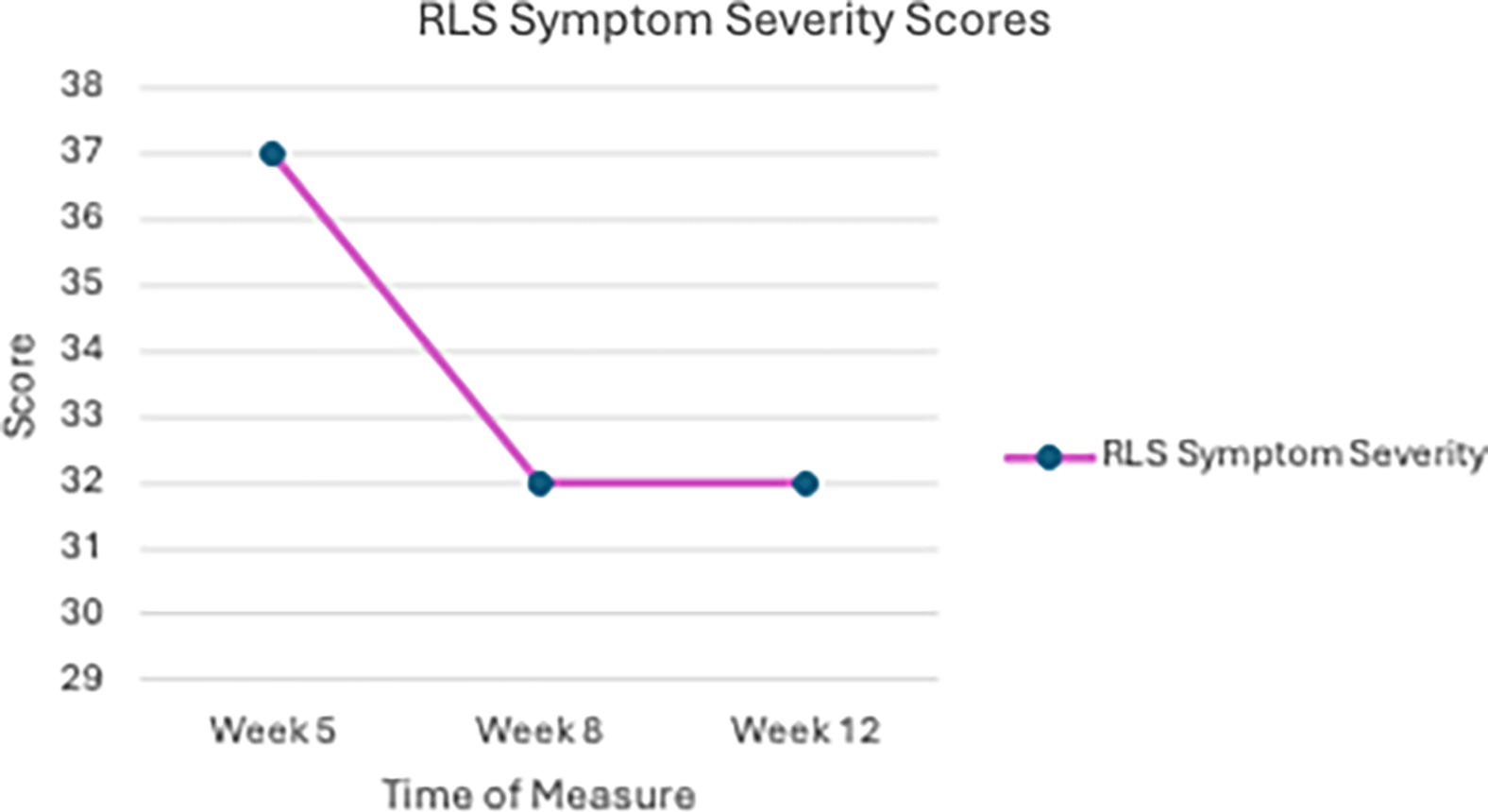
Figures 3 and 4 show Sally’s scores on the outcome measures completed at intervals throughout therapy. Scores of depression (PHQ-9), anxiety (GAD-7) and RLS symptom severity (Restless Legs Syndrome Rating Scale) remained consistently severe throughout therapy and quality of life (ReQoL) scores remained low and within the clinical range. At the end of therapy sessions, depression scores improved by 8 points (30%), indicating moderately severe depression but a clinically important difference (Löwe et al., Reference Löwe, Unützer, Callahan, Perkins and Kroenke2004), as did anxiety scores, which improved by 9 points (43%) to moderate anxiety levels but also a clinically significant difference (Toussaint et al., Reference Toussaint, Huesing, Gumz, Wingenfeld, Haerter, Schramm and Loewe2020). From week 8 onwards, RLS symptom severity improved by 5 points (13.5%) from ‘very severe’ to ‘severe’, although this clearly indicates significant disturbance and was not clinically significant.
Depression, anxiety, and quality of life scores throughout therapy.

RLS symptom severity scores throughout therapy (collected from week 5 onwards).

Qualitative outcomes
Sally recognised that she had made progress with her goal of reducing her anger in her reactions to others, which she felt proud of. Sally noted that she had been less aggressive in her interactions with her husband and family particularly. For example, Sally noted that her sister had smoked for many years and was severely unwell with COPD. Previously, Sally had attempted to stop her sister from smoking in what she saw as an aggressive way, asking her sister why she did not care about her children or family; sadly, this had been unsuccessful in helping her sister stop smoking. Following our therapy sessions, Sally decided to try a new approach; she explained calmly to her sister how much she is loved and cared for and offered her support and compassion. This produced a very different result and Sally’s sister was able to stop smoking and their relationship has become more open and loving. Sally recognised that her improved reactions were the result of using the STOP technique to allow her to make a more mindful choice about how she responded or thought about a situation and that this had demonstrable positive results. Sally reflected that this made her want to continue using the approach and trying out ‘a new way’ as it had made her feel and think more positively about herself. Together we highlighted that this showed her self-critical thoughts and self-hatred were no longer true 100% of the time, demonstrating progress with her second goal.
Additionally, at the beginning of therapy, Sally reported having thoughts of euthanasia almost every day and that she viewed this as the only possible way out of her current situation or for her future. Towards the end of therapy, Sally began to speak about her hopes for the things she would like to do with her husband as he approaches retirement, such as travel and spending quality time together. This reveals a shift in Sally’s mindset to be able to envision a more positive and fulfilling future ahead.
Finally, Sally began to increase her time spent socialising and was able to leave her home, having been housebound at the time of referral. For example, Sally went on a trip to Ireland to visit family, which she very much enjoyed; was able to go out for a meal with her husband and attended several family celebrations.
Discussion
This case study demonstrates the application of CBT, with a particular focus on cognitive restructuring techniques, for co-morbid depression and anxiety adapted for an adult with RLS, double incontinence, and MCI. There have been only two studies of CBT-based therapies as treatment for psychological difficulties associated with RLS (Hornyak et al., Reference Hornyak, Grossmann, Kohnen, Schlatterer, Richter, Voderholzer and Berger2008; Newman, Reference Newman2014) and there has been little research on psychological therapy adapted for MCI (Robinson and Moghaddam, Reference Robinson and Moghaddam2022; Orgeta et al., Reference Orgeta, Qazi, Spector and Orrell2015). The outcomes of this study demonstrated some success, particularly concerning qualitative comments Sally gave about her achievements and perceived progress towards her goals and her ability to apply the STOP technique to both behavioural and cognitive changes. This suggests that CBT techniques can be successfully adapted for people with complexities (e.g. physical health co-morbidities and MCI) if the therapist is willing and able to upskill their knowledge of relevant conditions, simplify the delivery of psychoeducation, and accommodate discussions around physical health. The use of a comprehensive formulation (Laidlaw et al., Reference Laidlaw, Thompson and Gallagher-Thompson2004) facilitated the integration of several competing difficulties.
However, improvements were under-reflected in the questionnaire measures, which while improving, remained at a moderately severe level at the end of therapy. This demonstrates that while Sally was able to make positive changes through psychological therapy, this is only one part of the picture. On the RLS symptom severity scores, Sally continued to experience severe disturbance associated with her condition, which could be expected to have an impact on her mood and anxiety. It may have been beneficial to have been able to offer an approach that was more integrated within physical health services, such as a neurology or specialist team in RLS to address these symptoms directly. This would have been more concordant with National Institute for Health and Care Excellence (2024) guidelines for working with clients with chronic physical conditions and depression and the recommendations of Carroll et al. (Reference Carroll, Moss-Morris, Hulme and Hudson2021) for improving access to psychological therapy for these clients.
Additionally, some of the items included in the measures used may have been biased. For example, the PHQ-9 asks if users have been bothered by ‘Trouble falling or staying asleep or sleeping too much’ and ‘Feeling tired or having little energy’. In the context of a sleep disorder, such as RLS, it is likely that clients will score highly on these items, but this may be more of a reflection of the RLS than of clinical depression symptoms, skewing results. This raises the idea that clinicians should carefully consider the psychometric measures they select when working with clients with chronic physical conditions and sleep disorders to ensure that they are appropriate and valid tools for the client in front of them. While measures such as the PHQ-9 are well validated, this does not necessitate this will be the case for all clients. Admittedly, it may be challenging to allow full flexibility in the choice of measures, given that NHS services are often required to use particular measures.
A further complication to the outcomes of this study is that Sally changed her anti-depressant medication during therapy. This was done after consultation between the GP and a psychiatrist to ensure that Sally was prescribed medication that did not carry risk of augmentation of her RLS symptoms and would also have a sedative effect to support her sleep. Therefore, it cannot be confirmed that improvements and changes made by Sally were solely the result of psychological therapy as we cannot remove the potential influence of anti-depressant medication, although it should be noted that Sally had been taking anti-depressant medication for many years but continued to experience depression and anxiety.
A limitation of this paper is that it presents a case study for just one person and so the outcomes and adaptions made may not generalise to other clients with chronic physical conditions, MCI, and psychological distress. Although the specific adaptions made for Sally may not generalise to other clients, the over-arching idea that psychological therapy for clients with complexities should be person-centred, specific, and holistic can be generalised. The authors would argue that this paper demonstrates the value in not being overly general in your approach when working with these clients as this facilitates a strong therapeutic relationship and allows psychological therapy to become more accessible.
Furthermore, due to the limited number of sessions available, this meant that Sally and the therapist had to choose just a couple of goals to work towards together, despite a rather complex picture of difficulties. For example, CBT for insomnia has been shown to be effective for improving insomnia and anxiety co-morbid with RLS (Song et al., Reference Song, Park, Motamedi and Cho2020) and this may have been beneficial for Sally but was not a focus of the intervention. Additionally, our intervention focused mainly on cognitive restructuring techniques as these were formulated to be most relevant to Sally’s goal of improving the way she thought about herself by reducing self-hatred, combined with the STOP technique to promote more mindful choices in how Sally responded to others to facilitate achieving her goal of reducing her anger in interactions with others. However, the formulation had also highlighted areas where behavioural approaches, such as behaviour activation, could have been helpful. For example, Sally shared that she had withdrawn from socialising, seeing family, and daily activities. Additionally, Aslam and Lee (Reference Aslam and Lee2025) demonstrated the benefit of using behavioural activation for a person with MCI. However, Sally did begin to increase her activity, particularly regarding socialising with family, but these changes could have been scaffolded by the therapist if time had allowed. Furthermore, it may have been helpful for the therapist to have dedicated more time to helping Sally implement self-help advice, such as light walking in the evenings, that could have benefited Sally’s RLS symptoms. Behavioural strategies may have been more concrete and easier to implement considering Sally’s MCI, but the therapist used graphic representations and reminders to help simplify cognitive strategies, distilling this down to ‘STOP → change’, which Sally understood to mean considering responding or thinking about something in a ‘new way’.
In conclusion, this case study provides preliminary evidence that CBT can be adapted for clients with complexities such as chronic physical conditions and MCI and co-morbid anxiety and depression. Based on the results of this paper, it may be useful for therapists to consider adaptions that integrate the LTC within the formulation and session content, collaborate with relevant HCPs, simplify approaches and slow the pace of sessions where needed. Furthermore, these adaptions should be specific to the client’s needs, and the client can be involved in the discussion to uncover what might work for them. Further research is needed to solidify these ideas and how they may apply with different chronic physical conditions and MCI presentations.
Key practice points
-
(1) Psychological professionals should use a comprehensive formulation considering the individual’s physical health needs, cognitive functioning, and any neurological conditions in addition to their presenting mental health condition.
-
(2) To facilitate good practice when working with people with physical health conditions, neurological conditions, and impaired cognitive functioning (e.g. MCI) consider the following factors:
-
- Be aware of the challenges caused by impaired cognitive function and adapt/simplify interventions to take this into account.
-
- If the person has had multiple contacts with health professionals understand the impact this may have had on their view of services, it may have implications for their beliefs/views about receiving help and take longer to build a relationship.
-
- Consider home-based interventions as individuals with multiple complex problems who are housebound may otherwise be excluded from services.
-
-
(3) These recommendations provide guidance for use with an individual with a particular interaction of problems and are based on a single case study so their generalisability to other cases may be limited. This emphasises the importance of a comprehensive assessment and formulation for each person seen for therapy.
-
(4) Integrating psychology services into services for people with physical and neurological conditions may improve access for people with multi-morbidity.
Data availability statement
The data that support the findings of this study are available from the corresponding author, R.S., upon reasonable request
Acknowledgements
The authors would like to thank Sally for her participation in therapy and her generosity in sharing her experiences for the benefit of others. We would also like to thank our colleagues Louisa Dosanjh and David Plant for their input to a peer discussion of the case formulation.
Author contributions
Rachel Spalding: Conceptualisation (lead), Writing - original draft (lead), Writing - review & editing (equal); Chris Allen: Conceptualization (supporting), Supervision (lead), Writing - review & editing (equal).
Financial support
This research received no specific grant from any funding agency, commercial or not-for-profit sectors.
Competing interests
The authors declare none.
Ethical standards
Authors have abided by the Ethical Principles of Psychologists and Code of Conduct as set out by the BABCP and BPS. Informed consent to publish this case report was obtained from the client and agreed for this to go forward for publication.



 Open access


Comments
No Comments have been published for this article.