Decades of research demonstrate that exposure to environmental adversity places children and adults at elevated risk for developing cognitive, social, emotional, and health problems (Boyce, Reference Boyce and Masten2007; Luthar, Reference Luthar1999; McLoyd, Reference McLoyd1998; Shonkoff, Boyce, & McEwen, Reference Shonkoff, Boyce and McEwen2009). Although it is well established that disorders of development and health are more prevalent among individuals from high-risk families, there is striking variation in the psychological adjustment and physical health of children and adults exposed to both low and high levels of adversity (Luthar, Reference Luthar, Cicchetti and Cohen2006; Masten & Obradović, Reference Masten and Obradović2006). In recent years, researchers have made significant progress in understanding how environmental exposures interact with genotypes and phenotypes to differentially shape human development. It has become increasingly clear that individuals with different characteristics vary not only in whether and how much they are negatively affected (in terms of conventionally defined mental health outcomes) by environmental stressors and adversity (e.g., Caspi et al., Reference Caspi, McClay, Moffitt, Mill, Martin and Craig2002, Reference Caspi, Sugden, Moffitt, Taylor, Craig and Harrington2003) but also in the extent to which they are positively influenced by environmental resources and supports (Bakermans-Kranenburg & van IJzendoorn, Reference Bakermans-Kranenburg and van IJzendoorn2011 [this issue]; Blair, Reference Blair2002; Kochanska, Kim, Barry, & Philibert, in press; Quas, Bauer, & Boyce, Reference Quas, Bauer and Boyce2004). Most notable, however, is the recurrent finding, further highlighted by the articles in this Special Section, that the very characteristics of individuals that make them disproportionately vulnerable to adversity sometimes also make them disproportionately likely to benefit from contextual support (e.g., Bakermans-Kranenburg & van IJzendoorn, Reference Bakermans-Kranenburg and van IJzendoorn2007; Belsky, Reference Belsky1997a, Reference Belsky, Ellis and Bjorklund2005; Boyce & Ellis, Reference Boyce and Ellis2005; Boyce et al., Reference Boyce, Chesney, Alkon, Tschann, Adams and Chesterman1995). In this paper, we propose that such individual differences in susceptibility to the environment have several defining characteristics:
1. Individuals characterized by heightened environmental susceptibility display enhanced sensitivity to both negative and positive environments, that is, to both risk-promoting and development-enhancing environmental conditions.
2. This enhanced sensitivity increases developmental receptivity to the environment. That is, more susceptible individuals are more likely to experience sustained developmental change, not just transient fluctuations in functioning, in response to environmental exposures
3. Susceptibility to the environment is instantiated in the biology of the nervous system; it is neurobiological susceptibility. Genetic susceptibility factors operate through neurobiological processes and behavioral indicators of susceptibility are grounded in neurobiology.
4. Developmental experience plays a role, along with heritable polygenic variation, in determining individual differences in neurobiological susceptibility.
5. Individuals of all ages (children and adults) vary in neurobiological susceptibility to environmental influences and, within individuals, susceptibility may vary across the life span.
6. Individual differences in neurobiological susceptibility are adaptive in the evolutionary sense and have been conserved by fluctuating selective pressures that generate different fitness payoffs across different social, physical, and historical contexts (or at least did so during the course of human evolution).
7. Variation in neurobiological susceptibility to the environment, therefore, constitutes a central mechanism in the regulation of alternative patterns of human development; specifically, differential susceptibility moderates the effects of environmental exposures on developmental and life outcomes. Ultimately, this means that the development of some individuals, more than others, will be influenced by their experiences and environments (even if these were exactly the same).
We begin this paper by outlining the defining features of the currently dominant perspective on environmental risk and human frailty: diathesis–stress/dual risk. We then review challenges to this perspective based on emerging theory and data from the evolutionary, developmental, and health sciences. These challenges highlight the need for a paradigm shift in conceptualizing Person × Environment interactions in development. In this context we frame an evolutionary–neurodevelopmental theory of how individual differences in neurobiological susceptibility to the environment may account for the impressive variation in the potency of environmental effects on adaptation, development, and health.
The Dominant Paradigm: Diathesis–Stress/Dual Risk
Students of human development widely appreciate that individuals vary in whether and how much they are negatively affected by environmental stressors, ranging from exposures to poverty to hostile or insensitive parenting to low quality child care, to name just a few well-studied phenomena. Perhaps the most striking evidence that personal characteristics condition or moderate such environmental effects is found in developmental research on Temperament × Parenting interactions (Rothbart & Bates, Reference Rothbart, Bates, Eisenberg, Damon and Lerner2006) and psychiatric research on Gene × Environment (G × E) interactions (Burmeister, McInnis, & Zollner, Reference Burmeister, McInnis and Zollner2008). Work in both areas is guided primarily, even if not exclusively, by what developmentalists regard as the transactional/dual-risk model (Sameroff, Reference Sameroff and Mussen1983) and what psychiatrists and others studying psychopathology regard as the diathesis–stress model (Gottesman & Shields, Reference Gottesman and Shields1967; Monroe & Simons, Reference Monroe and Simons1991; Zuckerman, Reference Zuckerman1999). Central to both frameworks is the view that some individuals, because of a specific “vulnerability” that may be behavioral in character (e.g., difficult temperament), physiological or endophenotypic in nature (e.g., heightened biological reactivity to stress), or genetic in origin (e.g., serotonin linked polymorphic region [5-HTTLPR] short alleles), are disproportionately or even exclusively likely to be affected adversely by an environmental stressor. According to prevailing views, it is the child with a “difficult” (or negatively emotional) temperament, for instance, or individuals carrying certain “vulnerability genes” or “risk alleles” who are most likely to develop or function poorly, including manifesting psychopathological conditions such as depression, when they are exposed to adversity.
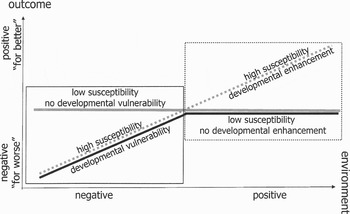
The “dual-risk” designation derives from the synergistic effect of a risk (or diathesis) inherent in the individual interacting with one operative in the environment. Where some people are regarded as especially susceptible to adversity because of their personal vulnerabilities, other people lacking such vulnerabilities who do not succumb to the adversity in question are considered to be resilient (Cicchetti, Reference Cicchetti1993; Cicchetti & Garmezy, Reference Cicchetti and Garmezy1993; Luthar, Reference Luthar, Cicchetti and Cohen2006; Masten & Obradović, Reference Masten and Obradović2006), often as a result of personal protective factors (e.g., low stress reactivity, nonrisk genotypes). Implicit in the diathesis–stress framework is the view that the children and adults who are vulnerable or resilient because of their personal characteristics respond more or less similarly to nonadverse and supportive or enriched environmental conditions. Thus, central to the diathesis–stress view is the assumption that vulnerable and resilient individuals develop differently principally under conditions of environmental stress. One consequence of this assumption, as illustrated in Figure 1, is that many studies do not measure either the full range of environments (just adversity and its absence, e.g., maltreatment vs. no maltreatment) or a full range of psychological/behavioral functioning (just dysfunction and its absence, e.g., depressed vs. not depressed). Until recently, little attention has been paid to whether, or the extent to which, personal characteristics condition or moderate the effects of supportive or enriched environmental contexts on highly competent functioning and positive well-being.
The diathesis–stress/dual risk model (solid black and solid gray lines) and the differential susceptibility model (solid gray and dotted gray lines). The two models are partly overlapping, and selection of a restricted range of environments (i.e., just adversity and the absence of adversity, left-side rectangle) renders the two models indiscernible. In this context, negative outcomes are experienced only by individuals displaying high susceptibility/developmental vulnerability. A focus on positive environments as well as inclusion of the full range of environments reveals the difference between the diathesis–stress and differential susceptibility models. As shown in the right-side rectangle, the differential susceptibility model contends that more susceptible individuals in positive environments will show more favorable outcomes (i.e., developmental enhancement); more susceptible individuals are thus disproportionately influenced by both negative and positive environments. Adapted from “Genetic Vulnerability or Differential Susceptibility in Child Development: The Case of Attachment [Research Review],” by M. Bakermans-Kranenburg and M. H. van IJzendoorn, Reference Van Zeijl, Mesman, Stolk, Alink, van IJzendoorn and Bakermans-Kranenburg2007, Journal of Child Psychology and Psychiatry, 48, 1160–1173. Copyright 2007 by Wiley–Blackwell. Adapted with permission.

Beyond Diathesis–Stress/Dual Risk: Evolutionary Models of Adaptive Development
An evolutionary perspective challenges the prevailing developmental psychopathological analysis of dysfunctional or maladaptive outcomes within settings of adversity. In particular, it contends that both stressful and supportive environments have been part of human experience throughout our evolutionary history, and that developmental systems shaped by natural selection respond adaptively to both kinds of contexts. Thus, when people encounter stressful environments, this does not so much disturb their development as direct or regulate it toward strategies that are adaptive under stressful conditions, even if those strategies are currently harmful in terms of the long-term welfare of the individual or society as a whole (see Hinde & Stevenson-Hinde, Reference Hinde and Stevenson-Hinde1990; Main, Reference Main1990).
Consider the extensive experimental work conducted by Michael Meaney and colleagues showing that putatively low quality maternal care in the rat (i.e., low levels of maternal licking and grooming) alters pups' stress physiology and brain morphology. Although such changes seem disadvantageous (i.e., higher corticosterone levels, shorter dendritic branch lengths, and lower spine density in hippocampal neurons), they actually enhance learning and memory processes under stressful conditions (Champagne et al., Reference Champagne, Bagot, van Hasselt, Ramakers, Meaney and de Kloet2008). Moreover, such physiological and morphological changes mediate the effects of maternal behavior on central features of defensive and reproductive strategies: behavior under threat, open-field exploration, pubertal development, sexual behavior, and parenting (Cameron et al., Reference Cameron, Champagne, Parent, Fish, Osaki-Kuroda and Meaney2005, Reference Cameron, Del Corpo, Diorio, Mackallister, Sharma and Meaney2008); and they do so in ways consistent with evolutionary models of adaptive reproductive strategies (Belsky, Steinberg, & Draper, Reference Belsky, Steinberg and Draper1991; Chisholm, Reference Chisholm1999).
In the rodent model, then, enhanced learning under stressful conditions, increased fearful and defensive behaviors, accelerated sexual maturation, increased sexual behavior, and reduced parental investment in offspring apparently represent strategic (i.e., functional) ways of developing when neglected. In this context, neglect itself can be regarded as a mechanism through which rat parents guide their offspring's development toward optimal survival and reproductive strategies under conditions of adversity. It would seem mistaken therefore to view diminished licking and grooming as “poor maternal care” or the development induced by such care as “disturbed.” From an evolutionary perspective, the care provided by the putatively neglectful parents may be appropriate preparation of their offspring for the ecological conditions into which they are likely to mature.
It is important to note that optimal adaptation (in the evolutionary sense) to challenging environments is not without real consequences and costs. Harsh environments often harm or kill children, and the fact that children developmentally adapt to such rearing conditions (reviewed in Ellis, Figueredo, Brumbach, & Schlomer, Reference Ellis, Figueredo, Brumbach and Schlomer2009; Pollak, Reference Pollak2008) does not imply that such conditions either promote child well-being or should be accepted as unmodifiable facts of life (i.e., David Hume's “naturalistic fallacy”). There can be no doubt that high-stress environments that are dangerous and lack essential resources, compared with low-stress environments that are safe and well resourced, undermine fitness. Developmental adaptations to high-stress environments enable individuals to make the best of a bad situation (i.e., to mitigate the inevitable fitness costs), even though “the best” may still constitute a high-risk strategy that jeopardizes the person's health and survival (e.g., Mulvihill, Reference Mulvihill2005; Shonkoff et al., Reference Shonkoff, Boyce and McEwen2009). Further, there are genuinely novel environments, such as Romanian or Ukrainian orphanages (Dobrova-Krol, van IJzendoorn, Bakermans-Kranenburg, & Juffer, Reference Dobrova-Krol, van IJzendoorn, Bakermans-Kranenburg and Juffer2010; Nelson et al., Reference Nelson, Zeanah, Fox, Marshall, Smyke and Guthrie2007), that are beyond the normative range of conditions encountered over human evolution. Children's brains and bodies simply could not have been selected to respond adaptively to collective rearing by paid, custodial, nonkin caregivers (Hrdy, Reference Hrdy1999). Exposures to such challenging yet (evolutionarily) unprecedented conditions can be expected to induce pathological development, not evolutionarily adaptive strategies.
In sum, an evolutionary–developmental perspective emphasizes conditional adaptation: “evolved mechanisms that detect and respond to specific features of childhood environments, features that have proven reliable over evolutionary time in predicting the nature of the social and physical world into which children will mature, and entrain developmental pathways that reliably matched those features during a species' natural selective history” (Boyce & Ellis, Reference Boyce and Ellis2005, p. 290; for a comprehensive treatment of conditional adaptation, see West-Eberhard, Reference West-Eberhard2003; for applications to human development, see Belsky et al., Reference Belsky, Steinberg and Draper1991; Chisholm, Reference Chisholm1999; Ellis, Reference Ellis2004). From within such a perspective, the highly susceptible child who responds to a dangerous environment by developing insecure attachments, adopting an opportunistic interpersonal orientation, and sustaining an early sexual debut is no less functional than the context-sensitive child who responds to a well-resourced and supportive social environment by developing the opposing characteristics and orientations. A further implication is that efforts to reduce the pain and suffering of children growing up under stressful conditions need to take into consideration the local sense in which risky and seemingly self-destructive behaviors may be adaptive. Children have evolved to function competently, that is, to survive and ultimately reproduce, in a variety of contexts. The default assumption should be that alternative patterns of development in response to both stressful and supportive environmental conditions (within the range encountered over human evolution) constitute adaptive variation.
Evolutionary–Developmental Theories of Differential Susceptibility
In addition to shaping species-typical developmental responses to diverse environmental conditions, natural selection has also maintained variation (adaptive individual differences) in neurobiological susceptibility to the environment. Two different evolutionary accounts of such variation have emerged in recent years: biological sensitivity to context theory (BSCT; Boyce et al., Reference Boyce, Chesney, Alkon, Tschann, Adams and Chesterman1995; Boyce & Ellis, Reference Boyce and Ellis2005; Ellis, Essex, & Boyce, Reference Ellis, Essex and Boyce2005) and differential susceptibility theory (DST; Belsky, Reference Belsky1997a, Reference Belsky1997b, Reference Belsky, Ellis and Bjorklund2005; Belsky, Bakermans-Kranenburg, & van IJzendoorn, Reference Belsky, Bakermans-Kranenburg and van IJzendoorn2007).Footnote 1 With a central focus on Person × Environment interactions, both models advance the role of organismic characteristics in moderating the effects of both stressful and supportive environmental conditions on human development (see Figure 1). Further, both presume that there are individual differences in sensitivity to environmental influence but not in the manner of diathesis–stress. Both theories incorporate the traditional diathesis–stress view while extending it, by making the critical observation that those individuals most likely to be adversely affected (according to conventional mental health standards) by negative environmental conditions are also most likely to benefit from supportive ones.
Focusing on the role of the person in moderating environmental effects on development, DST and BSCT follow in the tradition of Bronfenbrenner's (1993) person–process–context model, which posits that parenting and other environmental factors may vary in their developmental influence as a function of the characteristics of the child. The theories also converge with Wachs and Gandour's (1983) organismic–specificity hypothesis, which posits differential reactivity of children to similar rearing experiences as a function of attributive differences in children's cognitive, behavioral, or emotional characteristics.
Before proceeding with our comparison of BSCT and DST, it is important to note that these perspectives share much in common with Aron and Aron's (1997; Aron, Aron, & Davies, Reference Aron, Aron and Davies2005) theory of sensory-processing sensitivity (SPS). The main difference is that DST and BSCT began with a focus on child-developmental processes, whereas SPS started with a focus on cognitive processes in adults (in terms of variation in depth of processing of sensory information, with more sensitive individuals processing information more thoroughly before acting). Although some SPS studies have included retrospective assessments of childhood experiences, SPS did not originate from a developmental perspective. As such, there is not a validated measure of SPS in children, and longitudinal work on the role of SPS in regulating child (or adult) developmental outcomes has not been conducted. Accordingly, it is premature to attempt to integrate SPS theory with BSCT and DST at this time. Nonetheless, as SPS moves into the child-developmental domain and BSCT and DST more systematically engage adult cognitive processes, such an integration is likely.
BSCT
The concept of biological sensitivity to context has its early roots in a report by Boyce and colleagues (1995), presenting two studies of naturally occurring environmental adversities and biological reactivity as predictors of respiratory illnesses in 3- to 5-year-old children. First, the results revealed that children showing low cardiovascular or immune reactivity to stressors had approximately equal rates of respiratory illnesses in both low and high adversity settings.Footnote 2 Second, and consistent with the prevailing diathesis–stress model, highly biologically reactive children exposed to high adversity child care settings or home environments had substantially higher illness incidences than all other groups of children. Third, the unexpected finding was that highly reactive children living in lower adversity conditions (i.e., more supportive child care or family settings) had the lowest illness rates, which were significantly lower than even low reactivity children in comparable settings. Boyce et al. (Reference Boyce, Chesney, Alkon, Tschann, Adams and Chesterman1995, p. 419) concluded that
. . . a subgroup of children may exist that sustains hyperdynamic biological responses to psychologically stressful events and experiences. Based on the results presented here, such children might be expected to encounter poorer health in high-stress contexts and unusually positive health outcomes in low-stress contexts. One plausible explanation for such a pattern of findings is the possibility that reactive children are more sensitive or more susceptible to the characteristics of the social environment. . . . Children with a heightened sensitivity to psychosocial processes emanating in the environment might then be expected to experience unusually poor outcomes in high-stress, unsupportive social conditions. The same children might flourish, on the other hand, under low-stress, nurturing, and predictable conditions . . .
Boyce et al. (Reference Boyce, Chesney, Alkon, Tschann, Adams and Chesterman1995) thus advanced what would later become known as the differential susceptibility hypothesis (which Belsky, Reference Belsky1997a, Reference Belsky1997b, promulgated on a purely theoretical basis, without awareness of the work of Boyce and colleagues): that children differ in their susceptibility to environmental influence in a “for better and for worse” manner (with worse defined in terms of psychopathology and physical health problems, not necessarily worse fitness outcomes, an issue to be addressed in more detail below). Further, the initial Boyce et al. (Reference Boyce, Chesney, Alkon, Tschann, Adams and Chesterman1995) research, together with subsequent work (Boyce & Ellis, Reference Boyce and Ellis2005), identified a physiological mechanism of environmental susceptibility—autonomic, adrenocortical, or immune reactivity to psychosocial stressors—and proposed that psychobiologic reactivity moderated the effects of early environmental exposures on physical and mental health outcomes in a bivalent manner. More reactive children displayed heightened sensitivity to both positive and negative environmental influences and thus were given the shorthand designation of orchid children, signifying their special susceptibility to both highly stressful and highly nurturing environments. In contrast, children low in reactivity were designated as dandelion children, reflecting their relative ability to function adequately in species-typical circumstances of all varieties (Boyce & Ellis, Reference Boyce and Ellis2005).
Although the findings of Boyce et al. (Reference Boyce, Chesney, Alkon, Tschann, Adams and Chesterman1995) stimulated a provisional interpretation of how environmental exposures and psychobiologic reactivity worked together in regulating children's mental and physical health, conspicuously missing was a broader, more heuristic theoretical framework in which psychobiologic reactivity could be interpreted and explained. Boyce and Ellis's (2005; see also Ellis & Boyce, Reference Ellis and Boyce2008; Ellis et al., Reference Ellis, Essex and Boyce2005; Ellis, Jackson, & Boyce, Reference Ellis, Jackson and Boyce2006) BSCT was an effort to provide such an evolutionary functional analysis, advancing as it did two key propositions. The first involved a new hypothesis about the function of the stress response systems and the second a novel evolutionary hypothesis about the developmental calibration of these systems. Each is considered here.
With respect to the function of the stress response systems, it was clear that biological reactivity to stressors comprised an integrated system of central neural and peripheral neuroendocrine responses designed to prepare the organism for challenge or threat. In contrast, according to BSCT, these “stress response” systems also function to increase susceptibility to resources and support in the ambient environment (e.g., positive social opportunities, cooperative information). This dual function signified the need to conceptualize stress reactivity more broadly as biological sensitivity to context, which Boyce and Ellis (Reference Boyce and Ellis2005) defined as neurobiological susceptibility to both cost-inflicting and benefit-conferring features of the environment and operationalized as an endophenotypic property indexed by heightened reactivity in one or more of the stress response systems. Depending on levels of nurturance and support versus harshness and unpredictability in their developmental environments, highly reactive children experience either the best or the worst of psychiatric and biomedical outcomes within the populations from which they are drawn (Boyce, Reference Boyce, Bornstein and Genevro1996; Boyce et al., Reference Boyce, Chesney, Alkon, Tschann, Adams and Chesterman1995, Reference Boyce, Essex, Alkon, Goldsmith, Kraemer and Kupfer2006; Bubier, Drabick, & Breiner, Reference Bubier, Drabick and Breiner2009; Ellis, Shirtcliff, Boyce, Deardorff, & Essex, Reference Ellis, Shirtcliff, Boyce, Deardorff and Essex2011 [this issue]; Essex, Armstrong, Burk, Goldsmith, & Boyce, Reference Essex, Armstrong, Burk, Goldsmith and Boyce2011 [this issue]; Obradović, Bush, & Boyce, Reference Obradović, Bush and Boyce2011 [this issue]; Obradović, Bush, Stamperdahl, Adler, & Boyce, Reference Obradović, Bush, Stamperdahl, Adler and Boyce2010; Quas et al., Reference Quas, Bauer and Boyce2004). BSCT therefore posits that individual differences in the magnitude of biological stress responses function to regulate openness or susceptibility to environmental influences, ranging from harmful to protective.
Given past evidence that early trauma can increase stress reactivity and newer evidence that high reactivity can enhance developmental functioning in highly supportive settings, Boyce and Ellis (Reference Boyce and Ellis2005) postulated a curvilinear, U-shaped relation between levels of early support–adversity and the magnitude of biological response dispositions (see Figure 2). Specifically, Boyce and Ellis hypothesized that (a) exposure to acutely stressful childhood environments upregulates biological sensitivity to context, increasing the capacity and tendency of individuals to detect and respond to environmental dangers and threats; (b) exposure to especially supportive childhood environments also upregulates biological sensitivity to context, increasing susceptibility to social resources and support; and (c) by contrast and typical of the majority of children, exposure to childhood environments that are not extreme in either direction downregulates biological sensitivity to context, buffering individuals against the chronic stressors encountered in a world that is neither highly threatening nor consistently safe. Exploratory analyses in two studies offered confirmatory evidence that the lowest prevalences of high reactivity phenotypes were found in conditions of moderate stress and that both tails of the support–adversity distribution were associated with higher proportions of reactive children (Ellis et al., Reference Ellis, Essex and Boyce2005; see also Gunnar, Frenn, Wewerka, & Van Ryzin, Reference Gunnar, Frenn, Wewerka and Van Ryzin2009).
The hypothesized curvilinear relation between experiences of support and protection versus stress and adversity in early environments and biological sensitivity to context. Comparisons of subjects at points A and B lead to the conclusion that low support/high stress results in heightened biological sensitivity to context. In contrast, comparisons at points C and D generates the inference that low support/high stress produces diminished biological sensitivity to context. Adapted from “Biological Sensitivity to Context: I. An Evolutionary–Developmental Theory of the Origins and Functions of Stress Reactivity,” by W. T. Boyce and B. J. Ellis, 2005, Development and Psychopathology, 17, 271–301. Copyright 2005 by Cambridge University Press. Adapted with permission.

In sum, BSCT advanced the claim that developmental variation in biological sensitivity to context has been maintained by natural selection, because differences in biological sensitivity to context reliably produced different fitness outcomes in different childhood environments encountered over evolutionary history. It is important that in a parallel but independent trajectory of theoretical work, Belsky's (Reference Belsky1997a, Reference Belsky1997b, Reference Belsky, Ellis and Bjorklund2005) DST was concurrently emerging from a very different set of evolutionary observations and ideas.
DST
The question “Why should childhood experiences influence later development?” (which is rarely posed by developmentalists concerned with how experience influences development) was the origin of DST, along with challenges posed by Rowe's (2000) behavior–genetic critiques of Belsky et al.'s (1991) evolutionary theory of socialization (Belsky, Reference Belsky, Rodgers, Rowe and Miller2000). From an evolutionary perspective, developmental mechanisms that use earlier experiences to guide later development should only evolve in recurring contexts in which the future is tolerably related to the past (Pigliucci, Reference Pigliucci2001), at least within generations. Only then could there be reliable fitness payoffs in using experiences in childhood to regulate adolescent and adult development (i.e., conditional adaptation). The fact that the future is inherently uncertain, however, meant that conditional adaptation was theoretically problematic. This realization led Belsky (Reference Belsky1997a, Reference Belsky1997b, Reference Belsky, Rodgers, Rowe and Miller2000, Reference Belsky, Ellis and Bjorklund2005) to propose that, as a form of bet-hedging against an uncertain future, natural selection has maintained genes for both “conditional” and “alternative” developmental strategies. Whereas conditional strategies are shaped by environmental factors to better fit the organism to the future environment, alternative strategies, in a manner consistent with much behavior–genetic thinking, are largely fixed and less subject to environmental influence (Rowe, Vazsonyi, & Figueredo, Reference Rowe, Vazsonyi and Figueredo1997).
Because the future is and always has been uncertain, no parent could ever know for certain what rearing strategies, whether consciously or unconsciously implemented, would prove most successful in terms of promoting the child's reproductive fitness and thus the parent's inclusive fitness. This suggested to Belsky (Reference Belsky1997a, Reference Belsky1997b, Reference Belsky, Rodgers, Rowe and Miller2000, Reference Belsky, Ellis and Bjorklund2005) that, especially within families, children should vary in their susceptibility to the rearing environment, broadly construed. Although it would make sense for parents to produce some children who pursued alternative strategies, perhaps entirely impervious to socialization efforts, and who would thrive in particular contexts that fit their proclivities, it would also make sense for them to bear some conditional strategists capable of fitting and thriving in a variety of niches depending upon the rearing conditions encountered while growing up. Belsky (Reference Belsky, Ellis and Bjorklund2005) subsequently observed that not only would parents be (unconsciously) hedging their bets by diversifying their progeny's susceptibility to rearing influence, but that the same would be true of children themselves. This was because, just like parents and children, siblings share 50% of the same genetic alleles. Thus, if one child benefited from parental influence, so would the other, less susceptible sibling, albeit indirectly via shared genes. In addition, if one child's development was undermined inadvertently by parental influence, the less susceptible child would be protected, thereby providing an indirect, inclusive fitness benefit to the child whose susceptibility proved counterproductive in individual terms. From the perspective of both parent and child then, differential susceptibility to rearing and perhaps other environmental factors and processes was considered to be evolutionarily advantageous.
Although Belsky's theorizing stipulated that children should vary in their susceptibility to environmental influence, it did not specify what might distinguish those children who were more susceptible from those who were less. Early attempts to identify potential susceptibility factors or markers called attention, somewhat surprisingly, to negative emotionality or difficult temperament (Belsky, Reference Belsky1997b, Reference Belsky, Ellis and Bjorklund2005; Belsky, Hsieh, & Crnic, Reference Belsky, Hsieh and Crnic1998); whereas G × E interaction work, as well as theory and research on physiological reactivity by Boyce and Ellis (Reference Boyce and Ellis2005; Boyce et al., Reference Boyce, Chesney, Alkon, Tschann, Adams and Chesterman1995), called attention to endophenotypic and genetic markers of variation in susceptibility (e.g., Bakermans-Kranenburg & van IJzendoorn, Reference Bakermans-Kranenburg and van IJzendoorn2007; Belsky & Pluess, Reference Belsky and Pluess2009a).
The differential susceptibility hypothesis, although not directly influenced by Plomin and Daniel's (1987) important insights about nonshared environmental effects, was eminently consistent with it. In some respects the differential susceptibility perspective offered an explanation as to why nonshared, within-family effects should be the rule, as they have turned out to be in behavior–genetic research, rather than the exception, with shared environmental effects proving so modest (Plomin & Daniels, Reference Plomin and Daniels1987; Reiss, Neiderhiser, Hetherington, & Plomin, Reference Reiss, Neiderhiser, Hetherington and Plomin2000; Turkheimer & Waldron, Reference Turkheimer and Waldron2000). Because children within families vary in their susceptibility to rearing influences, they should be differentially affected by exposure to the very same developmental experience. Differential susceptibility thinking could also account for why environmental effects have proven both variable and generally modest across studies. This is perhaps because samples have varied inadvertently in the proportion of more and less susceptible individuals that they include and because such individuals have not been distinguished in estimations of average rearing effects (Belsky et al., Reference Belsky, Hsieh and Crnic1998).
Toward an Integrated Differential Susceptibility Paradigm
Even though BSCT and DST emerged independently and differ in important respects, they share much in common. First, both theories, based as they are on an evolutionary analysis of human development, advance the claim that individuals differ systematically in their susceptibility to environmental influences and seek to explain the nature of such individual differences. As summarized below, this begins with the recognition that susceptibility to the environment is instantiated in the multiple genetic polymorphisms, endophenotypic mechanisms, and behavioral phenotypes that operate as susceptibility factors, moderating the influence of environmental exposures on developmental and life outcomes. Endophenotypes constitute a necessary link between genes and behavior, whereby (single or multiple) genetic markers of differential susceptibility operate through neurobiological processes and behavioral indicators of differential susceptibility are grounded in neurobiology. Consequently, whatever the level of analysis employed in a given study, neurobiological susceptibility to the environment is the fundamental construct of interest. This raises the possibility that the genotypically, endophenotypically, and behaviorally susceptible individuals identified in various studies may actually be the same people (Belsky et al., Reference Belsky, Bakermans-Kranenburg and van IJzendoorn2007; Obradovic & Boyce, 2009).
Second, DST and BSCT both presume that individuals should differ in their neurobiological susceptibility to environmental influence, and that such differential susceptibility underlies many reliable interactions between features of persons and features of environments in guiding human development and functioning. Both theories embrace, implicitly if not explicitly, Bronfenbrenner's (1979) dictum that, when it comes to human development, the main effects are in the interactions, whether they are G × E, Temperament × Parenting, Stress Reactivity × Family Stress, or other Person × Environment processes. More specifically, central to both BSCT and DST is the assumption that environmental influences on developmental and life outcomes are moderated by neurobiological susceptibility to the environment. Both theories thus conceptualize variation in neurobiological susceptibility as a central mechanism in the regulation of alternative patterns of human development.
Third, neither theory presumes that differential susceptibility is restricted to any one developmental period or even just to childhood; both appreciate that at all developmental stages during the life span, individuals may differ in the extent to which they are affected by both supportive and challenging environments. Along these lines, research documenting differential susceptibility in children, adolescents, and adults is reviewed below. Nonetheless, BSCT and DST were both originally developed to explain neurobiological susceptibility in childhood, as clearly reflected in the preceding summaries of these perspectives. Consequently, even though the theories logically extend to adulthood, relatively little is known about differential susceptibility across the life span (such as stability vs. change).
Fourth, both DST and BSCT define susceptible individuals as experiencing sustained change in response to environmental exposures. This explicit focus on at least somewhat enduring developmental change distinguishes BSCT and DST from models of variation in sensitivity to environmental stimuli, such as Strelau's (1983) theory of reactivity or Stelmack and Geen's (1992) model of introversion. The central construct in these personality theories—individual differences in the intensity of response to sensory stimulation—is a necessary but not sufficient condition for differential susceptibility to the environment. By definition, neurobiological susceptibility involves the additional step of moderating the effects of environmental exposures on developmental and life outcomes (with more susceptible individuals experiencing more developmental change in response to life experiences). Although this does not imply that such developmental changes are set in stone, it does not preclude the possibility that these environmentally induced effects are long lasting, if not permanent. Nevertheless, it remains an open question as to whether neurobiological susceptibility is stable over time and thus whether some individuals may become more or less susceptible to environmental influences as they develop, or even whether some individuals may be particularly susceptible at one point in time but not another.
Fifth, a core assertion of both DST and BSCT is that individuals differ in neurobiological susceptibility to environmental contexts that are both positive in character (i.e., afford resources and support that potentially enhance fitness) and negative in character (i.e., embody stressors and adversities that potentially undermine fitness). In other words, and in contrast to widely embraced diathesis–stress models, it is not simply that some individuals are more susceptible to the negative effects of adversity, making them vulnerable. Rather, BSCT and DST regard those disproportionately vulnerable to adversity as also disproportionately likely to benefit from supportive and enriching environments. Such individuals are thus affected by the environment in a manner that can be characterized as “for better and for worse.” Another way of describing or even conceptualizing the individual differences in question is in terms of reaction norms (Manuck, Reference Manuck2009). Whereas some individuals have a wide range of reaction in terms of their developmental outcomes and functioning, depending on the environments they encounter, others have a much narrower range of reaction, responding less markedly, if at all, to positive and negative life experiences.
It is critical to appreciate that differential susceptibility to positive and negative environments has different implications when viewed from developmental-psychopathology and evolutionary perspectives. In the developmental-psychopathology framework, heightened neurobiological susceptibility increases the ability and tendency of individuals to experience “good” outcomes in positive environments (i.e., “for better,” as defined by dominant Western values; e.g., secure attachment, happiness, high self-esteem, emotion regulation, educational and professional success, stable marriage) and “bad” outcomes in negative environments (i.e., “for worse,” as defined by that same value system; e.g., insecure attachment, substance abuse, conduct problems, depression, school failure, teenage pregnancy). By contrast, according to the evolutionary perspectives central to both DST and BSCT, heightened neurobiological susceptibility to the environment functions to direct or regulate development in ways that, over human evolution, recurrently matched individuals to both positive and negative environments, thereby promoting reproductive fitness. In positive environments, this translates into adjusting development to optimize reproductively relevant processes and behaviors such as growth, status, fertility, and offspring quality. This form of conditional adaptation would typically be considered “for better” in a developmental psychopathology framework. In negative environments, however, this translates into “making the best of a bad situation,” often resulting in developmental outcomes that are typically regarded as “nonoptimal” in Western culture. A key difference, then, between the evolutionary and developmental psychopathology perspectives is that evolutionary models conceptualize conditional adaptation to negative environments as an output of evolved developmental systems shaped by natural selection in the service of fitness goals. Consequently, even though susceptible individuals in negative environments may be especially vulnerable to poor mental health outcomes (as defined by dominant Western values), they may still be acting in ways that promote or once promoted status and reproductive success in dangerous environments (e.g., gang membership in bad neighborhoods: see Palmer & Tilley, Reference Palmer and Tilley1995; advantage taking, sexual promiscuity, limited parental investment).
Beyond these points of agreement, it is worth highlighting that BSCT and DST both derive from evolutionary analyses of human development that, even if not identical, are grounded in the view that natural selection maintains alternative patterns of development (phenotypic variation) in the context of multiniche environments (e.g., Hinde & Stevenson-Hinde, Reference Hinde and Stevenson-Hinde1990; Penke, Jaap, Denissen, & Miller, Reference Penke, Jaap, Dennissen and Miller2007). Both theories posit that variation in neurobiological susceptibility to the environment has been adaptively structured and functions as a central mechanism in regulating alternative developmental pathways to match, as well possible, different environmental niches. Fundamental to this view is the assumption that optimal developmental strategies vary as a function of the physical, economic, and social parameters of an individual's specific environment. Levels of neurobiological susceptibility that promote success in some environments may therefore lead to failure in others. It is this kind of environmental heterogeneity (multiniche environments in which a trait's effect on fitness varies across time or space) that provides the ecological basis for the maintenance of adaptive phenotypic variation (whether through balancing selection, conditional adaptation, bet-hedging, or a combination thereof; see Ellis et al., Reference Ellis, Jackson and Boyce2006, Reference Ellis, Figueredo, Brumbach and Schlomer2009; Penke et al., Reference Penke, Jaap, Dennissen and Miller2007).
In sum, DST and BSCT largely converge on an integrated theory of neurobiological susceptibility to the environment. Taken together, these perspectives shed new light on the potency and impotency of a broad range of environmental contexts, from highly positive and enriching to dangerous and corrosive, to shape the gamut of developmental outcomes.
Biobehavioral and Neurogenomic Bases of Differential Susceptibility
A substantial but scattered body of empirical findings has emerged that is consistent with the BSCT and DST proposals. Only recently has attention been explicitly drawn to the common findings of this diverse set of studies (Belsky, Reference Belsky, Ellis and Bjorklund2005; Belsky et al., Reference Belsky, Bakermans-Kranenburg and van IJzendoorn2007; Belsky & Pluess, Reference Belsky and Pluess2009a; Boyce & Ellis, Reference Boyce and Ellis2005; Obradovic & Boyce, 2009), and this Special Section of Development and Psychopathology is the first publication in which papers addressing differential susceptibility will share a common source. As background, we provide a brief summary of thought and conjecture on the neurogenomic and endophenotypic mechanisms that may underlie individual differences in context sensitivity, as well as an illustrative synopsis of evidence gathered prior to the Special Section in support of the differential susceptibility paradigm.
BSCT and DST converge on a common, unifying claim that differences in openness to environmental influence are grounded in and subserved by neurobiological variation in sensitivity to contextual signals and cues. BSCT originated in empirical observations of differences in children's autonomic and adrenocortical reactivity to challenge, whereas DST initially advanced no mechanistic hypotheses about how individual differences in susceptibility operated, but focused instead on the temperamental, phenotypic descriptors of context sensitive children. Theory and data suggest that a common, context-sensitive endophenotype may plausibly underlie differential susceptibility at multiple levels of analysis, ranging from behavioral indicators to peripheral neuroendocrine pathways, brain circuitry, and both genetic and epigenetic variation. Common to each level of analysis is a biobehavioral process involving heightened susceptibility to both risk-promoting and development-enhancing environmental contexts.
In considering such a claim, note that bivalent effects of environmental and phenotypic factors are increasingly known and appreciated within the biological and social sciences. A recent paper, for example, shows that dietary folate conveys protective effects against colorectal cancer, unless an underlying neoplastic process triggers a reversal of such effects, rendering folate a cofactor in the process of tumorigenesis (Mason, Reference Mason2009). In another example, Gluckman, Hanson, Cooper, and Thornburg (Reference Gluckman, Hanson, Cooper and Thornburg2008) contend that a conditional adaptation to fetal undernutrition leads to the development of a “thrifty phenotype” involving insulin resistance, which is protective and survival-enhancing in resource-poor environments, but increases risk for endothelial dysfunction, obesity, and risk for cardiovascular diseases in resource-rich ones. Such a phenomenon is thought to have occurred among individuals who were prenatally exposed to famine during the Dutch Hunger Winter of 1944–1945, who experienced a transition to food abundance in later life, and who thus acquired an enhanced risk for cardiovascular disease and early mortality (Painter et al., Reference Painter, de Rooij, Bossuyt, Simmers, Osmond and Baker2006; Ravelli et al., Reference Ravelli, van der Meulen, Michels, Osmond, Barker and Hales1998; Ravelli, van der Meulen, Osmond, Barker, & Bleker, Reference Ravelli, van der Meulen, Osmond, Barker and Bleker1999). These examples are compelling illustrations of how a single biological agent or process can have bivalent effects that are context contingent.
The observation that bivalent effects of the risk-altering factor in question may drive environmentally contingent, U-shaped distributions of the factor within human populations is also important. Ellis at al. (2005) presented provisional evidence that stress reactivity has a U-shaped distribution along a gradient of favorable to unfavorable social and family settings, Macrì and Würbel (Reference Macrì and Würbel2006) demonstrated a similar U-shaped distribution for adrenocortical reactivity in rodents, and Gluckman et al. (Reference Gluckman, Hanson, Cooper and Thornburg2008) showed that childhood obesity and insulin resistance are more prevalent at both ends of the birth weight spectrum. In the case of stress reactivity, conditional adaptation may bias early development in low- and high-stress contexts toward high sensitivity endophenotypes. Similarly, prenatal undernutrition may predispose fetuses to allocate nutrients disproportionately to adipose tissues in order to augment survival chances in underresourced settings or epochs, whereas fetal overnutrition may also lead to hyperinsulinemia and fat deposition, resulting in more accelerated infant weight gain and higher relative risks of obesity and later cardiovascular disease.
A biologically sensitive endophenotype producing such bivalent effects might be subserved by systematic differences in function or even structure at multiple, hierarchically organized levels of complexity. For illustrative purposes, we summarize recent evidence of such effects at (a) genetic, (b) epigenetic, (c) neural, (d) neuroendocrine, and (e) behavioral levels of analysis. Evidence for genetic moderation of environmental effects in a for better and for worse manner can be found in research carried out across the life span (for reviews, see Bakermans-Kranenburg & van IJzendoorn, Reference Bakermans-Kranenburg and van IJzendoorn2007; Belsky et al., Reference Belsky, Jonassaint, Pluess, Stanton, Brummett and Williams2009; Belsky & Pluess, Reference Belsky and Pluess2009a). One Dutch study showed that maternal sensitivity observed when children were 10 months of age predicted externalizing problems reported by mothers more than 2 years later, but only for children carrying the 7-repeat dopamine receptor D4 (DRD4) allele (Bakermans-Kranenburg & van IJzendoorn, Reference Bakermans-Kranenburg and van IJzendoorn2006); such children displayed the most externalizing behavior observed when mothers were judged insensitive but the least when mothers were judged highly sensitive (for similar results, see Sheese, Voelker, Rothbart, & Posner, Reference Sheese, Voelker, Rothbart and Posner2007). Mills-Koonce and associates (2007) report analogous findings in the case of children carrying the A1+ allele of the DRD2 polymorphism in their work linking sensitive mothering at 6 and 12 months of age with children's affective problems at age 3 years. In adolescence, Eley and colleagues (2004) observed that girls growing up in more and less risky family environments manifested higher and lower levels of depression, respectively, although this proved true principally in the case of those homozygous for short alleles on the serotonin-transporter gene (5-HTTLPR). These results proved strikingly similar to those depression-related findings subsequently reported by Taylor and associates (2006) studying effects of life events in young adulthood. In another study of adults, van IJzendoorn, Bakermans-Kranenburg, and Mesman (2008) found evidence for dopamine-related genes (catechol-o-methyltransferase [COMT] and DRD4) moderating—in G × G × E fashion—the effect of daily hassles on parenting. Adults with DRD4 7-repeat and COMTval proved to be less responsive to their toddlers when confronted with more than average daily hassles. In the case of fewer than average daily hassles, however, they showed the highest levels of responsive parenting. In a large Finnish G × E investigation focused on the serotonin 2A receptor, adults carrying one or more T alleles of the HTR2A T102C polymorphism scored highest on harm avoidance if they grew up in low socioeconomic status households but lowest if they grew up in high socioeconomic status families (Jokela, Lehtimaki, & Keltikangas-Jarvinen, Reference Jokela, Lehtimaki and Keltikangas-Jarvinen2007). Finally, studies of groups of captive and free-ranging rhesus macaques have also shown how variation in the promoter region of the SLC6A4, serotonin transporter gene, which influences the tone and responsivity of serotonergic circuitry, influences the infant monkey's sensitivity to perturbations in the rearing environment (Barr et al., Reference Barr, Newman, Becker, Parker, Champoux and Lesch2003, Reference Barr, Newman, Shannon, Parker, Dvoskin and Becker2004).
Bakermans-Kranenburg and van IJzendoorn (Reference Bakermans-Kranenburg and van IJzendoorn2007) and Belsky and Pluess (Reference Belsky and Pluess2009a) have suggested that endophenotypic variation in environmental susceptibility might be underpinned by allelic variation in the dopaminergic and serotonergic circuitry of the brain that govern thresholds of responsiveness to reward and punishment. The research reviewed above demonstrating that polymorphisms in the DRD4 gene or the serotonin transporter gene are associated with either highly adaptive or suboptimal child and adult developmental endpoints, depending upon rearing experiences and life events, would offer empirical support for such a mechanism. Allelic variation in DRD4 polymorphisms, for example, might plausibly influence susceptibility to context through differences in attention, state regulation, orienting responses, or thresholds for rewards, all behaviors empirically linked to dopaminergic neural circuits (Bakermans-Kranenburg, van IJzendoorn, Mesman, Alink, & Juffer, Reference Bakermans-Kranenburg, van IJzendoorn, Mesman, Alink and Juffer2008); for an extensive discussion of the mesolimbic dopamine system as a potential susceptibility mechanism, see Gatzke-Kopp (2010).
At the epigenetic level of analysis, cutting edge animal work reveals how differences in social or physical environmental exposures can reprogram phenotypic differences in biobehavioral reactivity to adversity. Meaney, Szyf, and colleagues' (e.g., Weaver et al., Reference Weaver, Cervoni, Champagne, D'Alessio, Sharma and Seckl2004) research program demonstrates that natural variation in maternal behavior in the rat induces changes in glucocorticoid receptor gene expression through altered histone acetylation, DNA methylation, and NGFI-A transcription factor binding. Such changes in glucocorticoid receptor expression alter the reactivity of the hypothalamic–pituitary–adrenocortical axis, calibrating the individual's level of hypothalamic–pituitary–adrenocortical axis responsivity to stress for the remainder of the life span. McGowan, Meaney, and Szyf (Reference McGowan, Meaney and Szyf2008) demonstrated in rodents how such effects may be reversed with drastic environmental changes (e.g., in diet, such as l-methionine supplementation) that influence epigenetic changes in critical brain loci.
In a series of studies on humans, Philibert and colleagues showed that methylation levels of the CpG island upstream from SCL6A4 were associated with abuse during childhood (Beach, Brody, Todorov, Gunter, & Philibert, Reference Beach, Brody, Todorov, Gunter and Philibert2010) and that product levels of the serotonergic system differed according to degree of methylation (Philibert et al., Reference Philibert, Madan, Anderson, Cadoret, Packer and Sandhu2007). In addition, van IJzendoorn and colleagues found that higher levels of methylation of 5-HTT were associated with increased risk of unresolved responses to trauma in carriers of the usually protective 5-HTTLPR ll variant, thus affecting setpoints for reactivity to traumatic stress (van IJzendoorn, Caspers, Bakermans-Kranenburg, Beach, & Philibert, Reference Van IJzendoorn, Caspers, Bakermans-Kranenburg, Beach and Philibert2010). They argued that methylation may serve as the interface between the neurobiological basis of human development and the environment.
Further genetic and epigenetic processes in humans, which involve the developmental shaping of neurotransmitter and molecular signaling pathways, appear to regulate brain structures that mediate reward, fear, and emotional reactivity (Feder, Nestler, & Charney, Reference Feder, Nestler and Charney2009). Thus, at the level of neural function, differential susceptibility to environmental exposures may be determined by systematic differences in the functioning of specific brain circuitry, neuronal activity, and neurotransmitter production, processing, and metabolism. A variety of brain regions have been implicated in the filtering of incoming sensory information, including the temporal cortex (Boutros et al., Reference Boutros, Torello, Barker, Tueting, Wu and Nasrallah1995), prefrontal cortex (Shimamura, Reference Shimamura2000), amygdala (Hariri et al., Reference Hariri, Drabant, Munoz, Kolachana, Mattay and Egan2005), and thalamus (McCormick & Bal, Reference McCormick and Bal1994), and such filtering might arguably act as a neural substrate of context sensitivity. Certain clinical conditions, such as chronic pain (Miller, Reference Miller2000) and autism (Kern et al., Reference Kern, Trivedi, Grannemann, Garver, Johnson and Andrews2007; Leekam, Nieto, Libby, Wing, & Gould, Reference Leekam, Nieto, Libby, Wing and Gould2007), also involve systematic differences in sensory sensitivity in the auditory, visual, tactile, or olfactory modalities. Jagiellowicz et al. (in press) observed that individuals with exceptional sensitivity to internal and external stimuli, including social and emotional cues, showed greater functional magnetic resonance imaging activation of brain regions involved in higher order visual processing and the cerebellum when detecting minor changes in visual stimuli. A variety of molecular signaling pathways utilizing peptides and neurotransmitters (e.g., norepinephrine [NE], serotonin, dopamine, neuropeptide Y, and brain-derived neurotrophic factor) are involved in the activation and regulation of these circuits, along with polymorphisms and haplotypes within the genes involved in the expression of signaling molecules and their receptors (Feder et al., Reference Feder, Nestler and Charney2009).
As elucidated in the research of several investigators, including Boyce (Alkon et al., Reference Alkon, Lippert, Vujan, Rodriquez, Boyce and Eskenazi2006; Boyce et al., Reference Boyce, Chesney, Alkon, Tschann, Adams and Chesterman1995, Reference Boyce, Quas, Alkon, Smider, Essex and Kupfer2001; Boyce & Ellis, Reference Boyce and Ellis2005; Obradovic et al., 2010); McEwen (Reference McEwen2007); Kagan, Reznick, and Snidman (Reference Kagan, Reznick and Snidman1988); Gunnar (Gunnar & Quevedo, Reference Gunnar and Quevedo2007; Lupien, McEwen, Gunnar, & Heim, Reference Lupien, McEwen, Gunnar and Heim2009); and their colleagues, context sensitivity also appears to be embodied in the differential reactivity of the two peripheral neuroendocrine stress response systems: corticotropin-releasing hormone and locus coeruleus–NE (LC-NE) systems. There is extensive individual variability in the reactivity of these systems to standardized laboratory challenges, and individuals with heightened responsivity in either or both systems appear to sustain the worst or the best of the observed health and developmental outcomes, contingent upon the level of adversity or support prevalent in the immediate social environment. As discussed earlier, Boyce and associates (1995) reported that 3- to 5-year-old children with higher blood pressure reactivity or higher immune reactivity, which are both strongly influenced by activation of the corticotropin-releasing hormone and LC-NE systems, exhibited higher rates of respiratory illness than other children when growing up in stressful rearing contexts, yet under low-stress conditions such highly reactive children had a significantly lower incidence of respiratory illnesses than other children. More recently, Obradovic and associates (2010) found that 5- to 6-year-old children with high reactivity of the parasympathetic nervous system (modulated by LC-NE system responses) were rated as less prosocial when growing up under conditions of high contextual adversity and more prosocial under more favorable contextual conditions, compared to children with low parasympathetic reactivity. In addition, children with high cortisol reactivity proved more prosocial under conditions of low adversity and less prosocial under high adversity relative to children with low cortisol reactivity. In a study of adults, Gannon, Banks, Shelton, and Luchetta (Reference Gannon, Banks, Shelton and Luchetta1989) observed that, in comparison to undergraduates showing low autonomic reactivity, more highly reactive students experienced lower levels of physical symptoms and depression when experiencing few daily hassles but higher levels when experiencing many hassles.
Most behavioral phenotypic markers of susceptibility that have been identified involve negative emotionality in one form or another (Belsky, Reference Belsky, Ellis and Bjorklund2005; Belsky & Pluess, Reference Belsky and Pluess2009a; Kochanska, Aksan, & Joy, Reference Kochanska, Aksan and Joy2007; Van Zeijl et al., Reference Van Zeijl, Mesman, Stolk, Alink, van IJzendoorn and Bakermans-Kranenburg2007), likely because of the predominance of vulnerability oriented research based on a diathesis–stress model and thus focused on this putative “risk factor.” In a study of temperament and maternal discipline in relation to externalizing problems in early childhood, Van Zeijl et al. (Reference Van Zeijl, Mesman, Stolk, Alink, van IJzendoorn and Bakermans-Kranenburg2007) found that children with difficult temperaments were more susceptible to both negative and positive discipline, compared with children of relatively easy temperament. Using data from the large-scale National Institute of Child Health and Human Development Study of Early Child Care and Youth Development, Pluess and Belsky (Reference Pluess and Belsky2009) reported that, compared to children with easy temperaments, difficult children had more behavior problems early in their school careers when exposed to low-quality child care during infancy or early childhood but fewer problems when quality was high. Other inquiries drawing on National Institute of Child Health and Human Development data, but focusing upon effects of parenting, as well as additional developmental outcomes and children's functioning at older ages, have generated similar results (Bradley & Corwyn, Reference Bradley and Corwyn2008; Dopkins-Stright, Cranley-Gallagher & Kelley, 2008; Pluess & Belsky, Reference Pluess and Belsky2010). Further, Lengua's (Reference Lengua2008) investigation of a Temperament × Parenting interaction during the middle-childhood years showed that children who were highly prone to negative emotion in the form of frustration increased in externalizing problems over time when mothers were rejecting, but decreased when mothers manifested little rejection; no such parenting effects were evident for same-age peers scoring low on frustration. In young adulthood, Aron et al. (Reference Aron, Aron and Davies2005, Studies 2 and 3) observed that a problematic childrearing history predicted high levels of self-reported shyness and negative affectivity among undergraduate students, whereas its absence predicted low levels of these same dependent constructs; this relation obtained principally in the case of students scoring high on SPS (see also Aron & Aron, Reference Aron and Aron1997).
A difficult ontogenetic issue is the question of where, within this spectrum of genomic, epigenomic, neural, neuroendocrine, and behavioral mechanisms, differential susceptibility actually resides in humans and other species. Is neuroendocrine reactivity the actual mechanism by which environmental susceptibility generates greater or lesser risks to and benefits for health and development? Or is reactivity simply a physiological marker of heightened susceptibility? Relative to variations in neural circuitry activation, are genetic and epigenetic variations closer to or more distant from the true mediating events of sensitivity to context? These are philosophical or even rhetorical questions to some degree, because developmental sensitivity to context may well be instantiated at all known levels of biological abstraction. Each level is, after all, hierarchically and mechanistically related to that just above and that just below on the scales of size and complexity. In contrast, serious consideration of the causal processes that generate differential susceptibility cannot ignore the difficulty of pursuing and defining the causal events more and less proximal to observed differences in context sensitivity. The next generation of research on differential susceptibility to the environment will need to observationally and experimentally contend with the issue of its causal origins.
Comparison and Evaluation of Evolutionary Models and Their Implications
Although understanding neurobiological susceptibility to the environment will require detailed mechanistic knowledge, we know from biology that the study of proximate mechanisms is insufficient by itself and must be complemented by the study of ultimate causation in terms of what the mechanistic machinery is designed to do. Despite major commonalities, BSCT and DST posit different evolutionary models of neurobiological susceptibility that generate different predictions about the development and distribution of susceptible phenotypes across ecological and social contexts. Articulating the bases of these different predictions, including hypothesized fitness consequences in varying physical and social environments, should enable scholars to design studies to test the models and potentially distinguish between them.
BSCT: Development of differential susceptibility through conditional adaptation
From a conditional adaptation perspective, variation in susceptibility to environmental influence results from individuals tracking different environmental conditions and altering their development (through changes in morphology, physiology, and/or behavior) to match those conditions. The assumption is that this matching process promoted fitness—survival and ultimately reproduction—across heterogeneous environmental contexts over human evolution. An evolutionary history of exposure to heterogeneous environments in which the fitness of different phenotypes varied across time or space is a necessary but not sufficient condition for the evolution of conditional adaptations. The fitness of the alternative phenotypes must also be predictable on the basis of reliable cues that can be observed by the individual (Pigliucci, Reference Pigliucci2001). Relevant cues include both external environmental factors (e.g., predation pressures, quality of parental investment, seasonal change, diet) and indicators of the individual's status or relative competitive abilities in the population (e.g., age, body size, health, history of wins and losses in agonistic encounters; Gross, Reference Gross1996; West-Eberhard, Reference West-Eberhard2003). For example, tadpoles (Rana sylvatica) alter their size and shape based on the presence of dragonfly larvae in their rearing environment (Van Buskirk & Relyea, Reference Van Buskirk and Relyea1998). These alterations involve development of smaller and shorter bodies and deep tail fins. Although tadpoles that do not undergo these morphological changes are highly vulnerable to predation by dragonflies, those that do have relatively poor developmental and survival outcomes when they end up inhabiting environments that are not shared with dragonflies; clearly then, the predator-induced phenotype is only conditionally adaptive. This highlights that, in many cases, natural selection favors a primary phenotype that yields high payoffs under favorable circumstances and a secondary phenotype that “makes the best of a bad situation” (West-Eberhard, Reference West-Eberhard2003).
Based on conditional adaptation, BSCT posits a nonrandom distribution of neurobiological susceptibility to the environment both across and within populations. Based on the U-shaped curve hypothesis (Figure 2), highly susceptible phenotypes should disproportionately emerge, within populations, in both highly stressful and highly protected environments. As noted above, Ellis et al. (Reference Ellis, Essex and Boyce2005) reported initial support for this prediction in two studies of early childhood development (see also Gunnar et al., Reference Gunnar, Frenn, Wewerka and Van Ryzin2009). Although one of these investigations employed longitudinal data showing that family environments at ages 3–4 predicted subsequent biological sensitivity to context at age 7, the study did not assess changes in biological sensitivity to context during childhood. A stronger test of the hypothesis would involve measuring stress reactivity in infancy and then prospectively examining whether the magnitude of biological sensitivity to context changed in the predicted direction over the course of early and middle childhood. High levels of biological sensitivity to context should either develop or be maintained in both highly adverse and highly supportive rearing conditions. The same prediction also applies between populations: a relatively high proportion of individuals with heightened neurobiological susceptibility should emerge both in populations that inhabit dangerous, unstable environments (where infants with difficult temperaments may be actively preferred by their parents; DeVries, Reference Devries1984; Scheper-Hughes, Reference Scheper-Hughes1992) and highly stable, well-resourced environments. For an extension and elaboration of the U-shaped curve hypothesis, see Del Giudice, Ellis, and Shirtcliff (in press).
Further, central to evolutionary BSCT is the assumption that once, even if perhaps no longer, the specified developmental changes in the stress response systems promoted fitness across a range of environments. Because development of heightened biological sensitivity to context, like development of the tadpole's predator defense morphology, has associated fitness costs (i.e., increased rates of mental and physical disorders; reviewed in Boyce & Ellis, Reference Boyce and Ellis2005), enhanced neurobiological susceptibility to the environment is unlikely to be adaptive in the majority of children who grow up in environments that are neither highly threatening nor consistently supportive. Low to normative levels of biological sensitivity to context should instead produce the best fitness outcomes in such contexts. By contrast, high biological sensitivity to context should confer fitness benefits in especially supportive or enriched childhood environments by increasing susceptibility to the developmental “benefits” of the widely available and diverse social resources and support. As reviewed above, a substantial body of evidence now indicates that heightened neurobiological susceptibility to the environment promotes physical health and positive behavioral outcomes in stable, supportive environments. The other side of the coin is that elevated biological sensitivity to context should also promote fitness in acutely stressful environments by increasing the capacity and tendency of individuals to detect and respond to environmental dangers and threats. In this context, heightened biological sensitivity to context “makes the best of a bad situation” by directing or regulating development toward strategies that are adaptive under stressful conditions, even if those strategies have various short- and long-term costs. Future research is needed to examine the fitness trade-offs incurred by neurobiologically susceptible individuals in high-stress environments. BSCT proposes that heightened context sensitivity increases survival in dangerous environments.
DST: Maintenance of differential susceptibility through diversified bet-hedging
Whereas conditional adaptation enables individuals to cope with environmental changes by altering their own developmental processes and outcomes, bet-hedging enables individuals to cope with heterogeneous environments through production of diverse offspring. From a bet-hedging perspective (Donaldson-Matasci, Lachmann, & Bergstrom, Reference Donaldson-Matasci, Lachmann and Bergstrom2008; Einum & Fleming, Reference Einum and Fleming2004; Ellis et al., Reference Ellis, Figueredo, Brumbach and Schlomer2009; Philippi & Seger, Reference Philippi and Seger1989), differential susceptibility to environmental influence could potentially be maintained by an evolutionary history of exposure to environments that fluctuated unpredictably over time (e.g., changing randomly between Conditions A and C, so that exposure by parents or their young offspring to Condition A does not reliably forecast whether offspring will mature into Condition A or C) and engendered strong trade-offs (where Phenotype A is specialized to perform well in Condition A but poorly in Condition C and vice versa, and intermediate B phenotypes [“jack of all trades”] perform poorly in both Conditions A and C). This combination of selection pressures limits the fitness of any single phenotype, given that one strategy cannot be optimally adapted to all potentially occurring conditions. Bet-hedging theory proposes that selection in this context favors strategies that optimize the growth rate of lineages across generations (often by reducing long-term variance in fitness), even at the cost of reduced fitness within a single generation (Philippi & Seger Reference Philippi and Seger1989). These bet-hedging strategies increase the probability of achieving some reproductive success in every generation while limiting success in good conditions and shielding against total failure in bad.
One form of bet-hedging, which is the diversified strategy, involves “spreading the risk” by increasing phenotypic variation among offspring. Diversified bet-hedging increases the probability that at least some offspring will be suited to whatever environmental conditions occur in the next generation. Theory and data from evolutionary biology indicate that fluctuating selection pressures, if sufficiently strong, can support variable or random generation of offspring phenotypes (i.e., adaptive coin flipping) arising from a monomorphic genetic structure (Bull, Reference Bull1987; Philippi & Seger, Reference Philippi and Seger1989). This strategy is presumably implemented through a stochastic developmental switch, which generates one of several alternative phenotypes according to a probabilistic rule (with the probability of producing each phenotype corresponding to the probability of encountering the environmental conditions that phenotype is specialized for; Donaldson-Matasci, Reference Donaldson-Matasci2008). For example, in a range of animal species, when mothers cannot forecast the likely environment of their offspring, or environmental cues in the maternal generation suggest that the offspring environment is likely to vary unpredictably, mothers hedge their bets by increasing variation in offspring phenotypes (Crean & Marshall, Reference Crean and Marshall2009). Although temporally fluctuating selection pressures can maintain systematic genetic variation (such as balanced polymorphism in the DRD4 gene discussed earlier), provided that expressed phenotypes have the same average fitness over time (Penke et al., Reference Penke, Jaap, Dennissen and Miller2007), diversified bet-hedging cannot be instantiated through genetic polymorphisms because the randomly generated distribution of offspring phenotypes do not all have the same average fitness (Bull, Reference Bull1987; Philippi & Seger, Reference Philippi and Seger1989).
Based on diversified bet-hedging, DST specifies a high level of within-family variability in susceptibility to environmental influence (e.g., Belsky, Reference Belsky1997a, Reference Belsky, Ellis and Bjorklund2005). In its current form, however, this prediction is not testable because there is no yardstick against which to measure within-family variability. The issue is that there is substantial within-family variation in all quantitative traits. This variation derives from the breaking up and reshuffling of parental genomes through meiosis; from genetic influences on personality that are nonadditive and thus do not cause members of the same family to resemble each other (Lykken, McGue, Tellegen, & Bouchard, Reference Lykken, McGue, Tellegen and Bouchard1992); and from environmental influences on personality that are nonshared (Plomin & Daniels, Reference Plomin and Daniels1987; Reiss et al., Reference Reiss, Neiderhiser, Hetherington and Plomin2000). Accordingly, the presence of within-family variation in neurobiological susceptibility does not in and of itself constitute evidence of bet-hedging or adaptive design.
Despite this limitation, DST can be used to generate more nuanced predictions about evolutionary changes in levels of within-family variation in susceptibility to the environment. When environments are highly unpredictable over developmental time (i.e., when childhood experiences simply do not provide reliable cues to the social and physical conditions that individuals will encounter at maturity and beyond) susceptibility to environmental influence should be selected against, essentially precluding within-family variability. In the absence of reliable developmental cues, building developmental programs that track and respond to environmental conditions would have no payoff; instead, parents should be selected to “spread the risk” by producing a diversity of “fixed” offspring (i.e., diversified bet-hedging). As environments move from highly unpredictable to moderately unpredictable, however, selection should begin to favor offspring phenotypes that differ in susceptibility to environmental influence, particularly within families, as per Belsky's DST. Finally, as environments move from moderately unpredictable to predictable, wherein childhood experiences afford reliable cues to the social and physical world into which children will mature, selection should consistently favor neurobiological susceptibility to the environment, which would again essentially eliminate within-family variability.
Central to the evolutionary theory of bet-hedging is the assumption that unpredictable environments select for life history strategies that trade off mean levels of fitness within generations to optimize the growth rate of lineages across generations (Ellis et al., Reference Ellis, Figueredo, Brumbach and Schlomer2009; Philippi & Seger, Reference Philippi and Seger1989). Therefore, an important first step toward testing the DST of bet-hedging will be to establish that differential susceptibility within families can plausibly increase the long-term growth rate of lineages in the context of moderate environmental unpredictability. This will require a precise formalization of the theory's assumptions and predictions through mathematical modeling or simulations. Modeling is also needed to address whether and at what levels or thresholds of environmental unpredictability the random production of differential susceptibility in offspring versus differentiating other offspring characteristics (such as generating variation in size or life history strategy) optimizes the growth rate of lineages across generations.
Summary
The two evolutionary models of differential susceptibility—conditional adaptation and diversified bet-hedging—both converge on the hypothesis that variation in neurobiological susceptibility to the environment has been maintained by natural selection. The alternative is that this variation is random and nonadaptive, much as differences between people in the length of their toes is random and nonadaptive, owing to selection-irrelevant genetic variation, the random effects of sexual recombination, and nonadaptive phenotypic plasticity. This alternative is unlikely, however, because it requires that differential susceptibility, on average, had no directional effects on fitness in any relevant environments over evolutionary time (i.e., selective neutrality; see Penke et al., Reference Penke, Jaap, Dennissen and Miller2007). Given the centrality of differential susceptibility in regulating the effects of a wide range of environmental exposures on fitness-relevant outcomes, selective neutrality would seem implausible.
Although maintenance of individual differences through conditional adaptation and diversified bet-hedging are not in principle incompatible processes (Sadeh, Giterman, Gersani, & Ovadia, Reference Sadeh, Guterman, Gersani and Ovadia2009), the current evolutionary models of differential susceptibility generate different predictions about the distribution of neurobiological susceptibility across ecological and social contexts. The conditional adaptation model of biological sensitivity to context offers a set of developmental hypotheses (e.g., the U-shaped curve) that await further testing in research. Although the bet-hedging differential susceptibility model needs further theoretical development before rendering clearly testable predictions, the model has potentially important implications for understanding within-family variation in patterns of neurobiological susceptibility to the environment in different ecological contexts.
Finally, although DST and BSCT both emphasize the importance of genetic variation in differential susceptibility, neither provides a systematic explanation of this variation. This is a significant limitation, given evidence that genetic variations influence context sensitivity in a range of animal species including humans (reviewed in Boyce & Ellis, Reference Boyce and Ellis2005; Pigliucci, Reference Pigliucci2005). However, models of adaptive genetic variation in neurobiological susceptibility to the environment are still in the formative stages (for initial models based on balancing selection, see Ellis et al., Reference Ellis, Jackson and Boyce2006; Wolf, van Doorn, & Weissing, Reference Wolf, van Doorn and Weissing2008). These models emphasize that the fitness of both high and low susceptibility genotypes (and their expressed orchid and dandelion phenotypes) varies depending on their frequency in the population. In this context, the fitness of each genotype changes over time as it becomes more or less common. The most viable form of frequency-dependent selection is negative, selecting against genotypes as they become more common (Maynard Smith, Reference Maynard Smith1998). Building on the work of Wilson and Yoshimura (Reference Wilson and Yoshimura1994) on the evolution of generalists and specialists, Ellis et al. (Reference Ellis, Jackson and Boyce2006) have proposed a negative frequency-dependent model of the maintenance of genetic variation in differential susceptibility. In this model dandelions outcompete orchids in their preferred niche (i.e., the niche specialized to the dandelion's more fixed personality), but orchids are more able to successfully change niches when their preferred niche becomes overcrowded. These processes would enable dandelions and orchids to coexist in stable equilibrium. Ultimately, models of adaptive genetic variation in neurobiological susceptibility need to be integrated with the conditional adaptation and bet-hedging models articulated above.
Basic and Applied Issues in Differential Susceptibility Research
The preceding discussions of proximate mechanisms and adaptive function, to say nothing of evidence assembled to date highlighting differential susceptibility (for reviews, see Bakermans-Kranenburg & van IJzendoorn, 2010; Belsky & Pluess, Reference Belsky and Pluess2009a; Obradovic & Boyce, 2009), raise a host of issues and possibilities for both basic and applied research in the future. These include, as will be discussed below, methodological considerations in designing differential susceptibility research; issues of ecological, cultural and racial–ethnic variation; the need for experimental validation; statistical concerns in evaluating differential susceptibility findings; and ethical dilemmas involved in using differential susceptibility to shape intervention strategies and social programs.
The importance of securing adequate environmental variance
Because the essence of the differential susceptibility model is that individuals who display high neurobiological susceptibility to the environment are not only disproportionately affected by negative contexts but also respond more favorably to positive environmental influences (see Figure 1), it is imperative that tests of this hypothesis secure adequate variance in environmental conditions (Belsky et al., Reference Belsky, Bakermans-Kranenburg and van IJzendoorn2007; Ellis et al., Reference Ellis, Essex and Boyce2005). This is because targeting risky environments may obscure the potential benefits of exposure to positive contexts for susceptible individuals, whereas a narrow focus on only positive environments or outcomes (although less often seen in practice) may have the opposite effect. Thus, a broad range of environmental qualities is a minimum condition to reveal differential susceptibility, a condition that is often not met in studies of developmental psychopathology.
The importance of careful measurement of the environment (and the outcome) cannot be overestimated. Approximately two decades ago Wachs and Plomin (Reference Wachs and Plomin1991) identified what they called “Plomin's paradox”: If interaction effects are ubiquitous in nature, why are they so difficult to detect in behavioral studies (see McClelland & Judd, Reference McClelland and Judd1993)? One of the explanations could have to do with unstable or unreliable measures of the environment. When the error components of the genetic and environmental parts of the G × E equation strongly diverge, testing for moderation is at risk for both Type 1 and Type 2 errors. Therefore, in studies on differential susceptibility, more than usual care should be taken to assess the environment (and behavioral outcome) reliably and validly by extended behavioral observations in various situations, the use of multiple informants, and aggregation of data across settings and measures.
The importance of adequately measuring the environment was recently demonstrated in two meta-analyses that failed to discern a significant interaction between 5-HTTLPR genotype and stressful life events in the prediction of depression (Munafo, Durrant, Lewis, & Flint, Reference Munafo, Durrant, Lewis and Flint2009; Risch et al., Reference Risch, Herrell, Lehner, Liang, Eaves and Hoh2009). The authors of these meta-analyses concluded that the field has been too eager to accept G × E findings in the absence of genetic main effects, and that focused G × E studies, and by extension focused differential susceptibility studies, would be powerless compared to main-effect genome-wide association studies. The statistical and methodological flaws involved in these reports have been carefully and succinctly reviewed by Rutter, Thapar, and Pickles (Reference Rutter, Thapar and Pickles2009). Note in particular that the papers included in these meta-analyses were highly selected and that the quality of the studies varied substantially, including sometimes weak measures of life events (the environmental factor). In a previous narrative review on interactive effects of the 5-HTTLPR genotype and stressful life events on depression, Uher and McGuffin (Reference Uher and McGuffin2008) contended that the method of assessment of environmental adversity was an important determinant of the outcome of the study, an observation they have reconfirmed in an updated review of G × E work (Uher & McGuffin, Reference Uher and McGuffin2010). Detailed interview-based approaches were associated with significant G × E findings, whereas nonreplications used self-report questionnaires. To reveal the interplay between genes and environment, therefore, one should assess the environment as precisely and validly as the genetic component. In addition, even if one considered the meta-analytic null conclusion regarding life events, 5-HTTLPR, and depression to be true, that would not and could not provide a basis for casting doubt, as Risch et al. (Reference Risch, Herrell, Lehner, Liang, Eaves and Hoh2009) did on this basis, on all G × E interaction research.
Ecological, cultural, and racial–ethnic dimensions of differential susceptibility
Tests of differential susceptibility involve variation in organismic characteristics, environmental factors, and developmental outcomes (see Figure 1). These variance components may be highly interdependent and context dependent. Child effects and by extension Person × Environment interaction effects are highly dependent on variance in the environment. It is quite important that Person × Environment interactions are much more likely to emerge in the range of average expectable environments than at environmental extremes (Cicchetti & Valentino, Reference Cicchetti, Valentino, Cicchetti and Cohen2006; Hartmann, Reference Hartmann1958), where the power of context to shape human development may restrict the range of phenotypic variation. In twin studies, for example, physical growth (e.g., height) and IQ have been shown to be highly heritable, but the majority of children growing up in institutions show delays in growth and diminished IQ that become exponentially greater with longer institutionalization (e.g., Rutter et al., Reference Rutter, Andersen-Wood, Beckett, Bredenkamp, Castle and Dunn1998; van IJzendoorn, Luijk, & Juffer, Reference Van IJzendoorn, Bakermans-Kranenburg and Mesman2008). Drastically improved care through adoption, foster care, or interventions within institutions results in massive catch up for virtually all children (Bakermans-Kranenburg, van IJzendoorn, & Juffer, Reference Bakermans-Kranenburg, van IJzendoorn and Juffer2008; Nelson et al., Reference Nelson, Zeanah, Fox, Marshall, Smyke and Guthrie2007), leaving little room for interaction effects between environment and child characteristics.
Further, cross-cultural research raises the issue of the cultural specificity of the environment, the susceptibility factor, and the developmental outcome that together constitute the differential susceptibility equation. Cross-cultural studies of differential susceptibility have documented that the meaning and context of specific parental behaviors, as well as the value placed on specific developmental outcomes, may vary between different cultural groups and across different ecological niches (Deater-Deckard, Bates, Dodge, & Pettit, Reference Deater-Deckard, Bates, Dodge and Pettit1996; Hinde & Stevenson-Hinde, Reference Hinde and Stevenson-Hinde1990; Scheper-Hughes, Reference Scheper-Hughes1992). Moreover, and with regard to race/ethnicity, it is not just familial factors and developmental outcomes that may be different, but neurobiological susceptibility as well. Attempting to replicate and extend Caspi and associates' (2002) G × E findings (on child maltreatment, the monoamine oxidase A genotype, and antisocial behavior), Widom and Brzustowicz (Reference Widom and Brzustowicz2006) replicated the original G × E result and detected evidence of differential susceptibility (Belsky & Pluess, Reference Belsky and Pluess2009a). However, they also discovered that the G × E finding only applied to Caucasians, not to African Americans. (For examples pertaining to dopamine-related genes, see Bakermans-Kranenburg & van IJzendoorn, Reference Bakermans-Kranenburg and van IJzendoorn2011 [this issue].)
The explanation for this racial difference may be that the genetic effects in question are dependent on race: short alleles of 5-HTTLPR are associated with the production of higher levels of serotonergic function in the central nervous system of African American participants but lower levels of serotonergic function among European American participants (Williams et al., Reference Williams, Marchuk, Gadde, Barefoot, Grichnik and Helms2003). Moreover, the distributions of genotypes differs substantially among the various parts of the world, showing for instance lower prevalence of the DRD4 7-repeat allele on the African continent and more carriers of the 5-HTT short allele in Asia compared to Europe and North America (Chen, Burton, Greenberger, & Dmitrieva, Reference Chen, Burton, Greenberger and Dmitrieva1999; Gelernter, Cubells, Kidd, Pakstis, & Kidd, Reference Gelernter, Cubells, Kidd, Pakstis and Kidd1999). Ethnically homogeneous samples should thus be preferred in G × E investigations, but not restricted to Caucasian samples in Western countries. The generalizability of G × E interaction effects reflecting differential susceptibility to populations of different cultures and races is not self-evident but should each time be empirically established.
The need for experimental tests of differential susceptibility
Although considerable correlational data provides support for differential susceptibility, compelling experimental evidence of environmental effects being moderated by temperamental, physiological, and/or genetic factors remains limited. Experimental examination of differential susceptibility by means of intervention affords a solid basis for causal inference. Specifically, experimental designs where the environment is an intervention or control condition to which participants are randomly assigned overcome some of the limitations of correlational studies of G × E or Temperament × Parenting interactions and allow for strong conclusions about the direction of effects. To date, experimental research to enhance parenting has shown that highly negatively reactive infants profited most in terms of attachment security (Cassidy, Woodhouse, Sherman, Stupica, & Lejuez, Reference Cassidy, Woodhouse, Sherman, Stupica and Lejuez2011 [this issue]; Klein Velderman, Bakermans-Kranenburg, Juffer, & van IJzendoorn, Reference Klein Velderman, Bakermans-Kranenburg, Juffer and van IJzendoorn2006) and externalizing behavior and daily cortisol production (Bakermans-Kranenburg, van IJzendoorn, Mesman, et al., Reference Van IJzendoorn, Bakermans-Kranenburg and Mesman2008; Bakermans-Kranenburg, van IJzendoorn, Pijlman, Mesman, & Juffer, Reference Bakermans-Kranenburg, van IJzendoorn, Pijlman, Mesman and Juffer2008). Further, an intervention that provided both high-quality child care and parenting support showed the same moderating effect of infant negative emotionality with respect to subsequent cognitive functioning and externalizing behavior (Blair, Reference Blair2002).
Experimental manipulation of the environment through intervention in a randomized control trial affords stronger causal inference than nonexperimental field studies, especially as it discounts gene–environment–correlation interpretations of G × E findings. Nonetheless, in each of the aforementioned experiments, random assignment to intervention and control groups was according to the experimental manipulation of the environment, not according to measured susceptibility factors in the child (genotypic, endophenotypic, or behavioral). This makes the findings promising, although preliminary.
Another limitation inherent to experiments with human beings is the impossibility of showing that the same individuals who profit most from a positive change in the environment would also suffer most from an experimentally induced deterioration of their environment. Two solutions are suggested for addressing this ethical dilemma. First, animal models might be used to conduct experiments with both positive and negative changes in the environment of the same subjects in a randomized repeated design. Second, in limited probabilistic learning tasks (Klein et al., Reference Klein Velderman, Bakermans-Kranenburg, Juffer and van IJzendoorn2006) or stress paradigms (e.g., the Trier Social Stress Test), the use of positive or negative feedback could provide experimentally induced changes in the microenvironment of the same individuals, with predicted contrasting outcomes for those with the susceptibility factor, but not their peers. Along these lines, Quas et al. (Reference Quas, Bauer and Boyce2004) examined memory accuracy 2 weeks following a stressful event among children showing low and high autonomic reactivity to a set of standardized challenges. Prior to the memory interview, children were randomly assigned to a warm, supportive, or cold, abrupt interviewing style. Memory for the stressful event among children previously identified as high in autonomic reactivity was substantially lower under affectively cold conditions but higher under supportive conditions, compared to their low reactivity peers. Although such an experiment is incapable of showing long-term developmental effects of neurobiological susceptibility to social context, it offers evidence that, even within experimental, random-assignment designs, differential susceptibility is operable and consequential.
Statistical criteria for evaluating differential susceptibility
The statistical test of differential susceptibility consists of a series of consecutive steps (see Belsky et al., Reference Belsky, Bakermans-Kranenburg and van IJzendoorn2007). In short, the first always concerns the application of conventional statistical criteria for evaluating moderation (Dearing & Hamilton, Reference Dearing and Hamilton2006). However, moderator effects can take various shapes, not all of which are indicative of differential susceptibility (for a figure delineating various interaction effects, see Belsky et al., Reference Belsky, Bakermans-Kranenburg and van IJzendoorn2007). Interactions with regression lines that do not cross (sometimes referred to as removable interactions) do not document differential susceptibility, although they are not incompatible where the range of environments covered was too restricted. Differential susceptibility is more conclusively shown when the moderation reflects a cross-over interaction that covers both the positive and the negative aspects of the environment. The slope for individuals high in neurobiological susceptibility should be significantly different from zero and at the same time significantly steeper than the slope for the individuals low in neurobiological susceptibility. If both slopes are significantly different from zero but in opposite directions (i.e., look like an X), contrastive effects rather than differential susceptibility effects are indicated. Differential susceptibility should be distinguished from gene–environment or temperament–environment correlations (which may reflect rearing experiences evoked by child characteristics) and from dual-risk models (see Figure 1). If the susceptibility factor and the outcome are related, dual risk (or gain, when positive factors are involved) may be a more plausible model. Along these lines, if an intervention proves successful in counteracting the negative effects of a risk gene that is correlated with the outcome (5-HTTLPR and youth risk behavior initiation, as in Brody, Beach, Philibert, Chen, & Murry, Reference Brody, Beach, Philibert, Chen and Murry2009), the experiment tests a protective factor model more than a differential susceptibility model in which the polymorphism should be a risk as well as a susceptibility gene. As a final step Belsky et al. (Reference Belsky, Bakermans-Kranenburg and van IJzendoorn2007) suggest testing the specificity of the effect by replacing the susceptibility factor (i.e., moderator) and outcomes; see Caspi et al. (Reference Caspi, Sugden, Moffitt, Taylor, Craig and Harrington2003) for an example of such replacement establishing discriminant validity in the G × E tradition.
It is also important that there be no association between the moderator (i.e., the susceptibility factor) and the environment (see Kraemer, Stice, Kazdin, Offord, & Kupfer, Reference Kraemer, Stice, Kazdin, Offord and Kupfer2001). Belsky et al. (Reference Belsky, Hsieh and Crnic1998) tested the independence of negative emotionality and parenting as a critical step in their investigation of differential susceptibility. Had these factors been correlated, then the evidence would not have shown that the predictive power of parenting was greater for highly negative infants; it would instead have indicated either that high-negativity infants elicit negative parenting or that negative parenting fosters infant negativity. Similarly, Caspi and Moffitt (Reference Caspi and Moffitt2006) determined that boys' monoamine oxidase A genotype did not elicit maltreatment. Correlations between the environment and the outcome may be dealt with by partialing out the variance in the outcome explained by the environmental factor, followed by testing for differential susceptibility as described above. Pluess and Belsky (Reference Pluess and Belsky2010) used this approach to overcome the problem in their investigation of differential susceptibility to parenting. Replication and meta-analytic aggregation of studies are strongly recommended as strategies for rigorously testing the validity of the differential susceptibility hypothesis. Bakermans-Kranenburg and van IJzendoorn (Reference Bakermans-Kranenburg and van IJzendoorn2011 [this issue]) provide a meta-analytic evaluation of one genetic factor hypothesized to moderate environmental effects in a manner consistent with differential susceptibility.
Ethical implications of differential susceptibility
Research on differential susceptibility may also have ethical ramifications (Tabery, Reference Tabery2009). Two potentially important issues include (a) blaming and changing the susceptible person to induce better coping with adverse environments and (b) potential screening of individuals (based on susceptibility genotypes, endophenotypes, or phenotypes) in search of an optimal fit between preventive interventions and the individual.
Blaming the susceptible person?
Concerning the first issue, we draw a parallel with the resilience literature. The resilience literature is occasionally (mis)interpreted as occupying the dangerous ground in which the solution to childhood adversity is seen not as the elimination of aversive or harmful environments, but rather as the bolstering of children's resilience. More specifically, if, as Boyce and Ellis (Reference Boyce and Ellis2005) have argued, 80% to 85% of children are “dandelion children” and are thus relatively insensitive to environmental threats, then perhaps the optimal resolution to the problem of contextual adversity is simply the augmentation of “heartiness” and “adaptiveness” on the part of the small subset of “orchid children” or “orchid adults.” It should be clear, however, that (a) there are environments in which even the heartiest of individuals founder (i.e., “resilience” or being a “dandelion” is of little use in the face of truly abusive or threatening social contexts); and (b) differential susceptibility does not imply a “making the vulnerable more durable” solution (i.e., fixing what is “wrong” with sensitive people). Instead the discovery of neurobiologically susceptible individuals renders possible a perspective in which making social environments safe and supportive for even the most sensitive people makes the world better for all people. A case in point from the environmental health sciences was the discovery of genetic variation in susceptibility to lead intoxication and the role of that discovery in the modification of federal guidelines for lead-safe practices. The second enzyme in the heme biosynthesis pathway, δ-aminolevulinate dehydratase (ALAD), is a protein encoded by a gene on chromosome 9. There is evidence that individuals with the ALAD-2 allele of this gene are more susceptible to lead toxicity, because the ALAD-2 subunit binds more tightly to lead (Astrin et al., Reference Astrin, Bishop, Wetmur, Kaul, Davidow and Desnick1987). The recognition of a highly susceptible subgroup of individuals played an important role in the progressive revision of federal lead regulations, thereby reducing the risk of exposure and toxicity for everyone.
Furthermore, the differential susceptibility model may shed new light on the question of what are the defining characteristics of resilience. Many have regarded certain children with certain attributes (e.g., sense of humor, positive temperament, high IQ) who do not succumb to anticipated adverse effects of negative environments as resilient, but it may be that the reason these children appear resilient is because they are simply not particularly malleable. It follows therefore that these so-called resilient children, if afforded especially supportive rearing environments, would be the least likely to benefit from them (Belsky & Pluess, Reference Belsky and Pluess2009b).
Screening for intervention on the basis of neurobiological susceptibility?
A direct implication of the differential susceptibility model is the prediction that intervention effects will not be homogeneous across participants, but will vary in size depending on the susceptibility of individuals to environmental input in general, and the specific intervention modality involved. This prediction has already been confirmed in various experimental interventions on parenting and child care, as discussed above. Quite modest or even absent intervention effects across the board are juxtaposed with modest to strong effects for the susceptible subgroup of children or their parents (e.g., Bakermans-Kranenburg, van IJzendoorn, Mesman, et al., Reference Bakermans-Kranenburg, van IJzendoorn and Juffer2008; Bakermans-Kranenburg, van IJzendoorn, Pijlman, et al., Reference Van IJzendoorn, Bakermans-Kranenburg and Mesman2008; Cassidy et al., Reference Cassidy, Woodhouse, Sherman, Stupica and Lejuez2011 [this issue]). As increasing knowledge of neurobiological susceptibility provides concrete guidance in identifying (a priori) subsets of participants most open to intervention, practitioners and policymakers will obtain more realistic estimates of the effectiveness of preventive or curative efforts. Such knowledge could facilitate the design of programs and policies specifically tailored to the needs of children and adults who differ in neurobiological susceptibility. In some circumstances, potential intervention targets could be selected using differential susceptibility screens. For individuals who are less susceptible to environmental manipulations, however, what may be most important is promoting a rich array of niches and assisting them in finding valued, rewarding places. In any case, the differential susceptibility perspective makes clear that the average effect across all participants is not a valid index of intervention effectiveness.
Despite these implications, the differential susceptibility model does not support the notion that intervention efforts should be exclusively directed at susceptible children, parents, or caregivers. Two points need to be kept in mind. First, at the current time, the available evidence does not even begin to provide a strong case for the supposition that some people are simply not at all susceptible to the beneficial effects of any intervention. It may make more sense to conceptualize the issue in terms of a continuous dimension of neurobiological susceptibility, rather than in categorical terms of susceptible versus not susceptible (see below), implying that less susceptible individuals may simply need intensification of intervention efforts before obtaining results similar to those achieved with more susceptible individuals. Alternatively, it could be that less susceptible people are simply unresponsive to the range of interventions employed so far. Second, even extensive data chronicling nonresponsiveness to a wide variety of interventions would not necessarily lead to the conclusion that apparently nonresponsive children will forever remain that way. The differential susceptibility model contends that at all developmental stages individuals may differ in the extent to which they profit from supportive environments and that individuals may thus be more or less susceptible at specific periods across the life span.
Perhaps of more importance, evidence should not be the only determinant of who gets services, whatever they are, and who does not. Values matter as well, and some communities and societies could conclude that equity matters as much as intervention efficacy, if not more so. According to the UN Convention on the Rights of the Child (1989), all children are entitled to a “good-enough” physical and social environment. To limit prevention interventions for child maltreatment only to those families in which children are most susceptible to this bad environment and most at (genetic) risk to develop psychopathology would deprive a large number of children of their basic human rights. A good analogy is schooling: because all individuals are entitled to learn to read and write, a largely state-subsidized basic school system for all children has been installed, even though some children profit much more (are more susceptible) from this intervention than others.
Agenda for Future Research
Differential susceptibility is a burgeoning new field of study with an exciting agenda for future research. Topping this agenda is uncovering a high-resolution map of the mechanisms of neurobiological susceptibility and testing their evolutionary functions. A careful analysis of mechanisms is needed to determine whether different research teams working at different levels of analysis (genotypic, endophenotypic, and behavioral) have been identifying the same more or less susceptible individuals using different but related susceptibility markers. Ultimately, a detailed understanding of how neurobiological mechanisms regulate differential susceptibility should provide a solid foundation for shaping programs and interventions to maximally benefit children (and adults) of all kinds. The path forward is integration across levels: elucidating the hierarchical and bidirectional relations between genotypes, endophenotypes, and behavior that together constitute neurobiological susceptibility to the environment and explain its variation across individuals. At the same time, an evolutionary perspective is needed to understand what all of the neurobiology has been selected to do. As ongoing research firmly establishes the evolved functions of variation in neurobiological susceptibility (i.e., why differential susceptibility has been maintained by natural selection), strong hypotheses regarding the development and distribution of susceptible phenotypes across time, space, and social context will follow. Finally, progress toward understanding proximate mechanisms and evolutionary function will depend on careful consideration of the highly interdependent and context-dependent components of differential susceptibility—organismic characteristics, environmental factors, and developmental outcomes—and their ecological, cultural, and racial–ethnic dimensions.
In addition to these metatheoretical issues, a number of more specific issues await future research. A first question is how domain specific versus domain general is neurobiological susceptibility to the environment (see Belsky, Reference Belsky, Ellis and Bjorklund2005). Are some individuals more susceptible than others to a wide and diverse array of developmental inputs vis-à-vis a wide and diverse array of developmental outcomes? Are some individuals highly susceptible to parental influences on academic achievement, whereas others prove highly susceptible to peer effects on risk-taking behavior? It is easy to imagine that there could be individual differences in the degree to which susceptibility is broad versus narrow, such that some are highly susceptible to many environmental effects on multiple outcomes, others only to some effects on some outcomes, and still others not susceptible to many or even any. Domain specificity concurs with the widely embraced notion that different neurobiological systems are sensitive to different environmental inputs and influence different developmental outputs. Essex et al. (Reference Essex, Armstrong, Burk, Goldsmith and Boyce2011 [this issue]) and Obradovic et al. (2011 [this issue]) each present evidence supporting domain specificity.
Although we have sometimes used typological language to describe more susceptible children (e.g., designating them as orchid children), it would be mistaken to infer that susceptibility is more discrete than continuous, that is, that some individuals are highly sensitive to environmental contexts while others simply are not. Perhaps the better way to conceptualize the issue (highlighted in footnote 2) is in terms of individual differences in the neurobiological susceptibility (continuous variation), regardless of whether such susceptibility to the environment is domain general or domain specific. Thus, it may make more sense to conceptualize differential susceptibility as a continuous dimension rather than in categorical terms. Evidence from Caspi et al.'s (2003) groundbreaking G × E study is consistent with this argument. It showed that stressful life events exerted it greatest impact on those homozygous for the short serotonin-transporter allele and least for those homozygous for the long allele, with those heterozygotes carrying one of each allele falling in between. Other evidence such as this led Belsky and Pluess (Reference Belsky and Pluess2009a, Reference Belsky and Pluess2009b) to propose a “plasticity gradient” along which individuals vary.
How developmental time periods relate to differential susceptibility, including whether susceptibility varies within and/or across individuals over time, also merits attention in future work. Thus, research needs to address whether those who are most and least malleable in response to the environment (or particular features of the environment) early in life remain so later in life, no matter how early and later are operationalized. One can imagine, for example, a highly susceptible child growing up in what might be regarded as a neutral environment that is neither particularly supportive nor especially stressful. What happens when this individual finds himself in an extremely supportive or stressful context in middle childhood or adulthood? Is this individual still highly susceptible to the anticipated positive and negative effects of such contexts? Has his heightened context sensitivity been reduced by time and development? What happens when a person who has grown up in a very supportive (or stressful) early environment finds herself later in life in a dramatically contrasting context? Does she remain as susceptible to its benefits (or costs) as she might have been earlier in life?
Regardless of whether stability or change characterizes differential susceptibility, research will also need to determine why that is the case. That is, through what neurobiological processes do stability or change in environmental susceptibility operate? For example, do those individuals who are highly physiologically reactive and thus most environmentally sensitive according to BSCT remain highly physiologically reactive as they develop? Whether or not this is so, does future susceptibility to the environment remain mediated by heightened physiological reactivity, or do other processes take over this function? An important related issue is whether differential susceptibility functions similarly in children and adults. It may be that differential susceptibility in children primarily moderates the sensitivity of developmental trajectories to environmental conditions, whereas differential susceptibility in adults primarily moderates the ability to adapt to new niches.
Another important issue for future research will be determining how for better and for worse processes unfold. Neurogenomic and endophenotypic mechanisms of differential susceptibility must be manifest through behavioral interactions with the environment. For example, do neurobiologically susceptible children in supportive environments experience “better” outcomes because their enhanced sensitivity makes them better at detecting positive opportunities and learning to capitalize on them (e.g., seeing a teacher as a prospective mentor, taking advice from a parent, displaying heightened awareness of and responsivity to external stimuli)? Such processes would be consistent with the profile of orchid children as more reflective and perhaps more conscious of self and the environment (Ellis & Boyce, Reference Ellis and Boyce2008). Conversely, do neurobiologically susceptible children in adverse contexts experience “worse” outcomes because their enhanced reactivity promotes a hostile attribution bias, facilitates development of an exploitive interpersonal style (e.g., increased abilities for deception; Mealey, Reference Mealey1995), or lowers thresholds for detecting threat in ambiguous or unfamiliar situations (e.g., elevated sensitivity to threat cues such as angry faces; Pollak, Reference Pollak2008), prompting them to respond more quickly and aggressively to perceived threat? A full understanding of these for better and for worse outcomes awaits mapping of the downstream behavioral processes through which neurogenomic and endophenotypic mechanisms of differential susceptibility are integrated and expressed.
The last issue to be considered here concerns the ontogenetic origins of differential susceptibility and, more specifically, identifying specific genetic and environmental influences on heightened susceptibility to environmental influence. Boyce and Ellis' (2005) BSCT advanced the claim that physiological reactivity arises in response to both very positive and very negative environments (i.e., the U-shaped curve). Belsky's (1997a, 1997b; Belsky et al., Reference Belsky, Jonassaint, Pluess, Stanton, Brummett and Williams2009) original DST was based on the presumption that differences in susceptibility were more or less genotypic in origin. But neither perspective precluded the alternative. Pluess and Belsky (Reference Pluess and Belsky2011 [this issue]) advance the hypothesis that, as a result of maternal stress, there may be prenatal programming of postnatal plasticity and that individuals may be differentially susceptible to prenatal programming for genetic reasons. BSCT also embraces such G × E possibilities.
Conclusion
In conclusion, differential susceptibility offers an exciting new perspective on human development and its variations, simultaneously highlighting the value of an evolutionary–development perspective for students of development and of psychopathology. Because of our evolutionary history of changing and multiniche environments, natural selection has maintained differential susceptibility to environmental influence. This differential susceptibility is manifest in variation across individuals in sensitivity to both risk-promoting and development-enhancing environmental conditions, for better and for worse. This perspective has dramatic implications for understanding variation in how children and adults respond to all kinds of environmental conditions and interventions.