The long nineteenth century witnessed a cultural shift in the expression of grief. As with works of literature and music, expressions of grief in this time reflected a Romantic ethos, in which the pain of grief ‘appeared as tolerable, even as desirable … precisely because the time of grief – the slow time of deep feeling – could be experienced (and thus embraced) as personal, human, intimate’.Footnote 1 Stearns and Knapp speculate that the changing attitudes toward grief were reflected in musical lyrics, writing: ‘[i]n contrast to eighteenth-century songs about death, which were set in the artificial pastoral world of shepherds and written in the third person, Victorian grief songs were personal and immediate’.Footnote 2
That nineteenth-century grief songs were more personal than those written in the previous century appeals to the intuition, especially given that the songs were written in the Romantic era. In fact, this article will present both contextual research and specific examples of songs about grief that will support that assertion. However, the digital humanities provide an alternative method for examining the claim: a computational analysis of a corpus of hundreds of musical works. Rather than focusing on a single example of a song that might be used to generalize to all nineteenth-century grief songs, in what might be termed a close reading, this analysis takes a metaphorical bird's-eye view of hundreds of musical pieces in a distant reading.Footnote 3 By tracking relevant features as they occur across the decades, we can discern unique, overarching trends. In the present study, we are interested in measuring the degree to which the grief songs of the nineteenth century are more personal than the songs about death written before.
By mentioning the third-person pronoun in their comparison of eighteenth-century and Victorian grief songs – ‘eighteenth-century songs about death, which were … written in the third person’ – Stearns and Knapp imply that the use of third-person pronouns in musical lyrics connotes a diminished intimacy. More recently, Pennebaker has investigated how seemingly inconsequential words can tell us much about the implicit emotional state of the writer or speaker. In The Secret Life of Pronouns: What Our Words Say About Us, he reveals the surprising link between what he terms function words – words that serve the function of connecting, shaping and organizing content words – and social and psychological states.Footnote 4 Through an analysis of the writings and speeches of lyricists, authors, poets, politicians and others, Pennebaker found that pronouns are especially capable of exposing insights about the writer or speaker. Tracing the use of function words, one can accurately predict features about the author such as personality traits, age and gender, insecurity and confidence levels, and even insight into their social relationships. At the heart of his findings is the idea that pronouns, as well as other function words, are particularly revelatory because they are used without conscious thought. In other words, writers and speakers implicitly choose pronouns, which provides a unique window into an underlying emotional state of which the original author may or may not be aware.
Analysing the implicit emotional content of historical texts, Barbara Rosenwein, a prolific researcher and writer on the history of emotions, has done extensive work uncovering emotional communities, or ‘social groups that adhere to the same valuations of emotions and how they should be expressed’.Footnote 5 She has been able to outline systems of feeling in various spaces in history with her examination of historically emotion-bearing words and their found associations. In other words, investigating patterns in a specific corpus of texts can unveil an underlying emotional framework of the society to which the collected authors belong.
As we are interested in the treatment of grief in nineteenth-century songs, perhaps an investigation of emotion-bearing words in song texts would reveal interesting insights into nineteenth-century society. However, we are more interested in the level of intimacy with which these songs were sung. In light of Pennebaker's research, it is unsurprising that pronouns can reveal degrees of intimacy. Indeed, one would expect that expressing grief in the first-person would be more personal than expressing it through the third person. Grief expressed through the lens of another is perhaps allegorical, as it displaces the emotion from the self to another individual. On the other hand, grief expressed by oneself is inherently reflective and introspective: to express grief in the first-person, one must have examined one's own mental and/or emotional state to recognize, and then communicate, that one is feeling grief. While the content words – such as those that Rosenwein examines – provide cues as to what emotion is being expressed, the function words – such as the pronouns to which Stearns and Knapp allude – may illuminate the implicit level of intimacy with which the singer communicates that emotion.
Inspired by the conjecture of Stearns and Knapp, we investigate whether songs exhibit a shift in pronoun usage to reflect their claim – that grief songs of the nineteenth century were more personal than those of the eighteenth century. We consider the treatment of grief in both centuries, as well as the way in which music may demonstrate that treatment. We then examine the use of pronouns, as well as the evocation of various topics related and unrelated to grief, in a collection of Scottish ballads that span both centuries. Finally, we discuss how our findings answer the question: are nineteenth-century grief songs more personal?
The Changing Treatment of Grief
Expressions of grief transformed in tandem with the changing times. Stearns and Knapp point to three constraints on its expression in the beginning of the eighteenth century, especially in Western Europe and colonial North America. First, it was deemed inappropriate to focus too closely on matters of the flesh instead of matters of the eternal.Footnote 6 Children were taught to fear the time of judgement at death, rather than to consider it a tragic loss of life. Gravestone inscriptions would convey warnings to the living about the death that would eventually take them, too.Footnote 7 Second, families often could not afford to take time to grieve the passing of one of their members, quite literally.Footnote 8 Economically, smaller families were more manageable, and the passing of an older parent could mean the attainment of independence for their inheritance-blessed children. Further, emotional ties between spouses were usually less intense: marriages were not often formed for the sake of romantic interest. In fact, prior to the nineteenth century, it was common for bonds between friends and colleagues to be stronger than those between spouses.Footnote 9 And third, many adults died from an illness that gradually took their health, allowing their families enough time to settle their affairs and adjust to the loss of life, often with the support of a close-knit community. This category of death has been termed by historians as a ‘good death’.Footnote 10 Grief, as a result, was muted, and less likely to be expressed without a filter – such as an allegorical or metaphorical narrative.
Entering the nineteenth century, cultural shifts eroded these constraints, effectively dissolving their cushion against grief. Following the American and French Revolutions, common people in the West believed that rational reform could alleviate human struggles and suffering, helping to spark a humanist movement. Beyond that, the rapid increase in the efficiency and subsequent use of machine production inflated the sense of human capability. As Bertrand Russell noted, ‘in old days, mountains and waterfalls were natural phenomena; now, an inconvenient mountain can be abolished and a convenient waterfall can be created’.Footnote 11 Reformist thinkers and religious individuals united as general interest in a personal religion that favoured good works increased.Footnote 12 In effect, the humanist movement, which embraced the idea of human agency, allowed for the consideration of worldly matters, such as the grief experienced after the loss of a loved one.
Expressions of love had also changed over time. Now, love was a more emotionally intense affair that was highlighted in the middle-class family, resulting in more personal courtship.Footnote 13 The heightened intensity of the emotion led way to an elevated need, perhaps even a raised esteem, for the expression of grief. Luciano notes:
By the nineteenth century, grief had become something to be cherished rather than shunned. No longer simply a sign of disobedience to the divine will, the pain of grief was now the body's spontaneous and natural testimony to the importance of interpersonal attachment; indeed, its persistence helped keep alive attachment even in the absence of the beloved object.Footnote 14
Mytum similarly notes that the ‘changes in mortuary behaviour from the eighteenth century onwards ensured that, for an ever larger proportion of the population, personal identity was not lost at death … the monument remained, marking property, indicating success, and encouraging remembrance’.Footnote 15 By studying the epitaphs and cemetery landscapes of the time, we can deduce that people wanted to remember and be remembered. For instance, nineteenth-century epitaphs in Liverpool, England, included many personal characteristics of deceased adults, such as ‘beloved’ and ‘loving’.Footnote 16 In addition, as organized cemeteries gradually became the standard way to bury the dead in response to public health concerns of overcrowded graves, mortuary environments were increasingly conducive to remembrance and prayer.Footnote 17 After all, ‘cemeteries offered burial in perpetuity and an opportunity for enduring commemoration, and their carefully landscaped grounds were sympathetic to the grieving process’.Footnote 18
The Industrial Revolution played a role in increasing expressions of grief, as well. Financially, the growing economy decreased the dependence on inheritance and strain of larger family households, allowing space for grief where there was once mild relief. Most potently, however, with a growing belief in progress came the despair over progress that had not yet been made. Illness and death, especially of children, began to appear unnecessary in a world full of scientific advancements.
Musical Treatment of Grief
Musical portrayals of grief also evolved in the nineteenth century. Stearns and Knapp mentioned the ‘artificial pastoral world of shepherds’ in the eighteenth century, but other examples of older grief songs also come to mind.Footnote 19 Janet Schmalfeldt compares the Roman poet Virgil's depiction of Dido with the portrayal created by Henry Purcell and Nahum Tate in the late seventeenth century. Where Virgil presents a scorned temptress who ultimately commits suicide on a pyre in order to curse the lover who wronged her, Purcell's musical treatment of Dido's final lament, Schmalfeldt argues, diminishes her vengeance in favour of a noble ‘tragic passion’.Footnote 20 In both cases, the onlookers are not to grieve her death. Virgil's Dido is to be feared, while Purcell and Tate's Dido is to be remembered as courageous.
In truth, Dido's lament is far less personal, or mournful, than one might imagine. Consider, too, ‘Piangerò, la sorte mia’ from the first act of Handel's Giulio Cesare in the early eighteenth century. The emphasis on ‘I will cry’ often focuses on ‘the tyrants’ more than the actual feeling of grief. Conversely, Robert Schumann's setting of Adalbert von Chamisso's poetry in his well-known song cycle, Frauenliebe und Leben, is exceedingly personal. The cycle, written in the mid-nineteenth century, weaves the tale of a woman's love for her husband over the years until he suddenly dies. Unable to fathom her grief over his passing, she retreats within herself to revisit happier memories – ‘I quietly withdraw into my inner self/The veil falls/There I have you and my lost happiness/You who were my world!’Footnote 21
By the beginning of the nineteenth century, both private, intimate pieces of music and public, relatable performances were more common. Music could be purchased by the emerging middle class, allowing for musical performances to occur in the home. Even as Lieder became more sophisticated, we might expect to find vestiges of more intimate settings of music-making in the musical expression of grief. Considering the cultural transformations taking place in prior years, it makes sense that songs about death would become more personal in the nineteenth century, especially when paired with the Romantic ethos commonly used to characterize the century. Under this Romantic ethos, passionate emotions were more frequently expressed, perhaps as a reaction to the rationalist ideals of the Enlightenment.Footnote 22 The ideal was no longer a universal truth, but rather, an authentic and personal truth.Footnote 23 Romantic art reflects this change of ideal. Literature encouraged the contemplation of one's ‘inwardness’ through small pieces of poetry that endeavoured to stimulate moods, while short piano pieces (sometimes even called ‘Songs Without Words’) sought the same goal. As Richard Taruskin states: ‘with its belief in the authenticity of the solitary “I”, Romanticism fostered a great burst of somewhat paradoxically “private” art … making one's private soul known to the world’.Footnote 24
Studying Diachronic Change
While these musical examples may accurately reflect the treatment of grief in their respective periods, they do little to illustrate how the treatment of grief transformed over time. The use of corpus methods can provide a unique angle for studying songs about death diachronically, as they develop and evolve. While a close and detailed analysis of individual pieces can offer specific insights, it can often miss these broader trends. Taking a rather extreme viewpoint, some literary theorists have even argued that no expert can truly comprehend enough of the literary output to grasp the trends and interrelationships at play throughout literary history.Footnote 25 While we would not go so far, we would argue that examining a large corpus allows for the emergence of general trends that a few close readings could not illuminate.
The original conjecture put forward by Stearns and Knapp argues that nineteenth-century grief songs were personal and immediate, contrasting with eighteenth-century grief songs written in third-person.Footnote 26 We were inspired by this assertion to examine the use of pronouns in lyrics as a measure of ‘personalness’, or intimacy. The Stearns and Knapp conjecture first and foremost relates to the intimacy of grief songs; to the extent that first-person pronouns are more intimate, it makes sense to re-interpret the Stearns and Knapp conjecture as better related to first-person pronoun use, rather than to third-person pronouns.Footnote 27
As previously mentioned, the nineteenth century is commonly characterized as exhibiting a ‘Romantic’ ethos in which passionate emotions were more commonly expressed. It may be that any change related to grief songs is simply a reflection of broad changes evident across many genres of music. While Stearns and Knapp limit their claim to songs specifically about death, it is possible that any change of language between the eighteenth and nineteenth centuries was general, and not limited to songs about death. Knowing this, we decided to also examine the song topics of sadness and negative emotion.
Are Nineteenth-Century Grief Songs More Personal?
Does the use of personal pronouns as an indicator of intimacy indicate that grief songs in the nineteenth century become more personal than those before? This research question divides into three primary aspects for investigation: the use of personal pronouns, the use of grief topics, and the diachronic use of each in relation to one another. We therefore test three hypotheses. First, we hypothesize that the use of first-person pronouns increases (proportional to text length) over time. Should personal pronouns be an indicator of intimacy, we would expect to see their use increase into the Romantic era. Second, if there is indeed a diachronic change in the usage of first-person pronouns, we anticipate that we will be able to see either a gradual change or an isolated point where the change begins. We hypothesize that the change will be most pronounced in the nineteenth century. Third, we explore the relationship of pronoun usage to the usage of words relating to grief: death, sadness and negative emotion. We also extend this last consideration to temporal aspects of speech, comparing texts that focus on the past, present and future. As Margaret Cohen notes, narrators in sentimental novels tend to switch from past tense to present tense for a number of reasons, including to convey urgency, employ hyperbole and address social maxims.Footnote 28 It is possible that texts that focus on the present are more introspective than those recounting events from the past. As we examine and reflect upon the results of our computational analyses, we also select a few pieces to inspect more closely in order to gauge the way our large-scale analyses agree on the smaller scale.
Methodology
For our study, we used a corpus of 1,110 Scottish ballads spanning from 1647 to 1906, taken from a collection of broadsides entitled ‘The Word on the Street’ and compiled by the National Library of Scotland.Footnote 29 This corpus was advantageous on a number of fronts. First, it allowed us to investigate our linguistic hypotheses across both the eighteenth and nineteenth centuries, as each ballad in the collection was accompanied by a full transcription of its lyrics and its year. Second, it was entirely in English, meaning we could examine the corpus without the often-thorny repercussions of translating pronouns in multiple languages. Third, broadsides, including the ballads printed within them, were a popular form of communication among the general public. As a result, they incorporated a myriad of topics, including crime, politics and tragedy; such variety is necessary for a neutral comparison of the pronoun usage surrounding grief topics with the pronoun usage surrounding other topics. Further, the use of these lyrics to relay news among neighbours may increase the likelihood that they would contain personal accounts, perhaps more so than the average piece of music. As noted by Emily Lyle in an introduction to her compilation of Scottish ballads, singers of these ballads ‘would often have thought that their stories were true (although in many cases this is not so), and they would have had direct personal sympathy for the characters’.Footnote 30
Although appropriate for addressing the questions of our study cleanly and simply, the corpus is not without its imperfections. As a critical reader may note, it is not necessarily true that the ballad genre is indicative of textual usage as a whole, and such comparisons across genres must then fall outside of the scope of the current study. Additionally, it is not clear that Scottish linguistic usage is indicative of music as a whole, even as it falls into the category of Western European music. It should also be noted that Stearns and Knapp were highlighting changes in Romantic poetry, and a Broadside is a vastly different genre, with a differing relationship with the broader society. Although these two genres should not be seen as transferable, the study of one might shed light on the other. The benefits of this collection, however – such as the ready availability of the text, and the engagement the general public had with broadsides as well as the precedent set by others using Scottish ballads as a means to study cultural trends – mark it as a valuable corpus with which to begin a study of grief expression in lyrics over time.Footnote 31 A logical next step would be to then apply our methodology to a broader corpus, especially if we are later interested in expanding our study to investigate differences in language and genre.Footnote 32
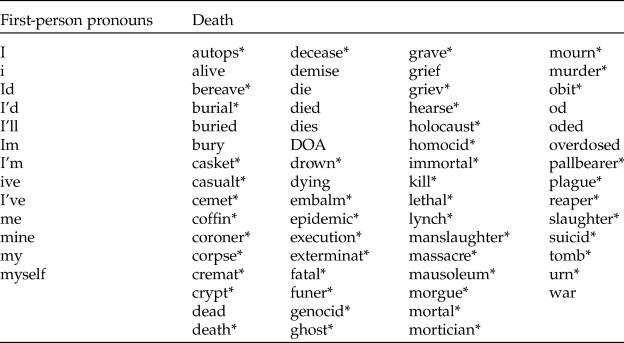
The Linguistic Inquiry and Word Count (LIWC) framework provides a way to analyse a given text for a number of properties, such as the relative length of phrases, the emotional valence of an utterance (positive or negative), the proportion of words referring to topics such as the body, death, sex, love, hate and so forth, as well as the relative usage of verbs, proper nouns, personal pronouns and impersonal pronouns.Footnote 33 It has been used in a great deal of both linguistic and psychological studies, and has been updated to include multiple dictionaries. By way of example, Table 1 shows two lists of words: first, the words deemed related to first-person pronouns by the LIWC, and second, words related to the general topic of death.
The LIWC list of first-person pronouns and words related to the topic of death. The LIWC looks for exact instances of these letter/symbol combinations. An asterisk at the end tells the LIWC to look for all instances in which the word begins with the letters to the left of the asterisk. For example, ‘death*’ will tag ‘death’, ‘deathly’, ‘deaths’, and any other word that begins with ‘death’.

Analysis
This study aimed to investigate whether nineteenth century grief songs were more personal, using first-person pronouns as an indicator of intimacy. As stated earlier, we approached this research by separately examining the following questions:
1. How does the usage of pronouns increase (proportional to text length) over time? Specifically, do first-person pronouns become increasingly prevalent over the course of the 19th century?
2. If there is an increase in usage, is it gradual, or can the beginning of the change be isolated at all?
3. Does the usage of topics about death, grieving, negatively valenced emotion and sadness correlate with increased usage of first- and second-person pronouns?
Personal Pronoun Usage
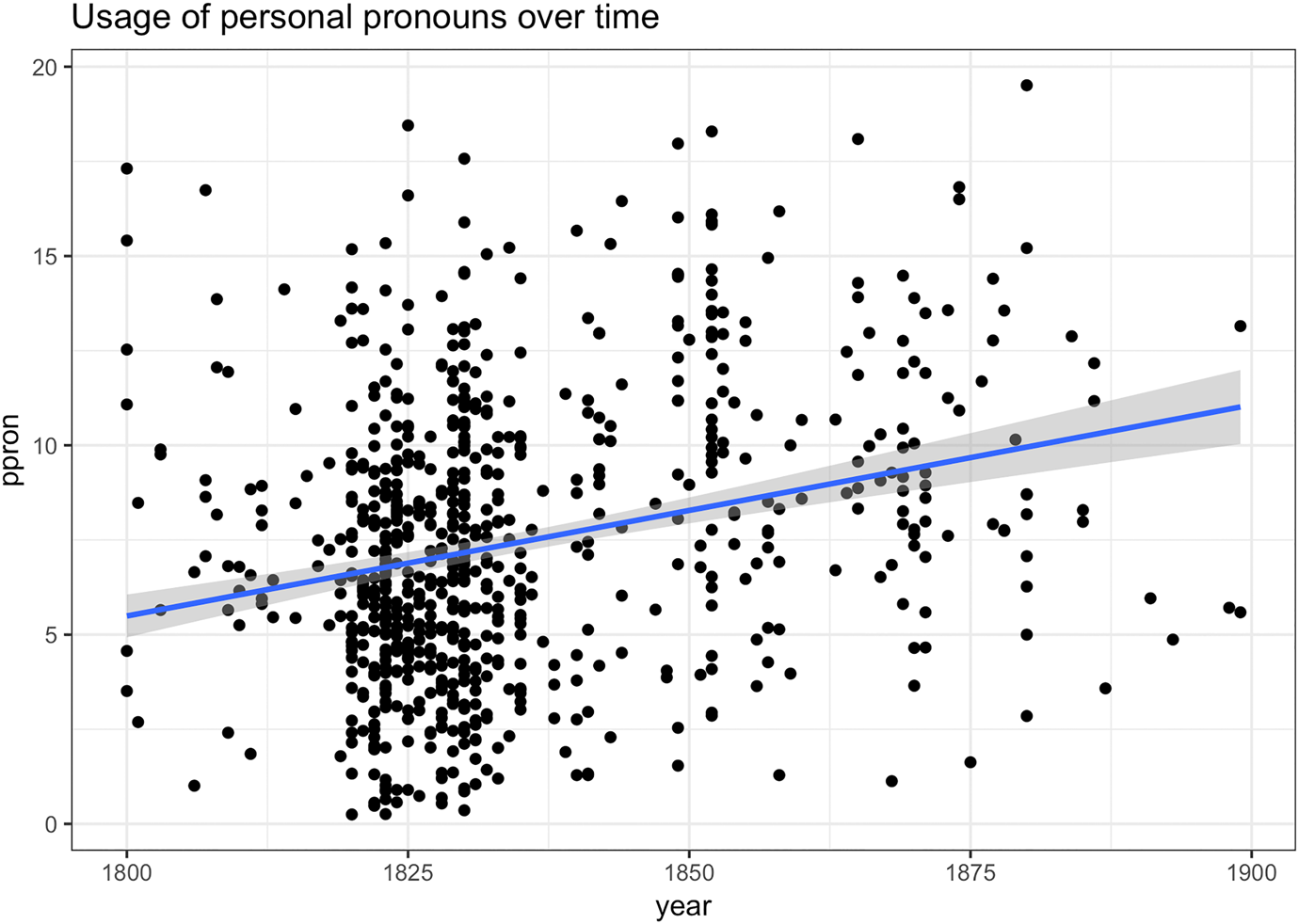
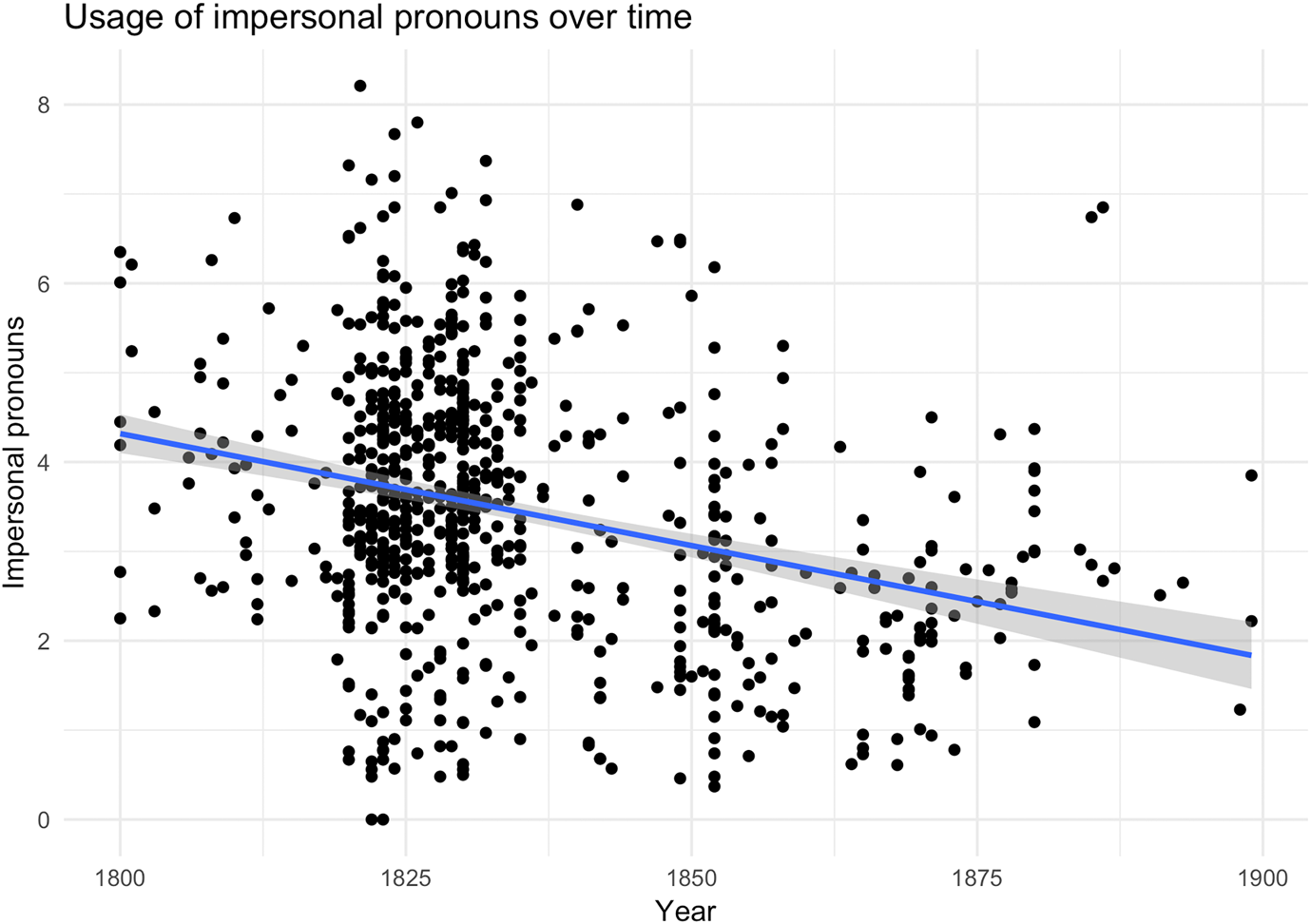
We begin by simply looking at the usage of all personal pronouns (e.g. I, we, she/he, they). There is a significant increase in usage throughout the nineteenth century, though a statistical analysis of the effect shows that this increase is not a drastic change (see Fig. 1). Put another way: it is likely that personal pronoun usage does change over time, more than one might expect due to random fluctuations in usage, but the nature of that change is not extreme. We examine this further by looking for a corresponding decrease in impersonal pronouns over this same period, which we find (see Fig. 2). The use of impersonal pronouns (e.g. it, that, those) significantly decreases throughout the nineteenth century, and a statistical analysis shows that this decrease is a bit more pronounced than the increase in personal pronoun usage.
Usage of personal pronouns significantly increases throughout the nineteenth century (p < .001; df = 765, adjusted R 2 = .07)

Usage of impersonal pronouns significantly decreases throughout the nineteenth century (p < .001; df = 765; adjusted R 2 = .09)

The nineteenth century appears to have witnessed a change in linguistic norms, with lyrics favouring personal pronouns over impersonal ones. This use of personal pronouns may not necessarily correspond with an increased usage of pronouns relating to the self, let alone the expression of one's own grief; however, interestingly, the song with the highest percentage of personal pronouns (‘My Maggie She Can Wash’, from 1880), at one point does express grief, referring to tearful farewells at a train station:
Notice that the expression of grief in this case is not overtly introspective and personal – the narrator refers to others crying as they say their farewells, not himself. At the same time, there is a deep structure at play, along with a melancholy trope (‘time and tide it will not wait’), that connotes grief without the use of grief-related words.Footnote 34
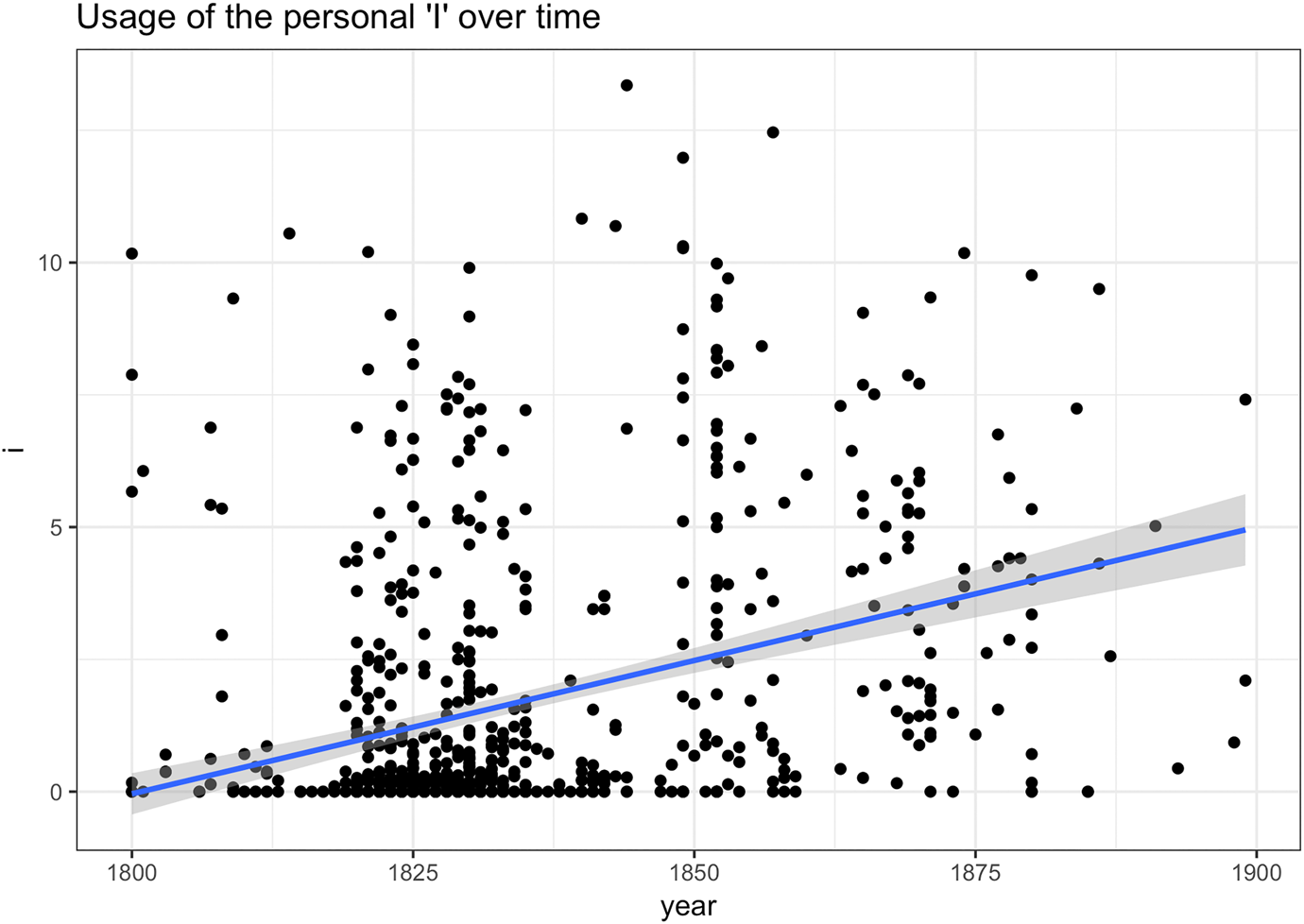
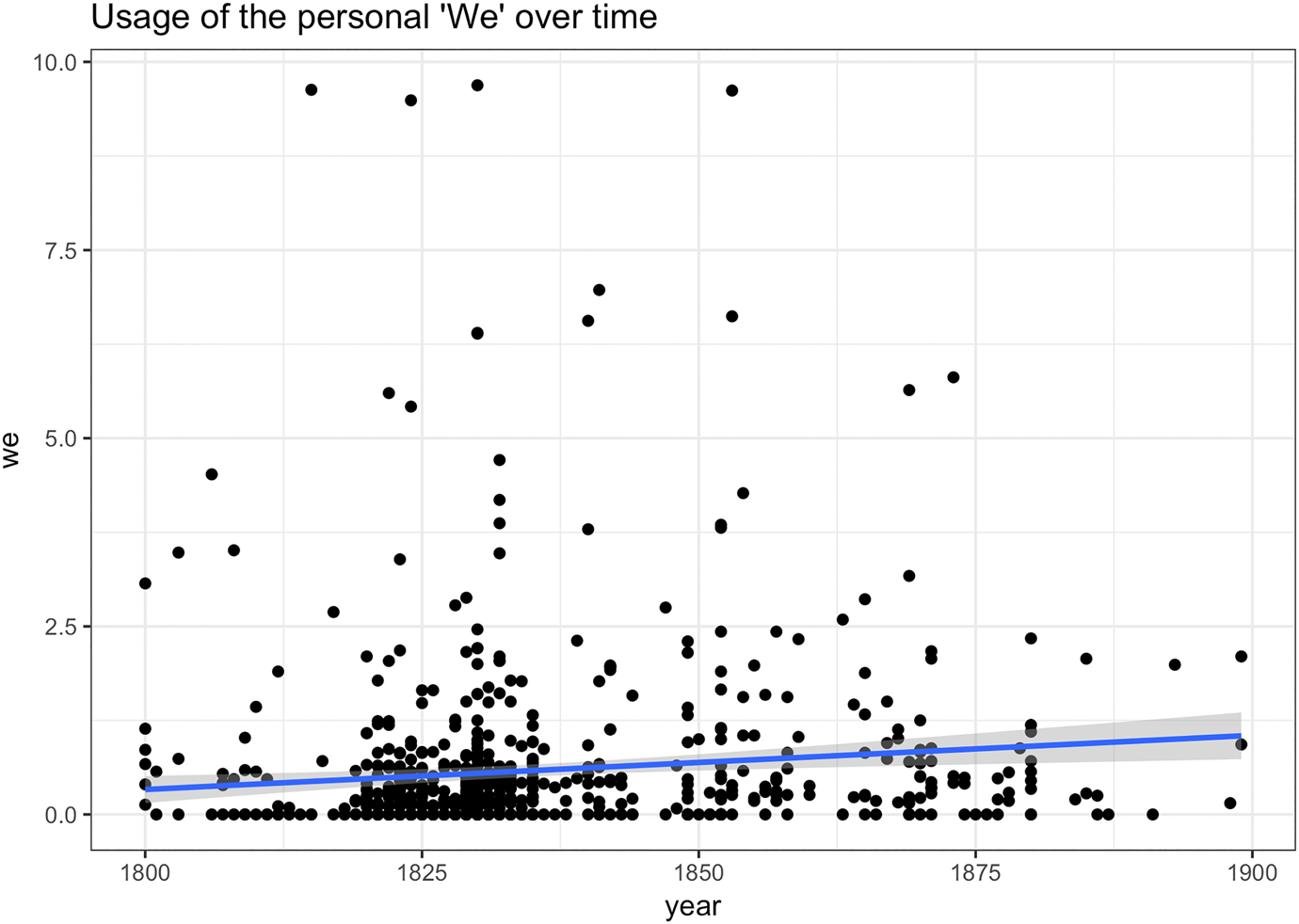
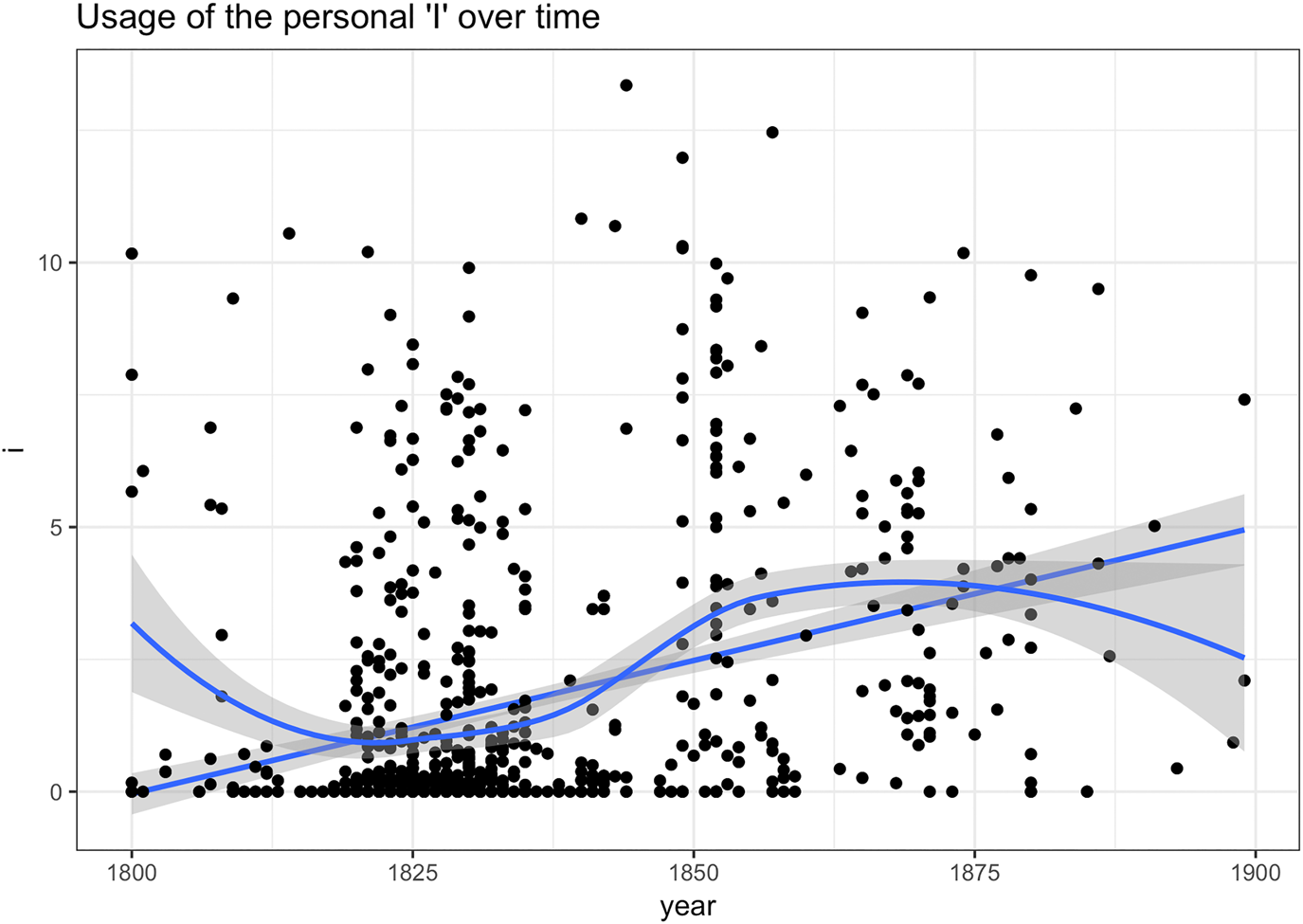
In addition to the frequent use of first-person pronouns in this piece, there are multiple references to ‘Maggie’ in the third person (‘she’), so it may be that measuring all personal pronouns will be inflated from a simple measurement of first-person pronouns. We look at first-person pronouns alone, next. Both the singular and plural first-person pronouns (‘I’ and ‘we’) experience significant increases in usage throughout the nineteenth century (see Fig. 3 and Fig. 4). The overall effect for the former is more pronounced than the latter, suggesting that the personal ‘I’ underwent a more drastic increase than the personal ‘we’. It is worth noting that, in terms of intimacy, the personal ‘I’ has been considered more personal than the collective ‘we’.
Usage of the personal ‘I’ significantly increases throughout the nineteenth century (p < .001; df = 765, adjusted R 2 = .11)

Usage of the personal ‘we’ significantly increases throughout the nineteenth century, though the trend is quite slight (p < .001; df = 765, adjusted R 2 = .002)

Supporting the notion that the increasing use of ‘I’ is associated with introspection, grief, and death, the ballad with the highest percentage of the first-person ‘I’ is in fact a murder confession: ‘The Confession of James Bryce’ from 1846. The ballad narrates the protagonist's killing of his brother-in-law after a robbery gone awry. In the second half, the protagonist details his arrest and imprisonment:
This ballad might also be seen as demonstrative of negatively valenced emotion, as it contains both remorse for a crime committed (‘the murder … I rue’) and grief about the protagonist's current state of affairs (‘I am doomed to die’). We can also note the shifting verb tense: when the protagonist addresses the listener (‘for it is on that day my friends’; ‘let everyone take warning now’; ‘but O my friends I fear’) or exclaims his remorse and grief (‘the murder … I rue’; ‘I am doomed to die’),he uses the present tense. The past tense, in contrast, is used for narrating the plot (the first two lines convey he was asleep when he was arrested and then moved to Edinburgh) and inserting a contemplative aside about a Biblical analogy.
Despite the slighter increase in the usage of ‘we’ that we saw in Figure 4, it is noteworthy that, once again, one of the ballads with the highest usage of the plural first-person pronoun is told from the viewpoint of murderers. In the elaborately titled ‘Address, Or Warning to the Young, By the unfortunate Men, now under Sentence of Death, who are to be Executed on Wednesday the 3d of November next, for Various crimes; published as a warning to the rising generation, to beware of the first beginnings of evil’ from 1815, the protagonists write:
This topic of remorse is likely a result of the nature of the nineteenth century broadside, which was primarily about current events. It is still notable that there was an increase in such remorseful ballads throughout the century, suggesting that the use of the plural pronouns, although increasing over time, is much less pronounced than the usage of the singular.
The second-person personal pronoun, ‘you’, allows for the narrator to speak directly to the listener in an intimate way, and might also be sentimental in nature, or focused on loss. A great example of this can be seen in the ballad with the highest percentage of the second-person pronoun, ‘The English Emigrant’ from 1871. In one verse, the narrator warns the listener of longing for home and loved ones:
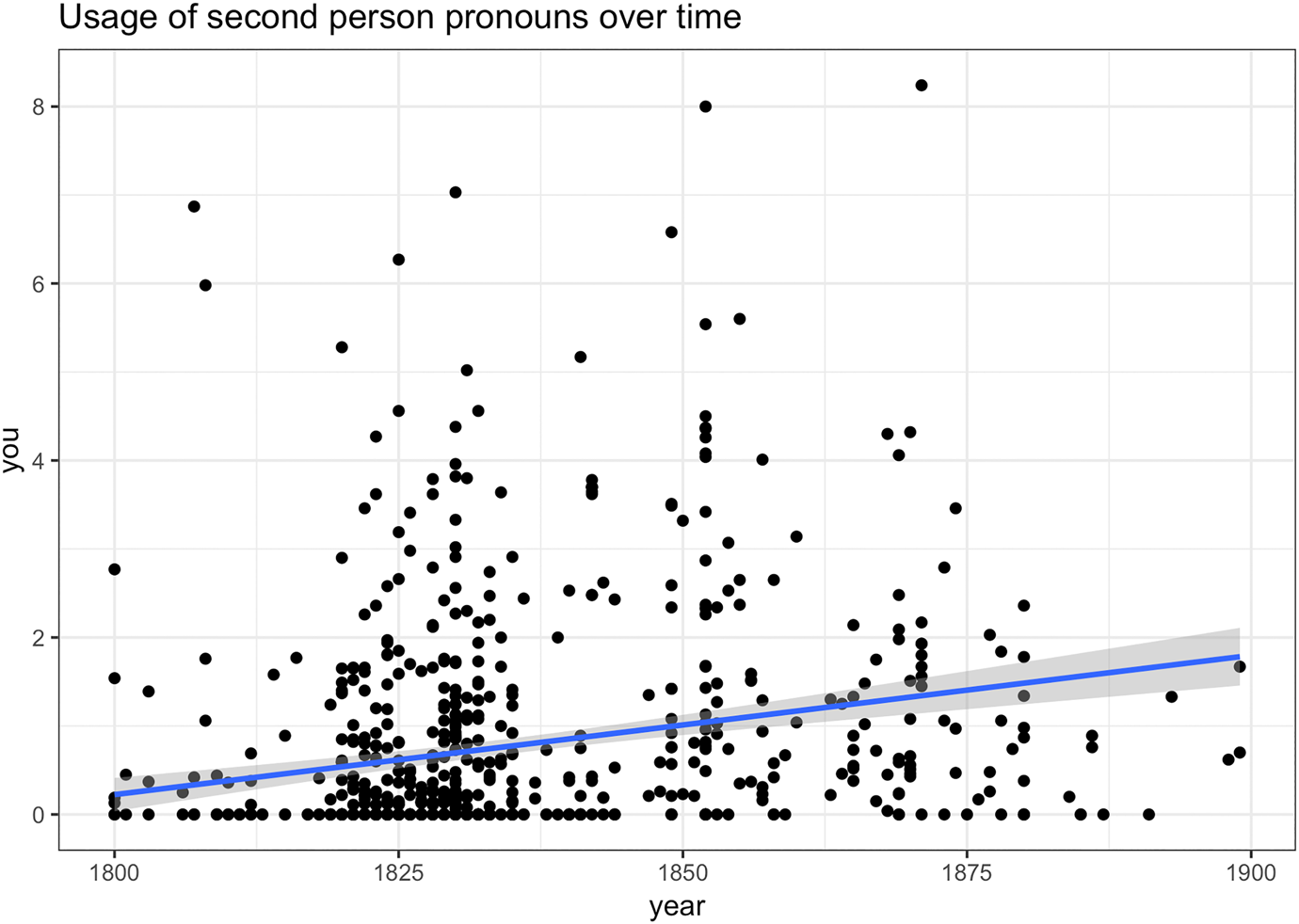
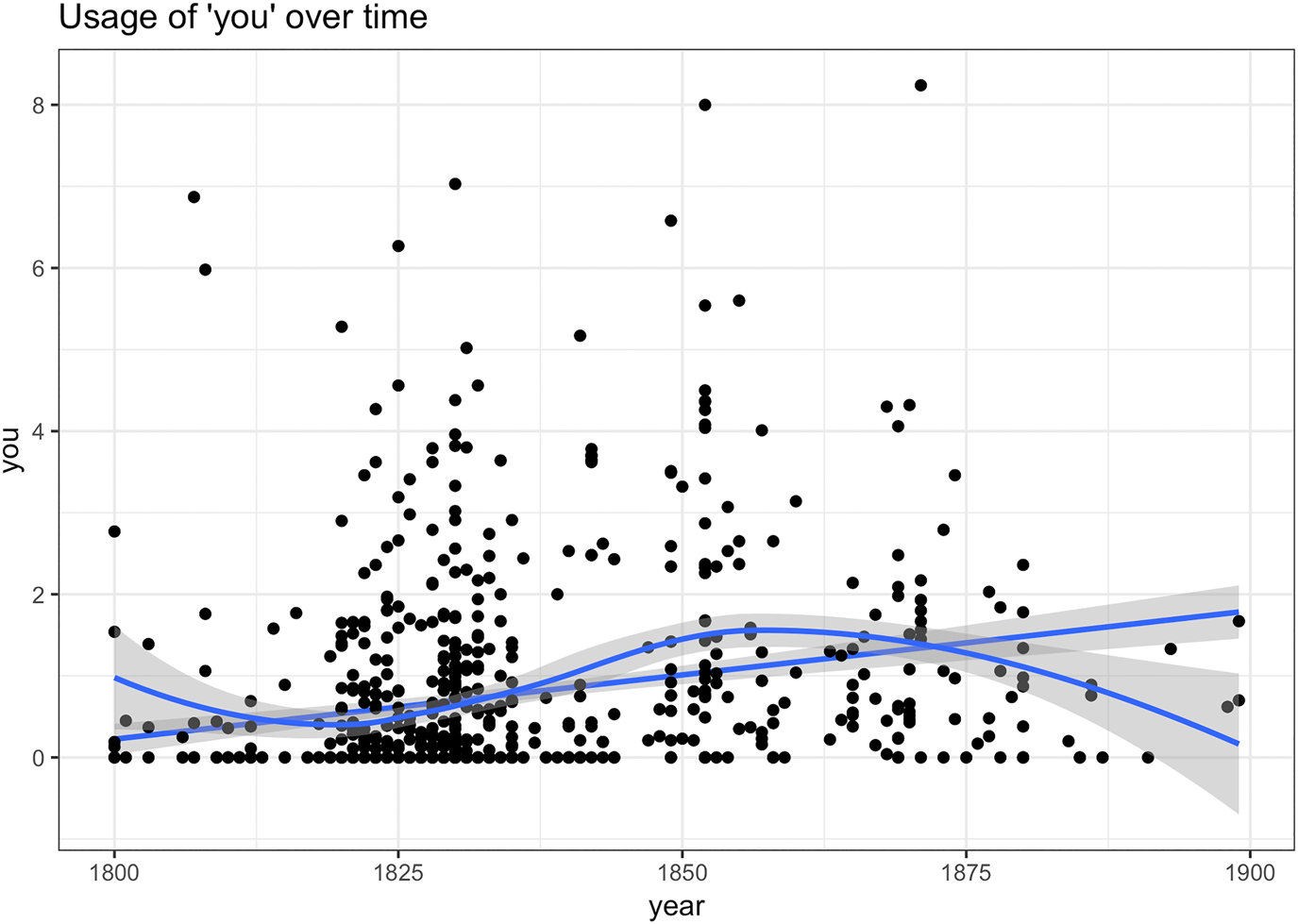
As we might expect, an increase in usage of second-person pronouns throughout the nineteenth century aligns with the increase in usage of the singular and plural first-person pronouns (see Fig. 5). The use of ‘you’ increases more markedly than the use of ‘we’, though less distinctly than the use of ‘I’.
Usage of the second person (‘you’) significantly increases throughout the nineteenth century (p < .001; df = 765; adjusted R 2 = .04)

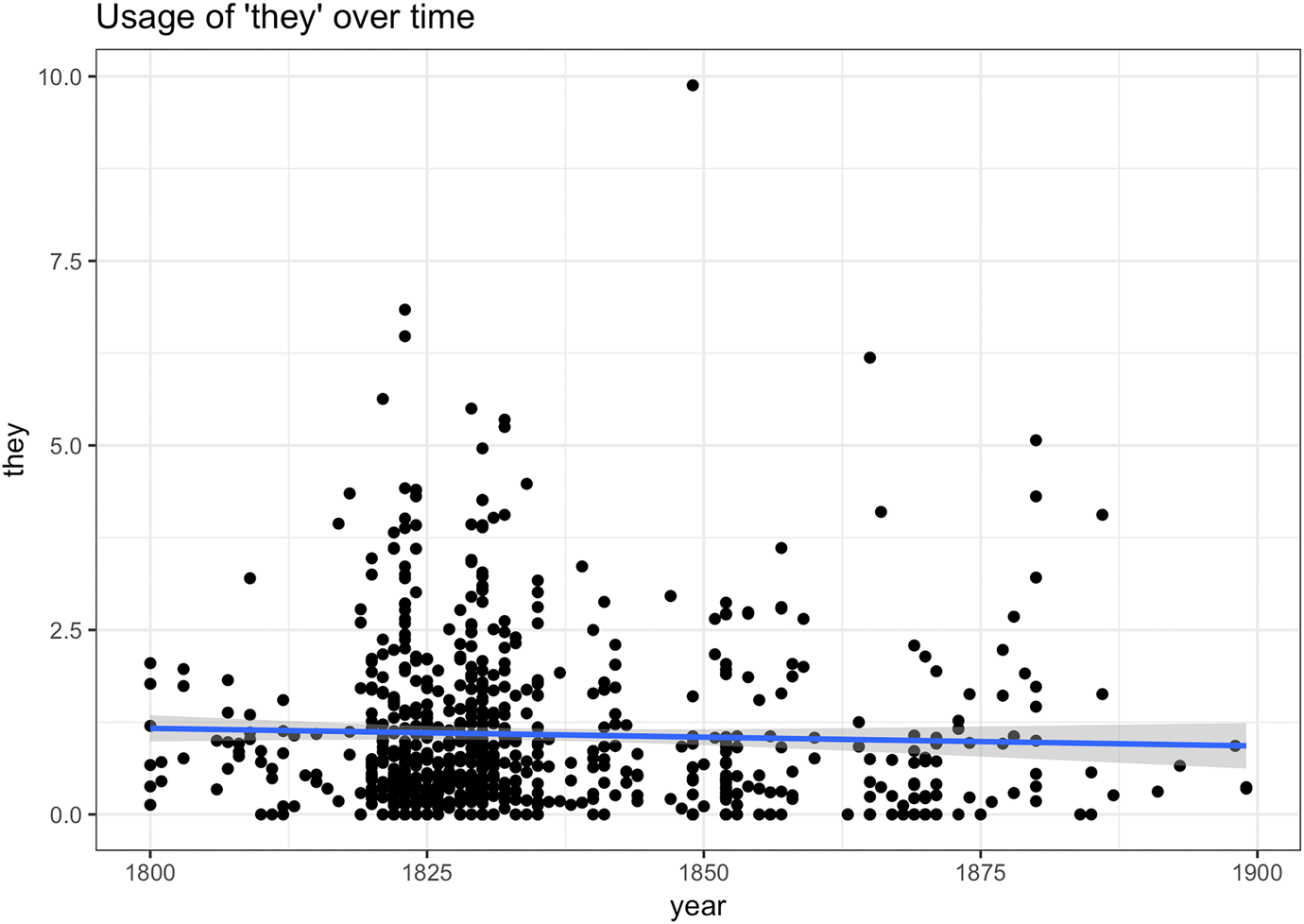
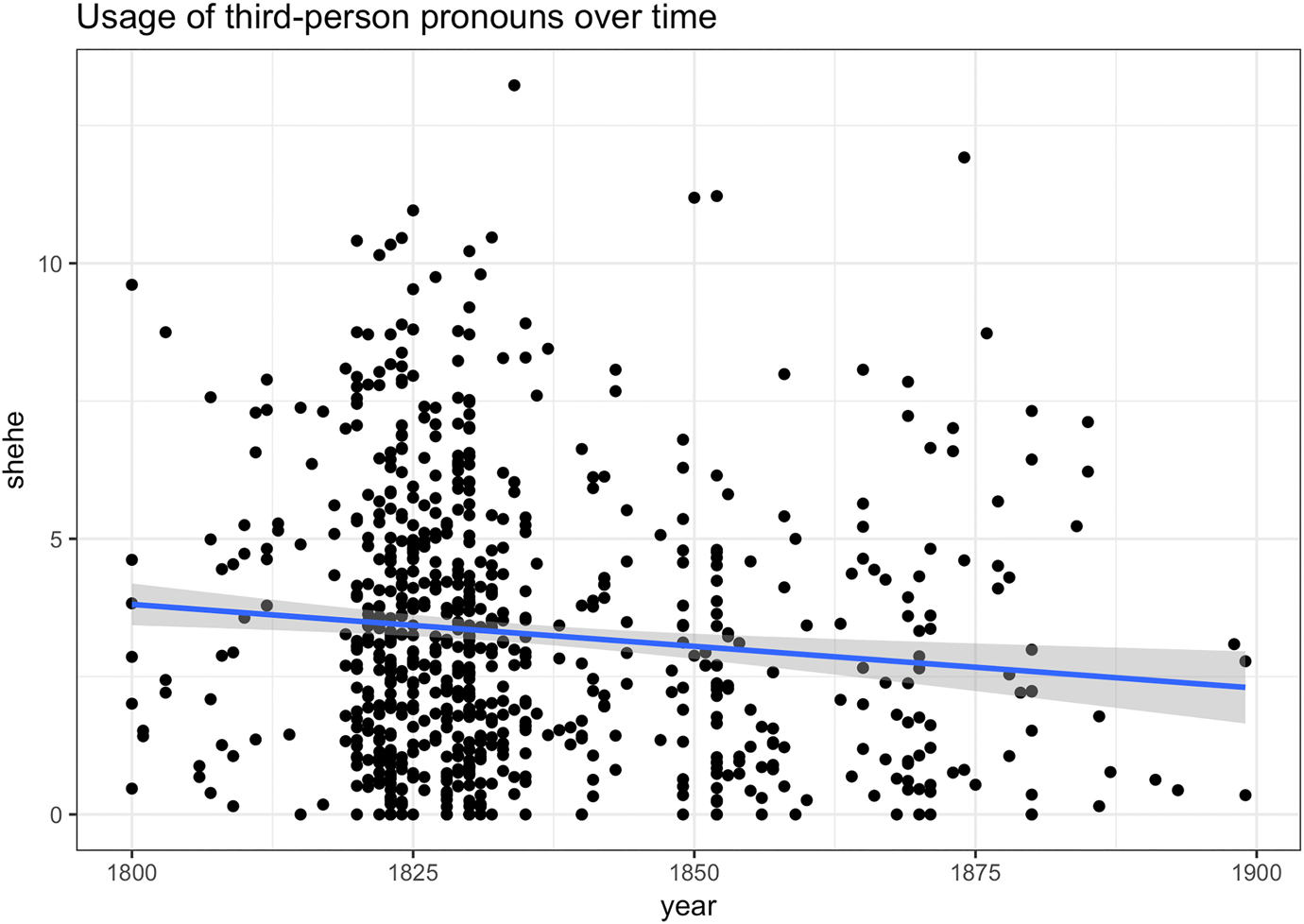
We found no significant change in the treatment of third-person pronoun ‘they’ (see Fig. 6), and a decrease in usage of third-person pronouns ‘he’ and ‘she’ (see Fig. 7). Statistically, this decrease is not extreme, similar to how the increase in the usage of ‘we’ was also not radical. This would lead us to believe that the increase in personal pronouns seen in the nineteenth century is predominantly a result of the usage of ‘I’ and ‘you’, pronouns that speak of the direct experience of either the narrator or the listener.
Usage of ‘they’ is rather static throughout the nineteenth century (p = .3; df = 765; adjusted R 2 = .00003)

Usage of the third-person pronouns (‘he’ and ‘she’) decreases slightly throughout the nineteenth century (p < .001; df = 765; adjusted R 2 = .01)

What can we make of this? It seems that, for the most part, these results are consistent with our original hypothesis regarding the rise of more first-person pronouns at the expense of third-person pronouns. There is a significant increase in usage of personal pronouns, in general, whereas the usage of impersonal pronouns decreases significantly. At first glance, it might seem surprising that ‘we’ experiences less change than ‘you’ does, but it would make sense that ballads directed toward someone (love lost, someone who has passed, or even the listener) would be a reflection of quite personal speech, whereas the first-person plural, although increasing over time, might be seen as less personal. We might further examine this point by studying the nature of such change and exploring whether such linguistic usage is limited to the nineteenth century.
Fluctuating Use of First-Person Pronouns
Leonard Meyer, echoing sociolinguists such as William Labov, argued that styles might change in a number of ways. An ‘internal’ change occurs when something gradually shifts over time, such as a shift in dialects, whereas an external change might occur as a result of a specific event. For example, consider the creation of the Cherokee language, or Shakespeare's coinage of the word ‘assassinate’.Footnote 35 We might ask: if a change in pronoun usage occurs, what type of change is it? Is there a gradual increase over time that simply compounds, or are there specific events that lead to marked shifts in usage?Footnote 36
The previous analyses assume a gradual, internal change, examining the change as a single straight line. A brief glance at the treatment of ‘I’ as a moving average, however, demonstrates that this change is likely not linear. In fact, it shows that the usage is almost cyclical, or at least the increase in the use of ‘I’ experiences a sharp increase in the second quarter of the century, following a marked decrease in the first quarter of the century (see Fig. 8). Interestingly, it would seem that second-person pronouns experience the same type of trajectory, although to a lesser extent (see Fig. 9). It may be that the best model of change in first- and second-person pronoun use is less linear than it is polynomial, or incorporating one or more shifts in direction, and it may even be one of cyclical change. In other words, the use of first- and second-person pronouns might be thought of as going in and out of style through the years.
We model the usage of first-person singular pronouns over time with a linear trendline as well as a polynomial curve. An ANOVA statistical test reveals that the polynomial trend is a significantly better fit than the linear trend, suggesting that it is less appropriate to say that the use of first-person singular pronouns increased throughout the century, and more appropriate to say that they experienced multiple shifts in usage.

We model the usage of second-person pronouns over time, once again with a linear trendline and a polynomial curve. An ANOVA statistical test reveals that the polynomial trend is a significantly better fit than the linear trend; but note that this effect is much smaller than with the usage of first-person pronouns.

Zooming Out: Nineteenth-Century Usage in Context
Examining diachronic trends is also heavily dependent upon the duration of time examined. For example, if we were to examine the types of clothing passers-by were wearing from August to December, we might see an increase in layers and thermal layers, but it would incorrect to view this as anything but a cyclical trend related to arrival of winter. Similarly, it would behove us to not only examine the nineteenth century, but also the eighteenth. It could be the case that although there is an increasing trend in personal pronoun usage, whether linear or cyclical in nature, such pronouns are less prevalent than in previous centuries.
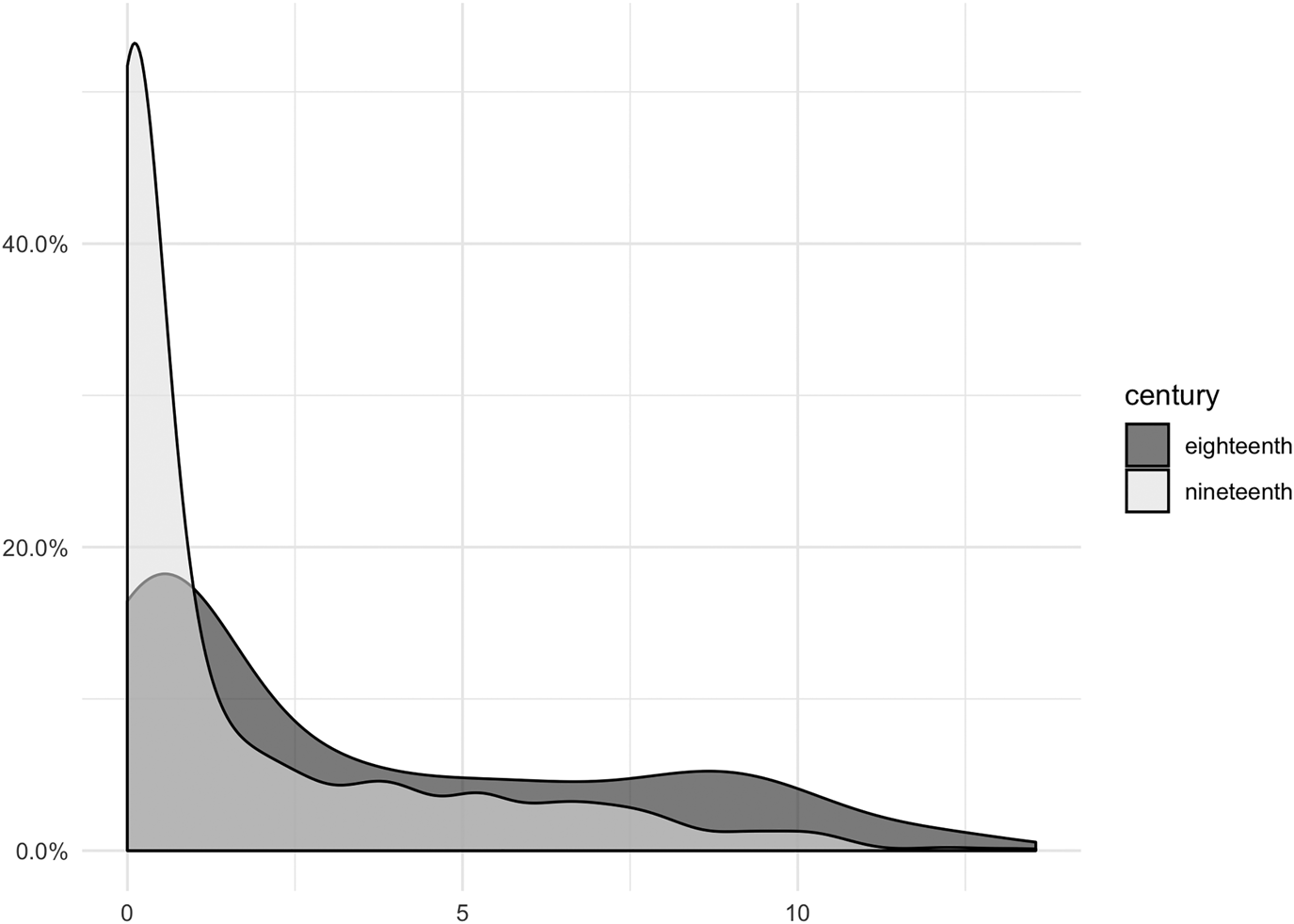
Comparing the means of each century, we were surprised to see that the eighteenth century demonstrated a higher usage of both ‘I’ and ‘you’ than in the nineteenth.Footnote 37 The differences, however, are not statistically significant, which suggests that the trend is not beyond the possibility of occurring solely due to random chance. As seen in Figure 10, this difference in means (for the usage of ‘I’) is likely because a higher number of pieces make no use of the first person in both centuries than do make use of the pronoun, but there are more ballads in the corpus from the nineteenth century than the eighteenth (767 as oppo sed to 314).Footnote 38 It might therefore be more appropriate to look at the trends of usage over time, rather than simple averages.
A density plot shows the percentage of pieces in the corpus that use first-person pronouns, distinguishing between the eighteenth and nineteenth centuries. Note that in the nineteenth century, there are far more pieces that are using pronouns other than first-person pronouns, as compared to the eighteenth century. However, there are twice as many ballads in our corpus from the nineteenth century than from the eighteenth century, which complicates the reading of this comparison.

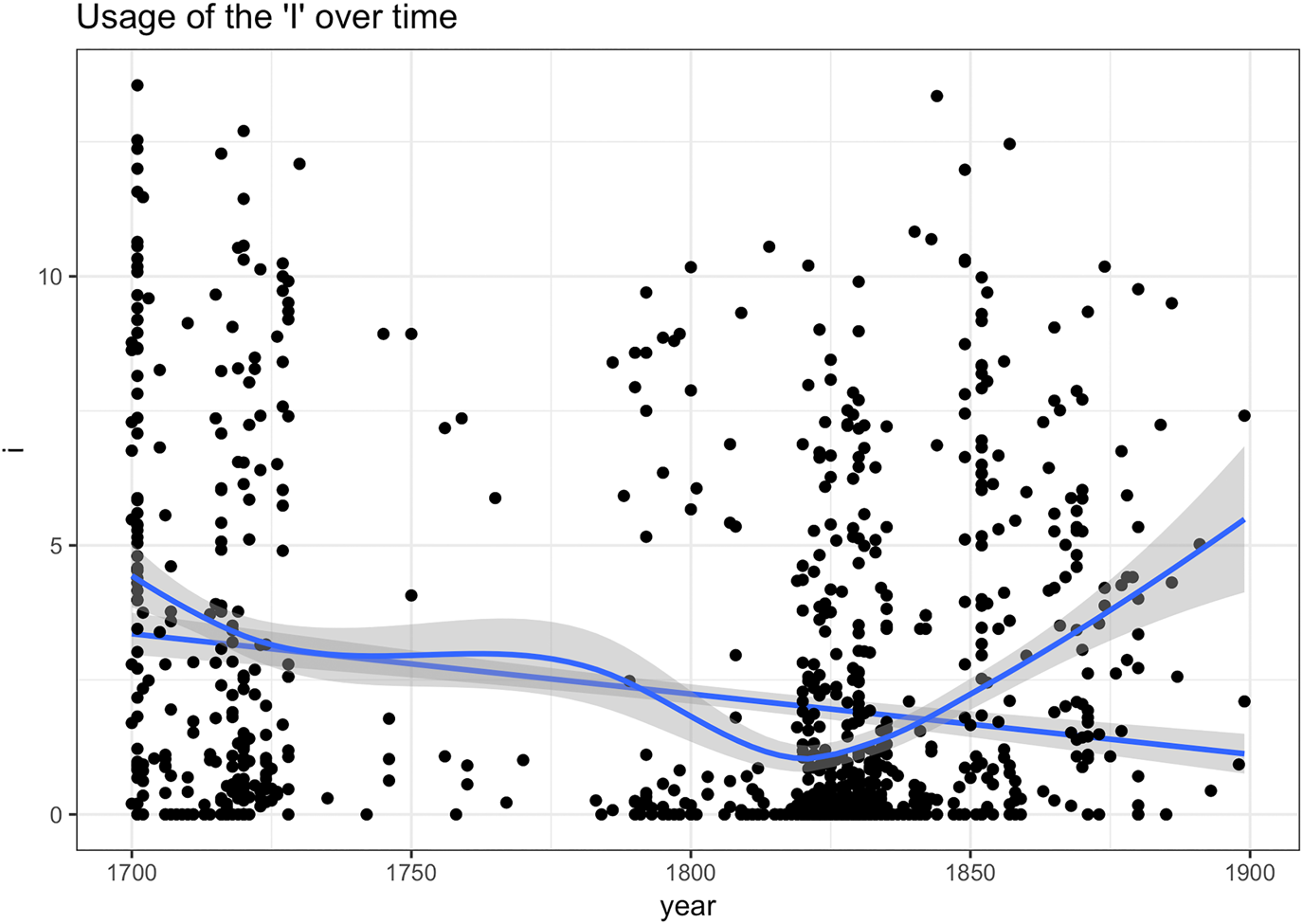
As seen in Figure 11, a linear model would demonstrate a decreasing trend of the usage of first-person pronouns from 1700 to 1900; however, the linear model would belie the rather drastic nature of change that seems to occur in the nineteenth century. It would not be technically incorrect to discuss the usage of first-person pronouns as decreasing over time, but it would perhaps be ignoring the type of change that seems to be occurring.
We model the usage of first-person pronouns throughout both centuries, using a linear trendline (which decreases) and then a moving average (which is polynomial in nature). We can see that when examining the moving average, there is a sharp increase in usage of first-person pronouns beginning the second quarter of the nineteenth century.

After examining Figure 11, it could be argued that the increasing usage of personal pronouns in the nineteenth century is simply correcting for a dip that occurred in the late eighteenth century. Examining the types of ballads in the eighteenth century that invoke the first-person singular, we do often find pieces that express grief. In the ballad, ‘In Heriot's Walks’ from 1715, for example, the narrator explicitly discusses his grief for love lost:
It may be that the usage of first-person pronouns is typical in songs addressing grief, but that the increased usage of first-person pronouns is not necessarily tied to the increased usage of grief topics. Obviously, pronoun usage is just one factor in speech detailing introspection, sentimentality, and – more specifically – grief. Therefore, it would be prudent to discuss the relationship of multiple variables in such ballads.
Examining the Relationships of Markers of Sentimentality and Introspection
So far, we have examined the diachronic trends in personal pronoun usage throughout the nineteenth century, and then throughout the eighteenth and nineteenth centuries. Now we turn our focus to how pronoun usage relates to the usage of lyrical topics related to grief.
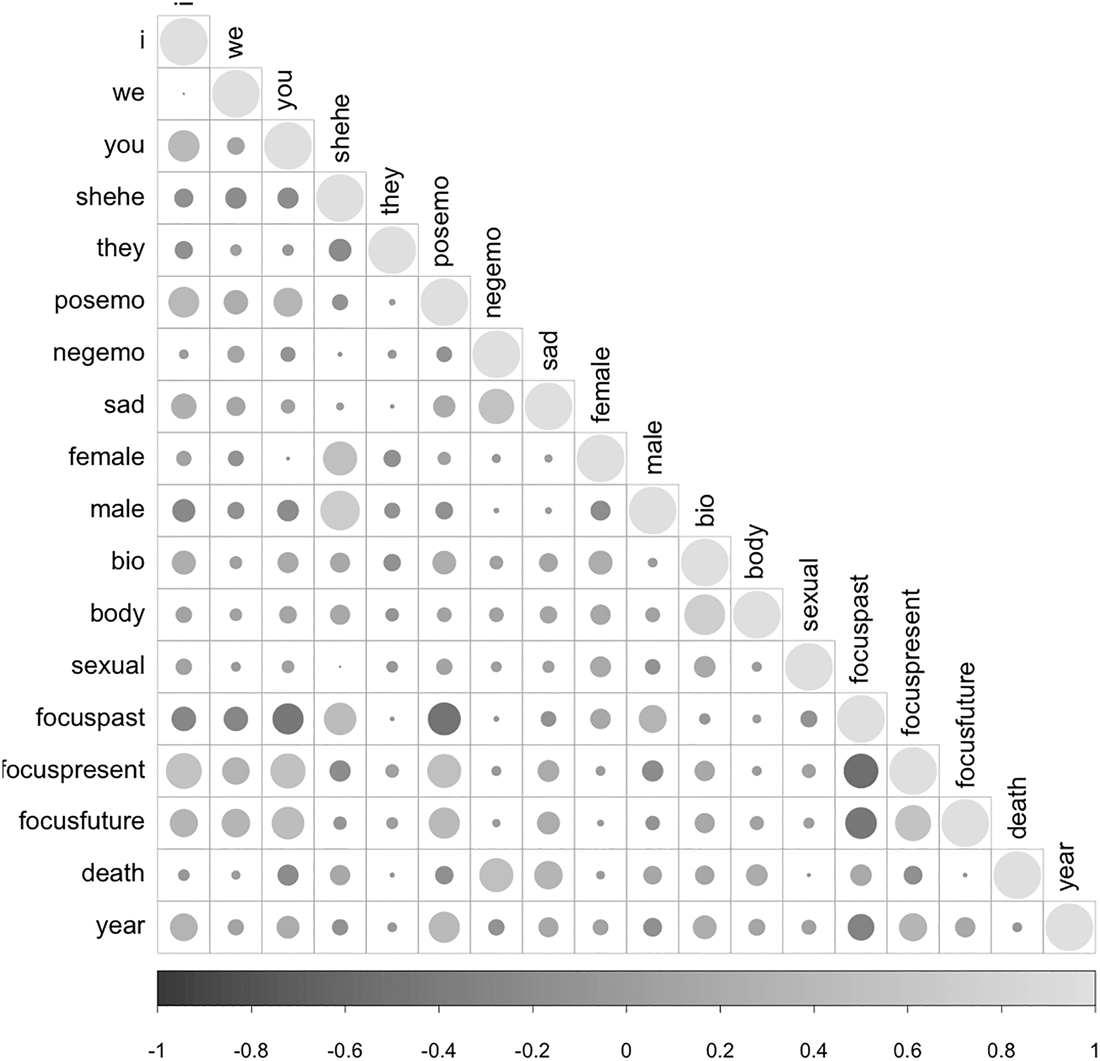
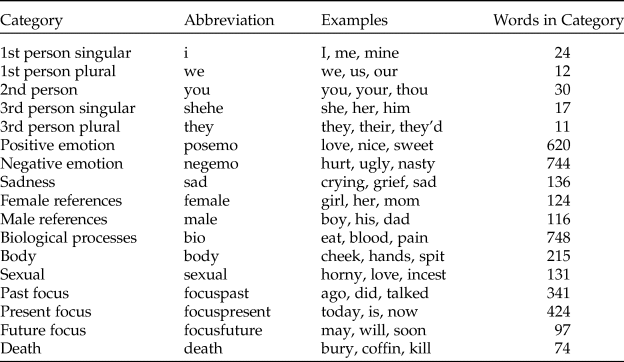
It seems appropriate to begin with a broad examination of how the use of each of these linguistic entities relate to one another. We start by analysing correlations between personal pronouns and particular lyrical topics. These correlations appear in Figure 12. We decided to consider the personal pronouns and categories of words related to grief along with several other categories we thought might present us with a wider perspective. A list of the LIWC categories that we used, as well as examples of words within each of them, can be found in Table 2.
Correlations between the usage of personal pronouns, the use of selected lyrical topics, and the year in which the song was published. Larger, more intensely colored circles indicate stronger correlations. We can see that the use of first-person pronouns correlates most strongly with positive emotion, a focus on the present, and a focus on the future.

The LIWC categories incorporated into the analysis.

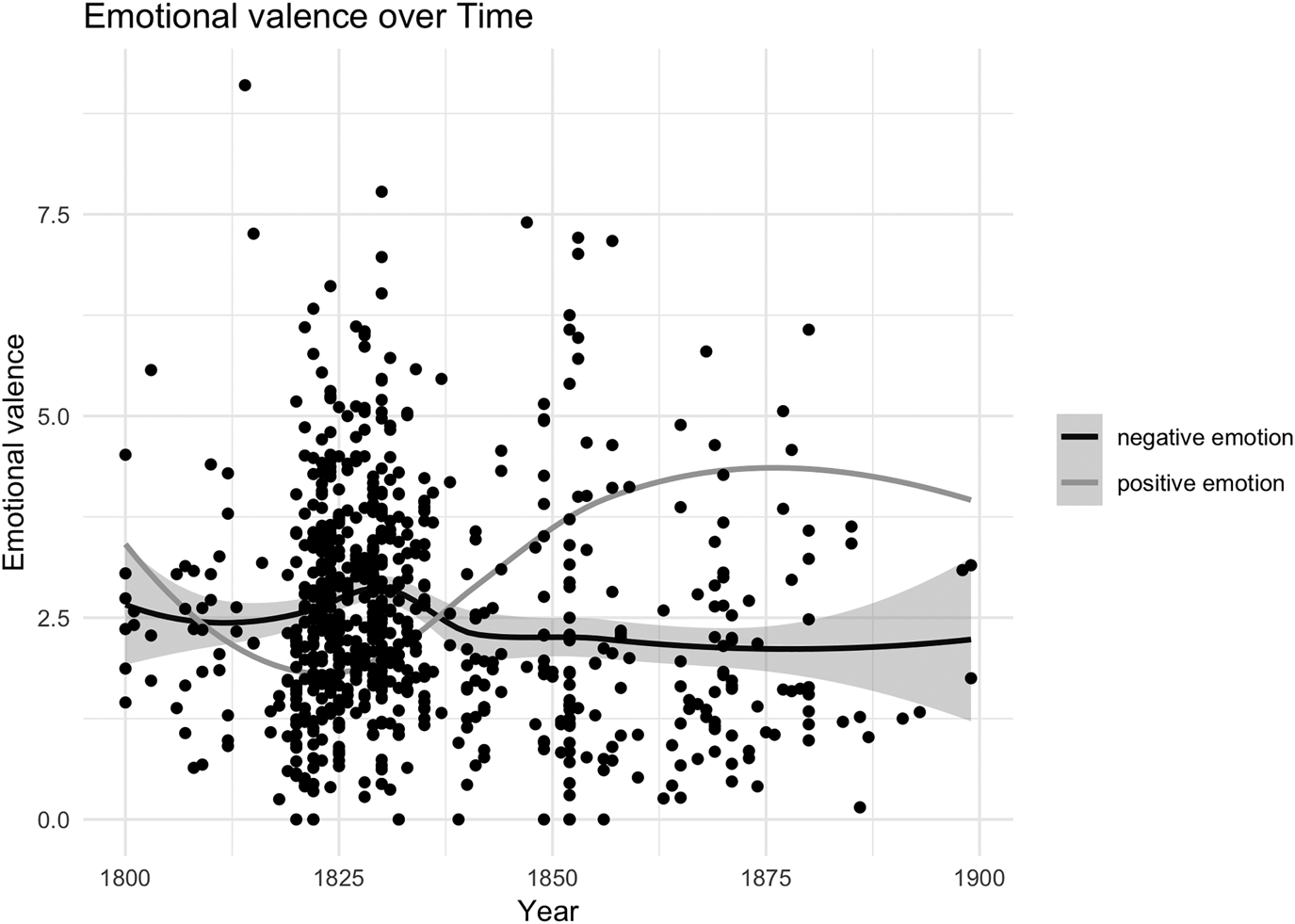
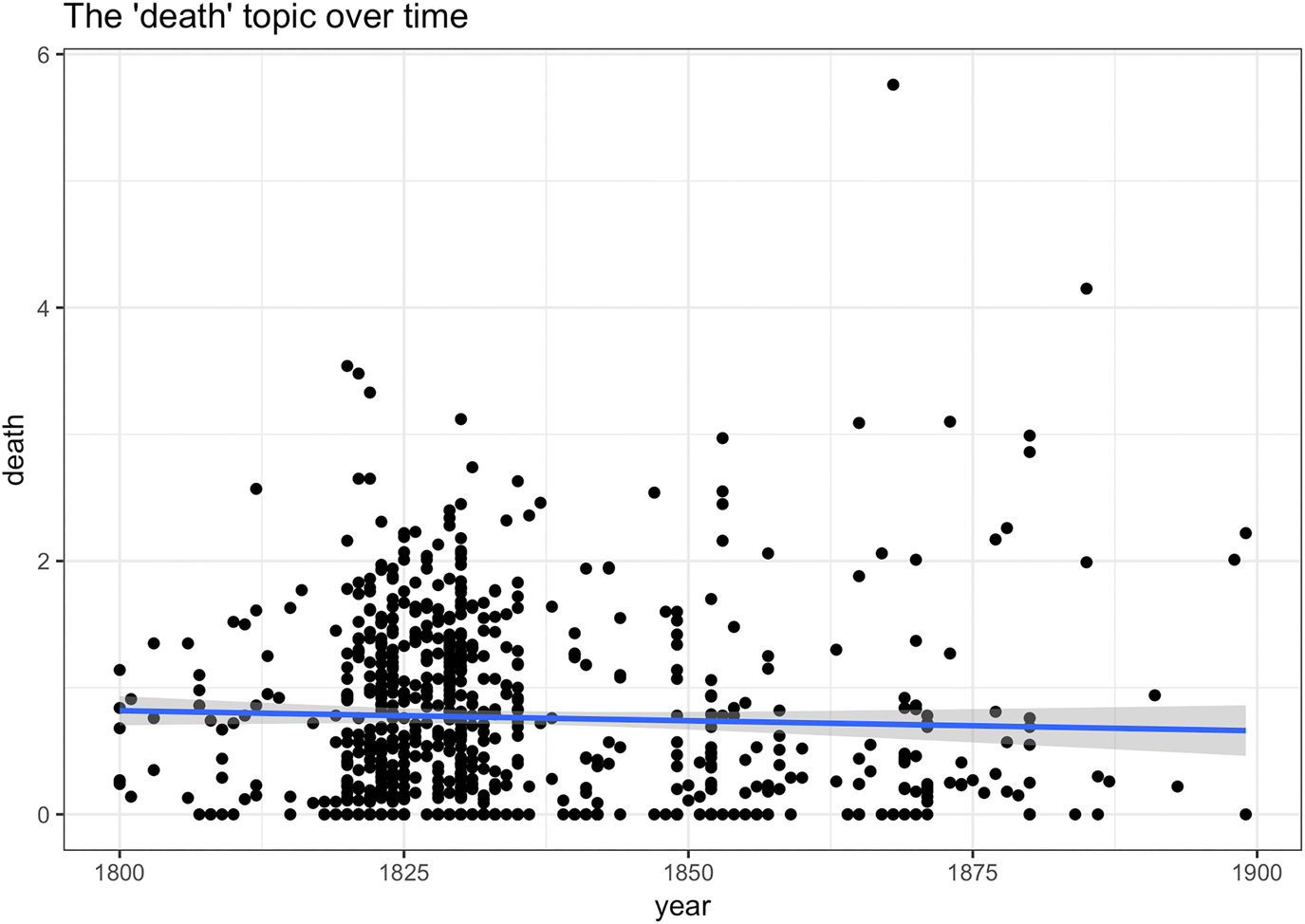
Looking at the relationships between the variables, we see that there is actually very little relationship between the topic of death and personal pronouns in general, and certainly not with first- or second-person pronouns. Instead, we see that death – quite predictably – is associated with negative emotions and sadness. Contrary to what we expected, pronoun usage seems to be primarily associated with positive emotion, a focus on the present, and a focus on the future. Second-person pronouns are correlated with positive emotions, but strongly negatively correlated with a focus on the past.Footnote 39 As shown in Figure 13, the positive emotional valence follows a nearly identical trajectory as the first-person pronouns. This might suggest that the first quarter of the nineteenth century saw a strong increase in pieces that focus on the self in a rather positive and uplifting way. By contrast, the theme of ‘death’ is relatively stable (see Fig. 14). While we expected to see it follow the trajectory of pronoun usage, that does not seem to be the case. The current data does not seem consistent with our original hypothesis that pronoun usage would be an indicator of grief, but rather of positive emotion and a focus on the present and future.
We model the change in emotional valence over time. The trendline of positive emotion bears a resemblance to the trendline of first-person pronouns, also showing a sharp increase in the beginning of the second quarter of the nineteenth century.

The static usage of death related themes in the nineteenth century.

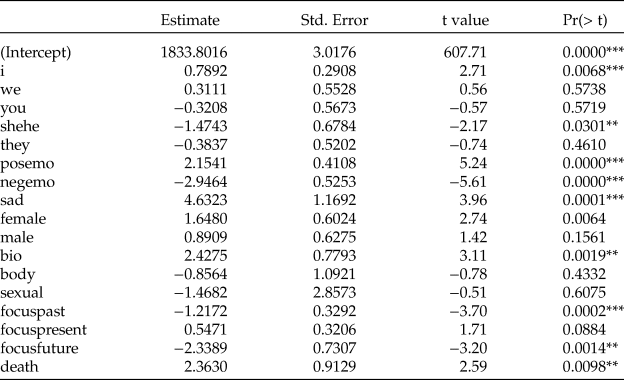
A regression model showing the ability of select linguistic factors to predict year of composition.

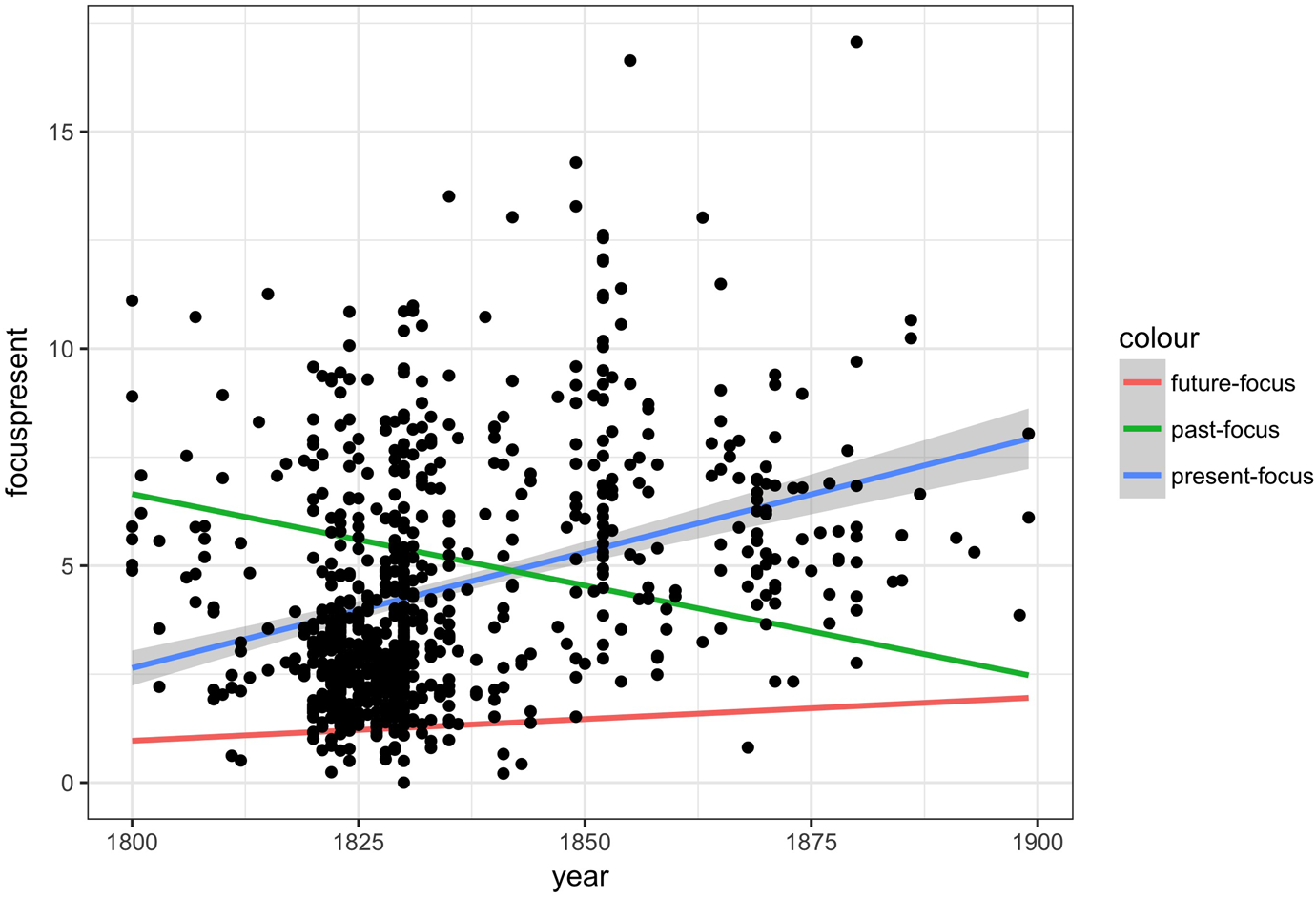
We see a strong relationship between the usage of first-person pronouns, the rate of ‘positively valenced’ emotions, and the usage of the present tense, which follows a similar trajectory (see Fig. 15). The past-tense, on the other hand, experiences a marked decline during this period. This does not support our original hypothesis about the rise in grief-related songs, and in fact seems to support a contradicting hypothesis: the nineteenth century experiences a rise in pieces told from the narrator's perspective, in the present tense, about a positive emotion, such as love or happiness.
We model the treatment of temporal focus throughout the nineteenth century. Both the usage of present-focus and future-focus begin to increase around the second quarter of the nineteenth century.

Conclusion
We examined the usage of first- and second-person pronouns, as well as topics surrounding grief, in songs written throughout the nineteenth century, investigating the claim that the nineteenth century boasted more personal grief songs than the century before. If the use of first-person pronouns is indicative of intimacy, and nineteenth-century grief songs were increasingly personal, we would expect to see a correlation between them. To contextualize any extent correlation, we began by analysing the diachronic trends of first-person pronouns alone.
In answer to our first research question, we found that the use of first-person personal pronouns increased – proportional to text length – over the nineteenth century. If personal pronouns are an indicator of intimacy, we might conclude that this increase reinforces what we know of the ‘Romantic’ ethos in the nineteenth century. Our second research question asked whether we could isolate the beginning of this trend, and we found that we could: the trend is not linear, rather, a sharp increase begins between 1815–1820 and levels off in the third quarter of the century. These two findings may suggest that songs did become more personal in the nineteenth century. However, when we included the eighteenth century in our analysis, it appeared that the eighteenth century boasted more use of first-person pronouns than the nineteenth century, overall. We still see the rise in first-person pronouns around 1815–1820, but the larger scope impacts our interpretation of the marked inflection point. Had the usage of personal pronouns gradually increased or remained fairly steady until the nineteenth-century rise, it would be reasonable to interpret the rise as indicative of increased intimacy coinciding with the rise in introspection as we entered into the era of the Romantics. Instead, the increase in usage follows a steady decline, forcing us to consider that the linguistic trend is part of a linguistic cycle that could be independent of cultural trends. In other words, it may be that we are observing a dip in personal pronoun usage in the late eighteenth century, rather than a meaningful increase in personal pronoun usage in the early nineteenth century.
Our final research question addressed the usage of lyrical topics about death, grieving, negatively valenced emotion and sadness, and whether they correlated with the increased usage of first-person pronouns. Looking at the correlations between each of these factors, it appears that first- and second-person pronouns do not correlate strongly to death or negatively valenced emotion, though they have a slight positive correlation to sadness and a stronger positive correlation to a focus on the present and positively valenced emotion. The lack of a direct correlation between the use of personal pronouns and grief topics leads us to believe that although the individual trendlines may be similar, they are likely independent of one another. In other words, the presence of first-person pronouns are not reliable indicators of lyrical topics surrounding grief, and the presence of a grief topic does not reliably indicate an increased use of first-person pronouns.
Some additional conclusions that we draw from this analysis regard the use of distant readings. First, when examining diachronic changes over centuries, we must be careful to not assume linear trends, as they may prove to be broad strokes that obscure more subtle changes. Second, the scope of the study has a drastic effect on the results in a distant reading. Looking at the nineteenth century alone, the use of first-person pronouns might seem to rise overall; the addition of the eighteenth-century portion of the corpus painted a far different picture.
Are nineteenth-century grief songs more personal? Using personal pronouns as a measure of intimacy, we can conclude that the beginning of the nineteenth century did see a rise in intimacy in song lyrics. However, we cannot conclude that this rise was tied to grief songs in particular. Despite the existence of many deeply personal grief songs in the nineteenth century, our distant reading reveals linguistic trends and interrelations that challenge the intuition that nineteenth-century grief songs were more personal than those to come before. Nevertheless, much more work needs to be completed before we can generalize our findings to the entirety of Western nineteenth-century grief songs. The present study has been limited in scope, first by focusing on a single representative sample of musical works, and second by concerning itself exclusively with textual manifestations of the intimate portrayal of emotional content.
Future research might consider broadening the corpus to include musical works in other languages and genres. In addition, the musical setting of a text can sometimes obscure the meaning of what might otherwise be a straightforward text. For example, it would very likely be more difficult to examine the valence of emotions in a German Lied than with a Broadside ballad. The interaction of musical parameters with the text, and the support of one parameter with others, varies by genre, and it would be too much to assume that the findings from this Broadside collection would generalize in the same way. Nevertheless, we believe this is a first step toward better understanding the changing engagement with grief in the literature. We hope that future research will further investigate the musico-poetic relationships to expand upon our findings here.
The use of a distant reading, facilitated by computational methods, allows us to examine our research question from a broad angle, and while our findings were surprising, they are nonetheless informative, and they inspire future research. Further analysis, such as expanding the repertoire we studied to include songs in other languages and genres, would improve our study to better generalize across all Western music. Our hope is that this study will contribute to the work on the evolution of grief and sadness in the arts during the long nineteenth century and provide a framework for future scholars in the digital humanities to explore such stylistic change.