The principle of nationality is not and cannot be a complete solution to all the problems which are before us … [While] it applies to nine-tenths of the Continent of Europe[, t]here remain districts, small perhaps in area, but often of great importance both from historical tradition, from their geographical situation, from their mineral resources, which will not fit conveniently into any great national State … How are they to be dealt with? … [Some say] we have to make the best of a bad business… To those who limit their historical vision to the period since the French Revolution, this may indeed seem natural and inevitable; for during the last 100 years more and more we have lost the power of conceiving any form of political union except that of the highly unified centralised national State, in which all the inhabitants and all the districts are forced into subservience to the great governing national idea … But may we not take a larger view? Is it not well to remember that the resources of civilisation have known in the past and may know in the future other forms of political associations? Is it necessary that the State of the future, national though it may be and must be in its fundamental conception, should imitate in all its details … dominant and intolerant nationalism?
James Headlam-Morley, 1919Footnote 1
At the end of the First World War, historian and British Foreign Office expert James Headlam-Morley designed of one of the most intriguing spaces to emerge out of the peace talks – international zones.Footnote 2 Headlam-Morley had been tasked with resolving disputes over Germany’s borders, where French and Polish economic interests clashed with German demographic realities and Wilsonian ideals of national self-determination. His solution to the most intractable of these border disagreements was to create zones of direct international territorial administration overseen by the League of Nations, first in the Saar Basin and then in what came to be regarded as the prototypical international zone of the era, the Free City of Danzig (Gdańsk). A further zone was later created in Memel harbour (Klaipėda).Footnote 3 Headlam-Morley imbued his blueprints for international zones with local–historical references. Evoking a civic-style patriotism in these regions, so the logic went, would ease the transition to an international status and encourage residents to resist the appeal of expansionist nationalism.Footnote 4
Despite Headlam-Morley’s ideas being implemented, international historians have since dismissed his faith in civic patriotism as fanciful, arguing that no such attachment to international zones ever developed.Footnote 5 Political historians too have bolstered these conclusions through their attention to the nationalist movements that eventually tore zones apart and undermined the viability of the League.Footnote 6 However, local and regional historians, equipped with a broader set of language competencies and working more closely with sources that capture the voices of residents, tell a different story. These historians show that when particular League commissioners or governments took power in the inter-war years, they created political environments conducive to strengthening zonal interests and affinities.Footnote 7 This was certainly the case in the most examined and imitated of international zones, the Free City of Danzig. Elizabeth Morrow Clark argues that knowledge of civic patriotism in Danzig enables us to question the perceived consistency of ethnic and national conflict within the zone and separate it out from international conflict over the zone’s future.Footnote 8
This article takes its cue from studies that have sought to be more sensitive to civic patriotism in Danzig during the transition from empire to international zone.Footnote 9 But unlike the work of historians so far, which is still focused on using this phenomenon to rethink the politics of nationalism, it explores the industrial and commercial figures who saw opportunities in internationalisation. In particular, the article focuses on the case of Ludwig Noé, a pre-eminent industrialist appointed to oversee the disarmament and repurposing of Danzig’s Imperial Shipyard.Footnote 10 Originally established by the Prussian state in 1844 and absorbed into the German Empire after 1871, the Imperial Shipyard engaged in both ship construction and repairs, and during the war, it was a major centre for the building of submarines.Footnote 11 But the shipyard’s fortunes were turned upside-down in 1919, when the peacemakers separated Danzig from Germany and turned it into an international zone. The article explores Noé’s attempts to embrace internationalisation, which in 1922 included the transformation of the shipyard into the International Shipbuilding and Engineering Company (ISEC). Noé used the ISEC to effectively pursue an internationally focused business agenda – a strategy that dovetailed with initiatives to transform the zone into a manufacturing free port and so cash in on the exit from empire.Footnote 12
Focusing on Noé, this article stretches and connects his work in Danzig’s shipyard with a much larger field that examines lived experiences at the end of empire. Historians working across the Russian, German, Habsburg and Ottoman empires are increasingly alert to lived experience to better illuminate the socio-economic problems that complicated post-imperial transitions.Footnote 13 Such studies have emphasised, for instance, the fact that continued violence and revolution meant that many societies had to deal with alarming levels of deprivation after the war.Footnote 14 Even in areas that avoided the worst of the prolonged end to the war, like in Danzig, post-war societies remained in place for much longer than previously thought, characterised by food scarcity, black markets and illicit trade.Footnote 15 Meanwhile, attempts to stabilise new national economies and implement currency conversions were complex.Footnote 16 Indeed, changing borders could put a sudden end to existing imperial networks, including through the separation of port cities such as Danzig or Trieste from their hinterlands, causing many to speak of loss and decline, and processes over which they felt they had no agency.Footnote 17 In short, a focus on lived experience helps us to better see these complex environments in which empires were liquidated. But it also does more. As Adrian Mitter has argued, a focus on lived experience enables us to examine the ambivalences or surprising responses individuals made under such pressure, thereby correcting and refining our understanding of the political structures framing the transition to a new world order dominated by nation-states.Footnote 18
Noé’s direction of the Imperial Shipyard in Danzig is particularly useful for exploring unexpected support for internationalisation. While he made a great deal of money in the German corporate sector between 1914 and 1918, the internationalisation of the Imperial Shipyard afforded Noé a means by which to realise even greater wealth. He was one of the business elites, recently explored by Máté Rigó, who thrived as capitalism was in chaos across Western and Eastern Europe.Footnote 19 But internationalisation and the adoption of internationally focused business strategies profited more than just individuals like Noé: it encouraged whole sectors with the possibility of stabilisation. This was especially the case for merchants and shipbuilding companies in Danzig, which were working significantly below capacity after the war. For them, diversification with international markets in mind was a way to regain leading roles in the city and commercial success. Meanwhile, Noé argued that businesses across Europe could benefit from such an approach. As Danzig’s designated representative to the League on matters of commerce, particularly at the International Economic Conference in Geneva in 1927, he sought to enhance collective connections to international markets. He agitated to rationalise industry across Europe and called for more vigorous efforts at European integration in the hope of safeguarding the continent’s role in global trade.
Examining Noé’s embrace of internationalisation thus helps us to build on studies that seek out a greater understanding of the international structures framing this period.Footnote 20 As a growing body of literature is demonstrating, the League played a formative role in internationalising processes of imperial deconstruction.Footnote 21 This included efforts to stabilise the post-war regional order through economic reconstruction.Footnote 22 But the League did not act alone. Figures like Noé remind us of the wider context of experiments and actors that were formative to remaking post-imperial Central and Eastern Europe alongside international institutions. Through the drama on the docks, this article demonstrates how abstract international visions were realised locally and independently. It shows how actors with very different backgrounds and motivations could come together around an ambitious experiment to reimagine the international order, offering a local perspective on how internationalism was made to work in the 1920s.
‘Historical Rights’ to Outlive Empire
The idea for international zones arose late in the peacemaking process after the Supreme Council agreed on 30 January 1919 to the establishment of the mandates system. In March 1919, British Prime Minister David Lloyd George pushed for a similarly novel solution to Germany’s disputed borders, where French and Polish demands for security and economic compensation clashed with Wilsonian ideals of national self-determination. He instructed budding contemporary historian James Headlam-Morley to draft proposals for a peaceful solution for these conflicts, which ultimately resulted in the League embarking on three major experiments in administering former German territory: the internationalisation of the Saar Basin, the establishment of the Free City of Danzig and oversight in Memel harbour.Footnote 23 While all three projects played important roles in the development of international territorial administration, it was the League’s involvement in the city of Danzig, a port located on the Vistula with 192,000 residents in 1918, that became the most famous and influential project of this era.Footnote 24
The establishment of the Free City of Danzig was meant to resolve two problems. Danzig, thanks to its diminishing role as a trade hub and growing importance as a Prussian administrative centre, was overwhelmingly German-speaking by the eve of the war. Meanwhile, the surrounding countryside was heavily Polish-speaking, making it extremely difficult to apply national self-determination to this region.Footnote 25 So rather than allow annexation by Germany or Poland and the likely confrontation that would spark, the city was made a neutral, independent jurisdiction guaranteed by the League. The League’s Council selected a High Commissioner to take up residence in the zone and arbitrate in disputes between the city and its Polish neighbour. Any disputes that he could not resolve were forwarded to the Council in Geneva.Footnote 26 In addition, the second reason for internationalising the city rested on the need to grant a re-established Polish state access to the Baltic Sea and thereby prop it up as an economically viable bulwark against Soviet and German expansion. Achieving this was made possible by granting Poland full access to the port in Danzig and free use of all waterways, docks, basins, wharves and other infrastructure necessary for imports and exports. In addition, the zone was to transition out of the German customs union and into the Polish customs territory.Footnote 27
To legitimise this new arrangement and encourage its acceptance, Headlam-Morley rhetorically connected Danzig’s internationalised form to the city’s history as a ‘free city’. Between the fifteenth and eighteenth centuries, Danzig had been a free city like many other autonomous city-states largely located in the Holy Roman Empire.Footnote 28 Free cities exercised control over their internal affairs and important aspects of their relations with foreign states, despite being subject to the political authority of an external sovereign. For Danzig, this meant that it coined its own money, levied taxes, administered shipping and customs, maintained fortifications, raised troops and possessed a fleet under its own colours, all while being subject to the Polish crown. In addition, Polish authority did not stop Danzig from being a member of the Hanseatic League – a union of cities along the North Sea and Baltic coasts, which pursued common trade and defence privileges. As a member of the Hanseatic League, Danzig enjoyed famed commercial success. It was able, when the Polish state grew in the sixteenth century, to direct large quantities of its raw goods such as grain, timber and flax from the state’s interior to Western Europe. Indeed, Danzig accumulated striking wealth until the Hanseatic League was dissolved in the seventeenth century and Polish trade slowed down with the Thirty Years’ War.Footnote 29 Prussian annexation in 1793 and later incorporation into the German Empire put a final end to this chapter of Danzig’s history, and yet, the port regained something of its former trade privileges when it was established as a free port in 1895, giving it the right to run the harbour as a tax-free zone. This was part of a wider trend in the establishment of free ports in the German Empire in the 1890s, including in Emden, Bremerhaven, Brake, Cuxhaven, Altona, Flensburg, Kiel and Stettin (Szczecin). Outside Germany, free ports or free warehouses also developed rapidly in the decade and a half before the First World War, opening in Copenhagen, Trieste, Fiume and Genoa.Footnote 30
For Headlam-Morley, Danzig’s free city heritage was pivotal to making internationalisation a success. It provided a powerful endorsement for autonomy in the face of nationalism. Indeed, Headlam-Morley and the American advisor to Woodrow Wilson, Sidney Edward Mezes, believed the new zone, styled after its early modern form as the ‘Free Hanseatic City of Danzig’ (Freie Hansestadt Danzig), would cultivate a local Hanse-styled patriotism. Given, Headlam-Morley argued, that ‘the days of its greatest importance’ and wealth were when it was a free city, the use of such terms as ‘free city’ and ‘Hansestadt’ in Danzig would evoke pride in the new international zone.Footnote 31 Indeed, such terms would, Headlam-Morley wrote, ‘appeal to a certain historical sentiment amongst the people of Danzig’.Footnote 32 It would remind and encourage citizens to embrace a second Hanseatic golden age.Footnote 33
Danzig’s early modern past was thus rhetorically woven into the political fabric of the zone. But the constant attention historians give to this Hanseatic rhetoric means that it is easy to forget that it existed alongside new international institutions, which were established to administer the city’s material imperial legacies, especially those created in the later phase of empire in the 1890s. In particular, the Danzig Harbour and Waterways Board (Harbour Board) was one of the most important international institutions established at this juncture.Footnote 34 The board was an organisation with no distinct nationality placed in charge of the harbour after the war. It consisted of five Danzig and five Polish commissioners chosen by their governments to advocate for their respective economic interests. Commissioners were also responsible for making sure access to port facilities were upheld for both the city of Danzig and the state of Poland in compliance with the Treaty of Versailles. Under the commissioners there were five sections led by commercial and technical directors and served by a whole array of officials, office employees and workers in the port, on the waterways and on the railways under its administration. A Swiss national, appointed by the League of Nations, acted as president.Footnote 35
The Harbour Board offered significant economic advantages for those associated with it. The most important advantage was its freedom from Danzig or Polish legal jurisdiction. This meant that its employees benefited from a diplomatic-style presence in Danzig, including exemption from taxation. The same held for concerns established in the Harbour Board’s jurisdiction. Shipping companies under the Board’s auspices were also exempt from taxation. Furthermore, Article 18 of the Convention of Paris enabled the Board to run the harbour as a free port. That is, the port could continue to function essentially free of import or export duties and customs complications. It thus offered a continuation or imperial afterlife for the free port structures introduced in Danzig in 1895, just as the Treaty of Versailles looked to maintain all the free zones that existed in German ports on 1 August 1914.Footnote 36
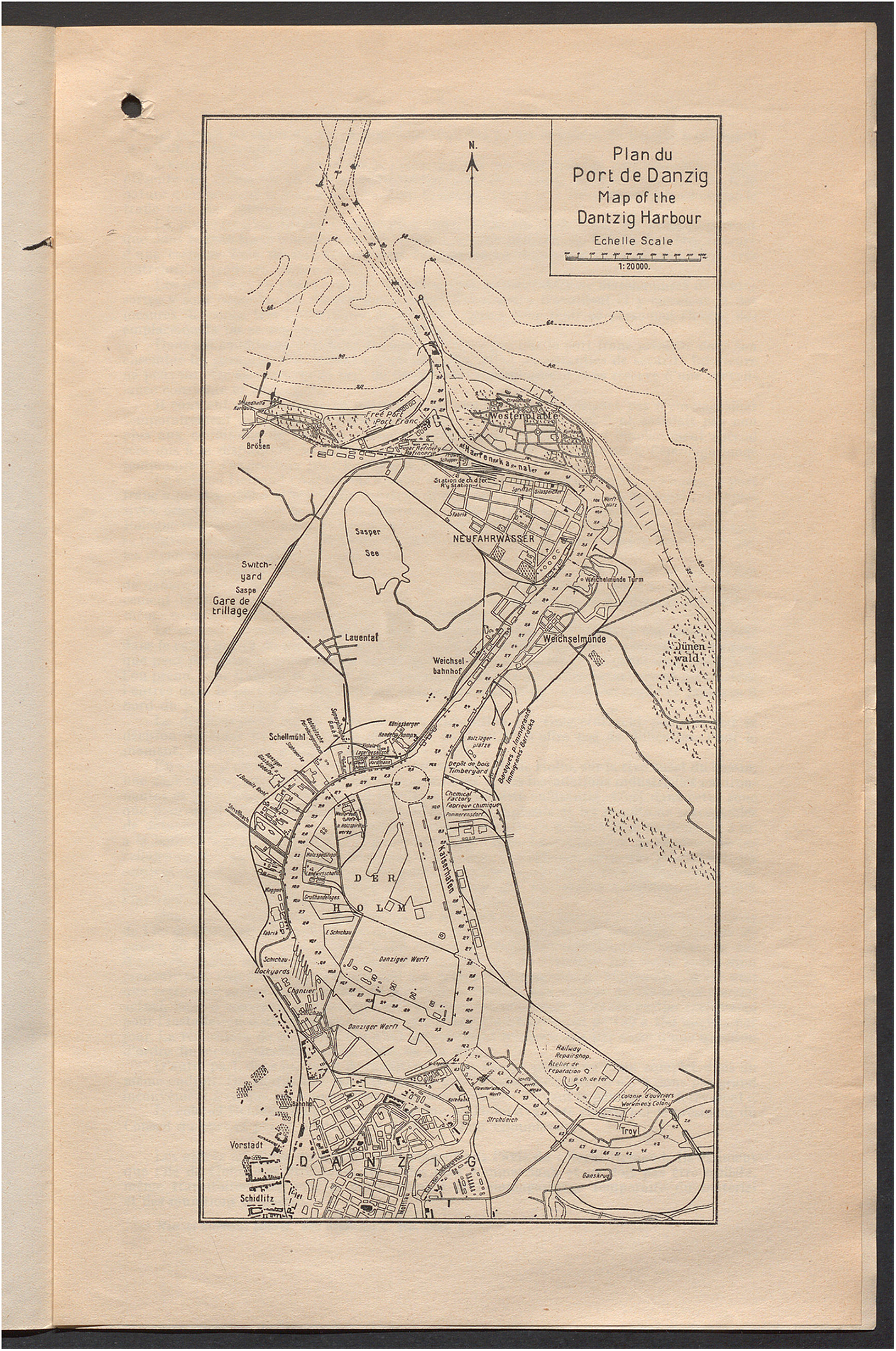
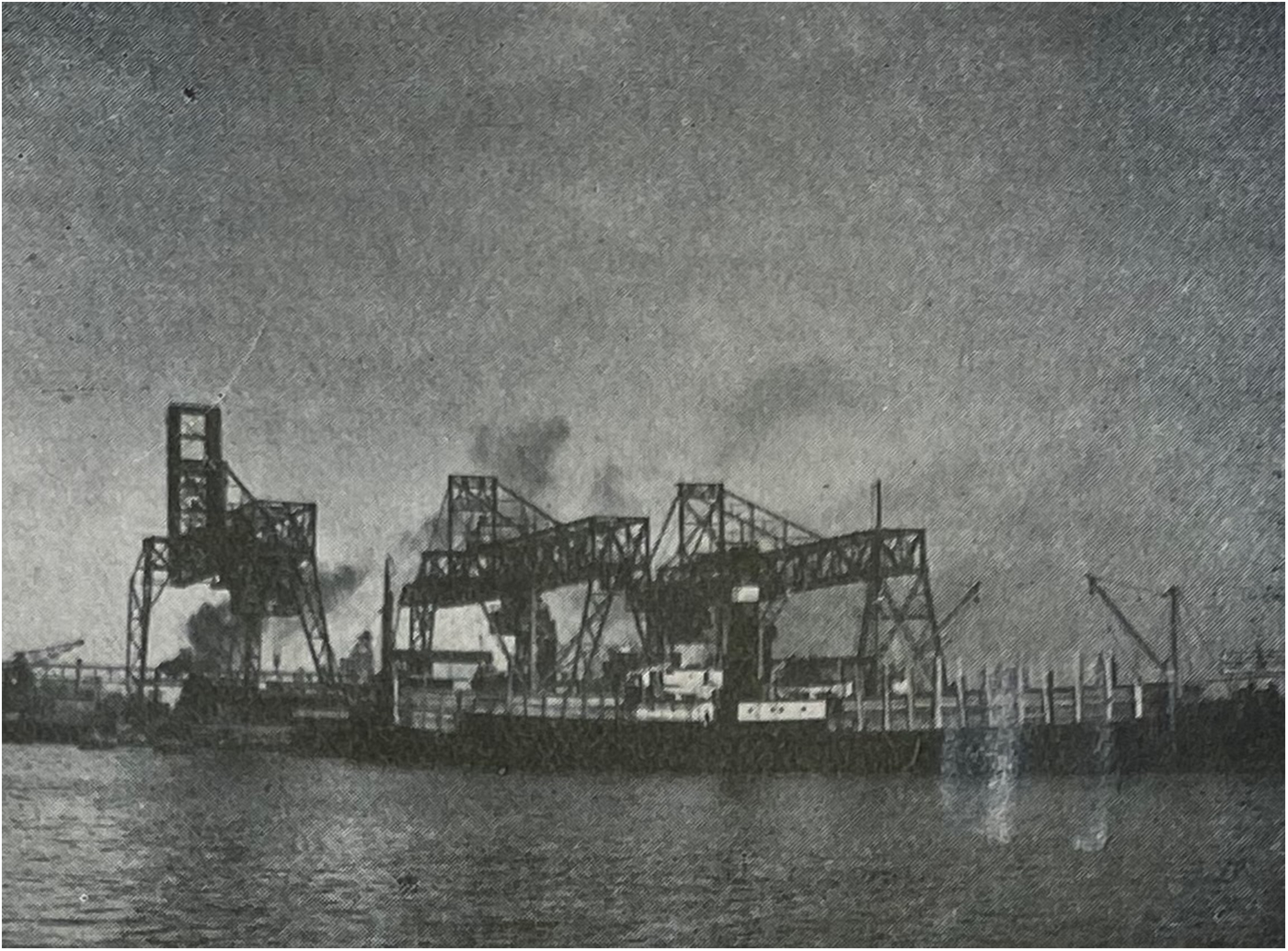
The port’s new organisation produced an immediate flourish of activity in Danzig. It drew a whole range of individuals to the city to help run the international organisation or businesses under its reach. This included the industrialist Ludwig Noé (1871–1949), who arrived in the city in late 1919 and subsequently took over the port’s most important concern, the Imperial Shipyard. Noé was determined to embrace the advantages of internationalisation.Footnote 37 However, before he could do so the chaos wrought by the war in the port had to be resolved. Port infrastructure, previously owned by the German Empire, and now held in trust by the Free City, had to be sequestrated and repurposed in a way to suit the needs of international peacekeeping (Figures 1 and 2).
Map of the Danzig Harbour, 1924. League of Nations Archives, Geneva, S469/59/5.

The Danzig Harbour. Günther Martini, Wie Man den Danziger Hafen Sehen Muss (Danzig: DVG, 1930), 3.

Ludwig Noé and Making International Zones Profitable
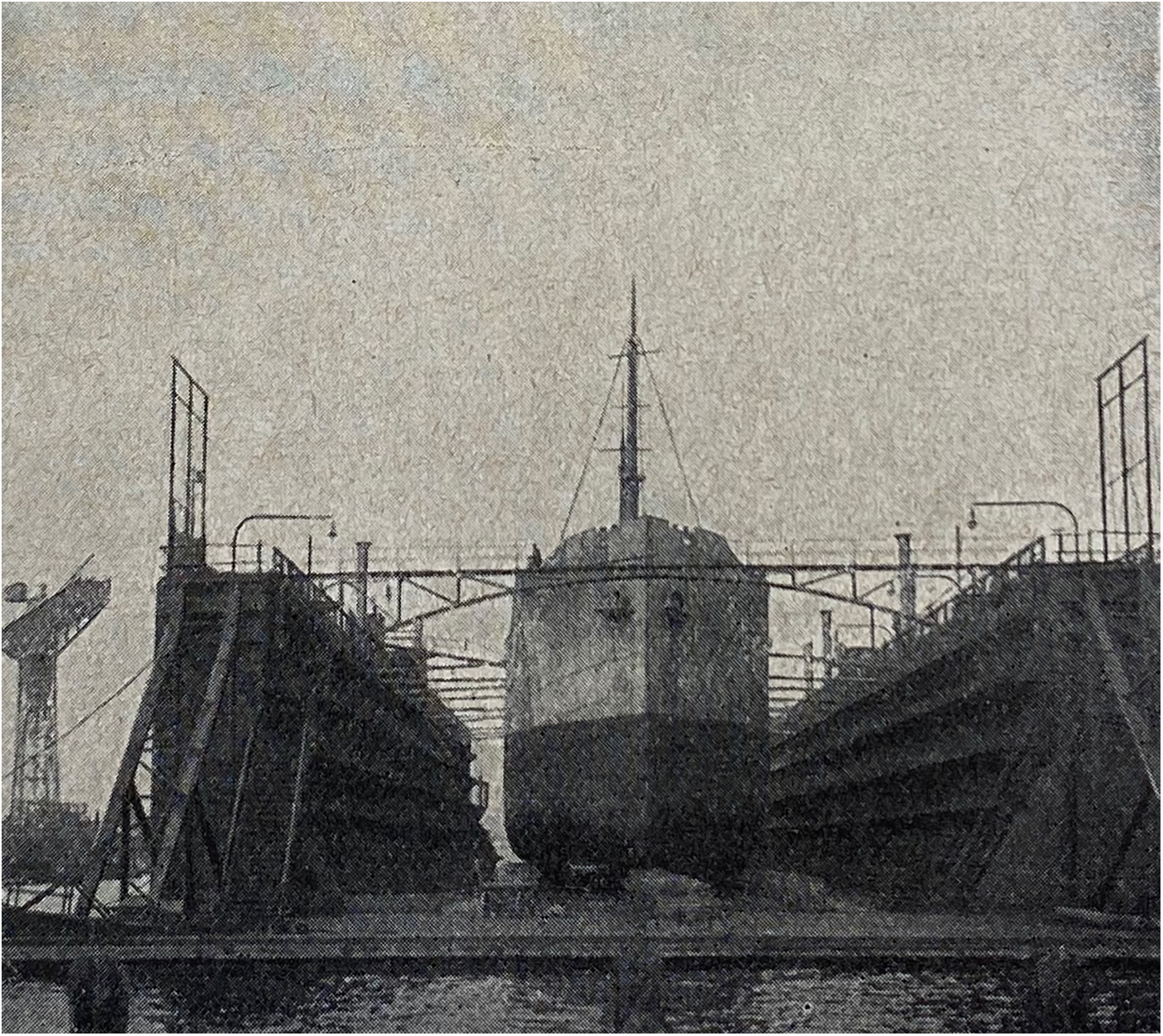
Noé played a pivotal role in the transformation of Danzig’s shipyard away from its imperial origins. Born in Zweibrücken in 1871, he worked as an engineer across the German Empire, including at the Germania shipyards in Kiel, before settling in Aschersleben on the eve of the First World War to run the Aschersleben Mechanical Engineering Company (Ascherslebener Maschinenbau-Aktien-Gesellschaft, formerly known as W. Schmidt & Co.).Footnote 38 In Aschersleben, Noé developed widespread business contacts by sitting on the boards of various construction companies, including the Portland Cement Works in Schwanebeck (Portland-Cementwerk Schwanebeck A.-G.) and Schubert & Salzer in Chemnitz (Schubert & Salzer, Maschinenfabrik Akt.-Ges.), and during the war, he used his networks to make a name for himself as ‘one of the most successful corporate managers of the German war industry’.Footnote 39 Indeed, Noé’s wartime reputation was essential to him finding stable employment in the volatile post-war economic environment. In 1919, he took up a professorship for shipbuilding at the Danzig Technical University (Technische Hochschule, TU), where Noé taught students about ship construction and supplied expert advice on the future of the shipyards to the Danzig authorities.Footnote 40 In November 1919, the mayor and future Senate president Heinrich Sahm approached Noé to take over as director of the Danzig Shipyard and Ironworks corporation (DSI), a position he assumed shortly thereafter (Figure 3).
A Floating Dock in the Danzig Shipyard. Günther Martini, Wie Man den Danziger Hafen Sehen Muss (Danzig: DVG, 1930), 17.

The DSI, now under Noé’s direction, was one of three imperial shipyards held by the German Empire in 1914. During the war, it had built submarines with a 10,000 strong workforce, but with the collapse of the war effort and revolution, thousands of workers were laid off in the summer of 1919. Indeed, further, though less dramatic, redundancies were made before the German government sold the concern to the city for 5 million marks in October 1919.Footnote 41 The change of ownership did nothing to alleviate job losses in the shipyard and ensuing strikes. In January 1920, workers from the shipyard took to the street demanding that wages keep up with the rising cost of living. Even more violent boycotts and strikes broke out in July and August 1920 during the Polish–Soviet War (1919–21), capturing international attention.Footnote 42
Within this volatile environment, Noé sought to keep the concern running until its ownership, along with other pieces of public property in Danzig, were confirmed in the ongoing negotiations. His first task was to reorganise the shipyard away from its war footing, winding up the production of submarines, as well as immediately surrendering excess quantities of war materials.Footnote 43 Noé was also responsible for ceasing production of rifles in an associated rifle factory. Here, Noé attempted to secure approval from the League to finish the current orders in production in 1920 and then switch to the manufacture of sporting rifles. In doing so, he expected to ‘avoid turning specialists into the streets, because there are some who can do this work, and have done it all their lives, and can do nothing else’.Footnote 44 But the League was unwilling to agree to any further production, despite the High Commissioner Richard Haking – an enthusiastic supporter of Noé – offering to bring a bayonet to the Council for all to see how harmless they were.Footnote 45 In addition to ceasing production of war materials, Noé made available information about capacities and past manufacture of weapons and ammunition in accordance with the Treaty of Versailles and the demands of the Inter-Allied Military Control Commission.Footnote 46
Noé’s work was in many ways no different to disarmament operations being carried out elsewhere in the former German Empire.Footnote 47 Like in Germany, progress was slow. As a member of the Inter-Allied Aeronautical Commission of Control in Berlin reported in March 1921: ‘A considerable quantity of [ex-German Military aeronautical material] still exists in Danzig’. But on the upside, this was ‘practically the same amount as was found here during the occupation in 1920’.Footnote 48 In other words, disarmament might have been protracted, but the problem wasn’t getting any worse. This was important given the wild speculation after the war that Danzig would become a dumping ground for German war materials. These materials, it was thought, would serve revanchist aims or make their way back into Germany for a future German war. But no such eventuality appeared to be taking place. Rather, the report recommended a series of straightforward steps to ward off any future rumours of dumping. It stipulated that all owners of ex-German military aeronautical material should declare it so that the High Commissioner could then determine ‘under what conditions any of the existing material duly declared might be released to bona-fide Danziger commercial enterprise engaged in Civil aerial transport’. Engines and the like would be marked so that any further importation or smuggling of ex-German war material into the Free State would be instantly recognisable.Footnote 49
Noé welcomed the report. Distancing the city from wartime production was essential, he believed, to encouraging legitimate trade in ships, aeroplanes, engines, spare parts and commercial services.Footnote 50 But Noé required more to make the shipyard a success. He desperately needed new contracts, which were not so easy to secure. The shipyard had relied on German government contracts up to its sale in 1919, but after the war, the German government was not interested in continuing to do business with the DSI. This was in part a legal restriction. Germany was banned from manufacturing or acquiring submarines, making the DSI’s specialisation redundant in the inter-war years.Footnote 51 But the German government’s lack of interest in the DSI after the war was also commercially driven. The German government deemed shipbuilding capacities within its borders to be sufficient for its peacetime needs, reducing its non-submarine orders from abroad. This left Noé, along with other private shipbuilding operations in Danzig, in a difficult position. They could appeal to the German government on political grounds to support them with subsidies, as the Schichau and Klawitter shipyards did and received, or they could strike out on their own, as the DSI would choose to do, and look for new customers.Footnote 52
To secure new customers, Noé had to tease out what constituted commercial materials. As Haking noted in 1921, the DSI obtained an order from Moscow to construct fifty locomotive boilers. But the DSI was unsure whether it could fulfil it given it might be considered war material and thus forbidden from manufacture as per the rest of Germany.Footnote 53 Noé informed the League about the contract, but as it turned out, the League deemed the production to be commercial.Footnote 54 As such the boilers could be manufactured freely – a point that was not clear to all concerned and certainly a cause of confusion beyond the shipyard. As Haking noted, ‘Private firms in Danzig do not know what they are allowed to do’.Footnote 55
Establishing precedents with the League thus became essential to determining acceptable commercial production. For example, Noé and Haking elicited broad statements of confidence with regard to aeroplane construction in the port sheds. As one League official wrote to Haking: ‘There would seem to be no objection in existing stipulations to Danzig being allowed to manufacture aeroplanes for civil aviation.’ ‘It is true’, he continued, ‘that the border-line between civil and military aeroplanes is not very clear. But the same consideration also applies to a great many other industrial products, as, for instance, locomotives and other railway material, telephones, motor-cars, motor-boats, and so on’. What was needed, in other words, was a greater willingness to consider the context of production to avoid the League ruling out the manufacture of all goods ‘which may serve war purposes as well as the most peaceful purposes’.Footnote 56
Noé’s willingness to consider new lines of League-sanctioned production for previously unexplored markets was driven by the conviction that there were substantial opportunities to be realised in Danzig’s status as an international zone. Others agreed. Hundreds of companies speculated on the fact that Danzig’s repositioning outside of Germany meant that it would function as a linchpin between Germany, Poland and a vast series of interlocking markets to the east. Indeed, international concerns swarmed to Danzig from 1920 on ‘expecting that [the zone] … would become a clearinghouse for exchange between eastern and western Europe’.Footnote 57 Whereas on 1 January 1920 there were only 1,835 sole proprietorships and trading companies in Danzig, by 1 March 1923 there were 2,876. Joint-stock companies increased in the same period from 58 to 238 and companies with limited liability grew from 277 to 976. All in all this represented an increase from 2,170 to 4,090.Footnote 58 The influx of firms did not escape the notice of Danzig’s newspapers, which spoke of an era of foundations and the establishment of businesses taking hold in the city. It also caught the attention of German regional papers that felt increasingly threatened by Danzig’s new position. One Hamburg newspaper made this point about its rival port to its readers in June 1921. ‘Since its establishment as a “free city”, Danzig has taken on a completely different appearance. Trade and commerce appear to have increased significantly.’Footnote 59 Danzig was of course far from competing directly with a port like Hamburg and its transformation appeared, as the article made clear, to be far less due to a growth in local industry than to the port acting as a point of transit. But nevertheless, even Hamburg’s commercial sector was aware of the growing number of agencies, subsidiaries, regional offices, foreign wholesale businesses and banks flocking to Danzig.
Internationalisation
Noé’s gamble on customers and contracts being forthcoming thanks to Danzig’s new political form proved right, and with the internationalisation of the shipyard, he was able to take advantage of this business climate. In September 1922, Danzig and Poland agreed to joint ownership of the DSI but passed its oversight on to the Harbour Board. They also gave the green light to the privatisation of the concern, enabling Noé to merge the shipyard with the Danzig railway car company and convert them into the International Shipbuilding and Engineering Company (ISEC).Footnote 60
The ISEC was fundamental to Noé pursuing a new business agenda. In the first instance, its financing opened the company up to a mixture of British and French investors, many of whom Noé recruited personally to alleviate the need to rely on German contracts.Footnote 61 The company offered up to 30 per cent of its shares to French nationals, which were scooped up by the Société Alsacienne de Constructions mécaniques, Société de Dietrich et Compagnie, Compagnie de Fives Lille pour Constructions mécaniques, Compagnie Française de matériel de Chemin de Fer, Société de Loraine de Dietrich in Lunéville and Société Franco-Belge de matériel de Chemin de Fer. Another 30 per cent of ISEC shares were assigned to English nationals and purchased by the railway carriage and wagon company Cravens in Sheffield, the locomotive firm Nasmyth in Manchester, English General Electric and the electric company Edison and Swan. Polish and Danzig citizens could purchase up to 20 per cent respectively.Footnote 62
Danzig’s press celebrated this foreign investment in the shipyard as a blessing for peacekeeping. As one newspaper put it, it was of great worth that four nations had come together to form a firm that no longer laboured for wartime goals but now served peaceful ends. Indeed, it was of the ‘greatest significance, that through the new joint-stock company foreign nations become interested in the honour and freedom of the Free City of Danzig’.Footnote 63 But ISEC investors backed the venture as a means of extending their own national interests in Eastern Europe – a fact Noé was not only aware of but also sought to exploit. Wanting to take advantage of new markets in Poland and further to the east, Noé worked incentives into the company’s portfolio offers. For example, as a sweetener, the Polish state was required to order railway carts from investors. This, the French firm de Dietrich noted, was a boon for their hopes for penetration into Eastern Europe.Footnote 64
Internationalisation also meant a significant expansion of the shipyard’s premises and machinery, facilitating a diversification away from shipbuilding alone.Footnote 65 Noé claimed that it had been immediately apparent when he took over the shipyard after the war that there was no longer a market for the sale of large ships. But there was much else the company could do if it ‘immediately diversified and modernised’.Footnote 66 For example, in 1921 Noé had sought to rent out unused warehouses to a range of international firms, including a shed to Lilienthal of Berlin to establish the International Aeroplane Company (International Luft Verkehr Co.) (IAC). The IAC wished to use ex-German seaplanes to run an ‘aerial line from Danzig to Copenhagen, and in the other direction, Danzig to Warsaw, Cracow, and possibly, Vienna’. The company also required a degree of manufacturing on site to maintain the fleet.Footnote 67 In a similar manner, Noé had looked to repurpose the machines in the rifle factory under his direction at this time. As Haking wrote, he ‘arranged to alter some of the machines so that they can make parts of typewriters, bicycles and sewing machines’ and engaged foreign firms to carry out this work in conjunction with Danzig workmen.Footnote 68 While the League had looked unfavourably on these early projects to diversity, internationalisation now meant that Noé had even more sheds and machinery at his disposal that he could use to establish new lines of production after a sustained period of de-militarisation. Indeed, he successfully used the infrastructure at his disposal to expand in 1923 and 1924, creating new lines of motors, boilers and machinery, alongside holistic ship repairs, which would keep the company in a strong position until global shipping and demand for shipbuilding recovered.Footnote 69
In the years that followed, Noé managed the ISEC to sell diversified machinery around the world. The company created a ‘Directorate for Poland’, which was responsible for analysing the Polish market and promoting the ISEC’s products at major Polish trade fairs.Footnote 70 In addition, Noé made numerous trips to Poland and Eastern Europe to solicit business, and in doing so incurred vitriolic attacks in the Danzig and German media.Footnote 71 Despite the criticism, however, he successfully sold a huge range of diversified products to Eastern Europe. Further sales were directed towards Scandinavia and the United States, where Noé sold ship parts, train carriages, electric motors and cooling systems.Footnote 72
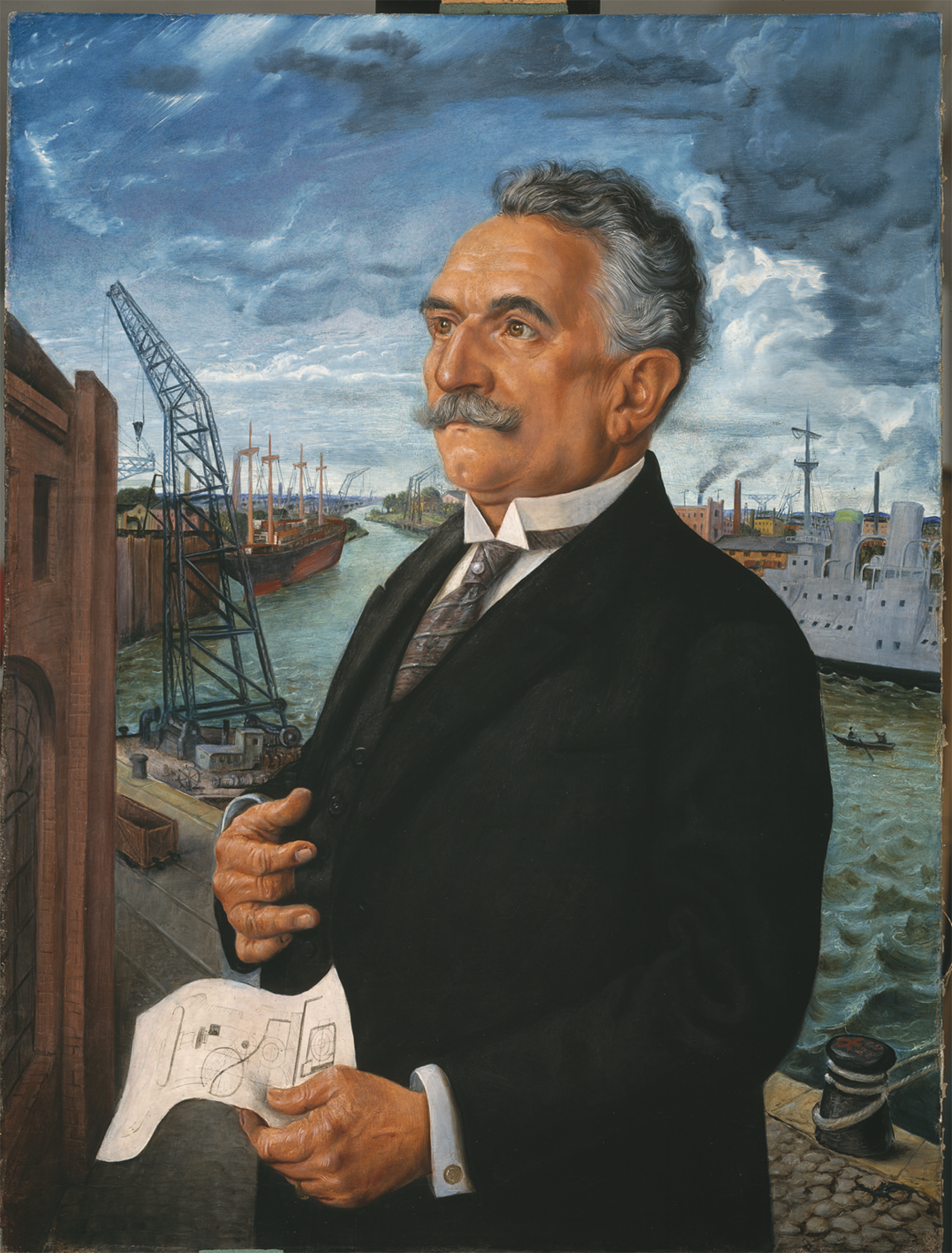
All of this helped to line the pockets of Noé, whose crowning place in the commercial life of the city was famously captured by Otto Dix in 1928. As part of a group commission of official personalities, which included the Senate president Heinrich Sahm and the honorary senator and newspaper mogul Gustav Fuchs, Noé stood as the embodiment of bourgeois entrepreneurialism that was flourishing in Danzig (Figure 4).Footnote 73 But the benefits of embracing internationalisation were more widely felt. Noé’s work, along with that of similarly minded companies, was producing record trade figures in the port. Until 1928, the volume of goods handled in Danzig continued to grow, and maritime traffic remained only second to Hamburg. This contrasted with its position in 1913, in which Danzig was a distant fifth in German trade league tables.Footnote 74 Of course, German nationalists would rightly point out that the quality of goods coming from Poland had shifted to lower quality cargos such as coal. Nevertheless, this did not prevent commercial councillors like Alfred Siebeneichen from arguing that support should be lent to Noé in his endeavour to promote new sources of trade through the port. ‘It is evident from these figures’, Siebeneichen concluded, ‘that the Danzig port’s significance is growing considerably and that this port is in the process of transforming from a purely local to an international harbour’. Put otherwise, it would not be long until ‘Danzig once again finds itself in a similar position to that which it enjoyed for so many centuries’.Footnote 75
Otto Dix, Portrait of the Danzig Senator and General Director Prof. Dr Ludwig Noé, 1928. Kunstforum Ostdeutsche Galerie Regensburg/Dauerleihgabe der Bundesrepublik Deutschland. Photo: Wolfram Schmidt.

Moreover, there were some who thought that trade in Danzig could be expanded even further. One of the most popular projects to develop internationalisation and one that stood to directly benefit the shipyard was the suggestion that Danzig should be transformed into a manufacturing free port. Such a transformation, argued the economist Herman Thomsen, would capture even greater volumes of global trade because while Danzig was already a free port in the sense that it was a tax-free zone (based on its 1895 privileges), this was not a significant advantage across from other Baltic ports. Several of Danzig’s competitors offered these same privileges.Footnote 76 What would be different, Thomsen claimed, was the offer of tax-free production and processing of goods within the port. This would dovetail with Danzig’s exemptions from the post-war restrictions on industrial production that had been levied on Germany, encouraging a boom in shipbuilding, along with car manufacturing.Footnote 77 The Danzig Chamber of Commerce came to support the idea and encouraged an enlargement of the tax-free area beyond the port. So too did the agricultural expert Artur Grünspan, who argued for the application of the free zone status to the entire city.Footnote 78
The political will for an enhanced free port was, however, lacking. Politicians devoted to economic nationalism in Danzig opposed the idea. Meanwhile, political decisions taken outside the zone began to cause trouble for the free port advocates and for Noé. Having established its economic recovery, Poland embarked in 1926 on the development of the port of Gdynia – a Polish port they could trust with greater confidence than Danzig. While on the surface business continued to flourish in Danzig, the growth of Gdynia saw contracts slowly decline in Danzig in the late 1920s. At the same time, the German government supplied the city with its most systematic and generous forms of financial aid after 1926, binding businesses more closely to its political agenda.Footnote 79
Throughout the second half of the 1920s, Noé turned to the League to try to protect the ISEC. At the International Economic Conference in Geneva in 1927, he not only urged his fellow businessmen across Europe to better incorporate ‘scientific research and practical observations’ into discussions about economic planning but also begged them to eschew the kind of politics Danzig was suffering from. ‘It would already be a great step forward’, he argued, ‘if we could declare here before all the world that the industrious peoples of the Continent expect more business and less politics in the future’.Footnote 80 Noé blamed ‘ambitious politicians and a certain class of sensation-loving mouth-pieces of public opinion’ for ‘international understanding … mak[ing] such slow progress’. But this was to little avail, with delegates doing little to concretely counter nationalist politics. Equally, Noé’s pleas for his contemporaries to address the nationalist causes behind Europe’s eclipse by the United States on the world stage landed on deaf ears. As he lamented, ‘I said at the beginning that the extraordinary superiority of the United States over us comes from the fact that they have much which we painfully lack. But unhappily Europe has something else which increases its inferiority to the United States … [Europeans] are encumbered with the prejudices to which the history of centuries have given birth in the individual nations, and which poison their mutual relations.’ The way forward ‘for all humanity’, he concluded, would be, ‘if this Conference were to help to make it clear to the people of Europe, but above all to their political leaders, that a real cure for the great distress which all nations of the old Continent are suffering is not possible unless in the future we succeed, without falling into a spurious internationalism which would deny our own national soul, to feel ourselves as Europeans and to act as such’.Footnote 81
Despite Noé’s speeches and pleas for European and international understanding, nothing concrete came out of the meetings. Rather, he spent the rest of the inter-war years trying to protect the ISEC against nationalist political pressures with ever decreasing success. In 1929, Poland blocked the import of Danzig manufactures, critically depressing trade in the port and making clear that the political tone between zone and its neighbours had shifted. Moreover, global economic downturn only exacerbated the problems Danzig was experiencing in the early 1930s, and by 1933, Gdynia had outstripped Danzig in the volume of goods it was handling, producing a sudden and drastic drop from which Danzig never recovered.Footnote 82 Nazi Germany’s occupation of Danzig put a final end to the internationally focused business agenda of the ISEC, with the company being forced to resume the production of war materials. After the Second World War, the ISEC was relocated to Hamburg and, shortly thereafter, liquidated.Footnote 83
Conclusion
In 1949, the United Nations Conciliation Commission for Palestine (UNCCP) convened in Lausanne. During deliberations, the UNCCP discussed the proposal to turn Jerusalem into an international zone under the direct territorial administration of the United Nations. As part of the proceedings, the Secretariat circulated a working paper on ‘Free Zones’.Footnote 84 It examined the existing international zones in Europe, as well as the history behind these zones. As it stated:
The modern free zone must not be confused with the ‘freecities’, which are of historical rather than practical interest, since cities of this kind no longer exist. The free cities which preceded the free zones were usually sea-ports which subsisted almost entirely on the trade passing through them. The earliest free cities were those created in Italy in 1547 (Leghorn, Civita Vecchia and Ancona); in France (Marseilles in 1669, Bayonne, Dunkirk); and Germany (Hamburg). In these free cities, exemption from customs duties applied not only to the harbour installations, but to the whole town and municipal area. There was complete freedom of entry and exit for all home and foreign goods, and the right to consume or dispose of them without payment of customs duties. These free sea-ports disappeared in France with the Revolution, and in Italy a little later.Footnote 85
In the post–Second World War discussions of international zones, any romance around free cities had been lost – free cities were reduced to an historical interest no longer relevant to peacekeeping. This stood in stark contrast to the situation at the end of the First World War. In those peace talks, free cities provided nothing less than a blueprint for internationalisation in Danzig, supplying the symbolic materials to promote local patriotism and thereby ease the transition out of empire. Of course, civic patriotism did not always live up to expectations and the zone was soon torn apart by nationalist politics. But an exploration of its manifestation, as local and regional historians have been able to demonstrate, disrupts the perceived consistency of nationalist conflict in Danzig and gives us an idea of the people who embraced internationalisation or at least saw reasons to prioritise zonal interests.
To this image of residents willing to work with internationalisation, we need to add an array of commercial figures seeking to realise substantial financial gains in international zones. Ludwig Noé certainly thought there was money to be made in Danzig. As director of the DSI, he not only stabilised the concern in its transition from the production of war materials to new commercial ventures, he also re-orientated the company towards what he thought were the benefits of internationalisation. For him, internationalisation provided new markets and customers seeking to engage in trade between Eastern and Western Europe. Indeed, he embraced the internationalisation of the shipyard with the creation of the ISEC to sell his products to a new cadre of customers. Meanwhile, the creation of the ISEC also gave Noé the capacity to diversify the former shipyard and manufacture new lines of motors and other types of machinery to meet the demands of international markets until global shipping and ship production recovered after the war.
Noé thus forged a successful business strategy that played on Danzig’s unique position as a linchpin between Poland and Germany, and Eastern and Western Europe more broadly. And, like Noé’s ISEC, hundreds of businesses were established in Danzig in the years between 1920 and 1923 in hope that the zone’s new form would support such trade across Europe. While years of hyperinflation would put tremendous pressure on this development, enough businesses with an international outlook survived and contributed to the robust trade figures reported in Danzig’s harbour. In the 1930s, nationalist politics, occupation and war would finally put an end to Noé’s experiment, but that does not negate the fact that he, and many contemporaries, had made internationalisation a success according to their own terms. These figures show the willingness of business interests to experiment with the city’s new international form to cash in on the transition out of empire.