




No CrossRef data available.
Article contents
The expression of immunity to Teladorsagia circumcincta in ewes and its relationship to protein nutrition depend on body protein reserves
Published online by Cambridge University Press: 12 July 2001
Abstract
We hypothesized that expression of immunity to gastrointestinal nematodes and its relationship with dietary metabolizable protein (MP) supply in ewes depended on body protein- but not on body fat reserves. Twin-bearing ewes were trickle infected with Teladorsagia circumcincta. Three mid-pregnancy feeding treatments were used, calculated to maintain body reserves (HH), maintain body protein- and lose body fat reserves (HL), or lose body reserves (LL), and followed by 2 iso-energetic, periparturient feeding treatments, calculated to provide either scarce (LP) or adequate (HP) amounts of MP. At the end of the mid-pregnancy feeding treatment, HL- and LL-ewes had a smaller backfat depth (∼body fat reserves) than HH-ewes, and LL-ewes had a smaller muscle depth (∼ body protein reserves) and higher faecal egg counts (FEC) than HH- and HL-ewes. Overall, LL-ewes had higher periparturient FEC than HH- and HL-ewes, and LP-ewes had higher periparturient FEC than HP-ewes. However, LL-ewes offered the LP feed had higher periparturient FEC than ewes on any of the other combinations of feeding treatments. Feeding treatments affected plasma pepsinogen but not plasma IgA. The results support the view that body protein- but not body fat reserves may overcome consequences of dietary MP scarcity on periparturient breakdown of immunity to gastrointestinal nematodes.
Information
- Type
- Research Article
- Information
- Copyright
- © 2001 Cambridge University Press
INTRODUCTION
A breakdown of immunity to gastrointestinal nematodes often occurs in reproducing ewes, especially around parturition, resulting in an increased number of adult nematodes in the ewe, and hence an enhanced nematode egg excretion and rise of pasture contamination and infectivity for young lambs (Heath & Michel, 1969). Various hypotheses have been put forward to account for the occurrence of periparturient breakdown in immunity, including seasonal effects, stress at parturition, lack of antigenic stimulation and hormonal depression of immunity (Barger, 1993), but the phenomenon remains poorly understood.
Recently, a nutrient partitioning framework has been developed, which puts forward a nutritional hypothesis as the basis for the breakdown of immunity (Coop & Kyriazakis, 1999). The principles of the framework are drawn from the idea of evolutionary fitness, and have been developed in consistency with what animals would be trying to achieve in terms of survival and reproductive fitness, at times of scarce nutrient supply. The framework postulates that the expression of acquired immunity to gastrointestinal parasites has a lower partial priority than the reproductive effort, for the allocation of scarce nutrients such as metabolizable protein (MP). Many components of the immune system are proteinaceous in nature and are expected to draw on MP resources (MacRae, 1993). Therefore, it has been hypothesized that periparturient breakdown in immunity occurs due to a scarce supply of MP at times of increasing demand for MP. In agreement with this hypothesis, recent work shows that an increased dietary MP supply can reduce faecal egg counts (FEC) of parasitized, periparturient ewes (Donaldson, Van Houtert & Sykes, 1998; Kahn et al. 1999; Houdijk et al. 2000).
Mammals can mobilize up to 25% of their body protein to enhance lactational performance, when the latter is penalized by scarce protein supply from the diet (Jessop, 1997). Part of the body protein could therefore be regarded as body protein reserves. The MP derived from body protein reserves can be expected to be allocated to bodily functions in much the same way as scarce MP from dietary origin. The majority of the mobilized MP would be allocated to the reproductive effort, though some of the mobilized MP can be expected to be allocated to the immune system. Thus, the MP supply from the body protein reserves may complement dietary MP supply at times of MP scarcity, and reduce the magnitude of the periparturient breakdown in immunity.
Body fat reserves may complement dietary metabolizable energy (ME) supply, at times of ME scarcity. However, body fat reserves are unlikely to affect breakdown in immunity; changes in ME supply do not seem to affect the expression of immunity to gastrointestinal nematodes (Bown, Poppi & Sykes, 1991; Donaldson et al. 1998), and decreased body condition per se did not affect the extent of periparturient breakdown in immunity (Donaldson et al. 1998). Therefore, we tested the hypotheses that body protein- but not body fat reserves affect expression of immunity to gastrointestinal nematodes, and that the magnitude of response to an increased dietary MP supply on the periparturient breakdown of immunity depends on body protein reserves of the ewe.
MATERIALS AND METHODS
Animals and housing
Border Leicester×Scottish Blackface (Greyface) ewes mated to Texel rams were used. They were injected with doramectin (DectomaxTM, Pfizer, Sandwich, UK), at a rate of 0.3 mg per kg body weight, when moved to the tupping pasture (early November 1998). The pasture consisted of perennial ryegrass and clover and had been grazed by dairy cows in the preceding summer. Grass height was kept at 4 cm or above. The ewes grazed this pasture until 82 days before the expected lambing date (day −82), at which time their litter size were assessed via ultrasonic scanning. Sixty, second to third parity, twin-bearing ewes were identified and used in this experiment. These ewes were drenched with levamisole (Nilverm Gold, Schering-Plough, Oxbridge, UK) at a rate of 7.5 mg per kg body weight to remove residual worm burdens, and then remained indoors until the end of the experiment. They were housed as a group until day −77 and individually from day −77 until day 42 of lactation (day 42), as described previously (Houdijk et al. 2000). Each ewe had access ad libitum to water, a feeding bin for hay and a feeding bin for pelleted feeds (see below). The feeding bins were raised above floor level to minimize access for the lambs, who did not receive creep feed.
Experimental diets
The allowances of the experimental feeds were calculated to provide a certain amount of MP and ME in relation to requirements (AFRC, 1993). For the pregnant ewe, we assumed a litter birth weight of 10.3 kg, no maternal body weight gain and 14.3 g/day MP for wool growth; for the lactating ewe, we assumed a milk production of 2.7, 3.1, 3.5, 3.5, 3.2 and 2.9 kg/day for week 1 to week 6 after parturition, respectively, a mean body weight loss of 100 g/day over this period, and 10.2 g/day of MP for wool growth.
Three mid-pregnancy diets were used in the experiment: the HH-, HL- and LL-diet (Table 1). The restricted allowance of the HH-feed was calculated to supply 1.3 and 1.2 times the requirements of MP and ME respectively, and expected to maintain body protein- and fat reserves. The restricted allowance of the HL-feed was calculated to supply 1.2 and 0.8 times the requirements of MP and ME, respectively, and expected to maintain body protein reserves and to reduce body fat reserves. The LL-diet initially consisted of a single feed, a poor quality hay, and was offered ad libitum. During each morning feeding, a vitamins–mineral mixture was sprinkled on the LL-diet to ensure similar allowances of vitamins, Ca, P and trace mineral between the diets. The estimated intake of the LL-feed (AFRC, 1993) was calculated to supply 0.7 times the requirements of both MP and ME, and expected to reduce body protein- and fat reserves. However, after 32 days of feeding, we realized that the estimated intake, and thus expected level of MP and ME supply, would not have been reached by the end of the mid-pregnancy feeding treatments. In addition, the lower than expected ME intake would have made the ewes liable to develop pregnancy toxaemia. Therefore, we offered these ewes the LL-new feed for the remainder of the mid-pregnancy feeding period (Table 1). The restricted allowance of the LL-new feed was calculated to provide 0.7 times the requirements for both MP and ME. We have considered a fourth mid-pregnancy feed, which would reduce body protein reserves only. This feed would have had such a low protein content that normal rumen function can be expected to be penalized. As a result, feed intake and thus the supply of ME would be reduced. This would result in reducing rather than maintaining body fat reserves.
Table 1. Ingredients and chemical analysis of the mid-pregnancy- and periparturient feeds (The mid-pregnancy diets were fed from day −65 to day −21, relative to parturition (day 0); the periparturient diets were fed from day −21 to day 0 (late pregnancy) and from day 0 to day 42 (lactation).)

Following the mid-pregnancy feeds, 2 periparturient diets were used: the LP- and HP-diet (Table 1). The restricted allowances of the LP- and HP-feeds were calculated to supply 0.8 and 1.3 times the requirements of MP, respectively. All periparturient allowances were calculated to supply 0.9 times the requirement of ME. The small deficit in ME intake common to all periparturient allowances was not expected to affect the outcome of the experiment (Bown et al. 1991; Donaldson et al. 1998).
Experimental design
The ewes were offered ad libitum the low quality hay until the experiment started (day −65). This experiment was designed as a 3×2 factorial, resulting in 6 experimental groups (Fig. 1). The sheep were fed HH, HL and LL between day −65 and day −21 (mid-pregnancy feeding period) followed by HP or LP between day −21 and day 42 (periparturient feeding period).The first allowance of the mid-pregnancy feeds and the periparturient feeds was based on the body weight at day −71. The first allowance of the periparturient diet during lactation was based on the post-lambing body weight and offered on the first morning after lambing.

Fig. 1. The experimental 3×2 factorial design. Sixty twin-bearing- and -rearing ewes were trickle infected with 10000 L3 Teladorsagia circumcincta per day for three days per week from day −65 onwards (arrow). They were fed to maintain body reserves (HH), maintain body protein- and lose body fat reserves (HL) or lose body reserves (LL) during mid-pregnancy (n = 20). Each feed was followed by either scarce (LP) or adequate (HP) metabolizable protein during the periparturient period (n = 10). The dotted line indicates the end of the mid-pregnancy period and the start of the periparturient period (day −21).
The 60 ewes were allocated to the 6 experimental groups as follows. Ewes were stratified on the basis of body weight at day −82 and divided into 10 weight classes of 6 ewes each. The 6 ewes within each of these classes were randomly allocated to 1 of the 6 experimental groups (n=10). The mean±S.E. body weight and condition score were 76.0±0.60 kg and 3.15±0.04, respectively, at the start of the experiment.
Infection details
The ewes were expected to have previous experience to gastrointestinal nematodes from field infections prior to housing. Throughout the experiment, all ewes were trickle infected with Teladorsagia (Ostertagia) circumcincta at a rate of 10000 L3 per day, 3 days per week, starting at day −65. Such a rate has been shown to lead to an acceptable establishment of a patent T. circumcincta worm burden in periparturient ewes (Leyva, Henderson & Sykes, 1982). The isolate of T. circumcincta used, Moredun Ovine Susceptible Isolate, has been maintained in the laboratory for about 7 years.
Measurements
The ewes were weighed weekly starting at housing, as well as within 12 h after parturition. The lambs were weighed within 12 h after parturition and then weekly thereafter. The ewe condition score was also measured weekly, by lumbar palpation on a scale from 0–5 and to an accuracy of a quarter (Russel, Doney & Gunn, 1969). Since the lambs did not receive creep feed, lamb body weight and daily weight gain could be used to calculate milk production (Robinson, Foster & Forbes, 1969). The muscle- and backfat depth of the ewes was estimated using ultrasound scanning (Glasbey, Abdalla & Simm, 1996). This was done at day −85 (housing) and then approximately at 14 day intervals during mid-pregnancy, and on day 14, day 28 and day 42, during lactation.
The pelleted concentrates and hay were sampled whilst preparing the daily allowance and analysed for dry matter, crude protein, and neutral detergent fibre. Feed refusals were expected to be minimal since most diets were offered restrictedly. Refusals that did occur were collected every morning, weighed and analysed for dry matter. This was done to calculate the achieved intake of dry matter, MP and ME.
Fresh faecal samples were taken directly from the rectum of the ewes from day −51 onwards, weekly during the mid-pregnancy feeding treatments and twice weekly during the periparturient period, as well as within 12 h after parturition. The samples were analysed for faecal egg counts (FEC) according to a modified flotation method (Christie & Jackson, 1982), using polyallomer centrifuge tubes to collect the nematode eggs from the meniscus. The FEC were expressed as number of eggs per gram fresh faeces (epg), and the technique used can detect nematode eggs down to 1 epg.
Blood samples from the ewes were taken from the jugular vein into heparinized vacutainers, weekly from day −58 onwards and within 12 h after parturition. The blood samples were centrifuged for 20 min at 2060 g, and the separated plasma stored at −20 °C pending analysis for total protein, albumin, urea and pepsinogen as described previously (Houdijk et al. 2000). Plasma pepsinogen concentration was expressed in mU (μmoles tyrosine released per minute per litre of plasma×1000). Globulin was calculated as total protein minus albumin. In addition, plasma samples were prepared and analysed for IgA antibodies against somatic L3 antigens of T. circumcincta as described previously (Huntley et al. 1998). However, a modified enzyme-linked immunosorbent assay was used. Following incubation of 50 μl of the test sample in wells coated with L3 antigen (10 μg/ml) for 1 h, wells were incubated with l/2000 diluted mouse anti-bovine IgA for 1 h (Serotec, Oxford), l/1000 diluted goat anti-mouse biotin for 1 h and l/4000 diluted streptavidin–HRP for 30 min (Dako, Glostrup, Denmark). Number of washings, developing colour reaction and measuring the optical density at 492 mm (OD492) were as originally described (Huntley et al. 1998).
Statistical analysis
The mid-pregnancy feeding period ended on 16 March 1999. This date was, on average, 21 days before lambing (day −21) and the observations during the 6-week mid-pregnancy feeding period have been presented relative to this mean day. The data obtained for each ewe during the periparturient period were re-arranged from calendar date to day relative to parturition (day 0). This was done to account for the influence of the small differences in parturition dates on the data obtained during the periparturient period; mean (±S.E.) lambing date was 6 April 1999 ±1 day. The average ‘day relative to parturition' associated with data obtained during the periparturient period was computed, and used to present the results.
Repeated measures analyses of variance (split-plot model) were performed following factorial designs. The mid-pregnancy feeding treatment was used as the main factor for the data obtained during the mid-pregnancy feeding period. Mid-pregnancy feeding treatment, periparturient feeding treatment and their interaction were used as the main factors for the data obtained during the periparturient period. The main factors were tested against the error of the main-plot, which implicitly represented the random animal effect. Time and main factors×time interactions were tested against the residual error. The degrees of freedom within the split-plot were multiplied with the Greenhouse–Geisser epsilon factor to allow more conservative testing (Littel, Henry & Ammerman, 1998). Additional analysis of variance at each time-point was carried out only when interactions between feeding treatments and time were present. The data related to late pregnancy and to lactation were analysed separately. All statistical analyses were performed, using Genstat (LAT, 1993).
Litter sex ([male ][male ], [male ][female] or [female][female]) was included in the statistical model for the analysis of litter birth weight and litter weight gain. The body weight, condition score and muscle- and back fat depth measured at housing were used as covariates and contributed significantly to the analysis of variance for these variables during the experiment (P<0.01). The FEC, plasma pepsinogen concentration and IgA OD492 were transformed according to log (n+l) to normalize data before statistical analysis. We have reported the least-square means and standard error of the difference (S.E.D.) for the non-transformed data. The data that required transformation are reported as backtransformed means, which are accompanied by the 95% confidence interval.
RESULTS
Feed intake
Table 2 shows the observed mean daily dry matter, and calculated MP and ME intake. The refusals for the restrictedly fed ewes were small, consisting mainly of hay and averaged 9, 22 and 19 g/day during mid-pregnancy, late pregnancy and lactation, respectively. However, refusals averaged 39 g/day across feeding treatments during the last week before parturition; the averaged dry matter intake during this week was 1465±18 g/d. The observed dry matter intake, and thus the calculated ME intake, of the HP-ewes was on average 55 g/d higher than those of the LP-ewes during lactation (P<0.01). This small difference was a direct consequence of feeding according to body weight during lactation, and was unlikely to affect the formal test of the hypotheses.

Ewe and lamb performance
Table 3 presents the least square mean body weight and condition score at the end of the mid pregnancy period (day −21), late pregnancy (day −4) and lactation (day 42) The HH-ewes were heavier and had a higher condition score than the HL-ewes, which were in turn heavier and had a higher condition score than the LL-ewes at day −21. The HH- and HL-ewes lost and the LL-ewes gained condition during late pregnancy, and the achieved differences at lambing (in terms of body weight and condition score) were maintained over lactation. On average, the HP-ewes were heavier than the LP-ewes just before parturition. The HP-ewes were heavier and had higher condition scores than the LP-ewes during lactation but only until day 28.

Table 4 presents least square mean litter body weight at birth, litter body weight gain and calculated milk production. Litter sex tended to affect litter birth weight; [female][female]-litters weighed on average 9.3 kg at birth and were lighter than [male ][male ]- and [male ][female]-litters, which were 10.0 and 10.2 kg, respectively (S.E.D. 0.41, P=0.060). Across treatments, HP-ewes produced heavier litters than LP-ewes, though this tended to be more pronounced for the HH- and LL-ewes, and not for the HL-ewes (P=0.056). The mid-pregnancy feeding treatments and litter sex did not significantly affect litter body weight gain and milk production, but the HP-ewes produced significantly more milk and had faster growing lambs than the LP-ewes.

Backfat- and muscle depth
Figure 2 shows the least square mean backfat- and muscle-depth during mid-pregnancy. At the end of mid-pregnancy, the LL- and HL-ewes had a smaller backfat depth than the HH-ewes (P<0.001), while the LL-ewes had a lower muscle depth than the HH-and HL-ewes (P<0.001). The effect of the mid-pregnancy feeding treatment on muscle depth persisted throughout lactation but was less pronounced, overall mean muscle depth was 25.1, 24.2 and 23.5 mm for the HH-, HL- and LL-ewes, respectively (S.E.D. 0.55 mm, P<0.05). Backfat depth decreased over time during lactation (P<0.00l), but was not significantly affected by the feeding treatments; the overall mean backfat depth during lactation was 2.54±0.14 mm. However, time and periparturient feeding treatments tended to interact for muscle depth (P=0.077). Mean muscle depth was 24.6 and 22.9 mm for the HP- and LP-ewes, respectively (S.E.D. 0.59 mm, P<0.05) on day 14 of lactation, and changed to similar depths of 23.7 and 23.4 mm, respectively by the end of the experiment (S.E.D. 0.59 mm, P>0.10).

Fig. 2. Least square mean backfat- (A) and muscle depth (B) of twin-bearing ewes, infected with Teladorsagia circumcincta and fed to maintain body reserves (HH, □), maintain body protein and lose body fat reserves (HL, ○) and lose body reserves (LL, [bull ]) during mid-pregnancy. The trickle infection started on day −63.
Faecal egg counts
Figure 3 shows the backtransformed FEC. Eight out of 60 ewes had started to excrete nematode eggs by day −49 (14 days after the start of the trickle infection) though their FEC were very low (<5 epg, upper limit). There was a significant interaction between time and the mid-pregnancy feeding treatments P<0.001); the LL-ewes had higher backtransformed mean FEC (>80 epg) than the HL- and HH-ewes (<20 epg), at the end of mid-pregnancy. The FEC returned rapidly to low levels after changing to the periparturient feeding treatments (backtransformed mean <10 epg) and were not affected by the feeding treatments during late pregnancy. Significant main effects were present during lactation. The LL-ewes had significantly higher FEC than the HH- and HL-ewes from day 12 onwards (P<0.01), and LP-ewes had significantly higher FEC than HP-ewes during most of the lactation period (P < 0.05). However, time, mid-pregnancy feeding treatment and periparturient feeding treatment interacted during lactation, just missing formal statistical significance (P=0.055). The FEC of the LL-ewes, which were fed the LP feed during late pregnancy and lactation, increased rapidly to higher levels than that of the other groups of ewes. The former group of ewes had a backtransformed mean FEC of more than 450 epg, which was maintained until day 26; in contrast, the backtransformed mean FEC of the other groups of ewes were consistently below 300 epg, and below 200 epg for the major part of the experiment. The FEC of all groups of ewes converged by the end of the experiment.

Fig. 3. Backtransformed means of FEC and 95% CI of twin-bearing- and -rearing ewes, infected with Teladorsagia circumcincta and offered a scarce (LP, ○) or adequate (HP, [bull ]) allowance of metabolizable protein during the periparturient period, following mid-pregnancy feeding strategies to (A) maintain body reserves, (B) maintain body protein and lose body fat reserves or (C) lose body reserves. The trickle infection started on day −63.
Plasma constituents
Plasma pepsinogen. Figure 4 shows the backtransformed mean of plasma pepsinogen concentrations. The LL-ewes had a higher plasma pepsinogen concentration than the HL- and HH-ewes, at the end of mid-pregnancy (P<0.05). Across feeding treatments, LP-ewes had higher plasma pepsinogen concentrations than HP-ewes, both during late pregnancy (P<0.01) and during lactation (P<0.05). However, time, mid-pregnancy feeding treatments and periparturient feeding treatments interacted during late pregnancy (P<0.05) and tended to interact during lactation (P = 0.089). The plasma pepsinogen concentration of the LP-ewes was higher than that of the HP-ewes, at the end of pregnancy, but only for the HL- and LL-ewes (P<0.05) and not for the HH-ewes. This effect persisted throughout lactation but became less pronounced towards the end of the experiment.

Fig. 4. Backtransformed means of pepsinogen concentration and 95% CI of twin-bearing- and -rearing ewes, infected with Teladorsagia circumcincta and offered a scarce (LP, ○) or adequate (HP, [bull ]) allowance of metabolizable protein during the periparturient period, following mid-pregnancy feeding strategies to (A) maintain body reserves, (B) maintain body protein and lose body fat reserves or (C) lose body reserves. The trickle infection started on day −63.
Plasma albumin and globulin. The plasma albumin concentration was 32.7, 32.4 and 29.3 g/l (S.E.D. 0.68, P<0.001) for the HH-, HL- and LL-ewes, respectively, at the end of mid-pregnancy. The LL-ewes offered the LP diet during late pregnancy tended to have a lower plasma albumin concentration than the other groups of ewes, though at day −6 only (P<0.64). Plasma albumin concentration increased during lactation (P<0.001), but there were no effects of the mid-pregnancy feeding treatments. However, the LP-ewes had lower plasma albumin concentrations than the HP-ewes during lactation, which averaged 32.9 and 34.4 g/l respectively (S.E.D. 0.44, P<0.001). Plasma globulin concentration increased over time during mid-pregnancy (P<0.01), but was not affected by the feeding treatments; the overall mean was 36.2±0.56 g/l. The plasma globulin concentration of the HH-ewes was higher than that of the HL- and LL-ewes during late pregnancy, though only just before parturition (P<0.01). Plasma globulin concentration was not affected by feeding treatments or time during lactation, and averaged 33.1±0.36 g/l.
Plasma urea. The plasma urea concentration averaged 6.2, 5.3 and 3.6 mmol/l for the HH-, HL-and LL-ewes, respectively, at the end of mid pregnancy (S.E.D. 0.28 mmol/l, P<0.001). Plasma urea concentration was consistently higher for the HP-ewes than for the LP-ewes during late pregnancy; this effect was tended to be more pronounced for the HL- and LL-ewes than for the HH-ewes (P = 0.055). The plasma urea concentration during lactation was consistently higher for the HP-ewes than for the LP-ewes (P<0.00l). However, this effect was more pronounced for the LL-ewes than for the HH- and HL-ewes. Plasma urea within the LL-ewes averaged 9.1 and 6.0 mmol/l for the HP- and LP-ewes, respectively (S.E.D. 0.9, P<0.001), whilst it averaged 7.9 and 6.4 mmol/l (S.E.D. 0.9, P<0.05) for the other HP and LP-ewes, respectively.
Plasma IgA. There were no significant effects of the feeding treatments on plasma IgA. The overall backtransformed mean OD492 (95% CI) was 0.49 (0.46–0.52), 0.40 (0.37–0.42) and 0.27 (0.25–0.29) during mid-pregnancy, late pregnancy and lactation, respectively.
DISCUSSION
This study supports the view that body protein reserves affect the extent of the breakdown in immunity to T. circumcincta during the periparturient period. Dietary MP scarcity around parturition resulted in a more than 3-fold increase of FEC of lactating ewes infected with T. circumcincta when these ewes were fed to reduce body protein- and body fat reserves during mid-pregnancy. In contrast, dietary MP scarcity did not seem to affect FEC of lactating ewes which were fed to either maintain body protein- and reduce body fat reserves or maintain both body reserves during mid-pregnancy. The latter indicates that body fat reserves are unlikely to affect the expression of immunity to gastrointestinal nematodes, at least within the range achieved in this study.
Backfat- and muscle depth were used as an indicator for body fat- and protein reserves, respectively. However, it is unknown to what extent these measurements reflect total body reserves, although significant positive correlations between muscle depth and total carcass lean tissue, up to r = 0.55, have been observed for various breeds of sheep (Conington et al. 1998; R. Lewis, personal communication). It has been shown that MP undernutrition reduces the weights of a range of proteinaceous body components (Sykes & Field, 1972; Stamataris, Kyriazakis & Emmans, 1991). Therefore, the observed decrease in the muscle depth probably reflects a decrease of total body protein, and thus also of body protein reserves. In addition, our results were in close agreement with the intended mid-pregnancy feeding treatments; ewes fed to reduce body fat had reduced backfat thickness, whilst those fed to reduce body protein had reduced muscle depth.
The ultrasound measurements provided more accurate information than condition score via lumbar palpation, for the interpretation of the mid-pregnancy feeding treatments. As expected, condition score and backfat depth were positively correlated (r=0.62; P<0.001). However, condition score and muscle depth were also positively correlated (r = 0.55; P<0.001). If condition score was used solely to judge whether the feeding strategies had resulted in the expected changes in body reserves, then the outcome would have been ambiguous; at the end of the mid-pregnancy feeding treatment, each of the 3 groups of ewes had different condition scores.
The LL-ewes had higher FEC than the HL- and HH-ewes during the mid-pregnancy feeding treatments; FEC of the HH- and HL-ewes were low and did not differ. Due to the differences in observed dry matter intake, HH-ewes were likely to have a higher faecal output than HL- and LL-ewes. However, it is unlikely that the expected differences in faecal output contributed significantly to the differences in FEC observed; the differences in dry matter intake were relatively small compared to the approximately 6-fold differences in FEC. The effects of the mid-pregnancy feeding treatments on FEC were consistent with previous findings during late pregnancy (Donaldson et al. 1998; Houdijk et al. 2000); they support the view that the rise in FEC is more likely due to MP scarcity rather than an outcome of parturition per se. The MP scarcity was reflected in a lowered plasma albumin concentration of the LL-ewes, compared to the HL- and HH-ewes.
In contrast to the hypothesis and earlier observations (Donaldson et al. 1998; Houdijk et al. 2000), the increased intake of MP during late pregnancy did not affect FEC; both the LP- and HP-ewes had very low FEC. However, the observed mean lambing date was 7 days later than expected. Therefore, the MP requirements during late pregnancy were probably overestimated. With hindsight, the estimated MP requirements of the late pregnant LP-ewes were covered by 97%, ranging from 82 to 105%, indicating that MP was unlikely to have been scarce. Under such situations, immunity to gastrointestinal parasites would not be expected to be penalized (Coop & Kyriazakis, 1999). The absence of MP scarcity was, to some extent, reflected in an absence of consistent effects of MP supply on plasma albumin- and urea concentrations, but contrasted with observed effects on litter birth weight and plasma pepsinogen concentration.
An increased litter birth weight as a result of an increased MP intake, in the absence of MP scarcity, has been observed previously (Houdijk et al. 2001), and may have resulted from excess MP supplying other limiting nutrients for the growing foetus, such as glucose via gluconeogenesis (Robinson, Sinclaire & McEvoy, 1999). The HH-ewes showed a larger effect of an increased MP intake on litter birth weight than the HL- and LL-ewes. Perhaps ME was more limiting for the HL- and LL-ewes than for the HH-ewes to exert the effect of excess MP intake on lamb birth weight. The higher plasma pepsinogen concentration for the LP-ewes than for the HP-ewes during late pregnancy, and during lactation, was only observed in the HL- and LL-ewes. The concentration of plasma pepsinogen increases during the expression of immunity towards incoming L3 of T. circumcincta (Coop, Huntley & Smith, 1995; Huntley et al. 1987). The presence of body protein reserves in the HL-ewes did not prevent the increase of plasma pepsinogen, imposed by the LP-feeding treatment. This suggests that for the HL- and LL-ewes, energy supply from body fat reserves may have been limited for the restoration of abomasal wall integrity.
In agreement with the hypothesis, the magnitude of response to an increased dietary MP supply was small for those ewes that were fed to maintain body protein reserves during the mid-pregnancy period. This suggests that MP scarcity, imposed by offering the low MP allowance, was compensated for by MP supply from the maternal body. The latter was also reflected in the reduced muscle depth during lactation compared to mid-pregnancy levels for those ewes fed to maintain body protein during mid-pregnancy. The ewes that lost body protein during mid-pregnancy had similar muscle depth during lactation compared to the end of the mid-pregnancy period.
Expression of immunity to gastrointestinal nematodes results in decreased establishment and arrested development of incoming larvae, decreased fecundity and enhanced expulsion of the adult worm burden (Barnes & Dobson, 1993). Our experiment was not designed to determine which mechanism, or mechanisms, was affected, causing elevated FEC of the LL-ewes, fed the LP feed. However, it is possible that humoral immune responses to incoming larvae may not have been affected; the feeding treatments did not affect plasma IgA, directed against L3 antigens. Previous observations support this view. Lactating ewes were equally susceptible to larval challenge with Haemonchus contortus than non-reproducing ewes ( Gibbs & Barger,1986). Lactating ewes that were previously fed to maintain or reduce maternal body weight and body condition were equally susceptible to larval challenge with T. circumcincta (Donaldson et al. 1998).
The HH- and HL-ewes would have mobilized more MP from their body protein reserves than the LL-ewes, when they were fed the periparturient LP-feed. The majority of this MP would have been expected to be allocated to the penalized milk production of the LP-ewes. Indeed, calculated milk production of the HH- and HL-ewes fed the LP-feed, was on average 0.3 kg/d more than that of the LL-ewes fed the LP-feed. However, this difference was small and not significant; the effect of body protein reserves on milk production may have been limiting due to the scarce amount of ME. Thus, the remaining MP from body reserves was likely directed to expression of immunity, which depends to a lesser extent on ME supply (Bown et al. 1991; Donaldson et al. 1998). The above would at least partially account for the lowered FEC of the HH- and HL-ewes compared to the LL-ewes, when fed the LP-feed. Whether these assumed effects of body protein reserves maintain at times of ME abundancy remains to be tested.
The degree of periparturient breakdown in immunity and the magnitude of response to an increased MP supply in our previous studies (Houdijk et al. 2000, 2001) have been lower than observed in New Zealand Coopworth ewes (Donaldson et al. 1998). It has been suggested that this may have been due to some extent to differences in body reserves of the ewes (Houdijk et al. 2000). The present study supports this view; in contrast to the HH- and HL-ewes, the approximately 80% reduction in FEC of the LL-ewes, in response to an increased MP supply, agrees with an approximately 85% reduction in FEC in mixed infected, relatively small and poor-conditioned ewes offered fishmeal supplemented feeds (Donaldson et al. 1998). Apparently, body size, body condition and specific body reserves are important factors to consider when comparing and predicting effects of an increased MP supply on breakdown in immunity to gastrointestinal nematodes.
The FEC of the LL-ewes offered the LP allowance converged to the same levels of the other 5 groups by the end of the experiment. This suggests that MP supply from the LP-feed may have become less scarce during the last 2 weeks of the experiment compared to the first 4 weeks of lactation. The lower degree of MP scarcity of the LP-allowance during the last part of the experiment was supported by a diminishing difference in body weight, condition score, muscle depth, and calculated milk production between the LP- and HP-ewes. In addition, the calculated mean milk production achieved from day 28 onwards was as expected, whilst it was underestimated (+0.3 kg/d) during the first part of lactation. This further supports the view that MP was relatively less scarce for the LP-ewes in the second part than in the first part of lactation.
The absence of significant nutritional effects on plasma IgA is in agreement with other observations (Houdijk et al. 2001), and there were no significant correlations between plasma IgA and FEC in this study. It was argued above that the absence of nutritional effects on IgA might indicate that the immune response to incoming larvae was not affected. Local IgA responses in growing immune lambs were negatively correlated with worm fecundity (Stear et al. 1995). To some extent, the difference between the types of antigen used makes a fair comparison between results difficult. However, it could also be that changes in local mucosal humoral immunity are involved in breakdown in immunity but the reflection in plasma may be less informative. This would be consistent with the absence of a strong association between IgA responses in the mucus and the plasma of growing lambs, infected with T. circumcincta (Sinski et al. 1995). In addition, in periparturient ewes, IgA is transported from the abomasum to the mammary gland (Beh, Watson & Lascelles, 1974). Thus, observed plasma IgA levels may also reflect the level of transfer rather than levels in the abomasum. This also complicates the interpretation of any associations between FEC and plasma IgA in periparturient ewes.
In conclusion, this study showed that body protein- but not body fat reserves affect expression of immunity to T. circumcincta, and that the magnitude of response to an increased dietary metabolizable protein supply on the breakdown of immunity to T. circumcincta is greater when less body protein reserves are present in periparturient ewes. These outcomes support the view that sheep feeding strategies may be exploited to lower the dependency on chemoprophylaxis for reducing pasture infectivity; protein supplementation to ewes with compromised body protein reserves would limit the nematode egg output. Future studies on nutritional effects on the immunological basis for the occurrence and magnitude of periparturient breakdown in immunity should focus on local cellular and humoral immune responses.
We wish to thank Bert Tolkamp and John Huntley for their comments on the experimental design, methodology and the manuscript. We would also like to thank Mitch Lewis for his advice on the composition of the diets, Lesley Deans, Terry McHale, Dave Anderson, Jo Donbavand, Maureen Shanks and Jack Fitzsimons for care of the animals and sampling, and Liz Jackson, Dave McBean, Annie MacKellar and Dave Bartley for parasitological and immunological technical support. This work was supported by the European Commision (DGVI) project No FAIR3 CT96 1485, as part of a collaborative programme between Scotland, France, Greece and Spain. The Scottish Agricultural College and the Moredun Research Institute receive support from the Scottish Executive, Rural Affairs Department.
References
AFRC (1993). Energy and protein requirements of ruminants. An advisory manual prepared by the AFRC Technical Committee on Responses to Nutrients. CAB International, Wallingford.Google Scholar
BARGER, I. A. (1993). Influence of sex and reproductive status on susceptibility of ruminants to nematode parasitism. International Journal for Parasitology 23, 463–469.CrossRefGoogle Scholar
BEH, K. J., WATSON, D. L. & LASCELLES, A. K. (1974). Concentration of immunoglobulins and albumin in lymph collected from various regions of the body. Australian Journal of Experimental Biology and Medical Sciences 53, 81–90.CrossRefGoogle Scholar
BOWN, M. D., POPPI, D. P. & SYKES, A. R. (1991). The effect of post-ruminal infusion of a protein or energy on the pathophysiology of Trichostrongylus colubriformis infection and body composition in lambs. Australian Journal of Agricultural Research 42, 253–267.Google Scholar
CHRISTIE, M. & JACKSON, F. (1982). Specific identification of strongyle eggs in small samples of sheep faeces. Research in Veterinary Science 32, 113–117.Google Scholar
CONINGTON, J., BISHOP, S. C., WATERHOUSE, A. & SIMM, G. (1998). A comparison of growth and carcass traits in Scottish Blackface lambs sired by genetically lean or fat rams. Animal Science 67, 299–309.CrossRefGoogle Scholar
COOP, R. L., HUNTLEY, J. F. & SMITH, W. D. (1995). Effect of dietary protein supplementation on the development of immunity to Ostertagia circumcincta in growing lambs. Research in Veterinary Science 59, 24–29.CrossRefGoogle Scholar
COOP, R. L. & KYRIAZAKIS, I. (1999). Nutrition-parasite interaction. Veterinary Parasitology 84, 187–204.CrossRefGoogle Scholar
DONALDSON, J., VAN HOUTERT, M. F. J. & SYKES, A. R. (1998). The effect of nutrition on the periparturient parasite status of mature ewes. Animal Science 67, 523–533.CrossRefGoogle Scholar
GIBBS, H. C. & BARGER, I. A. (1986). Haemonchus contortus and other trichostrongylid infections in parturient, lactating and dry ewes. Veterinary Parasitology 22, 57–66.CrossRefGoogle Scholar
GLASBEY, C. A., ABDALLA, I. & SIMM, G. (1996). Towards automatic interpretation of sheep ultrasound scans. Animal Science 62, 309–315.CrossRefGoogle Scholar
HEATH, G. B. S. & MICHEL, J. F. (1969). A contribution to the epidemiology of parasitic gastro-enteritis in lambs. Veterinary Record 85, 305–308.CrossRefGoogle Scholar
HOUDIJK, J. G. M., KYRIAZAKIS, I., JACKSON, F., HUNTLEY, J. F. & COOP, R. L. (2000). Can an increased metabolizable protein intake affect the periparturient relaxation in immunity against Teladorsagia circumcincta in sheep? Veterinary Parasitology 91, 43–62.Google Scholar
HOUDIJK, J. G. M., KYRIAZAKIS, I., JACKSON, F. & COOP, R. L. (2001). The relationship between protein nutrition, reproductive effort and breakdown in immunity to Teladorsagia circumcincta in periparturient ewes. Animal Science (in the Press).CrossRefGoogle Scholar
HUNTLEY, J. F., GIBSON, S., BROWN, D., SMITH, W. D., JACKSON, F. & MILLER, H. R. P. (1987). Systemic release of a mast cell proteinase following nematode infections in sheep. Parasite Immunology 9, 603–614.CrossRefGoogle Scholar
HUNTLEY, J. F., SCHALLIG, H. D. F. H., KOOYMAN, F. N. J., MACKELLAR, A., JACKSON, F. & SMITH, W. D. (1998). IgE antibody during infection with the ovine abomasal nematode, Teladorsagia circumcincta: primary and secondary responses in serum and gastric lymph of sheep. Parasite Immunology 20, 565–571.CrossRefGoogle Scholar
JESSOP, N. S. (1997). Protein metabolism during lactation. Proceedings of the Nutrition Society 6, 169–175.CrossRefGoogle Scholar
KAHN, L. P., KNOX, M. R., GRAY, G. D. & CORBETT, J. L. (1999). Enhancing immunity to nematode parasites in pregnant and lactating sheep through nutrition and genetic selection. Recent Advances in Animal Nutrition 12, 15–22.Google Scholar
LEYVA, V., HENDERSON, A. E. & SYKES, A. R. (1982). Effect of daily infection with Ostertagia circumcincta larvae on food intake, milk production and wool growth in sheep. Journal of Agricultural Science 99, 249–259.CrossRefGoogle Scholar
LITTLE, R. C., HENRY, P. R. & AMMERMAN, C. B. (1988). Statistical analysis of repeated measures data using SAS procedures. Journal of Animal Science 76, 1216–1231.Google Scholar
MACRAE, J. C. (1993). Metabolic consequences of intestinal parasitism. Proceedings of the Nutrition Society 52, 121–130.CrossRefGoogle Scholar
ROBINSON, J. J., FOSTER, W. H. & FORBES, T. J. (1969). The estimation of the milk yield of a ewe from body weight data on the suckling lamb. Journal of Agricultural Science 72, 103–107.CrossRefGoogle Scholar
ROBINSON, J. J., SINCLAIR, K. D. & MCEVOY, T. G. (1999). Nutritional effects on foetal growth. Animal Science 68, 315–331.CrossRefGoogle Scholar
RUSSEL, A. J. F., DONEY, J. M. & GUNN, R. G. (1969). Subjective assessment of body fat in live sheep. Journal of Agricultural Science 72, 451–454.CrossRefGoogle Scholar
SINSKI, E., BAIRDEN, K., DUNCAN, J. L., EISLER, M. C., HOLMES, P. H., MCKELLAR, Q. A., MURRAY, M. & STEAR, M. J. (1995). Local and plasma antibody responses to the parasitic larval stages of the abomasal nematode Ostertagia circumcincta. Veterinary Parasitology 9, 107–118.CrossRefGoogle Scholar
STAMATARIS, C., KYRIAZAKIS, I. & EMMANS, G. C. (1991). The performance and body composition of young pigs following a period of growth retardation by food restriction. Animal Production 53, 373–381.CrossRefGoogle Scholar
STEAR, M. J., BISHOP, S. C., DOLIGALSKA, M., DUNCAN, J. L., HOLMES, P. H., IRVINE, J., MCCRIRIE, L., MCKELLAR, Q. A., SINSKI, E. & MURRAY, M. (1995). Regulation of egg production, worm burden, worm length and worm fecundity by host responses in sheep infected with Ostertagia circumcincta. Parasite Immunology 17, 643–652.CrossRefGoogle Scholar
SYKES, A. R. & FIELD, A. C. (1972). Effects of dietary deficiencies of energy, protein and calcium on the pregnant ewe. I. Body composition and mineral content of the ewes. Journal of Agricultural Science 78, 109–117.Google Scholar
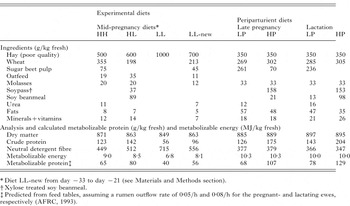
Table 1. Ingredients and chemical analysis of the mid-pregnancy- and periparturient feeds

Fig. 1. The experimental 3×2 factorial design. Sixty twin-bearing- and -rearing ewes were trickle infected with 10000 L3 Teladorsagia circumcincta per day for three days per week from day −65 onwards (arrow). They were fed to maintain body reserves (HH), maintain body protein- and lose body fat reserves (HL) or lose body reserves (LL) during mid-pregnancy (n = 20). Each feed was followed by either scarce (LP) or adequate (HP) metabolizable protein during the periparturient period (n = 10). The dotted line indicates the end of the mid-pregnancy period and the start of the periparturient period (day −21).
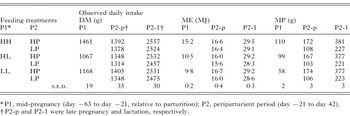
Table 2. Mean daily intake of dry matter (DM), metabolizable energy (ME) and metabolizable protein (MP) of twin-bearing and -rearing ewes, infected with Teladorsagia circumcincta and offered a scarce allowance of MP (LP) or a sufficient allowance of MP (HP) during late pregnancy and lactation, following feeding strategies to maintain body reserves (HH), maintain body protein and lose body fat reserves (HL) and lose body reserves (LL) during mid-pregnancy
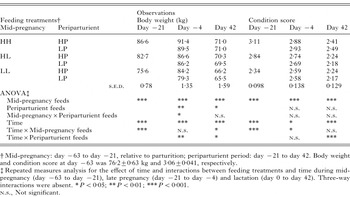
Table 3. Least square mean body weight and condition score of twin-bearing and -rearing ewes, infected with Teladorsagia circumcincta and fed scarce (LP) or adequate (HP) metabolizable protein during the periparturient period, following mid-pregnancy feeding strategies to maintain body reserves (HH), maintain body protein and lose body fat reserves (HL) and lose body reserves (LL)
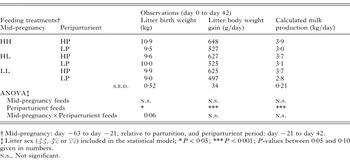
Table 4. Least square mean litter birth weight, litter growth and calculated milk production of twin-bearing and -rearing ewes, infected with Teladorsagia circumcincta and fed scarce (LP) or adequate (HP) metabolizable protein during the periparturient period, following mid-pregnancy feeding strategies to maintain body reserves (HH), maintain body protein and lose body fat reserves (HL) and lose body reserves (LL)
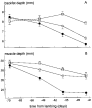
Fig. 2. Least square mean backfat- (A) and muscle depth (B) of twin-bearing ewes, infected with Teladorsagia circumcincta and fed to maintain body reserves (HH, □), maintain body protein and lose body fat reserves (HL, ○) and lose body reserves (LL, [bull ]) during mid-pregnancy. The trickle infection started on day −63.
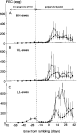
Fig. 3. Backtransformed means of FEC and 95% CI of twin-bearing- and -rearing ewes, infected with Teladorsagia circumcincta and offered a scarce (LP, ○) or adequate (HP, [bull ]) allowance of metabolizable protein during the periparturient period, following mid-pregnancy feeding strategies to (A) maintain body reserves, (B) maintain body protein and lose body fat reserves or (C) lose body reserves. The trickle infection started on day −63.
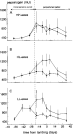
Fig. 4. Backtransformed means of pepsinogen concentration and 95% CI of twin-bearing- and -rearing ewes, infected with Teladorsagia circumcincta and offered a scarce (LP, ○) or adequate (HP, [bull ]) allowance of metabolizable protein during the periparturient period, following mid-pregnancy feeding strategies to (A) maintain body reserves, (B) maintain body protein and lose body fat reserves or (C) lose body reserves. The trickle infection started on day −63.
 You have
Access
- 39
- Cited by