Introduction
In Canada and the USA, persons over 65 years of age claim high numbers of Emergency Department (ED) visits, repeat ED visits and hospital admissions, and longer ED and hospital lengths of stay (Shah et al., Reference Shah, Rathouz and Chin2001; Aminzadeh and Dalziel, Reference Aminzadeh and Dalziel2002; Canadian Institute for Health Information, 2010). Seniors face a number of challenges as they transition back to the community following an ED visit or hospitalization including a limited understanding of the special needs of seniors by health professionals, which results in many geriatric issues going undetected and unresolved while in hospital, limited continuity of care, poor communication between seniors and health providers and among health providers, ineffective self-management, limited knowledge of their health condition, and poor health behaviors (Oddone et al., Reference Oddone1996; Happ et al., Reference Happ, Naylor and Roe-Prior1997; Grief, Reference Grief2003; Naylor, Reference Naylor2003). In the Waterloo Wellington region of southern Ontario, Canada, a consultation process with various professionals, seniors, and caregiver stakeholders was conducted to examine the unmet healthcare needs and challenges faced by seniors. The identified challenges included difficulties seniors had adhering to treatment recommendations, language, and cultural barriers, social isolation, difficulties accessing care and services due to limited transportation options, and long wait times for healthcare. Moreover, the system of care was described as not entirely senior friendly, with seniors having difficulty navigating a complex and disjointed care system (Heckman, Reference Heckman2011). All of these challenges place seniors at risk for poor outcomes including preventable ED revisits and hospital readmissions.
Addressing these challenges, the Waterloo Wellington Geriatric Services Network (WWGSN; a network of services and organizations serving seniors) in collaboration with the Canadian Mental Health Association (CMHA; a community-based organization providing mental health services to seniors) Waterloo Wellington Dufferin, developed the intensive geriatric service worker (IGSW) role. This new role, as one component of an integrated program of services for seniors, serves as an opportunity to address the challenges faced by seniors transitioning between acute care and the community, building on existing system capacity to ultimately improve accessibility to health services. The IGSW program aims to improve health outcomes, enhance system effectiveness, and build community capacity to achieve a sustainable health system.
The purpose of this paper is to: (1) describe the IGSW role; (2) provide some preliminary evidence of the IGSW program on timeliness of access to care, implementation of care plans, client and caregiver satisfaction with the service; and, (3) describe key stakeholder and IGSW perceptions of the key impacts of this service at client and caregiver, healthcare provider, and health system levels.
The intensive geriatric service worker role
IGSWs work in an integrated and collaborative manner with health and community support services and particularly with Geriatric Emergency Management (GEM) Nurses working out of seven EDs in acute care sites within the region. GEM Nurses identify seniors at high risk for ED recidivism and hospitalization, and conduct targeted assessments of high risk seniors. They also enhance seniors’ linkages with community-based services including home care, community support services, specialized geriatric services (SGS), and the IGSWs. For at-risk seniors referred to the IGSW program, the IGSWs conduct home visits within 24–48 hours of their hospital discharge (ED or inpatient units) to begin the process of providing intensive support and follow-up. IGSWs work with seniors to implement care plans developed by GEM Nurses in collaboration with the Community Care Access Centre (CCAC; In Ontario, the CCAC is responsible for the provision of homecare services and long-term care placement.) Case Managers and the acute care healthcare team. They encourage and support attendance at follow-up appointments with primary care, specialists, and community support services by arranging appointments, arranging for transportation, or driving the client themselves, reviewing client questions prior to the appointment and ensuring that they are asked and answered and that responses are understood by the client. IGSWs debrief with clients following appointments to ensure full understanding, and to identify and resolve potential barriers to compliance with treatment recommendations. IGSWs facilitate communication with primary care physicians, specialists, community support service providers, and the CCAC by attending appointments where appropriate and sharing updated care plans and recent hospitalization information. They promote self-directed care by educating seniors about their health conditions and symptoms, “coaching” them on how to improve communication about their health with their physician, providing strategies for self-management to promote adherence to treatment plans, and assisting them to navigate the health system. In addition, the IGSWs act as advocates for seniors and their caregivers as they access services and build system capacity and sustainability through education and mentoring opportunities with partners across the continuum of care.
Level of intensity of support provided by the IGSWs is assessed weekly and at 3 months in collaboration with community support services, SGS, primary care and CCAC case managers, as relevant. Referrals to the IGSWs can be accepted from GEM Nurses, SGS, and acute care health professionals. The target population for the IGSW service is seniors aged 65 years and over, or younger individuals with age related conditions, who: reside within the region; present as frail, medically complex, and consequently, are at-risk for hospital admission or readmission; and are being discharged home from the ED or inpatient unit. IGSWs provide coverage 5 days per week. This service is not intended to be long-term case management; IGSW involvement is intended to be intensive and time limited (up to 3 months).
There are currently nine IGSWs working in three specific geographical locations within the region; they are physically housed within space offered by various community organizations. It was intentionally decided to not require specific health professionals for this role so as to avoid role confusion or preconceived notions of the role associated with specific disciplines (for examples, nurses were not hired to prevent people from thinking this was a nursing role). Academic preparation for the IGSW role is varied and among the current contingent includes post-secondary education in gerontology, recreation therapy, social work, pastoral care, and psychology. Geriatric work experience among the IGSWs includes community support services, private home care, mental health, community, governmental agencies, retirement homes, day programs, long-term care, acute care, and rehabilitation. The IGSWs represent a number of different ethnic and cultural groups and languages, including German, Italian, Dutch, French, and Mennonite.
Although the individuals hired in the IGSW role have much geriatric experience, they participate in comprehensive training and orientation to familiarize them with key healthcare providers in the region and the local system of care (acute, community, long-term care) for seniors. They learn strategies for optimizing seniors’ transition to the community and self-management as well as training on best practices for working with clients with dementia, suicide intervention and non-violent crisis intervention, privacy, infection control, professional boundaries, and documentation requirements. Orientation plans are developed individually for each IGSW dependent on their unique learning needs.
As clients’ ability to understand and self-manage their health impacts their ability to live safely in the community, the IGSWs, along with clients’ health professionals and key services involved in their care are responsible for ensuring client safety and wellness. Risk management includes close supervision of the IGSWs, which includes biweekly team meetings, one-on-one monthly meetings with the program lead, ongoing review of client case notes and ongoing case consultation as needed. These team and individual meetings also serve as opportunities for support and capacity building. The IGSWs are supervised by the program lead, who has education in the field of gerontology with more than 20-years of experience working in geriatrics and community support services. The program lead is employed by the CMHA and is centrally located in the region for easy access to all IGSWs. In addition to providing active leadership and coaching supervision to the IGSWs, the program lead is responsible for coordinating referrals, service planning and provision, and ensuring policies and standards related to documentation are followed.
Methods
A mixed methods evaluation was employed in this study using quantitative (chart audits, monitoring achievement of care goals) and qualitative (interviews) methods. This study was conducted by independent program evaluators (CAM, LMH) with expertise in geriatric health services. The study was approved by the Research Ethics Board at McMaster University.
Referral and service tracking
A manual chart audit of all clients served and the services provided to all clients over an 18-month time period from the launch of the service was conducted by IGSW program staff. Information was collected on client age, gender, living arrangements, Clinical Frailty Scale score (Rockwood et al., Reference Rockwood2005), a tool that measures frailty and functional impairment in seniors, diagnoses, number of medications and the existence of medication issues (history of non-compliance, non-adherence, or adverse events). Information collected related to service provision by the IGSWs included number of face-to-face client visits and telephone contacts, wait time from time of referral to first contact with clients, and length of stay on service.
A total of 692 clients were referred to the IGSW program during the first 18 months of the program; chart audits were conducted on all 692 clients.
Tracking of care plan implementation
IGSW implementation and achievement of care plans developed by GEM Nurses and CCAC Case Managers, such as accompaniment to medical appointments and community programs, linking clients with services, and coaching and supporting self-management were tracked for 181 consecutive clients served (26% of all clients). These clients were seen by the IGSWs over a 10-month period. Care plans included goals for the number of days in which the IGSW was to see the client from the time of referral, specific treatment goals for clients, and goals for IGSW involvement (e.g. the number of medical appointments the IGSW would accompany the client to, number of visits to various programs). Related to self-management goals, IGSWs tracked the number of discussions they had with clients related to specified goals. IGSWs kept track of their attainment of care plan goals and whether goals for IGSW involvement were met on a tracking form created specifically for this purpose.
Client and caregiver interviews
Structured telephone interviews were conducted with clients and caregivers served by the IGSWs to obtain information related to their satisfaction and impacts associated with the IGSW role. Questions were asked related to: (1) overall satisfaction with the services provided by the IGSW (7-point rating scale: extremely, very, somewhat dissatisfied, neither dissatisfied nor satisfied, somewhat, very, extremely satisfied); (2) satisfaction with timeliness of access to service, amount of time spent with the IGSW, communication skills, and response to their concerns and questions (5-point rating scale: strongly disagree, disagree, neutral, agree, strongly agree); (3) perceived impact of the IGSW role on health outcomes, self-management, meeting personal goals for health, and understanding of health condition (5-point rating scale: strongly disagree, disagree, neutral, agree, strongly agree); (4) whether the assistance provided by the IGSW helped to keep them out of the hospital (yes, no, not sure) and if yes, in what ways was this accomplished; and (5) identification of impacts (benefits) associated with the IGSW role.
All clients and caregivers seen at least once by an IGSW during three one-month-long recruitment time periods were invited to participate in an interview, with the first set of interviews conducted 7 months after the launch of the IGSW role, and the remaining interviews 3 and 6 months after that. Invitations to participate were not extended to clients who were very distressed, terminally ill, or too ill to participate. Participants were not recruited as dyads; it was not necessary for both parties of a dyad to meet the inclusion criteria or to provide consent in order for one or the other to participate.
During the first data collection time period the IGSWs did not track the number of individuals who were invited to participate in an interview so it is not known how many declined to participate. For the remaining two data collection time periods the response rates were 93% (with 38 individuals assenting of 41 invited to participate) and 75% (with 21 assenting of 28 invited), respectively. Across all three data collection time periods a total of 103 individuals expressed an interest in participating in an evaluation interview and a total of 74 individuals completed the interviews (72% response rate; 17 declined to participate in the interview when called, most frequently due to illness, 10 could not be reached and 2 interviews were discontinued due to a language barrier and limited recall of the IGSW). Interviews were conducted with 49 clients and 25 caregivers. These interviews ranged in length from 8 to 35 minutes (average = 19 minutes; SD = 4.9). The majority of caregivers (68%) were the spouse or life partner of clients. There were no statistically significant differences in ratings between clients and caregivers so data are presented across both groups.
Key informant interviews
Individual telephone interviews were conducted with a purposeful sample of key informants including the IGSWs, program leadership, referral sources, health professionals, and representatives from community services to obtain information about the impacts (client, healthcare provider and health system) associated with the IGSW role. These interviews were conducted by a trained interviewer 17–20 months following the launch of the IGSW role.
Interviews were conducted with 19 key stakeholders including IGSWs (9), the IGSW Program Lead (1), GEM Resource Nurse (1), community service provider agency representatives (2), CCAC Case Managers (2), primary care nurse (1), Geriatrician (1), Geriatric Assessment Unit Nurse (1), and a representative from Trellis Mental Health and Development Services (1). These interviews ranged in length from 10 to 35 minutes (average of 21 minutes ± 7.8).
Data analysis
Chart audit and client and caregiver interview data were analyzed using SPSS software (IBM Corp, Version 20.0, Armonk, NY:IBM Corp). Analysis consisted of descriptive statistics (frequencies, means). All interviews were digitally recorded transcribed, and analyzed using a naturalistic inquiry approach to develop an understanding of the impacts associated with the IGSW role at patient and caregiver, health provider, and health system levels (Lincoln and Guba, Reference Lincoln and Guba1985). Responses to each question were categorized, compared and contrasted to create a summary of responses (Krueger and Casey, Reference Krueger and Casey2000) that was then used to identify reoccurring themes in the data (Patton, Reference Patton2002). This inductive analysis was conducted by one of the authors (LMH) and then reviewed by a second author (CAM) to confirm saturation and reliability.
Results
IGSW service provision
Of the 692 clients referred to the program, 632 (91%) received service from the IGSWs and 60 clients (9%) were not served. IGSWs made collateral calls to the clients, health professionals and/or service providers for 40 of the clients that had not been served (67%). Typically clients were not served because they were served elsewhere, the client or family refused service, clients’ situation changed or they died prior to the first visit, or clients could not be contacted. At the end of the 18-month evaluation period, 450 clients had been discharged from the IGSW caseload, with 182 remaining as active clients. At the end of the study period, the case load per IGSW ranged from 15–28 clients (20.2 ± 4.3). Monthly referrals to the IGSWs have been variable over time, ranging from 12 (half of the launch month) to 60 per month (38.4 ± 12.0).
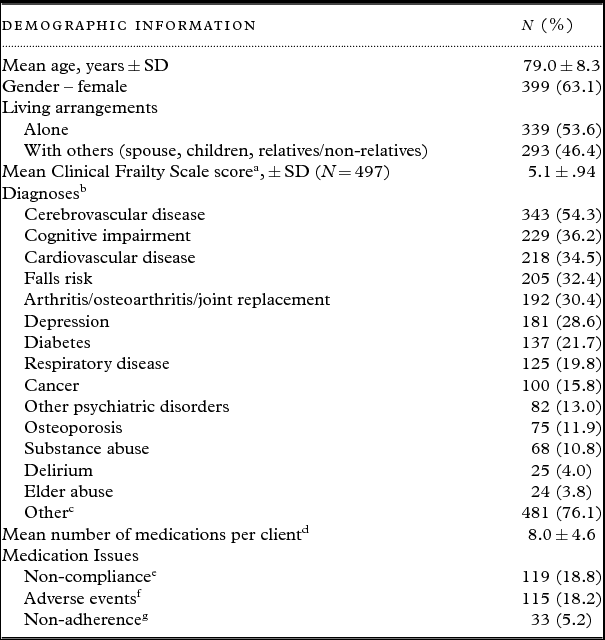
Client demographic information is presented in Table 1. Clients ranged in age from 47 to 100 years of age; the majority of clients were women (63.1%) and lived alone (53.6%). Average Clinical Frailty Scale scores reflected that most clients were mildly frail with minimal dependence on others for instrumental activities of daily living, though 36.8% of clients had Clinical Frailty Scale scores of 6 or greater reflecting moderate frailty (help is needed with both instrumental and non-instrumental activities of daily living; 33%) to severe frailty (completely dependent on others for activities of daily living, or terminally ill; 3.8%).
Demographic Information on all clients served by the IGSWs (N = 632)

SD = Standard deviation.
a Maximum score = 7; higher scores reflect higher levels of frailty.
b Percentages exceed 100% because most clients had more than one diagnosis.
c Wide range of other diagnoses including chronic conditions (pain, fibromyalgia, gout, thyroid, obesity), Parkinson's, conditions affecting vision (cataracts, glaucoma), hearing impairment, renal issues.
d Total number of medications and over-the-counter medications (including vitamins and herbal supplements).
e Client has a history of not taking prescribed medications.
f Client has a history of adverse medication events (side effects, overdose).
g Client has a history of not taking medications as prescribed (failing to follow instructions regarding timing, doses, mixing with other drugs or alcohol).
Timeliness of access to care
The average wait time for clients to have a first contact (phone call or face-to-face visit) with an IGSW once referred to the program ranged from −6.0 days (in cases where the client was seen before formally referred to the program; this occurred in cases where the IGSWs met with clients while in hospital prior to discharge) to 82 days (6.3 ± 0.94; n = 632). Generally, the majority of clients (55%) were contacted within 4 days of referral, 18% were contacted the same day as referred. Delays of greater than 1 month (n = 20; 3.2%) usually occurred because of extended hospital stays, transfers to the Geriatric Assessment Unit, or hospital readmissions (n = 8), difficulties connecting with the client (n = 6), and client resistance and/or concerns relating to accepting assistance (n = 6).
The majority of clients’ (76%) first contact with an IGSW was a face-to-face visit; 23.7% of clients’ first contact was via telephone. Almost all clients (96.7%) had at least one face-to-face visit with an IGSW; some clients (3.3%) were served via telephone only. On average clients were seen for 8.3 (±13.6; n = 611) face-to-face visits, with a range of 1–93 face-to-face visits. Generally, the majority of clients (74%) were seen for less than 10 face-to-face visits.
On average clients remained on service for 98.1 days (± 95.3 days; n = 450), though the range was −3.00 (client was served and discharged from service prior to the receipt of a formal referral) to 478 days. The majority of clients (60%) were discharged within 3 months of their referral to the IGSW program.
Implementation of care plans
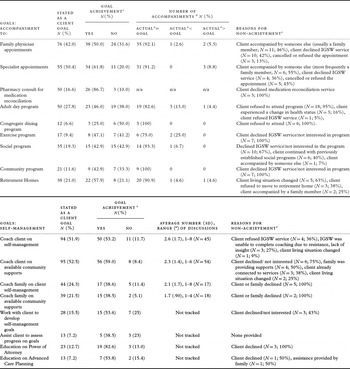
Table 2 presents the percentage of clients for whom a stated care plan goal was accompaniment to medical appointments or community-based programs and services, the percentage of clients for whom these goals were achieved, reasons for non-achievement, and in cases where a target number of visits was specified, whether the actual number of visits equaled, was less than or exceeded the target number. Client goals for IGSW accompaniment to appointments with family physicians, specialists, and pharmacists were achieved for over 50% of these clients, with accompaniment being most frequent for pharmacists (87%). In the majority of cases, the actual number of times the IGSW accompanied the client to an appointment with the family physicians and specialists equaled the target that was specified. IGSW accompaniment to various community programs and services was a stated care plan goal for 6%–28% of clients across various programs and services. Goals related to IGSW accompaniment to retirement homes were most frequently achieved (for 58% of clients); in the majority of cases (83%) the actual number of times the IGSW accompanied the client to a retirement home equaled the recommended number of visits. Across all goals for IGSW accompaniment to appointments and programs, reasons for non-achievement were most frequently due to client refusal of the IGSW service, refusal to attend the appointment or lack of interest in the program, or because they were accompanied by someone else.
IGSW services: accompaniment to medical appointments and community programs/services and self-management goalsFootnote b (N = 181)

a - number; n/a = not available; recommended and actual number of visits were not tracked. Percentages do not sum to 100% due to missing data.
b Figures in parentheses are percentages.
c In some cases the recommended number of visits was a range; the average of the range was used for analysis (e.g. 2–3 visits = 2.5 visits).
d The number (%) of actual visits that equaled, were less than or exceeded the stated target number.
e In some cases more than one reason for non-achievement of goals was provided so that percentages may not sum to 100%; percentages are based on the number of clients who did not achieve the specific goal.
Coaching on client self-management and on available community supports were care plan goals for about half of the clients and were achieved for the majority of these clients (Table 2). Self-management goals related to education about power of attorney and advanced care planning and coaching on available community supports and self-management were most frequently achieved. Lack of goal achievement was most frequently related to refusal of the IGSW service, lack of interest, or change in living situation.
For half of the clients (50.3%), goals were set regarding the specified number of days in which the IGSW was to have a first visit with a client. For the majority of clients (58.2%) it was specified that they should see an IGSW within one week of being referred; for 29.7% of clients it was specified that they be seen within 1–2 days of being referred. This goal was achieved for 80.2% of clients, with the majority of these clients (57.5%) being seen sooner than specified. The majority of these clients (63%) were actually seen within 1–4 days of being referred. This goal was not achieved for 14.3% of clients, that is, the client was seen later than the specific goal; this occurred most frequently because the client rescheduled the appointment, a family member rescheduled so that they could be present, there was some discussion with the CCAC about the appropriateness of the referral or it was discussed with the client that the first visit would coincide with a visit to the family physician, which was scheduled later than the timeframe in the specified care plan goal.
Client and caregiver satisfaction
All of the clients’ and caregivers’ provided overall ratings of satisfaction with the help they received from their IGSW; none provided ratings of dissatisfaction. The majority of respondents provided ratings of “very satisfied” (33.8%) and “extremely satisfied” (66.2%).
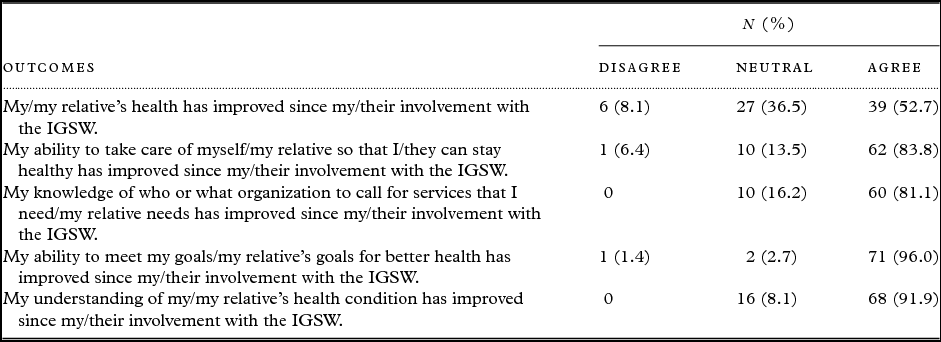
The majority of those interviewed reported that with the assistance of the IGSW they were better able to take care of themselves/their loved one in order to stay healthy (84%), had a better understanding of who or what organization to call for assistance (81%) and were better able to meet their/their loved one's goals for better health with the assistance of the IGSW (96%; See Table 3). Fewer, but still the majority of those interviewed (53%) reported that their/their loved one's health had improved since their involvement with the IGSW.
Client and caregivers’ ratingsFootnote a of changes to various outcome indicators as a result of their involvement with the IGSWFootnote b (N = 74)

a 5-point scale: strongly disagree, disagree, neutral, agree, and strongly agree. Disagree = sum of strongly disagree and disagree ratings; Agree = sum of strongly agree and agree ratings.
b Figures in parentheses are percentages.
A little over half of those interviewed (51%) reported that they believed the IGSW had prevented ED visits or hospitalizations. Most frequently clients and caregivers attributed this to increased ability to manage factors that contribute to illness through provision of services and supports that improve health and functioning, increased compliance with medical therapies and recommendations and the provision of alternative strategies to accessing the ED. The various ways in which the IGSWs contributed to ED avoidance are reflected in the following comments:
“I would freak out if he fell or if he fell asleep a lot when on a new medication, but she explained things to me and gave me confidence in my caregiving and to accept help.” [CaregiverID3]
“She's really helped me to make sure I take my medications and vitamins and that I eat the amount that I'm supposed to. That has really helped me a lot. I've got more energy and feel much better than I did last winter.” [ClientID7]
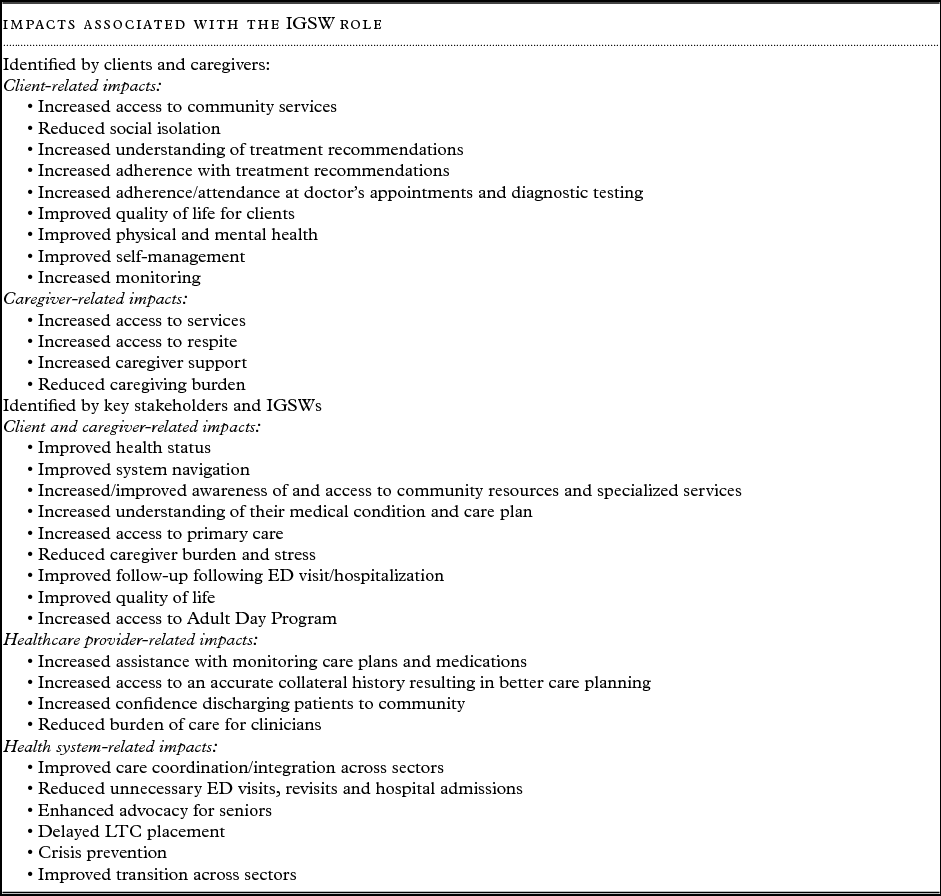
Clients and caregivers identified a number of positive outcomes associated with the IGSW role (Table 4) such as increased access to community services, support, monitoring, and follow-up, reduced social isolation, and improved health due to improved understanding of and adherence to treatment and diagnostic testing recommendations. When caregivers were asked to identify changes specific to their role as a caregiver as a result of IGSW involvement, they identified outcomes related to access to services, access to respite, caregiving support, and reduced caregiving burden, as reflected in the following comments:
Impacts associated with the IGSW role as identified by clients and caregivers, and key stakeholders

“Everything is different. We have hope. I feel more confident that I can take care of my husband. I was lost before and so stressed. Now we have lots of help and I'm feeling so much better. We were here alone and now I feel that we're not so alone anymore.” [CaregiverID3]
“She's taken some of the burden off me. I got a brother and sister and they do nothing so it's all on me. I was asking myself “What am I going to do?” because I really didn't know what to do with my mother. So, she's been a great help because she knows what to do, where to go for things. She knows it all. She said that when I needed help to just call her.” [CaregiverID30]
Key stakeholders and IGSW perceptions of program impacts
Interview participants identified a number of impacts for clients and caregivers associated with the IGSW role; these are summarized in Table 4. It was perceived that IGSW support positively impacted client health status due to adherence with treatment recommendations, particularly medications, better understanding of health issues, better access to primary care and to services and resources that promote health (e.g. exercise, nutrition, Adult Day Programs) and improved self-management. Clients have experienced improved system navigation with increased awareness of available services and how to access them and because the IGSWs have simplified the system of care for seniors. Moreover, the wide scope of IGSW practice allows them to provide services others are not mandated to do, such as accompaniment to community programs, taking clients shopping to teach them about nutritious foods, and accompanying them to government offices to complete forms to access services or financial support. IGSW accompaniment to medical appointments allows them to “translate” and clarify physician instructions for clients, ensuring that they have the resources or equipment needed to follow the care plan, set appropriate priorities and goals for their health and to follow them, and assist resistant clients to accept treatment recommendations. These impacts are reflected in the following comments:
It's a very complicated system that we live in and for the IGSW to go in there and simplify it for them really helps. [KSID1]
They've [IGSWs] made sure that they've [clients] somehow understood the diagnosis and what they need to do. [KSID2]
It really is kind of helping to prioritize goals. So I think the idea behind the IGSW is helping to do that priority setting and then helping to actually follow through and being successful and following through on those measures. [KSID4]
Interview participants also identified a number of impacts for healthcare providers associated with the IGSW role (Table 4). IGSW assistance with monitoring care plans and medications assures clinicians that recommendations are being followed and clients are being assisted with system navigation. Moreover, IGSWs act as the “eyes and ears” of care providers within the home to contribute to the assessment process by providing an accurate collateral history resulting in the development of better care plans. Clinicians are more confident discharging patients to the community when they know that the IGSW will be monitoring clients and for clinicians in the ED, the IGSW role can sometimes provide an alternative option to hospital admission. Burden of care is reduced for clinicians because the IGSWs provide a system navigation role that saves clinicians’ time. These impacts are reflected in the following comments:
The other piece that we like from the [GEM Nurse] perspective is definitely the collateral history it's that collateral history because they are the eyes and the ears for those patients. Especially the ones living alone and the ones that are really high risk and frail. If we know what's going on, then we can formulate a better care plan for them, that's a huge, huge impact. [KSID1]
I do believe it keeps people from staying in [ED] too long, which debilitates them not only mentally, but physically, and emotionally really, and it prevents them from being admitted for a reason that doesn't need to be, which is often the case with seniors, when doctors don't know what to do because their resources at home aren't available, they're not quite sure how to manage it if they're going to be there alone, so that's really important. [KSID7]
Health system related impacts associated with the IGSW role as identified by interview participants are presented in Table 4. The IGSW role was credited with improving care coordination and integration across health sectors due to improved communication between care providers, better collaboration and problem-solving among care providers to find viable solutions to client care issues, improved partnerships for care – agencies and organizations are working better together and reduced duplication of efforts. Generally, IGSWs facilitate a smoother and quicker transition between hospital and community. Key informants believe that unnecessary ED visits, revisits and hospital admissions have reduced because clients better understand symptoms that require emergent care and because intervention by the IGSWs have prevented crises and diverted ED visits. Seniors receive better care because their needs are brought to the forefront and the IGSWs advocate for services for these seniors, which prevents them for getting “lost” [KSID7] or “falling through the cracks” [IGSWID3]. Moreover, IGSWs support seniors to remain in their homes, thereby delaying LTC placement and health improvements resulting from improved adherence to care plans. These impacts are reflected in the following comments:
So I think there's a lot of benefit that our role does. Now one of them is the coordination of services in the community and I think that's a huge part because we seem to be the link for a lot of people, the CCAC services and social work services and even private services. So I think that's one of the big ones, we coordinate that. [IGSWID6]
I had a client who was going in to emergency quite frequently and every time he felt like something was wrong, it's almost like pushing the panic button: ‘What do I have?’ I have the emergency so I'll go there. Whereas now he calls me I'll walk through things with him and a lot of times it can be anxiety that he's feeling, it's not really a physical complaint. [IGSWID9]
There are situations where the IGSW has, because of that monitoring, that they've been able to notice that there is an issue before it comes to a fall or an ER presentation. [KSID6]
Discussion
The IGSW role fills a significant gap in care for seniors transitioning from acute care through its ability to support seniors in ways that no other service is able to provide to the same degree. The IGSWs do this through timely follow-up and monitoring to ensure seniors are safe, coaching to help seniors understand their health conditions and treatment, helping seniors to follow through with treatment recommendations, and facilitating access to needed services and supports. This type of support addresses many of the social and functional challenges that seniors experience as they transition from hospital to home (Greysen et al., Reference Greysen2014). The results of this study highlight the impact of the IGSWs on supporting clients’ to follow through with recommendations provided by health professionals by identifying the barriers that challenge compliance with recommendations and developing strategies to overcome these barriers. As an example, for clients who have difficulty following prescribed medication regimes, IGSWs work collaboratively with clients and the interdisciplinary team to identify the barriers to medication compliance and to identify solutions to improve adherence. These strategies may include promoting better organization of medications and increasing understanding of how to follow medication instructions and the significance of warning labels such as not taking medications with certain beverages such as alcohol or grapefruit juice (Williams et al., Reference Williams, Manias and Walker2008; Gellad et al., Reference Gellad, Grenard and Marcum2011; Russell et al., Reference Russell, Ruppar and Matteson2011). Moreover, the IGSWs facilitate appointments with pharmacists for medication reviews and coach clients on medication use to facilitate adherence and compliance, encouraging them not to discontinue medications when they do not experience expected results immediately. The need for these types of interventions to reduce adverse drug events among seniors is well documented (Cresswell et al., Reference Cresswell, Fernandes and Sheikh2007; Pham and Dickman, Reference Pham and Dickman2007). Similarly, lack of transportation, particularly for clients who live in rural areas or who do not have an available caregiver, is a frequently identified barrier to clients’ timely access to medical attention and to attending health services such as community-based blood testing, x-rays, and other imaging services, or physiotherapy (Heckman et al., Reference Heckman, Hillier, Manderson, McKinnon-Wilson, Santi and Stolee2013). IGSWs will assist clients to secure accessible and affordable transportation by helping them to identify services that meet their needs, fill out necessary forms and assist them with applying for subsidized funding where applicable.
A key function of the IGSW role is to ensure that clients follow through on recommendations to attend social and community programs, such as Adult Day Programs, social and exercise programs. For almost half of the clients who had recommendations for program accompaniment, the IGSWs were able to accompany them so that they were then able to attend independently. As many clients refuse to attend these programs or express disinterest, it is likely that IGSW accompaniment provides an opportunity for clients to learn more about the programs and what they can offer, correct erroneous assumptions they may have about the programs, and to become more comfortable with new places and people, thereby increasing the likelihood that they would attend regularly. This is a significant opportunity for seniors to make lifestyle changes that will promote their health and well-being and is particularly relevant for seniors that are socially isolated and who lack caregiver support. Similarly, findings from this study suggest that IGSW accompaniment to medical appointments contributes to increased adherence to treatment recommendations. It is likely that the IGSWs help to reduce the challenges that seniors may experience during medical appointments, ensuring that seniors are better equipped to self-manage their health. It is well documented that seniors often to do not understand instructions provided by their healthcare provider, do not know what questions to ask, do not understand information provided on their medical condition or instructions to maintain their health (Bayliss et al., Reference Bayliss, Ellis and Steiner2007; Katz et al., Reference Katz, Jacobson, Veledar and Kripalani2007; Coleman et al., Reference Coleman2013). When IGSWs accompany clients to medical appointments, they often help the client prepare questions in advance to ask, and the IGSWs serves as a “translator” to assist clients to understand the information and instructions they have been given. Moreover, the IGSWs will work with clients to facilitate the implementation of recommendations stemming from the medical appointment by, for example, helping them to fill prescriptions, shop for foods needed to modify their diet, or acquire recommended medical equipment. This attention to both the physical and social determinants of health is likely to impact health outcomes, reduce adverse events, and reduce preventable or unnecessary visits to the ED and hospital admissions, and supports seniors to safely live in their homes for as long as possible.
As reported by the key stakeholders in this study, IGSWs act as the “eyes and ears” of health professionals in the community. They are in a unique position to identify issues that could otherwise go unrecognized thereby preventing the crises that bring seniors to hospitals or that result in premature institutionalization. This is significant given that hospitalization in older persons contributes to increased risk of delirium, depression, and irreversible functional decline and disability due to acute illness (Hoenig and Rubenstein, Reference Hoenig and Rubenstein1991; Creditor, Reference Creditor1993; Covinsky et al., Reference Covinsky, Kahana, Chin, Palmer, Fortinsky and Landefeld1999; Inouye, Reference Inouye2006; Gill et al., Reference Gill, Allore, Gahbauer and Murphy2010), as well as the high costs associated with long-term care and hospitalization (Canadian Institute for Health Information, 2009). The results of the care plan goal tracking reflect the positive impact that the IGSWs are having on compliance with various care plan recommendations. They do this not only by accompanying clients to follow-up appointments with physicians, medication reviews by pharmacists, and community programs and services, but also by providing them with education on the relevance of these services to their health conditions. Both clients and caregivers reported having a better understanding of health conditions, how to meet goals for better health, and community services available to assist them.
IGSWs continue to be challenged in meeting the needs of clients who are resistant to following care plan recommendations. Across the various goals for accompaniment to medical and social programs, roughly one third to one half of the clients did not achieve these goals. While some clients declined the IGSW accompaniment because someone else agreed to accompany them, most frequently a family member, many did not achieve these goals because they declined the IGSW service or declined/refused the care plan recommendation. This likely reflects the challenging population that the IGSWs serve, many of whom have complex medical conditions and mental health issues that contribute to their social isolation and resistance to make lifestyle changes. Although the IGSWs make multiple attempts at establishing rapport, some clients are more difficult for them to engage. In these cases, the IGSW can sometimes work through caregivers to support self-management. The findings from this study also suggest that IGSWs play an important role in assisting clients but also caregivers. IGSWs support caregivers in their efforts to provide care at home, to navigate the health system and community services and resources for the client, and to maintain their own health and well-being with the provision of respite. The provision of caregiver support, education, and use of community services and resources can significantly improve caregiver quality of life, reduce caregiver burden and depression and delay institutionalization of care recipients (Schulz and Martire, Reference Schulz and Martire2004; Gaugler et al., Reference Gaugler, Kane, Kane and Newcomer2005).
While greater than 60% of clients and caregivers in this study reported improved ability to self-manage health and navigate the health system as a result of their involvement with the IGSW, fewer agreed that this service impacted health outcomes. Given the complex population the IGSWs serve, improved health outcomes may not be a realistic goal. There is much interest in the literature in client (patient) engagement in healthcare research and evaluation with the aim of identifying relevant client (patient)-centered outcomes (Weldring and Smith, Reference Weldring and Smith2013; Haywood et al., Reference Haywood2015). Focusing on outcomes that are important to clients, including measures of preferred experiences with this service, may prove to be a more valuable indication of the success and effectiveness of the IGSW role. Future studies should actively involve clients and caregivers in identifying the client-related outcomes used to evaluate the IGSW service.
Programs similar to the IGSW service have shown that a multidimensional, individualized approach to transitional care following hospital discharge that targets seniors and their caregivers and that emphasizes identification and management of risk factors to improve health outcomes, prevent readmission to hospital, and reduce healthcare costs (Naylor et al., Reference Naylor, Brooten, Campbell, Maislin, McCauley and Schwartz2004; Coleman et al., Reference Coleman, Parry, Chalmers and Min2006). Similar to the role of the IGSW, there are transitional care programs in which Advanced Practice Nurses conduct home visits within 24 hours of discharge from hospital, attend first post-discharge physician appointments with patients, and coach patients to communicate more effectively with their physician. These programs have resulted in increased length of time between hospital discharge and readmission or death, reduced readmissions, improved patient access to available community resources and services, decreased overall healthcare costs, improved communication between patients and physicians, and improved patient quality of life, functional status, and overall health status (Naylor, Reference Naylor2003; Naylor et al., Reference Naylor, Brooten, Campbell, Maislin, McCauley and Schwartz2004; McCauley et al., Reference McCauley, Bixby and Naylor2006). The IGSW role is differentiated from the Advanced Practice Nurse role in that IGSWs are not health professionals and as such makes the program less costly to operate than those staffed by health professionals. While there are differences in what various health professional disciplines can do to support transition from hospital, there are many ways in which non-health professionals can assist seniors with their transitions. Many of the things the IGSWs do, such accompaniment to medical and social programs, grocery shopping, and completion of government forms, are typically out of scope for most health provider roles. Conversely, a limitation to the IGSW is that while they are able to coach and provide some education on health conditions in general, they are unable to provide information specific to the client's condition because conducting clinical assessments is not within their scope of practice. Other similar community-based supports include the “floating support” worker role as implemented in the United Kingdom (George, Reference George1997; Sharples et al., Reference Sharples, Gibson and Galvin2002). These support workers provide clients with individualized emotional support, advice, information, and education and advocate on the clients’ behalf for community services. An evaluation of the floating support worker role aimed at supporting clients with mental health problems to live independently in a housing project, found that this role was associated with increased tenancy, client confidence to engage in new activities, and increased linkages with community services (Sharples et al., Reference Sharples, Gibson and Galvin2002).
There are a number of limitations to this study. The participants in the study were those individuals who received the IGSW services; the absence of a comparison group limited our ability to quantify the effect of this service. Quasi-experimental or randomized methodologies that include a comparison or control group would provide more definitive data on the impacts of the IGSW role on health and community service utilization, as well as, health and quality of life outcomes. Moreover, data related to impact of the IGSW role on acute care utilization is largely anecdotal. Hospital-level data specifically linked to clients who have utilized the services of the IGSWs would provide stronger evidence of the impact of this program on the use of acute system resources. Data collected on the achievement of care plan goals was collected from a subsample of clients. While results from the care plan goal data suggest the potential impact of the IGSW role on these clients, this sample may not be representative of all IGSW clients. However, selection of consecutive clients referred to the program reduces the potential of selection bias. In some cases, lack of achievement of care plan goals was because clients declined the service. It is not known whether clients pursued the recommended services independently. Half of the key informants interviewed for this study were employees of the IGSW program (IGSWs, program lead). Although it was critical to obtain the perspectives of the IGSW team to fully understand the inner workings of the program, the potential for bias exists. Similarly, the potential for selection bias exists among the clients and caregivers who participated in the interviews as those at high risk were excluded from the sample; it is not known how many clients were not invited to participate because they were very distressed, or terminally or acutely ill.
This study has demonstrated that the IGSW role has the potential to improve the integration and coordination of care for frail seniors transitioning from acute care to the community. The social and health benefits derived from improved adherence and compliance with prescribed treatment regimes, improved system navigation, increased awareness and use of available community services and resources and increased caregiver capacity has the potential to facilitate appropriate use of primary and acute care and reduce unnecessary or preventable ED visits and hospitalizations and to potentially delay institutionalization. Next steps for the IGSW program include ensuring a sustainable program model and the development of outcome indicators to measure client preferences, ED avoidance, and prevention of alternate level of care (ALC) days and premature transition to long-term care.
Conflict of interest
Carrie A. McAiney and Loretta M. Hillier have no conflicts of interest to declare; Janice Paul, Jane McKinnon Wilson, Anna Tersigni Phelan, Fred Wagner, and Sheli O'Connor are employed by the study sponsor (CMHA).
Acknowledgment
This study was funded by the CMHA Waterloo Wellington Branch.
Author contributions
Carrie A. McAiney, PhD: Concept and design, data collection and analysis, interpretation, critical manuscript review, final manuscript approval. Loretta M. Hillier, MA: Concept and design, data collection and analysis, interpretation, critical manuscript review, final manuscript approval. Janice Paul, BASc: Concept and design, data collection, interpretation, final manuscript approval. Jane McKinnon Wilson, MSc, HB: Concept and design, data collection, interpretation, final manuscript approval. Anna Tersigni Phelan, BA: Data collection, final manuscript approval. Fred Wagner, MA, MSW: Data collection, final manuscript approval. Sheli O'Connor, MA: Data collection, final manuscript approval.