Introduction
Eating disorders are complex medical and psychiatric conditions that are responsible for a significant increase in morbidity and mortality, and rank among the 10 leading causes of disability among young women (Vos & Mathers, Reference Vos and Mathers2000). Bulimia nervosa (BN) and binge eating disorder (BED) are eating disorders characterised by episodes of loss of control over eating and intense perceived distress associated with those. Overeating is often compensated for by patients with BN, through practices such as dietary restraint, purging, and over-exercise; whereas patients with BED do not typically use successful compensatory behaviours. While cognitive-behavioural therapy (CBT) is regarded as the treatment-of-choice for BN and BED (Wilson, Grilo, & Vitousek, Reference Wilson, Grilo and Vitousek2007), it is only moderately effective, with fewer than 50% of patients with BN, and slightly over 50% of patients with BED, achieving abstinence at the end of treatment (Hay, Reference Hay2013). It is possible that interventions targeting some of the mechanisms that underpin binge eating can provide a useful augmentation to standard treatment.
Binge eating behaviours are often exhibited among individuals with high levels of impulsivity (Davis, Reference Davis2013; Schag, Schönleber, Teufel, Zipfel, & Giel, Reference Schag, Schönleber, Teufel, Zipfel and Giel2013), a trait characterised by poor inhibitory control (i.e. weak control over impulsive responses) and heightened reward sensitivity (i.e. high degree to which individuals' behaviour is motivated by rewarding stimuli) (Dawe & Loxton, Reference Dawe and Loxton2004). Based on this model, people with binge eating would experience greater motivation to approach palatable foods and would act impulsively on this motivation. A recent systematic review discussed findings from 20 studies investigating food-related impulsivity in BED and obesity and found that patients with BED experience increased reward for food stimuli and a greater tendency for rash-spontaneous behaviour (i.e. decreased inhibitory control) towards food and also in general, compared to normal-weight individuals (Giel, Teufel, Junne, Zipfel, & Schag, Reference Giel, Teufel, Junne, Zipfel and Schag2017). Furthermore, studies using neurocognitive tasks indicate that individuals with binge eating have deficits in executive functioning (Smith, Mason, Johnson, Lavender, & Wonderlich, Reference Smith, Mason, Johnson, Lavender and Wonderlich2018) and a meta-analysis of studies in binge-purge anorexia nervosa, BN, and BED identified deficits in response inhibition using the go/no-go paradigm across clinical groups, compared to healthy individuals (Wu, Hartmann, Skunde, Herzog, & Friederich, Reference Wu, Hartmann, Skunde, Herzog and Friederich2013). The extent to which these deficits are specific to food stimuli, and/or rather generic, is less conclusive (e.g. Manasse et al., Reference Manasse, Goldstein, Wyckoff, Forman, Juarascio, Butryn and Nederkoorn2016 for evidence related to generic deficits; Svaldi, Naumann, Trentowska, & Schmitz, Reference Svaldi, Naumann, Trentowska and Schmitz2014 for evidence related to food-specific deficits), but there are some indications that they might be stronger for disorder-relevant stimuli, such as food (Giel et al., Reference Giel, Teufel, Junne, Zipfel and Schag2017; Svaldi et al., Reference Svaldi, Naumann, Trentowska and Schmitz2014; Wu et al., Reference Wu, Hartmann, Skunde, Herzog and Friederich2013).
Based on these findings, it is possible to argue that increased reward sensitivity and decreased inhibitory control are maintenance mechanisms of binge eating disorders. It follows that addressing these mechanisms might be associated with reduced eating disorder psychopathology. Indeed, there has been interest in developing treatments that strengthen inhibitory control and moderate reward sensitivity to food cues (van Koningsbruggen, Veling, Stroebe, & Aarts, Reference van Koningsbruggen, Veling, Stroebe and Aarts2017). ‘Top-down’ approaches aim to suppress impulsive processes by strengthening the influence of cognitive processes on behaviour (see Adriaanse, Vinkers, De Ridder, Hox, & De Wit, Reference Adriaanse, Vinkers, De Ridder, Hox and De Wit2011). One example is goal planning through implementation intentions (i.e. if-then plans). Implementation intentions (also known as if-then plans) consist of specifying action plans to disrupt unhelpful habits, by predicting and counteracting possible triggers of these behaviours (Adriaanse et al., Reference Adriaanse, Vinkers, De Ridder, Hox and De Wit2011). Systematic reviews and meta-analyses have concluded that implementation intentions increase healthy food consumption, decrease the consumption of ‘highly palatable’ foods, and reduce fat intake in healthy populations (Adriaanse et al., Reference Adriaanse, Vinkers, De Ridder, Hox and De Wit2011; Turton, Bruidegom, Cardi, Hirsch, & Treasure, Reference Turton, Bruidegom, Cardi, Hirsch and Treasure2016) and overweight/obese individuals (Vilà, Carrero, & Redondo, Reference Vilà, Carrero and Redondo2017). Another approach to strengthening inhibitory control and reducing reward sensitivity to food cues is to use ‘bottom-up’ approaches to change ‘seemingly’ automatic reactions to stimuli (see Houben & Jansen, Reference Houben and Jansen2011; Lawrence et al., Reference Lawrence, O'Sullivan, Parslow, Javaid, Adams, Chambers and Verbruggen2015). Food-specific inhibitory control training (ICT) is a bottom-up intervention that regulates automatic impulses towards palatable food cues by associating them with motor inhibition (Jones et al., Reference Jones, Di Lemma, Robinson, Christiansen, Nolan, Tudur-Smith and Field2016; Veling, van Koningsbruggen, Aarts, & Stroebe, Reference Veling, van Koningsbruggen, Aarts and Stroebe2014). Meta-analyses conducted among pre-clinical samples indicate that food-specific ICT, as opposed to general (non-food) ICT and food-go control is associated with greater reductions in high energy-dense food intake (Allom, Mullan, & Hagger, Reference Allom, Mullan and Hagger2016; Jones et al., Reference Jones, Di Lemma, Robinson, Christiansen, Nolan, Tudur-Smith and Field2016). Moreover, chocolate-specific ICT reduces the desire to eat and chocolate intake (Houben & Jansen, Reference Houben and Jansen2015). Studies in clinical samples suggest that food-specific ICT is effective in reducing eating disorder pathology, body fat, weight, and energy-dense food consumption (Giel et al., Reference Giel, Teufel, Junne, Zipfel and Schag2017; Preuss, Pinnow, Schnicker, & Legenbauer, Reference Preuss, Pinnow, Schnicker and Legenbauer2017; Stice, Yokum, Veling, Kemps, & Lawrence, Reference Stice, Yokum, Veling, Kemps and Lawrence2017; Turton et al., Reference Turton, Nazar, Burgess, Lawrence, Cardi, Treasure and Hirsch2018). When food-specific inhibitory control training was compared to generic inhibitory control training, then no between-group significant differences were found in terms of food consumption, which might be due to the low dose of training completed (Aulbach, Knittle, van Beurden, Haukkala, & Lawrence, Reference Aulbach, Knittle, van Beurden, Haukkala and Lawrence2020; Turton et al., Reference Turton, Nazar, Burgess, Lawrence, Cardi, Treasure and Hirsch2018). Several previous studies have shown that completing four sessions of food-related ICT over 1–4 weeks leads to reduced weight and reduced food intake (Camp & Lawrence, Reference Camp and Lawrence2019; Lawrence et al., Reference Lawrence, O'Sullivan, Parslow, Javaid, Adams, Chambers and Verbruggen2015; Veling, van Koningsbruggen, Aarts, & Stroebe, Reference Veling, van Koningsbruggen, Aarts and Stroebe2014). Possible ways to boost the effect of training are to repeat it over time and combine it with a complementary approach that targets top-down processes. One previous study examined whether combined food-specific ICT and implementation intentions would reduce self-serving of sweets among healthy students. While both interventions were effective, there was no additional benefit of combining them (van Koningsbruggen et al., Reference van Koningsbruggen, Veling, Stroebe and Aarts2017). To our knowledge, repeated training sessions and this combined approach remain untested among individuals with eating disorders.
Our primary objective was to assess the feasibility (recruitment, adherence, and retention rates) of combined go/no-go training and if-then planning among individuals with bulimia nervosa and binge eating disorder. Feasibility was defined as (1) recruitment of 75% of the target number (N = 80), (2) adherence to ICT, with ⩾75% of participants completing at least four training sessions within 4 weeks (a possible minimum effective dose based on previous research); (3) adherence to implementation intentions sessions, with ⩾ 75% of the participants developing a plan with the mentor and implementing the plan, and (4) ⩾80% retention in the study at 4 weeks. Furthermore, we described effect sizes for between-group (food-specific inhibitory control training v. general inhibitory control training) and within-group (pre v. post-training) differences in binge eating frequency and eating disorder psychopathology (primary outcomes) and weight, self-regulation of eating, food valuation, food approach, depression and anxiety (secondary outcomes). Feedback forms and focus groups were used to explore participants' views of the helpfulness, possible harms, practicality, and potential improvements to the intervention methodology. The evidence of feasibility and the effect size of changes in clinical outcomes will inform the procedures and sample size of a definitive trial (Eldridge et al., Reference Eldridge, Chan, Campbell, Bond, Hopewell, Thabane and Lancaster2016).
Methods
Participants
Participants were recruited through eating disorder charity websites, social media, flyers, and eating disorder services (N = 6). Eligibility required that participants met full-threshold criteria for bulimia nervosa or binge eating disorder according to the Structured Clinical Interview for DSM-5, had a Body Mass Index (BMI) of at least 18.5, were between the ages of 18 and 60, were fluent in written/spoken English, and were willing to meet the research team on two occasions for face-to-face assessment. Participants were excluded if they were currently pregnant, had a visual impairment that could not be repaired with eyewear, a neurological impairment, alcohol or drug dependence, or psychosis.
Trial design and randomisation
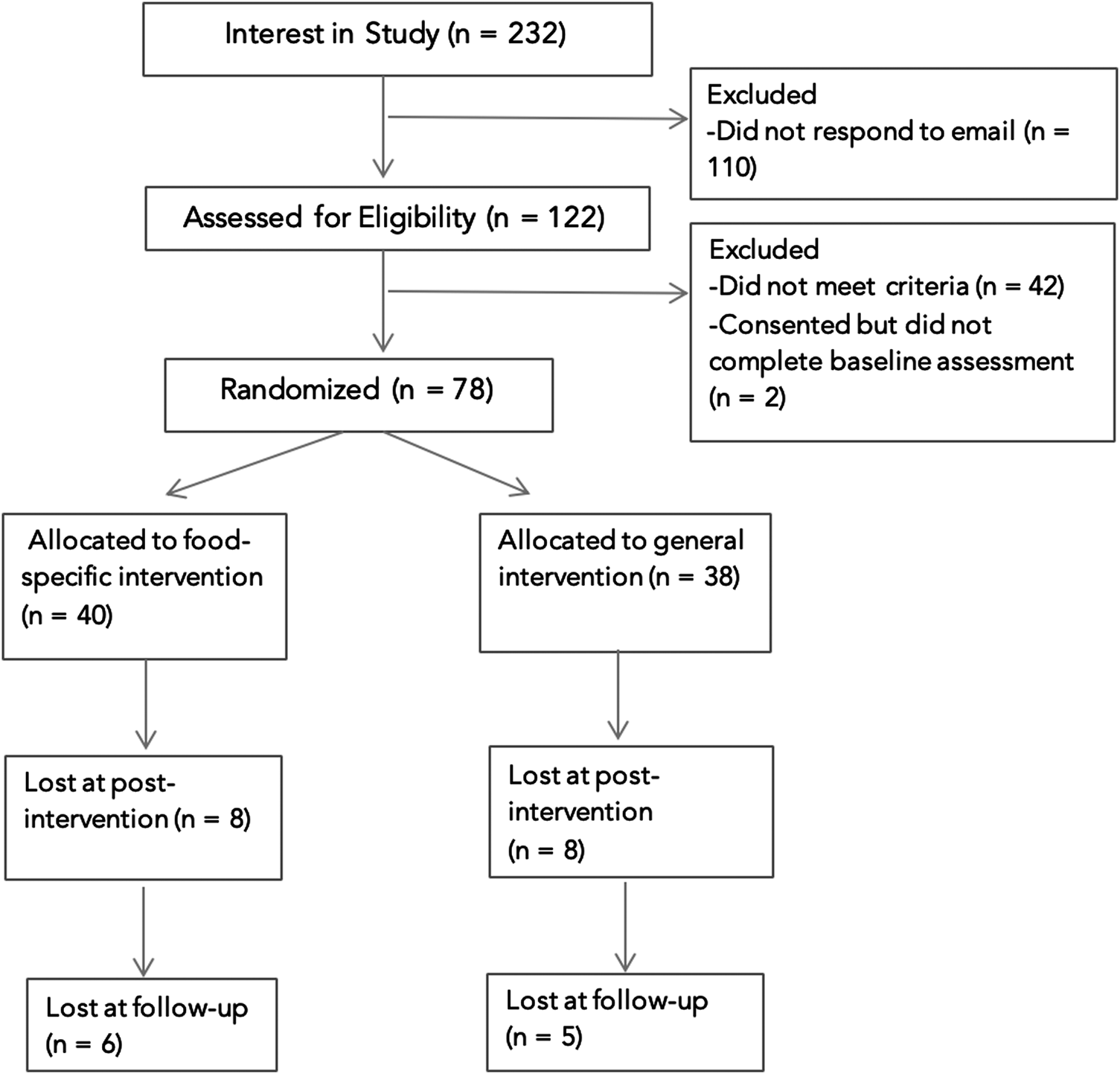
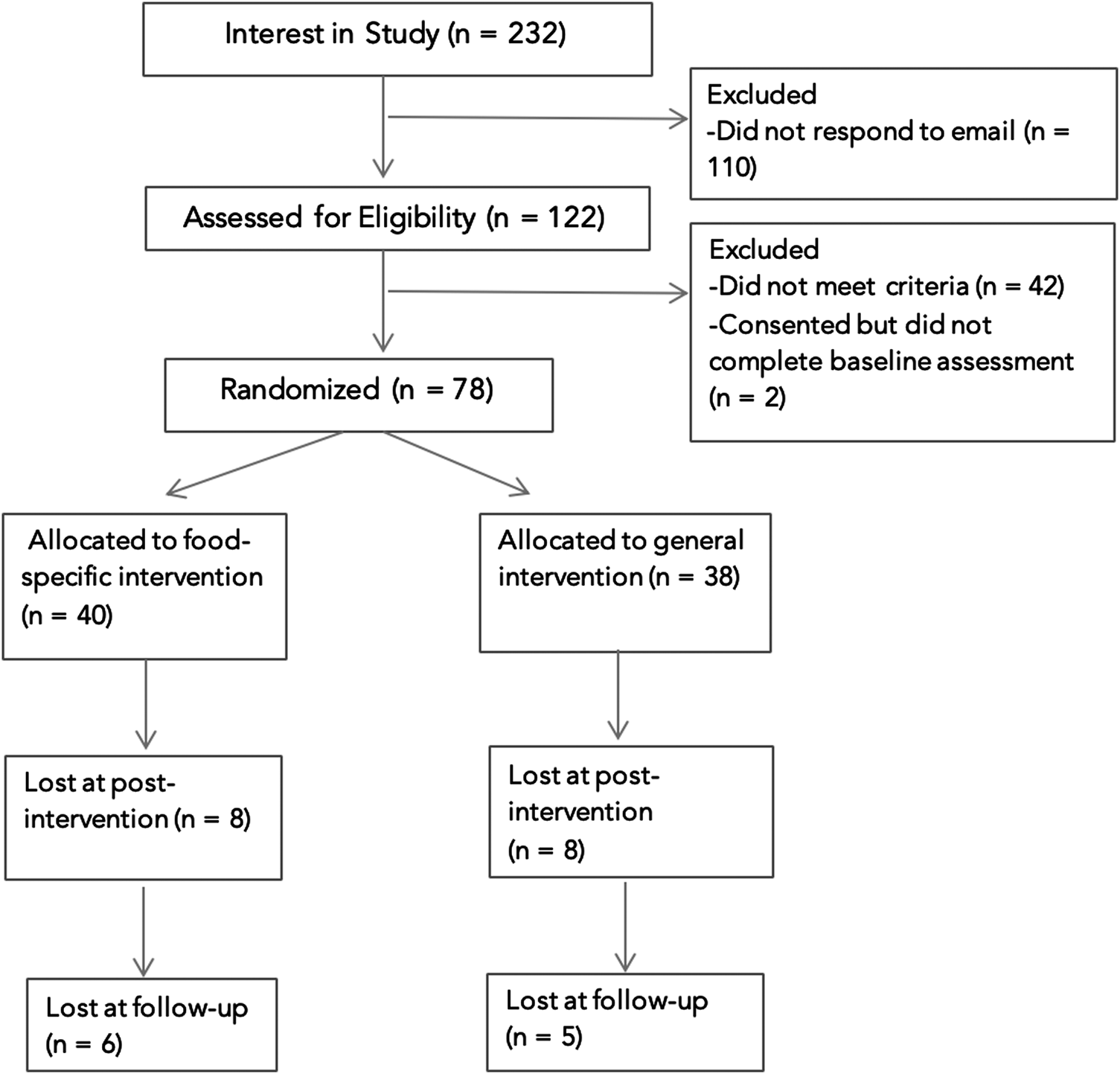
Seventy-eight participants with bulimia nervosa (N = 40) or binge eating disorder (N = 38) were recruited and randomly allocated into a food-specific (N = 40) or general (N = 38) intervention. A random number generator (https://www.randomizer.org) was used to assign consecutive participants to the intervention arms. See the Consort Diagram below (Fig. 1) for further details on the flow of participation.
Consort diagram of participation in the study. The flow-chart describes participants' recruitment and completion of the assessment measures at baseline, post-intervention, and follow-up.
Note: Forty-two individuals did not meet criteria to participate because they were not able to commute to London for electroencephalography testing (N = 17), did not experience ⩾1 binge eating episode per week (N = 12), had a body mass index < 18.5 (N = 5), had a diagnosis of anorexia nervosa (N = 4), were below the age of 18 (N = 2), or had epilepsy (N = 2).
Sample size
Recommendations of sample sizes for feasibility studies indicate that it is appropriate to recruit between 24 and 50 participants per arm (Lancaster, Dodd, & Williamson, Reference Lancaster, Dodd and Williamson2004; Sim & Lewis, Reference Sim and Lewis2012; Julious, Reference Julious2005). Moreover, previous research using identical versions of food-specific and general ICT in overweight adults (Lawrence et al., Reference Lawrence, O'Sullivan, Parslow, Javaid, Adams, Chambers and Verbruggen2015), detected group differences in weight loss with a sample size of 40 participants per intervention group. Thus, our target sample size was 40 participants per intervention group.
Interventions
Inhibitory control training (go/no-go)
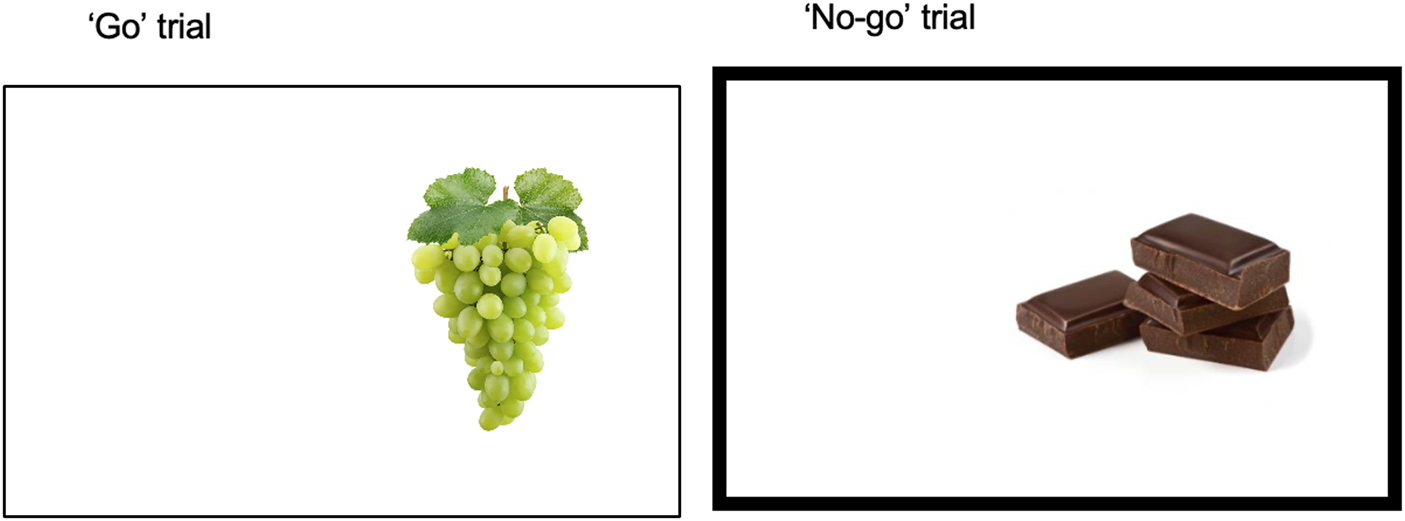
The ICT used in the present study was developed at the University of Exeter (Lawrence et al., Reference Lawrence, O'Sullivan, Parslow, Javaid, Adams, Chambers and Verbruggen2015). Participants were invited to complete the ICT training daily for 4 weeks. The completion of each session was recorded through the software and associated with a time stamp. The training involved go and no-go trials. Go trials and no-go trials were signified by a non-bold frame surrounding the picture and bold frame surrounding the picture, respectively (Fig. 2). Thirty-six pictures were individually presented on the left- or right-hand side of a computer screen for 1250 ms, with a 1250 ms inter-stimulus interval. During the go trials, participants were required to press ‘c’ or ‘m’ depending on the location of the picture on the screen (‘c’ for left and ‘m ‘for right). During the no-go trials, participants had to withhold their response. Each of the 36 pictures was presented once per block, and participants completed six blocks per training session. They were encouraged to respond as quickly and accurately as possible and were given feedback regarding accuracy and speed (mean reaction time) between blocks.
Example of ‘go’ and ‘no-go’ trials in the inhibitory control training task. The ‘go’ trial includes the presentation of a low-energy-dense food; in this condition, participants are instructed to press the letter ‘M’ as quickly as possible on the keyboard. The ‘no-go’ trial includes the presentation of a high-energy dense food; in this condition, participants are instructed to avoid a motor response.
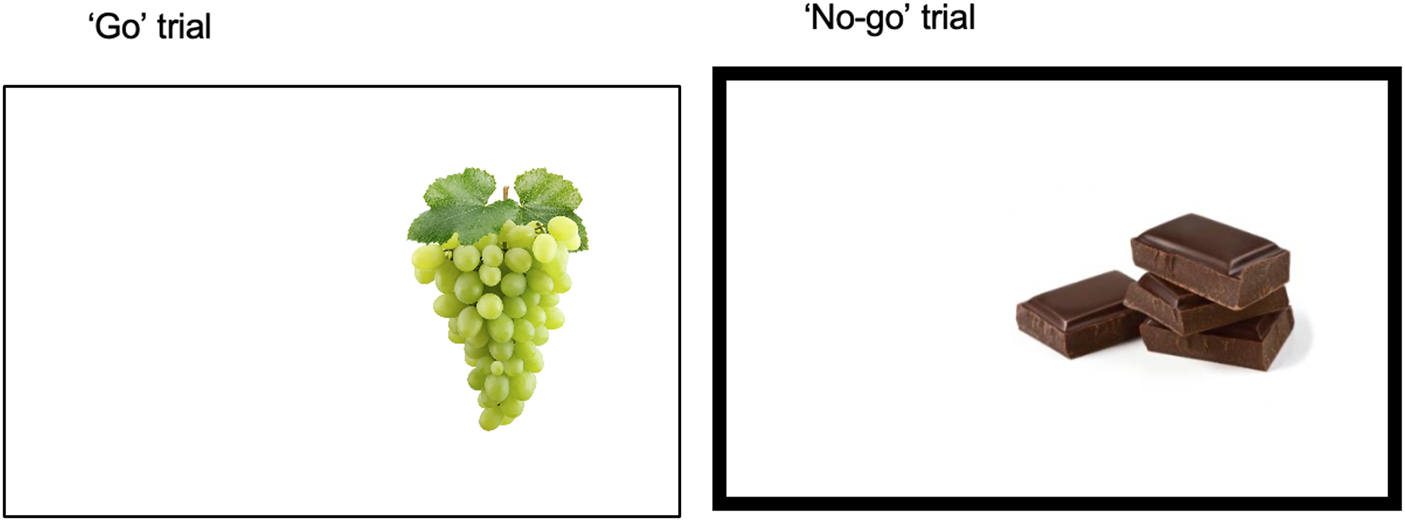
In the food-specific ICT, the stimuli consisted of nine low-energy-dense food pictures (e.g. fruits, vegetables, and rice cakes), nine high-energy dense foods food pictures (e.g. chocolate, cake, and crisps), and 18 filler pictures (i.e. clothing items). The high energy-dense food pictures were always paired with no-go signals, resulting in 54 high energy-dense food no go trials, while the ‘healthy’ food pictures were always paired with go signals, resulting in 54 healthy food go trials. The filler pictures were equally associated with go and no-go signals. The purpose of the filler items was to make the task more unpredictable and challenging, and to avoid making the aim too obvious to the participants (Lawrence et al., Reference Lawrence, O'Sullivan, Parslow, Javaid, Adams, Chambers and Verbruggen2015). In the general ICT, participants completed an almost identical task, apart from the 18 food pictures being replaced with pictures of tools and stationery (see Lawrence et al., Reference Lawrence, O'Sullivan, Parslow, Javaid, Adams, Chambers and Verbruggen2015 for details). Food and non-food pictures were matched, as closely as possible, for size, colour, and visual complexity. Moreover, the rectangular frame always appeared against a white background. See Fig. 2 for an example of the stimuli used.
Implementation intentions (if-then planning)
Participants were encouraged to identify an unhelpful habit, reflect on situations, and motivations that are likely to precede the unhelpful behaviour, and then design an alternative behaviour. They were asked to write down their if-then plan and to indicate whether or not they had successfully implemented their planned alternative behaviour. Each participant was assigned one mentor, who followed up with them via email once per week for 4 weeks. Mentors provided regular feedback to facilitate the development and implementation of the plan. In total, seven mentors were trained in delivering implementation intentions. Two mentors (GA and ML) were Psychology PhD candidates, three mentors had completed a BSc in Psychology (DW, NR, and SR), one mentor was a medical doctor completing a psychiatry residency (EC), and one mentor had completed a BSc in Nutrition and Dietetics (KB). All mentors were trained by the lead researcher (RC) and supervised by a clinical psychologist (VC). In the food-specific intervention group, participants were encouraged to select an unhelpful habit that relates to their eating behaviour (e.g. If I am home alone and feeling anxious, then I will listen to a self-compassion meditation for 10 min). In the general intervention group, participants were encouraged to select an unhelpful habit that is unrelated to their eating behaviour (e.g. If I argue with a friend and feel upset, then I will ask them to meet to discuss what has upset me.) The successful implementation of the plan was measured by ensuring that participants included both a situational and motivational cue in their plan and assessing whether they proposed an appropriate alternative behaviour (e.g. not simply a negation of the unhelpful habit).
Baseline assessment
Demographics
Participants completed a demographic questionnaire, which included questions relating to age, gender, weight, height, ethnicity, marital status, years spent in education, employment status, current/previous mental health support received, and use of psychiatric medication.
Eating disorder diagnosis
The Structured Clinical Interview for DSM-5 (SCID-5; First, Reference First, Cautin and Lilienfeld2014) was used to confirm a diagnosis of bulimia nervosa or binge eating disorder.
Measures and cut-off of feasibility and acceptability
For go/no-go training task completion, the total number of completed trainings across 28 days was calculated. The adherence cut-off was evidenced by ⩾75% of participants completing ⩾four training sessions. Whilst participants were encouraged to complete the ICT daily, there is no known minimum effective dose of food-ICT. Three real-world studies have demonstrated weight-loss or reduced food intake following four sessions of food go/no-go training completed over 1 week or 1 month (Camp & Lawrence, Reference Camp and Lawrence2019; Lawrence et al., Reference Lawrence, O'Sullivan, Parslow, Javaid, Adams, Chambers and Verbruggen2015; Veling et al., Reference Veling, van Koningsbruggen, Aarts and Stroebe2014). Therefore, the present study's adherence to ICT was set as the proportion of participants who completed at least this minimum dose of four training sessions at home (in addition to the two sessions completed in the lab).
For if-then planning, every mentor scored their participants' engagement on a 4-point Likert scale: (1) no engagement (scored 0), (2) engagement with no successful planning or implementation of goal (scored 1), (3) engagement with the partially successful implementation of goal (scored 3), and (4) engagement with the successful implementation of goal (scored 4). The scores were re-assessed by the lead researcher (RC). In cases where disagreement was evident, these were discussed and revised. The adherence cut-off was evidenced by ⩾75% of participants receiving a score of 3 or 4. Acceptability was measured using feedback forms and focus groups (please refer to Supplementary Materials 3).
Clinical outcomes
Primary outcomes
Eating disorder psychopathology was assessed using the Eating Disorder Examination Questionnaire (EDE-Q; Fairburn, Reference Fairburn2008), a 28-item self-report of eating behaviours in the previous 28 days. The questionnaire comprises four subscales: dietary restraint (DR), eating concern (EC), weight concern (WC), and shape concern (SC). In this study, we considered item 15 as a standalone outcome to assess binge eating frequency (Over the last 28 days, on how many days have such episodes of overeating occurred (i.e. you have eaten an unusually large amount of food and have had a sense of loss of control at that time)?
Secondary outcomes
These included: (1) weight, (2) self-regulation of eating (Self-Regulation of Eating Behaviour Questionnaire; Kliemann, Beeken, Wardle, & Johnson, Reference Kliemann, Beeken, Wardle and Johnson2016), (3) food valuation (rating of liking for trained foods using a visual analogue scale; Lawrence et al., Reference Lawrence, O'Sullivan, Parslow, Javaid, Adams, Chambers and Verbruggen2015), (4) food approach (The Adult Eating Behaviour Questionnaire; Hunot et al., Reference Hunot, Fildes, Croker, Llewellyn, Wardle and Beeken2016), (5) depression (Patient Health Questionnaire-9; Kroenke, Spitzer, & Williams, Reference Kroenke, Spitzer and Williams2001) and anxiety (Generalised Anxiety Disorder-7; Spitzer, Kroenke, Williams, & Löwe, Reference Spitzer, Kroenke, Williams and Löwe2006). These questionnaires (including reliability indexes) are described further in Supplementary Materials 4.
Procedure
After consent, participants were sent the baseline battery of questionnaires via Qualtrics (i.e. online platform) and entered the lab for a baseline assessment. During the lab session, participants had their weight measured. They completed the food-rating test and completed a session of the food-specific and general go/no-go training during EEG recordings (EEG findings not reported in the present paper). After random allocation to one of the two intervention groups (food-specific v. general), they were encouraged to complete the online ICT training on their computers daily and to work on if-then plans with their mentor weekly for 4 weeks. They were also encouraged to complete a daily food diary. The purpose of the daily food diary was to assess the relationship between potential predictors of binge eating (e.g. restriction, meal skipping, negative mood) on the probability of binge eating. Given that this involved ecological momentary assessment, analyses and results will be presented in a separate paper.
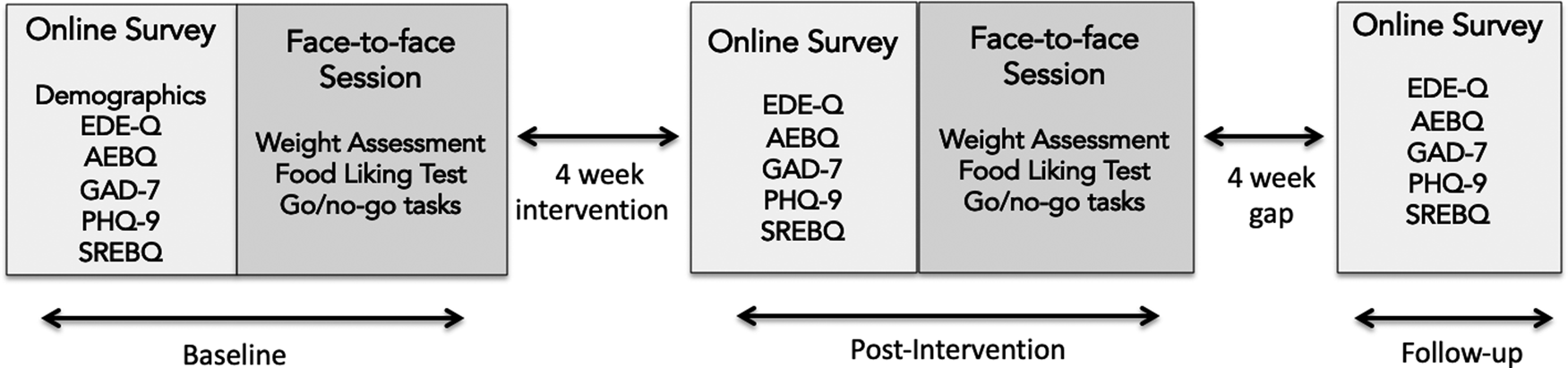
Between 28 and 32 days from the baseline session, participants completed the post-intervention questionnaires and re-entered the lab for the post-intervention assessment. Four weeks later, they completed the third battery of questionnaires. Figure 3 describes the measures collected at baseline, post-intervention and follow-up. All participants received £30 for taking part, as well as a copy of the self-help book ‘Getting Better Bite by Bite’ (Schmidt, Treasure, & Alexander, Reference Schmidt, Treasure and Alexander2015). At the end of the study, participants were asked to complete a feedback form and were invited to participate in an online focus group.
Timeline of the study's procedure. Participants completed online questionnaires at three-time points (baseline, post-intervention and follow-up). At baseline and post-intervention, they also attended a face-to-face session. EDE-Q: Eating Disorder Examination Questionnaire; AEBQ: Adult Eating Behaviour Questionnaire (AEBQ); SREBQ: Self-Regulation of Eating Behaviour Questionnaire (SREBQ); GAD-7: Generalised Anxiety Disorder; PHQ-9: Patient Health Questionnaire.

Statistical analyses
Descriptive and frequency statistics were used to describe demographic and clinical characteristics. Clinical outcomes were analysed following a per-protocol framework; only data from participants who completed the post-intervention questionnaire was analysed. Clinical outcomes were presented using means, standard deviations, effect sizes, and 95% confidence intervals. Within-group effect sizes were calculated comparing baseline scores with post-intervention and with follow-up scores, within each intervention group. Between-group effect sizes were calculated comparing change scores between the two groups at post-intervention and follow-up. Dependent and independent-sample t tests were performed and Cohen's d effect sizes were derived using means, standard deviations, sample sizes, and t-values based on the recommendations and syntax of Lakens (Reference Lakens2013). Following the benchmarks suggested by Cohen (Reference Cohen1988), effect sizes were interpreted as small (d = 0.2), moderate (d = 0.5), and large (d = 0.8). Confidence intervals (95%) were derived using syntaxes adopted from Smithson (Reference Smithson2001).
Results
Recruitment and completion of measures
The CONSORT diagram (Thabane et al., Reference Thabane, Hopewell, Lancaster, Bond, Coleman, Campbell and Eldridge2016) that describes participants' recruitment and completion of assessments is shown in Fig. 1. The pre-set recruitment target was met over an 11-month period (December 2017–November 2018), with recruitment of 97.5% of the targeted sample size. The pre-set retention rate of 80% at 4 weeks was almost met (79.5%). Of the 16 participants who did not complete the 4-week assessment, 13 had not continued with the intervention and three had carried on with the intervention but failed to complete the assessment. Eleven participants did not complete the follow-up questionnaires (please refer to Supplementary Materials 1 for more details).
Demographic and psychological characteristics
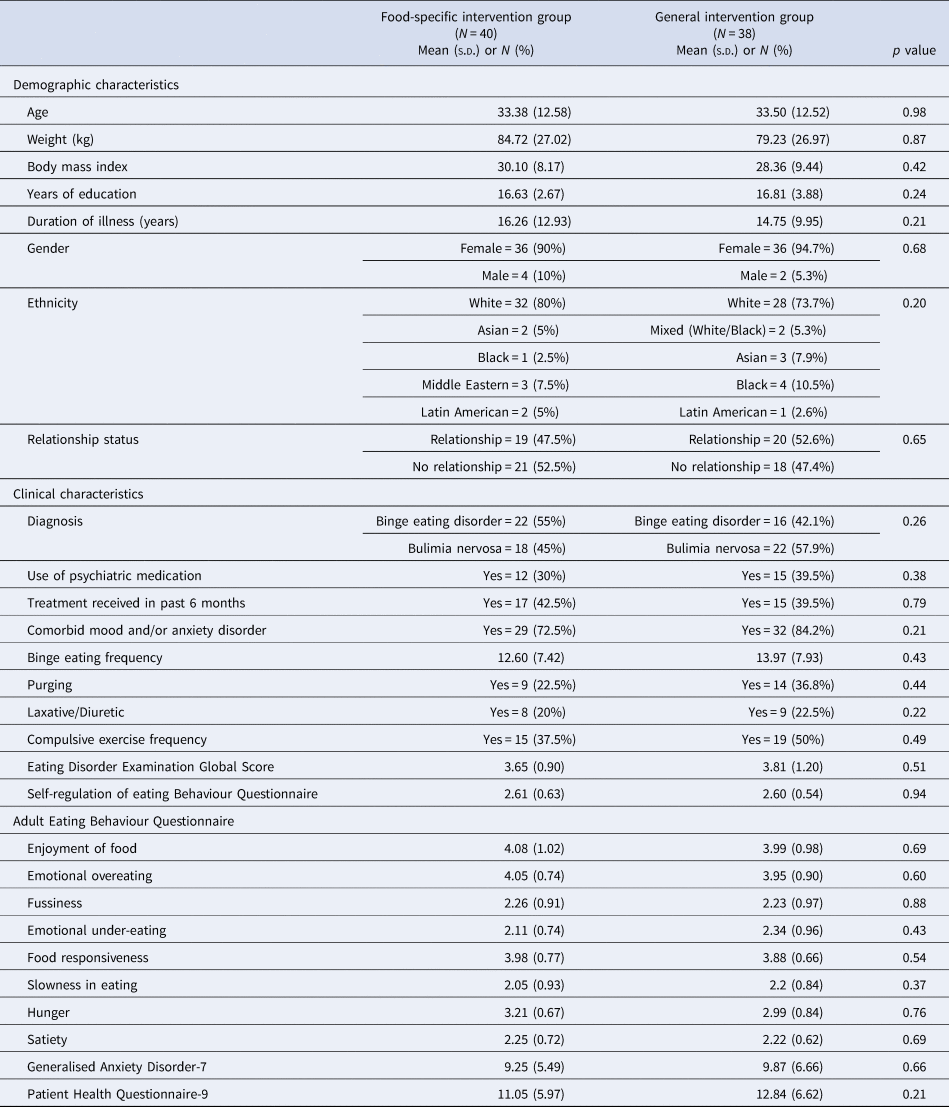
Demographic and clinical characteristics are described in Table 1. A large majority of participants had a severe and enduring form of the illness, with a mean duration of illness of 15.5 years, and 80% reportedly experiencing disordered eating symptoms for over 5 years. Moreover, 78% had comorbid anxiety and/or depressive disorder, 34% were currently taking psychiatric medication, and 41% had received psychiatric/psychological support within the previous 6 months. Participants' mean depression and anxiety severity scores indicated moderately severe depression (M = 11.92; S.D. = 6.32) and moderate anxiety (M = 9.55; S.D. = 6.05). The food-specific intervention (N = 40) and the general intervention (N = 38) groups were similar in their baseline demographic and clinical characteristics. See Table 1 for a summary.
Baseline demographic and clinical characteristics of the groups

Data presented as means, standard deviations (s.d.) and frequencies (N, %).
*p values for Age, Weight, BMI, Years of education, Duration of illness, EDEQ-Q Global Score, AEBQ, GAD-7 and PHQ-9 were obtained using independent samples t tests.
p values for Gender, Ethnicity, Diagnosis, Relationship status, Use of psychiatric medication, Psychological/Psychiatric treatment received in past 6 months, Comorbid mood and/or Anxiety disorder, Purging, Laxative/Diuretic use, and Compulsive exercise were obtained using Pearson's Chi-Square.
Adherence to interventions
At least four computerised training sessions were completed by 84.6% of participants, meeting the pre-set cut-off. Participants in the food-specific intervention group completed an average of 13.81 (s.d. = 6.95, range = 2–30) training sessions and those in the general intervention group completed an average of 11.97 (s.d. = 7.57, range = 0–27). Manipulation checks of reaction times to go stimuli and commission errors to no-go stimuli indicated, as expected, evidence of stimulus-response learning. There were significantly faster go reaction times to 100% go stimuli (e.g. low energy-dense food) v. filler images and significantly lower no-go commission errors to 100% no-go stimuli (e.g. high-energy dense food) v. filler images. Methods for calculating stimulus-response learning and results are presented in Supplementary Materials 2. With regards to if-then planning, 53.4% of participants completed it (65.6% in the food-specific group and 40% in the general group), which was below the pre-set adherence level.
Acceptability
Thirty-four participants completed the feedback form. Overall, there was a trend for participants in the food-specific intervention group to report a greater understanding of the rationale, motivation, perceived benefit, perceived worthwhileness, and the likelihood of recommending the intervention to others compared to the general intervention group.
During the focus groups, participants expressed the benefits of taking part, such as viewing the training as an enjoyable game and becoming more conscious of eating choices. They also brought unhelpful aspects to light, such as feeling dissatisfied with the delivery of implementation intentions via email (v. face-to-face). Participants reported no harm as a result of taking part in the study, however, some expressed practical concerns about the ease of accessing the computerised training on their pc/laptops. The methods, materials, and results for the quantitative and qualitative feedback from participants are described in Supplementary Materials 3.
Primary clinical outcomes
Between-group
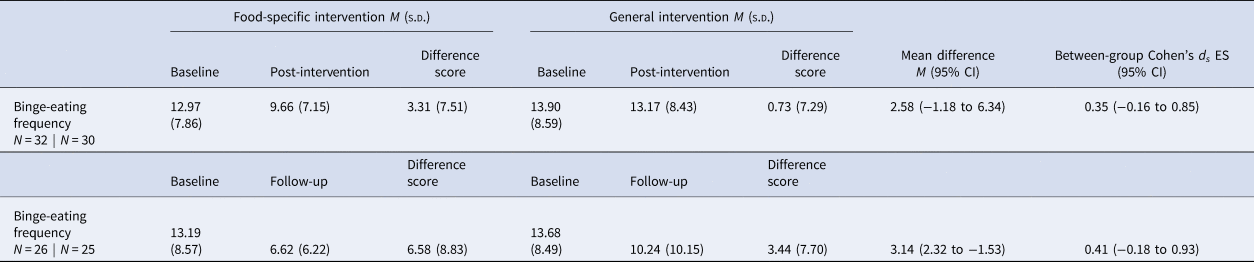
The means, standard deviations, and between-group effect sizes (with confidence intervals) of change scores in primary clinical outcomes are presented in Table 2 (baseline to post-intervention and baseline to follow-up). The reduction in binge frequency was higher in the food-specific intervention group, compared to the general intervention group at post-intervention (ds = 0.35, 95% CI −0.16 to 0.85) and at follow-up (ds = 0.41, 95% CI −0.18 to 0.93). There was a slightly greater reduction in eating disorder psychopathology in the food-specific intervention group compared to the general intervention group at post-intervention (ds = 0.22, 95% CI −0.29 to 0.72). At follow-up, the size of the difference between groups was greater in the food-specific intervention group (ds = 0.61, 95% CI 0.03–1.17).
Change scores in primary outcomes from baseline to post-intervention (four weeks) and from baseline to follow-up (eight weeks)
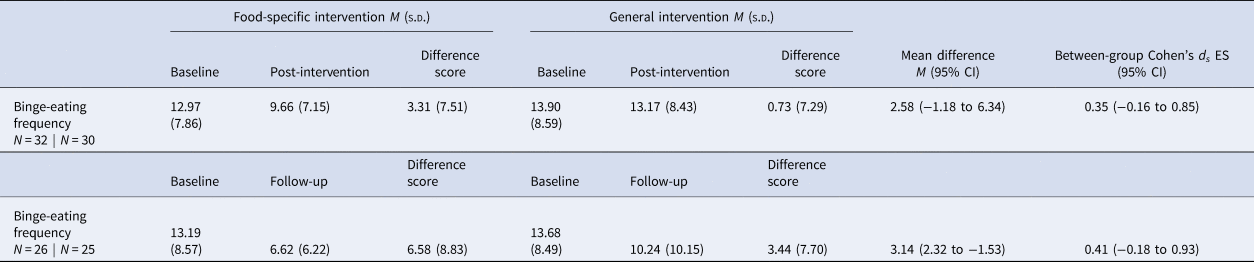
Data presented as means (M), standard deviations (s.d.) and effect sizes (ds ES) and 95% confidence intervals (CI).
Within-group
Participants allocated to the food-specific intervention had small-to-moderate sized reductions in binge-eating frequency post-intervention (dz = 0.44, 95% CI [0.07–0.80]), whereas those allocated to the general intervention had negligible reductions in binge eating frequency (dz = 0.10; 95% CI [−0.26 to 0.46]). The change in binge frequency by follow-up was moderate-to-large in the food-specific intervention group (dz = 0.75, 95% CI [0.31–1.15]) and small-to-moderate in the general intervention group: dz = 0.45, 95% CI [0.04–0.80]. Participants in both groups achieved large-sized reductions in eating disorder psychopathology at post-intervention (food-specific: dz = 1.04, 95% CI [0.60–1.46]; general: dz = 0.74, 95% CI [0.31–1.16], respectively). At follow-up, the food-specific intervention group showed large-sized reductions in eating disorder psychopathology (dz = 1.41, 95% CI [0.84–1.96]) while the general intervention group showed moderate reductions (dz = 0.55, 95% CI [0.11–0.97]).
Moderator analyses
Supplementary moderator analyses were performed to examine whether training effects on binge eating frequency and eating disorder psychopathology were moderated by a number of training tasks completed and engagement with if-then planning. These analyses were conducted to get a preliminary indication as to how many sessions might be needed to obtain a clinical effect, considering that there is no conclusive evidence in the literature. Findings indicated that the general intervention group had smaller reductions in binge eating frequency than the food-specific intervention group when participants completed fewer than eight training sessions. Methods and results are presented in Supplementary Materials 5.
Secondary clinical outcomes
Supplementary Materials 4 shows the data for the secondary clinical outcomes. The between-group differences in secondary clinical outcome changes were small at post-intervention and follow-up. From baseline to post-intervention, both intervention groups showed small-to-moderate reductions in high energy-dense food valuation and food approach and only small/negligible changes on the other outcomes. From baseline to follow-up, both intervention groups showed small-sized reductions in food approach, anxiety, and depression.
Discussion
This trial examined the feasibility of combining inhibitory control training (ICT) and implementation intentions (if-then planning) to target binge eating and eating disorder psychopathology in patients with bulimia nervosa or binge eating disorder. Food-specific ICT and if-then planning were compared against a non-food focused version of the same intervention (general ICT and if-then planning). The feasibility outcomes were promising, with recruitment and retention rates meeting the pre-set cut-offs. The adherence cut-off was met for ICT, but not for if-then planning. Binge eating frequency and eating disorder psychopathology decreased in both intervention groups at post-intervention (four weeks) and at follow-up (eight weeks). The reduction in binge eating frequency and eating disorder psychopathology was overall slightly greater in the food-specific than the general intervention group over time. The small difference between the food-specific and general intervention groups in reducing binge eating and eating disorder symptoms can be interpreted in several ways. First, both arms of the intervention had received active ingredients for behaviour change (e.g. online guidance combined with monitoring of behaviour). Another possibility is that general inhibitory control training and if-then training had produced some benefits. These factors, along with the small sample size that was only powered for feasibility, may have challenged our ability to detect between-group differences.
Small-to-moderate reductions in secondary outcomes including high energy-dense food valuation, food approach, anxiety, and depression were found post-intervention and/or at follow-up. The reduction in self-reported ‘food approach’ in the present trial mirrors previous research with pre-clinical samples, which indicates that ICT for appetite behaviour change is associated with reduced consumption of food compared to control conditions (Jones et al., Reference Jones, Di Lemma, Robinson, Christiansen, Nolan, Tudur-Smith and Field2016). The parallel reduction in the valuation of high energy-dense food following training is also in line with previous research conducted in pre-clinical populations (Chen et al., Reference Chen, Veling, De Vries, Bijvank, Janssen, Dijksterhuis and Holland2018; Chen, Veling, Dijksterhuis, & Holland, Reference Chen, Veling, Dijksterhuis and Holland2016; Houben & Giesen, Reference Houben and Giesen2018; Lawrence et al., Reference Lawrence, O'Sullivan, Parslow, Javaid, Adams, Chambers and Verbruggen2015; Veling, Aarts, & Stroebe, Reference Veling, Aarts and Stroebe2013). It may also be possible, that for some individuals, exposure to high-dense calorie foods (as opposed to neutral stimuli) trigger cravings that interfere with the inhibitory mechanisms of the training (Boswell & Kober, Reference Boswell and Kober2016), although we had no feedback to support this. Further research with a dismantling design is needed to explore the mechanisms involved.
In regards to acceptability, participants in the food-specific intervention group reported a slightly greater understanding of the rationale, motivation, perceived benefit, perceived worthwhileness, and the likelihood of recommending the intervention to others, compared to the general intervention group. There was little difference between groups on the general feedback provided during the focus groups.
Strengths and limitations
The present research has a number of limitations. First, it did not include a ‘no treatment’ comparison group. However, the use of an active control group which was matched to the experimental condition for all, except one variable (i.e. food-specific focus) can be argued to represent a more appropriate comparison group than a ‘no treatment’ group. Furthermore, it could be argued that all the participants received one session of food no-go training during the assessment and thus, may have all received a small dose of active intervention. Some studies have indeed shown that one session of training can have some effect, reducing food intake in the short-term (Jones et al., Reference Jones, Di Lemma, Robinson, Christiansen, Nolan, Tudur-Smith and Field2016). Another limitation of this study is that the combined design (ICT + if-then plans) does not assess the differential impact of ICT and if-then planning on clinical outcomes. Adherence rates and participants' feedback indicated that the if-then planning sessions were less acceptable than ICT. In addition, while all eating disorder psychopathology sub-scales (including dietary restraint) reduced from baseline to post-intervention within the present sample, it is important to monitor the potential impact of the training on overall food restriction.
In regards to limitations of measures, participants' height was self-reported. Moreover, with the exception of psychiatric medication, the baseline assessment did not include a question regarding current treatment. As such, we were unable to control for possible confounding effects of existing treatments. Finally, the quantitative analyses were conducted following a per-protocol framework. This enabled us to assess the ‘as received’ (as opposed to the ‘as assigned’) effect of treatment and measure the effectiveness of the experimental condition against the control condition when all participants adhered to the assigned condition (Ten Have et al., Reference Ten Have, Normand, Marcus, Hendricks Brown, Lavori and Duan2008).
Despite these limitations, this study has notable strengths in that (1) it established pre-set criteria against which to assess the feasibility of study methods (as described in the pre-registered protocol on ClinicalTrials.gov; ID: NCT03126526), (2) it tested the target intervention outside the laboratory, in individuals' own settings and (3) it included assessment of parameters, such as the moderator effect of the number of sessions completed on clinical outcomes and measurement of a range of secondary outcomes to establish the potential mechanisms and generalisability of the targeted intervention. New developments may help to improve the accessibility of the intervention. For example, Lawrence, Van Beurden, Javaid, and Mostazir (Reference Lawrence, Van Beurden, Javaid and Mostazir2018) have designed an app-based version of the training, which allows individuals to complete it on their smartphones and to personalise the food stimuli used. Similarly, the use of goal setting strategies (e.g. if-then planning), might be enhanced through an interactive and engaging interface, which could also record the momentary implementation of the plans. The use of gamification could further strengthen participants' engagement in the training over time (Fernandez-Aranda et al., Reference Fernandez-Aranda, Jimenez-Murcia, Santamaría, Giner-Bartolomé, Mestre-Bach, Granero and Konstantas2015; Johnson et al., Reference Johnson, Deterding, Kuhn, Staneva, Stoyanov and Hides2016; Kakoschke, Hawker, Castine, de Courten, & Verdejo-Garcia, Reference Kakoschke, Hawker, Castine, de Courten and Verdejo-Garcia2018).
Conclusion
The present trial provides preliminary evidence that combined ICT and implementation intentions may be a feasible and acceptable method of augmenting treatment for people which chronic forms of bulimia nervosa and binge eating disorder by producing clinically relevant changes in binge-eating frequency and eating disorder psychopathology. Further research would be needed to test the efficacy of the intervention and examine and optimise the specific mechanisms of change. Based on the feasibility testing that we conducted, a randomised controlled trial to test the efficacy of food-specific ICT combined with a refined version of implementation intentions (delivered for example over the phone to increase patient's engagement) to enhance treatment as usual and compared against treatment as usual only, would be warranted.
Supplementary material
The supplementary material for this article can be found at https://doi.org/10.1017/S0033291720002494.
Acknowledgements
Honorary researchers at the Section of Eating Disorders, King's College London made this research possible. In particular, we thank Johanna Keeler for running focus groups for qualitative data collection and contributing to thematic analyses, and Kamelia Buyuklieva, Gaia Albano, Monica Leslie, Daniel Willmott, Elisa Corsi, Sarah Rodan, and Nargis Rahmanfard for being mentors to participants during implementation intentions. A special thank you to Beat, eating disorders charity for their support in advertising the research. Rayane Chami received funding from the Psychiatry Research Trust (PRT). Dr Valentina Cardi, Dr John Hodsoll, and Professor Janet Treasure are funded by the National Institute for Health Research (NIHR) Biomedical Research Centre at South London and Maudsley NHS Foundation Trust and King's College London. This paper presents independent research funded in part by the National Institute for Health Research (NIHR) under its Research for Patient Benefit (RfPB) Programme (Grant Reference Number: PB-PG-1216-20044). The views expressed in this article are those of the author(s) and not necessarily those of King's College London, the NHS, the NIHR, the PRT, or the Department of Health and Social Care.
Conflict of interest
The authors declare that they have no conflicts of interest.
Ethical standards
The authors assert that all procedures contributing to this work comply with the ethical standards of the relevant national and institutional committees on human experimentation and with the Helsinki Declaration of 1975, as revised in 2008. The London Westminster Research Ethics Committee and the Health Research Authority approved all the procedures involved in this study (IRAS Project ID: 209609). The present study adheres to open science principles. It was pre-registered on ClinicalTrials.gov (ID: NCT03126526). The data were analysed in line with pre-registered aims, and both null and significant findings are reported.