Antimicrobial resistance is an evolving problem worldwide. Judicious use of antimicrobials is a major theme of the antimicrobial resistance action plan implemented by the Japanese government.1 Whereas antimicrobial stewardship and infection control practices have been implemented in individual healthcare institutionsReference Horikoshi, Suwa and Higuchi2 and across adult healthcare institutions,Reference Pluss-Suard, Pannatier, Kronenberg, Muhlemann and Zanetti3 “benchmarks,” or standardized comparisons of health information for monitoring antimicrobial use across various pediatric healthcare institutions, have yet to be finalized.Reference Newland, Gerber and Kronman4-Reference Araujo da Silva, Albernaz de Almeida Dias and Marques8 The Japanese Association of Children’s Hospitals and Related Institutions (JACHRI) is an organization established in 1968 with the purpose of promoting pediatric health, research, and education to international standards. JACHRI consists of freestanding children’s hospitals, freestanding care facilities for children with disabilities, and hospital-based pediatrics departments with ~100 pediatric beds or more. In 2012, JACHRI formed a network of infection control practitioners consisting of physicians, nurses, pharmacists, laboratory technicians, and administrators representing each institution called the Pediatric Infection Control Network (PICoNet). PICoNet was established with the purpose of sharing infection control practices and obtaining new evidence by means of the collaboration among infection control practitioners in Japan. We aimed to develop simple benchmarks that would facilitate communication among the different disciplines within an institution and that could be used to compare antimicrobial use across pediatric healthcare institutions in Japan. Carbapenem use and susceptibility of Pseudomonas aeruginosa were chosen as specific targets based on observations from previous studies in adults.Reference Pluss-Suard, Pannatier, Kronenberg, Muhlemann and Zanetti3 We hypothesized that the amount of carbapenem used would correlate well with the susceptibility of P. aeruginosa and could serve as a quality indicator for antimicrobial stewardship in each institution.
Methods
The study was performed in 2 stages. An initial pilot study was performed in the first year to determine the parameters to be used to measure carbapenem use and susceptibility. In the subsequent years, data were collected and fed back to each institution annually.
Study population
Data were collected on patients who were admitted between January 1, 2012, and December 31, 2018, to institutions that had become members of the PICoNet by 2016. These patients were generally aged 0–15 years old in accordance with the pediatric age cutoff in Japan, but data from carryover adolescents were occasionally included. Data from patients who were admitted to psychiatric units and facilities for disabled children under the Child Welfare Act were excluded unless the patient had acute illness requiring medical care. Hospital demographics were based on data reported to local governments under the medical service law. We extracted all inpatient use of carbapenems from hospital records at participating hospitals. Microbiology data were extracted from the databases of each participating hospital. These data were aggregated and analyzed by investigators at either the National Center for Child Health and Development or the Tokyo Metropolitan Children’s Medical Center, in alternating years. The study was approved by the Ethics Committee at the National Center for Child Health and Development (no. 1424).
Antimicrobial use data
Carbapenem antibiotics included imipenem-cilastatin, meropenem, panipenem-betamipron, and doripenem. The days of therapy (DOT) parameter was counted as the total number of days a patient received a particular antibiotic regardless of the dosage amount and number of doses received each day.Reference Polk, Fox, Mahoney, Letcavage and MacDougall9 The total number of days each antibiotic was administered and the collective number of days of hospitalization were surveyed to obtain DOT per 1,000 patient days. Antibiotic use was also calculated by a modified daily defined dose (modified DDD) method.Reference Polk, Fox, Mahoney, Letcavage and MacDougall9 This metric was calculated as a function of total amount of antibiotics administered to a patient per body weight, divided by the daily standard dose of 60 mg/kg for all carbapenems. Patient days were calculated from the hospital’s average number of patients per day multiplied by the number of days each month.
Microbiology data
Microbiology data consisted of susceptibility of P. aeruginosa to meropenem and imipenem-cilastatin using the CLSI guidelines. The participating clinical laboratories had used the M100-S21 (2011) break points between 2012 and 2016 and the M100-S26 (2016) break points in 2017 and 2018. For the purposes of this study, however, these researchers retrospectively applied the M100-S26 (2016) break points to the microbiologic data from 2012–2016. The minimum inhibitory concentration (MIC) levels for imipenem-cilastatin and meropenem were ≤ 1 μg/mL, 2 μg/mL, 4 μg/mL, and ≥ 8 μg/mL. The numbers of isolates that fell into each MIC level were reported from each institution. Data were omitted if MIC values were not available. The MIC break point for meropenem against P. aeruginosa was set at 2 μg/mL according to the CLSI M100-S26 (2016) document. Testing susceptibility to panipenem-betamipron or doripenem is generally not available, and clinical break points have not yet been established. Susceptibility data of all P. aeruginosa isolates obtained from a particular patient each year were recorded separately to exclude duplicate data. The “initial isolate” was defined as the first isolate of the year. The “last isolate” was defined as the last isolate of the year when there was >1 isolate. The “final isolate” included the last isolate of the year or the first-and-only isolate of the year. Instructions were shared among the laboratory technicians across institutions in writing and through inquiries.
Pilot study
The initial survey was performed using data from January through December 2012 to develop benchmarks for monitoring antimicrobial use and resistance. The survey targeted all patients hospitalized in pediatric units and wards. Comparisons between DOT and modified DDD were made. The susceptibility data of P. aeruginosa to meropenem and imipenem-cilastatin from each patient were collected. The average for each institution was calculated using the initial isolate or the final isolate.
Prospective survey
Antibiotic use data were collected for the 4 carbapenem antibiotics using DOT. The susceptibility rates of P. aeruginosa isolates were obtained between January 1 and December 31 each year. Data from the final isolate were used. Data were collected annually, and the results were anonymized and returned to each institution’s administration and infection control teams. The results were also presented at an annual meeting of administrators consisting of hospital directors and head nurses from each participating institution. Data sharing and adjustments were performed at a separate annual meeting of infection control practitioners that are members of the PICoNet. A questionnaire was also collected regarding the presence or absence of systems pertaining to antimicrobial stewardship. Specifically, prospective monitoring of carbapenem use was performed weekly or monthly by members of the infection control team, which may or may not have included direct feedback. Preauthorization of carbapenem prescriptions was performed by the pharmacist, which required the approval of the members of the infection control team but not necessarily a pediatric infectious diseases specialist. In programs that had a consultation service by a pediatric infectious diseases specialist, decisions concerning the continued use of carbapenems were taken based on medical history, examination, and assessment of patients by the specialist.
Statistical analysis
Statistical analysis was performed using SPSS Statistics for Windows version 22.0 software (IBM, Armonk, NY). The associations among parameters were estimated using linear regression. Under the assumption that the definition of modified DDD is equal to the average prescribed dose, modified DDD patient days should approach a 1:1 correlation with DOT patient days and, therefore, a linear correlation with an r of 1.0. The effect of interventions on the use of antibiotics (continuous variable) were analyzed using the Mann-Whitney U test. The Jonckheere-Terpstra trend test was applied to evaluate the changes in antibiotic use and susceptibility over time.
Results
Pilot study data
Data were collected from 20 pediatric healthcare institutions that participated in 2011. Data for DOT per 1,000 patient days were was available for 19 institutions, and modified data for DDD per 1,000 patient days were available for 16 institutions (Supplementary Fig. 1 online). Data were available for susceptibility of the initial isolate (N = 1878) to imipenem-cilastatin and meropenem in 20 and 17 institutions, respectively. Data on the susceptibility of the last isolate to imipenem-cilastatin and meropenem was available from 416 total isolates in 19 and 17 institutions, respectively.
Comparisons between DOT and DDD, susceptibility of the initial or final isolate, susceptibility to imipenem-cilastatin or meropenem were performed. The correlation between each parameter was also examined. The correlation coefficient (r) for the susceptibility to imipenem-cilastatin and meropenem was 0.50, with clear discrepancies in data from a few facilities (Supplementary Fig. 1A). DOT and modified DDD correlated well (r = 0.92, Supplementary Fig. 1B). The associations between carbapenem use and susceptibility are presented in Supplementary Fig. 1C–F (online). Although the correlation between the modified DDD and the susceptibility of the final isolate to meropenem was highest (r = 0.62, P = 0.014, Supplementary Fig. 1F), DOT also demonstrated a fair correlation with the susceptibility of the final isolate to meropenem (r = 0.49, P = 0.07, Supplementary Fig. 1E). This difference in the r value (r = 0.46) was not statistically significant (P = 0.65). Correlation of the modified DDD or DOT with imipenem-cilastatin was weakly positive (r = 0.15–0.19; not shown in figures). Based on these findings and the feasibility of obtaining data, a further prospective analysis was performed primarily using DOT for all 4 carbapenems and using susceptibility to meropenem and imipenem-cilastatin data of the final P. aeruginosa isolate from each individual patient.
Prospective survey
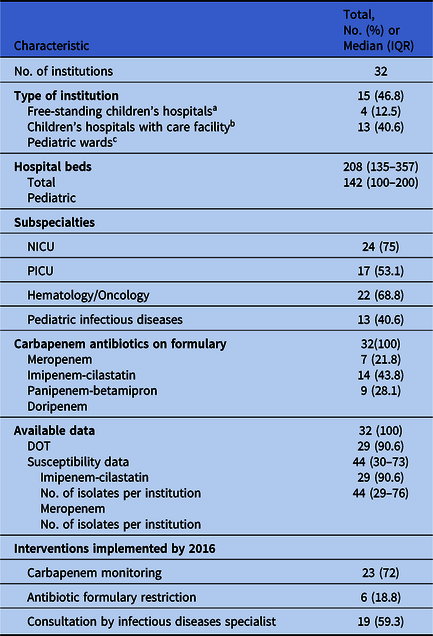
In total, 32 pediatric healthcare institutions participated in the study. The characteristics of the institutions and the data provided are shown in Table 1 and Supplementary Fig. 2 (online). Meropenem was used in all institutions, whereas the use of other carbapenems varied. Susceptibility data regarding meropenem and imipenem-cilastatin were available from 29 institutions.
Characteristics of Participating Pediatric Healthcare Institutions

Note. IQR, interquartile range; NICU, neonatal intensive care unit; PICU, pediatric intensive care unit; DOT, days of therapy.
a Free-standing children’s hospitals consists of pediatric patients only.
b Children’s hospitals with care facility consists of pediatric patients and carry-over patients who require chronic care.
c Pediatric wards consist of pediatric patients only but are part of a general hospital.
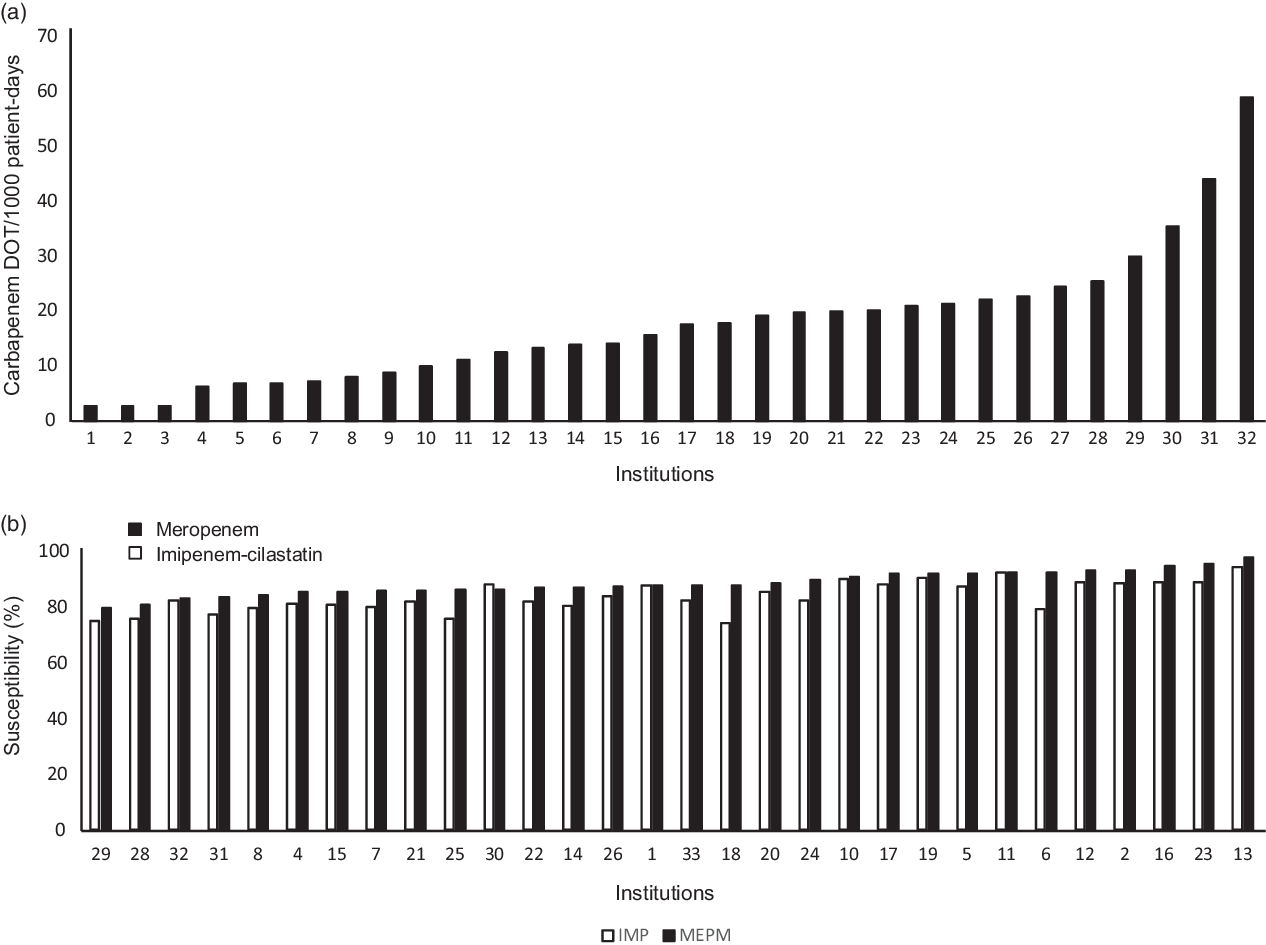
Among the carbapenems, meropenem was the most commonly used antibiotic in all but 1 institution. Imipenem-cilastatin was used at 1 time in 15 institutions but only in 3 institutions by 2018. The total DOT per 1,000 patient days averaged over the study period ranged from 2.7 to 59.0 with a median of 16.6 (Fig. 1A). The susceptibility rate to imipenem-cilastatin ranged from 74.1% to 93.1% (median, 81.2%), and the susceptibility rate to meropenem ranged from 78.6% to 96.6% (median, 86.6%) (Fig. 1B). The susceptibility to imipenem-cilastatin and meropenem correlated well, but discrepancies were observed (Pearson r = 0.82).
Distribution of annual average carbapenem use and susceptibility of Pseudomonas aeruginosa among pediatric healthcare institutions over the study period. (A) The combined DOT of meropenem, imipenem-cilastatin, panipenem-betamipron, and doripenem per 1,000 patient days. (B) The average rate of susceptibility of P. aeruginosa to meropenem and imipenem-cilastatin, ordered from low to high. Institution numbers correspond between panels A and B.

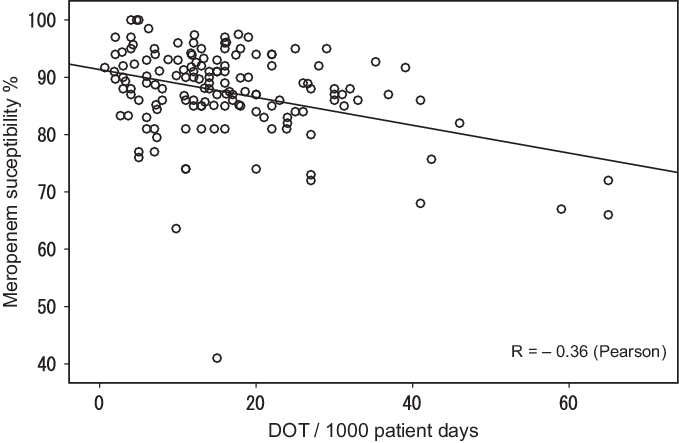
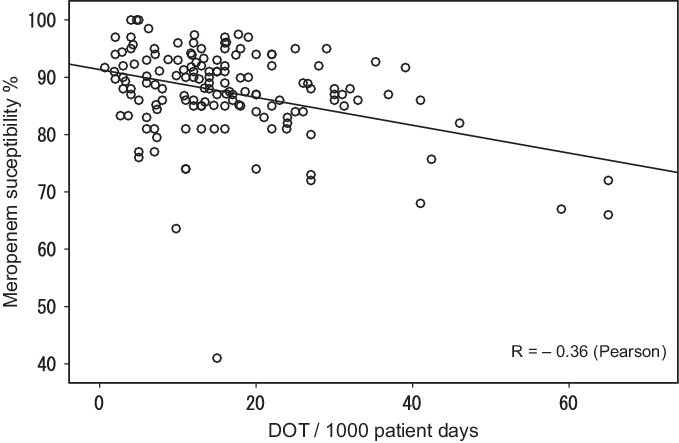
The combined carbapenem DOT was plotted against the susceptibility of P. aeruginosa to meropenem (Fig. 2). We detected an inverse correlation reaching statistical significance (data points = 148; Pearson r = – 0.36; P < 0.01).
Correlation of carbapenem use and meropenem susceptibility. The susceptibility of P. aeruginosa to meropenem was plotted against the total carbapenem days of therapy per 1,000 patient days among all pediatric healthcare institutions. We detected a statistically significant inverse relationship.
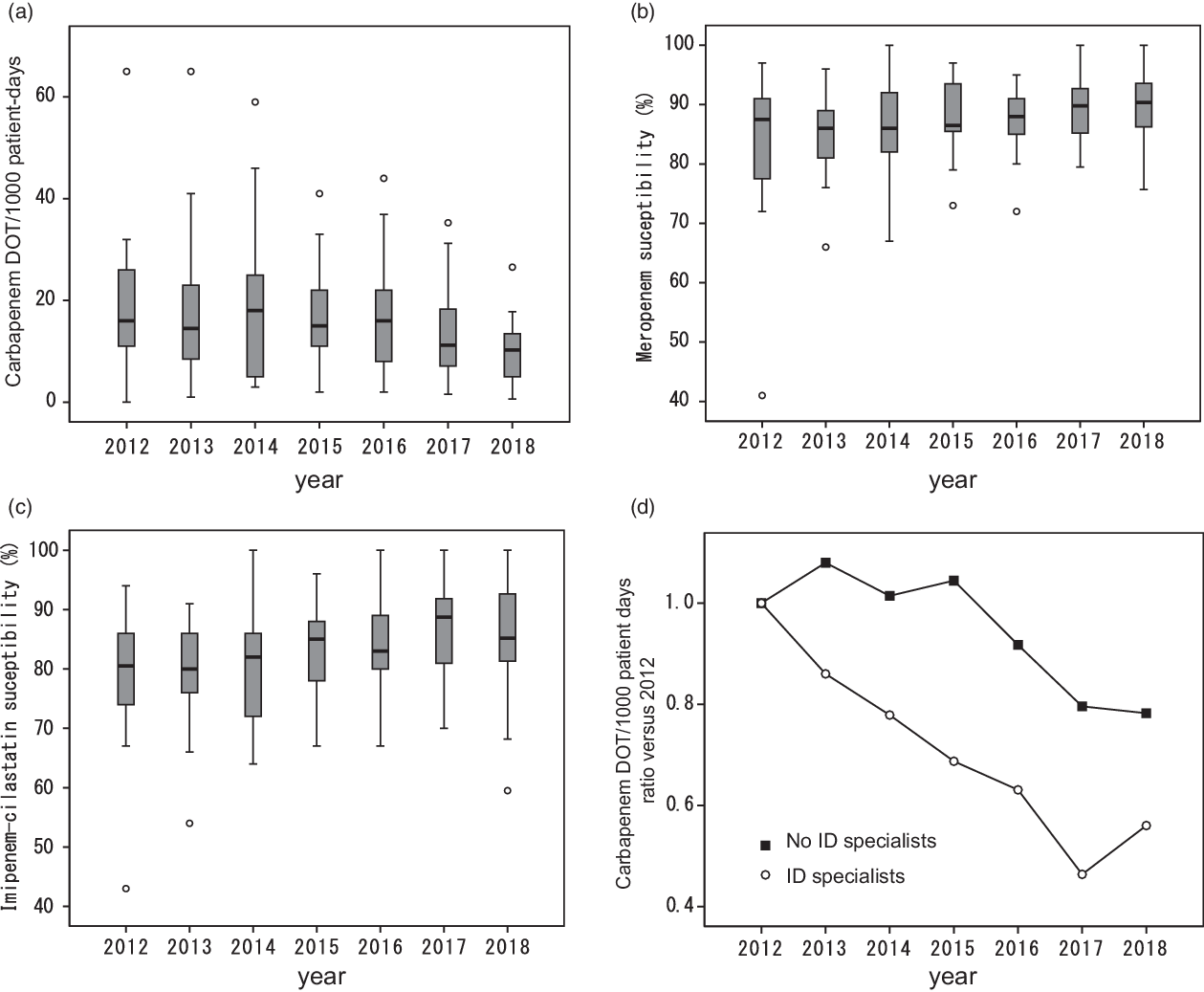
Overall, the DOT per 1,000 patient days of carbapenem decreased significantly from a median of 16.0 in 2012 to 11.7 in 2018 (P < .01). We also observed an improvement in susceptibility to meropenem from a median of 87% in 2012 to 89.7% in 2018 (P = .01) and to imipenem-cilastatin from a median of 79% in 2012 to 85% in 2018 (P < .01) over the 7-year period (Fig. 3A–C).
Annual changes in carbapenem use and susceptibility, derived from all participating pediatric healthcare institutions. (A) Box whisker plot of carbapenem use. (B) Susceptibility to meropenem. (C) imipenem-cilastatin. (D) Data derived from 19 institutions that provided full data for the entire period and comparison between institutions with and without pediatric infectious diseases specialists.
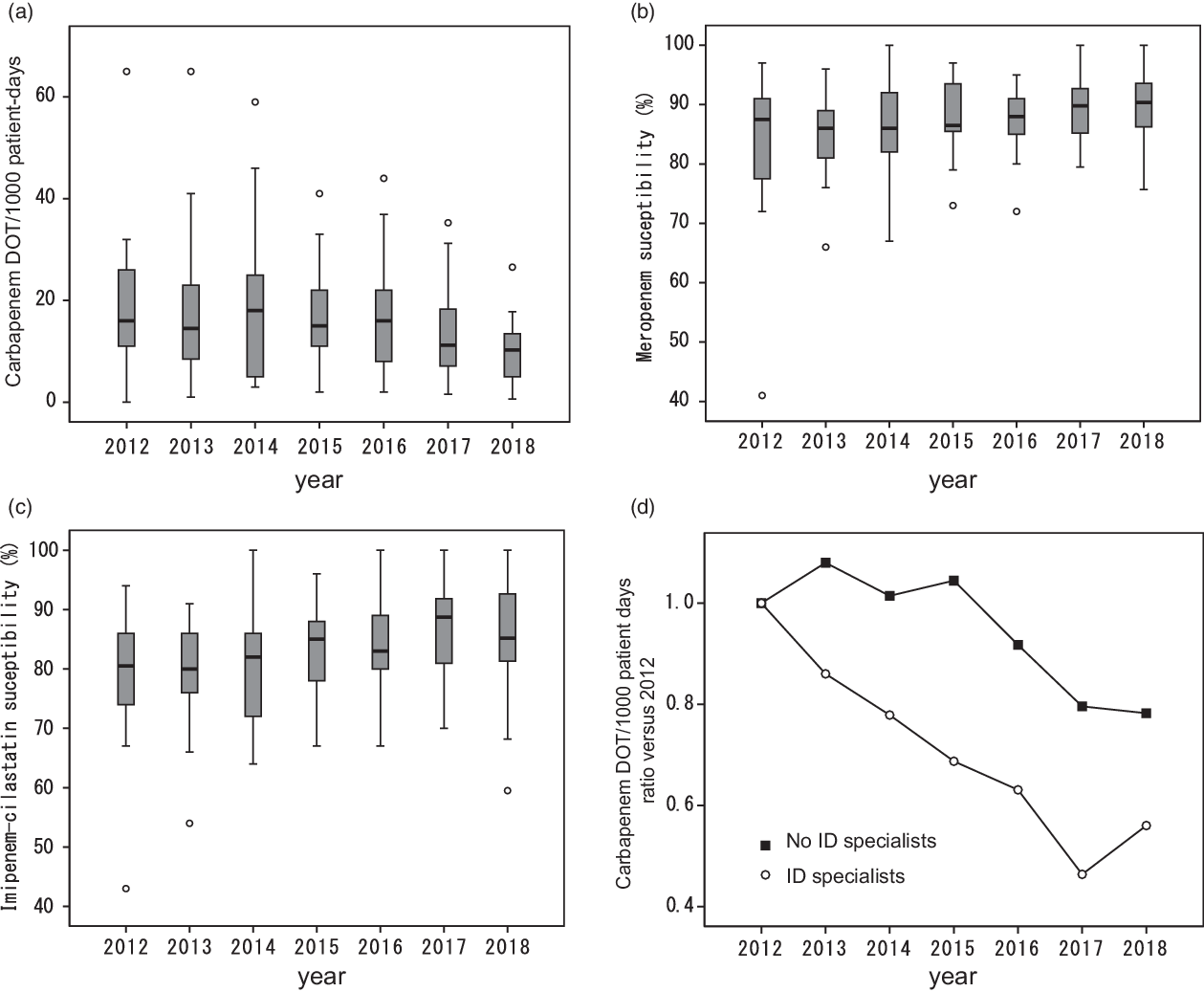
Effects of interventions that potentially contribute to reduction in antimicrobial use were investigated by examining the ratio of DOT per 1,000 patient days in 2018 against those from 2012. For the 18 institutions with available data, implementation of carbapenem monitoring (P = .78), carbapenem restriction (P = .25), and availability of infectious diseases consultation (P = .08) by 2016 did not reach statistical significance. However, a longitudinal analysis showed that among the institutions that participated in the project from 2012, the DOT decreased to a greater degree in institutions in which antimicrobial stewardship programs were led by pediatric infectious disease physicians (Fig. 3D).
Discussion
The antimicrobial use and resistance survey across pediatric healthcare institutions in Japan demonstrated a wide variability in carbapenem usage and susceptibility of P. aeruginosa. This variability was used to demonstrate an inverse correlation between carbapenem use and susceptibility. Such associations have been documented by monitoring the progress of antimicrobial stewardship programs at single institutions.Reference Horikoshi, Suwa and Higuchi2 We have demonstrated that such metrics can serve as convenient benchmarks by which to compare widely dispersed pediatric healthcare institutions in Japan. Although point-prevalence surveys and standardized antimicrobial administration ratios provide important metrics for comparisons of antimicrobial use, a process measure that correlates with a clinical outcome may provide a greater impetus for promoting antimicrobial stewardship.Reference Smith, Gerber and Hersh6
Interestingly, our prospective efforts led to a gradual decrease in antimicrobial use and microbial resistance in institutions, particularly in those that implemented antimicrobial stewardship led by pediatric infectious disease specialists. In this interinstitutional and multidisciplinary project, we aimed not only at generating consensus and discussion among institutions but also to stimulate communication across disciplines within each institution. In general, data were generated by the pharmacists and microbiology technicians and were facilitated by infectious disease practitioners that included nurses and physicians. Our results suggest that the knowledge and leadership of pediatric infectious disease specialists was a key component in the promotion of antimicrobial stewardship. Few studies have highlighted the value of pediatric infectious diseases specialists, which may range from outbreak recognition to improving mortality.Reference Coffin and Lee10-Reference Furuichi, Furuichi, Horikoshi and Miyairi12 In established situations, such assets are intangible and may be underestimated. The relatively clear differences shown in our study, most likely reflect the emergence and recognition of pediatric infectious diseases as a clinical subspecialty in the past decade in Japan.
The reduction of the antibiotic pressure by cutting carbapenem use likely contributed to the decrease in resistance. Carbapenem resistance in P. aeruginosa is largely mediated by the acquisition of plasmids carrying the carbapenemase-encoding genes or by porin mutations that may be induced by antibiotic exposure. The occurrence rate of carbapenemase-producing organisms is still relatively low in Japan, particularly for P. aeruginosa,Reference Mano, Saga and Ishii13 and carbapenem resistance is likely attributed to alternative mechanisms more subject to antibiotic pressure.Reference D’Agata, Bennett, Dolin and Blaser14 Other factors that contribute to patient acquisition of resistant organisms may include breaches in infection control practices.
The use of DOT was similar to the modified DDD (direct antibiotic use measurements adjusted for weight) in monitoring antimicrobial use in children over a wide weight range. There is a wide distribution of weight in pediatric patients, which does not allow monitoring using the total amount of antibiotics consumed, as in adults.Reference Gravatt and Pakyz15,16 In general, DOT per 1,000 patient days is considered an acceptable marker.Reference Pakyz, Gurgle, Ibrahim, Oinonen and Polk17 We were able to show that DOT and modified DDD correlated relatively well and that DOT could be used as a more readily available functional marker to monitor antibiotic use in pediatric populations.
This study has several limitations. The study was a focused analysis of a single antibiotic class and a single organism. We restricted our analysis to 1 combination to minimize the efforts required to maintain this project, given the limited resources to support antimicrobial stewardship in Japan, particularly in the field of pediatrics. Furthermore, the study itself was limited by its observational nature, combined measurements of different carbapenems, and lack of specific data for each institution. The apparent successful use of the parameters used in our study may not be generalizable to other countries with different resistance patterns for P. aeruginosa and therefore requires validation.
In conclusion, antimicrobial use and resistance specifically targeting carbapenems and P. aeruginosa provided adequate benchmarks that could be utilized to promote antimicrobial stewardship across pediatric healthcare institutions.
Acknowledgments
We thank the following healthcare institutions and staff for participation and data submission: Hokkaido Medical Center for Child Health and Rehabilitation (Hideomi Asanuma, Syunichi Konno, Rena Kawaguchi, Akiko Oikawa, Koji Tokuyasu); Miyagi Children’s Hospital (Emi Yamamoto, Kei Ishiga, Takahiro Kawaji, Natsumi Suda); Ibaraki Children’s Hospital; Dokkyo Medical University Hospital, Tochigi Children’s Medical Center (Keitaro Fukushima); Jichi Children’s Medical Center Tochigi; Gunma Children’s Medical Center; Saitama Children’s Medical Center (Koki Mori, Tomoya Abe, Mihoko Furuichi, Tadamasa Takano); Tokyo Women’s Medical University Yachiyo Medical Center; Chiba Children’s Hospital; Tokyo Metropolitan Children’s Medical Center; National Center for Child Health and Development; The University of Tokyo Hospital; Keio Children’s Hospital and Perinatal Center; Kanagawa Children’s Medical Center (Yoshiaki Shikama); Nagano Children’s Hospital (Akihiro Tada); Shizuoka Children’s Hospital; Children’s Medical Center, Japanese Red Cross Nagoya First Hospital; Aichi Children’s Health and Medical Center (Sachiko Iguchi); Central Hospital, Aichi Prefectural Colony; Mie National Hospital; Medical Center for Children, Shiga; Children’s Research Hospital, Kyoto Prefectural University of Medicine; Osaka City General Hospital (Akiko Fukuda, Yumi Fukushima, Yasunori Fujikawa, Naomi Yamaguchi); Takatsuki General Hospital (Fumio Kawasaki, Keisuke Yao); Osaka Women’s and Children’s Hospital (Futoshi Fujiwara, Kanako Iino, Makie Kinoshita, Masatoshi Nozaki); Hyogo Prefectural Kobe Children’s Hospital; Okayama National Hospital; Hiroshima Prefectural Hospital; Shikoku Medical Center for Children and Adults; Fukuoka Children’s Hospital (Tomoko Abe, Keigo Yurube); St. Mary’s Hospital; Nanbu Child Medical Center.
Supplementary material
To view supplementary material for this article, please visit https://doi.org/10.1017/ice.2020.234
Financial support
This study was funded by a grant from the Ministry of Health Labour and Welfare.
Conflicts of interest
All authors report no conflicts of interest relevant to this article.