Introduction
In reaction to philosophical and epistemological approaches to science underlining its universality, many studies over the last decades have demonstrated that science can be grasped as an inescapably situated activity that is entangled with and cannot be separated from the historical, political, social, and economic contexts in which it is performed. A history of science as situated practice and performance shows how science and society have been coproduced over successive regimes of knowledge production (Pestre Reference Pestre2003; Shinn and Marcovich Reference Shinn and Marcovich2012). The idea that there are not only histories but also geographies of science as practice (Livingstone Reference Livingstone2003) is more recent. But the reaction to the contention that science is a “view from nowhere” (Nagel Reference Nagel1986), often termed the “spatial turn” or “geographical turn” (Shapin Reference Shapin1998; Livingstone Reference Livingstone2005; Naylor Reference Naylor2005, 3; Finnegan Reference Finnegan2008), has been particularly influential.Footnote 1
Numerous scholars in Science, Technology, and Society (STS), history of science, and geographical history have analyzed and highlighted the role played by singular places in the production of scientific knowledge (Livingstone Reference Livingstone2003). They have explored all kinds of built settings, starting with the place for science par excellence – the laboratory (see the seminal laboratory study by Latour and Woolgar Reference Latour and Woolgar1979) – and they have extended to zoological (Burckhardt Reference Burkhardt1999) and botanical gardens, field stations (Vetter Reference Vetter2012), museums, and even more unexpected places such as pubs (Secord Reference Secord1994). Once marginalized but fully legitimized by the historian of science Robert Kohler, the field as a place for science has captured much attention. Scholars have shown how field scientists have succeeded in turning an alleged drawback – the infinite variety of nature – into an asset (Kohler Reference Kohler2002a). For instance, Christopher Henke has investigated how farm advisors seek to “make a place for science” in the field by designing field trials that turn a given field into an experimental plot from which general lessons can be learned while preserving and reckoning with its specific features and making it look like “a regular field” (Henke Reference Henke2000, 484). All these studies have cogently shown that science is local, situated, embedded (Shapin Reference Shapin1998, 6; Haraway Reference Haraway1988) just as any other form of knowledge. Rather than a view from nowhere, it is in short “a view from somewhere” (Haraway Reference Haraway1988, 590). The work of scientists – and others in quest for objectivity – thus hinges to a large extent on an art of choosing and dealing with places that can be presented as “truth-spots” (Gieryn Reference Gieryn2002 and Reference Gieryn2006).
Analyzing how scientists become engaged in field-sites and integrate these into an evolving work program is crucial to understanding the making of science. As suggested before, the spatial dimension of this has now been well documented. Although much research on how place contributes to the making of science has been carried out by historians of science and historical geographers, how temporal issues contribute to what makes a site “the right place for the job” (Clarke and Fujimura Reference Clarke and Fujimura1992) has not been treated as thoroughly. While the importance of temporal issues can often be found in the literature, interest in temporal issues remains somewhat scattered or focused on a particular aspect. Yet, temporal issues appear to be crucial to the relationship between life scientists and their field-sites and to the making of science in the field. Indeed, the rise of project-based funding motivates life scientists to respect often tight deadlines, while on the other hand they are also strongly encouraged to predict how living beings and ecosystems might respond to long-term global changes. So, more than ever, they must seek to reconcile two apparently conflicting requirements: being fast knowledge producers, and attending to the specific temporalities of the living beings and ecosystems they are interested in, in the context of climate and other global changes. Beyond this tension between long-term bio-physical processes and short-term research commitments, we aim to elaborate on the notion of practices of time to describe the ways in which life scientists cope with multiple temporal aspects that influence how they become and remain engaged in a field-site. We define practices of time as those practices that enable field scientists to combine and reconcile the broad range of temporal issues they encounter in the field. With this notion, we seek to bring coherence and enhanced visibility to the extensive but rather scattered or limited treatments of temporal practices in field sciences that already exist.
Kohler (Reference Kohler2002a) has defined field practices as practices of place; we would like to demonstrate that field practices are practices of place and time and that it is important to pay more attention to the temporal aspects to gain a full understanding of how scientists integrate potential field-sites into their work program and career. Thus, we will focus on temporal aspects as they are experienced and combined by scientists at work in the field. To achieve this, we will draw on field surveys we conducted in two research sites of the French Alps. Those research sites happen to be geographically close but are used by the life scientists in very different ways. We will show that this is partly due to how the field scientists address and bring together different temporal aspects, including not only biological temporalities and temporalities related to research imperatives, but also site-related temporalities (practicability of the site, temporal scope of the data) as well as personal temporal aspects (quality of the time spent in the field, stage of the career when the scientists become involved in a site).
We will start with an overview of the literature, highlighting the emphasis that has been put on spatial aspects in the scientists’ relationships to their field-sites and the more feeble or restricted attention that has been lent to temporal issues. We will then introduce our two case studies – the long-existing and intensively used Lautaret alpine research station and the more recent and much less intensively investigated Lauvitel Strict Nature Reserve. We will also introduce our method and material. Our case studies show the following results: first, the life scientists had different ways of using field-sites and integrating them into their work program; second, the life scientists developed a range of practices to combine different time-related issues, beyond the need to reconcile slow biophysical processes and fast publication, or to construct databases for the future. We show that the degree of integration of the field-sites into the scientists’ work program depended notably on whether this integration occurred at the right time in their career and whether it meant a good time for the scientists.
We conclude that documenting the practices of time that enable the life scientists to combine the different types of temporal issues at stake in the field is important to understand how they actually select and use their field-sites to design their research programs and finally to make science.
Literature on Field Practices: The Shadow of Place on Time
Recent literature has shown that an incredibly wide range of places has contributed to the making of science. Therefore, many characteristics and not just one can make a place good for science, for instance its typicality or its uniqueness (Gieryn Reference Gieryn2002 and Reference Gieryn2006).
Another interesting result for us concerns the existence of a continuum rather than a clear-cut divide between the laboratory and the field (Kohler Reference Kohler2002a; Henke Reference Henke2000; Vetter Reference Vetter2012). Lab practices are transported into the field to make it more lab-like. But, conversely, field practices are at times transported into the lab to make it more field-like. Rather than a linear tendency to laboratorize the world (Latour Reference Latour, Knorr-Cetina and Mulkay1983), there seem to be cycles of laboratorization and renaturalization (Kohler Reference Kohler2002c).
Unlike place, time issues have remained somewhat peripheral and have not received the full attention they deserve. Social scientists and anthropologists have tended to pay less attention to what field scientists have to say about time than about space. For instance, Kohler (Reference Kohler2002b, 200) quotes British marine biologist Carl Pantin's proposition according to which “awaiting the appropriate time and the right place is no less active than fixing conditions in a lab.” But he only retains the part of the claim related to the “right place,” and ignores the claim about the “appropriate time.” Another telling example comes from Ophir and Shapin (Reference Ophir and Shapin1991). Drawing on the foucauldian notion of heterotopiaFootnote 2 to analyze scientific sites, these authors recall the different principles of heterotopias identified by Foucault but, interestingly, they omit to mention one of these principles: heterotopias are also heterochronies: “Heterotopias are most often linked to slices in time [découpages du temps] – which is to say that they open onto what might be termed, for the sake of symmetry, heterochronies. The heterotopia begins to function at full capacity when men arrive at a sort of absolute break [rupture absolue] with their traditional time” (Foucault [1984] Reference Foucault1986, 26).
Historians have scrutinized the changes in field practices over time, stressing for instance the exchanges between lab and field-practices at the end of the nineteenth century (Kohler Reference Kohler2002a), or the impact of the recent development of informatics and digital databases (Hine Reference Hine2008; Strasser Reference Strasser2011). History in science, rather than of science, has also been investigated (Daston Reference Daston2012). Here, attention has been paid to how scientists use descriptions of the past and carry them out into the future. In particular, Bowker (Reference Bowker2005) has developed the notion of “memory practices” and identified successive memory epochs dominated by a technology: the watch in geology in the 1830s, the computer in cybernetics in the 1960s, and the database in contemporary environmental sciences and notably biodiversity studies. With the notion of “memory practices” he documents in particular the way in which biodiversity scholars seek to design databases that will be useful in the future (Baker and Bowker Reference Baker and Bowker2007). Stating that “the library has never ceased to be a site of scientific knowledge” (Daston Reference Daston2012, 162), Daston terms “the sciences of the archive” those sciences characterized by “practices of collection, collation, and preservation conceived as an intrinsically collective undertaking – and one that extends into both past and future” (ibid.).
Yet, how scientists use past observations and seek to construct archives for the future by developing memory practices does not account for all the temporal aspects involved in field sciences; and we are more interested here in how field scientists deal with temporal issues at a given point. For that matter, other temporal issues are mentioned, if only in passing or implicitly, in many studies. Scholars generally indicate the amount of time needed to reach the research sites (e.g., Kupper Reference Kupper2012, 205) and insist on the scientists’ wish to have easy and rapid access to the field-sites and hence to locate them along railways and later roads (Vetter Reference Vetter and Vetter2011b, 119, and Reference Vetter2012). Moreover, many studies mention the specific quality of the time spent in the field. This quality may be due to the combination of work and recreation (e.g., Kuklick and Kohler Reference Kuklick and Kohler1996, 6; Kohler Reference Kohler2002a, Reference Kohler2002c, Reference Kohler2006; Anker Reference Anker2007). Lorimer and Spedding (Reference Lorimer and Spedding2005) relate a “working holiday” in Glen Roy, Scotland, in 1952. Rozwadowski (Reference Rozwadowski and Vetter2011) shows how the simultaneous development of oceanography and recreational diving triggered a reciprocal emulation. When describing the scientists’ life in the Rocky Mountains research stations in the early twentieth century, Vetter (Reference Vetter and Vetter2011b, and Reference Vetter2012) emphasizes its concentrated seasonality and the importance of informal encounters and campfire discussions considered by participants to be a prominent feature of station life: “The Rocky Mountain field station was therefore more than simply a site for producing knowledge; it was equally a place for enjoying long-term experiences of nature in residence that could not be enjoyed in the urban environments in which participants usually lived” (Vetter Reference Vetter and Vetter2011b, 118). But the unique coloration of field time also often comes from the hardships of field practices, which are a major aspect of the scientists’ narratives and presentation of self (Oreskes Reference Oreskes1996; Kuklick and Kohler Reference Kuklick and Kohler1996, 13). Having heroically endured the difficulties of the field, that is, having been through hard times, is central to becoming a field scientist (Roth and Bowen Reference Roth and Bowen2001).
Some studies addressed the scientists’ practices of time more directly, paying attention to the tension between temporalities related to biological processes and temporalities related to scientific publication. Vetter (Reference Vetter2012) mentions that building a field station was a means for universities to durably extend their reach into the field and to work on a long-term basis. However, in some cases, field scientists who embarked on long-term studies were severely disappointed. In his in-depth analysis of the Swiss national park's history, Kupper shows that the initially enthusiastic botanists became disappointed by the unexpected slowness of the biological processes at the high elevation and describes how their frustration grew over the years (Kupper Reference Kupper2012, 204–205). Those who did persevere had few publications and their career was slowed down; to their dismay, they had to acknowledge that the park's clock ticked at its own sluggish speed (ibid., 228). The situation has changed only recently with rising concerns over the loss of biodiversity and the growing use of modeling that lent renewed value to long-term datasets (Mauz and Granjou Reference Mauz and Granjou2013). Tensions might also arise between the temporalities of the local actors and those of the scientists. Henke (Reference Henke2000, 487) notes that “agricultural researchers don't necessarily want to work on problems of immediate, practical interest to growers, and growers are often impatient with the promises of long-term basic research.”
As a consequence, the literature stressed that staying two or three years or staying more than ten years in a given place are different things (Livingstone Reference Livingstone1995). Longer and repeated stays on the field-sites often lead to better knowledge because scientists develop a more complete and intimate understanding of the processes at stake, including social processes. Scientists who have long worked in a field may have a clearer view of the scope and limits of their knowledge and what remains to be discovered and understood (Livingstone Reference Livingstone2005, 98). Moreover, the longevity of research sites influences the relationships of field scientists with local dwellers and users of these sites, whom they inevitably encounter and sometimes work with (Kohler Reference Kohler2006). Analyzing the ties between lake ecologist Forbes and commercial fishermen, Schneider (Reference Schneider2000) provides us with an instructive example. He shows how these ties gradually transformed “over the course of almost five decades of working in close contact.” The initial distaste and distrust gave way to the establishment of close personal, scientific and political connections with those fishermen considered the most intelligent, those with the best knowledge of places and fish, and those who were less difficult for the scientists to live with. The growing connections with local fishermen led Forbes to become involved in their battles for preserving the lakes that were threatened by various agricultural projects. Considering the longevity of research sites might therefore be key to analyzing the knowledge produced on these sites as well as the field scientists’ relationships with local users and political engagement.
Therefore, literature on the field sciences has paid some attention to particular temporal aspects at stake in the field work of life scientists, but the literature has not set up a distinct category as it has for the practices of space. This difference of attention and treatment might be due to the fact that, unlike practices of place, practices of time are not specific to field scientists: temporal aspects also matter in the work of lab scientists. Lab scientists, too, must combine various temporalities (the temporalities of research facilities, instruments and objects, scientific careers, etc.). And they must deal with the inherently unpredictable dynamics of experimental systems, by designing research devices that are both stable enough to produce robust knowledge and flexible enough to allow the intrusion of the unknown (Rheinberger Reference Rheinberger1994, 71). Yet, practices of time in the field sciences do show some specificity as field scientists must make the most of the relatively short time period of the year during which they can study biological processes in the field. They must also cope with a broader range of temporalities than lab scientists, given for instance the longer temporalities of the processes they investigate. By resorting to the notion of practices of time, we aim to embrace the diversity of temporal aspects field scientists must manage and bring together. This being said, there is one point we definitely share with the authors of all the aforementioned studies: the interest in scientific practices and the will to produce detailed accounts of how field scientists experience their work places and produce knowledge in and about them. So let us now introduce our case studies and method.
Case Studies and Method
Our two case studies are located in the Écrins National Park, one at the Lautaret Alpine Station in its buffer zone, and the other at the Lauvitel Strict Nature Reserve in the Park's core zone (see map, fig. 1).Footnote 3 European National parks have always been favored research sites for field biologists (Kupper Reference Kupper2009). But partnerships between field biologists and national park managers have run in cycles (at least in France), with phases of turning to and turning from. Field biologists and nature managers have recently entered a phase of closer relationships, as the 2006 French law on national parks has reasserted their mission of supporting science, and scientists are more and more encouraged to undertake socially relevant research (Hessels et al. Reference Hessels, van Lente and Smits2009) and collaborate with “stakeholders.” Moreover, rising concerns over global change encourage the life scientists to go into the mountains, where early changes in the species distribution are expected to be more easily detected and scientists can hope to produce “knowledge about global environments in one place” (Vetter Reference Vetter and Vetter2011b, 108). For that matter, research activity has increased in both the Lautaret Alpine Station and the Lauvitel Strict Nature Reserve over the last two decades, but to very different extents.
Location of the Lautaret Alpine Station and of the Lauvitel Strict Nature Reserve.

The Lautaret Alpine Station (LAS)
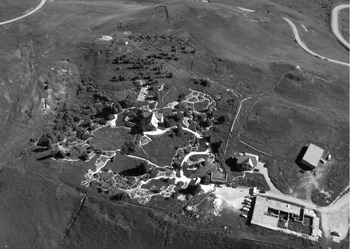
Located just next to the Lautaret Pass, the LAS (2100 m) has road access in summer and every part of the site is located within short walking distance (fig. 2). It is open approximately from May to October, depending on meteorological conditions. It includes a botanical garden, created in 1899, an experiment zone where plants can be grown in semi-controlled conditions, as well as a laboratory-chalet where researchers can stay during their field work and utilize various scientific instruments (scales, drying ovens, centrifuges, etc.). The station has always been a hybrid of field-site and laboratory and has always sought to reconcile their epistemic cultures, as the city of Chicago has done for the Chicago School of Urban Studies (Gieryn Reference Gieryn2006), or the Rocky Mountain biological stations in the early twentieth century (Vetter Reference Vetter2012). But it has moved towards the laboratory end of the lab-field continuum with the construction of the laboratory-chalet in 1989. This evolution was confirmed in 2005, when the LAS became a “Mixed Unit Service” affiliated with Grenoble University and with CNRS (National Center for Scientific Research).
Top View of the Lautaret Alpine Station.

The station pursues two main goals: to advance academic research and to popularize scientific knowledge. Two technicians, two gardeners, a botanist, and a university professor working half-time are in charge of these missions, as well as two hostesses and twenty or so interns during the summer. The station's main scientific user is the Alpine Ecology Laboratory, located in the city of Grenoble, at a distance of 90 km. Because it is the only equipped research station at this elevation in Europe, the station is also used by other French and foreign labs.
The Lautaret Garden and Station have published 138 papers and 18 PhD dissertations drawing on the observations, measurements and experiments that were carried out since 1899. The review of these publications’ dates shows a clear acceleration of the publication rhythm since the early 2000s: while 59 papers had been published during the first century of operation, 9 papers were published from 1999 to 2002, followed by 17 and 39 during the next two four-year periods. In 2011 alone, 14 papers referring to the LAS were published, all in international journals, and 11 PhD dissertations were defended in the last ten years.
The Lauvitel Strict Nature Reserve (LSNR)
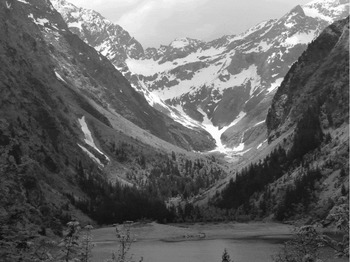
Constituting one of the oldest International Union for Conservation of Nature (IUCN) categories, strict nature reserves (SNRs) are a type of protected area designed to be particularly important for scientific research and monitoring (Dudley Reference Dudley2008). Covering 689 hectares of harsh mountain environment, the LSNR lies at the bottom of a valley that is barred on one side by a lake (elevation: 1495 m) and bordered on all other sides by cliffs reaching the elevation of 3169 m. Facing North, the valley is inaccessible in winter because of avalanches (fig. 3).
View of the Lauvitel Strict Nature Reserve, from the opposite side of the lake (May 2011).

The LSNR was created in 1995 and became the first SNR in a French national park. Considering SNRs as an important component of the national park policy, the then director of the Écrins National Park pushed hard in favor of this creation and appointed a ranger to be in charge of the reserve and help the scientists carry out their activities. The creation of the reserve was facilitated by an exceptional set of circumstances: the Lauvitel valley was state-owned; its access was extremely difficult and so human activities were scarce and there was limited opposition to the creation of the reserve.
No scientific studies had been carried out when the reserve was created and designed by the park to become an intensively investigated field-site and a reference for researchers. This has influenced the seemingly contradictory registers of credibility on which the LSNR leans. On the one hand, the national park managers insisted on describing the reserve as a very common crystalline alpine valley (“it has nothing special”). But they also highlighted the fact that it was the unique French site of this size to be exclusively dedicated to scientific research. They therefore described the LSNR as totally common (and therefore typical of similar valleys) and absolutely singular.
The LSNR's goal was to enlighten the evolution of mountain milieus when not submitted to direct human perturbations. Therefore, studies were expected to be both long-term and comparative after a first stage of preliminary inventories. Since its creation, 63 scientific studies have been conducted within the reserve. They have yielded many written reports but, so far, very few articles in academic journals.
The presentation of the LAS and the LSNR shows that, while being geographically close and dedicated to research, these two sites have contrasting histories and were used by scientists in very different ways. They therefore offer a good opportunity to investigate how field scientists experience their stays in the field and produce knowledge in and about their field-sites.
Presentation of the Surveys
We conducted a survey of the LAS in 2009–2010 and another separate survey of the LSNR in 2011.Footnote 4 The two surveys consisted respectively of 18 and 20 semi-directed interviews, targeted at the managers of the two sites, scientists working at the sites and outside the sites, and the staff of the national park and of the nearby National Botanic Conservatory who have close relationships with the researchers and with the sites. Interviewing these people was important because they contributed largely to the scientific studies and to the quality of the scientists’ stay in the field. Whereas the interviewed scientists were all plant ecologists in the case of the LAS, they belonged to several disciplines (plant ecology, animal ecology, hydrobiology, geography) in the case of the LSNR. Two scientists were interviewed in both surveys. Five scientists worked intensively in the LAS and did not work at all in the LSNR; the opposite was true for one scientist. During the second survey, we also met an IUCN expert responsible for SNRs at the headquarters of IUCN (Gland, Switzerland). In both surveys, the interviews were completed by an analysis of the documents related to the sites: archives, LAS website, management plan of the LSNR, reports, scientific studies and articles, etc. We also visited the two sites. This gave us a more concrete view of the rules and the physical conditions to access the sites, as well as a view of the scientific activities within the sites, and of the sites themselves. Visiting the LSNR required a special authorization, delivered by the park's director. This one morning visit took place in May 2011 during a monitoring of ordinary birds carried out by the staff of the national park.
All interviews lasted from one to two hours. They generally took place at the interviewees’ work place (lab for scientists, office for the staff of the Ecrins national park and National Botanic Conservatory), except four interviews that were carried out by telephone in the case of the LSNR. In both surveys, the interviewees were invited to describe their professional activities and talk about their involvement in the investigated field-site; the scientists were asked to explain why they worked or did not work in this site and, if they did work in this site, to describe their research practices in the field-site and the contribution of these practices to their general research activities. There were no specific questions about temporal issues. These were raised by the interviewees spontaneously and their importance emerged during the analysis of the material. All interviews were recorded, transcribed, and analyzed using software for qualitative data analysis (MAXQDA).Footnote 5
Results
Degrees of Scientific Uses
We found that both research sites were used to varying degrees. We distinguished four degrees of scientific use of the sites, based on their relative importance in the researchers’ agenda. The highest degree corresponds to an intensive use of the site that occupies a predominant place in the researchers’ activities. The second degree consists of inscribing the site in the scientists’ work program without giving it a major role: the site was one among others in a network of regular research sites. The third degree corresponds to cases of one-off uses: the site was simply added to the researchers’ agenda, without being inserted into a long-term comparative approach. The fourth degree gathers the cases of non-use of the sites. We shall now develop these different degrees of use and illustrate them with examples.
Making the Most of One Site
The highest degree of scientific use was observed only in the case of the LAS. The LSNR did not turn out to be a most favored field-site of any researcher. For several (but not all) researchers of the Alpine Ecology Lab, the LAS was their major field-site and they sought to make the most of it. This is where they performed the vast majority of their investigations into the evolution of alpine ecosystems undergoing changes in climate and land use. The presence of agricultural practices was seen as an important asset since it enabled the ecologists to study the poorly known links between plant biodiversity and farming practices over very long periods. Field work at the station extended from spring to autumn and peaked in July and August. Some researchers and PhD students spent several weeks in a row at the Lautaret Station. The Station resembled a beehive at that time of year, with ecologists spending long days making observations, recording measurements, and collecting samples, followed by long evenings drying the fresh plant material and preparing it for thorough biochemical analyses that would later be carried out in Grenoble.
Obviously, the LAS occupied much of these researchers’ agenda. Whole weeks bore the mention “Lautaret” in their diaries. Yet, while it had been designed to become a scientific hub, the Station was not intensively used by all the researchers. Some of them considered it a site among others in a network of field-sites.
Integrating the Site in a Network of Field-Sites
We observed this type of use in both the LAS and the LSNR. The sites were investigated on a regular (generally yearly) and long-term basis and were compared to other sites, in France and elsewhere, where similar studies were conducted. As an illustration, we chose the long-term monitoring of a vole species (the bank vole, Myodes glareolus), performed in the LSNR since the early 1990s.
This monitoring was carried out by a French biologist who had been working at the University of Tromsø (Norway) for many years. He captured and marked micro-mammals in cold areas, in the Alps and the Arctic, in order to monitor the fluctuations of their populations and, in particular, explore the influence of climate change on these fluctuations.
He had captured voles in the LSNR every autumn since 1992. The field work lasted two days: he arrived in the morning, set the traps, and checked them twice, once at night and once the following morning. He got support from the staff at the park and established friendly relations with the park's ranger in charge of the reserve. From 2001 onwards, the park had rented one of the cabins near the lake and this, he said, had considerably facilitated his work conditions in the Lauvitel valley. Only very few of his numerous publications drew on his work in the Lauvitel valley. However, he intended to continue this monitoring for to give it up now would ruin all the effort made so far.
Adding the Site to a Program of Work
This type of use, too, was observed in both field-sites. It is worth noting that it also corresponded to our own situation as social scientists working on the LAS and LSNR.
In the LSNR, it corresponded to scientists who had been at one or two points commissioned by the park's managers to perform studies of the reserve. Unlike the monitoring of the voles, these studies were not repeated regularly nor were they necessarily compared to studies in other sites. For instance, in 1998, the park asked a freelance phytosociologist (i.e. a specialist of plant communities) to start inventorying the herbaceous vegetation of the reserve. With the help of the staff of the park, he implemented three permanent vegetation transects, each 20 or 25 m long, along which he inventoried the vegetation. These transects were located at different elevations and were marked in the ground to make it possible to return exactly to the same spot. The 1998 inventory lasted four days. Another 3-day inventory of the vegetation of the same transects took place in 2006.
One-off studies were also carried out in the LAS, mostly by researchers from distant labs. They took advantage of an opportunity to stay at the Station to collect new material and discuss research hypotheses and results with colleagues. In this case, the material collected was usually compared to those obtained in other investigated sites.
Non-Use of the Site
We interviewed some researchers who had never worked in one site or both sites and did not intend to do so when we met them, even though it would have been possible, given their proximity to the sites and their research interests.
For instance, the biologist monitoring the reserve's bank voles had never worked in the LAS, although he had tight and enduring relationships with several colleagues who had selected the LAS as their main field-site. He therefore had a clear idea of its potentialities.
Symmetrically, it was also the case of a plant ecologist who did intensively use the LAS. She had heard about the LSNR but had never thought to work in it, despite its proximity and its potential to draw comparisons with farmed alpine meadows. She did not entirely rule out the possibility to work there albeit not in a near future. She felt it would be difficult to carry out experiments in such a strictly protected area.
We thus observed a wide array of scientific uses of both sites, ranging from non-use to intensive use. Clearly, the researchers’ decisions to work at a given site did not depend solely on its characteristics nor on the research subject. It is also important to note that the ways in which scientists used the sites were not fixed: they could at one point decide to intensify their use of a site or on the contrary to withdraw from it. When considering the possibility of intensifying or reducing their research practices at a given site, the scientists always referred to the question of time. This is what we want to investigate now.
Practices of Time
Enjoying Field-Work
Field scientists usually enjoy field-work, and frequently present it as the most intense and favorite part of their professional activity (e.g., Kohler Reference Kohler2006; Anker Reference Anker2007, 458). This also applies to our two sites. However, in both cases the feelings expressed about field-work were somewhat in contrast, albeit for different reasons.
The scientists working at the LSNR described it as an extraordinary place. They were quite enthusiastic about the days spent up there, far away from the ordinary world. Reachable only by boat and with a written authorization, the LSNR is a striking contrast to the opposite side of the lake. Several scientists felt privileged to have the possibility of working in such a remote and strictly preserved area. The evenings spent at the chalet and the meals shared with the ranger in charge of the reserve were also depicted as particularly pleasant and cheerful. Yet, fieldwork in the LSNR was also said to be unusually trying and tiring: the phytosociologist mentioned above pointed to the difficulty of walking through the exuberant vegetation at the bottom of the reserve, and to reach the transects located at a higher elevation because of the steep terrain and absence of paths. In addition, some interviewees expressed scruples about being the only ones to be authorized to enter the Lauvitel valley, especially at the peak of the tourist season when the bank of the lake facing the reserve was crowded.
The scientists described the work at the LAS as very intensive. Most of them appreciated it and looked forward to resuming their field-work and escaping the summer heat in Grenoble. But the facilities were also said to be overloaded. One plant ecologist who had done his PhD in the LAS in the early 2000s stated he was not enjoying it as much as he had when it was less intensively investigated. This was important enough to him to gradually withdraw from the LAS and become involved in a less studied and less crowded field-site, although this site was also less well-equipped and not as accessible as the LAS. But this is probably a rather rare case since, as we will see, scientists are usually very reluctant to give up a long-investigated research field. Offering security and durability is indeed crucial to research sites.
Working on a Secure and Permanent Basis
The permanence of the studies and monitoring was seen in both sites as a major asset. In the LSNR, the scientists had the assurance that their work would not be disrupted or interrupted, even in a far distant future, since the area was entirely devoted to research. The biologist monitoring the bank voles explained that he had been convinced by the very long-term perspective of the Lauvitel reserve that his own work would be completed and illuminated by the future monitoring of other components of biodiversity (e.g., birds, vegetation). The fact that the LAS had been operated for many decades was also described as a major advantage. The plant ecologists insisted on the availability of long-term databases that were very useful to study the co-evolution of agricultural practices and alpine ecosystems over long spans of time: “The first vegetation map dates back to 1933, which is not bad. We’re lucky to have this.” It was also a key point for scientists investigating the impact of climate change on plant distributions or animal fluctuations. As mentioned earlier, the LAS is part of a LTSER site and, as in other such sites (Baker and Bowker Reference Baker and Bowker2007; also see Magnuson Reference Magnuson1990), memory practices were at the center of the work. The presence of scientific archives offered a way to compensate for the relatively short period of observations compared to the long period of the processes to be investigated.
But one major difference between the two research sites was the presence of other human activities (farming and tourism) in the LAS only. This had diverse implications. In the LSNR, researchers said they appreciated the guarantee that equipments and instruments would not be displaced, damaged, or stolen by curious, unscrupulous or offended visitors, which could always happen in open research sites. For instance, the traps used to catch the voles could be left on the ground from one year to the next, which, again, saved time. In the LAS, the existence of human activities and especially farming was an asset for at least some of the scientists, since they were precisely investigating the interactions between farming practices and biodiversity. But it was also a constraint, as they had to maintain good relationships with the farmers. In another research site in the Northern Alps, a farmer had threathened to expel the scientists working on his meadows, which would have partly compromised the pursuit of a twenty-year study, because he felt that they had misbehaved; so the need to pay attention to the farmers and meet their requirements was real. The scientists working in the LAS found ways of carrying out their observations and measurements without disturbing farming activities that were just as seasonal as theirs. For instance, they elaborated a visual way of estimating the quantity of biomass produced by an alpine meadow and sought to limit walking in the meadows before the hay was harvested. Actually, the scientists working in the LAS not only worked on the farmers’ land; they also involved the farmers in their research. Indeed, in the wake of the Millennium Ecosystem Assessment (2005), they set out to work on ecosystem servicesFootnote 6 and create scenarios in order to predict how these services would evolve over time. They interviewed the farmers and organized focus groups to investigate the current and future “cultural ecosystem services,” learning a lot about the farmers’ views of the future, and their fears and expectations. As it is frequently the case in the field sciences (Vetter Reference Vetter and Vetter2011a), negotiating and working with the people operating the land was therefore a major part of their work in the field.
Being Time-Efficient
As suggested before, the scientists were very eager to depart from the campus and cityscape during part of the year and lead a very different life in the mountainscapes. But the relative capacity of field-sites to yield publishable data was also crucial to them, while definitely not the unique parameter they took into account. Tellingly, the biologist monitoring the voles talked about the “scientific productivity” of his various research sites and described the LSNR productivity as relatively low: “It makes it possible to publish a paper every ten or twenty years.” On the contrary, as we have seen, work at the LAS led to the publication of very many papers. Different stages of scientific work were taken into account in the assessment of this scientific productivity.
The interviewees had much to say about the accessibility and practicability of the sites. In the LAS, the scientists did not spend much time reaching their workplace: “It takes ten minutes per day to be in the field.” Things were more complicated in the LSNR. The first step was to obtain official authorization. This was considered a minor constraint but scientists noted the necessity to plan their field work very carefully, since returning to the reserve could be uneasy. It then took one and a half hours to reach the lake from the nearest road and another half-hour to cross it. Going from one spot of the SNR to the next was also time-consuming given the lack of paths. The phytosociologist mentioned earlier noted that he had to consider this poor practicability when preparing his field work. Here, the logistical support offered by the park was considered essential: the scientists received substantial help in carrying their instruments and food, crossing the lake, finding their way in the tangled vegetation of the reserve, installing the tools and instruments, collecting the data, preparing the meals at the cabin, etc. The importance of the person responsible for the LSNR was systematically emphasized. Spending a lot of time there, he had what Kohler has termed “residential knowledge” of the reserve, i.e. the intimate and complete knowledge of long-term residents, contrasting with the more “cosmopolitan” knowledge of many scientists (Kohler Reference Kohler2006, 156–162, 184–185; and Kohler Reference Kohler2011b). For that matter, he spontaneously presented himself as “the housekeeper of the reserve.” He was also considered to be skilled at all sorts of manual tasks (on the importance of being multiskilled in harsh environments, see Powell Reference Powell2007, 1803) as well as knowledgeable in several research fields. He could therefore collect the data, if necessary, and send them to the researchers so that they did not have to come several times. In line with the literature (Vetter Reference Vetter and Vetter2011a, 10), the contribution of competent field assistants appeared to be absolutely decisive, notably because it enabled the field scientists to save time and thus to maintain several distant research sites at the same time.
Researchers also took into consideration how long it would take them to publish articles based on the data yielded by the sites. As in the case of the Swiss national park investigated by Kupper (Reference Kupper2012), the scientists commented on the slowness of ecological processes at high elevations and the consequent length of time (many years or even decades) necessary to detect and analyze changes. Yet, the need for publishable articles depended on the scientists’ situation and, in particular, on the pressure to publish they felt from their institution and the academia in general and the stage of their career.
Launching a New Field-Site at the Right Time
All other things being equal, the scientists considered differently the possibility of embarking on a new research site according to their age and stage of their career. In the early 1990s, the biologist monitoring the voles had accepted the park's offer to work in the LSNR. At that time, he had very few research sites, and plenty of time ahead of him to collect data about rodents’ fluctuations in alpine and arctic settings. Twenty years later, his situation was entirely different. He explained he could not start to work in the LAS, no matter how appealing the site. For one thing, he already found it difficult to juggle with his different sites, in Northern Scandinavia and the French Alps. For another thing, he feared that he might not have the possibility of detecting any significant trend or event in a shortened span of time. He thus preferred to cling to the LSNR, despite its rather low academic productivity and access constraints. After two decades of field work, he thought that the data collected would enable him to detect a gradual or sudden change in the vole fluctuations if it were to happen and link it with some global change. Giving up at this stage thus made no sense to him. This temporal aspect, we believe, explained much of his “fierce loyalty to [a] local field site” (Vetter Reference Vetter and Vetter2011a, 2) that, in some respects, seemed only moderately appealing to other scientists.
The scientists working in the LAS offered another telling example of this. One senior scientist investigating the relations between farming practices and biodiversity clearly ruled out the possibility of working in the LSNR. Yet, one of her younger colleagues studying the impacts of climate change on the fauna and flora became very interested in the reserve towards the end of our survey and started considering working there as well. The difference in their research topics might have interfered with their respective decisions since the lack of human activities could be regarded as a drawback for her and not for him. But we also perceived that he more than she could still afford becoming engaged in a new field-site. Likewise, other senior scientists said “they could not move” or “could not start somewhere else.” Clearly, a field-site can be deemed “right for the job” (Clarke and Fujimura Reference Clarke and Fujimura1992) only if it comes at the right time.
Considering how the field scientists sought to combine these different time-related aspects – pleasure, long-term security, scientific productivity, timeliness – makes it possible to understand why the LSNR was less investigated than the LAS, whereas it had been especially created to enable researchers to study fauna and flora's long-term changes conveniently: the LAS was more accessible; it had been investigated longer, and the alleged inconveniences linked to human and agricultural practices were turned into assets for research questions and opened up new opportunities for trendy long-term studies involving local actors. It also enables us to grasp why scientists might discard or withdraw from otherwise highly praised field-sites such as the LAS if they feel too advanced in their career, or if they cease to enjoy the field work in this site or do not need to publish as much as they did earlier in their career.
Conclusion
Taking our inspiration from many studies on the life sciences, we drew on the empirical data we collected in two geographically close field-sites in the French Alps – the Lautaret Alpine Station (LAS) and the Lauvitel Strict Nature Reserve (LSNR) – to investigate how life scientists become and remain engaged in potential field-sites and how they go about doing science in and about these sites. But, unlike others, we focused on the temporal rather than the spatial issues evoked by the life scientists recounting their experience in the field. We believe that the current acceleration affecting science along with all the other domains of contemporary societies (Rosa [2005] Reference Rosa and Renault2010) makes it particularly important to scrutinize the scientists’ practices of time.
By setting up the category of “practices of time,” which encompasses but goes beyond the notion of “memory practices” (Bowker Reference Bowker2005), we sought to emphasize the important role temporal issues play in how life scientists select and relate to their field-sites. In so doing, our results also suggest the connections between place and time practices, since the way in which researchers enjoy field stays and assess the field-sites’ permanence, accessibility, and scientific productivity is tightly related to spatial characteristics such as the distance between field-sites and lab, geo-physical features, existing infrastructures. The timeliness of the investment in field-sites might be the temporal issue that has least to do with place, and most to do with personal timing in the job. Yet further empirical research would be needed to better understand how place and time interact in the use of a given field-site, and we intend to complement and refine our findings by extending the investigation of practices of time to other case studies.
The time issues and time practices we documented are particularly diverse and heterogeneous, which also indicates that there is no one-size-fits-all way of dealing with time in research but only highly situated ways of dealing and tinkering with place and time in order to make science. We higlighted that the field scientists integrated these potential field-sites into their research programs in different ways, using them as main long-term sites, or as comparison sites in a network of field-sites, or as one-shot sites, or not using them at all. Examining our material through temporal lenses, we identified a range of temporal aspects considered by the researchers when they came to explain why and to what extent they became and remained engaged in these field-sites, including both length issues (time spent, time needed for publication) and timeliness issues (right time to do something). We found that the pleasure of working in a field-site might compensate for its relative lack of scientific productivity and that researchers might overlook an appealing field-site if the opportunity takes place too late in their career. Thus, there were potential tensions between the different temporal aspects we identified: for instance, the transformation of the LAS into an easily accessible and well-equipped field-site had attracted many researchers and diminished the pleasure of some researchers to work there. When choosing their field sites, the scientists sought to strike an uneasy balance between a broad range of temporal aspects: the quantity of time needed to access and investigate the sites and to publish, the emotional quality of the field time, the temporality of their career, and interactions with the sites’ other users and inhabitants, etc.
We also showed that the characteristics of the investigated field-sites, e.g., the presence or absence of other human activities, might be considered a disadvantage or on the contrary an asset to open up new research opportunities, such as involving local actors into the research process. Whether the time spent on a field-site by a scientist was experienced as pleasant and scientifically productive, or whether the opportunity to investigate this site intervened at the right time of the scientists’ career depended very much on the complex and situated relationship between the scientist and the field-site. This also holds for the durability of a field-site, that might seem at first sight to be more dependent on the site itself and, in particular, its legal status. Yet, the durability of the sites was appreciated very differently by different types of life scientists. For instance, specialists in evolutionary ecology, which belongs to “intrinsically historical sciences” (Daston Reference Daston2012, 158), were used to dealing with much longer time spans than, say, behavioral ecologists: a site deemed as secure and durable by the latter might not be durable enough for the former. This suggests that there is no such thing as a perfect field-site, especially in the life sciences: the quality of a field-site must always be related to particular research questions and practices as well as to the researchers’ personal tastes and inclinations.
Finally, we would like to sketch out the operational implications for managers of protected areas. Supporting research was essential to them as they sought to resort to scientific data to support the credibility of their action. They therefore strived to convince scientists to locate their field-sites in their territories. To achieve this, they tried to enhance the intrinsic features and scientific profile of their sites. For instance, the managers of the Écrins national park offered different types of logistical support to the life scientists working in the LSNR and, at the time of our survey, they were working hard to have it officially acknowledged as an SNR by IUCN.Footnote 7 While this is undeniably necessary, we believe that protected area managers should also bear in mind that not all field scientists are equally prone to launch a new research site. In particular, while getting engaged in a new research site is always a major and dicey decision, it is even more so at a late stage in a scientific career, when researchers usually have little time available for field-work and little time left to collect new data. Protected area managers tend to collaborate with senior scientists, who make up the bulk of the protected areas’ scientific councils. Our study suggests that being more open to junior scientists should help them develop research activities in their territories.
Acknowledgments
The authors warmly thank the editor, two anonymous reviewers, and Nigel Yoccoz for very helpful comments on an earlier version of this text.