












1. Introduction
For two states $\omega$ and $\rho$
 on a C$^{*}$
 -algebra $\mathcal {R}$
 , $\rho$
 is regarded to be unitarily more mixed than $\omega$
 if $\rho$
 is contained in the weak* closure of the convex hull of the unitary orbit of $\omega$
 . In [Reference Alberti1, Reference Alberti and Uhlmann2, Reference Wehrl29], Alberti, Uhlmann and Wehrl studied the notion of maximally unitarily mixed states on von Neumann algebras and such states were characterized by Alberti in [Reference Alberti1]. Recently, this topic has been revitalized in the broader context of C$^{*}$
 -algebras by Archbold et al. [Reference Archbold, Robert and Tikuisis4], who proved among other things that the weak*closure of the set of maximally unitarily mixed states on a C$^{*}$
 -algebra $A$
 is equal to the weak* closure of the convex hull of tracial states and states that factor through simple traceless quotients of $A$
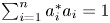
 . However, the evolution of open quantum systems is not always unitary, but is described by more general completely positive (trace preserving) maps of the form $\omega \mapsto \sum \nolimits a_i\omega a_i^{*}$
 , say on the predual of ${{\rm B}(\mathcal {H})}$
 , so it seems worthwhile to study also a less restrictive notion of when one state is more mixed than the other. The dual of such a map is a unital completely positive map of the form

on $\mathcal {R}={{\rm B}(\mathcal {H})}$ . Let ${{\rm E}(A)}$
 be the set of all unital completely positive maps on $A$
 of the form (1.1), where $a_i\in A$
 and the sums have only finitely many terms. A natural question in this context is, when a state $\rho$
 on a C$^{*}$
 -algebra $A$
 (or a normal state on a von Neumann algebra $\mathcal {R}$
 ) is in the weak* closure (or the norm closure) of the set $\omega \circ {{\rm E}(A)}$
 of all states of the form $\omega \circ \psi$
 , where $\omega$
 is a fixed state (perhaps normal in the case of von Neumann algebras) and $\psi$
 runs over the set ${{\rm E}(A)}$
 . In § 2, we show for normal states on a von Neumann algebra $\mathcal {R}$
 that $\rho$
 is in the norm closure of $\omega \circ {{\rm E}(\mathcal {R})}$
 if and only if $\rho$
 and $\omega$
 agree on the centre of $\mathcal {R}$
 . We also study the same topic for hermitian normal functionals on $\mathcal {R}$
 and provide an explicit normal mapping $\psi$
 in the point-weak* closure of ${{\rm E}(\mathcal {R})}$
 such that $\rho =\omega \circ \psi$
 . In the special case of $\mathcal {R}={{\rm B}(\mathcal {H})}$
 , hermitian normal functionals are just hermitian trace class operators and maps mapping one such operator to another have been constructed by Hsu et al. in [Reference Hsu, Li-Wei Kuo and Tsai19] and by Li and Du in [Reference Li and Du21], but they do not study the question if such maps are in the closure of ${\rm E}({{\rm B}(\mathcal {H})})$
 .
For a normal state $\omega$ on a von Neumann algebra $\mathcal {R}\subseteq {{\rm B}(\mathcal {H})}$
 and a map $\phi$
 of the form (1.1), where $a_i\in \mathcal {R}$
 and the sums may have infinitely many terms (that is, $\phi$
 is a quantum channel) any state of the form $\rho =\omega \circ \phi$
 has the following property: if $\tilde {\omega }$
 is a normal state on ${{\rm B}(\mathcal {H})}$
 that extends $\omega$
 , then there is a normal state $\tilde {\rho }$
 on ${{\rm B}(\mathcal {H})}$
 that extends $\rho$
 such that $\tilde {\rho }$
 and $\tilde {\omega }$
 coincide on the commutant $\mathcal {R}^{\prime }$
 of $\mathcal {R}$
 (namely, $\tilde {\rho }=\tilde {\omega }\circ \tilde {\phi }$
 , where $\tilde {\phi }$
 is the map on ${{\rm B}(\mathcal {H})}$
 given by the same formula as $\phi$
 on $\mathcal {R}$
 ). This property holds in any faithful normal representation of $\mathcal {R}$
 on a Hilbert space $\mathcal {H}$
 . In § 2, we will see that this property characterizes states of the form $\omega \circ \phi$
 , where $\phi$
 runs over quantum channels on $\mathcal {R}$
 .
Then, in § 3, we study the analogous topic for hermitian functionals $\rho,\, \omega$ on a unital C$^{*}$
 -algebra $A$
 . If $A$
 has Hausdorff primitive spectrum, Theorem 3.1 shows that $\rho$
 is in the weak* closure of $\omega \circ {{\rm E}(A)}$
 if and only if $\omega$
 and $\rho$
 agree on the centre of $A$
 and $\|c\rho \|\leq \|c\omega \|$
 for each positive element $c$
 in the centre of $A$
 . If the primitive spectrum of $A$
 is not Hausdorff, this characterization is not true any more, but an alternative one is given in Theorem 3.7.
For two states $\omega$ and $\rho$
 on a C$^{*}$
 -algebra $A$
 , $\rho$
 is regarded here to be more mixed than $\omega$
 . if $\rho$
 is contained in the weak* closure $\overline {\omega \circ {{\rm E}(A)}}$
 of the set $\omega \circ {{\rm E}(A)}:=\{\omega \circ \psi :\, \psi \in {{\rm E}(A)}\}$
 . Then, $\omega$
 is called maximally mixed if for each state $\rho$
 on $A$
 the condition that $\rho \in \overline {\omega \circ {{\rm E}(A)}}$
 implies that $\omega \in \overline {\rho \circ {{\rm E}(A)}}$
 ; in other words, $\overline {\omega \circ {{\rm E}(A)}}$
 is minimal among weak* closed ${{\rm E}(A)}$
 -invariant subsets of the set $S(A)$
 of all states on $A$
 . This is a coarser relation than the one considered in the references mentioned above, where instead of ${{\rm E}(A)}$
 , only convex combinations of unitary similarities are considered. In § 4, we show that each maximally mixed state on a unital C$^{*}$
 -algebra $A$
 must annihilate the strong radical $J_A$
 of $A$
 (= the intersection of all two-sided maximal ideals of $A$
 ) and, if $A$
 is a properly infinite von Neumann algebra, the converse is also true. Furthermore, the set $S_m(A)$
 of all maximally mixed states contains all states that annihilate some intersection of finitely many maximal ideals of $A$
 and is therefore weak* dense in $S(A/J_A)$
 . These results are analogous to those of [Reference Archbold, Robert and Tikuisis4] and [Reference Alberti1] for unitarily maximally mixed states. For C$^{*}$
 -algebras with the Dixmier property, the authors of [Reference Archbold, Robert and Tikuisis4] provided a more precise determination of maximally unitarily mixed states than for general C$^{*}$
 -algebras. In our present context, the role of C$^{*}$
 -algebras with the Dixmier property can be played by weakly central C$^{*}$
 -algebras. For a weakly central C$^{*}$
 -algebra $A$
 , we show that the set $S_m(A)$
 is weak* closed (and hence equal to the set of all states that annihilate $J_A$
 ) if and only if each primitive ideal of $A$
 which contains $J_A$
 is maximal. States in $S_m(\mathcal {R})$
 for a general von Neumann algebra $\mathcal {R}$
 are also characterized.
Throughout the paper, an ideal means a norm closed two-sided ideal and all C $^{*}$ -algebras are assumed to be unital unless explicitly stated otherwise.
2. The case of normal states on a von Neumann algebra
We denote by $A^{\sharp }$ the dual of a Banach case $A$
 . In what follows $A$
 will usually be a C$^{*}$
 -algebra. Throughout this article, $\mathcal {R}$
 is a von Neumann algebra, $\mathcal {R}_{\sharp }$
 its predual (that is, the space of all weak* continuous linear functionals on $\mathcal {R}$
 ) and $\mathcal {Z}$
 the centre of $R$
 . Basic facts concerning von Neumann algebras, that will be used here without explicitly mentioning a reference, can be found in [Reference Kadison and Ringrose20, Reference Takesaki28].
We will need a preliminary result of independent interest, which in the special case (when, in the notation of Theorem 2.1, $\mathcal {A}=\mathcal {R}$ and $\mathcal {R}$
 is a factor or has a separable predual, and positivity was not considered), has been proved by Chatterjee and Smith [Reference Chatterjee and Smith9]. We would like to avoid the separability assumption. In its proof, we will use the notion of the minimal C$^{*}$
 -tensor product over $\mathcal {Z}$
 of two C$^{*}$
 -algebras $A$
 and $B$
 both containing an abelian W$^{*}$
 -algebra $\mathcal {Z}$
 in their centres. This product $A\otimes _{\mathcal {Z}}B$
 [Reference Blanchard6, Reference Giordano and Mingo13, Reference Magajna22], can be defined as the closure of the image of the algebraic tensor product $A\odot _{\mathcal {Z}}B$
 in $\oplus _{t\in \Delta }A(t)\otimes B(t)$
 , where $\Delta$
 is the maximal ideal space of $\mathcal {Z}$
 and, for each $t\in \Delta$
 , $A(t)$
 denotes the quotient C$^{*}$
 -algebra $A/(tA)$
 , where $tA$
 is the closed ideal in $A$
 generated by $t$
 (and similarly for $B(t)$
 ). (If at least one of the algebras $A$
 , $B$
 is exact, which will be the case in our application in the proof of Theorem 2.3, $A\otimes _{\mathcal {Z}}B$
 coincides with the quotient of $A\otimes B$
 by the closed ideal generated by all elements of the form $az\otimes b-a\otimes zb$
 ($a\in A$
 , $b\in B$
 , $z\in \mathcal {Z}$
 ) [Reference Magajna22, 3.12].)
Theorem 2.1 Let $\mathcal {A}$ be an injective von Neumann subalgebra of a von Neumann algebra $\mathcal {R}$
 containing the centre $\mathcal {Z}$
 of $\mathcal {R}$
 . Then, each completely contractive $\mathcal {Z}$
 -module map $\psi :\mathcal {R}\to \mathcal {A}$
 is (as a map into $\mathcal {R}$
 ) in the point-weak* closure of the set consisting of all maps of the form $x\mapsto \sum \nolimits _{i=1}^{n}a_i^{*}xb_i$
 ($x\in \mathcal {R}$
 ), where $n\in \mathbb {N}$
 and $a_i,\, b_i\in \mathcal {R}$
 satisfy $\sum \nolimits _{i=1}^{n}a_i^{*}a_i\leq 1$
 and $\sum \nolimits _{i=1}^{n}b_i^{*}b_i\leq 1$
 . If in addition $\psi$
 is unital, then $\psi$
 is in the point-weak* closure of ${{\rm E}(\mathcal {R})}$
 .
Proof. Let $\mathcal {H}$ be a Hilbert space such that $\mathcal {R}\subseteq {{\rm B}(\mathcal {H})}$
 . It follows from [Reference Kadison and Ringrose20, 5.5.4] that there is a natural $*$
 -isomorphism $\iota$
 from $\mathcal {R}\mathcal {R}^{\prime }$
 (the subalgebra of ${{\rm B}(\mathcal {H})}$
 generated by $\mathcal {R}\cup \mathcal {R}^{\prime }$
 ) onto the algebraic tensor product $\mathcal {R}\odot _{\mathcal {Z}}\mathcal {R}^{\prime }$
 , given by $rr^{\prime }\mapsto r\otimes _{\mathcal {Z}} r^{\prime }$
 . By [Reference Blanchard6, 2.9], the tensor norm on $\mathcal {R}{\otimes }_{\mathcal {Z}}\mathcal {R}^{\prime }$
 restricted to $\mathcal {R}\odot _{\mathcal {Z}}\mathcal {R}^{\prime }$
 is minimal among all C$^{*}$
 -tensor norms on $\mathcal {R}\odot _{\mathcal {Z}}\mathcal {R}^{\prime }$
 , hence the $*$
 -homomorphism $\iota$
 extends uniquely to the norm closure $\overline {\overline {\mathcal {R}\mathcal {R}^{\prime }}}$
 . Since $\mathcal {A}$
 is injective and commutes with $\mathcal {R}^{\prime }$
 the multiplication $\mu _0:\mathcal {A}\otimes \mathcal {R}^{\prime }\to \overline {\overline {\mathcal {A}\mathcal {R}^{\prime }}}\subseteq {{\rm B}(\mathcal {H})}$
 is a completely contractive $*$
 -homomorphism [Reference Brown and Ozawa8, 9.3.3, 3.8.5]. But more is true: by [Reference Giordano and Mingo13, 4.2], the natural map $\mathcal {A}\odot _{\mathcal {Z}}\mathcal {R}^{\prime }\to \mathcal {A}\mathcal {R}^{\prime }$
 extends (uniquely) to a $*$
 -isomorphism $\mathcal {A}\otimes _{\mathcal {Z}}\mathcal {R}^{\prime }\to \overline {\overline {\mathcal {A}\mathcal {R}^{\prime }}}$
 . It follows that the composition

is completely contractive and clearly, it is an $\mathcal {R}^{\prime }$ -bimodule map, hence extending to such a map $\phi$
 on ${{\rm B}(\mathcal {H})}$
 by the Wittstock extension theorem (see [Reference Wittstock30] or [Reference Blecher and Le Merdy7, 3.6.2]). By [Reference Effros and Kishimoto11], $\phi$
 can be approximated in the point-weak* topology by a net of elementary complete contractions of the form

where $a(k)=(a_1(k),\,\ldots,\,a_n(k))^{T}$ and $b(k)=(b_1(k),\,\ldots,\,b_n(k))^{T}$
 are columns with the entries $a_i(k),\,b_i(k)\in \mathcal {R}$
 and

Thus, $\psi$ (=$\phi |\mathcal {R}$
 ) can also be approximated by such maps.
Assume now in addition that $\psi$ is unital and consider a point-weak* approximation of $\psi$
 of the form (2.1), (2.2). Since

it follows that $b(k)-a(k)$ tends to $0$
 in the strong operator topology. Hence, $\psi$
 can be approximated by maps of the form $x\mapsto a(k)^{*}xa(k)$
 in the point-weak* operator topology. To see this, write

and note that $\|a(k)^{*}x(b(k)-a(k))\xi \|\leq \|x\|\|(b(k)-a(k))\xi \|$ for each vector $\xi \in \mathcal {H}$
 . Finally, as $a(k)^{*}a(k)$
 tends to $\psi (1)=1$
 in the strong operator topology, $\psi$
 can be approximated by maps of the form

that is, by unital completely positive elementary maps.
Lemma 2.2 Let $\omega$ and $\rho$
 be hermitian functionals on a C$^{*}$
 -algebra $A$
 such that $\rho |Z=\omega |Z$
 and $\|c\rho \|\leq \|c\omega \|$
 for all $c\in Z_+$
 , where $Z$
 is the centre of $A$
 . Then, $\rho _+|Z\leq \omega _+|Z$
 and $\rho _-|Z\leq \omega _-|Z$
 .
Thus, if $Z$ is a von Neumann algebra, $\omega$
 and $\rho$
 are normal and $p^{+}$
 and $p^{-}$
 are the support projections of $\omega _+|Z$
 and $\omega _-|Z,$
 then there exist elements $c_+$
 and $c_-$
 in $Z$
 such that $0\leq c_+\leq p^{+}$
 , $0\leq c_-\leq p^{-},$


Proof. For each $c\in Z_+$ and $\theta \in (A^{\sharp })_+$
 , we have that $\|c\theta \|=(c\theta )(1)=\theta (c)$
 and it is also well-known that for each hermitian functional $\sigma$
 the equality $\|\sigma \|=\sigma _+(1)+\sigma _-(1)=\|\sigma _+\|+\|\sigma _-\|$
 holds, hence

Adding and subtracting these two relations, we find that $\rho _+(c)\leq \omega _+(c)$ and $\rho _-(c)\leq \omega _-(c)$
 for all $c\in Z_+$
 . If $Z$
 , $\omega$
 , $\rho$
 , $p^{+}$
 and $p^{-}$
 are as in the second part of the lemma, we may regard $Z$
 as $L^{\infty }(\mu )$
 for some positive measure $\mu$
 and then the existence of elements $c_+$
 and $c_-$
 in $Z$
 satisfying $0\leq c_+\leq p_+$
 , $0\leq c_-\leq p^{-}$
 and $\rho _+|Z=c_+\omega _+|Z$
 , $\rho _-|Z=c_-\omega _-|Z$
 follows easily, so we will verify here only the last equality in the lemma. The condition $\rho |Z=\omega |Z$
 can be written as $(c_+\omega _+-c_-\omega _-)|Z=(\omega _+-\omega _-)|Z$
 , hence $(1-c_+)\omega _+|Z=(1-c_-)\omega _-|Z$
 . But $\omega _+=p^{+}\omega _+$
 and $\omega _-=p^{-}\omega _-$
 , since $p^{+}$
 and $p^{-}$
 are the support projections of $\omega _+|Z$
 and $\omega _-|Z$
 , hence the required equality follows.
By [Reference Halpern17] or [Reference Strătilă and Zsidó27], each positive functional $\omega$ on $\mathcal {R}$
 , such that $\omega |\mathcal {Z}$
 is weak* continuous, can be uniquely expressed as

where $\omega _{\mathcal {Z}}$ is a (completely) positive $\mathcal {Z}$
 -module map from $\mathcal {R}$
 to $\mathcal {Z}$
 such that $\omega _{\mathcal {Z}}(1)$
 is the support projection $q\in \mathcal {Z}$
 of $\omega |{\mathcal {Z}}$
 . If $\omega$
 is weak* continuous, then so is also $\omega _{\mathcal {Z}}$
 . Observe that the support projections of $\omega$
 and $\omega _{\mathcal {Z}}$
 coincide, if $\omega$
 is normal. (Indeed, for each projection $e\in \mathcal {R}$
 , we have $0\leq \omega _{\mathcal {Z}}(e)\leq \omega _{\mathcal {Z}}(1)=q$
 , hence $\omega (e)=(\omega |\mathcal {Z})(\omega _{\mathcal {Z}}(e))=0$
 if and only if $\omega _{\mathcal {Z}}(e)=0$
 since $q$
 is the support projection of $\omega |\mathcal {Z}$
 .)
Theorem 2.3 Let $\omega,\,\rho$ be normal hermitian functionals on $\mathcal {R}$
 . There exists a normal unital completely positive map $\psi :\mathcal {R}\to \mathcal {R}$
 in the point-weak* closure of ${{\rm E}(\mathcal {R})}$
 satisfying $\psi (1)=1$
 and $\psi _{\sharp }(\omega )=\rho$
 if and only if

Under this condition, $\rho$ is in the norm closure of $\omega \circ {{\rm E}(\mathcal {R})}$
 .
Proof. Since maps in ${{\rm E}(\mathcal {R})}$ are unital and completely positive, they are also completely contractive. Each map in ${{\rm E}(\mathcal {R})}$
 is of the form $\psi (x)=\sum \nolimits _{i=1}^{n}a_i^{*}xa_i$
 , where $a_i\in \mathcal {R}$
 and $\sum \nolimits _{i=1}^{n}a_i^{*}a_i=1$
 , hence weak* continuous and the corresponding map $\psi _{\sharp }$
 on the predual $\mathcal {R}_{\sharp }$
 of $\mathcal {R}$
 is given by $\psi _{\sharp }(\omega )=\sum \nolimits _{i=1}^{n}a_i\omega a_i^{*}$
 and is a $\mathcal {Z}$
 -module map with $\|\psi _{\sharp }\|=\|\psi \|=1$
 . Hence $\|c\psi _{\sharp }(\omega )\|=\|\psi _{\sharp }(c\omega )\|\leq \|c\omega \|$
 for each $c\in \mathcal {Z}$
 . This means that the inequality $\|(c \omega )\circ \psi \|\leq \|c\omega \|$
 holds for all $\psi \in {{\rm E}(\mathcal {R})}$
 , hence also for all $\psi$
 in the point-weak* closure of ${{\rm E}(\mathcal {R})}$
 since $c\omega$
 is weak* continuous. If $\psi$
 is a weak* continuous such map and $\rho =\psi _{\sharp }(\omega )$
 , then $\|c\rho \|=\|(c\omega )\circ \psi \|\leq \|c\omega \|$
 . Furthermore, since $\psi |\mathcal {Z}={{\rm id}}$
 for each such map $\psi$
 , it follows that $\rho |\mathcal {Z}=\omega |\mathcal {Z}$
 for each $\rho \in \overline {\omega \circ {{\rm E}(\mathcal {R})}}$
 .
Assume now that the condition (2.4) holds. Decompose each of the functionals $\omega _+,\,\omega _-,\,\rho _+,\,\rho _-$ as described in (2.3), so that

where $\rho _{\mathcal {Z}}^{+},\,\rho _{\mathcal {Z}}^{-},\,\omega _{\mathcal {Z}}^{+},\,\omega _{\mathcal {Z}}^{-}$ are $\mathcal {Z}$
 -module homomorphisms from $\mathcal {R}$
 to $\mathcal {Z}$
 such that $p^{+}:=\omega _{\mathcal {Z}}^{+}(1)$
 and $p^{-}:=\omega _{\mathcal {Z}}^{-}(1)$
 are the support projections of $\omega _+|\mathcal {Z}$
 and $\omega _-|\mathcal {Z}$
 . Let $p_+$
 and $p_-$
 be the support projections of $\omega _+$
 and $\omega _-$
 . Observe that $p_+\leq p^{+}$
 and $p_-\leq p^{-}$
 . (Namely, $\omega _+ (1-p^{+})=(\omega _+|\mathcal {Z})(1-p^{+})=0$
 implies that $1-p^{+}\leq 1-p_+$
 , hence $p_+\leq p^{+}$
 .) By Lemma 2.2, there exists $c_+,\, c_-\in \mathcal {Z}$
 such that $0\leq c_+\leq p^{+}$
 , $0\leq c_-\leq p^{-}$
 ,

When we first tried to find a map $\psi$ satisfying the requirements of the theorem to be of the form $\psi =a\rho _{\mathcal {Z}}^{+}+b\rho _{\mathcal {Z}}^{-}$
 , where $a,\,b\in \mathcal {R}_+$
 , we found that it is not always possible to simultaneously satisfy the conditions $\psi (1)=1$
 and $\omega \circ \psi =\rho$
 by maps of such a form. But after several attempts we arrived to the following map:

Here, $\theta$ is any fixed normal positive unital $\mathcal {Z}$
 -module map from $\mathcal {R}$
 to $\mathcal {Z}$
 . (Such a map exists even on $\mathcal {Z}^{\prime }\supseteq \mathcal {R}$
 since $\mathcal {Z}^{\prime }$
 is of type $I$
 , hence isomorphic to a direct sum of matrix algebras of the form ${{\rm M}}_n(\mathcal {Z})$
 , where $n$
 can be infinite.) This map $\psi$
 is positive, weak* continuous, $\mathcal {Z}$
 -module map, with the range contained in the commutative C$^{*}$
 -algebra generated by $\mathcal {Z}\cup \{p_+\}$
 , hence completely positive. We can immediately verify that $\psi$
 is also unital:

Now, we are going to compute

For this, first observe that if $f,\,g:\mathcal {R}\to \mathcal {Z}$ are $\mathcal {Z}$
 -module maps and $a\in \mathcal {R}$
 , then $(f\circ (ag))(x)=f(ag(x))=f(a)g(x)=(f(a)g)(x)$
 , that is, $f\circ (ag)=f(a)g$
 . Note also that $p^{+}\rho _{\mathcal {Z}}^{+}=\rho _{\mathcal {Z}}^{+}$
 and $p^{-}\rho _{\mathcal {Z}}^{-}=\rho_{\mathcal{Z}}^{-}$
 since Lemma 2.2 implies that the support projection of $\rho _+|\mathcal {Z}$
 is dominated by the support projection of $\omega _+|\mathcal {Z}$
 and similarly for $\rho _-|\mathcal {Z}$
 and $\omega _-|\mathcal {Z}$
 . From the definition (2.6) of $\psi$
 and using that $\omega _{\mathcal {Z}}^{+}$
 and $\omega _{\mathcal {Z}}^{-}$
 are $\mathcal {Z}$
 -module maps with ranges contained in $\mathcal {Z}$
 and mutually orthogonal support projections $p_+$
 and $p_-$
 (which are just the support projections of $\omega _+$
 and $\omega _-$
 , respectively), we now compute

and similarly

From (2.7), (2.8) and (2.9) we have, using also (2.5) and (2.6),

It follows from Theorem 2.1 that $\psi$ is in the point-weak* closure of ${{\rm E}(\mathcal {R})}$
 . Thus, $\rho =\omega \circ \psi$
 is in the weak closure of the convex set $\omega \circ {{\rm E}(\mathcal {R})}$
 , which is the same as the norm closure by the Hahn–Banach theorem and the fact that $\mathcal {R}$
 is the dual of $\mathcal {R}_{\sharp }$
 .
When $\omega$ and $\rho$
 are states, Theorem 2.3 simplifies to the following corollary:
Corollary 2.4 Let $\omega$ and $\rho$
 be normal states on $\mathcal {R}$
 . There exists a normal unital completely positive map $\psi$
 in the point-weak* closure of ${{\rm E}(\mathcal {R})}$
 satisfying $\psi _{\sharp }(\omega )=\rho$
 if and only if $\rho |\mathcal {Z}=\omega |\mathcal {Z}$
 . This condition is satisfied if and only if $\|c\rho \|\leq \|c\omega \|$
 for all $c\in \mathcal {Z}_+$
 .
Proof. By Theorem 2.3, we only need to verify that the condition $\rho |\mathcal {Z}=\omega |\mathcal {Z}$ implies that $\|c\rho \|\leq \|c\omega \|$
 for all $c\in \mathcal {Z}_+$
 and conversely. Since $\omega$
 and $\rho$
 are positive, we have $\|c\rho \|=(c\rho )(1)=\rho (c)$
 and $\omega (c)=\|c\omega \|$
 for all $c\in \mathcal {Z}_+$
 . If $\|c\rho \|\leq \|c\omega \|$
 for all $c\in \mathcal {Z}_+$
 , then $\rho (c)\leq \omega (c)$
 . Applying this to $1-c$
 instead of $c$
 , where $0\leq c\leq 1$
 , it follows that $\rho (c)=\omega (c)$
 for all such $c$
 . But such elements span $\mathcal {Z}$
 , hence it follows that $\rho |\mathcal {Z}=\omega |\mathcal {Z}$
 if and only if $\|c\rho \|\leq \|c\omega \|$
 for all $c\in \mathcal {Z}_+$
 .
It is well known that on $\mathcal {R}={{\rm B}(\mathcal {H})}$ , all normal completely positive unital maps are of the form

where $\mathbb {J}$ is some set of indexes and $a_j\in \mathcal {R}$
 are such that $\sum \nolimits _{j\in \mathbb {J}}a_j^{*}a_j=1$
 with the convergence in the strong operator topology. Maps on ${{\rm B}(\mathcal {H})}$
 of the form (2.10) are called quantum channels and we will use the same name for maps of such a form on a general von Neumann algebra $\mathcal {R}$
 . It is well known that on a general von Neumann algebra, not all unital normal completely positive maps are of the form (2.10), so we still have to answer the following question: If $\omega$
 and $\rho$
 are normal states on a von Neumann algebra $\mathcal {R}$
 , when does there exist a quantum channel $\phi$
 on $\mathcal {R}$
 such that $\omega \circ \phi =\rho ?$

Theorem 2.5 For normal states $\omega$ and $\rho$
 on $\mathcal {R}$
 , the following statements are equivalent:
(i) There exists a quantum channel $\phi$
 on $\mathcal {R}$ such that $\omega \circ \phi =\rho$.
(ii) For every faithful normal representation $\pi$
of $\mathcal {R}$ on a Hilbert space $\mathcal {H}_{\pi }$ and any normal state $\tilde {\omega }$ on ${{\rm B}(\mathcal {H}_{\pi })}$ that extends $\omega \circ \pi ^{-1}$, there exists a normal state $\tilde {\rho }$ on ${{\rm B}(\mathcal {H}_{\pi })}$ that extends $\rho \circ \pi ^{-1}$ such that $\tilde {\omega }|\pi (\mathcal {R})^{\prime }=\tilde {\rho }|\pi (\mathcal {R})^{\prime }$.(iii) For some faithful normal representation of $\mathcal {R}$
on a Hilbert space $\mathcal {H}$, such that $\omega$ is the restriction to $\mathcal {R}$ of a vector state $\tilde {\omega }$ on ${{\rm B}(\mathcal {H})}$, there exists a normal state $\tilde {\rho }$ on ${{\rm B}(\mathcal {H})}$ such that $\tilde {\rho }|\mathcal {R}=\rho$ and $\tilde {\rho }|\mathcal {R}^{\prime }=\tilde {\omega }|\mathcal {R}^{\prime }$.(iv) Let $\pi _{\omega }$
be the GNS representation of $\mathcal {R}$ engendered by $\omega$ on a Hilbert space $\mathcal {H}_{\omega }$ and let $\xi _{\omega }$ be the corresponding cyclic vector. The state $\rho$ annihilates the kernel of $\pi _{\omega }$ and there exists a normal state $\tilde {\rho }$ on ${{\rm B}}(\mathcal {H}_{\omega })$ such that $\tilde {\rho }|\pi _{\omega }(\mathcal {R})$ is the state induced by $\rho$ on $\pi _{\omega }(\mathcal {R})\cong \mathcal {R}/\ker \pi _{\omega }$ and $\tilde {\rho }|\pi _{\omega }(\mathcal {R})^{\prime }=\tilde {\omega }|\pi _{\omega }(\mathcal {R})^{\prime }$, where $\tilde {\omega }$ is the vector state $x\mapsto \langle x\xi _{\omega },\,\xi _{\omega }\rangle$ on ${{\rm B}}(\mathcal {H}_{\omega })$.


Proof. (i)$\Rightarrow$ (ii) If $\rho =\omega \circ \phi$
 , where $\phi$
 is of the form (2.10), then let $\tilde {\omega }$
 be any state on ${{\rm B}(\mathcal {H}_{\pi })}$
 extending $\omega \circ \pi ^{-1}$
 , let $\tilde {\phi }$
 be the map on ${{\rm B}(\mathcal {H}_{\pi })}$
 defined by $\tilde {\phi }(x)=\sum \nolimits _{j\in \mathbb {J}}\pi (a_j^{*})x\pi (a_j)$
 and set $\tilde {\rho }=\tilde {\omega }\circ \tilde \phi$
 . Then, $\tilde {\phi }(x)=x$
 for each $x\in \pi (\mathcal {R})^{\prime }$
 , hence $\tilde {\rho }|\pi (\mathcal {R})^{\prime }=\tilde {\omega }|\pi (\mathcal {R})^{\prime }$
 . Moreover, $\tilde {\rho }$
 extends $\rho \circ \pi ^{-1}$
 .
(ii)$\Rightarrow$ (iii) Take for $\pi$
 a faithful normal representation on a Hilbert space $\mathcal {H}$
 such that $\omega$
 is the restriction of a vector state $\tilde {\omega }$
 on ${{\rm B}(\mathcal {H})}$
 . (For example, $\mathcal {R}$
 may be in the standard form [Reference Takesaki28, Chapter IX] so that all normal states on $\mathcal {R}$
 and $\mathcal {R}^{\prime }$
 are vector states.) For simplicity of notation, we may assume that $\mathcal {R}\subseteq {{\rm B}(\mathcal {H})}$
 , that is, $\pi ={{\rm id}}$
 . Then, with $\tilde {\rho }$
 as in (ii), we have $\tilde {\rho }|\mathcal {R}=\rho$
 and $\tilde {\rho }|\mathcal {R}^{\prime }=\tilde {\omega }|\mathcal {R}^{\prime }$
 .
(iii)$\Rightarrow$ (i) Assume that $\mathcal {R}$
 is represented faithfully on a Hilbert space $\mathcal {H}$
 such that $\omega$
 is the restriction of a vector state $\tilde {\omega }$
 on ${{\rm B}(\mathcal {H})}$
 and that $\tilde {\rho }$
 is a normal state on ${{\rm B}(\mathcal {H})}$
 such that $\tilde {\rho }|\mathcal {R}=\rho$
 and $\tilde {\rho }|\mathcal {R}^{\prime }=\tilde {\omega }|\mathcal {R}^{\prime }$
 . Let $\xi \in \mathcal {H}$
 be such that $\tilde {\omega }(x)=\langle x\xi,\,\xi \rangle$
 ($x\in {{\rm B}(\mathcal {H})}$
 ). As a normal state, $\tilde {\rho }$
 is of the form

where $x^{(\infty )}$ denotes the direct sum of countably many copies of $x$
 acting on the direct sum $\mathcal {H}^{\infty }$
 of countably many copies of $\mathcal {H}$
 and $\eta \in \mathcal {H}^{\infty }$
 . Now, from $\tilde {\omega }(x)=\tilde {\rho }(x)$
 for all $x\in \mathcal {R}^{\prime }$
 , we have

Replacing $x$ by $x^{*}x$
 , it follows that there exists an isometry $u:[\mathcal {R}^{\prime }\xi ]\to [(\mathcal {R}^{\prime })^{(\infty )}\eta ]$
 such that $u\xi =\eta$
 and $uy=y^{(\infty )}u$
 for all $y\in \mathcal {R}^{\prime }$
 . This $u$
 can be extended to a partial isometry from $\mathcal {H}$
 into $\mathcal {H}^{\infty }$
 , denoted again by $u$
 , by declaring it to be $0$
 on the orthogonal complement of $[\mathcal {R}^{\prime }\xi ]$
 in $\mathcal {H}$
 . Then, $u$
 intertwines the identity representation ${{\rm id}}$
 of $\mathcal {R}^{\prime }$
 and the representation ${{\rm id}}^{\infty }$
 and, is therefore, a column $(u_j)$
 , where $u_j\in \mathcal {R}$
 . For $r\in \mathcal {R}$
 , we have

Thus, $\rho =\omega \circ \psi$ , where $\psi$
 is a map on $\mathcal {R}$
 , defined by $\psi (r)=u^{*}r^{(\infty )}u=\sum \nolimits _ju_j^{*}ru_j$
 . This map $\psi$
 is not necessarily unital, but from

we infer that $1-u^{*}u\leq 1-p$ , where $p$
 is the support projection of $\omega$
 . Hence, $p\leq u^{*}u$
 and we may replace $\psi$
 by the unital map $\phi$
 defined by $\phi (r)=p\psi (r)p+(1-p)r(1-p)$
 , which satisfies $\omega \circ \phi =\omega \circ \psi =\rho$
 and has the required form:

The equivalence (i)$\Leftrightarrow$ (iv) is proved by similar arguments and we will omit the details, just note that $\mathcal {R}\cong \pi _{\omega }(\mathcal {R})\oplus \ker \pi _{\omega }$
 .
3. The case of C$^{*}$-algebras

In a general C$^{*}$ -algebra $A$
 , there are usually not enough module homomorphisms of $A$
 into its centre $Z$
 and even if $Z=\mathbb {C} 1$
 , there can be many ideals in $A$
 . Functionals on $A$
 usually do not preserve ideals, hence can not be approximated by elementary operators. Therefore, we will use for general C$^{*}$
 -algebras a different approach from that in the previous section, not trying to construct an explicit map sending one state to another. For C$^{*}$
 -algebras with Hausdorff primitive spectrum, the situation nevertheless resembles the one for von Neumann algebras.
Theorem 3.1 Let $\omega,\,\rho$ be hermitian linear functionals on a C$^{*}$
 -algebra $A$
 with Hausdorff primitive spectrum $\check {A}$
 and centre $Z$
 . Then, $\rho$
 is in the weak* closure $\overline {\omega \circ {{\rm E}(A)}}$
 of the set $\omega \circ {{\rm E}(A)}$
 if and only if the following condition is satisfied: (A) $\rho |Z=\omega |Z$
 and $\|c\rho \|\leq \|c\omega \|$
 for each $c\in Z_+$
 .
Proof. To prove the non-trivial direction of the theorem, suppose that the condition (A) is satisfied, but that $\rho \notin \overline {\omega \circ {{\rm E}(A)}}$ . Then, by the Hahn–Banach theorem, there exist $h\in A_h$
 and $\alpha,\,\delta \in \mathbb {R}$
 , $\delta >0$
 , such that

Since $\rho |Z=\omega |Z$ , in particular $\rho (1)=\omega (1)$
 , we may replace $h$
 by $h+\gamma 1$
 (and $\alpha$
 with $\alpha +\gamma \omega (1)$
 ) for a sufficiently large $\gamma \in \mathbb {R}$
 and thus assume that $h$
 is positive in invertible. Given $\varepsilon >0$
 , let $a\in A_h$
 be such that

By a well-known argument, which we now recall, this implies the relations (3.2). Namely, from the above, we have $\omega _+(1-a)<-\omega _-(1+a)+\varepsilon$ and (since $1-a\geq 0$
 and $1+a\geq 0$
 ) this implies that $\omega _+(1-a)<\varepsilon$
 and $\omega _-(1+a)\leq \varepsilon$
 . Thus $\omega _+(a_+)\geq \omega _+(a)>\omega _+(1)-\varepsilon$
 and $\omega _-(a_+)=\omega _-(1+a)-\omega _-(1-a_-)\leq \omega _-(1+a)\leq \varepsilon$
 . In conclusion,

For each $t\in \check {A}$ let $m(t)$
 and $M(t)$
 be the smallest and the largest point in the spectrum $\sigma (h(t))$
 of $h(t)\in A/t$
 . Since $\check {A}$
 is Hausdorff by assumption, the two functions $M$
 and $m$
 (given by $M(t)=\|h(t)\|$
 and $m(t)=\|h(t)^{-1}\|^{-1}$
 ) are continuous [Reference Pedersen26, 4.4.5] and therefore define elements of the centre $Z$
 of $A$
 by the Dauns–Hoffman theorem. Set

For each $t\in \check {A}$ , the spectrum of $b(t)$
 is $\sigma (m(t)1+(M(t)-m(t))a_+(t))$
 and is contained in $m(t)+(M(t)-m(t))[0,\,1]\subseteq [m(t),\,M(t)]$
 since $\sigma (a_+(t))\subseteq \sigma (a_+)\subseteq [0,\,1]$
 . Thus, the numerical range $W(b(t))$
 of $b(t)$
 (which for normal elements coincides with the convex hull of the spectrum) is contained in $W(h(t))=[m(t),\,M(t)]$
 . Therefore, by [Reference Magajna23, 4.1], $b$
 is in the norm closure of the set $\{\psi (h):\, \psi \in {{\rm E}(A)}\}$
 , hence

by the first relation in (3.1). On the other hand, we can estimate $\omega (b)$ as

(since $0\leq (M-m)(1-a_+)\leq \|M-m\|(1-a_+)$ and $0\leq (M-m)a_+\leq \|M-m\|a_+$
 )

Thus, by (3.1), (3.3) and since $m\leq h\leq M$ implies that $\rho _+(h)\leq \rho _+(M)$
 and $\rho _-(h)\geq \rho _-(m)$
 , we have now

This can be rewritten as

or (since $\omega |Z=\rho |Z$ implies that $(\omega _--\rho _-)|Z=(\omega _+-\rho _+)|Z$
 and since $M,\,m\in Z$
 )

Since this holds for all $\varepsilon >0$ , by choosing small enough $\varepsilon$
 , it follows that $(\omega _+-\rho _+) (M-m)<0$
 . But, $Z\ni M-m\geq 0$
 and $\omega _+|Z\geq \rho _+|Z$
 by Lemma 2.2, hence $(\omega _+-\rho _+) (M-m)\geq 0$
 , which is a contradiction.
The following corollary can be proved in the same way as Corollary 2.4, so we will omit the proof.
Corollary 3.2 If $\omega$ and $\rho$
 are states on a C$^{*}$
 -algebra $A$
 with Hausdorff primitive spectrum, then $\rho \in \overline {\omega \circ {{\rm E}(A)}}$
 if and only if $\rho |Z=\omega |Z$
 .
Before stating our main result in this section, we need a lemma. Recall that a projection $p$ in the centre of the universal von Neumann envelope $\mathcal {R}$
 of a C$^{*}$
 -algebra $A$
 is called open if there is an ideal $J$
 in $A$
 such that $\overline {J}=p\mathcal {R}$
 , where $\overline {J}$
 is the weak* closure of $J$
 in $\mathcal {R}$
 .
Lemma 3.3 Let $\mathcal {R}$ be the universal von Neumann envelope of a C$^{*}$
 -algebra $A$
 and $\mathcal {Z}$
 the centre of $\mathcal {R}$
 . For each $h\in A_+$
 , the central carrier $C_h$
 of $h$
 in $\mathcal {R}$
 can be approximated in norm by linear combinations of open central projections in $\mathcal {R}$
 , where the coefficients in each combination are positive.
Proof. By definition, the central carrier $z$ of $h$
 is the infimum of all $c$
 in $\mathcal {Z}$
 such that $h\leq c$
 . If $\Delta$
 is the maximal ideal space of $\mathcal {Z}$
 , then $z$
 corresponds (via the Gelfand isomorphism) to the function $\Delta \ni t\mapsto \|h(t)\|$
 , where $h(t)$
 is the coset of $h$
 in $\mathcal {R}/t\mathcal {R}$
 . (This function is continuous by [Reference Glimm14].) Thus, we will regard $z$
 as a function on $\Delta$
 . Let $[m,\,M]$
 be an interval containing the range of $z$
 , where $m\geq 0$
 and $M=\|h\|=\|z\|$
 . Given $a\in A_+$
 , the set $U=\{t\in \delta :\ a(t)\ne 0\}$
 is open since the function $\Delta \ni t\mapsto \|a(t)\|\in \mathbb {R}$
 is continuous. The weak* closure of the ideal generated by $a$
 in $\mathcal {R}$
 is of the form $p\mathcal {R}$
 for a unique projection $p\in \mathcal {Z}$
 and $p$
 is open by definition. Since the quotient algebras $\mathcal {R}/t\mathcal {R}$
 have only scalars in their centres, $p(t)=1$
 for each $t\in U$
 , hence also for each $t\in \overline {U}$
 by continuity, so $p\geq q$
 , where $q\in \mathcal {Z}$
 is the projection that corresponds to the characteristic function of $\overline {U}$
 . But from the definition of $U$
 , we see that $qa=a$
 and this implies that $qb=b$
 for each $b$
 in the ideal generated by $a$
 . Hence, $qp=p$
 and it follows that $q=p$
 . In particular, for each $r\in \mathbb {R}_+$
 the projection that corresponds to the closure of the set $U_r=\{t\in \Delta :\, z(t)>r\}$
 is open since $U_r$
 is just the set $\{t\in \Delta :\, a(t)\ne 0\}$
 , where $a=(h-r)_+$
 . (This has been observed already by Halpern in [Reference Halpern18, proof of Lemma 6].) Given $\varepsilon >0$
 , for each $k\in \mathbb {N}$
 let $p_k$
 be the projection corresponding to the closure of the set $U_k=\{t\in \Delta :\, z(t)>M-k\varepsilon \}$
 . Then, $0=p_0\leq p_1\leq p_2\leq \ldots \leq p_n=1$
 , where $n\in \mathbb {N}$
 is such that $M-n\varepsilon < m$
 and $M-(n-1)\varepsilon \geq m$
 . Now, from $1=(p_1-p_0)+(p_2-p_1)+\ldots +(p_n-p_{n-1})$
 , we have that $F_k:=\overline {U}_{k}\setminus \overline {U}_{k-1}$
 are disjoint closed and open sets that cover $\Delta$
 and for $t\in F_k$
 , we have that $M-k\varepsilon \leq z(t)\leq M-(k-1)\varepsilon$
 . Thus, if we choose in each interval $[M-k\varepsilon,\,M-(k-1)\varepsilon ]$
 a point $\lambda _k\geq 0$
 and set $c:=\sum \nolimits _{k=1}^{n}\lambda _k(p_k-p_{k-1})$
 , it follows that $\|z-c\|\leq \varepsilon$
 . Finally, observe that

is a linear combination with positive coefficients of open projections.
The following theorem is a special case of Theorem 3.7, but it is used in the proof of that theorem.
Theorem 3.4 Let $\omega$ and $\rho$
 be states on a C$^{*}$
 -algebra $A$
 . Then, $\rho$
 is in the weak* closure $\overline {\omega \circ {{\rm E}(A)}}$
 of the set $\omega \circ {{\rm E}(A)}=\{\omega \circ \psi :\, \psi \in {{\rm E}(A)}\},$
 where ${{\rm E}(A)}$
 is the set of all unital completely positive elementary complete contractions on $A,$
 if and only if $\|\rho |J\|\leq \|\omega |J\|$
 for each ideal $J$
 of $A$
 .
Proof. Evidently, $\rho \in \overline {\omega \circ {{\rm E}(A)}}$ implies that $\|\rho |J\|\leq \|\omega |J\|$
 for each ideal $J$
 in $A$
 since maps in ${{\rm E}(A)}$
 are contractive and preserve ideals. For the converse, suppose that $\rho \notin \overline {\omega \circ {{\rm E}(A)}}$
 . Then, by the Hahn–Banach theorem there exist $h\in A_h$
 and $\alpha \in \mathbb {R}$
 such that (3.1) holds, that is $\omega (\psi (h))\leq \alpha$
 for all $\psi \in {{\rm E}(A)}$
 , while $\rho (h)>\alpha.$
 Replacing $h$
 by $h+\beta 1$
 for a sufficiently large $\beta \in \mathbb {R}$
 (and consequently $\alpha$
 by $\alpha +\beta$
 ), we may assume that $h$
 is positive.
Let $\mathcal {R}$ be the universal von Neumann envelope of $A$
 and denote the unique weak* continuous extensions of $\omega$
 and $\rho$
 to $\mathcal {R}$
 by the same two letters. We will use the same notation as in the proof of Lemma 3.3. Thus, $z$
 is the infimum of all $c$
 in $\mathcal {Z}$
 such that $h\leq c$
 . Since $W(z(t)1)=\{z(t)\}\subseteq W(h(t))$
 for each $t\in \Delta$
 , it follows by [Reference Magajna23, 3.3] that $z\in \overline {{{\rm co}}_{\mathcal {R}}}(h)$
 (= the weak* closure of the $\mathcal {R}$
 -convex hull of $h$
 ), hence by the first relation in (3.1)

since each map $\psi$ of the form $x\mapsto \sum \nolimits _ib_i^{*}xb_i$
 ($b_i\in \mathcal {R}$
 , $\sum \nolimits _ib_i^{*}b_i=1$
 ) can be approximated by maps of the form $x\mapsto \sum \nolimits _ia_i^{*}xa_i$
 ($a_i\in A$
 , $\sum \nolimits _ia_i^{*}a_i=1$
 ). (This follows by using the Kaplansky density theorem in ${{\rm M}}_n(\mathcal {R})$
 to approximate the column $b=(b_1,\,\ldots,\,b_n)^{T}$
 by $(a_1,\,\ldots,\,a_n)^{T}$
 .) Since $\omega$
 and $\rho$
 are states, the hypothesis $\|\rho |J\|\leq \|\omega |J\|$
 for each ideal $J$
 in $A$
 means that $\rho (p)\leq \omega (p)$
 for each open projection $p\in \mathcal {Z}$
 . Then, it follows by Lemma 3.3 that $\rho (z)\leq \omega (z)$
 . But from $h\leq z$
 and using (3.5), we have now that $\rho (h)\leq \rho (z)\leq \omega (z)\leq \alpha$
 , which is in contradiction with the previously established relation $\rho (h)>\alpha$
 .
The naive attempt to generalize Theorem 3.4 to hermitian functionals fails, as shown by the following example. The example also shows that the assumption in Theorem 3.1, that $A$ has Hausdorff primitive spectrum, is not redundant and that in Theorem 2.3 the normality of $\omega$
 and $\rho$
 is not redundant.
Example 3.5 For a separable Hilbert space $\mathcal {H}$ , let $\omega _1$
 be a normal and $\omega _2$
 a singular state on ${{\rm B}(\mathcal {H})}$
 , $\rho _1$
 and $\rho _2$
 positive normal functionals on ${{\rm B}(\mathcal {H})}$
 with orthogonal supports such that $\rho _1(1)=\frac {1}{2}=\rho _2(1)$
 . Set $\omega =\omega _1-\omega _2$
 and $\rho =\rho _1-\rho _2$
 . Then, $\rho (1)=0=\omega (1)$
 , $\|\rho \|=\rho _1(1)+\rho _2(1)=1=\omega _1(1)\leq \|\omega \|$
 . Since $\rho _1$
 , $\rho _2$
 and $\omega _1$
 are normal, while $\omega _2$
 is singular (which means that $\omega _2$
 annihilates the ideal ${{\rm K}(\mathcal {H})}$
 of all compact operators on $\mathcal {H}$
 ), we have $\|\rho |{{\rm K}(\mathcal {H})}\|=\|\rho \|=\rho _1(1)+\rho _2(1)=\omega _1(1)=\|\omega _1|{{\rm K}(\mathcal {H})}\|=\|\omega |{{\rm K}(\mathcal {H})}\|\leq \|\omega \|$
 . Thus, $\|\rho |J\|\leq \|\omega |J\|$
 for each ideal $J$
 of ${{\rm B}(\mathcal {H})}$
 and $\omega$
 and $\rho$
 agree on the centre $\mathbb {C} 1$
 of ${{\rm B}(\mathcal {H})}$
 . But nevertheless, $\rho \notin \overline {\omega \circ {\rm E}({{\rm B}(\mathcal {H})})}$
 since on ${{\rm K}(\mathcal {H})}$
 all elements of $\overline {\omega \circ {\rm E}({{\rm B}(\mathcal {H})})}$
 act as elements of $\overline {\omega _1\circ {\rm E}({{\rm B}(\mathcal {H})})}|{{\rm K}(\mathcal {H})}$
 and are therefore positive, while $\rho |{{\rm K}(\mathcal {H})}=(\rho _1-\rho _2)|{{\rm K}(\mathcal {H})}$
 is not positive.
To generalize Theorem 3.4 to hermitian functionals, we need a lemma.
Lemma 3.6 For each hermitian functional $\omega$ on a C$^{*}$
 -algebra $A$
 , we have

Proof. Suppose that $\rho \in \overline {\omega \circ {{\rm E}(A)}}$ and let $(\psi _k)$
 be a net in ${{\rm E}(A)}$
 such that $\rho (a)=\lim _k\omega (\psi _k(a))$
 for all $a\in A$
 . Extend $\omega$
 , $\rho$
 and each $\psi _k$
 weak* continuously to the universal von Neumann envelope $\mathcal {R}$
 of $A$
 and denote the extensions by the same symbols. Let $\psi$
 be a weak* limit point of the net $(\psi _k)$
 and note that $\psi$
 is a unital completely positive (hence contractive) module map over the centre $\mathcal {Z}$
 of $\mathcal {R}$
 . Set $\rho _1=\omega _+\circ \psi |A$
 and $\rho _2=\omega _-\circ \psi |A$
 . Then $\rho _1\in \overline {\omega _+\circ {{\rm E}(A)}}$
 , $\rho _2\in \overline {\omega _-\circ {{\rm E}(A)}}$
 and $\rho =\omega \circ \psi |A=\rho _1-\rho _2$
 . This proves the inclusion $\overline {\omega \circ {{\rm E}(A)}}\subseteq \overline {\omega _+\circ {{\rm E}(A)}}-\overline {\omega _-\circ {{\rm E}(A)}}$
 .
To prove the reverse inclusion, suppose that $\rho _1\in \overline {\omega _+\circ {{\rm E}(A)}}$ and $\rho _2\in \overline {\omega _-\circ {{\rm E}(A)}}$
 . Then, there exist nets of maps $\phi _k$
 and $\psi _k$
 in ${{\rm E}(A)}$
 such that $\rho _1=\lim _k\omega _+\circ \phi _k$
 and $\rho _2=\lim _k\omega _-\circ \psi _k$
 . Let $p$
 and $q$
 be the support projections in $\mathcal {R}$
 of $\omega _+$
 and $\omega _-$
 (where $\omega _+$
 and $\omega _-$
 have been weak* continuously extended to $\mathcal {R}$
 ). Let $(a_n)$
 be a net of positive contractions in $A$
 strongly converging to $p$
 in $\mathcal {R}$
 , set $b_n=\sqrt {1-a_n^{2}}$
 and define maps $\phi _{k,n}$
 and $\psi _{k,n}$
 on $A$
 by

The nets $(\omega _+(b_n^{2}))=(\omega _+(1-a_n^{2}))$ and $(\omega _-(a_n^{2}))= (\omega _-(1-b_n^{2}))$
 all converge to $0$
 . From this, we will verify in the following by using the Cauchy–Schwarz inequality for positive functionals that $\lim _{k,n}\omega _+\circ \phi _{k,n}=\rho _1$
 , $\lim _{k,n}\omega _-\circ \psi _{k,n}=\rho _2$
 , $\lim _{k,n}\omega _+\circ \psi _{k,n}=0$
 and $\lim _{k,n}\omega _-\circ \phi _{k,n}=0$
 pointwise on $A$
 , hence

where $\theta _{k,n}:=\phi _{k,n}+\psi _{k,n}$ . Evidently each $\theta _{k,n}$
 is elementary completely positive map and also unital since $\theta _{k,n}(1)=a_n\phi _k(1)a_n+b_n\psi _k(1)b_n=a_n^{2}+b_n^{2}=1$
 . Thus, $\rho \in \overline {\omega \circ {{\rm E}(A)}}$
 , verifying the inclusion $\overline {\omega \circ {{\rm E}(A)}}\supseteq \overline {\omega _+\circ {{\rm E}(A)}}-\overline {\omega _-\circ {{\rm E}(A)}}$
 . Now, we will verify that $\lim _{k,n}\omega _+\phi _{k,n}=\rho _1$
 , the verification of the other three limits that we have used is similar. For each $x\in A$
 , we estimate

Both terms in the last line of the above expression converge to $0$ .
Theorem 3.7 Let $\omega$ and $\rho$
 be hermitian functionals on a C$^{*}$
 -algebra $A$
 . Then $\rho \in \overline {\omega \circ {{\rm E}(A)}}$
 if and only if there exist positive functionals $\rho _1$
 and $\rho _2$
 on $A$
 satisfying the following condition:
(B) $\rho =\rho _1-\rho _2$ , $\rho _1(1)=\omega _+(1)$
 , $\rho _2(1)=\omega _-(1)$
 , $\|\rho _1|J\|\leq \|\omega _+|J\|$
 and $\|\rho _2|J\|\leq \|\omega _-|J\|$
 for all ideals $J$
 in $A$
 .
(In particular $\|\rho |J\|\leq \|\omega |J\|$ .) If $\omega$
 is positive, then the condition (B) simplifies to $\rho (1)=\omega (1)$
 and $\|\rho |J\|\leq \|\omega |J\|$
 for all ideals $J$
 .
Proof. Suppose that $\rho \in \overline {\omega \circ {{\rm E}(A)}}$ . Using the notation introduced in the first part of the proof of Lemma 3.6, we have observed that the map $\psi$
 on $\mathcal {R}$
 introduced in that proof is a contractive unital $\mathcal {Z}$
 -bimodule map. Thus, for any ideal $J$
 in $A$
 , if $p\in \mathcal {Z}$
 is the projection satisfying $\overline {J}=p\mathcal {R}$
 , then $\psi (\overline {J})=\psi (p\mathcal {R})=p\psi (\mathcal {R})\subseteq \overline {J}$
 . Since $\omega$
 (and hence also $\omega _+$
 and $\omega _-$
 ) are weak* continuous on $\mathcal {R}$
 , we have $\|\omega _+|\overline {J}\|=\|\omega _+|J\|$
 and $\|\omega _-|\overline {J}\|=\|\omega _-|J\|$
 . With $\rho _1=\omega _+\circ \psi |A$
 and $\rho _2=\omega _-\circ \psi |A$
 (as in the proof of Lemma 3.6), we have $\rho =\rho _1-\rho _2$
 , $\rho _1(1)=\omega _+(1)$
 , $\rho _2(1)=\omega _-(1)$
 ,

and similarly $\|\rho _2|J\|\leq \|\omega _-|J\|$ . Therefore, also

Conversely, assume the existence of positive functionals $\rho _1$ and $\rho _2$
 on $A$
 satisfying the norm inequalities in condition (B). Then, by Theorem 3.4 $\rho _1\in \overline {\omega _+\circ {{\rm E}(A)}}$
 and $\rho _2\in \overline {\omega _-\circ {{\rm E}(A)}}$
 , hence by Lemma 3.6 $\rho \in \overline {\omega \circ {{\rm E}(A)}}$
 .
4. Maximally mixed states
For functionals $\omega$ and $\rho$
 on a C$^{*}$
 -algebra $A$
 let us say that $\rho$
 is more mixed than $\omega$
 if $\rho \in \overline {\omega \circ {{\rm E}(A)}}$
 (where the bar denotes weak* closure). Applying Zorn's lemma to the family of all weak* closed ${{\rm E}(A)}$
 -invariant subsets of $\overline {\omega \circ {{\rm E}(A)}}$
 we see that in $\overline {\omega \circ {{\rm E}(A)}}$
 , there exist minimal ${{\rm E}(A)}$
 -invariant compact non-empty subsets, which are evidently of the form $\overline {\rho \circ {{\rm E}(A)}}$
 for some $\rho$
 and such $\rho$
 are called maximally mixed. Thus, a functional $\omega$
 is maximally mixed if $\rho \in \overline {\omega \circ {{\rm E}(A)}}$
 implies that $\omega \in \overline {\rho \circ {{\rm E}(A)}}$
 . If $A$
 has Hausdorff primitive spectrum, Corollary 3.2 implies that all states on $A$
 are maximally mixed. The same conclusion holds for liminal C$^{*}$
 -algebras.
Corollary 4.1 On a liminal C$^{*}$ -algebra $A$
 every state $\omega$
 is maximally mixed.
Proof. If $\rho \in \overline {\omega \circ {{\rm E}(A)}}$ , then by Theorem 3.4 $\|\rho |J\|\leq \|\omega |J\|$
 for each ideal $J$
 in $A$
 . Denoting by $p$
 the projection in $\mathcal {R}:=A^{\sharp \sharp }$
 such that $\overline {J}=p\mathcal {R}$
 , this means that $\rho (p)\leq \omega (p)$
 for each open central projection $p$
 , where $\omega$
 and $\rho$
 have been weak* continuously extended to $\mathcal {R}$
 . Since $A$
 is liminal, such projections are strongly dense in the set of all central projections by [Reference Digernes and Halpern10], hence it follows that $\rho (p^{\perp })\leq \omega (p^{\perp })$
 . Since $\rho (p)+\rho (p^{\perp }=\rho (1)=1=\omega (1)=\omega (p)+\omega (p^{\perp })$
 , we conclude that $\rho (p)=\omega (p)$
 , that is $\|\rho |J\|=\|\omega |J\|$
 . By Theorem 3.4, this implies that $\omega \in \overline {\rho \circ {{\rm E}(A)}}$
 .
Perhaps, the simplest C$^{*}$ -algebras on which not all states are maximally mixed are C$^{*}$
 -algebras that have only one maximal ideal and this ideal is not $0$
 .
Example 4.2 Suppose that a unital C$^{*}$ -algebra $A$
 has only one maximal ideal $M$
 (for example, $A$
 may be simple or a factor). Then, a state $\omega$
 on $A$
 is maximally mixed if and only if $\omega |M=0$
 .
Proof. Suppose that $\omega |M=0$ and let $\rho \in \overline {\omega \circ {{\rm E}(A)}}$
 . Then, $\rho |M\!=\!0$
 , hence also $\rho (J)\!=\!0$
 for each proper ideal $J$
 of $A$
 since $J\subseteq M$
 . Thus, $\|\omega |J\|=\|\rho |J\|$
 for each ideal $J$
 of $A$
 , so $\omega \in \overline {\rho \circ {{\rm E}(A)}}$
 by Theorem 3.4.
Suppose now that $\omega |M\ne 0$ . Let $\rho$
 be any state on $A$
 such that $\rho |M=0$
 . Then $\|\rho |J\|\leq \|\omega |J\|$
 for all ideals $J$
 , hence $\rho \in \overline {\omega \circ {{\rm E}(A)}}$
 by Theorem 3.4. But $\omega \notin \overline {\rho \circ {{\rm E}(A)}}$
 since $\rho |M=0$
 and $\omega |M\ne 0$
 , thus $\omega$
 is not maximally mixed.
Remark 4.3 If $K$ is an ideal of $A$
 , each state $\omega$
 on $A$
 satisfying $\omega (K)=0$
 may be regarded as a state on $A/K$
 , say $\dot \omega$
 . Note that $\dot \omega$
 is maximally mixed on $A/K$
 if and only if $\omega$
 is maximally mixed on $A$
 . Indeed, denoting by $q:A\to A/K$
 the natural map, $q(J)$
 is an ideal in $A/K$
 for each ideal $J$
 in $A$
 and all ideals in $A/K$
 are of such a form. Moreover, $\|\omega |J\|=\|\dot \omega |q(J)\|$
 , hence the claim follows from Theorem 3.4.
Example 4.2 is generalized in Theorem 4.4. The proof of Theorem 4.4 is inspired by an idea from [Reference Archbold, Robert and Tikuisis4, 3.10], but we will avoid using a background result from [Reference Archbold, Robert and Tikuisis5], that is used in [Reference Archbold, Robert and Tikuisis4, 3.10], and present a short self-contained proof. Recall that the strong radical $J_A$ of $A$
 is the intersection of all maximal ideals in $A$
 .
Theorem 4.4
(i) $\omega (J_A)=0$
for each maximally mixed state $\omega$ on $A$.(ii) If a state $\omega$
on $A$ annihilates some intersection $M_1\cap M_2\cap \ldots \cap M_n$ of finitely many maximal ideals in $A,$ then $\omega$ is maximally mixed.


Thus, the set $S_m(A)$ of maximally mixed states on $A$
 is a weak* dense subset of $S(A/J_A)$
 (= the set of states on $A$
 that annihilate $J_A$
 ).
Proof.
(i) Let $D=S(A/J_A)$
and $\omega$ a maximally mixed state on $A$. Suppose that $\omega \notin D$. Then, $\overline {\omega \circ {{\rm E}(A)}}\cap D=\emptyset$, otherwise this intersection would be a weak* closed proper ${{\rm E}(A)}$-invariant subset of $\overline {\omega \circ {{\rm E}(A)}}$, which would contradict the fact that $\omega$ is maximally mixed. Thus, by the Hahn–Banach theorem, there exist $\alpha,\,\beta \in \mathbb {R}$ and $h\in A_h$ such that
(4.1)\begin{equation} \rho(h)\leq\alpha\ \forall\rho\in D\text{ and } \omega(\psi(h))\geq\beta>\alpha\ \forall\psi\in{{\rm E}(A)}. \end{equation}Replacing $h$ by $h+\gamma 1$ for a sufficiently large $\gamma \in \mathbb {R}_+$ (and modifying $\alpha,\, \beta$), we may assume that $h$ is positive. Then, the first relation in (4.1) means that $\|\dot {h}\|\leq \alpha$, where $\dot {h}$ denotes the coset of $h$ in $A/J_A$. The (algebraic) numerical range $W_{A/J_A}(h)$ of $\dot {h}$ is an interval, say $[c,\,d]$, contained in the numerical range $W_A(h)$ of $h$, which is an interval, say $[a,\,b]$; note that $a\leq c\leq d=\|\dot {h}\|\leq b=\|h\|$. Let $f:[a,\,b]\to [c,\,d]$ be the function, which act as the identity on $[c,\,d]$, and maps $[a,\,c]$ into $\{c\}$ and $[d,\,b]$ into $\{d\}$. For every proper ideal $K$ in $A$ the quotient $A/(K+J_A)$ is non-zero, for $K$ is contained in a maximal ideal $M$ and hence $K+J_A\subseteq M+J_A=M\ne A$. Since $W_{A/(K+J_A)}(h)\subseteq W_{A/K}(h)\cap W_{A/J_A}(h)$, this intersection is not empty, hence the interval $W_{A/K}(h)$ intersects $[c,\,d]$ and is therefore mapped by $f$ into itself. The numerical range $W_{A/K}(f(h))$ of the coset of $f(h)$ in $A/K$ is just the convex hull of the spectrum $\sigma _{A/K}(f(h))=f(\sigma _{A/K}(h)$, hence $W_{A/K}(f(h))\subseteq f(W_{A/K}(h))\subseteq W_{A/K}(h)$. This inclusion implies that $f(h)\in \overline {{{\rm E}(A)}(h)}$ by [Reference Magajna23], hence $\omega (f(h))>\alpha$ by the second relation in (4.1). Since $\omega$ is a state, it follows that $W_A(f(h))$ intersects $(\alpha,\,\infty )$. But this is a contradiction since $W_A(f(h))$ is the convex hull of the spectrum $\sigma _A(f(h))=f(\sigma _A(h))\subseteq [c,\,d]=[c,\,\|\dot {h}\|]\subseteq [c,\,\alpha ]$. Thus, $\omega \in D$.(ii) By the Chinese remainder theorem [Reference Grove15, 6.3], there is a natural isomorphism $A/\cap _{j=1}^{n}M_j\cong \oplus _{j=1}^{n}A/M_j$
, thus we may regard $\omega$ as a state on $\oplus _{j=1}^{n}A/M_j$. Since the algebras $A/M_j$ are simple, all states on them are maximally mixed by Example 4.2. The same then holds for their direct sum, so all states on $A/\cap _{j=1}^{n}M_j$ are maximally mixed and (ii) follows by Remark 4.3.


The set of all states that annihilate some finite intersection of maximal ideals of $A$ is convex and norming for $A/J_A$
 (since the natural map $A/J_A\to \oplus _MA/M$
 , where the sum is over all maximal ideals in $A$
 , is a monomorphism, thus isometric), hence weak* dense in $S(A/J_A)$
 [Reference Kadison and Ringrose20, 4.3.9].
Remark 4.5 A similar argument as in [Reference Archbold, Robert and Tikuisis4, 3.2] shows that the set $S_m(A)$ of all maximally mixed states on a C$^{*}$
 -algebra $A$
 is always norm closed.
Recall that a C$^{*}$ -algebra $A$
 is weakly central if different maximal ideals of $A$
 have different intersections with the centre $Z$
 of $A$
 .
Theorem 4.6 If the set $S_m(A)$ of all maximally mixed states is weak* closed (which by Theorem 4.4 just means that $S_m(A)=S(A/J_A)$
 ), then each primitive ideal of $A$
 containing $J_A$
 is maximal. If $A$
 is weakly central, then the converse also holds: if each primitive ideal containing $J_A$
 is maximal, then $S_m(A)=S(A/J_A)$
 .
Proof. By Remark 4.3 a state $\omega$ on $A/J_A$
 is maximally mixed if and only if it is maximally mixed on $A$
 . By [Reference Archbold and Gogić3, 3.10], the quotients of weakly central C$^{*}$
 -algebras are weakly central, so in particular $A/J_A$
 is weakly central. In this way, we reduce the proof to the algebra $A/J_A$
 (instead of $A$
 ), which has strong radical $0$
 . Thus, we may assume that $J_A=0$
 .
Suppose now that $S_m(A)=S(A)$ . Then, $S_m(A/P)=S(A/P)$
 for each primitive ideal $P$
 of $A$
 by Remark 4.3. If $M$
 is a maximal ideal of $A$
 containing $P$
 , then $A/M$
 is a quotient of $A/P$
 , hence each state $\rho \in S(A/M)$
 can be regarded as a state on $A/P$
 and therefore can be weak* approximated by convex combinations of vector states on $A/P$
 , where $A/P$
 has been faithfully represented on a Hilbert space. Since $A/P$
 is primitive, as a consequence of the Kadison transitivity theorem, each vector state is of the form $x\mapsto \theta (u^{*}xu)$
 for a fixed state $\theta$
 on $A/P$
 with $\theta (M/P)\ne 0$
 , where $u\in A/P$
 is unitary [Reference Kadison and Ringrose20, 5.4.5]. Thus, $\rho \in \overline {\theta \circ {{\rm E}}(A/P)}$
 . But $\rho (M/P)=0$
 , while $\theta (M/P)\ne 0$
 if $M\ne P$
 , hence $\theta \notin \overline {\rho \circ {{\rm E}}(A/P)}$
 if $M\ne P$
 . Thus, $\rho$
 can not be maximally mixed (on $A/P$
 and hence also on $A$
 ) if $P$
 is not maximal. This argument, which we have found in [Reference Archbold, Robert and Tikuisis4, proof of 3.15], shows that in general the equality $S_m(A)=S(A)$
 can hold only if all primitive ideals containing $J_A$
 are maximal. If $A$
 is weakly central and by our reduction above $J_A=0$
 , then the assumption that all primitive ideals are maximal implies that the primitive spectrum $\check {A}$
 of $A$
 is homeomorphic to the maximal ideal space $\Delta$
 of $Z$
 (via the map $\check {A}\ni M\mapsto M\cap Z\in \Delta$
 ). Thus, $\check {A}$
 is Hausdorff and in this case, Corollary 3.2 shows that all states on $A$
 are maximally mixed.
It is well known that each W$^{*}$ -algebra $\mathcal {R}$
 is weakly central. If $\mathcal {R}$
 is properly infinite, each primitive ideal $P$
 containing $J_{\mathcal {R}}$
 is maximal. (Namely, by [Reference Halpern16, 2.3] or [Reference Kadison and Ringrose20, 8.7.21], the ideal $M:=P+J_{\mathcal {R}}\supseteq \mathcal {R}(P\cap \mathcal {Z})+J_{\mathcal {R}}$
 is maximal, and $M=P$
 if $P\supseteq J_{\mathcal {R}}$
 .) So, we can state the following corollary.
Corollary 4.7 In a properly infinite von Neumann algebra $\mathcal {R}$ maximally mixed states are just the states that annihilate the strong radical $J_{\mathcal {R}}$
 .
If $\mathcal {R}$ is finite, primitive ideals are not necessarily maximal. (By [Reference Halpern17, 4.7], any ideal $\mathcal {R} t$
 , where $t$
 is a maximal ideal of the centre of $\mathcal {R}$
 , is primitive, while using the central trace, one can show that not all such ideals are maximal in $\mathcal {R}=\oplus _{n}{\rm M}_n(\mathbb {C})$
 , for example.) Thus, the set of maximally mixed states on $\mathcal {R}$
 is not weak* closed.
Throughout the rest of the paper $\mathcal {R}$ is a W $^{*}$
 -algebra, $\mathcal {Z}$
 its centre and $\Delta$
 the maximal ideal space of $\mathcal {Z}$
 . For each $t\in \Delta$
 let $M_t$
 be the unique maximal ideal of $\mathcal {R}$
 that contains $t$
 [Reference Kadison and Ringrose20, 8.7.15]). Note that $\phi (\mathcal {R} t)=\phi (\mathcal {R})t\subseteq t$
 for each $\mathcal {Z}$
 -module map $\phi :\mathcal {R}\to \mathcal {Z}$
 .
To prove that tracial states are maximally mixed, we need a lemma.
Lemma 4.8 A bounded $\mathcal {Z}$ -module map $\phi :\mathcal {R}\to \mathcal {Z}\subseteq \mathcal {R}$
 preserves all ideals of $\mathcal {R}$
 if and only if $\phi (M_t)\subseteq t$
 for each $t\in \Delta$
 . If $\mathcal {R}$
 is properly infinite, this is equivalent to $\phi (J_{\mathcal {R}})=0$
 .
Proof. Let $J$ be an ideal in $\mathcal {R}$
 and $K=J\cap \mathcal {Z}$
 . As an ideal in $\mathcal {Z}$
 , $K$
 can be identified with the set of all continuous functions on $\Delta$
 than vanish on some closed subset $\Delta _K$
 of $\Delta$
 , hence $K$
 is the intersection of a family $\{t: t\in \Delta _K\}$
 of maximal ideals of $\mathcal {Z}$
 . By [Reference Kadison and Ringrose20, 8.7.15], there exists the largest ideal $J(K)$
 in $\mathcal {R}$
 such that $J(K)\cap \mathcal {Z}=K$
 , and it follows from [Reference Kadison and Ringrose20, 8.7.16] that $J(K)=\cap _{t\in \Delta _K}M_t$
 . Now $J\cap \mathcal {Z}=K$
 implies that $J\subseteq J(K)$
 . Thus, if $\phi$
 has the property that $\phi (M_t)\subseteq t$
 for all $t\in \Delta$
 , then $\phi (J)\subseteq \phi (J(K))\subseteq \cap _{t\in \Delta _K}\phi (M_t)\subseteq \cap _{t\in \Delta _K}t=K\subseteq J$
 .
If $\mathcal {R}$ is properly infinite, then $M_t=\mathcal {R} t+J_{\mathcal {R}}$
 for each $t\in \Delta$
 by [Reference Kadison and Ringrose20, 8.7.21 (1)]. Thus, if $\phi (J_{\mathcal {R}})=0$
 , then we have $\phi (M_t)=\phi (\mathcal {R})t\subseteq t$
 for all $t\in \Delta$
 . Conversely, if $\phi (M_t)\subseteq t$
 for all $t$
 , then $\phi (J_{\mathcal {R}})=\phi (\cap _{t\in \Delta }M_t)\subseteq \cap _{t\in \Delta }t=0$
 .
Corollary 4.9 A unital positive $\mathcal {Z}$ -module map $\phi :\mathcal {R}\to \mathcal {Z}\subseteq \mathcal {R}$
 is in the point-norm closure of elementary such maps (that is, $\phi \in \overline {{{\rm E}(\mathcal {R})}}^{\rm {p.n.}}$
 ) if and only if $\phi (M_t)\subseteq t$
 for each $t\in \Delta$
 .
Proof. By [Reference Magajna24, 2.2] and [Reference Magajna25, 2.1] each completely contractive map $\phi :\mathcal {R}\to \mathcal {Z}\subseteq \mathcal {R}$ which preserves all ideals of $\mathcal {R}$
 is in the point-norm closure of maps of the form $x\mapsto a^{*}xb=\sum \nolimits _{j=1}^{n}a_j^{*}xb_j$
 , where $n\in \mathbb {N}$
 , $a_j,\,b_j\in \mathcal {R}$
 , $a:=(a_1,\,\ldots,\,a_n)^{T}$
 , $b:=(b_1,\,\ldots,\,b_n)$
 , $\|a\|\leq 1$
 and $\|b\|\leq 1$
 . If $\phi$
 is unital, then we can modify such maps to unital maps in the same way as in the proof of Theorem 2.1, which shows that $\phi \in \overline {{{\rm E}(\mathcal {R})}}^{{\rm p.n.}}$
 .
Corollary 4.10 Let $\omega$ be a state of the form $\omega =\mu \circ \phi,$
 where $\mu =\omega |\mathcal {Z}$
 and $\phi :\mathcal {R}\to \mathcal {Z}$
 is a unital positive $\mathcal {Z}$
 -module map. If $\phi (M_t)\subseteq t$
 for each $t\in \Delta,$
 then $\omega$
 is maximally mixed. In particular, tracial states are maximally mixed.
Proof. Suppose that $\rho \in \overline {\omega \circ {{\rm E}(\mathcal {R})}}$ . Then, $\rho |\mathcal {Z}=\omega |\mathcal {Z}=\mu$
 , hence

By Corollary 4.9 $\phi$ can be approximated in the point-norm topology by a net of maps $\phi _k\in \overline {{{\rm E}(\mathcal {R})}}^{{\rm p.n.}}$
 . Then, $\omega (x)=\lim _k(\rho (\phi _k(x)))$
 for all $x\in \mathcal {R}$
 . This shows that $\overline {\omega \in \rho \circ {{\rm E}(\mathcal {R})}}$
 , so $\omega$
 is maximally mixed.
Any tracial state $\omega$ annihilates the properly infinite part of $\mathcal {R}$
 , hence we assume that $\mathcal {R}$
 is finite. Then, $\omega =(\omega |\mathcal {Z})\circ \tau$
 , where $\tau$
 is the central trace on $\mathcal {R}$
 [Reference Kadison and Ringrose20, 8.3.10]. Since $M_t$
 is of the form $M_t=\{a\in \mathcal {R}:\, \tau (a^{*}a)\in t\}$
 by [Reference Kadison and Ringrose20, 8.7.17], for $a\in M_t$
 , we have by the Schwarz inequality $\tau (a)^{*}\tau (a)\leq \tau (a^{*}a)\in t$
 . This implies that $\tau (a)\in t$
 . Thus, $\tau (M_t)\subseteq t$
 , hence $\omega$
 is maximally mixed by the first part of the corollary.
Are all maximally mixed states on W$^{*}$ -algebras of the form specified in Corollary 4.10? Not quite. To investigate this, we still need some preparation.
Lemma 4.11 For each state $\omega$ on $\mathcal {R}$
 there exists a positive $\mathcal {Z}$
 -module map $\phi :\mathcal {R}\to \mathcal {Z}$
 such that $\omega =(\omega |\mathcal {Z})\circ \phi$
 and $p:=\phi (1)$
 is a projection with $\omega (p)=1$
 .
Proof. Let $\Phi$ be the universal representation of $\mathcal {R}$
 , so that $\mathcal {R}^{\sharp \sharp }$
 is the weak* closure of $\Phi (\mathcal {R})$
 . Then, the $*$
 -homomorphism $\Phi ^{-1}:\Phi (\mathcal {R})\to \mathcal {R}$
 can be weak* continuously extended to a $*$
 -homomorphism $\Psi :\mathcal {R}^{\sharp \sharp }\to \mathcal {R}$
 ; set $\tilde {\omega }=\omega \circ \Psi$
 [Reference Kadison and Ringrose20, 10.1.1, 10.1.12]. Let $\tilde {\mathcal {Z}}$
 be the centre of $\mathcal {R}^{\sharp \sharp }$
 . Since $\tilde {\omega }$
 is weak* continuous, by [Reference Halpern17] or [Reference Strătilă and Zsidó27, 1.4], there exists a unique $\tilde {\mathcal {Z}}$
 -module homomorphism $\psi :\mathcal {R}^{\sharp \sharp }\to \tilde {\mathcal {Z}}$
 such that $\tilde {\omega }=(\tilde {\omega }|\tilde {\mathcal {Z}})\circ \psi$
 and $\psi (1)$
 is the support projection $q$
 of $\tilde {\omega }|\tilde {\mathcal {Z}}$
 . It is not hard to verify that $\phi :=(\Psi |\tilde {\mathcal {Z}})\circ \psi \circ \Phi$
 has the properties stated in the lemma.
Let $\omega$ be a state on $\mathcal {R}$
 , $\mu =\omega |\mathcal {Z}$
 and let $\phi$
 , $p$
 be as in Lemma 4.11, so that $\omega =\mu \circ \phi$
 . Let $J$
 be an ideal of $\mathcal {R}$
 and $K=J\cap \mathcal {Z}$
 . Let $(e_k)$
 and $(f_l)$
 be approximate units in $J$
 and $K$
 (respectively). Then

We may regard $(f_l)$ and $(\phi (e_k))$
 as two bounded increasing nets in the positive part of the unit ball of $C(\Delta )$
 ($\cong \mathcal {Z}$
 ), hence they converge pointwise to some lower semi-continuous functions $f$
 and $g$
 (respectively) on $\Delta$
 . The ideal $K$
 of $C(\Delta )$
 is of the form $K=\{a\in C(\Delta ):\, a|\Delta _K^{c}=0\}$
 for some open subset $\Delta _K$
 of $\Delta$
 and since $(f_l)$
 is an approximate unit for $K$
 , it follows that $f$
 is just the indicator function $\chi _{\Delta _K}$
 of $\Delta _K$
 . Let $\Delta _p$
 be the clopen subset of $\Delta$
 that correspond to the projection $p=\phi (1)$
 (that is, $p=\chi _{\Delta _p}$
 , the indicator function of $\Delta _p$
 ). Since $f_l\in J$
 and $(e_k)$
 is an approximate unit for $J$
 , $\lim _ke_kf_l=f_l$
 , hence $gf_l=\lim _k\phi (e_k)f_l=\lim _k\phi (e_kf_l)=\phi (f_l)=f_l\phi (1)=f_lp$
 and $gf=\lim _lgf_l=\lim _lf_lp=fp$
 , that is $(g-\chi _{\Delta _p})\chi _{\Delta _K}=0$
 . This means that

Since $(e_k)$ is an approximate unit, for any $k_1$
 and $k_2$
 , there exists $k_3\geq k_1,\,k_2$
 so that $e_{k_3}\geq e_{k_1}$
 and $e_{k_3}\geq e_{k_2}$
 , and $(f_l)$
 have the analogous property. Thus, $f=\sup _lf_l$
 , $g=\sup _k\phi (e_k)$
 and we may apply the version of the monotone convergence theorem for nets [Reference Folland12, 7.12]. Thus, denoting by $\hat {\mu }$
 , the Radon measure on $\Delta$
 that corresponds to $\mu$
 , we have $\lim _l\mu (f_l)=\sup _l\mu (f_l)=\sup _l\int _{\Delta }f_l\,d\hat {\mu }=\int _{\Delta }\sup _l f_l\,d\hat \mu =\int _{\Delta }f\, d\hat {\mu }=\hat {\mu }(f)$
 and similarly $\lim _k\mu (\phi (e_k))=\hat {\mu }(g)$
 . Therefore, by (4.2), the equality $\|\omega |J\|=\|\omega |K\|$
 is equivalent to $\hat \mu (g)=\hat \mu (f)=\hat \mu (\Delta _K)$
 . By (4.3), this condition $\hat \mu (g)=\hat \mu (f))$
 means that $0=\hat \mu (g-f)=\int _{\Delta _K^{c}\cup \Delta _p^{c}}(g-f)\,d\hat \mu =\int _{\Delta _K^{c}}(g-\chi _{\Delta _K})\,d\hat \mu =\int _{\Delta _K^{c}}g\, d\hat \mu$
 , since $\hat \mu (\Delta _p^{c})=0$
 (because $\mu (p)=1$
 ). As $g\geq 0$
 , we conclude that $\|\omega |J\|=\|\omega |K\|$
 if and only if $g(t)=0$
 for $\hat \mu$
 -almost all $t\in \Delta _K^{c}$
 . Since $(e_k)$
 is an approximate unit of $J$
 , $\phi (e_k)(t)>0$
 for some $k$
 if and only if $\phi (a)(t)\ne 0$
 for some $a\in J$
 . Hence, since $g=\sup _k\phi (e_k)$
 ,

This proves the following lemma. (Note that $g$ is lower semi-continuous, hence the set $\Delta _{\phi (J)|\Delta _K^{c}\ne 0}$
 in the lemma is $\hat \mu$
 -measurable.)
Lemma 4.12 $\|\omega |J\|=\|\omega |(J\cap \mathcal {Z})\|$ if and only if $\hat \mu (\Delta _{\phi (J)|\Delta _K^{c}\ne 0})=0,$
 where

Here, $K=J\cap \mathcal {Z}$ and $\Delta _K^{c}$
 is the set of all common zeros of elements of $K$
 .
The following theorem says that maximally mixed states are those for which the corresponding $\phi$ almost (with respect to $\hat \mu$
 ) preserve ideals.
Theorem 4.13 Let $\omega$ be any state on $\mathcal {R}$
 . Let $\omega =\mu \circ \phi,$
 where $\mu =\omega |\mathcal {Z}$
 and $\phi :\mathcal {R}\to \mathcal {Z}$
 is a positive $\mathcal {Z}$
 -module map with $\phi (1)$
 a projection. Denote by $\hat \mu$
 the Radon measure on $\Delta$
 that corresponds to $\mu$
 . Then, $\omega$
 is maximally mixed if and only if $\hat \mu (\Delta _{\phi (J)|\Delta _K^{c}\ne 0})=0$
 for each ideal $J$
 in $\mathcal {R}$
 , where $K=J\cap \mathcal {Z}$
 , $\Delta _K^{c}=\{t\in \Delta :\, K\subseteq t\}$
 and $\Delta _{\phi (J)|\Delta _K^{c}\ne 0}$
 is the set defined in (4.4).
Proof. Suppose that $\rho \in \overline {\omega \circ {{\rm E}(\mathcal {R})}}$ . Then, $\rho |\mathcal {Z}=\omega |\mathcal {Z}$
 and by Theorem 3.4 $\|\rho |J\|\leq \|\omega |J\|$
 for each ideal $J$
 of $\mathcal {R}$
 . If $\hat \mu (\Delta _{\phi (J)|\Delta _K^{c}\ne 0})=0$
 for each $J$
 , then by Lemma 4.12 $\|\omega |J\|=\|\omega |(J\cap \mathcal {Z})\|$
 for each $J$
 , hence $\|\omega |J\|=\|\omega |(J\cap \mathcal {Z})\|=\|\rho |(J\cap \mathcal {Z})\|\leq \|\rho |J\|.$
 Therefore, by Theorem 3.4 $\omega \in \overline {\rho \circ {{\rm E}(\mathcal {R})}}$
 , which proves that $\omega$
 is maximally mixed.
Conversely, if $\hat \mu (\Delta _{\phi (J_0)|\Delta _K^{c}\ne 0})>0$ for some ideal $J_0$
 , then by Lemma 4.12 $\|\omega |(J_0\cap \mathcal {Z})\|<\|\omega |J_0\|$
 . Let $\psi :\mathcal {R}\to \mathcal {Z}$
 be any positive unital $\mathcal {Z}$
 -module map that preserves ideals. (For example, the central trace, if $\mathcal {R}$
 is finite, as we have seen in the proof of Corollary 4.10. If $\mathcal {R}$
 is properly infinite, preservation of ideals is equivalent to $\psi (J_{\mathcal {R}})=0$
 by Lemma 4.8, so we can take for $\psi$
 the composition $\mathcal {R}\stackrel {\eta }{\to }\mathcal {R}/J_{\mathcal {R}}\stackrel {\iota }{\to }\mathcal {Z}$
 , where $\eta$
 is the natural map and $\iota$
 is an extension of the inclusion $\mathcal {Z}\to \mathcal {R}/J_{\mathcal {R}}$
 . Here $\mathcal {Z}$
 is regarded as contained in $\mathcal {R}/J_{\mathcal {R}}$
 since $\mathcal {Z}\cap J_{\mathcal {R}}=0$
 , and $\iota$
 exists by the C$^{*}$
 -injectivity of $\mathcal {Z}$
 .) Let $\rho =\mu \circ \psi$
 . Since $\psi (J)\subseteq J\cap \mathcal {Z}$
 for each $J$
 , the set $\Delta _{\psi (J)|\Delta _{J\cap \mathcal {Z}}^{c}\ne 0}$
 is empty, hence by Lemma 4.12 $\|\rho |J\|=\|\rho |(J\cap \mathcal {Z})\|$
 . Since $\rho |\mathcal {Z}=\mu =\omega |\mathcal {Z}$
 , we have $\|\rho |J\|=\|\rho |(J\cap \mathcal {Z})\|=\|\omega |(J\cap \mathcal {Z})\|\leq \|\omega |J\|$
 for all $J$
 , hence $\rho \in \overline {\omega \circ {{\rm E}(\mathcal {R})}}$
 by Theorem 3.4. But $\|\omega |J_0\|>\|\omega |(J_0\cap \mathcal {Z})\|=\|\rho |(J_0\cap \mathcal {Z})\|=\|\rho |J_0\|$
 implies that $\omega \notin \overline {\rho \circ {{\rm E}(\mathcal {R})}}$
 . Hence, $\omega$
 is not maximally mixed.
Acknowledgements
The author acknowledges the financial support from the Slovenian Research Agency (research core funding no. P1-0288).



