




No CrossRef data available.
Extract
The 100th APSA Annual Meeting in Chicago marked a momentous century of scholarship and teaching in political science. Program Co-Chairs Atul Kohli of Princeton University and Anne Norton of the University of Pennsylvania organized the meeting, working with a 53-person Program Committee named by President Susanne Hoeber Rudolph and also drawn from all of APSA's 35 organized sections. The 2004 conference drew 6,345 registered attendees and exhibitors who traveled from near and far to discuss the meeting's featured topic, Global Inequalities.
Information
- Type
- Association News
- Information
- Copyright
- © 2004 by the American Political Science Association
APSA 2004 exploring global inequalities The 100th Annual Meeting
The 100th APSA Annual Meeting in Chicago marked a momentous century of scholarship and teaching in political science. Program Co-Chairs Atul Kohli of Princeton University and Anne Norton of the University of Pennsylvania organized the meeting, working with a 53-person Program Committee named by President Susanne Hoeber Rudolph and also drawn from all of APSA's 35 organized sections. The 2004 conference drew 6,345 registered attendees and exhibitors who traveled from near and far to discuss the meeting's featured topic, Global Inequalities.

From top: APSA President Susanne Hoeber Rudolph; Journal Manager Ed Barnes (l) of Cambridge University Press answers questions at the APSA roundtable on Getting Published in Political Science Journals; plenary speaker George Soros.
For the 2004 Annual Meeting, APSA returned to Chicago, host of APSA's first Annual Meeting in 1904, to celebrate the old and the new. The Annual Meeting maintained the heritage of scholarship and commitment to research that began in the organization's earliest days, while presenting work on topics then unimagined. During the 2004 Annual Meeting, we acknowledged many ways our community has grown: in volume, in breadth of intellectual perspective, and in crossing the boundaries of cultural standards that in the past had blocked careers for many who sought to participate.
On Thursday evening, APSA President Susanne Hoeber Rudolph delivered her presidential address, “The Imperialism of Categories: Situating Knowledge in a Globalizing World.” Her remarks called for a broader consideration of area studies within political science's traditional comparative framework and looked to stimulate further dialogue on these issues in an ever-evolving discipline. After the address, attendees enjoyed an evening of dancing and fellowship in the Grand Ballroom of the Hilton Chicago with the generous help of Northwestern University, the University of Chicago, and contributions from the International Political Science Association and the Political Studies Association.
Recognizing excellence in scholarship is one of APSA's most important activities. In Chicago, the APSA presented awards for best dissertations, papers and articles, books, and career achievement at its annual Awards Ceremony and Luncheon, cosponsored by the Policy Studies Organization. Among those honored, Patricia Ingraham of Syracuse University received the John Gaus Award for achievement and exemplary scholarship in political science and public administration and delivered the honorary lecture to APSA attendees on Friday evening.

2004 Program Co-Chairs (l) Atul Kohli and Anne Norton.
Other highlights included the APSA Reception Honoring Teaching, sponsored by Pi Sigma Alpha and Rowman & Little-field, which recognized over 100 scholars who have received teaching awards on their own campuses. Kay Scholzman of Boston College received the eighth annual Rowman & Littlefield Award for Innovative Teaching in Political Science.
Twenty-one Theme Panels expanded political science discourse on global inequalities by addressing all facets of these important issues, from economic, social, and political factors on theoretical and empirical levels. The tense, election-year political environment drew large crowds to panels focusing on issues of war and the Bush administration, the role of the United States in international institutions, and forecasts for the outcome of the 2004 presidential election.
APSA plenary events offered attendees opportunities to hear from a variety of well-known voices on the theme of Global Inequalities. Notable guest speakers included Columbia University economist Joseph Stiglitz and former President of Ireland Mary Robinson. A roundtable with philanthropist and investor George Soros drew large numbers of attendees who gathered to hear their perspectives on relevant global issues, from human rights to economic inequality to terrorism.

Columbia University Professor of Economics and 2002 Nobel Prize Laureate Joseph Stiglitz addresses a packed plenary session.
APSA will gather for its 101st Annual Meeting in Washington next year. For more information on the 2005 APSA Annual Meeting, check www.apsanet.org/mtgs/, see page 762 of this issue of PS, and look for more details in PS throughout the year ahead.
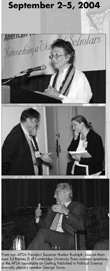
From top: APSA President Susanne Hoeber Rudolph; Journal Manager Ed Barnes (l) of Cambridge University Press answers questions at the APSA roundtable on Getting Published in Political Science Journals; plenary speaker George Soros.
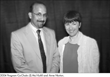
2004 Program Co-Chairs (l) Atul Kohli and Anne Norton.
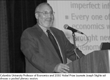
Columbia University Professor of Economics and 2002 Nobel Prize Laureate Joseph Stiglitz addresses a packed plenary session.
 You have Access