INTRODUCTION
From the early days of mortar dating it has been well known that mortars usually contain improperly burned limestone (Stuiver and Smith Reference Stuiver, Smith, Chatters and Olson1965) and aggregate limestone-sand grains that can cause an aging effect on dating results (Labeyrie and Delibrias Reference Labeyrie and Delibrias1964; Baxter and Walton Reference Baxter and Walton1970). The development in sample preparation procedures, both early and more recent, has focused on eliminating these contaminants (Folk and Valastro Reference Folk and Valastro1976; Van Strydonck et al. Reference Van Strydonck, Dupas and Dauchot-Dehon1983; Van Strydonck and Dupas Reference Van Strydonck and Dupas1991; Heinemeier et al. Reference Heinemeier, Jungner, Lindroos, Ringbom, von Konow and Rud1997; Nawrocka et al. Reference Nawrocka, Michniewicz, Pawlyta and Pazdur2005; Lindroos et al. Reference Lindroos, Heinemeier, Ringbom, Braskén and Sveinbjörnsdóttir2007; Hodgins et al. Reference Hodgins, Lindroos, Ringbom, Heinemeier and Brock2011; Marzaioli et al. Reference Marzaioli, Lubritto, Nonni, Passariello, Capano and Terrasi2011; Ortega et al. Reference Ortega, Cruz Zuluaga, Alonso-Olazabal, Murelaga, Inasausti and Ibanez-Exteberria2012; Hayen et al. Reference Hayen, Van Strydonck, Boaretto, Lindroos, Heinemeier, Ringbom, Hueglin, Michalska, Hajdas, Marzaioli, Maspero, Galli, Artioli, Moreau, Guibert and Caroselli2016; Rojo et al. Reference Rojo, Cabo, Grossi and Alonso2016; Hajdas et al. Reference Hajdas, Lindroos, Heinemeier, Ringbom, Marzaioli, Terrasi, Passariello, Capano, Artioli, Addis, Secco, Michalska, Czernik, Goslar, Hayen, Van Strydonck, Fontaine, Boudin, Maspero, Panzeri, Galli, Urbanova and Guibert2017; Nonni et al. Reference Nonni, Marzaioli, Mignardi, Passariello, Capano and Terrasi2018). There are, however, other contaminants, which can cause biased ages in the other direction i.e. too young ages. They are also common, but they are difficult to handle and so far, they have attained little attention even though their existence is known. These problematic components are (1) calcite formed in delayed hardening if the sampling depth vs. permeability for carbon dioxide is too big and (2) reactivation due to fire damage. The problems may be identified at the sampling site or in the laboratory, but sometimes only a radiocarbon (14C) profile from the hydrolysis reaction will reveal them. The most problematic effect of these contaminants is that they dissolve rapidly in acid hydrolysis and therefore undermine the Folk and Valastro (Reference Folk and Valastro1976) concept that CO2 released early in the hydrolysis reaction would yield the correct binder calcite age. On the other hand, there is the possibility that the young carbonates dissolve so rapidly that it may still be possible to read the archaeological age from later CO2 fractions in the 14C profile (provided that there is only few aging contaminants and they dissolve slowly). In this article, we will discuss some sampling strategies when delayed hardening is expected and we present some 14C profiles where young carbonates are present, but still an original calcite binder age can be deduced from the 14C age profile.
Materials and methods
Five cases with young calcite causing a bias to the original calcite binder age are discussed:
-
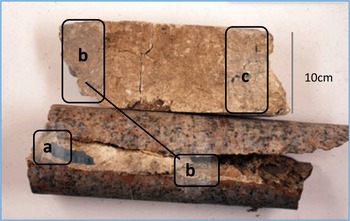
1. In an early dating attempt in 1995, we utilized sample material from a drill core (Figure 1) in connection with electrical installations in the Saltvik church on the Åland Islands in SW Finland. The drill-core is 10 cm in diameter and 60 cm long and from the northern wall of the nave 1 m above ground level. The Åland Islands, near the Swedish east coast, are almost entirely composed of Precambrian Rapakivi granite but the postglacial overburden is rich in Ordovician (Tynni Reference Tynni1982) limestone blocks, and these have been used extensively for lime production. The mortars made from the blocks are usually soft, porous, white lime mortars. Three samples were dated: from the external surface, from 30-cm depth, and from 50-cm depth. According to dendrochronology there was an active building period during 1373–1381 in the tower, which post-dates the nave (Ringbom and Remmer Reference Ringbom and Remmer2000; Heinemeier et al. Reference Heinemeier, Ringbom, Lindroos and Sveinbjörnsdóttir2010).
-
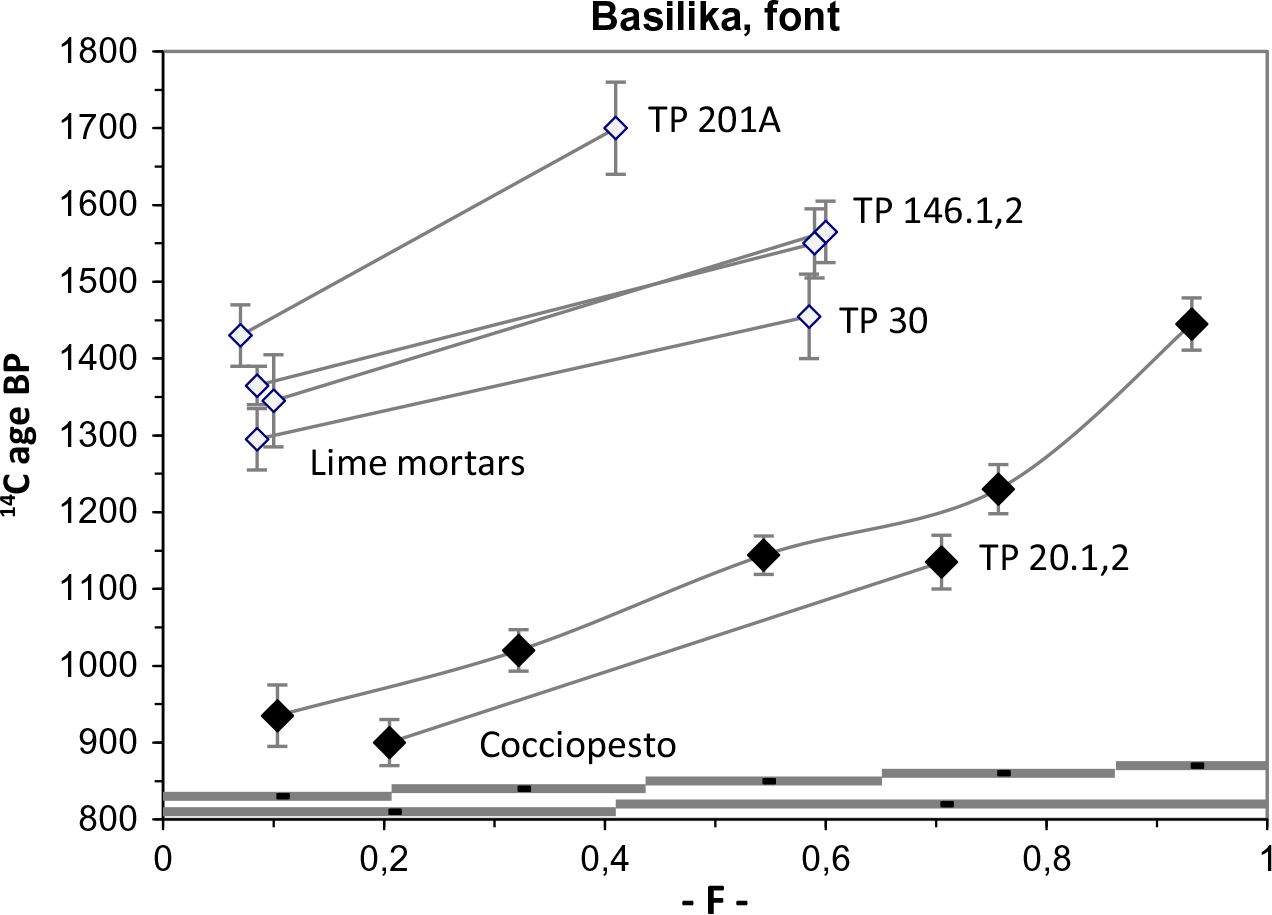
2. Extensive mortar dating was conducted during the 1997–2000 archaeological excavations by the University of Louisville (Kentucky, USA) in Torre de Palma, eastern Portugal, the largest Roman villa in the Iberian Peninsula (Langley et al. Reference Langley, Maloney, Ringbom, Heinemeier and Lindroos2011). The chronology of the villa complex was poorly known when we started testing mortar dating at the site. The Torre de Palma samples were important when we developed sample preparation methods, especially the selection of grain size after sieving. As we dated the samples at that time in two large CO2 fractions, it was difficult to know whether a sample gave a reliable age or if there was something wrong with it. After dating a large number of samples (N=64) a pattern emerged that hard mortars containing crushed or ground ceramics, cocciopesto, always yielded younger ages than other samples that seemed to be from the same chronological stage, and never did they give similar ages for both the CO2 fractions, and especially the first fraction turned out suspiciously young. When one of the cocciopesto samples yielded a modern (negative, pre-bomb age) for the first CO2 fraction we were sure that this kind of sample should be avoided in the future. Among plenty of samples from water-resistant constructions such as olive- and wine tanks as well as water tanks adjoined to baths, bathroom floors and fonts, there were many opportunities to test samples of mortars mixed with terracotta or bricks to improve the impermeability, and to compare these with results of lime mortars from the same construction. Consistently, the result was that the cocciopestos reflected delayed hardening. We will present results from the font of the early Christian Basilica at the site.
-
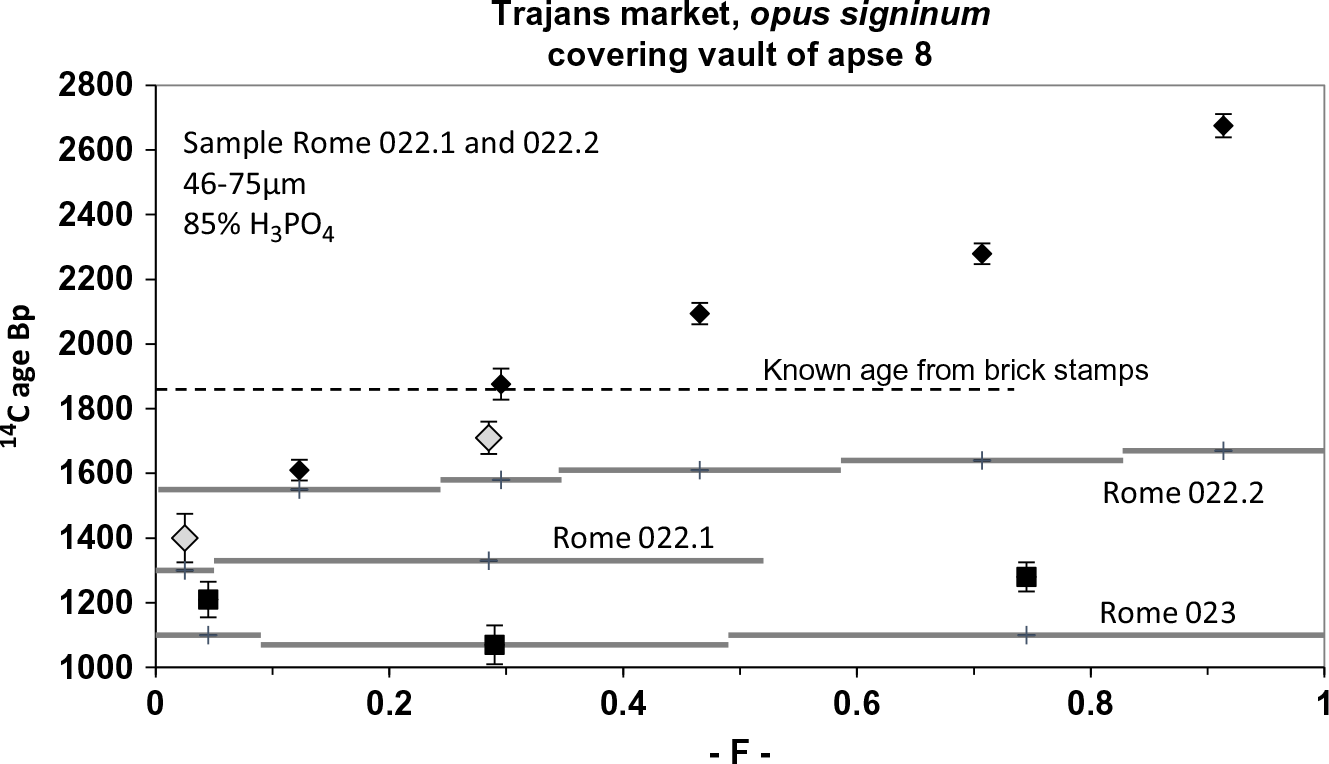
3. In 1999, we collected a number of Roman hydraulic mortars from Trajan’s Market in Rome. They contained either pozzolanic soil or crushed ceramics as aggregate. We sampled the mortars from between bricks in wall and vault constructions where the early 2nd century AD age is well-known from brick stamps (Packer Reference Packer1995). It was, however, difficult to extract a CO2 fraction from the samples that would yield the correct mortar binder age. The measurements gave very variable results depending on how far the dissolution reaction was allowed to proceed (Lindroos et al. Reference Lindroos, Heinemeier, Ringbom, Brock, Sonck-Koote, Pehkonen and Suksi2011; Ringbom et al. Reference Ringbom, Heinemeier, Lindroos and Brock2011). A common problem was that initially produced CO2 usually yielded too young ages, and the mortars with crushed tiles as aggregate were the most problematic in this respect. We will present a sampling depth profile with three samples from pozzolanic mortar and two 14C profiles from opus signinum (cocciopesto in modern Italian) mortars with aggregate composed of crushed or ground tile, covering a vault.
-
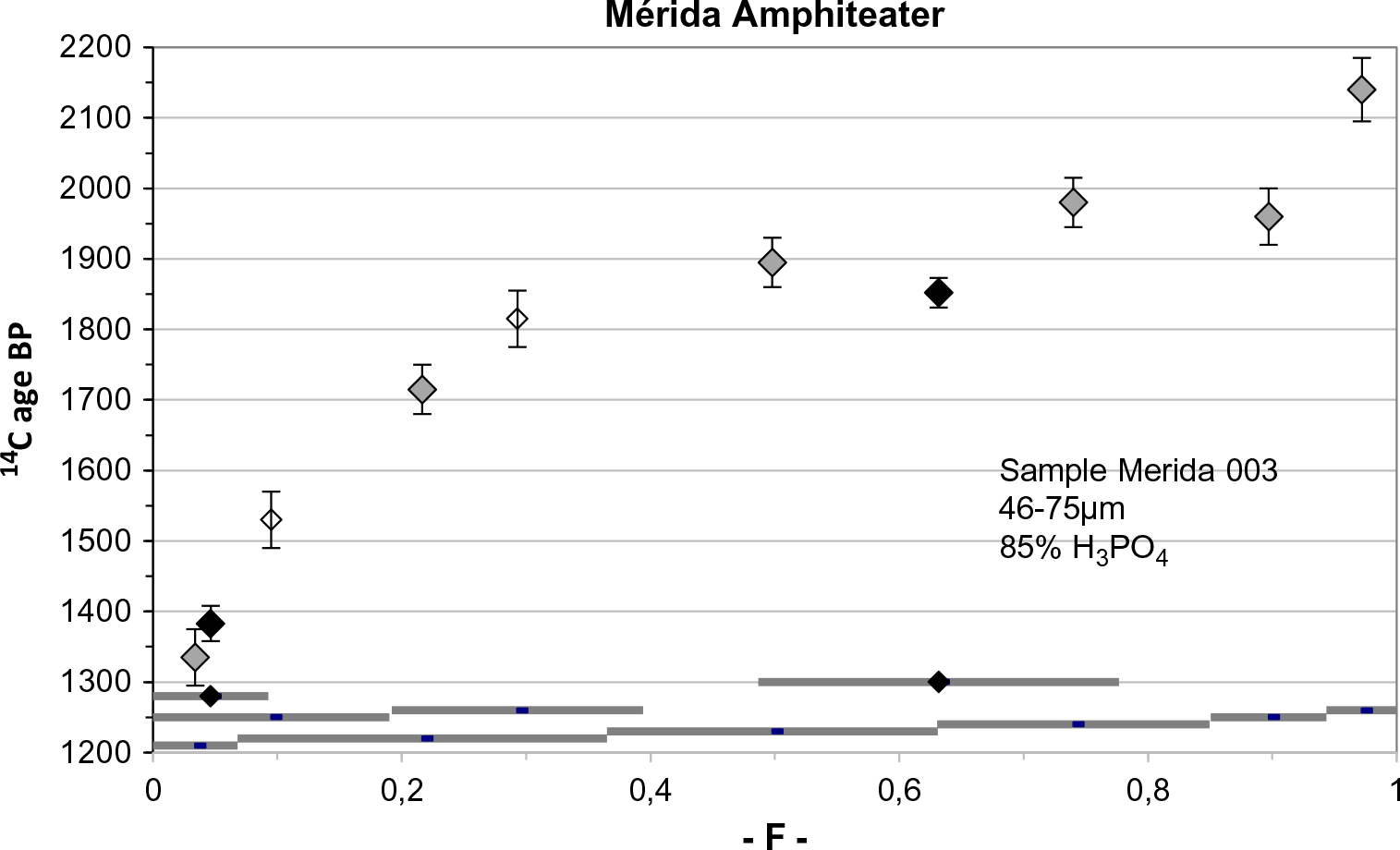
4. In 2000, we sampled the Mérida amphitheater in eastern-central Spain. We encountered extremely hard Roman mortars, as hard as modern concrete and thus difficult to sample. According to Mota-Lopes et al. (Reference Mota-López, Fort, Álvarez de Buergo, Pizzo, Maderuelo-Sanz, Meneses-Rodríguez and Ergenç2018), the original mortars in the amphitheater are classified as hydraulic and the amphitheater was built soon after Emperor Augustus founded the city Emerita Augusta in 25 BC. However, when we took the samples together with the director of the museum, Pedro Mateo Cruz, the common understanding was that the amphitheater was Flavian, late 1st century AD. We dated three of the samples, one of them in six successive CO2 fractions. This sample is from the passage towards the northeast, high up on the eastern side of the passageway. Here we will discuss this sample and leave our conclusion regarding the age of the amphitheater until later (Lindroos et al. Reference Lindroos, Schrøeder-Daugbjerg, Olsen, Ringbom and Heinimeier2020 and forthcoming congress volume of Geochronometria).
-
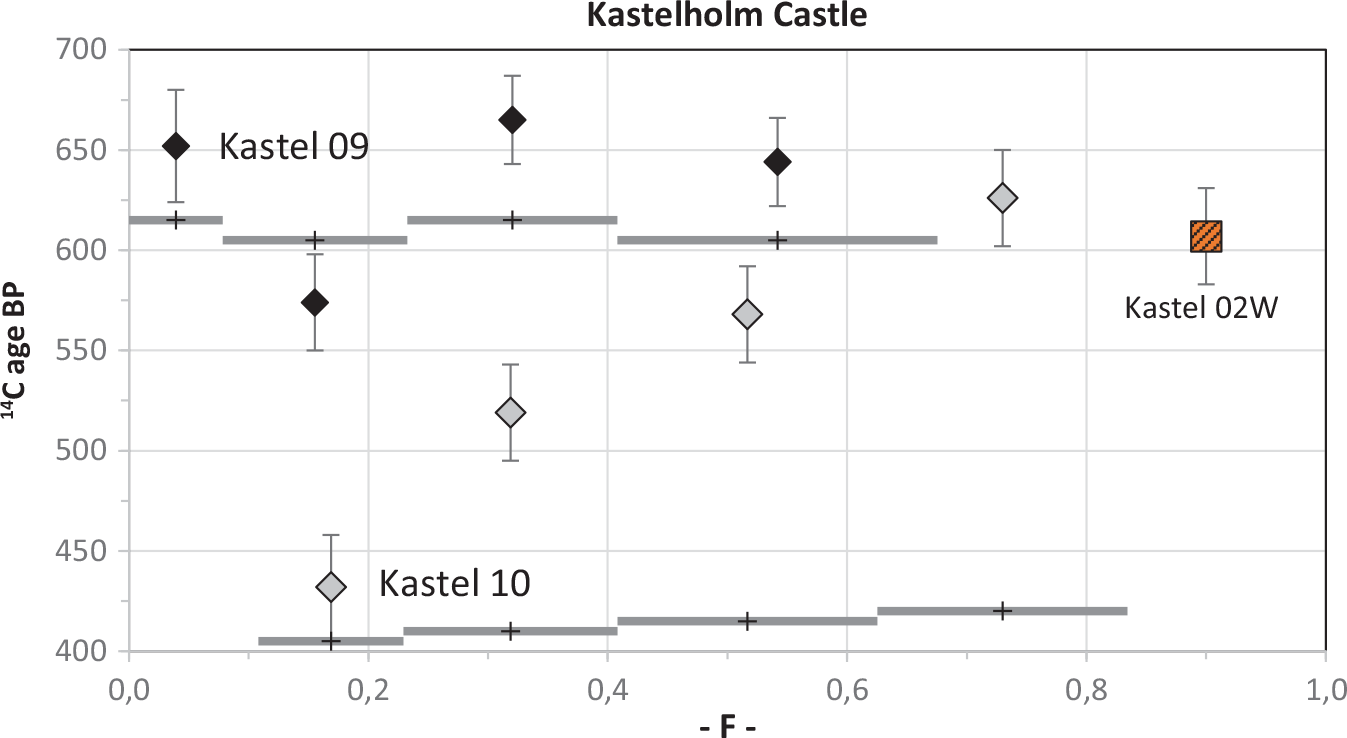
5. The Kastelholm Castle on the Åland Islands was dated as early as 1985 by Helsinki University (Sonninen et al. Reference Sonninen, Erämetsä, Jungner and Maniatis1989) using conventional radiometric methods on mortar carbonate. The expected age is 13th or 14th century AD. The radiometric results were, however, not satisfactory because of large error margins and suspiciously old ages suggesting 12th–13th century. In 2018, we sampled the castle and it turned out that limestone contamination was only a minor problem, whereas alkalinity and reactivated hardening after fire damage caused major problems. After dating 10 samples and measuring 60 CO2 fractions in Aarhus and Zürich, we could only conclude that the oldest parts of the castle have ages affected by the problematic 14th century calibration curve. A typical 14C profile from a problematic sample, showing rapidly dissolving young carbonate, is presented and compared with a profile from a better sample next to it.
Drill core from the Saltvik church, northern wall of the nave. Samples 123a-c. The left end represents the external wall of the church, and the right end of the upper piece is the deepest part of the core. It has been lifted up from the lower right corner of the figure. Nearly all stone blocks of the church are local rapakivi granite. The small dark stone wedge to the left is amphibolite.
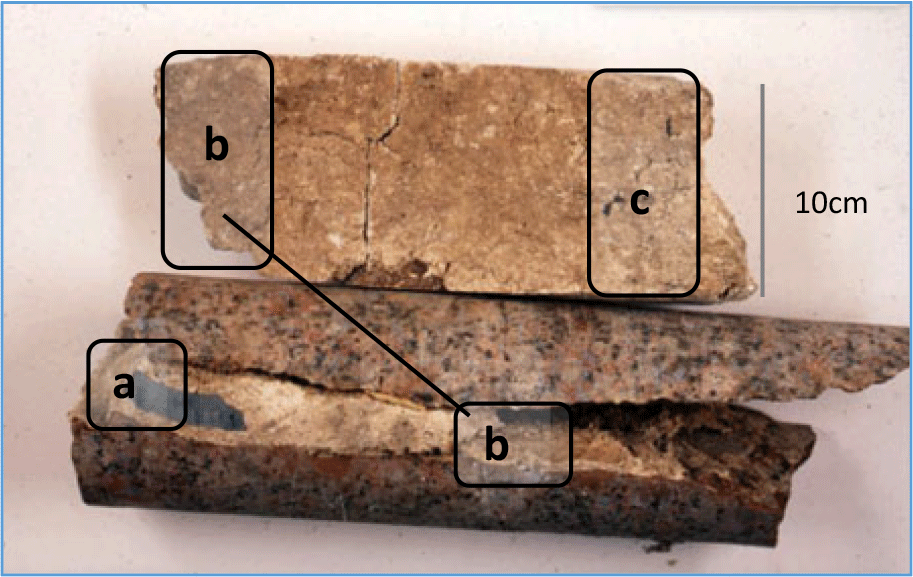
The sample preparation procedures are described in e.g. Lindroos et al. (Reference Lindroos, Heinemeier, Ringbom, Braskén and Sveinbjörnsdóttir2007), Heinemeier et al. (Reference Heinemeier, Ringbom, Lindroos and Sveinbjörnsdóttir2010), and Lichtenberger et al. (Reference Lichtenberger, Lindroos, Raja and Heinemeier2015). The goal of the preparation is to produce a fine, well-defined and narrow grain-size window of the crushed and sieved sample material for dating. However, it should be coarse enough to sink rapidly in 85% phosphoric acid at 0ºC. It has usually been the 46–75 µm fraction, but in early experiments it has varied (Table 1). About 100 mg of the 300–500 µm grain-size is checked for alkalinity with two drops of phenolphthalein solution in about 10 mL water. The sample powders for dating are checked with a stereo microscope and cathodoluminscence (CL) for luminescent geological carbonates (Marshall Reference Marshall1988) and the hydraulicity is checked with loss on ignition (LOI). The ratio between weight losses between 550 to 900ºC from calcite and 250 to 550ºC from hydraulic minerals gives a measure of the hydraulicity (Bakolas et al. Reference Bakolas, Biscontin, Moropoulou and Zendri1998). For the Mérida and Kastelholm samples, there are also proper thermo-gravimetric (TGA) profiles. Thin sections for petrographic microscopy are made for some samples representing certain sample series. None of the samples discussed here have thin sections, but there are thin sections from the series they represent.
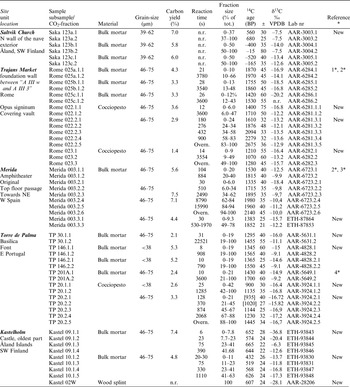
Sample, hydrolysis and 14C AMS data for the analyzed mortars. Some of the data has been published earlier: 1—Ringbom et al. (Reference Ringbom, Heinemeier, Lindroos and Brock2011), 2—Ringbom et al. (Reference Ringbom, Hale, Heinemeier, Lindroos and Brock2006), 3—Hale et al. (Reference Hale, Heinemeier, Lancaster, Lindroos and Ringbom2003), and 4—Langley et al. (Reference Langley, Maloney, Ringbom, Heinemeier and Lindroos2011). *If the reference number has an asterisk, the data has only been published in graphical form. “New” denotes that the results have not been published earlier, although some measurements were made between 1997 and 2001.
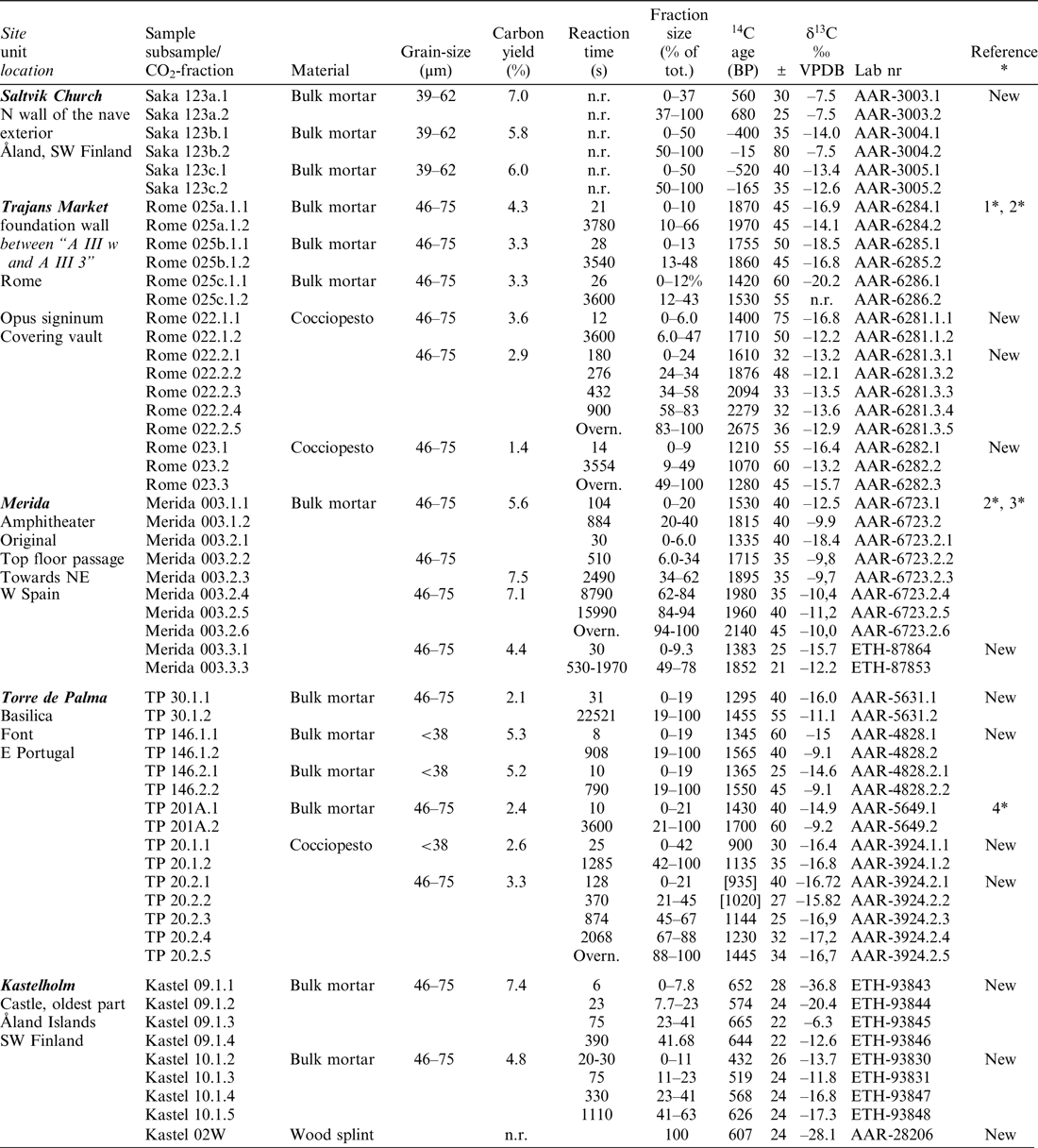
The hydrolysis procedures for the AMS-based 14C measurements have developed during the time the samples presented here were analyzed. Until 2008, all samples were prepared in Aarhus using a multipurpose line and after that at Åbo Akademi University using a dedicated preparation line for sequential dissolution. The basic principles were adopted from carbonate isotope (13C, 18O) geochemistry (Craig Reference Craig1953), where phosphoric (H3PO4) acid is used in the hydrolysis instead of hydrochloric acid, which had been used by many of the pioneers (e.g. Folk and Valastro and Van Strydonck). However, it was apparent from the beginning that partial dissolution favoring the binder carbonate would be better than total dissolution, and because we used partial dissolution, we could use factory produced 85% H3PO4 instead of dehydrated 100% ditto. In case we also measured 18O, the results would be biased anyway because of the uncompleted reaction and water produced in the hydrolysis. The Folk and Valastro (Reference Folk and Valastro1976) concept that a short dissolution time and a low percentage of the total carbon inventory would yield the best age estimate is facilitated by AMS procedures because the required amount of carbon could be reduced from hundreds of grams to milligrams. Like the mortar dating pioneers (Folk and Valastro Reference Folk and Valastro1976; Van Strydonck et al. Reference Van Strydonck, Dupas and Dauchot-Dehon1983, Reference Van Strydonck, Dupas, Dauchot-Dehon, Pachiaudi and Marechal1986), we also dated the mortars in two CO2 fractions and considered the first CO2 fraction as the valid dating while the second CO2 fraction served as a control of contamination, presuming that limestone contamination would dissolve more slowly than the binder carbonate. After dating hydraulic mortars from Rome (1999), we increased the number of measured CO2 fractions because it was obvious that the samples contained contaminants with opposing effects so that 14C profiles based on only two CO2 fractions could not reveal all the problems. A multifraction concept including total dissolution similar to the approaches used in geological carbonate dating (Burr et al. Reference Burr, Edwards, Donahue, Druffel and Taylor1992) was developed. In Table 1, the dissolution times for each CO2 fraction as well as achieved carbon yields are presented. 14C calibration is done using OxCal 4.3 (Bronck-Ramsey Reference Bronk Ramsey2017) and the IntCal 13 dataset (Reimer et al. Reference Reimer, Bard, Bayliss, Beck, Blackwell, Bronk Ramsey, Buck, Cheng, Edwards, Friedrich, Grootes, Thomas, Guilderson, Haflidason, Hajdas, Hatté, Heaton, Hoffmann, Hogg, Hughen, Kaiser, Kromer, Manning, Niu, Reimer, Richards, Scott, Southon, Staff, Christian, Turney and van der Plicht2013).
Results
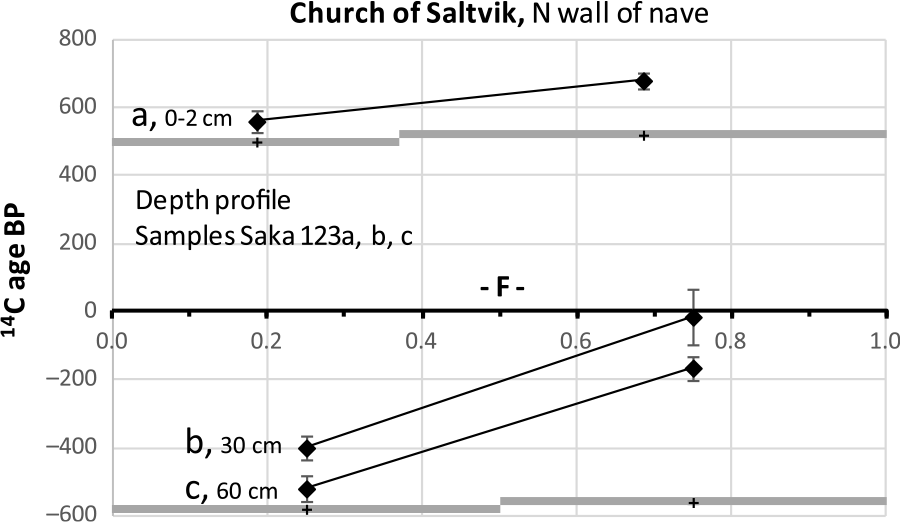
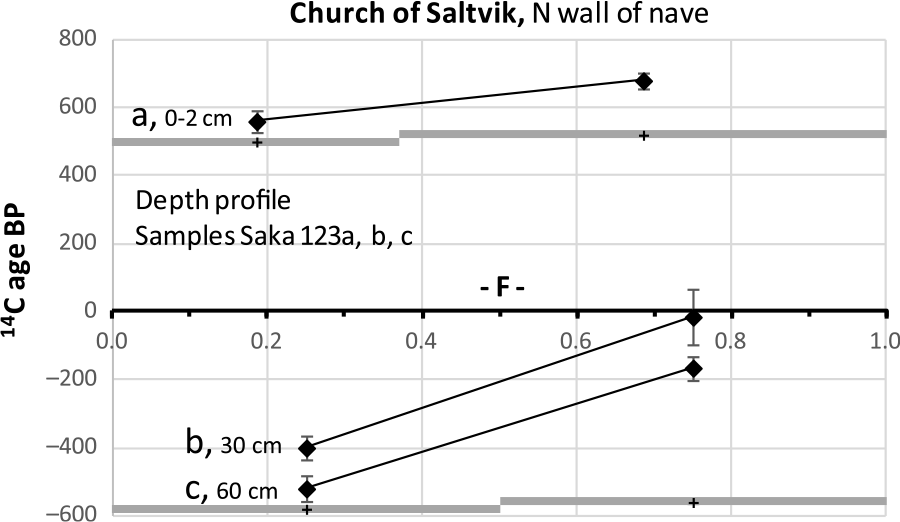
The drill-core from the nave of the Saltvik church with the three-sample depth profile (Figure 1, 2 samples Saka 123a-c, Table 1) shows clearly that sampling at depth by means of drilling into a construction cannot be recommended even if the mortar is soft and porous.
Three 14C profiles, a, b, and c from a drill core: a is from the surface to 2 cm depth, b represents 30 cm depth, and c, 50 ditto. The profiles have two CO2 fractions, their sum representing near-total dissolution. Connecting lines indicate CO2 fractions from the same sample. Only CO2 fraction 1 from sample a yields a reasonable 14C age, 560 ± 30 BP, which is similar to that of other surface samples from the nave (Heinemeier et al. Reference Heinemeier, Ringbom, Lindroos and Sveinbjörnsdóttir2010) but probably not the oldest part of the nave (Ringbom and Remmer Reference Ringbom and Remmer2000). Deeper parts of the drill core were alkaline and produced modern ages. The gray horizontal bars denote the CO2 fraction sizes. The parameter F is the ratio of released CO2 to total CO2 yield.
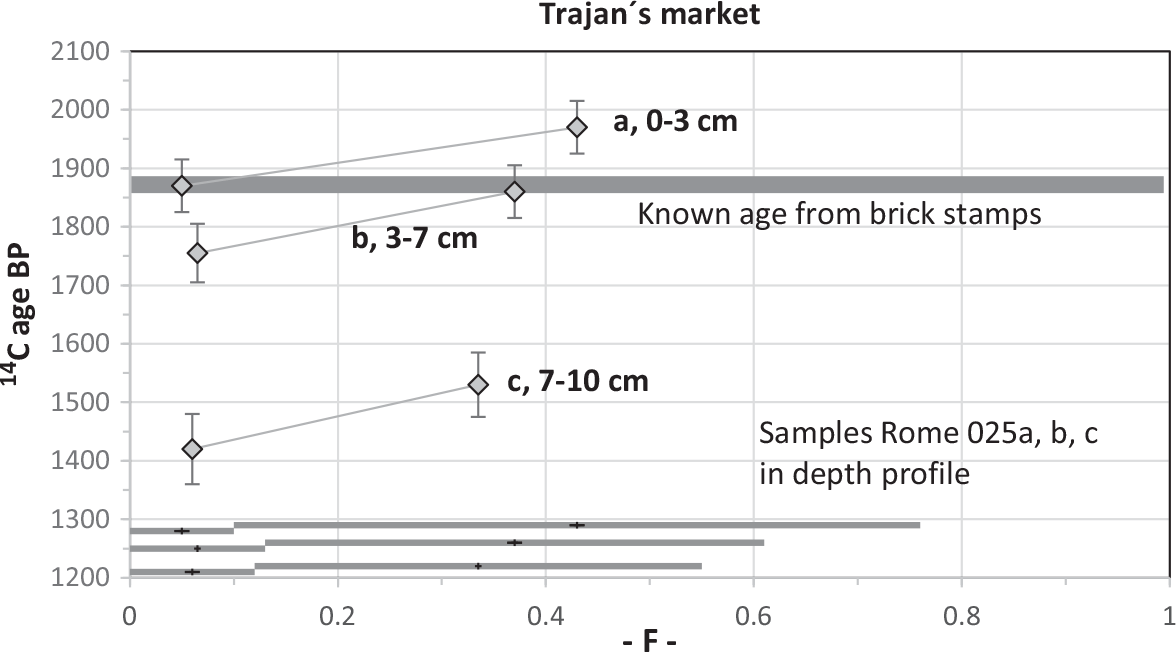
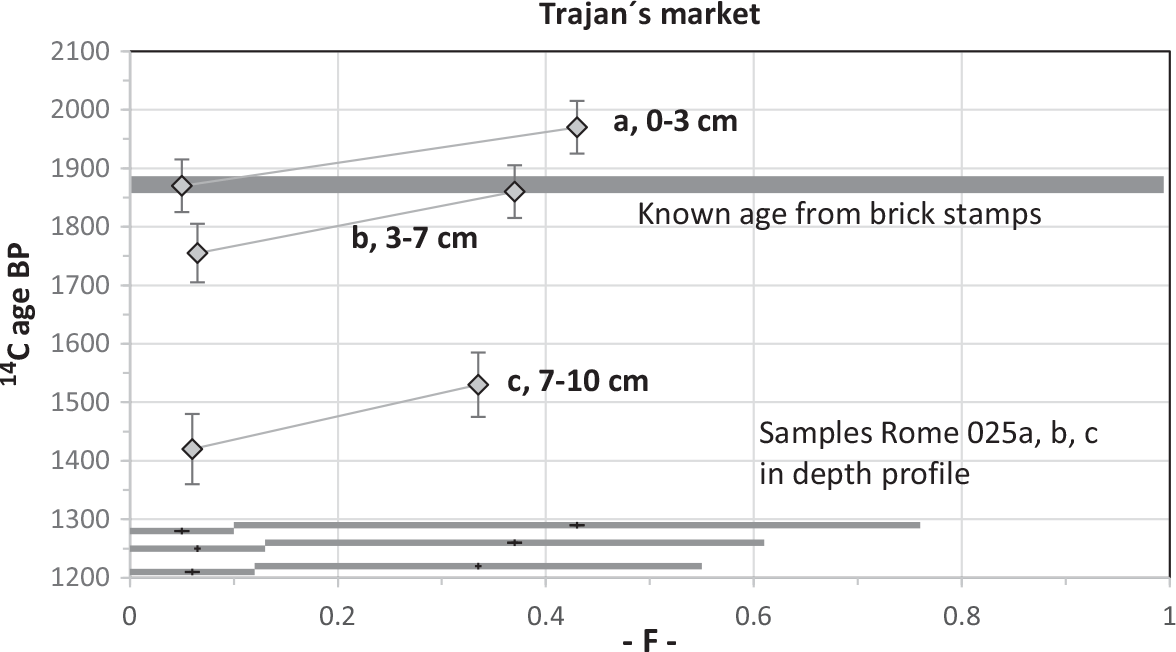
For hard and dense mortars, the sampling depth is critical and should be restricted to the very surface. As an example, we have a depth profile in Roman pozzolana mortar from Trajan’s Market. Here a brick in a foundation wall had fallen off and we could take three samples from mortar that had been in contact with the upper surface of the brick. According to brick stamps, the mortar should be Trajan, around AD 110. In this case sample Rome-025a represents 0–3 cm, sample -025b 3–7 cm and sample -025c 7–10 cm. In these profiles, as well as in later ones, the first CO2 fraction is made smaller than the second one and together they represent only partial dissolution (Figure 3). Again, the surface sample gives the expected age but already from 3-cm depth, the samples showed delayed hardening. Sample Rome-025a was later reanalyzed in five CO2 fractions in Oxford using a similar preparation line. This time the first CO2 fraction, representing 5.0% of the carbon inventory gave the age 1932 ± 27 BP (cal AD 8–129, 95.4%). The Oxford profile is presented graphically in Ringbom et al. (Reference Ringbom, Heinemeier, Lindroos and Brock2011).
A 10-cm-deep sampling profile with three samples, Rome 025a, -025b, and -025c dated in two CO2 fractions. From pozzolana mortar at Trajan’s Market, Rome. The thick gray bar is the area of possible 14C ages for a Trajan age around AD 110 according to brick stamps.
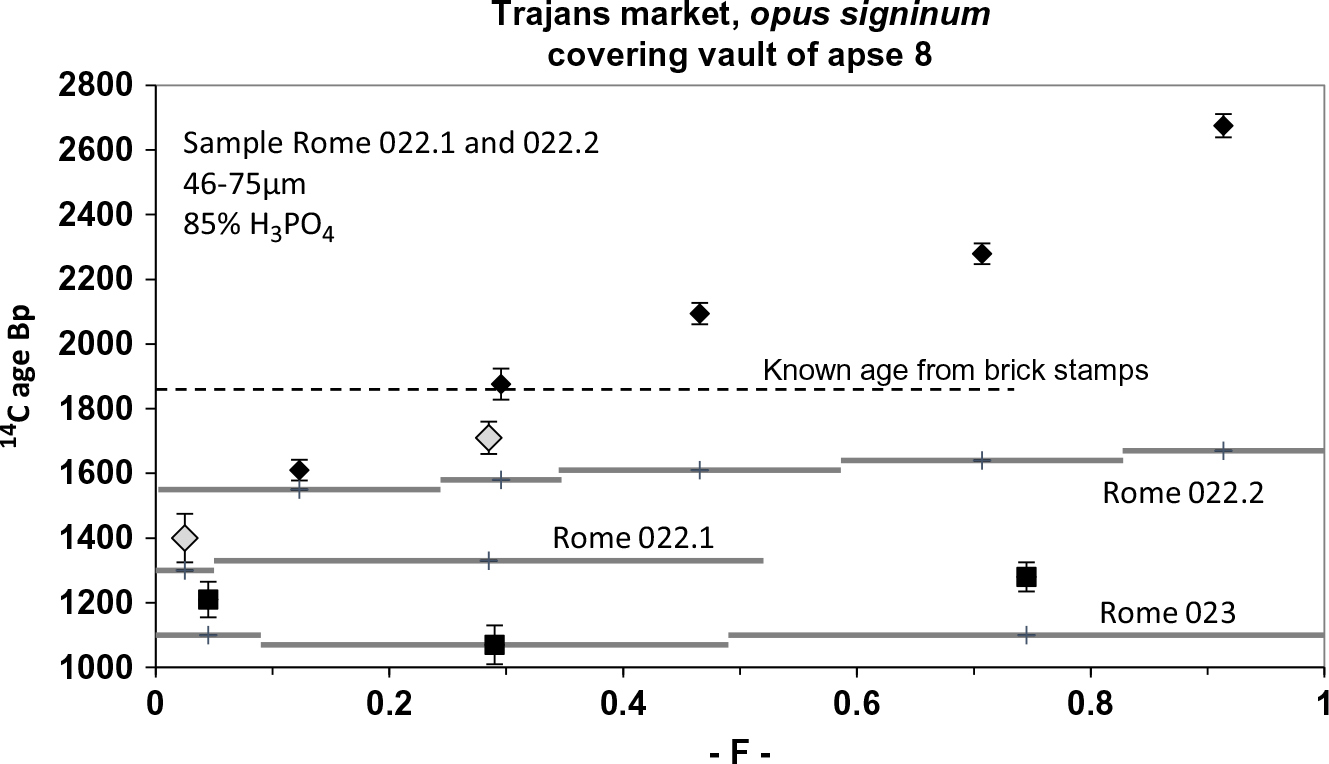
An opus signinum covering a vault at Trajan’s Market was also sampled. Two mortar samples were hard and contained abundant crushed tile. Sample Rome 022 was dated in two CO2 fractions, and sample Rome 023 in two CO2 fractions as well as a residual fraction to achieve complete dissolution. The former is presented as gray diamonds and the latter as boxes in Figure 4. Both samples yielded only unreasonable young ages as brick stamps in the mortared brickwork indicate that the vault was built around AD 110. Sample Rome 022 was redated as a five-fraction profile (black diamonds). The better resolution now reveals that there are slowly dissolving dead carbon contaminants and rapidly dissolving young contaminants from delayed hardening. The decreasing slope of the profile from the beginning towards the middle has later (Lichtenberger et al. Reference Lichtenberger, Lindroos, Raja and Heinemeier2015) been used as an indication of delayed hardening due to persistent alkalinity.
14C profiles from two cocciopesto mortars showing delayed hardening. Sample Rome 022 was redated in five CO2 fractions (black diamonds), the increased resolution revealing rapidly dissolving young carbonates and slowly dissolving dead carbonate contamination. The decreasing slope from the left towards the middle is diagnostic of samples with delayed hardening.
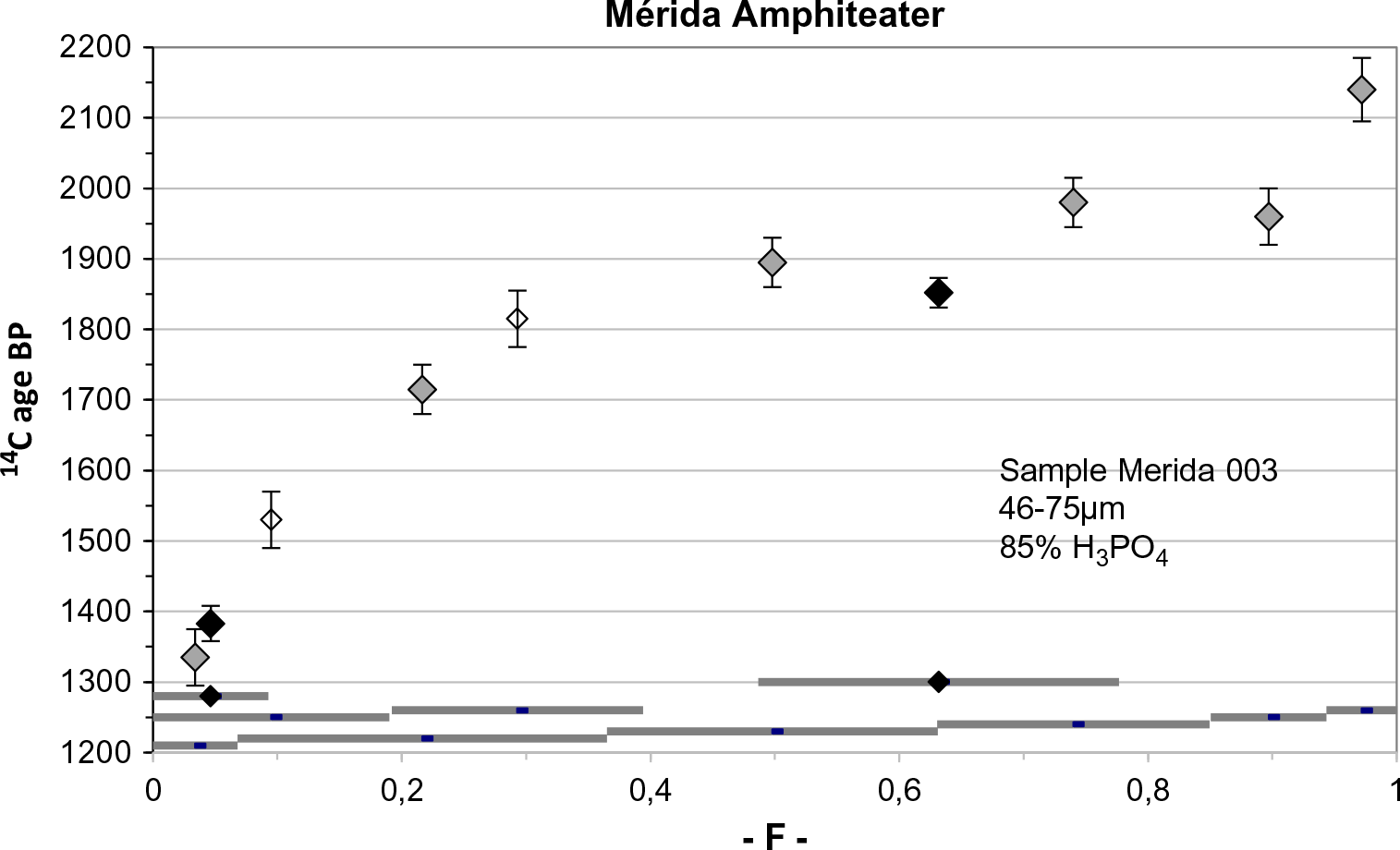
The Roman mortars in the Merida amphitheater, eastern Spain, were even harder than the pozzolana mortars in Rome. This is because of their hydraulic character that is not achieved by adding pozzolana, but because the limestone was burned together with clay (Mota-Lopez et al. Reference Mota-López, Fort, Álvarez de Buergo, Pizzo, Maderuelo-Sanz, Meneses-Rodríguez and Ergenç2018). In that sense, they have similarities with modern concrete. However, they had relatively high carbon yields. For four samples, the span was 5.6–8.0%. In partial dissolution, the first CO2 fractions gave unreasonably young results whereas the second fractions approached the expected Flavian age in late 1st century AD. We decided to analyze sample Merida 003 in six CO2 fractions (gray diamonds in Figure 5) to monitor the possible carbon sources and their 14C inventories. It turned out that the mid-parts of the 14C profile actually reflect a Flavian age and later CO2 fraction reflect both Flavian and Augustan ages, and apparently, the mortars have very little dead carbon contamination. The profile has been published in Hale et al. (Reference Hale, Heinemeier, Lancaster, Lindroos and Ringbom2003) and Ringbom et al. (Reference Ringbom, Hale, Heinemeier, Lindroos and Brock2006). The sample Merida 003 is described in some detail in Lindroos (Reference Lindroos2005). In 2018, we completed the profiles with two more measurements (the black diamonds in Figure 5) on the 46–75-µm powder aliquot that had been in a container for 18 yr. One early CO2 fraction was measured in Aarhus with the new HVE 1 MeV accelerator and a mid-profile fraction was measured with the Zürich ETH, MICADAS accelerator at 200keV (Synal et al. Reference Synal, Stocker and Suter2007), the latter supporting the Flavian age (Figure 5). However, the profile is only presented here in order to show the complexity of this kind of mortar. Two more samples were analyzed with focus on the mid-region of the profiles and the actual age of the amphitheater, but the results will be published elsewhere (Lindroos et al. Reference Lindroos, Schrøeder-Daugbjerg, Olsen, Ringbom and Heinimeier2020 and forthcoming congress volume).
14C measurements of one sample from the Merida Amphitheater. The first dating denoted with two open diamonds, complementary measurements with six gray diamonds and redating in 2018 with black diamonds. Nearly 40% (F 0.0–0.4) of the sample is dissolved before it starts producing 1st century AD ages. On the other hand, the sample is no longer active because the black diamond to the left is in concordance with the general trend although it represents the same sample powder that was analyzed 18 yr earlier and it had been stored in a container that is not airtight.
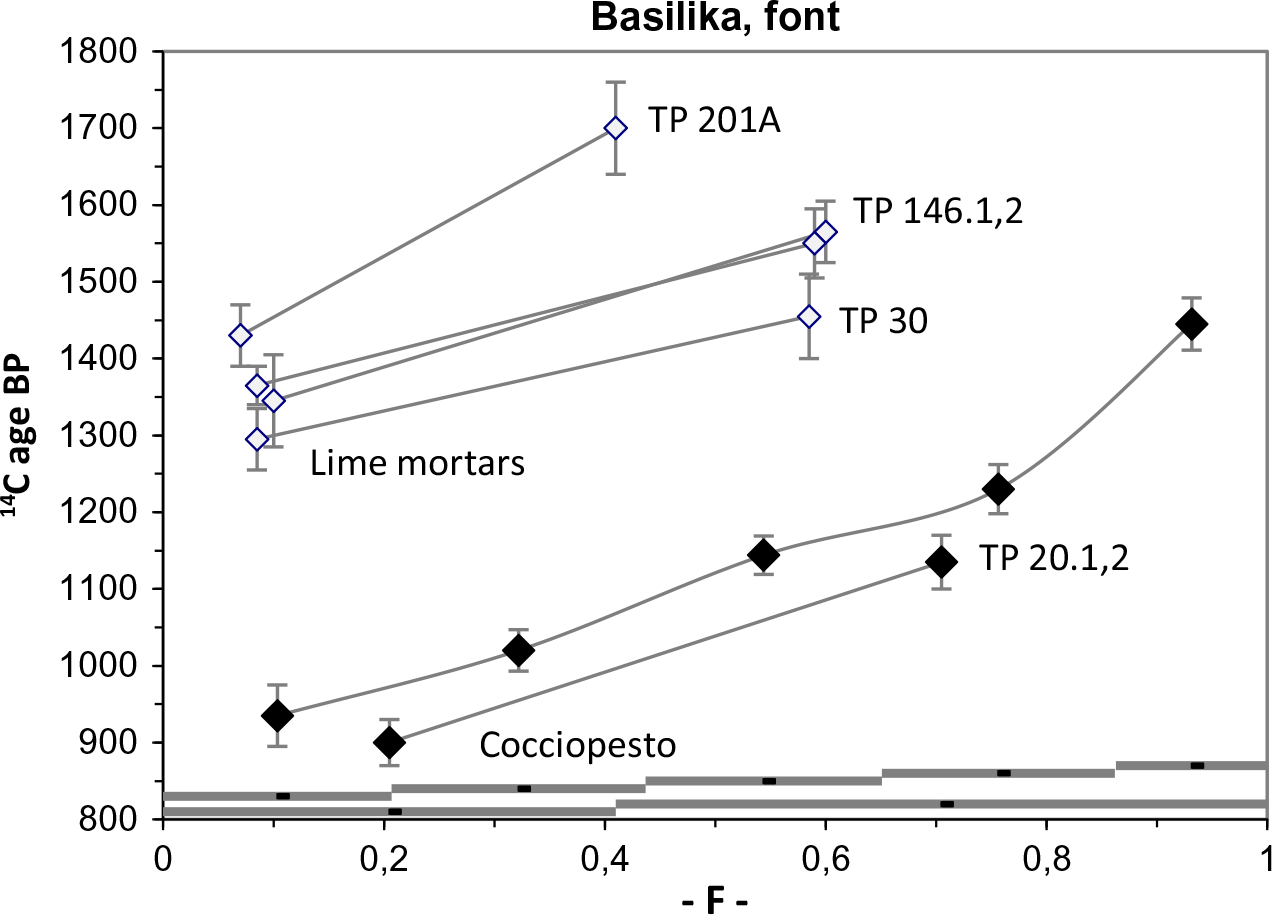
As early as 1997, we tried to date Roman cocciopesto mortars in Torre de Palma in eastern Portugal. All of them gave younger ages than expected. However, the ages from lime mortar samples from the same building phase produced older ages, more in line with the general context (see Langley et al. Reference Langley, Maloney, Ringbom, Heinemeier and Lindroos2011; Ringbom et al. Reference Ringbom, Lindroos, Heinemeier and Sonck-Koota2014). One of the cocciopesto mortars produced a negative age although it was certain that no one had made repairs in modern times at the site. Among the samples, one is from the font of the basilica. Thirteen samples from the walls of the initial basilica gave the combined age AD 530–620 (Ringbom et al. Reference Ringbom, Hale, Heinemeier, Lindroos and Brock2006). The first dating was in two CO2 fractions shown as the lowermost profile in Figure 6. At the same time, we analyzed three lime mortars from the surrounding structures of the font. One of the mortars (TP 146) was analyzed twice with similar results, but better resolution the second time. All of the lime mortars show clearly older ages, and their first CO2 fractions seem to concur around 1300 BP, which would be a reasonable age for the font. The cocciopesto mortar was remeasured in five CO2 fractions, but it is not possible to read the mortar binder age from the profile.
14C profiles showing the difference in obtained age between cocciopesto mortar and lime mortar from the same structure, a font in an early Christian church in eastern Portugal. Connecting lines indicate CO2 fractions from the same sample. The gray bars along the abscissa, denoting the CO2 fraction sizes are shown only for the cocciopesto mortar. According to Langley et al. (Reference Langley, Maloney, Ringbom, Heinemeier and Lindroos2011), based on lime mortar dates and artifacts found as well as the general context, the font is from the 7th century AD.
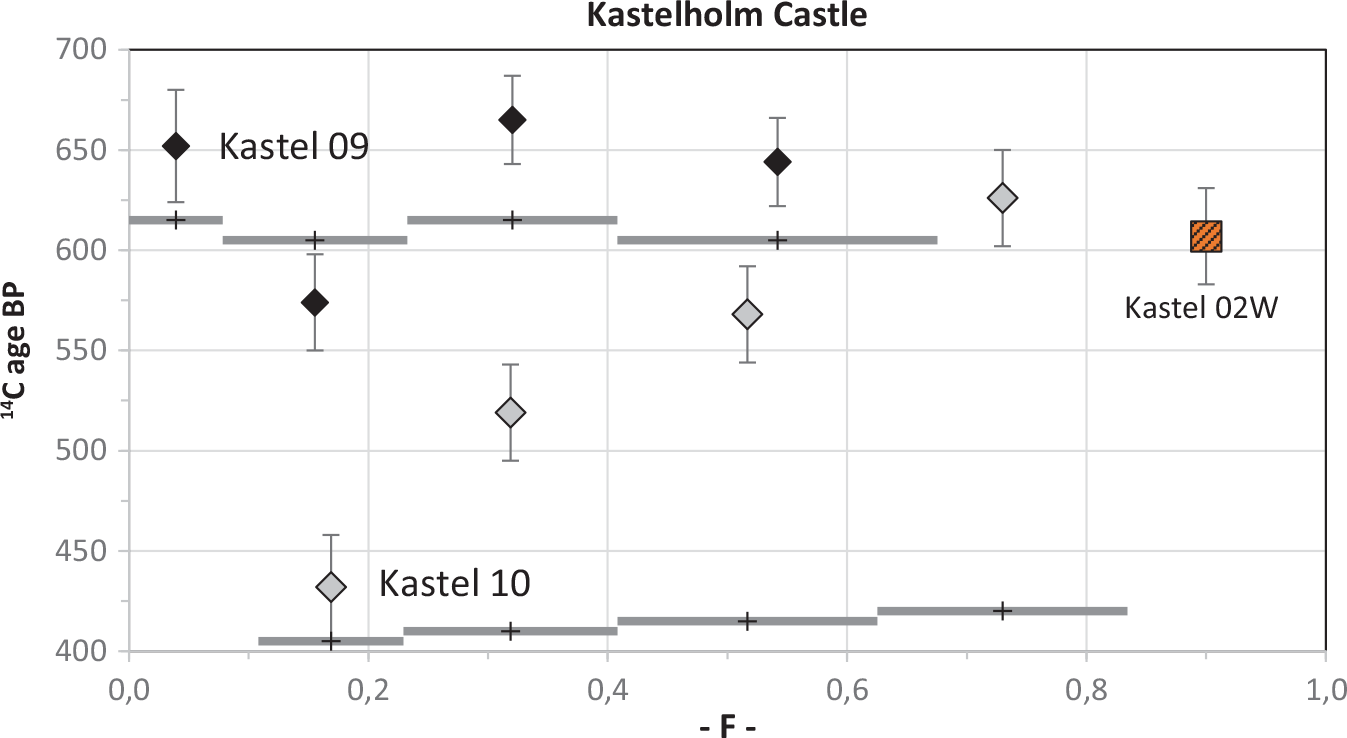
In 2018 we attempted to date the Kastelholm Castle in the central part of the Åland Islands. This site was the first one in Finland where mortar dating was tested by Helsinki University as early as 1985 using radiometric methods (Sonninen et al. Reference Sonninen, Erämetsä, Jungner and Maniatis1989). They dissolved several hundred grams of sieved mortar powder in 1M HCL and dated it as one CO2 fraction. The results were near the expected age, 13th–14th century AD, but generally about one century older. We found original mortar only in a window niche at ground floor level in the “Kuretower”. Ten samples were taken for dating. The mortars were again very hard and all of them except one (Kastel 09) showed delayed hardening or possibly also reactivation because there were signs of fire, e.g. soot on some of the surfaces and granitic blocks with onion-shell type fractures. In the alkalinity test before hydrolysis, sample Kastel 10 was more alkaline than sample Kastel 09. The former is also clearly more hydraulic than the latter. When considering hydraulicity as loss on ignition (LOI) 550–900ºC relative LOI 250–550ºC (Bakolas et al. Reference Bakolas, Biscontin, Moropoulou and Zendri1998) sample Kastel 10 was hydraulic and Kastel 09 non-hydraulic with the ratio 5.6 for Kastel 10 and 14.5 for Kastel 09. A ratio <10 is defined as hydraulic. Figure 7 shows 14C profiles from the sample Kastel 09 without young carbonates and from sample Kastel 10 with a typical profile for this site where early CO2 fractions display young 14C ages. In the figure, there is also a dating from a wooden chip found in sample Kastel 02. If the age of the chip is taken as terminus post quem, the two last fractions of the problematic sample have similar ages and for the un-problematic sample only CO2 fraction 3 deviates slightly from that age, probably because of some aggregate limestone contamination visible with CL.
CO2 profiles from two lime mortars, Kastel 09 (upper) and –10 (lower), and a dating from a wooden chip, Kastel 02W (square symbol) in another mortar. The profiles concur at the age of the wooden chip, which is considered terminus post quem for the oldest part of the castle. The mortar binder of sample Kastel 09 and the chip seem to have similar ages, but sample Kastel 10 has abundant young carbonates. The position of the data point for the chip is placed arbitrary along the abscissa.
Conclusions
The hardening of a mortar is a slow process, which is strongly dependent on the permeability of the mortar for CO2. Even porous and soft lime mortars should be sampled from the surface only and not from deeper parts. There is extensive evidence of delayed hardening of mortar samples deep in the walls or in mortars made water resistant through admixture of terracotta or bricks. Obviously hard and dense, hydraulic mortars have a low permeability and the sampling depth is critical, only a few centimeters. In some cases, the right 14C age can only be read from multifraction CO2 profiles if the dead carbon contamination is low. Our present experience with Roman cocciopesto mortars is that even surface samples give younger ages than the right binder calcite age, i.e. the time of the preparation and application of the mortar in a construction.
Acknowledgments
Stephanie Maloney and John Hale invited us to sample in Torre de Palma, which became a turning point for the internationalization of the mortar-dating method. We also want to thank Lynne Lancaster for helping us with the sampling in Rome and Pedro Mateo Cruz for his assistance in Merida. The Åland Museum and Silvana Fagerholm-Sjöblom are acknowledged for assisting us in Kastelholm, and most of all Stig Dreijer for his financial support of the mortar-dating project.