





1. Introduction
Iconicity, taking the recent definition by Winter et al. (Reference Winter, Woodin, Perlman, Fischer, Akita and Perniss2026, p. 139), refers to “a sense of resemblance between at least some aspect of its form and at least some aspect of its meaning” in the production and/or interpretation of a signal. Recent research has uncovered substantial evidence of iconicity exhibited across spoken and signed languages (e.g., Dingemanse et al., Reference Dingemanse, Blasi, Lupyan, Christiansen and Monaghan2015; Perlman et al., Reference Perlman, Little, Thompson and Thompson2018; Perniss et al., Reference Perniss, Thompson and Vigliocco2010). The ubiquity of iconicity in the written modality, though sometimes overlooked, has also been explored, for example, through logographs in Chinese and Japanese (Hiraga, Reference Hiraga and Hiraga2005; Hu, Reference Hu2010; Xiao & Treiman, Reference Xiao and Treiman2012), Egyptian hieroglyphs (Lincke & Kutscher, Reference Lincke, Kutscher, Grossman, Polis and Winand2012) and the Korean script (Hangul), which schematically visualises sound articulations (Coulmas, Reference Coulmas2002). Importantly, iconicity offers valuable insights into the mechanisms of language acquisition and processing, shedding light on a more comprehensive understanding of the richness and complexity of human languages. Given the affordance of modality, the manual modality of signed language has garnered increasing attention with regard to the source and mapping principles of iconic representations. Yet, studies to date mainly revolve around Western sign languages (e.g., Börstell, Reference Börstell2024; Occhino et al., Reference Occhino, Anible, Wilkinson and Morford2017; Ortega et al., Reference Ortega, Schiefner, Lazarus and Perniss2025; Sevcikova Sehyr & Emmorey, Reference Sevcikova Sehyr and Emmorey2019; Trettenbrein et al., Reference Trettenbrein, Pendzich, Cramer, Steinbach and Zaccarella2021), and empirical investigation on the perception of iconicity in Asian sign languages is not extensive (e.g., Lai & Yang, Reference Lai and Yang2009).
Among the array of methodologies operationalising iconicity, participant-based iconicity rating is commonly used as a valid measure of form-meaning resemblance (Winter & Perlman, Reference Winter and Perlman2021) due to its ability to capture the gradable and subjective aspects of iconicity (Dingemanse et al., Reference Dingemanse, Perlman and Perniss2020). This study seeks to investigate the perception of iconicity in the Hong Kong Sign Language (HKSL) lexicon by assessing subjective ratings given to signs from different semantic categories by participants of diverse linguistic backgrounds: HKSL signers, German Sign Language (DGS) signers and sign-naïve Cantonese non-signers. Importantly, this study provides a novel contribution by investigating the influence of non-native elements, including loan translations and character signs (Brentari & Padden, Reference Brentari, Padden and Brentari2001) – a class of signs found in all East-Asian sign languages that is unique for the depiction of a logographic system (Fischer & Gong, Reference Fischer, Gong and Brentari2010) – on the perceived iconicity by different language users.
2. Research background
2.1. Patterned iconicity in the visual modality
Given the relative abundance of concepts associated with visual and motor images as compared to aural ones, sign languages, in essence, afford a higher possibility for iconic depiction than spoken languages (Dingemanse et al., Reference Dingemanse, Blasi, Lupyan, Christiansen and Monaghan2015; Emmorey, Reference Emmorey2023; Meir et al., Reference Meir, Padden, Aronoff and Sandler2013; Perlman et al., Reference Perlman, Little, Thompson and Thompson2018; Perniss et al., Reference Perniss, Thompson and Vigliocco2010; Tai, Reference Tai, Ho and Tzeng2005; Taub, Reference Taub2001). Nevertheless, the iconic motivations for signs, in terms of which features of referents form the basis of or participate in the iconic mappings, differ across languages and are unpredictable (Klima & Bellugi, Reference Klima and Bellugi1979). Despite the differences, research across community and shared sign languages, as well as on silent gestures, has revealed patterns of systematic groupings of iconic strategies in relation to semantic domains (Hou, Reference Hou2018; Hwang et al., Reference Hwang, Tomita, Morgan, Ergin, İlkbaşaran, Seegers, Lepic and Padden2017; Nyst et al., Reference Nyst, Morgado, Hadjah, Nyarko, Martins, van der Mark, Burichani, Angoua, Magassouba, Sylla, Admasu and Schüller2022; Ortega & Özyürek, Reference Ortega and Özyürek2020; Padden et al., Reference Padden, Meir, Hwang, Lepic, Seegers and Sampson2013, Reference Padden, Hwang, Lepic and Seegers2015; see also Lepic & Occhino, Reference Lepic, Occhino and Booij2018 for sign families defined by systematic mappings between form and meaning components). As defined by Padden et al. (Reference Padden, Meir, Hwang, Lepic, Seegers and Sampson2013, p. 291), “[p]atterned iconicity is a resource for the lexicon in which signers use iconic strategies to convey semantic category information”, underlining the generalisable pattern(s) of iconicity exhibited in sign languages.
For example, the use of a handling (where the hands configure how the object is held and manipulated when used) or instrument strategy (where the hands depict dimensional properties, i.e., size and shape, of a manipulated referent) has been observed across different sign languages to depict hand-held tools (e.g., Kimmelman et al., Reference Kimmelman, Klezovich and Moroz2018; Nyst et al., Reference Nyst, Morgado, Hadjah, Nyarko, Martins, van der Mark, Burichani, Angoua, Magassouba, Sylla, Admasu and Schüller2022; Padden et al., Reference Padden, Meir, Hwang, Lepic, Seegers and Sampson2013). These strategies reflect the common human actions associated with the practical use of these artefacts. Another robust recurring pattern found across languages is the use of the personification strategy for animals (Hwang et al., Reference Hwang, Tomita, Morgan, Ergin, İlkbaşaran, Seegers, Lepic and Padden2017; Ortega & Özyürek, Reference Ortega and Özyürek2020). This strategy refers to the use of the signer’s body to depict the body, or parts thereof, of a non-human entity. Take the sign for ‘bird’ in American Sign Language (ASL) and DGS as provided in Hwang et al. (Reference Hwang, Tomita, Morgan, Ergin, İlkbaşaran, Seegers, Lepic and Padden2017). The ASL sign involves the body of a bird being mapped onto the signer’s body, with the thumb and index finger positioned near the mouth to resemble the salient property of a bird’s beak (characteristic attribute according to Hou, Reference Hou2018). A sign variant for ‘bird’ in DGS is produced with the signer’s hands and body imitating the flapping movement of the wings (characteristic action).
2.2. The perception of iconicity in sign languages
Turning to perception, recent studies have investigated how users of the same or different linguistic background see form and meaning mappings in words or signs by operationalising iconicity as a scalar substance (Omardeen, Reference Omardeen2018; Ortega et al., Reference Ortega, Schiefner, Lazarus and Perniss2025; Thompson et al., Reference Thompson, Akita and Do2020; Trettenbrein et al., Reference Trettenbrein, Pendzich, Cramer, Steinbach and Zaccarella2021; Vinson et al., Reference Vinson, Cormier, Denmark, Schembri and Vigliocco2008; Winter et al., Reference Winter, Perlman, Perry and Lupyan2017; see also Dingemanse et al., Reference Dingemanse, Perlman and Perniss2020).
In the experimental work by Occhino et al. (Reference Occhino, Anible, Wilkinson and Morford2017), signers of ASL and DGS were recruited to rate the degree of iconicity of ASL and DGS signs. Signers of both languages consistently gave higher iconicity ratings to signs of their native language than the foreign equivalents, even for cross-language sign pairs that are phonologically similar. That is, ASL signers rated ASL signs as more iconic than DGS signs, and vice versa for DGS signers. The study provides evidence that an individual’s perceived iconicity is dependent on their language and idiolectal experiences, with the authors arguing that knowledge of structural relationships within the lexicon may boost the perception of iconicity. Following a similar line of investigation, Sevcikova Sehyr and Emmorey (Reference Sevcikova Sehyr and Emmorey2019) compared the perceived iconicity of ASL signs by ASL signers and hearing English-speaking participants with no sign exposure. Overall, native signers rated the signs as less iconic compared to non-signers. The authors argued that, on the one hand, non-signers attempt to search for mappings from as many aspects as possible to make sense of the sign and the given meaning, leading to higher iconicity ratings even if their interpretations of iconic origins might be wrong. On the other hand, signers, possessing implicit knowledge of the relations between phonological feature and meaning in signs as well as the folk knowledge of sign etymology, may provide more constrained ratings.
A recent study by Börstell (Reference Börstell2024) examines a new aspect of sign iconicity, namely, in the manual alphabets of ASL and Swedish Sign Language (STS). He recruited five groups of language users: deaf/hard-of-hearing signers and hearing learners of both ASL and STS, as well as non-signers. Participants were asked to grade the iconicity of the handshape-to-letter mappings in manual alphabet forms from each language (i.e., handshapes depicting the letters for fingerspelling of phoneme-based alphabets). This research showed that native signers, as well as learners of both languages, rated their own manual alphabets as more iconic than the non-native counterparts, while non-signers showed no preference for either set of manual alphabets. The study highlights how entrenchment of language exposure affects the perceived resemblance of sign and meaning, not only on the lexical level as indicated in the abovementioned studies but also for the signed forms that are borrowed from the writing systems of the surrounding languages (i.e., English and Swedish, respectively). Additionally, the preference for the native alphabets shown by late L2 signers reinforces the claim that iconicity is perceived subjectively depending on one’s language experience – the degree of resemblance perceived in signs is profoundly influenced by language input, whether acquired natively or at a later stage of language learning. Börstell acknowledges that the gap of knowledge about iconicity in manual scripts remains, as there has been no research looking at this specific aspect.
Cultural experience is another important aspect in the discussion of perceiving form–meaning mappings in signs. In Pizzuto and Volterra’s (Reference Pizzuto, Volterra, Emmorey and Lane2000) study, signers and non-signers from seven European countries, including Italy, were invited to participate in a ‘guessing game’ where participants have to guess the meaning of the given signs in Italian Sign Language (LIS). Given the prominent use of gestures in communication in Italian culture (Kendon, Reference Kendon1995), the authors identified five signs that are highly similar to emblematic gestures in Italy. They found that these signs were more transparent in meaning and readily interpretable for both LIS signers and Italian non-signers, with more correct guesses made than by non-Italian participants. This outcome underlines the significant impact of cultural familiarity on the clarity of meaning of a sign. A more recent study by Börstell (Reference Börstell2023) has found further support for shared historical and cultural contacts influencing lexical comprehension of foreign signs, but he acknowledges that iconic interpretations of signs may be grounded in a range of facilitating factors in interactive communication, which cannot be captured in de-contextualised, experimental settings. Although investigations that examine the cultural influence on perceiving sign iconicity remain limited (but see also Östling et al., Reference Östling, Börstell and Courtaux2018 for related aspects), cultural conventions are an integral part of human interactions.
3. Present study
3.1. Hong Kong Sign Language (HKSL) and its lexicon
Hong Kong Sign Language (HKSL) is used by deaf people in Hong Kong, and it falls under the Chinese Sign Language (CSL) family. Despite scarce documentation, the existence of HKSL can be traced back to around 90 years ago with the establishment of the first deaf school in 1935 (Tang, Reference Tang, Wang and Sun2015). Historically, HKSL has drawn influence from the southern (Nanjing/Shanghai) variety of CSL as the first signing school was founded by a deaf couple from China in the 1950s. Nonetheless, it is believed that earlier forms of signed communication evolved locally through frequent contact among deaf people in different social settings and have taken its own course ever since (Sze et al., Reference Sze, Lo, Lo and Chu2011, Reference Sze, Lo, Lo and Chu2013; Woodward, Reference Woodward1993). Despite its pivotal role for communication among the deaf, HKSL has not received legal recognition. According to official statistics, it is used by a small proportion of around 6.3% of the population with hearing impairment and has a total of around 6,000 primary users in Hong Kong (Census and Statistics Department, 2021). Due to the sentiment against signing in deaf education, many deaf or hard-of-hearing students attend mainstream schools with little sign language exposure, and lexical variation is thus common among signers (Sze et al., Reference Sze, Lo, Lo and Chu2013; Tang, Reference Tang and Chan2016).
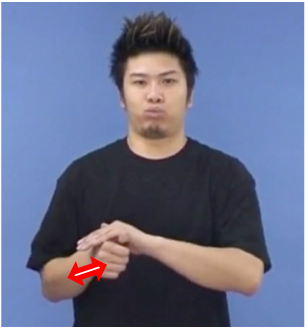
Like other sign languages, the lexicon of HKSL is comprised of the native lexicon (core and non-core lexicon) and the non-native lexicon (Fenlon et al., Reference Fenlon, Cormier, Brentari, Hannahs and Bosch2017; see also Johnston & Schembri, Reference Johnston and Schembri2007). The core native lexicon consists of signs which have a conventionalised form that is fully specified along the phonological parameters with a fixed form–meaning mapping. The non-core lexicon consists of signs that are partially specified, where signers can productively modify aspects of form to express new meaning depending on the context, primarily through the use of depicting signs. The non-native lexicon consists of signs that have foreign element(s) that are typically borrowed from the surrounding spoken or written languages due to frequent contact. This includes, for example, lexicalised fingerspelling, initialised signs and loan translations. While HKSL does not have its own fingerspelling system, it possesses a special class of ‘character signs’, which are so far found only in East Asian Sign Languages (Fischer & Gong, Reference Fischer, Gong and Brentari2010, p. 504). These are highly conventionalised signs, in which a written Chinese character is depicted with the signer’s hand. They can also be combined with other signs through the process of compounding to form a lexicalised compound sign, whereby the headedness of the compound signs may be influenced by Cantonese (Tang, Reference Tang, Wang and Sun2015) (Figure 1). The number and proportion of character signs, and compound signs including character signs, in the HKSL lexicon has not been systematically investigated (Tang, p.c.). In addition, loan translation is not uncommon in HKSL. It refers to the literal translation of lexical items from another language – in this case, Cantonese – and is also commonly found for compounds (Tang, Reference Tang and Chan2016). For example, the sign for the animal ‘turkey’ corresponds to a word-by-word translation from Cantonese and is a lexicalised compound sign combining FIRE (火) and CHICKEN (雞) in HKSL (Figure 2).
Examples of a character sign (left) and a compound with a character sign (right).

Sign for TURKEY (bird) in HKSL, which is a loan translation from Cantonese.

3.2. Setting the stage
To expand our scope of inquiry and move away from the Euro-centric linguistic perspective, aiming for a more holistic understanding of how and why iconicity is manifest by observers and in language itself (Perniss et al., Reference Perniss, Thompson and Vigliocco2010), we conducted an iconicity rating task on lexical signs of a lesser-studied, non-Western sign language – Hong Kong Sign Language – with three participant groups: HKSL signers, DGS signers and hearing L1 Cantonese speakers. This setup aims to tease apart the effects of language and cultural influence on the perception of iconicity by operationalising shared cultural background on the basis of knowledge of the written script. In addition, HKSL and DGS have no known historical relations and are geographically distant. This cross-linguistic comparison allows scrutinisation of language- or modality-specific knowledge in affecting iconicity ratings while minimising the effect of diachronic relatedness or language contact.
The cross-modal comparison between signers and non-signers from Hong Kong further allows novel investigations into the culturally shaped components, namely, loan translations from Cantonese and character signs, on perceived iconicity. Here, we consider writing system as “a cultural product par excellence ” (Coulmas, Reference Coulmas2002, p. 201). As both groups are exposed to the same writing system with traditional Chinese characters and surrounded by the same spoken language, the ratings may suggest the extent to which iconicity is influenced by cultural experience. As mentioned, less is known about the relations between iconic patterns and written scripts in sign languages. Börstell (Reference Börstell2024) is currently the only study looking into manual (i.e., finger) alphabets of the Latin script. Following this line of thought, the current study offers a new window into the discussion of iconicity by expanding the account of written language represented in sign language. Exceptionally, character signs are found in East-Asian sign languages only. Given the subjective, language-dependent nature of iconicity, we provide evidence for the multiple aspects of experience affecting the perception of sign iconicity. The questions to be answered in this study are as follows:
RQ1: How do different linguistic backgrounds influence the perceived iconicity of HKSL signs? Specifically, do non-native lexical components in HKSL affect the perceived iconicity of signs by native signers, foreign signers and non-signers?
RQ2: Given the iconic patterns found in both signs and gestures, is there a preference across groups where the coupling of certain semantic categories and iconic mapping of signs will result in a higher degree of perceived iconicity? If yes, do the patterns align with the ‘patterned iconicity’ previously identified across sign languages and gestural productions?
4. Method
4.1. Participants
Three groups of participants were involved in this study: L1 Cantonese-speaking non-signers from Hong Kong, deaf HKSL signers and deaf DGS signers (Table 1). The recruitment of Hong Kong (HKSL and Cantonese) and DGS participants was conducted through personal connections in the respective communities. All L1 Cantonese non-signing participants reported Hong Kong Cantonese as their primary language with no prior knowledge of any sign languages. All the HKSL signers reported HKSL as their primary and preferred language for communication. Seven participants did not acquire HKSL from birth (AoA: 3, 4, 6, 7, 9, 12 and 17, respectively). All DGS signers reported DGS as their primary language and have no knowledge of and exposure to HKSL, CSL or any Chinese languages. Participants reported acquisition of DGS from birth (otherwise AoA: 19, 35; with early acquisition of another sign language in one case). Responses from late learners of HKSL and DGS were not excluded in the analysis as these participants indicated HKSL and DGS as their predominant language for daily communication. While the size of the two signing groups, particularly the DGS group, is fairly small, prior evidence has suggested that estimates of iconicity tend to stabilise around 10 ratings per item (Motamedi et al., Reference Motamedi, Little, Nielsen and Sulik2019). We hence believe the data presented here provide a sufficient basis for further linguistic comparison. However, we strongly encourage future studies to include a larger sample size.
Participants’ sex and age distribution after excluding invalid responses

Table 1. Long description
The study involved 75 L1 Cantonese non-signers with a mean age of 34.6 years, with 46 females, 27 males and 2 diverse sexualities. The second group of participants was 21 HKSL signers with a mean age of 38.5 years, with 12 females and 9 males. The last group of participants was 11 DGS signers with a mean age of 31.9 years, with 4 females and 7 males.
4.2. Materials
60 HKSL signs were initially selected for collecting iconicity ratings from participants, and 59 signs were included for the analyses (see Section 5). The video stimuli of 51 items were from the Hong Kong Sign Language Browser.Footnote 1 The remaining nine items were provided by a native deaf signer of HKSL, with written approvals obtained, respectively. All signs are glossed in written Chinese and English and are translated into German equivalents.
Each sign was further coded according to the following three variables: semantic category (animal, human, tool), mapping strategy (Figure 3) and lexicon type (native or non-native). Each semantic category contains 20 signs – one sign (HIPPO) was later excluded from the analysis due to ambiguity (see Section 5). The iconic mapping strategies are categorised with reference to the existing literature as introduced above: Object (n = 6) refers to the manual depiction of the size and/or shape of a static entity; personification (n = 15) refers to a (non-)human entity being mapped onto the signer’s body, representing prototypical characteristics or behaviours of the referent; handling (n = 10) refers to the signer’s hand simulating how the referent is typically held and manipulated; and instrument (n = 6) refers to the signer’s hands representing the shape of the referent together with movement simulating the manual action with the referent. An additional category, compound (n = 15), is included to reflect the high prevalence of lexicalised compound signs in HKSL under the influence of the Chinese language (Fischer & Gong, Reference Fischer, Gong and Brentari2010). The remaining signs were grouped under the category other, such as opaque signs with no iconic motivation (n = 4), non-native signs (n = 2), and signs with two or more strategies (n = 1). To explore the role of non-native elements in the perceived iconicity, the signs are further grouped into the categories of native and non-native lexicon. Within the dataset, non-native signs (n = 11) include those that borrow components via (1) loan translation from spoken Cantonese and/or (2) the written modality borrowed from Chinese and English. The remaining signs (n = 48) fall into the core native lexicon. The sign TURKEY (Figure 2) is, for instance, a loan-translated non-native compound, whereas HUSBAND (Figure 3e) is a native compound. A summary of the number of signs in each semantic category and mapping strategy is listed in Table 2; see Appendix A for the individual signs.
Examples for each iconic mapping strategy (a-d), as well as compound (e) and other (f).

Figure 3. Long description
The figure consists of six panels arranged in two rows of three.
Top Row:
Panel a. A man in a black shirt performs the sign for BED labeled as object. He holds both hands in front of his chest with fingers touching to form a flat surface.
Panel b. The same man performs the sign for MONKEY labeled as personification. He has one hand near his head and the other near his hip with fingers curved.
Panel c. The man performs the sign for LIPSTICK labeled as handling. He holds one hand near his chin as if applying a product.
Bottom Row:
Panel d. A different man with glasses in a black shirt performs the sign for SCISSORS labeled as instrument. He holds his hand out with index and middle fingers extended in a V-shape.
Panel e. A woman in a black shirt is shown in two frames for the sign HUSBAND MARRY^MALE labeled as compound. In the first frame, her hands are joined at the knuckles. In the second frame, she holds one hand near her ear and the other in a fist in front of her chest.
Panel f. The same woman performs the sign for TORCH flashlight labeled as other instrument and handling. She holds her hands together in front of her chest with fingers curled in a specific grip.
Distribution of the materials per semantic category and mapping strategy

Table 2. Long description
There were 19 animal, 20 human and 20 tool signs. In terms of mapping strategy, 6 use the object strategy, with 4 belonging to animal and 1 each belonging to human and tool signs. Of the 15 signs that use the personification strategy, 11 belong to animal and 4 belong to human signs. Of the 10 signs that use the handling strategy, 9 belong to tool signs and 1 belongs to human sign. All of the signs with the instrument strategy belong to tool signs. Of the 15 compound signs, 4 belong to animal, 9 belong to human and 2 belong to tool signs. For the remaining 7 signs that take other strategies, 5 belong to human and 2 belong to tool signs.
4.3. Procedure
The study was implemented in LimeSurvey (University of Cologne license). Instructions for HKSL signers were presented in HKSL as well as in written Chinese; instructions for DGS signers were in DGS and in written German; instructions for Cantonese speakers were in written Chinese. The notion of iconicity was explained as ‘the form and meaning showing some degree of resemblance’. An example of an iconic sign and a non-iconic sign were given in HKSL and DGS, respectively, on loop. For example, the HKSL sign CRAB (Figure 4a) was given as an example of a highly iconic sign because the handshape and the movement look like how the claws of a crab move. The HKSL sign DENMARK (Figure 4b), on the other hand, was given as an example of a sign with no iconicity because there is no similarity between its form and meaning.
HKSL signs that were used as examples for an iconic (a) and non-iconic (b) sign.

For the iconicity rating task, participants were asked to watch a series of HKSL signs in randomised order one by one, with each video played automatically on loop. Below the video was the meaning of the sign for non-HKSL users – in written Chinese for Cantonese speakers and in written German for DGS signers – and the scale for rating. Participants were asked to evaluate subjectively the similarity of each sign expression to its meaning, with 1 being ‘totally not iconic’ (i.e., the sign does not have any similarities with what it means) and 7 being ‘very iconic’ (i.e., the sign looks exactly like what it means). Participants could take as long as they needed to give a rating to each sign. Providing a rating was necessary to proceed to the next item; skipping items without providing a rating was not possible. Three HKSL signs from across the iconicity continuum – LION, SHARK and AFTERNOON – were used as practice items for getting participants familiarised with the task. These rating responses were not analysed.
To ensure that the variants selected were known to the HKSL signing participants, and that their ratings corresponded to the same lexeme as this research intended, a sign-to-word translation task was included following the rating task. This was required for the HKSL signers only. Each sign was played again in randomised order, and participants were instructed to input the meaning of each sign in either Chinese or English in the spaces provided. Participants were explicitly instructed of the possibility to input ‘I don’t know’ in case of unfamiliar signs but were not allowed to skip the page without input. One sign (LION) was used as a trial and was not in the stimuli set.
The duration of the survey was approximately 10 minutes for the non-signers and DGS-signing participants and 20 minutes for HKSL signers due to the additional translation task. All participants completed the task voluntarily and could choose to terminate it at any time. Only fully completed surveys were included for further analysis. The full instructions can be found in the Supplementary Material on OSF.
5. Data processing and analysis
The responses were processed with the RStudio version 4.2.1(R Core Team, 2024). The data were cleaned using the packages here 1.0.1 (Müller, Reference Müller2020), rio 0.5.29 (Chan et al., Reference Chan, Chan, Leeper and Becker2021) and tidyverse 1.3.2 (Wickham et al., Reference Wickham, Averick, Bryan, Chang, McGowan, François, Grolemund, Hayes, Henry, Hester, Kuhn, Pedersen, Miller, Bache, Müller, Ooms, Robinson, Seidel, Spinu and Yutani2019). Further statistical analyses and visualisations were conducted using ordinal 2023.12-4 (Christensen, Reference Christensen2023), ggplot2 3.5.0 (Wickham, Reference Wickham2016), sjPlot 2.8.15 (Lüdecke, Reference Lüdecke2023) and viridis 0.6.5 (Garnier et al., Reference Garnier, Ross, Rudis, Camargo, Sciaini and Scherer2024). Data were collected from a total of 113 participants. Straightlining behaviour (Kim et al., Reference Kim, Dykema, Stevenson, Black and Moberg2019) was observed for six respondents,Footnote 2 who gave the same response repetitively for over 90% of the 59 items, resulting in a ‘straight’ pattern of responses. Their responses are hence excluded, leaving the responses of 107 participants for analysis.
The following additional exclusion criteria ensured the validity of the data analyses. As mentioned, the sign-to-word translation task was conducted following the rating task to ensure that all signs used in the study were known to the HKSL signers. By manually evaluating responses from HKSL signers, all ratings for HIPPO (RIVER^HORSE) are excluded as this sign form was found to be ambiguous in that over 60% of the signers (n = 14) interpreted it as SEAHORSE (SEA^HORSE). Further, when there was a discrepancy between the signers’ responses and the meaning as the research intended, the corresponding ratings in the iconicity rating task were removed manually. This also applied when signers inputted two or more answers that differed in meaning, even when one of which was equivalent to the attested sign gloss (such as ‘shark/crocodile’ for CROCODILE). This measure was taken to ensure that the rating provided corresponds to the specific sign being investigated. However, responses with two or more synonymic answers were not excluded (such as ‘children/kid’ for CHILDREN). Those that vary in terms of lexical category (i.e., noun–verb, such as ‘broom/sweep the floor’ for BROOM) were also not excluded as the videos were provided without context. Finally, ratings for which signers indicated not knowing the sign meaning were excluded. After screening of invalid responses, the final dataset consists of 6254 data points.Footnote 3
6. Results
6.1. Overall perception of iconicity by participant group
Overall, all three groups used the highest score of 7 most frequently but demonstrated distinct preferences in using the rating scale (Figure 5). For HKSL signers, the upper end of the scale (6 and 7) accumulated over half of the rating responses (55%). Only around 10% of responses by HKSL signers are at the very low end. The mean iconicity rating is the highest among the groups, suggesting that they have a strong preference for higher ratings. The hearing non-signers displayed a similar pattern overall, but they had a more even distribution of using the rating scale. The highest rating was most frequently selected, and the remaining ratings each constituted approximately 10%–15% of responses within the group. DGS signers demonstrated the most polarised preference of using the scale, with the highest proportion of using the lowest rating among the groups. We then calculated the mean ratings for all 59 signs by participant groups (Table 3, see also Supplementary Material for the mean ratings of each item for each group). There was a strong correlation of ratings between Cantonese non-signers and HKSL signers (r = .87), between HKSL and DGS signers (r = .84) and between Cantonese non-signers and DGS signers (r = .76). The high correlations across groups indicate that the relative judgements of iconicity in HKSL signs are similar across native, foreign and non-signers. A mixed-effects ordinal logistic analysis was then conducted to compare the group differences in iconicity ratings, with the group variable as a fixed effect, and participants and sign item included for random intercepts. Overall, HKSL signers gave significantly higher iconicity ratings than non-signers (β =1.11, SE = 0.25, p < .001). There was no significant difference between Cantonese non-signers and DGS signers (β = −0.24, SE = 0.33, p = .47).
Count of iconicity ratings by participant group with the vertical lines indicating the means.

Figure 5. Long description
A three-panel multiplot. The x-axis for all panels is Rating from 1 to 7. The y-axis is Count. Bars are color-coded in a gradient from dark purple at rating 1 to bright yellow at rating 7.
Panel 1: L 1 Cantonese non-signers. The y-axis ranges from 0 to 900. The distribution is relatively flat from ratings 1 to 4, then increases sharply to a peak at rating 7. A vertical line marks the mean at 4.48.
Panel 2: HKSL signers. The y-axis ranges from 0 to 400. The distribution shows a steady linear increase from rating 2 to rating 7. A vertical line marks the mean at 5.26.
Panel 3: DGS signers. The y-axis ranges from 0 to 200. The distribution is U-shaped, with high counts at rating 1, a dip at rating 3, and a sharp increase to a peak at rating 7. A vertical line marks the mean at 4.27.
Iconicity ratings of 59 signs by participant group

Table 3. Long description
The mean iconicity rating of the 59 HKSL signs by the L1 Cantonese non-signers is 4.48, with the SD of 2.14 and SE of 0.03. HKSL signers give the highest mean rating at 5.26 for the 59 signs, with the SD of 1.84 and SE of 0.05. DGS signers give the mean rating of 4.27 for the 59 signs, with the SD of 2.37 and SE of 0.09.
6.2. Semantic category and iconic mapping strategy
Despite the overall differences between groups, certain couplings of semantic category and mapping strategies of signs are preferred by all participant groups. Figure 6 shows the mean iconicity ratings grouped by the combination of iconic mapping strategy and semantic category per participant group. The points indicate the mean ratings per strategy within the group, and the error bars indicate the standard errors. Overall, the distribution appears to be similar though the effect differs: Tools appear to be perceived as highly iconic when they are depicted using the two strategies of manipulation (handling and instrument). Animal signs depicted with personification and object are perceived as highly iconic. Human signs are rated as less iconic on average, especially for DGS signers, but the only human sign with handling strategy (BABY) peaked as very iconic for all groups. On the per-item level, consistencies emerge when we focus on the most and least iconic signs, highlighting the iconic patterns described above. SCISSORS and BOOK (Figure 7a, b) are rated as most iconic across all groups. Both are tools represented with instrument and serve as instances for the shared patterning of iconicity found in both sign production as well as in perception. Contrarily, the arbitrary sign RELATIVES (Figure 7c) with no iconic motivation between the form and meaning was consistently rated as the least iconic across the groups. All DGS signers additionally rated HUMAN (Figure 1) with the lowest rating, hinting at the interaction of knowledge of the written modality and the sign form on the perceived iconicity.
Comparison of mean iconicity ratings of 59 signs grouped by iconic strategy and semantic category per group.

Figure 6. Long description
A multi-panel figure with three horizontal panels.
Common Axes:
The y-axis lists six iconic strategies from top to bottom: personification, object, instrument, handling, compound, and other.
The x-axis represents Mean rating on a scale from 1 to 7.
A legend on the right identifies three semantic categories: animal (green circle), human (orange triangle), and tool (purple square).
Panel 1: L1 Cantonese non-signers
Ratings for all categories generally cluster between 3 and 6. The human category peaks at handling (approx. 6.5) and is lowest at compound (approx. 3.2). The animal category is highest at personification (approx. 5.5). The tool category peaks at instrument and handling (approx. 5.6).
Panel 2: HKSL signers
Ratings are more compressed, mostly between 4 and 7. The human category shows a sharp peak at handling (approx. 6.6) and a dip at object (approx. 4.2). The animal category remains relatively stable between 5 and 6.5. The tool category peaks at instrument (approx. 6.1).
Panel 3: DGS signers
This panel shows the widest variance. The human category peaks sharply at handling (7.0) and drops significantly for compound (approx. 1.8) and other (approx. 2.2). The animal category is highest at personification and object (approx. 5.8). The tool category is highest at handling (approx. 6.0) and lowest at compound (approx. 4.0).
The most (a, b) and least iconic signs (c) rated by participants.

To investigate the relationship between iconicity ratings, iconic strategies and semantic categories, we compared the interactions between (1) group and mapping and (2) group and semantic category with ordinal mixed-effects logistic regression models. In all models, these factors were included as fixed effects with interaction terms, and random intercepts for participants and signs were included to account for individual and item-level variability. Model comparisons showed that both semantic category (AIC = 18383, logLik = −9175.3, p < .001, cond. R2 = .627) and mapping strategy interact with group and significantly affected the ratings (AIC = 18405, logLik = −9177.7, p < .001, cond. R2 = .624). This indicated that the effect of semantic category and mapping strategy on iconicity ratings differed across groups. Although descriptive patterns (Figure 6) suggested that some mappings may be preferred for certain semantic categories, a model including the interaction between semantic category and mapping did not significantly improve model fit (AIC = 18497, logLik = − 9226.7, p = .19). This may be due to the uneven distribution of the semantic-mapping combinations in the present dataset (see Table 2). Taken together, the results point to two implications: (1) iconicity ratings interact with mapping strategies and semantic domain to different extents depending on participant group, and (2) one should also take into account the structural analogies between sign forms and meanings (Emmorey, Reference Emmorey2014; Taub, Reference Taub2001) for identifying the aspects that are perceivable across groups within the limited set of items examined here.
6.3. The role of native and non-native signs on the perceived iconicity
The signs in the dataset are further grouped into two lexicon types, native (n = 48) and non-native (n = 11) signs. Here, the set of signs is not balanced, but the analysis offers a first impression of how lexicon types interact with one’s perception of sign iconicity. Specifically, the set of non-native signs allows for a focused analysis to better understand the role of borrowed elements in HKSL, while the set of native signs isolates the impact of sign familiarity for studying how the completely specified formational features of signs may affect the perception of iconicity, thus hinting at effects of modality.
From the visualisation of the overall mean ratings grouped by participant and lexicon type, non-native signs are observed to be, to a varying degree, rated as less iconic by all three groups (Figure 8). We performed an ordinal mixed-effects logistic regression to investigate the relationship between iconicity rating, lexicon and group. The lexicon type and participant group were entered as fixed effects, tested with and without interaction terms, and random intercepts were included for participants and items. First, the model showed a significant effect of group in ratings, where both non-signers (β = −1.05, p < .001) and DGS signers (β = −0.95, p = .013) provided significantly lower ratings than the HKSL group. However, lexicon type was not a significant predictor by itself (β = −1.02, p = .129). Interestingly, the model with the interaction terms demonstrated an interaction between group and the type of sign lexicon (AIC = 18427, logLik = −9200.6, p < .001, cond. R2 = .623). The interaction between non-native signs and the DGS group was highly significant (β = −2.29, p < .001), while that for the non-signing group was marginally significant (β = −0.30, p = .064). This suggests that the borrowed components in HKSL signs significantly influence how participants rate the signs depending on their linguistic background, with the DGS group giving substantially lower ratings to non-native signs. In light of the differences between groups, the findings lead us to a closer scrutinisation of the items being attested. For example, kinship compounds in the data illustrate a distinct pattern where the mean iconicity ratings all fall below the group mean (Figure 9). This pattern may also point to the interaction of iconicity perception and phonological overlap across sign languages, which will be discussed in the following section.
Comparison of mean ratings of HKSL signs by lexicon type. Error bars indicate the standard errors.

Figure 8. Long description
The X-axis is labeled Lexicon with two categories: native (n=48) and non-native (n=11). The Y-axis is labeled Mean rating ranging from 2 to 5. A legend on the right identifies three groups: L1 Cantonese non-signers (dark purple circle), HKSL signers (teal triangle), and D G S signers (light green square).
* HKSL signers: Starts at the highest mean rating of approximately 5.4 for native lexicons and decreases to approximately 4.7 for non-native lexicons.
* L1 Cantonese non-signers: Starts at a mean rating of approximately 4.7 for native lexicons and decreases to approximately 3.7 for non-native lexicons.
* DGS signers: Starts at a mean rating of approximately 4.8 for native lexicons and shows the steepest decline to the lowest mean rating of approximately 2.2 for non-native lexicons.
All data points include vertical error bars representing standard error.
Comparison of mean ratings of kinship HKSL compounds. The vertical lines in dash represent the mean ratings of each group.

Figure 9. Long description
The horizontal x-axis represents Mean rating from 1 to 7. The vertical y-axis lists five Kinship compounds: youngsis, youngbro, son, husband, and daughter. A legend on the right identifies three groups: L1 Cantonese non-signers (dark purple circle), HKSL signers (blue-grey triangle), and DGS signers (light green square).
Approximate data points for each compound:
* youngsis: DGS at 2.0, L1 Cantonese at 2.3, HKSL at 3.5.
* youngbro: DGS at 1.2, L1 Cantonese at 2.0, HKSL at 3.2.
* son: DGS at 1.5, L1 Cantonese at 2.2, HKSL at 3.9.
* husband: DGS at 1.8, L1 Cantonese at 2.9, HKSL at 4.3.
* daughter: DGS at 2.1, L1 Cantonese at 2.2, HKSL at 3.8.
Three vertical dashed lines represent the overall group means: the light green line (DGS) is at approximately 4.3, the dark purple line (L1 Cantonese) is at 4.5, and the blue-grey line (HKSL) is at 5.3.
7. Discussion
7.1. Differences in perception of iconicity
Based on the results from the iconicity rating task with HKSL signers, DGS signers and Cantonese non-signers, we found that form-meaning resemblance of HKSL signs is rated most highly by HKSL signers, followed by Cantonese hearing non-signers and then DGS signers. This reaffirms some key findings from earlier studies (Börstell, Reference Börstell2024; Occhino et al., Reference Occhino, Anible, Wilkinson and Morford2017), suggesting the degree of perceived iconicity in signs is influenced by the language experience of the participants. Comparing with the other two groups of participants, whose difference is statistically insignificant, HKSL signers are able to access the multidimensional iconic resources from which the construal of the phonological form of the sign and the semantic properties of the referent are being mapped, which may include metonymic and metaphoric associations (Meir, Reference Meir2010; Occhino et al., Reference Occhino, Anible, Wilkinson and Morford2017; Wilcox, Reference Wilcox and Brown2006; see also Taub, Reference Taub2001 for the ‘double mapping’). These resources may also comprise folk knowledge of the etymology of sign formation (Sevcikova Sehyr & Emmorey, Reference Sevcikova Sehyr and Emmorey2019), which are directly associated with the iconic origin of the sign even though the resemblance may be reduced over time (Frishberg, Reference Frishberg1975). On the surface, this study shows contrasting results with Sevcikova Sehyr and Emmorey’s (Reference Sevcikova Sehyr and Emmorey2019) study on ASL, in which they found that ASL signers rated the signs as less iconic than sign-naïve participants on average. In addition, the ratings for ASL signs, for both signers and non-signers, were lower overall than the ratings in our study across groups. Sevcikova Sehyr and Emmorey (Reference Sevcikova Sehyr and Emmorey2019, p. 217) report an overall mean iconicity rating of 3.16 for ASL signers and 3.0 for English-speaking non-signers, also on a 1–7 scale. For both groups, the z-score distribution of ratings shows the bulk of scores in the range between −1 and 0. Whereas the current study focuses only on nouns, more specifically, signs for objects, their study included both nouns and verbs for a comparison between lexical classes. Looking at only nouns, this study comprises a comparatively small pool of 59 nouns, while the ASL study includes an extensive collection of 591 nouns. Besides the difference in size of the selected stimuli, our study may have included a relatively high proportion of iconic signs, which may be related to the semantic categories that we focused on. In particular, tools and animals tend to be more iconic; they refer to concrete entities that are often used and closely associated with our everyday experience (Ortega et al., Reference Ortega, Schiefner, Lazarus and Perniss2025). By contrast, it is possible that HKSL signers noticed the signs in the rating study were more iconic than the broader range of signs in their lexicon. As they knew the range of iconicity within their language, they might compare the stimuli against the full lexicon, therefore giving higher ratings for the iconic signs in the study. Since non-signers do not have such knowledge about the range of iconicity in a sign language (i.e., how iconic or arbitrary signs can be), they can only rely on the presented set of signs for comparison. In fact, the high frequency of 7 ratings from the Cantonese non-signers may be explained by the active search for iconic resemblance for making sense of the given sign form, as argued by the authors of the ASL study. At the same time, given the small number of items in the task, non-signers may still give lower ratings for some iconic signs because they were only aware of the range of iconicity presented within the stimuli.Footnote 4 In other words, the rating patterns observed between this study (overall higher ratings) and the ASL study (overall lower ratings) may be more similar than the statistical results alone suggest.
To further explore whether the semantic category of the signs may have contributed to the rating patterns between signers and non-signers in the HKSL and ASL data, we checked the ASL-LEX 2.0 database (Sevcikova Sehyr et al., Reference Sevcikova Sehyr, Caselli, Cohen-Goldberg and Emmorey2021) for the English translations of the selected HKSL signs. The iconicity ratings from ASL signers and English-speaking non-signers are available for around 60% of the signs used in the present study.Footnote 5 Focusing on these 37 items, the mean iconicity ratings for ASL signers (m = 3.85, SD = 1.81) and non-signers (m = 3.96, SD = 2.03) are very similar; the differences between HKSL signers (m = 5.61, SD = 0.98), DGS signers (m = 5.04, SD = 1.84) and Cantonese non-signers (m = 5.02, SD = 1.52) seem to be more apparent. The overall iconicity ratings for ASL nouns were also not found to differ statistically for signers and non-signers (Sevcikova Sehyr & Emmorey, Reference Sevcikova Sehyr and Emmorey2019, p. 217). This preliminary comparison suggests that overall, the ASL equivalents seem to be perceived as less iconic than the HKSL signs, evidenced by the lower ratings for the same set of signs from signers and non-signers. When teasing apart the semantic category for these 37 items, we also noticed different rating patterns: tools and animals are similarly iconic across the HKSL, DGS and Cantonese non-signing groups, whereas human signs are less iconic but greatly differ across groups. For the ASL data, tools are clearly more iconic than animals, followed by humans. Interestingly, the ASL and English-speaking non-signing groups showed very similar mean ratings for all three categories. Since we did not look further into the iconic mapping strategies for these concepts for ASL, we cannot conclude if HKSL signers simply have a stronger bias than ASL signers for their native signs. Nor can we say that the HKSL lexicon is more iconic than the ASL lexicon; we leave these aspects for future research. More fundamentally, it is crucial to acknowledge the potential differences in phono-morphological structures and sign origins between HKSL and ASL. Some compounds in HKSL are found to have “a strong Cantonese influence”, particularly on the headedness of compounds (Tang, Reference Tang, Wang and Sun2015, p. 719). For example, borrowed from Cantonese, the character sign ‘人 HUMAN’ is frequently used as the head of an endocentric compound to denote a type of person (e.g., 外 (modifier: OUT) + 人 (head: HUMAN) for ‘westerner’ or ‘foreigner’ in general). To realise the iconic resemblance, one would need not only the cultural knowledge of written Chinese for understanding the character sign but also knowledge of the surrounding spoken language for grasping the morphological structure of the compound. Besides, given the multifaceted nature of iconicity, in which the formation of iconic signs may draw on the numerous linguistic- and cultural-specific conventions associated with the referent (Taub, Reference Taub, Pfau, Steinbach and Woll2012), it would be unwarranted to presume that iconic motivations are directly comparable across sign languages. Consequently, the sense of resemblance perceived by deaf signers and hearing non-signers of these two languages should not be assumed to be interpreted in uniform ways.
7.2. Patterned iconicity
In discussing the role of semantic category and iconic mapping strategy, certain couplings of these two variables are found to consistently result in higher iconicity ratings by all participant groups, such as personification for animals and manipulation for tools. In line with existing findings that animals are dominantly represented with the personification strategy, this study reveals that this coupling is also strongly perceived as highly iconic by both signers and sign-naïve participants. The personification strategy involves a strong embodiment of mapping the visually salient feature of an animal onto the signer’s body. For example, the sign MONKEY (Figure 3b) involves the signer acting as a monkey with a prototypical behaviour of scratching its body, accompanied with a rounded-mouth gesture that imitates the protruding jaws and mouth of a monkey. The full-size analogue between the signer and acting as a monkey provides multiple sources of depiction, from hand movement, body posture to facial expressions, which altogether reinforce the mappings between the sign form and the associated mental image of the animal (Taub, Reference Taub, Pfau, Steinbach and Woll2012). Animal signs represented with object are also perceived as highly iconic across groups, echoing the pattern identified by Hwang et al. (Reference Hwang, Tomita, Morgan, Ergin, İlkbaşaran, Seegers, Lepic and Padden2017). According to the authors, smaller animals are likely to be represented with the object strategy owing to “the difficulty of mapping onto the human body” (p. 586). TORTOISE (Figure 10) would be an example. The handshapes map a tortoise’s head and body, respectively, wherein the non-dominant hand represents the salient feature of its shell. The back and forward movements of the dominant hand imitate how a tortoise can characteristically retract back into its shell, capturing the animal’s distinctive behaviour. Each phonological part of the sign, including the handshapes, movements and orientation of the hand(s), can be analogously mapped onto parts of a tortoise as a whole referent (Emmorey, Reference Emmorey2014; Taub, Reference Taub2001), resulting in a clear form and meaning resemblance for all participants.
TORTOISE, produced with the object strategy.

Tool signs show a high tendency of receiving higher ratings across all groups when coupled with the manipulation (i.e., handling/instrument) strategy. Handling is slightly more favoured and perceived as more iconic overall with minimal differences across groups for the set of items examined. This replicates Sevcikova Sehyr and Emmorey’s (Reference Sevcikova Sehyr and Emmorey2019) results, which compared the hand-as-hand and hand-as-entity iconic mapping in ASL signs perceived by signers and non-signers. This preference is likely due to the general bias towards iconic depictions of bodily actions, which are closely associated with the typical actions involved when using human-made artefacts, and are easily comprehensible, particularly for hearing participants (Ortega & Özyürek, Reference Ortega, Özyürek, Papafragou, Grodner, Mirman and Trueswell2016; Padden et al., Reference Padden, Hwang, Lepic and Seegers2015). For example, the sign CAMERA (Figure 11) is highly iconic with the signer’s hands positioned in front of the face, as if holding an imaginary camera with a lens. The index finger of the non-dominant hand shows the action of clicking the camera button, making it more recognisable as this form of representation directly depicts the typical manner of using it when taking a photo, the primary function of a camera. Building upon the embodied view of gesture production as a result of action simulations (Hostetter & Alibali, Reference Hostetter and Alibali2008), the handling strategy in signs may, in turn, reinforce the perception of form and meaning resemblance when seeing the reenactment of actions closely associated with the referent. Another sign worth highlighting is BABY (Figure 11), which is the only human sign produced with the handling strategy, and stands out with a strikingly high rating by all participants. As noted by Wilkinson (Reference Wilkinson2009, p. 185), this iconic form is widely used across many sign languages, which “metonymically maps to the image schema of holding a baby in arms … [and] is very likely a universal human behavior of handling a baby”. Thus, this sign shows a very robust result with high iconicity ratings as the transparency of the sign is seemingly universal cross-culturally. For non-signers, the sign is also identical with the gestural action for referring to a baby, which is directly linked to the common human motor experiences that are intuitively understood regardless of linguistic exposure.
CAMERA (left) and BABY (right), both produced with the handling strategy.

The major patterns observed in the current study are in line with the ‘patterned iconicity’ identified for sign and gestural productions (Hwang et al., Reference Hwang, Tomita, Morgan, Ergin, İlkbaşaran, Seegers, Lepic and Padden2017; Padden et al., Reference Padden, Meir, Hwang, Lepic, Seegers and Sampson2013). Many of these signs exhibit a high degree of perceptual or motoric iconicity (Tolar et al., Reference Tolar, Lederberg, Gokhale and Tomasello2008) wherein the sign form involves the body for representation of the referent and visually resembles certain salient features that are easily recognisable, even to those unfamiliar with sign language. Similar to iconic gestures, this embodied form of language is rooted in our experiential knowledge of the physical world (Barsalou, Reference Barsalou2008; McNeill, Reference McNeill2000; Wilcox, Reference Wilcox2004). Thus construed, no signs are iconic per se but may be identified as intrinsically iconic given our shared bodily experience, and “the subjective and ostensibly objective sides of iconicity are not in conflict” (Winter et al., Reference Winter, Woodin, Perlman, Fischer, Akita and Perniss2026, p. 143).
7.3. Non-native elements
The inclusion of non-native signs serves as an exploratory step to understand the effects of manual representations borrowed from written languages, in this case, Chinese characters (and one instance the English alphabet), on how different language users perceive iconicity. Our results suggest that the interpretation of non-native elements in HKSL signs requires the recruitment of multiple sources of knowledge, and the visibility of the form may furthermore affect the perception of the iconic origin of the sign.
For character signs as borrowed written elements, participants need to draw upon their knowledge of Chinese characters in order to recognise the written form from the hand configurations, thus mapping them to the meaning of the character. For instance, iconicity in the sign HUMAN (Figure 1) is clearly recognised by both groups of participants from Hong Kong, who possess sufficient knowledge of the Chinese writing system. DGS signers having no knowledge or exposure to any Chinese languages, on the other hand, are unable to trace back the iconicity motivated from the written character. Similarly, the sign EMAIL (Figure 12) is another example illustrating how relevant written knowledge helps enhance the perceived iconicity through the trace of iconic origin. HKSL adopts the one-handed ASL fingerspelling system for some lexical signs (Tang, Reference Tang and Chan2016). The relatively higher ratings from DGS signers than non-signers may be explained by their familiarity with the handshape corresponding to the English letter ‘e’ ( ), which is more recognisable for DGS signers as the DGS fingerspelling system uses an identical form. Sign-naïve participants without exposure to fingerspelling would fail to see the form as visually motivated, resulting in the lower mean rating. These examples underscore the requisite knowledge needed to comprehend the iconic motivations behind non-native components in signs, emphasising the specific linguistic aspects that may shape their interpretations. This includes, firstly, the culture associated with different language scripts (i.e., proficient knowledge of the written Chinese language) and secondly, the culture within the deaf and signing communities (i.e., an arguably modality-specific knowledge as certain practices – including the ASL fingerspelling – are widely used and recognised among language users). Our stimuli set, however, encompasses only one HKSL sign with an element from a phoneme-based manual alphabet. We, therefore, encourage the inclusion of more signs with borrowed fingerspelling in future studies to better examine the role of non-native elements in perceived iconicity.
EMAIL, which contains the handshape corresponding to the English letter ‘e’ ().

Further, a lower visibility of character signs appears to lead to lower ratings. This is exemplified with the loan translated sign BULLFROG (Figure 13a), which combines the character sign FIELD with CHICKEN. This character sign is not clearly visible as the sign is produced horizontally with contact of three extended fingers (index, middle and ring) of both hands facing each other. The whole character is in itself iconic as it is a pictographic character that directly depicts fields divided into smaller squares. However, the division is only visible when the signer’s hands are tilted to face the camera (Figure 13b). Unlike most HKSL signers who know the etymology of both the sign and the character, non-HKSL signers are likely unable to trace back the iconic origin, even for non-signers from Hong Kong who have knowledge of the character.
Difference in hand orientation for the character sign FIELD.

Figure 13 Long description
A multi-panel figure containing three photos of individuals performing sign language.
Panel a is labeled FIELD caret CHICKEN for bullfrog and contains two photos of a man in a black shirt.
* In the first photo on the left, he holds both hands at chest level with fingers interlaced and palms facing his body.
* In the second photo in the center, he raises his right hand to his mouth, pinching his thumb and index finger together while his other fingers are curled.
Panel b is labeled FIELD and is located on the right.
* It shows a woman in a black blouse. She holds her hands in front of her chest with fingers interlaced in a grid-like pattern, similar to the first photo in panel a, representing the sign for field.
Despite the prevalence of compound signs in HKSL through loan translations of Cantonese, interestingly, loan translation itself does not seem to be a determining factor for the perceived iconicity for participants without the language exposure. In fact, the iconicity can still be realised as long as the sign components exhibit sufficient and clear iconic mappings to the referred entity, irrespective of the inclusion of character depiction. For example, TURKEY (Figure 2) combines the sign FIRE and CHICKEN, literally translated from Cantonese (‘火雞’, literally ‘fire’ + ‘chicken’) without any character depiction. Here, the mean ratings of all three groups are similarly clustered around the centre of the scale, meaning the sign is not arbitrary to non-HKSL signers. Although no documentation of the word formation is available, the iconic depiction of a bird’s beak likely aids the perception of the sign as it resembles the prototypical feature of a bird. In addition, the sign for CHICKEN (i.e., the second part of the compound) is identical between HKSL and DGS with a depiction of the beak. The lexical overlap potentially leads to more recognisable form-meaning matches for DGS signers, which we now turn to discuss.
7.4. Additional cultural and phonological factors: Evidence from kinship signs
Other than the above-mentioned perceptual and linguistic factors, we see cultural influence and modality-dependent factors as evidenced in other human signs. Kinship terms in this study are generally rated as less iconic, replicating what was reported in DGS and BSL (Ortega et al., Reference Ortega, Schiefner, Lazarus and Perniss2025). On the one hand, this is likely due to the kin relations that are strongly shaped by socio-cultural factors – especially for DGS signers who do not share the concepts culturally. For example, Cantonese distinguishes paternal and maternal relatives as well as siblings by the relative age with specific terms. Although language users whose native languages lack specific words for these concepts may still employ the concept (Kemmerer, Reference Kemmerer and Kemmerer2019), foreign signs aside, the German translated equivalents in the rating task could have been unfamiliar and possibly confusing for the DGS group in the first place. This poses a challenge in pinpointing the sociolinguistic factors that influence iconicity. The differences in ratings among groups may be due to the varying degrees of cultural relevance of specific signs.
Notably, a rating pattern also emerged for the five kinship terms that are compounds (YOUNGER-SISTER, YOUNGER-BROTHER, SON, HUSBAND and DAUGHTER), which are formed with a gender marker (MALE/FEMALE): The sibling terms combine relative birth order (OLDER/YOUNGER), and the offspring terms combine GIVE-BIRTH with the gender marker (Wilkinson, Reference Wilkinson2009). All of them received low average iconicity ratings and deviated from their respective group’s mean, even for both DGS and HKSL signers (see Figure 9). These items are all native compounds with no character depiction, suggesting that combinations of native components without observable form-meaning connections do not aid the perception of iconicity. Yet, since the sign FEMALE is minimally differing in HKSL and DGS, with a different handshape representing an earring, the iconicity in the signs YOUNGER-SISTER and DAUGHTER are slightly more easily perceivable for DGS signers. In other words, these instances support the previous claim that phonological overlap mediates the perception of iconicity (Omardeen, Reference Omardeen2018).
8. Conclusion
Overall, the analyses presented in this paper provide evidence for the subjective nature of iconicity. Taken in conjunction with the plentiful evidence of how language experience influences the perception of lexical iconicity in signs (Occhino et al., Reference Occhino, Anible, Wilkinson and Morford2017; Omardeen, Reference Omardeen2018; Sevcikova Sehyr & Emmorey, Reference Sevcikova Sehyr and Emmorey2019), this paper reveals that raters with different linguistic backgrounds – namely, signers of HKSL, DGS and Cantonese non-signers from Hong Kong – perceive iconicity in signs differently. Despite the noticeable group differences, the results reveal a three-way relationship between iconicity ratings, semantic conceptualisation (i.e., animal, human and tool) and mapping strategies in signs, as we rely on shared sensori-motor experience for processing regardless of our language backgrounds, and iconicity serves as a bridging mechanism (Perniss & Vigliocco, Reference Perniss and Vigliocco2014). In other words, some aspects of iconicity are less mitigated by language experience, such as the influence of patterned iconicity and gestural components. Regardless, modality effects are still in play as signs with higher phonological overlap between sign languages result in higher perceived iconicity even for arbitrary signs. In addition, we present a novel contribution to the understanding of sign iconicity by examining the influence of non-native components – specifically, loan translations and character signs in an East Asian sign language. The results underline the intertwinement of iconicity with culturally-shaped knowledge of, in this case, the written form of the surrounding language. In other words, some other aspects of iconicity such as those related to language- and modality-specific knowledge can be more mitigated or mediated by language experience.
We, therefore, conclude that multiple aspects of real-world experiences, language- and modality-specific knowledge, and cultural exposure are at the root of the perception of sign iconicity. Currently, the exploration of iconicity across well-established as well as emerging (often non-Western) sign languages remains less thoroughly studied. Given the dynamic interplay between language modalities and experiential factors in shaping one’s judgement of iconicity, further research investigating a broader array of signs is strongly encouraged to expand our knowledge of the processing of iconicity. A follow-up study to this one could be a comparison of sign iconicity ratings with other East Asian sign language(s), where character signs are also used. For example, Taiwan Sign Language belongs to the Japanese Sign Language family but is also in contact with the Chinese writing system (Su & Tai, Reference Su, Tai, Tai and Tsay2009). Given the higher cultural and linguistic similarities (especially as both use traditional Chinese characters) but a different historical development, it would be interesting to explore how modalities come into play and from which point the effect of linguistic knowledge diverges for iconicity perception.
Supplementary material
Further details of the stimuli and materials can be found on the OSF repository (https://doi.org/10.17605/OSF.IO/H9SNZ).
Acknowledgements
We are grateful to all participants for their input in the study. We thank Aaron Wong for providing feedback and for recording the HKSL signs for test stimuli and the Centre for Sign Linguistics and Deaf Studies, CUHK, for permitting the use of videos from the HKSL Browser. We also thank two anonymous reviewers for their constructive comments.
Appendix A.

Table A1. Long description
The table is organized into three primary semantic categories.
1. Animal (n = 19): Most signs use Personification or Object mapping with a Native lexicon. Examples include Bird, Cat, Cow, Dog, and Elephant (Personification) and Butterfly, Crocodile, and Frog (Object). Non-native signs like Turkey, Zebra, Polar bear, and Bullfrog use Compound mapping.
2. Human (n = 20): This category includes kinship and social terms. Native signs like Baby (Handling), Daughter (Compound), and Grandpa or Grandma (Personification) are listed. Non-native signs include Family, Human, Mainlander, Stranger, and Westerner, all using Compound or Other mapping.
3. Tool (n = 20): This category focuses on objects and instruments. Native signs include Camera, Computer, and Tablet (Handling), Phone, Book, and Scissors (Instrument), and Bed (Object). Non-native signs include Email (Other) and Tools (Compound).
Columns for each entry specify the Sign name, the Mapping strategy (Personification, Object, Compound, Handling, Instrument, or Other), and the Lexicon type (Native or Non-native).
Note: Distribution of the materials per semantic category and mapping strategy. The individual signs are listed in the brackets. (p) and (m) stand for ‘paternal’ and ‘maternal’, respectively.












 Open access

