


1. INTRODUCTION
Recently, the interaction of intense electromagnetic waves (laser beams) with plasmas has attracted a great deal of attention. The motivation for such studies is because of its application in various research fields such as inertial confinement fusion (ICF) (Lindl et al., Reference Lindl, Amendt, Berger, Glendining, Glenzer, Hann, Kauffman, Landen and Suter2004), laboratory astrophysics (Remington et al., Reference Remington, Drake, Takabe and Arnett1999), X-ray lasers (Li et al., Reference Li, Wang, Zhu, Ye, Li and Yu2011), compact laser-driven accelerators (Tajima & Dawson, Reference Tajima and Dawson1979; Wang et al., Reference Wang, Krishnan, Saleh, Wang and Umstadter2000), pulsar electrodynamics (Harding & Lai, Reference Harding and Lai2006), higher harmonic generation (Baeva et al., Reference Baeva, Gordienko and Pukhov2006), and many more (Tajima & Mourou, Reference Tajima and Mourou2002). The success of laser–plasma interaction critically depends on the coupling of the incident laser energy to the plasma. Mainly, laser deposited its energy in the plasma through resonant absorption in which laser beam must reach up to critical density for effective coupling. Various instabilities that arise during the laser–plasma interaction are of crucial importance for the coupling efficiency. These instabilities reduce the coupling efficiency by scattering a large fraction of the incident laser energy and hot electron generation in the vicinity of critical density. Among various parametric instabilities stimulated Raman and Brillouin scattering (SRS and SBS, respectively) are particularly important in context to laser–plasma interaction and they both involve decay of the incident electromagnetic wave into a scattered electromagnetic wave and a longitudinal wave. The daughter longitudinal waves are electron plasma waves (EPW) in the case of SRS, and the ion acoustic waves (IAW) in the case of SBS (Kruer, Reference Kruer1974; Chen, Reference Chen1984; Liu & Tripathri, Reference Liu and Tripathri1994). The excitation of both Raman and Brillouin instabilities can yield poor coupling of laser energy to the plasma by scattering a significant amount of incident laser energy, as well as the generation of hot electrons (mainly due to SRS), which damage the uniformity of energy deposition and also lead to significant plasma pre-heating (Guérin et al., Reference Guérin, Mora and Laval1998; Lindl et al., Reference Lindl, Amendt, Berger, Glendining, Glenzer, Hann, Kauffman, Landen and Suter2004). Therefore, both SRS and SBS do greatly affect the coupling efficiency and studies of these instabilities are of extreme importance.
It is well established both theoretically and experimentally that there exists a self-generated magnetic field in laser-produced plasmas whose magnitude is up to a few hundred megagauss (Sentoku et al., Reference Sentoku, Rahl, Mima, Tanaka and Kishimoto1999; Nicolaï et al., Reference Nicolaï, Vandenboomgaerde, Canaud and Chaigneau2000; Sandhu et al., Reference Sandhu, Dharmadhikari, Rajeev, Kumar, Sengupta, Das and Kaw2002; Mondal et al., Reference Mondal, Narayanan, Ding, Lad, Hao, Ahmad, Wang, Sheng, Sengupta, Kaw, Das and Kumar2012). Apart from the self-generated magnetic field, in many situations an external magnetic field may also be applied (Perkins, Reference Perkins1977; Hellsten & Villard, Reference Hellsten and Villard1988). The magnetic field can be perpendicular or along the direction of propagation of incident laser beam. In the former case, the dispersion relations of both the electromagnetic wave (pump) and the plasma wave gets modified due to the magnetic field, while in the latter case only the pump is affected. In this paper, we have restricted ourselves to the latter case only, that is, the propagation of an electromagnetic wave along the direction of static background magnetic field. In this typical case, the principal wave is a circularly polarized wave (Chen, Reference Chen1984). Earlier, a lot of study has been done on self-generated axial magnetic field (Briand et al., Reference Briand, Adrian, Tamer, Gomes, Quemener, Dinguirard and Kieffer1985; Srivastava et al., Reference Srivastava, Lawande, Khan, Das and Chakraborty1992; Khan et al., Reference Khan, Das, Chakraborty, Desai, Pant, Srivastava and Lawande1998a , Reference Khan, Sarkar, Desai and Pant b ; Nijmudin et al., Reference Nijmudin, Tatarakis, Pukhov, Clark, Dangor, Fayre, Malka, Neely, Santala and Krushelnick2001). Nijmudin et al. (Reference Nijmudin, Tatarakis, Pukhov, Clark, Dangor, Fayre, Malka, Neely, Santala and Krushelnick2001) have observed axial magnetic field of the order of 7 MG with high spatial and temporal precision during interaction of a circularly polarized laser pulse with an under dense plasma. Khan et al. (Reference Khan, Das, Chakraborty, Desai, Pant, Srivastava and Lawande1998a , Reference Khan, Sarkar, Desai and Pant b ) experimentally estimated the self-generated axial magnetic field by measuring the change in the polarization of stimulated Brillouin scattered (SBS) radiation as compared to the incident laser radiation. This magnetic field plays a very crucial role in laser–plasma interaction by modifying the dispersion relation of waves in plasma, and hence both the scattering processes (SRS and SBS) and hot electron generation get affected by this self-generated magnetic field. Therefore, for the better understanding of laser–plasma interaction it is necessary to study these stimulated scattering processes (SRS and SBS) in the presence of the magnetic field.
In the past, an extensive theoretical and numerical study has been carried out for both SRS and SBS processes in the magnetized plasma, but without considering the interplay among them (Guérin et al., Reference Guérin, Laval, Mora, Adam, Heron and Bendib1995; Barr et al., Reference Barr, Berwick and Mason1998; Mahmoud & Sharma, Reference Mahmoud and Sharma2001; Shuller & Porzio, Reference Shuller and Porzio2010; Paknezhad, Reference Paknezhad2012). However, both the processes can coexist up to n cr (critical density) in the magnetized plasma. Due to this interplay between both the scattering processes, one scattering process explicitly affects the other process and in addition to that the process of hot electron generation also gets affected significantly (Sharma & Dragila, Reference Sharma and Dragila1988). Although, the coexistence phenomenon of both the scattering processes (SRS and SBS) has been experimentally observed (Walsh et al., Reference Walsh, Villeneuve and Baldis1984; Labaune et al., Reference Labaune, Baldis, Renard, Schifano and Michard1997; Michel et al., Reference Michel, Depierreux, Stenz, Tassin and Labaune2010) as well as studied theoretically (Kolber et al., Reference Kolber, Rozmus and Tikhonchuk1995; Hao et al., Reference Hao, Liu, Hu and Zheng2013; Sharma et al., Reference Sharma, Vyas and Singh2013; Vyas et al., Reference Vyas, Singh and Sharma2014a , Reference Vyas, Singh and Sharma b ). In the unmagnetized plasma, Vyas et al. (Reference Vyas, Singh and Sharma2014a , Reference Vyas, Singh and Sharmab) and Sharma et al. (Reference Sharma, Vyas and Singh2013) have theoretically observed the impact of the coexistence phenomenon on the back reflectivity of scattered beams (SRS and SBS) at relativistic laser power and relatively low laser powers, respectively. They have found that the back-reflectivities of both the scattered beams get modified significantly due to this coexistence. Recently, Vyas et al. (Reference Vyas, Singh and Sharma2016) have theoretically studied the interplay between SRS and SBS of an extraordinary electromagnetic wave propagating perpendicular to the static background magnetic field. But the effect of the axial magnetic field has not been considered so far. In a recent experimental work (Montgomery et al., Reference Montgomery, Albright, Barnak, Chang, Davies, Fiksel, Froula, Kline, Macdonald, Sefkow, Yin and Betti2015), it is observed that by applying an external magnetic field, the laser–energy coupling to the hohlraum targets gets increased. Therefore, in order to understand the coupling of laser energy with magnetized plasma, it is necessary to study this coexistence phenomenon in the presence of the axial magnetic field.
In the present paper, we have simultaneously studied the SRS and SBS processes in collisionless plasma in the presence of an axial magnetic field. We have investigated the effect of magnetic field on the coexistence of SRS and SBS of both right- as well as left circularly polarized electromagnetic wave propagating along the static background magnetic field. We have derived and simulated the back reflectivity of both the scattering processes to get the estimate about the scattered energy due to this coexistence phenomenon as well as due to the presence of magnetic field. It has been found that the gain factors and consequently the back-reflectivities of SRS and SBS significantly modified due to both coexistence phenomenon as well as the background axial magnetic field.
This paper is arranged as follows. In Section 1, we have presented a three-dimensional theoretical model to study SRS and SBS simultaneously (five wave interaction 5WI) and derived the expression for the back reflectivity of the both the scattered beams in the presence of background axial magnetic field. Section 3 presents the detailed discussion of the results followed by the conclusion in Section 4.
2. MODEL EQUATION
Consider homogenous plasma immersed in a strong static magnetic field
 $B_0^0 \hat{z}$
. A circularly polarized high-power laser beam
 $\vec{E}_0$
is used as a pump having frequency ω0 and wave number k
0, propagating through the plasma along the z-axis, that is, along the magnetic field
 $B_0^0 \hat{z}$
. The circularly polarized pump laser beam
 $\vec{E}_0$
can be either right- or left-circularly polarized:
 $${{\vec{E}}_{0{\rm r}} = E_{00}(\hat{x} + i\hat{y})\exp [ - i({\rm \omega} _0t - k_0z)]},$$
 $${{\vec{E}}_{0{\rm l}} = E_{00}(\hat{x} - i\hat{y})\exp [ - i({\rm \omega} _0t - k_0z)]}.$$
Here
 $\vec{E}_{0{\rm r}}$
and
 $\vec{E}_{0{\rm l}}$
represent the right- and left-hand circularly polarized waves, respectively. Frequency ω0 and wave number k
0 of the pump are related by dispersion relation (Chen, Reference Chen1984):
 $$\displaystyle{c^2k_0^2 \over {\rm \omega}_0^2} = 1 - \displaystyle{{\rm \omega}_{\rm P}^2 \over {\rm \omega}_0({\rm \omega}_0 \mp {\rm \omega}_{\rm c})}.$$
Here “−” and “+” sign is for the right- and left-hand circularly polarized waves, respectively,
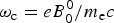 ${\rm \omega} _{\rm c} = eB_0^0 /m_{\rm e}c$
is the electron cyclotron frequency. This pump wave interacts with the plasma in the presence of background magnetic field and decays into scattered electromagnetic waves (SRS and SBS) and the electrostatic waves (EPW and IAW). One may write the total electric field
 $\vec{E}$
inside the plasma as:
 $$\vec{E} = \vec{E}_0 + \vec{E}_{\rm R} + \vec{E}_{\rm B}, $$
where
 $\vec{E}_0$
 $\vec{E}_0,\vec{E}_{\rm R},$
and
 $\vec{E}_{\rm B}$
are the electric field of the incident wave, SRS wave, and SBS wave, respectively. Our main concern is to study the interplay between these three EM waves. In this 5WI model (pump wave, SRS wave, SBS wave, EPW, and IAW) the phase-matching condition is given as follows:
 $$\eqalign{\vec{k}_0 & = \vec{k}_{\rm R} + \vec{k}_{\rm L},\vec{k}_0 = \vec{k}_{\rm B} + \vec{k}_{\rm A}\;{\rm and}\;{\rm \omega} _0 = {\rm \omega} _{\rm R} + {\rm \omega}_{\rm L}, {\rm \omega}_0 \cr & = {\rm \omega}_{\rm B} + {\rm \omega}_{\rm A},}$$
where
 $\vec{k}_{\rm \alpha} \;{\rm and}\;{\rm \omega} _{\rm \alpha} $
(α = 0, R, B, L, A) are the wave number and frequency of the pump wave, SRS wave, SBS wave, EPW, and IAW, respectively. The governing wave equation for the total electric field
 $\vec{E}$
inside the plasma can be written (Sodha et al., Reference Sodha, Sharma and Kaushik1976) in term of the total current density
 $\vec{J}$
as follows:
 $$\vec{\nabla}^2\vec{E} + \vec{\nabla} (\vec{\nabla} \cdot \vec{E}) = \displaystyle{1 \over c^2} \displaystyle{\partial^2 \vec{E} \over \partial t^2} + \displaystyle{4{\rm \pi} \over c^2} \displaystyle{\partial \vec{J} \over \partial t}, $$
where
 $${\rm \omega}_{\rm p}^2 = \left(\displaystyle{4{\rm \pi} n_0e^2 \over m_{\rm e}} \right), {\rm \omega}_{\rm c} = \displaystyle{eB_0^0 \over m_{\rm e}c}\;{\rm and}\;{\rm \omega}_{\rm uh}^2 = {\rm \omega}_{\rm p}^2 + {\rm \omega}_{\rm c}^2. $$
Here
 $\vec{V}_{\rm \alpha} ({\rm \alpha} = 0,R,B)$
is the field induced velocity by which the electrons oscillate in the field
 $\vec{E}_{\rm \alpha} ({\rm \alpha} = 0,R,B)$
, respectively. Here, N
0 represents the background plasma electron density, N
eR and N
eB are the electron density perturbations in the EPW and IAW, respectively. The components of
 $\vec{V}_{\rm \alpha} ({\rm \alpha} = 0,R,B)$
are given by:
 $$\vec{V}_{\rm \alpha} = \displaystyle{ - ie \over m({\rm \omega}_{\rm \alpha} \mp {\rm \omega}_{\rm c})} \vec{E}_{\rm \alpha}. $$
Here “−” and “+” sign is for right- and left-hand circularly polarized waves, respectively, e and m e are the electron charge and mass respectively and c is the speed of light. Using Eqs (6) and (7) in Eq. (5), one can obtain the equations governing the pump and scattered beams as follows:
 $$\eqalign{\nabla^2 \vec{E}_0 + \displaystyle{{\rm \omega}_0^2 \over c^2} \left[1 - \displaystyle{{\rm \omega}_{\rm p}^2 \over {\rm \omega}_0({\rm \omega}_0 \mp {\rm \omega}_{\rm c})} \right] \vec{E}_0 = \displaystyle{ - 4{\rm \pi} e \over c^2} \displaystyle{1 \over 2} \displaystyle{\partial \over \partial {\rm t}} (N_{\rm eR} \vec{V}_{\rm R} + N_{\rm eB} \vec{V}_{\rm B}),}$$
 $$\nabla^2 \vec{E}_{\rm R} + \displaystyle{{\rm \omega}_{\rm R}^2 \over c^2} \left[1 - \displaystyle{{\rm \omega}_{\rm p}^2 \over {\rm \omega}_{\rm R}({\rm \omega}_{\rm R} \mp {\rm \omega}_{\rm c})} \right] \vec{E}_{\rm R} = \displaystyle{ - 4{\rm \pi} e \over c^2} \displaystyle{1 \over 2} \displaystyle{\partial \over \partial {\rm t}} \left(N_{\rm eR}^{\ast} \vec{V}_0 \right), $$
 $$\nabla^2 \vec{E}_{\rm B} + \displaystyle{{\rm \omega}_{\rm B}^2 \over c^2} \left[1 - \displaystyle{{\rm \omega}_{\rm p}^2 \over {\rm \omega}_{\rm B} ({\rm \omega}_{\rm B} \mp {\rm \omega}_{\rm c})} \right] \vec{E}_{\rm B} = \displaystyle{ - 4{\rm \pi} e \over c^2} \displaystyle{1 \over 2} \displaystyle{\partial \over \partial {\rm t}} \left(N_{\rm eB}^{\ast} \vec{V}_0 \right), $$
where ωp is the plasma frequency. By solving the wave dynamical equations of both the electrostatic waves (EPW and IAW), the expression for N eR and N eB are given by
 $$\displaystyle{N_{\rm eR} \over N_0} = i \displaystyle{\mathop{e}\nolimits^2 k_{\rm R} k_{\rm L} \left \vert \vec{E}_0. \vec{E}_{\rm R}^{\ast} \right\vert \over 4m^2{\rm \Gamma}_{\rm e} {\rm \omega}_{\rm L} {\rm \omega}_{\rm R} ({\rm \omega}_0 \mp {\rm \omega}_{\rm c})}, $$
 $$\displaystyle{N_{\rm eB} \over N_0} = i \displaystyle{\mathop{e}\nolimits^2 k_{\rm B} k_{\rm A} \left\vert \vec{E}_0. \vec{E}_{\rm B}^{\ast} \right\vert \over 4\,mM{\rm \Gamma}_{\rm i} \mathop{\rm \omega}\nolimits_{\rm A} \mathop {\rm \omega}\nolimits_{\rm B} ({\rm \omega}_0 \mp {\rm \omega}_{\rm c})}, $$
where, Γi and Γe are the phenomenological damping coefficients for IAW and EPW, respectively. On substituting the expressions of N eRandN eB in Eqs. (8)–(10), the following equations are obtained:
 $$\eqalign{&\nabla^2 \vec{E}_{\rm 0} + \displaystyle{{\rm \omega}_0^2 \over c^2} \left[1 - \displaystyle{{\rm \omega}_{\rm p}^2 \over {\rm \omega}_0({\rm \omega}_0 \mp {\rm \omega}_{\rm c})} \right] \vec{E}_0 = \displaystyle{ie^2 {\rm \omega}_{\rm p}^2 {\rm \omega}_0 \over 8\,c^2m} \cr &\quad \times \left[\left(\displaystyle{k_{\rm R} k_{\rm L} \left\vert \vec{E}_{\rm R} \vec{E}_{\rm R}^{\ast} \right\vert \over m\,{\rm \Gamma}_{\rm e}\,{\rm \omega}_{\rm L} {\rm \omega}_{\rm R} ({\rm \omega}_0 \mp {\rm \omega}_{\rm c})({\rm \omega}_{\rm R} \mp {\rm \omega}_{\rm c})} \right)\right. \cr &\left. \quad + \left(\displaystyle{k_{\rm B} k_{\rm A} \left\vert \vec{E}_{\rm B} \vec{E}_{\rm B}^{\ast} \right \vert \over M\,{\rm \Gamma}_{\rm i}\,\mathop{\rm \omega}\nolimits_{\rm A} \mathop{\rm \omega}\nolimits_{\rm B} ({\rm \omega}_0 \mp {\rm \omega}_{\rm c}) ({\rm \omega}_{\rm B} \mp {\rm \omega}_{\rm c})} \right) \right] \vec{E}_0} $$
 $$\eqalign{& \nabla^2 \vec{E}_{\rm R} + \displaystyle{{\rm \omega}_{\rm R}^2 \over c^2} \left[1 - \displaystyle{{\rm \omega}_{\rm p}^2 \over {\rm \omega}_{\rm R} ({\rm \omega}_{\rm R} \mp {\rm \omega}_{\rm c})} \right] \vec{E}_{\rm R} \cr & = - i{\rm e}^2 {\rm \omega}_{\rm p}^2 \left(\displaystyle{k_{\rm R} k_{\rm L} \left\vert \vec{E}_0. \vec{E}_0^{\ast} \right\vert \over 8 m^2{\rm \omega}_{\rm L} ({\rm \omega}_0 \mp {\rm \omega}_{\rm c})^2 c^2{\rm \Gamma}_{\rm e}} \right) \vec{E}_{\rm R}}$$
 $$\eqalign{& {\mathop \nabla \nolimits^2 {\vec{E}}_{\rm B} + \displaystyle{{{\rm \omega}_{\rm B}^2} \over {c^2}}\left[ {1{\rm -} \displaystyle{{{\rm \omega}_{\rm p}^2} \over {{\rm \omega}_{\rm B}({\rm \omega}_{\rm B} \mp {\rm \omega}_{\rm c})}}} \right]{\vec{E}}_{\rm B} } \cr & \quad = - i{\rm e}^2{\rm \omega}_{\rm p}^2 \left( {\displaystyle{{k_{\rm B}k_{\rm A}\,\left \vert {{\vec{E}}_0.\vec{E}_0^{\ast}} \right \vert} \over {{\rm 8 M}m{\rm \omega}_{\rm A} {({\rm \omega}_0 \mp {\rm \omega}_{\rm c})}^2 c^2{\rm \Gamma} _{\rm i}}}} \right)\vec{E}_{\rm B}}$$
The solution can be written as
 $$\vec{E}_0 = \vec{E}_0e^{ - {\rm G}_0z}, $$
 $$\vec{E}_{\rm R} = \vec{E}_{\rm R}e^{ - {\rm g}_{\rm R}z}, $$
 $$\vec{E}_{\rm B} = \vec{E}_{\rm B}e^{ - {\rm g}_{\rm B}z}, $$
where
 $\mathop G\nolimits_0, \,g_{\rm R},\,{\rm and}\,g_{\rm B}$
are the gain factors of the pump wave, SRS, and SBS respectively for the coexistence (5WI) case. Substituting the above solutions into Eqs (13)–(15) along with the dispersion relation of EMW [Eq. (2)] we can get:
 $$\eqalign{G_0 &= \displaystyle{e^2{\rm \omega}_{\rm p}^2 {\rm \omega}_0 \over 16\,c^2mk_0} \left[\left(\displaystyle{k_{\rm R}k_{\rm L}\,\left\vert E_{\rm R} E_{\rm R}^{\ast} \right\vert \over m\,{\rm \Gamma}_{\rm e}\,{\rm \omega}_{\rm L} {\rm \omega}_{\rm R} ({\rm \omega}_0 \mp {\rm \omega}_{\rm c}) ({\rm \omega}_{\rm R} \mp {\rm \omega}_{\rm c})} \right) \right. \cr &\left. \quad + \left(\displaystyle{k_{\rm B}k_{\rm A} \left\vert E_{\rm B} E_{\rm B}^{\ast} \right\vert \over M\,{\rm \Gamma}_{\rm i} \mathop{\rm \omega}\nolimits_{\rm A} \mathop{\rm \omega}\nolimits_{\rm B} ({\rm \omega}_0 \mp {\rm \omega}_{\rm c}) ({\rm \omega}_{\rm B} \mp {\rm \omega}_{\rm c})} \right) \right],} $$
 $$g_{\rm R} = - e^2{\rm \omega}_{\rm p}^2 \left( {\displaystyle{{k_{\rm L}^{} \,\left \vert {E_0.E_0^ *} \right \vert} \over {{\rm 16} m_{}^2 {\rm \omega}_{\rm L} {({\rm \omega}_0 \mp {\rm \omega}_{\rm c})}^2 c^2\,\,{\rm \Gamma} _{\rm e}}}} \right)\,, $$
and
 $$g_{\rm B} = - e^2{\rm \omega}_{\rm p}^2 \left( {\displaystyle{{k_{\rm A}\,\left \vert {E_0.E_0^ *} \right \vert} \over {{\rm 16}\,{\rm M}m{\rm \omega}_{\rm A} {({\rm \omega}_0 \mp {\rm \omega}_{\rm c})}^2 c^2{\rm \Gamma} _{\rm i}}}} \right). $$
Here “−” and “+” sign is for right and left-hand circularly polarized waves, respectively. The back reflectivity, defined as the ratio of the scattered wave intensity to the input pump wave intensity, can be expressed for the SRS and SBS wave respectively as follows:
 $${R_{{\rm SRS}} = \displaystyle{{\left \vert {{\vec{E}}_{\rm R}\vec{E}_{\rm R}^*} \right \vert} \over {E_{00}^2}} v_{{\rm gr}} = \displaystyle{{E_{{\rm 0R}}^2 ({z}^{\prime} = 0)\,v_{{\rm gr}}} \over {E_{00}^2}} \mathop e\nolimits^{{\rm -} 2 \mathop g\nolimits_{_{\rm R}} z^{\prime}}} $$
 $${R_{{\rm SBS}} = \displaystyle{{\left \vert {{\vec{E}}_{\rm B}\vec{E}_{\rm B}^*} \right \vert} \over {E_{00}^2}} = \displaystyle{{E_{{\rm 0B}}^2 ({z}^{\prime} = 0)} \over {E_{00}^2}} \mathop e\nolimits^{{\rm -} 2 \mathop g\nolimits_{_{\rm B}} z^{\prime}}} $$
here z ′− = −Lz−z, L z is the interaction length and v gr is ratio of the group velocity of the Raman scattered beam to the group velocity of the pump beam. In the next section, the numerical results are obtained and discussed.
3. RESULTS AND DISCUSSION
We have simulated the back-reflectivities of the scattered beams and demonstrated that how modification in back-reflectivities takes place due to the coexistence of both the scattering processes. Also demonstrate the effect of the background magnetic field on the back-reflectivities. For the numerical simulation, following set of laser–plasma parameters are chosen:
λ0 = 1.06 μm, Pump intensity I = 5 × 10¹⁶ W/cm2, Seed beam intesities = I × 10−4 W/cm2, Γe = 8 × 10⁻³ω0 and Γi = 10−4ω0.
Furthermore, the results obtained in the absence of magnetized plasma (Sharma et al., Reference Sharma, Vyas and Singh2013) can be restored by setting the value of
 $B_0^0 $
to zero and compared the results obtained in the present case (in the presence of magnetic field). The results are described in the form of graphs as below.
For the right circularly polarized mode (r-mode), Figure 1(a) and 1(b) shows the variation of back reflectivity of SBS and SRS with the background magnetic field, respectively. Similarly, Figure 2(a) and 2(b) shows the variation of back reflectivity of SBS and SRS with the background magnetic field, respectively, for the left circularly polarized mode (l-mode). The back reflectivity is plotted against the normalized distance of propagation for both 3WI and 5WI cases for ωp = 0.15 ω0. The dash curve corresponds to the pump depletion in the 3WI case and the solid curve corresponds to the 5WI case. It is clear that for both SRS and SBS, the back reflectivity for the 5WI case is always lower than 3WI case (which is a well-known result in unmagnetized plasma (Sharma et al., Reference Sharma, Vyas and Singh2013; Vyas et al., Reference Vyas, Singh and Sharma2014a , Reference Vyas, Singh and Sharma b ). It was expected because the intensity of the backscattered beams is directly proportional to the intensity of the incident pump beam and as the pump beam depletes the back reflectivity gets suppressed. In the 3WI case, pump depletion is less and hence the back reflectivity is always more than the 5WI case. It is also observed that for the r-mode back reflectivity of both the processes increases with the increasing background magnetic field, while for the l-mode back reflectivity of both the processes decreases with the increasing background magnetic field. In the presence of magnetic field, the interplay between SRS and SBS is a very complex process. The dynamical evolution of one scattering process is greatly affected by the interplay with the other coexisting process and by the magnetic field as well. Due to change in magnetic field or the interplay between the scattered beams, the gain factor of the respective backscattered beam (g B and g R) get modified, which further modifies the back-reflectivity. Therefore, the back reflectivity increases or decreases with increasing strength of the magnetic field.
Variation in the back reflectivity of r-mode with the distance of propagation, at different values of the axial magnetic field, (a) SBS process (R SBS), (b) SRS process (R SRS). The solid curve corresponds to the 5WI case and the dash curve corresponds to the 3WI case (ωp = 0.15 ω0).

Variation in the back reflectivity of l-mode with the distance of propagation, at different values of the axial magnetic field, (a) SBS process (R SBS), (b) SRS process (R SRS). The solid curve corresponds to the 5WI case and the dash curve corresponds to the 3WI case (ωp = 0.15 ω0).

At
 $B_0^0 = 15\,{\rm MG}$
, for the r-mode Figure 3(a) and 3(b) represents the variation of back reflectivity of SBS and SRS with the plasma frequency, respectively while for the l-mode variation is represent by Figure 4(a) and 4(b). As observed, for both the scattering processes variation in plasma frequency greatly affect the back-reflectivities (R
SBS and R
SRS) and both of them get enhanced considerably due to the increasing plasma frequency for both r-mode as well as l-mode. Change in plasma frequency modifies the gain factors of the respective backscattered beam (g
B and g
R) and hence the back reflectivities (R
SBS and R
SRS) get enhanced accordingly. For both the scattering processes again the two cases; the 5WI case (solid curve) and 3WI case (dash curve) have been considered and in this situation also the back reflectivity in the 5WI case gets suppressed.
Dependency of the back reflectivity of r-mode on the plasma frequency, (a) SBS process (R
SBS), (b) SRS process (R
SRS). The solid curve corresponds to the 5WI case and the dash curve corresponds to the 3WI case (
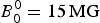 $B_0^0 = 15\,{\rm MG}$
).

Dependency of the back reflectivity of l-mode on the plasma frequency, (a) SBS process (R
SBS), (b) SRS process (R
SRS). The solid curve corresponds to the 5WI case and the dash curve corresponds to the 3WI case (
 $B_0^0 = 15\,{\rm MG}$
).

By combining dispersion relation of SRS wave [Eq. (2)] and Langmuir wave (same as in unmagnetized case) along with the phase-matching condition [Eq. (4)], it can be easily verify that for l-mode SRS can grow in the region higher than quarter critical density in the presence of external magnetic field. For the l-mode, Figure 5(a) and 5(b) represents the variation of back reflectivity of SBS and SRS with the plasma frequency, respectively, above the quarter critical density for
 $B_0^0 = 15\,{\rm MG}$
. The solid curve represents the 5WI case and dash curve represents the 3WI case. As observed, in this situation also the back reflectivity of both the scattering processes get enhanced considerably due to the increasing plasma frequency and get suppressed due to coexistence of SRS and SBS (5WI).
Dependency of the back reflectivity of l-mode on the plasma frequency (above quarter critical density), (a) SBS process (R
SBS), (b) SRS process (R
SRS). The solid curve corresponds to the 5WI case and the dash curve corresponds to the 3WI case (
 $B_0^0 = 15\,MG, B_0^0 = 15\,{\rm MG},\,{\rm \Gamma}_{\rm e} = 5 \times 10^{ - 2}{\rm \omega}_0,$
 ${\rm and}\,{\rm \Gamma} _{\rm i} = 10^{ - 4}{\rm \omega}_0$
).

4. CONCLUSION
In summary, we have carried out the interplay between two most important coexisting parametric instabilities, SRS and SBS in the presence of an axial magnetic field. We have derived and simulated the back reflectivity of both the scattering process and demonstrated the effect of coexistence phenomena (5WI) as well as the axial magnetic field on the back-reflectivity. We have observed that back reflectivity of one scattering process gets suppressed due to the presence of another (5WI case). Also, the variation in back reflectivity with the magnetic field and plasma frequency is observed, which demonstrates that as the strength of magnetic field increases the back reflectivity of both the scattering processes get supressed, whereas with the increasing plasma frequency back-reflectivities get enhanced.
ACKNOWLEDGMENTS
This work was partially supported by CSIR, India; UGC, India; and DST, India.



