Introduction
Technological innovations in poultry production and diet formulation and more importantly, genetic improvements in poultry breeding have led to a considerable (over 20%) improvement in the feed efficiency ratio in chicken and turkey meat production, compared to 40 years ago (Willems et al., Reference WILLEMS, MILLER and WOOD2012). The genetic changes associated with increased body weight gains (BWG) and feed efficiency have resulted in changes in gut physiology and gut microbial community composition of birds (Lumpkins et al., Reference LUMPKINS, BATAL and LEE2010).
The composition of intestinal microbiota is determined by many factors including broiler origin, housing type, litter quality, stocking density and temperature, the presence of unfavourable organisms and diseases (Geier et al., Reference GEIER, TOROK, ALLISON, OPH EL-KELLER and HUGHES2009). Feed antibiotics have a selective, but generally inhibitory effect on the counts of intestinal microorganisms. Since the ban on antibiotic growth promoters there has been an increasing interest in feed additives that could modulate the composition and profile of intestinal microbiota. Alternative feed additives such as probiotics, prebiotics, bacteriocins, organic acids and many others can not only alter the composition of gut microbiota but also affect its activity. In view of this the following question arises: how do environmental factors and modern feed additives influence the microbiota composition and postileal fermentation in broiler chickens and turkeys? This paper seeks to address this question, referring to recent findings.
The composition and physiological effects of gut microbiota in poultry
The gastrointestinal tract (GIT) of poultry contains a unique type of microbial ecosystem which is affected by the flow of nutrients from diet, host-derived substrates such as exfoliating intestinal epithelium, mucin and bile acids, the immunological responses of the host, and gut anatomy (Rehman et al., Reference REHMAN, VANHJEN, AWAD and ZENTEK2007; Lumpkins et al., Reference LUMPKINS, BATAL and LEE2010). Research results have shown that the GIT microbiota achieve one of the highest cell densities recorded for any ecosystem, ranging in poultry from 107 to 1011 bacteria per gram of gut contents (Apajalahti et al., Reference APAJALAHTI, KETTUNEN and GRAHAMH2004). The results of recent studies, conducted with the use of sensitive DNA probes, have provided new information on the composition of intestinal microbiota. The avian microbiota comprises approximately 640 species from 140 genera, with only 10% of the avian microbiota being cultured in the laboratory (Torok et al., Reference TOROK, OPHEL-KELLER, LOO and HUGHES2008). Intestinal microbiota is usually characterized by identifying selected groups of bacteria that represent only a fraction of this complex and dynamic microbiological system. Moreover, it remains unknown how quantitative changes in the counts of beneficial (Lactobacillus spp., Bifidobacterium spp.) and commensal bacteria (i.e. Clostridiaceae, Enterobacteriaceae, Streptococcus and Enterococcus) improve the health status and performance of birds.
Non-nutritional factors exert a significant effect on gut microbiota composition in the GIT of poultry. Sacranie et al. (Reference SACRANIE, IJI, MIKKELSEN and CHOCT2007) demonstrated that microorganisms may migrate between GIT segments due to reverse peristalsis or reflux. According to the above authors, the occurrence of reflux throughout the digestive tract is normal part of gut motility, and it is determined by food availability and diet composition. The above phenomena and, consequently, fermentation interactions taking place in the caecum and colon have been discussed thoroughly by Svihus et al. (Reference SVIHUS, CHOCT and CLASSEN2013) and they have therefore not been subject of this review. Guardia et al. (Reference GUARDIA, KONSAK, COMBES, LEVENEZ, CAUQUIL, GUILLO, LESSIRE, JUIN and GABRIEL2011) reported that the composition of GIT microbiota, including caecal bacteria, can be modified by stocking density. For similar reasons, the activity levels of microbial enzymes, including glycolytic ones as well as β-glucuronidase, azoreductase and nitroreductase, can be an indirect indicator of intestinal ecosystem function, because they reflect the presence and growth of different types of bacteria, many of which remain unidentified. Recent findings significantly advance our knowledge of this complex ecosystem. Torok et al. (Reference TOROK, OPHEL-KELLER, LOO and HUGHES2008) pointed to a relationship between gut microbial communities and bird performance. The cited authors identified several bacterial species contributing to the diet-induced differences in the overall gut microbial community. They speculated that low apparent metabolisable energy (AME) of the diet was correlated with a specific bacterial species, C. perfringens, and high AME values associated with various Lactobacillus species. Apajalahti et al. (Reference APAJALAHTI, RINTTILÄ and KETTUNEN2012) reported a significant correlation between caecal microbial composition and dietary energy levels. These authors suggested a paramount role of caecal microbiota in the production performance of birds.
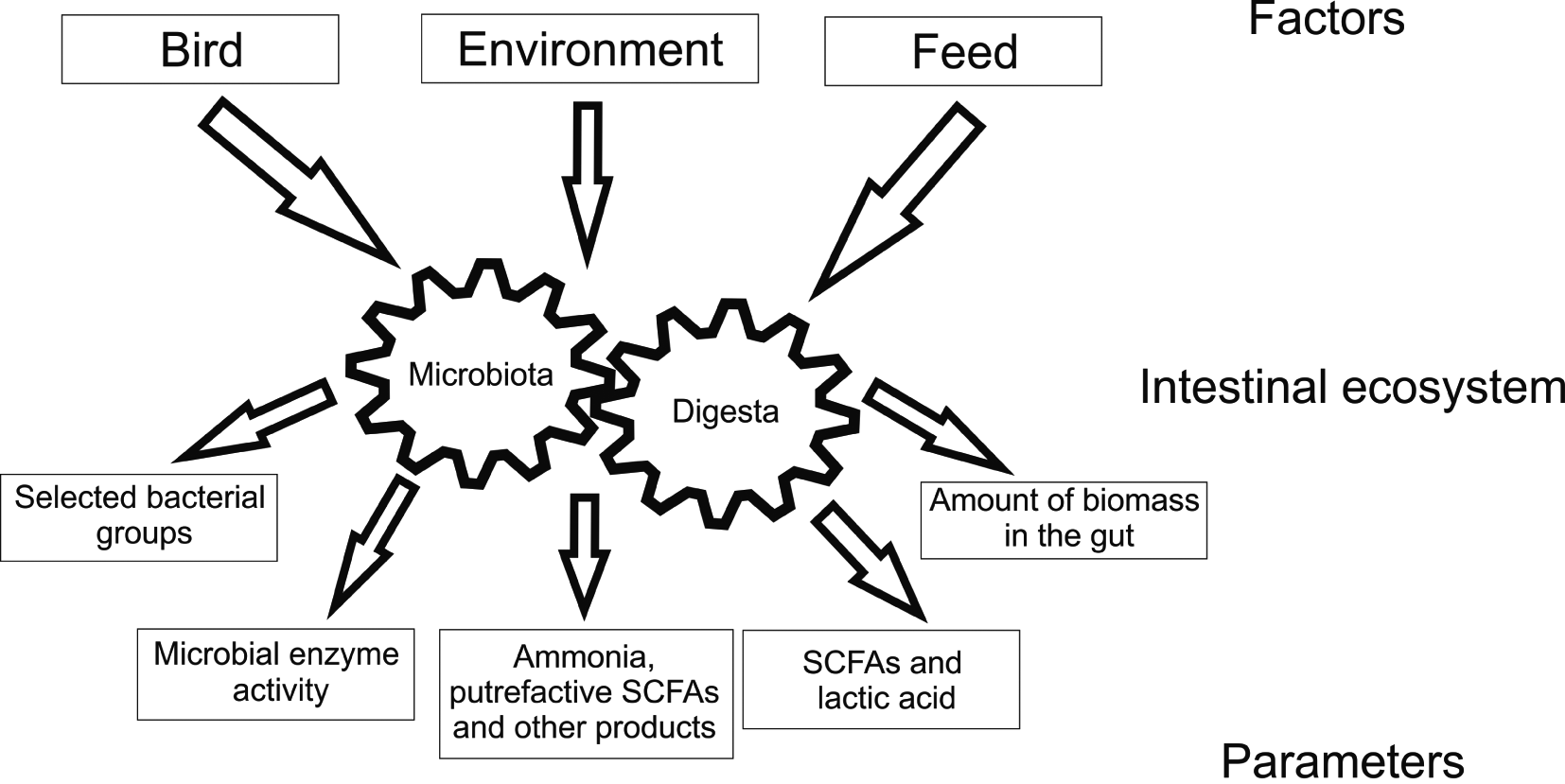
In poultry, the composition of intestinal microbiota is affected by the bird's species, age and sex, and nutritional and environmental factors (Figure 1). The intestinal is ecosystem composed of two basic interrelated components: microbiota - characterised by different composition and stability, and digesta (including the main products of fermentation) with different physicochemical properties. The intestinal response may also be modulated by environmental factors.
Key impact factors on the digest and microbiota in the avian gastrointestinal tract.

The amount and physicochemical properties of intestinal digesta (pH, viscosity, and hydration rate), and the weight of intestinal tissue are reliable measures of postileal fermentation in the GIT of poultry. Other direct indicators are the main products of carbohydrate and protein fermentation in the caecum, short chain fatty acids (SCFAs) and ammonia. Short chain fatty acids are the major end products of fermentation in the digestive tract of poultry. As in other species, acetic acid is produced in the greatest quantity with lesser amounts of propionic acid and butyric acid and only trace amounts of other acids. Several studies have shown that SCFAs have biological effects, either local or systemic, which have been suggested to be of benefit to health. It is known that SCFAs are responsible for a reduction in the numbers of Enterobacteriaceae, including Salmonella and Escherichia coli, in the caeca of broiler chickens during growth (van der Wielen et al., Reference VAN DER WIELEN, BIESTERVELD, NOTERMANS, HOFSTARA, URLINGS and KNAPEN VAN2000). Short chain fatty acids, especially butyrate, play an important role in the function of the large bowel as an energy source for the colonic epithelium. Caecal fermentation produces mainly SCFAs that are transferred to the blood and thus may contribute energy to the bird. Annison et al. (Reference ANNISON, HILL and KENWORTHY1968) demonstrated that SCFAs could provide up to 11% of the metabolisable energy for chickens. However, successive experiments have estimated the amount of energy that can be obtained from caecal fermentation to range from 3 to 5% of the total energy requirements of chickens (Choct et al., Reference CHOCT, ANNISON and TRIMBLE1992; Jorgensen et al., Reference JORGENSEN, ZHAO, KNUDSEN and EGGUM1996; Jamroz et al., Reference JAMROZ, JAKOBSEN, KNUDSEN, WILICZKIEWICZ and ORDA2002). In vitro and in vivo studies have shown that SCFAs circulating with blood strongly affect glucose and lipid metabolism; for instance, propionate suppresses gluconeogenesis in hepatocytes and lowers serum cholesterol levels (Fergusson and Jones, 2000).
When the diet provides limited amounts of fermentable carbohydrates or when caecal digesta is rich in protein compounds that are not digested in the upper GIT, fermentation of amino acids produces putrefactive compounds, e.g. ammonia and biogenic amines. The following bacterial genera are characterised by high proteolytic activity: Clostridium spp., Enterococcus spp. and Bacteroides spp. Many putrefactive compounds have adverse effects on large intestinal health; high ammonia concentrations may promote neoplastic changes in the gut cells, depress bird performance and reduce feed utilisation (Jin et al., Reference JIN, HO, ABDULLAH and JALALUDIN2000). One of the side effects of bacterial proliferation, which is a prerequisite for SCFA production, is the fixing of nitrogen as bacterial protein. Ammonia derived from blood urea could be an important source of nitrogen. Slightly higher ammonia levels in the caecum could results from increased counts of intestinal bacteria; bacterial urease decomposes urea (transported from blood to the intestine) into ammonia, thus lowering ammonia blood concentrations (Zduńczyk et al., Reference ZDUŃCZYK, JUŚKIEWICZ, STAŃCZUK, JANKOWSKI and KRÓL2007).
Large masses of caecal tissue and digesta are listed among the effects of enhanced fermentation processes, for instance upon the intake of dietary indigestible oligo- and polysaccharides, depending on their type and dose (Zduńczyk et al., Reference ZDUŃCZYK, JANKOWSKI, JUŚKIEWICZ, LECEWICZ and SŁOMIŃSKI2010). An increase in intestinal wall weight is associated with the trophic effect of fermentation products (mainly SCFAs) on caecal mucosa, whereas increased bulk of digesta in the bird's caecum results from bacterial proliferation and binding of water by osmotically active substances, the latter contributing to increased hydration of caecal digesta (Juśkiewicz et al., Reference JUŚKIEWICZ, ZDUŃCZYK, JANKOWSKI, KRÓL and MILALA2008).
It has been suggested that several bacterial enzymes, such as β-glucuronidase, nitroreductase and β-glucosidase, may play a role in undesired changes that occur in the caecum and colon by converting pre-carcinogens to proximal carcinogens. Klewicka et al. (Reference KLEWICKA, ZDUŃCZYK and JUSKIEWICZ2009) demonstrated that β-glucuronidase is efficiently produced by bacteria of the family Enterobacteriaceae, and a drop in the cell counts of Enterobacteriaceae strains considerably reduces β-glucuronidase activity in the caecal contents of laboratory rodents. It should be noted that increases in β-glucosidase activity are more ambiguous - the hydrolytic activity of this enzyme is responsible for the production of both toxins and bacterial glucoside derivatives that are believed to provide protection against chemically-induced tumours. According to some authors, even low inclusion levels of oligosaccharides in poultry diets may be sufficient to stimulate the intestinal microbiota to produce enzymes, in particular those involved in glycolysis. β-galactosidase, α-galactosidase and α-glucosidase can enhance the fermentation of lactose, raffinose family oligosaccharides (RFOs), and resistant starch. A review of scientific literature indicates that a well-balanced proportion between dietary insoluble and soluble indigestible carbohydrates may positively affect the enzymatic activity of intestinal microbiota (Shakouri et al., Reference SHAKOURI, KERMANSHAHI and MOHSENZADEH2006; Molist et al., Reference MOLIST, GOMEZ DE SEGURA, GASA, HERMES, MANZANILLA, ANGUITA and PEREZ2009; Zduńczyk et al., Reference ZDUŃCZYK, JANKOWSKI, JUŚKIEWICZ, MIKULSKI and SLOMINSKI2013b).
Such high complexity of poultry microbiota composition and its multifaceted effect on caecal fermentation complicates our current understanding of bird metabolism. It is still unknown how microflora composition is correlated with bird's performance. But it seems that in the near future, new molecular techniques may provide important insights about the composition and roles of microbiota.
Modulation of postileal fermentation using different feed additives
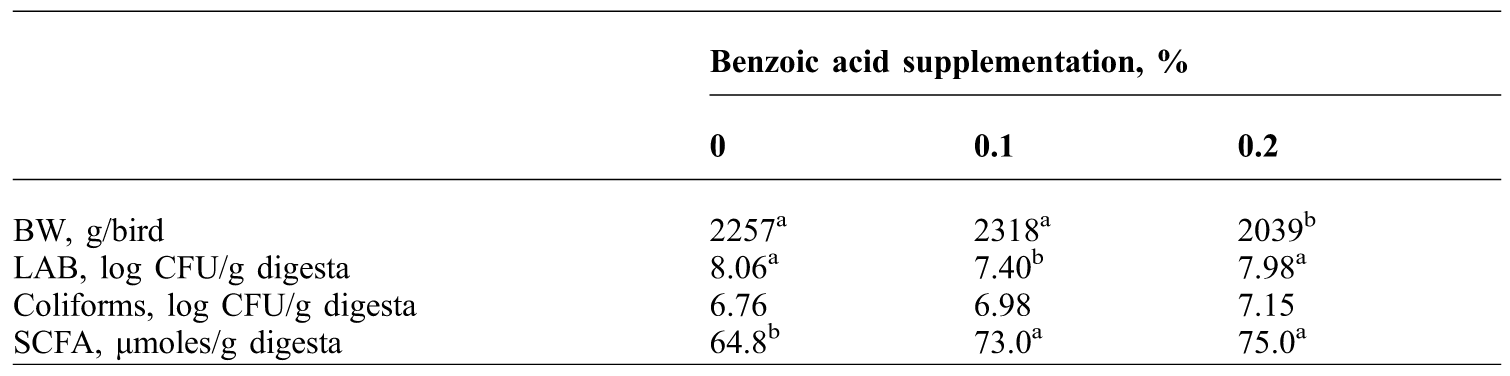
Since the ban on antibiotics as growth promoters in animal feed, which took effect in the European Union in 2006, there has been an increasing interest in feed additives that could modulate the composition and profile of intestinal microbiota. One treatment aimed at stimulating intestinal ecosystem function is the use of inorganic and organic acids. Organic acids and their salts have been widely used as feed components for poultry and many other animal species (Mroz et al., Reference MROZ, JONGBLOED, PARTANEN, VREMAN, KEMME and KOGUT2000; Mikulski et al., Reference MIKULSKI, ZDUŃCZYK, JANKOWSKI and JUŚKIEWICZ2008). Most of the SCFAs (i.e. propionic acid, formic acid) that are used in feeds or drinking water are absorbed in the upper GIT of poultry (Thompson and Hinton, Reference THOMPSON and HINTON1997). Thus, their role in modifying host microbiota populations in the lower GIT, i.e. the caecum, is limited. Organic acids, their salts and mixtures, are common feed preservatives and antibacterial agents (Ricke et al., Reference RICKE, KUNDIGER, MILLER and KEETON2005). In the GIT, they may inhibit some pathogenic bacteria by dissipating the proton motive force across the bacterial cell membrane (Russell, Reference RUSSELL1992). In a study by Józefiak et al. (Reference JÓZEFIAK, KACZMAREK and RUTKOWSKI2008), the inclusion of benzoic acid in broiler chicken diets caused a significant decrease in the counts of coliforms in the small intestinal digesta, but not in the caecal digesta (Table 1). Benzoic acid enhanced SCFA synthesis in the caeca of broilers. The cited authors speculated that benzoic acid has antimicrobial properties, mainly because of its inhibitory effect on several microbial enzymes, in particular α-ketoglutaric acid, dehydrogenase and succinic acid dehydrogenase, and a strong lethal effect on lactic acid bacteria (LAB). In earlier studies, the authors observed a growth depressing effect of benzoic acid, when it was fed at 0.25- 0.75% concentrations (Józefiak et al., Reference JÓZEFIAK, KACZMAREK, BOCHENEK and RUTKOWSKI2006). It remains unknown why benzoic acid reduces the growth rate of broiler chickens when fed at inclusion levels higher than 0.1%. It has been hypothesised that one of the reasons is the metabolic pathway of benzoic acid and its conjugation with ornithine. Some authors (Williams, Reference WILLIAMS1959) reported that the domestic fowl excreted benzoic acid and other aromatic acids such as pyromucic, phenylacetic, pnitrophenylacetic and picolinic acids, as well as nicotinic acid conjugated with ornithine. Thus, feeding benzoic acid could result in an arginine deficiency because dietary arginine is the source of ornithine in the fowl. Other pathways for ornithine synthesis from glutamic acid, proline or glucose precursors do not exist in the domestic fowl (Nesheim and Garlich, Reference NESHEIM and GARLICH1963).
Performance results of broiler chickens, SCFA concentrations and microbiota populations (Józefiak et al., Reference JÓZEFIAK, KACZMAREK and RUTKOWSKI2008).
ab Means within a row with no common superscript differ significantly (P<0.05)
Another type of acid-based additives are salts of butyric acid. Butyrates are metabolites produced by microbial fermentation of carbohydrates (dietary fibre, resistant starch) primarily in the large intestine of single-stomached species. Butyrates are an energy source for the cells lining the lower GIT, and they have also been shown to affect cell maturation, cell differentiation and apoptosis (Guilloteau et al., Reference GUILLOTEAU, MARTIN, EECKHAUT, DUCATELLE, ZABIELSKI and VAN IMMERSEEL2010). Butyrates are normally not present in the small intestine of monogastrics animals, as microbial formation of butyrate is virtually absent. When butyrate is orally ingested as a feed additive, it may act as a growth promoter. This might be explained by its physiological effects on the animal. The effects can be summarised as increased nutrient digestibility, stimulation of digestive enzyme secretion, modification of the intestinal luminal microbiota and an improvement in the epithelial integrity and defence systems (Guilloteau et al., Reference GUILLOTEAU, MARTIN, EECKHAUT, DUCATELLE, ZABIELSKI and VAN IMMERSEEL2010). Biggs and Parsons (Reference BIGGS and PARSONS2008) demonstrated that gluconic acid (2%) and citric acid (3%) insignificantly decreased Bifidobacterium counts. The cited authors speculated that the lack of response to gluconic acid and citric acid in chickens fed a maize-SBM (soybean-meal) diet could be due to the high oligosaccharide content of SBM with a masking positive effect of the investigated acids.
Bacteriocins are a large group of proteins that come in a range of sizes. They are heat labile or heat stable, and may be resistant or susceptible to proteolytic enzymes. Bacteriocins are produced by almost all Gram-positive and Gram-negative bacteria. The mode of action of bacteriocins involves disruption of bacterial membrane integrity, leading to cell death. Some bacteriocins inhibit cell wall synthesis, lipid bilayer function and spore outgrowth, activate autolytic enzymes or attack cellular DNA, ribosomal RNA and transfer RNA (Riley and Wertz, Reference RILEY and WERTZ2002; Peschel and Sahl, Reference PESCHEL and SAHL2006; Sahl and Bierbaum, Reference SAHL and BIERBAUM2008; Lin, Reference LIN2009). The use of bacteriocins in turkey and chicken nutrition to control foodborne pathogens has been investigated by a few authors (Cole et al., Reference COLE, FARNELL, DONOGHUE, STERN, SVETOCH, ERUSLANOV, VOLODINA, KOVALEV, PERELYGIN, MITSEVICH, MITSEVICH, LEVCHUK, POKHILENKO, BORZENKOV, SVETOCH, KUDRYAVTSEVA, REYES-HERRERA, BLORE, DE LOS SANTOS and DONOGHUE2006; Józefiak et al., Reference JÓZEFIAK, RUTKOWSKI, KACZMAREK, JENSEN, ENGBERG and HOJBERG2010a; Reference JÓZEFIAK, SIP, KACZMAREK and RUTKOWSKI2010b; Reference JÓZEFIAK, SIP, RAWSKI, RUTKOWSKI, KACZMAREK, HOJBERG, JENSEN and ENGBERG2011), but little attention has been paid to the effects of bacteriocins on postileal fermentation. According to Józefiak et al. (Reference JÓZEFIAK, SIP, RUTKOWSKI, RAWSKI, KACZMAREK, WOŁUŃ-CHOLEWA, ENGBERG and HOJBERG2012), divercin (AS7) increased the concentrations of iso-butyrate acid in challenged birds (Clostridium perfringens) and decreased LAB counts in unchallenged birds, whereas total anaerobes and C. perfringens remained unaffected.
Another group of feed additives that modify intestinal ecosystem function in poultry are phytogenic products such as plant extracts, herbs, spices and essential oils (Applegate et al., Reference APPLEGATE, KLOSE, STEINER, GANNER and SCHATZMAYR2010) and their biologically active components including; terpenoids, phenolics, glycosides and alkaloids (Huyghebaert et al., Reference HUYGHEBAERT, DUCATELLE and IMMERSEEL2011). The antimicrobial properties of plant products have been proven by many researchers. Kim et al. (Reference KIM, MARSHALL and WEI1995) demonstrated that 11 essential oils had inhibitory effects on potential foodborne pathogens such as E. coli, E. coli O157:H7, Salmonella enterica serovar Typhimurium and others. Dorman and Deans (Reference DORMAN and DEANS2000) reported the antibacterial activity of plant volatile oils against 25 different genera of bacteria. The antimicrobial properties of phytogenic feed additives are manifested not only by reduced bacterial counts in the lower gut but by fewer fermentation products including ammonia and biogenic amines (Windisch et al., Reference WINDISCH, SCHEDLE, PLITZNER and KROISMAYR2008). Similar effects were reported for alkaloid extracts from Macleya cordata (mainly sanguinarine) added to broiler diets at 20 mg/kg. The antimicrobial action of sanguinarine led to a decrease in the SCFA pool in the caecal contents from 173 to 126 mol/kg BW, in comparison with the control group (Jankowski et al., Reference JANKOWSKI, ZDUŃCZYK, JUŚKIEWICZ, KOZŁOWSKI, LECEWICZ and JEROCH2009). A slightly lower inclusion level of the sanguinarine supplement (15 mg/kg) did not reduce the caecal SCFA pool in broilers but it beneficially modulated bacterial enzymatic activity, i.e. reduced the activity of potentially harmful enzymes (Juśkiewicz et al., Reference JUŚKIEWICZ, GRUZAUSKAS, ZDUŃCZYK, SEMASKAITE, JANKOWSKI, TOTILAS, JARULE, SASYTE, ZDUŃCZYK, RACEVICIUTE-STUPELIENE and SVIRMICKAS2011). Phytogenic feed additives in poultry diets have been found to enhance production of digestive secretions, stimulate blood circulation, enhance the immune status of birds and exert antioxidant effects (Brenes and Roura, Reference BRENES and ROURA2010).
In the European Union, the group of probiotics or direct-fed microbials for animal nutrition is inclusive of Gram-positive bacteria of the genera Lactobacillus and Enterococcus, present in large amounts in the digestive systems of animals (107 - 108 and 105 - 106 CFU/g digesta, respectively), selected strains of the genera Bacillus, Pediococccus and Streptococcus, and Saccharomyces yeasts (S. cerevisiae and S. boulardi) (Anadon et al., Reference ANADON, MARTINEZ-LARRANGA and MARTNEZ2006). Bacteria of the above genera inhibit pathogenic microorganisms in the intestine by competitive exclusion for metabolic substrates and bacterial attachment sites to epithelia as well as the production of antibacterial substances, thus protecting birds against enteropathogens such as enterotoxigenic E. coli, Clostridium perfringens, Listeria and Campylobacter spp. (Schneitz, Reference SCHNEITZ2005; Yang et al., Reference YANG, IJI and CHOCT2009). Such treatment is associated with the inhibitory activity of LAB against bacterial β-glucuronidase, β-glucosidase, azoreductase and nitroreductase, enzymes involved in the activation of carcinogenic substances (Collington et al., Reference COLLINGTON, PARKER and AMSTRONG1990). Probiotics can modify microbiota composition, but the durability and physiological effects of such changes are determined by diet composition and the content of substrates available to the probiotic microbiota. Previous research findings into the use of probiotics in poultry nutrition have been inconsistent and contradictory, therefore further studies need to be undertaken to investigate the bacterial metabolic activities together with the community analysis of the intestinal bacteria (Rehman et al., Reference REHMAN, VANHJEN, AWAD and ZENTEK2007).
Some types of indigestible carbohydrates, mostly low-molecular-weight oligosaccharides and resistant starch, exhibit prebiotic properties and constitute the most preferred source of energy for beneficial microbiota. They are fermented in the lower GIT by endogenous bacteria to release energy, metabolic substrates, lactic acid and SCFAs as end products of fermentation (Quigley, Reference QUIGLEY2010). Contemporary research focuses on oligosaccharides of various origins. They differ with respect to monomer composition and glycosidic bonds (i.e. fructo-, galacto-, xylo- and maltooligosaccharides). These compounds can be obtained by a variety of methods - physical, chemical and enzymatic (Patel and Goyal, Reference PATEL and GOYAL2011). The method of production should be taken in to account when analyzing the effect of oligosaccharides on intestinal ecosystem function. Furthermore, prebiotic-stimulated gut microbiota can interact with digestive physiology and consequently affect growth in many complex ways. In addition it can be further influenced by many other factors such as the compatibility between the diet and the hygiene standards in poultry management practices (Yang et al., Reference YANG, IJI and CHOCT2009). Prebiotics are expected to decrease the pH of intestinal contents, thus inhibiting the growth of harmful bacteria such as Clostridium and Salmonella, and promoting the growth of Lactobacillus spp. and Bifidobacterium spp. found in the intestines (Rehman et al., Reference REHMAN, VANHJEN, AWAD and ZENTEK2007). The above mechanism of action has been well documented with respect to short-chain fructooligosaccharides (FOS) and the fructose polymer inulin. One of our experiments (Juśkiewicz et al., Reference JUŚKIEWICZ, JANKOWSKI, ZDUŃCZYK, BIEDRZYCKA and KONCICKI2005) demonstrated that the supplementation of turkey diets with inulin, in particular at higher inclusion levels (1.0%), led to a significant reduction in E. coli populations, an insignificant but noticeable increase in Bifidobacterium and Lactobacillus counts, and the greatest SCFA production. However, the final body weights of turkeys from that group were lower than in the control treatment. In a similar experiment (Rebolé et al., Reference REBOLÉ, ORTIZ, RODRÍGUEZ, ALZUETA, TREVIÑO and VELASCO2010), where chickens were fed diets containing 0%, 1% or 2% prebiotic, dietary inulin had a positive and significant effect on bifidobacteria and lactobacilli counts in both ileal and caecal contents. In addition it also altered fermentation patterns in the caeca, increasing the concentrations of n-butyric and d-lactic acids as well as the n-butyric acid:acetic acid ratio. Yang et al. (Reference YANG, IJI and CHOCT2009) reported that among the prebiotics examined in chickens, fructooligosaccharides were shown to improve the growth performance of birds but positive effects were not always apparent. Geier et al. (Reference GEIER, TOROK, ALLISON, OPH EL-KELLER and HUGHES2009) administered 0.5% FOS and MOS (mannan oligosaccharides) to broiler chickens and found that indigestible carbohydrates altered the intestinal microbiota but did not influence the performance of birds.
Mannan oligosaccharides are considered prebiotics although they seem to be less fermentable by intestinal bacteria than FOS (Zentek et al., Reference ZENTEK, MARQUART and PIETRZAK2002). In an experiment on turkeys (Juśkiewicz et al., Reference JUŚKIEWICZ, ZDUŃCZYK and JANKOWSKI2006), dietary MOS did not change the caecal pH, bacterial enzyme activity and SCFA concentrations in the caecum. Dietary MOS decreased the population of caecal E. coli but had no effect on the counts of Bifidobacterium and Lactobacillus. The mechanism of action of MOS differs from that of FOS and other oligosaccharides (Rehman et al., Reference REHMAN, VANHJEN, AWAD and ZENTEK2007), and it is probably dual, involving the adsorption of enteric pathogens and immunomodulation. MOS exert a direct effect on pathogens such as Escherichia coli and Salmonella by binding to the lectin receptors on the surface of the cell walls of pathogenic bacteria. Once this occurs, the pathogen cannot attach itself to the receptors on the cell membrane of the intestinal epithelium and is flushed from the animal's body with the excreta. The second mechanism of MOS action is through the immune system. MOS have been found to markedly increase the concentrations of IgA and IgG antibodies in the intestines (Juśkiewicz et al., Reference JUŚKIEWICZ, ZDUŃCZYK and JANKOWSKI2006).
Attempts have been made to increase the efficiency of feed additives via simultaneous application of selected supplements. In our recent experiment on laying hens (Zduńczyk et al., Reference ZDUŃCZYK, GRUZAUSKAS, JUŚKIEWICZ, DAUKSIENE, RACEVICIUTE-STUPELIENE and JARULE2013a), a dietary combination of the probiotic strain Pediococcus acidilactici MA 18/5 with mannan-oligosaccharides beneficially reduced caecal ammonia concentrations and β-glucuronidase activity (compared with the single probiotic group) and increased propionate concentrations (compared with the MOS group). In a study on broiler chickens (Juśkiewicz et al., Reference JUŚKIEWICZ, ZDUŃCZYK, GRUZAUSKAS, DAUKSIENE, RACEVICIUTE-STUPELIENE and TOTILAS2013) the applied dietary combination of a phytobiotic (Macleaya cordata extract, 30 mg/kg) and a probiotic (Peddiococcus acidilactici) enabled to reap the full benefits of both additives, including a decrease in β-glucuronidase activity and an increase in SCFA concentrations in the caecum.
Conclusions
Feed additives are useful tools to modulate postileal fermentation in birds. However the results of such modulation could be different, and differences can be attributed to differences in the mode of action of specific additives. The effect of such additives on variation in bacterial species in the caecum as well as on postileal fermentation should be further investigated as literature data on the subject are contradictory.