Introduction
Elevated nitrogen levels are a serious threat to ecosystems in most densely populated countries (Olivier et al. Reference Olivier, Bouwman, van der Hook and Berdowski1998; Krupa Reference Krupa2003). Shifts in the composition of lichen vegetation are especially observed in areas with high ammonia pollution (van Herk Reference van Herk1999, van Herk et al. Reference van Herk, Mathijssen-Spiekman and de Zwart2003), but also effects of nitric acid (Riddell et al. Reference Riddell, Nash and Padgett2008) or even nitrate (Schmull et al. Reference Schmull, Hauck, Vann, Johnson and Runge2002) are known. Moderate nitrogen pollution can have a fertilizing effect, resulting in increased chlorophyll concentrations and carbon assimilation (Dahlman et al. Reference Dahlman, Persson, Näsholm and Palmqvist2003; Palmqvist & Dahlman Reference Palmqvist and Dahlman2006), whereas excess levels of nitrogen are capable of damaging in particular the mycobiont, as indicated by reduced ergosterol concentrations and membrane damage (Gaio-Oliveira et al. Reference Gaio-Oliveira, Dahlman, Palmqvist, Martins-Loução and Máguas2005a; Munzi et al. Reference Munzi, Pisani and Loppi2009; Hauck Reference Hauck2010). However, reductions of the effective quantum yield at photosystem II in the photobionts of eutrophication-sensitive lichens occur (Pirintsos et al. Reference Pirintsos, Munzi, Loppi and Kotzabasis2009). The threshold between ‘moderate’ fertilizing nitrogen levels and ‘high’ excess levels is strongly variable among individual lichen species (Gaio-Oliveira et al. Reference Gaio-Oliveira, Dahlman, Palmqvist and Máguas2004, Reference Gaio-Oliveira, Dahlman, Palmqvist, Martins-Loução and Máguas2005a) causing the existence of differently eutrophication-tolerant lichen communities (van Dobben & de Bakker Reference van Dobben and de Bakker1996; van Herk Reference van Herk1999; Sparrius Reference Sparrius2007).
Some epiphytic and saxicolous lichen communities can tolerate high levels of nitrogen. Such communities include the Xanthorion parietinae alliance of nutrient-rich bark, the Candelarielletum corallizae and Ramalinetum capitatae of exposed siliceous rock fertilized by birds as well as the Caloplacetum citrinae of nutrient-enriched, rain-sheltered calcareous substrata (Wirth Reference Wirth1995). Epiphytes of the Graphidion scriptae alliance from rain-exposed bark and the Calicion viridis alliance from rain-sheltered bark are characteristic of sites with low nitrogen availability. Typical saxicolous anitrophytic lichens (i.e. species which are bound to nitrogen-poor sites) occur in the Cystocoleion nigri and Chrysothrichion chlorinae alliances from rain-sheltered siliceous rock or the Fuscideetum kochianae from rain-exposed vertical surfaces of nutrient-poor siliceous rock (Wirth Reference Wirth1972, Reference Wirth1995). Terricolous lichens are mostly limited to nitrogen-poor environments, because they are out-competed by vascular plants at well supplied sites. Nevertheless, ephemeral species forming pioneer vegetation and terricolous lichens growing in rock crevices can also grow on nutrient-rich soil.
Mechanisms causing eutrophication tolerance in lichens are insufficiently known. They are more difficult to detect than those causing, for instance, the tolerance to heavy metals or acidity, because nitrogen is essential as a macronutrient and, therefore naturally occurs in relatively high concentrations in the thallus (Gaio-Oliveira et al. Reference Gaio-Oliveira, Branquinho, Máguas and Martins-Loução2001; Dahlman et al. Reference Dahlman, Persson, Palmqvist and Näsholm2004). A central strategy to avoid physiological damage caused by high nitrogen levels is the rapid assimilation of ammonium into amino acids, as both ammonium and ammonia are cytotoxic (Neuhäuser et al. Reference Neuhäuser, Dynowksi, Mayer and Ludewig2007). This is consistent with a positive correlation between the ammonium tolerance in vascular plants and their ability to maintain high activities of glutamine synthetase and glutamate dehydrogenase (Cruz et al. Reference Cruz, Bio, Domínguez-Valdivia, Aparicio-Tejo, Lamsfus and Martins-Loução2006). Synthesis of amino acids requires the provision of carbon skeletons. Thus, ammonium tolerance is linked with the carbon gain of plants (Schortemeyer et al. Reference Schortemeyer, Stamp and Feil1997). Eutrophication-tolerant lichen species respond to elevated nitrogen levels with increased chlorophyll concentrations and increased photosynthetic capacity (Palmqvist et al. Reference Palmqvist, Campbell, Ekblad and Johansson1998; Gaio-Oliveira et al. Reference Gaio-Oliveira, Dahlman, Palmqvist and Máguas2005b; Palmqvist & Dahlman Reference Palmqvist and Dahlman2006), so that high nitrogen availability facilitates the assimilation of even more nitrogen.
The positive feedback of nitrogen supply and photosynthetic capacity in eutrophication-tolerant species suggests that species with low-productivity are little tolerant to high nitrogen concentrations. It is indeed noticeable that many crustose lichens with thin thalli, which can be supposed to be less productive than big foliose or fruticose species, are particularly sensitive to eutrophication. Furthermore, lichens from shady habitats, including the interior of dense forests, the base of shady rock overhangs or the interior of rocks (endolithic lichens), generally have a lower carbon gain than lichens of sun-exposed sites (Green et al. Reference Green, Büdel, Meyer, Zellner and Lange1997; Weber et al. Reference Weber, Scherr, Reichenberger and Büdel2007). Therefore, we tested the hypothesis that shade-adapted lichen species are generally sensitive to eutrophication. We tested this hypothesis with a data set of more than 500 central European lichen species. Since neither measurements on the light preferences nor the nitrogen tolerance are available for a large set of lichen species, we used indicator values where the ecological preferences of lichen species are estimated on a nine-point ordinal scale based on long-term field experiences (Wirth Reference Wirth2010).
Methods
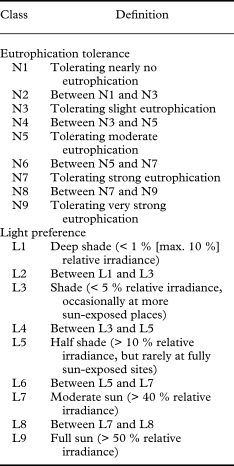
Indicator values were extracted from Wirth (Reference Wirth2010). The method used to derive these values is based on the ecological indicator values introduced by Ellenberg (Reference Ellenberg1974, Reference Ellenberg1992) for vascular plants. Eutrophication tolerance and light preferences are estimated with these indicator values as defined in Table 1. As Table 1 shows, the definitions are rather weak. However, if applied by one and the same person with long-term field experience, they can lead to the evaluation of a large set of species, which cannot realistically be achieved by measurements. Wirth (Reference Wirth2010) includes a total of 516 lichen species, which equals c. 15 to 20 % of the central European lichen flora. Two species were excluded from the analysis, because they were classified as indifferent to the light level (Icmadophila ericetorum and Micarea melaena). The analysis of relationships between light preference and eutrophication tolerance was limited to counts of the number of species at different eutrophication and light classes in order not to overstrain the indicator values with respect to their character as ordinal and estimated values. Analyses were conducted jointly for all lichen species as well as separately for epiphytic (including epixylic species), saxicolous and terricolous species. Species numbers from the individual substrata do not add to the total species because some lichen species occur on more than one substratum type.
Definition for indicator values estimating eutrophication tolerance and light preferences of central European lichens (Wirth Reference Wirth2010)

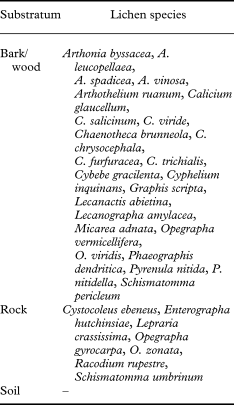
Characteristic central European anitrophytic lichens bound to shady habitats*
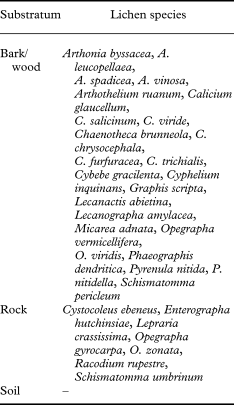
* Lichens simultaneously placed in eutrophication-tolerance classes N1 to N3 and light-preference classes L1 to L3.
Results
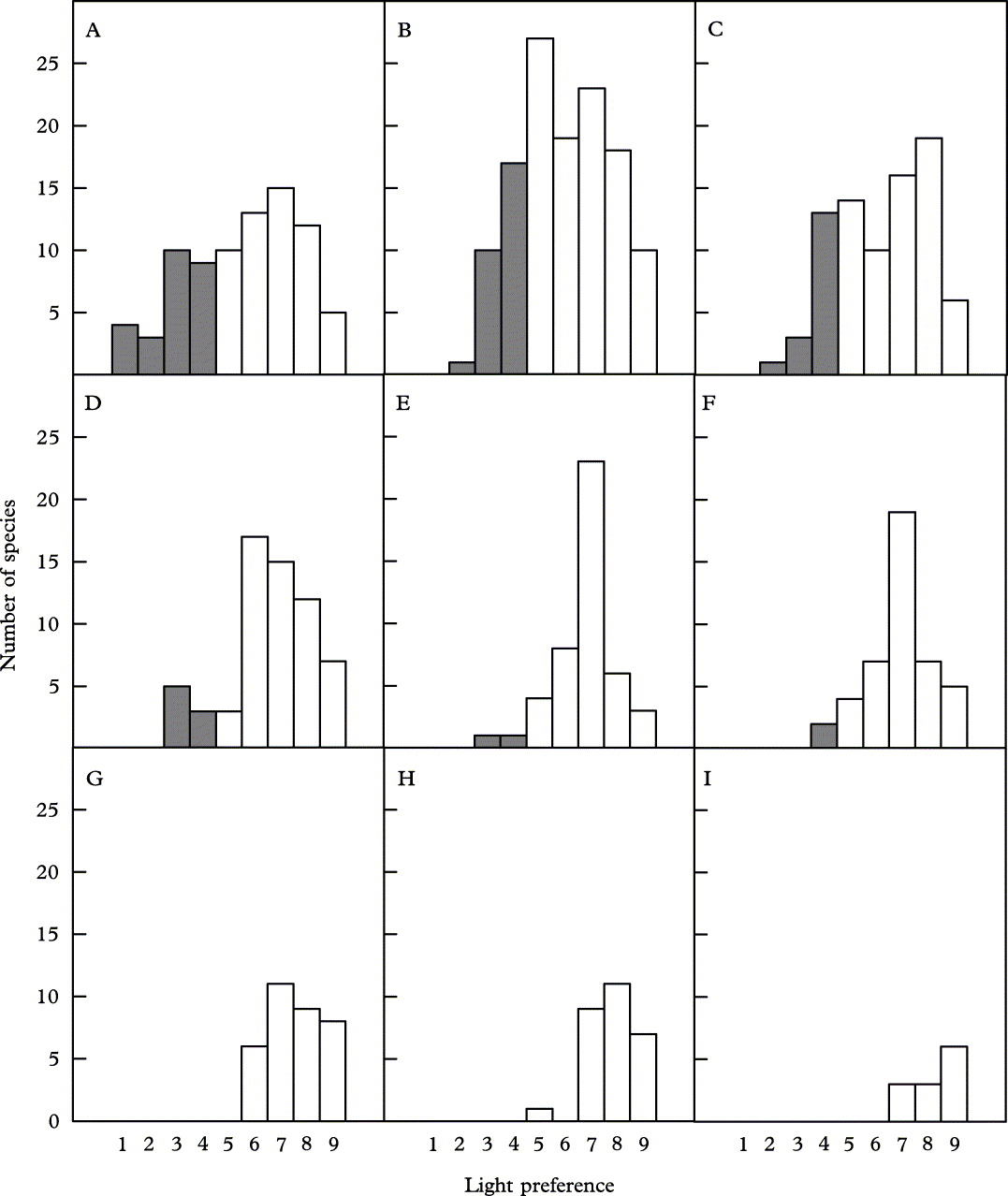
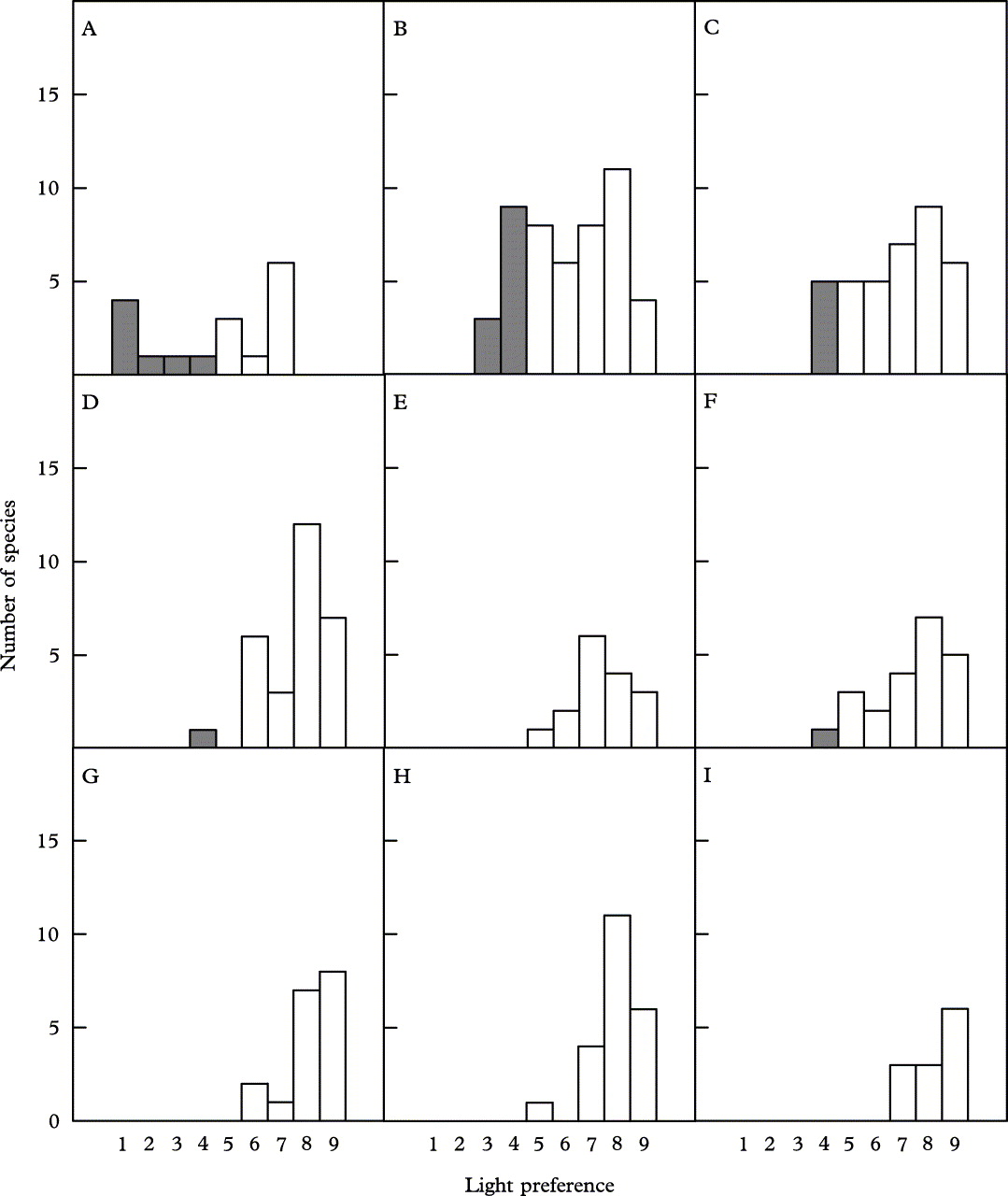
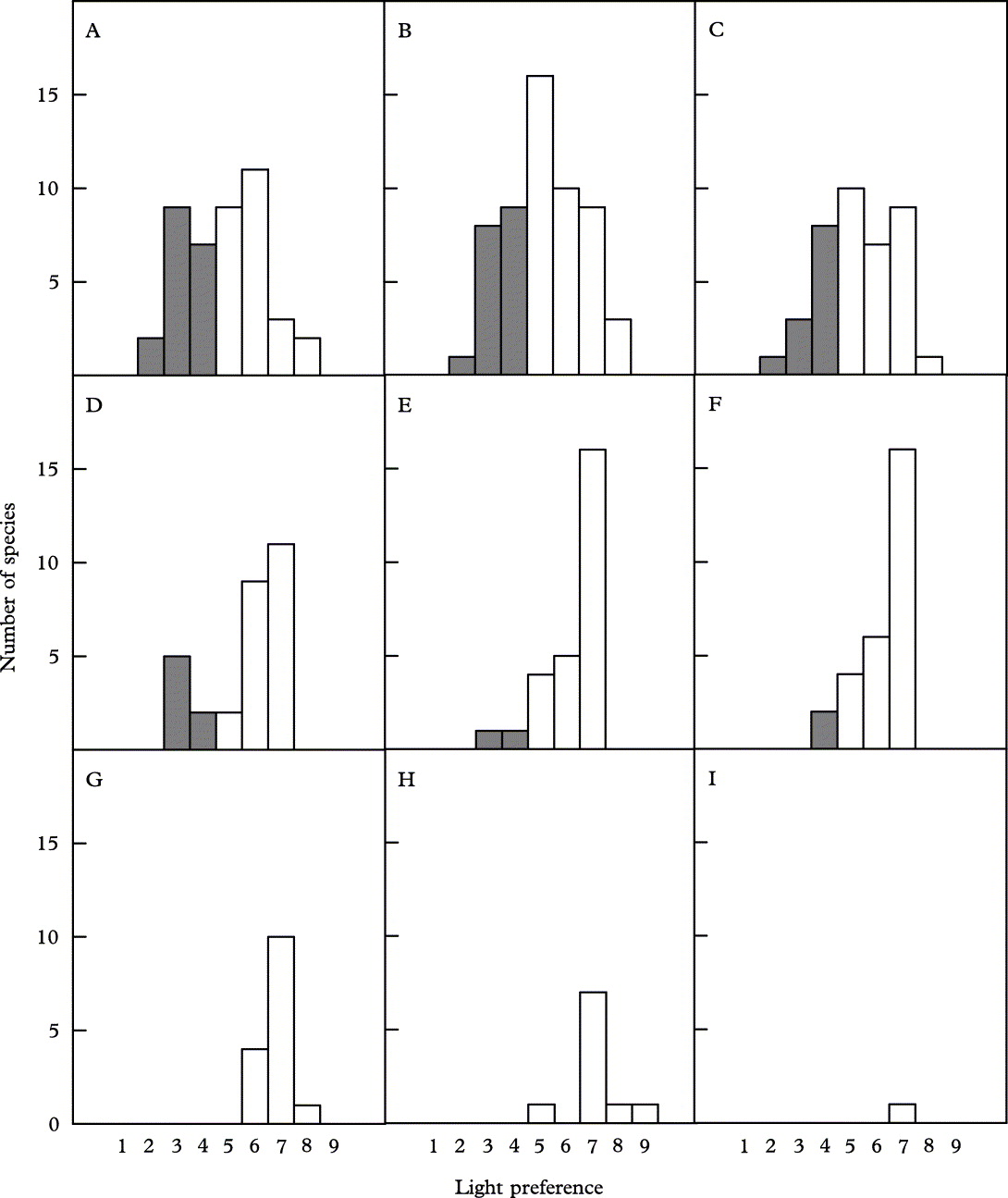
Among the 514 central European lichen species analyzed, most prefer nutrient-poor sites (n = 288 in eutrophication-tolerance classes N1 to N3), while 152 or 74 tolerate moderate (classes N4 to N6) or strong (classes N7 to N9) eutrophication, respectively (Fig. 1). Shade-adapted lichens are completely absent among the highly eutrophication-tolerant species (Fig. 1G–I) and are rare at sites with moderate nitrogen pollution (Fig. 1D–F). Most shade-adapted lichen species occur in the lowest classes of eutrophication tolerance, viz. 26 of light-classes L1 to L4 in class N1 (Fig. 1A), 28 in class N2 (Fig. 1B) and 17 of class N3 (Fig. 1C). Characteristic lichen species which are bound both to nitrogen-poor (eutrophication classes N1 to N3) and shady (light classes L1 to L3) sites are compiled in Table 2.
Frequency distribution of central European lichen species (n = 514) differing in eutrophication tolerance in nine classes of light preference (increasing preference for sun-exposed sites from L1 to L9). Increasing eutrophication tolerance from A to I. A, eutrophication tolerance class N1 (highly intolerant), n = 81; B, class N2, n = 125; C, class N3, n = 82; D, class N4, n = 62; E, class N5, n = 46; F, class N6, n = 44; G, class N7, n = 34; H, class N8, n = 28; I, class N9 (highly tolerant to eutrophication), n = 12. Shaded columns indicate the four classes with lichens from the shadiest habitats.
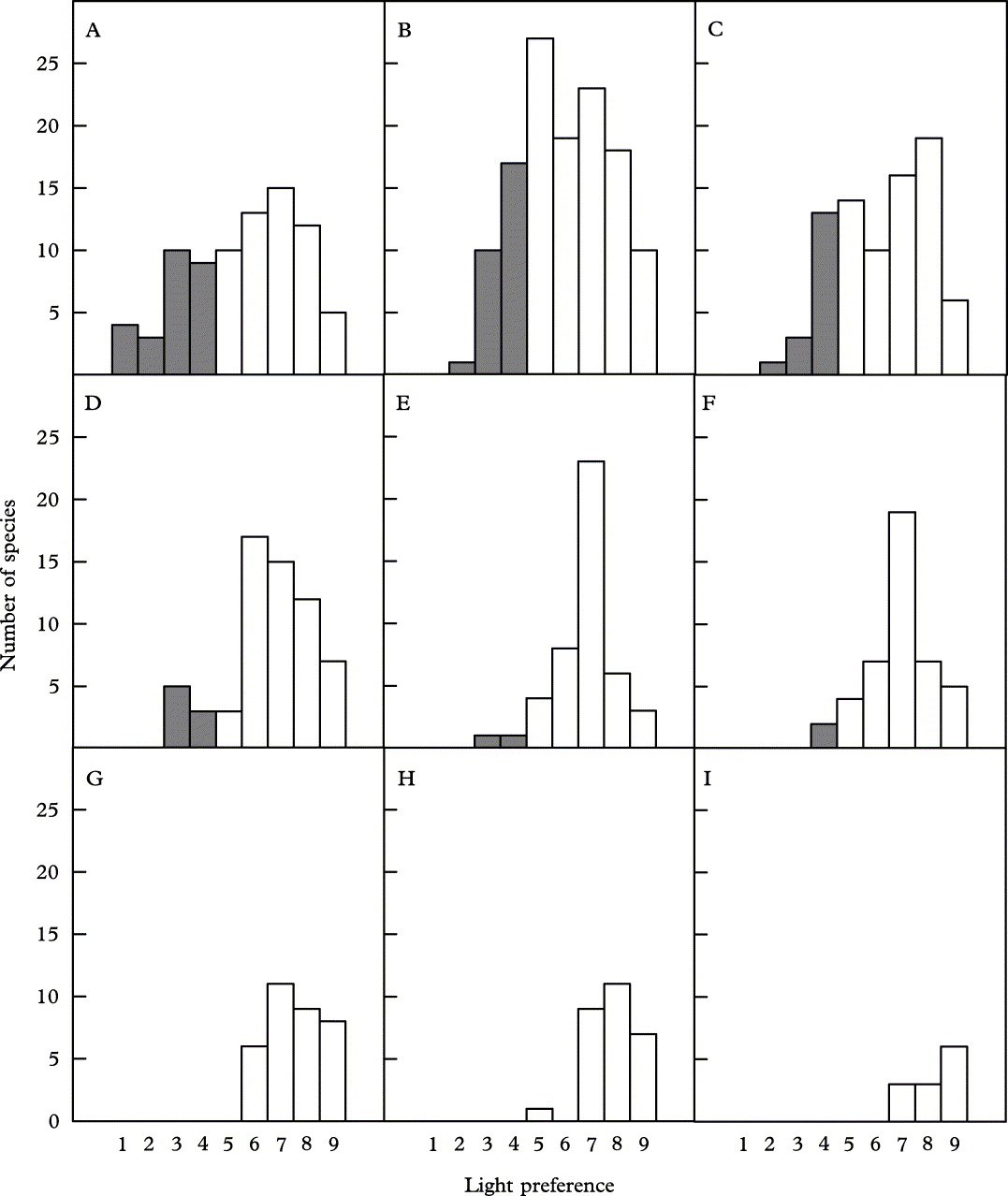
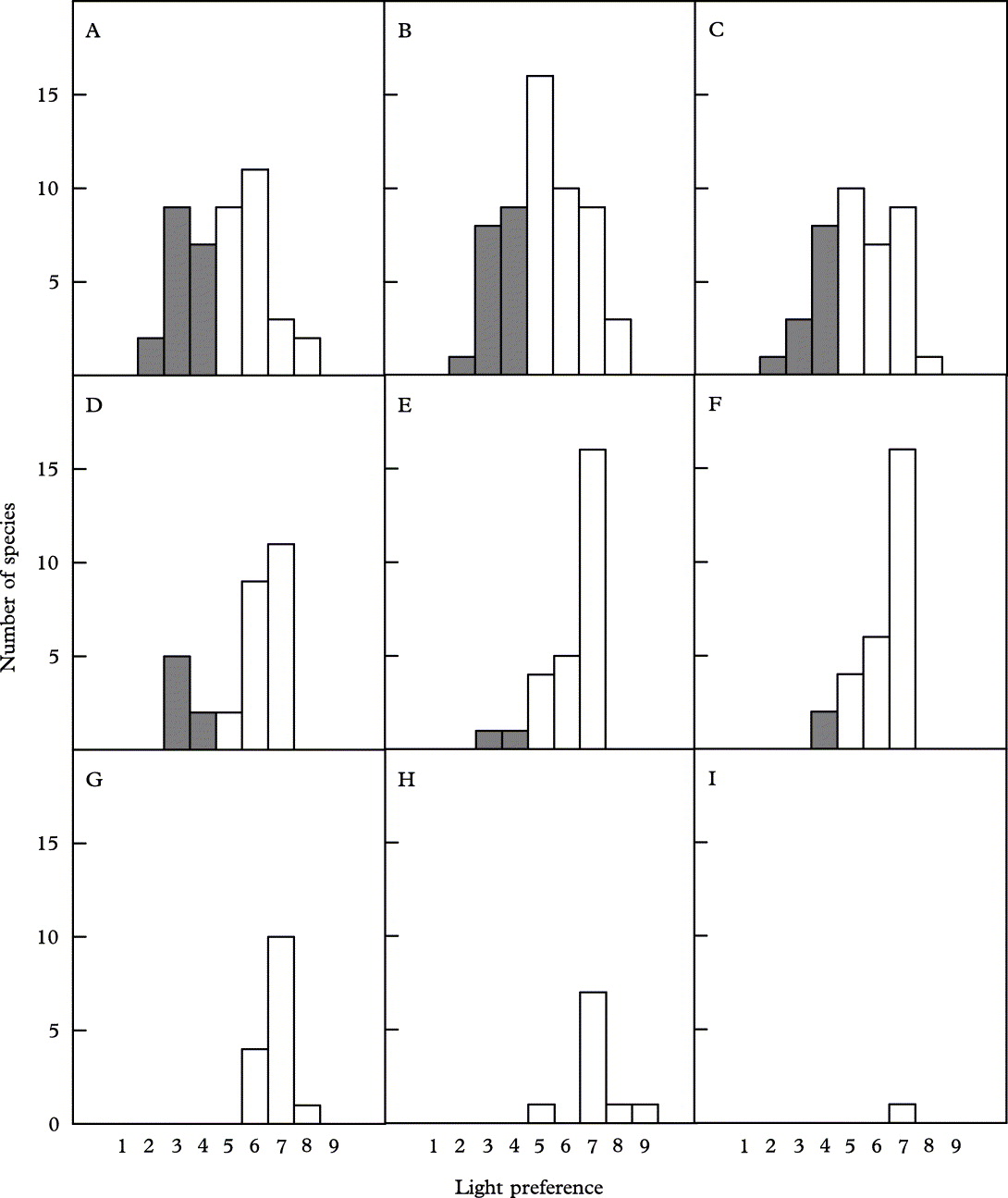
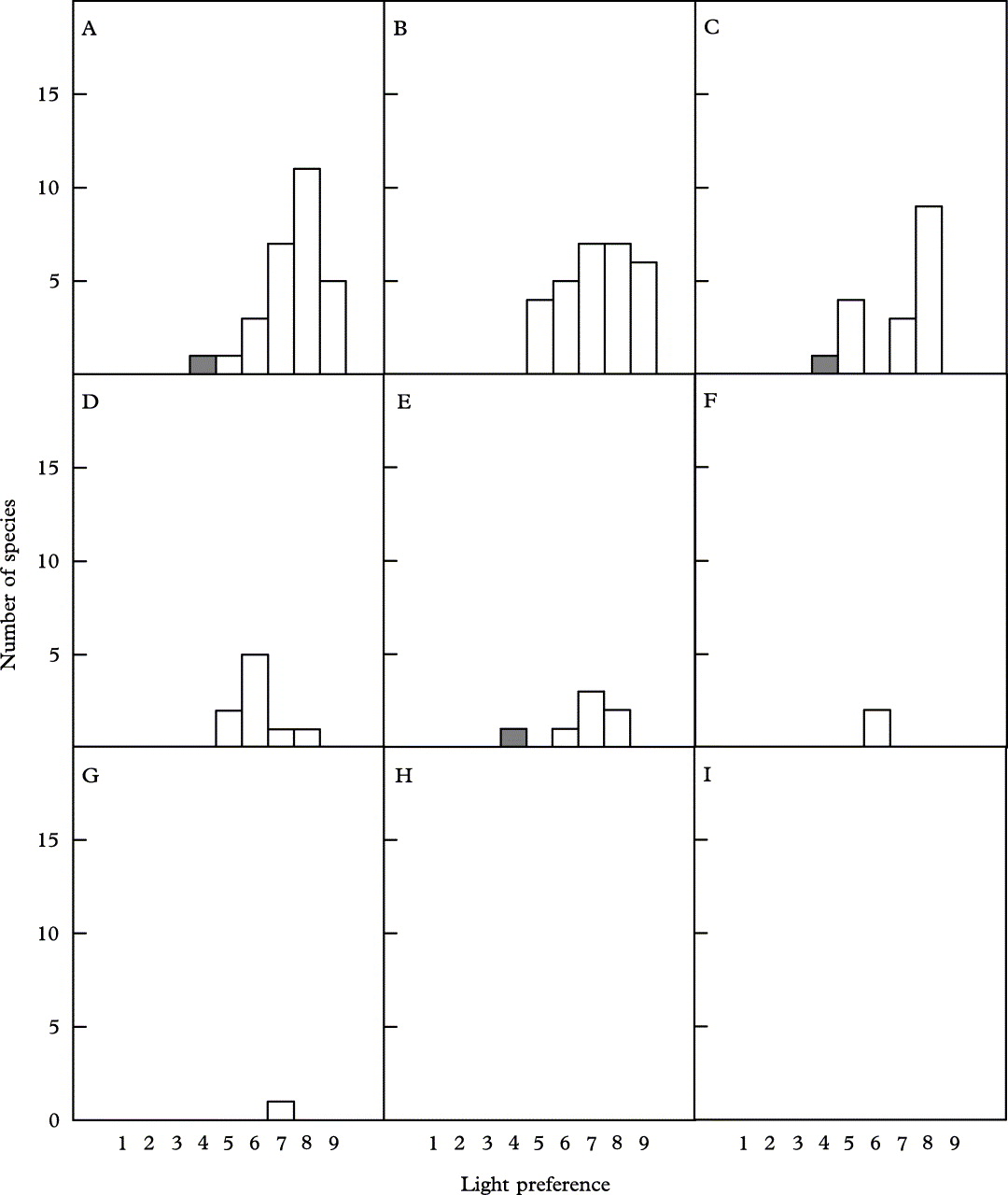
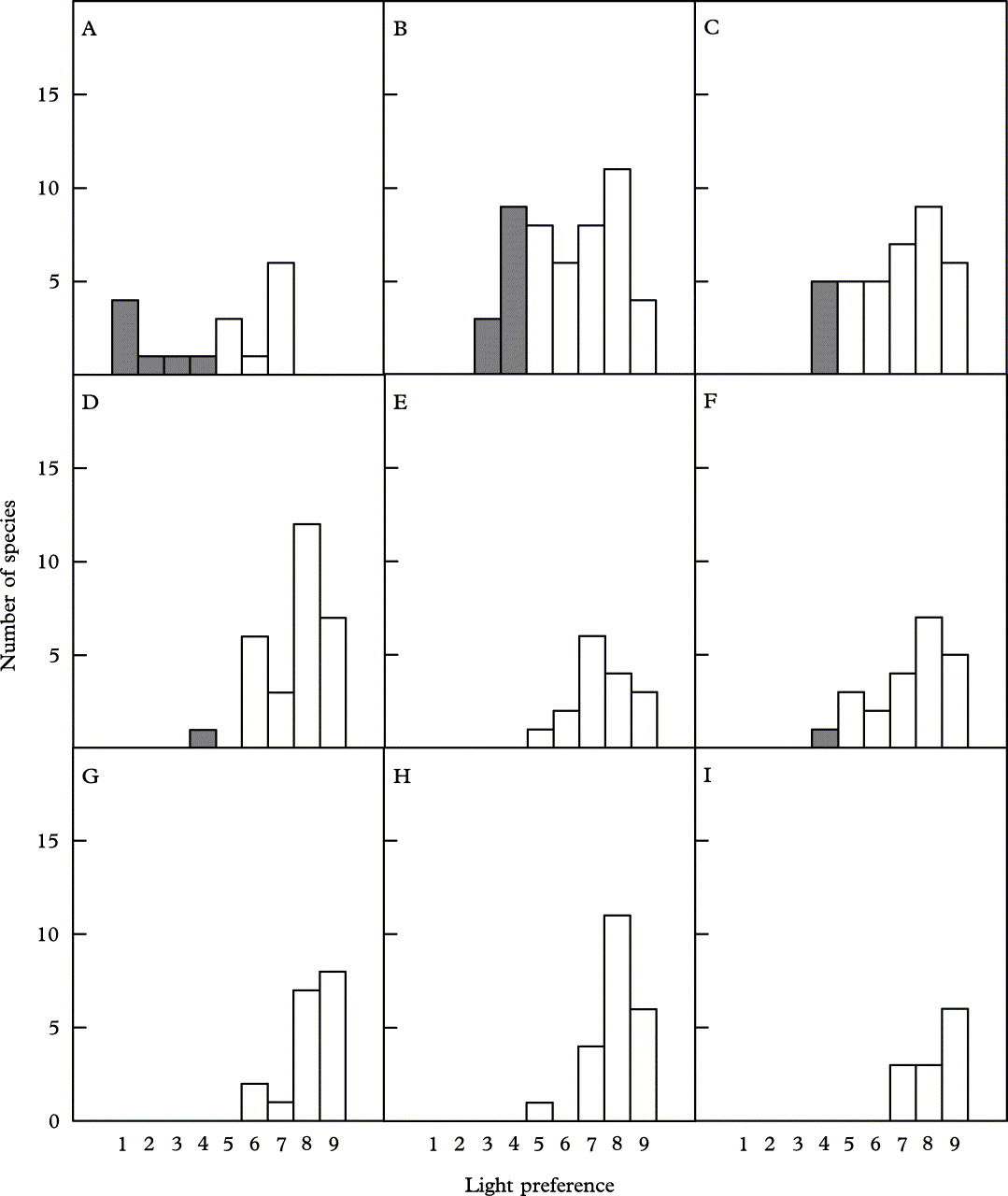
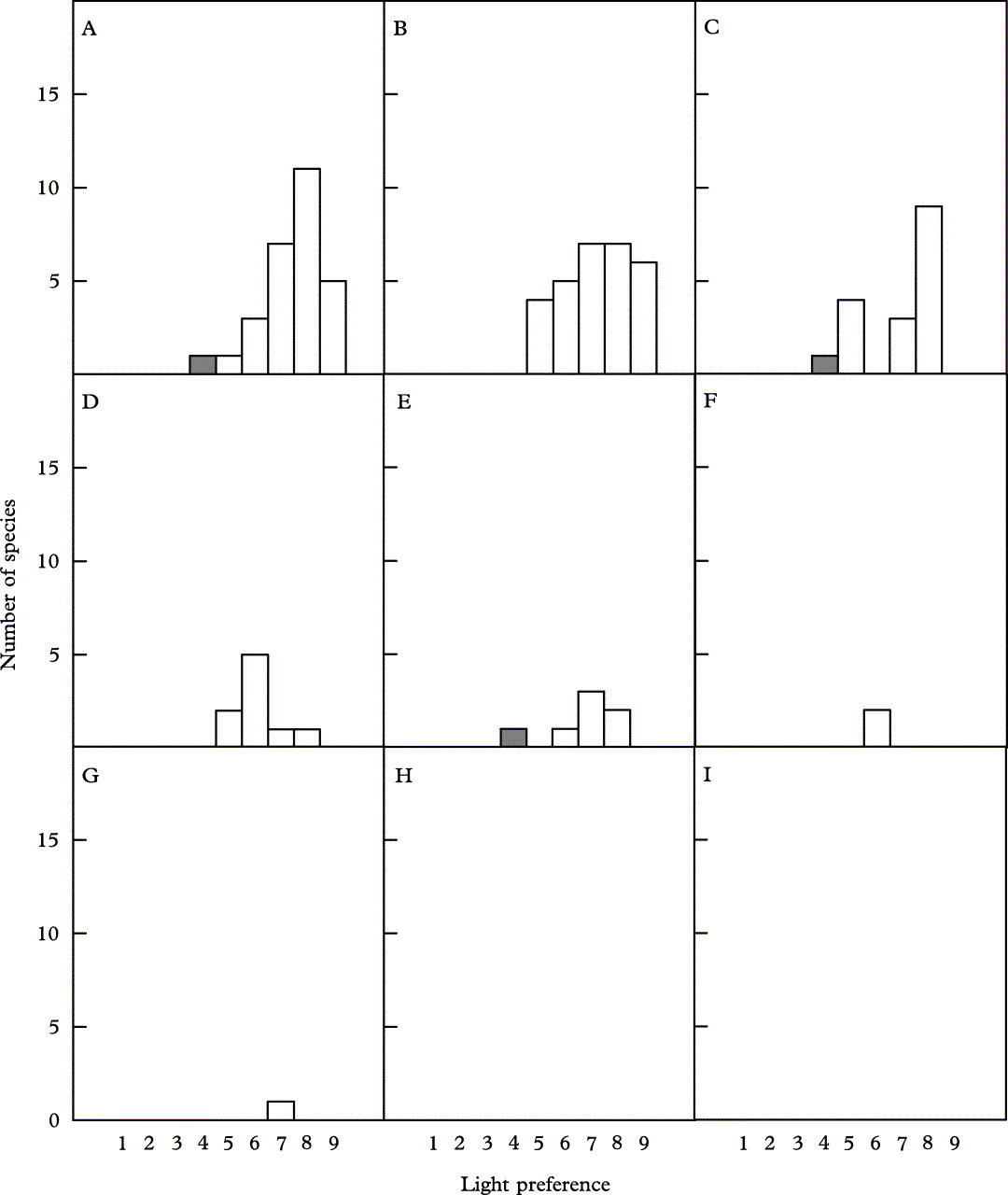
The substratum has an influence on the distribution of species along the eutrophication-tolerance and light-preference scales. The frequency distribution of epiphytes (Fig. 2), which form the largest group, resembles those of all species (Fig. 1). Overall less shade-adapted species are found among the saxicolous lichens, but the limitation of these species to nitrogen-poor environments (Fig. 2) is similar to that of the epiphytes. Terricolous lichens are much rarer components of the central European lichen flora than epiphytic and saxicolous lichens. These groups differ from one another in so far as most terricolous lichens occur at sun-exposed and nutrient-poor sites (Fig. 3). Only three species are slightly shade-adapted; these lichens require very nitrogen-poor sites (i.e. the basidiolichen Lichenomphalia umbellifera) or they are tolerant of slight (Leptogium lichenoides) or moderate (i.e. the mainly epiphytic Lepraria incana) eutrophication (Fig. 4A, C, E).
Frequency distribution of central European epiphytic lichen species (n = 248) differing in eutrophication tolerance in nine classes of light preference (increasing preference for sun-exposed sites from L1 to L9). Increasing eutrophication tolerance from A to I. A, eutrophication tolerance class N1 (highly intolerant), n = 43; B, class N2, n = 56; C, class N3, n = 39; D, class N4, n = 29; E, class N5, n = 27; F, class N6, n = 28; G, class N7, n = 15; H, class N8, n = 10; I, class N9 (highly tolerant to eutrophication), n = 1. Shaded columns indicate the four classes with lichens from the shadiest habitats.
Frequency distribution of central European saxicolous lichen species (n = 222) differing in eutrophication tolerance in nine classes of light preference (increasing preference for sun-exposed sites from L1 to L9). Increasing eutrophication tolerance from A to I. A, eutrophication tolerance class N1 (highly intolerant), n = 17; B, class N2, n = 49; C, class N3, n = 34; D, class N4, n = 29; E, class N5, n = 16; F, class N6, n = 22; G, class N7, n = 18; H, class N8, n = 22; I, class N9 (highly tolerant to eutrophication), n = 12. Shaded columns indicate the four classes with lichens from the shadiest habitats.
Frequency distribution of central European terricolous lichen species (n = 93) differing in eutrophication tolerance in nine classes of light preference (increasing preference for sun-exposed sites from 1 to 9). Increasing eutrophication tolerance from A to I. A, eutrophication tolerance class 1 (highly intolerant), n = 28; B, class 2, n = 29; C, class 3, n = 17; D, class 4, n = 9; E, class 5, n = 7; F, class 6, n = 2; G, class 7, n = 1; H, class 8, n = 0; I, class 9 (highly tolerant to eutrophication), n = 0. Shaded columns indicate the four classes with lichens from the shadiest habitats.
Discussion
The data clearly show that shade-adapted lichen species are mainly found in nitrogen-poor habitats. They are completely intolerant to strong eutrophication. It is plausible that low carbon assimilation, which limits the nitrogen tolerance of vascular plants (Schortemeyer et al. Reference Schortemeyer, Stamp and Feil1997), is even more effective at limiting the eutrophication tolerance in the less productive lichens. However, not all lichens of nitrogen-poor sites are at the same time bound to low light levels. This suggests that different independent factors cause the sensitivity to high nitrogen concentrations in different lichen species. Low productivity of shade-adapted species is surely one trait predisposing intolerance to eutrophication. This conclusion agrees with the fact that the vast majority of shade-adapted and eutrophication-sensitive lichens are crustose (Table 2) and thus likely to have low photosynthetic capacity (Tretiach & Geletti Reference Tretiach and Geletti1997; Lakatos et al. Reference Lakatos, Rascher and Büdel2006; Weber et al. Reference Weber, Scherr, Reichenberger and Büdel2007). Our inferences may explain why 1) epiphytic lichens from the interior of forests, 2) epiphytic calicioid lichens from bark furrows, and 3) saxicolous lichens from the base of shady rock overhangs, are particularly sensitive to the nitrogen influxes. An approach to prove the relationship between eutrophication tolerance and light could be the experimental manipulation of light and nitrogen levels. An alternative explanation for the lack of eutrophication-tolerant lichens at shady habitats could be that these habitats are generally characterized by low nitrogen concentrations and thus there was no need for the evolution of nutrient-tolerant species. However, we doubt that this is a correct explanation, because shady rock can be rich in nitrogen in the vicinity of dens and also trees with bark furrows naturally occur at nutrient-rich sites. Furthermore, the recent spread of eutrophicated, shady substrata in central Europe due to increased nitrogen emissions should have promoted lichen species tolerating these conditions. If physiologically possible it is very likely that at least one species would have evolved, which would have been able to fill this ecological niche. The rapid spread of the acidity-tolerant Lecanora conizaeoides during the 20th century (Wirth Reference Wirth1985) as well as the recent spread of global-warming indicators (van Herk et al. Reference van Herk, Aptroot and van Dobben2002) and photophilous nitrophytes (van Herk Reference van Herk1999) provide evidence of the high potential of lichens to colonize substrata with changing microclimatic or chemical traits. The lack of spreading species which are at the same time adapted to shade and high nitrogen levels suggests that this combination of site conditions is likely to exclude lichens.
Other factors causing physiological intolerance of lichens to eutrophication are little studied. Pirintsos et al. (Reference Pirintsos, Munzi, Loppi and Kotzabasis2009) established that, as in vascular plants, polyamine levels are involved in the formation of eutrophication tolerance in lichens. Van Herk (Reference van Herk2001) pointed out that the increase of substratum pH, which results from ammonium deposition, is an important cause of the decline of acidophytic lichens at eutrophicated sites. Shifts of the ambient pH towards more alkaline conditions can lead to nutrient deficiency in lichens (Hauck et al. Reference Hauck, Willenbruch and Leuschner2009a, Reference Hauck, Jürgens, Willenbruch, Huneck and Leuschnerb; Paul et al. Reference Paul, Hauck and Leuschner2009a, Reference Paul, Hauck and Leuschnerb). However, it is implausible to assume that lichens from shady sites are more sensitive to shifts in the substratum pH than lichens from sun-exposed sites. Thus, the pH effect cannot explain the correlation of low light indicator values with low eutrophication tolerance. However, different abilities to produce eutrophication tolerance with polyamines or to withstand shifts of the substratum pH are traits which are capable of explaining species-specific differences among lichens of sun-exposed habitats. Low light levels are often correlated with high humidity, but in contrast to light there is no known mechanism which would link adaptation to high moisture to low eutrophication tolerance. The rarity of lichens at humid, nitrogen-rich sites, which was established in a study analyzing the ecological preferences of 347 sorediate lichens from Italy (Nimis & Martellos Reference Nimis and Martellos2003), might be due to the correlation of humidity with shade. Nevertheless, the correlation between low light levels and high water availability is weak at some sites, since, for example, shaded vertical rock surfaces can be either moist or dry depending on the hydrology of the site (Wirth Reference Wirth1972). The different light-preference/eutrophication-tolerance relationships of terricolous (Fig. 4) versus epiphytic and saxicolous (Figs. 2 and 3) lichens are attributable to the virtual lack of competing vascular plants from the surfaces of trees and (soil-less parts of) rocks in central Europe. Shady tree bark, wood and rock are suitable substrata for lichens because the lack of productive competitors allows slow growth rates, providing faster growing bryophytes are not present. Shade on soil is usually produced by vascular plant vegetation and therefore rules out the occurrence of lichens. Hence, shade adaptation as an intrinsic risk factor for sensitivity to eutrophication is unlikely to occur in terricolous lichens. Nevertheless, the decline of terricolous lichens due to nitrogen pollution is probable, as the latter leads to increased vascular-plant biomass (Lageard et al. Reference Lageard, Wilson, Cresswell, Cawley, Jones and Caporn2005; Johnson et al. Reference Johnson, Rowland, Corkidi and Allen2008).
Conclusions
Evaluating the indicator values of eutrophication tolerance and light preference suggests that adaptation to shady habitats predisposes epiphytic and saxicolous lichens to be intolerant to eutrophication. This conclusion can be drawn despite the limitations of our study due to the use of estimated indicator values for the eutrophication tolerance and light preference of lichen species. Our results imply that attention should be paid to well-developed lichen communities on tree bark and wood in the interior of forests or on shady vertical rock surfaces with regard to nature conservation. Species-rich sites which are locally or regionally sheltered from nitrogen pollution should be protected with high priority, since there is no way to prevent the decline of such lichen communities in areas with high nitrogen levels in the long run.