Introduction
Otomycosis is a common superficial fungal infection of the external auditory canal, particularly in tropical and subtropical regions where heat and humidity facilitate fungal growth.Reference Mugliston and O’Donoghue1 It typically presents with pruritus, otorrhea, aural fullness and variable hearing loss, and is most frequently caused by Aspergillus niger and Candida albicans.Reference Aneja, Sharma and Joshi2, Reference Mohanty, Mohanty, Sahoo and Panda3
While usually considered benign, recurrent otomycosis remains a therapeutic challenge due to persistent local and systemic predisposing factors.Reference Venugopal, Venugopal and Palaniswamy4–Reference Kaur, Mittal, Kakkar, Aggarwal and Mathur6 Local contributors include canal trauma from self-cleaning, excessive water exposure and misuse of topical antibiotics or steroids.Reference Satish, Nagaraj, Kiran and Nandini7, Reference Bassiouny, El Mofty and Abdelrahman8
Among systemic factors, diabetes mellitus (DM) is a significant predisposing condition. Chronic hyperglycaemia impairs neutrophil function and compromises local immunity in the external auditory canal.Reference Prasad, Kotigadde, Shekhar, Thada, Prabhu and D’Souza9–Reference Pierard11 Additionally, glucose-rich secretions and an altered cerumen microenvironment in diabetics may facilitate fungal colonisation and recurrence.Reference Alexiewicz, Kumar, Smogorzewski, Klin and Massry12, Reference Bagdade, Root and Bulger13 Other systemic conditions, such as immunosuppression and chronic renal disease, may also contribute to recurrence.Reference Peleg, Weerarathna, McCarthy and Davis14
Although the association between otomycosis and diagnosed diabetes is recognised, the prevalence of previously undiagnosed diabetes or prediabetes in patients with recurrent otomycosis remains poorly studied—particularly in tropical regions where both conditions are highly endemic.Reference Ghosh, Mukherjee and Roy15–Reference Jain, Jindal and Sharma17 Cerumen pH, a local factor influencing fungal growth, may also be altered by glycaemic status, but clinical correlation data remain sparse.Reference Alexiewicz, Kumar, Smogorzewski, Klin and Massry12, Reference Al-Otaibi, Almuhanna and Alshareef18
This study aims to evaluate the prevalence of previously undiagnosed diabetes and prediabetes in patients with recurrent otomycosis, identify the spectrum of fungal isolatesReference Bagdade, Root and Bulger13, Reference Seifi, Shakiba and Rezaei-Matehkolaei19 and examine cerumen pH variations across glycaemic categories.Reference Alexiewicz, Kumar, Smogorzewski, Klin and Massry12, Reference Al-Otaibi, Almuhanna and Alshareef18 and determine clinical predictors of recurrence. Such findings may inform targeted preventive and therapeutic strategies for high-risk populations.
Review of literature
.Otomycosis is widely recognised as a common superficial fungal infection of the external auditory canal, particularly in hot and humid tropical climates. Mugliston and O’DonoghueReference Mugliston and O’Donoghue1 highlighted its persistence in such environments. Subsequent studies, such as Aneja et al.Reference Aneja, Sharma and Joshi2 and Kaur et al.,Reference Mohanty, Mohanty, Sahoo and Panda3 reported high incidence rates in Indian populations, with Aspergillus and Candida species as predominant causative agents. Vennewald and Klemm also emphasised the clinical challenge of recurrent infections and the socioeconomic burden associated with chronic otomycosis.
Multiple behavioural and environmental factors contribute to recurrence. Canal trauma from cotton bud usage or sharp objects, prolonged water exposure and self-cleaning practices have consistently been associated with increased risk.Reference Habib5, Reference Kaur, Mittal, Kakkar, Aggarwal and Mathur6, Reference Peleg, Weerarathna, McCarthy and Davis14 Misuse of topical antibiotics or steroids may alter normal canal flora and exacerbate fungal colonisation.Reference Satish, Nagaraj, Kiran and Nandini7, Reference Bassiouny, El Mofty and Abdelrahman8 Satish et al.Reference Prasad, Kotigadde, Shekhar, Thada, Prabhu and D’Souza9 confirmed the contributory role of local trauma, while Khurshid Anwar et al.Reference Peleg, Weerarathna, McCarthy and Davis14 highlighted other local and systemic predisposing factors.
Systemic factors, particularly diabetes mellitus (DM), have received growing attention. Diabetes impairs neutrophil function, disrupts cytokine signaling and compromises mucosal immunity.Reference Prasad, Kotigadde, Shekhar, Thada, Prabhu and D’Souza9, Reference Balkis and Leid10, Reference Alexiewicz, Kumar, Smogorzewski, Klin and Massry12, Reference Bagdade, Root and Bulger13 Several studies have reported altered fungal profiles among diabetics, including a relative predominance of Candida species.Reference Alexiewicz, Kumar, Smogorzewski, Klin and Massry12, Reference Bagdade, Root and Bulger13, Reference Liu, Hu, Peng and Wang16, Reference Seifi, Shakiba and Rezaei-Matehkolaei19 These organisms are noted for their biofilm formation and antifungal resistance, which contribute to chronicity and recurrence.
Cerumen pH has emerged as a relevant factor influencing fungal colonisation. Singh et al.Reference Alexiewicz, Kumar, Smogorzewski, Klin and Massry12 suggested that an alkaline shift in cerumen pH reduces its natural antifungal barrier, potentially promoting fungal overgrowth.Reference Al-Otaibi, Almuhanna and Alshareef18 While preliminary data indicate a link between cerumen pH and glycaemic status, clinical studies directly evaluating this relationship remain limited.Reference Alexiewicz, Kumar, Smogorzewski, Klin and Massry12, Reference Al-Otaibi, Almuhanna and Alshareef18
Although known diabetes is recognised as a risk factor for otomycosis, the prevalence of undiagnosed diabetes or prediabetes among patients with recurrent fungal otitis is inadequately studied, especially in tropical regions. Vadiya et al.Reference Pierard11 and Agarwal et al.Reference Liu, Hu, Peng and Wang16 highlighted recurrent episodes as potential sentinel events warranting metabolic screening. These findings suggest that ENT clinics may serve as an early point for identifying patients at risk of undiagnosed diabetes, integrating otologic and systemic care.
The current study seeks to address these knowledge gaps by prospectively evaluating previously undiagnosed glycaemic abnormalities in patients with recurrent otomycosis. In addition, it investigates fungal species distribution,Reference Bagdade, Root and Bulger13, Reference Seifi, Shakiba and Rezaei-Matehkolaei19 cerumen pH variations across glycaemic groups,Reference Alexiewicz, Kumar, Smogorzewski, Klin and Massry12, Reference Al-Otaibi, Almuhanna and Alshareef18 and clinical predictors of recurrence, aiming to inform both therapeutic and preventive strategies in high-risk populations.
Materials and methods
Study design and setting
This hospital-based, cross-sectional observational study was conducted in the Department of Otorhinolaryngology at a tertiary care center in North India over a 15-month period (January 2023 to March 2024), coinciding with high ambient humidity. The study was approved by the Institutional Ethics Committee.
Sample size and recruitment
A total of 213 consecutive adult patients with recurrent otomycosis were enrolled. Sample size was determined by consecutive sampling, exceeding the minimum requirement for estimating a presumed 25–30 per cent diabetes prevalence with a 95 per cent confidence level and 5 per cent margin of error. Informed written consent was obtained from all participants.
Eligibility criteria
Inclusion criteria: (1) adults aged 18 to 70 years; (2) at least two clinically confirmed episodes of otomycosis within the previous six months.
Exclusion criteria: (1) previously diagnosed DM (Type 1 or Type 2); (2) current use of systemic corticosteroids or immunosuppressants; (3) active middle ear disease or tympanic membrane perforation; (4) history of otologic surgery within the past six months; (5) recent use (within 2 weeks) of systemic or topical antifungal or antibiotic therapy.
Diagnosis of otomycosis was based on clinical symptoms (aural pruritus, otorrhoea, fullness, hearing loss), otoscopic findings (fungal debris, canal erythema) and positive fungal microscopy and culture.
Clinical and otologic assessment
Detailed clinical history was recorded including: (1) self-cleaning practices or canal trauma; (2) use of topical ear drops (antibiotics/steroids); (3) water exposure (swimming or bathing habits); (4) hearing aid use; (5) family history of diabetes mellitus.
All patients underwent otoscopic and otoendoscopic examination. Audiological evaluation was performed when indicated.
Mycological evaluation
Specimens of external auditory canal debris were collected under aseptic precautions. Laboratory evaluation included: (1) direct microscopy: 10 per cent potassium hydroxide (KOH) wet mount; (2) fungal culture: inoculation on Sabouraud dextrose agar (SDA) incubated at 25°C for 5–7 days; (3) identification based on colony morphology and lactophenol cotton blue (LPCB) staining.
Mixed infections and less common isolates were recorded separately.
Glycaemic evaluation
All patients underwent: (1) fasting blood sugar (FBS); (2) post-prandial blood sugar (PPBS); (3) glycated haemoglobin (HbA1c).
Classification of glycaemic status was based on American Diabetes Association (ADA) 2023 guidelines: (1) DM: FBS greater than or equal to 126 mg/dL, PPBS greater than or equal to 200 mg/dL or HbA1c greater than or equal to 6.5 per cent; (2) prediabetes: FBS 100–125 mg/dL or HbA1c 5.7–6.4 per cent; (3) normoglycaemia: FBS less than 100 mg/dL and HbA1c less than 5.7 per cent.
Patients already known to have diabetes were excluded to focus on undiagnosed cases.
Cerumen pH assessment
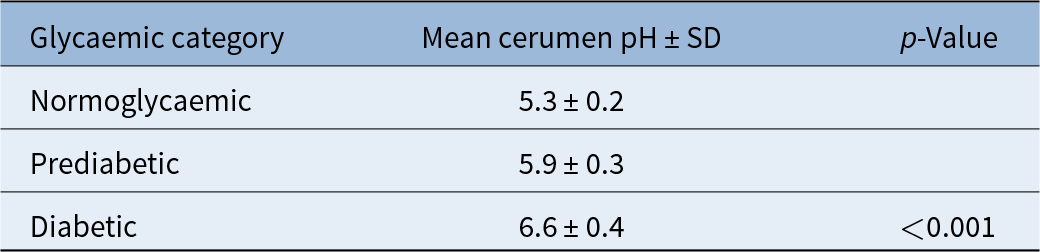
In a subset of 60 patients (20 from each glycaemic category), fresh cerumen samples were collected and analysed using sterile, commercially available pH indicator strips (range 4.0 to 8.0; resolution 0.2). All readings were performed immediately after collection by the same ENT consultant under standardised lighting conditions to reduce inter-observer variability Table 1.
Cerumen pH across glycaemic categories

Statistical analysis
All data were entered and analysed using IBM SPSS Statistics Version 25.0. Categorical variables were compared using the chi-squared test or Fisher’s exact test, as appropriate. Continuous variables (e.g., cerumen pH, HbA1c) were analysed using analysis of variance (ANOVA) or independent t-tests where applicable. Odds ratios (ORs) with 95 per cent confidence intervals (CIs) were calculated to assess associations. Multivariate logistic regression was used to identify independent predictors of recurrence, controlling for potential confounders. A p-value less than 0.05 was considered statistically significant.
Results
Demographic characteristics
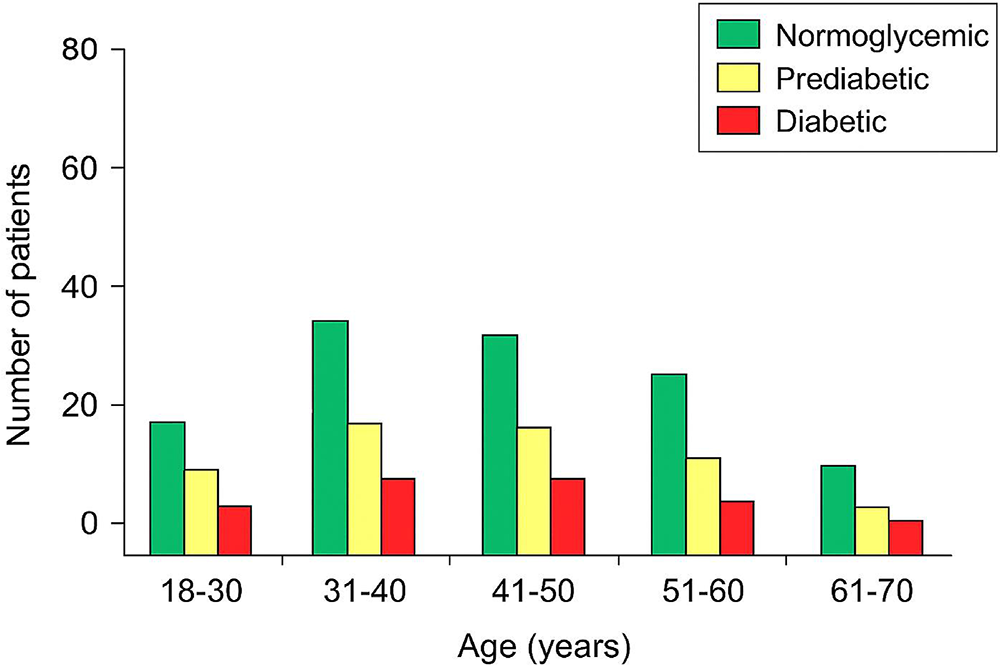
A total of 213 patients with recurrent otomycosis were enrolled. The mean age was 40.2 ± 10.8 years, with a slight male pr.edo.minance (M:F ratio 1.1:1). Two-thirds (67 per cent) of patients were from rural areas Figure 1.
Age distribution of patients across glycaemic categories (n = 213).

Glycaemic status and HbA1c
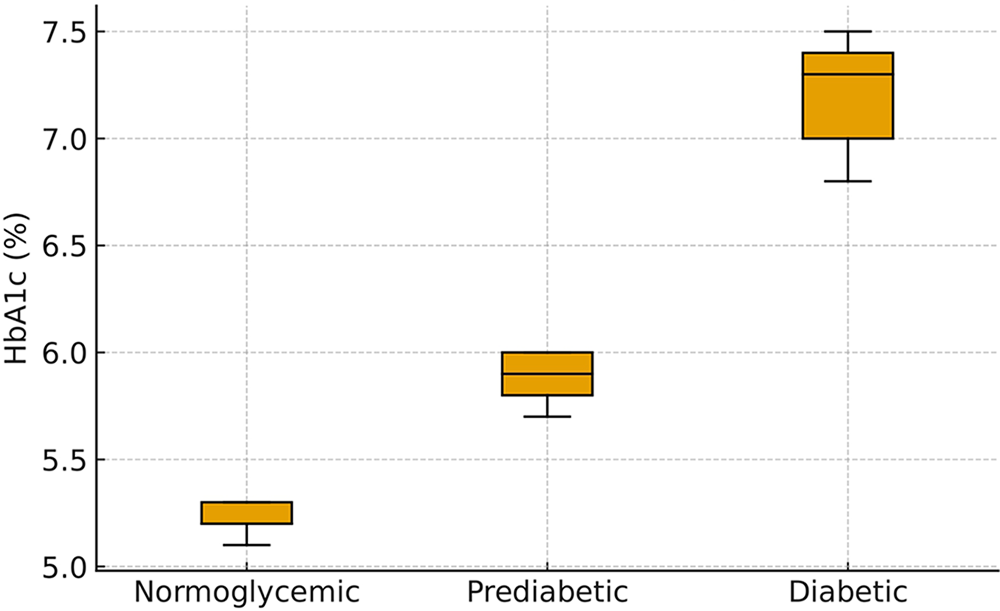
Of the participants, 64 (30.0 per cent) were newly diagnosed diabetics and 28 (13.1 per cent) prediabetics, while 121 (56.8 per cent) were normoglycaemic. Mean HbA1c values differed significantly across groups (normoglycaemic 5.2, prediabetic 5.9 and diabetic 7.4; p < 0.001) Figure 2.
Box–whisker plot of HbA1c levels across glycaemic groups.

Cerumen pH analysis
Among 60 selected patients (20 per group), mean cerumen pH increased progressively with worsening glycaemic status (normoglycaemic 5.3 ± 0.2, prediabetic 5.9 ± 0.3 and diabetic 6.6 ± 0.4; p < 0.001).
Clinical symptoms and risk factors
The predominant symptoms were pruritus (92 per cent) and otorrhoea (88 per cent), followed by aural fullness (74 per cent) and hearing loss (36 per cent). Common predisposing factors included self-cleaning/ear trauma (45 per cent), topical antibiotics or steroids (39 per cent) and water exposure (21 per cent). Family history of diabetes was present in 26 per cent.
Mycological findings
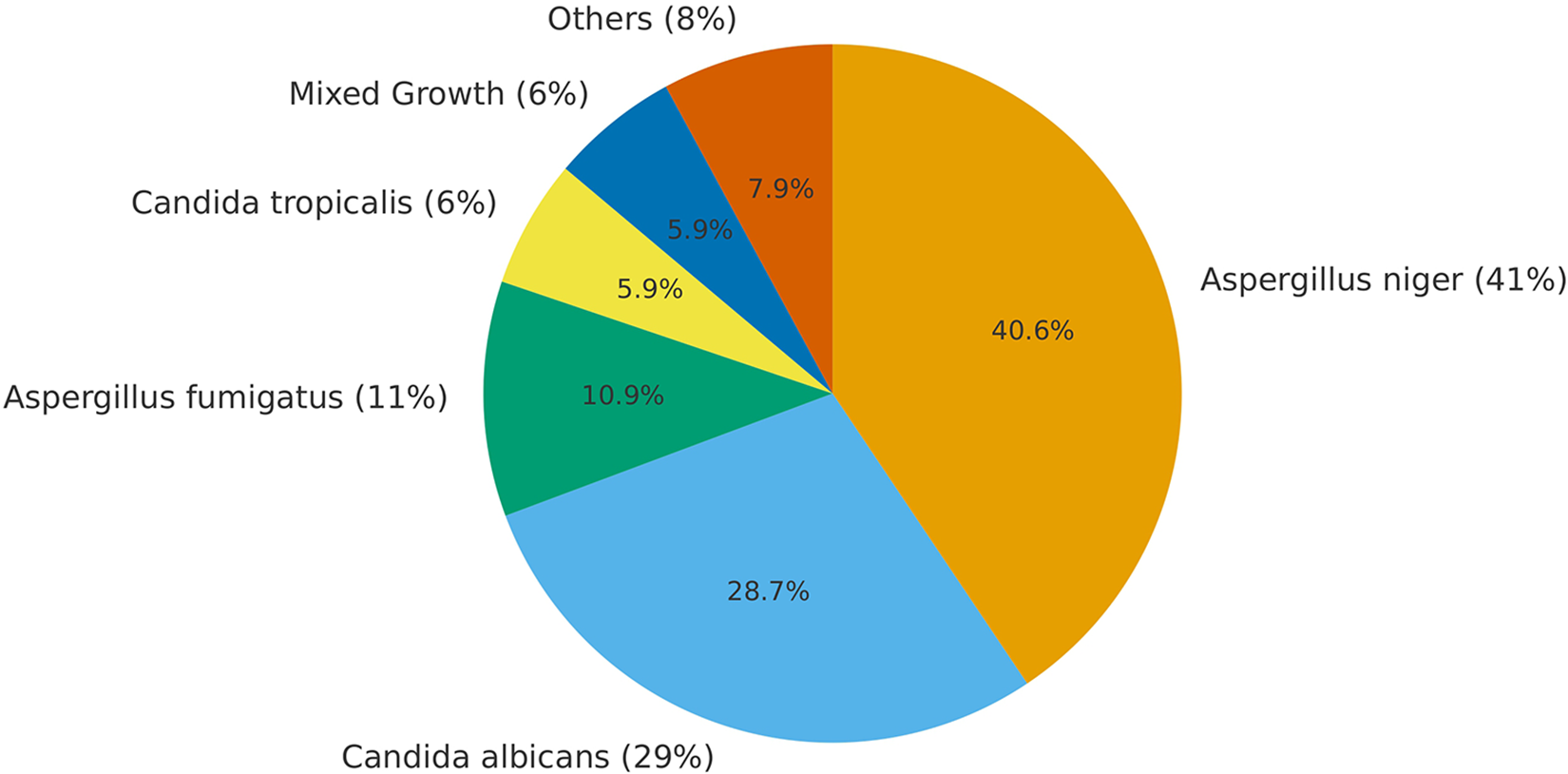
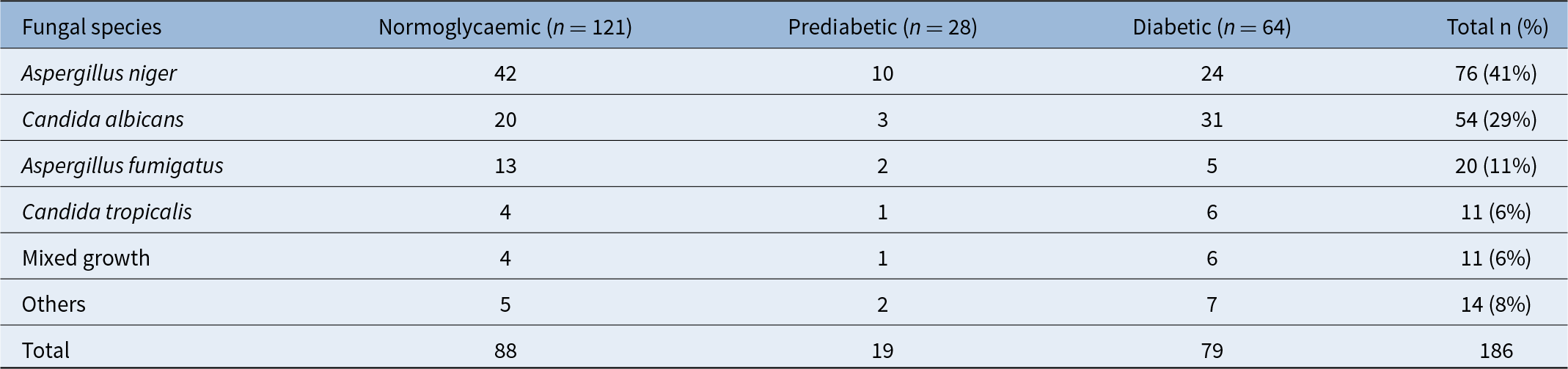
Fungal culture was positive in 186 patients (87.3 per cent). The most frequent isolates were Aspergillus niger (41 per cent) and Candida albicans (29 per cent). Notably, C. albicans predominated in diabetics (48 per cent), while A. niger was more frequent in normoglycaemics (35 per cent) Figure 3 and Table 2.
Distribution of fungal isolates among culture-positive samples.

Fungal distribution across glycaemic categories

Recurrence analysis
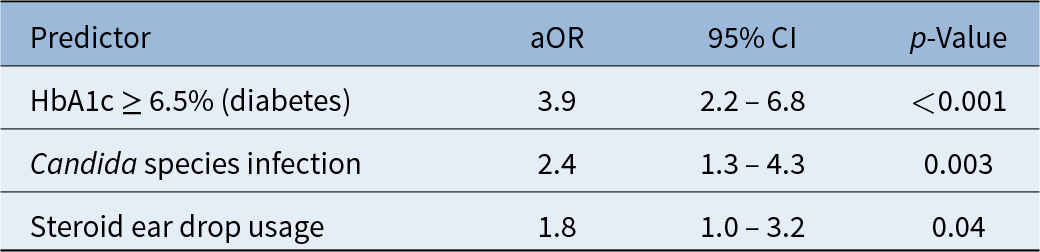
At six months, 57 patients (26.7 per cent) had recurrent otomycosis, with recurrence highest among diabetics (56 per cent) compared to normoglycaemics (12 per cent). Candida infections, particularly C. albicans and C. tropicalis, showed higher recurrence rates (>40 per cent) Table 3. On multivariate analysis, HbA1c greater than or equal to 6.5 per cent (aOR 3.9; p < 0.001), Candida infection (aOR 2.4; p = 0.003) and steroid ear drop use (aOR 1.8; p = 0.04) were independent predictors of recurrence Table 4.
Predictors of recurrence

Key findings by glycaemic status

Summary by glycaemic category
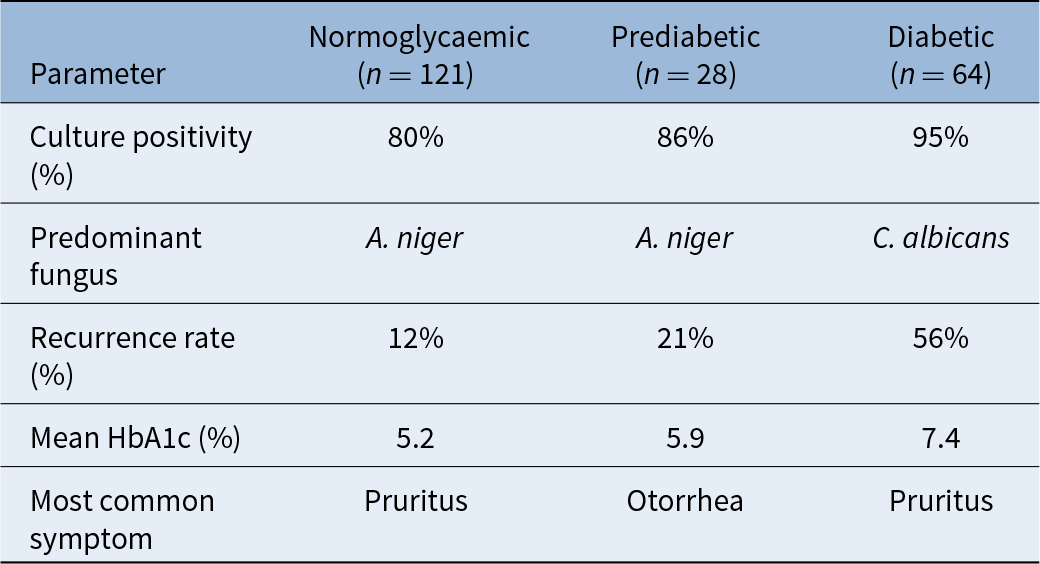
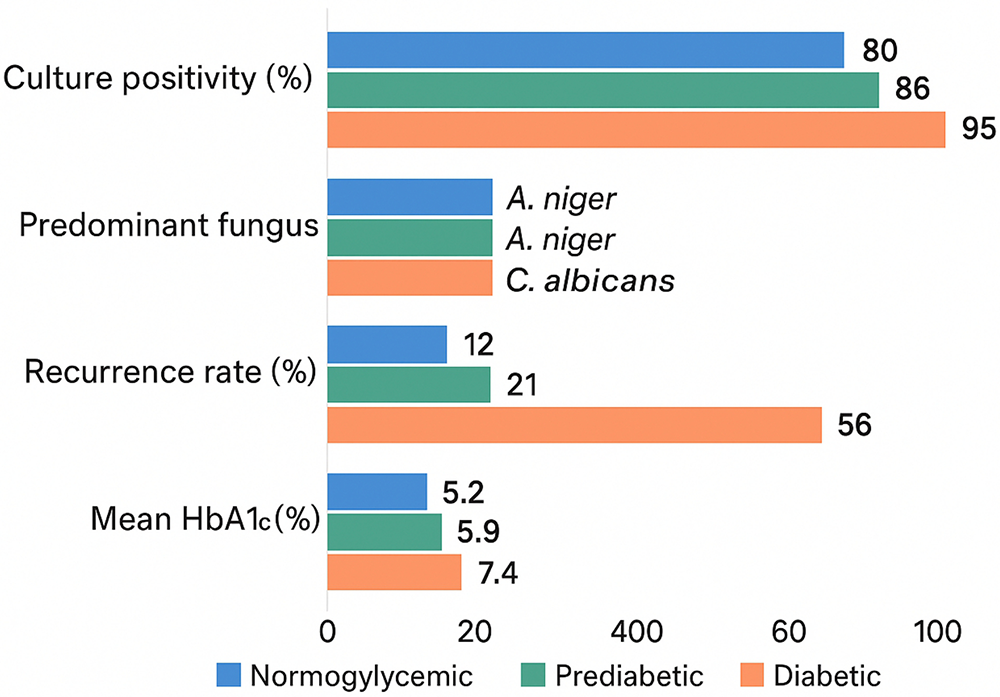
Diabetics demonstrated higher culture positivity (95 per cent), predominance of C. albicans and the highest recurrence (56 per cent), in contrast to normoglycaemics (80 per cent culture positivity, A. niger predominance, 12 per cent recurrence) Figure 4.
Key findings by glycaemic category.

Discussion
This study demonstrates a strong association between recurrent otomycosis and previously undiagnosed DM, suggesting that chronic fungal ear infections may serve as a clinical clue to underlying metabolic dysfunction.
Glycaemic abnormalities and otomycosis
Among the 213 patients studied, 30 per cent were newly diagnosed with diabetes and 13 per cent with prediabetes—figures that mirror findings by Maheshwari et al.Reference Maheshwari, Rajpal and Gupta20 and Ramli et al.Reference Ramli, Saim and Zainudin21 The significantly higher recurrence rate in diabetics (56 per cent) and the strong correlation with elevated HbA1c (OR 3.9) support prior studies by Shakya et al.Reference Seifi, Shakiba and Rezaei-Matehkolaei19 and Khurshid Anwar and Gohar MS.Reference Al-Otaibi, Almuhanna and Alshareef18 The pathophysiological basis is well-established: hyperglycaemia impairs neutrophil chemotaxis, phagocytosis and oxidative burst, compromising local immunity in the external auditory canal.Reference Kaur, Mittal, Kakkar, Aggarwal and Mathur6, Reference Balkis and Leid10, Reference Bagdade, Root and Bulger13 Oxidative stress, advanced glycation end-products and disrupted epithelial barriers further increase fungal susceptibility.Reference Peleg, Weerarathna, McCarthy and Davis14
Candida predominance in diabetic patients
A notable observation was the predominance of Candida albicans among diabetic patients (48 per cent of diabetic isolates), contrasting with Aspergillus niger in normoglycaemics. This aligns with findings from Jain et al.Reference Jain, Jindal and Sharma17 and Al-Otaibi et al.Reference Al-Otaibi, Almuhanna and Alshareef18 Candida species favour mildly alkaline, glucose-rich environments—common in diabetic cerumen. Their ability to form resilient biofilms may also contribute to persistence and antifungal resistance.
Cerumen pH as a modifiable local factor
This study adds to limited literature on cerumen pH, showing significantly higher mean values in diabetics (6.6) versus normoglycaemics (5.3). These findings corroborate the biochemical studies of Ghosh et al.Reference Ghosh, Mukherjee and Roy15 and Liu et al.,Reference Liu, Hu, Peng and Wang16 who linked elevated cerumen pH to reduced antifungal activity in the external auditory canal. The alkalinity likely disrupts the protective acidic milieu, enabling colonisation and recurrent infection.
Fungal profiles and recurrence patterns
Although A. niger was the most common isolate overall, recurrent cases were more often caused by C. albicans and C. tropicalis—both associated with recurrence rates above 40 per cent. These species are known for their biofilm-forming capacity and relative antifungal resistance. Findings are consistent with studies by Seifi et al.Reference Seifi, Shakiba and Rezaei-Matehkolaei19 and Navarro-Pérez et al.Reference Navarro-Pérez, Pérez-Carro, Muñoz, Fernández-Fernández, López-Camarillo and García-Cosío22
Risk factors: behavioural and genetic
The most common predisposing factors included self-cleaning trauma, steroid ear drop usage and water exposure—echoing reports by Satish et al.Reference Satish, Nagaraj, Kiran and Nandini7 and Mohanty et al.Reference Mohanty, Mohanty, Sahoo and Panda3 A notable 26 per cent of patients had a family history of DM, suggesting that recurrent otomycosis may be an early manifestation in genetically predisposed individuals when combined with environmental triggers.
ENT clinics as screening gateways
This study supports prior suggestions by Maheshwari et al.Reference Maheshwari, Rajpal and Gupta20 and Abdalla et al.Reference Peleg, Weerarathna, McCarthy and Davis14 that ENT clinics offer an underutilised opportunity for early detection of metabolic disorders. Given the high prevalence of undiagnosed DM and the cost-effectiveness of HbA1c screening, ENT visits could serve as a valuable interface for opportunistic diabetes detection—especially in resource-constrained regions.
What is already known on the topic
• Recurrent otomycosis is prevalent in tropical regions and is often associated with local trauma and steroid ear drops
• Diabetes mellitus impairs host immunity and promotes fungal colonisation
• Candida albicans is more frequently isolated in diabetic patients
What this paper adds
• Over 40 per cent of patients with recurrent otomycosis had previously undiagnosed diabetes or prediabetes
• Higher cerumen pH and Candida dominance were observed in diabetics and linked with increased recurrence
• ENT clinics could serve as effective gateways for opportunistic diabetes screening using HbA1c
Conclusion
Recurrent otomycosis should not be dismissed as a benign superficial ear infection. This study shows that over 43 per cent of patients with repeated fungal otitis harboured previously undiagnosed diabetes or prediabetes. Diabetics demonstrated higher recurrence rates, greater culture positivity, elevated cerumen pH and a predominance of Candida species.
Routine glycaemic evaluation—particularly HbA1c screening—should be considered in patients presenting with recurrent otomycosis. Such integration of systemic screening into ENT practice could significantly enhance early diagnosis of metabolic disease, improve infection control and reduce recurrence. ENT symptoms, especially in tropical settings, may represent sentinel events in broader public health screening strategies.
Limitations
The study has certain limitations. Statistical analysis was restricted, which reduces the strength of the associations drawn between recurrent otomycosis and undiagnosed diabetes. As the study was conducted in a tropical region with high temperature and humidity, the recurrence rates observed may not be directly applicable to populations in temperate climates, where environmental factors are different. In addition, genetic predisposition to diabetes varies worldwide, and this may influence the prevalence of undiagnosed diabetes in patients presenting with otomycosis. These factors limit the generalisability of the findings to an international readership. Larger multi-centric studies with more robust statistical methods and diverse population groups are required to validate and expand upon these results.
Funding
None.
Competing interests
None.
Ethical Clearance
Obtained from the institutional ethics committee.
Consent
Written informed consent obtained from all participants.
Funding statement
This research received no specific grant from any funding agency, commercial or not-for-profit sectors.