Introduction
Current needs
Many Canadians are now living for many years with chronic illness, with associated symptoms and functional and cognitive impairments (Rocker et al., Reference Rocker, Downar and Morrison2016). There has been a similar shift in the understanding and practice of palliative care, which recognizes that a palliative approach to care can be of benefit much sooner than when facing imminent death (Rocker et al., Reference Rocker, Downar and Morrison2016). With this decoupling of palliative care from end-of-life care, palliative care now encompasses symptom and disease management of various cancer and non-cancer diagnoses across the trajectory of illness (Rocker et al., Reference Rocker, Downar and Morrison2016).
According to reports from the Canadian Institute for Health Information in 2007 and 2011, non-cancer illnesses accounted for more than two-thirds of all deaths in Canada. Bostwick et al. (Reference Bostwick, Wolf and Samsa2017) compared the palliative care needs of patients with cancer to those with common non-cancer serious illnesses and found that patients without cancer had less functionality in their daily living, reflecting the more varied trajectories of chronic illnesses such as heart failure, chronic obstructive pulmonary disease (COPD), and advanced renal disease. Two retrospective data analysis studies from Germany found that non-cancer patients also suffered from more acute presentations of physical symptoms, such as dyspnea, delirium, and nausea, and had greater psychological and nursing needs to support activities of daily living (Ostgathe et al., Reference Ostgathe, Alt-Epping and Golla2011; Hess et al., Reference Hess, Stiel and Hofmann2014). As the population continues to age with chronic non-cancer illnesses of variable and often much longer trajectories with a significant burden of symptoms, there will be a greater and more varied need for specialized palliative care (Stiel et al., Reference Stiel, Matthies and SeuB2014a, Reference Stiel, Psych and Matthies2014b).
Tertiary palliative care
Given the variability in disease trajectory of many non-cancer illnesses, models of palliative care will need to be tailored to the needs at each stage of disease, from primary out-patient palliative care during stable disease, acute in-patient palliative care during exacerbations, and home- or hospice-based care approaching the end of life (Rocker et al., Reference Rocker, Downar and Morrison2016). Australia has developed a palliative care framework with these levels of palliative care needs in mind, including primary care, intermediate care, and complex or tertiary care (Mitchell, Reference Mitchell2011). The Calgary Palliative and End of Life Care program has adopted a similar model with the Intensive Palliative Care Unit (IPCU), addressing the need for specialized palliative care in a tertiary setting for patients with acute and subacute presentations of complex multidimensional issues.
Study rationale
The majority of patients admitted to tertiary palliative care settings have historically been those with cancer (Bostwick et al., Reference Bostwick, Wolf and Samsa2017). As a result, there is much less evidence-based guidance regarding the tertiary palliative care needs of patients with non-cancer diagnoses, despite the increasing prevalence of this population. The wide variation in symptomatology and prognosis of non-cancer chronic illness leads to challenges in identifying specific populations with unique needs who might benefit from tertiary palliative care (Prasad et al., Reference Prasad, Sarkar and Dubashi2017). A holistic and more comprehensive understanding of needs would help inform effective and meaningful care across the illness trajectory, particularly in subacute and acute hospital settings, where physical, emotional, psychological, and spiritual concerns are often brought to the forefront, with the reciprocal impact on coping and quality of life.
Study objective
The objective of this study was to describe and compare the physical, psychological, social, and spiritual needs of patients with non-cancer serious illness diagnoses to those of patients with cancer diagnoses in a tertiary palliative care setting to better characterize their care needs and guide clinical practice, program development, and advocacy.
Methods
We conducted a retrospective chart review of all patients with a non-cancer diagnosis admitted to the IPCU at Foothills Medical Centre (FMC) in Calgary, Alberta, between January 1, 2008 and December 31, 2017. Ethics approval was obtained from the University of Calgary Research Ethics Board (REB18-0320).
We then used the demographics of patients already studied with a non-cancer diagnosis to match patients with a cancer diagnosis using the following criteria: age (year of birth +/− 5 years), gender, and year of admission. If more than one match was found, a patient was randomly selected to review.
For patients with multiple IPCU admissions, only data from the most recent admission was extracted.
Data collection
Retrospective clinical data were extracted from the regional electronic medical record and paper charts. The following elements of physical, psychological, social, and spiritual needs were extracted:
1. Physical: pain, dyspnea, fatigue, anorexia, edema, and delirium
2. Psychological: depression, anxiety, concerns around prognosis, and dignity
3. Social: caregiver burden, social isolation, and financial concerns
4. Spiritual: spiritual distress
Demographic variables were also recorded, including age, gender, location of residence prior to hospitalization (home, transfer from another unit/hospital), and goals of care designation at admission to hospital and IPCU, and at the time of discharge.
Data analysis
Descriptive statistics, including mean, median, and frequencies, were used to describe the demographics and occurrence of the various physical, psychological, social, and spiritual needs identified.
Qualitative thematic content analysis and a literature review were performed to try to understand the underlying reasons for the differences between the two populations’ care needs and potential gaps for future study and intervention.
Results
Demographic data
There were a total of 108 patients in our study population. Fifty-four patients with non-cancer diagnoses were identified, accounting for 2% of the total discharges from the IPCU between 2008 and 2017. Another 54 matched patients with cancer diagnoses were subsequently identified (Table 1).
Patient demographics

The median age of both groups was 67 years. The average length of stay for patients with non-cancer diagnoses was 28 days, and the average length of stay for patients with cancer diagnoses was 21 days. The two most common diagnoses among patients with non-cancer diagnoses were amyotrophic lateral sclerosis and congestive heart failure. The most common diagnoses among patients with cancer diagnoses were breast cancer and lung cancer (Table 1).
Discharge destination
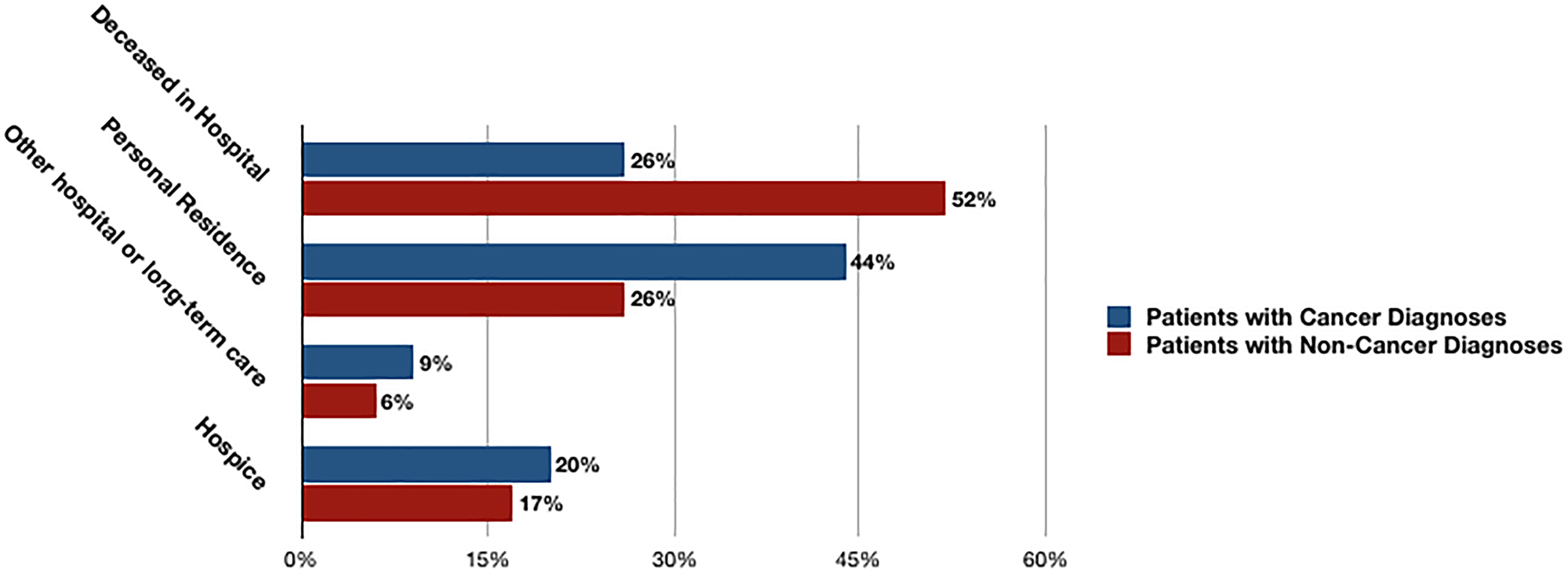
Among both groups, the majority of patients deceased in hospital or were discharged to their personal residence from hospital. Patients with non-cancer diagnoses more frequently died in hospital (n = 28, 52%), and patients with cancer diagnoses more frequently were discharged to their personal residence (n = 24, 44%) (Figure 1).
Patient discharge destination.

Patients with non-cancer diagnoses
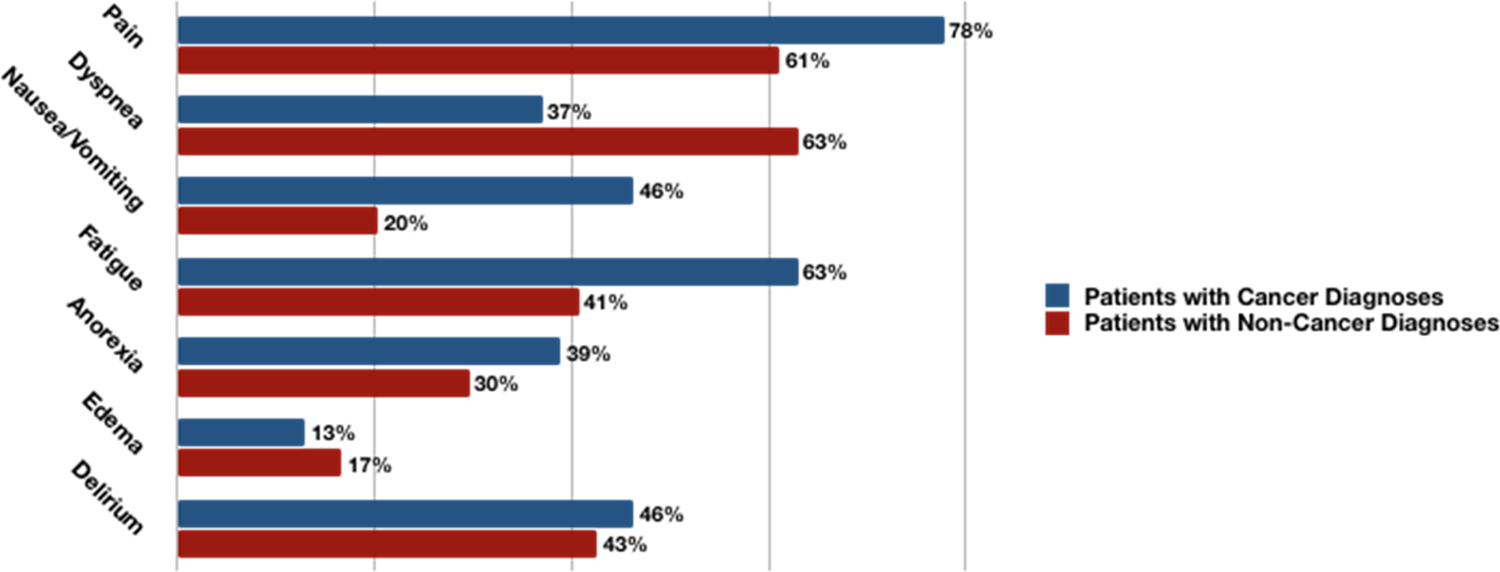
The most prevalent physical concerns were pain (n = 33, 61%) and dyspnea (n = 34, 63%). Pain was the primary concern in 23 (43%) of patients, and dyspnea was the primary concern in 21 (39%) of patients.
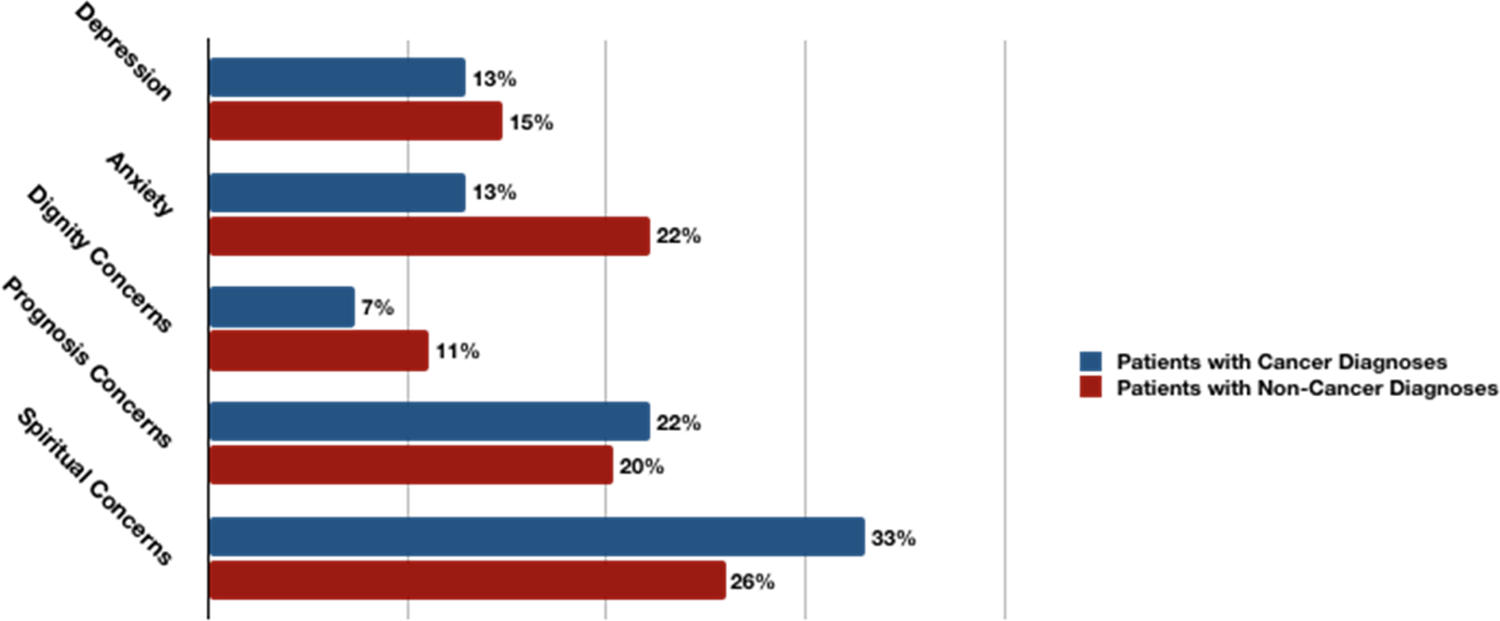
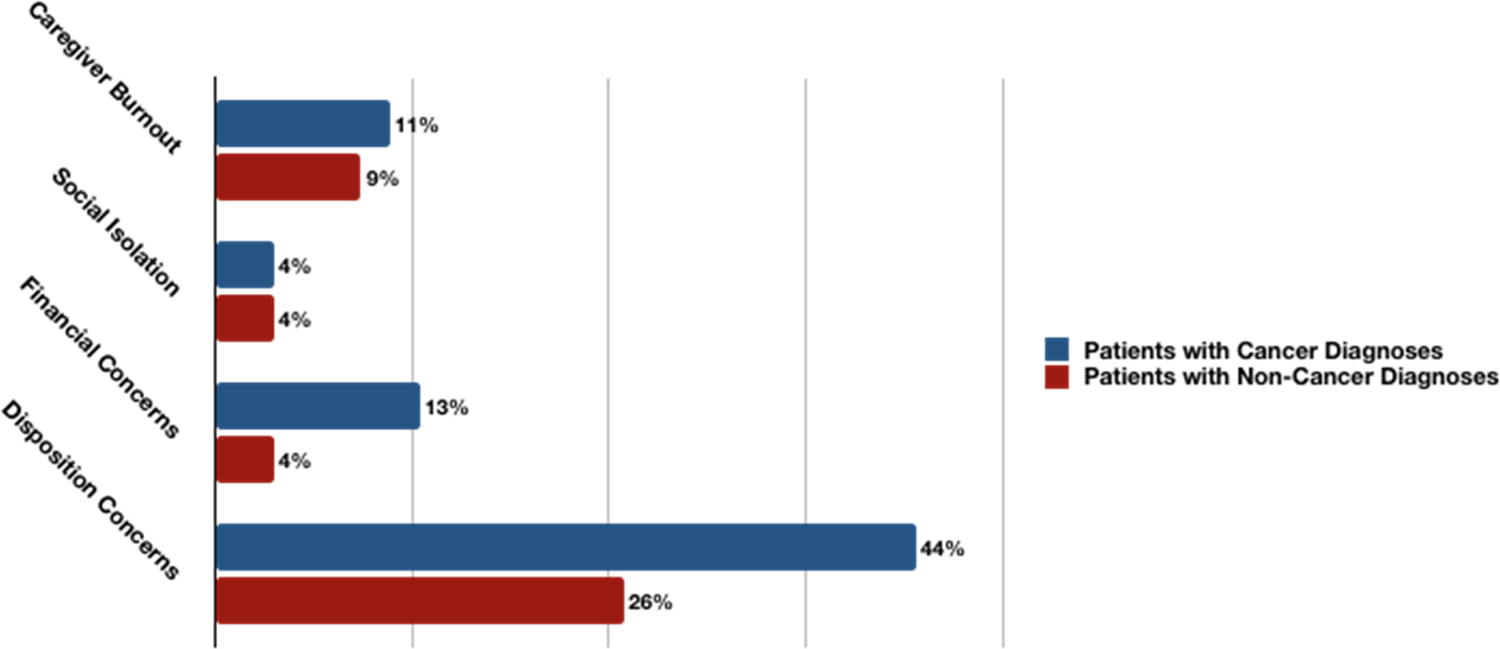
The most prevalent psychological concerns were depression (n = 8, 15%), anxiety (n = 12, 22%), and concerns with prognosis (n = 11, 20%). The major social concern was discharge planning (n = 14, 26%). Spiritual concerns were addressed in 14 (26%) of patients.
Patients with cancer diagnoses
The most prevalent physical concerns were pain (n = 42, 78%) and fatigue (n = 63, 34%). Pain was the primary concern in 27 (50%) of patients, and dyspnea was the primary concern in 10 (19%) of patients.
The most prevalent psychological concerns were prognosis-related concerns (n = 12, 22%), depression (n = 7, 13%), and anxiety (n = 7, 13%). The major social concern was discharge planning (n = 24, 44%). Spiritual concerns were addressed in 18 (33%) of patients.
Comparison
The prevalence of the main concerns was similar among patients with non-cancer diagnoses and those with cancer diagnoses.
The prevalence of pain, nausea/vomiting, fatigue, and anorexia were higher among patients with cancer diagnoses. Pain was the most prevalent primary concern in both populations, whereas dyspnea was more commonly the primary concern in patients with non-cancer diagnoses (39%) than patients with cancer diagnoses (19%) (Figure 2).
Physical concerns among patients with non-cancer diagnoses compared to cancer diagnoses.

In comparison to patients with cancer diagnoses, those with non-cancer diagnoses had a higher prevalence of anxiety and concerns about their dignity. The prevalence of social isolation and caregiver burnout were similar between the two groups. In contrast, the prevalence of concerns related to finances and discharge planning was higher among patients with cancer diagnoses. Spirituality was addressed more often in patients with cancer diagnoses (Figures 3 and 4).
Psychological concerns among patients with non-cancer diagnoses compared to cancer diagnoses.

Social and spiritual concerns among patients with non-cancer diagnoses compared to cancer diagnoses.

Discussion
We have described the physical, psychological, spiritual, and social care needs of patients with non-cancer diagnoses compared to the care needs of patients with cancer diagnoses. This description of the palliative care needs of patients with non-cancer diagnoses is relevant, given the progressive increase in patients living longer with chronic non-cancer conditions, and who could benefit from specialized palliative care. The goal of this study was to improve our understanding of how to tailor clinical practice for this population in order to provide meaningful care.
We identified that the main physical concerns for patients admitted to a tertiary palliative care unit with non-cancer diagnoses are similar to those with cancer diagnoses, yet only 2% of the patients admitted to our tertiary palliative care unit had a non-cancer diagnosis. Since we did not review the medical records of patients with non-cancer diagnoses who were not admitted to the IPCU, it may be that the majority of patients with non-cancer diagnoses do not have care needs that require tertiary palliative care. Although limited, there is evidence that at least one-fifth of patients with end-stage, non-cancer diagnoses have comparable levels of symptom severity and care needs as patients with cancer diagnoses (Coventry et al., Reference Coventry, Grande and Richards2005; Stiel et al., Reference Stiel, Matthies and SeuB2014a, Reference Stiel, Psych and Matthies2014b). Similar to our findings, Bostwick et al. (Reference Bostwick, Wolf and Samsa2017) identified the physical symptoms of pain, dyspnea, and fatigue; and the psychological symptoms of depression and anxiety, with a greater prevalence of pain among patients with cancer diagnoses and a greater prevalence of dyspnea among patients with non-cancer diagnoses. Their most striking finding was that patients with non-cancer diagnoses had a lower functional capacity and were more likely to be hospitalized (Bostwick et al., Reference Bostwick, Wolf and Samsa2017). Similar results were reported in National Hospice and Palliative Care Evaluation data from Germany, where lower Eastern Cooperative Oncology Group (ECOG) Performance Status and higher needs for nursing support in activities of daily living were reported in patients with non-cancer diagnoses (Ostgathe et al., Reference Ostgathe, Alt-Epping and Golla2011). They also noted that the majority (96.5%) of patients admitted to palliative care units suffered from cancer diagnoses (Ostgathe et al., Reference Ostgathe, Alt-Epping and Golla2011). The similar prevalence of symptoms between non-cancer and cancer populations and relatively disproportionate admission of patients with non-cancer diagnoses to tertiary palliative care settings highlights the need for more prompt recognition of the care needs of all patients with serious illness diagnoses and consideration of their need for specialized tertiary care. Future research might explore subconscious biases and systemic factors that may interfere with referrals of patients with non-cancer diagnoses to a tertiary palliative care unit. This could help inform hospital-based policies in triaging patients with non-cancer diagnoses who may be better suited to a specialized palliative care unit rather than a general or subspecialty medical or surgical unit.
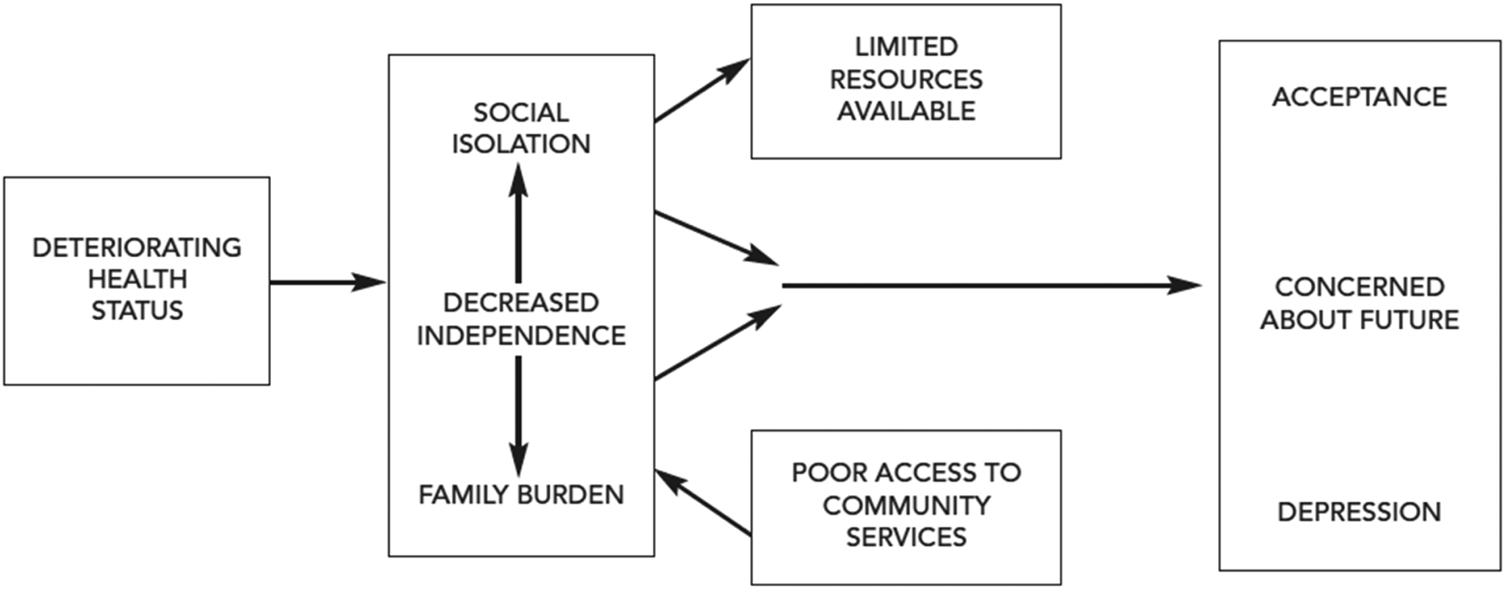
In comparison to patients with cancer diagnoses, we described a higher prevalence of psychosocial concerns for those with non-cancer diagnoses, including depression, anxiety, and concerns related to dignity and prognosis. The 2004 National Institute for Clinical Excellence (NICE) guidelines, Improving Supportive and Palliative Care for Adults with Cancer, emphasized the importance of psychological, social, and spiritual support for patients and their families. Our study highlights that this recommendation would be equally applicable to the non-cancer population, given the uncertainty and chronicity associated with non-cancer diseases. Many studies have identified that patients living with chronic, life-limiting, non-cancer diagnoses are more likely to experience psychological distress, depression, and anxiety disorder when they are less aware of their prognosis (Chockinov et al., Reference Chockinov, Tataryn and Wilson2000; Wilson et al., Reference Wilson, Chockinov and Skirko2007; Thompson et al., Reference Thompson, Chochinov and Wilson2009). As a disease progresses, patients can experience an incredible sense of loss accompanying a loss of independence in functional capacity and personal affairs and increasing reliance on family members and other loved ones (Figure 5). Despite this change in dependence from self to others and increased need for support and resources, most people with chronic non-cancer diseases are not offered many of the physical, psychological, and social supports that are part of palliative care (Fitzsimons et al., Reference Fitzsimons, Mullan and Wilson2007; Bacon, Reference Bacon2015). The prognosis of patients with non-cancer diagnoses may be less predictable; however, the concerns encountered throughout their disease and associated support needs can be anticipated (Murray et al., Reference Murray, Boyd and Sheikh2005). There is a need for greater attention to aspects of their psychosocial and spiritual well-being in the tertiary care setting, as well as in home care and clinic follow-ups where discussions around illness trajectory and prognosis, and what to expect over the course of an illness can be introduced earlier and in less acute situations. Prior research has identified a clear benefit to discussing these topics and providing psychological support much earlier in their disease trajectory, even as they are receiving disease-modifying treatment, rather than suddenly in the last weeks or months of life (Gillick, Reference Gillick2005; Fitzsimons et al., Reference Fitzsimons, Mullan and Wilson2007; Higginson et al., Reference Higginson, Costantini and Silber2011).
Summary of qualitative date of the change in independence and care needs of patients with non-cancer diagnoses (Fitzsimons et al., Reference Fitzsimons, Mullan and Wilson2007).

Despite the increasing prevalence of patients with non-cancer diagnoses living longer with chronic illness, and the recognition of the growing need for their specialized care, there is limited evidence describing their tertiary palliative care needs (Bostwick et al., Reference Bostwick, Wolf and Samsa2017). Key challenges in providing palliative care to patients with non-cancer diagnoses include the historic link between palliative care and oncology leading to an evidence-base grounded in the cancer population, the breadth of specialists involved in caring for patients with non-cancer diagnoses, and the challenge of integrating palliative care within an unpredictable illness course (Fallon and Foley, Reference Fallon and Foley2012). The higher hospital mortality rate for non-cancer patients in our study was an unexpected finding. While the retrospective nature of our study did not allow us to identify the reason for this, potential factors may include greater or more complex care needs of patients with non-cancer diagnoses which make them more reliant on hospital-based care and leading to greater exposure to the associated risks of hospitalization (Schimmel, Reference Schimmel2003); a gap in community or home care resources to support these patients with their varying and often challenging symptoms; and/or late referrals to palliative care, which has been associated with higher mortality in patients with lung cancer (Temel et al., Reference Temel, Greer and Muzikansky2010).
With the emerging understanding of end-of-life care needs of patients with non-cancer diagnoses, there is a need for improved and earlier access to tertiary care, as well as community-based resources for symptom management and greater psychosocial support for this population. The higher prevalence of psychosocial distress among non-cancer patients would benefit from further exploration to identify how these needs might be addressed in this population with inherently more variable illness trajectories, treatment options and prognoses. Prospective studies looking at outcomes in patients with non-cancer diagnoses will be important to confirm and further explore the potentially higher hospital mortality rate in this population that was noted in our study.
Limitations
The retrospective nature of the study restricted information extracted to the symptoms and psychological, social, and spiritual needs that were documented in the medical record, which may be incomplete. The single-center nature of our study also limits generalizability of our findings, and multi-center studies are needed to determine whether similar trends are found more broadly.
Conclusion
Our study describes similarities in the physical needs of patients with non-cancer serious illness diagnoses and cancer patients within a tertiary palliative care setting, with notable differences in the frequency of psychosocial concerns. Given the progressive increase in patients living longer with chronic non-cancer conditions, further study is warranted to determine how patients with non-cancer serious illness who would benefit from specialized palliative care can be identified earlier and to explore how their needs could best be met.