INTRODUCTION
World leaders have determined to make strong and sustained efforts to reduce extreme poverty, as set by the 2000 United Nations Millennium Declaration and reaching the ambitious eight Millennium Development Goals (MDGs; www.un.org/millenniumgoals). Progress has been made towards these MDGs and in particular MDG 6, which aims ‘to Combat HIV/AIDS, Malaria, and Other Diseases’ (Fenwick and Webster, Reference Fenwick and Webster2006; Paul, Reference Paul2008). Schistosomiasis, or bilharzia as it is sometimes referred to, is one such ‘Other Disease’.
Schistosomiasis is a chronic and debilitating disease, second only to malaria in terms of parasite-induced human morbidity and mortality. It continues to threaten millions of people, particularly the rural poor in the developing world. Of some 779 million people exposed, an estimated 200 million are infected, more than half of whom are symptomatic and at least 20 million exhibit severe disease manifestations (Steinmann et al. Reference Steinmann, Keiser, Bos, Tanner and Utzinger2006). Schistosomes, the causative agents, are digenetic trematodes with the adult worms inhabiting the blood vessels of humans, and an asexual reproduction stage in specific aquatic and amphibious snails. Human infection with Schistosoma japonicum and S. mansoni is associated with chronic hepatic and intestinal fibrosis, whilst S. haematobium infections can lead to ureteric and bladder fibrosis, and calcification of the urinary tract. The latter two species of schistosomes which are prevalent in sub-Saharan Africa are responsible for a great burden on human health, and some 280 000 deaths annually due to late stage liver fibrosis, haematemesis and urinary system complications (van der Werf et al. Reference van der Werf, de Vlas, Brooker, Looman, Nagelkerke, Habbema and Engels2003).
The possible methods available to control schistosomiasis have long been recognized as improved water supplies and sanitation, snail control and preventive chemotherapy for infections in the human (and sometimes animal) host (WHO, 1993). Provision of clean water supplies and improved sanitation to the poorest communities is still lacking, and snail control has proved to be difficult, expensive and/or environmentally unacceptable. ‘Preventive chemotherapy’ has emerged as the major tool, because it is a safe and low-cost intervention producing a rapid impact (Fenwick and Webster, Reference Fenwick and Webster2006). In fact, in sub-Saharan Africa, where socio-economic development is slow and provision of clean water and sanitation facilities are less than satisfactory, preventive chemotherapy with the target of reducing intensity of infection, and thus morbidity, constitutes a much more realistic target for schistosomiasis control. Currently, preventive chemotherapy is the mainstay of the World Health Organization (WHO)-recommended strategy against schistosomiasis as described in their manual (WHO, 2006).
Since Egypt, China and Brazil have implemented successful schistosomiasis control programmes, international interest and political commitment for control of helminthic diseases in sub-Saharan Africa has grown substantially with schistosomiasis now placed on the international health agenda (Utzinger et al. Reference Utzinger, Bergquist, Xiao, Singer and Tanner2003; Stothard and Gabrielli, Reference Stothard and Gabrielli2007). Major shifts in global health policy have resulted in a number of control programmes using preventive chemotherapy being implemented on a national scale in sub-Saharan Africa (Fenwick, Reference Fenwick2006). This has been made possible by the wide availability of the safe and effective drug praziquantel (PZQ), mainly due to its significant reduction in price (>90% since 1990), so that in 2008 tablets are available at US$ 0.07–0.08 from several manufacturers which means the cost of the drug to treat a child is approximately US$ 0.20 (Fenwick and Webster, Reference Fenwick and Webster2006).
This article describes the rationale, development and implementation of the Schistosomiasis Control Initiative (SCI; http://www.sci-ntds.org/) and highlights some of the recent key SCI publications and relevant literature. We hope that by sharing SCI experiences, new support for schistosomiasis control can be attracted as it is estimated that less than 20% of those who need treatment are currently being offered the drug (Hotez et al. Reference Hotez, Molyneux, Fenwick, Kumaresan, Ehrlich Sachs, Sachs and Savioli2007b). This is despite control being possible at a cost of below US$ 0.50 per person per year, which includes drug cost (US$ 0.20), advocacy, information, education and communication (IEC) and social mobilization, delivery, training and monitoring and evaluation.
DEVELOPMENT OF THE SCI PROGRAMMES
The move towards national control programmes in sub-Saharan Africa was facilitated by an award from the Bill and Melinda Gates Foundation (BMGF; http://www.gatesfoundation.org) Global Health Program in 2002, to the SCI for the implementation and evaluation of control of schistosomiasis (Brooker et al. Reference Brooker, Whawell, Kabatereine, Fenwick and Anderson2004; Fenwick, Reference Fenwick2006; Garba et al. Reference Garba, Touré, Dembelé, Bosqué-Oliva and Fenwick2006; Kabatereine et al. Reference Kabatereine, Fleming, Nyandindi, Mwanza and Blair2006a). Six countries were selected by October 2003 for full support: Burkina Faso, Mali, Niger, Uganda, Tanzania and Zambia (Fenwick, Reference Fenwick2006). The countries each proposed a different implementation approach and management structure for their large-scale schistosomiasis control. This was readily accepted because the BMGF required SCI to test the ‘proof-of-principle’ of national scale, Ministry of Health (MoH)-led schistosomiasis control programmes. SCI is based in Imperial College London and operated with the principle that all programmes were country owned and run, with SCI staff offering technical and other assistance, but not as expatriates living in-country. Programmes were based in the MoH in the respective country, and SCI offered support to improve the national health system. All programmes complied with WHO recommendations in World Health Assembly resolution WHA 54.19 of 2001 (WHO, 2002).
One of the SCI's first actions was to adopt integration of intestinal worm control. Whereas the SCI was initially established to target a single disease (i.e. schistosomiasis using PZQ), it was very soon realized that wherever there is schistosomiasis, co-infections with soil-transmitted helminths (STHs) such as Ascaris lumbricoides, Trichuris trichiura and hookworm are the norm rather than the exception (Geiger, Reference Geiger2008). The fact that STHs and schistosomiasis can be treated safely with the co-administration of a single 400 mg tablet of albendazole (ALB) or 500 mg tablet of mebendazole costing just US$ 0.02 with praziquantel made this integration an obvious step. Thus the SCI decided from the outset to offer treatment for STH infections together with schistosomiasis, as recommended by WHA 54.19, and consequently adapted its objectives (WHO, 2002) which are summarized in the Box 1.
Box 1 Objectives of SCI
• To encourage development of sustainable schistosomiasis and STH control programmes in sub-Saharan Africa.
• In the selected countries: to reach at least 75% of school-aged children (which in most countries would be from 6 to 15-year-old) and other high-risk groups with chemotherapy, namely PZQ and ALB; and thereby reducing prevalence and intensity of schistosomiasis and STH infections; as well as reducing schistosomiasis-related morbidity in high risk groups; and burdens due to STH infections in the targeted populations.
• To create a demand for sustained schistosomiasis and STH control.
• To promote access to anthelminthic drugs and good case management in the regular health system.
• To develop a rigorous monitoring and evaluation plan which will generate the information required to determine whether or not the objectives have been met (Brooker et al. Reference Brooker, Whawell, Kabatereine, Fenwick and Anderson2004).
APPROACH TO IMPLEMENTATION AND MANAGEMENT IN SCI-SUPPORTED COUNTRIES
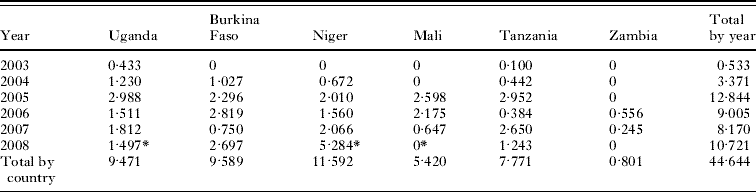
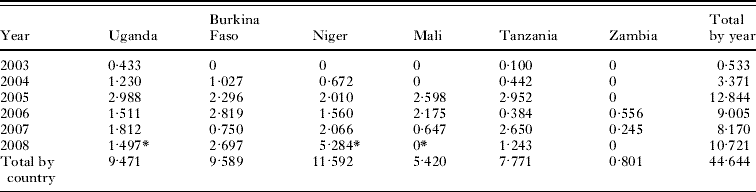
The reported treatment numbers of people in each SCI-supported country are displayed in Table 1. Based on the SCI premises and objectives aforementioned, the following section describes the strategy and management approach used by each supported country.
Number of persons treated (million) for schistosomiasis and STH control in SCI-supported countries from 2003 to 2008
* Treatment incorporated into the new integrated NTD control programme.
East Africa
Uganda
Uganda was the first country which launched a SCI-supported control programme in April 2003. Uganda started with a pilot phase covering >400 000 schoolchildren (7- to 15-year-old) and selected communities (Kabatereine et al. Reference Kabatereine, Tukahebwa, Kazibwe, Namwangye, Zaramba, Brooker, Stothard, Kamenka, Whawell, Webster and Fenwick2006b). The country of Uganda is divided into districts and then several sub-counties within each district, and the surveys were conducted in all the districts known to be endemic for schistosomiasis. This resulted in pilot interventions being implemented in one sub-county in each of the 18 most affected districts (out of 56), after which the programme expanded to cover increasing numbers of schoolchildren and communities in 23 districts in the subsequent years (as shown in Table 1). In schools, the programme offered mass treatment with PZQ and ALB to all children delivered by schoolteachers who had previously been trained specifically on control of schistosomiasis and STH infections and how to treat using the two drugs. Within communities, internally selected community drug distributors (CDDs) provided treatment to all eligible individuals within targeted communities. Excluded from treatment were young children below 94 cm in height, following standard WHO guidelines, and those who were unwell. The annual mass treatment campaign has subsequently been carried out in April/May each year alongside the MoH's ‘Child Days Plus strategy’ (Kabatereine et al. Reference Kabatereine, Fleming, Nyandindi, Mwanza and Blair2006a).
Local health staff were encouraged to deliver some general health education messages simultaneously with treatment in an attempt to raise awareness about the helminth infections, the control programme and the benefits of treatment. IEC materials that have been translated into various local languages and distributed to schools and communities were prepared and used, and where possible messages were delivered over local FM radio stations.
The ‘National Bilharzia and Worm Control Programme’ was managed by the Vector Control Division of the MoH, and details about the managerial aspect of the programme can be found in the 2006 publication by Kabatereine et al. (Reference Kabatereine, Fleming, Nyandindi, Mwanza and Blair2006a).
Tanzania
Based on the available resources, which were insufficient to reach all schools in the country and certainly not all the adults at risk, the MoH (now Ministry of Health and Social Welfare, MoHSW) on mainland Tanzania made the strategic decision to adopt a school-based de-worming approach, targeting at first approximately five million children (aged 7–13 years) in highly endemic areas (this represents 50% of the children in the country). The ‘National Schistosomiasis and Soil-transmitted Helminth Control Programme’ (NSSCP) was established based in the MoH and was co-ordinated by the existing ‘National School Health Programme’ in collaboration with the Ministry of Education (MoE) (Kabatereine et al. Reference Kabatereine, Fleming, Nyandindi, Mwanza and Blair2006a).
As a first step in identifying target areas for control, a questionnaire survey was distributed to every primary school in the country to solicit data on blood-in-urine and other related symptoms for urinary schistosomiasis (Clements et al. Reference Clements, Barnett, Nyandindi, Lwambo, Kihamia and Blair2008a, Reference Clements, Brooker, Nyandindi, Fenwick and Blairb). On the basis of the results of the questionnaire survey and a large parasitological mapping survey conducted in northwestern Tanzania (for both S. mansoni and S. haematobium) (Clements et al. Reference Clements, Lwambo, Blair, Nyandindi, Kaatano, Kinung'hi, Webster, Fenwick and Brooker2006), six regions in the Lake and Western zones and five regions along the Indian Ocean coast (comprising a total of 65 districts – or approximately half of the country) were selected as highly endemic priority regions to receive the first round of mass drug administration (MDA) within the school system (Kabatereine et al. Reference Kabatereine, Fleming, Nyandindi, Mwanza and Blair2006a). The strategy for treatment was refined for the next round of MDA using the WHO guidelines on frequency of treatment according to prevalence levels of disease, but also taking into account the logistics of implementing such a massive programme, and fitting into school opening and closing times.
SCI identified additional private funding to treat heavily affected communities surrounding Lake Victoria and on some islands (particularly fishermen in Mwanza region) where intestinal schistosomiasis is a significant public health issue (Malenganisho et al. Reference Malenganisho, Magnussen, Friis, Siza, Kaatano, Temu and Vennervald2008). This resulted in treatment being offered to the whole population on Ukerewe district in both 2006 and 2008, although coverage was not as high as would have been hoped for.
In addition to the support offered to Tanzania mainland, the SCI supported the MoHSW to implement control programmes on the two major islands which constitute Zanzibar. The research and control work on Zanzibar was carried out in collaboration with the Natural History Museum (London, UK), and with co-funding from the Health Foundation (Southgate et al. Reference Southgate, Rollinson, Tchuem Tchuenté and Hagan2005). On Unguja Island, the ‘Kick-Out Kichocho Programme’ was managed by the Helminth Control Laboratory and treated all school-aged children across the island for STH with ALB and those children residing in urinary schistosomiasis (kichocho in Kiswahili) endemic areas with PZQ. Drugs were distributed each year through primary schools. On Pemba Island, by contrast, the Kichocho Control Programme was managed by the Public Health Laboratory-Ivo de Carneri. Due to the high prevalence levels of schistosomiasis in the Pemba population, treatment was delivered to all eligible individuals in every household by CDDs on the island on an annual basis. After two rounds of MDA, the prevalence levels within the community had dropped to a level whereby further treatment was only warranted within the school-aged population, thus the programme continued to conduct MDA each year but limited to within primary schools (unpublished SCI data).
Zambia
The ‘Zambian Bilharzia Control Programme’ (ZBCP) was established in 2004 to develop a MoH and MoE joint strategy for bilharzia and worm control. The MoE was already in receipt of a grant from the United States Agency for International Development (USAID) for implementing training and treatment in some schools on a small scale in two provinces, Eastern and Southern, which was known as the ‘School Health and Nutrition programme’ (SHN). The SCI contribution was used to expand the coverage in both of these provinces to ensure that all schools including community (i.e. non-government) schools (schoolchildren aged 7–13 years) and communities in high-risk areas were offered treatment. Based on mapping surveys the ZBCP implemented the programme in Southern and Eastern provinces through trained teachers and community health workers. During 2005 (phase 1), the programme was piloted by expanding coverage in the districts where the SHN had carried out several annual treatments in some but not all schools. In phase 2 the following year, there was a scale-up in order to treat more individuals in schools and high-risk communities requiring treatment in the remaining districts (Kabatereine et al. Reference Kabatereine, Fleming, Nyandindi, Mwanza and Blair2006a).
West Africa
One of the reasons why Mali, Niger and Burkina Faso were selected for support was because these three countries are all inland and contiguous. The separate MoH staff agreed to co-operate and collaborate and regularly share experiences with each other in a spirit of regional collaboration.
Capacity-building workshops and training and IEC campaigns took place in all three aforementioned countries annually during 2004–2007. Programme staff from the three countries participated in an ultrasound training session for schistosomiasis-related morbidity (in Niger) and training in project financial management (in Burkina Faso and Zambia). Several means of communication were tested for advocacy purposes and IEC activities: these included productions of television sketches, publicity leaflets, posters, comic strips for children and radio spots. All were aimed at increasing public knowledge on the diseases in an attempt to educate the population about behaviours and activities that would lead to schistosomiasis and could often be avoided. Staff from all three programme countries worked closely together and assisted each other when needed. They joined in process monitoring evaluations which took place collaboratively in each country to enable the programme managers to monitor the coverage achieved by their treatment programmes and the acceptance of the drugs by the targeted populations (Garba et al. Reference Garba, Touré, Dembelé, Bosqué-Oliva and Fenwick2006).
Burkina Faso
In West Africa, when SCI was launched, S. haematobium was the predominant schistosome species, and prevalence levels in children were very high, over 80% in some school-aged children groups. The national control programme in Burkina Faso opted not to extend the programme beyond school-aged children during the first two rounds of coverage but to concentrate the resources on reaching the heavily infected children in endemic areas. Details about the national schistosomiasis control programme supported by the SCI have been described elsewhere (Gabrielli et al. Reference Gabrielli, Touré, Sellin, Sellin, Ky, Ouedraogo, Yaogho, Wilson, Thompson, Sanou and Fenwick2006; Koukounari et al. Reference Koukounari, Gabrielli, Touré, Bosqué-Oliva, Zhang, Sellin, Donnelly, Fenwick and Webster2007). In brief, the control strategy adopted by the MoH was modified from the WHO guidelines and involved treatment once every two years to all school-aged children (aged 5–15 years). The first treatment with PZQ and ALB was implemented during 2004 and 2005 in a staggered two-phased campaign. Due to the low school enrolment rate in Burkina Faso (<50%), treatment was carried out both through schools and communities to reach as many as possible of the school-aged children not attending school. As described previously (Gabrielli et al. Reference Gabrielli, Touré, Sellin, Sellin, Ky, Ouedraogo, Yaogho, Wilson, Thompson, Sanou and Fenwick2006), the treatment campaign was co-ordinated and supervised by the MoH staff, but involved education authorities and local communities. A specific national ‘treatment week’ was designated in October each year and health personnel at each level (regional, district and dispensary) were mobilized. Drug delivery in schools was carried out by trained school teachers. To reach non-enrolled children, health workers and CDDs manned fixed units at dispensary and mobile units that visited villages or hamlets actively seeking school-aged children not attending school. The decision to stagger treatment to deliver only every two years was based on previous experience with S. haematobium in western Africa (Garba et al. Reference Garba, Campagne, Tassie, Barkire, Vera, Sellin and Chippaux2004) and on the fact that the ongoing monitoring and evaluation activities showed a satisfactory reduction in prevalence and intensity of infection 12 months post-treatment (Koukounari et al. Reference Koukounari, Gabrielli, Touré, Bosqué-Oliva, Zhang, Sellin, Donnelly, Fenwick and Webster2007; Touré et al. Reference Touré, Zhang, Bosqué-Oliva, Ky, Ouedraogo, Koukounari, Gabrielli, Bertrand, Webster and Fenwick2008).
Mali
Mali was one of the first countries in sub-Saharan Africa to initiate a national schistosomiasis control programme in the 1980s implemented by the Malian MoH in partnership with the World Health Organization and funds from the German Technical Co-operation (Deutsche Gesellschaft für Technische Zusammenarbeit, GTZ) at the time (Brinkmann et al. Reference Brinkmann, Werler, Traoré and Korte1988). In the following years many planned activities were not implemented due to limited financial resources but finally in 2004 national control activities recommenced in the country with support from the SCI which expanded later as a scale-up to reach greater numbers of people (Garba et al. Reference Garba, Touré, Dembelé, Bosqué-Oliva and Fenwick2006). Collaborating units participating in the implementation of the National Control Programme were the National Institute of Research in Public Health (Institut National de Recherche en Santé Publique (INRSP)) and the Disease Prevention and Control Division (Direction Nationale de la Santé) of the Malian MoH. The latter decided upon school-based and community-based distribution through trained teachers, health workers and/or trained CDDs as appropriate.
Niger
In Niger, the decision by the MoH was also to aim for expanded coverage beyond school-aged children to include high-risk communities, women of child-bearing age, pregnant and lactating women in communities where prevalence was over 50% (Savioli et al. Reference Savioli, Albonico, Engels and Montresor2004). This decision was based on pre-treatment prevalence surveys which showed that schistosomiasis was found with a high prevalence distribution in all these groups particularly along the Niger River and the irrigated areas but also near temporary ponds. Niger's National Schistosomiasis and Soil-Transmitted Control Programme (PNLBG) was launched at 2004 (Garba et al. Reference Garba, Touré, Dembelé, Bosqué-Oliva and Fenwick2006). The decision to include pregnant women was taken after the WHO cleared praziquantel for treatment of pregnant women (Olds, Reference Olds2003). After two rounds of annual treatment, because of the drug cost and logistics of reaching into the country rural areas, and because of the effectiveness of the PZQ treatments, Niger also decided to adopt the strategy of offering treatment to people every two years. The distribution of PZQ and ALB to the selected target populations each year was via trained school teachers and CDDs reaching out to the target populations.
ACHIEVEMENTS
Each country laid out milestones for mapping, strategy development and treatment. By the end of 2008, a total of 40 million doses of PZQ have been administered to school-aged children and adults at high risk of schistosome-related morbidity for schistosomiasis and many more treated for STH infections because of SCI support to deworming programmes in non-schistosomiasis areas (the number of treatments in each country is summarized in Table 1). It is noteworthy that Burkina Faso was the first country in the WHO African Region to achieve nationwide coverage with anthelminthic drugs against three major so-called neglected tropical diseases (NTDs), namely lymphatic filariasis, schistosomiasis and STH. However, the SCI-supported schistosomiasis and STH control programmes in these countries are not just about drug delivery, but also about impact upon public health and human morbidity as well as capacity-building through extensive training workshops (financial, ultrasound, microscopy, health education, etc.) and hands-on training during implementation of the programmes in the countries.
Mapping activities
SCI has invested in large-scale, cross-sectional parasitological surveys to provide data for mapping schistosome and STH infections in all SCI-supported countries. In West Africa, coordinated mapping surveys in Burkina Faso, Mali and Niger followed a united plan to collect data for a regional map showing prevalence, intensity of infection and risk of schistosomiasis and intestinal helminths (Clements et al. Reference Clements, Garba, Sacko, Touré, Dembelé, Landouré, Bosqué-Oliva, Gabrielli and Fenwick2008c). Data were collected during 2004–2006 in order to establish the distribution of schistosomiasis and STH infections, and the resulting maps assisted in the development of optimal treatment strategies in each country. In addition, the 2004–2006 mapping data from Mali were compared with 1984–1989 data from national pre-intervention cross-sectional schistosomiasis surveys using Bayesian geostatistical models with the aim to investigate changes in the spatial distribution of schistosomiasis in the country following a decade of donor-funded control and a further 12 years without control (Clements et al. Reference Clements, Bosqué-Oliva, Sacko, Landouré, Dembélé, Traoré, Coulibaly, Gabrielli, Fenwick and Brooker2009). The main finding of this study was that the spatial distribution was remarkably similar between the two examined time periods. In East Africa, separate mapping surveys were conducted in large areas of Tanzania (including four regions in the north-west), in Zambia (including all of Southern province), and in Uganda where SCI survey data from a limited number of locations was combined with existing, recent national survey data collected by the national schistosomiasis control programme in Uganda.
All the surveys were school-based and were conducted using standardised protocols, with the aim to collect samples from 30 boys and 30 girls in each selected school. The numbers of schools and children to be surveyed in each country was calculated by a statistician to give robust results for a wide area using a relatively small, yet cost-effective survey (Clements et al. Reference Clements, Lwambo, Blair, Nyandindi, Kaatano, Kinung'hi, Webster, Fenwick and Brooker2006). The mapping data were plotted using a geographical information system (GIS) and were linked to spatial information on climate, elevation and proximity to large perennial water-bodies. Statistically robust Bayesian geostatistical models were then used to predict prevalence and intensity of infection across the SCI-supported control programme areas. This has enabled more efficient allocation of national control programme resources by focusing attention on high prevalence and intensity clusters within each country (Clements et al. Reference Clements, Lwambo, Blair, Nyandindi, Kaatano, Kinung'hi, Webster, Fenwick and Brooker2006). To our knowledge, the SCI-supported programmes are the first to invest in such extensive datasets for the purposes of mapping NTDs and the first to implement Bayesian geostatistical methods to facilitate the planning of real-world, large-scale disease control.
Monitoring and evaluation activities
All disease control operations require careful monitoring and evaluation to demonstrate the results achieved, both to the donors and to the host governments. Therefore SCI invested in process monitoring, drug evaluation and morbidity measurements throughout the programme in each supported country. To start with, all drugs purchased for the project were sampled and tested for quality using the British Government Chemist's Laboratory, and fortunately all samples tested were of an acceptable quality (Fenwick, Reference Fenwick and Thompson2008).
Morbidity studies required detailed validation of the direct and indirect indicators of schistosome and STH-related morbidity, along with appropriate statistical analysis. To this end, cohorts of children and adults were recruited for longitudinal follow-up throughout the programmes in each country. In each country, sample sizes were determined in order to allow for predicted reductions in prevalence and intensity of infection, but also allowing for a drop out rate of up to 40% each year. In each school and community selected, individuals were invited to participate in the annual follow-up examinations and provide stool (for STH and S. mansoni), urine (for S. haematobium) and finger tip blood samples for haemaglobin examination. Sub-samples of the recruited cohorts were clinically examined using ultrasound to determine liver or bladder fibrosis. The results have added significantly to the knowledge of impact and cost-effectiveness of large scale community drug treatments (Koukounari et al. Reference Koukounari, Fenwick, Whawell, Kabatereine, Kazibwe, Tukahebwa, Stothard, Donnelly and Webster2006a, Reference Koukounari, Gabrielli, Touré, Bosqué-Oliva, Zhang, Sellin, Donnelly, Fenwick and Websterb, Reference Koukounari, Gabrielli, Touré, Bosqué-Oliva, Zhang, Sellin, Donnelly, Fenwick and Webster2007; Kabatereine et al. Reference Kabatereine, Brooker, Koukounari, Kazibwe, Tukahebwa, Fleming, Zhang, Webster, Stothard and Fenwick2007; Tohon et al. Reference Tohon, Mainassara, Garba, Mahamane, Bosque-Oliva, Ibrahim, Duchemin, Chanteau and Boisier2008).
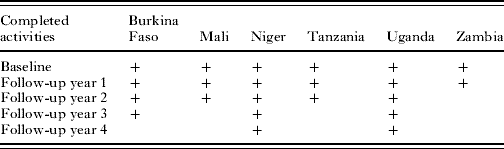
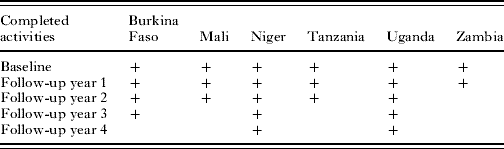
The timetable of completed follow-up visits for monitoring purposes in each country is shown in Table 2. Data have been double entered and analyzed as soon after collection as possible. Results have either already been published in the peer-reviewed literature or are under preparation for publication.
Timeline for monitoring and surveillance data by country
Evaluation of impact of the control programmes on disease
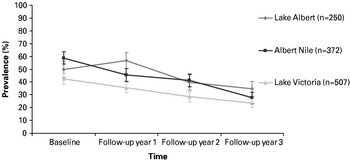
Recent research efforts aim to better define the impact of schistosomiasis on children's health and in particular upon morbidity; also to quantify the specific benefits of mass treatment in schistosomiasis endemic settings. More particularly, one recent study (Koukounari et al. Reference Koukounari, Fenwick, Whawell, Kabatereine, Kazibwe, Tukahebwa, Stothard, Donnelly and Webster2006a) using data from the ‘Ugandan Bilharzia and Worm Control Programme’, evaluated the relationship between S. mansoni and hookworm infection, anaemia and mass treatment. Haemoglobin levels in 2788 children among different schistosomiasis and/or hookworm infection intensity categories at baseline and one year after treatment were also quantified through sophisticated statistical modeling. This study suggested that children heavily infected with S. mansoni or hookworm had significantly lower haemoglobin counts at baseline compared to those who were not infected. However, at least among those children anaemic at the baseline survey, a significant increase in haemoglobin counts was recorded post-treatment. Finally the authors concluded that S. mansoni and hookworm are indeed associated with anaemia, which is reduced following chemotherapy. Fig. 1 illustrates prevalence of anaemia by region in schoolchildren during four years of study with associated 95% confidence intervals (CIs) for longitudinal data of 1129 schoolchildren from Uganda. For Lake Victoria and Albert Nile the prevalence of anaemia has decreased significantly at follow-up three years later relative to baseline.
Prevalence of anaemiaFootnote * by region in schoolchildren during 4 years of study with 95% CIs n=1129: – longitudinal data from Uganda (unpublished SCI data).

In a Niger study (Tohon et al. Reference Tohon, Mainassara, Garba, Mahamane, Bosque-Oliva, Ibrahim, Duchemin, Chanteau and Boisier2008), a detailed analysis was performed on anaemia before and after one treatment round, which suggests that the high prevalence of anaemia in children from Niger is clearly a result of many factors (e.g. infection such as malaria and malnutrition) and not of schistosomiasis alone. Nevertheless, treatment of schistosomiasis and de-worming certainly contributed to the significant reduction of anaemia in schoolchildren seen after the first treatment. In Burkina Faso (Koukounari et al. Reference Koukounari, Gabrielli, Touré, Bosqué-Oliva, Zhang, Sellin, Donnelly, Fenwick and Webster2007), the relationship between S. haematobium infection and associated morbidity in children before and after the large-scale administration of PZQ for schistosomiasis and ALB for STH was evaluated. At baseline, higher intensities of S. haematobium infection were observed in children with anaemia and/or severe microhaematuria, but there was no apparent association between the risk of undernutrition and intensity of S. haematobium infection. Significant reductions in the prevalence and intensity of S. haematobium infection one year after treatment were observed. Furthermore, children who benefited the most from anthelminthic treatment in terms of increased haemoglobin concentrations were those who had anaemia at baseline and those with highly positive microhaematuria scores at baseline. Separately, it was shown that the proportion of school-aged children with heavy S. haematobium infection, closely related to the more severe morbidity, decreased from ~25% before treatment to ~2% two years post-treatment.
Using data from Mali, ultrasound morbidity indicators were assessed for both S. haematobium and S. mansoni infections. In this same study the appropriateness of the WHO coding guidelines for ultrasound in schistosomiasis in the context of mass chemotherapy programmes was also evaluated (Koukounari et al. Reference Koukounari, Sacko, Keita, Gabrielli, Landouré, Dembelé, Clements, Whawell, Donnelly, Fenwick, Traoré and Webster2006b). The selection of 2247 and 2822 schoolchildren from 29 randomly chosen schools, prior to the implementation of mass anthelminthic drug administration, have contributed respectively ultrasonography data on abdominal and urinary tract. This study found that the WHO protocol overestimates the risk of portal vein dilatation and left liver lobe enlargement associated with S. mansoni infection but that it proved useful for detection of S. haematobium pathology. The authors thus concluded that ultrasonography demonstrated a useful tool in large-scale control interventions, although it should be interpreted with some caution for S. mansoni infections.
In Uganda also, longitudinal surveys on infection status, haemoglobin concentration and clinical morbidity in 1871 randomly selected schoolchildren from 37 schools in eight districts were completed at three times – before chemotherapy, one year and two years after MDA (Kabatereine et al. Reference Kabatereine, Brooker, Koukounari, Kazibwe, Tukahebwa, Fleming, Zhang, Webster, Stothard and Fenwick2007). This study proved that mass de-worming with PZQ and ALB led to a significant decrease in the intensity of S. mansoni and intensity of hookworm infection. There was a significant increase in haemoglobin concentration after one and two years of treatment, and a significant decrease in signs of early clinical morbidity. The impact of intervention on S. mansoni prevalence and intensity was similar to that predicted by mathematical models of the impact of chemotherapy on human schistosomiasis. Improvements in haemoglobin concentration were greatest among children who were anaemic or harbouring heavy S. mansoni infection at baseline.
Drug resistance
The SCI supported implementation of mass anti-schistosomal chemotherapy could be expected to lead to intensive and prolonged new selection pressures on the parasite, including, but not exclusive to, that for drug resistant parasites (Doenhoff, Cioli and Utzinger, Reference Doenhoff, Cioli and Utzinger2008). Such potential evolution of drug resistance, which has been the bane of veterinary anthelminthics, is a particular pertinent issue for schistosomiasis given that PZQ is the only readily available drug (Fenwick, Reference Fenwick2006, Reference Fenwick and Thompson2008). The reports of development of PZQ resistance under natural conditions are however inconclusive and even controversial. However, some evidence has been published from clinical investigations carried out primarily in Egypt (Ismail et al. Reference Ismail, Botros, Metwally, William, Farghally, Tao, Day and Bennett1999) and Senegal; occasional reports of individual failures of PZQ in treatment of travelers with schistosomiasis; and results from some laboratory studies reporting successful artificial-selection of resistance lines (Fenwick and Webster, Reference Fenwick and Webster2006).
Therefore, working closely in association with in-country control programmes, SCI has aimed from the outset, to monitor PZQ efficacy, and genetically and phenotypically characterize S. mansoni (and more recently also S. haematobium) before, during and after treatment in identifiable cohorts of children. From a genetic perspective, focus has been placed on analyses of the composition of any apparent treatment failures, re-infecting genotypes and the effect of chemotherapy on parasite population genetic structure. Identifiable cohorts of children were selected and examined in detail, which allowed following up known children who remain infected after treatment. In addition, there was a population genetics component which was set up at the start of the SCI and which through molecular analyses has suggested that children still infected at follow-up are infected by different genotypes than at baseline; this implies reinfection not treatment failure. However, results to date indicate that even a single round of mass-chemotherapeutic treatment produced reductions in a range of measures of genetic diversity of S. mansoni, within and across both treated children and previously untreated children who joined the study cohort when they became of school-age at the first annual follow-up. Phylogenetic analyses and indices of population differentiation also indicated that parasites collected in the same schools in different years were more dissimilar than parasites from different schools collected within year. Furthermore, an unexpectedly significant genetic bottleneck imposed by even a single round of chemotherapeutic treatment on parasite population structure was clearly identified. Such unique results thereby illustrate the importance of careful genetic monitoring and examination of even long lived multi-cellular parasites such as these under novel or increased selective pressures of chemotherapeutic control programmes in order to fully understand and predict the impact of treatment on their current and future epidemiological dynamics.
Another dataset which SCI has collected has concerned the costs of all the programmes, and these results have supported the hypothesis that schistosomiasis and intestinal helminth control can be achieved on a national level for less than US$ 0.50 per person for an annual treatment. Studies on cost benefits are currently underway to reinforce the hypothesis that this is a good value for money.
EXIT STRATEGIES BY COUNTRY
The SCI strategy was to develop an intervention programme which belonged to the countries, and was implemented by country-appointed staff housed in the MoH or the MoE premises, using funds transferred to the Ministries. The SCI exit strategy in each country was originally to hand over to the MoH a regular but reduced treatment regime targeting mainly school-aged children using PZQ and ALB. Ultimately, however SCI had to be flexible in its exit strategies due to an increase in support for the move towards integration of NTD control using a rapid impact package of drugs (Hotez et al. Reference Hotez, Raff, Fenwick, Richards and Molyneux2007a, Reference Hotez, Molyneux, Fenwick, Kumaresan, Ehrlich Sachs, Sachs and Saviolib). A revised exit strategy for each country involved the schistosomiasis and STH control programmes being absorbed into a more holistic countrywide NTD integrated control package. This means schistosomiasis and STH control programmes could and should be integrated with onchocerciasis and lymphatic filariasis control which requires annual doses of ivermectin (Mectizan®) and ALB. Then, where trachoma is also endemic, annual azithromycin (Zithromax®) treatments could and should be added into an integrated NTD control programme, although under current recommendations all drugs need to be spaced rather than given simultaneously.
Uganda
In Uganda, the fifth and final round of treatment for schistosomiasis and STH with SCI support took place in April/May 2007 in 19 districts, although some treatment did take place in 2008. By November/December 2007, the first integrated NTD MDA, took place where a further nine districts were treated with PZQ and ALB – mostly for the first time (Kabatereine et al. Reference Kabatereine, Brooker, Koukounari, Kazibwe, Tukahebwa, Fleming, Zhang, Webster, Stothard and Fenwick2007). The MoH's Bilharzia and Worm Control Programme now collaborates with the pre-existing National Onchocerciasis Control Programme; the Programme for Lymphatic Filariasis; those from the Ministry's Eye Department who are responsible for trachoma control; and the USAID-funded NTD control programme to implement ongoing treatment efforts. Due to the success of the treatment since 2003 the national strategy for schistosomiasis and STH control is being revisited to change to less frequent treatments where prevalence and intensity of the diseases have been greatly reduced and where annual treatment is no longer required.
Tanzania
In Tanzania, the second and final planned SCI treatment took place between September and October 2007 in the 11 selected regions. A further six regions received their first MDA in 2008, at which time the evaluation of these treatments was all that remained. SCI in 2008 and 2009 has been supporting the MoHSW to expand coverage into the remaining four new regions as an integrated NTD control programme with a treatment regime targeting the other NTDs as appropriate with a rapid impact package of drugs. This will allow the lymphatic filariasis, the trachoma, and the schistosomiasis and STH programmes to all expand coverage, work together, integrate their activities and improve the health of all the targeted populations. In the previously treated areas, integration will gradually develop based on the anticipated success of the newly developed NTD control programme.
Zambia
In Zambia, the second round of treatment for schistosomiasis and STH occurred in July 2007 in 19 districts in Eastern and Southern provinces. Zambia has been less successful in reaching its original programme target of expanding coverage to treating 2 million school-aged individuals and had only achieved, according to incompletely reported coverage, around 25% of this target by July 2007, which might be partially explained by difficulties in obtaining reliable treatment data from the field. The reasons and lessons learned are that there was no full-time national co-ordinator in the MoH or MoE dedicated to the programme, there was also no full-time national programme team dedicated to the programme, no full-time support team and therefore management was not sufficiently dynamic to achieve the targets. The training of CDDs and teachers in rural areas turned out to be significantly more expensive than in other SCI-supported countries which meant that the cost per person treated was, in Zambia, significantly higher than the under US$ 0.50 achievable in neighbouring countries. The SCI exited by handing over the programme to the MoH in the hope that they would continue to support the SHN programme, however at the time whether the treatment strategy was to continue was dependent on internal and external funding and the appointment of a full-time national co-ordinator in the Zambian government (in the opinion of the authors).
Since mid-2008, a newly appointed full-time NTD coordinator at the MoH and a ‘School Health and Nutrition Coordinator’ at the MoE have overseen the expansion of the programme into four new provinces. In these provinces, Luapula, Northern, Northwestern and Western, small-scale treatment for schistosomiasis and STH has been implemented. The current strategy by the MoH is to seek further funds for the treatment of these diseases along with the other endemic NTDs in the country with an integrated control programme proposal.
Burkina Faso
Burkina Faso had its first nationwide coverage for schistosomiasis and STH treatment in two years: 2004 and 2005 using PZQ and ALB. During 2006–2008 the second SCI-funded treatment of over 2·5 million school-aged children in nine regions was completed. The exit strategy involved not only the hand-over of the programme to a newly established NTD department at the MoH, but also the establishment for the first time of a trachoma mapping and control programme, funded by the USAID NTD programme, managed by SCI and in-country NGO partner Reseau International Schistosomoses Environnement Amenagements et Lutte (RISEAL- http://www.riseal.org/). For lymphatic filariasis and onchocerciasis, Burkina Faso covered the whole country every year since 2003.
Mali
In Mali, the final SCI funded treatment solely for schistosomiasis and STH was in 2007 both before and during the hand over to the integrated NTD control programme supported by USAID. SCI handed the programme over to ‘new management’ appointed by USAID so that the schistosomiasis and STH control could be incorporated into the new NTD department within the MoH.
Niger
In Niger, the final targeted treatment for schistosomiasis and STH was in 2007. The treatment campaign took place at the same time as the integrated NTD campaign, but targeted different geographical regions (Agadez, Diffa and Zinder). The final treatment ensured that all SCI planned target groups had been treated twice with PZQ and ALB, and the exit strategy for the SCI-supported schistosomiasis and STH programme was to integrate with the existing trachoma programme and the newly-established lymphatic filariasis control programme, and this has now been incorporated into the NTD department during 2008 and expanded rapidly towards a national coverage.
CONCLUSION
The SCI was established to assist selected African countries to develop a sustainable schistosomiasis control programme within their existing health systems. In the short term, SCI has helped to implement vertical programmes in all six aforementioned countries, leading to integrated programmes eventually absorbed into the MoH structures. During its years of operation so far, the SCI and partners have demonstrated that preventive chemotherapy with PZQ and ALB makes a significant difference to health of school-aged children and other risk populations in the short term and we believe possible health effects will be sustained in the longer term. Studies suggest that treatment does create a demand for more treatment by raising the awareness of these diseases and the knowledge of control in the target populations (Zhang et al. Reference Zhang, Koukounari, Kabatereine, Fleming, Kazibwe, Tukahebwa, Stothard, Webster and Fenwick2007; Touré et al. Reference Touré, Zhang, Bosqué-Oliva, Ky, Ouedraogo, Koukounari, Gabrielli, Bertrand, Webster and Fenwick2008). With a flexible attitude to progress, SCI believes that the best ways to tackle schistosomiasis and STH have been assessed, and shown to be successful, with each country selecting their preferred target population based on epidemiological evidence.
With the success and progress of the SCI programme in these countries, and the parallel successes of programmes against onchocerciasis, trachoma and lymphatic filariasis, it was realized that a close collaboration leading to integration of the in-country existing vertical programmes might lead to expanded coverage, cost savings and less burdensome management (Fenwick, Reference Fenwick2006; Lammie, Fenwick and Utzinger, Reference Lammie, Fenwick and Utzinger2006). Therefore, current and future rounds of treatment in all six countries are being delivered in an integrated manner to include schistosomiasis, STH, lymphatic filariasis, onchocerciasis and trachoma.
For the future, SCI has used its first award from the BMGF, to achieve several mission objectives, but also to secure co-funding for new treatment programmes from other major donors. In the future, SCI plans to assist countries to fund the implementation of NTD control with grants from the USAID and others, while continuing to provide in-depth monitoring and evaluation.
In conclusion, the strategies for the control of schistosomiasis have been and remain focused on preventive chemotherapy. As of 2009 however, schistosomiasis and STH are no longer considered in isolation. While challenges remain, the case for the control of schistosomiasis and STH has been strengthened by research within SCI and the principle that a national programme using preventive chemotherapy can be successfully implemented in sub-Saharan Africa whenever the resources are available. SCI and partners are now continually striving to raise further funds to expand the coverage of integrated control of NTDs in sub-Saharan Africa. For sustainable control it will be necessary for each country to have access to the drugs and resources for delivery on a long term basis, during which time the infrastructure for health systems, improved water and sanitation will need to be developed if schistosomiasis is to be removed as a public health problem.
ACKNOWLEDGMENTS
The authors thank all those who have been involved in the schistosomiasis and STH control programmes in each of these countries. The authors are also grateful to the SCI team members who have supported the country managers. These include Howard Thompson, Mike French, Kieran Bird and Nadine Seward. The authors are grateful to the Bill and Melinda Gates Foundation for financial support for this programme. We thank Professor Juerg Utzinger for editorial assistance