



LEARNING OBJECTIVES
After reading this article you will be able to:
-
• name the main international human rights instruments that inform psychiatric practice in the UK
-
• recognise the human rights considerations relating to the use of mental health legislation
-
• apply practical steps to protect and promote patients’ human rights in the mental healthcare setting.
Human rights are fundamental to psychiatric practice, and a number of human rights instruments are of relevance to UK psychiatry, in particular the European Convention on Human Rights (ECHR) – to which reference is made throughout this article. Building on an earlier BJPsych Advances article (Kelly Reference Kelly2015), which gave an overview of human rights considerations in psychiatric practice, this article will provide an update on developments over the past decade and examine emerging challenges that continue to shape the intersection between mental health and human rights. It will argue that psychiatrists are uniquely positioned to take a lead in protecting and promoting human rights, and will consider some of the practical steps that psychiatrists can take to do this.
Background
Overview of human rights
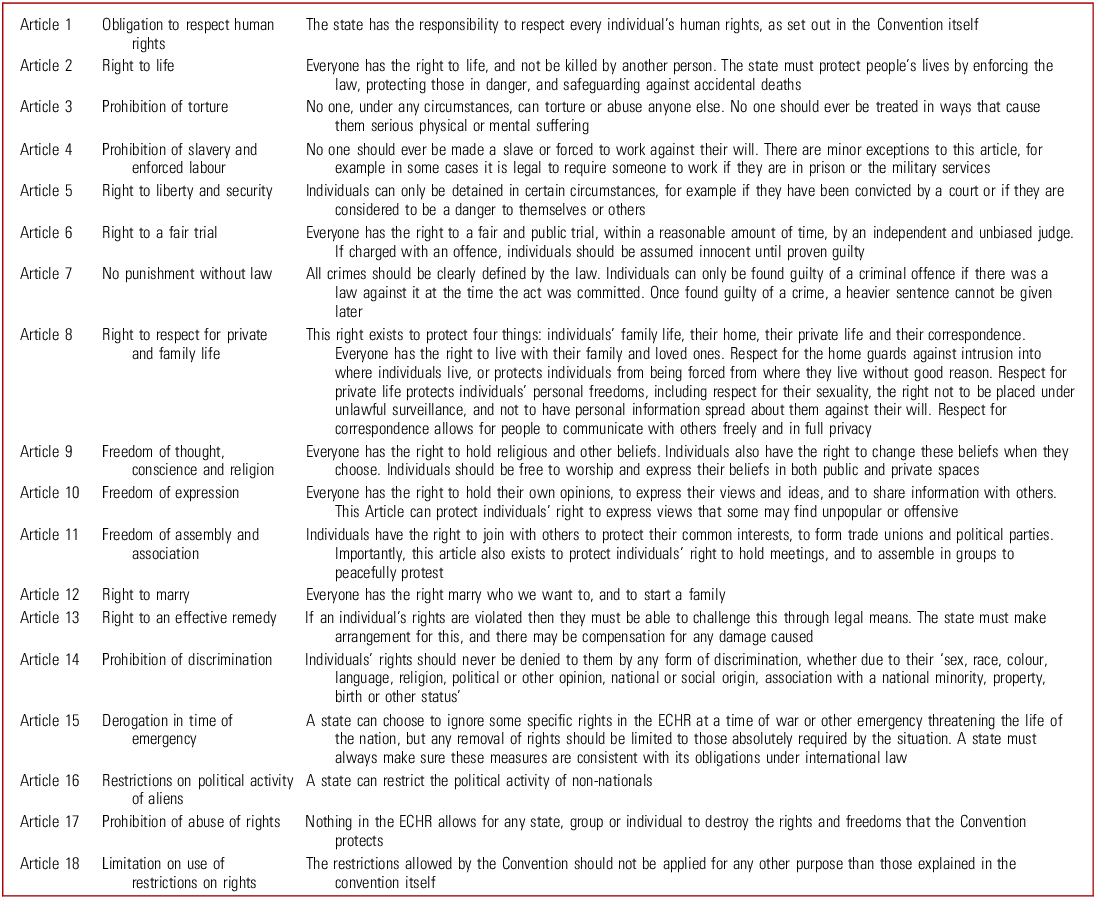
Human rights are the fundamental rights and freedoms that every person possesses, simply by virtue of being human, regardless of personal characteristics. The Universal Declaration of Human Rights (UDHR), adopted by the United Nations (UN) General Assembly in 1948, in the wake of the Second World War, recognises that all human beings are born free and equal, and outlines a range of fundamental rights that everyone is entitled to. It has subsequently been translated into law in various forms and has provided the basis for many more international human rights agreements (United Nations 2025). Despite its significance, the UDHR is not legally binding, even when ratified. In contrast, the European Convention on Human Rights (ECHR), adopted by the Council of Europe in 1950, which has similar aims to protect human rights, carries greater weight in terms of the law. Officially named the Convention for the Protection of Human Rights and Fundamental Freedoms, the ECHR was incorporated into UK law in the Human Rights Act 1998 (Kelly Reference Kelly2015). Table 1 summarises the Articles of the ECHR.
Summary of the Articles of the European Convention on Human Rights (ECHR)

Source: adapted from Amnesty International (2026).
The ECHR is the most influential human rights instrument in psychiatric practice in Europe, shaping policy and clinical practice. Over time, a body of case law has been developed, providing clarification on various issues, including processes regarding the involuntary detention and treatment of people with mental disorders. The Convention on the Rights of Persons with Disabilities (CRPD), adopted by the UN General Assembly in 2006, and ratified by the UK in 2009 but never incorporated into UK law, promotes the protection of the human rights of people with disabilities, including those with mental impairments (Szmukler Reference Szmukler, Daw and Callard2014; Kelly Reference Kelly2015). However, some mental health and capacity legislation appears inconsistent with the CRPD. For example, the CRPD states that disability should never justify deprivation of liberty – however, if people with mental disorders are considered to meet the definition of a person with a disability, then mental health legislation is in violation of the CRPD, as it permits involuntary detention in certain circumstances. When risks to life are present, these rights must be balanced against Article 2 of the ECHR, and interpretation of human rights principles must accommodate the complex realities of mental disorders and the limitations of mental healthcare (Szmukler Reference Szmukler, Daw and Callard2014). It thus stands to reason that in exceptional circumstances, temporary and proportionate limitations of legal capacity are not only ethically justifiable, but necessary, within the framework provided by ECHR, and therefore consistent with the CRPD – legal capacity is the capacity to be both a holder of rights and an actor under the law. Such a stance is consistent with views of psychiatrists around the world (Gill Reference Gill and Sartorious2024).
Human rights in the international context
Despite notable advances in the protection of human rights worldwide over the past 60 years, substantial challenges remain. The ratification of international human rights treaties, and the degree to which commitments are upheld, vary significantly between countries. Several Articles of the ECHR – in particular Articles 2, 3 and 8 – relate to health, including mental health, thus making access to mental healthcare a human rights issue. Despite this, treatment gaps ranging from 82 to 98% have been reported for common mental disorders globally. Significant inequalities persist in accessing mental healthcare, with even larger gaps among marginalised populations with fewer resources (Roberts Reference Roberts, Miguel Esponda and Torre2022).
Political factors also influence the human rights dilemmas faced by psychiatrists in clinical practice. Neoliberalism is an economic and political ideology that emphasises free market principles, deregulation and limited government intervention (British Medical Association 2022). Neoliberal approaches are often criticised for intensifying inequality (Chapman Reference Chapman2019). This article explores these in more detail, with neoliberal policies dominating the political landscape in the UK, from where this article is written. However, globally, authoritarian regimes are on the rise, with an estimated 70% of the global population currently living under non-democratic rule; such regimes are often associated with higher levels of human rights abuses (Lindberg Reference Lindberg2022). The death penalty – still retained in the law of 54 countries globally – violates Articles 2 and 3 of the ECHR. Amnesty International recorded 1518 executions in 2024 (Amnesty International 2024). Psychiatrists working in these countries may be involved in conducting mental health assessments and providing care to people on death row. The Death Penalty Project is a charity that provides support to individuals facing the death penalty, including input from psychiatrists (The Death Penalty Project 2025).
Human rights and mental health
The relationship between mental health and human rights is significant, complex and bidirectional. Human rights abuses can have a serious adverse effect on an individual’s mental health, and mental disorders can compromise an individual’s autonomy, consequently increasing their vulnerability to human rights violations – including within mental healthcare settings.
Human rights violations associated with psychiatric practice include stigma, discrimination, deprivation of liberty and coercive practices. Articles 3, 5 and 14 of the ECHR require particularly careful consideration in psychiatric practice. Psychiatrists frequently encounter complex ethical dilemmas involving the need to balance the safeguarding and rights of both patients and the wider public. Box 1 provides examples of human rights violations that can occur in psychiatric practice.
Examples of human rights violations within psychiatric practice, in relation to the European Convention on Human Rights (ECHR)
-
• Inadequate access to essential mental healthcare due to limited resources (Article 2, ECHR)
-
• Individuals’ cultural and spiritual beliefs being inaccurately determined by healthcare professionals to be pathological, leading to unnecessary admissions and treatment – this may occur because of inappropriate evaluation against the norms of the dominant culture, or because norms are inappropriately exported from one part of the world to another (Articles 9 and 14, ECHR)
-
• Restrictive and coercive practices in in-patient settings (Article 3, ECHR)
-
• Detention in facilities with security levels exceeding clinical need, owing to a lack of appropriate alternatives (Article 5, ECHR)
-
• Lack of informed consent to psychiatric admissions, leading to de facto detentions (Article 5, ECHR)
-
• Delayed discharges and institutionalisation of individuals with complex needs (e.g. individuals with intellectual disability and autism) due to insufficient community support (Article 5, ECHR)
-
• Individuals experiencing discrimination from healthcare professionals because of their psychiatric diagnoses (e.g. individuals with schizophrenia being detained for longer than the risks justify, and individuals with emotionally unstable personality disorder being denied access to appropriate mental healthcare) (Article 14, ECHR)
For healthcare to be compliant with human rights standards, it should follow the principles of fairness, respect, equality, dignity and autonomy, commonly referred to by the acronym FREDA, while providing support to make decisions when required (Curtice Reference Curtice and Exworthy2010). Given psychiatry’s historical legacy of institutional abuse and coercion, it is essential to embed a human rights-based approach into mental healthcare. Increasing awareness and understanding of this topic is vital to delivering the highest quality of care to patients (Scottish Human Rights Commission 2025).
In recent years there has been a shift towards community-based care, including the closure of in-patient psychiatric beds. However, an unintended consequence may be an inverse relationship between the number of psychiatric beds and the prison population – known as the Penrose hypothesis. The prison population is particularly vulnerable to human rights violations, including receiving inadequate mental healthcare (Becker Reference Becker, Hartwich and Haslam2021).
Human rights updates
The UN General Assembly adopted a resolution on mental health and psychosocial support (UN General Assembly 2023) that acknowledged that people with psychosocial disabilities often face stigma, social exclusion and discrimination, which can lead to human rights violations and abuses. It called on member states to implement legislation to eradicate discrimination, stigma and abuse. Furthermore, it recognised the role of psychiatry in not only delivering an appropriate standard of care, but also actively addressing stigma, discrimination, coercion, overmedicalisation and institutionalisation.
There has been growing momentum for mental health policies to adopt a person-centred, human rights-based and recovery-focused approach, in alignment with international human rights commitments such as the CRPD and the World Health Organization’s (WHO) Mental Health Action Plan for 2013–2030 (WHO 2021). Despite this, many countries still lack policies and strategic action plans that are fully aligned with these principles. All countries that have endorsed the action plan have committed to implementing national policies and plans, with a global target for 80% of countries to be compliant by 2030.
A recent British Medical Association (BMA) report examined contemporary threats to health and human rights globally (BMA 2022). The report focused on the challenges of neoliberalism and inequality, migration and ethnicity, climate change and environmental degradation, new media and the assault on medical expertise, and conflict. These intersecting issues were identified to be exacerbating existing inequalities, creating new challenges and affecting health outcomes. The report advocated for an international coordinated response to protect and promote human rights.
Human rights challenges
Mental health legislation
The WHO, in collaboration with the Office of the UN High Commissioner for Human Rights, has published guidance on mental health, human rights and legislation (WHO 2023). This document aims to ‘promote human rights in mental health’ and ‘proposes steps towards establishing mental health services that are respectful of human dignity’. The guidance asserts that legal capacity excludes any recognition of mental capacity and insists on its preservation at all times, including in crisis situations. Although this principle is rooted in the intention to respect patient autonomy, insisting that a person’s legal capacity must always be preserved is not a requirement of any binding international or regional human rights instrument. Further, this position can inhibit necessary and timely intervention in acute, potentially life-changing clinical scenarios. For example, a patient experiencing a severe manic episode, who poses an immediate risk to themselves or others, may lack the ability to process or retain crucial information relating to their care. In such situations, temporary and proportionate limitations of legal capacity might be ethically and clinically justified, as well as legitimate where there is statute that allows for this. Delaying intervention until full decision-making capacity is restored may lead to avoidable harm.
This issue is particularly acute when a patient’s impaired understanding compromises their decision-making ability. In such cases, intervention may be justifiable under Article 2 of the ECHR, provided such actions are strictly controlled, subject to rigorous oversight and reviewed regularly until the patient regains capacity. In fact, in certain cases withholding intervention can potentially violate Article 2. The cases of Savage v South Essex Partnership NHS Trust [2008], and Rabone v Pennine Care NHS Foundation Trust [2012] clarified that under Article 2, public authorities such as mental health services have an operational duty to prevent the suicide of vulnerable psychiatric patients in their care (Rahman Reference Rahman and Wolferstan2018).
The WHO report itself, in its examples of legislative language, reduces informed consent to the provision of information and voluntariness, without regard for mental capacity (WHO 2023). This interpretation undermines the concept of informed decision-making. A patient experiencing profound psychosis or a severe depressive episode may be unable to understand, use or weigh information relevant to treatment decisions. In such cases, true informed consent is not possible and cannot be presumed, regardless of whether the treatment is for mental or physical health conditions.
Legal frameworks such as the Mental Capacity Act 2005 (in England and Wales) and the Adults with Incapacity Act (Scotland) 2000 offer essential safeguards by recognising that there are circumstances where a person might not be capable of giving informed consent. In such situations, a legal framework should be put in place to require that decisions made on behalf of individuals who lack capacity are grounded in their known wishes, feelings, beliefs, values and best interests (The Law Society 2025).
The WHO and CRPD have advocated for fusion of mental health and capacity legislation, arguing that it promotes autonomy and parity of esteem, while reducing stigma towards individuals with mental disorders. This approach has been adopted by the Mental Capacity Act (Northern Ireland) 2016, but is yet to be fully implemented, therefore it is too early to evaluate the effect (Stavert Reference Stavert and McKay2025).
On the issue of coercion, the WHO guidance calls for mental health laws that exclude any recognition of compulsory treatment or coercion and adopt a zero-tolerance approach (WHO 2023). However, such an absolutist stance fails to address the complexities and urgent realities of acute psychiatric crises. Non-consensual hospital admissions and treatment can potentially violate various ECHR Articles when not proportionate and justified, and without adequate safeguards. Health professionals and police officers entering individuals’ homes without their consent – for example under Section 135 of the Mental Health Act 1983 for England and Wales (MHA 1983) – can violate ECHR Article 8. Thereafter, detention to hospital can violate Article 5. Furthermore, restrictions associated with detained admissions, including those on visiting and access to electronic devices, can lead to additional violations, including of Articles 8 and 10. Non-consensual psychiatric care, including rapid tranquillisation, physical and mechanical restraint and seclusion, can violate Article 3. The case of Munjaz v United Kingdom [2012] found that Colonel Munjaz’s prolonged seclusion had violated Articles 3 and 8 through a lack of adherence to the necessary safeguards, specifically a reduction in the frequency of medical reviews, in a departure from the MHA Code of Practice (Department of Health 2015). Adequate safeguards include the right of detained individuals to receive a fair hearing at mental health review tribunals, with legal representation, in accordance with Articles 5 and 6. At times, human rights violations can occur as a consequence of a lack of resources, but this is never an adequate justification for violations.
In the case of Spivak v Ukraine [2025], the European Court of Human Rights (ECtHR) in Strasbourg ruled that when individuals are subjected to non-consensual psychiatric admission and treatment it should be proportionate and justified, and there must be effective legal safeguards against arbitrariness and abuse by medical staff, including the opportunity to have the case reviewed in court, in order to adhere to Articles 3 and 5 of the ECHR. Mr Spivak had faced prolonged involuntary admission to a high-security psychiatric hospital and non-consensual treatment with antipsychotic medications for many years, and was prevented from attending court reviews. Although the ECtHR has recognised that in certain circumstances non-consensual treatment may be appropriate, this ruling demonstrates its intention to continue to scrutinise the frameworks around non-consensual treatment, and the application of those frameworks to individual cases.
The Mental Health Act 2025 (for England and Wales) received Royal Assent in December 2025 to reform the existing outdated mental health legislation. It will be implemented in phases over several years. The introduction of Section 35 from February 2026 allows a mental health review tribunal (officially known as a First-tier Tribunal (Mental Health)) or the Secretary of State for Justice to conditionally discharge restricted patients to the community, with conditions amounting to deprivation of liberty (DoL), when necessary to protect the public from serious harm (Section 35 of the MHA 2025). This provision has significant human rights implications. It effectively reverses the Supreme Court decision in Secretary of State for Justice v MM [2018], which found that mental health review tribunals could not impose conditions amounting to DoL. It is also in conflict with Articles 12 and 14 of the CRPD – equal recognition before the law, and liberty and security of individuals with disabilities, including those with mental disorders (UN Committee on the Rights of Persons with Disabilities 2014).
Neoliberalism and inequality
Although neoliberalism has been associated with economic growth and innovation, it has faced criticism for its impact on the environment, social welfare, inequality and public health. The International Covenant on Economic, Social and Cultural Rights is a UN treaty that enshrines rights relating to adequate food, housing, education, health, social security, water, work and participation in cultural life (World Health Organization, Office of the High Commissioner for Human Rights 2023). In a market-driven framework, access to essential resources such as food, housing, education and healthcare is not guaranteed, as no individual holds an inherent claim to them (Chapman Reference Chapman2019). This presents a conflict, as under international law, states have a duty to respect, protect and fulfil these rights, but neoliberal measures potentially hinder their realisation.
A WHO report on the social determinants of mental health (WHO 2014) found that common mental disorders such as anxiety and depression are influenced by social, economic and physical environments throughout the lifespan. Box 2 highlights examples of areas where neoliberalism and mental health intersect, which could potentially lead to discrimination.
Examples of areas where neoliberalism and mental health intersect, in relation to the European Convention on Human Rights (ECHR)
-
• A focus on economic growth has contributed to environmental degradation and climate change, disproportionately affecting vulnerable populations (Article 14, ECHR)
-
• The privatisation of essential healthcare services can limit access for marginalised and lower socioeconomic groups (Article 14, ECHR)
-
• Austerity measures often result in reduced funding for social services, leading to increased stress, anxiety and pressure on mental health systems, particularly through placement breakdowns, crises and higher rates of hospital admission (Articles 5 and 14, ECHR)
-
• Increased inequality can result from the emphasis on market-driven approaches, and can contribute to the commodification of mental health services, making them inaccessible to those experiencing socioeconomic disadvantage (Becker Reference Becker, Hartwich and Haslam2021) (Article 14, ECHR)
-
• The emphasis on individual responsibility and the pursuit of personal success can foster feelings of stress, guilt, shame and inadequacy when individuals experience mental disorders. This narrative may also lead to social isolation and weakened community support (Article 8, ECHR)
-
• Economic policies involving deregulation and cuts to public services have exacerbated job insecurity and income disparity, further contributing to mental distress (Article 14, ECHR)
-
• Certain populations experience higher rates of mental disorder and barriers to accessing mental healthcare, including survivors of sexual and gender-based violence, the LGBTQ+ community, people with disabilities, migrants, refugees, racial and ethnic minority groups and individuals experiencing homelessness (WHO 2025) (Article 14, ECHR)
In the UK, neoliberal policies have intensified pressure on the National Health Service through privatisation and funding reductions. Although privatisation may alleviate waiting lists, it risks widening health inequalities by limiting access for those unable to afford private care. Cuts to social care funding have also had a direct impact on mental health services, with reduced community support leading to increased reliance on in-patient care, crisis interventions and the use of restrictive practices (Cummins Reference Cummins2018). The COVID-19 pandemic exposed and exacerbated inequalities in healthcare. For example, some people with intellectual disabilities were not appropriately prioritised as part of the vaccination programme initially, contributing to higher death rates in this population (Disability Rights UK 2025).
Forced migration
When delivering mental healthcare to migrants in a politically hostile environment, practitioners need to be aware of the associated human rights challenges. In the UK in recent years, there have been frequent legislative changes, reflecting shifts in the political climate (Royal College of Psychiatrists 2024). Navigating these changes creates uncertainty for those seeking asylum, but also complicates the role of practitioners working with this population.
Accommodation for asylum seekers can adversely affect their mental health. They are often placed in hotels or quasi-detention facilities, such as repurposed army barracks, where physical and social isolation are common. These environments can re-traumatise individuals owing to their militarised and institutional appearance and atmosphere (Royal College of Psychiatrists 2024).
Immigration detention is an area of significant concern. Detention may occur during routine Home Office reporting or following immigration raids, and is often accompanied by intrusive measures such as electronic tagging. These practices can cause significant distress and feelings of dehumanisation, reinforce perceptions of criminalisation and violate human rights, including Articles 5, 6, 7, 8, 10 and 14 of the ECHR. The psychological harm caused by detention has been extensively documented (Royal College of Psychiatrists 2021).
Access to healthcare presents another challenge. Within the UK asylum system, individuals are typically only eligible for free primary and emergency healthcare, unless they can prove that they have a mental disorder caused by torture, female genital mutilation or sexual violence (Office for Health Improvement and Disparities 2014). Moreover, upfront payment is often required for secondary care, unless the treatment is classified as immediately necessary or urgent (Waterman Reference Waterman, Katona and Katona2020). This effectively excludes most asylum seekers from accessing specialist services, unless they are detained under mental health legislation. These restrictions apply in England and Northern Ireland, but not in Scotland and Wales, thus creating confusion for both practitioners and recipients.
Climate change
Climate change threatens various human rights – including Articles 2 and 8 of the ECHR. Exposure to climate change-related extremes can lead to diagnosable mental disorders, including post-traumatic stress disorder (PTSD), depression and suicide (Morgera Reference Morgera2024). Climate change has a disproportionate impact on the mental health of disadvantaged groups, including people with severe mental illness, those at the extremes of age, women, racial and ethnic minority groups, and economically marginalised groups – thereby compounding pre-existing mental health inequalities. Unfair social and economic systems, including legacies of colonialism and structural racism, as well as other discriminatory factors, such as sexism and ableism, influence vulnerability to the effects of climate change on mental health. Future research is required to clarify the mechanisms by which these disadvantaged groups are more vulnerable (Hayes Reference Hayes and Poland2018; Zhang Reference Zhang, Braithwaite and Bhavsar2021; Romanello Reference Romanello, Di Napoli and Drummond2022). It is the inequitable nature of the mental health effects of climate change that make it a human rights issue (Heinz Reference Heinz and Brandt2024).
In recent times, legal bodies such as the ECtHR have recognised the responsibility of individual states to reduce greenhouse gas emissions because of their health implications, including the effects on mental health. This has been apparent in rulings, including the landmark case of Verein KlimaSeniorinnen Schweiz and Others v Switzerland (2024) – the ECtHR found that Switzerland had violated Article 8 of the ECHR by failing to effectively protect individuals from the serious adverse effects of climate change on their lives, health, well-being and quality of life. This case established a precedent that states have a legal duty to act on climate change to protect public health.
New technology
Artificial intelligence (AI) depends on large data-sets to learn, and big data relies on AI to generate insights, creating a mutually reinforcing dynamic. A major concern is the lack of transparency, as individuals may be subject to decisions made by opaque algorithms (Zuboff Reference Zuboff2019). As AI algorithms continue to evolve and become more widely implemented, they reflect and reproduce historical and contemporary societal biases, replicating these distortions. In domains such as healthcare, these algorithms risk entrenching and amplifying existing inequities, and even violating Article 14 of the ECHR. For example, when an algorithm consistently misjudges health outcomes for a particular group – such as overestimating the likelihood of adverse health outcomes – it can lead to disproportionately negative consequences, including adverse mental health outcomes. These outcomes, in turn, feed back into the algorithm, perpetuating a cycle of inequity (Timmons Reference Timmons, Duong and Fiallo2023).
Formal regulation of AI remains limited, but increasing concerns over its unchecked use have prompted corporations, governments, international bodies, professional associations and human rights organisations to issue ethical guidelines. Although not legally binding, these initiatives are shaping a shared discourse and contributing to an emerging consensus on best practices (Fukuda-Parr Reference Fukuda-Parr and Gibbons2021).
Social media has become a prominent part of many people’s lives globally, including those with mental disorders. It can be used as a vehicle for sharing information, including that relating to health; this includes potentially life-saving information, as well as misinformation and disinformation, often manipulated by AI, that can cause harm. Social media users can face hostile interactions, which can have an adverse effect on their mental health and well-being, and platforms have been used to track and profile individuals, pressurise, groom or even traffic them: for example, online forums exist that promote suicidal behaviour among their members. There has been criticism of the lack of regulation of such platforms (UN High Commissioner for Refugees 2021).
Surveillance capitalism refers to a system in which technology companies treat human experience as free raw material for data extraction, which is then used to predict and influence behaviour for profit. This generally occurs without meaningful consent, and therefore can potentially violate Article 8 of the ECHR (Zuboff Reference Zuboff2019).
These issues raise concerns regarding the capacity of vulnerable groups, such as children and adolescents, and people with intellectual disabilities and mental disorders, to consent to engage with technology (Naslund Reference Naslund, Bondre and Torous2020). Safeguarding vulnerable populations from these risks is challenging and raises ethical dilemmas. Restrictions on access to electronic devices and the internet can lead to exclusion from online conversations and support groups, and can exacerbate inequalities and violate Articles 5 and 10 of the ECHR; therefore, any decision to restrict access for protection must be carefully weighed against the benefits that can be derived from it (UN High Commissioner for Refugees 2021). A judgment by the England and Wales Court of Protection, Re B (Capacity: Social Media: Care and Contact) [2019], found that Miss B, an individual with an intellectual disability, did not have capacity to use the internet and social media for the purpose of developing and maintaining connections with others. The judgment acknowledged that Miss B’s internet and social media use is protected by Articles 8 and 10 of the ECHR, and that any inference with these rights must be justified and proportionate, without being unduly restrictive.
Violent conflict
In recent years, there has been an increase in global conflict. Current conflicts include the Russia–Ukraine war, Israeli–Palestinian conflict and civil wars in Myanmar and Sudan, among many others. Conflict has wide-ranging adverse consequences, with a conservative estimate of over 240 000 fatalities globally having arisen from conflict between 1 December 2024 and 28 November 2025 (Armed Conflict Location & Event Data 2026). Meanwhile, the World Bank estimates that food insecurity due to conflict nearly doubled between 2018 and 2023. Severe conflicts are also estimated to lower gross domestic product (GDP) per capita by 15% over 5 years. Low-income countries (LICs) are disproportionately affected, with conflict affecting the majority of LICs (World Bank Group 2025). Contemporary conflicts are becoming increasingly complex and protracted, with increased participation of non-state armed groups, including criminal gangs and terrorists. Conflict is also increasingly playing out in urban areas, which is associated with increased risk to civilians (BMA 2022).
In conflict zones individuals are often deprived of their basic human rights. For conflicts in Europe, this can lead to violations of Articles 8, 9 and 10 of the ECHR, as well as exposure to abuses that can amount to violations of Articles 2 and 3. People with mental disorders are particularly vulnerable to violations – for example individuals with disabilities are at increased risk of injury or death during armed conflict, either as targets or through inability to protect themselves (Ruminowicz Reference Ruminowicz2022).
Rates of mental disorders are higher in conflict-affected areas, including depression, anxiety, PTSD, bipolar disorder and schizophrenia (Charlson Reference Charlson, van Ommeren and Flaxman2019). Estimates of years lived with disability per 1000 people for depression and PTSD in such regions are five times greater than the global mean burden of disease estimates. Military personnel exposed to active combat are at particular risk of mental disorders, including PTSD and complex PTSD, often exacerbated by moral injury (Williamson Reference Williamson, Murphy and Stevelink2021); global prevalence rates indicate that 23% of active personnel experience depression, and 11% report suicidal ideas or behaviour (Moradi Reference Moradi, Dowran and Sepandi2021). Longitudinal research in the UK has revealed that the prevalence rates of mental disorders increase further after leaving the military (Stevenlink Reference Stevenlink, Jones and Hull2018).
Individuals in conflict-affected areas face many barriers to accessing available mental healthcare. Conflict often results in the polarisation of values between opposing groups and the dehumanisation of adversaries. In such contexts, stigma and discrimination can be particularly pronounced, especially for ex-combatants, whose roles during conflict may hinder their access to mental healthcare. Another significant barrier to effective mental health treatment for military veterans is the lack of understanding of military culture among practitioners. Veterans often comment that their experiences are misunderstood by treating practitioners, leading to misdiagnosis and ineffective treatments (Treichler Reference Treichler, Reznik and Oakes2023).
Rehabilitation plays an important role in achieving lasting post-conflict stability, and the provision of evidence-based culturally and trauma-informed mental healthcare is an essential part of this process, including adhering to the ‘4 Rs’ principles (realising, recognising and responding to the impact of trauma, while resisting re-traumatisation) (BMA 2022; NHS England 2025).
What can psychiatrists do?
Psychiatrists are well-positioned to contribute to the safeguarding and promotion of human rights. Various practical steps can be taken to address human rights issues, examples of which are given in Box 3. Psychiatrists should start by ensuring that their own knowledge relating to human rights is adequate and up-to-date. A list of the most relevant articles on human rights published in BJPsych Advances since Kelly’s article (Reference Kelly2015) is provided in Box 4 to help readers to do this. Other contributions include delivering teaching and training, conducting research, adopting a human rights-based approach to delivering mental healthcare that is evidence-based and culturally and trauma-informed, identifying, documenting, addressing and reporting human rights violations, and advocacy and lobbying.
Practical contributions that psychiatrists can make to address human rights issues
Mental health legislation
-
• Engage with education on the human rights implications of coercive practice and strategies to reduce their use
-
• Employ coercive practices only when they are justifiable, proportionate and time-limited, and after all other alternatives have been exhausted
-
• Ensure adequate safeguards regarding the use of mental health legislation, including regular multidisciplinary reviews, an appeals process and independent oversight
Neoliberalism and inequality
-
• Deliver care that addresses factors contributing to the development of mental disorders, including socioeconomic factors
-
• Improve joint working and communication across health and social care services
-
• Support community-based mental health initiatives that prioritise prevention and early intervention
-
• Promote development and expansion of psychosocial interventions, including support groups, to manage the consequences of environmental, economic and social adversity
-
• Advocate for increased funding for mental health services, particularly in areas with greater socioeconomic deprivation
-
• Advocate for policies that promote social and economic equality, including equitable access to mental healthcare
Forced migration
-
• Engage in education on the delivery of mental healthcare for individuals in immigration removal centres (IRCs), including on up-to-date immigration legislation
-
• Provide adequate support for psychiatrists working in IRCs
-
• Provide Home Office reports for asylum seekers, refugees and irregular migrants
-
• Advocate for policies and legislation that promote equitable treatment of irregular migrants, including access to mental healthcare
Climate change
-
• Engage in research on climate change and mental health, including the construct of climate-related anxiety (in collaboration with researchers from the Global South)
-
• Raise awareness regarding the effects of climate change on mental health
-
• Advocate for the inclusion of mental health and human rights in climate legislation
-
• Provide expert testimony in court to support the protection of public mental health and human rights from climate change
-
• Promote environmentally sustainable practices and lobby for legislation on them
New technology
-
• Engage in research on the effects of new technology on mental health
-
• Develop processes to ensure the use of artificial intelligence (AI) in mental health is adequately evaluated before and after its introduction, including being human rights compliant
-
• Advocate for legislation to adequately regulate AI in mental healthcare
-
• Advocate to minimise the digital divide globally, including the application of AI in mental healthcare
Violent conflict
-
• Engage in research and education on mental health outcomes and evidenced-based care for individuals affected by conflict, including military personnel and veterans
-
• Expand access to specialist mental healthcare for individuals affected by conflict
-
• Deliver evidence-based mental healthcare for individuals affected by conflict, in both conflict-affected regions and host countries supporting asylum seekers and refugees
General
-
• Engage in research on human rights-related issues
-
• Engage in education on human rights-related issues, including ensuring adequate coverage in medical school and psychiatry curricula
-
• Adopt a human rights-based approach to delivering mental healthcare, which is evidence-based, culturally competent and trauma-informed
-
• Raise awareness regarding human rights and advocate for their protection and promotion
-
• Identify, document, address and report human rights violations, including involving health service legal departments when necessary
-
• Advocate for the appointment of a health service human rights lead
Although individuals can be prosecuted for human rights violations, states and large corporations often face minimal or no consequences for their violations. The International Criminal Court (ICC), based in the Hague in The Netherlands, investigates war crimes, with potential outcomes including conviction, sentencing and reparations for victims. However, the ICC relies on member states to arrest and transfer suspects to it, which many states are reluctant to do. The UN has called for the strengthening of the law and accountability for human rights violations (BMA 2022). Seeking justice for human rights violations often requires legal representation, which generally comes at a cost – this can lead to the unequal protection of individuals’ human rights according to their financial status. An important role for psychiatrists is in identifying, addressing and reporting human rights violations – this may involve mobilising the support of legal departments within health services. Some health trusts in the UK have a human rights lead who can also support this process.
Conclusion
This article has outlined some of the pressing issues at the interface between mental health and human rights. These issues do not exist in isolation – many of them are interconnected, and in combination can serve to compound the associated challenges. For example, climate change can precipitate the forced displacement of people, which in turn may contribute to the emergence or intensification of violent conflict, and further population movement. Simultaneously, AI algorithms can increase societal biases, reinforcing divisions and amplifying inequalities in society. Box 5 gives a fictitious case vignette that includes some of the human rights issues that psychiatrists can encounter in clinical practice, and the Articles of the ECHR that they relate to.
Some BJPsych Advances articles on human rights
-
• Duffy RM, Kelly BD (Reference Kelly2015) Psychiatric assessment and treatment of survivors of torture. BJPsych Advances, 21(2): 106–15.
-
• Kelly BD (Reference Kelly2015) Best interests, mental capacity legislation and the UN Convention on the Rights of Persons with Disabilities. BJPsych Advances, 21(3): 188–95.
-
• Brindle N (2015) The Supreme Court and deprivation of liberty: where are we now? BJPsych Advances, 21(6): 417–24.
-
• Rugkåsa J, Burns T (2017) Community treatment orders: are they useful? BJPsych Advances, 23(4): 222–30.
-
• Murray BJ (2017) Mental capacity: different models and their controversies. BJPsych Advances, 23(6): 366–74.
-
• Le Gallez I, Rix KJB, Choong, KA, et al (2018) Sexual rights, mental disorder and intellectual disability: principles and law. BJPsych Advances, 24(5): 334–45.
-
• Ramesh Y, Kripalani M (2021) Section 136: the ‘grey zone’ after the 24-h validity period lapses. BJPsych Advances, 27(1): 62–4.
-
• Carroll A, McSherry B (2021) Risk management in the era of recovery and rights. BJPsych Advances, 27(6): 394–404.
-
• O’Donovan D, Boland C, Carballedo A (2023) Current trends in restrictive interventions in psychiatry: a European perspective. BJPsych Advances, 29(4): 274–82.
-
• Beale C, Lee-Davey J, Lee T, et al (2024) Mental capacity in practice part 1: how do we really assess capacity? BJPsych Advances, 30(1): 2–10.
-
• Beale C, Lee-Davey J, Lee T, et al (2024) Mental capacity in practice part 2: capacity and the suicidal patient. BJPsych Advances, 30(1): 11–20.
-
• Hallett N (2024) Assessing mental capacity: tensions, values and duties. BJPsych Advances, 30(1): 21–3.
-
• Parsons D (2024) Traumatised and on TikTok: from inside the psych ward. BJPsych Advances, 30(1): 24–6.
-
• Hawkins T, Curtice M, Adams, T (2024) Consent in minors: the differential treatment of acceptance and refusal. Part 1 Autonomy and children’s rights. BJPsych Advances, 30(3): 168–76.
-
• Hawkins T, Curtice M (2024) Consent in minors: the differential treatment of acceptance and refusal. Part 2 Minors’ decision-making and the reach of their capacity. BJPsych Advances, 30(3): 177–88.
-
• Dosani S (2024) The language and landscape of the law in relation to consent in minors. BJPsych Advances, 30(3): 189–91.
-
• Galappathie N (2024) Psychiatric evidence in UK immigration and asylum cases. BJPsych Advances, 30(6): 414–21.
-
• Curtice M (2025) The interface between the Mental Health Act and Mental Capacity Act: physical health treatment. BJPsych Advances, 31(1): 53–61.
-
• Cave J, Ruck Keene A, Lowe M (2025) Deprivation of liberty in hospital: the MHA versus DoLS dilemma. BJPsych Advances, 31(2): 103–12.
-
• Cant T, Manchester R (2025) A suitable manner? Seven key elements of a dialogical approach to the Mental Health Act Assessment. BJPsych Advances, 31(5): 290–8.
-
• Carthy E, Thompson B, Rutherford J, et al (2025) Giving medical evidence to the First-tier Tribunal (Mental Health). BJPsych Advances [Epub ahead of print] 11 Jul 2025]. Available from: https://doi.org/10.1192/bja.2025.10111.
Case vignette: human rights legislation in relation of an asylum seeker under the Mental Health Act 1983
Read this fictitious case vignette and identify which Articles of the European Convention on Human Rights (ECHR) should be considered as part of this patient’s care.
A.B. presents with a relapse of paranoid schizophrenia. She is from Syria and seeking asylum in the UK after having been forced to migrate owing to a combination of climate change and conflict-related factors. Her relapse has likely been precipitated in part by difficulty accessing mental healthcare because of her immigration status, and therefore having discontinued the antipsychotic medication that she was prescribed in Syria. She presents as aggressive and has been making threats on social media to kill others, based on persecutory delusions and auditory hallucinations that she is experiencing. She declined an informal admission to a psychiatric unit and therefore is admitted detained under the Mental Health Act 1983 (MHA) owing to the risks associated with her mental state.
On admission, the multidisciplinary team decide that it is proportionate to restrict A.B.’s use of her mobile phone because of the risks to her safety and dignity, after balancing this against the support that she receives from her friends and family via her phone. There is an episode in which A.B. is aggressive towards another patient: staff are unable to manage it using de-escalation techniques and rapid tranquillisation, and a multidisciplinary decision is taken that it is proportionate to transfer her to the psychiatric intensive care unit (PICU) to minimise the risk of violence towards others. A.B. appeals her detention under the MHA. The mental health review tribunal panel decide to uphold her detention because of the ongoing risks associated with her mental state.
Having refused oral antipsychotic medication for the first fortnight of her admission, A.B. remains acutely psychotic. A multidisciplinary decision is taken that it is proportionate to treat her with intramuscular antipsychotic medication without her consent, to minimise the risks associated with her mental state. A.B.’s mental state starts to improve, and she begins to consent to take oral antipsychotics. As her mental state continues to improve, it is felt that she no longer requires admission to the PICU, and she is transferred to an open psychiatric ward and it is decided that she can now use her phone freely. Shortly after this it is felt that A.B. no longer meets the grounds for detention under the MHA: she is regraded as an informal patient and agrees to remain voluntarily while discharge planning is carried out. A.B. is discharged to asylum accommodation and staff help her to register with a local general practitioner.
The ECHR Articles that relate to this case are Articles 2, 3, 5, 6, 8, 10 and 14.
It is also important to acknowledge that certain populations, owing to a complex interplay of characteristics, life circumstances and unmet needs, require tailored support in relation to their mental health and human rights. These include, but are not limited to: children and adolescents, older adults, women, survivors of sexual and gender-based violence, the LGBTQ+ community, people with disabilities, migrants, refugees, survivors of human trafficking, racial and ethnic minority groups, indigenous populations, serving and ex-serving military personnel, individuals experiencing homelessness, and people in detention, including those in prison (WHO 2025). Psychiatrists need to remain mindful of human rights violations within these vulnerable groups.
Grappling with these human rights challenges has the potential to place significant emotional and ethical strain on psychiatrists, including risk of moral injury, as they navigate these complex problems, often with inadequate resources and support. It is therefore essential to prioritise establishing support mechanisms such as appropriate training, supervision and opportunities for reflective practice.
Despite the scale and complexity of the challenges, there remains reason for optimism. While recognising the work that remains, it is equally important to acknowledge the progress that has already been made. Psychiatric practice has evolved significantly from its history of widespread institutionalisation and abuse in asylums, which continued well into the 20th century, and there is reason to be hopeful that this evolution can continue. We argue that by stakeholders at individual, organisational, national and international levels taking some of the actions proposed in this article, including engaging with education and adopting a human rights-based approach to care, it is realistic that psychiatrists can take the lead in advancing mental health-related human rights.
MCQs
Select the single best option for each question stem
-
1 Which of the following is the international human rights instrument most relevant to psychiatric practice in the UK?
-
a Universal Declaration of Human Rights (UDHR)
-
b Convention on the Rights of Persons with Disabilities (CRPD)
-
c International Covenant on Civil and Political Rights (ICCPR)
-
d International Covenant on Economic, Social and Cultural Rights (ICESCR)
-
e European Convention on Human Rights (ECHR).
-
-
2 The CRPD states that disability should never justify deprivation of liberty. Why does this create tension with mental health legislation in the UK?
-
a The UK has not ratified the CRPD
-
b Mental health legislation in the UK permits involuntary detention
-
c People with mental disorders do not meet the definition of a person with a disability under the CRPD
-
d The CRPD prioritises physical health over mental health
-
e The CRPD states that disability can justify treatment without consent, but not involuntary detention.
-
-
3 In Spivak v Ukraine [2025], the European Court of Human Rights ruled that:
-
a Compulsory psychiatric treatment is always unlawful
-
b Non-consensual psychiatric admission must be proportionate, justified and legally safeguarded
-
c Patients cannot appeal non-consensual treatment
-
d Psychiatric detention is exempt from ECHR protections
-
e Compulsory psychiatric admission can only be delivered following a court ruling.
-
-
4 What is ‘surveillance capitalism’ as described in the article?
-
a Technology companies using human experience as raw material for data extraction
-
b Psychiatric monitoring of high-risk populations
-
c Government monitoring of people with mental disorders
-
d UN oversight of digital human rights violations
-
e Psychiatric monitoring of patients during involuntary detention.
-
-
5 According to the article, which of the following is a key responsibility of psychiatrists when coercive practices are used?
-
a To ensure that patient’s relatives agree to their use
-
b To avoid coercive practices under all circumstances
-
c To apply them only when all alternatives are exhausted, with oversight and reviews
-
d To apply them indefinitely in the patient’s best interests
-
e To prioritise public safety over the patient’s rights.
-
MCQ answers
-
1 e
-
2 b
-
3 b
-
4 a
-
5 c
Author contributions
F.M. was author of the sections on violent conflict and what psychiatrists can do, the case vignette and the conclusion, co-author of the introduction and the section on new technology, and compiled, edited and proofread the article. N.B. was author of the section on neoliberalism and inequality, co-author of the introduction and section on new technology, and proofread the article. S.S.R. was primary author of the section on new technology, and wrote the MCQs and compiled the reference list. A.F. developed core ideas, and framed, re-wrote and edited the draft article. P.S. was author of the sections on mental health legislation, forced migration and climate change, and oversaw, edited and proofread the article. D.M. provided writing support for the section on violent conflict.
Funding
This research received no specific grant from any funding agency, commercial or not-for-profit sectors.
Declaration of interest
P.S. is Chair and F.M., N.B. A.F. and D.M. are members of the Royal College of Psychiatrists’ Special Committee on Human Rights. This is a voluntary role with no financial renumeration.



eLetters
No eLetters have been published for this article.