Introduction
The pea leafminer, Chromatomyia horticola (Goureau) (Diptera: Agromyzidae) is a polyphagous pest inflicting severe damage to different crops, especially peas, crucifers, onion and some ornamentals (Bhagat et al., Reference Bhagat, Masoodi, Bhat and Koul1989; Ostrauskas et al., Reference Ostrauskas, Pakalniskis and Taluntyte2005; Fathi, Reference Fathi2011). It is one of the most regular and serious pests of peas capable of causing up to 89.6% leaf infestation (Sharma et al., Reference Sharma, Saini and Kumar2014). Such a high leaf infestation could result in heavy yield losses, because more than 20% avoidable yield losses in peas have been reported when leaf infestation exceeds 40% (Mehta et al., Reference Mehta, Sood and Chandel1994). Larval feeding impairs photosynthesis ultimately reducing the flowering and pod bearing capacity of the plant (Wei et al., Reference Wei, Zou, Kuang and He2000). Besides impairing photosynthesis, the leafminer transmits plant pathogens (Capinera, Reference Capinera2008). This pest has a wide host range, high fecundity, quick developmental rate and high survival rate (Mizukoshi and Togawa, Reference Mizukoshi and Togawa1999; Ye et al., Reference Ye, Zhu, Yefremova, Liu, Guo and Wan2018). As a result, it presents a serious menace to pea cultivation. Generally, farmers rely on the application of systemic insecticides to control this pest. Nonetheless, indiscriminate use of chemical pesticides leads to many environmental consequences like pest resurgence, secondary pest outbreaks, insecticide resistance, elimination of beneficials from the ecosystem and pesticide residues. Hence, it is important to develop sustainable, cost effective and eco-friendly management tactics for this pest. Biological control based on the use of parasitoid can be a viable option (van Lenteren, Reference van Lenteren2012).
In nature, several parasitoids attack this pest and contribute significantly to reduce its population. Diglyphus (Eulophidae) is an economically important genus of solitary ectoparasitoids of agromyzid leafminers (Liu et al., Reference Liu, Wang, Wang, Zhang and Wan2013), with a rich diversity and worldwide distribution (Hansson and Navone, Reference Hansson and Navone2017). However, the ecological adaptability, biocontrol potential and application practices of Diglyphus species have mainly been studied for Diglyphus isaea (Walker) and to a lesser extent for Diglyphus begini (Ashmead) and Diglyphus intermedius (Girault) (Liu et al., Reference Liu, Wang, Wang, Zhang and Wan2013; Zhang et al., Reference Zhang, Lu, Liu, Wang and Wan2014). There has been a very limited research on biology and bio-control potential of other species of the genus, even though they are dominant in occurrence. The female adult wasps of Diglyphus species show three types of host-killing behaviour, viz. reproductive parasitization (parasitism), non-reproductive host-killing by feeding (host-feeding), and host stinging without oviposition or feeding (host-stinging). These non-reproductive host-killing behaviours (host-feeding and host-stinging) significantly increase their biocontrol potential (Kaspi et al., Reference Kaspi, Yuval and Parrella2011; Zhang et al., Reference Zhang, Liu, Wang, Wan and Li2011; Liu et al., Reference Liu, Wang, Zhang, Lu, Wang and Wan2015; Xuan et al., Reference Xuan, Liu, Zhang, Cheng, Guo and Wan2018). For such species it is important to quantify the host-killing by each mode to evaluate the actual biocontrol potential of the species (Bernardo et al., Reference Bernardo, Pedata and Viggiani2006; Liu et al., Reference Liu, Wang, Zhang, Lu, Wang and Wan2015; Cheng et al., Reference Cheng, Cao, Zhang, Guo, Wan and Liu2017). Diglyphus horticola Khan is considered as one of the most common parasitoid of C. horticola infesting peas in India (Purwar et al., Reference Purwar, Mall and Mittal2003; Khan et al., Reference Khan, Agnihotri and Sushil2005; Bhat and Bhagat, Reference Bhat and Bhagat2010; Mahendran and Agnihotri, Reference Mahendran and Agnihotri2013; Kumar and Sharma, Reference Kumar and Sharma2016). However, the information on its demographics and pest-kill potential is lacking. The present study was, therefore, carried out to generate information of the demographics parameters and pest-kill potential of D. horticola on C. horticola.
Materials and methods
Insect cultures
Chromatomyia horticola
The stock culture of C. horticola was held in the laboratory by collecting infested pea leaves in the field at the experimental farm of the Department of Entomology, Dr YS Parmar University of Horticulture and Forestry, Solan (HP) India (30.85°N; 77.16°E). The infested leaves were kept in plastic jars (1 litre capacity) for adult emergence. The newly emerged adults were shifted to insect rearing cages (45 × 45 × 45 cm) fitted with glass on three sides and nylon net (400 μm) on the front and provided with 30% honey solution (in cotton swabs) as food and potted pea plants as a substrate for oviposition. The exhausted plants were replaced with healthy ones periodically to ensure a continuous supply of insects for experiments. The insect colonies and the experiments were held at 25 ± 0.5°C, 70 ± 5% RH and 14L: 10D photoperiod.
Diglyphus horticola
The stock culture of D. horticola was initiated from parasitoid reared from the leafminer-infested pea leaves collected in the same field where C. horticola was collected. The collected leaves were kept in rearing jars (1 litre capacity) for the emergence of the parasitoid adults in the laobratory. The parasitoid was identified using keys given by Khan (Reference Khan1985) and Khan et al. (Reference Khan, Agnihotri and Sushil2005). A colony of the parasitoid wasps thus obtained was offered with C. horticola larvae for parasitism and 30% honey for feeding in the insect rearing cages. The environmental conditions used for maintaining the parasitoid culture were the same as described earlier. The parasitoid was reared for one generation before using in the experiments.
Developmental biology of D. horticola
Diglyphus spp, generally prefer to parasitize second and third instar host larvae. We, therefore, studied the developmental biology of D. horticola on 3- (≈ second instar) and 5-days old (≈ third instar) larvae of C. horticola. A colony of either 3- or 5-days old C. horticola larvae in pea leaves was exposed to a single pair of 24 h old adults of D. horticola in a plastic jar (1 litre) for parasitism for 24 h. Each set was replicated ten times. After 24 h, these larvae were observed under a stereo microscope to segregate the parasitized larvae from the host-fed, host-stung and healthy ones (Cheng et al., Reference Cheng, Cao, Zhang, Guo, Wan and Liu2017). The shrunk and mutilated larvae were considered as host-fed and those alive and feeding normally as healthy. The host-stung larvae were dead without any shrinkage or associated parasitoid egg or larva having dark area around stinging hole. A cohort of 20 parasitized larvae were separated and kept in glass tubes (150 × 25 mm) for adult emergence. Newly emerged adults were sexed (Khan, Reference Khan1985; Khan et al., Reference Khan, Agnihotri and Sushil2005) and each pair was offered with honey droplets and host larvae ad libitum for oviposition and/or feeding/stinging. After 24 h, the old batch of larvae was replaced with the new one and the process was continued until all the parasitoid died. Observations on the duration of egg to adult development, adult longevity, percentage of parasitism, host-feeding, host-stinging, sex ratio and fecundity were recorded.
Population growth parameters
Population growth parameters were studied by constructing fertility life tables. Data on age-stage specific survival and fecundity were analysed by using computer program TWOSEX-MSChart (Chi, Reference Chi2015; Hafeez et al., Reference Hafeez, Liu, Jan, Gulzar, Fernandez, Qasim, Khan, Ali, Kedir and Fahad2019). The detailed procedure is as under:
-
X = Age of individuals in days (pivotal age)
-
lx = Proportion of individuals still alive at age X (survival value)
-
mx = Number of female off-springs produced per female at the age X (fecundity rate)
By using the above variables, the following population growth parameters were calculated:


Host-kill parameters
Host-kill parameters of D. horticola on C. horticola were calculated by using data on age specific survival and daily host-kill rate (parasitism, host-feeding or host-stinging) using the computer program CONSUME-MS Chart (Chi, Reference Chi2020) by using following variables:
-
X = Age of individuals in days (pivotal age)
-
lx = Proportion of individuals still alive at age X (survival value)
-
kx = Number of hosts killed at the age X (kill rate)
By using the above variables, following host kill parameters were calculated:
The age-specific consumption (host-feeding/parasitism/host-stinging) rate (kx) represents the number of hosts killed by the parasitoid individuals at age x and was calculated according to the following equation:

where cxj is the age-stage-specific host-killing (host-feeding/parasitism/host-stinging) rate of individuals at age x and life stage j, whereas sxj is the age-stage-specific survival rate of individuals at age x and stage j. When the age-specific survival rate (lx), which is the number of individuals surviving to age x, was taken into consideration, the net age-specific host-killing (host-feeding/parasitism/host-stinging) rate (qx) was calculated as follows:

The cumulative host-killing (host-feeding/parasitism/host-stinging) rate (Cx) is defined as the number of hosts killed by a parasitoid from birth to age x and it was calculated as follows:


The net total host-killing rate (K O) represents the total number of three host-killing events during one generation of the wasps. It was calculated as:

The stable host-killing (host-feeding/parasitism/host-stinging) rate (ψ) represents the proportion of individuals belonging to age x and stage j in a stable age-stage distribution (ɑxj)

To assess the host-killing (host-feeding/parasitism/host-stinging) potential, the finite host-killing (host-feeding/parasitism/host-stinging) rate (ω) was calculated as follows:

The transformation rate from host population to parasitoid offspring (Q P) is the mean number of hosts a parasitoid needs to kill to produce one offspring. It was calculated as:

The true kill rate (km) is the actual rate of host kill by a parasitoid per unit of time and was calculated by solving the equation,

Results
Developmental biology
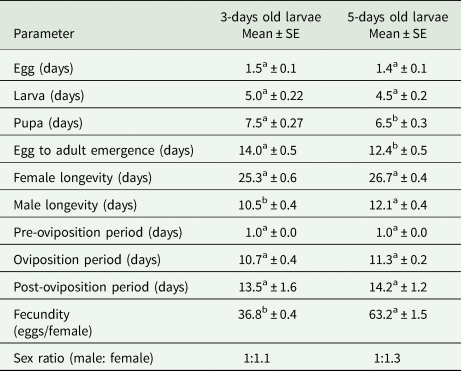
Developmental biology of D. horticola was studied on three (≈ second instar) and five (≈ third instar) days old larvae of C. horticola. The pre-adult (especially pupal) development of the parasitoid was faster, adults lived longer and females were more fecund when reared on 5-days old host larvae compared to when reared on the 3-days old (table 1). Females lived longer than males irrespective of which host stage was parasitized. However, the pre-oviposition, oviposition and post-oviposition periods of the parasitoid did not differ significantly between the two host stages (table 1). Sex ratio was female-biased in each case, however, the proportion of females was higher on the 5-days old host larvae than on the 3-days old.
Biological parameters of D. horticola on 3- and 5-days old C. horticola larvae reared on pea

Mean values in a row superscripted with the same letter do not differ significantly at P = 0.05.
Population growth parameters
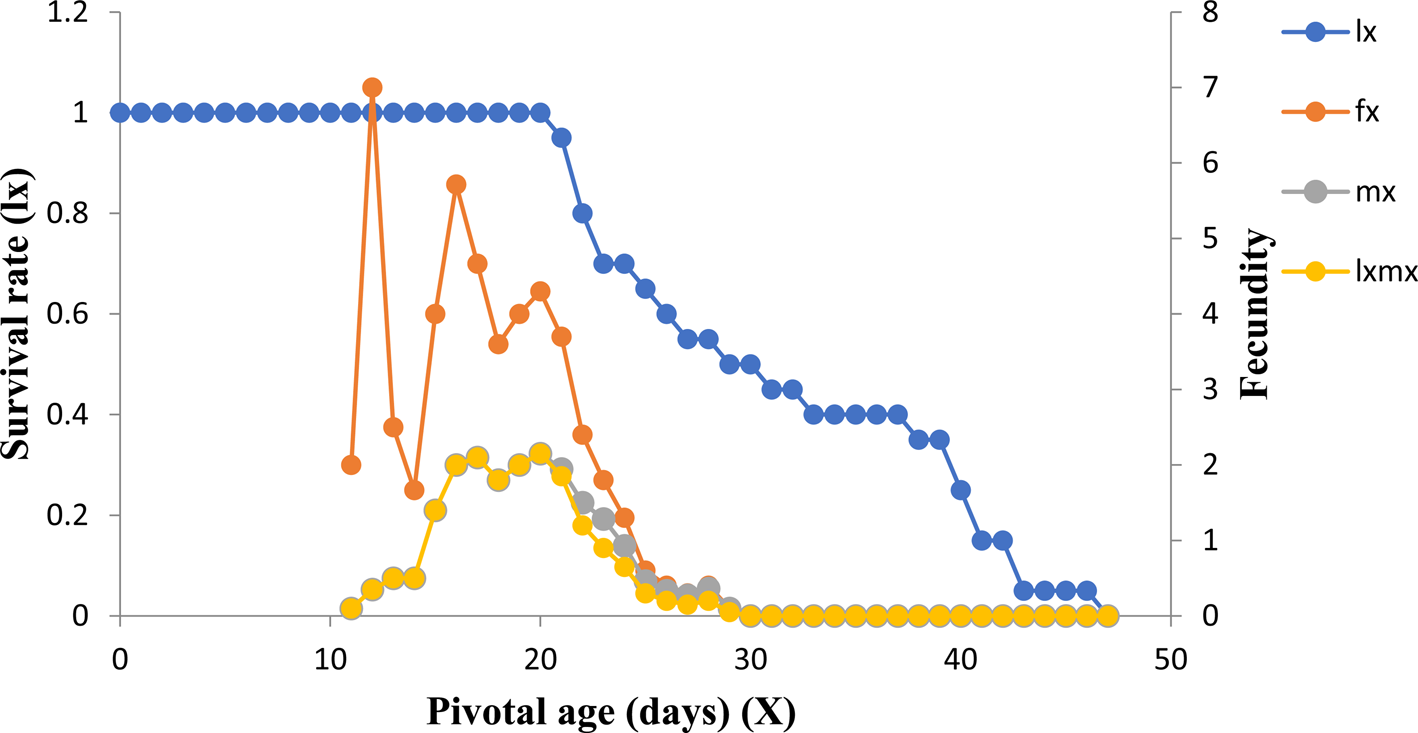
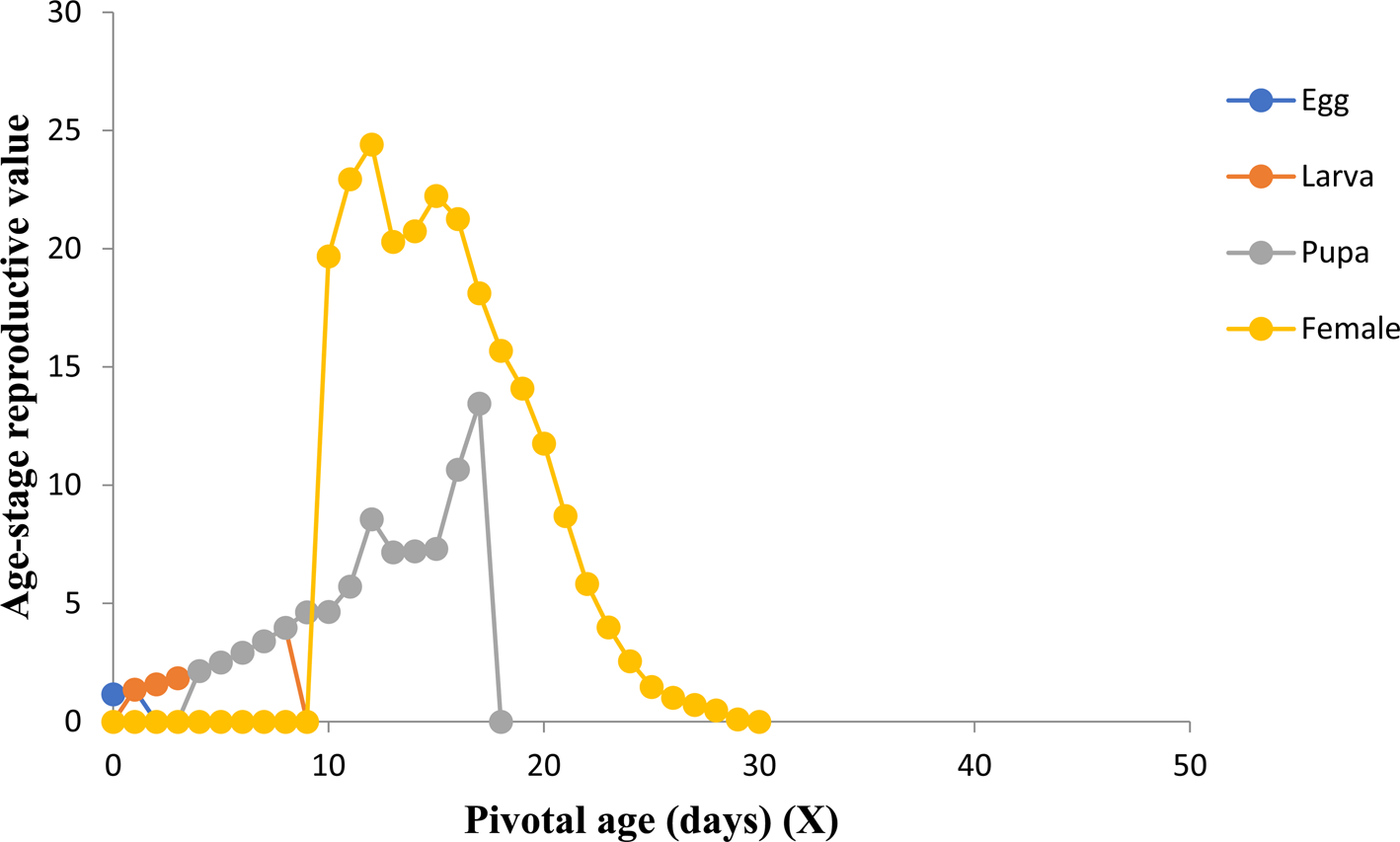
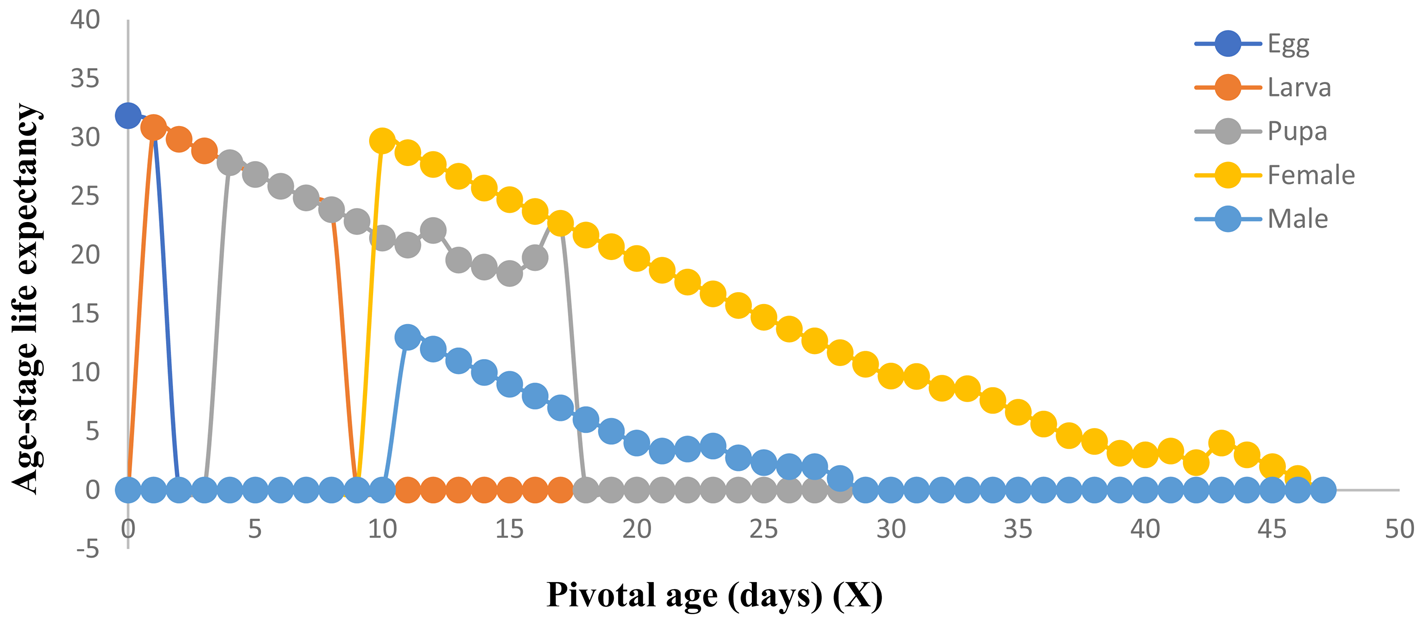
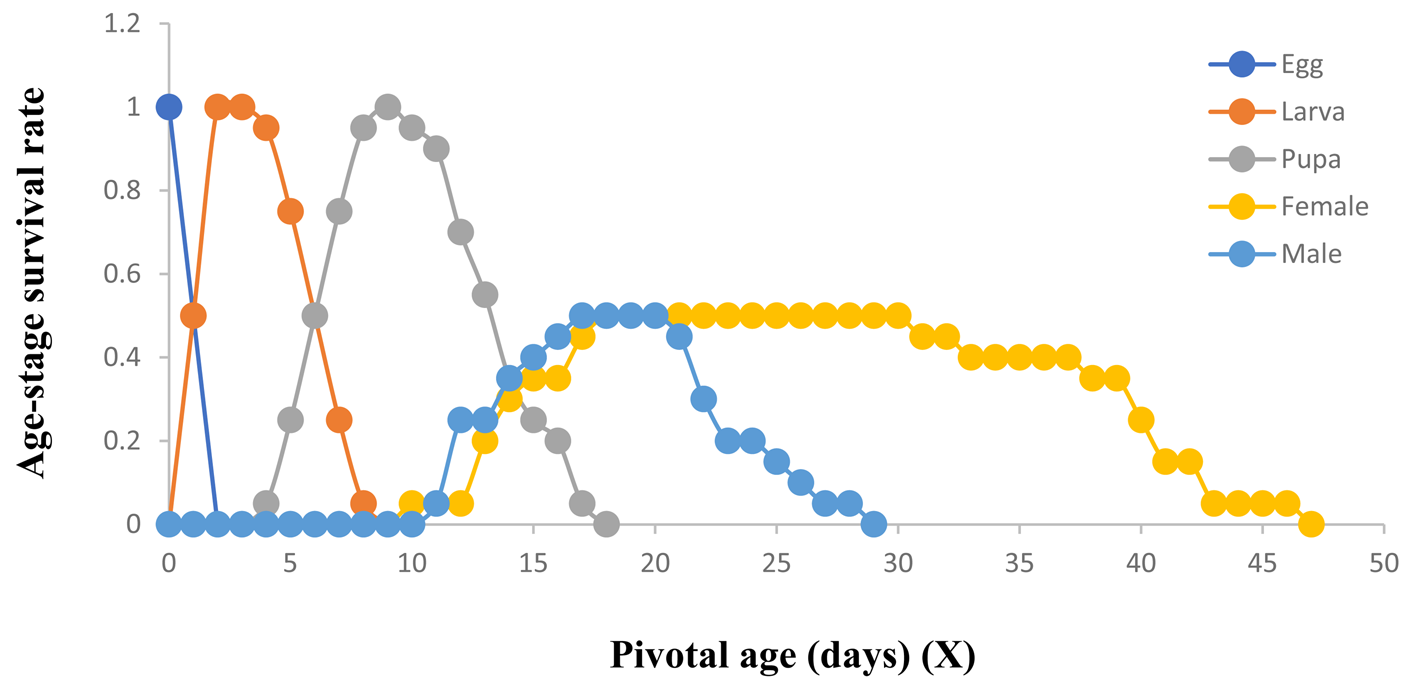
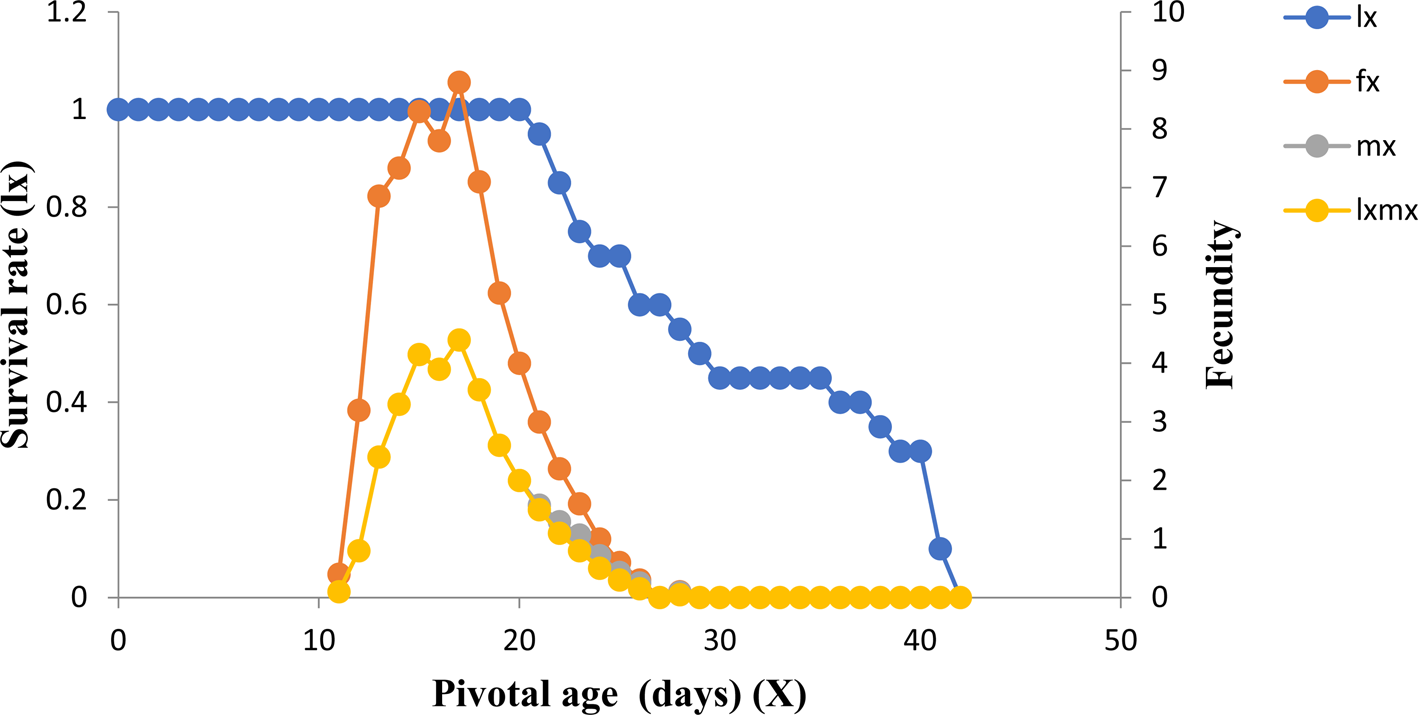
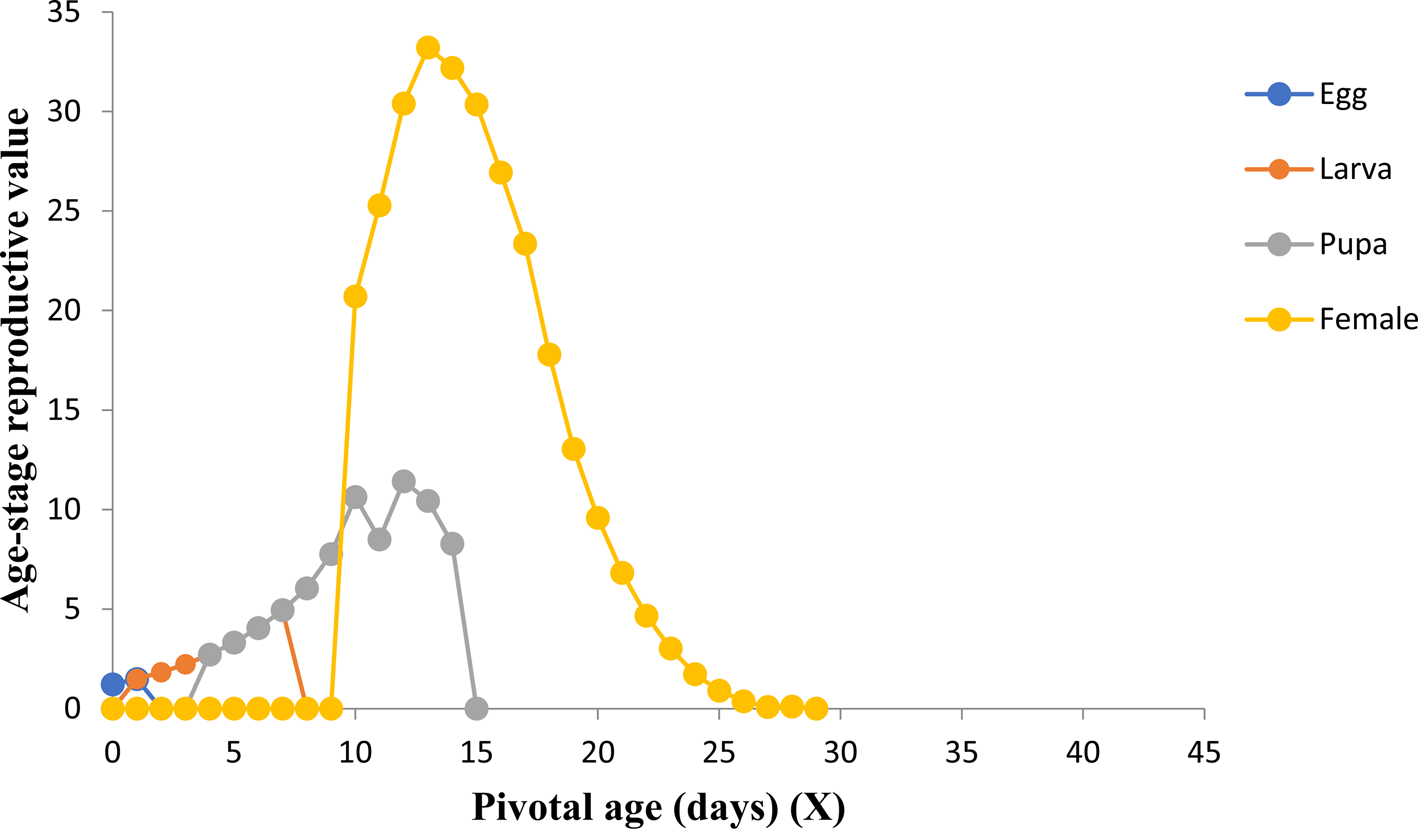
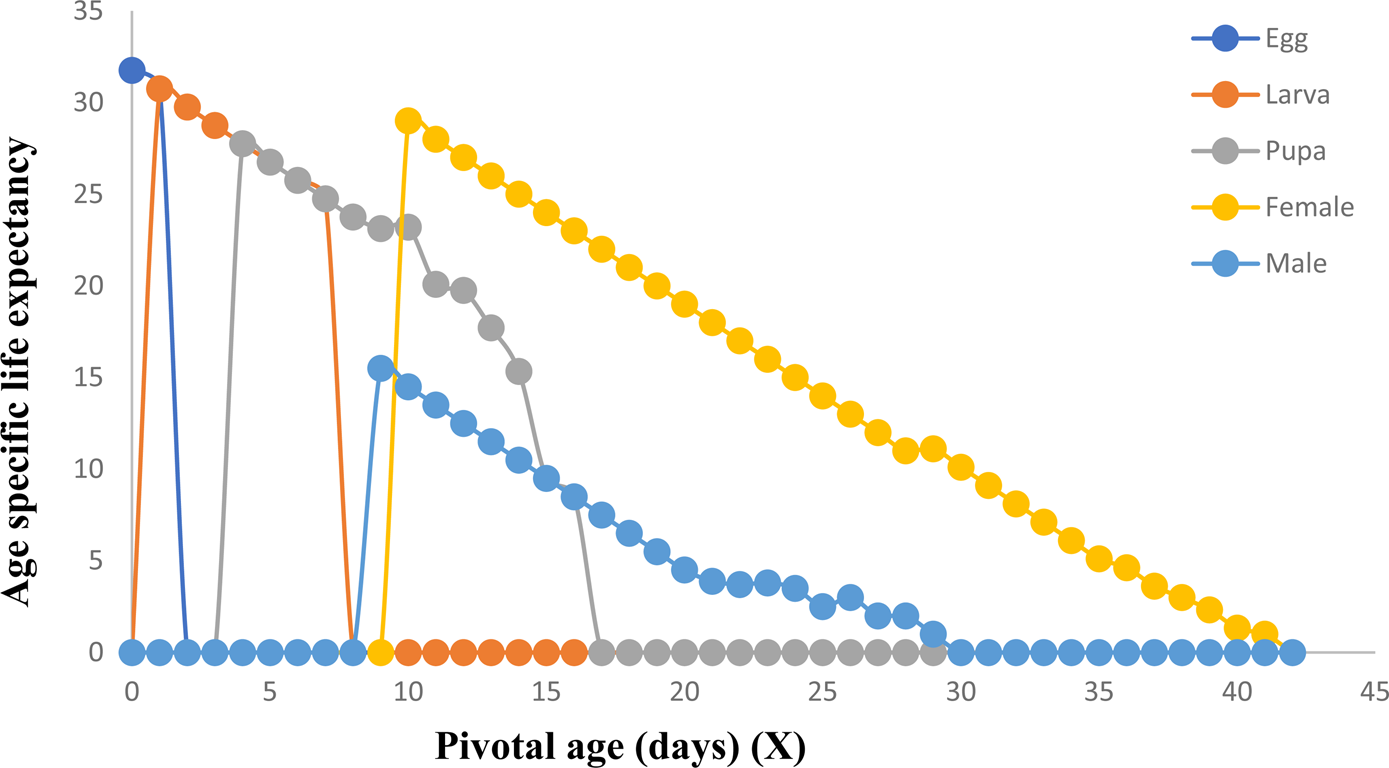
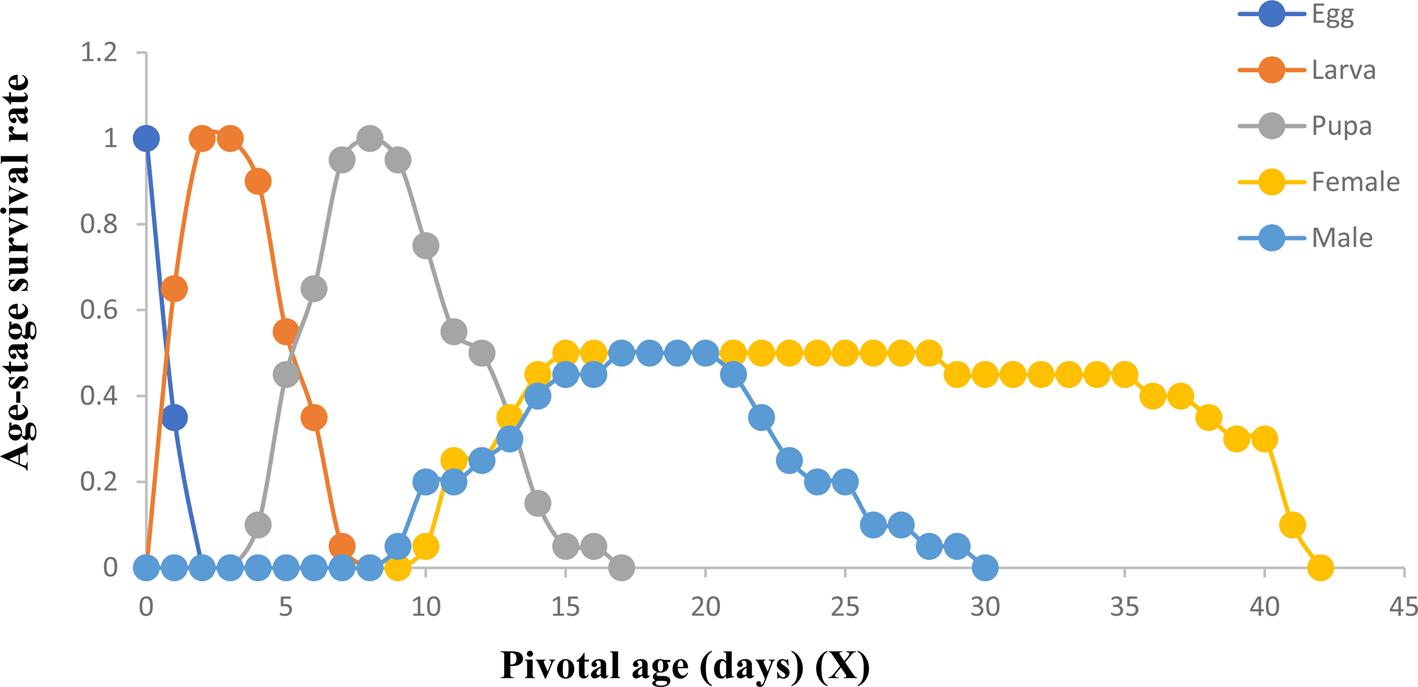
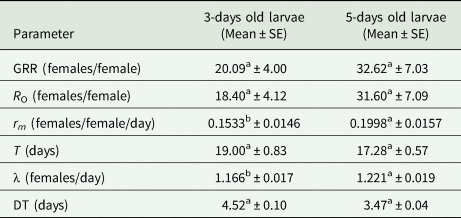
Population growth parameters of D. horticola were also better on the 5-days old host larvae than on the 3-days old. The pre-adult survival (figs 1 and 2), net reproductive rate, intrinsic rate of increase (rm) and finite rate of increase (λ) were higher and the generation time was shorter in parasitoid reared on the 5-days old host larvae than those reared on the 3-days old (table 2). The parasitoid could double its population in 4.52 and 3.47 days when parasitism occurred in the 3-days and 5-days old host larvae, respectively. The parasitoid laid most of the eggs during its initial phase of the reproductive period (figs 1 and 2). The age-stage reproductive values (vxj), which show the contribution of an individual at age ‘x’ and stage ‘j’ to the future population were estimated and presented in figs 3 and 4. Likewise, the age specific life expectancy (ex) which represents the time period individuals of age (x) are expected to live, i.e. the remaining longevity of the individuals, was also estimated (figs 5 and 6). The survivorship curves (sxj) for stages overlap indicating that individuals of the cohort used in the study had different development rates (figs 7 and 8).
Age-specific survival rate (lx), age-stage specific fecundity (fx), age-specific fecundity (mx) and age-specific maternity (lxmx) of D. horticola on 3-days old larvae of C. horticola

Age-stage specific reproductive value (vxj) of D. horticola on 3-days old larvae of C. horticola

Age-stage life expectancy (exj) of D. horticola on 3-days old larvae of C. horticola

Age-stage survival rate (sxj) of D. horticola on 3-days old larvae of C. horticola

Age-specific survival rate (lx), age-stage specific fecundity (fx), age-specific fecundity (mx) and age-specific maternity (lxmx) of D. horticola on 5-days old larvae of C. horticola

Age-stage specific reproductive value (vxj) of D. horticola on 5-days old larvae of C. horticola

Age-stage life expectancy (exj) of D. horticola on 5-days old larvae of C. horticola

Age-stage survival rate (sxj) of D. horticola on 5-days old larvae of C. horticola

Population growth parameters of D. horticola on 3- and 5-days old larvae of C. horticola

Mean values in a row superscripted with the same letter do not differ significantly at P = 0.05.
Host-kill parameters
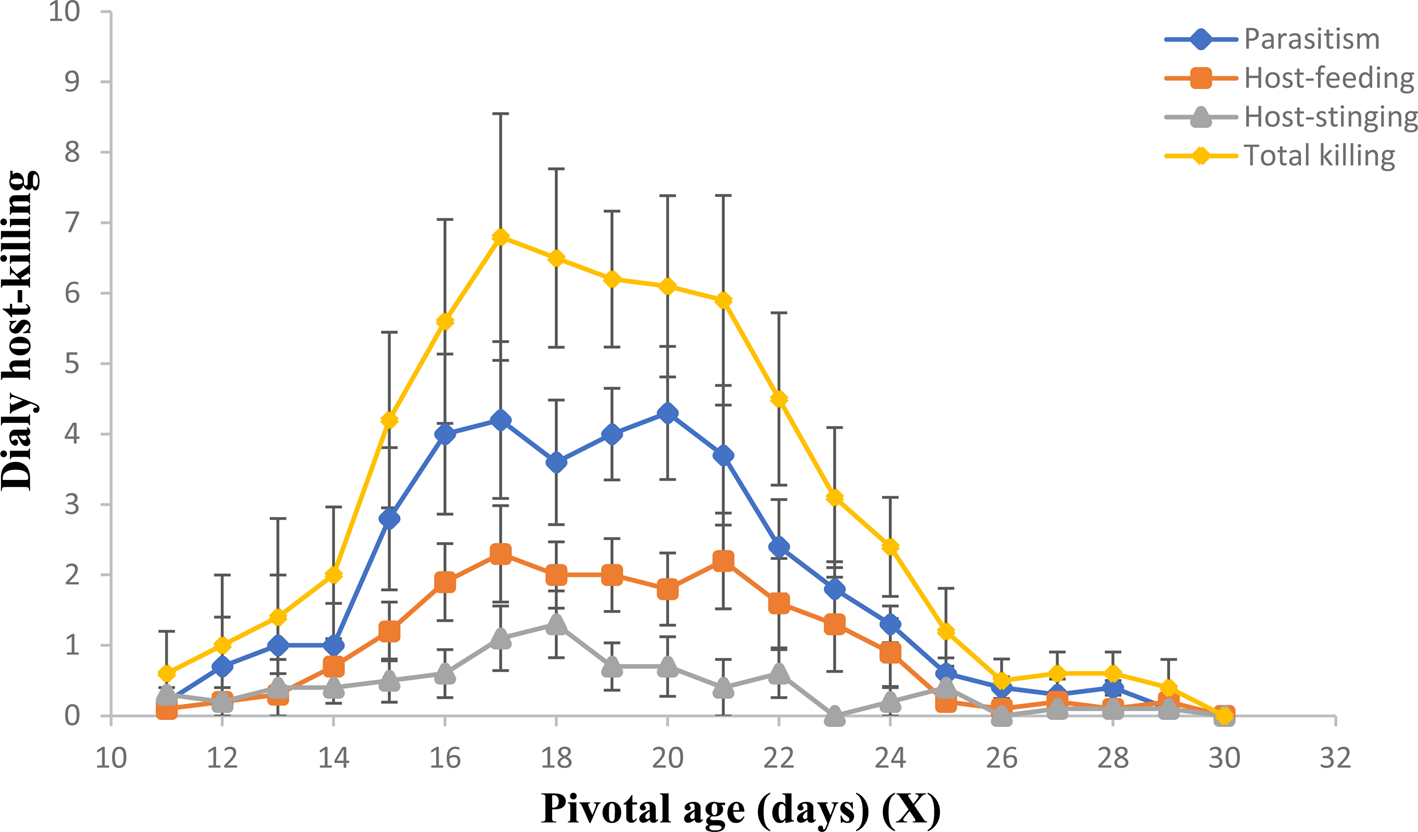
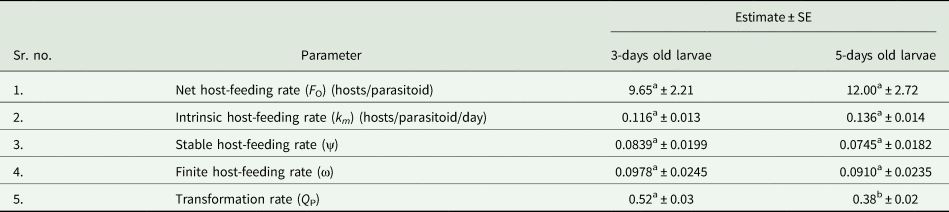
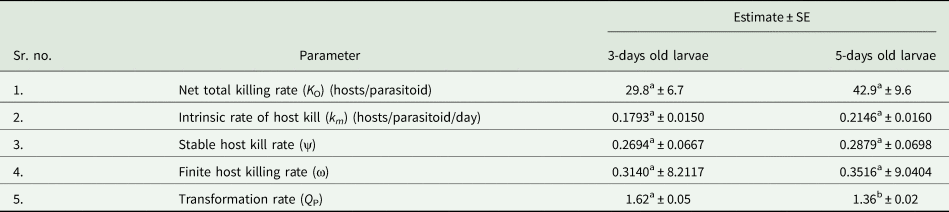
The parasitoid started host killing by all modes (host-feeding, parasitism and host-stinging) within 24 h after emergence. In each case the parasitoid females killed more number of hosts by parasitism than host-feeding or host-stinging (figs 9 and 10). Since there was no host killing by the egg, larval, or pupal stages of the parasitoid, there was a blank stage before the females emerged. The daily host-feeding rate of D. horticola on 3-days and 5-days old larvae was the maximum on the 21st and 18th day, respectively (table 3) (figs 11 and 12). The age-specific parasitism rate curves of D. horticola increased gradually until 20th day on 3-days old larvae and 17th day on 5-days old larvae, and then dropped with age (figs 13 and 14). The host-parasitism parameters viz., P O, km ψ and ω on 3-days old host larvae were 16.1 ± 3.6, 0.145 ± 0.014, 0.144 ± 0.036 and 0.167 ± 0.044, respectively while these parameters on 5-days old host larvae were 27.0 ± 6.1, 0.189 ± 0.015, 0.185 ± 0.045 and 0.226 ± 0.059, respectively (table 4). The daily host-stinging events are represented in figs 15 and 16, and the host-stinging parameters are given in table 5. The host-stinging parameters namely S O, km , ψ, and ω were 4.05 ± 1.05, 0.075 ± 0.015, 0.042 ± 0.012 and 0.049 ± 0.015, on 3-days old host larvae and 3.95 ± 0.98, 0.077 ± 0.015, 0.028 ± 0.007 and 0.034 ± 0.009 on 5-days old host larvae, respectively (table 5). The total host-killing rate was estimated by pooling the parasitism, host-feeding and host-stinging events. The kx and qx values peaked at the age of 17 days irrespective of which host age larvae were used (figs 17 and 18). The net host-killing rate (K O) of the wasp on 3- and 5-days old larvae of C. horticola was 29.8 ± 6.7 and 42.9 ± 9.6, respectively. The stable host kill rate (ψ) and finite host killing rate (ω) were 0.269 and 0.314, respectively, on 3-days old host larvae. These parameters on 5-days old host larvae were 0.2879 and 0.3516, respectively. The transformation rate (Q P) of D. horticola on 3- and 5-days old host larvae was 0.52 and 0.38 (feeding data) and 1.62 and 1.36 (total killing data), respectively (table 6).
Daily host killing of 3-days old larvae of C. horticola by D. horticola through different modes

Daily host killing of 5-days old larvae of C. horticola by D. horticola through different modes

Age-specific host-feeding rate (kx), net age specific host-feeding rate (qx) and cumulative host- feeding rate (FO) of D. horticola on 3-days old larvae of C. horticola

Age-specific host-feeding rate (kx), net age specific host-feeding rate (qx) and cumulative host- feeding rate (FO) of D. horticola on 5-days old larvae of C. horticola

Age-specific parasitism rate (kx), net age specific parasitism rate (qx) and cumulative parasitism rate (PO) of D. horticola on 3-days old larvae of C. horticola

Age-specific parasitism rate (kx), net age specific parasitism rate (qx) and cumulative parasitism rate (PO) of D. horticola on 5-days old larvae of C. horticola

Age-specific host-stinging rate (kx), net age specific host-stinging rate (qx) and cumulative host-stinging rate (SO) of D. horticola on 3-days old larvae of C. horticola

Age-specific host-stinging rate (kx), net age specific host-stinging rate (qx) and cumulative host-stinging rate (SO) of D. horticola on 5-days old larvae of C. horticola

Age-specific total host-killing rate (kx), net age specific total host-killing rate (qx) and cumulative total host-killing rate (KO) of D. horticola on 3-days old larvae of C. horticola

Age-specific total host-killing rate (kx), net age specific total host-killing rate (qx) and cumulative total host-killing rate (KO) of D. horticola on 5-days old larvae of C. horticola

Host-feeding parameters of D. horticola on 3- and 5-days old larvae of C. horticola

Mean values in a row superscripted with the same letter do not differ significantly at P = 0.05.
Host-parasitism parameters of D. horticola on 3- and 5-days old larvae of C. horticola

Mean values in a row superscripted with the same letter do not differ significantly at P = 0.05.
Host-stinging parameters of D. horticola on 3- and 5-days old larvae of C. horticola

Mean values in a row superscripted with the same letter do not differ significantly at P = 0.05.
Host-killing parameters of D. horticola on 3- and 5-days old larvae of C. horticola

Mean values in a row superscripted with the same letter do not differ significantly at P = 0.05.
Discussion
This study presents the first report on its demographics and pest-kill potential. Like many eulophids, D. horticola was synovigenic with low fecundity at emergence, and killed the host larvae by three modes viz., parasitism, host-feeding and host-stinging. Similar results were reported for Hemiptarsenus varicornis (Girault) parasitizing Liriomyza trifolii (Burgees) (Cheng et al., Reference Cheng, Cao, Zhang, Guo, Wan and Liu2017) and D. isaea (Walker) parasitizing Liriomyza sativae Blanchard (Zhang et al., Reference Zhang, Liu, Wang, Wan and Li2011). In fact, previous studies indicate; that most host-feeding parasitoid are synovigenic. For example, D. isaea, H. varicornis, Neochrysocharis formosa (Westwood) feed on host body fluid and lay anhydrous eggs (Liu et al., Reference Liu, Wang, Wang, Zhang and Wan2013; Zhang et al., Reference Zhang, Lu, Liu, Wang and Wan2014; Liu et al., Reference Liu, Wang, Zhang, Lu, Wang and Wan2015; Ye et al., Reference Ye, Zhu, Yefremova, Liu, Guo and Wan2018). The pre-adult development time of D. horticola on C. horticola (current study) was nearly the same as reported for D. isaea parasitizing C. horticola, but longer than that of D. isaea parasitizing Liriomyza huidobrensis (Blanchard), L. trifolii and L. sativae (Bazzocchi et al., Reference Bazzocchi, Lanzoni, Burgio and Fiacconi2003; Haghani et al., Reference Haghani, Fathipour, Talebi and Baniameri2007) at similar temperature conditions. Earlier, Cheah (Reference Cheah1988) also reported slower development of D. isaea on Chromatomyia syngenesiae (Hardy). Larval period of D. horticola (present study) was shorter than that of D. isaea, while the pupal period was nearly the same (Ibrahim and Madge, Reference Ibrahim and Madge1979; Minkenberg and van Lenteren, Reference Minkenberg and van Lenteren1986). The development time of different immature stages of D. horticola recorded in the present study was also similar to that of Diglyphus intermedius (Girault) and D. wani parasitizing L. sativae at similar conditions (Patel and Schuster, Reference Patel and Schuster1983; Ye et al., Reference Ye, Zhu, Yefremova, Liu, Guo and Wan2018). The development time of D. isaea on L. sativae (Zhang et al., Reference Zhang, Lu, Liu, Wang and Wan2014) was shorter than recorded for D. horicola on C. horticola in the current study; probably due to higher rearing temperature used by the earlier workers. The parasitoid longevity was, nevertheless, higher than that of Diglyphus wani Liu (Ye et al., Reference Ye, Zhu, Yefremova, Liu, Guo and Wan2018) and lower than that recorded for D. isaea (Zhang et al., Reference Zhang, Liu, Wang, Wan and Li2011, Reference Zhang, Lu, Liu, Wang and Wan2014) parasitizing L. sativae. The fecundity of the parasitoid reported in the current study was quite less than obtained for D. isaea on L. sativae (Zhang et al., Reference Zhang, Liu, Wang, Wan and Li2011, Reference Zhang, Lu, Liu, Wang and Wan2014), but nearly similar to that reported for D. wani on L. sativae (Ye et al., Reference Ye, Zhu, Yefremova, Liu, Guo and Wan2018). Adult longevity and fecundity were higher when the parasitoid was reared on older host larvae compared to the younger ones. In idiobionts, size of the host larvae at parasitism is crucial not only for the successful development but also for the fitness of the developed parasitoid adults. The older larvae, which were bigger in size, probably provided better nutrition to the parasitoid larvae which ultimately enhanced the parasitoid's longevity and fecundity. Similar results have earlier been reported for H. varicornis parasitizing L. trifolii (Cheng et al., Reference Cheng, Cao, Zhang, Guo, Wan and Liu2017) and D. isaea parasitizing L. sativae (Zhang et al., Reference Zhang, Liu, Wang, Wan and Li2011).
Biocontrol potential of any biocontrol agent could be assessed by its ability to grow in numbers. Any population is expected to grow if its intrinsic rate of increase (rm)>0 and net reproductive rate (R O)>1 (Southwood and Henderson, Reference Southwood and Henderson2000; Chen et al., Reference Chen, Triana and Stansly2017). In the current study, these parameters for D. horticola were estimated as 0.1553–0.1998 and 18.4–31.6, respectively. Since the rm and R O values were quite higher than 0 and 1, respectively, D. horticola would have a high potential to increase its population size under field conditions.Demographics parameters of D. horticola (current study) were better than reported for N. formosa on Tuta absoluta (Meyrick) (Guleria et al., Reference Guleria, Sharma, Verma and Chandel2020), but lower than that of D. wani on L. sativae (Ye et al., Reference Ye, Zhu, Yefremova, Liu, Guo and Wan2018). Higher population growth potential of D. wani could be due to its thelytoky (Ye et al., Reference Ye, Zhu, Yefremova, Liu, Guo and Wan2018).
Although intrinsic rate of increase is the measure of the species’ biotic potential, it may not always be suitable to measure the paraitoids' pest-kill potential. This parameter elucidates the pest-kill potential of a solitary parasitoid where the oviposition events are equal to the pest-kill events, but not for parasitoids like D. horticola, which kills the host larvae by non-reproductive mode in addition to parasitism. Instead, Chi (Reference Chi2015) and van Lenteren et al. (Reference van Lenteren, Bueno, Burgio, Lanzoni, Monten, Silva, De Jong and Hemerik2019) suggested estimating the pest-killing rate (km), stable host-killing rate (ψ) and finite host-killing rate (ω). We, therefore, estimated these parameters of D. horticola parasitizing 3- and 5-days old larvae of C. horticola. These parameters were higher on 5-days old host larvae than on 3-days old. The parasitoid host-killing rate was much higher than its intrinsic rate of increase, confirming that the total biocontrol potential of the parasitoid is much higher than measured in terms of parasitism alone. Killing their hosts by means of host-feeding and/or host-stinging, in addition to parasitism, is prevalent in many hymenopetran parasitoid, especially eulophids (Wang et al., Reference Wang, Wang, Liu, Cheng and Wan2012; Liu et al., Reference Liu, Wang, Zhang, Lu, Wang and Wan2015; Benelli et al., Reference Benelli, Giunti, Tena, Desneux, Caselli and Canale2017; Cheng et al., Reference Cheng, Cao, Zhang, Guo, Wan and Liu2017; Bodino et al., Reference Bodino, Ferracini and Tavella2018; Ye et al., Reference Ye, Zhu, Yefremova, Liu, Guo and Wan2018; Guleria et al., Reference Guleria, Sharma, Verma and Chandel2020). D. horticola killed a higher number of host larvae by oviposition than by host-feeding or host-stinging, which is in agreement with the results reported for N. tutae, N. cosmopterix and N. formosa parasitizing T. absoluta (Bodino et al., Reference Bodino, Ferracini and Tavella2018; Guleria et al., Reference Guleria, Sharma, Verma and Chandel2020), but in contrast to what is reported for H. varicornis parasitizing L. trifolii (Cheng et al., Reference Cheng, Cao, Zhang, Guo, Wan and Liu2017) and D. wani parasitizing L. sativae (Ye et al., Reference Ye, Zhu, Yefremova, Liu, Guo and Wan2018). Variations in the percentages of host-feeding and oviposition events are also linked with the parasitoid trade-off between the present and the subsequent reproduction (Desouhant et al., Reference Desouhant, Driessen, Amat and Bernstein2005). The significance of host feeding is that the parasitoid takes lipids and proteins, which are essential for continuous ovigenesis, from host tissue and haemolymph (Zhang et al., Reference Zhang, Lu, Liu, Wang and Wan2014; Liu et al., Reference Liu, Wang, Zhang, Lu, Wang and Wan2015; Benelli et al., Reference Benelli, Giunti, Tena, Desneux, Caselli and Canale2017; Cheng et al., Reference Cheng, Cao, Zhang, Guo, Wan and Liu2017). The percentage of host-feeding and oviposition events may, nevertheless, differ with parasitoid-host interaction (Zhang et al., Reference Zhang, Lu, Liu, Wang and Wan2014; Liu et al., Reference Liu, Wang, Zhang, Lu, Wang and Wan2015; Cheng et al., Reference Cheng, Cao, Zhang, Guo, Wan and Liu2017; Ye et al., Reference Ye, Zhu, Yefremova, Liu, Guo and Wan2018). D. horticola showed a lower daily reproductive ability than D. isaea, D. wani and D. intermedius (Heinz and Parrella, Reference Heinz and Parrella1989; Patel et al., Reference Patel, Schuster and Smerage2003; Zhang et al., Reference Zhang, Lu, Liu, Wang and Wan2014; Ye et al., Reference Ye, Zhu, Yefremova, Liu, Guo and Wan2018). Consequently, the finite host-killing rate of D. horticola estimated in the present study was lower that reported for these parasitoid. The host-killing events also depend on the density of leafminer larvae on individual leaflets (Patel et al., Reference Patel, Schuster and Smerage2003). Although host feeding enhances longevity and fecundity across parasitoid species, conversion of the consumed hosts into progeny may vary from species to species. D. horticola required 0.52 3-day old or 0.38 5-day old host larvae to host-feed to produce one egg which was lower than required by D. wani foraging on L. sativae (Ye et al., Reference Ye, Zhu, Yefremova, Liu, Guo and Wan2018).
In addition to host-feeding, D. horticola killed the hosts by stinging without parasitism or feeding. This mode of host killing is also common in eulophids (Cheng et al., Reference Cheng, Cao, Zhang, Guo, Wan and Liu2017; Ye et al., Reference Ye, Zhu, Yefremova, Liu, Guo and Wan2018), but the significance largely remains unknown and its impact on the host insect population has largely being ignored. Nevertheless, there are reports that indicate that such aborted stinging, in addition to direct mortality, reduces the pest fecundity or fertility (Abram et al., Reference Abram, Brodeur, Urbaneja and Tena2019). Daily host stinging by the parasitoid fluctuated between 0.65 and 4.05 hosts per parasitoid. The hosts killed by D. horticola by stinging in the current study were higher than reported for D. wani parasitizing agromyzid leafminers (Ye et al., Reference Ye, Zhu, Yefremova, Liu, Guo and Wan2018). Earlier, Cheng et al. (Reference Cheng, Cao, Zhang, Guo, Wan and Liu2017) reported a constant daily host-stinging (3–8 events; maximum 28.7%) of L. trifolii by H. varicornis. Host stinging is believed to benefit the parasitoid in two ways: one by protecting the host plant leaf from desiccation by reducing the pest density on it (Patel et al., Reference Patel, Schuster and Smerage2003) and second by paralyzing the larvae to reserve food in case the nearby larvae is not sufficient to support the parasitoid development (Bernardo et al., Reference Bernardo, Pedata and Viggiani2006). Host nutrients and parasitoid abilities to use these nutrients may vary from species to species and lead to the variations in host-kill potential of different parasitoid (Ye et al., Reference Ye, Zhu, Yefremova, Liu, Guo and Wan2018). In general, the host-feeding parasitoids have greater pest control potential as compared to non-host-feeding parasitoid (Zhang et al., Reference Zhang, Lu, Liu, Wang and Wan2014; Liu et al., Reference Liu, Wang, Zhang, Lu, Wang and Wan2015; Cheng et al., Reference Cheng, Cao, Zhang, Guo, Wan and Liu2017). In the current study, we found that the km values of D. horticola (0.1793–0.2146) were higher than the rm (0.1517–0.1757) values of C. horticola on peas under similar conditions (Bhat, Reference Bhat2017), indicating that the parasitoid would cause a higher kill rate than the pest's growth rate and hence would be able to reduce the pest population in the field. Furthermore, the assessment of D. horticola on the basis of its parasitization potential alone would undermine its biocontrol potential against the pest.
Conclusion
Biological and population parameters of D. horticola were better on 5-days old host larvae than on 3-days old. In addition to parasitism, the parasitoid killed the host larvae through the host-feeding and host-stinging. Thus, D. horticola is a promising biocontrol agent for the suppression of C. horticola in peas and could be promoted through conservation biological control. However, further studies are required to standardize its mass production and utilization through augmentative biological control.
Data
Not applicable.
Acknowledgements
The authors are also thankful to the Professor and Head, Department of Entomology, Dr YS Parmar University of Horticulture and Forestry, Nauni, Solan, Himachal Pradesh, India for providing necessary facilities for the study.
Author contributions
S. K.: Writing, Investigation, methodology; P. L. S.: supervision, writing-review and editing; S. C. V.: supervision and editing; R. S. C.: supervision and editing; P. S.: writing-review and formal analysis; N. S.: supervision, formal analysis. All authors have read and approved the manuscript.
Financial support
Not applicable.
Conflict of interest
The authors declare that they have no conflict of interest.
Ethical standards
Not applicable.