INTRODUCTION
The Mediterranean fish diversity is rapidly changing under the pressure of severe threats (Moulliot et al., Reference Mouillot, Albouy, Guilhaumon, Ben Rais Lasram, Coll, Devictor, Meynard, Pauly, Tomasini, Trousellier, Velez, Watson, Douzery and Mouquet2011) including the influx of invasive species (Zenetos et al., Reference Zenetos, Gofas, Morri, Rosso, Violanti, GarcíaRaso, Cinar, Almogi-Labin, Ates, Azzurro, Ballesteros, Bianchi, Bilecenogtu, Gombi, Giangrande, Gravili, Hyams-Kaphzan, Karachle, Katsanevakis, Lipej, Mastrototoro, Mineur, Panucci-Papadopoulou, Ramos-Esplá, Salas, San Martin, Streftaris and Verlaque2012) and the rising impact of climate warming (Briand, Reference Briand2008). Many alterations have already happened, and others are expected, highlighting the urgency of collecting reference information on the current status of natural communities. In the absence of historical data, which would be needed to rigorously assess and understand environmental alterations (Bulleri et al., Reference Bulleri, Underwood and Benedetti-Cecchi2007), present-day data may serve to set current baselines (Sala et al., Reference Sala, Ballesteros, Dendrinos, Di Franco, Ferretti, Foley, Fraschetti, Friedlander, Garrabou, Güçlüsoy, Guidetti, Halpern, Hereau, Karamanlidis, Kizilkaya, Macpherson, Mangialajo, Mariani, Micheli, Pais, Kristin, Rosenberg, Sales, Selkoe, Starr, Tomas and Zabala2012) against which present and future changes can be evaluated. In the last few years, abrupt alterations in the abundance and distribution of coastal fish species have been demonstrated in the Mediterranean Sea (Azzurro et al., Reference Azzurro, Moschella and Maynou2011; Edelist et al., Reference Edelist, Rilov, Golani, Carlton and Spanier2013) and profound transformations of these communities are envisaged for the future (Ben Rais Lasram & Mouillot, Reference Ben Rais Lasram and Mouillot2008; Ben Rais Lasram et al., Reference Ben Rais Lasram, Guilhaumon, Albouy, Somot, Thuiller and Mouillot2010; Albouy et al., Reference Albouy, Guilhaumon, Araújo, Mouillot and Leprieur2012). These changes are thought to be more noticeable in populations located at the limits of the species distribution ranges and in certain focal spots, especially in areas of biogeographical transition (Bianchi, Reference Bianchi2007), such as the Strait of Sicily. This sector, which separates the western from the eastern Mediterranean basins, is regarded as an area of high biogeographical (Bianchi, Reference Bianchi2007) and hydrodynamic (Béranger et al., Reference Béranger, Mortier, Gasparini, Gervasio, Astraldi and Crépon2004) importance that may be regarded as a privileged observatory for biodiversity monitoring (Azzurro, Reference Azzurro and Briand2008). In this area, significant changes in the abundance and distribution of number of fish species have occurred in the last decades (Azzurro et al., Reference Azzurro, Moschella and Maynou2011) and new tropical and subtropical species have appeared in the last few years (see Azzurro, Reference Azzurro and Briand2008; Guidetti et al., Reference Guidetti, Giardina and Azzurro2010 for a review on fish species). Here we provide a first quantitative study of the rocky-reef fish of Malta and Lampedusa, two islands located in the middle of the Strait of Sicily. Some information on the diversity of littoral fish of this area has already been collected by underwater visual census (De Girolamo et al., Reference De Girolamo and Mazzoldi2001; Azzurro et al., Reference Azzurro, Pais, Consoli and Andaloro2007, Reference Azzurro, Matiddi, Fanelli, Guidetti, La Mesa, Scarpato and Axiak2010) but little information exists on their variability and spatial distribution. Yet, the structure of fish assemblages is typically influenced by a plethora of interacting factors (Ferreira et al., Reference Ferreira, Gonçalves and Coutinho2001) that operate over different spatial and temporal scales. Therefore, the quantification of natural variability is needed to assess changes in ecological communities through time (Magurran et al., Reference Magurran, Baillie, Buckland, Dick, Elston, Scott, Smith, Somerfield and Watt2010) and ultimately for conservation planning (Moranta et al., Reference Moranta, Palmer, Morey, Ruiz and Morales-Nin2006). We therefore investigated the fish assemblages of both islands at different horizontal (i.e. between islands; between locations) and vertical (i.e. between depths) scales, and according to two temporal windows. Our objectives, generally aimed at evaluating the current status of these assemblages, were mainly directed to: (1) characterize the fish assemblages of both islands; (2) assess the occurrence and relative abundance of both non-indigenous taxa and native thermophilic species; and (3) identify pattern of spatial and temporal variation of both the entire assemblage and pre-selected ecological guilds.
MATERIALS AND METHODS
Study area
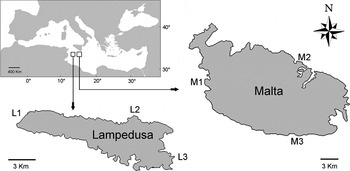
Surveys were carried out at Malta and Lampedusa (Italy) (Figure 1), two sedimentary rocky islands located in the middle of the Strait of Sicily and separated by a distance of about 170 km. The Strait of Sicily, about 160 km wide, divides the eastern from the western Mediterranean basins, as well as the African from the European continent. Malta and Lampedusa lie on the North African continental shelf, which extends from the Tunisian coasts in the west to the Ionian Sea in the east and from the Libyan coasts in the south to Sicily in the north. The distance separating Malta from the nearest point in Sicily is 97 km and from the North African mainland is 290 km. Malta has a surface of 245.7 km2 whilst Lampedusa has an extension of 20 km2 with a length of 7 km, and it is situated 205 km from Sicily and 113 km from the North African mainland.
Study area: Malta and Lampedusa islands (Strait of Sicily, Mediterranean Sea) and nested locations.

Whilst in the island of Malta no protection measures were in force at the time of the study; the island of Lampedusa has been subjected to a regime of protection since 2002. The protected area covers 4136 ha and encompasses three different zones: Zone A, integral reserve (83 ha), where all fishing activities and navigation are forbidden; Zone B, general reserve (1373 ha), where fishing by non-residents is not allowed; and Zone C, partial reserve (2680 ha), where local professional fishermen and non-resident fishers are allowed to fish with artisanal fishing gears. Spear fishing, nets and lines are the most common fishing techniques used along the nearshore rocky-reefs of both Malta and Lampedusa (E. Azzurro, personal observation). Targeted species are mainly represented by sparids such as Diplodus spp., Oblada melanura, Dentex dentex, and by the dusky grouper Epinephelus marginatus. Labrids, though abundant in both islands, have a low commercial value and are not the primary object of local fishery.
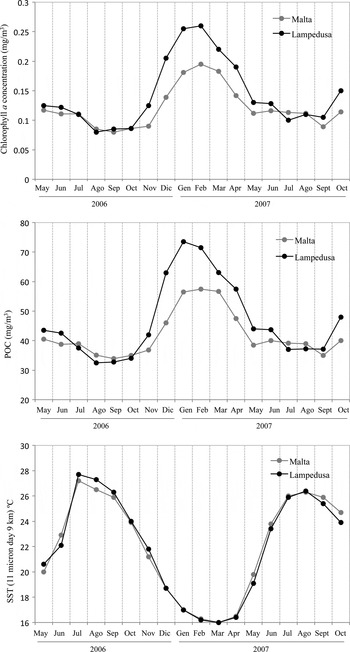
Population density in the Maltese islands is amongst the highest in the world (1282 inh/km2 according to recent estimates) and significant effects of anthropogenic activities have been documented at the level of both species (Axiak et al., Reference Axiak, Vella, Agiusa, Bonnicia, Cassara, Cassonea, Chircopa, Micallefa, Mintoffa and Sammuta2000) and communities (Azzurro et al., Reference Azzurro, Matiddi, Fanelli, Guidetti, La Mesa, Scarpato and Axiak2010). On the contrary Lampedusa has a lower population density (315 inh/km2 according to recent estimates) and to our best knowledge, no significant ecological impacts have been highlighted so far. According to data obtained from satellite imagery (http://reason.gsfc.nasa.gov/Giovanni/) for the period May 2006 to October 2007, chlorophyll-a concentrations and particulate organic carbon (as proxies of surface primary production) were greater at Lampedusa than at Malta (Figure 2A, B), while sea surface temperature profiles showed similar trends (Figure 2C).
(A) Average chlorophyll-a concentration (mg/m3); (B) particulate organic carbon (POC, mg/m3); (C) sea surface temperature (SST, °C) recorded off Malta and Lampedusa from May 2006 to October 2007 (http://reason.gsfc.nasa.gov/Giovanni/).

Data collection
Data were collected during two surveys realized in May–June 2007 (Time 1) and September–October 2007 (Time 2) over four depth ranges (1–3 m, 4–7 m, 9–13 m, 16–20 m). Three locations, extending about 500 m along the coastline and separated by a distance of 5–15 km, were randomly selected at both Malta and Lampedusa islands among a number of possible rocky reef sites having similar characteristics such as (1) a gently declining slope; (2) a wide open coast profile with no particular shelters to the wind; and (3) no dominance of seagrass meadows (Posidonia oceanica).
Underwater visual census (UVC) was performed along 25 m long × 5 m wide strip transects (total surface area 125 m2). Four replicated transects (separated by tens of metres) were haphazardly sampled for each combination of factors for a total of 192 fish counts. Fish abundance was estimated by counting single specimens to a maximum of ten individuals whilst the abundance of schooling species was estimated using abundance-classes (11–30, 31–50, 51–100, 101–200, 201–500, >500 individuals), using the median value of each category for the data matrix (Harmelin-Vivien et al., Reference Harmelin-Vivien, Harmelin, Chauvet, Duval, Galzin, Lejeune, Barnabe, Blanc, Chevalier, Duclerc and Lasserre1985; Guidetti et al., Reference Guidetti, Terlizzi, Fraschetti and Boero2003). Sizes of recorded specimens were referred to three size-classes: small (S), medium (M) and large (L), corresponding to one-third of maximum total length reported in literature (Fischer et al., Reference Fischer, Schneider and Bauchot1987). We also counted individuals smaller than 1.5 cm (J), according to Garcia-Rubies & Macpherson (Reference Garcia-Rubies and Macpherson1995). In order to analyse the variability of single ecological guilds, species were assigned to four different groups (after Harmelin, Reference Harmelin1987), depending on their spatial distribution (Table 1): column water species (CA) for fish inhabiting the water column above the bottom or even corresponding to ‘Category 1’ and ‘Category 2’ of Harmelin (Reference Harmelin1987); nektonic species (NEK) corresponding to ‘Category 3’; nekto-benthic species (NEK-BEN) corresponding to ‘Category 5’ and benthic species (BEN), corresponding to ‘Category 6’ of Harmelin (Reference Harmelin1987). According to Choat et al. (Reference Choat, Klanten, Herwerden, Robertson and Clements2012) and to Westneat & Alfaro (Reference Westneat and Alfaro2005), parrotfish were referred to as sparisomatine labrids in the present study.
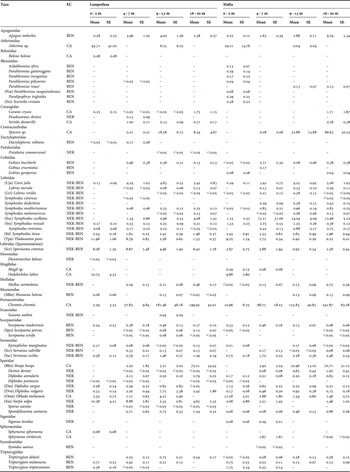
Mean abundances (mean ind./125 m−2) and standard errors of fish taxa recorded at Lampedusa and Malta islands across four depth layers. EC, ecological category: BEN, benthic; CA, column water; NEK, nektonic; NEK-BEN, nektobenthic. Species abbreviations used for Figure 3 and Figure 4 are reported in parenthesis.

Statistical analyses
Patterns of spatial and temporal variation were investigated by means of both univariate and multivariate analyses using a nested sampling design with four factors (‘Island’ (two levels, fixed), ‘Location’ (three levels, random, nested in Island), ‘Depth’ (four levels, fixed, crossed with the other factors), ‘Time’ (two level fixed, crossed with the other factors)) and four replicate units (transects) per combination of factors. Univariate variations in species richness and total abundance of fish were examined by a four-way nested PERMANOVA (Anderson, Reference Anderson2001) based on a Euclidean distances resemblance matrix of untransformed data. Significance was set at P = 0.05; P values were obtained using 9999 permutations of residuals under a reduced model (Anderson, Reference Anderson2001). To test for differences in the size–frequency distribution in relation to the factors ‘Island’ and ‘Time’, a χ2 analysis was performed for each combination of those factors, with significance set at P = 0.05.
The multivariate response of both the entire fish assemblage and the different ecological guilds to the four-factors experimental design was examined using PERMANOVA analysis. We used Bray–Curtis dissimilarities matrices using 9999 random permutations of appropriate units (Anderson, Reference Anderson2001). Multivariate pseudo-variance components, which can be considered as analogues of the univariate ANOVA estimators (Searle et al., Reference Searle, Casella and McCulloch1992), were calculated for each term in the model. This analysis was performed both on whole assemblage and on single ecological guilds (i.e. CA, NEK, NEK-BEN, BEN). Rare species, i.e. those occurring with total abundances lower than 50 individuals (average abundance <0.25 ind./125 m2) and juveniles were excluded from the analysis.
To identify the major fish taxa that typify the Malta and Lampedusa fish assemblages, the similarity percentage (SIMPER) procedure was employed with 80% being arbitrarily selected as cut off value of the cumulative contribution to the similarity.
To visualize multivariate differences between the Malta and Lampedusa assemblages, we made a constrained ordination using a canonical analysis of principal coordinates (CAP) (Anderson & Willis, Reference Anderson and Willis2003). Canonical correlations were tested using 9999 random permutations of the raw data. To reduce differences in scale among the original variables, data were transformed to x' = ln(x + 1). Distinctness of groups was analysed using leave-one-out allocation success. Product–moment correlations of each species with the canonical discriminant axes were calculated and only those with an absolute correlation of >0.30 were considered as meaningful.
Statistical analyses were performed with PRIMER6 & PERMANOVA+ software package (Plymouth Marine Laboratory, UK).
RESULTS
General description of fish assemblages and univariate analyses
Overall, 42,740 specimens belonging to 23 families and 61 different taxa were recorded (Table 1). Atherinidae and some Mugilidae were not identified at species level by visual observations. Labridae (including Sparisomatinae) was the most abundant family at both Lampedusa and Malta, with 12 and 13 species, respectively. The investigated fish assemblages were numerically dominated by Chromis chromis, Atherina sp. and Boops boops that typically occurred in huge schools. All together, these three taxa accounted for 68.75% of the individuals recorded during this study overall. During the underwater surveys, the invasive Fistularia commersonii and Siganus luridus, were occasionally sighted in both Malta and Lampedusa islands. Fistularia commersonii was mostly encountered as isolated individuals, whilst S. luridus appeared also in groups (up to 30 individuals counted in Malta), often in association with Sparisoma cretense. Within the random transects, only two isolated individuals of F. commersonii were registered in Lampedusa, at depths of 11 m and 17 m. As for S. luridus, this species was counted only in Malta with abundances always lower than the number of 0.29 mean ind./125 m−2 (Table 1).
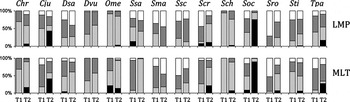
Fish assemblages at Malta and Lampedusa overlapped in terms of species composition, sharing about 65% of species total recorded. The most striking qualitative differences were accounted by Blenniidae, which were represented at Malta and Lampedusa by six and one species, respectively. Univariate PERMANOVA did not detect significant differences in species richness and total abundance between Malta and Lampedusa, nor between the two times of study, whereas it did among locations. The effect of locations on total abundance changed significantly from depth to depth and species richness varied significantly with depth. The size structure of the most abundant species at Malta and Lampedusa during the two sampling periods is reported in Figure 3. According to χ2 analyses (results not presented), some of these species showed significant differences in size distribution between Malta and Lampedusa, during Time 1 (Symphodus tinca), Time 2 (C. chromis, Diplodus sargus, Symphodus ocellatus and Serranus scriba) or regardless of time (Coris julis, Oblada melanura, S. cretense, Sarpa salpa and Thalassoma pavo). In some fish, such as D. sargus and S. cretense, the observed differences were mostly accounted by the distribution of large individuals, which were at Malta and Lampedusa respectively less and more abundant than expected, likely due to differences in fishing pressure. Except for D. sargus and Spondyliosoma cantharus, the size distribution of the most abundant species differed significantly over time at Lampedusa (D. vulgaris and Scorpaena maderensis), Malta (O. melanura, Symphodus roissali and S. scriba) or both islands (C. chromis, C. julis, S. cretense, S. ocellatus, S. salpa, S. tinca and T. pavo) with parallel variations trough time (Figure 3). In some species, such as S. ocellatus, C. julis, and T. pavo, these through time differences were mostly related to the appearance of new recruits during September–October (Time 2).
Size structure of the most abundant species at Lampedusa (LMP) and Malta (MLT) islands: percentages are calculated on the species average values taken for each island and sampling period (species abbreviations are reported in Table 1). T1 = May 2007; T2 = September 2007.  , large;
 , medium;
 , small;
 , juveniles.

Multivariate analyses
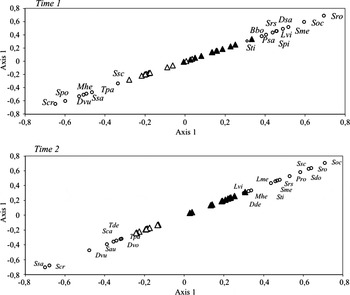
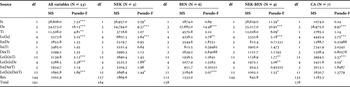
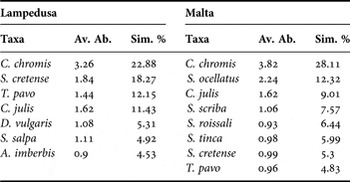
Results from PERMANOVA (Table 2) on whole assemblages highlighted significant differences among islands (Is), locations within islands (Lo(Is)), depths (De), and times of the study (Ti). The factor ‘Lo(Is)’, significantly interacted with ‘De’ and ‘Ti’ and a significant interaction was also found among these three main factors. At the level of single ecological guilds, the response of nektobenthic fish perfectly mirrored the one of whole assemblage with significant differences between Islands. As for the other subsets of species, De, Lo(Is) and Ti were always significant, but differences between islands were never significant. According to SIMPER analysis (Table 3), seven taxa at Lampedusa and eight taxa at Malta contributed mostly to the within-group similarity. The species C. chromis, S. cretense, T. pavo and C. julis resulted to be important in both the islands. The constrained ordination (CAP) produced only one canonical axis, according to the value of q (q = g–1 = 1, where g is the number of groups) (Anderson et al., Reference Anderson, Gorley and Clarke2008). The resulting CAP plot showed that fish assemblages of Lampedusa and Malta formed two distinct groups, especially during Time 2 (Figure 4). The observed differences relied upon a variety of fish. Species having positive correlations with the canonical axis (i.e. located in the upper right of the CAP plot), such as several species of the genus Symphodus, were particularly abundant at Malta. Conversely, some species (e.g. S. cretense, Diplodus vulgaris and T. pavo) plotted in the lower left of the graph, thus suggesting their preference for Lampedusa rocky reefs. The suite of species that mostly contributed to the separation between Malta and Lampedusa did not change substantially through time. Only three species (Sparus aurata, Parablennius rouxi and Symphodus doderleini) of those reported in the plot were exclusively recorded at Malta or Lampedusa.
Canonical analysis of principal coordinates plot showing the canonical axes that best discriminate assemblages of Malta (black triangles) and Lampedusa (white triangles) and correlations coefficients of species variables with these axes. Only species with correlations >0.3 were indicated. Time 1 = May 2007; Time 2 = September 2007. Species abbreviations are reported in Table 1.

Permutational multivariate analysis of variance based on the adjusted Bray–Curtis dissimilarity measure for Log (x + 1) transformed abundance data. Nektonic species (NEK); benthic species (BEN); nekto-benthic species (NEK-BEN); water column species (CA) and the entire dataset without these latter (all variables) were considered in a four-factor design (Is (Island), De (Depth), Ti (Time of the study), Lo (Location)). The test was done using 9999 permutations under the reduced model.

*, P < 0.05; **, P < 0.01; ***, P < 0.001.
Results of SIMPER analysis showing fish taxa contributing most (in order of decreasing percentage) to the within-group similarity of Lampedusa and Malta fish assemblages. Average similarity: Lampedusa = 40.68; Malta = 43.35. Cut off value set at 80% of cumulative contribution to the similarity.

For species names in full, see Table 1.
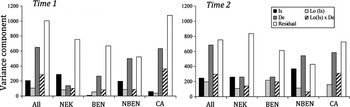
According to the multivariate analysis of pseudo-variance components, the greatest variability was usually associated with the smallest spatial scale (i.e. at level of individual transects or residual) (Figure 5). Considerable amount of variability was also due to the random interaction between ‘Location’ and ‘Depth’. The lowest variance component was contributed by the factor ‘Location’, except for nektobenthic species. The rank of contributions did not change with time, nevertheless variance component of location increased from Time 1 to Time 2, regardless of species group.
Sizes of pseudo-multivariate variance components, according to the all variables data set and to four ecological groups: the component Island × depth has been removed because not significant. Species: NEK, necktonic; BEN, benthic; NBEN, necktobenthic; CA, water column. Factors: Is, Island; Lo, Locations; De, Depth.

DISCUSSION
The Malta and Lampedusa fish assemblages
The taxonomic composition of the rocky-reef fish assemblages of Malta and Lampedusa islands, with the predominance of species belonging to Labridae and Blenniidae is, to a certain extent, typical of central and western Mediterranean rocky shores (Harmelin, Reference Harmelin1987; La Mesa & Vacchi, Reference La Mesa and Vacchi1999; Ordines et al., Reference Ordines, Moranta, Palmer, Lerycke, Suau, Morales-Nin and Grau2005; Pais et al., Reference Pais, Azzurro and Guidetti2007). Both these assemblages resulted in high diversity and are characterized by the presence of thermophilic species, such as Sparisoma cretense, Thalassoma pavo, Caranx crysos and Sphyraena viridensis (Table 1). These fish are typical of the southern Mediterranean nearshores, but evidence exists of their recent spread northward and increasing success (Francour et al., Reference Francour, Boudouresque, Harmelin, Harmelin-Vivien and Quignard1994; Azzurro et al., Reference Azzurro, Moschella and Maynou2011). Another two species, Pseudocaranx dentex and Parablennius pilicornis, should be also mentioned among the southern warm water fish occurring in the area, even though they were only occasionally recorded in this study (Table 1).
Here we reported the first quantitative data for the bluespotted cornetfish Fistularia commersonii and the dusky spinefoot Siganus luridus in the central Mediterranean Sea. These renowned invaders, entering the Mediterranean from the Red Sea through the Suez Canal, have recently expanded westward and established permanent populations in the Strait of Sicily area (see for F. commersonii: Azzurro et al., Reference Azzurro, Pizzicori and Andaloro2004, Reference Azzurro, Soto, Garofalo and Maynou2012; Deidun & Germanà, Reference Deidun and Germanà2011; see for S. luridus: Azzurro & Andaloro, Reference Azzurro and Andaloro2004; Schembri et al., Reference Schembri, Deidun and Falzon2012). As far as the bluespotted cornetfish is concerned, this species is still only occasional along the rocky reefs of both Malta and Lampedusa, since only two isolated individuals were spotted during our surveys. Notably this population could still be unstable in the area of the Strait of Sicily, as suggested by interviews with local fishermen, which revealed great fluctuation of the abundance of this species since its first sightings (Azzurro et al., Reference Azzurro, Moschella and Maynou2011). The other invasive species, S. luridus, which is considered as established in both the islands of Malta (Azzurro & Andaloro, Reference Azzurro and Andaloro2004) and Lampedusa (Schembri et al., Reference Schembri, Deidun and Falzon2012), was observed in both islands but censused only in Malta with low abundances, always lower than 0.29 mean ind./125 m−2 (Table 1). In the eastern Mediterraenan sectors, Siganidae underwent a population explosion becoming dominant within the rocky reef fish community (Harmelin-Vivien et al., Reference Harmelin-Vivien, Bitar, Harmelin and Monestiez2005). According to our findings, the densities of S. luridus in the Malta and Lampedusa islands are far less than the numbers registered in the Levantine rocky shore (which can reach the number of 20 ind./125 m−2) and still comparable with the ones recorded during the initial colonization (Azzurro, Reference Azzurro2006).
Malta and Lampedusa assemblages were similar in terms of both species richness and abundance, with comparable variations in size distribution of the most abundant species through time. Considering that temperature governs seasonal population patterns and the recruitment of many of coastal fish species (García-Rubies & Macpherson, Reference Garcia-Rubies and Macpherson1995), the observed parallelism can be explained by the equivalence of the sea surface temperature trend occurring in both islands (Figure 2C). On the other hand, chlorophyll-a and particulate organic carbon concentrations have higher values at Lampedusa than in Malta (Figure 2) so that different bottom-up effects on the fish communities of the two islands might occur. Availability of nutrients regulates algal biomass (Hereu et al., Reference Hereu, Zabala and Sala2008) and differences in the macroalgal cover between Malta and Lampedusa (Larkum et al., Reference Larkum, Drew and Crossett1967; Cormaci et al., Reference Cormaci, Lanfranco, Borg, Buttigieg, Furnari, Micallef, Mifsud, Pizzuto, Scammacca and Serio1997) could be at the basis of the observed disparities in the densities of the herbivorous S. cretense (more common in Lampedusa) and S. ocellatus (which peaked in Malta). To our best knowledge the abundances of S. cretense in Lampedusa were among the highest recorded in the Mediterranean Sea. On the other hand, towering numbers of S. ocellatus have been registered in other localities of this basin (Budaev, Reference Budaev1997), especially in association with Posidonia meadows (Francour, Reference Francour1997). Differences in the level of some anthropic-related pressures, such as the exploitation of fishery resources, may concur to explain the differences in fish assemblage structure between Malta, a large island with high population density and Lampedusa, a relatively smaller and much less anthropized island.
The greatest variability in composition and structure of fish assemblages was recorded at the smallest investigated spatial scale, among individual transects. At this scale, assemblage structure of marine fish has been recognized as largely unpredictable (Curley et al., Reference Curley, Kingsford and Gillanders2002). As shown by the analysis of pseudo-multivariate variance components (Figure 5), this residual variability clearly characterizes both the entire assemblage and the different groups of species. Therefore, the maximum variability at the smallest spatial scale seems to be a common trait covering a wide array of mobility characteristics and use of habitat.
Significant spatial differences were detected at medium (i.e. among locations 5–15 km apart) and large scale (i.e. between islands, 170 km apart), but patterns of spatial variability were not always the same when we moved from the whole assemblages to single ecological guilds. This was particularly evident at our largest scale that is between islands. Indeed, pseudo-multivariate variance components (Figure 5) and CAP analysis (Figure 4) indicated that ‘between-islands’ differences were mainly accounted by nektonic and nekto-benthic fish, whilst benthic species gave the smaller contribution. Yet, the number of benthic species, such, as Blenniidae, recorded at Malta and Lampedusa was visibly different (Table 1), but their overall contribution was not effective to discriminate between the two islands (Table 2). At a smaller spatial scale, i.e. of locations (5–15 km), the contribution of each guild to the spatial variability was more balanced and likely reflected habitat patchiness that is typical of the Mediterranean rocky shores (Garcia-Charton & Pérez-Ruzafa, Reference Garcia-Charton and Pérez-Ruzafa2001). Habitat patchiness is known to determine patchiness in the distribution of fish species at small to medium spatial scale, as demonstrated by several studies in both temperate and tropical reefs (e.g. Letourneur et al., Reference Letourneur, Ruitton and Sartoretto2003; Moranta et al., Reference Moranta, Palmer, Morey, Ruiz and Morales-Nin2006). Habitat patchiness would also explain the significant interaction between the small scale (location nested in island) with depth (Table 2). In fact, depth-related changes in the relative cover or physical structure of the bottom are quite common along the shores of the Mediterranean. With the exception of benthic species, this significant interaction between the horizontal and the vertical space factors was observed in all the different guilds, confirming the existence of a confounding spatial effect for these groups. This ‘confusion’ clearly disappears at largest spatial scale (between islands) when habitat patchiness had no influence. Depth was confirmed as the chief structuring factor (Bell, Reference Bell1983) in Mediterranean rocky reef fish communities and its effects predominated over the different ecological groups we considered. Variance component analysis evidenced also that spatial variability of fish at the scale of locations increased from Time 1 (late spring) to Time 2 (autumn). This is explained by the unevenly scattered arrival of new juveniles around the islands during autumn, which make the assemblage structure more unpredictable, especially at the smaller spatial scales.
FINAL REMARKS
Here we provided a first snapshot of the rocky-reef fish of Malta and Lampedusa islands and an appraisal of their variability. These assemblages include two highly invasive species, Fistularia commersonii and Siganus luridus, which were registered in low abundances. Any outbreak of these populations seemed to have occurred at the time of the study, but profound community changes are expected in the near future if the ecological integration of these invaders takes place. Future alteration in the structure of the native assemblage is also envisaged due to the increasing emergence of thermophilic taxa, along with warming conditions in the Mediterranean Sea (Albouy et al., Reference Albouy, Guilhaumon, Araújo, Mouillot and Leprieur2012). Too often we have lost opportunities for research at very early stages of an invasion (Azzurro, Reference Azzurro, Matiddi, Fanelli, Guidetti, La Mesa, Scarpato and Axiak2010), and the drastic changes of the eastern Mediterranean biota (Edelist et al., Reference Edelist, Rilov, Golani, Carlton and Spanier2013) certainly represents a powerful warning for management and research options. Monitoring designs and data collections should be sophisticated enough to deal with the variability of these assemblages, which resulted of paramount importance at the small spatial scale and between depths and seasons. Nevertheless, an effective monitoring will also require a selection of the most appropriate indicator species or groups of species. Among the investigated guilds, the nektobenthic fish were those that best summarized the spatio-temporal variation of the entire assemblage and, for this reason, the most relevant species group for monitoring. Notably, some of these fish, such as the warm-water Thalassoma pavo and the Coris julis, which tolerates cooler waters, have been recently identified as powerful indicators of climate changes (Milazzo et al., Reference Milazzo, Mirto, Domenici, Gristina and Genner2012), and for this reason they should receive special attention from long term studies. Certainly, the present status of these two islands is the result of a different history of human pressure on fishing, pollution and habitat destruction. In absence of pristine areas to set a historical baseline (Sala et al., Reference Sala, Ballesteros, Dendrinos, Di Franco, Ferretti, Foley, Fraschetti, Friedlander, Garrabou, Güçlüsoy, Guidetti, Halpern, Hereau, Karamanlidis, Kizilkaya, Macpherson, Mangialajo, Mariani, Micheli, Pais, Kristin, Rosenberg, Sales, Selkoe, Starr, Tomas and Zabala2012), the present data can be used as a reference against which the expected changes of Mediterranean rocky-reef fish assemblages can be assessed in the future.
ACKNOWLEDGEMENTS
We are in debt to Dr Alfonso Scarpato of ISPRA, Rome (Italy) for coordinating the research programme, to Raffaella Piermarini and Pierpaolo Giordano ISPRA, Rome (Italy) for their administrative contribution; to Dr Peppino Sorrentino of the MPA of Pelagie Islands (Lampedusa, Italy), Professor Patrick Schembri and Professor Victor Axiax of the Malta University (Malta) for scientific advice and the organization of local support. A warm special thank you to Marco Matiddi, John Camilleri, Antonino di Maggio and Fabio Giardina, who provided highly-qualified technical support during field operations.
FINANCIAL SUPPORT
This research was funded by the Interreg IIIA Italia-Malta Project.