Approximately 40,000 children in the United States of America are born with congenital heart defects each year with roughly a third requiring surgical correction. Reference Hoffman and Kaplan1–Reference Oster, Lee, Honein, Riehle-Colarusso, Shin and Correa4 As techniques improve and patient survival rates increase, the focus for patients recovering from congenital heart surgery has shifted from the care of a lethal disease to that of a chronic condition. Reference Oster, Lee, Honein, Riehle-Colarusso, Shin and Correa4–Reference O’Leary, Siddiqi, de Ferranti, Landzberg and Opotowsky6 The estimated incidence of feeding difficulty following congenital heart surgery in the current literature ranges between 16% and 76% and represents a significant health burden. Reference Kohr, Dargan and Hague7–Reference Orzell, Joseph, Ongkasuwan, Bedwell, Shin and Raol12 One cause of feeding difficulty is dysphagia, defined as any interruption in the sequence of swallowing, which can severely compromise the long-term pulmonary health secondary to aspiration-related injuries and lead to impaired nutritional intake and ultimately developmental delay. Reference Dodrill and Gosa13 Other causes include reflux, oral aversion, and increased cardiopulmonary demands.
Nearly half of all infants who undergo congenital heart surgery develop a neurodevelopmental impairment of some fashion. Reference Gaynor, Stopp and Wypij14,Reference Gunn, Beca and Hunt15 Furthermore, prospective studies have found enteral feeding following congenital heart surgery to be linked to an increased risk of long-term cognitive, language, and motor delays. Reference Holst, Serrano and Shekerdemian16,Reference Medoff-Cooper, Irving and Hanlon17 Despite the known risks surrounding feeding methods following congenital heart surgery, there is a large degree of variability in neonatal feeding strategies across institutions. Reference Alten, Rhodes and Tabbutt18
Feeding outcomes following congenital heart surgery are often difficult to analyse as they are often clinically silent and can be masked by multiple comorbidities. The aim of this study is to describe and analyse a large cohort of paediatric congenital heart surgery patients at a tertiary institution focusing on feeding outcomes over a 1-year follow-up period. Within this retrospective case series with chart review, we will aim to answer the following clinical questions: (1) For paediatric patients recovering from congenital heart surgery, what clinical signs/symptoms should prompt further investigation for dysphagia? (2) For paediatric patients recovering from congenital heart surgery, what factors prolong regaining normal per os feeding function?
Material and method
This retrospective study involved an electronic health record review of patients undergoing congenital heart surgery between January 1, 2017 and December 31, 2017, at the Children’s Healthcare of Atlanta following institutional review board approval. To be included in the electronic health record review, patients had to (1) undergo open-heart surgery between the ages of 0 and 18 at the time of the surgery and (2) survive at least 30 days post-operatively. Exclusion criteria included requiring more than one cardiac surgery during the admission, as well as a medical history significant for (1) any diagnosis of dysphagia or vocal fold motion impairment, (2) enteral tube feeding, (3) history of tracheostomy, and/or (4) congenital abnormal recurrent laryngeal nerve anatomy (situs inversus) before the congenital heart surgery. Follow-up data were extracted from the medical record for the year following the initial surgery or up to a subsequent congenital heart surgery, whichever came first.
The primary outcome of this study was feeding difficulty, which was defined as requiring an enteral feeding tube as a primary means of nutrition with or without per os supplementation after discharge. Extracted data included demographics, birth history, cardiac procedure type, intubation/extubation time, length of stay, feeding status (pre- and post-operation, at the time of discharge, and time to resolution), swallow study and laryngoscopy findings (inpatient and outpatient), access and length of feeding therapy (inpatient and outpatient), consultations (inpatient and outpatient), and readmission (related to feeding or lower respiratory tract issues). Clinical discretion was used to analyse readmissions that were related to feeding or lower respiratory tract issues in an effort to not falsely inflate the number of readmissions in a patient population with multiple comorbidities. Symptoms such as stridor or aspiration were recorded if they were noted and documented by anyone on the healthcare team or evident in any objective study. Surgical procedures were grouped based upon anatomical associations of the primary procedure to aid in comparing similar procedures.
Statistical analysis was performed using JMP® Pro (Version 14.0.0, SAS Institute Incorporated, Cary, NC, USA, 1989–2019). Chi-square and Fisher’s exact tests were used to analyse categorical variables. Either a paired t-test and Wilcoxon rank-sum test was used to compare continuous data depending on the distribution. In patients younger than 12 months of age, nominal logistic regression was employed to explore the potential predictors of a patient being discharged with an alternative feeding plan. Generalised linear regression was used to model predictors related to the length of stay. Due to the skewed distribution of the variable length of stay, these data was transformed using a logarithmic function for statistical analysis, and the presented results are exponentiated to aid in interpretation. Results from the regressions are presented as odds or ratios with 95% confidence intervals, as appropriate. Both models were limited to patients younger than 12 months of age because the primary outcome measure of this study, non-PO feeding status at discharge, was not prevalent for those older than 12 months at the time of surgical intervention. Stepwise regression and bivariate statistical analysis were used to aid in selecting the best models for these data. Alpha level of 0.05 was used as evidence of significance throughout the analysis.
Results
Patient demographics
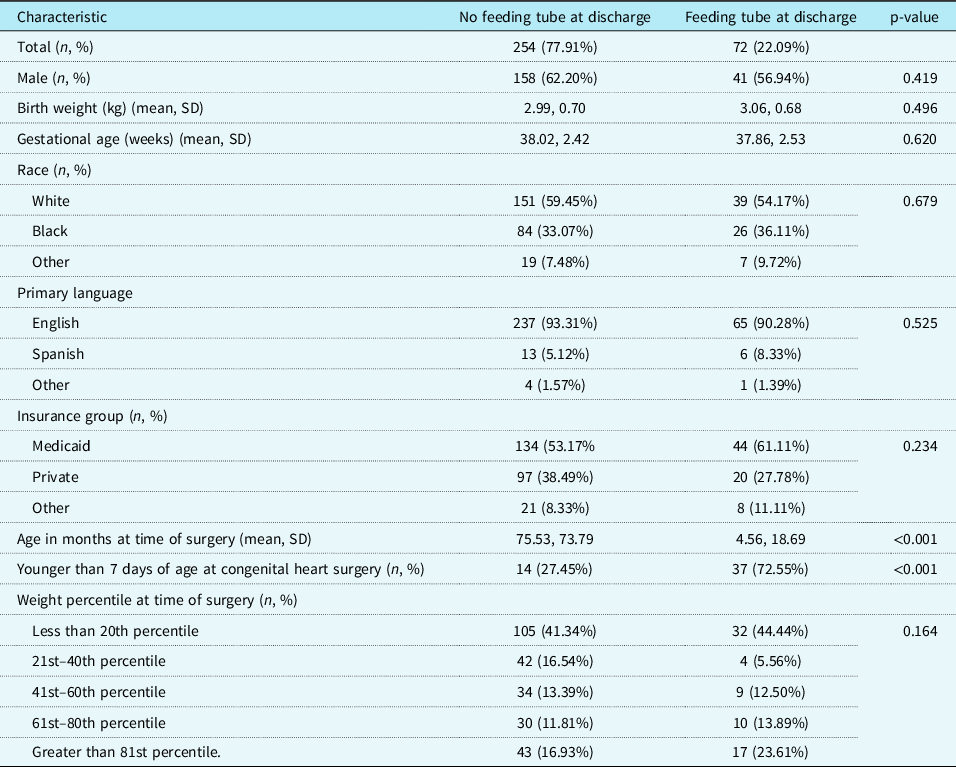
The electronic health record review identified a total of 777 patients who underwent surgery during the time of interest; 326 met the inclusion criteria. The most common reason for exclusion involved a history of dysphagia or feeding tube dependence prior to congenital heart surgery. The median age at the time of surgery for the patients included in the analysis was approximately 19 months old (Interquartile range 2.8–111.9 months) and 61.04% (n = 199) were male. Table 1 summarises the demographics of all the patients, separated into two columns by patients who exhibited feeding difficulty at the time of discharge (as measured by the presence of an enteral feeding tube) and patients who had a normal feeding status at discharge. Age at the time of surgical procedure was the only variable that significantly differed from the variables collected with a mean difference between the two groups of 70.97 months (5.91 years) and a p-value of less than 0.01.
Patient demographics

Feeding difficulty
Seventy-two of the 326 patients (22%) were discharged from the hospital with an enteral feeding tube following congenital heart surgery. For the entire cohort, the most common alternative feeding plans in place at discharge included nasogastric tube with partial per os (50/72), nasogastric tube feeds only (14/72), gastrostomy tube feeds only (4/72), gastrostomy tube with partial per os (3/72), and nasojejunal tube feeds only (1/72). Patients discharged with an alternative feeding plan were younger than 12 months of age at the time of surgery 97.22% of the time (70/72) with a mean age of 57.6 days old and a standard deviation of 83.18 days and an interquartile range of 5–105 days (p < 0.0001). Patients who were 7 days of age or younger at the time of surgery comprised 51.39% of the cohort and were disproportionately likely to have an enteral feeding tube at the time of discharge (p < 0.001).
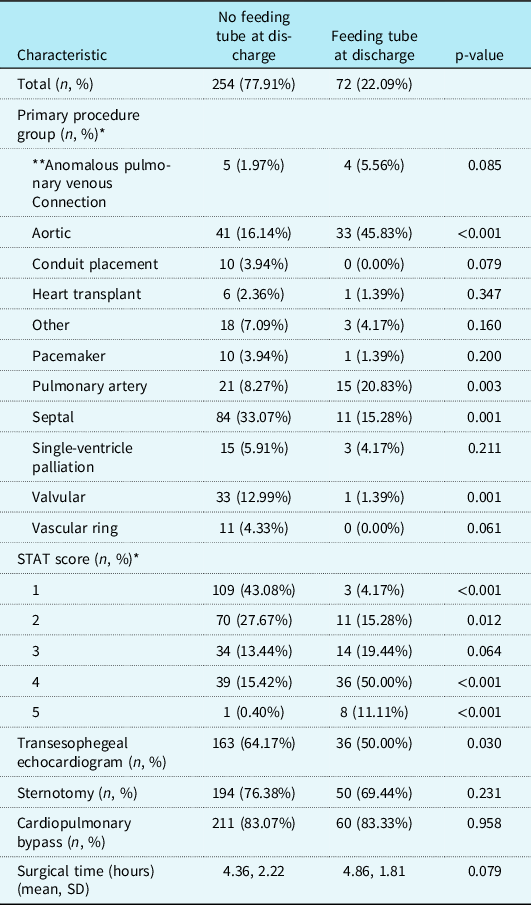
Table 2 presents intraoperative summary statistics by patients with normal feeding status at the time of discharge compared to patients requiring tube feeding. Both The Society of Thoracic Surgeons–European Association for Cardio-Thoracic Surgery score and procedure groups are included. The procedure groups with the highest frequency of feeding difficulty at discharge were aortic procedures (44.59%) and pulmonary artery procedures (41.67%). Scores of 4 and 5 were associated with increased rates of feeding tubes while a score of 1 or 2 was significantly associated with lower rates of feeding tubes at discharge. A larger number of patients who received transesophageal echocardiogram were able to achieve full per os status (81.91%).
Intraoperative variables

* Fisher’s exact test.
** See Appendix A for a full breakdown of procedure groupings.
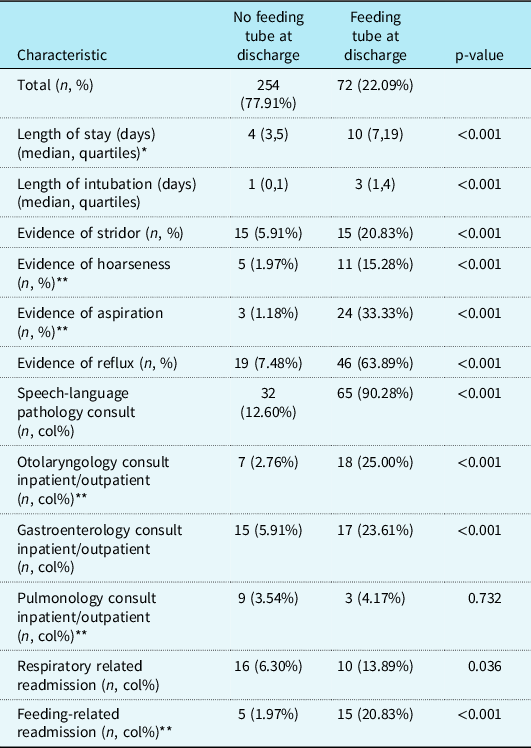
A comparison of post-operative characteristics by feeding status is provided in Table 3. Speech-language pathology was the most frequently consulted service in this cohort (29.76%), followed by gastroenterology (9.82%), otolaryngology (7.67%), and pulmonology (3.68%). Patients in the feeding tube cohort more frequently utilised all consulting services, although no service other than speech-language pathology was utilised more than 25% of the time. Modified barium swallow study was performed in 36 patients (11.04%), 9 inpatients, and 27 outpatient studies. Aspiration was observed in 22 of these studies (the remaining diagnoses of aspiration were based on speech-language pathology clinical evaluation). The feeding status of 25 patients (16.45%) failed to improve or worsened during the inpatient stay. Flexible nasolaryngoscopy was performed on 10 patients (3.07%), and 4 patients were diagnosed with vocal fold motion impairment.
Post-operative variables

* Wilcoxon rank-sum test.
** Fisher’s exact test.
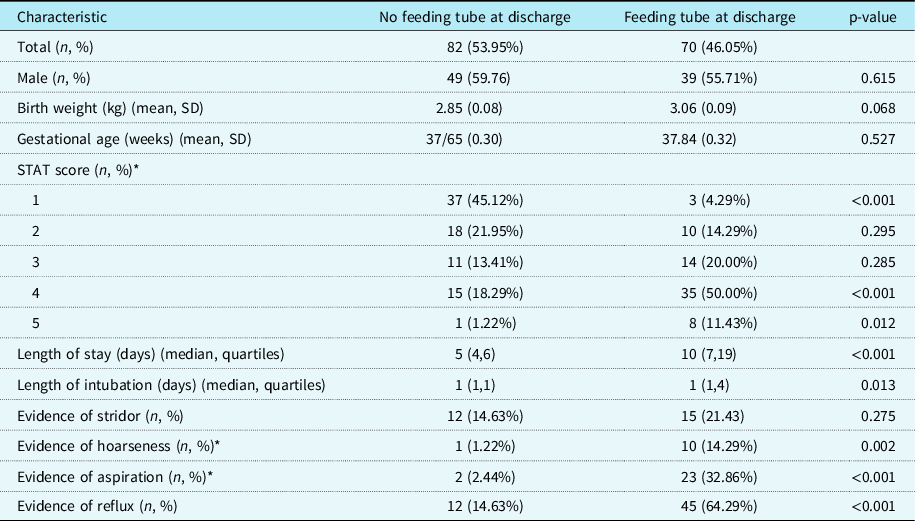
Because the main outcome variable (presence of a feeding tube at discharge) was present primarily in patients younger than 12 months of age, Table 4 provides further detail on this younger cohort. This table also aids in the interpretation of the regression analyses presented in Tables 5 and 6 or can be contrasted with the entire cohort in the preceding tables. Of note from Table 4, the incidence of hoarseness and/or aspiration was not frequently encountered in patients who were able to be discharged without a feeding tube.
Select characteristics for patients younger than 12 months

* Indicates a Fisher’s exact test.
Risk factors for alternative feeding in patients less than 12 months

Generalised linear model – length of stay (days) patients 12 months and younger

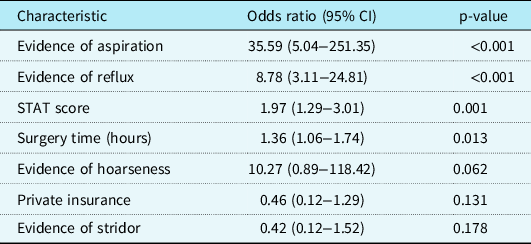
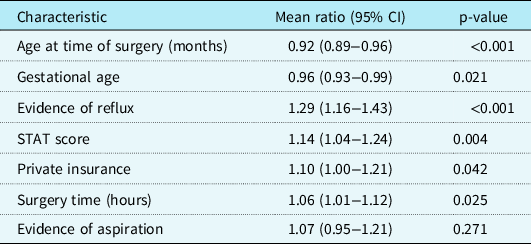
Regression analysis for patients younger than 12 months at the time of surgery is displayed in Tables 5 and 6. The Society of Thoracic Surgeons–European Association for Cardio-Thoracic Surgery score and surgical time in hours were both associated with an increased risk of feeding difficulty. There was no difference in rates of feeding difficulty based on insurance status. Procedure groupings were not included in the regression as they were not statistically exclusive with The Society of Thoracic Surgeons–European Association for Cardio-Thoracic Surgery scores. Aspiration and reflux were both significantly associated with feeding status at discharge (34.94 [4.92–248.29], 8.51 [2.93–24.65], respectively). In contrast with the results for feeding status shown in Table 5, reflux was the only statistically significant clinical symptom that was associated with increased length of stay post-operatively. Both age and gestational age demonstrated an inverse relationship with length of stay, while private insurance, The Society of Thoracic Surgeons–European Association for Cardio-Thoracic Surgery score, and increased surgical time were associated with increased length of stay.
Readmissions
For the 72 patients that were discharged with an alternative feeding plan, 32 of the patients did not return to normal per os feeds at the end of the 1-year review period. For the remaining patients who regained per os function, the mean time was 72.45 days with a standard deviation of 61.08 days (IQR 26–109 days). Within the 1-year period, 38 (11.66%) of the patients were readmitted for either primary respiratory or feeding complaints and 34 of the readmissions were patients younger than 12 months of age (Table 3). Within the entire cohort, 35 patients included in this analysis did not have a complete 1-year post-operative evaluation period either due to them undergoing another cardiac procedure after discharge from the original surgery or due to death (28 were younger than 12 months).
Discussion
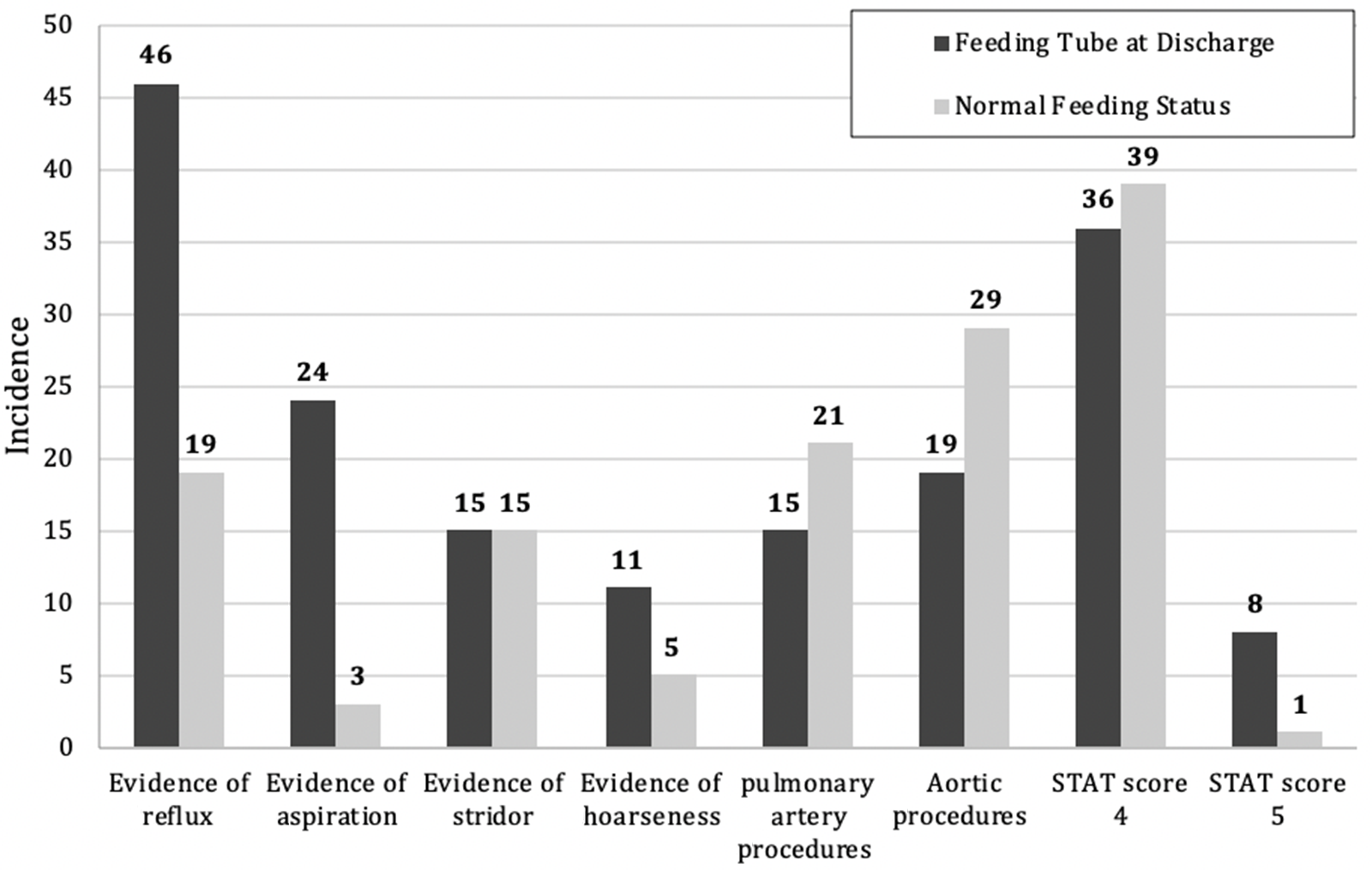
Feeding difficulty after congenital heart surgery has been identified as a common post-operative morbidity. Our data demonstrate that the incidence of being discharged with a feeding tube after congenital heart surgery was highest amongst patients younger than 12 months, 46.05% compared to 1.15% for those in the older cohort, which is similar to other studies. Reference Alten, Rhodes and Tabbutt18–Reference Pasquali, Ohye and Lu20 The most common variables associated with feeding difficulty are shown in Fig 1. The variables with the highest rate of feeding tubes at discharge were evidence of aspiration (89%), Society of Thoracic Surgeons–European Association for Cardio-Thoracic Surgery score of 5 (88%), reflux (71%), and hoarseness (69%). Additionally, the variables with the highest incidence of feeding difficulty were reflux (46), Society of Thoracic Surgeons–European Association for Cardio-Thoracic Surgery score 4 (36), and aspiration (24). The most frequently utilised method of feeding amongst those discharged with an alternative feeding plan was partial per os + nasogastric tube, which was present in 50 of the 72 patients discharged on enteral feeds. Compared to other studies, our cohort had lower rates of gastrostomy tube placement prior to discharge but much higher utilisation of NG tube feedings. The overall combined rate of enteral feeding tube at discharge was similar to prior studies. Reference Holst, Serrano and Shekerdemian16,Reference Raulston, Smood and Moellinger21,Reference Einarson and Arthur22 It is worth noting that this study did not record patients who were prescribed a thickened diet only, making these numbers more conservative estimates of true feeding difficulty at discharge. Future studies could benefit from including these data in their analysis as well as variables such as feeding position. None of the other variables listed in Table 1, such as race or insurance, were associated with statistically significant rates of feeding difficulty which is encouraging and similar to what has been reported in the literature. Reference Holst, Serrano and Shekerdemian16,Reference Saharan, Legg, Armsby, Zubair, Reed and Langley23
Congenital heart surgery and enteral feeding tube incidence at discharge.

Both aortic and pulmonary artery procedure groups showed higher rates of feeding difficulty as compared to the other procedures. One possible explanation for this could be the proximity of the great vessels with both the oesophagus and the recurrent laryngeal nerve which provides innervation to a majority of the larynx. This finding is similar to a 2003 study that separated congenital heart surgery procedures into similar groupings and found that aortic arch operations were at a significantly higher rate of post-operative feeding difficulties. Reference Einarson and Arthur22 The Society of Thoracic Surgeons–European Association for Cardio-Thoracic Surgery score also showed a positive correlation between increased score and incidence of feeding difficulty. For the highest risk groups, a score of 4 or 5, 52.38% were discharged with an enteral feeding tube as opposed to only 11.62% of those with a score of 1, 2, or 3. A similar association was reported by Holst et al in 2019. Reference Holst, Serrano and Shekerdemian16 Interestingly, transesophageal echocardiogram was not associated with an increased rate of feeding tube at discharge, which is dissimilar to findings reported by Kohr et al; however, we did not record probe size in our review, which was suggested as a risk factor in their study. Reference Kohr, Dargan and Hague7
Despite the relatively high rate of dysphagia at discharge, especially in those younger than 12 months of age, supportive consultations were not frequently utilised with the exception of speech-language pathology (Table 3). Otolaryngology was utilised in 25/326 (7.67%) of eligible patients; flexible nasolaryngoscopy was performed in only 10 patients. Ultimately, 4 patients (1.23%) were diagnosed with vocal fold motion impairment within this cohort. Meta-analysis estimates the incidence of vocal fold motion impairment following congenital heart surgery to range between 18.5% and 42.5%, suggesting a significant number of patients were likely undiagnosed presumably due to a lack of screening. Reference Strychowsky, Rukholm, Gupta and Reid24 Furthermore, an ongoing prospective study at this institution that incorporates routine pre- and post-operative flexible nasolaryngoscopy screening for vocal fold motion impairment has shown preliminary results much closer to that of current literature. Reference Strychowsky, Rukholm, Gupta and Reid24 Literature suggests that patients benefit from diagnosis of vocal fold motion impairment at an earlier date, presumably because they are able to receive appropriate supportive therapies. There is some evidence that this could lead to decreased rates of mortality, readmission, and developmental delay. Reference Holst, Serrano and Shekerdemian16,Reference Medoff-Cooper, Irving and Hanlon17,Reference Tibbetts, Wu, Hsu, Burton, Nassar and Tan26,Reference Jabbour and Robey27 Analysis comparing video fluoroscopic swallow study and bedside swallow assessment was not feasible due to the low number of inpatient fluoroscopic studies (nine) in this cohort.
The increased rates of readmission for pulmonary- and feeding-related complications within the 1-year follow-up period provides additional context as to the importance of supportive services in the post-operative outcomes in this population. In a study looking at readmission specifically following congenital heart surgery conducted by Saharan et al, the presence of an nasogastric tube significantly increased the risk of readmission (Odds ratio: 2.201; 95% confidence interval 1.154−4.197; p-value = 0.016). Reference Saharan, Legg, Armsby, Zubair, Reed and Langley23 Our findings support this and the recognition that the presence of an nasogastric tube as a risk factor and not necessarily protective following congenital heart surgery could help improve care and outcomes.
Within our models, the clinical symptom of reflux was the only laryngeal symptom independently associated with both an increased risk of feeding tube at discharge and prolonging the patient’s length of stay following congenital heart surgery. In a prospective study analysing feeding outcomes in patients undergoing single-ventricle palliative procedures, the evidence of reflux was also found to be significantly associated with poor oral feeding upon univariate analysis. Reference Indramohan, Pedigo, Rostoker, Cambare, Grogan and Federman25 Raulston et al specifically analysed aspiration following congenital heart surgery, reporting that 51% of the patients in their population had evidence of aspiration and the majority (73%) of those patients were clinically silent. Reference Raulston, Smood and Moellinger21 Our own findings only recorded aspiration in 8.28% of the patients. A possible explanation for this is that the population in this study had a wider range of procedures included as well as a lack of routine screening. This contrast supports the finding that 73% of the patients with aspiration in the Raulston et al study had clinically silent aspiration. Hoarseness and stridor were not commonly reported within other studies related to congenital heart surgery and feeding outcomes. Because of the relatively large confidence intervals reported in Table 5, further evidence based on larger sample sizes is needed to more precisely measure the relationship of laryngeal symptoms following congenital heart surgery and feeding difficulties.
This study benefits from the strict exclusion protocol that limits the number of confounding variables (such as feeding status prior to surgery) present in the analysis while still retaining a sample size that is larger than similar studies published previously. Categorised procedures should not be overanalysed as many of the patients underwent multiple surgical procedures while the primary procedure was used to assign the patient to a specific group and some surgeries could be considered for more than one group (Appendix A). It is likely that because of the imperfect groupings, The Society of Thoracic Surgeons–European Association for Cardio-Thoracic Surgery score served as a better risk factor in the models presented in Tables 5 and 6.
Evidence comparing the rate and method of feeding tube intervention is not possible owing to the single institution design of this study. Because of this, it would not be valid to compare one’s home institution to the results presented in this study as feeding tube preferences are highly variable between institutions and physicians. Lastly, because of the retrospective nature of the study design, it is possible that some of the patients had screening tests done at outside facilities that were not available during the chart review and some symptoms might not have been recorded when present. With these strengths and limitations in mind, this study provides a system-wide post-operative snapshot of patients undergoing congenital heart surgery combined with a 1-year post-operative follow-up. Results warrant continued research focused on feeding difficulties in this vulnerable paediatric population while also highlighting opportunities to improve medical decision-making.
In conclusion, our findings support that patients undergoing congenital heart surgery are at an increased risk for feeding difficulty following surgery. Patients’ age, Society of Thoracic Surgeons–European Association for Cardio-Thoracic Surgery score, procedure group, and laryngeal symptoms were associated with alternative feeding therapy following congenital heart surgery in this study. Future studies should consider incorporating these variables in an effort to develop multidisciplinary management protocols to improve feeding outcomes following congenital heart surgery.
Acknowledgements
None.
Financial support
Nikhila Raol and this study were supported by the American Society of Pediatric Otolaryngology career development award.
Conflict of interest
None.
Ethical standards
All applicable international, national, and/or institutional guidelines for the care and use of animals were followed. This article does not contain any studies with human participants or animals performed by any of the authors.
Appendix A: Detailed procedure group assignments