Introduction
Otolith chemistry has been widely used to study stock composition or natal origin of several fish species (Crook & Gillanders, Reference Crook and Gillanders2006; Rooker et al., Reference Rooker, Secor, DeMetrio, Kaufman, Ríos and Tičina2008, Reference Rooker, Arrizabalaga, Fraile, Secor, Dettman, Abid, Addis, Deguara, Karakulak, Kimoto, Sakai, Macías and Santos2014, Reference Rooker, Wells, Itano, Thorrold and Lee2016; Thorisson et al., Reference Thorisson, Jónsdóttir, Marteinsdottir and Campana2011; Radigan et al., Reference Radigan, Carlson, Fincel and Graeb2018) because the otolith material (calcium carbonate and trace elements) is deposited constantly and it is not resorbed (Campana & Neilson, Reference Campana and Neilson1985; Casselman, Reference Casselman1990; Campana & Thorrold, Reference Campana and Thorrold2001; Elsdon et al., Reference Elsdon, Wells, Campana, Gillanders, Jones, Limburg, Secor, Throrrold and Walther2008). Most studies of natal origin using otolith chemistry have been developed for marine species (Rooker et al., Reference Rooker, Secor, DeMetrio, Kaufman, Ríos and Tičina2008; Schloesser et al., Reference Schloesser, Neilson, Secor and Rooker2010; Thorisson et al., Reference Thorisson, Jónsdóttir, Marteinsdottir and Campana2011), there being fewer for freshwater and estuarine fish (Crook & Gillanders, Reference Crook and Gillanders2006; Radigan et al., Reference Radigan, Carlson, Fincel and Graeb2018).
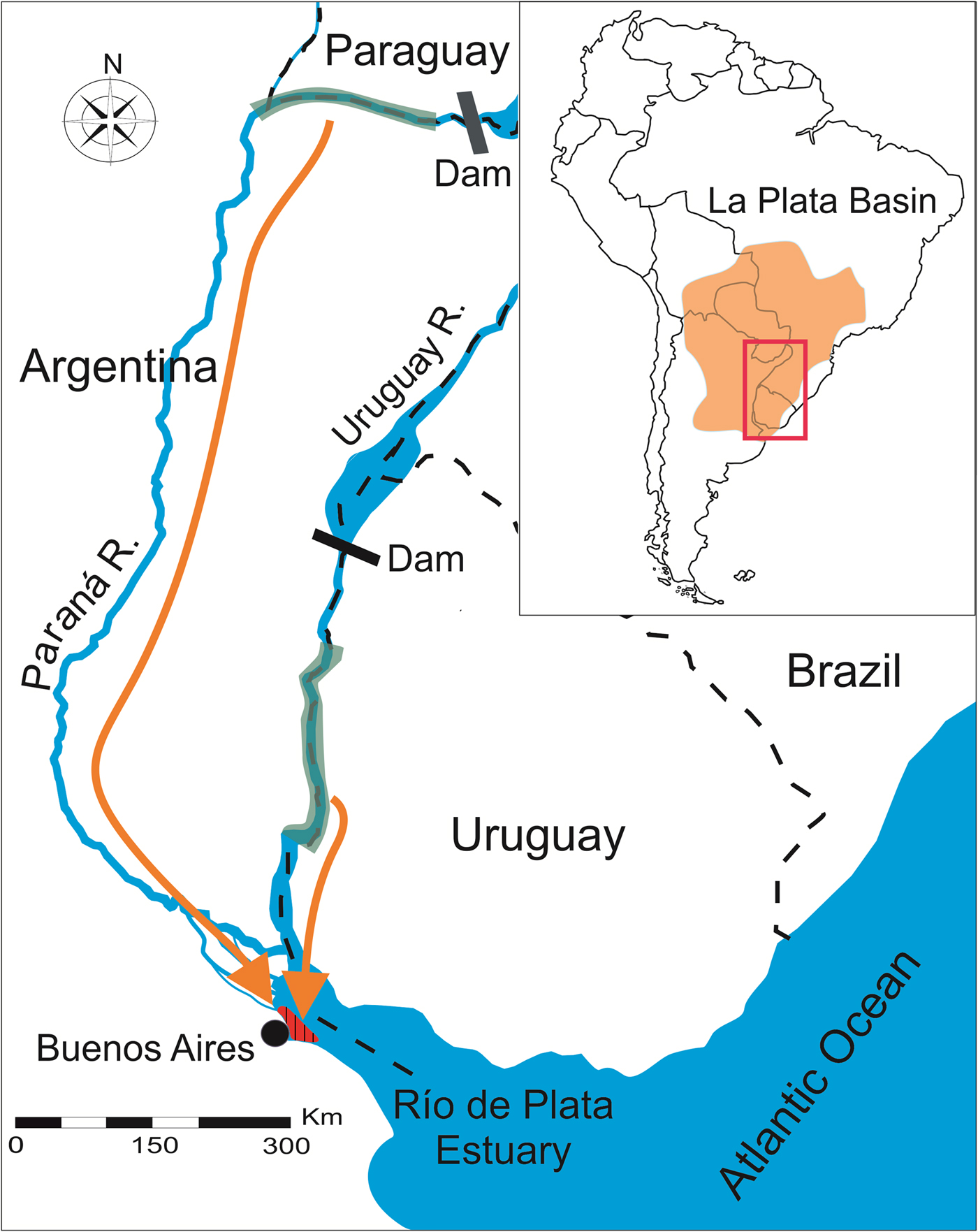
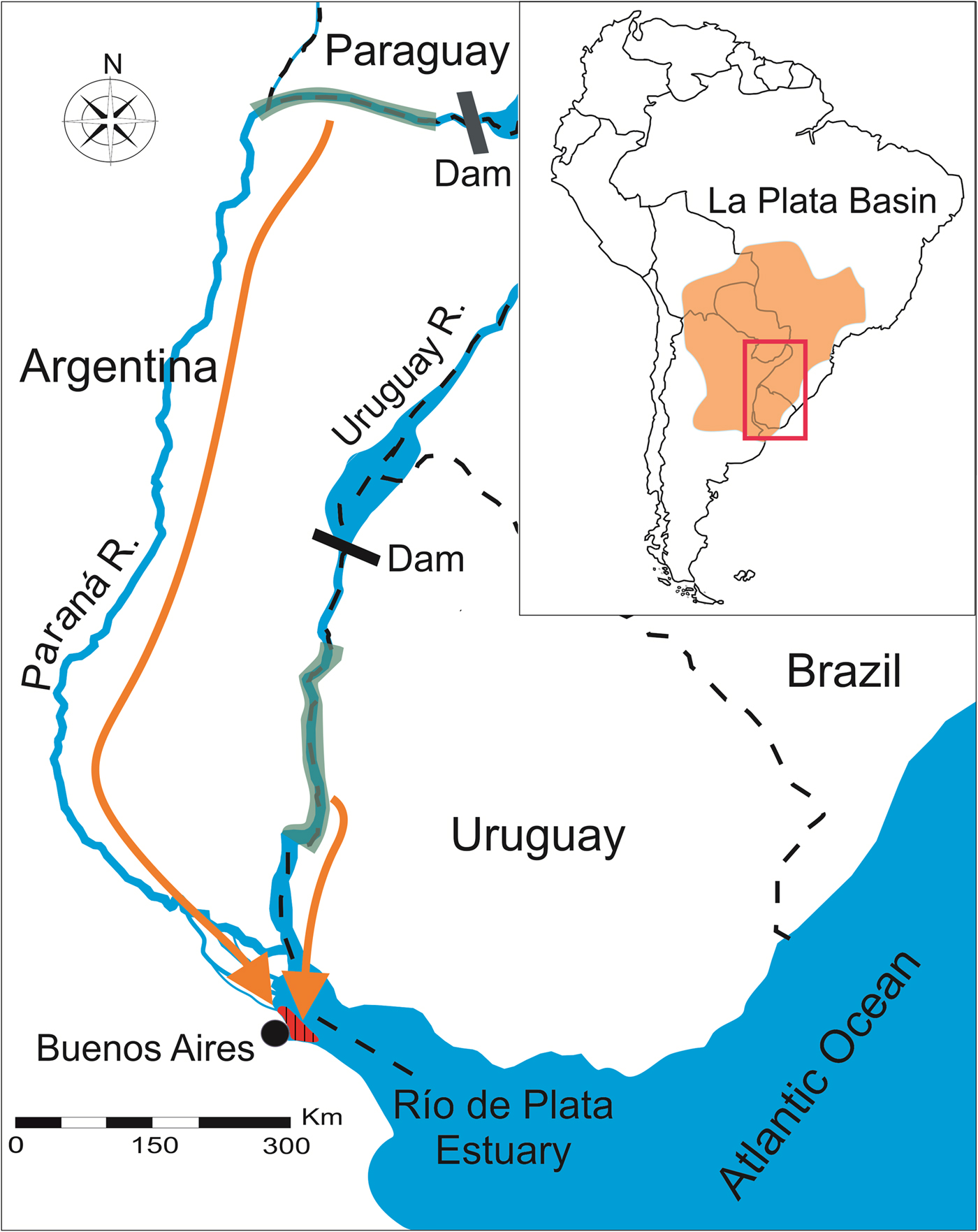
Streaked prochilod (Prochilodus lineatus, Valenciennes, 1836) is the main fishery resource of the La Plata Basin and it is distributed throughout the basin (Argentina, Bolivia, Brazil, Paraguay and Uruguay). The management of P. lineatus is complex because it is a transboundary species and the sources of recruitment are not completely known. This species migrates to feed and spawn (over 1500 km), and currently the fishery is mainly based on the dominant 2010 cohort (Bonetto et al., Reference Bonetto, Canon Veron and Roldán1981; Delfino & Baigun, Reference Delfino and Baigun1985; Espinach Ros et al., Reference Espinach Ros, Sverlij, Amestoy and Spinetti1998). The most important reproductive areas are located in the middle/low reaches of the Paraná and Uruguay rivers (Sverlij et al., Reference Sverlij, Espinach Ros and Ortí1993), which are the two main tributaries of the Río de la Plata Estuary (Figure 1). Countries such as Argentina have exported more than 40,000 t year−1 of P. lineatus caught in these areas (Baigún et al., Reference Baigún, Minotti and Oldani2013; MINAGRO, 2018). Particularly, the Río de la Plata Estuary has historically been an important capture area for both Argentina and Uruguay. In this sense, it is very important to know the degree of contribution from freshwater nursery areas to estuarine stocks to support the efficiency of fisheries management in the estuary.
Sampling sites of Prochilodus lineatus (red hatched area). Arrows show the origin of the contributions from freshwater nursery areas to estuary. Green hatched areas show the freshwater nursery areas.
Recently, Avigliano et al. (Reference Avigliano, Pisonero, Sánchez, Domanico and Volpedo2018b) have developed a multi-elemental baseline data set based on Laser Ablation Inductively Coupled Plasma Mass Spectrometry (LA-ICP-MS) determination of nine lapilli otolith trace elements of young-of-year (YOY) P. lineatus, which represent the two main known nursery areas in La Plata Basin (Paraná and Uruguay rivers). This baseline could allow estimation of the natal origin of fish caught in the estuary in relation to the freshwater nurseries. Maximum likelihood-based methods and discriminant analysis (DA) have been widely used to study stock composition due to their high discriminatory power in mixed situations (Campana, Reference Campana1999; Gillanders, Reference Gillanders2002, Reference Gillanders2005; Kerr & Campana, Reference Kerr, Campana, Cadrin, Kerr and Mariani2013). These models, based on otolith LA-ICP-MS microchemistry have demonstrated their potential to study natal origin of marine and freshwater fish (Crook & Gillanders, Reference Crook and Gillanders2006; Thorisson et al., Reference Thorisson, Jónsdóttir, Marteinsdottir and Campana2011; Rooker et al., Reference Rooker, Arrizabalaga, Fraile, Secor, Dettman, Abid, Addis, Deguara, Karakulak, Kimoto, Sakai, Macías and Santos2014), which could contribute to understanding the recruitment sources of the Río de la Plata Estuary.
Therefore, the objective of this project was to estimate the contribution of Prochilodus lineatus from freshwater nursery areas to estuarine populations (young and adult fish) of the Río de la Plata Estuary (La Plata Basin), using otolith LA-ICP-MS chemistry analysis and discriminatory models such as maximum classification-likelihood and discriminant analysis.
Materials and methods
Study area and sampling
The La Plata Basin crosses through five countries (Argentina, Bolivia, Brazil, Paraguay and Uruguay) in South America and lies between latitudes 17° and 36°, where the current flows in a north–south direction (Figure 1). Fish were caught by using trammel nets in the Río de la Plata Estuary on the border between Argentina and Uruguay (Figure 1) in 2011 and 2017. Collection permits in Argentina were granted by Ministerio de Asuntos Agrarios de Buenos Aires and fish handling during sampling was performed following guidelines of the ethical committee of the Consejo Nacional de Investigaciones Cientícas y Técnicas (CONICET). Fish were measured (standard length = SL, in cm) and the lapilli otoliths were extracted. Lapilli otolith was used instead of sagittae or asterisci otolith because it is larger in Characiformes such as P. lineatus (Avigliano et al., Reference Avigliano, Velasco and Volpedo2015; Volpedo et al., Reference Volpedo, Thompson and Avigliano2017).
Sample preparation and chemical analysis
Left otoliths were weighed, decontaminated three times with 2% HNO3 (Merck KGaA, Garmstadt, Germany) and rinsed five times in Milli-Q water (18.2 mOhm cm−1). Decontaminated otoliths were embedded in epoxy, and then sectioned through the core to a thickness of 1000 µm using a low speed saw (Buehler Isomet, Hong Kong, China).
Fish age was estimated by counting the annuli in the otolith (Espinach Ros et al., Reference Espinach Ros, Demonte, Campana, Trogolo, Dománico and Cordiviola2008) sections using a stereomicroscope (Leica EZ4-HD, Singapore). After that, sections were fixed to glass slides, polished using 9 µm-grid sandpaper and ultrasonically cleaned for 5 min in Milli-Q water.
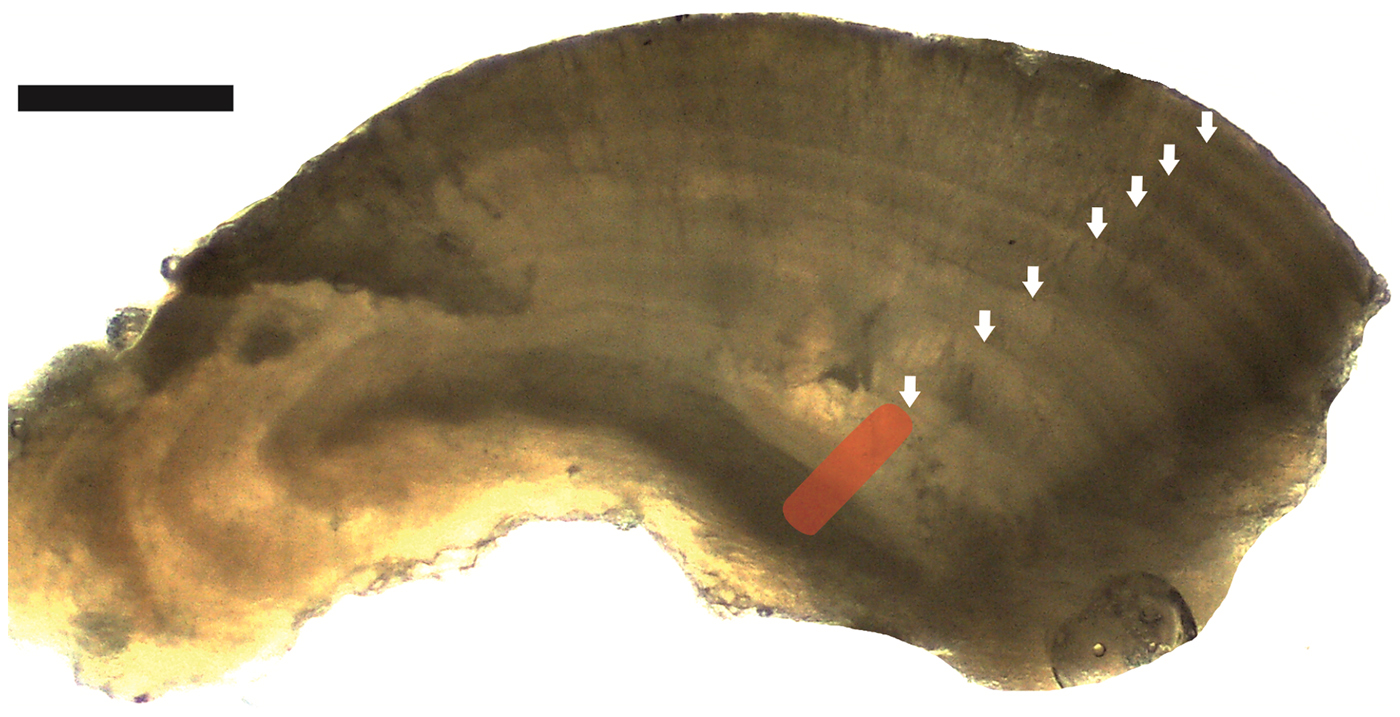
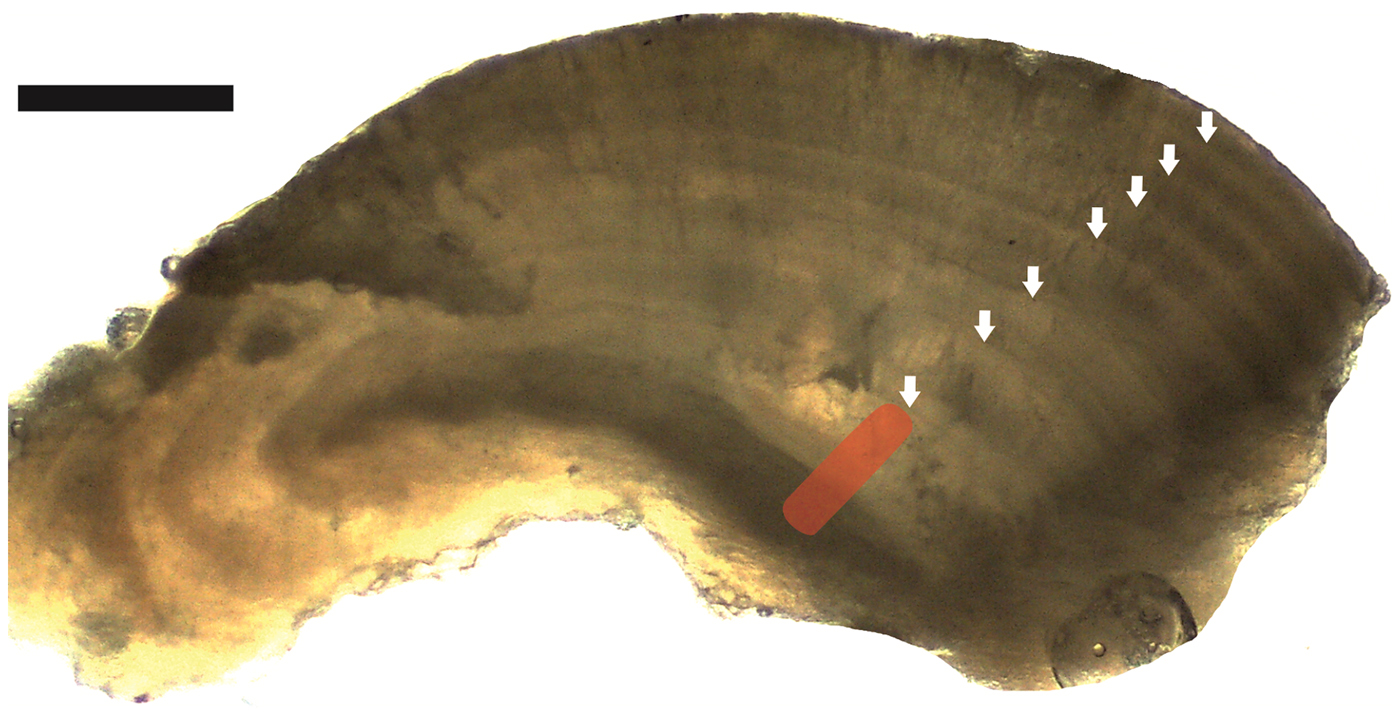
The isotope concentrations 138Ba, 65Cu, 43Ca, 7Li, 25Mg, 55Mn, 208Pb, 85Rb, 88Sr and 66Zn were determined by LA-ICP-MS at the Department of Physics from the University of Oviedo, Spain. A 193 nm ArF Excimer laser ablation system (Photon Machines Analyte G2) coupled to an ICP-QMS Agilent 7700 (Santa Clara, USA) was used for the analysis. Analytical conditions were configured according to Avigliano et al. (Reference Avigliano, Pisonero, Dománico, Silva, Sánchez and Volpedo2018a, Reference Avigliano, Pisonero, Sánchez, Domanico and Volpedo2018b). Radial line-scans of ~190 µm length were carried out from core to the first annuli (Figure 2) using a circular aperture at scanning speed of 5 µm s−1 (spot diameter: 85 µm; crater depth: 160 µm). Intensity ratios 232Th16O/232Th (<0.35%) and 238U/232Th (~1) were used for monitoring the plasma robustness and NIST 612 and NIST 610 reference materials (silicate glass) were used as external and secondary standard, respectively (Pearce et al., Reference Pearce, Perkins, Westgate, Gorton, Jackson, Neal and Chenery1997; Jochum et al., Reference Jochum, Weis, Stoll, Kuzmin, Yang, Raczek, Jacob, Stracke, Birbaum, Frick, Günther and Enzweiler2011; NIST, 2012). Analyte recoveries for NIST 610 ranged from 97 to 104% for 7Li, 25Mg, 65Cu, 85Rb, 88Sr, 138Ba and 208Pb and 70 to 85% for 66Zn and 55Mn. Isotope signals were normalized to the internal standard 43Ca (38.8 wt.%) (Yoshinaga et al., Reference Yoshinaga, Nakama, Morita and Edmonds2000; Hamer et al., Reference Hamer, Henderson, Hutchison, Kemp, Green and Feutry2015) and the concentrations were expressed as molar ratios (element/Ca: μmol mol−1 and mmol mol−1).
Lapillus otolith section of Prochilodus lineatus (age-7) from Río de la Plata Estuary showing the core laser ablation area (red hatched area). The white arrows indicate the annuli. Scale bar: 250 µm.
Recruitment sources estimates
Because the otolith weight and standard length could be associated with the incorporation of elements into the otolith (Campana, Reference Campana, Cadrin, Kerr and Mariani2013), the effect of these variables on the elemental ratios was assessed by Spearman correlation.
Natal origin of fish caught in 2011 and 2017 in the Río de la Plata Estuary was predicted using three different methods: direct maximum-likelihood-estimation (MLE), maximum classification-likelihood estimator (MCL), and quadratic discriminant analysis (QDA). MLE and MCL were carried out using HISEA program (Millar, Reference Millar1990), while QDA was performed using Systat 13.
Otolith core fingerprints of YOY fish sampled in 2010 (same cohort) were used as baseline data (Avigliano et al., Reference Avigliano, Pisonero, Sánchez, Domanico and Volpedo2018b). The baseline was comprised of lapilli otolith core ratio values (Ba:Ca, Cu:Ca, Li:Ca, Mg:Ca, Mn:Ca, Rb:Ca, Sr:Ca, Pb:Ca and Zn:Ca) of YOY P. lineatus from Paraná and Uruguay nurseries. This baseline data set has shown high ability in detecting differences between Uruguay (96.6%) and Paraná (100%) rivers (average = 98.3%) fingerprints (Avigliano et al., Reference Avigliano, Pisonero, Sánchez, Domanico and Volpedo2018b).
Prior to the QDA, multicollinearity of the baseline was tested by calculating the tolerance value, which was calculated as 1 minus R2 of the respective variable with all other variables included in the current model (Hair et al., Reference Hair, Black, Babin and Anderson2014). Moreover, homogeneity of variance-co-variance matrices was verified using Box test. The prior probabilities of classification were estimated on sample sizes and group numbers (White & Ruttenberg, Reference White and Ruttenberg2007) and the classification accuracy was evaluated by leave-one-out cross-validation. The mean discriminant coefficient (Backhaus et al., Reference Backhaus, Erichson, Plinke and Weiber2016) was used to estimate the weight of each elemental ratio that contributed most to the separation among the two freshwater sources.
Standard deviations of the maximum likelihood methods estimates were calculated by running the HISEA program in simulation mode (bootstrap) using 1000 simulations (Millar, Reference Millar1990; DeVries et al., Reference DeVries, Grimes and Prager2002; Rooker et al., Reference Rooker, Secor, DeMetrio, Kaufman, Ríos and Tičina2008, Reference Rooker, Arrizabalaga, Fraile, Secor, Dettman, Abid, Addis, Deguara, Karakulak, Kimoto, Sakai, Macías and Santos2014, Reference Rooker, Wells, Itano, Thorrold and Lee2016; Avigliano et al., Reference Avigliano, Pisonero, Sánchez, Domanico and Volpedo2018b).
Results
Age-1 fish caught in 2011 (N = 29, SL ± SD = 23.0 ± 1.8 cm) and age-7 caught in 2017 (N = 24, SL ± SD = 44.5 ± 1.4 cm) were used, and the estimates of origin were made using fish corresponding to the baseline cohort (2010 dominant cohort).
No significant correlations were found between otolith weight or standard length and elemental ratios (P > 0.05).
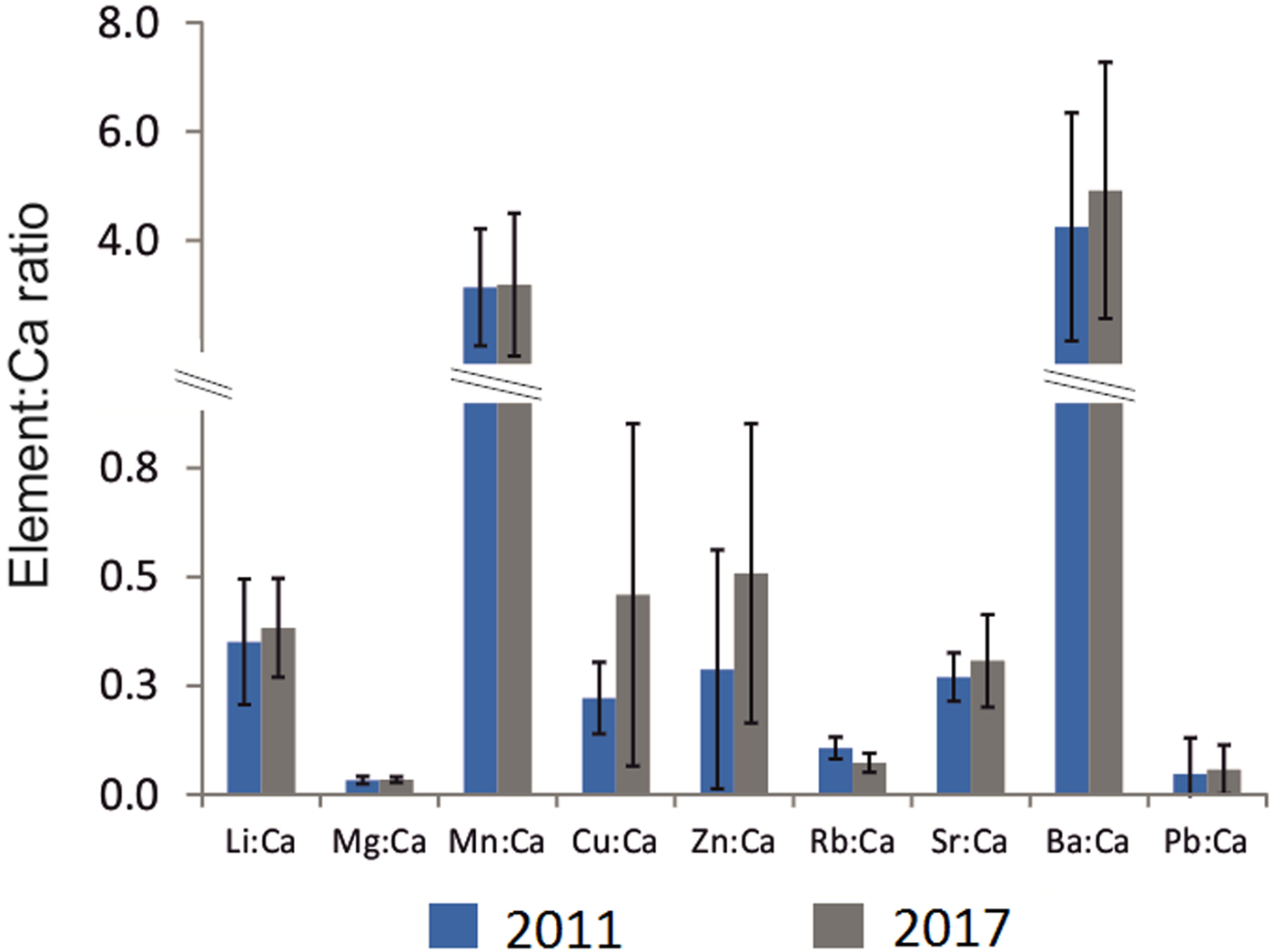
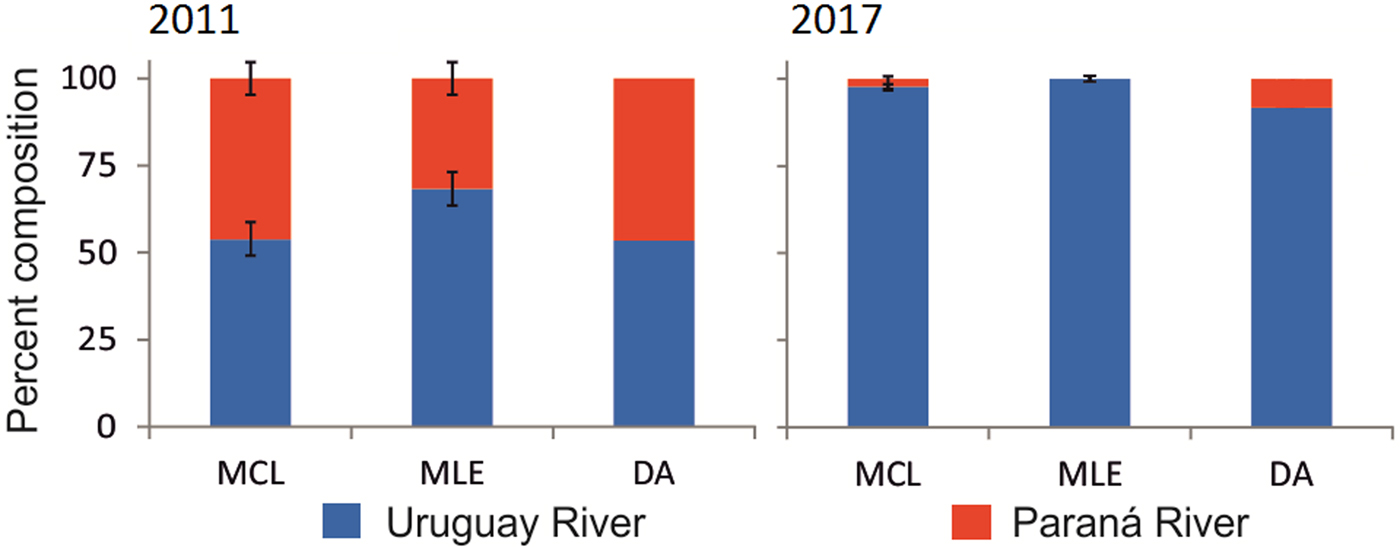
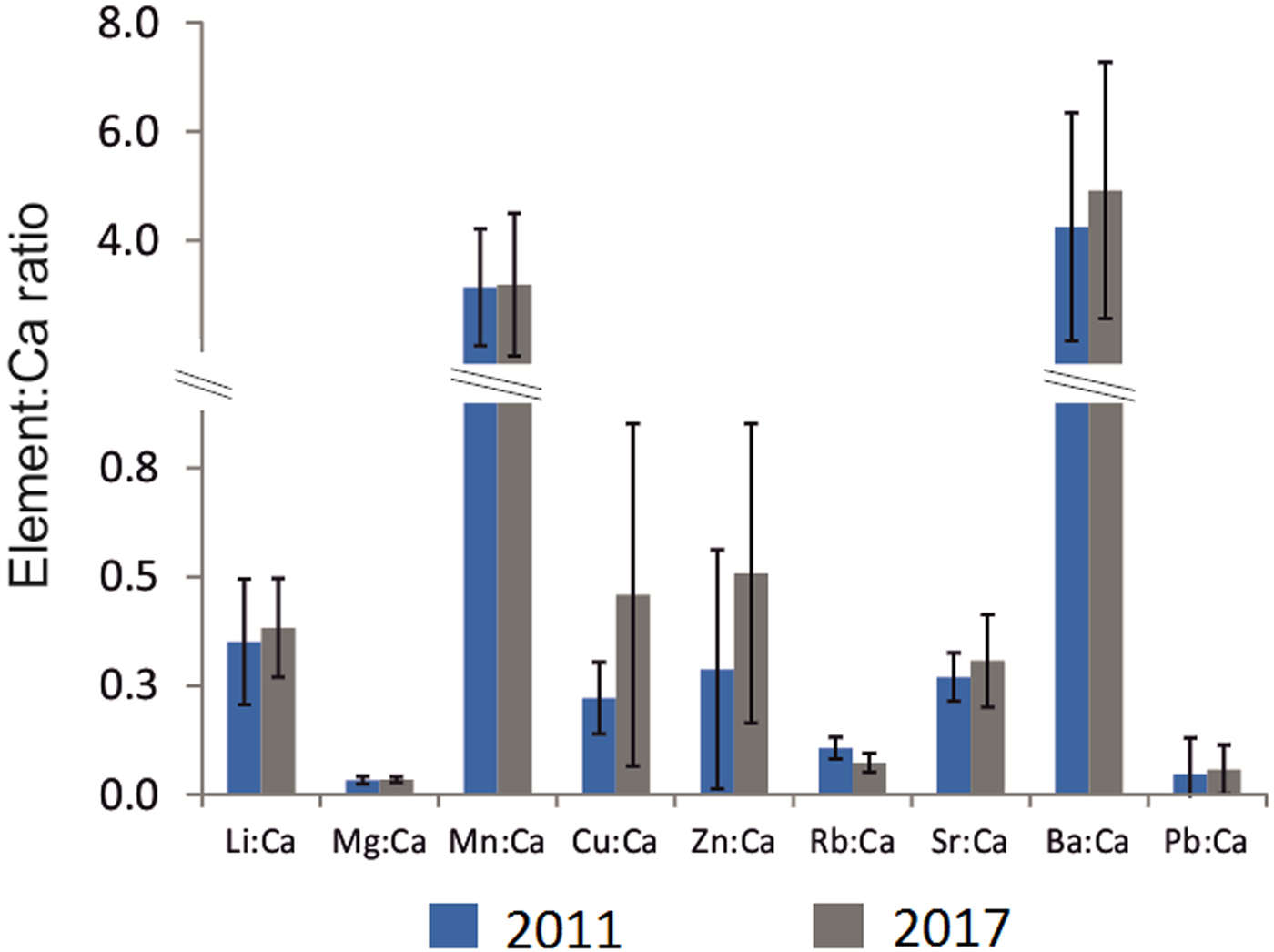
Elemental ratios of the unknown mixed sample from Río de la Plata Estuary (Age-1 and Age-7) are shown in Figure 3. The ratios that showed highest mean levels for both Age-1 (young) and Age-7 (adult) fish were Sr:Ca, Mg:Ca and Ba:Ca (>0.42 μmmol mol−1), whereas the lowest were Mn:Ca, Li:Ca, Zn:Ca, Cu:Ca, Rb:Ca and Pb:Ca (<0.31 µmmol mol−1). The tendency Sr:Ca>Mg:Ca>Ba:Ca>Mn:Ca>Li:Ca>Zn:Ca>Cu:Ca>Rb:Ca>Pb:Ca was observed for Age-1 fish, while Sr:Ca>Mg:Ca>Ba:Ca>Mn:Ca>Zn:Ca>Cu:Ca>Li:Ca>Rb:Ca>Pb:Ca was obtained for Age-7 fish. These data were compared with YOY baseline and classified into freshwater nurseries (Paraná and Uruguay rivers) using QDA and maximum likelihood models. Results of stock composition estimates are shown in Figure 4. MLE suggested that the age-1 (2011) population was mixed with contributions of 68.3 ± 4.7 and 31.7 ± 4.7% for Uruguay and Paraná nurseries, respectively. Estimates using MCL indicated a slightly higher degree of mixing with percentages of 54 ± 4.9 and 46 ± 4.9% for Uruguay and Paraná Rivers, respectively. QDA also indicated that the population was highly mixed, with 51.7% of the young fish originating from the Uruguay River, while the remaining young fish were classified as Paraná fingerprint (48.3%).
Mean ± standard deviation of elemental ratios in μmol mol−1 (Sr:Ca and Mg:Ca in mmol mol−1) in lapilli otoliths core from Río de la Plata Estuary for sampling year.
Results of maximum-likelihood-estimation (MLE), maximum-classification-likelihood (MCL) and quadratic discriminant analysis (DA). Per cent composition estimates indicate the recruitment source of young (age-1, N = 29) and adult (age-7, N = 24) Prochilodus lineatus from Río de la Plata Estuary.
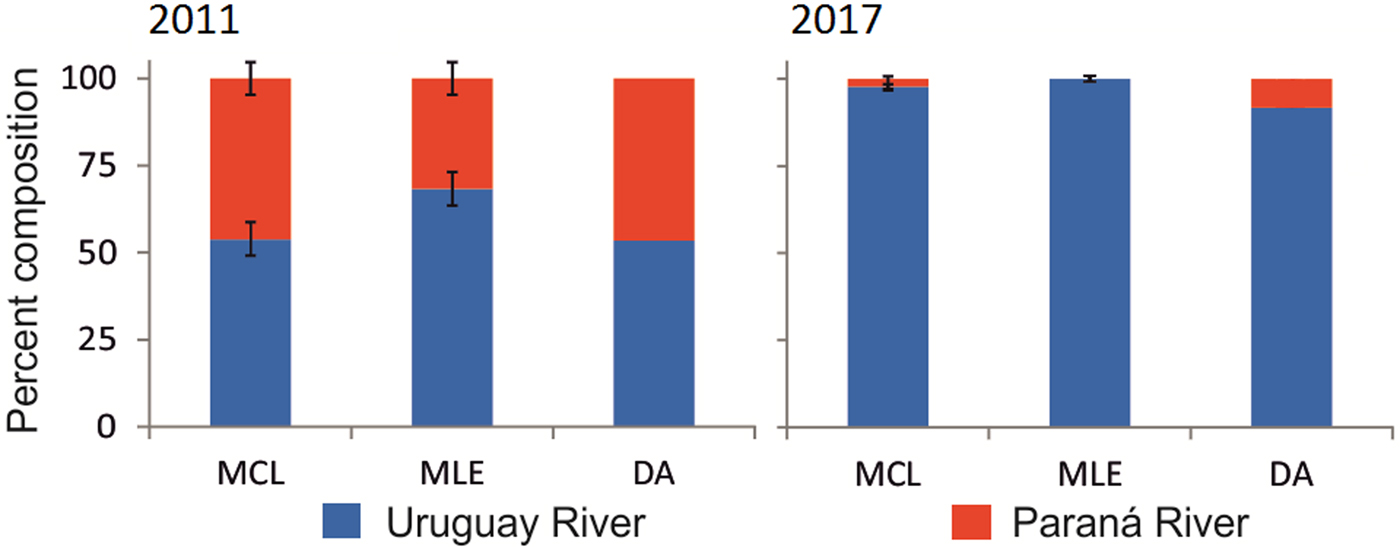
In relation to age-7 fish (2017), the degree of mixing was found to decrease with respect to 2011 (Figure 4). MLE showed that the population of adult fish from Río de la Plata Estuary was not mixed, with 100 ± 0.7% of the fish originating from the Uruguay River. A similar result was observed by MCL, where 91.7 ± 3.3% of recruits originated from Uruguay waters, suggesting a limited contribution from the Paraná River. Like the MCL model, QDA showed a low proportion from the Paraná River (8.3%), the Uruguay River being the highest contributor (91.7%).
Based on the QDA discriminant coefficients, Rb:Ca (−0.81), Zn:Ca (−0.42) and Sr:Ca (0.33) ratios were identified as the most important variables among the two freshwater sources.
The estimates based on bootstrap mode showed standard deviations lower than 5% (Figure 4), suggesting a good degree of certainty of the estimations.
Discussion
It is necessary to know the recruitment sources from freshwater nursery areas to estuarine stocks to support the efficiency of fisheries management in the La Plata Basin. For this, it is mandatory to test the efficiency of different estimation methods. In this paper, maximum likelihood mixture models and QDA showed comparable estimates, nevertheless, QDA and MCL showed a high sensitivity to assess small contributions. Thus, MCL and QDA seem to be the most appropriate estimators for studying the recruitment sources of P. lineatus from Río de la Plata Estuary. According to the three models, the Uruguay River was the most important contributor for both young (age-1) and adult (age-7) populations. These results show the potential of these methods for studying the recruitment sources of P. lineatus from freshwater to estuarine environments of the La Plata Basin.
Maximum likelihood mixture models and QDA based on otolith LA-ICP-MS microchemistry have shown to be a potential tool for studying recruitment sources in several continents (Crook & Gillanders, Reference Crook and Gillanders2006; Thorisson et al., Reference Thorisson, Jónsdóttir, Marteinsdottir and Campana2011; Rooker et al., Reference Rooker, Arrizabalaga, Fraile, Secor, Dettman, Abid, Addis, Deguara, Karakulak, Kimoto, Sakai, Macías and Santos2014). Nevertheless, the application of these methods has been poorly implemented in Latin America (Niklitschek et al., Reference Niklitschek, Secor, Toledo, Valenzuela, Cubillos and Zuleta2014; Avigliano, & Volpedo, Reference Avigliano and Volpedo2016; Avigliano et al., Reference Avigliano, Pisonero, Sánchez, Domanico and Volpedo2018b), this paper being the first one using otolith microchemistry to study contributions from freshwater nursery areas to estuarine fish populations.
Several authors have employed both MLE and MLC methods (Fraile et al., Reference Fraile, Arrizabalaga and Rooker2014; Rooker et al., Reference Rooker, Arrizabalaga, Fraile, Secor, Dettman, Abid, Addis, Deguara, Karakulak, Kimoto, Sakai, Macías and Santos2014; Avigliano et al., Reference Avigliano, Pisonero, Sánchez, Domanico and Volpedo2018b), while others have used MLE (Crook & Gillanders, Reference Crook and Gillanders2006) or MCL (Lazartigues et al., Reference Lazartigues, Plourde, Dodson, Morissette, Ouellet and Sirois2016, Reference Lazartigues, Girard, Brodeur, Lecomte, Mingelbier and Sirois2017), separately. Discriminant analysis models have been less used because it is necessary to know the prior probabilities of classification to each group, these being rarely known in nature (Millar, Reference Millar1990; Gillanders, Reference Gillanders2005). For example, to assume equal probabilities of classification could tend to under-estimate the misclassification probabilities, especially when the size of the baseline is very small (Millar, Reference Millar1990). In this regard, recent authors have preferred to used maximum likelihood estimators (Fraile et al., Reference Fraile, Arrizabalaga and Rooker2014; Rooker et al., Reference Rooker, Arrizabalaga, Fraile, Secor, Dettman, Abid, Addis, Deguara, Karakulak, Kimoto, Sakai, Macías and Santos2014; Lazartigues et al., Reference Lazartigues, Girard, Brodeur, Lecomte, Mingelbier and Sirois2017; Avigliano et al., Reference Avigliano, Pisonero, Sánchez, Domanico and Volpedo2018b), although these methods in combination with discriminant analysis have also been used (Fraile et al., Reference Fraile, Arrizabalaga and Rooker2014). Avigliano et al. (Reference Avigliano, Pisonero, Sánchez, Domanico and Volpedo2018b) have assessed the contribution from nursery areas to freshwater stocks of P. lineatus in the La Plata Basin using otolith chemistry and maximum classification-likelihood models (MLE and MLC methods) simultaneously. In that study, the degree of mixing of adults was higher than in young fish from a freshwater environment. Avigliano et al. (Reference Avigliano, Pisonero, Sánchez, Domanico and Volpedo2018b) have not found remarkable differences for the estimates and standard deviations obtained using MLC and MLE methods. However, they have suggested that the MCL method could be more useful than MLE for P. lineatus, considering that MCL has a better performance in the estimates when there are very low contributions (Millar, Reference Millar1990).
Elemental incorporation into the otolith may be related to the surrounding environment, physiology and genetics, among other factors (Ranaldi & Gagnon, Reference Ranaldi and Gagnon2008; Brown & Fuentes, Reference Brown and Fuentes2010; Webb et al., Reference Webb, Woodcock and Gillanders2012; Barnes & Gillanders, Reference Barnes and Gillanders2013). In this paper, Rb:Ca, Zn:Ca and Sr:Ca ratios were identified as the variables that contributed most to the separation among the two freshwater sources. Interestingly, Rb:Ca incorporation pathways have not yet been explored. Nevertheless, Rb:Ca has previously been detected in lapilli otolith of Megaleporinus obtusidens from the La Plata Basin (same study area) (Avigliano et al., Reference Avigliano, Pisonero, Dománico, Silva, Sánchez and Volpedo2018a), which suggests that this element could be available in the environment. Otolith Sr:Ca ratio is generally positively related to salinity (Campana, Reference Campana1999; Avigliano & Volpedo, Reference Avigliano and Volpedo2013; Bouchard et al., Reference Bouchard, Thorrold and Fortier2015), while otolith Zn:Ca incorporation may be influenced by diet (Ranaldi & Gagnon, Reference Ranaldi and Gagnon2008).
All models showed that there is a temporal variability in the stock composition (Figure 4). The temporal variation in the composition of stocks could be related to the active migratory behaviour of the species and environmental factors (floods, water flow), which could affect the displacements. Due to the large size of the estuary (35,000 km2, Guerrero et al., Reference Guerrero, Acha, Framiñan and Lasta1997), it is possible that the stock composition also varies spatially. Thus, it is strongly recommended to assess the mixing of stocks for all age classes and cohorts considering different sampling sites in the estuary. In the case of this work, it is evident that for the 2010 cohort, the sources of recruitment from the Uruguay River were fundamental for Río de la Plata Estuary populations. On the other hand, the areas with the potential to generate alternative sites of spawning in the migratory corridor should be monitored, because the existence of new or small contributions from unknown nursery areas could modify the estimates made. In addition, the monitoring may contribute to the management of the predominant nursery areas, which should be properly conserved.
The results of this work allow recommending the use of similar approaches with other commercially important species that inhabit the estuary and could have nurseries in freshwater such as Pseudoplatystoma corruscans, P. fasciatum, Megaleporinus obtusidens, Luciopimelodus pati and Salminus brasiliensis. In this regard, new species-specific baselines should be generated using YOY fish of the different species of the basin.
Acknowledgements
The authors thank CONICET and Asociación Universitaria Iberoamericana de Postgrado (AUIP). We wish to acknowledge the editor and the anonymous reviewers for their constructive comments, which helped us to improve the manuscript.
Financial support
This work was supported by the Universidad de Buenos Aires (UBACYT 20020150100052BA), ANPCyT (PICT 2015-1823), Administrative Commission of the River Uruguay (CARU, 2010-2014) and Government of the Principality of Asturias (FC-15-GRUPIN14-040).