Over the last few decades, the yield and quality of bovine milk has been improved due to the increased knowledge of lactation biology (Bauman et al. Reference Bauman, Mather, Wall and Lock2006). Nevertheless, the molecular mechanisms of synthesis and secretion of major milk components are not well understood (Neville, Reference Neville and Neill2006), especially for milk fat. One of the difficulties when studying fat synthesis and secretion is that the secretion of lipid droplets from epithelial cell lines in vitro is currently not possible (Heid & Keenan, Reference Heid and Keenan2005). This hampers the understanding of the whole synthesis and secretion process. Microscopy and immunocytochemical studies have revealed some possible mechanisms (Mather & Keenan, Reference Mather and Keenan1998), however, many uncertainties remain, such as the question which proteins are involved in the secretion process of lipid droplets.
In recent years, proteomics techniques have shown to be useful to gain knowledge on lactation biology. Proteomics allows for the identification and quantification of the important proteins involved in lactation. Proteomics approaches have been used to study the rodent and human mammary gland and lactation (Wu et al. Reference Wu, Howell, Neville, Yates Iii and McManaman2000; Aksu et al. Reference Aksu, Scheler, Focks, Leenders, Theuring, Salnikow and Jungblut2002; Jacobs et al. Reference Jacobs, Mottaz, Yu, Anderson, Moore, Chen, Auberry, Strittmatter, Monroe, Thrall, Camp Ii and Smith2004; Davies et al. Reference Davies, Morris, Griffiths, Page, Pitt, Stein and Gusterson2006; Kim et al. Reference Kim, Cope, Herring, Robinson, Wilson, Page and Barnes2008; Hadsell et al. Reference Hadsell, Olea, Wei, Fiorotto, Matsunami, Engler and Collier2011). The results have advanced our knowledge of the mammary gland function and milk synthesis and secretion in general, but did not focused on elucidating the unique characters of milk secretion in dairy cows (Reinhardt & Lippolis, Reference Reinhardt and Lippolis2006). For dairy cows, research aimed at studying lactation was mainly done by using functional genomics and transcriptomics (Suchyta et al. Reference Suchyta, Sipkovsky, Halgren, Kruska, Elftman, Weber-Nielsen, Vandehaar, Xiao, Tempelman and Coussens2004; Bionaz & Loor, Reference Bionaz and Loor2007, Reference Bionaz and Loor2008). In only one study, proteomics was used as the primary tool to profile the metabolic proteome of bovine mammary tissue (Beddek et al. Reference Beddek, Rawson, Peng, Snell, Lehnert, Ward and Jordan2008). Lactation biology in dairy cows directly based on proteomics information has hitherto been limited compared with other mammals.
Milk is the bio-fluid secreted by mammary gland, thus the change of milk composition, especially low abundant proteins, could reflect the activity of epithelial cells in mammary gland. Therefore, there have been studies focusing on milk proteins as biomarkers for mastitis by using proteomics analysis (Hogarth et al. Reference Hogarth, Fitzpatrick, Nolan, Young, Pitt and Eckersall2004; Boehmer et al. Reference Boehmer, Bannerman, Shefcheck and Ward2008, Reference Boehmer, Ward, Peters, Shefcheck, McFarland and Bannerman2010). Recently, different bovine milk fractions such as the milk fat globule membrane (MFGM), buttermilk and whey were analysed by proteomic techniques (Reinhardt & Lippolis, Reference Reinhardt and Lippolis2006, Reference Reinhardt and Lippolis2008) (Affolter et al. Reference Affolter, Grass, Vanrobaeys, Casado and Kussmann2010) (Smolenski et al. Reference Smolenski, Haines, Kwan, Bond, Farr, Davis, Stelwagen and Wheeler2007). Many low abundance proteins related to milk synthesis and secretion were identified, especially in MFGM. It is widely accepted that MFGM originates from the epithelial cells (apical membrane, endoplasmic membrane and cytoplasm) of the mammary gland (Neville, Reference Neville and Neill2006). Since endoplasmic membrane (ER), cytoplasm and apical membrane are the places where the milk fat globules are synthesised and secreted (McManaman & Neville, Reference McManaman and Neville2003), it is not surprising to find lipid synthesis and secretion related proteins in this protein fraction. However, to our knowledge, unlike host defence proteins, proteins related to milk synthesis and secretion have not been focused and intensively discussed in bovine milk. Previous milk proteomic studies provide only an incomplete picture of the relation between identified proteins and synthesis and secretion pathways, the functions of only a few selected proteins were discussed. D'Alessandro et al. (Reference D'Alessandro, Zolla and Scaloni2011) reported 573 proteins in bovine milk and analysed their biological functions. However, these 573 proteins were combined from around 40 different proteomics analyses and also the milk synthesis and secretion pathways were not discussed by these authors. So far, there is no comprehensive overview of milk synthesis and secretion proteins in milk. Furthermore, the number of the proteins identified in bovine milk was limited because of limitations in techniques used. With recent improvements in proteomics techniques, it is now possible to obtain a much more refined picture in a single proteomics analysis. In this paper, the identification of lipid synthesis and secretion proteins, the reason why these proteins are presented in milk and the potential of using milk to study lipid synthesis and secretion will be discussed in detail, thus providing a possible new way for understanding lactation biology by analysing milk using proteomics techniques.
Materials and methods
All methods, except milk serum separation and GO annotation, are as previously described by Lu et al. (Reference Lu, Boeren, de Vries, van Valenberg, Vervoort and Hettinga2011). The raw LC/MS data of the MFGM proteins reported in this paper are the same as previously published (Lu et al. Reference Lu, Boeren, de Vries, van Valenberg, Vervoort and Hettinga2011). The raw data has however been completely reanalysed (using MaxQuant instead of Bioworks, using a more up-to-date version of the SwissProt bovine protein database). Also functional (GO) annotation has been redone, using manual checking of the results, as described below.
Milk sample preparation
Pooled milk samples of 65 clinically healthy Holstein cows were collected at Wageningen University farm. The milk samples were centrifuged for 10 min at 1500 g to obtain cream and skimmed milk. The cream was separated and used to prepare MFGM as described before (Lu et al. 2011): The obtained cream was washed with 10 ml milli-Q water and centrifuged at 1500 g for 10 min. This washing step was repeated 3 times with washing solution being discharged. The washed milk cream was then sonicated for 1 min and the protein concentration of washed cream was determined using the Dumas method with an NA 2100 Protein nitrogen analyser (CE Instruments, Milan, Italy). The skim milk obtained was subsequently ultra-centrifuged at 100 000 g for 90 min at 30 °C. The supernatant was collected as milk serum and the protein concentration determined using the BCA assay (Smith et al. Reference Smith, Krohn, Hermanson, Mallia, Gartner, Provenzano, Fujimoto, Goeke, Olson and Klenk1985).
Filter-aided sample preparation (FASP)
The method used to prepare samples for LC/MSMS analysis was based on FASP as described by Wiśniewski et al. (Reference Wiśniewski, Zougman, Nagaraj and Mann2009) with some modifications as shown in the paper of Lu et al. (2011): Protein samples were diluted in SDT-lysis buffer (100 mm Tris/HCl pH 8·0+4% SDS+0·1 M dithiotreitol) to get a 1 μg/μl protein solution. It was then incubated at 95 °C for 5 min and cooled down to room temperature. 10 μl of sample was directly added to a Pall 3 K omega filter and centrifuged at 20 000 g for 1 min. 100 μl of Tris-urea (100 mm Tris/HCl pH 8·0+8 M urea) was added to the filter and centrifuged at 20 000 g for 30 min. 100 μl of IAA (0·05 M iodoacetamide in Tris-urea) was added and mixed followed by 10 min incubation at room temperature and centrifuged at 20 000 g for 30 min. 110, 120 and 130 μl Tris-urea were added to the filter and centrifuged at 20 000 g for 30 min respectively. 140 μl 0·05 M NH4HCO3 was added to the filter and centrifuged at 20 000 g for 30 min. Then, 100 μl ammonium bicarbonate solution containing 0·5 μg trypsin was added and incubated overnight at room temperature. Finally, the filter unit was centrifuged at 20 000 g for 30 min. The sample obtained was acidified with 10% trifluoroacetic acid to pH 2–4. These samples were ready for nanoLC-Orbitrap-MS/MS analysis.
NanoLC-LTQ-Orbitrap-MS
As described in the paper of Lu et al. (Reference Lu, Boeren, de Vries, van Valenberg, Vervoort and Hettinga2011): The samples were analysed by injecting 18 μl sample (Proxeon nanoLC) over a 0·10×32 mm Prontosil 300-5-C18H (Bischoff, Germany) pre-concentration column (prepared in-house) at a maximum pressure of 270 bar. Peptides were eluted from the pre-concentration column onto a 0·10×200 mm Prontosil 300-3-C18H analytical column with an acetonitrile gradient at a flow rate of 0·5 μl/min. The gradient increased from 9 to 34% acetonitrile in water with 1 ml/l HCOOH in 200 min followed by a fast increase in the percentage acetonitrile to 80% (with 20%water and 1 ml/l HCOOH in both the acetonitrile and the water) in 3 min as a column cleaning step (online Supplementary Material available at http://www.journals.cambridge.org/dar).
Between the pre-concentration and analytical column, an electrospray potential of 3·5 kV was applied directly to the eluent via a solid 0·5 mm platinum electrode fitted into a P777 Upchurch microcross. Full scan positive mode FTMS spectra were obtained between m/z 380 and 1400 on a LTQ-Orbitrap XL (Thermo electron, San Jose, CA, USA). MS/MS scans of the 10 most abundant doubly and triply charged peaks in the FTMS scan were recorded in data dependent mode in the linear trap (MS/MS threshold=5000, 60 s exclusion duration).
Data analysis
Identification. All MS/MS spectra obtained were analysed by MaxQuant 1.2.2.5, with Andromeda as peptide search engine (Cox & Manns, Reference Cox and Mann2008; Cox et al. Reference Cox, Neuhauser, Michalski, Scheltema, Olsen and Mann2011). The database for peptide/protein searches was a concatenated bovine reference database downloaded from Uniprot (www.uniprot.org 2013-2-28) with reverse sequences generated by MaxQuant. The contaminants database of MaxQuant was also used for peptide/protein searches including sequences of trypsin and human keratins. Carbamidomethylated cysteine was set as fixed modification; oxidation of methionine, N-terminal acetylation and de-amidation of asparagine or glutamine were set as variable modification for identification. A mass deviation of 0·5 Da was set as maximum allowed for MS/MS peaks, and a maximum of two missed cleavages were allowed. Maximum false discovery rates (FDRs) were set to 1% both on peptide and protein levels. Minimum required peptide length was 6 amino acids. Minimum of 2 peptides and 1 unique peptide for each protein were required for reliable identification.
GO Annotation. The gene ontology information was taken from the Swiss-Prot database (www.uniprot.org) and published literature. For proteins which function were not immediately clear from Swiss-Prot database, a BLAST search was applied at www.uniprot.org.
Results
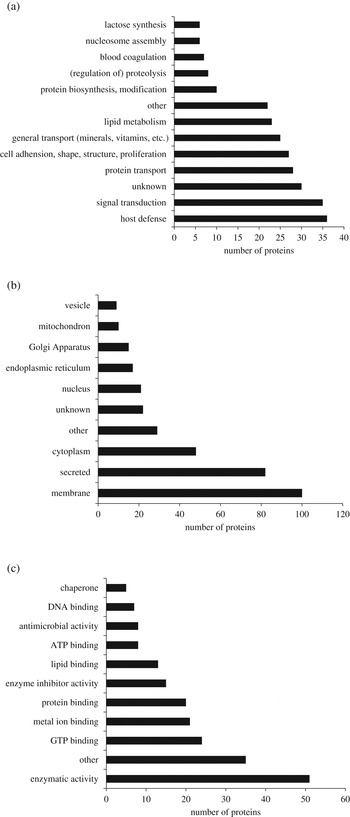
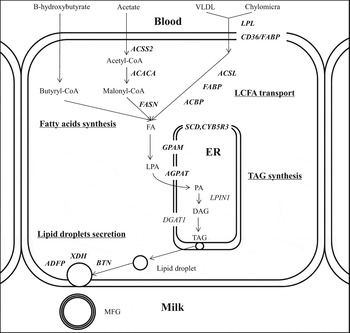
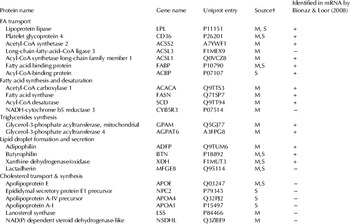
MFGM and milk serum samples were prepared and analysed in duplicates. In total, 246 proteins (94% of proteins overlap in duplicates, Supplementary Table 1) were identified in the bovine milk fat globule membrane and the serum fractions. Forty-six proteins were present in both fractions. MFGM contains 141 unique proteins, and serum contains 59 unique proteins. The major proteins in serum and MFGM were all clearly observed (β-lactoglobulin, α-lactalbumin, serum albumin, immunoglobulin, xanthine oxidase, butyrophilin, adipophilin and PAS 6/7) (online Supplementary Material available at http://www.journals.cambridge.org/dar). Besides these major proteins, hundreds of other less abundant proteins were also identified. The function of all identified proteins was categorised according to their gene ontology from Swiss-uniprot database (www.uniprot.org) as well as from published information (Fig. 1). The largest group of proteins are related to ‘host defence’, showing the importance of milk to protect both cows and calves from infection. The next largest group of proteins is involved in small GTPase mediated signal transduction, regulating or being involved in membrane/vesicle trafficking process. Of all proteins, 100 proteins were from the membrane system of epithelial cells, which is the primary source of MFGM (Heid & Keenan, Reference Heid and Keenan2005). Eighty-two of them were secreted from the epithelial cell to milk; also the proteins from cytoplasm account for a relatively large part, which is consistent with the origin of MFGM. Twenty-three proteins are considered to be associated with lipids synthesis and secretion in epithelial cells (Fig. 2, Table 1). These proteins are involved in different steps of lipid synthesis and secretion. Most of these proteins (19 proteins) were detected in the MFGM fraction (Table 1).
(a) Gene ontology based functional classes of identified proteins. The gene ontology information was taken from Swiss-Prot database (www.uniprot.org). For proteins which functions were not immediately clear fromSwiss-Prot database, a BLAST search was applied at www.uniprot.org. (b) Subcellular locations of identified proteins. The subcellular location information was obtained from the Swiss-Prot database. (c) Molecular function of identified proteins. The Molecular function information was obtained from the Swiss-Prot database.

Schematic overview of identified proteins involved in lipid synthesis and secretion pathways. Proteins identified in this study are shown in bold. Enzymes and transporters are shown in italic. VLDL: very low-density lipoprotein; FA: fatty acids; LCFA, long-chain fatty acid; ER: endoplasmic reticulum; LPA: lysophosphatidic acid; PA: phosphatidic acic; DAG: diacylglycerol; TAG: triacylglycerol; MFG: milk fat globule.

23 proteins related to lipid synthesis and secretion. The proteins were grouped according to their function in lipid synthesis and secretion

† S: milk serum; M: MFGM
Discussion
The number of proteins identified in this study is relative large compared with the number in previous reports on the bovine proteome (Reinhardt & Lippolis, Reference Reinhardt and Lippolis2006; D'Amato et al. Reference D'Amato, Bachi, Fasoli, Boschetti, Peltre, Sénéchal and Righetti2009). The higher number of low abundance proteins identified enhance the opportunity for revealing the crucial proteins which can affect milk synthesis and secretion. To our knowledge, the largest bovine milk proteome identified 269 proteins (Hettinga et al. Reference Hettinga, van Valenberg, de Vries, Boeren, van Hooijdonk, van Arendonk and Vervoort2011). The FASP preparation method used here resulted in a comparable number of proteins. Moreover, the large number of membrane proteins in our results also showed the power of the FASP method for studying milk fat globule membrane (Lu et al. 2011). In milk, large number of identified proteins originating from intracellular location (membrane, Golgi apparatus, endoplasmic reticulum) revealed that some of the proteins in epithelial cells could also be found in milk.
Twenty-three of the identified proteins in our study were related to lipid synthesis and secretion. These proteins functioned in epithelial cells of mammary gland in different steps in milk fat synthesis and secretion pathways. The identification of these proteins in milk demonstrated the possibility to use milk for studying the process of lipid formation and secretion. The fact that most of these proteins were found in the MFGM fraction also confirmed the hypothesis that the MFGM proteins originate from epithelial cells. Bionaz & Loor (Reference Bionaz and Loor2008) studied 45 genes associated with lipid synthesis and secretion in biopsies of the bovine mammary gland. Fifteen proteins from these genes were observed by us in milk (Table 1) The absence of the other gene products in our results is probably due to their relative low abundance or no translation. The mRNA concentrations of these unidentified proteins were below 0·3% of the total mRNA amount, as calculated in the paper of Bionaz & Loor (Reference Bionaz and Loor2008). The unidentified proteins are listed in Supplementary Table 2. Even though the ratio between mRNA and proteins is hardly 1 : 1 (Bionaz & Loor, Reference Bionaz and Loor2008), the mRNA amount will probably reflect to a certain extent the relative abundance of the corresponding protein products. All proteins corresponding with an amount above 0·3% of total mRNA were detected by us. Compared with the study of Bionaz and Loor, a large group of protein products, not observed by us, were proteins that regulate the transcription of lipid synthesis proteins. Besides their relative low abundance, the reason that these proteins were not detected probably is that these proteins function in the nucleus, and thus do not end up in the MFGM fraction (McManaman & Neville, Reference McManaman and Neville2003). Another group of proteins which were not observed, compared with the study of Bionaz and Loor, were the sphingolipid synthesis proteins. The lower abundance of these proteins can possibly be explained by the much lower amount of sphingolipids, compared with triacylglycerols (TAG), in milk. Thus, the proteins required for sphingolipid synthesis are expected to have a relative lower concentration than those for TAG. Besides the 15 proteins, 9 additional proteins not studied by Bionaz and Loor, which may have functions related to lipid synthesis and secretion, were also identified in our study (Table 1). These proteins were mainly involved in cholesterol synthesis and transport. The presence of these extra 9 proteins in milk may reflect their importance during milk fat synthesis and secretion. It is therefore recommended to also include the corresponding genes of these proteins when studying milk fat synthesis and secretion using targeted transcriptomics. One of the advantages of the proteomic analysis applied here is its non-targeted nature. This could help unveil important proteins that were not previously included in targeted ‘omic’ studies, and thereby increase the set of targets for future studies.
Transporters and enzymes identified in our study were involved in almost every step (from fatty acid transport/synthesis to lipid droplet secretion) in lipid formation and secretion. Fatty acids in milk lipids are considered to originate from two sources. The short and medium-chain-fatty-acids (SCFA and MCFA) are synthesised de novo in mammary gland (Popjak et al. Reference Popjak, French and Folley1951), whereas the majority of the long-chain-fatty-acids (LCFA) are directly derived from the blood (Palmquist, Reference Palmquist, Fox and McSweeney2006). Lipoprotein lipase (LPL, Table 1), which hydrolyses the TAG from chylomicra and VLDL in plasma to release the fatty acids for further utilisation by mammary gland, were detected in both MFGM and serum. The LPL in bovine milk is assumed to originate from the leakage of epithelial cells (Jensen & Pitas, Reference Jensen and Pitas1976). Bionaz & Loor (Reference Bionaz and Loor2008) indicated that the bovine mammary LPL expression pattern is similar to the lactation curve. They therefore hypothesised that LPL has an important role in the maintenance of milk synthesis. CD36, FABP, ACSL1 and ACSL3 which are involved in the up-take of LCFA by epithelial cells (Schwenk et al. Reference Schwenk, Holloway, Luiken, Bonen and Glatz2010) were also identified in MFGM. In one of the proposed protein mediate-models for FA transport, CD36 and FABP either collaborate or act alone to help LCFA transport. Then ACSLs rapidly esterified LCFA to be utilised further (Schwenk et al. Reference Schwenk, Holloway, Luiken, Bonen and Glatz2010). Acetyl-CoA synthetase 2 (ACSS2, Table 1) which activates SCFA was also detected in MFGM. Although the exact mechanism of FA transport from blood to cell is still under investigation, the role of these transporters is considered important (Glatz et al. Reference Glatz, Luiken and Bonen2010). Besides being involved in trans-membrane transport, FABP also transports FA intracellularly to different cellular compartments (Mather, Reference Mather2000). Another protein which transports FA intracellularly is acetyl-CoA binding protein (ACBP, Table 1), however, the role of ACBP in bovine lipid synthesis is considered minor (Bionaz & Loor, Reference Bionaz and Loor2008). As well as transporters for LCFA, two essential enzymes for SCFA and MCFA de novo synthesis, acetyl-CoA carboxylase (ACACA, Table 1) and fatty acid synthase (FASN, Table 1), were found in the MFGM fraction. ACACA catalyses the first committed step in fatty acid synthesis: from the acetate carbon source to malonyl-CoA (Palmquist, Reference Palmquist, Fox and McSweeney2006). Subsequently, acetyl CoA, malonyl-CoA and butyryl-CoA will be used by FASN to synthesise FA. The main product of FASN is palmitate but in ruminants it also produces SCFA and MCFA (Bionaz & Loor, Reference Bionaz and Loor2008). FASN has recently been demonstrated to have a close interaction with lipid raft domains which involves the membrane protein caveolin-1(Di Vizio et al. Reference Di Vizio, Adam, Kim, Kim, Sotgia, Williams, Demichelis, Solomon, Loda, Rubin, Lisanti and Freeman2008). This may explain the presence of FASN in MFGM (Cebo et al. Reference Cebo, Caillat, Bouvier and Martin2010). Moriya et al. (Reference Moriya, Uchida, Okajima, Matsuda and Nadano2011) also suggested that in mouse, ACACA and FASN were localised in the ER membrane and the cytoplasmic MFG precursor surface, and therefore are secreted together with MFG to milk to increase the speed and efficiency of triglycerides synthesis. Two components of the FA-desaturase system, Acyl-CoA desaturase (SCD, Table 1) and NAPH-cytochrome b5 reductase (CYB5R3, Table 1), were found in MFGM by using our proteomics analysis. Acyl-CoA desaturase inserts a double bond in the Δ9 position of myristoyl-, palmitoyl- and stearoyl-CoA (Bionaz & Loor, Reference Bionaz and Loor2008). It was the desaturase found to have the highest mRNA abundance in the study of Bionaz & Loor (Reference Bionaz and Loor2008). However, the intensity of SCD in our proteomics data is quite low (data not shown), this is probably because SCD is unstable and most of it has been degraded (Heinemann et al. Reference Heinemann, Korza and Ozols2003). CYB5R3 functions as the electron transporter for the desaturase enzymes in the process of formation of double bonds in fatty acids. SCD and CYB5R3 are located on the ER membrane (Ollier et al. Reference Ollier, Chauvet, Martin, Chilliard and Leroux2008). They could therefore be secreted in milk through the ER membrane. After transport and synthesis, FA will be used for lipid formation. Glycerol-3-phosphate acyltransferase (GPAM, Table 1) and 1-acylglycerol-sn-3-phosphate acyltransferase 6 (AGPAT6) were observed to be present in the bovine MFGM fraction. GPAM catalyses the first step in the de novo synthesis of neutral lipids (triglycerides) and glycerophospholipids. It catalyses the acylation of glycerol-3-phosphate (GP) to 1-acyl-sn-glycerol-3 phosphate (AGP). The localisation of GPAM is in the outer layer of the mitochondrial membrane (Coleman & Lee, Reference Coleman and Lee2004). The reason why it is secreted in MFGM is still unknown. After the activation of GP, the product AGP will be catalysed by 1-acylglycerol-sn-3-phosphate acyltransferase (AGPAT) to synthesise 1, 2-diacyl-sn-glycero-3-phosphate (DGP), which is the key intermediate for glycerolipid synthesis. There are six main AGPAT isoforms: AGPAT 1 to 6. AGPAT6 (Table 1) is the major isoform in bovine mammary tissue (Loor & Bionaz, Reference Loor and Bionaz2008). AGPAT6 is exclusively expressed in the ER membrane. Beigneux et al. (Reference Beigneux, Vergnes, Qiao, Quatela, Davis, Watkins, Coleman, Walzem, Philips, Reue and Young2006) observed that AGPAT6 -/- mice had a dramatic decrease in the size and number of lipid droplets within the mammary epithelial cells and ducts. The milk was also markedly depleted in diacylglycerol and triacylglycerol. These observations indicated the critical role of AGPAT6 during the synthesis of triacylglycerol. The ER membrane localisation of AGPAT6 and its crucial role during milk lipid synthesis probably explain its presence in MFGM. There are more enzymes involved in triacylglycerol biosynthesis, but either due to their low-abundance or absence in MFGM, they were not detected in this study. Adipophilin, butyrophilin and xanthine dehydrogenase/oxidase (ADFP, BTN and XDH, Table 1) are the three most abundant proteins in MFGM, they were all observed in our study. These three proteins are suggested to collaborate in a tripartite structure to secrete lipid droplets to milk (McManaman et al. Reference McManaman, Russell, Schaack, Orlicky and Robenek2007). Although, other mechanisms or models for lipid droplets secretion have also been proposed (Heid & Keenan, Reference Heid and Keenan2005), the importance of ADFP, BTN and XDH for lipid secretion is beyond doubt. Mather & Keenan (Reference Mather and Keenan1998) stated that lactadherin (MFGE8, Table 1) could also play a role in MFG secretion. Though many models of milk lipid secretion have been raised and some of its elements having been confirmed, the exact proteins and regulation factors are still ambiguous (Heid & Keenan, Reference Heid and Keenan2005).
Transporters and enzymes for cholesterol synthesis and secretion were identified in milk too. In milk, 80% of cholesterol is bound to milk fat globule membrane (Long et al. Reference Long, Patton and Mccarthy1980), which mainly originates from plasma membrane of epithelial cells (McManaman & Neville, Reference McManaman and Neville2003). Cholesterol is very important for the membrane integrity and fluidity (Bruce Alberts et al. Reference Bruce Alberts, Lewis, Raff, Roberts and Walter2002). The change in cholesterol content of membrane system could alter its structure, and thereby the function of the cell (Yeagle, Reference Yeagle1991). The cholesterol transporters and enzymes could influence cholesterol concentration and thereby the variation in the secretion of milk components from epithelial cells in mammary gland. The presence of cholesterol synthesis and secretion proteins in milk could illustrate their importance in milk components synthesis and secretion. Three apolipoproteins were found in milk (APOE, APOA1 and APOA4, Table 1). APOE was found in both the MFGM and serum fraction, APOA1 and APOA4 were only identified in milk serum. Apolipoproteins bind lipids to form lipoproteins, which transport lipid/cholesterol in the bloodstream. APOE also distributes cholesterol into different cells. Apolipoproteins are also related to lipid metabolism by interacting with lipoprotein receptors (Mahley, Reference Mahley1988). These proteins could be secreted from blood to milk by transcytotic pathways in mammary epithelial cells (Monks et al. Reference Monks, Huey, Hanson, Eckel, Neville and Gavigan2001). To our knowledge, there is no research done on the function of apolipoproteins in milk secretion, but based on the general function of these proteins in other tissues, they may play a role in milk lipid/cholesterol transport in the mammary gland. Another possible cholesterol transporter found in milk is epididymal secretory protein E1 (NPC2, Table 1). It was previously found in a high concentration in milk serum (Larsen et al. Reference Larsen, Ravn, Boisen, Berglund and Petersen1997). Why this protein is secreted into milk, and what its function is in milk is not yet known. NPC2 is a liposomal glycoprotein and binds cholesterol with high affinity (Stock et al. Reference Stock, Xu, Benoff, Liou and Lobel2007). It is expressed in kidney, spleen, liver and mammary gland. Intracellular, NPC2 transports cholesterol out of lysosomes, after which, the cholesterol is utilised by different cell compartments (Friedland et al. Reference Friedland, Liou, Lobel and Stock2003). Because of its high affinity to cholesterol, NPC2 is probably related to the transport of cholesterol to milk. Two enzymes related to cholesterol biosynthesis were also found in the MFGM fraction: lanosterol synthase (LSS, Table 1) and NAD(P) dependent steroid dehydrogenase-like protein (NSDHL, Table 1). LSS converts (S)-2,3-oxidosqualene to a protosterol cation and finally to lanosterol (Dean et al. Reference Dean, Ortiz de Montellano, Bloch and Corey1967). Lanosterol is a key intermediate in cholesterol biosynthesis (Huff & Telford, Reference Huff and Telford2005). Reinhardt et al. (Reinhardt & Lippolis, Reference Reinhardt and Lippolis2008) found that LSS is 2·8 fold up-regulated in day 7 MFGM compared with colostrum, but no explanation was offered. NSDHL is involved in the conversion of lanosterol into cholesterol. Besides in ER, NSDHL is also found in lipid droplets (Ohashi et al. Reference Ohashi, Mizushima, Kabeya and Yoshimori2003), which is consistent with our finding that NSDHL is present in MFGM.
Furthermore, besides lipid synthesis and secretion proteins, as shown in Fig. 1, large number of signal transduction proteins which are mainly membrane/vesicle trafficking proteins including Rab proteins, and SNARE proteins were observed in milk. Many of the milk components such as proteins, phosphate, calcium, lactose and citrate are thought to be secreted by vesicle trafficking (McManaman & Neville, Reference McManaman and Neville2003). Thus, the analysis of these membrane proteins could also help understanding the secretion of milk components. These proteins will not be further discussed in this paper.
In this paper, we have shown that several important transporters and enzymes involved in lipid synthesis and secretion can be identified in milk by using proteomics techniques. Variation in presence and amount of these proteins in milk, and especially in MFGM, may be used to discover new target proteins involved in lipid synthesis and secretion. In addition, it may also help explain the differences of these processes, which could lead to understanding the physiology behind variation in milk fat content and composition. So far, not many studies focused on the milk lipid synthesis and secretion proteins present in milk. This paper, presents one of the first attempts to discuss the functions of these proteins and their possible roles in the different steps of the metabolic pathways. This non-targeted milk proteomic analysis will provide new routes and insights for future studies on milk lipid synthesis and secretion by comparing different milk samples.
Supplementary material
The supplementary material for this article can be found at http://www.journals.cambridge.org/dar