Introduction
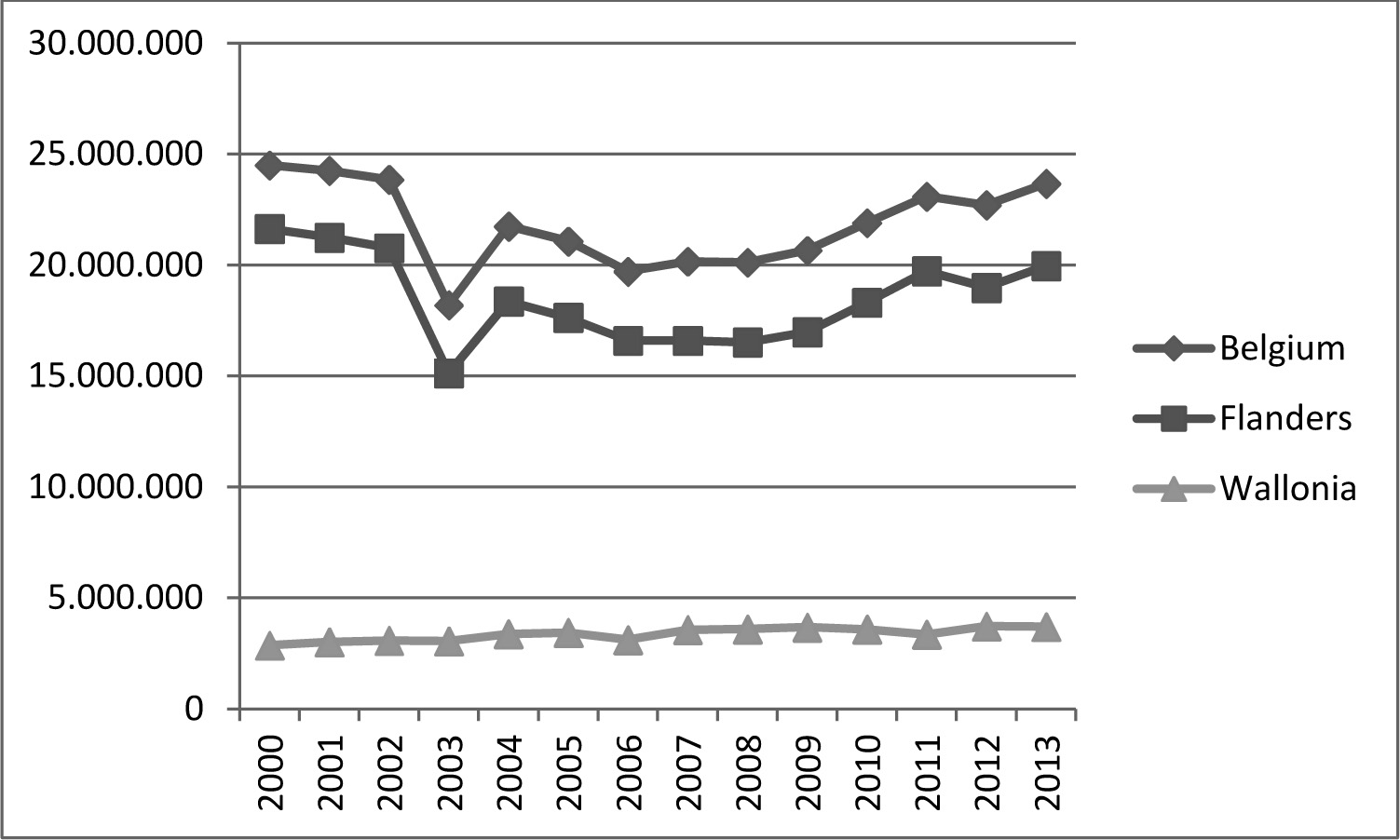
With ca. 70 billion broilers being produced in Europe and 8 trillion broilers produced worldwide each year, chickens are the most numerous of all farm animals (FAO, 2011). Poultry meat production has grown rapidly during the last 40 years (by a factor of seven, compared to a factor of two to four for other livestock) and is expected to continue to grow (FAO, 2011). Belgium accounts for 2.4% of the broiler production in the European Union (Viaene, Reference VIAENE2012). With more than 23.6 million broiler places in 2013, the Belgian broiler industry has restored production to the level prior to the outbreak of avian influenza in 2003 (Figure 1). The degree of self-sufficiency is about 117% (Viaene, Reference VIAENE2012). More than 84% of the production is located in Flanders, the northern, Dutch-speaking part of Belgium (Figure 1). Within Flanders broiler production is concentrated in the provinces of West-Flanders (34.7%) and Antwerp (28.9%).
The evolution of the number of broiler chicken places in Belgium.
(source: http://statbel.fgov.be)

Between 2000 and 2012, the number of broiler farms in Flanders had dropped by 65% (from 1,605 to 552 farms). This implies that the size of the average farm has increased to 34,385 broiler places per farm in 2012. In 2009 ca. 70% of the broilers were produced on farms with more than 30,000 places (Viaene, Reference VIAENE2012), illustrating that Flemish broiler production is heavily industrialised. Viaene (Reference VIAENE2012) further described the evolution of production performance between 1998 and 2008; the average slaughter age decreased from 41.3 to 40.1 days, whereas the average slaughter weight increased from 2.1 to 2.4 kg. The feed conversion ratio remained fairly constant at around 1.8. Mortality decreased by 1.9% to an average of 3.9% in 2008. However these data may be outdated because the broiler industry is likely to have changed considerably following the new EU Council Directive 2007/43/EC describing the minimum norms for the protection of chickens kept for meat production (translated into the national Royal Decree of 13th of June, 2010) in July 2010. Up-to-date, detailed information about current production performance, housing conditions and broiler farm management is required for livestock research, advisors and policy-makers. This study meets that need.
One of the major weaknesses of the broiler industry in Belgium and other countries with industrialised broiler production is the negative public image with regard to animal welfare (European Commission, 2005; Castellini et al., Reference CASTELLINI, BERRI, LE BIHAN-DUVAL and MARTINO2008; Vanhonacker and Verbeke, Reference VANHONACKER and VERBEKE2009). Besides welfare concerns associated with the genetic selection for high growth rate, breast meat yield and low feed conversion, major concerns relate to the intensive production environment. Negative health and welfare consequences include lameness, contact dermatitis and behavioural restrictions (EFSA, 2010). European citizens indicated that improvement of broiler welfare is a very high priority (European Commission, 2005).
To our knowledge, the opinion of the broiler producers themselves regarding the welfare of the animals they keep has never been published in scientific literature. Apart from a limited number of articles on pig and dairy (Bock and van Huik, Reference BOCK and VAN HUIK2007; Kling-Eveillard et al., Reference KLING-EVEILLARD and DOCKES2007; Kielland et al., Reference KIELLAND, SKJERVE, ØSTERÅS and ZANELLA2010), studies on farmer attitudes towards animal welfare for a specific animal type are largely unavailable. Previous studies concerned consumer attitudes or producer attitudes towards farm animal welfare in general (e.g. Te Velde, 2002; Vanhonacker et al., Reference VANHONACKER, VERBEKE, VAN POUCKE and TUYTTENS2008; Tuyttens et al., Reference TUYTTENS, VANHONACKER, VAN POUCKE and VERBEKE2010). These studies revealed that people with a farming background think differently about the welfare status of farm animals and use a different concept of animal welfare as compared with people without a farming background.
One implication of having a different concept of animal welfare is that groups of stakeholders may hold different opinions about the validity and relative weights of animal welfare indicators used in monitoring or auditing schemes (Verbeke, Reference VERBEKE2009; Tuyttens et al., Reference TUYTTENS, VANHONACKER, VAN POUCKE and VERBEKE2010). Recently, Welfare Quality® (2009) proposed an operational definition of animal welfare consisting of 12 welfare criteria grouped into four principles (Table 3). Appropriate measures were selected to provide information about each of these 12 criteria during a farm and abattoir visit by a trained inspector. To derive an overall assessment of animal welfare, these measures were first aggregated into criterion scores on a scale from 0 (poorest situation possible) to 100 (best situation possible). Second, both animal and social scientists were consulted for attributing relative weights to criteria to allow them to be aggregated into scores for each of the four principles (0-100 scale). In the final stage of the integration procedure, the four principle scores were aggregated to categorize the overall welfare status as ‘not classified’, ‘acceptable’, ‘enhanced’, or ‘excellent’. For the last step, reference profiles and rules (Botreau et al., Reference BOTREAU, VEISSIER and PERNY2009) were used in which all four principles were deemed equally important (Veissier and Evans, Reference VEISSIER and EVANS2007). This claim, however, has been challenged by Tuyttens et al. (Reference TUYTTENS, VANHONACKER, VAN POUCKE and VERBEKE2010), who provided quantitative evidence that citizens, and people with a farming background in particular, allocate more importance to the principles of ‘good health’ and ‘good feeding’ than to ‘appropriate behaviour’. If such welfare assessment protocols are to be trusted and incorporated by the broiler industry, it is crucial that the Welfare Quality® concept of animal welfare and the integration method to derive the overall welfare category correspond with the opinion of the broiler producers.
In this review, we surveyed Flemish broiler producers with the following objectives: (1) to obtain detailed information about current broiler production with regard to housing and management conditions and farmer profile; (2) to probe their opinion about animal welfare in general and about the relative weights of the Welfare Quality® principles and criteria in particular. In addition, we asked producers’ opinion about three possible future scenarios: continuation of the process of scaling-up of broiler production units; providing broilers access to an outdoor area, and allocating more importance to broiler welfare in response to the negative public image of broiler production.
Research design and data collection
In 2012, nearly all professional broiler chicken producers located in Flanders (n = 536 out of a total of 552 producers according to the 2012 national records, source: http://statbel.fgov.be) were sent a questionnaire either by email or post. In an accompanying letter, they were asked to fill out the questionnaire using either a link to a website or a hard copy (which they could return in a pre-paid envelope). We received 136 completed questionnaires (gross response rate = 25.4%). Of these, 22 were discarded because of too many missing values, leaving 114 questionnaires valid for analysis. The moderate response rate limits the generalisations that can be made to the broader population of Flemish broiler producers.
The questionnaire was divided in four parts. The first part included questions about the farmer (e.g., gender, age, education) and the general characteristics of their five largest broiler houses (length and width, number of chickens in the most recent production round, year of construction). The producers were also asked to indicate the likelihood of having a successor for the farm activities, on a seven-point scale ranging from ‘surely not’ (1) to ‘very sure to have a successor’ (7). Subsequently they were asked to provide more information about the most recently completed production round in their largest broiler house: e.g. number of broilers transported for slaughter, percent of unassisted and assisted (culls) mortality, slaughter age and weight, access to outdoor area, genetic line and gender of the broilers, thinning practice, type of litter, and the lighting and ventilation system.
In the second part of the questionnaire respondents were asked to evaluate 10 statements about general attitude to animal welfare on a seven-point Likert scale ranging from ‘totally disagree’ (1) to ‘totally agree’ (7). The third part focused on the Welfare Quality® concept of animal welfare. They were asked to score the importance of the four welfare principles and 12 criteria for the welfare of broilers on a seven-point scale ranging from ‘totally unimportant for broiler welfare’ (1) to ‘very important for broiler welfare’ (7). In addition, they were asked how problematic they consider each welfare principle in current Flemish broiler production to be on a seven-point scale ranging from ‘no problem at all’ (1) to ‘a big problem’ (7).
In the fourth part, participants were asked to indicate the extent to which they agreed that scaling-up broiler production units and that providing outdoor access increase animal welfare, farm profitability, product safety, consumer acceptance, amount of labour and product price. Similarly, they were asked to indicate the extent to which they agreed that more attention to broiler welfare results in increased labour, product quality, product taste, product safety, farm profitability, sector image, and product price. Farmers could indicate their agreement on a seven-point Likert scale that ranged from ‘totally disagree’ (1) to ‘totally agree’ (7). A mean score was calculated based on the 6 (for scale enlargement and outdoor access) or 7 (for more attention to animal welfare) attributes. The higher the mean score, the more positive the perception towards each of the scenarios (for this, the variables ‘amount of labour’ was reversed). These mean scores were linked to some farmer and farm characteristics, and to the 10 statements about producer attitude towards animal welfare.
Data were analysed using SPSS 19.0. Paired samples T-tests were used to compare mean values of variables within participants. Independent samples T-tests (for a grouping variable with two categories) and ANOVA F-tests (for a grouping variable with more than two categories) with Bonferonni post hoc tests were used to compare mean values between groups. Correlations were used to verify the association between interval- or ratio-scaled variables. P-values below 0.05 are used as the decision criterion for statistical significance.
Broiler producers, housing and management
There were no organic broiler producers in our sample. Three-quarters of the participants were male. Their age ranged from 24 to 76 years, with a mean age of 49.1 years (SD=9.1). Approximately 60% was aged between 41 and 55 years, the other 40% were nearly equally divided among the groups 24-40 years and 55 plus. Although slightly older, this age profile corresponds fairly well with that of Flemish laying hen farmers (mean age: 48 years, Tuyttens et al., Reference TUYTTENS, VAN GANSBEKE and AMPE2011b) and sow keepers (mean age: 46.5 years, Tuyttens et al., Reference TUYTTENS, SONCK, STAES, VAN GANSBEKE, VAN DEN BOGAERT and AMPE2011a). A minority of the participants had an education level beyond secondary school (13%). More than 40% of the participants indicated that they were sure not to have a successor (score 1 on the seven point-scale), while 20% indicated it is likely for them to have a successor (score 5, 6, or 7). The latter percentage corresponds well with the 19.3% of Flemish laying hen keepers who considered it likely or certain to have a successor (Tuyttens et al., Reference TUYTTENS, SONCK, STAES, VAN GANSBEKE, VAN DEN BOGAERT and AMPE2011a).
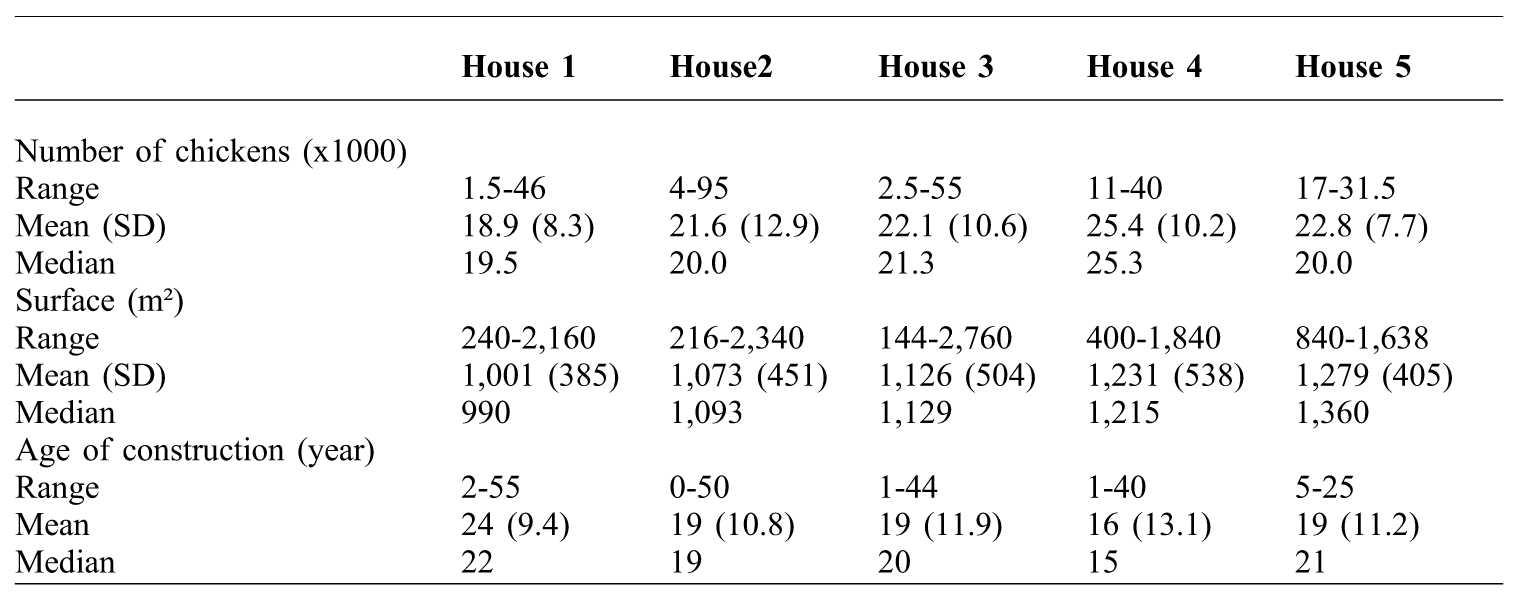
About three-quarters of the participants had only one or two broiler houses. The remaining participants had three (16%), four (7%) or maximum five (3%) broiler houses. On average the houses were built 21 years ago, and 12.4% had been built during the last five years (Table 1). The number of broilers per housing unit ranged between 1,500 and 95,000. The surface area ranged between 144 and 2,760m². The mean and median number of broilers per farm was 41,387 (SD=30,405) and 35,000, respectively. It would have been interesting to include questions about stocking density, but with the new EU directive in place, we feared that asking such sensitive information directly would further have reduced the response rate. It is not possible to indirectly check compliance with the stocking density norms stipulated in the directive because some of the reported surface area may not have been accessible to the chickens and because daily mortality records were not part of the survey.
Characteristics per broiler house; number of chickens per housing unit, surface and construction age of houses.

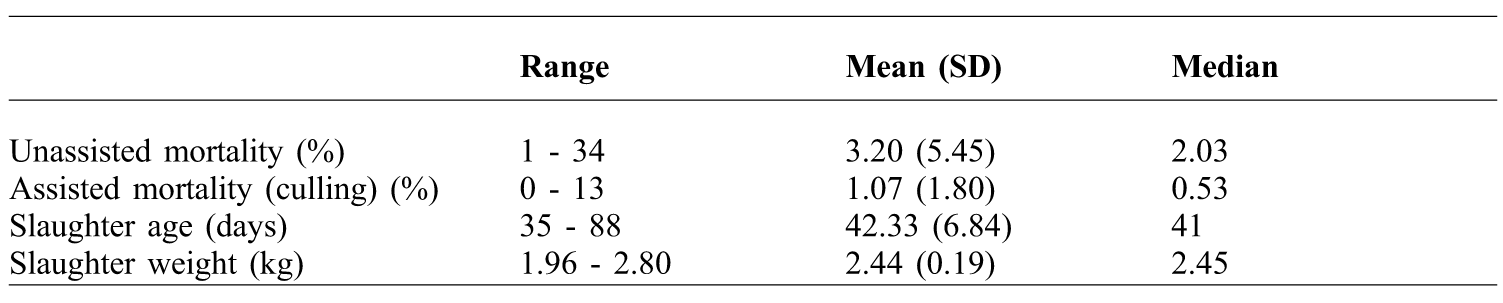
The information below relates to the most recently completed production round of the biggest housing unit per farm. Weight at slaughter was 2.44 kg on average, with a small standard deviation (Table 2). This variable was normally distributed and about one-third of the chickens were slaughtered at a weight between 2.4 and 2.5 kg. The median slaughter age was 42.3 days. Three-quarters of the participants indicated a slaughter age between 40 and 42 days. The unassisted and assisted mortality rates varied greatly between farms, with a median value of ca. 2% and 0.5%, respectively. Thinning was practiced on 79% of the flocks at a median age of 35 days and a median weight of 2 kg. On average 20% of the flock was thinned. Ross chickens were mainly reared (81%), followed by Cobb (13%) and other genotypes (6%).Nearly all flocks were of mixed sex (97.3%). The type of litter was predominantly wood shavings (53%) or chopped straw (30%). Other litter types were flax, long straw, hemp and combinations of more than one litter type. Three participants indicated that outdoor access was provided and the large majority used an automatic climate control (91.2%) and lighting system (78.9%). Most participants also applied a dimming period between the dark and light period of the day (84.8%).
Production data for the most recent production round in the biggest housing unit per broiler farmer.
General attitude towards animal welfare
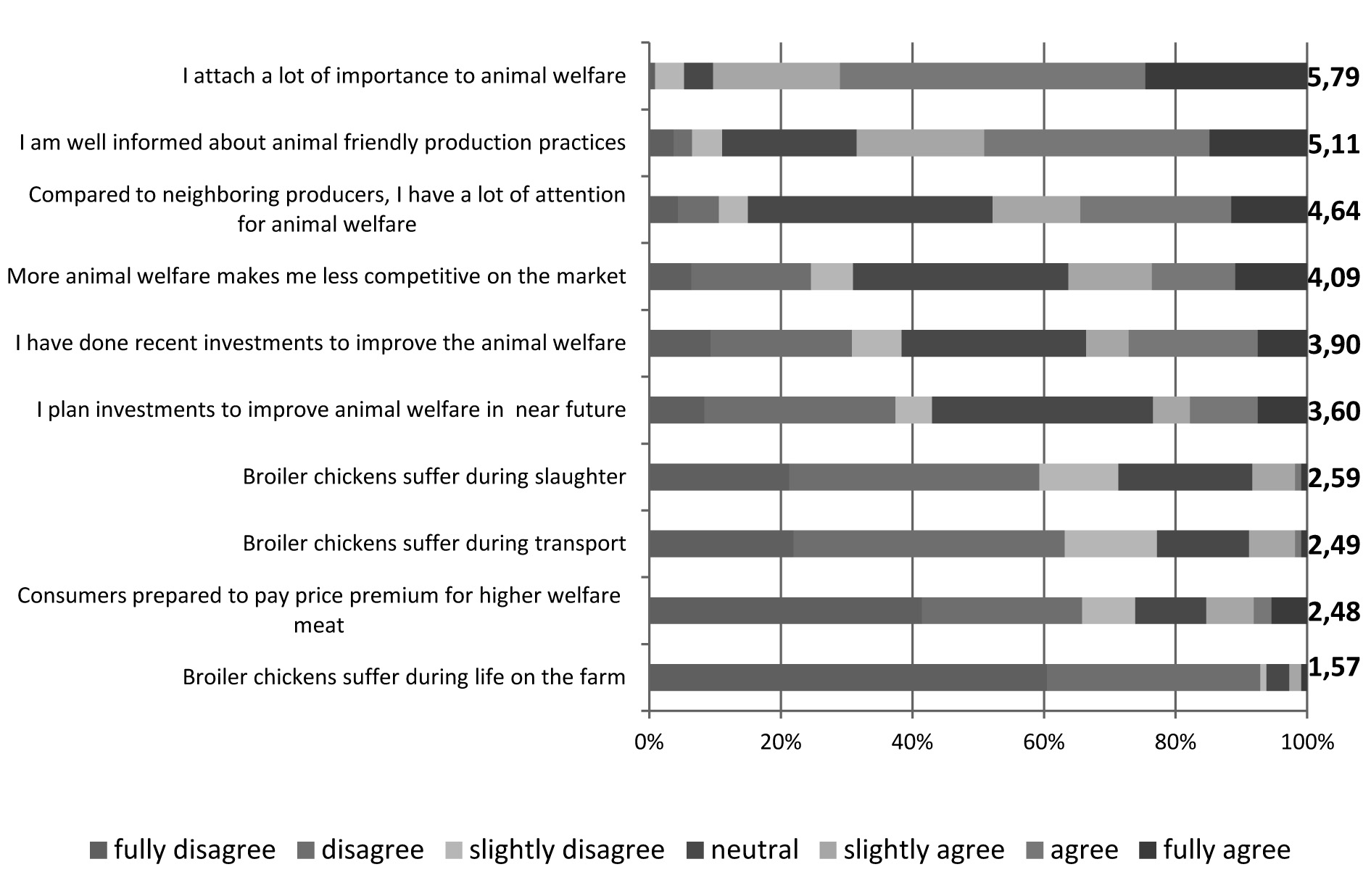
With mean scores well above the neutral point of the scale (score 4), the participants reported allocating great importance to animal welfare and being well-informed about animal-friendly production methods (Figure 2). As producers strongly associate animal welfare with health and other factors that are important for optimising production such as fast and efficient growth (Te Velde et al., Reference TE VELDE, AARTS and VAN WOERKUM2002; Dockes and Kling-Eveillard, Reference DOCKES and KLING-EVEILLARD2006; Lassen et al., Reference LASSEN, SANDOE and FORKMAN2006), they may consider it likely that poor welfare reduces performance results. The substantial degree of self-reported importance that farmers allocate to animal welfare confirms other studies, although farmers often consider other issues - such as profitability or workload - as being even more important (Bock et al., Reference BOCK, VAN HUIK, PRUTZER, KLING-EVEILLARD and DOCKES2007; Bock and van Huik, Reference BOCK and VAN HUIK2007). In comparison with their neighbouring producers, on average the respondents considered themselves to be slightly more attentive to animal welfare (Figure 2). In a representative sample however, we could in theory have expected a neutral mean score. Whether the present result is due to sampling bias (i.e. more welfare-oriented farmers responded to the survey), to socially desirable answering behaviour or to positive self-deception resulting in an ‘optimistic bias’ cannot be deduced from our data.
Opinions on the impact of animal welfare on market competitiveness were more diverse, as reflected also in the more or less neutral mean score (Figure 2). Doubts about the economic advantage of participating in premium animal welfare standards have been reported in other studies (Bock and van Huik, Reference BOCK and VAN HUIK2007; Vanhonacker et al., Reference VANHONACKER, VERBEKE, VAN POUCKE and TUYTTENS2007). Such doubts can be linked to the participants’ negative opinion about the willingness of consumers to pay a price premium for higher welfare meat (Figure 2). A similar opinion has been expressed among European pig farmers (Bock and van Huik, Reference BOCK and VAN HUIK2007), and relates to the so-called citizen-consumer duality (Dagevos and Sterrenberg, Reference DAGEVOS and STERRENBERG2003; Vermeir and Verbeke, Reference VERMEIR and VERBEKE2006). People report a high importance of animal welfare in their role of citizen, but do not behave accordingly as consumer in the supermarket.
These doubts about the economic returns probably explain that despite allocating great importance to animal welfare, the participants differed considerably in having done recent investments to improve animal welfare (Figure 2). The intention to invest in animal welfare in the near future was even lower. This could be due to the fact that one-third of the participants had recently made investments to improve animal welfare. The intention to invest in animal welfare improvements was higher among younger farmers (r=0.269, P=0.005) and among farmers with a likely successor (r=0.222, P=0.022).
The low number of participants planning to invest in improved broiler welfare on their farm in the near future could correspond with their strong disagreement with the statement that broilers suffer during their life on-farm (Figure 2). It is noteworthy that participating broiler farmers disagreed less strongly with the statements that broilers suffered during later stages in the production chain, namely during transport and slaughter (Paired Samples T-test, p<0.001). These results suggest some denial by producers of welfare problems among the broilers under their care, as their opinion contrasts sharply with the negative view on broiler welfare in intensive production systems not only by the general public (European Commission, 2005; Vanhonacker and Verbeke, Reference VERBEKE2009) but also by authoritative scientific reports (SCAHAW, 2000; de Jong et al., Reference DE JONG, BERG, BUTTERWORTH and ESTEVEZ2012). Cattle farmers have also been reported to underestimate (or even be blind to) welfare problems such as lameness among their stock (Leach et al., Reference LEACH, WHAY, MAGGS, BARKER, PAUL, BELL and MAIN2010; Sarova et al., Reference SAROVA, STEHULOVA, KRATINOVA, FIRLA and SPINKA2011).
Frequencies and mean values (next to the bars) on statements related to animal welfare. Responses on a seven-point agreement scale, ranging from ‘fully disagree’ (1) to ‘fully agree’ (7).
Opinion on Welfare Quality® principles and criteria
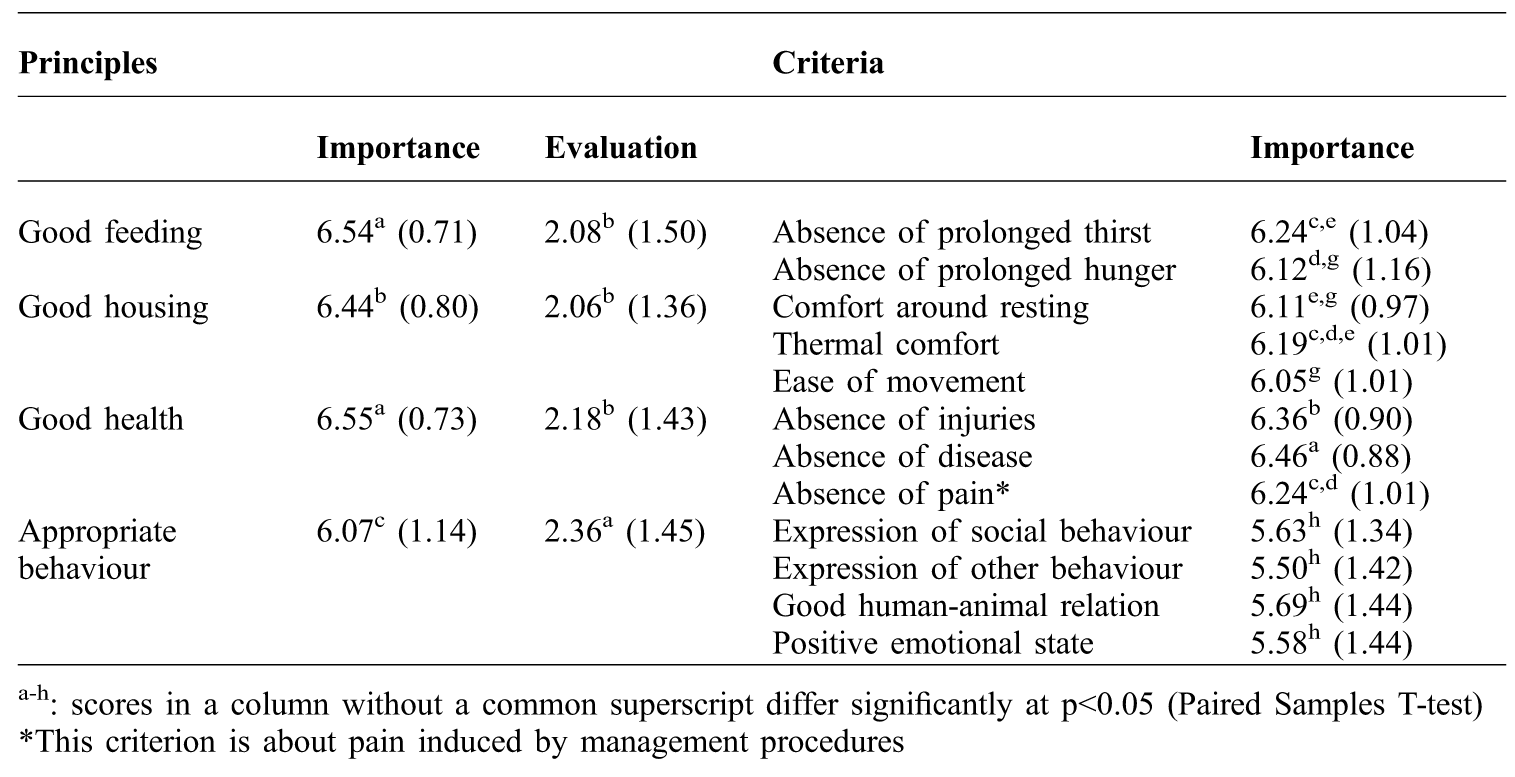
With an average score well above the neutral point of the scale, the participants considered all four Welfare Quality® principles important for broiler welfare (Table 3). For computing the overall welfare category of a farm, the Welfare Quality® integration method allocates equal weights to the different principles. This, however, is not in line with the perception of the broiler producers. They consider ‘good health’ and ‘good feeding’ more important for broiler welfare than ‘good housing’ and ‘appropriate behaviour’ in particular. This confirms a previous study in which Flemish citizens with a farming background also allocated the highest importance to the same two principles when considering farm animal welfare in general (Tuyttens et al., Reference TUYTTENS, VANHONACKER, VAN POUCKE and VERBEKE2010). These findings illustrate that livestock keepers’ conception of animal welfare most closely matches with the functionality approach, which expresses animal welfare in terms of the body and the physical environment (~ ‘if an animal is healthy and producing well, it is faring well’) (Broom, Reference BROOM1991; Reference BROOM2001). This has been illustrated in previous studies, and contrasts with the perception of non-farming citizens who are more prone to relate good welfare with the possibility for expressing natural behaviours (Te Velde et al., Reference TE VELDE, AARTS and VAN WOERKUM2002; Vanhonacker et al., Reference VANHONACKER, VERBEKE, VAN POUCKE and TUYTTENS2007; Tuyttens et al., Reference TUYTTENS, VANHONACKER, VAN POUCKE and VERBEKE2010). The present study further revealed that consensus among broiler producers was greatest (smallest standard deviation) for the principles they considered most important. There was considerably more variation for the principle of appropriate behaviour (linked to natural living).
The participants did not consider any of the welfare principles to be a serious problem in current broiler production in Belgium (Table 3). This matches with earlier surveys among individuals with a farming background (Vanhonacker et al., Reference VANHONACKER, VERBEKE, VAN POUCKE and TUYTTENS2008), but contrasts with the rather negative perception of other citizens concerning the welfare of farm animals and poultry in particular (European Commission, 2005; Castellini et al., Reference CASTELLINI, BERRI, LE BIHAN-DUVAL and MARTINO2008; Vanhonacker and Verbeke, Reference VERBEKE2009). This contrast in perception between farmers and other citizens could partly be due to their different conceptions of animal welfare.
Mean (SD) importance scores allocated to the Welfare Quality® principles and criteria for the welfare of broilers as perceived by the respondents. The mean (SD) scores for the evaluation of the four principles in current broiler production in Belgium are also presented. All scores are on a seven-point scale, with a higher score corresponding with a greater importance and a more negative evaluation.
a-h: scores in a column without a common superscript differ significantly at p<0.05 (Paired Samples T-test)
*This criterion is about pain induced by management procedures
Similar results were found for the importance broiler producers allocated to the twelve welfare criteria used by Welfare Quality® (Table 3). When considering the mean scores, the farmers deemed all criteria important, but they stated that criteria affiliated to health, feeding and housing were more important than the criteria affiliated to behaviour. The order of importance of the different criteria is remarkably similar to the order reported by Tuyttens et al. (Reference TUYTTENS, VANHONACKER, VAN POUCKE and VERBEKE2010) for people with a more general farming background (i.e. farmers or their offspring) for farm animal welfare in general. The main exception concerns the criterion of thermal comfort which was deemed relatively more important by broiler producers. This criterion may indeed be more important for broilers compared to other farm animals given their relatively narrow thermal comfort zone (Webster et al., Reference WEBSTER, TUDDENHAM, SAVILLE and SCOTT1993).
Opinion on possible future scenarios
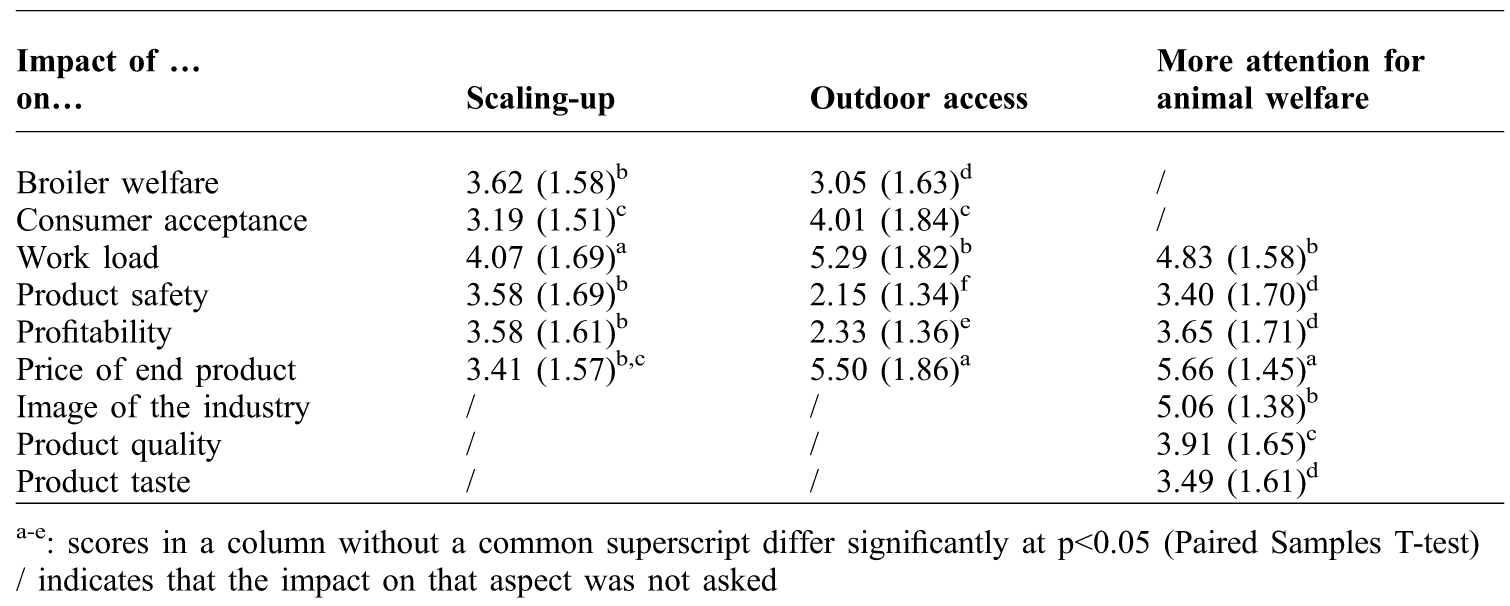
The opinion of the participants regarding scaling-up of production units, providing outdoor access, or paying more attention to animal welfare was quite negative (Table 4). They associated scaling-up mainly with disadvantages. Reduced consumer acceptance was the most pronounced disadvantage.
Allowing broilers access to an outdoor area was perceived even more negatively. Broiler farmers believed it would reduce product safety, farm profitability, and broiler welfare as well as increasing the amount of labour. Tuyttens et al. (Reference TUYTTENS, SONCK, STAES, VAN GANSBEKE, VAN DEN BOGAERT and AMPE2011a) reported that Flemish laying hen keepers as well were less satisfied with their housing system when it included an outdoor area. They considered the outdoor area to have a negative effect, particularly on hen health. Research confirms that although an outdoor area provides more opportunities for expressing natural behaviour, however, it can increase the risk of parasites, infection, predation, and exposure to unfavourable weather conditions (Laing, Reference LAING1988; Weeks et al., Reference WEEKS, NICOL, SHERWIN and KESTIN1994; Skomorucha et al., Reference SKOMORUCHA, SOSNOWKA-CZAJKA, HERBUT and MUCHACKA2007; Simoneit et al., Reference SIMONEIT, BENDER and KOOPMANN2012). The negative opinion of broiler producers about the impact of outdoor access on broiler welfare can be related to their conception of the term animal welfare which they associate more strongly with health than with appropriate behaviour.
The third scenario, paying more attention to broiler welfare, was also viewed negatively in all the aspects (reduced profitability, lowered quality, taste, and safety of the meat product, and an increased workload and product price) except for the public image of the poultry industry (Table 3). Bock and van Huik (Reference BOCK and VAN HUIK2007) found similar negative perceptions among European pig farmers, which prevented them from participating in specific animal welfare schemes. Pig farmers expressed distrust in the economic advantages, were doubtful about the consumers’ willingness to pay premium prices, negatively associated the practices with animal health, and even questioned the stated positive impact on pig welfare.
Perceived impact of scaling-up, outdoor access and more attention for animal welfare among broiler chicken farmers. Mean scores and standard deviations on seven-point scales.
a-e: scores in a column without a common superscript differ significantly at p<0.05 (Paired Samples T-test)
/ indicates that the impact on that aspect was not asked
To investigate variation within the sample, the mean score for each of the three scenarios were calculated (see Methodology section, above). These mean scores did not depend on the gender, age, or education level of the participant, nor on the likelihood of a successor (p>0.05). Owners of a larger farm (based on the total number of chickens in all houses on the same farm), however, thought more favourably about the impact of scaling-up (r=0.265, P=0.011) and less favourably about the impact of paying more attention to animal welfare (r=-0.350, P=0.001). Regarding the 10 attitude statements, we only found a significant and positive correlation between the importance attached to animal welfare and the mean score for the impact of paying more attention to animal welfare (r=0.252; p=0.010).
Conclusions
The review and survey corroborate the continued industrialisation process of Flemish broiler production during recent years, with increasing number of broilers reared on fewer and fewer farms and with hardly any organic or outdoor production systems. The modal Flemish broiler producer in 2012 is male, 49 years old and unlikely to have a successor for the farming activities. The typical broiler house is 21 years old and houses 35,000 mixed sex Ross broilers on wood shavings. One-fifth of the flock is thinned at the age of 35 days. The remaining broilers are slaughtered when they are 42 days old and weigh 2.4 kg. The median unassisted mortality rate is 2% and another 0.5% is culled. Further scaling-up of the production units is not viewed favourably by the Flemish broiler producers; apart from a slightly cheaper end product they see mainly disadvantages, especially with regard to consumer acceptance. Although of great value for the industry itself and for livestock researchers, advisors and policy-makers, such detailed information about current broiler production was not previously publicly available for Belgium, nor for most other countries worldwide.
Intensification of broiler production has been associated with animal welfare concerns which continue to threaten the public image of this industry. No survey has been published that focuses on the opinion of broiler producers on these animal welfare issues. Our results reveal that Flemish broiler producers have a very different opinion on the issue of broiler welfare as compared to other citizens. The producers report that they allocate great importance to animal welfare and are well-informed about animal-friendly production systems. They do not agree that broilers suffer a lot, and especially during the on-farm period. They are also doubtful about the economic returns of additional animal welfare measures, as they do not believe that consumers will pay extra for their investment. It therefore is not surprising that there are few investment plans for improving broiler welfare on their farm in the near future and that they see few advantages to addressing broiler welfare as a future scenario to meet societal concerns. Giving broilers access to an outdoor area as another scenario of improving public image was also perceived very negatively, especially with regard to product safety, profitability and expected workload. Contrary to popular belief (Harper and Henson, Reference HARPER and HENSON2001) broiler farmers did not agree that this scenario would improve broiler welfare.
These striking differences between the public image and the opinion of broilers producers can partly be related to different views on the concept of animal welfare. Flemish broiler producers - in agreement with other people with a farming background (Vanhonacker et al., Reference VANHONACKER, VERBEKE, VAN POUCKE and TUYTTENS2008) - interpret animal welfare mainly in terms of good health, feeding and housing but downplay the importance for the ability to express appropriate behaviour. In the Welfare Quality® protocol, however, the principle of ‘appropriate behaviour’ is given equal weight as the principles of good health, housing and feeding. This fundamental difference in opinion about what constitutes animal welfare may hamper broiler farmers’ trust in the validity of the Welfare Quality® protocol as an appropriate tool for monitoring animal welfare. A sufficient degree of trust is one of the prerequisites for successfully integrating these science-based protocols into the management decisions of the livestock and broiler industries. We recommend more communication and interaction between the broiler industry, animal welfare scientists and other stakeholders to discuss the validity and relative importance of welfare measures in general, and of those that relate to animal behaviour in particular.
Acknowledgements
We thank R. Vanderhasselt, C. Molento, B. Müller for help in drafting the questionnaire, T. Lambrechts and R. Zelazna for collecting the survey data, and M. Levenson and L. Stadig for comments on drafts of this paper.