INTRODUCTION
Tropical forests bear the indelible signature of fungi. From the saprotrophs that decay plant material to the pathogens and mutualists that shape plant demography at local and regional scales, fungi are major drivers of tropical forest dynamics (Bagchi et al. Reference BAGCHI, GALLERY, GRIPENBERG, GURR, NARAYAN, ADDIS, FRECKLETON and LEWIS2014). Interest in understanding these dynamics has led to a growing focus on fungal ecology in tropical plant communities, with particular attention to functional groups that positively or negatively influence plant health and physiology. Such studies increasingly focus on endophytic fungi – fungi that occur within healthy plants without causing disease (Rodriguez et al. Reference RODRIGUEZ, WHITE, ARNOLD and REDMAN2009). Endophytes that inhabit healthy leaves (i.e. foliar endophytes) are especially abundant and diverse in tropical forests, where they can influence plant defence against abiotic stress, herbivores and pathogens (Arnold & Engelbrecht Reference ARNOLD and ENGELBRECHT2007, Arnold & Lutzoni Reference ARNOLD and LUTZONI2007, Arnold et al. Reference ARNOLD, GILBERT, COLEY, THOMAS, MAYNARD, GILBERT, COLEY and KURSAR2000, Reference ARNOLD, MEJÍA, KYLLO, ROJAS, MAYNARD, ROBBINS and HERRE2003; Estrada et al. Reference ESTRADA, DEGNER, ROJAS, WCISLO and VAN BAEL2015, Van Bael et al. Reference VAN BAEL, FERNÁNDEZ-MARÍN, VALENCIA, ROJAS, WCISLO and HERRE2009).
Although the number of quantitative studies regarding endophyte diversity and distributions has increased dramatically in the past two decades, general rules have not yet emerged regarding their biogeography, host affiliations, local or regional distributions, or phylogenetic diversity (Rodriguez et al. Reference RODRIGUEZ, WHITE, ARNOLD and REDMAN2009). For example, several studies have suggested that endophyte communities differ among tropical forests with distinctive abiotic conditions (e.g. substantive differences in rainfall or seasonality; Murali et al. Reference MURALI, SURYANARAYANAN and VENKATESAN2007, Suryanarayanan et al. Reference SURYANARAYANAN, MURALI and VENKATESAN2002, Reference SURYANARAYANAN, VENKATESAN and MURALI2003). However, in such cases it is rare for the same host species to be compared among forests, and the direct contributions of geographic distance vs. environmental dissimilarity have not been addressed explicitly. Earlier studies considered only the presence of shared, named species without taking into account cryptic genetic structure, whereas recent studies often consider only molecular phylotypes or operational taxonomic units (OTU) without addressing taxonomic novelty or the evolutionary relationships among strains. Little is known about turnover in endophyte communities among similar forest types in contiguous or fragmented landscapes, nor among plants other than angiosperms.
The goal of this study was to examine foliar endophytic fungi that affiliate with closely related plants at a landscape scale. We focused on ferns, which represent an ancient, phylogenetically diverse lineage that reaches its greatest diversity in tropical regions (Kreft et al. Reference KREFT, JETZ, MUTKE and BARTHLOTT2010). Ferns diversified dramatically in the context of angiosperm-dominated forests in the tropics (Schuettpelz & Pryer Reference SCHUETTPELZ and PRYER2009), with extant species differing in foliar chemistry, the location of chlorophyll in leaves, and other traits from the angiosperms under and upon which they occur (Vasco et al. Reference VASCO, MORAN and AMBROSE2013). Few studies have examined the relationship of ferns and foliar endophytes in tropical forests, instead focusing on root symbionts (Richardson & Currah Reference RICHARDSON and CURRAH1995, Schmid et al. Reference SCHMID, OBERWINKLER and GÓMEZ1995, Zubek et al. Reference ZUBEK, PIATEK, NAKS, HEISE, WAYDA and MLECZKO2010) or foliar endophytes associated with Pteridium aquilinum in temperate forests (Fisher Reference FISHER1996, Fisher & Punithalingham Reference FISHER and PUNITHALINGAM1993, Petrini et al. Reference PETRINI, FISHER and PETRINI1992). Here, we evaluate the incidence, diversity, phylogenetic structure and composition of endophyte assemblages in representative eupolypod ferns in forest reserves in Panama, Costa Rica and Mexico. We test the hypotheses that (1) abundance and (2) diversity will be similar among fern species within forests, and among related species in different forests, but that communities of endophytes will differ among forests as a function of both geographic distance and environmental dissimilarity.
METHODS
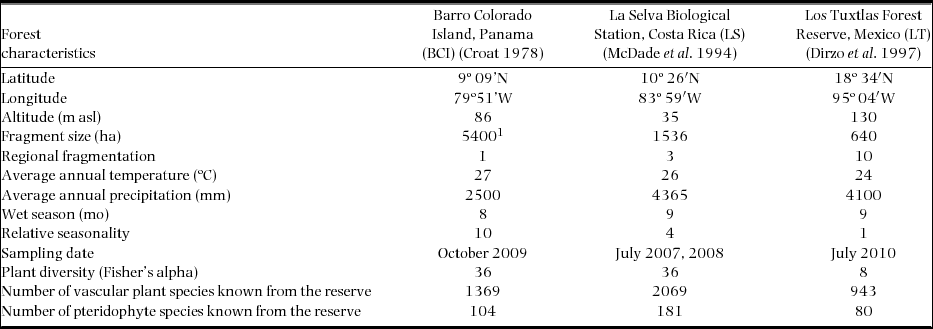
In the wet seasons of 2007–2010 we collected 18 species of ferns representing five families of Eupolypods 1 (sensu Smith et al. Reference SMITH, PRYER, SCHUETTPELZ, KORALL, SCHNEIDER and WOLF2006) in lowland tropical forests in three sites: Barro Colorado Island, Panama (BCI); La Selva Biological Station, Costa Rica (LS); and Los Tuxtlas Biological Station, Mexico (LT; Table 1). Collections included the most prevalent epiphytic and terrestrial pteridophytes in each site (Croat Reference CROAT1978, La Flora Digital de La Selva: http://sura.ots.ac.cr, Riba & Perez-Garcia Reference RIBA, PEREZ-GARCIA, Gonzales-Soriano, Dirzo and Vogt1997; Table 2). Collections at LS included five species in 2007, four of which were sampled again in 2008. Two additional species were sampled in 2008, for a total of seven species (Table 2). At that site we collected from both closed-canopy forest and in an arboretum setting within the forest matrix (Del Olmo-Ruiz & Arnold Reference DEL OLMO-RUIZ and ARNOLD2014). Collections at BCI (8 species) and LT (4 species) were conducted in closed-canopy forest in one year each. Previous work revealed that endophyte abundance and diversity did not differ between ferns with epiphytic vs. terrestrial habits or in forest vs. arboretum settings at LS (Del Olmo-Ruiz & Arnold Reference DEL OLMO-RUIZ and ARNOLD2014).
Three focal forests in which fern-associated endophytes were examined.

1 Includes Barro Colorado Island and the surrounding Barro Colorado Natural Monument.
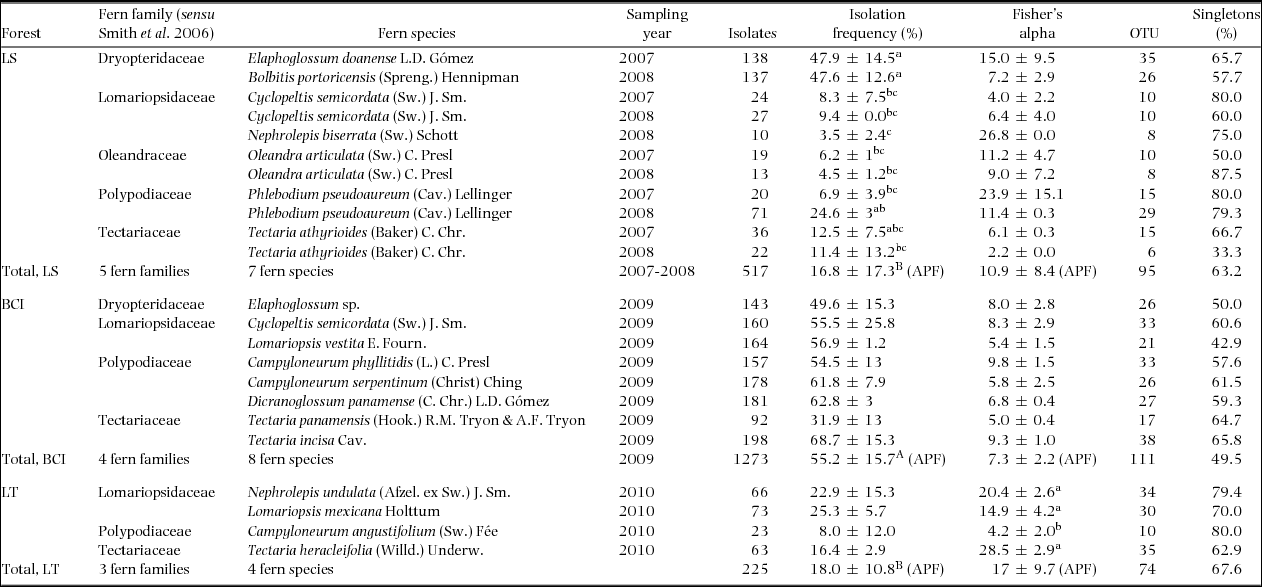
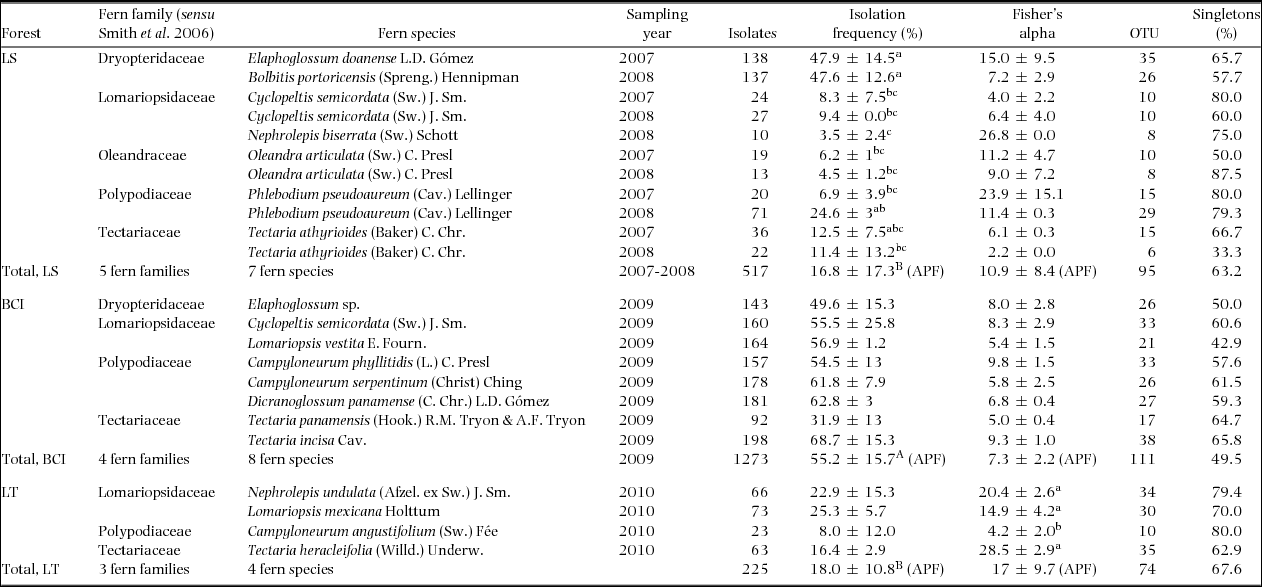
Families and species of fern sampled for endophytic fungi in three lowland tropical forests (La Selva (LS), Costa Rica; Barro Colorado Island (BCI), Panama; Los Tuxtlas (LT), Mexico); years in which sampling was conducted; number of isolates; isolation frequency (per cent of tissue fragments yielding endophytic fungi in culture, calculated as the mean for three individuals per species ± standard deviation, SD); diversity (Fisher's alpha; mean for individuals per species ± SD); richness of operational taxonomic units (OTU), a proxy for species; and per cent singletons (defined as OTU that were observed only once). Different superscripts indicate statistical differences in isolation frequency and diversity among species per forest (lower case), and among forests (capital) based on Tukey post hoc comparisons using transformed data (alpha = 0.05). APF indicates the average per forest.
In each site we collected three mature, healthy fronds from each of three individuals per species. In sum, 24, 33 and 12 host individuals were sampled at BCI, LS and LT, respectively (Table 2). Multiple sampling areas within each site were chosen to maximize local diversity of ferns within local areas of ~200 m2. The average distance between sampled conspecifics in each site was 744 ± 477 m (mean ± SD).
Tissue preparation
Fronds were processed within 12 h of collection. We first rinsed each frond vigorously in running water. From each frond we then cut 200 segments (each 1 × 2 mm), which were surface-sterilized by sequential immersion in 95% ethanol (10 s), 0.53% sodium hypochlorite (2 min) and 70% ethanol (2 min) (Arnold & Lutzoni Reference ARNOLD and LUTZONI2007). Segments were allowed to surface-dry for 2–3 min under sterile conditions. We haphazardly selected 32 segments per frond and placed them individually on 1 ml of 2% malt extract agar (MEA) in a sterile 2-ml microcentrifuge tube (U'Ren et al. Reference U'REN, DALLING, GALLERY, MADDISON, DAVIS, GIBSON and ARNOLD2009). In sum we prepared 6624 tissue segments, including 2304 segments from BCI, 3168 from LS and 1152 from LT.
Tubes were sealed with Parafilm, incubated at room temperature and assessed for fungal growth for 1 y. Emergent fungi were grown axenically and vouchered as living mycelial samples suspended in sterile water at the Robert L. Gilbertson Mycological Herbarium at the University of Arizona (ARIZ, F0001–F2283). Voucher specimens of ferns are deposited at the primary herbaria of their corresponding countries: Universidad de Panama (PMA), La Selva Biological Station (LSCR) and Universidad Nacional Autonoma de Mexico (MEXU:TUX; FCME).
Molecular analyses
Total genomic DNA was extracted directly from fresh mycelium of each isolate following Arnold & Lutzoni (Reference ARNOLD and LUTZONI2007). Primers ITS1F and LR3 (Gardes & Bruns Reference GARDES and BRUNS1993, Vilgalys & Hester Reference VILGALYS and HESTER1990) were used to amplify the nuclear ribosomal internal transcribed spacers and the 5.8S gene (ITSrDNA) and ~600 bp of the ribosomal large subunit (LSUrDNA) as a single fragment (U'Ren et al. Reference U'REN, LUTZONI, MIADLIKOWSKA and ARNOLD2010). If amplification failed, we used primers ITS1F or ITS5 and ITS4 (White et al. Reference WHITE, BRUNS, LEE, TAYLOR, Innis, Gelfand, Sninsky and White1990). The PCR recipe, cycling parameters and electrophoresis method followed Hoffman & Arnold (Reference HOFFMAN and ARNOLD2008). Products yielding single bands were cleaned, normalized and sequenced bidirectionally on an Applied Biosystems 3730xl DNA Analyzer (Foster City, California, USA) at the University of Arizona Genetics Core. High-quality sequence data were obtained from every isolate.
Chromaseq version 0.92 (http://mesquiteproject.org/packages/chromaseq) implemented in Mesquite version 2.01+ (http://mesquiteproject.org) was used to orchestrate base calls, quality assessments and contig assembly by phred and phrap (Ewing & Green Reference EWING and GREEN1998, Ewing et al. Reference EWING, HILLIER, WENDL and GREEN1998). Contigs were verified manually in Sequencher version 4.5 (Gene Codes, Ann Arbor, MI, USA) and consensus sequences have been archived at GenBank (accessions JQ747648–JQ747741 and KU747546–KU747966).
Abundance, richness and diversity
Isolation frequency was defined as the per cent of tissue segments yielding an endophyte in culture and was used as a proxy for endophyte abundance. Values were logit-transformed prior to analysis by ANOVA.
Operational taxonomic units (OTU) were determined by grouping sequences based on 95% sequence similarity using Sequencher (minimum of 40% overlap without considering differences in sequence length; Arnold et al. Reference ARNOLD, HENK, EELLS, LUTZONI and VILGALYS2007, Higgins et al. Reference HIGGINS, COLEY, KURSAR and ARNOLD2011, U'Ren et al. Reference U'REN, LUTZONI, MIADLIKOWSKA and ARNOLD2010, Reference U'REN, LUTZONI, MIADLIKOWSKA, LAETSCH and ARNOLD2012, Reference U'REN, RIDDLE, MONACELL, CARBONE, MIADLIKOWSKA and ARNOLD2014). Our primary conclusions did not differ when analyses were repeated with more stringent OTU delimitations (i.e. 97% and 99% sequence similarity), but the increase in singletons under such definitions limited the OTU that could be included in community analyses. Accumulation curves and bootstrap estimates of total richness were inferred using EstimateS version 7.5 (http://viceroy.eeb.uconn.edu/estimates/). Diversity was calculated as Fisher's alpha using the vegan library version 1.17-10 (https://CRAN.R-project.org/package=vegan) in R (https://www.r-project.org/). Values were ln-transformed prior to ANOVA.
Community structure
We used non-parametric one-way analyses of similarity (ANOSIM) (Clarke Reference CLARKE1993) to compare endophyte community composition among sites and hosts. Analyses were conducted in vegan in R with both Jaccard's index (based on presence/absence data) and the Morisita–Horn index (based on abundance data). Significance was established by 10000 permutations. Results were visualized by non-metric multidimensional scaling (NMDS) with 500 iterations for each index. NMDS were implemented in vegan, ecodist version 1.2.5 (Goslee & Urban Reference GOSLEE and URBAN2007) and BiodiversityR version 1.6 (Kindt & Coe Reference KINDT and COE2005). Singletons (i.e. OTU that were represented by only one isolate) were excluded from these analyses. Similarity matrices were transformed using the natural logarithm +1 to keep absences as zero (Borcard et al. Reference BORCARD, GILLET and LEGENDRE2011, Harper Reference HARPER1999).
These analyses revealed that endophyte communities differed among host taxa and sites. To determine the relative importance of each explanatory factor we calculated Morisita–Horn similarity for all pairwise comparisons of host individuals, coding the output as representing comparisons of the ‘same’ or ‘different’ host family or sites. Similarity values were analysed using multiple regression in analyses that included the full non-singleton data set, and the non-singleton data set obtained only from the three families of ferns sampled in all sites. The latter yielded strong evidence for a sufficient explanation of observed variation in community similarity (lack-of-fit F1,1232 = 0.75, P = 0.388) and prompted our focus on three families (Lomariopsidaceae, Polypodiaceae and Tectariaceae, all sampled at BCI, LS and LT) for our primary inferences.
Environmental factors
Our study sites were distant geographically and differed in environmental characteristics. We sought to disentangle the relationship of distance and environment with respect to dissimilarity in endophyte communities. We used principal components analyses (PCA) to generate Euclidean distances based on eigenvalues that described environmental dissimilarity among sites. Inputs consisted of normalized environmental data for eight variables (latitude, altitude, mean annual precipitation, mean annual temperature, forest fragment area, plant diversity, degree of local fragmentation and degree of seasonality) (Table 1). The resulting environmental dissimilarity matrix was compared against a matrix of inter-site distances using a two-tailed Mantel test with 10000 permutations. Because distance and environmental dissimilarity were not significantly correlated (R = −0.825, P = 0.146) we first used Mantel tests to evaluate the independent relationship of each to differences in endophyte community structure (U'Ren et al. Reference U'REN, LUTZONI, MIADLIKOWSKA, LAETSCH and ARNOLD2012). We then used partial Mantel tests to assess the relationship between endophyte community dissimilarity and (a) environmental dissimilarity when geographic distance was accounted for (i.e. by using geographic distance as the control matrix), and (b) geographic distance when environmental dissimilarity was accounted for (i.e. by using environmental dissimilarity as the control matrix) (Legendre & Fortin Reference LEGENDRE and FORTIN1989, U'Ren et al. Reference U'REN, LUTZONI, MIADLIKOWSKA, LAETSCH and ARNOLD2012). Analyses were based on transformed Morisita–Horn indices calculated with non-singleton OTU only. Mantel tests were implemented in XLSTAT Pro 2012 (Addinsoft, New York, USA).
Taxonomic and phylogenetic analyses
Sequences were compared against the NCBI GenBank database (Altschul et al. Reference ALTSCHUL, GISH, MILLER, MYERS and LIPMAN1990) using BLASTn to estimate placement at the phylum and class levels. Taxonomic placement was verified by integrating representative sequences from each OTU into previously published matrices retrieved from TreeBASE. Matrices were chosen on the basis of close relationships to taxa in the previously published data sets. Alignments were completed and inspected by eye in Mesquite v. 3.02 (http://mesquiteproject.org). Maximum likelihood analyses were performed on all independent matrices using the program RaxML-HPC2 version 8.1.11 (Stamatakis Reference STAMATAKIS2014) on XSEDE at the CIPRES Portal web server (https://www.phylo.org/). Each analysis was initiated with a random starting tree and the heuristic search was conducted with the rapid hill-climbing algorithm (Stamatakis et al. Reference STAMATAKIS, BLAGOJEVIC, NIKOLOPOULOS and ANTONOPOULOS2007). We used the GTR substitution model (Tavare Reference TAVARE1986) with a gamma distribution for site variation. Clade support was assessed with 1000 bootstrap replicates. We assigned taxonomic placement at ordinal levels and above based on these analyses of closely related taxa, which allowed us to place particular OTU in families or genera with strong support (i.e. placed unequivocally in well-supported monophyletic lineages, with bootstrap values ≥ 70%). Matrices and phylogenetic trees are available from the authors on request. The relative abundance of the most prevalent fungal classes was compared using a chi-squared test to assess the null hypothesis of equal distribution among forests. We excluded fungal classes with fewer than five records.
To estimate phylogenetic diversity, conserved portions of the sequences (i.e. 5.8S and partial LSUrDNA) were used to infer phylogenetic relationships of all OTU in a single analysis. Data from one representative per OTU were aligned in MAFFT version 7 with default parameters (Katoh & Standley Reference KATOH and STANDLEY2013). After manual adjustment in Mesquite the alignment was analysed in RAxML-HPC2. The alignment and resulting tree are archived at TreeBASE (Study ID 19038). Phylogenetic relatedness was evaluated using picante library version 2.3-0 (Kembel et al. Reference KEMBEL, COWAN, HELMUS, CORNWELL, MORLON, ACKERLY, BLOMBERG and WEBB2010) in R. Phylogenetic alpha diversity was assessed by measuring the standardized effect size (SES) of mean pairwise distances (ses.mpd, equivalent to −1 times the Nearest Relative Index, NRI) and the standardized effect size of the mean nearest taxon distance (ses.mntd, equivalent to −1 times the Nearest Taxon Index, NTI), with null distributions built by randomly reshuffling tip labels (runs = 10000). Positive SES values indicate greater phylogenetic distance among co-occurring species than expected (phylogenetic evenness); negative SES values indicate phylogenetic clustering (Kembel et al. Reference KEMBEL, COWAN, HELMUS, CORNWELL, MORLON, ACKERLY, BLOMBERG and WEBB2010, Webb et al. Reference WEBB, ACKERLY, MCPEEK and DONOGHUE2002). Turnover in phylogenetic composition was quantified with the β-mean pairwise distance (βMPD, comdist function) and the β-mean nearest taxon distance (βMNTD, comdistnt function). COMDIST is a phylogenetic beta diversity measure that captures variation associated with basal nodes. COMDISTNT focuses on variation associated with terminal nodes (Kembel et al. Reference KEMBEL, COWAN, HELMUS, CORNWELL, MORLON, ACKERLY, BLOMBERG and WEBB2010). Because the phylogenetic tree was constructed with conserved regions, terminal node analyses (i.e. ses.mntd and comdistnt) do not make reference to species but to higher taxonomic levels such as orders or families. We analysed βMPD and βMNTD by ANOSIM and visualized results by NMDS.
RESULTS
Fungal endophytes were isolated in culture from asymptomatic fronds of all individual ferns surveyed here (69 individuals representing three sites). A total of 2015 isolates was obtained from 6624 tissue segments (overall isolation frequency = 30.4%). Isolation frequencies ranged among species from 3.5% to 68.7% (Table 2) and varied significantly among species at LS (F10,22 = 8.5, P < 0.0001), but not at BCI (F7,16 = 1.9, P = 0.140) or LT (F3,9 = 3.0, P = 0.086; Table 2). Isolation frequency did not differ as a function of sampling year at LS for three of four species sampled in two years (but see Phlebodium pseudoareum) (Table 2).
Mean isolation frequency per species was nearly threefold higher at BCI than at the other study sites (mean ± SD: BCI, 55.2% ± 15.7%; LS, 16.8% ± 17.3%; LT, 18% ± 10.8%; F2,66 = 32.1, P < 0.0001). When we considered only the three families sampled in all sites, we observed a similar pattern (BCI, 56.0% ± 16.0%; LS, 10.9% ± 8.2%; LT, 18.0% ± 10.8%; F2,51 = 42.2, P < 0.0001) (Table 2).
We delimited 226 OTU among 2015 isolates. Diversity did not differ among species at BCI (eight species sampled; F7,8 = 1.8, P = 0.208) or LS (seven species sampled; F10,9 = 2.3, P = 0.110), but did differ among the four species sampled at LT (F3,4 = 16.8, P = 0.009) (Table 2). Diversity did not differ significantly among sites when evaluated using the entire dataset (F2,41 = 2.8, P = 0.070) or only the three families sampled in all sites (F2,31 = 2.6, P = 0.091), but average diversity per host species tended to be 1.7 to 2.5 times lower at BCI and LS compared with LT.
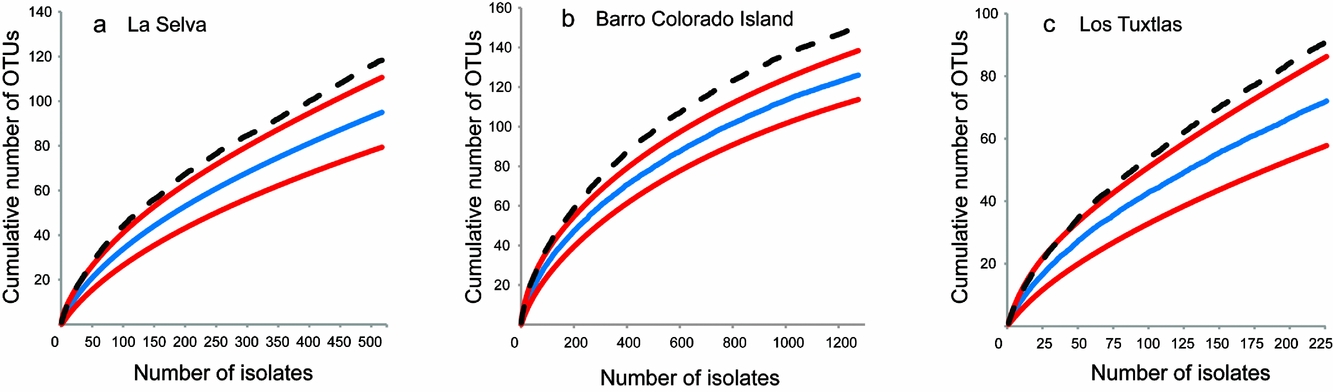
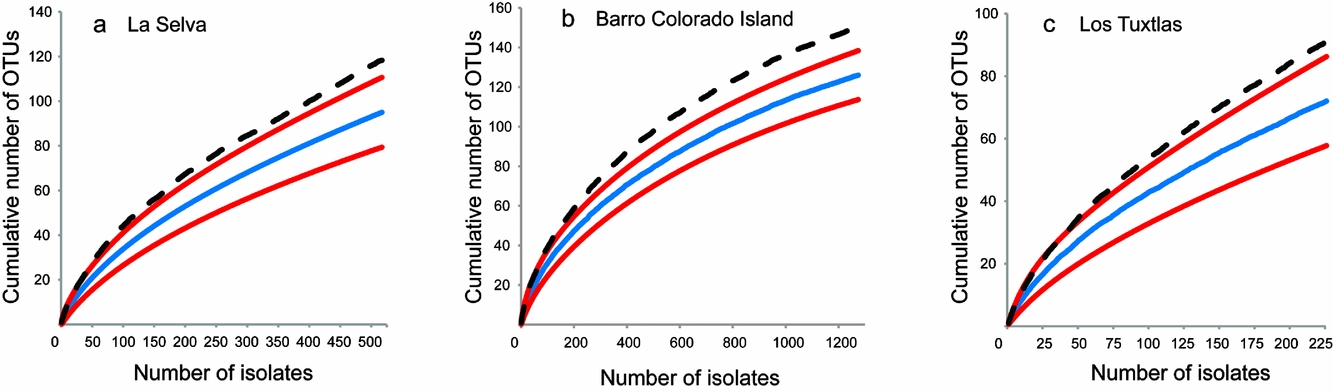
Species accumulation curves for each site remained non-asymptotic, with bootstrap values of total richness exceeding the upper 95% confidence interval of the observed data (Figure 1). However, we recovered a considerable percentage of estimated richness in each site (84% at BCI, 80.5% at LS and 79.1% at LT), and curves based only on non-singletons were asymptotic (data not shown). The non-singleton data set was used for analyses of community composition.
Richness of endophytes isolated from healthy fronds of ferns collected at La Selva Costa Rica, LS (a), Barro Colorado Island Panama, BCI (b), and Los Tuxtlas Mexico, LT (c): accumulation curves based on operational taxonomic units (OTUs) delimited by 95% ITSrDNA-partial LSUrDNA sequence similarity (blue solid line); 95% confidence interval around observed richness (red solid lines); and bootstrap estimate of total species richness (dashed black line).
Community composition
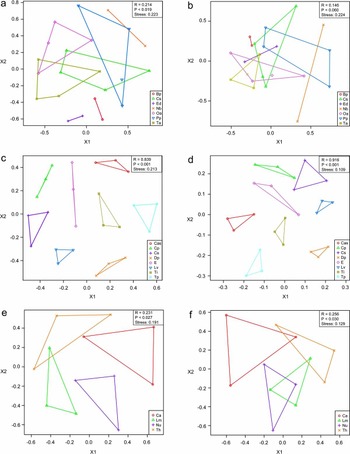
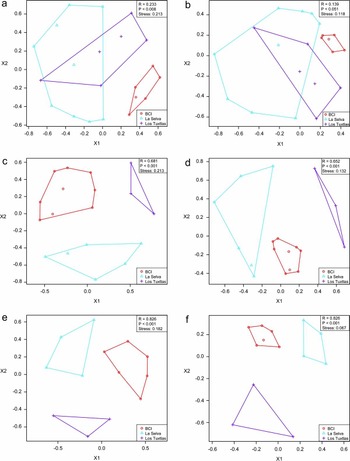
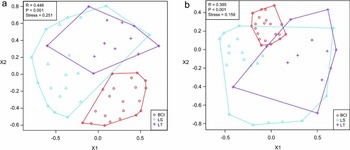
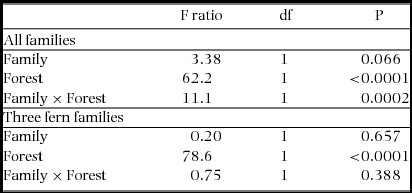
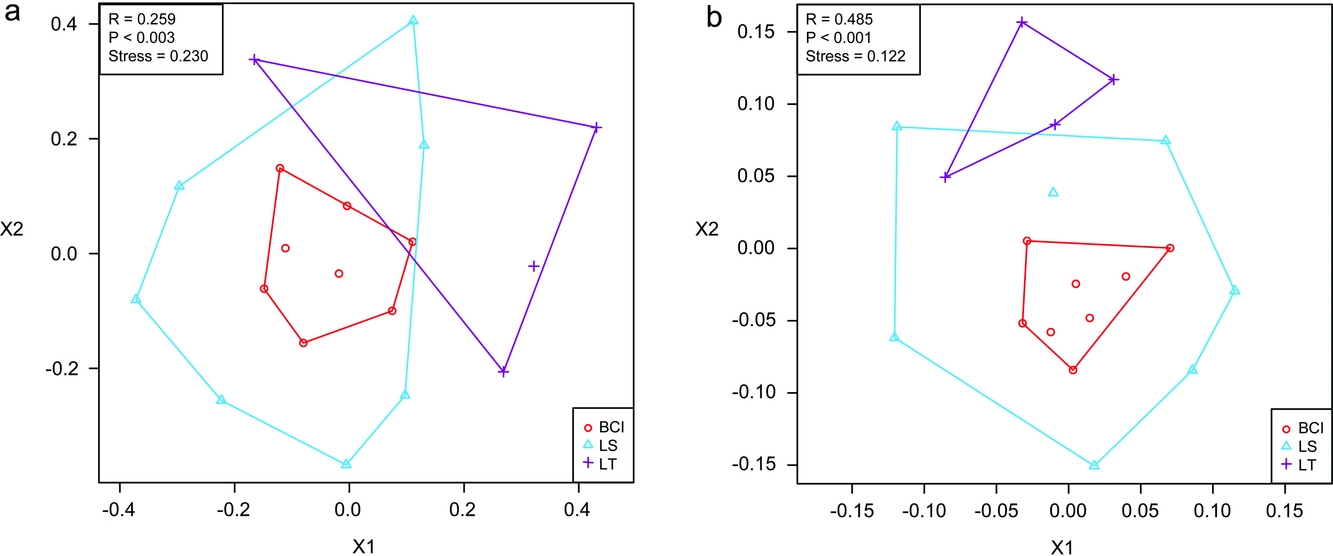
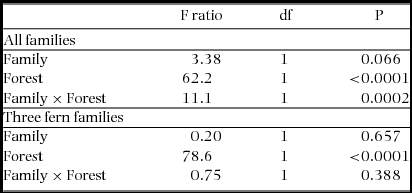
Endophyte community composition differed significantly among species in each forest both in terms of presence/absence and relative abundance (Figure 2). Analyses of the families sampled in all sites revealed significant differences in OTU composition among BCI, LT and LS for each of the three families (Figure 3) and for the three families together (Figure 4). In the latter analysis, OTU of endophytes at BCI were particularly distinctive relative to those in LS and LT (Figure 4). Multiple regression based on the full data set revealed an interaction of host taxonomy and site in defining community similarity, but analyses focusing only on the three families sampled in all sites revealed only a strong site effect (Table 3).
Endophyte assemblages differed among fern species within each forest. Data are shown as Non-metric Multidimensional Scaling (NMDS) plots with stress and ANOSIM values at LS, Jaccard matrix (a), Morisita–Horn matrix (b); BCI, Jaccard (c), Morisita–Horn (d); and LT, Jaccard (e), Morisita–Horn (f). Each symbol represents an individual fern that yielded multiple fungal isolates. We used convex hulls to emphasize the samples belonging to each host species. Matrices were derived from transformed data (ln+1). Fern species from LS, Bp: Bolbitis portoricensis, Cs: Cyclopeltis semicordata, Ed: Elaphoglossum doanense; Nb: Nephrolepis biserrata; Oa: Oleandra articulata; Pp: Phlebodium pseudoaureum; Ta: Tectaria athyrioides. From BCI, Cas: Campyloneurum serpentinum; Cp: Campyloneurum phyllitidis; Cs: Cyclopeltis semicordata; Dp: Dicranoglossum panamense; E: Elaphoglossum sp.; Lv: Lomariopsis vestita; Ti: Tectaria incisa; Tp: Tectaria panamensis. From LT, Ca: Campyloneurum angustifolium; Lm: Lomariopsis mexicana; Nu: Nephrolepis undulata; Th: Tectaria heracleifolia.

Confamilial ferns collected at BCI, LS, and LT yielded different endophyte communities. Plots show Lomariopsidaceae, Jaccard matrix (a), Morisita–Horn matrix (b); Polypodiaceae, Jaccard (c), Morisita–Horn (d); and Tectariaceae, Jaccard (e), Morisita–Horn (f). Each symbol represents an individual fern that yielded more than one fungal isolate. We used convex hulls to emphasize the samples belonging to each sampling site. Matrices were derived from transformed data (ln+1).

Endophyte communities differed among sites: Jaccard (a), Morisita–Horn (b). Convex hulls emphasize samples belonging to each sampling site. Matrices were derived from transformed data (ln+1). Data were restricted to fern families sampled in all three sites (Lomariopsidaceae, Polypodiaceae and Tectariaceae).

Variation in endophyte community structure among fern families and forests (La Selva (LS), Costa Rica; Barro Colorado Island (BCI), Panama; Los Tuxtlas (LT), Mexico). Pairwise community similarity was compared using the ln-transformed Morisita–Horn index of individuals from different fern species. Entire data set; reduced set including fern families collected in all three forests.
Geographic distance and environmental dissimilarity
When evaluated individually, neither geographic distance (R = −0.521, P = 0.399) nor environmental dissimilarity (R = 0.902, P = 0.167) was individually correlated with dissimilarity in endophyte communiites. However, a partial Mantel test revealed a significant relationship between environmental dissimilarity and dissimilarity in endophyte communities when geographic distance was accounted for (R = 0.913, P = 0.017). Similarly, geographic distance and dissimilarity in endophyte communities were strongly correlated when environmental dissimilarity was accounted for (R = 0.979, P = 0.014). These results suggest that differences in endophyte community structure among sites reflect both geographic distance and environmental parameters.
Taxonomic delimitation
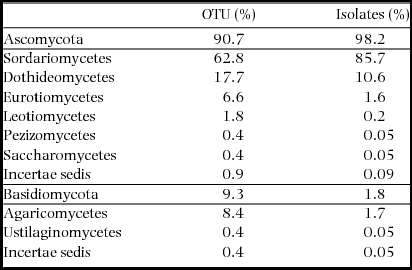
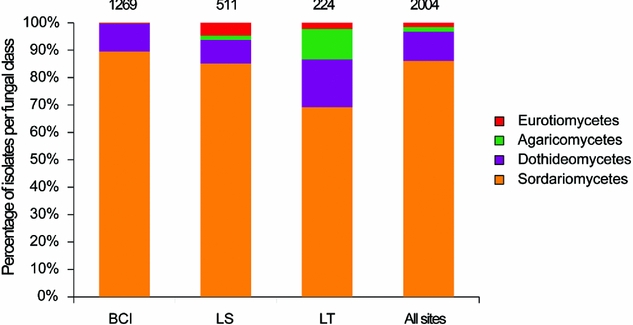
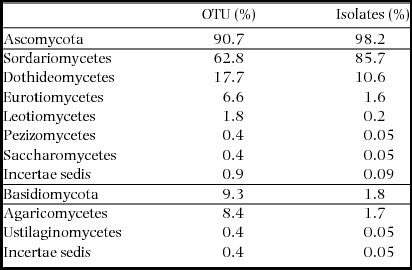
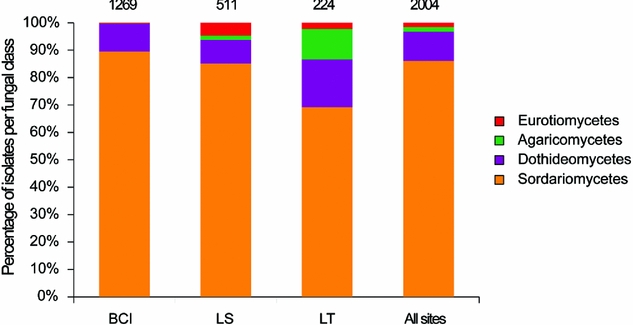
Overall, 98.2% of isolates were Ascomycota. Together these represented 205 of 226 OTU (90.7%). Six classes were represented among these isolates (Table 4). The remainder were Basidiomycota, with two classes represented (Table 4). The four most common classes overall (Sordariomycetes, Dothideomycetes, Agaricomycetes and Eurotiomycetes) were not represented in equal frequency in each site (χ2 6 = 150, P < 0.0001; Figure 5).
Taxonomic distribution of fern-associated endophytes from three forests (La Selva, Costa Rica; Barro Colorado Island, Panama; Los Tuxtlas, Mexico) reveals high phylogenetic diversity. Prevalence of each taxonomic group is shown as per cent of operational taxonomic units (OTU) and per cent of isolates.
Percentage of endophyte isolates representing the four most prevalent fungal classes found in ferns at BCI, LS and LT. The number of isolates per site assigned to each class is shown at the top of each bar.
At the ordinal level, Xylariales were most common at all sites (BCI, 69.1% of isolates and 39 OTU; LS, 62.3% of isolates and 26 OTU; LT, 33.3% of isolates and 14 OTU). At both BCI and LS, Microascales accounted for the next most common order (respectively, 9.1% and 9.3% of isolates; 6 OTU in each site). At LT, the second most common order was Botryosphaeriales, represented by 10.7% of isolates and one OTU (Guignardia sp.).
Phylogenetic perspectives
Phylogenetic analyses, coupled with phylogenetically derived taxonomic information, complemented the OTU-level analyses described above. The endophyte community found in ferns from BCI is more closely related than expected by chance at both basal (ses.mpd = −7.1, P < 0.0001) and terminal nodes (ses.mntd = −3.3, P < 0.0001). Those at LS (ses.mpd = 1, P < 0.848, ses.mntd = 2.6, P < 0.996) and LT (ses.mpd = 2.0, P < 0.979, ses.mntd = −1.4, P < 0.075) showed phylogenetic evenness at basal and terminal nodes (i.e. order or family level).
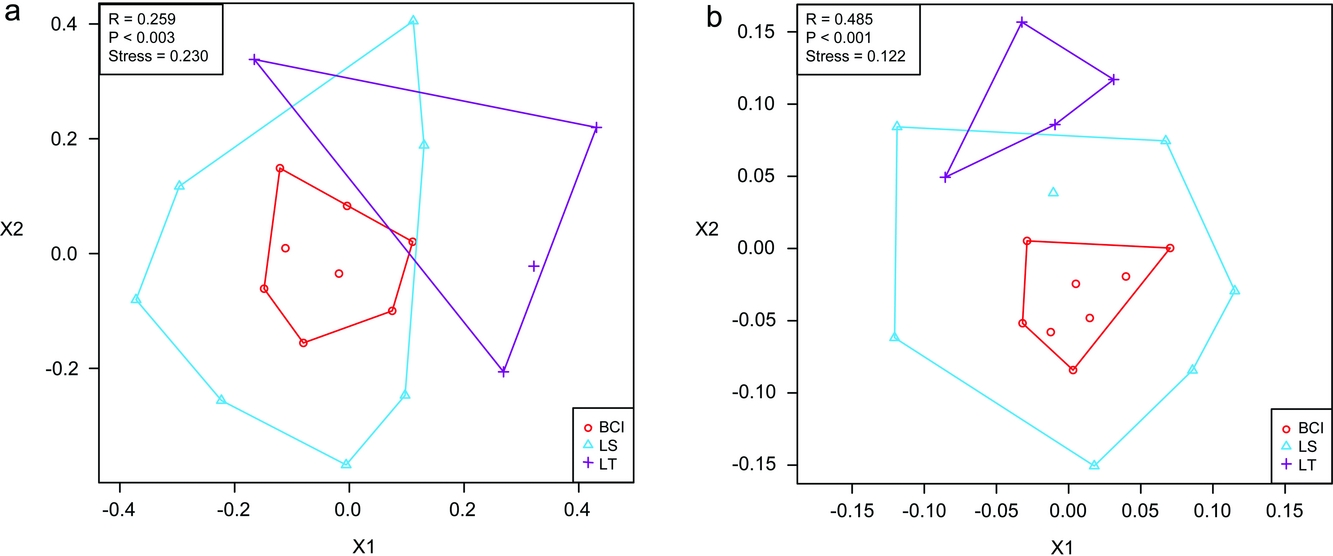
As suggested by the prevalence of Xylariales and Microascales in BCI and LS, endophytes at BCI comprised higher-level phylogenetic lineages that overlapped partially with those at LS at both basal and terminal nodes (Figure 6). In addition to Xylariales and Microascales (Sordariomycetes), LS shared with BCI several dominant clades of Dothideomycetes (mainly Microthyriales and Pleosporales). However, these sites differed in terms of OTU (Figure 4), both in these lineages and in the distinctive Eurotiales and Hypocreales that were found at LS and contributed to the high phylogenetic diversity there. In turn LT was characterized by distinctive taxa distributed among the Pleosporales, Xylariales, Capnodiales and Polyporales, and was relatively unique from the other sites in terms of major clades and terminal lineages (Figure 6).
Measures of phylogenetic distance complement OTU-level analyses by revealing differences in endophytes among sites. Results reflect analyses focusing on differences at basal nodes (COMDIST; a) and terminals (COMDISTNT; b). Here, more basal nodes are shared by ferns at BCI and LS than with LT (a). Terminals estimated with conserved regions that correspond to distinct orders or families are relatively unique at LT (b). Each symbol represents a fern species that yielded multiple fungal isolates. Convex hulls emphasize samples from each site.
DISCUSSION
The present study addresses three main knowledge gaps with regard to a diverse and ecologically important guild of fungi in tropical forests: first, the prevalence, richness and composition of endophytes of ferns, an ancient and diverse lineage that is highly species-rich in the tropics; second, a regional perspective that, in spanning nearly 2000 km, allows examination of endophytes in closely related plants in three forests; and third, integration of species and phylogenetic diversity, providing an evolutionary context for understanding species richness in these highly diverse fungal symbionts.
We found variable evidence for differences in endophyte abundance and diversity among species within each forest, consistent with previous work regarding the ubiquity of endophyte infections (Arnold et al. Reference ARNOLD, MEJÍA, KYLLO, ROJAS, MAYNARD, ROBBINS and HERRE2003, Murali et al. Reference MURALI, SURYANARAYANAN and VENKATESAN2007, Suryanarayanan et al. Reference SURYANARAYANAN, MURALI and VENKATESAN2002, Reference SURYANARAYANAN, VENKATESAN and MURALI2003; Vega et al. Reference VEGA, POSADA, AIME, PAVA-RIPOLL, INFANTE and REHNER2008). In tropical forests, spores and hyphal fragments of many culturable foliar endophytes are transmitted among hosts via air movement, rain splash and animal vectors (Arnold Reference ARNOLD, Schnitzer and Carson2008, Saikkonen Reference SAIKKONEN2007). Successful colonization depends on inoculum potential, exposure duration and host susceptibility (Helander et al. Reference HELANDER, AHLHOLM, SIEBER, HINNERI and SAIKKONEN2007, Sieber Reference SIEBER2007). Consistent with the results of Del Olmo-Ruiz & Arnold (Reference DEL OLMO-RUIZ and ARNOLD2014), on the whole, ferns do not appear to differ in susceptibility to the inoculum potential and exposure durations typical of a given forest.
Endophyte communities differed among fern species within each forest. However, strict-sense host specificity was rare, consistent with studies of angiosperms in these forests (Arnold et al. Reference ARNOLD, GILBERT, COLEY, THOMAS, MAYNARD, GILBERT, COLEY and KURSAR2000, Reference ARNOLD, MAYNARD and GILBERT2001, Reference ARNOLD, MEJÍA, KYLLO, ROJAS, MAYNARD, ROBBINS and HERRE2003, Reference ARNOLD, MIADLIKOWSKA, HIGGINS, SARVATE, GUGGER, WAY, HOFSTETTER, KAUFF and LUTZONI2009; U'Ren et al. Reference U'REN, DALLING, GALLERY, MADDISON, DAVIS, GIBSON and ARNOLD2009). Differences within sites were not an artefact of spatial distributions of hosts: our collection approach ensured that specimens of a given species were not clumped relative to other species. We sampled only a few fern species per family, such that host-related structure may reflect affinities for host genera or families in some cases. In this way these foliar symbionts would resemble other tropical organisms that frequently specialize on plants at the family level (e.g. herbivorous insects, Coley & Barone Reference COLEY and BARONE1996). More generally, previous work on ferns in Costa Rica showed that factors such as trichome density, microhabitat or epiphytic vs. terrestrial habits are not associated with detectable structure in endophyte communities (Del Olmo-Ruiz & Arnold Reference DEL OLMO-RUIZ and ARNOLD2014). Recent studies have showcased the functional trait diversity of tropical ferns (Zhang et al. Reference ZHANG, SUN, CAO, HU and ZHANG2014), linking photosynthetic rate and water transport capacity in various taxa. Future work focusing on these functional traits, including the wide range of leaf chemistry that can be found in ferns (Archer & Cole Reference ARCHER and COLE1986, Markham et al. Reference MARKHAM, CHALK and STEWARD2006, Urs et al. Reference URS, ROBERTS and SCHULTZ2006), will be helpful evaluating factors that shape endophyte communities.
We observed a high degree of turnover in endophytes among three forests. Our results are based on comparisons that reflect relatively thorough sampling of culturable endophytes: species accumulation curves based on non-singletons were asymptotic for each site, prompting our relatively robust regional comparisons. At the same time, our results should be taken with some caution: we surveyed only three sites, samples within sites were relatively small, and the environmental factors we consider were at a regional, rather than local, scale. Given these caveats our data provide a first estimation of the relationship of endophyte communities to landscape-level distances and environmental factors in these forests, and underscore the importance of considering multiple host taxa, multiple sites, and at a landscape scale, multiple environmental contexts in extrapolative estimates of endophyte diversity.
Phylogenetic perspectives
Our surveys revealed that endophytes of ferns are phylogenetically diverse, comprising members of two phyla and at least eight classes of fungi. Most studies of tropical angiosperms reveal dominance by Sordariomycetes, Dothideomycetes and Eurotiomycetes (Arnold & Lutzoni Reference ARNOLD and LUTZONI2007, Arnold et al. Reference ARNOLD, MIADLIKOWSKA, HIGGINS, SARVATE, GUGGER, WAY, HOFSTETTER, KAUFF and LUTZONI2009), but other taxa found here (Pezizomycetes, Leotiomycetes) have not been recorded frequently. These two classes are often prevalent as endophytes in temperate angiosperms and conifers (U'Ren et al. Reference U'REN, LUTZONI, MIADLIKOWSKA, LAETSCH and ARNOLD2012).
The predominance of Sordariomycetes, Dothideomycetes and Eurotiomycetes in both tropical ferns and angiosperms raises the possibility that ferns may have co-opted endophytes from angiosperms during the explosive radiations of ferns in angiosperm-dominated tropical forests (Schuettpelz & Pryer Reference SCHUETTPELZ and PRYER2009). Alternatively, this pattern could reflect more recent evolution of host generalism in multiple lineages of fungi. A third possibility is that these groups represent many closely related but genetically distinct subgroups that appear to be generalists at this broad classification, but instead have significant structure corresponding to host clades.
Under the first two scenarios we might expect co-occurrence of endophytes in both angiosperms and ferns, but this would be less likely under the third scenario. Comparison of the endophytes obtained from BCI in this study with 3740 published sequences of endophytes from angiosperms at BCI and in proximate areas in Panama (Arnold & Lutzoni Reference ARNOLD and LUTZONI2007, Arnold et al. Reference ARNOLD, GILBERT, COLEY, THOMAS, MAYNARD, GILBERT, COLEY and KURSAR2000, Reference ARNOLD, MAYNARD and GILBERT2001, Reference ARNOLD, MIADLIKOWSKA, HIGGINS, SARVATE, GUGGER, WAY, HOFSTETTER, KAUFF and LUTZONI2009; Higginbotham et al. Reference HIGGINBOTHAM, ARNOLD, IBAÑEZ, SPADAFORA, COLEY and KURSAR2013, Higgins et al. Reference HIGGINS, COLEY, KURSAR and ARNOLD2011, Reference HIGGINS, ARNOLD, COLEY and KURSAR2014; U'Ren et al. Reference U'REN, DALLING, GALLERY, MADDISON, DAVIS, GIBSON and ARNOLD2009) reveals that 43 of the 75 (57%) of the most common OTU occurred in both angiosperms and ferns. The co-opting hypothesis, which might speak to ancient generalism, is potentially more parsimonious than the parallel evolution of generalism in multiple classes and orders. This warrants further study in a well-developed phylogenetic framework.
Classic metrics to measure similarity between communities do not address evolutionary relationships that connect species. A phylogenetic approach incorporates the relatedness of species in a community, and thus addresses a potential lack of independence among related species that share an evolutionary history (Gotelli Reference GOTELLI2004, Graham & Fine Reference GRAHAM and FINE2008, Johnson & Stinchcombe Reference JOHNSON and STINCHCOMBE2007, Webb Reference WEBB2000). We found that the high species richness and abundance of fungal endophytes at BCI represent diverse assemblages concentrated in a relatively small number of orders (especially Xylariales, Microascales and Pleosporales). These lineages are present at LS but there the communities are dominated by different OTU. At LT, we found a higher phylogenetic diversity than in the other sites. We suspect that some fungal species, much like some of the ferns studied here, have wide geographic ranges across the Neotropics. However, those with narrower distributions contribute powerfully to intersite differences in community composition. Such narrow distributions may reflect powerful dispersal limitation in some fungi (Higgins et al. Reference HIGGINS, COLEY, KURSAR and ARNOLD2011, but see Vincent et al. Reference VINCENT, WEIBLEN and MAY2016), perhaps relevant here because several of our focal fern species do not have continuous distributions between forests (Davidse et al. Reference DAVIDSE, SOUSA and KNAPP1995, Mickel & Smith Reference MICKEL and SMITH2004).
In future work we further advocate sampling more individuals of focal species over longer time periods to more thoroughly describe community structure and host affiliations. Future work also should consider the potential for unculturable species to alter or validate the patterns shown here. Culture-free methods may be especially important for capturing endophytes with more obligate host associations, as may occur in this ancient and diverse lineage of plants.
ACKNOWLEDGEMENTS
We thank the College of Agriculture and Life Sciences (CALS) at the University of Arizona (UA) for supporting this work. MD was supported by a CONACYT Doctoral Fellowship from the government of Mexico; CALS; a post-course fellowship from the Organization for Tropical Studies; and the School of Plant Sciences (UA). We thank the scientific support staff at Barro Colorado Island, La Selva Biological Station and Los Tuxtlas Biological Station for logistical assistance; C. Caballero-George, J. Bolaños-Da Silva. O. Acevedo and S. Higginbotham for logistical and technical assistance in Panama; G. Vidal-Gaona for logistical and technical assistance in Mexico; R. Moran, A. Rojas-Alvarado, S. Lobo-Cabezas and M. Martínez for fern identification; F. Santos and R. Garcia-Sandoval for assisting with field collections; A. Laetsch, MM N. Devan and S. Raza for assistance with DNA extractions; J. U'Ren for assistance with data analysis; and M. Gunatilaka, M. Hoffman, M.J. Epps, D. Sandberg, J. Riddle and R. Garcia-Sandoval for technical assistance. This paper represents a portion of the doctoral dissertation research of M. Del Olmo in Plant Pathology at The University of Arizona.