




1 Introduction
The Elliott program for the classification of amenable
 $\mathrm {C^*}$
-algebras might be said to have begun with the
 $\mathrm {K}$
-theoretical classification of AF algebras in [Reference Elliott5].
In the quest to classify simple separable nuclear
 $\mathrm {C^*}$
-algebras, as suggested by Elliott, it has become necessary to invoke some regularity property of the
 $\mathrm {C^*}$
-algebras. There are three regularity properties of particular interest: tensorial absorption of the Jiang–Su algebra
 $\mathcal {Z},$
also called
 $\mathcal {Z}$
-stability; finite nuclear dimension; and strict comparison of positive elements. Toms and Winter have conjectured (which was called Tom–Winter conjecture; see, e.g., [Reference Elliott and Toms8]) that these three fundamental properties are equivalent for all separable, simple, unital, amenable
 $\mathrm {C^*}$
-algebras (and this has now almost completely been proved; see [Reference Bosa, Brown, Sato, Tikuisis, White and Winter2, Reference Castillejos, Evington, Tikuisis, White and Winter4, Reference Kirchberg and Rørdam12, Reference Toms, White and Winter17]).
In order to prove that
 $\mathcal {Z}$
-stable implies finite nuclear dimension, Castillejos et al. introduced uniform property
 $\Gamma $
and complemented tracial orthogonal partitions of unity property for separable
 $\mathrm {C^*}$
-algebra in [Reference Castillejos, Evington, Tikuisis, White and Winter4]. They proved that
 $\mathcal {Z}$
-stability uniform property
 $\Gamma $
, and uniform property
 $\Gamma $
implies complemented tracial orthogonal partitions of unity property, and this can prove finite nuclear dimension for separable simple nuclear nonelementary unital
 $\mathrm {C^*}$
-algebra. Also, in [Reference Castillejos, Evington, Tikuisis, White and Winter4], they showed that the Toms–Winter conjecture holds among separable simple unital nonelementary
 $\mathrm { C^*}$
-algebras which have uniform property
 $\Gamma $
.
Inspired by Lin’s tracial approximation by interval algebras in [Reference Lin13], Elliott and Niu in [Reference Elliott and Niu7] considered the natural notion of tracial approximation by other classes of
 $\mathrm {C^*}$
-algebras. Let
 $\Omega $
be a class of unital
 $\mathrm {C^*}$
-algebras. Then the class of separable
 $\mathrm {C^*}$
-algebras which can be tracially approximated by
 $\mathrm {C^*}$
-algebras in
 $\Omega ,$
denoted by
 $\mathrm {TA}\Omega $
, is defined as follows. A unital
 $\mathrm {C^*}$
-algebra A is said to belong to the class
 $\mathrm {TA}\Omega $
if, for any
 $\varepsilon>0,$
any finite subset
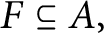 $F\subseteq A,$
and any nonzero element
 $a\geq 0,$
there are a projection
 $p\in A$
and a
 $\mathrm {C^*}$
-subalgebra B of A with
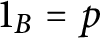 $1_B=p$
and
 $B\in \Omega $
such that
-
(1)
 $\|xp-px\|<\varepsilon\quad $
for all
$x\in F$
,
-
(2)
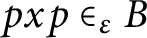
$pxp\in _\varepsilon B\quad $
for all
$x\in F$
, and -
(3)
$1-p$
is Murray–von Neumann equivalent to a projection in
$\overline {aAa}$
.




The question of which properties pass from a class
 $\Omega $
to the class
 $\mathrm {TA}\Omega $
is interesting and sometimes important. In [Reference Elliott, Fan and Fang6, Reference Elliott and Niu7, Reference Fan9], some properties were showed that pass from a class
 $\Omega $
to
 $\mathrm {TA}\Omega $
.
In this paper, we show that if
 $\Omega $
is a class of stably finite unital
 $\mathrm {C^*}$
-algebras such that for any
 $B\in \Omega $
, B has uniform property
 $\Gamma $
. Then A has uniform property
 $\Gamma $
for any simple unital
 $\mathrm {C^*}$
-algebra
 $A\in \rm {TA}\Omega $
.
Examples of separable nuclear
 $\mathrm {C^*}$
-algebra with uniform property
 $\Gamma $
are by now abundant. Kerr and Szabó establish uniform property
 $\Gamma $
for crossed product
 $\mathrm {C^*}$
-algebras arising from a free action with the small boundary property of an infinite amenable group on a compact metrizable space (see Theorem 9.4 in [Reference Kerr and Szabó11]).
In this paper, we also show that let A be an infinite-dimensional stably finite unital simple separable
 $\mathrm {C^*}$
-algebra. Let
 $B\subset A$
be a centrally large subalgebra in A such that B has uniform property
 $\Gamma $
. Then A has uniform property
 $\Gamma $
.
2 Preliminaries and definitions
Let A be a
 $\mathrm {C^*}$
-algebra, and let
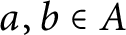 $a, b\in A$
be two positive elements. We say that a is Cuntz subequivalent to b (written
 $a\lesssim b$
) if there is a sequence
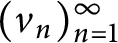 $(v_n)_{n=1}^\infty $
of elements of
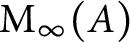 $\mathrm {M}_{\infty }(A)$
such that
 $$ \begin{align*}\lim_{n\to \infty}\|v_nbv_n^*-a\|=0.\end{align*} $$
We say that a and b are Cuntz equivalent (written
 $a\sim b$
) if
 $a\lesssim b$
and
 $b\lesssim a$
.
Centrally large and stably centrally large subalgebras were introduced in [Reference Archey and Phillips1] by Archey and Phillips.
Definition 2.1 [Reference Archey and Phillips1]
Let A be an infinite-dimensional stably finite simple unital
 $\mathrm {C^*}$
-algebra. A unital subalgebra
 $B \subset A$
is said to be centrally large in A if for every
 $m \in {\mathbb {N}}$
,
 $a_1, a_2, \ldots , a_m \in A$
,
 $\varepsilon> 0$
,
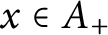 $x \in A_{+}$
with
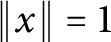 $\| x \| = 1$
, and
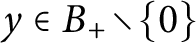 $y \in B_{+}\!\setminus\! \{ 0 \}$
, there are
 $c_1, c_2, \ldots , c_m \in A$
and
 $g \in B$
such that:
-
(1)
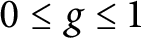
$0 \leq g \leq 1$
. -
(2) For
$j = 1, 2, \ldots , m$
, we have
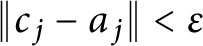
$\| c_j - a_j \| < \varepsilon $
. -
(3) For
$j = 1, 2, \ldots , m$
, we have
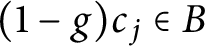
$(1 - g) c_j \in B$
. -
(4)
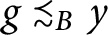
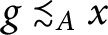
$g \precsim _B y$
and
$g \precsim _A x$
. -
(5) For
$j = 1, 2, \ldots , m$
, we have
$\| g c_j - c_j g \| < \varepsilon $
.




Tracial Rokhlin property for finite group action was introduced by Phillips.
Definition 2.2 [Reference Phillips15]
Let A be an infinite-dimensional simple unital separable
 $\mathrm {C^*}$
-algebra, and let
 $\alpha :G\to \rm {Aut}(A)$
be an action of a finite group G on A. We say
 $\alpha $
has tracial Rokhlin property if for any finite set
 $F\subseteq A$
, any
 $\varepsilon>0$
, and any nonzero positive element
 $b\in A$
, there are mutually orthogonal projections
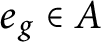 $e_g\in A$
for
 $g\in G$
such that
-
(1)
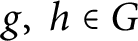
$\|{\alpha _g}(e_h)-e_{gh}\|<\varepsilon $
for all
$g,~ h\in G$
, -
(2)
$\|e_gd-de_g\|<\varepsilon $
for all
$g\in G$
and all
$d\in { F}$
, -
(3) with
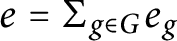
$e=\Sigma _{g\in G}e_g$
, the projection
$1-e$
is Murray–von Neumann equivalent to a projection in the hereditary subalgebra of A generated by b, -
(4)
$\|ebe\|\geq \|b\|-\varepsilon $
.






Note that: if A is an infinite-dimensional simple unital stably finite separable
 $\mathrm {C^*}$
-algebra, we can remove
 $(4)$
in Definition 2.2.
Uniform property
 $\Gamma $
was introduced by Castillejos et al., that was used to prove that
 $\mathcal {Z}$
-stable imply that finite nuclear dimension in [Reference Castillejos, Evington, Tikuisis, White and Winter4].
Definition 2.3 [Reference Castillejos, Evington, Tikuisis, White and Winter4]
Let A be a separable
 $\mathrm {C^*}$
-algebra with
 $T(A)$
nonempty and compact. Then A is said to have uniform property
 $\Gamma $
, if for all
 $n\in \mathbb {N}$
, there exist projections
 $p_1, \ldots , p_n\in A^{w}\cap A'$
summing to
 $1_{A^w}$
such that
 $\tau (ap_i)=\frac {1}{n}\tau (a)$
,
 $a\in A$
,
 $\tau \in T_{w}(A), i=1,\ldots , n$
.
We recall that the equivalent local refinement of Property
 $\Gamma $
from Proposition 2.4 of [Reference Castillejos, Evington, Tikuisis and White3].
Theorem 2.4 [Reference Castillejos, Evington, Tikuisis and White3]
Let A be a separable
 $\mathrm {C^*}$
-algebra with
 $T(A)$
nonempty and compact. Then the following are equivalent:
-
(1) A has uniform property
$\Gamma $
. -
(2) For any finite subset
$F\subset A$
, any
$\varepsilon>0$
, and any
$n\in \mathbb {N}$
, there exist pairwise orthogonal positive contractions
$e_1,\ldots , e_n\in A$
such that for
$i=1,\ldots , n$
and
$a\in F$
, we have
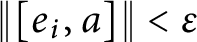
$\|[e_i, a]\|<\varepsilon $
and
$$ \begin{align*}\sup_{\tau\in T(A)}\|\tau(ae_i)-\frac{1}{n}\tau(a)\|<\varepsilon.\end{align*} $$






3 The main results
Theorem 3.1 Let A be an infinite-dimensional stably finite unital simple separable
 $\mathrm {C^*}$
-algebra. Let
 $B\subset A$
be a centrally large subalgebra in A such that B has uniform property
 $\Gamma $
. Then A has uniform property
 $\Gamma $
.
Proof First observe that by the assumptions,
 $T(B)$
is nonempty and compact, so apply Theorem 6.2 of [Reference Phillips16] to conclude that
 $T(A)$
is nonempty. This together with the unitality of A implies that
 $T(A)$
is compact. By Theorem 2.4(2), we need to show that for fixed finite subset
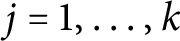
 $F=\{a_1,a_2, \ldots , a_k\}$
of A (we may assume that
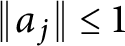 $\|a_j\|\leq 1$
for all
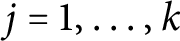 $j=1,\ldots , k$
),
 $\varepsilon>0$
, and
 $n\in \mathbb {N}$
, there exist pairwise orthogonal positive contractions
 $e_1,\ldots , e_n\in A$
such that
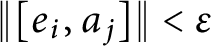 $\|[e_i, a_j]\|<\varepsilon $
and
 $$ \begin{align*}\sup_{\tau\in T(A)}\|\tau(a_je_i)-\frac{1}{n}\tau(a_j)\|<\varepsilon,\end{align*} $$
for
 $i=1,\ldots , n$
, and
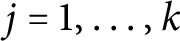 $ j=1,\ldots , k$
.
For
 $\varepsilon>0$
, we choose
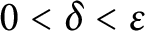 $0<\delta <\varepsilon $
with
 $X=[0,1], f(t)=t^{1/2}, g(t)=(1-t)^{1/2}$
, according to Lemma 2.5.11 in [Reference Lin14].
Since A is an infinite-dimensional unital simple separable
 $\mathrm {C^*}$
-algebra, by Corollary 2.5 in [Reference Phillips16], there exists a nonzero positive element
 $a\in A$
such that
 $\delta>d_\tau (a) =\lim _{n\to \infty }\tau (a^{1/n})$
for any
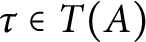 $\tau \in T(A)$
.
For
 $F=\{a_1,a_2, \ldots , a_k\}$
,
 $\delta>0$
, and nonzero
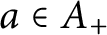 $a\in A_+$
, since
 $B\subset A$
be a centrally large subalgebra in A, by Definition 2.1, there exist
 $c_1, c_2, \ldots , c_k \in A$
and
 $g \in B$
such that
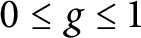
-
(1)
$0\leq g\leq 1$
, -
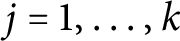
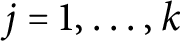
(2)
$\| c_j - a_j \|<\delta /3,\quad $
for all
$j=1,\ldots , k$
, -
(3)
$\|gc_j-gc_j\|<\delta /3,\quad $
for any
$j=1,\ldots , k$
, -
(4)
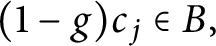
$(1-g)c_j\in B,\quad $
for any
$j=1,\ldots , k$
, and -
(5)
$g\lesssim a$
.



By
 $(1)$
–
 $(3)$
, we have
 $(1)' \|ga_j-a_jg\|\leq \|ga_j-gc_j\|+\|gc_j-c_jg\|+\|c_jg-a_jg\|<\delta $
for any
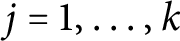 $j=1,\ldots , k$
.
By
 $(5)$
and by Proposition 1.19 of [Reference Phillips16], we have
 $d_\tau (g)\leq d_\tau (a)$
. Because
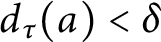 $d_\tau (a)<\delta $
and
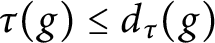 $\tau (g)\leq d_\tau (g)$
, we have
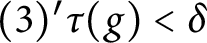 $(3)' \tau (g)<\delta $
, for any
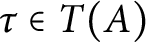 $\tau \in T(A)$
.
By the choice of
 $\delta $
, by
 $(1)'$
and by Lemma 2.5.11 in [Reference Lin14], one has
 $$ \begin{align*}\|g^{1/2}a_j-a_jg^{1/2}\|<\varepsilon,\end{align*} $$
 $$ \begin{align*}\|(1-g)^{1/2}a_j-a_j(1-g)^{1/2}\|<\varepsilon.\end{align*} $$
Put
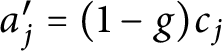 $a_j'=(1-g)c_j$
, for all
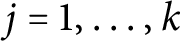 $j=1,\ldots , k$
, then by
 $(4)$
, each
 $a_j'\in B$
and by
 $(1)$
and
 $(2)$
,
 $\|(1-g)a_j-a_j'\|<\delta $
.
By
 $(1)'$
and
 $(2)'$
, one has
 $$ \begin{align*}\|a_j-a_j'-g^{1/2}a_jg^{1/2}\|=\|ga_j+(1-g)a_j-a_j'-g^{1/2}a_jg^{1/2}\|\end{align*} $$
 $$ \begin{align*}\leq\|ga_j-g^{1/2}a_jg^{1/2}\|+\|(1-g)a_j-a_j'\|<\varepsilon+\delta<2\varepsilon,\end{align*} $$
and
 $$ \begin{align*}\|(1-g)^{1/2}a_j(1-g)^{1/2}-a_j'\|\leq\|(1-g)^{1/2}a_j(1-g)^{1/2}- (1-g)a_j\|\end{align*} $$
 $$ \begin{align*}+\|(1-g)a_j-a_j'\|<\varepsilon+\delta<2\varepsilon,\end{align*} $$
for all
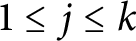 $1\leq j\leq k$
.
For
 $\varepsilon>0$
and
 $n\in \mathbb {N}$
, we choose
 $\delta ''=\delta ''(\varepsilon ,n)$
(with
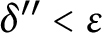 $\delta ''<\varepsilon $
) sufficiently small such that satisfying Lemma 2.5.12 in [Reference Lin14].
For
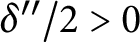 $\delta ''/2>0$
, finite set
 $\{a_1' ,~ a_2',~\ldots ,~ a_n',~ g,~ g^{1/2}\}$
of B, and
 $n\in \mathbb {N}$
, since B has uniform property
 $\Gamma $
, there exist pairwise orthogonal positive contractions
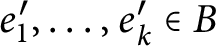 $e_1',\ldots , e_k'\in B$
such that for
 $i=1,\ldots , k,$
and
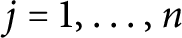 $ j=1,\ldots , n$
, one has
 $$ \begin{align*}\|[e_i', a_j']\|<\delta''/2, \|[e_i', g]\|<\delta''/2, \|[e_i', g^{1/2}]\|<\delta''/2,\|[e_i', (1-g)^{1/2}]\|<\delta''/2\end{align*} $$
and
 $$ \begin{align*}\sup_{\tau\in T(B)}\|\tau(a_j'e_i')-\frac{1}{n}\tau(a_j')\|<\delta''/2.\end{align*} $$
We take
 $e_i=(1-g)^{1/2}e_i'(1-g)^{1/2}$
, for all
 $i=1,2, \ldots , n$
. Because
 $\|(1-g)^{1/2}e_i'-e_i'(1-g)^{1/2}\|<\delta ''$
, and
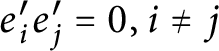 $e_i'e_j'=0, i\neq j$
, we have
 $$ \begin{align*} &\|(1-g)^{1/2}e_i'(1-g)^{1/2}(1-g)^{1/2}e_j'(1-g)^{1/2}\| \nonumber\\ &\quad\leq\|(1-g)^{1/2}e_i'(1-g)^{1/2}(1-g)^{1/2}e_j'(1-g)^{1/2}- (1-g)e_i'(1-g)^{1/2}e_j'(1-g)^{1/2}\| \nonumber\\ &\qquad+\|(1-g)e_i'(1-g)^{1/2}e_j'(1-g)^{1/2}- (1-g)e_i'e_j'(1-g)^{1/2}(1-g)^{1/2}\| \nonumber\\ &\quad<\delta''/2+\delta''/2=\delta''. \end{align*} $$
By the choice of
 $\delta $
, since
 $(1-g)^{1/2}e_j'(1-g)^{1/2}$
is a contraction, by the proof of Lemma 2.5.12 in [Reference Lin14], one can find
 $e_j'$
to be a contraction, such that
 $$ \begin{align*}\|(1-g)^{1/2}e_i'(1-g)^{1/2}-e_i\|<\varepsilon.\end{align*} $$
We have
 $$ \begin{align*} &\|a_je_i-a_j'e_i'\| \nonumber\\ &\quad\leq\|a_j(1-g)^{1/2}e_i'(1-g)^{1/2}-a_je_i\|+\|a_j(1-g)^{1/2}e_i'(1-g) ^{1/2} \nonumber\\ &\qquad-(1-g)^{1/2}a_j(1-g)^{1/2}e_i'\| +\|(1-g)^{1/2}a_j(1-g)^{1/2}e_i'-a_j'e_i'\|\leq 4\varepsilon. \end{align*} $$
With the same argument, one has
 $$ \begin{align*}\|e_ia_j-e_i'a_j'\|<4\varepsilon.\end{align*} $$
Since
 $\|e_i'a_j'-a_j'e_i'\|<\delta ''$
, one has
 $$ \begin{align*} &\|a_je_i-e_ia_j\| \nonumber\\ &\quad\leq\|a_je_i-a_j'e_i'\|+\|a_j'e_i'-e_i'a_j'\|+\|e_i'a_j'-e_ia_j\| \nonumber\\ &\quad<4\varepsilon+4\varepsilon+\delta''<9\varepsilon. \end{align*} $$
Since
 $\|a_je_i-a_j'e_i'\|<4\varepsilon $
, for any
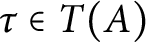 $\tau \in T(A)$
, one has
 $$ \begin{align*}|\tau(a_je_i)-\tau(a_j'e_i') |<4\varepsilon.\end{align*} $$
Since
 $\|a_i-a_i'-g^{1/2}a_jg^{1/2}\|<2\varepsilon ,$
we have
 $$ \begin{align*}|\tau(a_j)-\tau(a_j')-\tau(g^{1/2}a_jg^{1/2})|<2\varepsilon.\end{align*} $$
Therefore, we have
 $$ \begin{align*} &|\tau(a_je_i)-\frac{1}{n}\tau(a_j)| \nonumber\\ &\quad=|\tau(a_je_i)-\tau(a_j'e_i')|+|\tau(a_j'e_i')-\frac{1}{n}\tau(a_j')| +|(\frac{1}{n}\tau(a_j')-\frac{1}{n}\tau(a_j')|\nonumber\\ &\quad\leq4\varepsilon+|\tau(a_j'e_i')-\frac{1}{n}\tau(a_j')|+\frac{1}{n} (2\varepsilon+\tau(g^{1/2}a_jg^{1/2})) \nonumber\\ &\quad\leq4\varepsilon+|\tau(a_j'e_i')-\frac{1}{n}\tau(a_j')|+\frac{1}{n} (2\varepsilon+\tau(g))\nonumber\\ &\quad\leq5\varepsilon+|\tau(a_j'e_i')-\frac{1}{n}\tau(a_j')|. \end{align*} $$
Since B is a centrally large subalgebra of A, by Theorem 6.2 in [Reference Phillips16], we have
 $T(A)=T(B)$
; therefore, one has
 $$ \begin{align*}\sup_{\tau\in T(A)}|\tau(a_je_i)-\frac{1}{n}\tau(a_j)| &\leq \sup_{\tau\in T(A)}|\tau(a_j'e_i')-\frac{1}{n}\tau(a_j')|+5\varepsilon\\ &=\sup_{\tau\in T(B)}|\tau(a_j'e_i')-\frac{1}{n}\tau(a_j')|<5\varepsilon +\delta''<6\varepsilon.\end{align*} $$
By Theorem 2.4(2), A has uniform property
 $\Gamma $
.▪
Theorem 3.2 Let
 $\Omega $
be a class of stably finite unital
 $\mathrm {C^*}$
-algebras such that for any
 $B\in \Omega $
, B has uniform property
 $\Gamma $
. Then A has uniform property
 $\Gamma $
for any simple unital
 $\mathrm {C^*}$
-algebra
 $A\in \rm {TA}\Omega $
.
Proof By Theorem 4.6 of [Reference Elliott and Niu7],
 $T(A)$
is nonempty. This, together with the assumption that A is unital, implies that
 $T(A)$
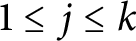
is also compact. By Theorem 2.4(2), we need to show that for fixed finite subset
 $F=\{a_1,a_2, \ldots , a_k\}$
of A (we may assume that
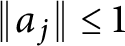 $\|a_j\|\leq 1$
, for all
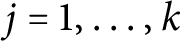 $j=1,\ldots , k$
), for given
 $\varepsilon>0$
, and given
 $n\in \mathbb {N}$
, there exist pairwise orthogonal positive contractions
 $e_1,\ldots , e_n\in A$
such that
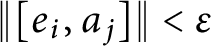 $\|[e_i, a_j]\|<\varepsilon $
and
 $$ \begin{align*}\sup_{\tau\in T(A)}\|\tau(a_je_i)-\frac{1}{n}\tau(a_j)\|<\varepsilon,\end{align*} $$
for
 $i=1,\ldots , n,$
and
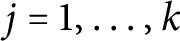 $j=1,\ldots , k$
.
For
 $\varepsilon>0$
, since A is an infinite-dimensional unital simple separable
 $\mathrm {C^*}$
-algebra, by Corollary 2.5 in [Reference Phillips16], there exists a nonzero positive element
 $a\in A$
with
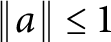 $\|a\|\leq 1$
(otherwise, we replace with
 $\frac {a}{\|a\|}$
) such that
 $\varepsilon>d_\tau (a) =\lim _{n\to \infty }\tau (a^{1/n})$
for all
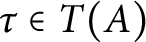 $\tau \in T(A)$
.
For
 $F=\{a_1,a_2, \ldots , a_k\}$
, and
 $\varepsilon>0$
, since
 $A\in $
TA
 $\Omega $
, there exist a sub-
 $\mathrm {C^*}$
-algebra B of A and a nonzero projection
 $p\in A$
with
 $B\in \Omega $
and
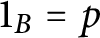 $1_{B}=p$
, such that
-
(1)
$\|a_jp-pa_j\|<\varepsilon,\quad $
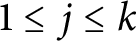
for any
$1\leq j\leq k$
, -
(2)
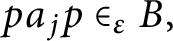
$pa_jp\in _{\varepsilon }B,\quad $
for any
$1\leq j\leq k$
, -
(3)’
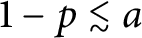
$1-p\lesssim a$
(since
$1-p$
is Murray–von Neumann equivalent to a projection in
$\overline {aAa}$
).



By
 $(3)'$
and by Proposition 1.19 of [Reference Phillips16], we have
 $d_\tau (1-p)\leq d_\tau (a)$
. Since
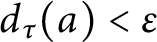 $d_\tau (a)<\varepsilon $
and
 $\tau (1-p)\leq d_\tau (1-p)$
, we have
 $(3) \tau (1-p)<\varepsilon $
.
By
 $(2)$
, there exist
 $a_1' ,~ a_2',~\ldots ,~ a_k'\in B$
such that
 $$ \begin{align*}\|pa_jp-a_j'\|<\varepsilon,\end{align*} $$
for all
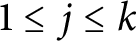 $1\leq j\leq k$
. Put
 $a_j''=(1-p)a_j(1-p)$
, for all
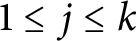 $1\leq j\leq k$
, then we have
 $$ \begin{align*} &\|a_j-a_j'-a_j''\|=\|pa_j+(1-p)a_j-a_j'-a_j''\| \nonumber\\ &\quad\leq\|pa_j-pa_jp\|+\|pa_jp-a_j'\|+\|(1-p)a_j-(1-p)a_j(1-p)\|\nonumber\\ &\quad<\varepsilon+\varepsilon+\varepsilon=3\varepsilon, \end{align*} $$
for all
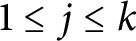 $1\leq j\leq k$
.
For
 $G=\{a_1' ,~ a_2',~\ldots ,~ a_k'\}$
of B, since
 $B\in \Omega $
, for fixed
 $\varepsilon>0$
, and for fixed
 $n\in \mathbb {N}$
, there exist pairwise orthogonal positive contractions
 $e_1,\ldots , e_n\in B$
such that
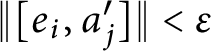 $\|[e_i, a_j']\|<\varepsilon $
and
 $$ \begin{align*}\sup_{\tau\in T(B)}|\tau(a_j'e_i)-\frac{1}{n}\tau(a_j')|<\varepsilon,\end{align*} $$
for all
 $j=1,2, \ldots , k$
, and
 $i=1,2, \ldots , n$
.
Since
 $e_i\in B$
and
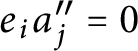 $e_ia_j''=0$
(
 $a_j''\in (1-p)A(1-p)$
), we have
 $$ \begin{align*}\|a_je_i-a_j'e_i\|\leq\|a_je_i-(a_j'+a_j'')e_i\|+\|(a_j'+a_j'')e_i-a_j'e_i\|< 3\varepsilon.\end{align*} $$
With the same argument, one has
 $$ \begin{align*}\|e_ia_j-e_ia_j'\|<3\varepsilon.\end{align*} $$
Since
 $\|a_je_i-a_j'e_i\|<3\varepsilon $
, for any
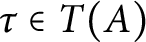 $\tau \in T(A)$
, one has
 $$ \begin{align*}|\tau(a_je_i)-\tau(a_j'e_i) |<3\varepsilon.\end{align*} $$
Since
 $\|a_i-a_i'-a_i''\|<3\varepsilon ,$
one has
 $$ \begin{align*}|\tau(a_j)-\tau(a_j')-\tau(a_j'')|<3\varepsilon.\end{align*} $$
Therefore, one has
 $$ \begin{align*} &|\tau(a_je_i)-\frac{1}{n}\tau(a_j)| \nonumber\\ &\quad\leq|\tau(a_je_i)-\tau(a_j'e_i)|+|\tau(a_j'e_i)-\frac{1}{n}\tau(a_j')|+ |\frac{1}{n}\tau(a_j')-\frac{1}{n}\tau(a_j)| \nonumber\\ &\quad\leq|\tau(a_j'e_i)-\frac{1}{n}\tau(a_j')|+3\varepsilon+\frac{1}{n} (|\tau(a_j'')|+|3\varepsilon|)\nonumber\\ &\quad\leq|\tau(a_j'e_i)-\frac{1}{n}\tau(a_j')|+3\varepsilon+\frac{1}{n} (|\tau(1-p)|+|3\varepsilon|)\nonumber\\ &\quad\leq|\tau(a_j'e_i)-\frac{1}{n}\tau(a_j')|+3\varepsilon+\frac{1}{n} |4\varepsilon|\nonumber\\ &\quad\leq |\tau(a_j'e_i)-\frac{1}{n}\tau(a_j')|+6\varepsilon. \end{align*} $$
Therefore, we have
 $$ \begin{align*}\sup_{\tau\in T(A)}|\tau(a_je_i)-\frac{1}{n}\tau(a_j)|&\leq \sup_{\tau\in T(A)}|\tau(a_j'e_i)-\frac{1}{n}\tau(a_j')|+6\delta\\ &\leq \sup_{\tau\in T(B)}|\tau(a_j'e_i)-\frac{1}{n}\tau(a_j')|+6\varepsilon<7\varepsilon.\end{align*} $$
By Theorem 2.4(2), A has uniform property
 $\Gamma $
.▪
Remark Let A be an infinite-dimensional simple unital stably finite
 $\mathrm {C^*}$
-algebra such that for any
 $n\in \mathbb {N}$
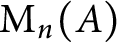
and any unital hereditary
 $\mathrm {C^*}$
-subalgebra D of
 $\mathrm {{M}}_n(A)$
, D has uniform property
 $\Gamma $
. Suppose that
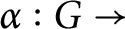 $\alpha :G\to $
Aut
 $(A)$
is an action of a finite group G on A which has the tracial Rokhlin property. Then the crossed product
 $\mathrm {C^*}$
-algebra
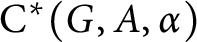 $\mathrm {C^*}( G, A,\alpha )$
has uniform property
 $\Gamma $
.
In fact, let
 $\Omega $
be a class of unital
 $\mathrm {C^*}$
-algebras such that B has uniform property
 $\Gamma $
for any
 $B\in \Omega $
, by the conditions in remark and by Theorem 3.2 of [Reference Fan and Fang10],
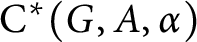 $\mathrm { C^*}( G, A,\alpha )$
belongs to
 $\rm {TA}\Omega $
, by Theorem 3.2, we have that
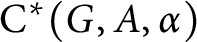 $\mathrm {C^*}( G, A,\alpha )$
has uniform property
 $\Gamma $
.



