


Introduction
Indo-Gangetic plain is the most productive agroregion of India, mostly dominated by cereal–cereal cropping systems (Hazra et al., Reference Hazra, Venkatesh, Ghosh, Ganeshamurthy, Kumar, Nadarajan and Singh2014; Jat et al., Reference Jat, Gathala, Saharawat, Tetarwal and Gupta2013). Rice (Oryza sativa L.)–wheat (Triticum aestivum L.) (R-W) and maize (Zea mays L.)–wheat (M-W) cropping systems are extensively being practiced in the region and contributing a major share of national food grains production. Nevertheless, the continuous practice of cereal–cereal rotations has emerged several soil health issues and soil productive capacity and crop productivity have declined in these systems (Ghosh et al., Reference Ghosh, Venkatesh, Hazra and Kumar2012). Researchers have identified the underlying causes of negative yield trend in cereal–cereal production systems and some of the major reasons are depletion of soil organic carbon (SOC) (Nayak et al., Reference Nayak, Gangwar, Shukla, Mazumdar, Kumar, Raja, Kumar, Kumar, Rai and Mohan2012), imbalance fertilization and depletion of soil fertility (Bhattacharyya et al., Reference Bhattacharyya, Kundu, Pandey, Singh and Gupta2008), poor soil physical condition (Jat et al., Reference Jat, Gathala, Saharawat, Tetarwal and Gupta2013), and deficiency of micronutrients (Gupta and Seth, Reference Gupta and Seth2007). Given that, there is a need to develop alternative crop management practices that can improve soil health and sustain productivity in the long run.
Concerning the evident challenges in continuous cereal–cereal rotations, crop diversification with the inclusion of legumes may be a promising approach to sustain crop productivity and mitigate the soil and environmental issues (Lauren et al., Reference Lauren, Shrestha, Sattar and Yadav2001). Short-duration mung bean (Vigna radiata L.) and other grain legumes such as chickpea (Cicer arietinum L.), pigeon pea (Cajanus cajan L.) having wider adaptability in different agroecologies could be accommodated in cereal-based cropping systems (Hazra et al., Reference Hazra, Venkatesh, Ghosh, Ganeshamurthy, Kumar, Nadarajan and Singh2014). Besides this, low input requiring pulse crops (grain legumes) are presently being advocated for diversification of cereal–cereal rotations to control overexploitation of groundwater [e.g. pigeon pea (Cajanus cajan L.) to replace the high water demanding rice in R-W system], minimizing the production cost and greenhouse gas emission (Ambast et al., Reference Ambast, Tyagi and Raul2006). Given that, we assessed the long-term impact of grain legume inclusive diversification/intensification of cereal–cereal rotations under two contrasting production ecologies (lowland R-W and upland M-W cropping systems) on base crop productivity and the overall system productivity.
For comparative assessment of different crop rotations, the indicators like system productivity, changes in soil quality and profitability are mostly being used. Energy budgeting and resource use efficiency are also used (Tuti et al., Reference Tuti, Prakash, Pandey, Bhattacharyya, Mahanta, Bisht, Kumar, Mina, Kumar, Bhatt and Srivastva2012). However, system productivity or equivalent yield as the indicator of sustainability is primarily imitated by the highly variable market price of component crops. Further, all the productive or profitable cropping systems in short run may not necessarily follow the same trend in long-term. Then the productivity of base crop was taken as an indicator of soil productive capacity to compare different crop rotations having a common component crop (base crop). To date, base crop productivity has not been used for evaluating the long-term cropping system research. Notably, the long-term experiments on variable crop rotations (particularly legume inclusive rotations) are also limited. The hypotheses of the study were: (i) grain legume inclusive rotations improve base crop productivity over cereal–cereal rotation in the long run, (ii) in long-term, the changes in soil fertility directly influence the base crop productivity, and (iii) grain legume inclusive rotations are more productive and profitable compared to cereal–cereal rotation. Thus, the findings of the study will help us to understand the potential benefits of grain legume to the successive cereal base crop in rotation and to identify the alternative rotation(s) for higher productivity and profitability.
Materials and Methods
Site characteristics
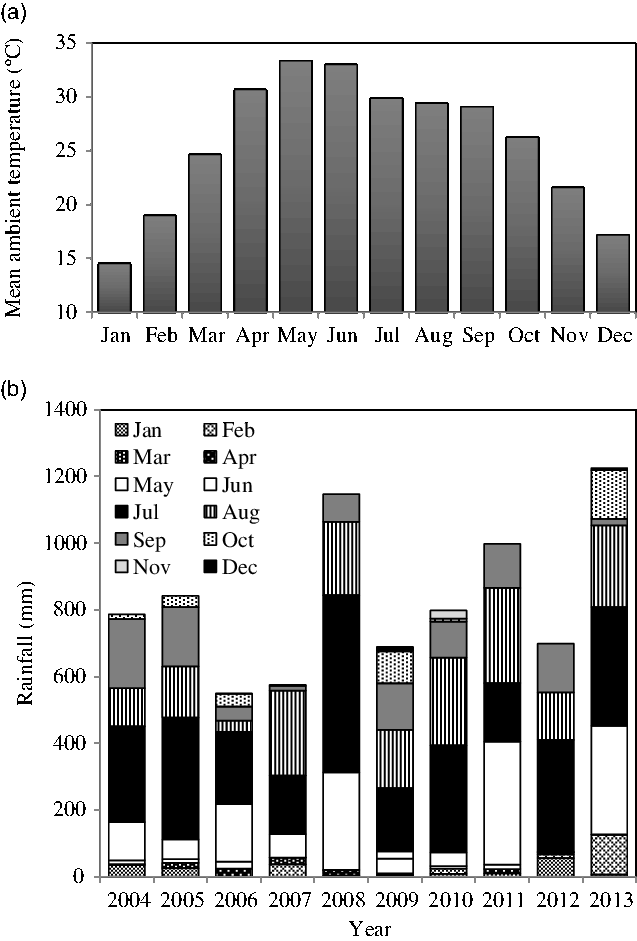
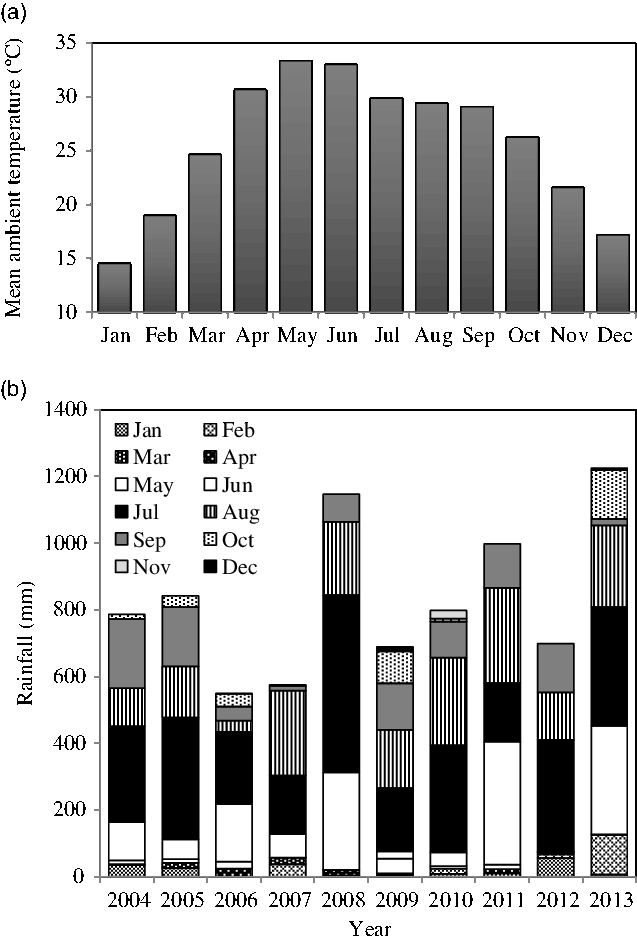
Two long-term field experiments were setup at the experimental farm of the ICAR Indian Institute of Pulses Research (ICAR-IIPR), Kanpur, India (26°27’N, 80°14’E and 152.4 m above sea level). Climate of the region is sub-humid tropical, with annual average rainfall of 720 mm and the mean annual maximum and minimum air temperatures of 33 and 20 °C, respectively. The monthly averaged air temperature and monthly/annual rainfall from 2004 to 2013 are presented in Figure 1. The textural class of experimental soil is sandy loam and it belongs to the order Fluvisol (World Reference Base soil classification). At the initiation of the upland experiment, soil (0–0.2 m) had low SOC (2.8 g kg–1), and the mean values of available nitrogen (N), phosphorus (P), and potassium (K) were 118.0, 7.4, and 81.0 mg kg–1, respectively. Likewise, in lowland, soil had SOC 2.47 g kg–1, and available N, P, and K were 100.4, 7.0, and 79.6 mg kg−1, respectively.
Long-term mean ambient temperature (a) and monthly rainfall during the period 2004–2013 (b).
Experiment 1 – Lowland rice-based system
The lowland long-term experiment (rice based) was started in July 2003. The experimental treatment comprised four crop rotations: (i) rice–wheat (R-W), (ii) rice–chickpea (R-C), (iii) rice–wheat–mung bean (R-W-Mb); and (iv) rice–wheat–rice–chickpea (R-W-R-C, in 2-year rotation). Each treatment consisted of three levels of nutrient management: (i) control (no application of organic and inorganic source of nutrients); (ii) inorganic fertilization [recommended rate of nitrogen (N), phosphorus (P), potassium (K), sulfur (S), zinc (Zn), and boron (B)]; and (iii) organic [all crop residue + biofertilizer + farmyard manure (FYM) at 5 Mg ha–1]. The treatments were laid out in split plot design with three replications accommodating cropping system treatments in main plots and nutrient management treatments in sub plots (9 × 7 m). The temporal distribution of crops in different rotations is presented in Supplementary Material Figure S1 available online at https://doi.org/10.1017/S0014479719000243. All the crops in inorganic fertilizer treatment were harvested from ground level, and the belowground parts and left out stubbles were incorporated during land preparation of the successive crop. The present study was aimed to assess the long-term effect of grain legume inclusion in cereal–cereal rotation, and thus, the effect of four crop rotations with inorganic nutrient management treatment on crop productivity, economics, and soil properties is presented. After 8 years of cropping, the organic nutrient management treatment was changed to integrated nutrient management [½ recommended rate of NPK + all crop residues + biofertilizer + farmyard manure (FYM) at 5 Mg ha–1] and for this reason we excluded the treatment for this study.
Experiment 2 – Upland wheat-based system
The upland long-term field trial was also initiated in July 2003. At the beginning, the treatments comprised four crop rotations: (i) maize–wheat (M-W), (ii) maize–wheat–maize–chickpea (M-W-M-C, in 2-year rotation), (iii) maize–wheat–mung bean (M-W-Mb), and (iv) pigeon pea–wheat (P-W) (Figure S1). Each treatment involves three levels of nutrient management: (i) control, (ii) inorganic fertilization [recommended rate N, P, K, S, Zn and B], and (iii) organic [addition of all crop residues + biofertilizers + FYM at 5 Mg ha–1]. The experiment was undertaken in split plot design with three replications. All the crops in inorganic fertilizer treatment were harvested from ground level, and the left out stubbles were incorporated during land preparation of the successive crop. Like in experiment 1, we assessed the effect of different crop rotations with inorganic nutrient management treatment as a common nutrient management practice and the organic treatment was excluded in the study for the same reason cited previously.
Crop management
Seed rate, planting geometry, cultivar, fertilizer rate, and their time of application and irrigation frequency of each crop are presented in Table 1. In both the experiments, fertilizer N, P, and K were applied in the form of urea, diammonium phosphate, and muriate of potash. In both lowland and upland systems, sulfur, Zn, and B were applied once every year as a basal dose to the rainy season crop. Sulfur was applied in the form of gypsum at 20 kg S ha–1 yr–1, Zn as 25 kg ZnSO4 ha–1 yr–1, and B as borax at 10 kg ha–1 yr–1, irrespective of crop rotation treatments. In lowland system, rice crop was manually transplanted following the conventional puddled transplanting method. Two dry harrowing followed by a wet tillage (puddling) and one planking were done before transplanting of 25-day-old seedlings. The row spacing of 20 cm and hill-to-hill spacing of 15 cm were maintained. In upland, the rainy season crops (maize/pigeon pea) were grown on ridges. Similarly for winter (chickpea, wheat) and summer (mung bean) crops, the field was prepared following the conventional tillage practice (one ploughing + two harrowing + one planking). To control weeds in rainy and winter season crops, two hand weeding operations were performed at 30 and 65 days after sowing (DAS) for wheat or days after transplanting (DAT) for rice. In mung bean crop, one hand weeding was done at 25 DAS. Need-based crop protection measures were taken to control insect pests and diseases.
General crop management practices in lowland rice-based and upland wheat-based long-term experiments
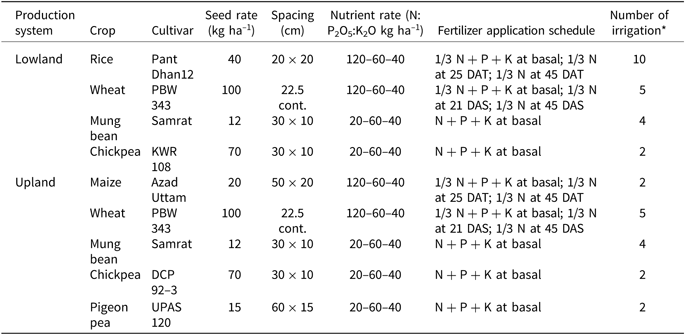
* Need-based irrigation was given and the number of irrigations listed is the average of the last 4 years.
Measurement of plant growth and yield attributes
Data on yield attributes and grain yield of rice (lowland) and wheat (upland) crops were recorded at the ninth (2011–2012) and tenth (2012–2013) year of cropping. Twenty hills of rice from each plot were randomly selected for evaluating tillering. In wheat crop, the total number of tillers in 0.5 m row length at four random positions in each plot was counted to calculate the tillers m–2. Destructive plant samples (five plants from each plot) of rice (lowland experiment) and wheat (upland experiment) at 90 DAS/DAT were collected to measure the belowground root parameters. At harvest, 10 plants were randomly selected from each plot for evaluating yield attributes. In upland, wheat plants in 0.5 m row length from two different spots were collected at harvest for the measurement of yield attributes. In lowland, a net plot area of 37.8 m2 was harvested separately for estimation of grain and straw/stover yields of all the component crops. Similarly, in upland, grain and straw/stover yields were recorded from a net plot area of 46.8 m2.
System productivity and sustainable yield index (SYI)
System productivity was expressed in terms of base crop, that is, system rice equivalent yield (SREY) and system wheat equivalent yield (SWEY) for lowland and upland experiments, respectively. For this, the grain yield of all the component crops in a rotation was converted to rice equivalent yield (lowland experiment) and wheat equivalent yield (upland experiment) and summed up to get the system productivity as Mg ha–1 yr–1. For example, chickpea grain yield was converted to rice equivalent yield (Mg ha–1) by multiplying the chickpea grain yield (Mg ha–1) with a price factor [price of chickpea/price of chickpea]. The minimum support price of field crops (Indian national rupee Mg–1) for the year (Government of India) was used for the calculation (Venkatesh et al., Reference Venkatesh, Hazra, Ghosh and Mishra2019a). For system productivity calculation of 1-year crop rotations (R-W, R-W-Mb, and R-C), the grain yield of all the component crops was converted to rice equivalent yield (Mg ha–1) and summed up for the year 2011–2012 and 2012–2013 and then the average of 2 years was taken to get SREY (Mg ha–1 yr–1). For 2-year rotations (R-W-R-C), the grain yield of all the component crops [rice appeared two times and other two crops wheat and chickpea appeared once in the 2-year duration] was converted to rice equivalent yield and summed up and finally divided by 2 (year factor) to get SREY (Mg ha–1 yr–1). On the same line, SWEY of upland wheat-based rotations was calculated.
SYI was used to measure the base crop yield stability in long-term. The following formula was used to calculate the SYI of base crop based on the last 10 years’ grain yield data.
 $${\rm{SYI = }}{{Y - \sigma } \over {{Y_{\max }}}}$$
(1)
where Y is the estimated average yield of base crop across the years, σ is its estimated standard deviation, and Y max is the observed maximum yield of base crop.
Soil sampling and analysis
Soil sampling was done at the end of the ninth year (2011–2012) of cropping in both upland and lowland systems. Soil samples from each cropping system (inorganically fertilized subplots of all three replications) were collected for estimation of SOC and soil available nutrients. Soil samples were collected from 0 to 0.2 m soil depth at four different points in each plot and then blended to have a representative soil sample. The samples were air-dried, ground, and passed through a 2-mm sieve and were analyzed for oxidizable organic carbon by the wet oxidation method (Walkley and Black, Reference Walkley and Black1934). The soils were analyzed for soil available nutrients following the standard methods, as for available N (alkaline KMnO4 method), available P (Olsen’s extractant, i.e., 0.5 N NaHCO3, pH 8.5), available K (1 N NH4OAc extractable K, pH 7.0), and available S (0.01 M CaCl2 extractable) (Jackson, Reference Jackson1973). Diethylenetriamine Pentaacetic Acid (DTPA) extractable Zn was estimated using atomic absorption spectrometer (Lindsay and Norvell, Reference Lindsay and Norvell1978).
Economic analysis
The economic analysis was performed based on the market price of inputs and outputs. Economic budgeting was calculated following the procedure outlined by Nandan et al. (Reference Nandan, Singh, Kumar, Singh, Hazra, Nath, Malik, Poonia and Solanki2018). Net return was calculated by the difference between gross return from crop produce and total cost of cultivation and expressed in Indian national rupee (INR ha–1).
Statistical analysis
The multiple comparisons of different crop rotation treatments were performed using the Duncan multiple range test. For data analysis, the software SPSS 11.0 was used. Pearson’s correlation coefficient was calculated in Microsoft Excel 2007. Principal component analysis (PCA) was performed using the PAST (3.14) software. PCA was done based on the base crop productivity (grain and straw yield), soil available nutrients, and SOC data. This multivariate analysis shows the association of different variables with treatments, and the position of treatments on PCA coordinates (components 1 and 2) indicates the relative impact of treatments on different variables.
Results
Base crop grain yield and SYI
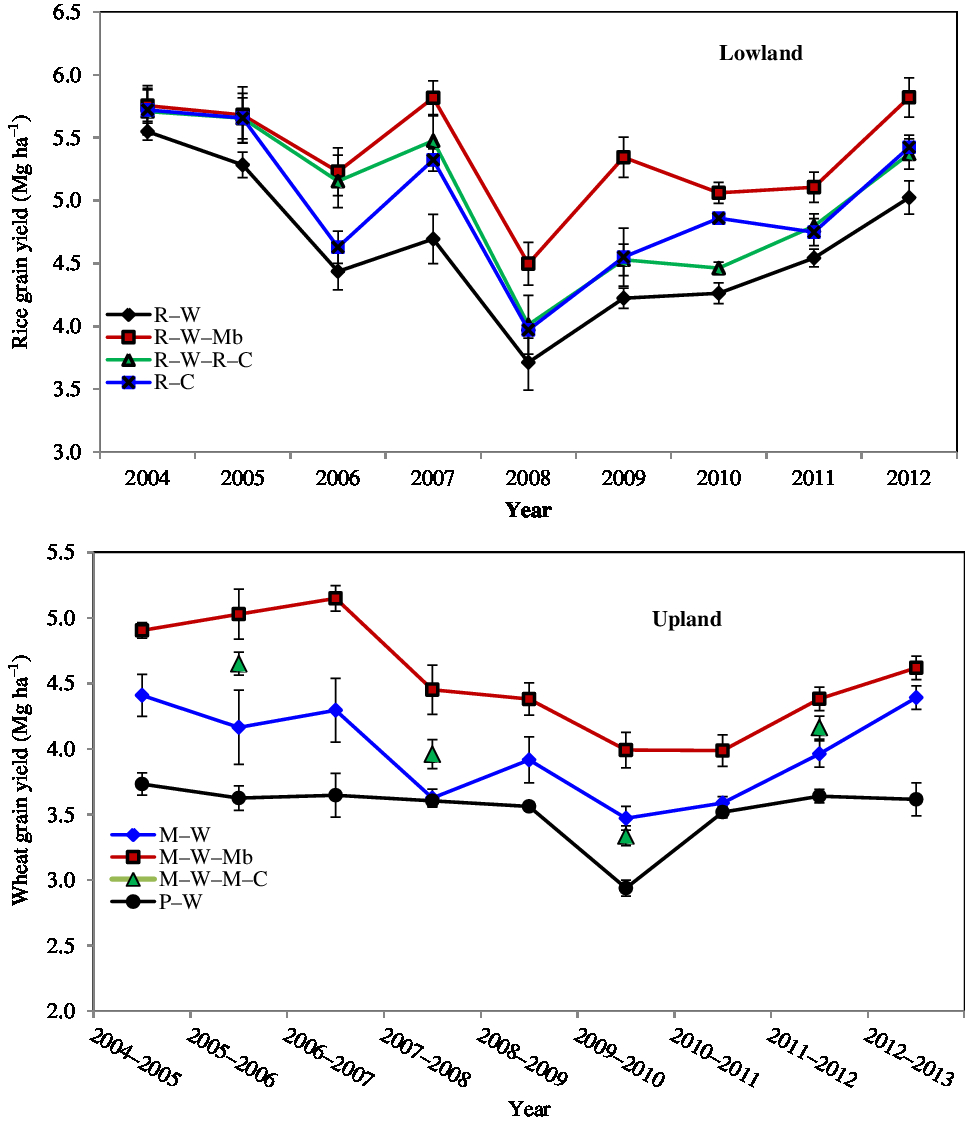
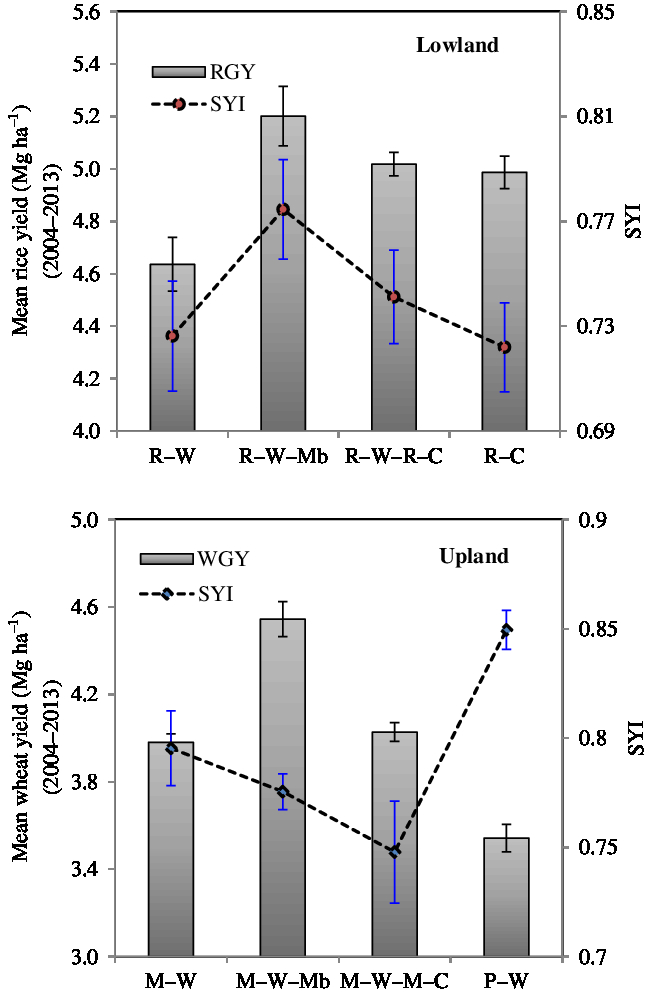
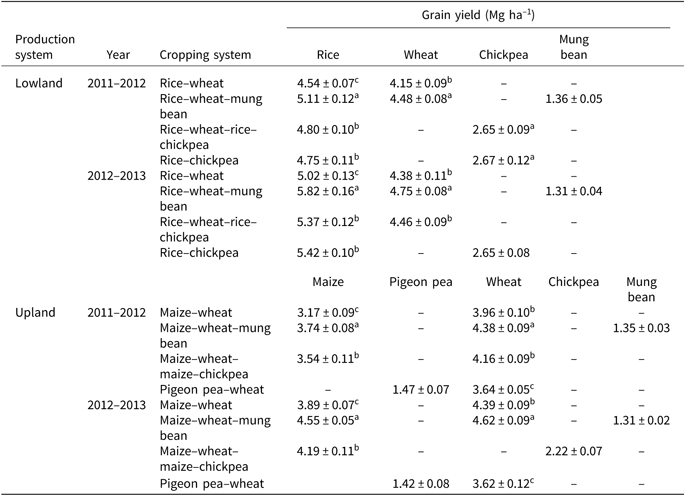
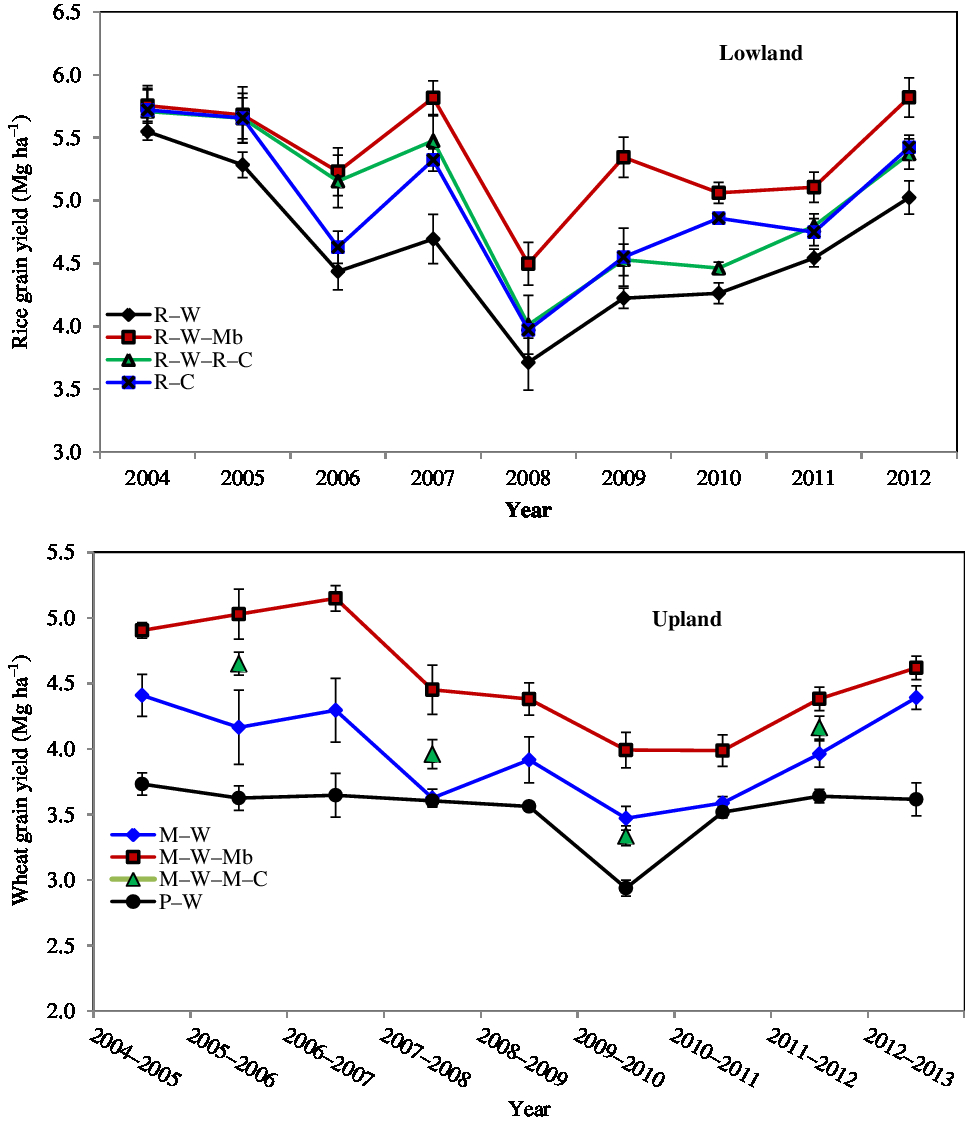
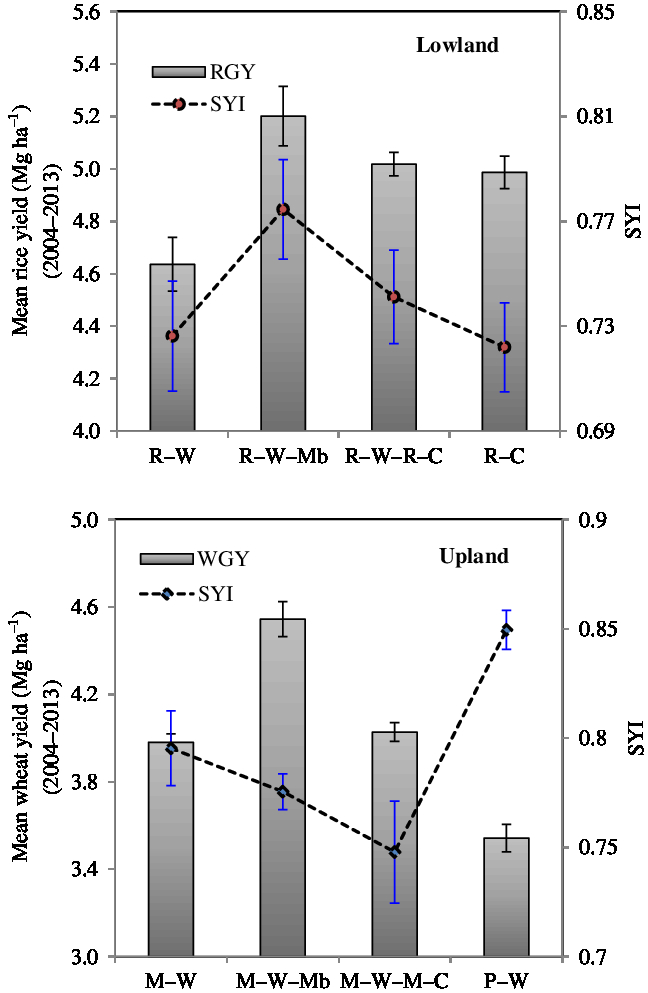
In lowland, crop diversification with grain legume increased rice crop (base crop) productivity in the long run (Table 2). Inclusion of mung bean in R-W rotation increased the rice grain yield by 12% (p<0.05) and 16% (p<0.05) during the ninth and tenth year of rotation, respectively. Similarly, the benefit of including chickpea in R-W rotation was also apparent. Inclusion of chickpea in place of wheat in R-W rotation increased the rice yield by 6–7% (p<0.05) (Table 2). Likewise, alternate year rotation of chickpea (R-W-R-C; 2-year rotation) resulted in 5–8% increase in rice productivity over R-W rotation. The positive effect of legume inclusion in R-W system on rice crop productivity was observed after 3 years of cropping (Figure 2). Notably, a higher variation in rice yield was observed among the years, and the long-term mean rice yield (2004–2013) was found in the treatment order of R-W-Mb > R-W-R-C ≥ R-C > R-W (Figure 3).
Long-term grain yield trend of base crop in lowland rice-based and upland wheat-based production systems, from 2004 to 2013 as influenced by different crop rotation treatments. Error bar represents standard error of mean.
Long-term average yield (Mg ha–1) (2004–2013) and sustainable yield index (SYI) of base crop in lowland rice-based and upland wheat-based production systems as influenced by different crop rotation treatments. Error bar represents the standard error of means.
Long-term effect of crop rotation with inorganic nutrient management on grain yield of component crops in lowland and upland production systems

Values represent mean ± standard error. a–d, different letters within continuous column are significantly different at p < 0.05.
In upland, significant increase in wheat (base crop) grain yield was observed with inclusion of legume in M-W rotation (Table 2). Inclusion of mung bean as a summer crop (April–May) in M-W rotation increased the average wheat grain yield by 5–11% (2011–2013). Alternate year inclusion of chickpea in place of wheat in M-W rotation increased the wheat grain yield by 5%. However, there was a reduction (8–18%, p< 0.05) in wheat grain yield in P-W rotation as compared to M-W rotation (2011–2013). The long-term mean grain yield of wheat crop followed the treatment order M-W-Mb > M-W-M-C ≥ M-W > P-W (Figure 3). Despite low productivity of wheat in P-W rotation, the SYI of wheat was higher compared to other rotations (Figure 3).
Base crop growth and yield attributes
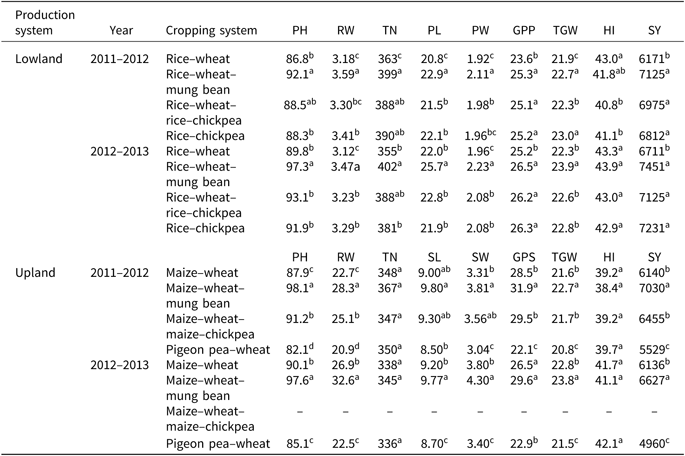
In lowland, the inclusion of legume in R-W rotation improved rice crop growth and yield attributes (Table 3). Rice crop growth and yield parameters and grain yield showed similar response pattern. Inclusion of mung bean in the R-W rotation increased plant height (6–8%), tiller density (10–13%), root weight (11–13%), panicle length (10–17%), panicle weight (9–10%), grains per panicle (5–7%), and straw biomass (11%). Similarly, chickpea inclusion in the R-W rotation (R-C and R-W-R-C) increased the rice crop growth and yield attributes; however, the effect of chickpea on base crop was comparatively lower compared to mung bean (Table 3).
Long-term effect of different crop rotations with inorganic nutrient management on rice crop growth and yield attributes under lowland rice-based production system

PH, plant height (cm); RW, root weight (g plant–1); RL, root length (cm); TN, tillers density (nos. m–2); PL, panicle length (cm); SL, spike length (cm); PW, panicle weight (g); SW, spike weight (g); GPP, grains per panicle (nos.); GPS, grains per spike (nos.); TGW, thousand grains weight (g); HI, harvest index (%); SY, straw yield (kg ha–1).
a–d, different letters within continuous column are significantly different at p < 0.05 according to Duncan Multiple Range Test (DMRT).
In upland, higher growth and yield attributing parameters of wheat were registered with inclusion of summer mung bean and alternate year inclusion of chickpea in M-W rotation (M-W-M-C). However, all the growth and yield attributes of wheat were significantly reduced in P-W rotation as compared to M-W rotation (Table 3). Mung bean inclusion in the M-W rotation improved wheat plant height (8–12%), tiller density (2–6%), root weight (21–25%), spike length (6–9%), spike weight (13–15%), grains per spike (12%), and straw biomass (8–15%). Chickpea inclusion also increased the wheat growth and yield attributes. Wheat crop in the P-W system had lower spike weight (8–11%), grains per spike (14–22%) and straw biomass (10–19%) compared to M-W rotation.
Relationship between soil variables and base crop productivity
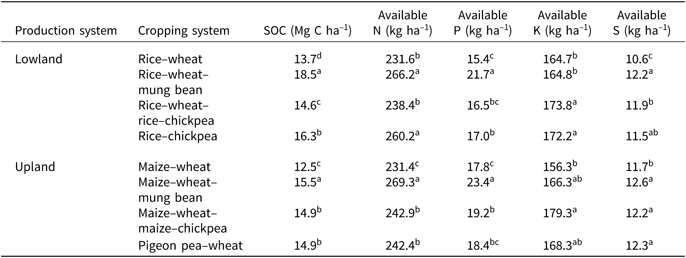
Legume inclusive rotation had higher SOC and soil available N, P, and S over cereal–cereal rotation in both lowland and upland systems, being highest in mung bean inclusive rotations (R-W-Mb and M-W-Mb) (Table 4). Correlation (r) between the base crop grain yield and the soil fertility parameters was evaluated at the ninth year of rotation. In lowland, grain legume inclusive rotations (R-W-Mb, R-C, and R-W-R-C) had higher SOC and soil nutrients over R-W rotation. Subsequently, a higher positive correlation between SOC and rice grain yield (r = 0.82, p< 0.01) was observed. Meantime, significant positive correlations were observed between the rice grain yield with soil available N (p≤ 0.05), available P (p< 0.001), available S (p< 0.05), and DTPA Zn (p< 0.01) (Figure 4); but not with soil available K (p> 0.05). In upland wheat-based production system, wheat grain yield had significant positive correlation with soil variables such as SOC (p< 0.05), available N (p≤ 0.01), and available P (p≤ 0.01) (Figure 4). The PCA based on the base crop productivity and soil variables also indicated that mung bean included rotations (R-W-Mb and M-W-Mb) had prominent impact on base crop productivity as well as on soil parameters (Supplementary Material Figure S2).
Relationship between base crop productivity (Mg ha–1) (rice in lowland and wheat in upland production system) with SOC (Mg C ha–1) and soil available N (kg ha–1), available P (kg ha–1), available K (kg ha–1), available S (kg ha–1) at the end of 10 years of cropping in the lowland rice-based (a–e) and upland wheat-based (f–j) production systems. RGY, rice grain yield; WGY, wheat grain yield. The observation unit was crop rotation treatments from all three replications.

Long-term effect of different crop rotations with inorganic nutrient management on soil organic carbon (SOC) and soil available nutrients after ninth year of cropping
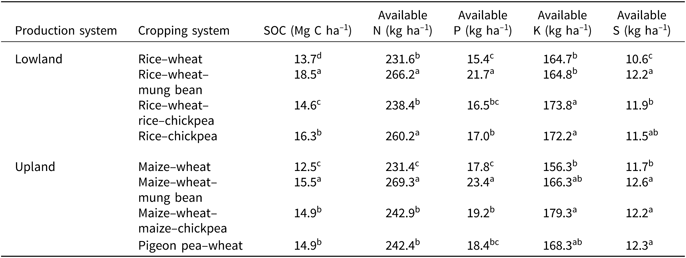
a–d, different letters within continuous column are significantly different at p < 0.05 according to Duncan Multiple Range Test (DMRT).
System productivity, water productivity, and economics
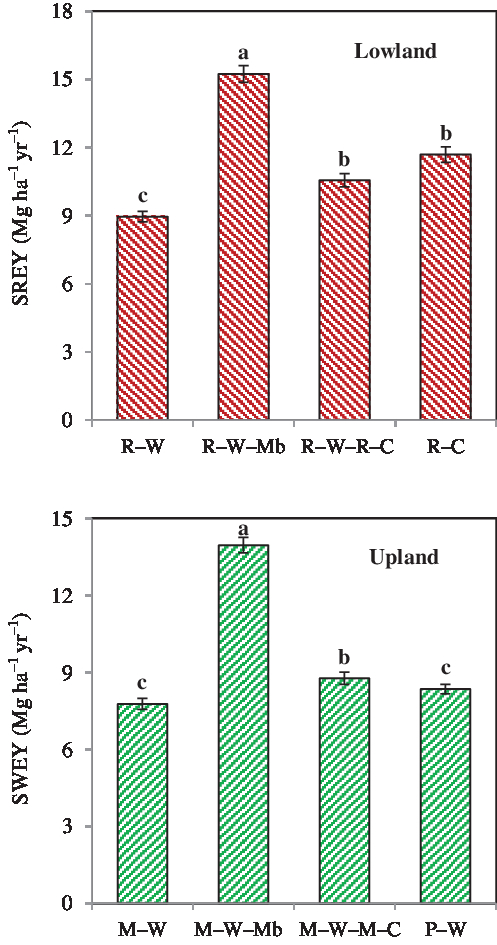
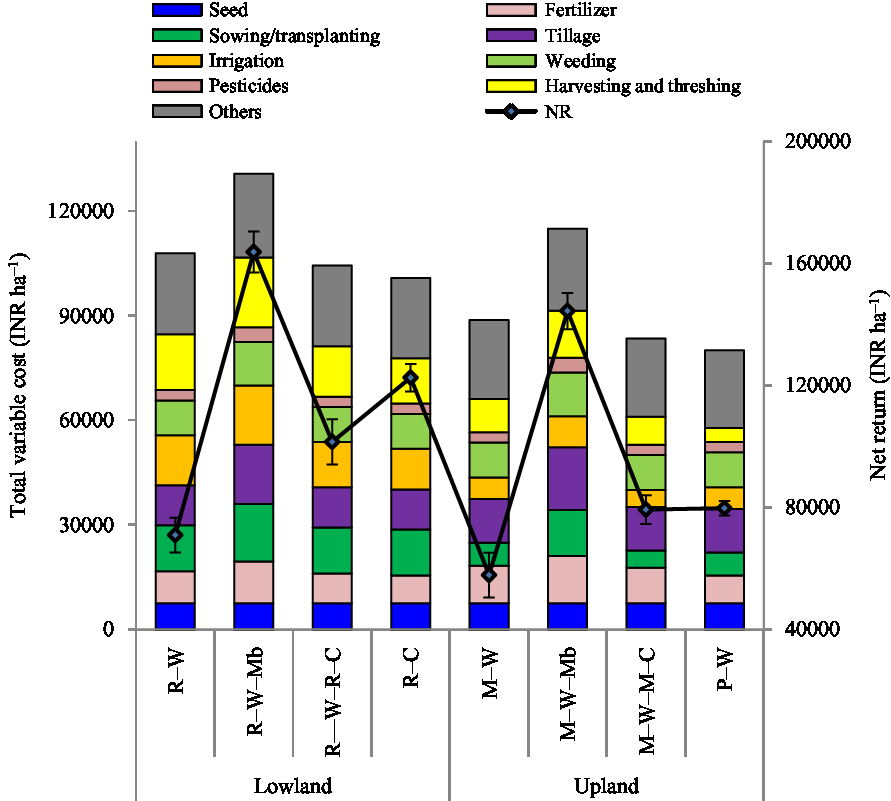
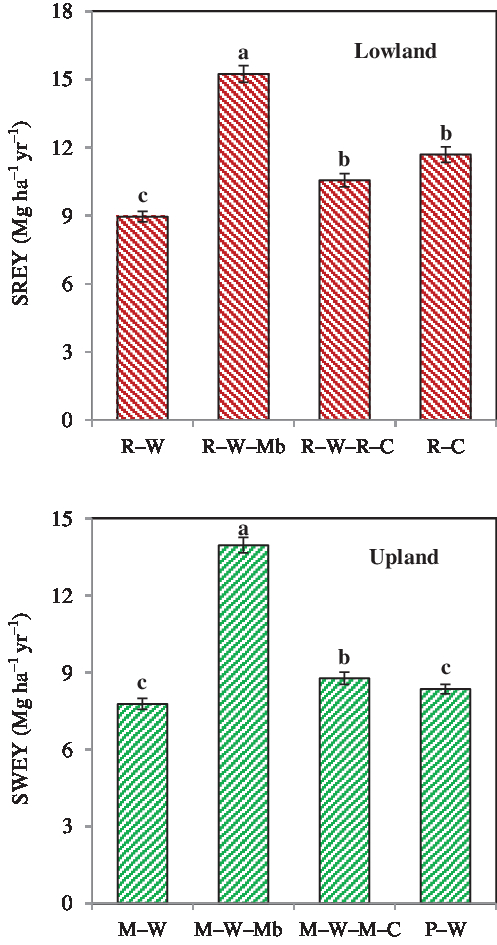
The system productivity as expressed by SREY was in the order of R-W-Mb > R-C ≥ R-W-RC > R-W in lowland (Figure 5). In upland, the order of system SWEY was M-W-Mb > P-W > M-W-M-C > M-W. Intensification of R-W and M-W rotation with inclusion of mung bean in summer fallow increases the system productivity by 70 and 79%, respectively. In upland system, despite low productivity of wheat crop, P-W rotation resulted in higher SWEY over M-W rotation. In general, total variable cost was higher in lowland rice-based system over upland wheat-based system, which was mainly determined by more frequent irrigation of rice crop (Figure 6). In lowland, the net return followed the treatment order of R-W-Mb > R-C > R-W-RC > R-W (p< 0.05), and in upland the order was M-W-Mb > P-W = M-W-M-C > M-W (p< 0.05). In lowland, irrigation water productivity [the ratio of system productivity (REY) to total irrigation water applied to the system (Mg ha–1cm–1)] was higher in R-C (0.162) followed by R-W-Mb (0.134) and R-W-R-C (0.130) and the lowest one was found in R-W rotation (0.101). Likewise in upland, the order was M-W-M-C (0.266 Mg ha–1cm–1) > M-W-Mb (0.212) > P-W (0.199) > M-W (0.185).
System productivity (Mg ha–1 yr–1) as influenced by different crop rotations in lowland and upland production system (2011–2013). System productivity is expressed as system rice equivalent yield (SREY) for lowland crop rotations and system wheat equivalent yield (SWEY) for upland crop rotations. The error bar represents the standard error of means. Bars with different lowercase letters are significantly different at p < 0.05.
The total variable cost of cultivation and net return (NR) under different crop rotations of lowland and upland production systems. The ‘other cost’ includes miscellaneous, transportation charge, rental value of land cost, and interest on cost of cultivation. Cost of cultivation includes total cost involved in farm inputs (seed, fertilizer, water, diesel, chemicals, etc.) and farm operations. INR, Indian national rupee. Error bar represents the standard error of mean.

Discussion
Grain legume effect on base crop productivity
In addition to the system productivity and profitability, the changes in soil productive capacity in view of base crop performance would be a realistic approach in long-term cropping system research. Based on this, sustainable crop rotation(s) could be identified. Inclusion of legume in cereal–cereal rotation alters nutrient input–output balance, nutrient and carbon input through nonharvested crop residues (root carbon) that likely affect the productivity in the long run (Hazra et al., Reference Hazra, Venkatesh, Ghosh, Ganeshamurthy, Kumar, Nadarajan and Singh2014). Among the grain legume inclusive rotations, mung bean inclusion in R-W and M-W rotations had the most prominent effect on base crop productivity (Table 2). Thus, the study suggests that system intensification including mung bean not only provides the additional income from mung bean crop (Figure 6) but also improves the productivity of succeeding cereal crops in rotation.
Grain legumes with their inherent characteristics like leaf fall, deep root, biological N fixation, and release of higher amount of root exudates improve soil health (Hazra et al., Reference Hazra, Singh, Nath, Borase, Kumar, Parihar and Swain2018). In R-W-Mb and M-W-Mb rotations, a higher amount of crop residue was recycled in the soil in the form of root biomass and leaf fall from legume crop. The higher positive impact of mung bean over chickpea may be due to higher belowground residue input (three crops in a year in R-W-Mb and M-W-Mb, and only two crops in R-C, R-W-R-C and M-W-M-C). In tropical environments, fallowing has an adverse impact on soil properties such as SOC and microbial functions (Venkatesh et al., Reference Venkatesh, Hazra, Ghosh, Khuswah, Ganeshamurthy, Ali, Singh and Mathur2017). Elimination of fallow with inclusion of mung bean increased the total cropping period that might have influenced on the base crop productivity. Notably, the amount of fertilizer (particularly P) applied to mung bean (20:60:40 kg ha–1 N: P2O5: K2O) also might have a significant residual effect to succeeding crops (Table 1). Our results further demonstrate that the effect of mung bean on base crop productivity was higher on the immediate next crop, that is, rice in lowland and maize in upland (Table 2). In upland, the base crop wheat is followed by an exhaustive maize crop (rainy season crop) and thus, the carryover effect of mung bean was not much prominent on wheat crop as on maize crop. In accordance, Sharma and Prasad (Reference Sharma and Prasad1999) also reported that inclusion of mung bean crop in R-W rotation increased the yield of cereal component crops in a short-term experiment.
System intensification with mung bean remains a promising alternative to improve the sustainability of cereal-based rotations as well as to upscale the food grains production for the burgeoning population in the region. In Indo-Gangetic plain region, the land remains mostly fallow during the summer season in cereal–cereal rotation. Being a short duration crop, mung bean can be a suitable rotational partner in these areas and thus the fallow period can be utilized. The ‘sparing’ effect of mung bean on soil N is beneficial to the successive crop in rotation (Peoples and Craswell, Reference Peoples and Craswell1992). Nevertheless, cropping intensification with inclusion of summer mung bean in cereal–cereal rotations leading to increased use of irrigation, fertilizer, and tillage (Table 1); and therefore, these systems should be promoted only in the resource-rich areas. According to Guilpart et al. (Reference Guilpart, Grassini, Sadras, Timsina and Cassman2017), food production capacity of new systems (e.g. with increased cropping intensity) needs an assessment of resource use efficiency (water and nitrogen) and environmental footprint per unit of land and production system.
The advantage of including chickpea in a rotation (every year or in alternate years) was also evident regardless of the production systems. In lowland, chickpea inclusion in every year (R-C) and alternate year (R-W-R-C) had significant effect on rice productivity, which suggests that even in alternate year inclusion of chickpea in R-W and M-W rotation could upscale the base crop productivity (Table 2). The inclusion of chickpea in R-W or M-W system not only improved the base crop productivity but also reduced the input requirements such as water and fertilizer N (Table 1). In Indo-Gangetic plain regions, irrigation water is progressively turning out to be limiting (Kumar et al., Reference Kumar, Hazra, Nath, Praharaj and Singh2018) and soil degradation is a persistent issue. Therefore, chickpea could be a potential crop for diversification of R-W and M-W rotations in these regions and to sustain the natural resources base as well as to upscale the system productivity and profitability. In fact, our results showed that legume inclusive rotations had higher irrigation water productivity (Mg ha–1cm–1) compared to cereal–cereal rotations (R-W and M-W).
Under upland production system, the reduction in wheat yield after pigeon pea was due to the delayed sowing of wheat (by 20–25 days) (Figure S1), which resulted in reduced vegetative phase. It is well documented that yield of wheat crop is reduced at 0.7–0.8% day–1 when the crop is sown beyond the optimum sowing date (Ortiz–Monasterio et al., Reference Ortiz–Monasterio, Dhillon and Fischer1994). Noticeable reduction in spike length, spike weight, and grains per spike of wheat crop in P-W rotation was identified as the major yield declining factors in late sown wheat crop following pigeon pea (Table 3). Thus, our first hypothesis that grain legume inclusive rotations would improve base crop productivity over cereal–cereal rotation in the long run was accepted with the only exception in P-W rotation, where delay in sowing of wheat crop largely restricted the benefit of legumes in the system.
Soil fertility and base crop productivity
The legume effect on soil fertility is clearly evident in the study (Table 4). Notably, the study soil was moderately alkaline, and P availability is largely reduced due to strong P sorption. The increased availability of P with inclusion of legume might be due to the induced P solubilization (Venkatesh et al., Reference Venkatesh, Hazra, Ghosh and Singh2019b). Our results also revealed the legume effect on soil available N, possibly associated with biological N fixation by legumes. In both lowland and upland, significant correlations (r) between the soil variables and the base crop grain yield indicated that increased soil fertility with inclusion of legumes influenced the base crop productivity (Figure 4). Higher SOC was evident in the legume inclusive rotations, being highest in R-W-Mb and M-W-Mb. Endowed with higher root biomass, leaf shedding ability and release of organic compounds, grain legumes increase SOC when cultivated for long-term (Ghosh et al., Reference Ghosh, Venkatesh, Hazra and Kumar2012; Venkatesh et al., Reference Venkatesh, Hazra, Ghosh, Praharaj and Kumar2013). Moreover, fallowing is reported to have a negative impact on SOC and the timing and extent of fallowing influences the rate of depletion of SOC pool (Ghosh et al., Reference Ghosh, Hazra, Venkatesh, Nath, Singh and Nadarajan2019). The low SOC in fallow-based system is associated with the addition of less amount of nonharvested crop biomass (Calegari et al., Reference Calegari, Hargrove, Rheinheimer, Ralisch, Tessier, de Tourdonnet and de Fatima Guimarães2008), and intensive cropping system is known to increase SOC over time (Hutchinson et al., Reference Hutchinson, Campbell and Desjardins2007). Added to this, a considerable fraction of legume roots (~43–47%) is usually undecomposable, which finally contributes to soil carbon (Ramesh and Chandrasekaran, Reference Ramesh and Chandrasekaran2004). Hence, combined effect of fallow elimination through mung bean cultivation and higher carbon input might have improved the SOC in mung bean inclusive rotations. Higher correlation between the base crop and available N indicates the residual benefits of N in legume inclusive rotations. Similarly, the higher available P in pulse included rotations might be due to the release of organic acids and root exudates (Hazra et al., Reference Hazra, Singh, Nath, Borase, Kumar, Parihar and Swain2018). Legumes’ ability to release organic acids and H+ ion to acidify the rhizosphere is recognized as a mechanism for improving P availability (Nandwa et al., Reference Nandwa, Bationo, Obanyi, Rao, Sanginga and Vanlauwe2011). The multivariate analysis (PCA) also demonstrates that increased availability of nutrients affects the base crop productivity in both lowland and upland production systems (Figure S2). Hazra et al. (Reference Hazra, Venkatesh, Ghosh, Ganeshamurthy, Kumar, Nadarajan and Singh2014) and Venkatesh et al. (Reference Venkatesh, Hazra, Ghosh, Khuswah, Ganeshamurthy, Ali, Singh and Mathur2017) reported that legume inclusive rotations maintained a positive balance of N and P and a negative balance of K in recommended NPKSZnB treatment. Therefore, our second hypothesis that the changes in soil fertility directly influence the base crop productivity in long-term was also accepted.
System productivity, production economics and SYI
Increased system productivity in grain legume inclusive rotations was due to high market price of pulse crops (chickpea, pigeon pea, and mung bean) over cereals (rice, wheat, and maize) and increased productivity of component crops in rotation. Particularly in R-W-Mb and M-W-Mb rotations, the higher system productivity was due to the additional yield from mung bean crop. The saving of fertilizer input (fertilizer N in particular), irrigation, and higher return from grain legumes directly reflected in a more favorable production economics (Figure 6). These findings may be useful in strategic designing of sustainable cereal–legume crop rotation(s), and base crop productivity could be an indicator for comparative assessment of different crop rotations having a common component crop (base crop). The data could be valuable inputs for development of cropping system models and up-gradation of existing cropping system models (e.g. Decision Support System for Agrotechnology Transfer – Cropping System Model (DSSAT-CSM), Agricultural Production Systems Simulator (APSIM)). Future research on the effect of legume inclusive crop diversification/ intensification on soil properties (particularly carbon sequestration, soil aggregation), soil microbial and biochemical functions (e.g. soil enzymes activity), long-term changes in pest dynamics (major insect pest and diseases), and shift in weed diversity and intensity will further broaden our understanding in this area. A meta-analysis on grain legume effect on successive crops in rotation and overall system productivity from diverse agroecosystem could add further insight on the subject.
Conclusion
Crop diversification with inclusion of grain legumes in cereal–cereal rotation improves cereal base crop productivity as well as the system productivity in the long run. Higher productivity of base crop in grain legume inclusive rotations was attributed to the increased availability of nutrients (N and P in particular) and higher SOC. Mung bean inclusion in summer fallows of R-W and M-W systems was found as a sustainable approach of system intensification with higher economic return. Thus, crop diversification with grain legume could be a potential strategy to improve the soil fertility and long-term sustainability of the cereal–cereal rotations in Indo-Gangetic plain region. Finally, this study also highlights the implication of base crop productivity as a sustainability indicator in long-term cropping system research.
Supplementary materials
For supplementary material for this article, please visit https://doi.org/10.1017/S0014479719000243
Acknowledgement
The work was funded by the ICAR–Indian Institute of Pulses Research, Kanpur.