Introduction
Mild cognitive impairment (MCI) is a concept that has been developed in an attempt to describe a proposed transitional state that may exist between age-appropriate levels of cognitive functioning and pathological cognitive decline.Reference Matthews, Stephan, McKeith, Bond and Brayne1 In general, core elements of the MCI classification are a subjective memory complaint, an objective memory impairment, typically demonstrated by performance on a battery of neuropsychological tests, intact general cognitive function and intact activities of daily living (ADLs). MCI is a broad term encompassing several subtypes. A primary distinction is made between single-domain MCI, where only one aspect of cognitive functioning is impaired, and multiple-domain MCI, which involves impairment in more than one aspect of cognitive functioning. A secondary division can then be made into amnestic MCI, where memory is impaired, or non-amnestic MCI, in which only aspects of cognitive functioning other than memory, such as executive function, are impaired. Thus for example, individuals classified as having multiple domain amnestic subtype MCI experience impairments in both memory and other cognitive functions.
However, controversy surrounds the concept of MCI. At least sixteen variations on the criteria used to classify MCI have been identified and these differ in the extent to which they include each of the elements described above.Reference Stephan, Brayne, McKeith, Bond and Matthews2 It is also unclear whether the subtypes identified under the broad umbrella term of MCI are truly distinct categories and how they work together. Furthermore, although MCI is often seen as a transitional state between normal ageing and pathological decline, or even as a prodrome of dementia, not everyone who has been diagnosed with MCI will convert to having dementia. Indeed, in one study, 12% of participants classified as having MCI improved and 53% remained stable over 3 years.Reference Wahlund, Pihlstrand and Jonhagen3 A separate study found after 2.7 years 19.5% of participants had improved to a normal level of cognitive functioning and 61% of participants remained at a stable level of cognitive functioning.Reference Wolf, Grunwald, Ecke, Zedlick, Bettin and Dannenberg4 The concept is also controversial due to the heterogeneity of aetiologies that may underlie the cognitive changes experienced in MCI, such as vascular changes or Alzheimer's pathology. This heterogeneity prevents the development of a set of specific diagnostic criteriaReference Dubois and Albert5 such as those used in making a dementia diagnosis. A small post-mortem study revealed that there was no single type of pathology across all cases of MCI, suggesting that it would be unwise to conceptualize MCI simply as a prodromal form of Alzheimer's disease.Reference Stephan, Matthews, Hunter, Savva and Bond6
Nevertheless, the concept of MCI is useful for identifying individuals who may be at increased risk of progression to a diagnosis of dementia. People classified as having MCI are more likely than individuals without cognitive impairment to progress to a diagnosis of dementia, at a rate of 10–15% compared with 1–2% per year.Reference Petersen, Doody, Kurz, Mohs, Morris and Rabins7 Individuals at an early stage of cognitive decline may benefit from implementing strategies to cope with cognitive change, which could help to increase independence and quality of life. Given the increased risk of progressing to dementia from MCI, it is important to understand any associated factors that may contribute to the development of MCI.
One important factor associated with MCI is mood, in particular low mood or high levels of anxiety.Reference Barnes, Alexopoulos, Lopez, Williamson and Yaffe8–Reference Geda, Knopman, Mrazek, Jicha, Smith and Negash10 Possible explanations for this association include the suggestions that worries may compete for cognitive resources, leaving less capacity for cognitive functioning,Reference Butters, Bhalla, Andreescu, Wetherell, Mantella and Begley11 or that symptoms of anxiety may lead individuals to be more vigilant towards their cognitive functioning and more aware of subtle changes in their cognitive function. Depression is related to cognitive disturbances in older people who are ageing normallyReference Palmer, Berger, Monastero, Winblad, Backman and Fratiglioni12 although it is unclear in which direction the relationship operates. On the one hand, depression might lead to reduced cognitive functioning, but on the other hand, individuals classified as having MCI may be at risk of developing symptoms of depression or anxiety.Reference Chan, Kasper, Black and Rabins13 It is possible that both explanations could occur concurrently, indicating a circular relationship between mood and MCI. On discovering a cognitive impairment, an individual may become anxious with regard to how his or her cognitive functioning may change in the future and what implications any changes might have. It is important to examine the nature of the association between MCI and mood, and a systematic review is an appropriate way to synthesize existing literature in this area.
This review aims to answer the following questions:
(1) Are people with MCI more likely to show low mood or increased anxiety than people with normal cognitive function, and does this vary by MCI subtype?
(2) What is the temporal relationship between mood problems and the development of MCI?
(3) Does the presence of low mood or increased anxiety in people with MCI increase the risk of progression to dementia?
Search methods
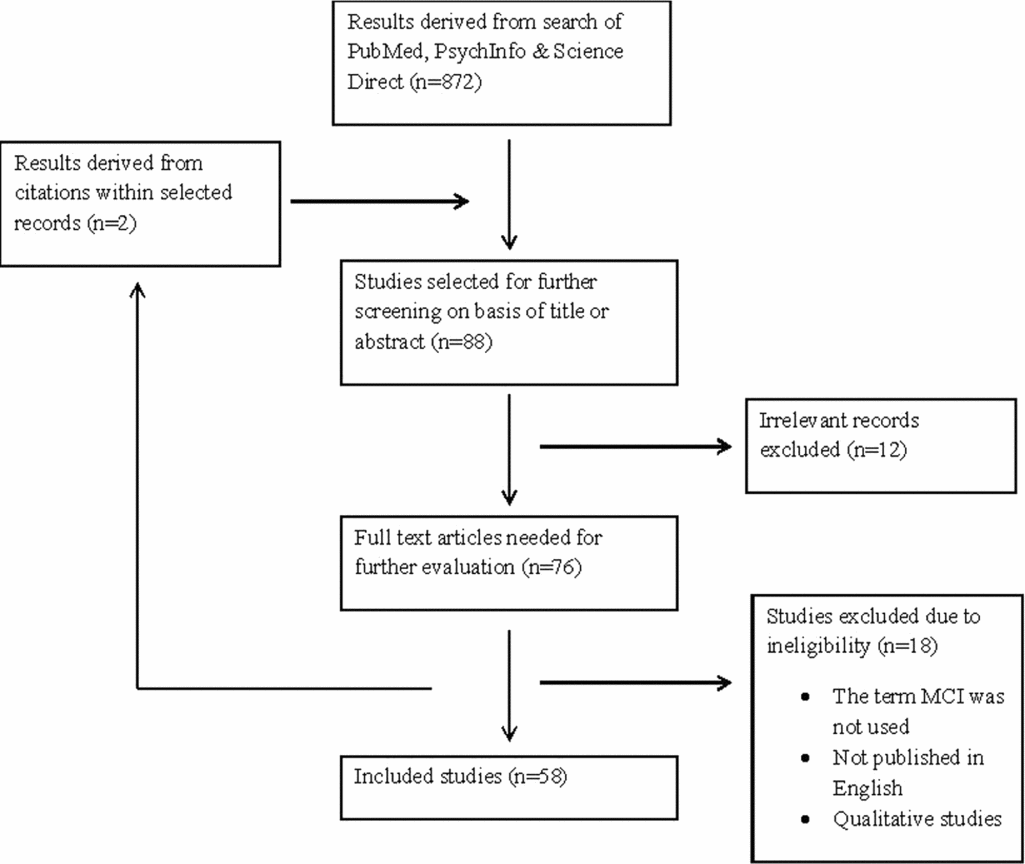
A search of the electronic databases PsycINFO, PubMed, Science Direct and Web of Knowledge was conducted on 17 November 2012 using the terms ‘mild cognitive impairment’, ‘MCI’ and ‘cognitive impairment’ combined with ‘depress*’, ‘anxi*’, ‘neuropsychiatric symptoms’, ‘NPS’ and ‘mood’. The terms ‘depress*’ and ‘anxi*’ were used as these are the aspects of mood that this review is addressing. The term ‘neuropsychiatric symptoms’ was included as it is frequently used in a way that encompasses the concepts of anxiety and depression, especially in studies that have used the Neuropsychiatric Inventory (NPI) to assess mood. Other terms used to describe cognitive impairment, such as ‘cognitive impairment no dementia’ (CIND) were not included as the aim was to achieve a consistent population of individuals with MCI. Studies were included if they considered symptoms or diagnoses of depression or anxiety in older people who, according to the study authors, met criteria for MCI. The search process is shown in Fig. 1. All titles and abstracts identified in the initial database search were assessed. Full articles were retrieved if the title and abstract suggested that the study both considered symptoms of anxiety or depression and classified participants as having MCI. Further studies were identified through the reference sections of selected studies. There was no restriction on the definition of MCI. As the term MCI was not widely used before 1991 there was no limit set on the year of publication as it was thought that there would not be papers published before this date.Reference Roberts, Clare and Woods14 Only quantitative studies published in English were included. Conceptual studies and review articles were excluded.
The process used for selecting studies to be included in the review

Methodological quality was assessed using a checklist adapted from the QUADAS tool (Quality Assessment of Diagnostic Accuracy StudiesReference Whiting, Rutjes, Reitsma, Bossuyt and Kleijnen15). The QUADAS tool was developed for use in systematic reviews and was adapted by the present authors to allow for studies of varied methodologies through the omission of several items. The original tool has 14 items, seven of which were not applicable to this review, and were omitted. The primary reviewer identified the studies, extracted the relevant data and conducted the quality assessment. Ten per cent of the studies were randomly selected for review for quality assessment by a secondary reviewer.
Statistical analysis
Random effects meta-analyses were conducted where possible to synthesize results of similar studies, which reported usable data, using MIX 2.0 Pro software. Heterogeneity ranged from moderate to high for the analyses. Odds ratios were examined to address research question (RQ) 1. Odds ratios were either taken directly from the study reports or calculated from frequencies presented in the results sections of study reports. Hazard ratios were examined to address RQ2 and these were either taken directly from study reports or calculated from data given in the results sections. Relative risk ratios were examined to address RQ3 and were either obtained directly from study reports or calculated from available data.
Results
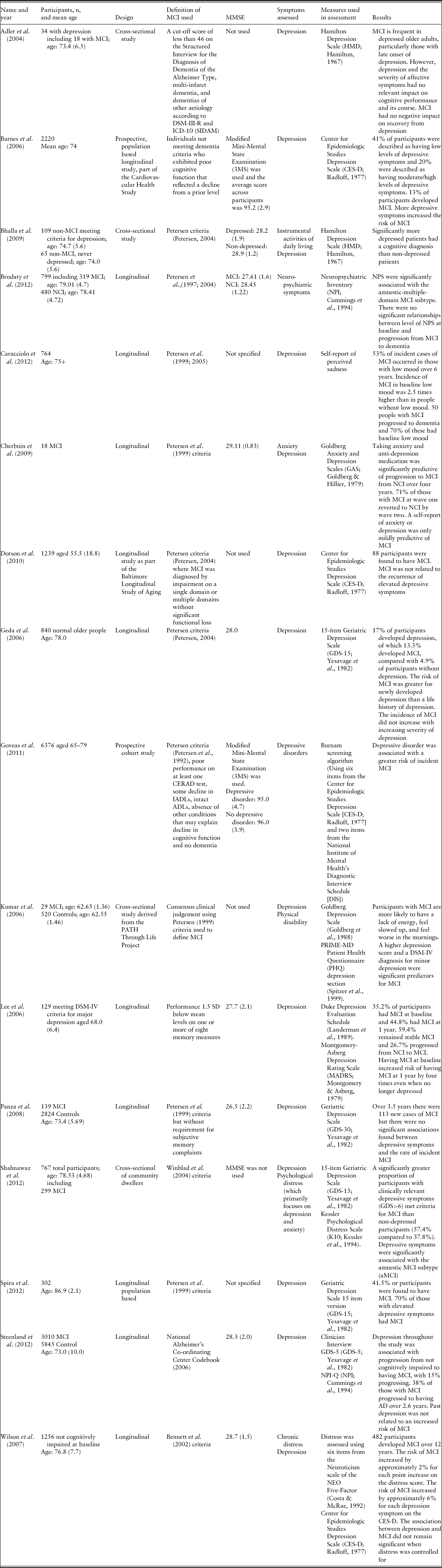
Sixty studies were included in this review. Studies focusing on cognitive changes in people with mood problems are summarized in Table 1. Studies investigating changes in mood in participants classified as having MCI are summarized in Table 2. Forty-four studies found a significant positive association between MCI and depression or anxiety, with one study finding a negative association between depression and MCI.Reference Vicini Chilovi, Conti, Zanetti, Mazzu, Rozzini and Padovani16
Studies investigating the occurrence of MCI in participants with mood problems
Studies investigating symptoms of mood in participants with MCI
Quality assessment
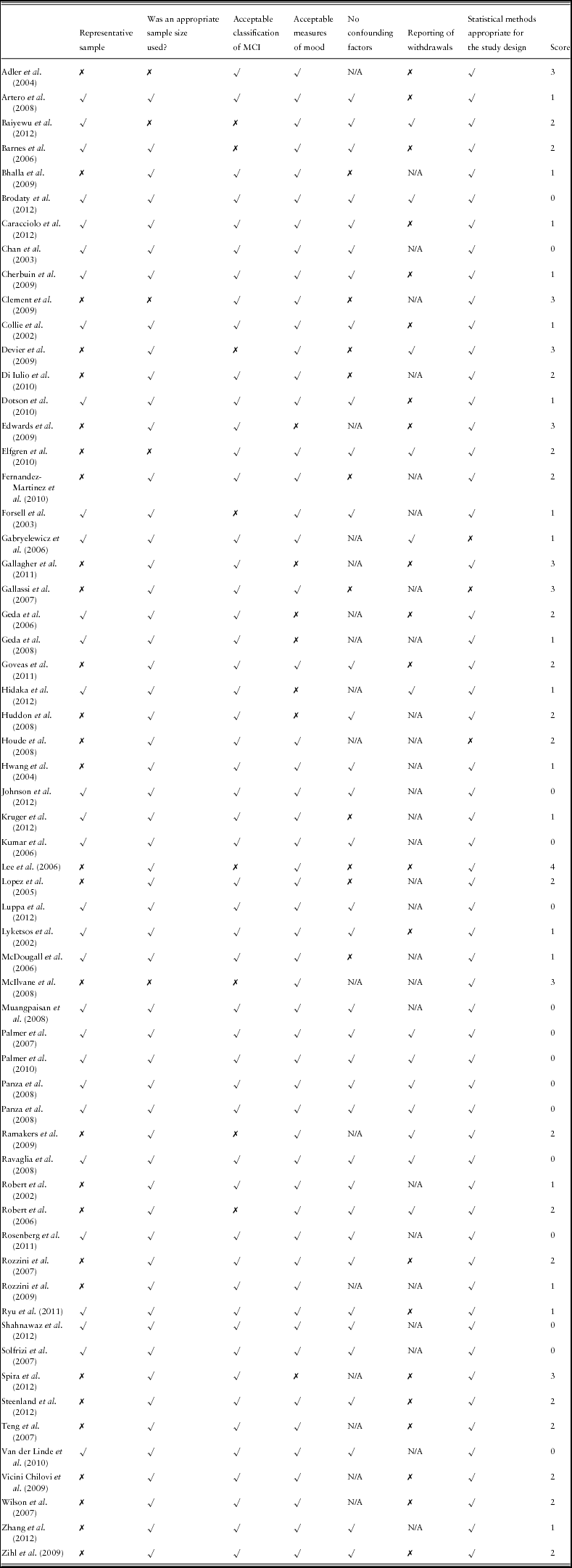
Table 3 shows the quality score for each study The score in each case represents the number of unmet criteria, and hence lower scores indicate higher quality. Fifteen studies met all seven quality criteria, eighteen studies failed to meet one, eighteen studies failed to meet two, eight studies failed to meet three, and only one study failed to meet four.Reference Lee, Potter, Wagner, Welsh-Bohmer and Steffens17
Quality assessment of included studies
Key
✓ Criterion met
✗ Criterion not met
N/A Criterion not applicable
Participant characteristics
The included studies describe either clinical or community samples. In the clinical studies the concept of MCI was applied to individuals presenting at memory clinics or experiencing memory problems, whether self-referred or referred by General Practitioners (GPs). In the community studies MCI criteria were applied to samples of older people drawn from the general population.
Mean MMSE scores were specified for the majority of the clinical studies, although in some cases the Modified Mini Mental State Exam (3MS) was used instead,Reference Barnes, Alexopoulos, Lopez, Williamson and Yaffe8, Reference Goveas, Espeland, Woods, Wassertheil-Smoller and Kotchen18, Reference Lyketsos, Lopez, Jones, Fitzpatrick, Breitner and DeKosky19 and in one case the Thai version of the MMSE was used.Reference Muangpaisan, Intalapaporn and Assantachai20 Mean MMSE scores ranged from 22.5Reference Ryu, Ha, Park, Yu and Livingston21 to 28.7Reference Hwang, Masterman, Ortiz, Fairbanks and Cummings22 and the mean across studies where data were available was 27.2 for the clinical studies. Mean MMSE scores were given for nine of the twenty-four community samples and ranged from 17.3Reference Baiyewu, Unverzagt, Ogunniyi, Smith-Gamble, Gureje and Lane23 to 28.8.Reference Collie, Maruff and Currie24 The mean across studies where data were available was 25.8 for community samples.
The number of participants ranged from 18Reference Cherbuin, Reglade-Meslin, Kumar, Jacomb, Easteal and Christensen25 to 8855.Reference Steenland, Karnes, Seals, Carnevale, Hermida and Levey26 In studies where data regarding the age of participants were available, the age of participants ranged from 55.5 to 86.9 years (mean across studies: 72.6 years).
MCI definitions used
Various classification systems for MCI were used. Twenty-seven studies used the Petersen et al.Reference Petersen, Doody, Kurz, Mohs, Morris and Rabins7, Reference Petersen27, Reference Petersen, Smith, Waring, Ivnik, Tangalos and Kokmen28 criteria which require a subjective memory complaint, deficits in cognitive function compared with age and education norms, intact activities of daily living and intact global cognition, and stipulate that the individual should not meet criteria for dementia.
Twenty-two studies used criteria similar to those of Petersen et al.Reference Petersen, Doody, Kurz, Mohs, Morris and Rabins7, Reference Petersen27, Reference Petersen, Smith, Waring, Ivnik, Tangalos and Kokmen28 in terms of deficits on neuropsychological test batteries. One study required a deficit of 1.5SD (standard deviation) below the mean on any single test or 1SD below the mean on two or more tests of cognitive function.Reference Chan, Kasper, Black and Rabins13 Other research required that participants had an MMSE score of 1SD below age- and education-specific means.Reference Forsell, Palmer and Fratiglioni29 Other studiesReference McDougall, Becker and Arheart30–Reference Devier, Pelton, Tabert, Liu, Cuasay and Eisenstadt32 did not specify the cut-off scores for the neuropsychological tests used. Of the twenty-two studies, ten required a subjective memory complaint in order to classify participants as having MCI.Reference Devier, Pelton, Tabert, Liu, Cuasay and Eisenstadt32–Reference Elfgren, Gustafson, Vestberg and Passant34
ICD-10 criteria that refer to mild cognitive disorderReference Robert, Clairet, Benoit, Koutaich, Bertogliati and Tible35 were used in one study. These criteria require that an individual must have difficulties in new learning, memory, concentration, thinking, or language, and stipulate that there should be abnormality or decline in performance on neuropsychological tests.
Seven studiesReference Kruger, Abner, Mendiondo, Schmitt, Smith and Jicha36, Reference Luppa, Sikorski, Luck, Weyerer, Villringer and Konig37 used revised diagnostic criteria for MCI.Reference Winblad, Palmer, Kivipelto, Jelic, Fratiglioni and Wahlund38 These criteria specify that an individual should not meet criteria for dementia and should show cognitive decline through a subjective memory complaint in conjunction with deficits on objective cognitive tests. Basic ADLs should be preserved and complex instrumental functions should be minimally impaired.
Criteria used in one study were derived from previous investigations of the same sample.Reference Wilson, Schneider, Boyle, Arnold, Tang and Bennett39 The National Alzheimer's Co-ordinating Center Codebook (2006), which is a comprehensive assessment that considers an individual's cognitive functioning along with health and demographic factors, was used in another study.Reference Steenland, Karnes, Seals, Carnevale, Hermida and Levey26
Definitions of mood
The studies reviewed used several terms to describe mood. Most studies directly investigated either depressionReference Barnes, Alexopoulos, Lopez, Williamson and Yaffe8, Reference Geda, Knopman, Mrazek, Jicha, Smith and Negash10 or anxiety.Reference Rozzini, Chilovi, Peli, Conti, Rozzini and Trabucchi31 Several studies investigated both anxiety and depression.Reference Steenland, Karnes, Seals, Carnevale, Hermida and Levey26, Reference McDougall, Becker and Arheart30
The term ‘neuropsychiatric symptoms’ was used in nineteen of the studies.Reference Lyketsos, Lopez, Jones, Fitzpatrick, Breitner and DeKosky19, Reference Ryu, Ha, Park, Yu and Livingston21, Reference Palmer, Iulio, Varsi, Gianni, Sancesario and Caltagirone40 Neuropsychiatric symptoms are typically measured with the NPI and the term encompasses symptoms in the domains of delusions, depression/dysphoria, anxiety, elation/euphoria, apathy/indifference, disinhibition, irritability/lability, aberrant motor behaviour, sleep and night time behaviours, and appetite and eating disorders. This review is concerned with depression/dysphoria and anxiety, and so measurements of these aspects of neuropsychiatric symptoms were considered where information was given. One study referred to ‘psychosocial stress’.Reference Elfgren, Gustafson, Vestberg and Passant34 The term refers to patient reports of experiences of daily stress during the last three months. This was included here due to its association with anxiety.
Selection of measures for assessment of mood
A range of measures was used to assess mood. Five studiesReference Bhalla, Butters, Becker, Houck, Snitz and Lopez9, Reference Devier, Pelton, Tabert, Liu, Cuasay and Eisenstadt32, Reference Adler, Chwalek and Jajcevic41–Reference Ramakers, Visser, Aalten, Kester, Jolles and Verhey43 used the Hamilton Depression Scale (HAM-D). Sixteen studiesReference Chan, Kasper, Black and Rabins13, Reference Lyketsos, Lopez, Jones, Fitzpatrick, Breitner and DeKosky19, Reference Palmer, Iulio, Varsi, Gianni, Sancesario and Caltagirone40, Reference Di Iulio, Palmer, Blundo, Casini, Gianni and Caltagirone44 used the Neuropsychiatric Inventory (NPI; Cummings et al., 1994). In addition, two studiesReference Rosenberg, Mielke, Appleby, Oh, Geda and Lyketsos45, Reference Geda, Roberts, Knopman, Petersen, Christianson and Pankratz46 used the shortened form of the NPI, the Neuropsychiatric Inventory Questionnaire (NPI-Q). Seven studiesReference Barnes, Alexopoulos, Lopez, Williamson and Yaffe8, Reference Goveas, Espeland, Woods, Wassertheil-Smoller and Kotchen18, Reference Collie, Maruff and Currie24, Reference McDougall, Becker and Arheart30, Reference Dotson, Beydoun and Zonderman47–Reference Artero, Ancelin, Portet, Dupuy, Berr and Dartigues49 used the Center for Epidemiologic Studies Depression Scale (CES-D;). Four studiesReference Elfgren, Gustafson, Vestberg and Passant34, Reference Gabryelewicz, Styczynska, Luczywek, Barczak, Pfeffer and Androsiuk50–Reference Zihl, Reppermund, Thum and Unger52 used the Montgomery Asberg Depression Scale (MADRS). Nine studies used the full version of the Geriatric Depression Scale (GDS-30), six studies used the 15-item version of the Geriatric Depression Scale (GDS-15), two studiesReference Steenland, Karnes, Seals, Carnevale, Hermida and Levey26, Reference Huddon, Belleville and Gauthier53 used the shortened five-item version (GDS-5) and one studyReference Ryu, Ha, Park, Yu and Livingston21 used the Korean version (GDS-K). One study used the Comprehensive Psychopathological Rating Scale,Reference Forsell, Palmer and Fratiglioni29 which contains mostly self-report items but also includes some observer-rated items, and another used the BEHAVE-AD scale.Reference Gallagher, Coen, Kilroy, Belinski, Bruce and Coakley54 One study used the Goldberg Depression Scale and the depression section of the PRIME-MD Patient Health Questionnaire (PHQ).Reference Johnson, Mauer, Jahn, Song, Wyshywaniuk and Hall55 One study used a self-report rating of perceived sadness.Reference Caracciolo, Backman, Monastero, Winblad and Fratiglioni56
Several measures were used to assess anxiety, such as the State-Trait Anxiety Inventory (STAI)Reference McDougall, Becker and Arheart30 and the Goldberg Anxiety Scale (GAS).Reference Robert, Berr, Volteau, Bertogliati, Benoit and Sarazin51 One study used both the Geriatric Anxiety Inventory (GAI) and the Anxiety Status Inventory (ASI).Reference Rozzini, Chilovi, Peli, Conti, Rozzini and Trabucchi31
Relationship between MCI and mood
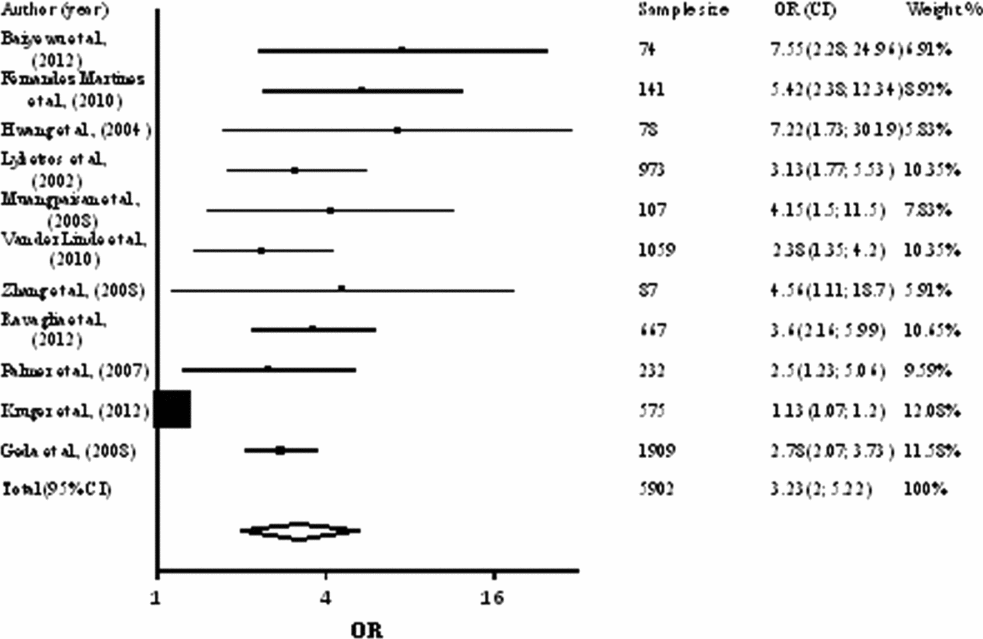
A meta-analysis was conducted to investigate whether people with MCI were more likely to have low mood than those who are not cognitively impaired (Fig. 2) and this shows that the odds of having depressive symptoms are increased in people with a classification of MCI (odds ratio (OR) = 3.23; 95% CI: 2.00–5.22).
The odds of having depressive symptoms in individuals with MCI
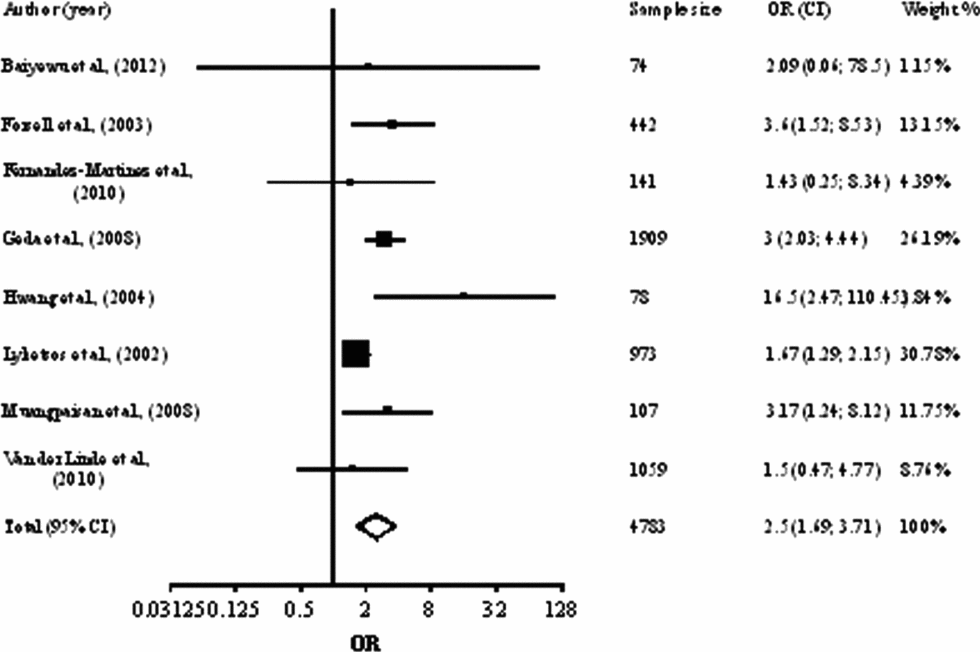
A further meta-analysis (Fig. 3) was conducted to ascertain whether symptoms of anxiety were more prevalent in people classified as having MCI than in those without cognitive impairment. In seven of the eight studies included in this analysis, the odds of having symptoms of anxiety are increased by 1.43 to 3.6 if an individual is classified as having MCI. One studyReference Hwang, Masterman, Ortiz, Fairbanks and Cummings22 showed an increase in the odds of having symptoms of anxiety of 16.5. The overall result shows an increase in the likelihood of symptoms of anxiety in people with MCI (OR = 2.50; 95% CI: 1.69–3.71).
The odds of having symptoms of anxiety in individuals with MCI
Four studies examined the relationship between the subtype of MCI and symptoms of depression or anxiety. Individuals with multiple-domain MCI experienced a similar frequency of depressive symptoms to individuals with Alzheimer's disease, which is greater than older people with normal cognitive functioning, although the symptoms were likely to be milder.Reference Di Iulio, Palmer, Blundo, Casini, Gianni and Caltagirone44 One study showed that more individuals with non-amnestic MCI than individuals with the amnestic subtype of MCI had depressive symptoms,Reference Johnson, Mauer, Jahn, Song, Wyshywaniuk and Hall55 whereas another reported there were similar levels of symptoms of depression and anxiety for the amnestic and non-amnestic subtypes.Reference Rozzini, Vicini Chilovi, Conti, Delrio, Borroni and Trabucchi57
Temporal relationship
Follow up times ranged from 2.1 yearsReference Teng, Lu and Cummings58 to 12 years.Reference Wilson, Schneider, Boyle, Arnold, Tang and Bennett39 Three studies commented on the effect of the time of onset of mood problems. Two studies reported that the risk of MCI was greater for people with newly developed depression rather than a life history of depressionReference Bhalla, Butters, Becker, Houck, Snitz and Lopez9, Reference Geda, Knopman, Mrazek, Jicha, Smith and Negash10 and one study found that past depression was not related to an increase in the risk of incident MCI.Reference Steenland, Karnes, Seals, Carnevale, Hermida and Levey26
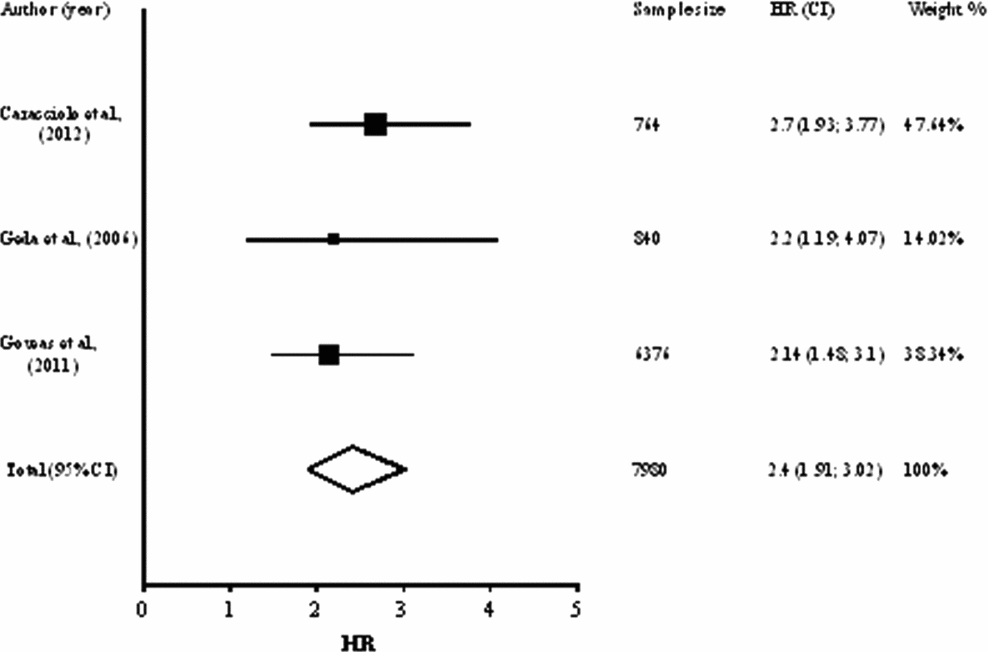
Several studies investigated the progression from not cognitively impaired to a classification of MCI, and five studies showed that depressive symptoms or low mood increased the risk of being classified as having MCI. Those with low mood were 2.5 times more likely to progress to a classification of MCI over 6 years.Reference Caracciolo, Backman, Monastero, Winblad and Fratiglioni56 Two studies concluded that a diagnosis of depression was associated with a greater incidence of MCI.Reference Goveas, Espeland, Woods, Wassertheil-Smoller and Kotchen18, Reference Kumar, Jorm, Parslow and Sachdev59 Taking medication for symptoms of anxiety or depression was found to be significantly predictive of a progression from not cognitively impaired to MCI over 4 years.Reference Cherbuin, Reglade-Meslin, Kumar, Jacomb, Easteal and Christensen25 Self-report of anxiety or depression was only mildly predictive of MCI. One study followed participants for 3.5 years and found no significant association between depressive symptoms and the rate of incident MCI.Reference Panza, D'Introno, Colacicco, Capurso, Del Parigi and Caselli60 A further study reported that the risk of MCI increased by approximately 6% for each symptom of depression endorsed by participants, but this did not remain significant when proneness to distress was controlled for.Reference Wilson, Schneider, Boyle, Arnold, Tang and Bennett39 A meta-analysis was conducted using studies where data were available to examine the risk of progressing from not cognitively impaired to having MCI when symptoms of depression are present. Figure 4 shows an increase in the risk of progression from no cognitive impairment to MCI when depressive symptoms are present (hazard ratio (HR) = 2.40; 95% CI: 1.91–3.02).
The effect of depressive symptoms on risk of progression from not cognitively impaired to a classification of MCI
Progression from MCI to dementia
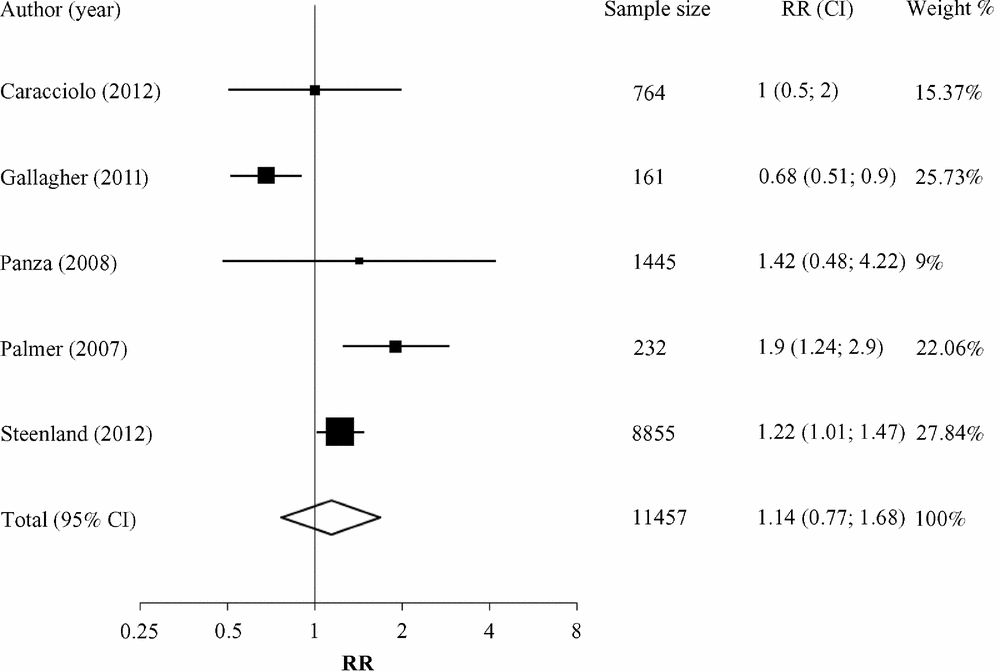
Eight studies investigated the risk of progression from MCI to dementia over time and most found that depression was not a risk factor. Only one study found that a higher score on measures of depression was significantly more frequent in individuals who progress from MCI to dementia.Reference Gabryelewicz, Styczynska, Luczywek, Barczak, Pfeffer and Androsiuk50 One study found that whilst there was no difference in the baseline levels of depressive symptoms between individuals who progressed to dementia and those who did not, the persistence of depressive symptoms increased risk of progression.Reference Houde, Bergman, Whitehead and Chertkow61 A further study followed participants for 2.1 years and found that baseline NPI scores for depression were higher in those who progressed from MCI to dementia than in those who continued to be classified as having MCI, although this did not remain significant after correction for multiple comparisons.Reference Teng, Lu and Cummings58 A protective effect of depression on the progression from MCI to dementia has also been reported.Reference Vicini Chilovi, Conti, Zanetti, Mazzu, Rozzini and Padovani16 A meta-analysis was conducted using studies where data were available to examine the effect of depressive symptoms on the risk of progression to dementia from MCI. Figure 5 shows an overall increase in risk of progressing from MCI to dementia when depressive symptoms are present (relative risk (RR) = 1.14; 95% CI: 0.77–1.68).
The effect of depressive symptoms on risk of progression from a classification of MCI to a diagnosis of dementia
Only a small number of studies considered anxiety and it was not possible to conduct a meta-analysis to examine the effect of anxiety on progression from MCI to dementia. One study found that as the number of anxiety symptoms increased, the risk of progression from MCI to dementia almost doubled.Reference Palmer, Berger, Monastero, Winblad, Backman and Fratiglioni12 However, another study found that higher levels of trait anxiety were significantly associated with a lower risk of conversion to Alzheimer's disease.Reference Gallagher, Coen, Kilroy, Belinski, Bruce and Coakley54
Discussion
This review aimed to explore the relationship between mood and MCI through investigating whether symptoms of depression and anxiety are more likely in individuals who have been classified as having MCI, and examining the effect of such symptoms on the risk of progression from no cognitive impairment to MCI, or from MCI to dementia. To the best of our knowledge, this review is the first to synthesize studies investigating mood and MCI, assess the effects of mood on progression, and conduct meta-analyses using available data to clarify the relationships explored.
The meta-analyses showed that symptoms of depression or anxiety were more common in people classified as having MCI compared with people with normal cognitive functioning. Having symptoms of depression increased the risk of progression from not cognitively impaired to MCI, and from MCI to dementia. Data were not available to calculate whether there was an increase in risk associated with symptoms of anxiety.
There are several issues that should be considered when interpreting the findings of this review. Firstly, the source of the study population can be problematic when applying the concept of MCI. Clinical samples tend to be drawn from individuals who have presented at memory clinics for a detailed assessment, allowing the identification of subtle difficulties, whereas when applying MCI criteria retrospectively in community samples, individuals with more subtle impairments may not be identified and so results may be biased towards those who show a greater level of impairment.Reference Chertkow62 It has been suggested that there are differences between clinical samples and community samples in the rate of conversion from MCI to dementia,Reference Bruscoli and Lovestone63 with research showing that 15% of clinical samples but only 7.5% of community dwellers converted to dementia.Reference Baars, van Boxtel, Dijkstra, Visser and van den Akker64
MMSE scores were provided for the majority of the studies reviewed and whilst most scores fall within expected ranges, some studies report MMSE scores that are much lower that would be anticipated for individuals who have been classified as having MCI.Reference Forsell, Palmer and Fratiglioni29 It could be suggested that individuals showing this level of cognitive function may be more impaired than other individuals who have been classified as having MCI and hence may not be directly comparable.
A number of studies included a small number of participantsReference Rozzini, Chilovi, Peli, Conti, Rozzini and Trabucchi31, Reference Elfgren, Gustafson, Vestberg and Passant34 and these may not be as representative of the MCI population as studies using larger samples.Reference Goveas, Espeland, Woods, Wassertheil-Smoller and Kotchen18, Reference Steenland, Karnes, Seals, Carnevale, Hermida and Levey26 The age of participants in the included studies was within the expected range except for one study in which the youngest participants were aged 55.5 years.Reference Dotson, Beydoun and Zonderman47 This is younger than would be expected, as studies investigating MCI typically consider participants who are over 65 years old.
Several different definitions of MCI were used in the included studies. A recent study found that the application of different classification systems resulted in the same individuals being concurrently classed as having MCI according to certain definitions and healthy according to others,Reference Matthews, Stephan, McKeith, Bond and Brayne1 highlighting the need for agreement on which definition to use. The heterogeneity of the definitions of MCI used in the included studies could suggest that participants from different studies may not have the same levels or types of cognitive impairment.
The majority of studies included in this review either did not specify which subtype of MCI was investigated, or included only participants with the amnestic subtype. This may mean that individuals with other subtypes were unaccounted for, or where the subtype of MCI was not specified, participant groups could be considered to be overly heterogeneous, which may have attenuated any effects. The subtype of MCI investigated may also have an impact on the relationship between MCI and depression or anxiety. Only four of the studies included in this review investigated the effect of MCI subtype, and the results were mixed.
Several of the included studies required a subjective memory complaint as part of the MCI definition, although there is controversy as to the usefulness of this. Research has recommended that subjective memory complaint should not be a diagnostic criterion because it lacks accuracy.Reference Lenehan, Klekociuk and Summers65 Instead objective evidence for the stability or decline of cognitive function over time should be sought. Corroboration by an informant is not a requirement, but it is valuable as it can help to ensure the accuracy of the subjective memory complaint. Furthermore, increased levels of subjective memory complaints were found to be correlated with increased levels of anxiety and depression, independent of whether an individual was classified as having MCI, suggesting that mood may influence the accuracy with which people appraise their memory. The presence of depression may inflate memory problems by enhancing negative attributions.Reference Roberts, Clare and Woods14 The association between subjective memory complaints and depression is stronger than the association between subjective memory complaints and objective memory impairments.Reference Minett, Da Silva, Ortiz and Bertolucci66 It has been shown that including subjective memory complaint in the criteria for MCI classification does not increase predictive ability.Reference Baars, van Boxtel, Dijkstra, Visser and van den Akker64 Subjective memory complaints may therefore be unnecessary and could potentially contribute to identification of more false positives or false negatives.Reference Lenehan, Klekociuk and Summers65
The findings may also have been affected by the use of several different measures of mood. The NPI is well established for use with individuals who have impairments in cognitive functioning; however, the shortened version of the NPI (NPI-Q) should be interpreted with caution as it contains fewer questions than the original NPI. In addition, both versions of the NPI are based on informant report rather than being directly administered to the participant, which could allow for symptoms to be wrongly estimated or misattributed.
A further issue is the overlapping nature of depression and anxiety. These frequently co-exist and may interact with each other. Research has found that anxiety symptoms were significantly and directly associated with depressive symptoms. In one study, taken together, symptoms of anxiety and depression were associated with a decline in cognitive function but the association did not hold for depressive symptoms alone.Reference Stillman, Rowe, Arndt and Moser67 Therefore, studies that consider only depression or anxiety may be missing participants with milder symptoms of one mood problem that interact with symptoms of the other.
The use of neuropsychological tests to quantify cognitive functioning is not straightforward. Neuropsychological models of memory indicate that there are several different systems of memory, with different processes and modalities involved. However, memory impairments are often treated much more simply in the context of MCI. Aspects and processes of memory may be affected in MCI in different ways, with some preserved and others impaired. In addition, depression or anxiety may differentially affect some aspects or processes compared with others. The use of neuropsychological tests is complex as different tests assess different aspects of memory and use different modalities, and therefore the results of tests may not be directly comparable. In addition, interpreting the results from neuropsychological tests is difficult as simple cut-off scores are not used. Instead, individual performance is assessed in relation to age- and education-specific norms.Reference Clare, Woods and Clare68 Relying on one single test may be problematic, and research suggests that instead of requiring marked impairment on one single test it may be more appropriate to focus on a pattern of performance across a range of tests that indicate milder, but more widespread impairment.Reference Jak, Bondi, Delano-Wood, Wierenga and Corey-Bloom69, Reference Fisk and Rockwood70
The review highlights additional issues that should be considered. This review only included articles published in English and so relevant articles published in other languages may have been missed. One article published in Spanish was excluded. In addition, this review only included published items as the search methods did not reveal any unpublished literature; hence there may be a publication bias towards studies that have found an association between MCI and mood.
This review has several implications. From a theoretical viewpoint the review demonstrates that systems for classifying MCI should take symptoms of depression and anxiety into account. At present, classification systems often exclude individuals with mood problems, which may distort prevalence and incidence rates for MCI. In a practical sense, there is a need to help individuals overcome symptoms of depression and anxiety. At present the direction of the relationship between symptoms of depression or anxiety and MCI has not been established, but this review has shown that the odds of having MCI are increased in those with depressive symptoms. Further research may be able to clarify this relationship and hence allow interventions to be targeted accordingly. This review has implications for clinical practice, general practitioners and front-line medical staff who need to recognize subtle symptoms in older people, in relation to both mood and cognitive function, and to encourage older people to talk about their concerns.
This review has demonstrated that evidence exists for a relationship between MCI and mood. Whilst the direction of the relationship cannot be firmly established at the moment, there is scope for further investigation involving participants with either mood problems, cognitive impairment, or both. The findings of this review also suggest that symptoms of depression may have an effect on the progression of cognitive impairment, and such findings could be used to increase awareness amongst older people and general practitioners. More knowledge in this area may provide a foundation for attempts to slow or prevent progression from MCI to dementia in order to afford a better quality of life for those affected by cognitive impairment and their families.
Conflicts of interest
The authors declared no conflicts of interest.
Funding
This study was funded by Economic and Social Research Council (ESRC) grant RES-060-250060.