Introduction
Seed treatments are routinely applied worldwide to protect seeds and plants at the early stages of development from attack by insect pests and pathogens (Brandl, Reference Brandl2001). Active ingredients may have contact activity or be systemic in nature. More recently developed seed treatment agrochemicals, especially the neonicotinoid insecticides and the phenylpyrazole (fiprole) family of compounds, have systemic properties and are taken up by plants to manage aboveground insect pests (Maienfisch et al., Reference Maienfisch2001; Aajoud et al., Reference Aajoud2006; Elbert et al., Reference Elbert2008). Although systemic seed treatments are used commercially in agriculture, little is known about the uptake of active ingredients during imbibition from the applied seed treatment through the seed coat or seed covering layers such as the pericarp/testa in corn to the embryo.
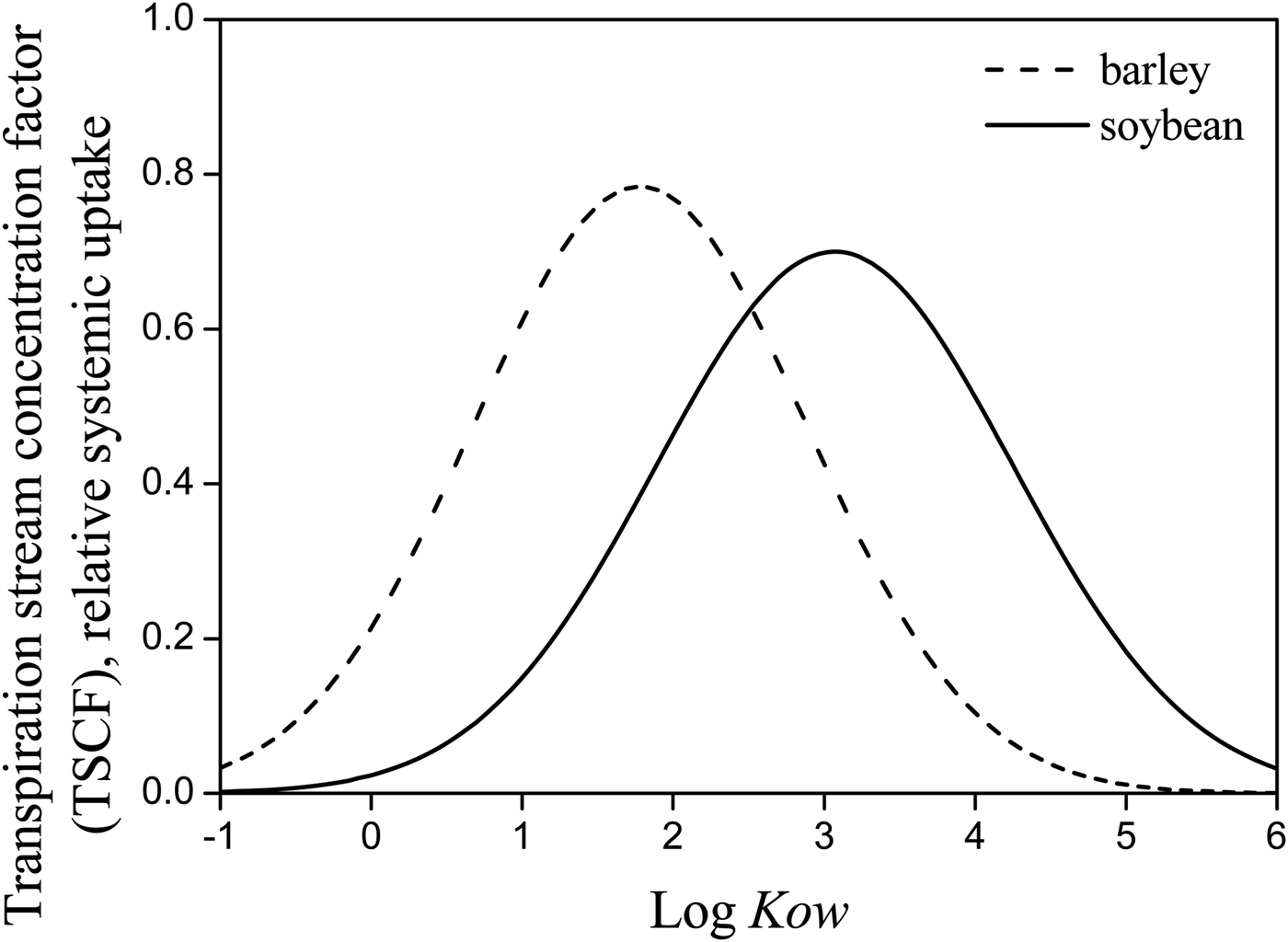
The uptake of organic compounds by roots and the acropetal or apoplastic movement of systemic compounds in xylem have been described (Trapp, Reference Trapp2004; Satchivi, Reference Satchivi2014). One of the physical/chemical properties that determines systemic movement in plants is the lipophilicity or hydrophilic/hydrophobic balance of an organic compound, measured as log Kow. Log Kow is the concentration ratio of a compound in octanol (o) and water (w) expressed on a log-scale. The log Kow is also referred to in the literature as the log P or partition coefficient. There are two components in the pathway for uptake of a systemic compound from roots to leaves. First, the organic compound must have a lipophilic component to be taken up by roots and move to the xylem. Second, the compound must then move up within the transpiration stream to the shoot and leaves. The relationship of the log Kow and the transpiration stream concentration factor (TSCF) revealed a normal or Gaussian distribution with the maximum uptake at log Kow 1.8 for barley, Hordeum vulgare (Briggs et al., Reference Briggs, Bromilow and Evans1982) and log Kow 3.1 for soybean (Hsu et al, Reference Briggs, Bromilow and Evans1990) (Fig. 1). Thus, the movement of water-soluble, polar compounds with low log Kow are restricted through the lipid constituents, resulting in selective rejection of these compounds, whereas the passage of water is presumably not hindered (Briggs et al., Reference Briggs, Bromilow and Evans1982). In contrast, highly lipophilic compounds have a great affinity for retention in plant roots, and cannot move further into other tissues (Collins et al., Reference Collins, Fryer and Grosso2006).
Effect of the log Kow of organic compounds on the uptake by roots and subsequent translocation to shoots (dashed line: TSCF, generated by TSCF = 0.784 exp –[(log Kow – 1.78)2/2.44]) (equation from Briggs et al., Reference Briggs, Bromilow and Evans1982), and soybean (continuous line: TSCF = 0.7 exp –[(log Kow – 3.07)2/2.78]) (equation from Hsu et al., Reference Hsu, Marxmiller and Yang1990).

Our understanding of systemic seed treatment uptake is largely based on research on roots first reported (Briggs et al., Reference Briggs, Bromilow and Evans1982)with the assumption that the relationship between the log Kow on systemic uptake of compounds is the same as diffusion of compounds through the seed coats to the embryo. However, research in our laboratory revealed that the general uptake pattern found in roots is more complicated in seeds and differed between seed species. Seed coat permeability was examined for eleven seed species representing seven plant families (Taylor and Salanenka, Reference Taylor and Salanenka2012 Dias et al., Reference Dias, Taylor and Cicero2014). Each seed species was grouped into three categories based on the compounds that could diffuse through the seed covering layers to the embryo: (1) permeable, e.g. soybean (Salanenka and Taylor, Reference Salanenka, Taylor and Alton2009), pea (Pisum sativum); (2) selectively permeable, e.g. corn (Dias et al., Reference Dias, Taylor and Cicero2014), onion (Allium cepa), tomato (Solanum lycopersicum), pepper (Capsicum annuum); and (3) non-permeable, e.g. cucumber (Cucumis sativus) and lettuce (Lactuca sativa) seeds. The distinction between permeable and selective permeable was that both ionic and non-ionic compounds diffused through the seed coat of permeable seed species, while only non-ionic compounds diffused through the seed coat of selective permeable species (Taylor and Salanenka, Reference Taylor and Salanenka2012). Furthermore, an aqueous pathway was proposed for movement of solutes across the pea (P. sativum) seed coat (Niemann et al., Reference Niemann2013). However, it must be noted that pea seeds have a permeable seed coat that would allow either ionic or non-ionic compounds to move through the testa to the embryo (Salanenka and Taylor, Reference Salanenka, Taylor and Alton2009; Taylor and Salanenka, Reference Taylor and Salanenka2012; Dias et al., Reference Dias, Taylor and Cicero2014). Therefore uptake of compounds by pea seeds cannot be extrapolated to seed species with the selective or non-permeable seed coat characteristic.
The classification of seed coat permeability as permeable, selective permeable and non-pemeable was experimentally determined by use of fluorescent tracer compounds that were applied as seed treatments. The fluorecent tracers eliminated the use of agrochemicals and labelled compounds, and served to mimic agrochemical seed treatment active ingredients. The fluorescent tracers represented a range of log Kow from –2.0 to 3.2, and were either non-ionic or ionic in nature (Salanenka and Taylor, Reference Salanenka and Taylor2011). The fluorescent tracer-treated seeds were sown in moistened sand and allowed to imbibe, but were removed from the sand prior to visible germination. The seed covering layers were removed and observed under UVA (365 nm) light. Permeablity was scored as postive, or negative, so all results were qualitative (Salanenka and Taylor, Reference Salanenka, Taylor and Alton2009). In addition, only one fluorescent tracer was applied and examined as a single seed treatment, so the log Kow and electical charge were fixed for each tracer. More recently, two fluorecent tracers (non-ionic and ionic) were co-applied to examine selective permeability in 27 lines of corn that represented dent, flint, sweet corn and popcorn endosperm types (Dias et al., Reference Dias, Taylor and Cicero2014). Uptake was observed under long UV light and the two tracers were differentiated by the fluorescence colour (blue for coumarin compound and red for rhodamine B).
The question remains if the Gaussian relationship found between the log Kow of compounds and systemic uptake in plants (Briggs et al., Reference Briggs, Bromilow and Evans1982) is the same as diffusion of compounds through seed coats to the embryo. To examine the relationship between the log Kow and seed uptake, a method was used to provide quantitative data on uptake over a wide range of log Kow values, termed a combinatorial pharmacodynamic technique. Combinatorial optimization refers to finding an optimal object from a finite set of elements. In our case, determining the compound for optimal uptake from eleven test compounds was conducted. Phamacodynamics is defined as the study of uptake, movement, binding and interactions of pharmacological active molecules at their tissue site(s) of action (Rowland and Tozer, Reference Rowland and Tozer2011). The compounds were non-ionic so both permeable (soybean) and selective permeable (corn) seeds can be studied. The combinatorial pharmacodynamic technique has been used on plant leaf uptake and transport, and insect topical and oral absorption studies (S. Donovan and B. Black, unpublished observations). This technique is in contrast to traditionally carrying out multiple experiments using heterogeneous compounds on multiple subjects, measuring their absorption, and trying to define the shape of the hydrophilic/lipophilic property space. The combinatorial pharmacodynamic technique gives a degree of precision not attainable by using a series of heterogeneous compounds in multiple experiments. As these amides are devoid of phytochemical toxicity and pesticidal toxicity, they do not perturb their absorption by an unwanted biochemical response. Moreover, 14C-labelled compounds are not used and this therefore avoids waste disposal issues.
Materials and methods
Chemicals and crop seeds
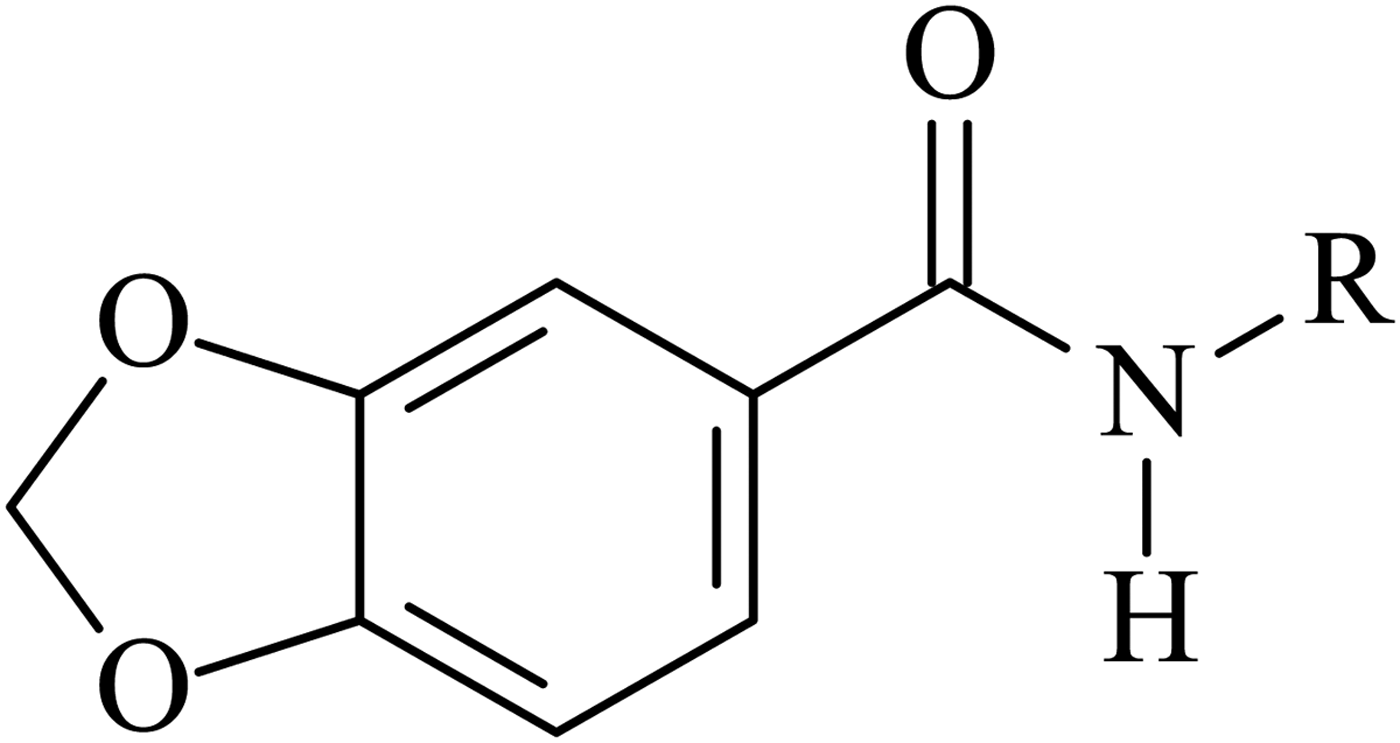
A combinatorial pharmacodynamic technique was used which consisted of a series of 10 n-alkyl piperonyl amides that were custom synthesized to produce a series of n-alkyl piperonyl amides, n-alkyl = C1, 2, 3, 4, 5, 6, 8, 10, 12 and 14 (Fig. 2). Brief experimental details for the synthesis of the piperonyl amides are as follows: to 3.0 g of piperonylic acid we added 5 ml of thionyl chloride and refluxed for 30 min. Then 25 ml toluene, 18.1 mM amines and 5 ml pyridine was added and refluxed for 1 h. The flask was cooled to room temperature, 50 ml ethyl acetate was added, washed with 5% HCl(aq), 5% NaOH(aq), saturated NaCl(aq), and dried over anhydrous sodium sulphate. The solution was filtered, and concentrated on a rotary evaporator. The recrystallization was carried out by adding 50 ml methylcyclohexane, refluxing, and cooling after complete solution was achieved. Some methylene chloride was added to C1, C2, C3 and C4 to achieve complete solution. The clear solution was allowed to slowly cool and then filtered by vacuum. All the reagents we used were Aldrich reagent grade.
Chemical structure of piperonyl amides of fluorescent tracers (R = n – CnH2n+1, n = 1~14).

There was 0.56 mM of each piperonyl amide in a solution of 70% acetone +30% water. The HPLC-log Kow and molecular weight of the n-alkyl piperonyl amides series is shown in Table 1. The method for determining the log of the octanol–water partition coefficient for each compound was by high-performance liquid chromatography (HPLC) that used a short octadecyl-poly(vinyl alcohol) column (Donovan and Pescatore, Reference Donovan and Pescatore2002).
The HPLC log Kow, molecular weight and retention time on the HPLC column of eleven n-alkyl piperonyl amides.

Acetonitrile (MeCN) (HPLC grade) purchased from Fisher Scientific (Asheville, NC, USA) was used as the extraction solvent for the n-alkyl piperonyl amides. Primary secondary amine (PSA) was purchased from Agilent Technologies (Santa Clara, CA, USA), and graphitized carbon black (GCB) was purchased from Agela Technologies (Wilmington, DE, USA). Anhydrous MgSO4 was from Avantor performance materials, Inc. (Center Valley, PA, USA). For seed coating, diatomaceous earth (DE) was from Celite Corporation (Lompoc, CA, USA), and polyvinyl alcohol (PVA, Selvol 205) was from Sekisui Specialty Chemical Company (Dallas, TX, USA).
Seeds of corn ‘D-2901’ were provided by the New York Seed Certification program, Cornell University (Ithaca, NY, USA). The seeds of soybean IAR 1902 SCN were obtained from the Iowa State University Research Foundation (Ames, IO, USA). All seeds were not previously treated with agrochemicals, and were stored at 5°C and 40% relative humidity until used for uptake studies.
Coating corn and soybean with piperonyl amide mixtures
A thin adsorbent seed coating was first applied to single seeds to facilitate the high loading rates of the fluorescent tracer series in a single seed treatment. Twenty grams of DE was dispersed in 80 g of 4% PVA aqueous solution to prepare a 20% DE suspension concentrate. Soybean or corn seeds were dipped into 20% DE suspension concentrate one by one to form a continuous coating surrounding each seed with a thickness of <0.5 mm. The wet DE layer on the surface of seeds was dried immediately with a gentle air stream to dry the suspension. The piperonyl amide mixture was then applied with a micropipette to single DE coated seeds of soybean (20 µl) and corn (40 µl), resulting in 11.2 and 22.4 nmol per soybean and corn seed, respectively. The treated seeds were blown with a gentle air stream immediately until acetone and water totally evaporated (<1 min).
Imbibition and separation of seed tissues
Coated seeds were sown in sand moistened to 20% and maintained at 20°C. The soybean and corn were removed from the moistened sand prior to visible germination, 12 and 20 h after sowing, respectively. Each imbibed seed was then washed with water to remove the coating that contained any residual piperonyl amides. The testa of 10 soybean seeds were separated from the embryos, and were pooled together as one sample (rep). The pericarp + testa of 10 corn were separated from endosperm + embryo, and were pooled together as one sample (rep). The pericarp + testa were termed the covering layers, while the endosperm + embryo were termed internal tissues. There were four replicates for each treatment.
Preparing soybean embryos and corn internal tissues samples for HPLC analysis
The soybean embryo and corn internal tissues samples were extracted with the QuEChERS (Quick, Easy, Cheap, Effective, Rugged, and Safe) method with modifications for soybean and corn seeds (Anastassiades et al., Reference Anastassiades2003). Briefly, ten soybean embryos or ten corn embryo + endosperm were placed into a frozen mortar and frozen with liquid nitrogen, and ground into a fine powder. The powder was transferred into a 50 ml centrifuge tube with a screw cap, and 8 ml of MeCN was added and the mixture was shaken for 2 min using a Vortex mixer at room temperature. Following this, a mixture of 2.5 g of MgSO4 and 1.0 g of NaCl was added. The tube was immediately shaken vigorously for 1 min to prevent the formation of MgSO4 agglomerates, and centrifuged at 3500 r.p.m. for 5 min. Then 3.0 ml of the supernatant was subjected to dispersive SPE (solid-phase extraction) using a mixture of 8 mg GCB, 50 mg PSA and 100 mg MgSO4. The mixture was shaken vigorously for 1 min using a Vortex mixer. Finally, the extract was filtered through a 0.22 µm syringe filter. In developing the HPLC method, the per cent recoveries were determined for the eleven amides from soybean embryo + testa, and corn endosperm + embryo and pericarp + testa. The recovery at ≤3.82 log Kow for both seed tissues was >82% for soybean and >85% for corn.
Preparing soybean testa and corn seed covering layers for HPLC analysis
The covering layers samples were pretreated with a modified QuEChERS method (Anastassiades et al., Reference Anastassiades2003). Briefly, the testa of ten soybean or covering layers of corn were immersed in 1.5 ml of acetonitrile overnight. The extract was transferred into a tube containing 20 mg PSA, 5 mg GCB and 50 mg MgSO4. The mixture was shaken for 1 min. Finally, the extract was filtered through a 0.22 µm syringe filter. Preliminary studies revealed that recovery at ≤3.82 log Kow was >84% for soybean and >92% for corn.
HPLC analysis of amides content
The amides content was determined using an Agilent 1100 HPLC equipped with a 1200 fluorescence detector (FLD) using an ODS-3 column (GL Sciences Inc., 5 µm, 4.6 mm×75 mm column). The mobile phase used was 0 min 30% MeCN + 70% water, 22 min 40% MeCN + 60% water, 25 min 80% MeCN + 20% water, 40 min 90% MeCN + 10% water. The temperature of the column was 30°C. The injection volume was 20 µl. The wavelengths of FLD were set at 292 nm (excitation) and 340 nm (emission). The retention time in minutes for each amide is shown in Table 1.
Data calculation
Per cent uptake in relation to the maximal log Kow (relative amount) =
 $$\displaystyle{{{\rm Concentration\; of\; each\; amide\; in\; tissue}} \over {\matrix{{\rm Concentration\; of\; the\; amide\; at\; the\; maximal} \cr \log Kow\; {\rm in\; the\; same\; tissue}}}} \times 100\%. $$
Per cent uptake based on amount applied (uptake efficiency) =
 $$\displaystyle{{{\rm Amount\; of\; each\; amide\; absorbed\; by\; a\; seed}} \over {{\rm Applied\; amount\; of\; each\; amide}}} \times 100\%. $$
Per cent distribution within seed =
 $$\displaystyle{{{\rm Amount\; of\; each\; amide\; in\; the\; covering\; or\; internal\; tissues}} \over {{\rm Sum\; amount\; of\; each\; amide\; in\; the\; covering\;} + {\rm \; internal\; tissues}}} \times 100\%. $$
Results
Effects of log Kow on maximal uptake of piperonyl amides by soybean and corn seed tissues
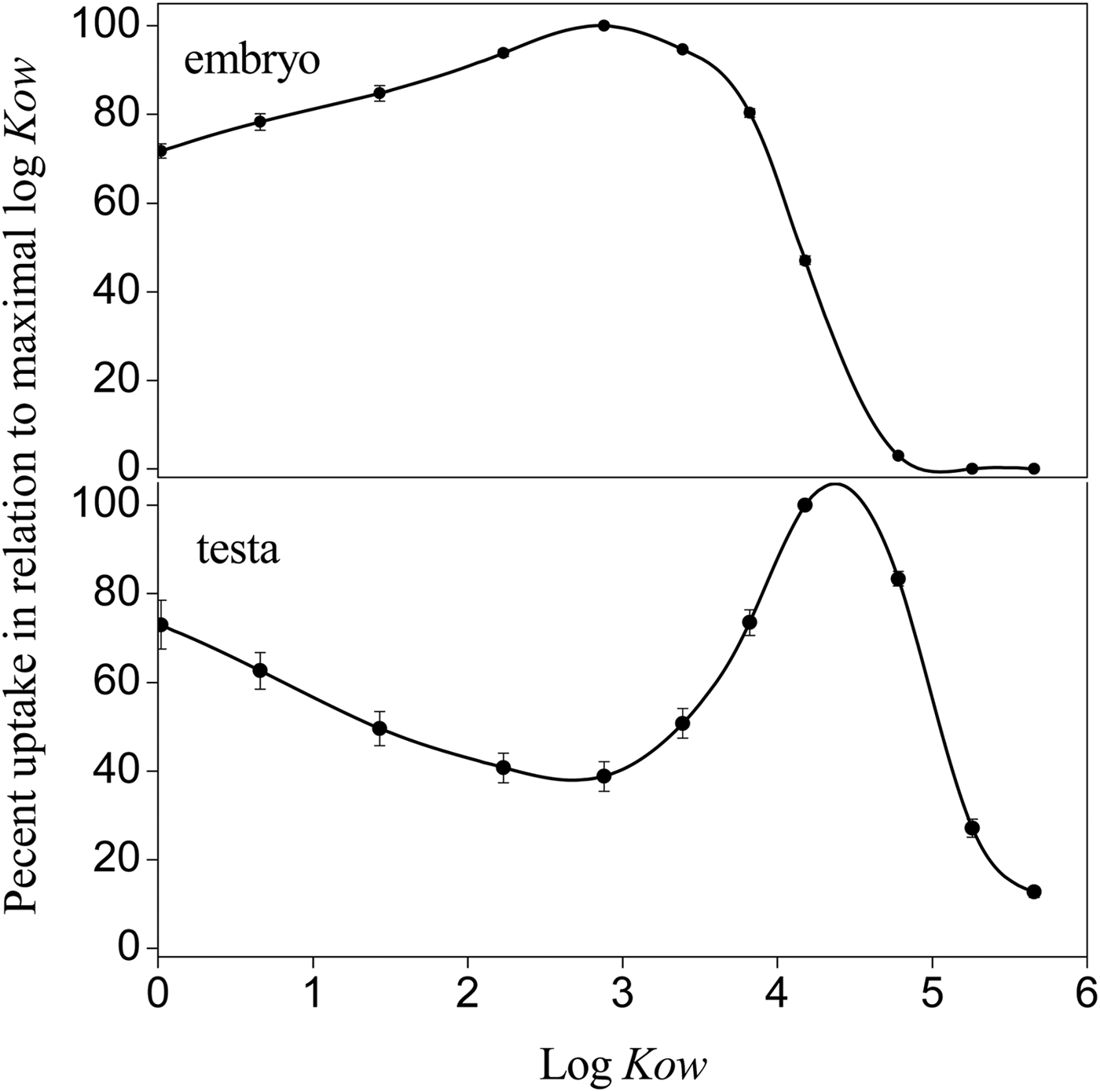
The relative amount of piperonyl amides in soybean seed tissues is shown in relation to the maximal (100%) log Kow value (Fig. 3). The soybean embryo had a different uptake pattern compared with the testa (Fig. 3). The maximum embryo content of amides was at log Kow 2.88, while the testa had 39 ± 3.3% at the same log Kow. Meanwhile, the maximum amount in the testa was at log Kow 4.18, while only 47 ± 1.0% was in the embryo. The soybean testa revealed a decreased permeability to hydrophilic amides from 0.02 to 2.88, then increased permeability to moderately lipophilic amides from 2.88 to 4.18 log Kow, then a sharp decrease in permeability >4.18 log Kow.
The uptake of piperonyl amides into soybean seeds in relation to maximal log Kow. The bars represent ± SE from four replicates.

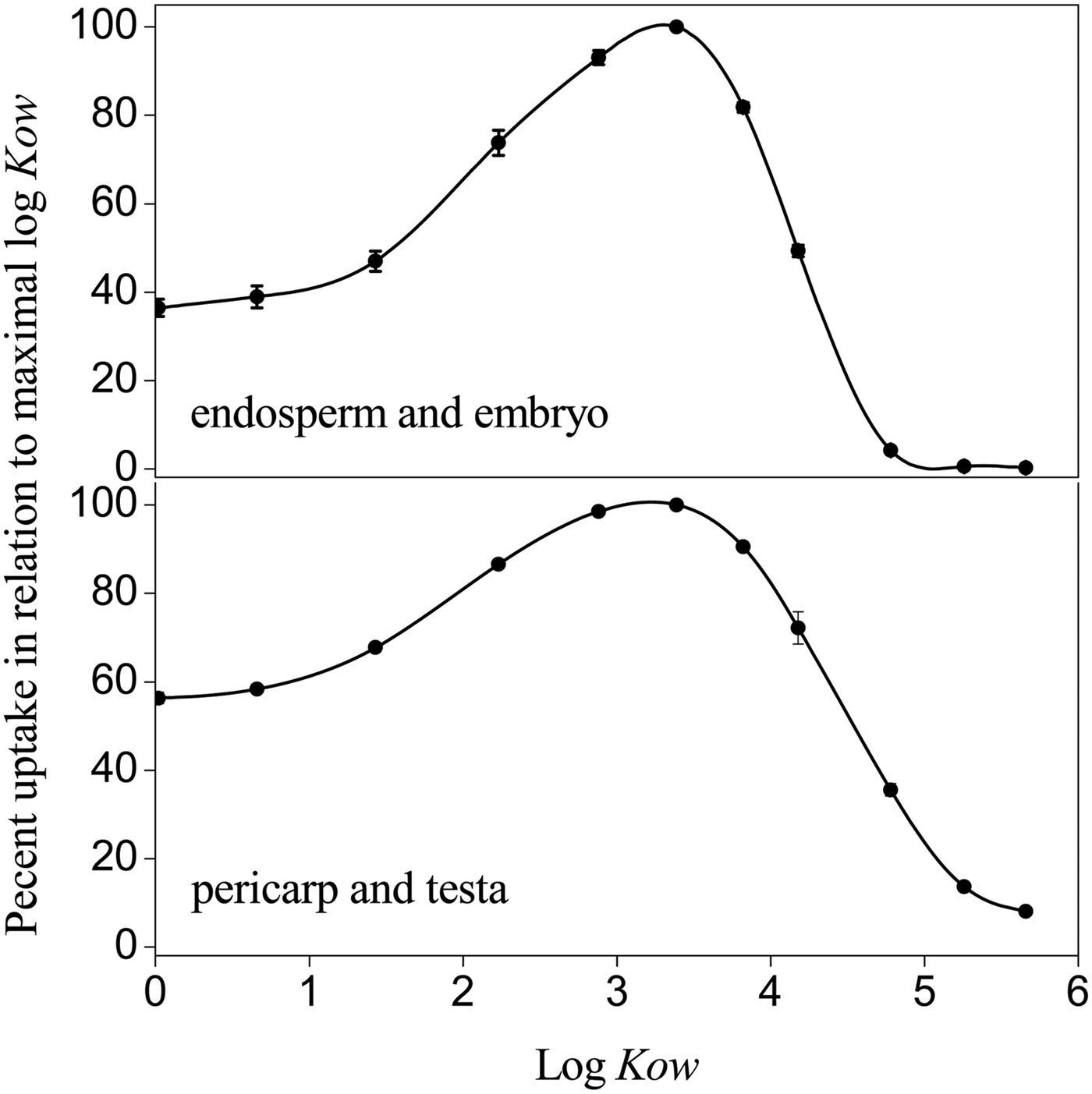
The relative amount of piperonyl amides in corn seed internal (endosperm + embryo) tissues and covering (pericarp + testa) layers is shown in relation the maximal log Kow value (Fig. 4). The curve of internal tissues had a similar trend to seed covering layers, and both tissues had the same maximum at log Kow 3.39. However, the curves of internal tissues and covering layers were asymmetric. At log Kow 0.02, the relative amount of piperonyl amide was 56 ± 1.4% in the covering layers, and 36 ± 1.9% in the internal tissues. At >3.82 log Kow, the permeability was greater in the covering layers than the internal tissues, and at log Kow 4.78 the relative amount was 36 ± 1.4% in the covering layers compared with only 4 ± 0.2% in the internal tissues.
The uptake of piperonyl amides into corn seeds in relation to maximal log Kow. The bars represent ± SE from four replicates.

Per cent uptake efficiency of piperonyl amides compared with amount applied in soybean and corn seeds
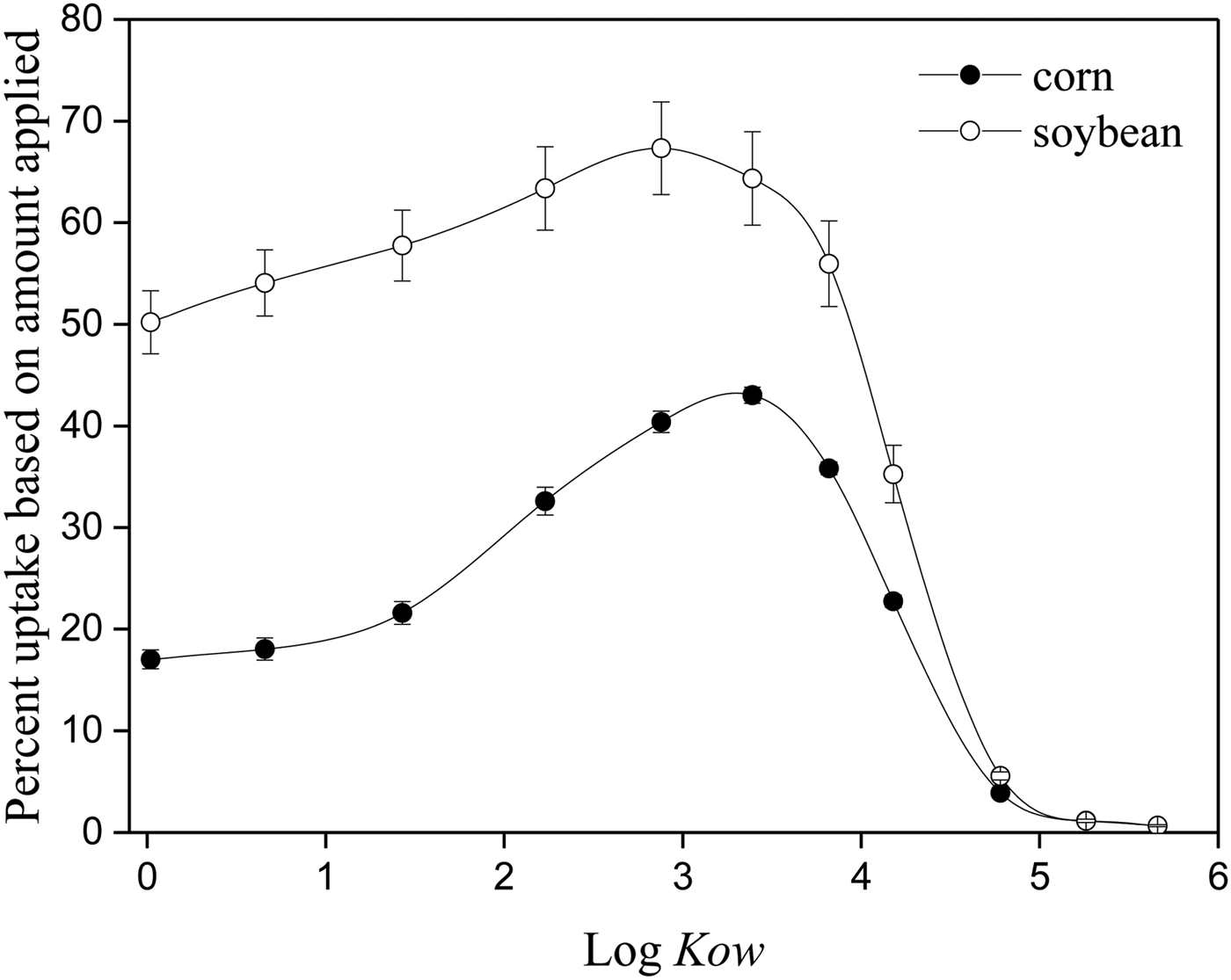
A known dosage was applied to single seeds so the uptake efficiency or per cent recovery was calculated for each piperonyl amide for both soybean and corn. The uptake efficiency of piperonyl amides by whole soybean seeds was 50 ± 3.1% at log Kow 0.02 (Fig. 5). The maximum uptake was 67 ± 4.6% at log Kow 2.88 and then decreased to 35 ± 2.8% at log Kow 4.18. The uptake efficiency of piperonyl amides is shown for corn seeds (Fig. 5). The uptake efficiency increased from 17 ± 0.9 to 43.0 ± 0.8% as log Kow increased from 0.02 to 3.39, respectively. Uptake efficiency decreased from 36 ± 0.6% at log Kow 3.82 to 0.6 ± 0.2% at log Kow 5.66. Overall, soybean had greater per cent uptake efficiency than corn.
Per cent uptake of piperonyl amides compared with amount applied in soybean and corn seeds. The bars represent ± SE from four replicates.

Distribution of piperonyl amides between seed tissues of soybean and corn seeds
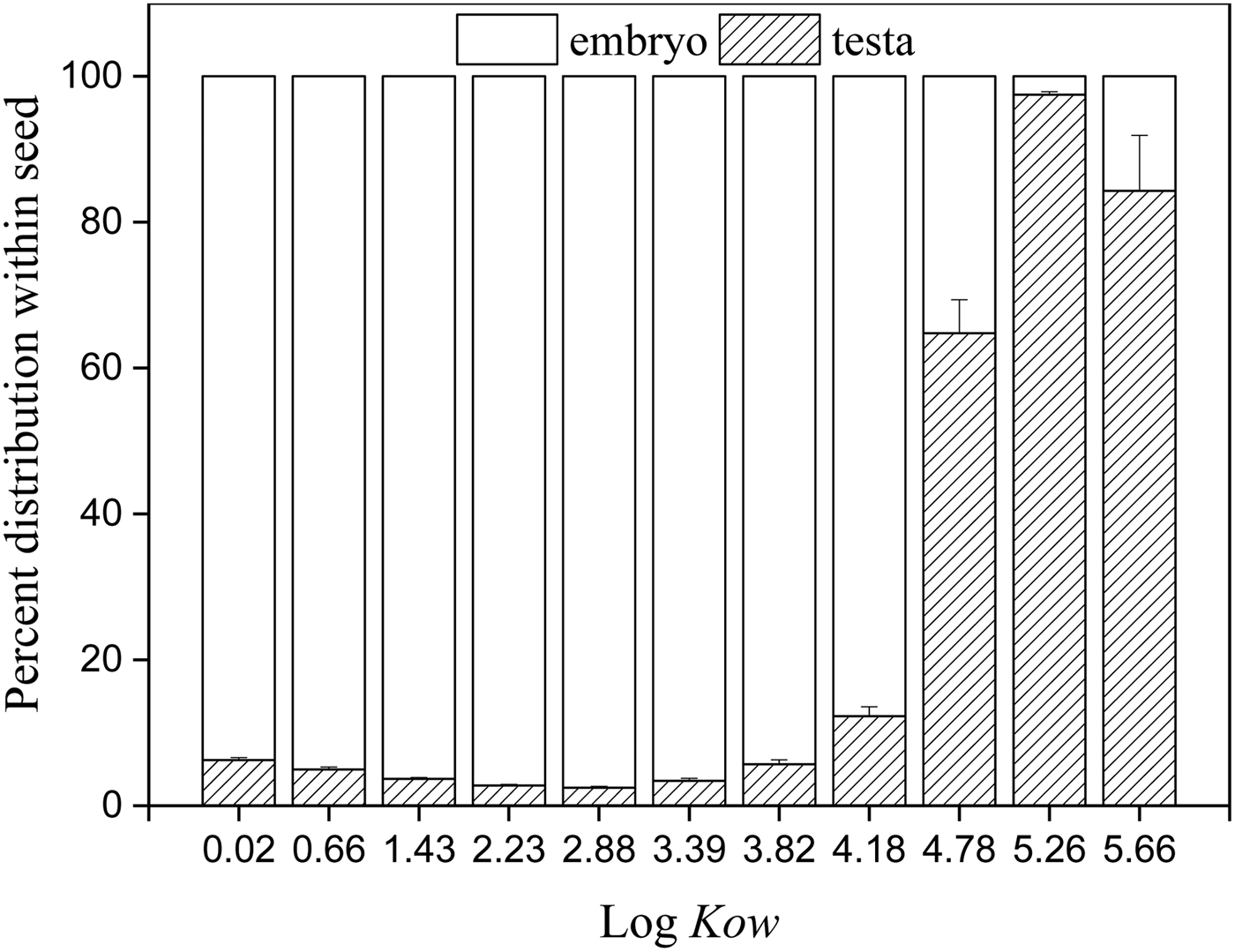
The distribution of absorbed piperonyl amides was determined between the embryo and testa of soybean (Fig. 6). The highest percentage of amides (>90%) was measured in the embryo from log Kow 0.02 to 3.82 compared with the testa. Then a shift in the distribution occurred at log Kow >4.18, and <35% of the amides were detected in the embryo at log Kow 4.78 to 5.66.
Distribution of absorbed piperonyl amides in seed tissues of soybean seeds. The bars represent ± SE from four replicates.

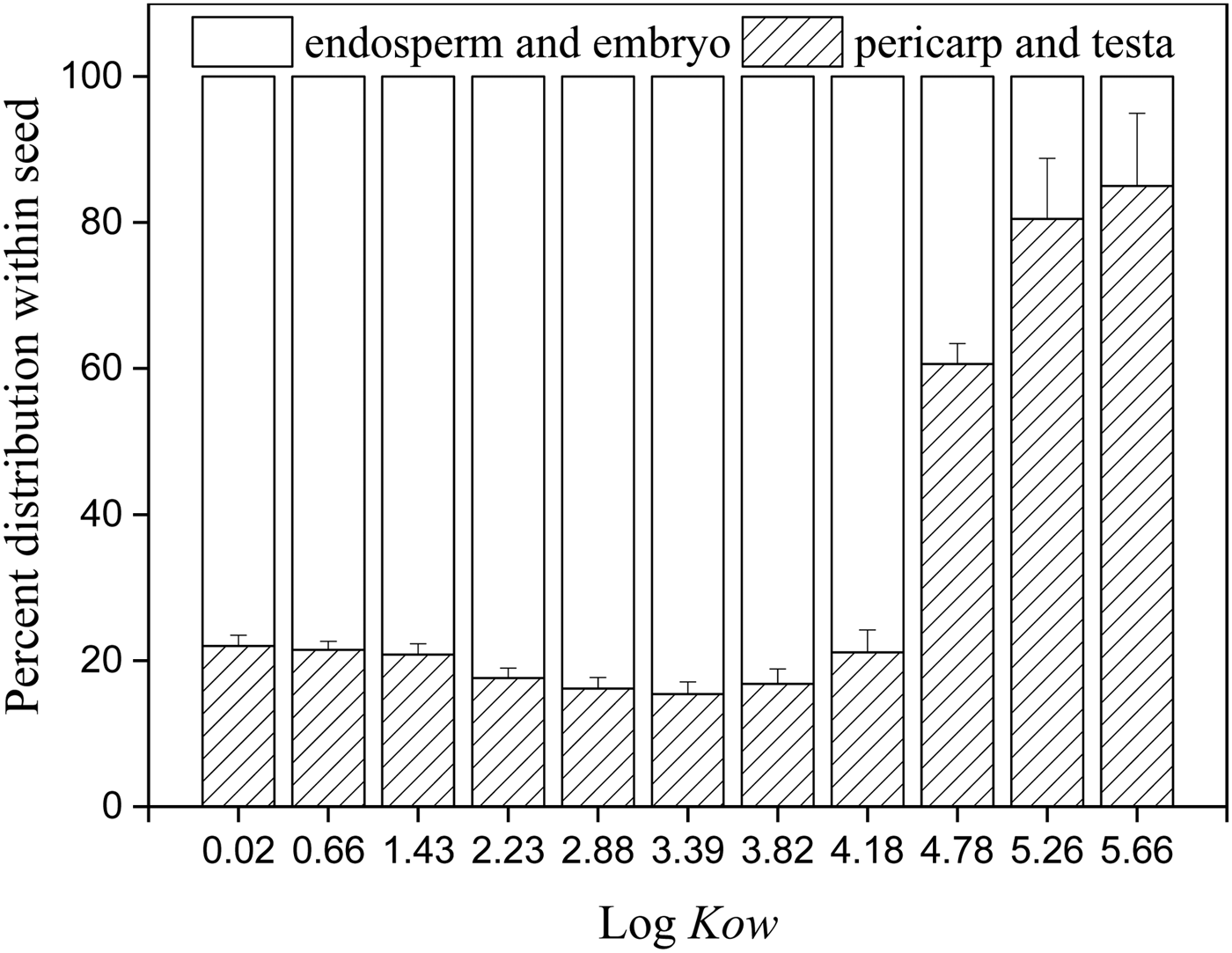
A similar distribution trend was measured for corn seeds (Fig. 7) as found in soybeans. The highest percentage of amides (>78%) was found in the internal tissues from log Kow 0.02 to 4.18 compared with the covering layers. Then the distribution changed with <39% in the internal tissues at log Kow 4.78 and higher, compared with the covering layers.
Distribution of absorbed piperonyl amides in seed tissues of corn seeds. The bars represent ± SE from four replicates.

Discussion
This investigation focused on the lipophilicity of organic compounds in relation to uptake into the embryo and testa of soybean, and internal tissues and covering layers of corn seeds. Lipophilicity, measured by the log Kow or log P is the affinity of compounds for the lipid phase of plant tissues (plasma membrane, waxes, cutin, suberin, etc.) (Braumann, Reference Braumann1986). To examine a range of log Kow compounds in a single treatment, a homologous series of piperonyl amides were synthesized that increased the hydrophobicity of the molecule from log Kow 0.02 (C = 1) to 5.66 (C = 14) (Table 1). The log Kow values were measured by a HPLC technique, which is a more precise measure of hydrophobicity since it is from a chromatographic index, as opposed to a measure of lipophilicity when measured from a biphasic index (Donovan and Pescatore, Reference Donovan and Pescatore2002). There are a number of reports from investigators who support that HPLC-based log Kow derived values can and should correlate better to biological QSAR (quantitative structure–activity relationship) than the shake flask log Kow derived values (Braumann, Reference Braumann1986; Hsieh and Dorsey, Reference Hsieh and Dorsey1995).
The mechanistic description of the uptake of an organic compound was first described for oral pharmaceuticals. Lipinski's rule of five or simply the rule of five (RO5) is a rule of thumb to evaluate drug-likeness or determine if a chemical compound with a certain pharmacological or biological activity has properties that would make it a likely orally active drug in humans (Lipinski et al., Reference Lipinski, Lombardo, Dominy and Feeney2001):
• An octanol-water partition coefficient log Kow not greater than 5;
• A molecular mass less than 500 daltons;
• No more than five hydrogen bond donors (the total number of nitrogen–hydrogen and oxygen–hydrogen bonds);
• No more than 10 hydrogen bond acceptors (all nitrogen or oxygen atoms);
The RO5 was coined as all numbers are multiples of five, although there are only four rules. In the field of agrochemical discovery, Lipinski's RO5 approach was quickly adopted to profile agrochemicals (Tice, Reference Tice2001; Hao et al., Reference Hao, Dong and Yang2011). Tice (Reference Tice2001) studied herbicides, and soil applied herbicides share the same common environment of treated seeds sown in the field. The number of rotatable bonds (<12) was added as a rule resulting in the ‘Agricultural Rule of Five’ (Avram et al., Reference Avram2014). Rotatable bond is defined as any single non-ring bond, bound to a non-terminal heavy (i.e. non-hydrogen) atom (Veber et al., Reference Veber2002). All piperonyl amides with log Kow <5 are in agreement with all RO5, and have less than 12 rotatable bonds, thus are in agreement with this additional rule or criterion. Therefore, the RO5 pertains to physical-chemical properties of molecules that are pharmaceuticals, agrochemicals or other organic compounds. The range of log Kow 0.02 to 5.66 was chosen for this investigation as it encompasses the log Kow range suggested by the RO5. Piperonyl amides are not agrochemicals, but are representative molecules with a common flurochrome for all compounds that permit detection with a HPLC with a fluorescent detector. Collectively, this combinatorial pharmacodynamic technique provided a valuable tool to conduct research in seed biology.
Uptake in relation to the maximal log Kow compound (designated as 100%) differed between the embryo and testa of soybean (Fig. 3), and there were contrasting trends between seed tissues over the range of log Kow from 0.02 to 4.18. Uptake increased in the embryo and decreased in the testa from log Kow 0.02 to 2.88, while the trend reversed between tissues from log Kow 2.88 to 4.18. At low Kow >4.18, there was decreased uptake by both tissues. This indicated that the testa and embryo of soybean seeds had different hydrophilic/lipophilic properties. Collectively, the embryos of soybean had a high permeability to hydrophilic amides (log Kow 0.02~3.39), but limited permeability to lipophilic amides (log Kow >3.82). In contrast, the soybean testa allowed unrestricted transport of polar compounds to the embryo, but acted as a barrier and/or had greater retention of lipophilic compounds in the range of log Kow 3.82 to 4.78.
There may be two modes of transport in the soybean testa. The first decrease from log Kow 0.02 to 2.88 may be attributed the amide water solubility (Fig. 3). As log Kow decreased, the aqueous solubility increased, so hydrophilic amides would move more readily with water uptake during imbibition. In support, an aqueous pathway was found in pea seeds (Niemann et al., Reference Niemann2013), and pea, like soybean, has the permeable seed coat characteristic (Taylor and Salanenka, Reference Taylor and Salanenka2012). The optimum uptake between log Kow 4.18 and 4.78 may be due to the hydrophobic characteristic of the testa favouring uptake in this region. The overall net effect would be the sum of the two modes of uptake.
Corn showed similar trends between the seed covering and internal tissues and the maximal uptake for both seed parts was at log Kow 3.39 (Fig. 4). This result indicated that the covering layers of corn seeds were similar in permeability to internal tissues, but curves of both tissues were not symmetrical. Covering layers had greater permeability to highly lipophilic amides (>4.78 log Kow) compared with internal tissues. Tomato seeds, like corn, have selective seed coat permeability (Taylor and Salanenka, Reference Taylor and Salanenka2012) and were examined in a similar experiment using the combinatorial pharmacodynamic technique (Yang et al., Reference Yang2017). The uptake pattern was more normally distributed in tomato than corn, and even varietal differences were measured for tomato. Differences in uptake patterns are attributed to the seed coat composition. The inner layer of the tomato seed coat was composed of suberin (Beresniewicz et al., Reference Beresniewicz1995), and resembled the lipophilic nature of roots, thus reducing uptake of organic compounds with log Kow <2.
The overall uptake trend was similar for soybean and corn on the whole seed basis and uptake gradually increased from log Kow 0.02 to about 3.0, followed by a steep decline at >3.82 log Kow (Fig. 5). Therefore, a normal distribution was not measured for seed uptake of both crops in relation to log Kow. Moreover, soybean seed had greater permeability to the piperonyl amides than corn seed over the range of log Kow 0.02 to 4.18. Whole plant uptake revealed a Gaussian distribution for uptake in both barley (Briggs et al., Reference Briggs, Bromilow and Evans1982) and soybean (Hsu et al., Reference Hsu, Marxmiller and Yang1990). In subsequent studies, other Gaussian equations were established to describe the root-to-shoot translocation of plants (Collins et al., Reference Collins, Fryer and Grosso2006). In contrast, the log Kow dependent uptake curves of soybean and corn seeds were asymmetrical so do not satisfy a Gaussian model. Furthermore, the maximal TSCF was at 1.8 log Kow, while the maximal per cent uptake of soybean and corn seeds was log Kow 2.88 and 3.39, respectively. Collectively, the uptake characteristics of seeds were not related systemic uptake patterns in whole plants. This was attributed to chemical composition of seed covering layers and internal tissues that affected permeability and affinity of the piperonyl amide compounds.
The distribution of piperonyl amides between testa or seed covering layers and embryo or internal tissues revealed similar patterns (Figs 6 and 7). In soybean, <15% of the piperonyl amides was measured in the testa from log Kow 0.02 to 4.18 (Fig. 6), compared with <25% in covering layers of corn (Fig. 7). A sharp shift in distribution occurred at >4.78 log Kow with >60% in the seed covering layer(s). Therefore, hydrophobic amides were retained in the seed coat covering layer(s) or due to their limited water solubility did not diffuse through the seed coat. In support of distribution of tracers in different seed parts, the affinity and mobility of fungicides were related to the partition or binding in the tissues of plants (Uchida, Reference Uchida1980), and the lipid content is one of the controlling factors (Schwab et al., Reference Schwab, Al-Assi and Banks1998).
The greater distribution of the piperonyl amides with log Kow <4.18 in soybean embryo compared with the testa (Fig. 6), and corn internal tissues compared with the covering layers (Fig. 7) was partially attributed to <10% of the total seed weight being composed of seed covering layers. Due to the small contribution of the soybean testa to the total seed weight (Figs 3 and 6), there was little effect on the whole seed trend (Fig. 5). In corn, the average concentration of each amide was 37 nmol g–1 in the seed covering layers and 13 nmol g–1 in the internal tissues. Therefore, there was a concentration gradient from the seed covering layers to the internal tissues. Conversely, in soybean, the average concentration of amides <4.18 log Kow was 8.6 nmol g–1 in the testa and 23 nmol g–1 in the embryo. So the soybean seed coat is permeable and does not act as a barrier to the movement of the amides with lower log Kow values. Water uptake is not uniform over the entire seed surface, and water was found to be taken up rapidly through the raphe region to the hilum of soybean seed (Koizumi et al., Reference Koizumi2008; Koizumi and Kano, Reference Koizumi and Kano2014). In corn seeds, rapid water uptake was measured through the black layer (McDonald et al., Reference McDonald, Sullivan and Lauer1994). The uptake of organic compounds may follow specific pathways through the seed coat. Diffusion of a non-ionic fluorescent tracer from the environment to the cucumber embryo was through the micropylar canal (Salanenka et al., Reference Salanenka, Goffinet and Taylor2009). Aqueous pathways dominated the permeation of solutes across pea seed coats by diffusion and bulk flow of water (Niemann et al., Reference Niemann2013). Assuming that soybean seed coat permeability was similar to pea seeds, then hydrophilic compounds could readily pass from the environment though the water-filled narrow aqueous pathways to the embryo.
Our data provide a new understanding of seed coat permeability and uptake over a range of log Kow values. This investigation was conducted with one low dosage, so cannot be extrapolated to the wide range of dosages used in commercial agrochemical seed treatments. Therefore, more work is needed to understand the effect of dosage rate on the uptake of a single non-ionic tracer in seeds. Collectively, this paper provides insight on the expected uptake of agrochemicals with known log Kow applied as seed treatments.
Acknowledgements
We thank Dr Suemar A.G. Avelar and Masoume Amirkhani for their help with preparation of analytical samples.
Financial support
This study was financed by a grant from the American Seed Research Foundation and the China Scholarship Council (grant no. 201503250009). The project was further supported under the United States Multi-State project, W-3168.