

Introduction
The pursuit of a liberal policy of mental health care over recent decades has come at somewhat of a cost to professionals working within this field. A consequence of the ‘community care’ processes of the 1980s is that there is now increasing pressure for mental health professionals to predict and manage the risk of aggression and violence presented by mental health patients (Holloway, Reference Holloway2004; Kidd, Reference Kidd2003; O’Neill, Reference O’Neill1999). Addressing risk became elevated on the mental health agenda following public concern and media interest in a series of high profile inquiries involving mental health patients (Bowers, Reference Bowers2005; Doyle & Dolan, Reference Doyle and Dolan2002; Harris, Reference Harris1997). Adverse events involving mental health patients and the often sensational media coverage which accompanied them implicated inadequate supervision and charged organisational negligence (Morgan, Reference Morgan1998). The expectation now exists that we not only assess and manage such risks, but that we justify, explain, account for and demonstrate responsibility in doing so (Trenoweth, Reference Trenoweth2003; Morgan, Reference Morgan1998). Assessing a patient's risk of violent behaviour, predicting dangerousness and the development of a subsequent management plan have thus become integral and important aspects of contemporary mental health practices (NICE, 2007; Campbell & Chaplin, Reference Campbell and Chaplin2001; RPsych 1996). What is less clear, and much discussed within the literature, is how we should best implement risk assessment and risk management practices within contemporary mental health care (Muir-Cochran & Wand, Reference Maden2005; Doctor, Reference Doctor2004; Doyle & Dolan, Reference Doyle and Dolan2002; Stein, Reference Stein2002).
Aim
The aim of this paper is to critically discuss risk assessment practices in order to propose a systematic approach to the effective assessment and management of aggression and violence in mental health settings.
Method
A critical review of the risk literature in mental health was undertaken. Using CINAHL, Medline, PSYCHLIT and Google Scholar, we searched for papers using the following key words: risk assessment, risk management, violence, aggression, mental health and psychiatry. The literature search highlighted different generations or approaches to risk assessment methodology which will be critically reviewed. From this critical review the proposed model entitled ‘risk analysis’ is argued from the appraisal and critique of the literature as a more encompassing and collaborative approach to the assessment and management of risk.
Risk Assessment Methodology
Risk assessment methodology is described as an expanding contemporary area of practice with a focus on the validity and reliability of the instrumentation used in facilitating processes of aggression and violence prediction (Lewis & Webster, Reference Lewis and Webster2004; Douglas et al., Reference Douglas, Ogloff and Hart2003). Doctor (2004) and Harris (1997) issued caution that such prediction is unreliable and inconsistent, whilst Sawyer (2005) believed that bureaucratic attention to such processes has conveniently distracted from the more pressing issue of inadequate care provision.
Historically, two main methods of risk assessment have been integral to risk assessment practice and scrutiny: the clinical (unstructured) and actuarial (statistical or mathematical) methods (Doctor, Reference Doctor2004; Douglas et al., Reference Douglas, Cox and Webster1999; Trenoweth, Reference Trenoweth2003). More recently, the structured professional method has being advocated as the method of approaching risk as it combines components of the actuarial and clinical approaches.
Unstructured Clinical Method
Unstructured clinical judgement involves the assessment of clinical and dynamic factors related to individuals and their present circumstances (Douglas et al., Reference Douglas, Cox and Webster1999). This method involves subjective assessor discretion on what factors are deemed relevant and important (Grove et al., Reference Grove, Zald, Lebow, Snitz and Nelson2000). This approach has been heavily criticised within the literature for being inconsistent and lacking in structure, uniformity and inter-relater reliability (NICE, 2007; Doyle & Dolan, Reference Doyle and Dolan2002). It is also criticised for involving personal, non systematised biases which may influence the assessor resulting in underestimation or overestimation of risk prediction (Lewis & Webster, Reference Lewis and Webster2004). Perhaps the best description of this method is that it is informal, subjective and impressionistic (Grove & Meehl, Reference Grove and Meehl1996). Such an unstructured approach would appear not to control for the variable degrees of expertise and experience of practitioners, therefore rendering it inadequate for the purpose it was designed for. Any management plan being informed by such an unstructured or unreliable method is surely inconsistent with the ethos of individually tailored, evidence based interventions, if such interventions are informed by unstructured assessments.
A further approach in the unstructured clinical method reported in the literature is that of intuition or gut feeling (Muir-Cochrane & Wand, Reference Maden2005; Trenoweth, Reference Trenoweth2003; Delaney et al., Reference Delaney, Cleary, Jordan and Horsfall2001; Harris, Reference Harris1997). Harris (1997) reported that doctors make the correct decisions using this method more often than not, whilst Delaney et al. (2001) reported that nursing staff informally rely on experience and knowledge to assess for risk, as opposed to using standardised measures. This method of intuition would appear to lack objective validity. Any predictive accuracy involved in such methods is more likely the result of observations and experience of verbal and non verbal cues than any ‘psychic ability’ or ‘sixth sense’. The sampling framework used in such instances is likely biased towards patients exhibiting such cues, whilst no controls are apparently allowed for. The obvious flaws in the methodology of unstructured clinical judgement led to scientific interest and approaches to risk assessment methodology.
Actuarial Method
Actuarial risk assessment methods are sometimes known as mathematical, mechanical or statistical prediction (Doctor, Reference Doctor2004), where static or historical risk factors statistically associated with specific risks are assessed (NICE, 2007). It is said to involve formulaic equations upon which risk is assessed, scored and predicted, and thus precludes expert professional judgement (Grove et al., Reference Grove, Zald, Lebow, Snitz and Nelson2000), which would appear to compensate for some of the flaws of unstructured clinical judgement. Actuarial methods, however, have their advocates and critics. The ability of such actuarial methods to improve statistical prediction of violence, when compared to clinical judgement alone, has received support in the literature (Witteman, Reference Witteman2004; Steinert, Reference Steinert2002). Grove et al., (2000) reported a meta-analysis of 136 studies, where 63 showed greater predictive accuracy involving actuarial methods, 65 showing equitable accuracy and 8 favouring clinical prediction. They did note that many of the studies lacked methodological rigour as they were not designed to test clinical versus actuarial data combinations. Douglas et al. (1999) argued that the benefit of actuarial assessment is related to the absence of subjective bias and impressionistic clinical judgements, whilst issuing caution that it is a method which informs prediction only and furthermore that the static nature of such prediction excludes dynamic factors associated with changing risk; a limitation which is supported in the literature (Doctor, Reference Doctor2004; McSherry, Reference McSherry2004). Douglas et al. (1999) argued that the limitation of actuarial tools is their ultimate inability to inform prevention and management. The transferability of actuarial methods across populations has also received some discussion in the literature. Grove & Meehl (1996) argued that these are indeed transferable; however caution is issued by some authors when using actuarial tools within different samples to that of the validation sample which generated the data, given that the majority of actuarial tools were validated in North America (Maden, Reference Maden2003; Stein, Reference Stein2002; Douglas et al., Reference Douglas, Cox and Webster1999). Maden (2003) added to the perceived limitations of transferability by stating that actuarial tools have greater predictive accuracy within personality disordered populations than in mental illness populations, as psychopathy is the most accurate single predictor of violence.
Douglas et al. (1999) aligned the actuarial versus clinical debate alongside that of the scientist (researcher) versus practitioner debate of what constitutes best practice when assessing risk. Whereas scientists are interested in predictive validity, clinicians are interested in prevention and care, and live in a world where they are professionally bound to intervene to ensure potential adverse effects do not happen (Abderhalden et al., Reference Abderhalden, Needham, Miserez, Almvik, Dassen, Haug and Fischer2004; Doyle & Dolan, Reference Doyle and Dolan2002; RPsych, 1996). Any successful management is thus a major bias affecting any determinable predictive validity. As a result, this debate gave rise to a new generation of risk assessment methodology.
Structured Professional Method
Risk assessment processes incorporate more complex actions than just clinical experience or empirically validated prediction tools; and as such, a number of authors advocate for the integration of the best of both clinical and actuarial approaches, where practitioner expertise and research evidence compliment one another (McSherry, Reference McSherry2004; Witteman, Reference Witteman2004; Maden, Reference Maden2003; Stein, Reference Stein2002). This approach, known as structured professional judgement or structured clinical judgement, involves judgements based upon empirically validated risk factors, professional experience and contemporary knowledge of the patient. Its advantages are described as its transferability across populations and settings, inclusion of case specific factors and provision for informing prevention and management strategies (NICE, 2007; Muir-Cochrane & Wand, Reference Maden2005; Lewis & Webster, Reference Lewis and Webster2004). Several authors have described the superiority of such an approach, compared to actuarial or clinical judgement alone (NICE, 2007; Davison, Reference Davison2005; Douglas et al., Reference Douglas, Ogloff and Hart2003; Doyle & Dolan, Reference Doyle and Dolan2002), whilst Delaney et al. (2001) reported nursing staff being supportive of this structured approach to risk assessment following focus groups.
Risk Instruments
There are many examples of reliable and valid instruments or tools commonly used within contemporary civil and forensic mental health care, for the assessment and management of aggression and violence. These tools have been reviewed elsewhere (Lewis & Webster, Reference Lewis and Webster2004; Stein, Reference Stein2002) and include, but are not exclusive to: Broset Violence Checklist (Almvik et al., Reference Almvik, Woods and Rasmussen2000), Historical Clinical Risk 20 Version 2 (Webster et al., Reference Webster, Douglas, Eaves and Hart1997), Hare Psychopathy Checklist-Revised (Hare Reference Hare2003), Violence Risk Appraisal Guide (Harris et al., Reference Harris, Rice and Quinsey1993) and Violence Screening Checklist (McNeil et al., Reference McNeil, Binder and Greenfield1988).
The HCR-20 (Webster et al., Reference Webster, Douglas, Eaves and Hart1997) pulls together actuarial and clinical risk assessment philosophies and is suggested as the leading instrument of the structured professional judgement approach. It’s probably the most widely used globally, with research confirming reliability and validity across forensic and civil psychiatric populations (Canter & Zukauskiene, Reference Doctor2008). The HCR-20 has 10 historical factors that concern the past: 5 clinical items that reflect the changing dynamic correlates of violence, and 5 risk management items, which focus attention on the future factors that may aggravate or mitigate violence risk. The tool does not allow for a definitive prediction of violence, rather predictions based on the HCR-20 are estimates of the likelihood of violence. As with most risk assessment tools, it is intended to inform health professionals, so that intervention decisions can be based on the best available prediction of violence.
The Risk Controversy
NICE (2005) reported on the limitation of instruments to offer 100% predictive accuracy and that no ‘gold standard’ tool can be recommended, whilst Stein (2002) argued that there are no ‘miracle instruments’ and that investment in attempts to find a universal instrument are misguided. Whilst there are limitations, it is argued that these be accepted, rather than continuing the search for the ‘holy grail’ of risk assessment instrumentation (Maden, Reference Maden2003). The authors are aware of no literature which describes tools or instruments as an absolute or stand alone practice or which purports to their complete predictive accuracy. This adds further confusion to the strength of criticism at times located in this literature. It seems misguided to caution against something that can help, if it does so within an appropriate context or perspective with realistic expectations. The authors have experienced many colleagues who have criticised a variety of tools for many different reasons, only to use no standardised approach whatsoever as a result of their dislikes. This is concerning given that many incident reviews, within which the authors have been present, have highlighted inadequate or no risk assessment or risk management documentation. Maden (2003) was surprised by the intensity of opposition to standardised risk assessment and argued that it is a bizarre response to nothing more than one component of a comprehensive assessment. We agree that such criticism is unwarranted for what is essentially a tool (aide memoir) which provides structure to an aspect of assessment which should simply be used to provoke collaborative discussion.
Maden (2003) discussed some reported criticisms of risk assessment processes such as: forms are time consuming, irritate the assessors and prevent direct patient contact, and that they have the potential to stigmatise. He argued against the latter by conveying that people are stigmatised by the risk they present, not the conduit for such a formulation. The issue of forms being time consuming or preventing direct patient contact raises an interesting question: are we saying there is little time for such practices within a culture of collaboration and shared responsibility? A structured assessment approach also provides proactively for direct patient contact and a greater understanding of their world, a premise few in mental health would surely argue against.
A major problem for many clinicians is the dichotomous view taken of risk assessment and risk management, where many clinicians appear to view the completion of a risk assessment as a complete process, as opposed to its part within a dynamic concept. This may be in part due to governance that an assessment is completed, but little governance of what happens thereafter. Throughout the risk process clinicians need to move dynamically and collaboratively from assessment to formulation of assessment, to management interventions and review, perhaps returning to assessment to make new formulations and interventions dependent on the variables that are presented to the clinical scenario which would affect the risk potential. As new dynamic variables materialise, the course of the risk process can alter. A process of continuous, collaborative review is essential to this process. Risk management plans are often documented in clinical files, to be quickly outdated by new information that arrives through various sources. This requires that the plan be changed which, in the experience of the authors, clinicians are not as complicit with as such information necessitates, leaving them deservedly vulnerable to criticism when things go wrong.
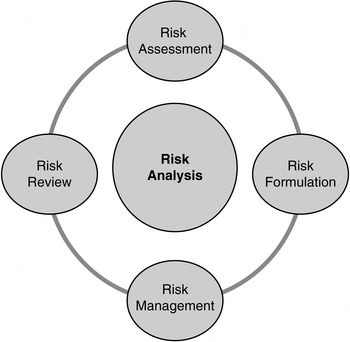
Risk assessment and risk management have thus become integrated components of a broader concept (NICE, 2007; Lewis & Webster, Reference Lewis and Webster2004; Trenoweth, Reference Trenoweth2003; Doyle & Dolan, Reference Doyle and Dolan2002; Morgan, Reference Morgan2000; Douglas et al., Reference Douglas, Cox and Webster1999; RPsych, 1996). We suggest viewing risk assessment and risk management within a ‘risk analysis’ concept. The intent is to reflect the dynamic, constantly evolving nature of risk, which incorporates continuous and collaborative review, as opposed to a dichotomous approach.
The ‘Risk Analysis’ Approach
The use of the term ‘risk analysis’, whilst not consistent with mental health literature, is widely applied in other disciplines and industry. The Society for Risk Analysis (2008) suggests that risk analysis across different industries is primarily concerned with: risk assessment, risk characterisation, risk communication, risk management and policy relating to risk, blending across a broad range of disciplines including the behavioural, biological, decision, economic, engineering, physical, and social sciences. ‘Risk analysis’, as proposed within this paper, is the integration of constituent components of a ‘risk analysis’ concept within mental health care, incorporating: assessment, formulation, management and review.
Risk assessment
This component of the process is the gathering and analysis of information of the potential for adverse events, which identifies specific contextual risk factors within a process of linking relevant past information to current circumstances (Davison, Reference Davison2005; Morgan, Reference Morgan1998). Risk factors are the specific circumstances that may adversely influence behaviours and involve a complex integration of idiosyncratic and environmental circumstances (Morgan, Reference Morgan1998). NICE (2007) suggested that these risk factors can be categorised as static (unchangeable) or dynamic (those that are influenced). Trenoweth (2003) argued that the risk assessment of violence is a complex process involving several intrapersonal and interpersonal risk factors specific to an individual. Davison (2005), Delaney et al. (2001) and Morgan (1998) identified the need for collaborative and corroborative information gathering throughout this process, whilst NICE (2005) argued that the process should incorporate structured and sensitive interviews with patients and carers. We believe that the method of gathering such information is secondary to what you do with the information. It is difficult to see how such an array of intrapersonal, interpersonal and environmental risk factors can adequately be assessed without structure, but irrespective of that, the information must be collaboratively discussed prior to any formulations being made.
Risk formulation
The outcome of risk assessments should be that risk factors are identified, with collaborative predictions or judgements made, which explore the likelihood of the risk occurring, when it maybe likely to occur, factors likely to increase the risk, the potential outcome of such an occurrence and appropriate interventions. This concept is otherwise known as risk formulation (NICE, 2007; Doyle & Dolan, Reference Doyle and Dolan2002; Morgan, Reference Morgan1998; RPsych, 1996). The benefit of risk formulation is that it links and attempts to make sense of information as opposed to merely documenting it. Monahan (1981), in some early evaluation of risk prediction, stated that our ability for such prediction was unconvincing and not much better than chance. However, Irwin (2006) and O’Neill (1999) argued that competent risk assessment, if individualised and based upon informed knowledge of an individual, should be able to predict future aggression or violence. It should be clear to all practitioners involved in the care of patients that individualised interventions and management plans have been informed by specific formulations based upon assessment information.
Risk management
Risk management occurs through interpretation and implementation of individual management plans. Risk management involves processes of translating knowledge of patients based upon assessment and formulation information. Following this, interventions and procedures which prevent, minimise and manage risk behaviours can be developed (Morgan, Reference Morgan1998). Effective management involves a diverse range of clinical and psychosocial interventions which aim to provide a comprehensive package of proactive rather than reactive care (Thomson, Reference Thomson2000). Individual teams need to consider risk management within a framework involving collaborative team meetings, team policies, team training, communication and support, and the management of environmental influences (Morgan, Reference Morgan1998). There is little argument regarding the mitigating effects of inappropriate environments on patient aggression and violence and the need to consider these influences within risk management practices (NICE, 2005; Steinert, Reference Steinert2002).
Risk management requires an allocation of supports and responsibilities for ensuring that risk is managed effectively and, like assessment processes, this process should incorporate structured involvement of patients and carers. Restrictive and controlling interventions can have a mitigating effect on aggression and clinicians must therefore find a safe balance between care and custody (Muir-Cochrane & Wand, Reference Maden2005).
Risk review
Dynamic factors necessitate that risk analysis is subject to continuous and regular review (Morgan, Reference Morgan2000; RPsych, 1996). This requires that all assessment findings and formulations are discussed broadly with members of the multidisciplinary team, with interventions agreed upon and subjected to collaborative and frequent review (NICE, 2007; Stein, Reference Stein2002; RPsych, 1996). Morgan (2000) argued that such collaborative practices will be effective in minimising risk. Collaboration and review should also extend to patients, where mutuality and trust are fostered and where interventions and plans are agreed upon or at the very least are transparent. This collaboration should be present throughout all stages of risk analysis processes, consistent with the right to self determination (NICE, 2007; Muir-Cochrane & Wand, Reference Maden2005; Trenoweth, Reference Trenoweth2003).
All assessment, formulation, management and review information should be transparently clear to all staff of varying experience involved in the management of the patient, which leaves no room for ambiguity or indecision. Figure 1 has been constructed to show the relationship between risk assessment, formulation, management and review within a model of risk analysis. The emphasis is on explicating a dynamic, continuous and dependent concept, rather than a dichotomous or multinominal view.
Risk analysis model

Conclusion
Mental health services should adopt an integrated risk analysis approach to the assessment and management of aggression/violence. Risk assessment, risk formulation, risk management and risk review are integrated functions of ‘risk analysis’, as opposed to being dichotomous or multinominal concepts. Risk assessment tools should be used to incorporate assessment of static and dynamic risk factors, a risk formulation, preventative management interventions and review processes. The limitation of risk analysis lies in the fact that exact predictions are not possible and risk will never be completely eradicated, but this does not mean that risk assessment should not be carried out or that clinicians can become complacent. Clinicians however need to have realistic expectations and maintain a sense of perspective that assessment tools are one component of a comprehensive process. The strength of risk analysis is that risk can be collaboratively and comprehensively assessed, managed and reviewed with the help of robust communication systems and collaborative working practices, combined with supportive organisational systems. The potential impact within mental health practice of these strengths and weaknesses is that it allows the clinician a more realistic, corroborative and collaborative approach to the assessment and management of aggression/violence risk factors. This can remove the unrealistic expectation that individual clinicians are responsible for these practices, which often leads to undue concern regarding individual scrutiny when things ‘go wrong’. It also removes the subjectivity and bias related to individual functioning and experience. Risk analysis provides the clinician with a framework that allows for the dynamic change of variables that influence risk. When clinicians are more aware of this ebb and flow of change within the risk analysis process, their ability to critically think beyond a dichotomous or multinominal view of risk will be enhanced, which in turn can lead to reductions in risk.