





No CrossRef data available.
The next frontier of healthcare-associated infection (HAI) surveillance metrics: Beyond device-associated infections
Published online by Cambridge University Press: 15 January 2024
Abstract
In recent years, it has become increasingly evident that surveillance metrics for invasive device-associated infections (ie, central-line–associated bloodstream infections, ventilator-associated pneumonias, and catheter-associated urinary tract infections) do not capture all harms; they capture only a subset of healthcare-associated infections (HAIs). Although prevention of device-associated infections remains critical, we need to address the full spectrum of potential harms from device use and non–device-associated infections. These include complications associated with additional devices, such as peripheral venous and arterial catheters, non–device-associated infections such as nonventilator hospital-acquired pneumonia, and noninfectious device complications such as trauma, thrombosis, and acute lung injury. As authors of the device-associated infection sections in the SHEA/IDSA/APIC Compendium of Strategies to Prevent Healthcare-Associated Infections in Acute Care Hospitals, we highlight catheter-associated urinary tract infection as an example of the strengths and limitations of the current emphasis on device-associated infection surveillance, suggest performance metrics that present a more comprehensive picture of patient harm, and provide a high-level overview of similar issues with other infection surveillance measures.
Information
- Type
- Compendium Commentary
- Information
- Copyright
- © The Author(s), 2024. Published by Cambridge University Press on behalf of The Society for Healthcare Epidemiology of America
References
Hospital-Acquired Condition Reduction Program (HACRP). Centers for Medicare and Medicaid Services (CMS) website. https://www.cms.gov/Medicare/Medicare-Fee-for-Service-Payment/AcuteInpatientPPS/HAC-Reduction-Program.html. Published July 30, 2018. Accessed December 15, 2023.Google Scholar
Page, B, Klompas, M, Chan, C, et al. Surveillance for healthcare-associated infections: hospital-onset adult sepsis events versus current reportable conditions. Clin Infect Dis 2021;73:1013–1019.CrossRefGoogle ScholarPubMed
Jumani, K, Advani, S, Reich, NG, Gosey, L, Milstone, AM. Risk factors for peripherally inserted central venous catheter complications in children. JAMA Pediatr 2013;167:429–35.CrossRefGoogle ScholarPubMed
Kovacich, A, Tamma, PD, Advani, S, et al. Peripherally inserted central venous catheter complications in children receiving outpatient parenteral antibiotic therapy (OPAT). Infect Control Hosp Epidemiol 2016;37:420–424.10.1017/ice.2015.317CrossRefGoogle ScholarPubMed
Advani, SD, Fakih, MG. The evolution of catheter-associated urinary tract infection (CAUTI): is it time for more inclusive metrics? Infect Control Hosp Epidemiol 2019;40:681–685.CrossRefGoogle ScholarPubMed
Fakih, MG, Gould, CV, Trautner, BW, et al. Beyond infection: device utilization ratio as a performance measure for urinary catheter harm. Infect Control Hosp Epidemiol 2016;37:327–333.CrossRefGoogle ScholarPubMed
Saint, S, Trautner, BW, Fowler, KE, et al. A multicenter study of patient-reported infectious and noninfectious complications associated with indwelling urethral catheters. JAMA Intern Med 2018;178:1078–1085.CrossRefGoogle ScholarPubMed
Schweiger, A, Kuster, SP, Maag, J, et al. Impact of an evidence-based intervention on urinary catheter utilization, associated process indicators, and infectious and noninfectious outcomes. J Hosp Infect 2020;106:364–371.10.1016/j.jhin.2020.07.002CrossRefGoogle Scholar
Klompas, M. Complications of mechanical ventilation—the CDC’s new surveillance paradigm. N Engl J Med 2013;368:1472–1475.CrossRefGoogle ScholarPubMed
Magill, SS, O’Leary, E, Janelle, SJ, et al. Changes in prevalence of healthcare-associated infections in US hospitals. N Engl J Med 2018;379:1732–1744.CrossRefGoogle Scholar
Strassle, PD, Sickbert-Bennett, EE, Klompas, M, et al. Incidence and risk factors of non–device-associated urinary tract infections in an acute-care hospital. Infect Control Hosp Epidemiol 2019;40:1242–1247.10.1017/ice.2019.241CrossRefGoogle Scholar
Calderon, LE, Kavanagh, KT, Rice, MK. Questionable validity of the catheter-associated urinary tract infection metric used for value-based purchasing. Am J Infect Control 2015;43:1050–1052.CrossRefGoogle ScholarPubMed
Waters, TM, Daniels, MJ, Bazzoli, GJ, et al. Effect of Medicare’s nonpayment for hospital-acquired conditions: lessons for future policy. JAMA Intern Med 2015;175:347–354.10.1001/jamainternmed.2014.5486CrossRefGoogle ScholarPubMed
Advani, SD, Gao, CA, Datta, R, et al. Knowledge and practices of physicians and nurses related to urine cultures in catheterized patients: an assessment of adherence to IDSA guidelines. Open Forum Infect Dis 2019;6:ofz305.CrossRefGoogle ScholarPubMed
Bardossy, AC, Williams, T, Jones, K, et al. Culturing practices and the care of the urinary catheter in reducing NHSN-defined catheter-associated urinary tract infections: the tale of two teaching hospitals. Infect Control Hosp Epidemiol 2018;39:1494–1496.CrossRefGoogle ScholarPubMed
Pepe, DE, Maloney, M, Leung, V, et al. An evaluation of metrics for assessing catheter-associated urinary tract infections (CAUTIs): a statewide comparison. Infect Control Hosp Epidemiol 2020;41:481–483.CrossRefGoogle ScholarPubMed
Fakih, MG, Huang, RH, Bufalino, A, et al. The case for a population standardized infection ratio (SIR): a metric that marries the device SIR to the standardized utilization ratio (SUR). Infect Control Hosp Epidemiol 2019;40:979–982.CrossRefGoogle Scholar
Fakih, MG, Greene, MT, Kennedy, EH, et al. Introducing a population-based outcome measure to evaluate the effect of interventions to reduce catheter-associated urinary tract infection. Am J Infect Control 2012;40:359–364.CrossRefGoogle ScholarPubMed
The NHSN standardized utilization ratio (SUR): a guide to the SUR. Centers for Disease Control and Prevention (CDC) website. https://www.cdc.gov/nhsn/pdfs/ps-analysis-resources/nhsn-sur-guide-508.pdf. Accessed December 15, 2023.Google Scholar
Saint, S, Greene, MT, Krein, SL, et al. A program to prevent catheter-associated urinary tract infection in acute care. N Engl J Med 2016;374:2111–2119.CrossRefGoogle ScholarPubMed
Abrantes-Figueiredo, JI, Ross, JW, Banach, DB. Device utilization ratios in infection prevention: process or outcome measure? Curr Infect Dis Rep 2018;20:8.CrossRefGoogle ScholarPubMed
Bates, DW, Goldman, L, Lee, TH. Contaminant blood cultures and resource utilization. The true consequences of false-positive results. JAMA 1991;265:365–369.CrossRefGoogle ScholarPubMed
Whelan, P, Nelson, A, Kim, CJ, et al. Investigating risk factors for urine culture contamination in outpatient clinics: a new avenue for diagnostic stewardship. Antimicrob Steward Healthc Epidemiol 2022;2:e29.CrossRefGoogle ScholarPubMed
Alahmadi, YM, Aldeyab, MA, McElnay, JC, et al. Clinical and economic impact of contaminated blood cultures within the hospital setting. J Hosp Infect 2011;77:233–236.10.1016/j.jhin.2010.09.033CrossRefGoogle ScholarPubMed
Garcia, RA, Spitzer, ED, Beaudry, J, et al. Multidisciplinary team review of best practices for collection and handling of blood cultures to determine effective interventions for increasing the yield of true-positive bacteremias, reducing contamination, and eliminating false-positive central-line–associated bloodstream infections. Am J Infect Control 2015;43:1222–1237.10.1016/j.ajic.2015.06.030CrossRefGoogle ScholarPubMed
Patel, PK, Advani, SD, Kofman, AD, et al. Strategies to prevent catheter-associated urinary tract infections in acute-care hospitals: 2022 update. Infect Control Hosp Epidemiol 2023;44:1209–1231.CrossRefGoogle ScholarPubMed
Fakih, MG, Advani, SD. Striving to reach the optimal measure for catheter-associated urinary tract infection (CAUTI): moving to catheter harm. Clin Infect Dis 2021;72:e424.CrossRefGoogle ScholarPubMed
Klompas, M. Potential strategies to prevent ventilator-associated events. Am J Respir Crit Care Med 2015;192:1420–1430.10.1164/rccm.201506-1161CICrossRefGoogle ScholarPubMed
Klompas, M, Branson, R, Cawcutt, K, et al. Strategies to prevent ventilator-associated pneumonia, ventilator-associated events, and nonventilator hospital-acquired pneumonia in acute-care hospitals: 2022 update. Infect Control Hosp Epidemiol 2022;43:687–713.10.1017/ice.2022.88CrossRefGoogle ScholarPubMed
Ji, W, McKenna, C, Ochoa, A, et al. Development and assessment of objective surveillance definitions for nonventilator hospital-acquired pneumonia. JAMA Netw Open 2019;2:e1913674.10.1001/jamanetworkopen.2019.13674CrossRefGoogle ScholarPubMed
Jones, BE, Sarvet, AL, Ying, J, et al. Incidence and outcomes of non–ventilator-associated hospital-acquired pneumonia in 284 US hospitals using electronic surveillance criteria. JAMA Netw Open 2023;6:e2314185.CrossRefGoogle ScholarPubMed
Buetti, N, Marschall, J, Drees, M, et al. Strategies to prevent central-line–associated bloodstream infections in acute-care hospitals: 2022 update. Infect Control Hosp Epidemiol 2022;43:553–569.CrossRefGoogle ScholarPubMed
Doern, GV, Carroll, KC, Diekema, DJ, et al. Practical guidance for clinical microbiology laboratories: a comprehensive update on the problem of blood culture contamination and a discussion of methods for addressing the problem. Clin Microbiol Rev 2019;33.Google Scholar
Rhee, C, Dantes, RB, Epstein, L, Klompas, M. Using objective clinical data to track progress on preventing and treating sepsis: CDC’s new ‘adult sepsis event’ surveillance strategy. BMJ Qual Saf 2019;28:305–309.10.1136/bmjqs-2018-008331CrossRefGoogle ScholarPubMed
Rhee, C, Dantes, R, Epstein, L, et al. Incidence and trends of sepsis in US hospitals using clinical vs claims data, 2009–2014. JAMA 2017;318:1241–1249.CrossRefGoogle ScholarPubMed
Magill, SS, Klompas, M, Balk, R, et al. Developing a new national approach to surveillance for ventilator-associated events: executive summary. Am J Infect Control 2013;41:1096–1099.10.1016/j.ajic.2013.07.001CrossRefGoogle ScholarPubMed
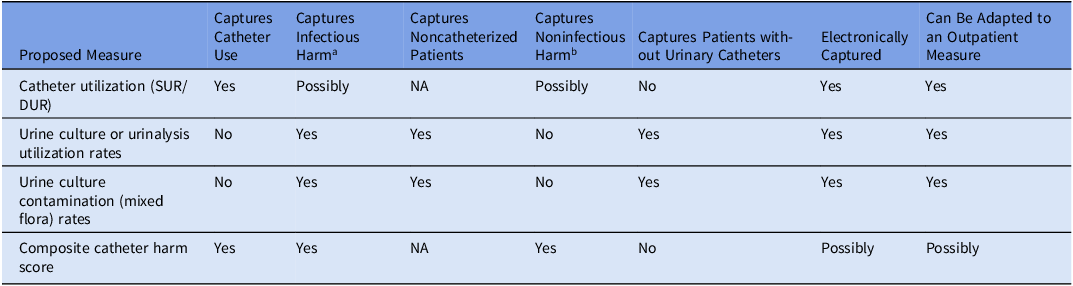
Table 1. Characteristics of Proposed Future Performance Metrics Related to CAUTI

Figure 1. Full spectrum of catheter harm.
 You have
Access
- 9
- Cited by
Healthcare-associated infection (HAI) surveillance and reporting has traditionally focused on device-associated infections, such as central-line–associated bloodstream infection (CLABSI), ventilator-associated pneumonia (VAP), and catheter-associated urinary tract infection (CAUTI). 1,Reference Page, Klompas and Chan2 Quality and safety advocates point out that the potential harms associated with invasive devices extend beyond infection alone, affecting quality of care and patient outcomes. For example, central lines are associated with thrombosis, occlusion, and venous scarring. Reference Jumani, Advani, Reich, Gosey and Milstone3,Reference Kovacich, Tamma and Advani4 Indwelling urinary catheters are associated with decreased mobility, increased risk of falls, and trauma to the genitourinary system. Reference Advani and Fakih5–Reference Schweiger, Kuster and Maag8 Endotracheal tubes and mechanical ventilation can be linked to volume and pressure-associated lung injury. Reference Klompas9 Other devices such as peripheral venous and arterial catheters may cause infectious harm, but they have not been addressed in large surveillance programs to date. Furthermore, non–device-associated infections have garnered less attention than device-associated infections; however, recent surveys suggest that they account for similar or greater numbers of infections than device-associated infections. For example, two-thirds of hospital-acquired pneumonias occur in nonventilated patients, and more than half of healthcare-associated urinary tract infections (HAUTIs) occur in noncatheterized patients. Reference Magill, O’Leary and Janelle10,Reference Strassle, Sickbert-Bennett and Klompas11 Current surveillance metrics overlook these additional sources of harms in hospitalized patients, so the national incidences of HAUTI, hospital-onset bacteremia (HOB), and nonventilator pneumonia (NV-HAP) are unknown. 1,Reference Calderon, Kavanagh and Rice12,Reference Waters, Daniels and Bazzoli13 Additionally, our current surveillance methods for device-related infections involve manual chart review and complex definitions, which have led to significant workload and require infrastructure support. Furthermore, rates may be affected by common documentation errors.
In this commentary, we highlight CAUTI as an example of the strengths and limitations of the current emphasis on device-associated infection surveillance, describe emerging National Healthcare Safety Network (NHSN) metrics, and we recommend strategies to identify healthcare-associated patient harm to capture the array of preventable device-associated harms (in addition to device-associated infections) and non–device-associated HAIs as necessary precursors to developing comprehensive strategies to prevent, detect, and manage them.
The evolution of CAUTI metrics
Precisely defining a urinary tract infection (UTI), whether a CAUTI or nondevice UTI, is a significant challenge in evaluating CAUTI prevention efforts. The current NHSN CAUTI definition relies heavily on the presence of a positive urine culture and documented fever in a catheterized patient within the infection window, Reference Advani, Gao and Datta14 making the diagnosis of NHSN CAUTI event susceptible to the prevalence of fever and changes in testing practices over urinary catheter care and device stewardship. Reference Bardossy, Williams and Jones15 The standardized infection ratio (SIR), which calculates observed infections in relationship to predicted infections, is a metric widely used to compare a hospital’s performance to a national benchmark based on a baseline period. Reference Advani and Fakih5,Reference Pepe, Maloney and Leung16 Although valuable, the SIR does not adequately account for local factors such as reductions in low risk catheter use due to unit-specific interventions. Reference Pepe, Maloney and Leung16,Reference Fakih, Huang and Bufalino17 For example, interventions that focus on reducing catheter use may decrease catheter days (the denominator) but leave behind catheterized patients with higher risk of CAUTI, thus resulting in a higher measured surveillance CAUTI rate. Furthermore, manual chart review and multidimensional definitions in surveillance methods introduce the risk of error and bias Reference Fakih, Greene and Kennedy18 and shift the emphasis to reducing measured NHSN CAUTIs above reducing catheter harms experienced by patients. Reference Bardossy, Williams and Jones15 One proposal to improve patients’ clinical outcomes is developing performance metrics to capture clinically significant harms (or the potential for harms) to provide actionable information for facilities. Reference Advani and Fakih5 We describe 2 clinical vignettes to highlight noninfectious and infectious harms that are not captured by current CAUTI metrics.
Vignette 1
A 75 year-old-man with a history of hypertension was admitted to an acute-care hospital for worsening back pain. While undergoing additional work-up, his pain was managed with opioids. On day 3, he developed urinary retention, for which the clinician ordered the placement of an indwelling urinary catheter. Unfortunately, the patient’s assigned nurse was not properly trained in catheter insertion—particularly for older men with higher risk for difficult urinary insertion due to benign prostatic hypertrophy—resulting in a traumatic hematuria and excessive discomfort for the patient. Due to absence of bacteriuria and fever, and no standard requirements or recommendations for documenting traumatic injuries from urinary catheter use, this adverse event was not included in the hospital’s CAUTI count, was not flagged for inclusion in the hospital’s quality review process (triggered by NHSN CAUTIs), and was not reported to the state health department or CMS.
Vignette 2
A 60 year old woman was admitted to an acute-care hospital from long-term care facility for management of a fall that caused to a hip fracture. An external urinary collection device was placed on admission due to immobility in the setting of acute fracture pain and chronic urinary incontinence, with the goal of preventing CAUTI by avoiding placement of an indwelling urinary catheter. On day 3 of the hospitalization, a urine culture was obtained for some discomfort with urination, interpreted by clinicians as dysuria (in the setting of an external urinary catheter whose placement and movement can irritate the female urethral meatus, particularly in postmenopausal women). A urine sample collected from the 3-day-old external catheter grew >100,000 colony-forming units per milliliter (CFU/mL) of Escherichia coli, for which she received 7 days of oral ciprofloxacin. The case did not meet the NHSN CAUTI definition due to absence of indwelling urinary catheter. This case was not reported, yet this was an instance of inappropriate urine testing. The patient had another likely and reversible cause of urethral meatus irritation than UTI, urine was collected from an external catheter that had been in place for days, from this postmenopausal older female patient with a high baseline likelihood of asymptomatic bacteriuria. Ideally, this inappropriate antibiotic treatment—by initial antibiotic selection as well as starting an antibiotic in response to a positive urine culture collected by inappropriate method and indication—should have been flagged and reported for the purposes of quality improvement.
Proposal for metrics beyond CAUTI
Traditionally, CAUTI has been the focus of UTI prevention efforts by hospital infection prevention teams. However, if teams focus on the NHSN CAUTI metric alone, they may not be aware of the rates of inappropriate catheter use and care, urinalysis and urine-culture stewardship adherence, and urine-culture contamination rates. In this regard, we propose additional metrics so that facilities can better capture patient harms (Table 1).
Characteristics of Proposed Future Performance Metrics Related to CAUTI
Note. CAUTI, catheter-associated urinary tract infections; SUR, standardized utilization ratio; DUR, device utilization ratio. Color scheme: white: no; solid grey: yes; light grey: possibly.
a True infection, antibiotic use.
b Falls, deep vein thrombosis, insertion trauma.
Catheter utilization
Standardized utilization ratio (SUR) and device utilization ratio (DUR) are objective measures that capture overall catheter use and allow for some estimation of infectious and noninfectious harms. DUR is the ratio of catheter days to patient days for a specified period. SUR is the ratio of observed to predicted catheter days, is compared to a national benchmark, and is risk adjusted to allow comparisons across different populations and multiple hospitals. 19–Reference Abrantes-Figueiredo, Ross and Banach21
Urine test utilization
Although efforts to identify symptomatic UTIs continue, a hospital’s diagnostic performance can be evaluated by measuring urine-culture utilization rates (or urinalysis rates in outpatient settings), which can reflect urine test use in both catheterized and noncatheterized patients. Urine-culture utilization rates can be extracted from electronic medical records and can be risk adjusted, similar to blood-culture utilization rates. Reference Bates, Goldman and Lee22 Furthermore, electronic identification of patients with hospital-onset bacteriuria (similar to hospital-onset bacteremia) is possible.
Urine-culture contamination
Urine-culture contamination is usually reflected by the rate of mixed flora in urine cultures, the incidence of which is increasing in inpatient and outpatient settings (>40%). Reference Whelan, Nelson and Kim23 Contaminated or mixed-flora (usually defined as ≥3 species in a urine culture) urine-culture rates often reflect specimen collection, transport, and storage practices. They can pose a diagnostic challenge to clinicians due to false-positive or false-negative test results. Measuring urine-culture contamination is important for the same reasons as measuring blood-culture contamination: to improve collection, transport, and diagnostic accuracy and to reduce overuse of additional tests and antibiotics. Reference Alahmadi, Aldeyab and McElnay24,Reference Garcia, Spitzer and Beaudry25
Composite measure of catheter harm
Catheter harm encompasses both infectious complications (eg, catheter-associated bacteriuria, infection) and noninfectious catheter-related complications (eg, urethral injury, pain, falls, catheter obstruction, deep vein thrombosis). Reference Patel, Advani and Kofman26 Future research is needed to develop and validate a composite measure for catheter harm that reflects a comprehensive picture of catheter care and urine testing while allowing for electronic capture of data elements (Fig. 1). Reference Fakih and Advani27
Full spectrum of catheter harm.
Parallels with pneumonia, ventilator harm, vascular device-associated infections and harms, and hospital-acquired sepsis
As with CAUTI, there are similar concerns with underdetection of device-associated harms, non–device-associated infections (of the respective organ system), inappropriate diagnostic testing, and overuse of antibiotics for colonization rather than infection with many of the other HAIs that hospitals are currently required to report to NHSN. A number of emerging surveillance metrics and reporting initiatives being stewarded by NHSN are starting to address these concerns.
Ventilator-associated harm
In the realm of ventilator-associated harm, the Centers for Disease Control and Prevention (CDC) developed the ventilator-associated event (VAEs) metric. The VAE metric was specifically designed to broaden the scope of surveillance to include noninfectious harms in addition to pneumonia. Reference Klompas9 Indeed, pneumonia only accounts for ∼33% of VAEs. The rest are mostly attributable to volume overload, acute respiratory distress syndrome (ARDS), and atelectasis. Comprehensive programs to prevent VAEs consequently include measures designed to avoid noninfectious harm from ventilators such as avoiding mechanical ventilation when possible, minimizing sedation, facilitating early extubation, maintaining euvolemia, and using low-tidal-volume ventilation, in addition to pneumonia prevention measures such as elevating the head of the bed, providing comprehensive oral care including toothbrushing, and maintaining ventilator circuits. Reference Klompas28,Reference Klompas, Branson and Cawcutt29
Nonventilator pneumonia
The CDC is currently exploring novel metrics to capture nonventilator hospital-acquired pneumonia (NV-HAP). NV-HAP accounts for ∼65% of all hospital-acquired pneumonia. It is associated with morbidity and mortality rates similar to VAP, yet hospital surveillance programs and prevention guidelines traditionally have not addressed NV-HAP. The CDC has sponsored the ongoing development of a potentially automatable surveillance definition for NV-HAP to facilitate widespread, objective, and efficient surveillance. Reference Ji, McKenna and Ochoa30,Reference Jones, Sarvet and Ying31 The latest version of the Compendium: 2022 Updates on prevention of hospital-acquired pneumonia now includes a section on preventing NV-HAP, highlighting the importance of rigorous oral care, mobilizing patients, and identifying patients with dysphagia so that additional measures to prevent aspiration can be implemented. Reference Klompas, Branson and Cawcutt29
Vascular device-associated infections and harms
The NHSN has a forthcoming metric on hospital-onset bacteremia that will broaden bloodstream infection surveillance to include all hospital-onset bacteremia and fungemia cases, not just those associated with central lines. This metric considers additional indwelling vascular devices that may serve as foci for bacteremia besides central lines, including arterial catheters, midline catheters, and peripheral intravenous catheters. Reference Buetti, Marschall and Drees32 More broadly, some HAIs may lead to secondary bacteremia independent of an intravascular catheter, and they are also important sources of morbidity and mortality that merit attention and prevention. As with CAUTI, contamination of culture is a risk with the potential for triggering unnecessary and harmful treatments. Reference Doern, Carroll and Diekema33 Noninfectious risks, such as catheter thrombosis, may lead to obstruction and malpositioning that can result in vascular injuries. These noninfectious risks are more appreciated with vascular catheters than with urinary catheters and also can increase the risk for infection. Reference Jumani, Advani, Reich, Gosey and Milstone3 Lastly, although only 1 urinary catheter or 1 endotracheal tube is usually in place, many patients may have 1 or more concurrent lines for vascular access. Reference Jumani, Advani, Reich, Gosey and Milstone3 This can further increase the risk of harms to patients from vascular catheters.
Hospital-acquired sepsis
Similar considerations described below have informed the NHSN’s surveillance definition for adult sepsis events. Reference Rhee, Dantes, Epstein and Klompas34 Sepsis is present at some time during hospitalization in 35%–50% of hospital deaths and costs Medicare alone >$22 billion per year. Reference Rhee, Dantes and Epstein35 Notwithstanding its outsized impact on patient outcomes and costs, there is currently no systematic reporting of sepsis overall or hospital-acquired sepsis in particular to public health authorities. An advantage of surveillance for hospital-acquired sepsis in particular is 2-fold: (1) by definition, it focuses surveillance on a subset of patients with severe HAIs and (2) it captures many serious infections that are currently not-reportable including non–device-associated UTIs that lead to secondary sepsis, NV-HAP, surgical-site infections (both those that are currently reportable to CMS and those that are not), and hospital-onset bacteremia cases. The scope of hospital-acquired sepsis surveillance is broader than hospital-onset bacteremia insofar as only 15%–20% of patients with sepsis or septic shock are bacteremic. Reference Rhee, Dantes and Epstein35
The CDC adult sepsis event definition is designed to enable automated surveillance using electronic health record (EHR) data alone. It defines a sepsis event as the combination of suspected infection (as suggested by a blood culture draw, initiation of antibiotics, and continuation of antibiotics for at least 4 days) and concurrent organ dysfunction (initiation of vasopressors or mechanical ventilation, rise in creatinine or bilirubin, or drop in platelets). A side-by-side comparison of hospital-onset adult sepsis event surveillance with traditionally reportable HAIs in 3 hospitals revealed that hospital-onset adult sepsis events detected twice as many infections compared to currently reportable HAIs and identified more serious events than currently reportable HAIs insofar as reflected by higher mortality rates. Reference Page, Klompas and Chan2
Conclusion
In conclusion, we propose the continued development and validation of performance metrics to capture a comprehensive picture of infectious and noninfectious patient harms associated with devices and to broaden surveillance to include non–device-associated serious infections. Reference Klompas, Branson and Cawcutt29,Reference Magill, Klompas and Balk36 Future research in surveillance metrics should focus on efficient and accurate means of identifying HAIs in all populations, evaluating the utility of biomarkers as infection flags, methodologies to differentiate between colonization versus active infection, and strategies to automate surveillance using EHR data. Surveillance data should be actionable to make improvements that avert patient harm. Accordingly, the device utilization ratio may represent a more useful tool than just the HAI rate. Addressing inappropriate practice patterns and leveraging the laboratory’s role in improving testing can help reduce unnecessary testing and unnecessary treatment.
Acknowledgments
We thank Valerie Deloney, MBA, at the Society for Healthcare Epidemiology of America for contributing to this article.
Financial support
No financial support was provided relevant to this article. S.D.A is funded by NIH-NIDDK (K12DK100024) for her effort.
Competing interests
S.A. reports grant funding from the National Instiutes of Health (NIH) National Institute of Diabetes and Digestive and Kidney Diseases (NIDDK), the CDC (grant nos. 5U54CK000616-02 and SHEPheRD 75D30121D12733-D5-E003), and National Institute on Aging (NIA) Pepper Older Americans Independence Centers (OAIC) (National Institute on Aging grant no. P30AG028716) in addition to consulting fees with the Infectious Diseases Society of America (IDSA), bioMerieux, Locus Biosciences, Sysmex America, GlaxoSmithKline, and participation on a bioMerieux Advisory Board, and past ownership of Infection Prevention Education Consulting (IPEC) Experts, LLC. JeM. reports grant funding from the Agency for Healthcare Research and Quality (AHRQ), CDC, Ralph E. Wilson Foundation, and Veteran’s Affairs Health Services Research and Development Service (VA HSR&D). M.K. received grant funding from the CDC and the AHRQ plus royalties from UpToDate, Inc. K.A.C. has received honoraria from Becton Dickinson, CloroxPro, and Elsevier. All other authors report no conflicts of interest related to this article.