Introduction
Outdoor music festivals represent a unique subset of mass gatherings (MG) and are characterized by large crowds assembling to experience musical performances lasting one or several days. Some music festivals include the option to camp within the festival area in more or less primitive settings. Reference Lund and Turris1-Reference Ounanian, Salinas, Shear and Rodney4
Adverse health effects at music festivals due to alcohol, recreational drugs, limited hygiene, and various weather conditions has previously been reported Reference Milsten, Seaman, Liu, Bissell and Maguire5,Reference Friedman, Plocki and Likourezos6 and injuries may be frequent. Reference Lund and Turris1-Reference Ounanian, Salinas, Shear and Rodney4,Reference Friedman, Plocki and Likourezos6 Festivals and other MGs sometimes provide on-site medical health care to manage potential health disasters and reduce load on local health resources.
Few studies have reported or discussed medical supplies at MGs. Reference Ounanian, Salinas, Shear and Rodney4,Reference Sullivan, Kleinman and Suner7-Reference Blandford and Dunlop10 Medical supplies are essential for up-to-date care of music festival participants. To the authors’ knowledge, only one report from a music festival, dating back more than 40 years, has described detailed equipment usage including quantitative data on disposable medical supplies. Reference Blandford and Dunlop10
Roskilde Festival is an annual outdoor music festival in Denmark, carried out since 1971. The multi-day duration of the festival, an attendance of approximately 130,000 people, with previously described injury and illness patterns, provides an ideal basis for an updated investigation on medical supply use. Reference Stagelund, Jans, Nielsen, Jans and Wildgaard3
Detailed and comprehensive data on medical supply use compared to injury and illness presentations at a large music festival can aid estimation of supply demands for future music festivals and other types of MGs as well.
The study objective was to describe the amount of disposable medical supplies used by the Medical Health Care Organization (MHCO) at the Roskilde Festival 2016 and compare the use of supplies to injury and illness patterns (type and frequency of injury or illness, overall patient presentation rate [PPR] per 1,000 attendees, and transport-to-hospital rate [TTHR] per 1,000 attendees were reported).
Background
The Roskilde Festival 2016 had a duration of nine days with over 130,000 attendees, volunteers, and performers. 11 The festival area was comprised of a music area (162,000m2) surrounded by a camping area (approx. 770,000m2). The festival area was fenced off. Concerts were primarily performed during the last four days of the festival in the central music area.
Festival Medical Supply Storage
The MHCO at Roskilde Festival had medical supplies distributed at three first aid stations which provided storage in local depots during the festival for both the first aid stations and mobile doctor and nurse teams. The stored products were similar at all three local depots. A festival medical logistics manager supervised the storage during the festival. Only staff within the MHCO used supplies from the festival medical storage during the festival. Supplies were provided from the public health care system. All services provided to the attendees and volunteers were free of charge.
The Medical Health Care Organization
The MHCO at Roskilde Festival provides medical care to all attendees, volunteers, and performers within the fenced off festival area. The full MHCO setup at Roskilde Festival has been described previously. Reference Stagelund, Jans, Nielsen, Jans and Wildgaard3
The MHCO setup at the Roskilde Festival 2016 consisted of both first aid stations and mobile units (Figure 1). Each first aid station consisted of a large tent with clean tap water, light, and heating. First aid stations had three treatment areas: an area for minor injuries and illnesses, an area for injuries and illnesses requiring consultation by a doctor, and an observation area. First aid stations were staffed by trained first aid volunteers, doctors, and nurses. The observation area, for patients unfit to return to the festival but not requiring hospital admission, was staffed during evening and night-time by an anesthetist and a nurse anesthetist.
Location of Resources in the Medical Health Care Organization at the Roskilde Festival 2016.
Abbreviation: EMS, Emergency Medical Services.

Mobile first aid teams were manned by trained first aid volunteers. Mobile doctor and nurse teams were maned by doctors and nurses and could provide advanced first aid, including Advanced Life Support.
During the festival, no less than one ambulance staffed with paramedics from the regional Emergency Medical Services was available on-site all 24 hours. Activities within the MHCO along with communication with the public health care system were coordinated at the Roskilde Festival Emergency Headquarter.
Methods
Prior to the festival, the study was protocolled, and involved parties within the MHCO as well as festival medical logistics were informed of the research project. Only approval from Danish Data Protection Agency (Valby, Copenhagen, Denmark; no. 2008-58-0020) was necessary due to the non-interventional design.
This study is a prospective observational study. The study population included all registered injured or ill attendees, volunteers, and performers at Roskilde Festival 2016. All patient presentations to the MHCO during the nine festival days were included in the study.
The primary variables investigated were types and amount of disposable medical supplies used by the MHCO during the festival. Excluded were all types of medicine, as this has been covered elsewhere. Reference Stagelund, Andersen, Søe, Roslind and Wildgaard12
Medical Supplies and Categorization of Medical Supplies
Prior to the Roskilde Festival 2016, all disposable medical supplies in the festival medical storage were registered in a database by the festival medical logistics manager. For each product, information on type, amount, trade name, and product description were registered. At the end of the festival, excess supplies from bags and cabinets were returned to the storage. Usage during the festival was calculated by the difference in storage supply amount before and after the festival.
For this analysis, only used health-related and medical supplies were included.
Disposable medical supplies were grouped in five categories:
-
1. Supplies for medical emergencies, according to the ABCDE-principle;
-
2. Supplies for minor injuries;
-
3. Diagnostic equipment;
-
4. Personal protection equipment; and
-
5. Hygiene and miscellaneous items.
Patient Presentations
A list of pre-defined injury and illness categories has been used since the Roskilde Festival 2012 for patient presentation categorization. Reference Stagelund, Jans, Nielsen, Jans and Wildgaard3 The same framework for prospective data collection on patient presentations was applied at Roskilde Festival 2016. Illnesses or injuries treated by first aid staff or nurses without consulting a doctor were defined as “minor illnesses and injuries.”
For these more minor health problems, only the type of injury or illness was registered on a patient presentation list. Presentations needing a more thorough examination or treatment by doctors or nurses were recorded on a medical chart. Similar to intra-hospital documentation practice in Denmark, medical supplies for treatment of injuries and illness were not routinely registered on patient presentation lists or medical charts.
Documentation was collected daily during the festival. Data on injury or illness type were extracted from the medical records by an on-site team of doctors and medical students, and classified into the pre-defined categories in the database.
The 105 pre-defined categories were condensed in the database. First, the pre-defined categories were sorted in to three major groups:
-
1. Potential or manifest medical emergency;
-
2. Minor injury; and
-
3. Minor illness.
Only categories from patient presentations recorded on a medical chart could be included in the potential or manifest medical emergency group.
Then, pre-defined categories with overlapping features in clinical presentation, severity, or pathophysiology were condensed within each of the three major groups. After condensation, 21 categories were grouped as potential or manifest medical emergencies, 19 categories grouped as minor injuries, and 23 categories grouped as minor illness.
Data Analysis
Descriptive statistics were used for disposable medical supply use and frequency of different patient presentations. Data are presented in counts and percentages. For descriptive statistics, Microsoft Excel Office 365, 2019 (Microsoft Corporation; Redmond, Washington USA) and SPSS version 22 (IBM Corp.; Armonk, New York USA) were used.
Results
Patient Presentations
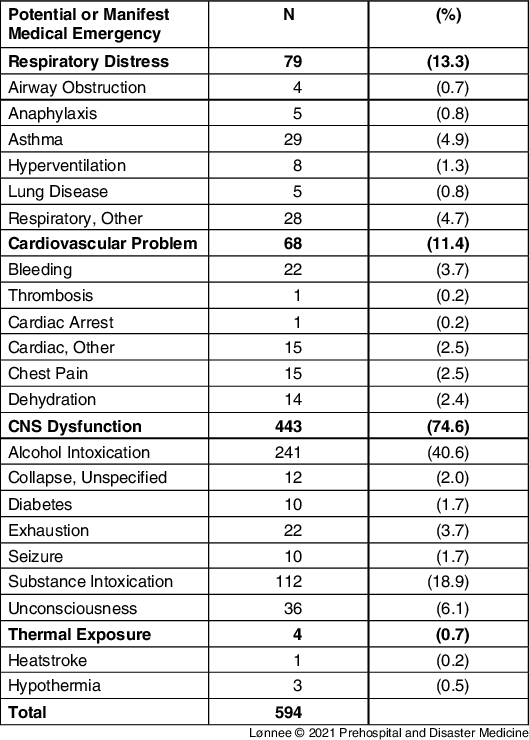
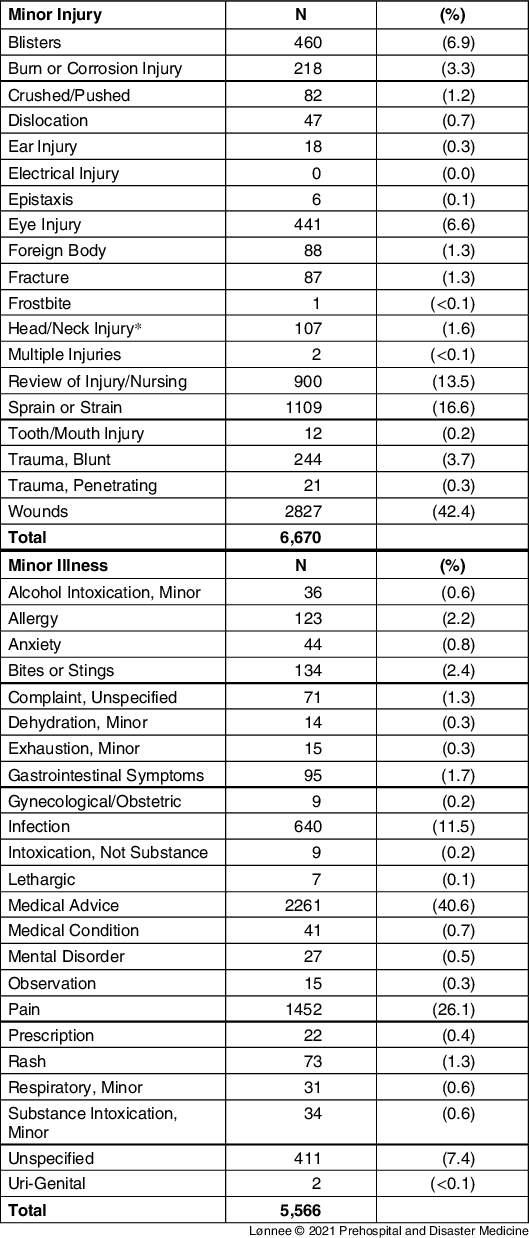
A total of 12,830 patients presented to the MHCO from June 25 through July 3, 2016 with 279 patients transported to hospital after contact with the MHCO. Overall PPR was 99.0/1,000 attendees and TTHR was 2.1/1,000 attendees. Patient presentations were distributed with 594 (4.6%) potential or manifest medical emergencies, 6,670 (52.0%) minor injuries, and 5,566 (43.4%) minor illnesses. The most frequent potential or manifest medical emergencies (Table 1) were, in descending order, alcohol intoxication, substance intoxication, and other respiratory causes. The most frequent presentations for minor injuries (Table 2) were wound, sprain or strain, and review for injury/nursing need, respectively. Among minor illnesses (Table 2), seeking medical advice was the most frequent presentation, followed by pain and infection.
Frequencies of Potential or Manifest Medical Emergencies

Abbreviation: CNS, central nervous system.
Frequencies of Minor Injuries and Illnesses

* Low-energy trauma to the head/neck region.
Medical Supplies
A total of 104 different types of disposable medical supplies were used during the festival.
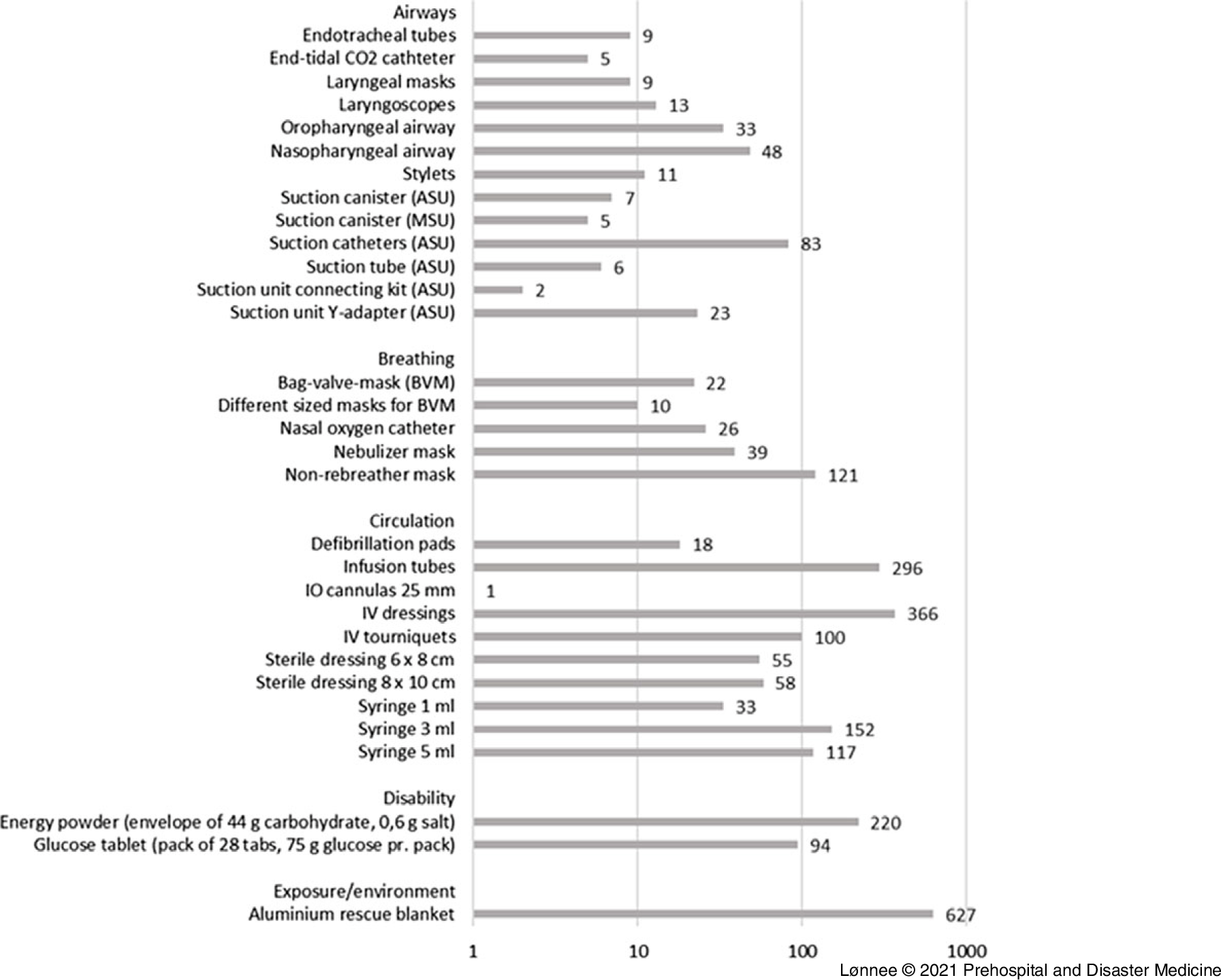
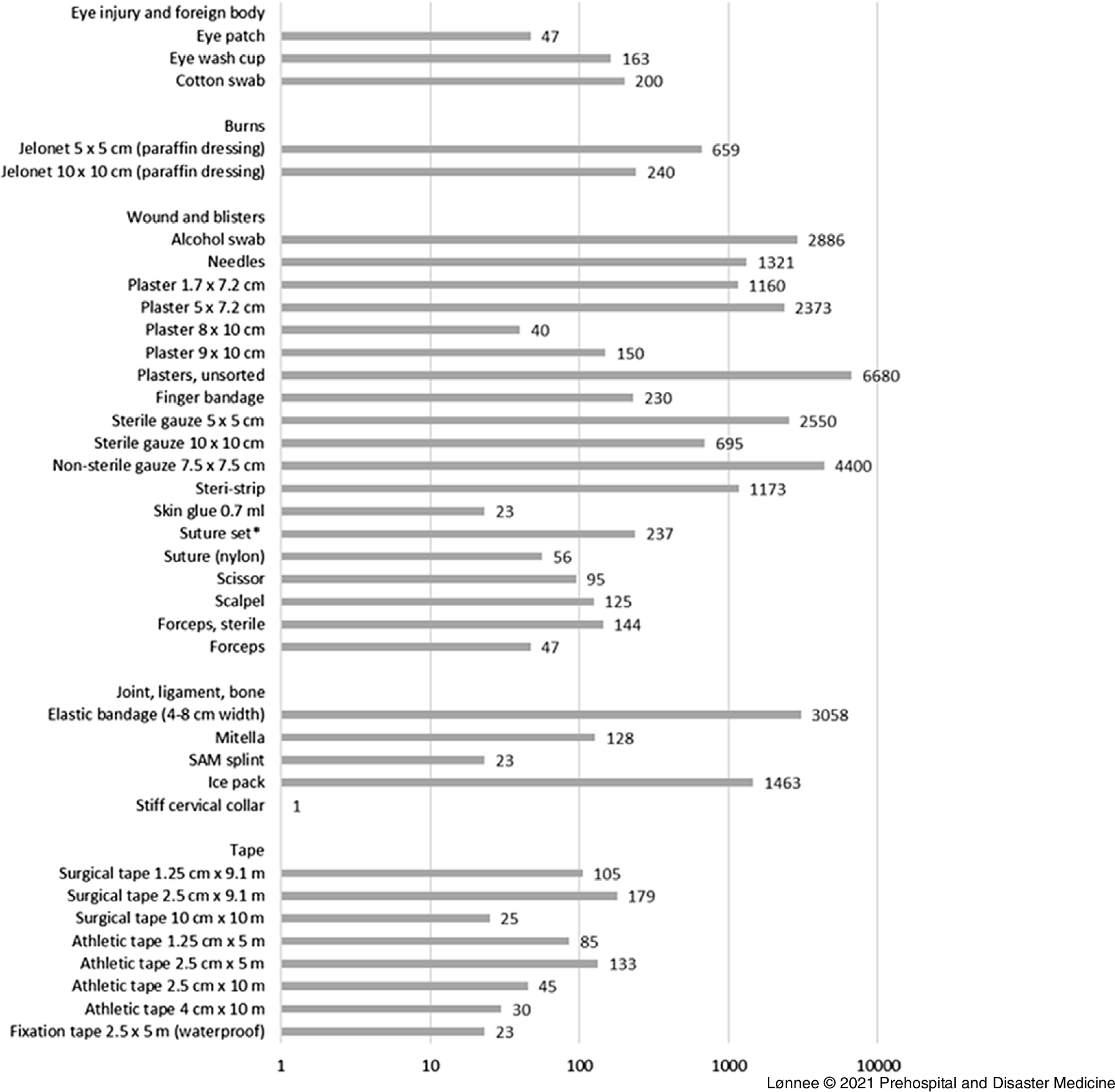
The most frequently used supplies in the group of supplies for medical emergencies (Figure 2) were 627 aluminum rescue blankets (used for cold participants and for preventing hypothermia), non-rebreather masks for breathing problems (n = 121), and suction catheters for an automatic suction unit (ASU) for airway management (n = 83), respectively. For minor injuries (Figure 3), observed was the use of unsorted plasters (n = 6,680), non-sterile gauze 7.5x7.5cm (n = 4,400), and elastic bandages (n = 3,058). In the diagnostic equipment group, the most frequently used supplies were blood glucose test strips (n = 1,155), electrocardiogram electrodes (n = 960), urinary test strips (n = 400), tongue spatulas (n = 350), funnels for an ear thermometer (n = 100), digital thermometer covers (n = 77), and funnels for an otoscope (n = 75).
Supplies for Medical Emergencies Used at the Roskilde Festival 2016.
Abbreviations: ASU, automatic suction unit; BVM, bag-valve-mask; ECG, electrocardiogram; IO, intraosseous; IV, intravenous; MSU, manual suction unit.

Supplies for Minor Injuries Used at Roskilde Festival 2016.
*Consisting of tray, needle holder, scissors, and disinfection swabs.

In the personal protection equipment group, the most frequently used supplies were non-sterile gloves (n = 1,185 pairs), sterile gloves (n = 189 pairs), single use scrub pants (n = 109) and scrub tops (n = 39) used for participants discharged with wet or otherwise unfortunate clothes, three-liter cannula disposal box (n = 25), small cannula disposal boxes for emergency bags (n = 25), and 15-liter waste bins for sharp objects (n = 5).
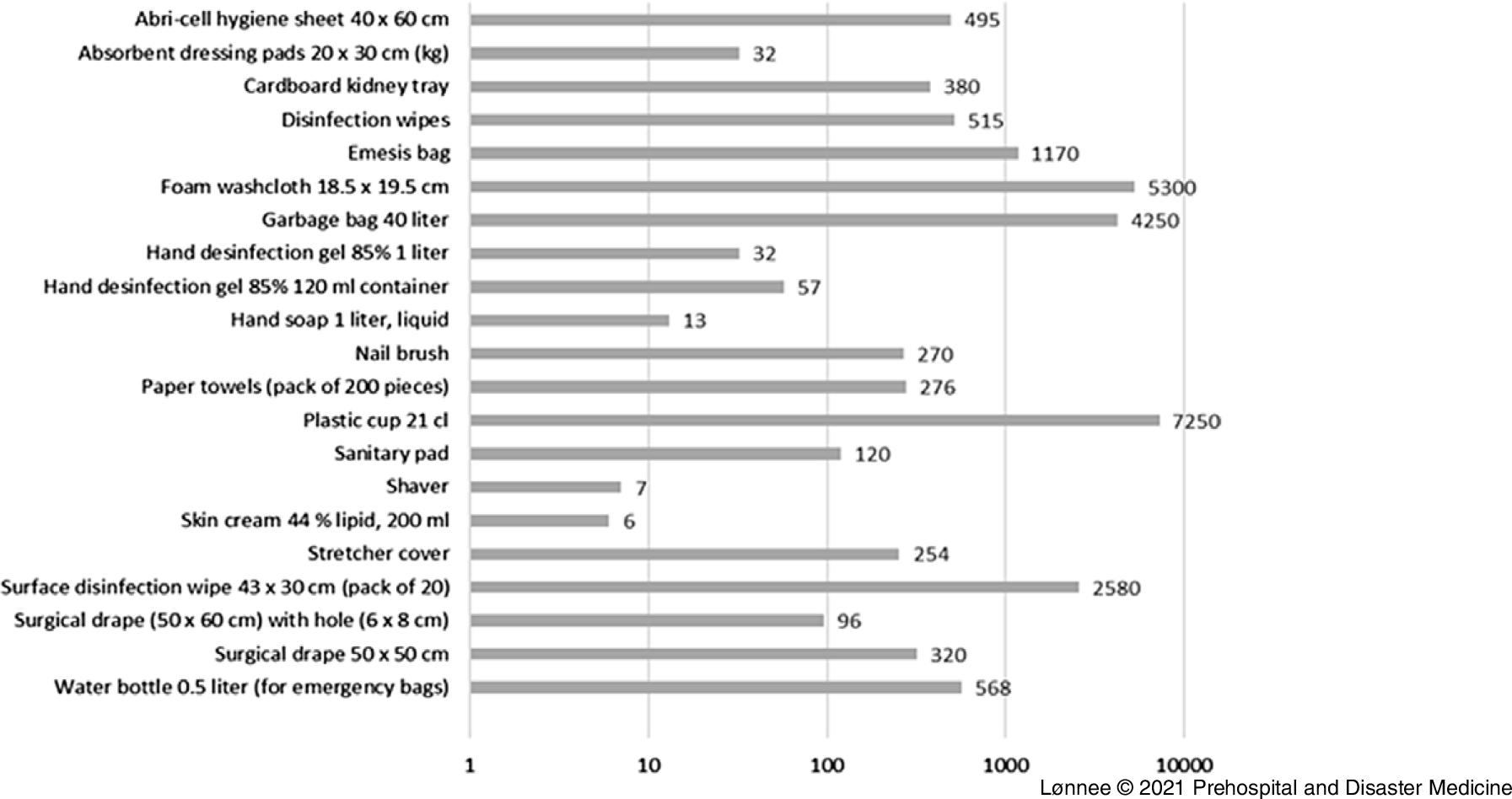
Supplies for minor injuries such as band-aids and bandages are presented in Figure 3. In the hygiene and miscellaneous items group (Figure 4), the most frequently used supplies were paper towels (n = 55,200), plastic cups (n = 7,250), and foam washcloths (n = 5,300). Furthermore, 13 liters of liquid hand soap were used. A total of 39 liters 85% hand disinfection gel were used.
Hygiene and Miscellaneous Items Used at Roskilde Festival 2016.

Discussion
This study has gathered detailed and comprehensive information on the use of disposable medical supplies at a major music festival, the Roskilde Festival 2016. To the authors’ knowledge, no other study with a protocolled prospective data collection at a MG event has previously described use of medical supplies.
The PPR of 99.0/1,000 attendees at the Roskilde Festival 2016 is similar to the PPR reported at the Roskilde Festival 2012 and 2015. Reference Stagelund, Jans, Nielsen, Jans and Wildgaard3,Reference Stagelund, Andersen, Søe, Roslind and Wildgaard12 With several studies in the existing literature reporting PPRs around 5.0-20.0/1,000, the PPR at the Roskilde Festival may seem high. Reference Chapman, Carmicheal and Goode2,Reference Ounanian, Salinas, Shear and Rodney4,Reference Friedman, Plocki and Likourezos6,Reference Munn, Lund, Golby and Turris13,Reference Ackermann, Lahm and Pfohl14 Several potential causes to the high PPR at the Roskilde Festival have been discussed elsewhere. Reference Stagelund, Jans, Nielsen, Jans and Wildgaard3 It is reasonable to think that a high PPR accompanies a high use of medical supplies.
The rate of infection was 5.0% at the Roskilde Festival 2016. A similar infection rate of 7.6% was seen on the Roskilde Festival 2012. Reference Stagelund, Jans, Nielsen, Jans and Wildgaard3 It is likely that patients with unattended minor injuries (eg, wounds, blister, and burns) developed secondary infections during the festival. The areas of camping were located on cultivated fields. Dusty weather that particular year may have been a contributing factor to infections in the upper airways, indicated by the high use of tongue spatulas (n = 350). The high use of urinary test strips (n = 400) could be indicative of frequent infections in the urinary tract due to the general limited hygiene and sexual risk behavior at the festival. Reference Lim, Bowring, Gold, Aitken and Hellard15 Data from the Roskilde Festival 2015 suggested that infection was the predominant cause for issuing a prescription drug. Reference Stagelund, Andersen, Søe, Roslind and Wildgaard12
Suction catheters for an ASU (Figure 4) were the most frequently used supplies for airway management. The use may reflect frequent presentations with alcohol and substance intoxications, since these conditions are generally associated with higher risk of airway obstruction due to altered mental status and emesis. Reference Miro, Galicia and Dargan16 Based on experiences from several outdoor rock music festivals, Chapman, et al developed a guideline stating that suction equipment should be available at similar events. Reference Chapman, Carmicheal and Goode2
Overall, hygiene and miscellaneous items were the most used category of utensils, followed by supplies for minor injuries. The high volumes of used paper towels, foam washcloths (Figure 2), as well as supplies for wound, blisters, and for joint, ligament, and bone injuries (Figure 3) corresponded well with frequent presentations of minor injuries, such as wounds, sprain or strains, review of an injury/nursing need, and blisters (Table 2). In general, minor injuries predominated with 52.0% of all patient presentations.
Few other studies exist on medical supplies in relation to participants presenting at the on-site emergency room. This study shares some similarities with the 1971 Glastonbury Fair music festival (Pilton, Somerset, England) when comparing medical supply use and frequencies of different patient presentations. Reference Blandford and Dunlop10 But with more than 40 years apart, this comparison may not be fair.
However, this study excels as lack of data and missing records on patient presentations were minimized due to the history of prospective uniform data collection with on-site data management, a framework that had been applied previously at the Roskilde Festival. Reference Stagelund, Jans, Nielsen, Jans and Wildgaard3,Reference Stagelund, Andersen, Søe, Roslind and Wildgaard12
Limitations
To the authors’ knowledge, there is no consensus on how to report medical supplies and patient presentations in the literature on MGs. This complicates direct comparison of these results to those of other studies on music festivals and MGs, in particular for multi-day events. Several limitations of this study can be addressed when assessing the use of utensils by the MHCO.
Disposable medical supply usage was calculated based on difference in amount before and after the festival for each type of supply. As supplies stored in local storages may not have been returned after the festival, a false increase in use may result. In addition, a medical supply unpacked does not necessarily equal a medical supply used (eg, defibrillation pads) but denotes medical supply that must be restocked.
Though all patient presentations to the MHCO were documented, supplies were not routinely recorded with regards to the specific injury or illness for which they were used. This would have been ideal in order to tell exactly how supplies were used, but this is not even possible in hospital emergency units. Such a documentation process would be time consuming and would probably not accommodate the necessary pace for expediting patients to the MHCO.
This study does not address gaps in available disposable equipment and to what extent this was limiting staff in treating patients. However, due to the prospective data collection, quantitative usage could be calculated for an extensive selection of disposable medical supplies. Intravenous (IV) cannulas were the only supply excluded from analysis, since additional IV cannulas acquired during the festival were not registered properly.
Although the presented disposable medical supplies represent a unique selection based on local medical needs at the Roskilde Festival, this selection included many of the supplies recommended for MGs in other studies. Reference Chapman, Carmicheal and Goode2,Reference Sullivan, Kleinman and Suner7-Reference Leonard, Petrilli and Noji9 Frequencies of patient presentations seem roughly stationary at the Roskilde Festival compared to patient presentations from the Roskilde Festival 2012. Reference Stagelund, Jans, Nielsen, Jans and Wildgaard3 It is reasonable to assume that supply use corresponds to patient presentations. Thus, these results could provide a descriptive framework for supply demands at future music festivals based on relative usage of different supplies compared to patient presentation distribution.
Though tight economic budgets might be a barrier, electronic recording systems could be useful in answering questions on how medical supplies are used in the MHCO at future music festivals and other MGs as well.
Conclusion
Relative usage of disposable medical supplies corresponded with frequencies of different patient presentations to the MHCO. These results provide a descriptive framework for supply demands at future music festivals.
Conflicts of interest
none