Background
Professor Pietro Tullio (1881–1941) was a director of the Laboratory of Experimental Physiology in Bologna during the early twentieth century. He aimed to follow in the footsteps of other great Italian physiologists who had studied the ear. This included Domenico Cotugno, who first detailed a description of the aqueducts of the vestibule and cochlea in the seventeenth century, and Filippo Lassana, who described the role of the cerebellum and semicircular canals in the eighteenth century. However, the inspiration behind his experimental studies was the work of Frenchman Jean Flourens (1794–1867). Flourens pioneered the method of creating localised lesions in the brains of pigeons and rabbits, and then describing the effect of the lesion on the animal. He concluded that the main divisions of the brain were responsible for different functions. Of interest to Professor Tullio, Flourens had also discovered that pigeons will make sudden and impetuous movements in the same plane as an injured semicircular canal.
Tullio observed that there were two main methods of studying the nervous system. The first method involved removing a part and then deducing the singular function from the singular deficiency, as Flourens did. The second method, as chosen by Tullio, consisted of the direct stimulation of these parts.
Tullio undertook most of his experiments on live pigeons. Pigeons had already been established as the classical test animal for labyrinth physiology because of their favourable anatomy, especially in the semicircular canals. It was also well documented that head nystagmus was more prominent than ocular nystagmus in the pigeon, making observations of responses easier.Reference Huizinga1
After 20 years of research, Tullio presented Some Experiments and Considerations on Experimental Otology and Phonetics at the meeting of the Societa dei Cultori delle Scienze Mediche e Naturali in 1929.Reference Tullio2 These experiments described the phenomenon (which now carries his name) of sound-induced vertigo and/or eye movements. This work was nominated for the Nobel Prize in Physiology or Medicine in 1932.
Tullio experiments
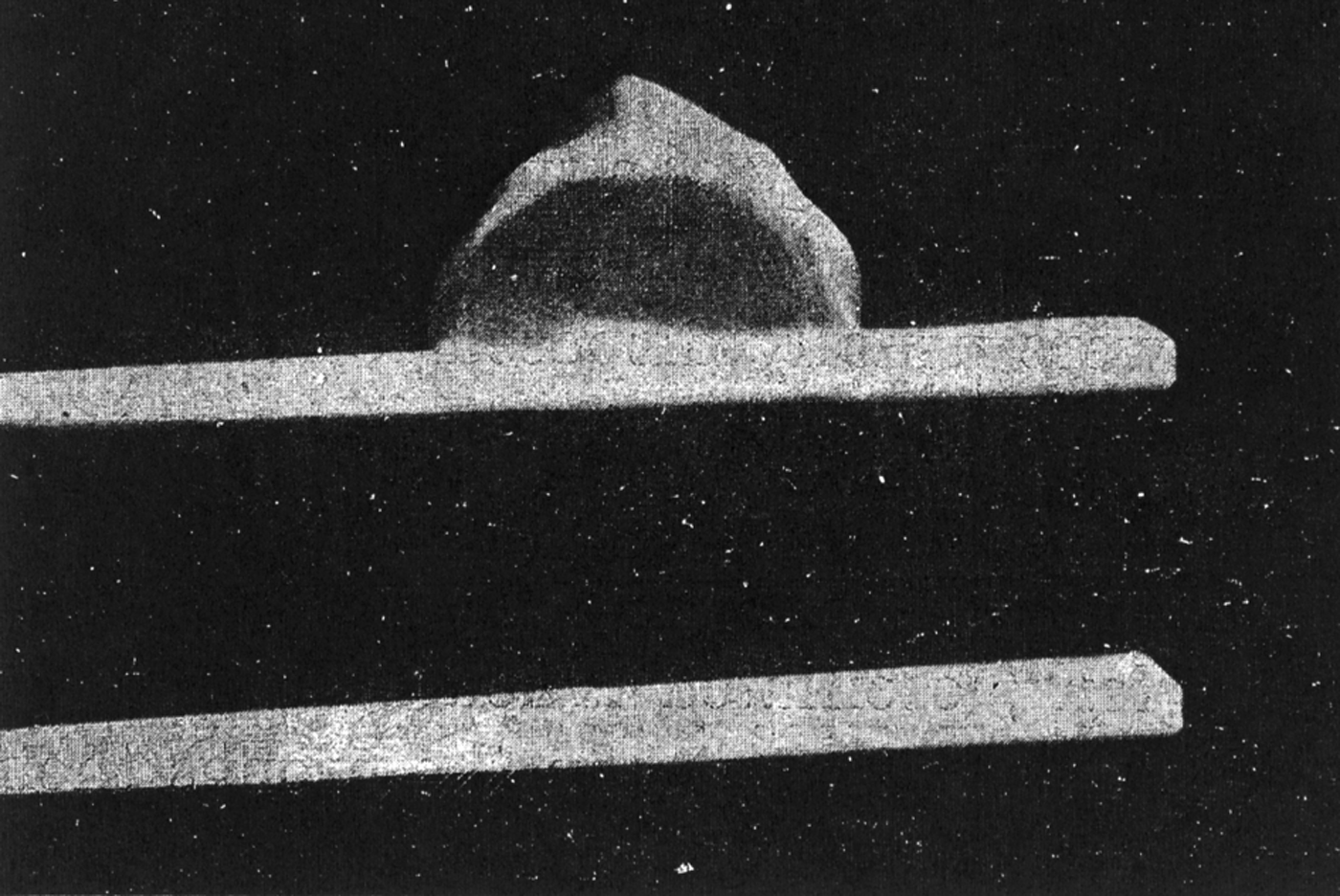
Early experiments included the study of water drops placed onto the surface of tuning fork prongs (Figure 1). The vibrations of the water drops were found to form isochrone patterns on the tuning fork. The vibration varied according to the intensity of the sound and the size of the water drop. From this Tullio concluded that the saccular organs must vibrate in response to the vibration of the stapes.
Vibrating segments formed in a soap bubble on a tuning fork.Reference Tullio2

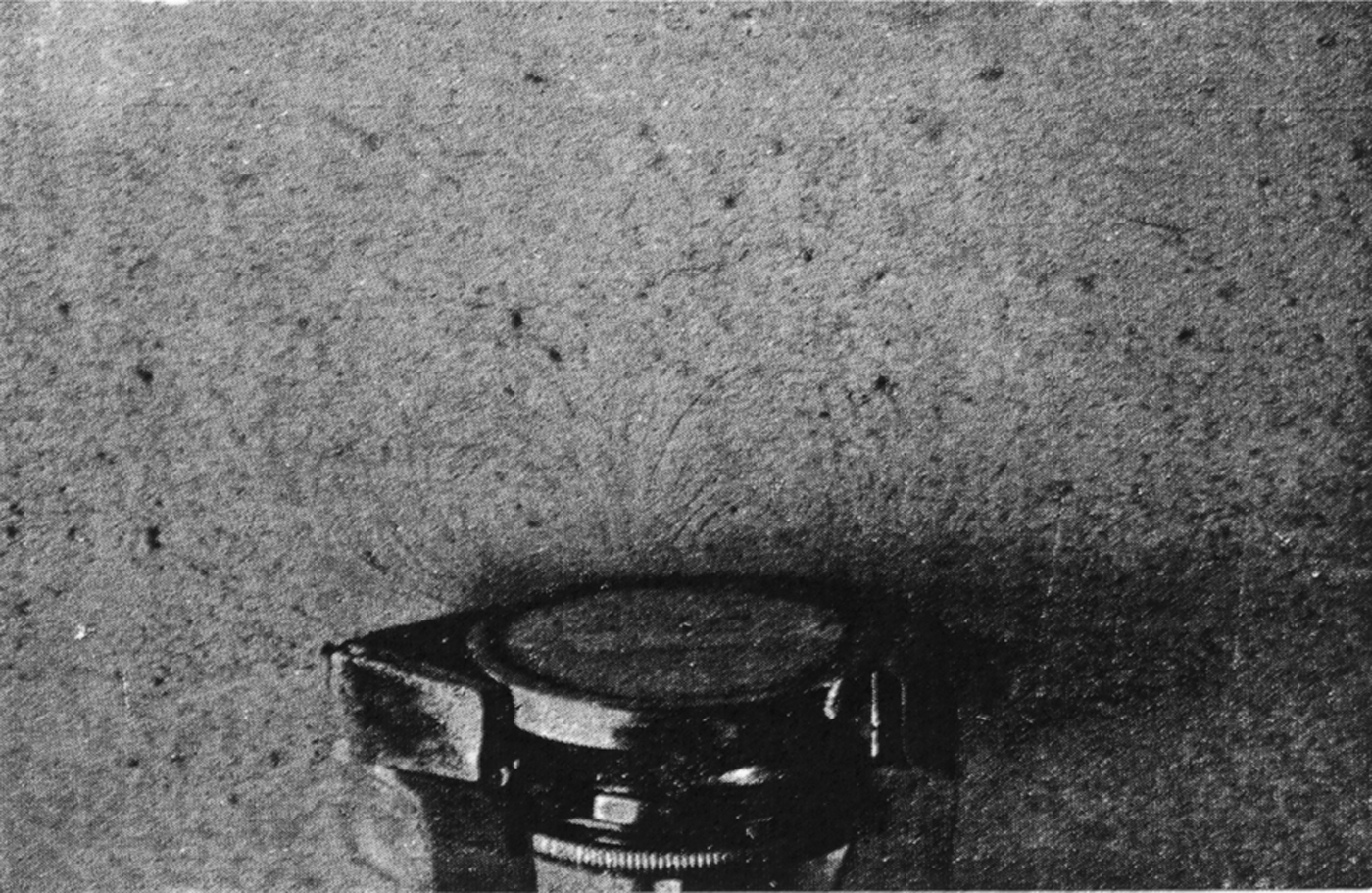
In order for the simple pendular movement of sound to be perceived, there must be a displacement always in the same direction. Tullio mixed water and particles of the same specific weight, for example, microscopic particles of aluminium. He observed that currents were formed by the particles in front of the vibrating surface. The particles rotated on their own axes, flowing in a perpendicular direction to the vibrating surface and following the lines of an acoustic force (Figure 2). If the intensity of the sound was increased, the particles stopped momentarily and then suddenly took up their motion in a reversed direction, flying from the centre to the periphery, as if repulsed by the sound. Such currents also occurred in the interior of the drops.
Currents formed on the surface of a liquid in contact with a vibrating membrane.Reference Tullio2
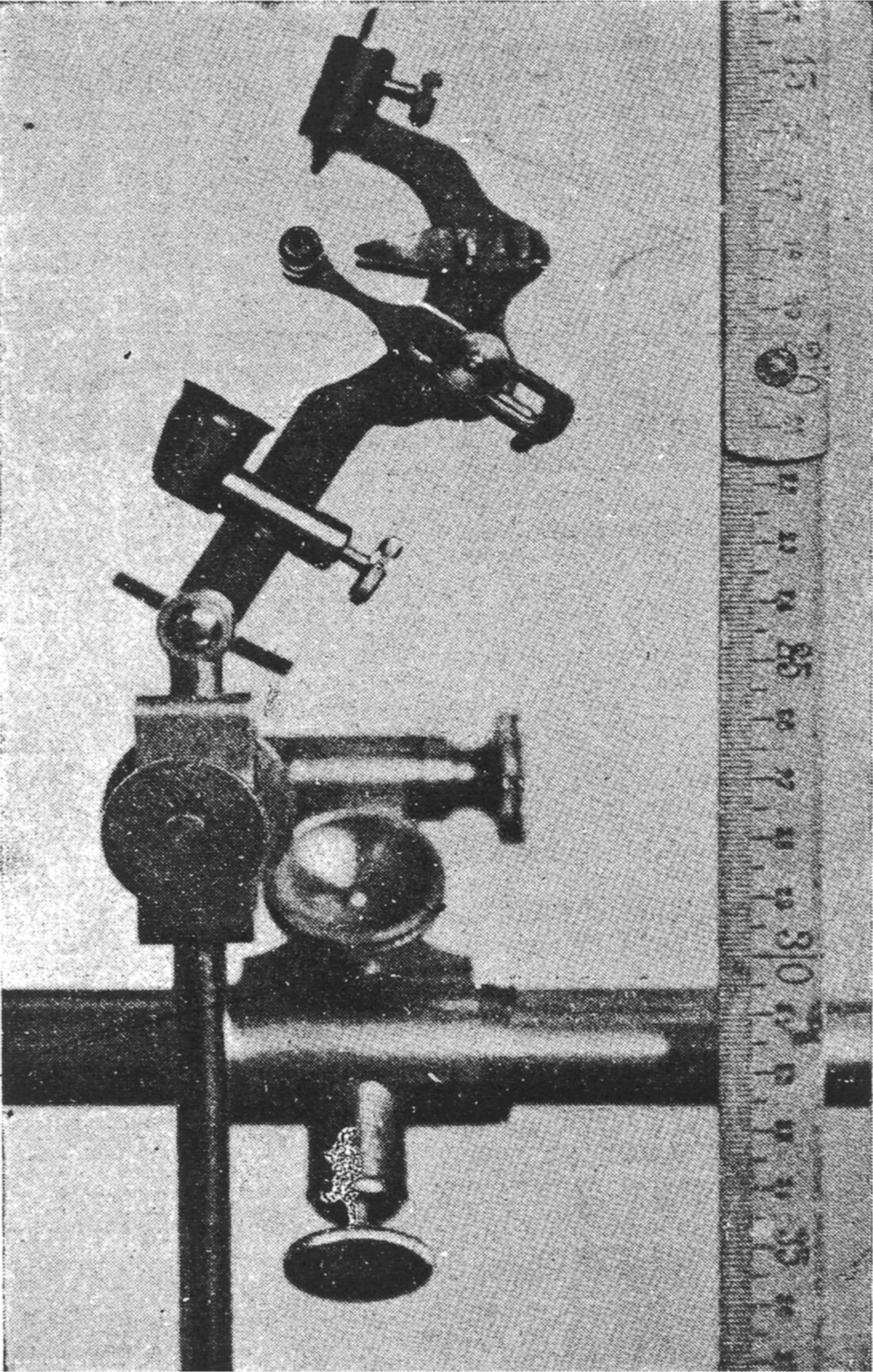
Further experiments included introducing particles into the endolymph and perilymph of pigeons. Tullio designed an apparatus to hold the pigeon's head still during operations on the labyrinth (Figure 3). The motion of the currents produced in response to sound was observed. The currents produced by the sound energy were seen to beat rhythmically against the ampullae, which partly obstruct the canals on one side, generating a movement in the animal in the plane of the canal.
Apparatus to hold the pigeon's head during operations on the labyrinth.Reference Tullio2
With weak sounds, the current forms in the centre of the membranous canal. An increase in the intensity of sound leads to an increase in the length, strength and speed of the current. Further increases in sound intensity (until it is persistent), cause the current to oscillate, with wide movements to and fro. If the head of the animal is allowed to move freely, nystagmus will occur at a frequency that corresponds to the oscillation of the internal current. At maximal sound intensity, the current ceases to move in a rectilineal direction and begins to rotate rapidly around the longitudinal axis of the canal following the canal wall. The animal stops making pendulous movements of the head and the head remains fixed, as a result of the tetanic contraction of the neck muscles.
The sound reaching the ear affects all three canals at the same time, not just the opened canal. The difference in intensity in which the currents are distributed in the canals produces the head movement. By making an opening in a canal, its current will be dominant over the other canals, leading to visible movement in the plane of this canal.
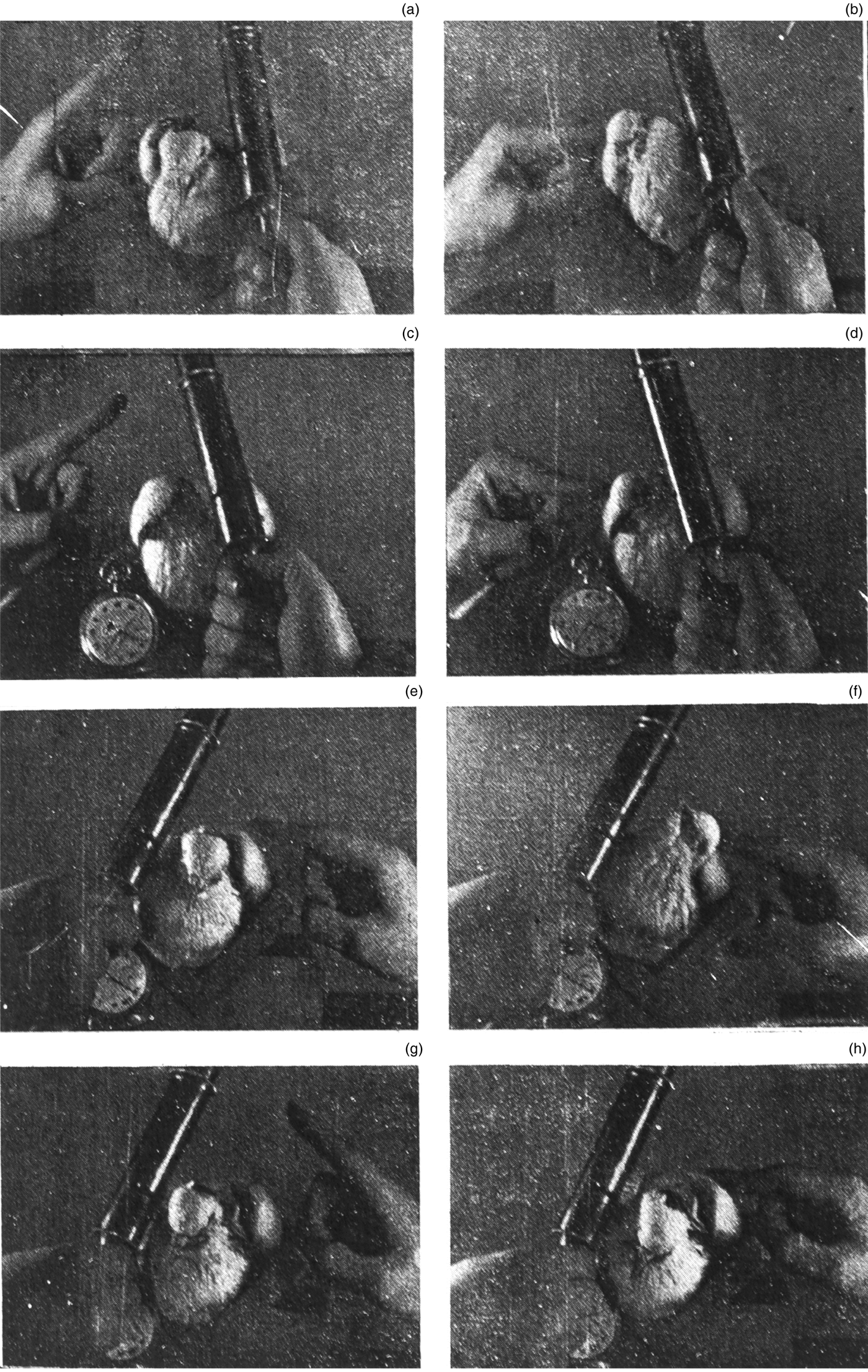
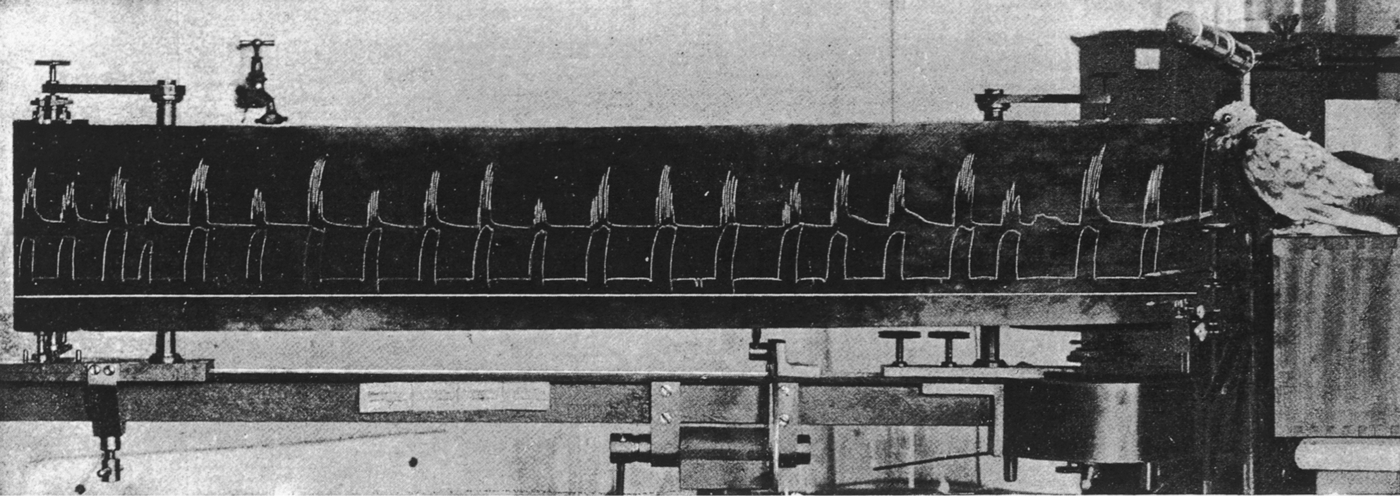
Tullio subsequently analysed the movement made by pigeons on opening each canal. After the opening of the superior canal, the pigeon lifts its head and beak in the plane of the canal. With a single sound, the lifting and rotation of the head will be about 45 degrees; the extension of the movement will attain 90 degrees when the sound is prolonged. When cocaine crystals are introduced into the osseous opening near the ampulla, so that the anaesthetic reaches the perilymph, the pigeon lifts its beak at every sound to successively decreasing heights, until it finally lowers it (Figure 4). This phenomenon is due to the cocaine paralysing the nerve extremities of the ampulla in the superior canal, so that the pigeon can no longer respond to its stimulation. The pigeon is still responsive to the currents in the lateral and posterior canals. This has a cumulative effect wherein the pigeon lowers its head in an intermediate plane to those canals. Tullio attached a lever to the pigeon's beak to provide a graphical readout of the reflexes made in response to the sound stimulus (Figure 5).
Pigeon with a lesion of the superior canal: with opening of the left superior canal, the animal will lift its head to sound (a and b); after cocaine, the animal remains motionless (c and d); after opening the right canal, the animal lifts its head to sound (e and f); and after cocaine is put in that canal, the animal lowers its head (g and h).Reference Tullio2
Pigeon with lesions of both superior canals (upper waveform represents head movements, lower waveform represents sound).Reference Tullio2
Identical experiments were performed on the horizontal and posterior canals. Openings in these canals also produced a movement in the plane of the canal. Sound stimuli following the fenestrations would cause pendular movements in the plane of these canals.
After all three canals have been opened, the head remains motionless as a result of the effects of the three canals neutralising each other. Alternatively, the head may rotate around the antero-posterior axis, with the top of the head turning towards the side opposite the lesioned ear. This rotation, which is due to utricle excitation, persists after the ampullae of all three canals have been paralysed.
In other subsequent experiments, Tullio identified the type of lesions induced by Flourens on pigeons, to produce the sudden and impetuous movements in the same plane as an injured semicircular canal. Tullio initially made a number of small lesions along an entire canal, which he then enlarged to expose a wide area over the membranous part. He tried compressing the membranous part with increasing speed and stretching the ampullar nerve until it severed. The pigeon was observed during these stages. No motor disturbances were detected with simple perforations of the osseous canal. The canal had to be crushed in order to produce convulsions of the face and the pendular movements in the plane of the canal. These movements became more intense during stretching of the nerve and violent when the nerve was torn. The motor reaction to sound appeared as soon as the canal was opened, and it increased with redoubled intensity when the nerve was stretched. Severing of the nerve and the application of cocaine to the ampulla caused a cessation of the reaction to sound. From these studies, Tullio concluded that the labyrinth ataxia in ‘Flourens’ syndrome' is produced by irritative stretching of the ampullar nerves.
In the twenty-first century, animal experimentation requires ethical approval, with ongoing critical evaluation. In this day and age, we suspect that the above experiments would have to be vastly modified.
Further progress
Initially, the presence of the Tullio phenomenon in humans was considered to be an indication of congenital syphilis. Congenital syphilis has been linked to gummatous osteomyelitis of the labyrinth, with miliary gumma in the endosteum capable of causing labyrinth fistula.Reference Mayer and Fraser3 The presence of this fistula was thought to cause the Tullio phenomenon. According to Cawthorne (1956), the Tullio phenomenon only occurred in humans when more than one mobile window opened into the internal ear on the vestibular side of the vestibular membrane.Reference Cawthorne4
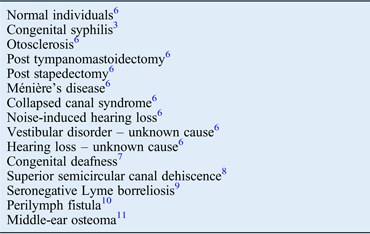
However, a number of studies over the past 60 years have indicated the presence of the Tullio phenomenon in a wide range of situations. Nystagmus has been observed in humans following exposure to pure tones ranging from 200 to 2500 Hz at intensities of 120 and 160 dB SPL.Reference Parker, Tubbs, Ritz and Wood5 The Tullio phenomenon has since been associated with a number of conditions, as shown in Table I.
Conditions linked to tullio phenomenon
Currently, the presence of the Tullio phenomenon cannot be considered a diagnostic tool for a particular disease, which is what Tullio had originally hoped for. If specific test parameters for provoking the phenomenon become available, then it may yet become a useful diagnostic tool.
Acknowledgement
The authors would like to thank the Library at the Royal College of Surgeons of England for allowing access to the only copy within the UK of Some Experiments and Considerations on Experimental Otology and Phonetics.Reference Tullio2