I. INTRODUCTION
When polymers are doped with fillers such as fibers, platelets, tubes, or particles, substantial enhancement in mechanical properties is obtained depending on the amount, degree of dispersion, interfacial adhesion, and the filler geometries. The shape memory (SM) polymer composites provide the materials with high recovery stress as well as novel functions such as electrical conductivity, magnetism, and biofunctionalityReference Madbouly and Lendlein1 and have received considerable attention over the last decade,Reference Huang, Wei, Jeng and Sheu2–Reference Lance, Hsueh, Ivanov and Geohegan5 shedding lights on the potential applications in automotive, aerospace, building, electrical, optoelectronic, and biomedical applications.Reference Kelly6–Reference Fabrizio, Loredana and Anna8 Among them, the SM performance was most pronounced when the multifunctional fillers were chemically incorporated into the polymer chains.Reference Jang, Hartwig and Kim9–Reference Bae, Park, Kim, Kang and Kim11 In this case, fillers act as multifunctional cross-links, strain energy storage, and relaxation retarder as well as the conventional reinforcing fillers. However, so far, the effects have largely been limited to nonfoam materials.
Regarding the polyurethane (PU) foam, SM effects have been reported with regard to the cyclic properties,Reference Lee, Kim and Kim12 effect of shape holding conditions,Reference Aneja and Wilkes13 and for biomedical applicationsReference Kaushiva and Wilkes14, Reference Kaushiva, McCartney, Rossny and Wilkes15 largely using the commercially available PU foams.
On the other hand, flexible PU foam is used in a broad range of applications. The majority of molded foam is used in the transportation seating and trim parts, packaging, furniture, and novelty items. The greatest advantage is that the foam is molded into the desired intricate shape and the need for cutting is eliminated.Reference Lamba, Woodhouse and Cooper16, Reference Neff, Adedeji, Macosko and Ryan17 If high shape fixity and high shape recovery are endowed to such foam products, precision molding with high durability will be implemented.
In this work, we synthesized flexible PU foam from polypropylene glycol (PPG) and toluene diisocyanate (TDI) following the one-shot method using water as blowing agent.Reference Tobushi, Okumura, Endo and Hayashi18, Reference Tobushi, Matsui, Hayashi and Shimada19 Nanosized silica particles were chemically modified with hexamethylene diisocyanates (HDI) to form isocyanate-modified silica particles, which were reacted with polyol to synthesis PU/silica nanocomposite foam. Chemically modified silica particles are for the first time introduced in SM PU foam. With chemical incorporation of silica particles into the polymer chains, silica particles are expected to function as multifunctional cross-links as well as reinforcing filler to significantly change the mechanical and SM properties.
II. EXPERIMENTAL
A. Raw materials
Two types of PPG having functionalities of 2 and molecular weight 240 (SR-240) and functionalities of 3 and molecular weight 3000 (GP-3000) were provided by KPX (Ulsan, Korea). TDI (TDI-80) was provided by Dow Chemical (Camacari, Brazil), whereas TA-350 [poly(propylene oxide–ethylene oxide)] as cell opener by KPX. Water used as chemical blowing agent was distilled in our laboratory. L-626 (specialty silicon surfactant, which is used for viscoelastic foam), A1 [amine blowing catalyst, which consists of 70% bis(2-dimethylaminoethyl) ether diluted with 30% dipropylene glycol] and methylene chloride as blowing catalysts, and T-9 (stannous octoate hexanoic acid) as gelling catalyst were provided by Air Products (Gyeong, Korea) and used as received. Nanosized hydrophilic silica (Aerosil 200) with average particle size of 12 nm was obtained from Evonik (Parsippany, NJ).
B. Isocyanate modification of silica particles
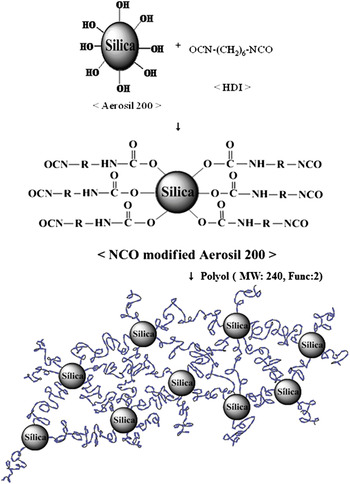
Silica particles dispersed in dimethyl formamide (DMF) (∼20 mg silica particles/mL DMF) were mixed and reacted with HDI for 24 h at room temperature to obtain the isocyanate-modified silica particles. Then, the sample was filtered on a glass filter and washed three times with an access amount of acetone. The modification was confirmed by Fourier transform infrared (FTIR) measurements.
C. Preparation of PU/silica nanocomposite foam
The overall reaction scheme to synthesis the composite is shown in Scheme 1. The flexible foams were synthesized by one-shot method. Isocyanate group (NCO)-modified silica particles were reacted with the bifunctional PPG at room temperature for 10 h in a four-necked separable flask equipped with a mechanical stirrer to obtain polyol/silica chemical hybrids. This and all other raw materials and additives were then put into a mixing cup and mixed for 20 s at 3000 rpm. The mixture was discharged to an open mold (200 × 200 × 200 mm) to synthesize the foam, and the foam cake was cured for the next 48 h at room temperature. The NCO index (isocyanate equivalents/polyol equivalents) was fixed at 1.00. Five different types of molded flexible foams having various silica contents were synthesized and characterized. In addition to using the NCO-modified silica particles (Series NS), simple addition of 2 parts per hundred polyols (pphp) pristine silica to the foam formulation (S2) and unfilled foam (S0) were also prepared for comparison. The basic formulations to prepare the foams are given in Table I.
Isocyanate modification of silica particles.

Formulations to prepare the PU/silica nanocomposite foams (unit: pphp).

pphp, part per hundred polyol; MC:, methylene chloride.
D. Characterizations
FTIR spectra of the samples were obtained using a JASCO V430 spectrometer (Tokyo, Japan). Powders of sample were uniformly mixed with KBr by grinding it in an agate mortar. Then, the mixed powders were pressed to a flake using a tablet machine for the FTIR instrument.
Kinetics of the foam formation was followed by the physical change of the properties such as cream time and gel time. The cream time corresponds to the start of bubble rise, and hence, color of the mixture becomes cream like from milky white due to the formation of bubbles. Gel time is the starting point of stable network formation by intensive formations of urethane linkages and cross-linkings by allophanate reactions. The characteristic times were measured by a digital stopwatch.
The cell morphology was observed under a scanning electron microscope (SEM, Hitachi S3500N, Tokyo, Japan). Samples were cryogenically fractured in liquid nitrogen and gold sputtered before viewing under the SEM. The density of the foam was measured according to ASTM D-1622 with sample size of 30 × 30 × 30 mm, and an average of at least five measurements was taken to report.
Dynamic mechanical properties of the foam were measured using a dynamic mechanical thermal analyzer (Rheometrics MK-IV, New Castle, DE) in the tension mode. Samples were heated from −100 to 150 °C at 10 Hz and 2% strain.
Tensile properties of the foam were measured at room temperature with a universal testing machine (UTM) (Lloyd, West Sussex, UK) at 2.00 mm/min. To measure the compressive strength, samples were cut into dimensions of 50 × 50 × 50 mm and placed between metal plates and compressed to 50% of the original thickness.
SM properties were characterized using a temperature-controlled UTM (Lloyd). The sample was first heated to a loading temperature (T g +20 °C) before it was loaded to a maximum strain (εm) of 100%, followed by cooling to (T g −20 °C). Then, the sample was unloaded leaving a substantial amount of shrinkage (εu). Then, the sample was reheated to the loading temperature (T g + 20 °C) to recover the strain, leaving a substantial amount of permanent strain (εp). These three steps complete one thermomechanical cycle. Shape fixity and shape recovery are defined as:
 $$\eqalign{ {\rm{\% shape \,\,fixability}} = ({\rm{\varepsilon }}_{\rm{u}} /{\rm{\varepsilon }}_{\rm{m}} ) \times {\rm{100\quad,}} \cr {\rm{\% shape \,\,recovery}} = ({\rm{\varepsilon }}_{\rm{r}} /{\rm{\varepsilon }}_{\rm{m}} ) \times 100\quad, \cr} $$
where εr = εu − εp is the recovered strain.Reference Bae, Park, Kim, Kang and Kim11
III. RESULTS AND DISCUSSION
A. FTIR spectra
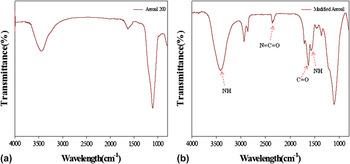
The chemical modification of silica particles with HDI was confirmed by the FTIR measurements shown in Fig. 1. In addition to the pristine Aerosil 200 [Fig. 1(a)], the isocyanate-modified silica [Fig. 1(b)] exhibits four additional absorption bands at 1570, 1632, 2270, and 3347 cm−1. The peaks at 1570, 2270, and 1632 cm−1, respectively, correspond to the N–H bending, isocyanate stretching, and C = O stretching, indicative of the existence of urethane groups. And the broad band at 3347 cm−1 is identified as N–H stretching mode in urethane groups.
FTIR spectra of (a) pristine silica and (b) isocyanate-modified one.

B. SEM micrographs of the foams
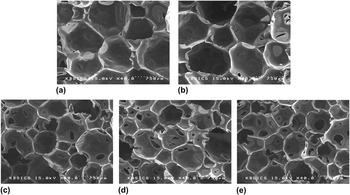
The cell morphologies were studied by the SEM micrographs (Fig. 2). It is seen that the cell size increases with the simple addition of silica particles (S2) and decreases monotonically with the addition and increasing amount of functionalized silica (NS series). Particles (aggregates or agglomerates) are not seen from the micrographs due to the large difference in the size of cell (200–1000 μm) and particles (20–100 nm).
SEM micrographs of the foams for various silica contents: (a) S0, (b) S2, (c) NS1, (d) NS2, and (e) NS5.

C. Reactivity and foam density
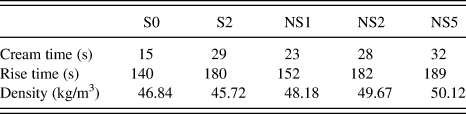
Table II shows that cream time and rise time increase with the addition and increasing amount of silica particles. Simple addition (B2) and chemical incorporation (NB2) do not make difference in the characteristic times. Both polymerization and blowing reactions become slower with silica particles due to the increased viscosity of the mixture.
Reactivity and density of the foams for various silica contents.
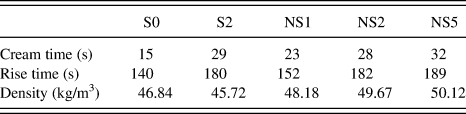
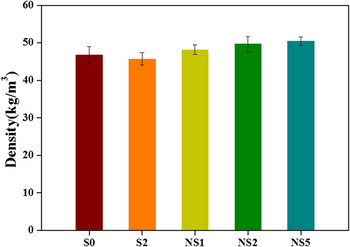
Figure 3 shows that the density of the foam monotonically increases with the addition and increasing amount of modified silica particles, indicative of fine dispersion of silica particles in PU matrix. On the other hand, density decreases upon addition of the pristine silica to the PU due probably to the poor dispersion and immiscible nature of the two constituents, which creates interfacial voids. The change of density is in line with the cell size variation (Fig. 2), i.e., as cell size decreases, density increases.
Densities of the foams for various silica contents.

D. Mechanical properties
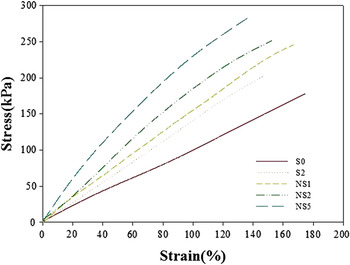
Figure 4 shows the tensile properties of the foam as a function of silica particle content. It is seen that the initial modulus and strength of the foam increase with the addition and increasing amount of silica particles accompanied by a small decrease in elongation at break. At the same silica content, the reinforcing effect is much greater with chemical incorporation (NS2) than with simple addition (S2) in terms of modulus and strength. Elongation at break is also much smaller with simple addition. The effective reinforcement with chemical incorporation is due to the fine dispersion of filler particles in matrix polymer as noted for elastomers and glassy polymers.Reference Jang, Hartwig and Kim9–Reference Bae, Park, Kim, Kang and Kim11
Tensile properties of the foams for various silica contents.

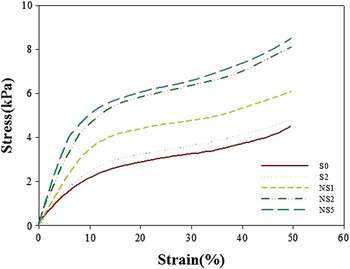
Figure 5 shows the compression properties of the foam. The strength at 50% deformation based on the original thickness has been taken as the compressive strength of the foam. Essentially, the same tendency is obtained with the tensile data. That is, the compression modulus and strength increase with the addition of silica particles, and the effect is more pronounced with chemical incorporation than with simple addition at the same silica content. The change of modulus and strength in compression as well as in tensile loading is related to the density, which, on the other hand, is related to the cell size. That is, with the increase in functionalized silica, cell size decreases, density increases, and modulus and strength increase.
Compression properties of the foams for various silica contents.

It should be mentioned that optimum filler loading typically observed at 2–3% for simple addition was not found up to 5% in our experiments, though the reinforcing effect was more pronounced at low filler loadings.
E. Dynamic mechanical properties
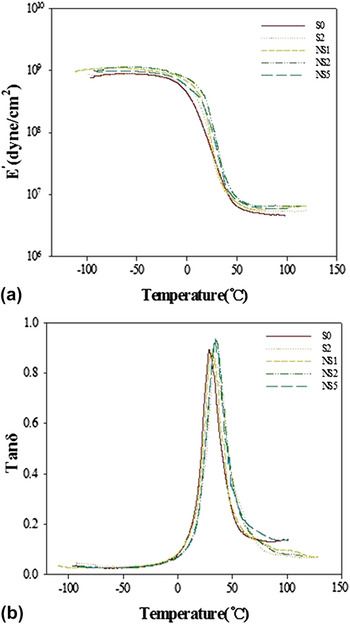
The dynamic mechanical properties of the foams are given Fig. 6 where the rubbery modulus is fairly well defined for all the samples including the unfilled one. This implies that the forms are cross-linked by the allophanate reactions between the urethane groups and free isocyanate groups. With the addition of silica particles, the glassy and rubbery moduli along with the glass transition temperature (T g) given in terms of tanδ peak temperature increase over the unfilled one. However, the maximum values of moduli are obtained with 2% silica of chemical incorporation (NS2) along with the greatest increase in T g. The increases of glassy and rubbery moduli and T g are minimum with the simple mixing of silica particles (S2) as in the tensile and compression properties. The decrease of moduli and T g beyond 2% silica (NS2) implies that the silica particles incorporated into the polymer chains are also subject to aggregations or agglomerations at high contents, though the extent is much less than the simple blend.
Dynamic mechanical properties of the foams for various silica contents.

The chemically incorporated silica particles effectively retard the segmental motions of polymers as noted from the increased T g. This is important in SM performance since slow chain relaxation during stretching in rubbery state stores more of the elastic strain energy endowed by stretching and gives greater shape fixity upon cooling at glassy state and hence greater shape recovery upon heating to rubbery state.
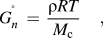
Another important role of the silica particles incorporated into the polymer chains is their role as multifunctional cross-links, which retract the deformed networks back to the undeformed morphology due to the entropy elasticity. This is given by a simple equationReference Jang, Hartwig and Kim9 as
 $$G_n^^\circ \, = \,{{{\rm{\rho }}RT} \over {M_{\rm{c}} }}\quad,$$
where  $G_n^^\circ $ is the rubbery state modulus, ρ the density, R the gas constant, T the absolute temperature, and M c the molecular weight between cross-links. Since modified silica particles introduce additional cross-links above the ones by 2-hydroxyethyl acrylate (HEA), M c decreases and rubbery modulus increases by the above equation. With a large rubbery modulus, a large shape recovery is expected since the deformed shape is recovered in the rubbery state.Reference Liu, Qin and Mather20
F. SM properties
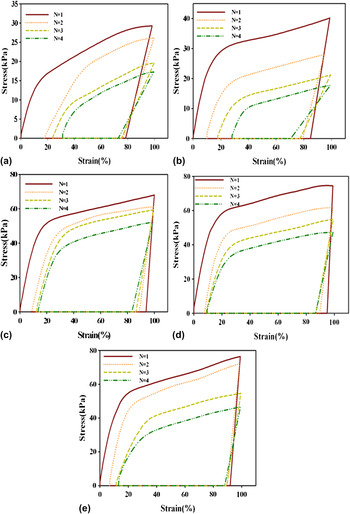
Cyclic loading and unloading behavior of the nanocomposite foams are shown Fig. 7. Unfilled PU foam (S0) shows poor shape fixity (<80%) and poor shape recovery (60%) for the first cycle, which is related to the rapid chain relaxation and low rubbery modulus of this material. Moreover, the hysteresis loss (area decrease) with increasing number of cycles (N) is noticeable. The SM performance is improved with simple blend of silica particles, though the cyclic hysteresis is not improved. By the chemical incorporation of silica particles, shape fixity and shape recovery significantly increased with the correspondingly increased elastic strain energy. The maximum increases were obtained for 2% silica showing shape fixity of about 95% and shape recovery of about 88%. The largest glassy and rubbery moduli coupled with multifunctional cross-link and strain energy storage effects of the chemically incorporated silica nanoparticles should be responsible for this. It is noted that the cyclic hysteresis is also decreased with chemical incorporations due to the cross-links by the silica particles.
Thermomechanical cycles of the foams for various silica contents: (a) S0, (b) S2, (c) NS1, (d) NS2, and (e) NS5 (N is the number of cycle).

IV. CONCLUSIONS
The isocyanate-functionalized silica particles were chemically incorporated into the PU chains during the synthesis of flexible PU foam from polyether polyol and TDI following the one-shot method with water as the blowing agent.
Chemical incorporations of silica particles augmented hardness, initial modulus, and strength for tensile and compression loading of the nanocomposite over the unfilled one and physical blend. As results, shape fixity, shape recovery, and strain energy storage significantly increased with reduced hysteresis loss. It is concluded that the chemically incorporated silica particles effectively reinforce the PUs with improved dispersion and provide multifunctional cross-links, elastic energy storage, and relaxation retarder, which are beyond the conventional reinforcing filler. The maximum increases of dynamic and SM performances with 2% silica are an indication that the effectiveness of chemical incorporation could also be limited by particle aggregations, though it appears at higher content than the simple blend.
ACKNOWLEDGMENTS
This work was supported by the National Research Foundation of Korea grant funded by the Korean government through GCRC-SOP (Grant No. 2011-0030668).